Friday has rolled around, and once again, the well-researched, edited, and polished article on a nascent family history topic has failed to materialize. Too busy researching and chasing promising leads down rabbit holes. Plus, while helping a couple of other aspiring authors with their manuscripts, I’ve been writing a new book with a travelling-through-history theme.
Hence, I am blatantly and unashamedly going to ramble and keeping to the theme of rabbits, rabbit on.
A fellow writer has a penchant for inviting the reader to get comfortable in their favourite armchair with a cuppa and a cake, and then travel along with her in her latest story. So, I’m doing something similar today. Imagine we are in your café of choice; I’m having my decaf cappuccino with almond milk, and you’re having your beverage of choice, and we are having a chat about family history. Admittedly, I’m the one doing all the talking—for a start. You can have your say at the end in the comment section.
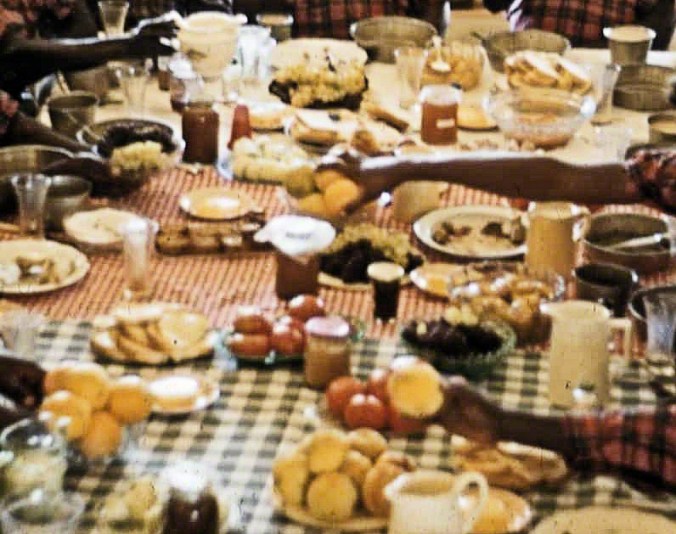
I’ll start with the food. Early on in My Heritage forays, the computer offered some guidance with AI (artificial intelligence) in finding those relatives who would prefer to remain hidden in the distant past. Usually, they are the hard-working peasant sort. Or the Eastern European sort whose churches were abandoned with the communist regime, leaving the records to rot away with neglect.
Anyway, I took the AI up on the offer, to my regret.
After many questions that became more ridiculous as time went on, the robot, which I prefer to call a “bubble-headed booby”, asked the ultimate in absurdity. ‘What did your ancestor like to eat for breakfast?’
You need to understand that AI was asking about an ancestor who lived three hundred years in the past. If I knew the answer to the breakfast question, I wouldn’t be asking AI, would I?
I decided then to avoid researching with AI after that interaction.
It got me thinking, though. What did my ancestors eat for breakfast? Too late for most of them to tell me. Even the famous ones don’t include a breakfast menu. I can only google an guess.
So, for future generations, here’s my offering for the few in my immediate family of whom I know their breakfast preferences.
My dad, Clement David Trudinger, grew up during the depression and Second World War times. He loved bread with dripping. I’m not sure if this was a breakfast go-to, but he did say. Just saying.
My mum has to have her cup of coffee first thing in the morning. Coffee gets her going.
A few nuts and a cup of Caro does me for breakfast.
I’m not sure what my maternal grandma, Elsa Gross, liked for breakfast, but she didn’t eat meat. I remember her having toast with butter and jam.
As for my maternal grandpa, Sam Gross, and my paternal grandma and grandpa, Ron and Lina Trudinger, I have no idea. And that’s only going back two generations.
All I can say for AI is good luck with that one going back three hundred years.
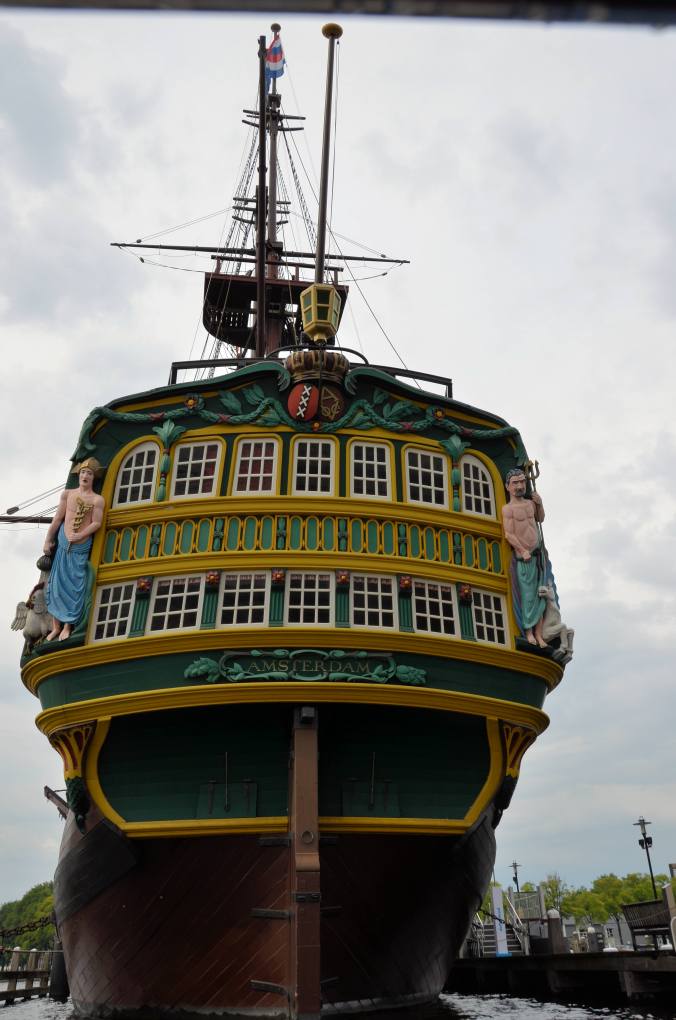
Digging back further, I discovered that one of my ancestors and an ancestor of my friend and Indie Scriptorium teammate, Mary McDee, were shipmates travelling over to England from Normandy way back when England was invaded by William the Conqueror. I wondered whether they were friends and what their conversation was like. Mary was adamant that her ancestor probably wouldn’t have had much to do with mine, as they were likely different ranks. But hey, ships back then weren’t that big, so I wonder … One thing for sure, they probably weren’t discussing their latest books and giving feedback to each other on how to improve their manuscripts.
Continuing on my research voyage, Mary did ask me, “What’s a good Christian girl like you writing such content of bloodshed and gore? How did you come up with such an evil character like Boris?’
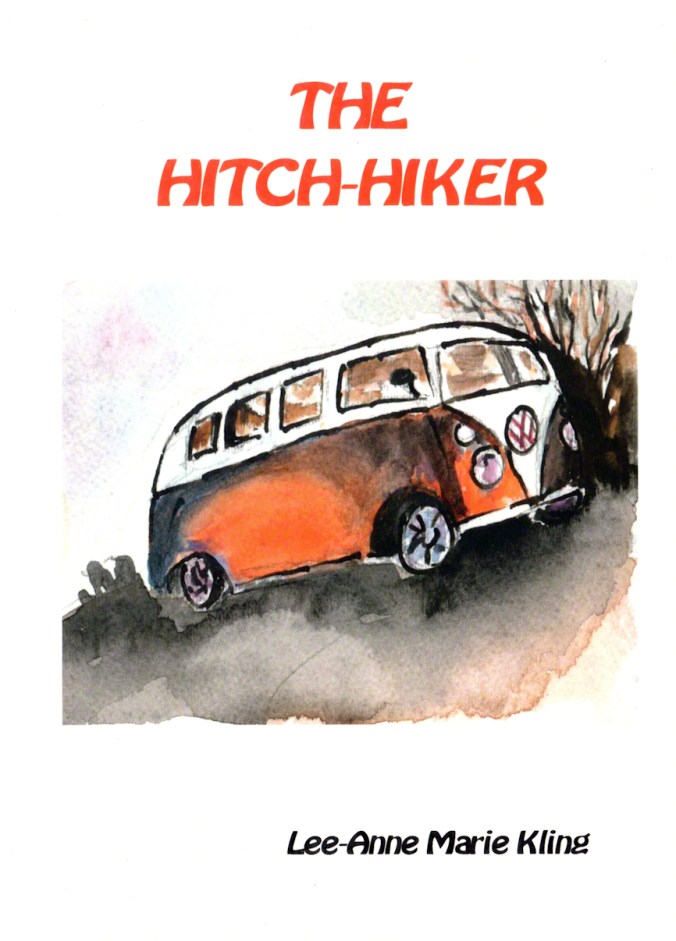
As I’m exploring those murky depths of my ancestral past, I’m beginning to understand. A relative of mine once read The Hitchhikerand was so shocked she gave it a poor rating. “This is not the person I knew,” she wrote as a comment. Little did she know that my ancestors and her husband’s were not the “Sarah Janes”, “Pollyannas” or “Saint Whoever” of the past. Quite the opposite. Think of Game of Thrones, which is based on the Wars of the Roses, and you get the picture. One was a bishop, the bishop of Laon, though, and possibly the father of my direct ancestor. And his father, one Louis de Luxembourg, Count of Saint-Pol, of Brienne, de Ligny, and Conversano, was beheaded for treason. I might add Louis Luxembourg’s nephews were the famous missing, presumed murdered, Princes in the Tower. Missing/stolen children—another theme that runs through my War on Boris series. Could this be something passed down to me through the generations?
And no, the dreams that formulated my Sci-Fi novels were seemingly not from ancestral memories of the mercenary soldier, Balthas Trudinger, that the family was so ashamed of.
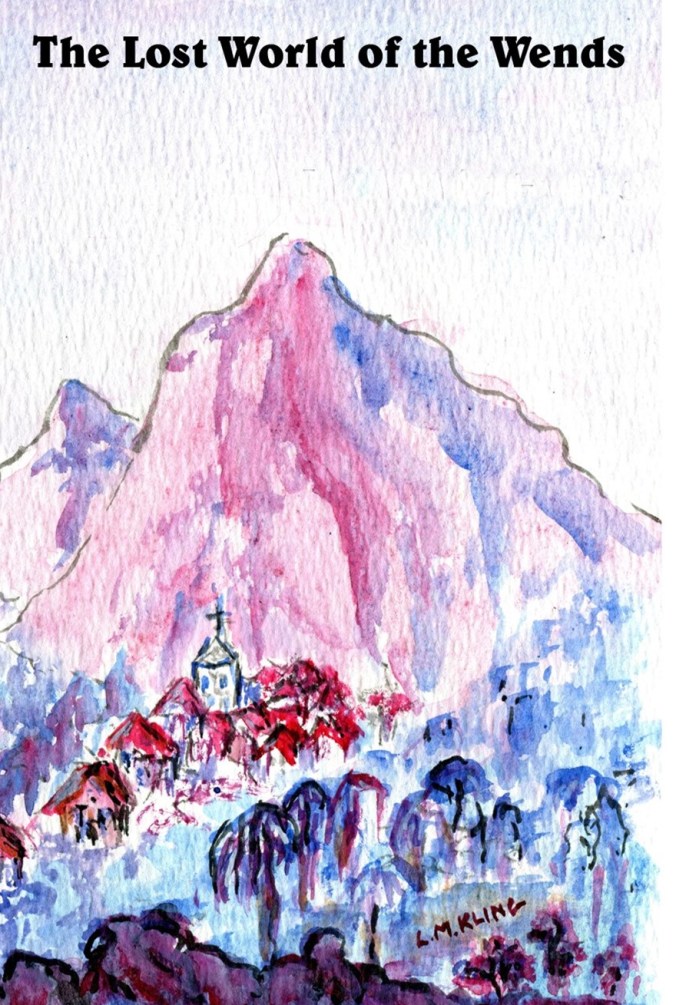
I looked into that and discovered that Balthas, who lived at Lierheim, which is a castle near Nördlingen, Bavaria, most probably belonged to the Teutonic Order. The Teutonic Order at the time of Balthas’ coming of age, had bought the castle there and was renovating it. Hitler gave the Teutonic Order a reputation as the exemplar of the all-German, all-Aryan fighting force. But once he won power, he ditched the Teutonic order—banned them. Actually, the order, from what I can glean, did much good over the centuries. They started around the end of the 12th Century as guards protecting pilgrims to Jerusalem. I bet Hitler kept that fact quiet. Although it was an army that did fighting and stuff in the past, these days it’s a charitable organisation.
I could go on rabbiting, but I think that’s enough random thoughts for one day. Time for our dinner.
Happy Friday and hope you enjoyed your cuppa and bikkie.
If you have a Family History comment or story, I’d love you to drop a line in the comment section below.
[A story based on my work experience in the 1980s.]
I slumped in my chair and slammed the report on the desk.
‘What’s wrong?’ my colleague, Gerry, asked.
‘The boss’s not happy with the report, and I have to do the formatting all over again.’
‘Glad it’s you and not me.’
‘Hmmm.’ I fished out the exercise book of computer commands from my pile of books on the desk and leafed through my handwritten notes on formatting a document.
My colleague leaned back in his chair and slurped his fourth coffee for the day. ‘I don’t know how you do it. I don’t think I’ll ever get the hang of these computers.’
‘It’s the eighties; they’re not going away,’ I muttered.
‘They’re not user-friendly, you know.’ Another slurp.
‘I know! And the boss thinks I can wave my word-processing wand and poof! Formatting all done.’ I pressed the button on the tower, and then stood up. ‘Third time this week! Third time this week I’ve handed in the report, and he throws it back at me. More work to do. I’m getting a coffee.’
Gerry held out his cup. ‘You wouldn’t mind getting me another one, would you?’
By the time I returned, the computer was just about to start. Gerry blathered on the phone, and the tech guy crouched over another computer, parts scattered over the floor of our office come passage.
Our manager opened the door and poked his head through. ‘How are you going with those changes?’ he asked me.
‘Getting onto it,’ I said and glanced at the screen still blank in contemplation.
My manager raised an eyebrow.
‘It’s starting up.’
‘We have a deadline, you realise. I want that report on my desk tonight.’
‘Yes, sir.’
I turned to the computer. It had decided to have a day off; its blank screen smugly stared at me.
Late spring, not so warm, but beads of perspiration gathered on my forehead. I glanced around the small office area. Another workmate, Paul, tapped away on a live computer.
I approached him. ‘Would I be able to borrow your computer sometime today? I have to fix up my report and have it delivered to the boss.’
Paul shook his head. ‘I have a document that must be done asap.’ He turned to me. ‘Isn’t there another computer?’
I surveyed the scene of devastation behind me; the tech guy’s handiwork of a dismembered computer lay scattered on the rug. ‘No,’ then with desperation in my tone, ‘I have to finish my report today, but … The launch is in two weeks.’
‘I too have a deadline. Tomorrow.’ Paul turned back to his computer and resumed tapping away on the keyboard.
Tech guy entered the office holding his cup of tea in one hand and a sandwich in the other. He stepped over the computer bits.
I looked at Tech guy. ‘I need a computer. Mine’s not working.’
‘The boss’ll just have to wait,’ Tech guy said.
I shuffled out of the office and to the café for lunch. Gerry lounged on a couch having an extended lunch.
‘Have to wait my turn for a computer,’ I grumbled to him.
Back at the office, Tech Guy had my computer running. What is it with Tech Guys? They have this way with computers. I settled down to work when I heard sniffling from the PA’s office next door. I glanced at her. She wiped her eyes and hid her face from me.
I opened my mouth to ask her what’s wrong.
Tech Guy zoomed up to me and whispered, ‘The boss has decided he doesn’t trust computers and he’s asked her to type out your report on her electric typewriter.’
‘What?’
‘Yeah, just after I spent the whole morning fixing up computers. I got yours going.’
The PA fed the paper into the typewriter. She then covered her face, stood up, and raced out of the office.
‘No,’ Tech Guy scratched the bald spot at the back of his head, ‘I’m going to talk to the boss. She can’t do all the work for you. It’s just not right.’
He strode into the manager’s office.
A few minutes later, Tech Guy emerged, thumbs up, and a smile spread across his face. ‘I made him see sense. The job is yours again.’
‘Thanks.’
Comforted by the fact that the PA had the load of my report lifted from her, but troubled that I must battle with the office computer, I gritted my teeth and spent the afternoon and into the evening tackling the formatting of my report.
When I handed my manager the report, he flicked through the pages and nodded. ‘Much better, well done,’ he said.
A week later I met with my Pastoral Care Worker. I’d been off work a week after succumbing to a virus.
‘Why did I have to go through all that? Why can’t things go smoothly?’ I asked him.
‘It’s the troubles,’ he said, ‘that refine and grow us. Like a pearl, the sand irritates it, and eventually you get a beautiful pearl.’
Over the years, I’ve remembered those words of wisdom—the bosses that demand perfection, the prickly pears, the obnoxious computers that resist being user-friendly—all that irritates has grown me, my faith, and made me more the person God has created me to be.
And the “pearl”, one of my best memories after all those troubles in our office—the following week, a day before the launch of my report, unhampered by printers not able to print and collate the report for us, the team worked in unity and joy around the long table, collating and binding the report.
I recalled the passage from the book of James in the Bible.
“Consider it pure joy, my brothers, when you face trials of many kinds, because you know that testing your faith develops perseverance. Perseverance must finish its work so that you may be mature and not lacking in anything.” James 1:2-4
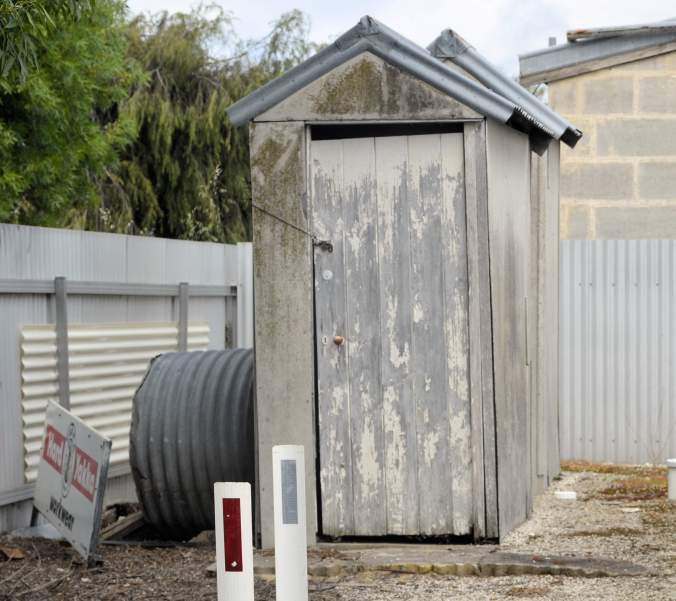
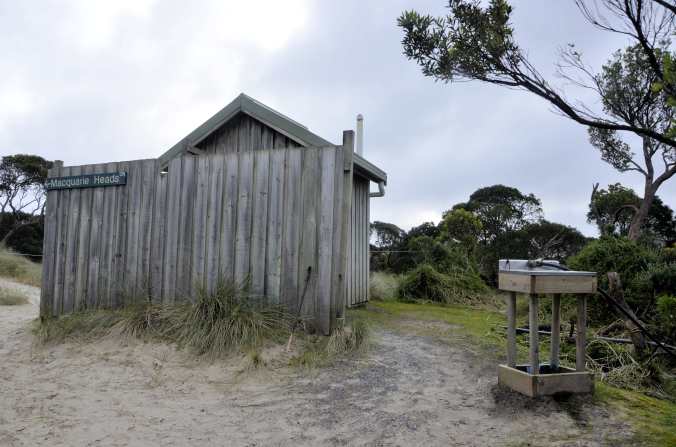
Toilets, bathrooms, latrines, or “dunnies” as they’re called in Australia, have surfaced as topics of conversation from time to time. How they have changed over the centuries. How they vary from place to place, country to country. But one thing remains constant to being human. When you gotta go, you gotta go.
And since the school year is in the midst of the Spring holidays in Australia, what better way to “go”.
When You Gotta Go
He stood up and wandered to the door.
‘Get back to your seat!’ I snapped.
‘Gotta go to the toilet, Miss.’
‘No, you don’t.’ I pointed at his desk. ‘Sit down!’
This version of Denis the Menace crossed his legs and grinned. ‘Yes, I do.’
‘You can wait.’
‘Please, Miss,’ his voice mocking, ‘I have to go.’
Sniggers rippled throughout the classroom.
I stood, pointing like a fool at his chair. Afternoon sun streamed through the dusty windows, ripening adolescent body odour.
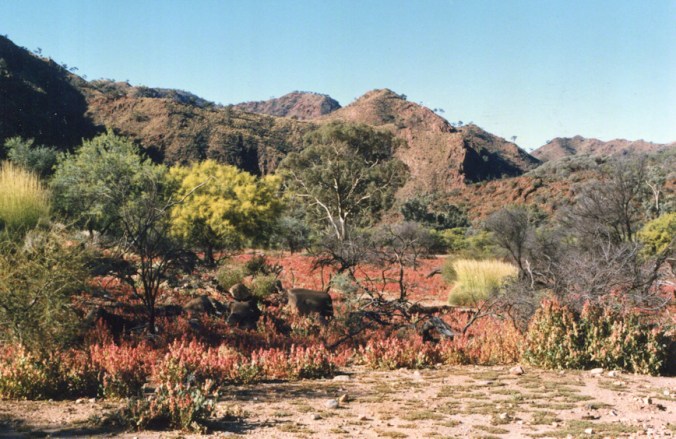
[This Sunday is Hubby’s and my 39th anniversary, so, time to remember our honeymoon in the rough and tough outback. The T-K Team step back in time into the Mt. Painter Sanctuary, Northern Flinders Ranges, South Australia; a land offering a glimpse of prehistory…]
Late 1980’s, and my husband and I planned a honeymoon stay in Arkaroola, the town within the Mt. Painter sanctuary, Northern Flinders Ranges. When we arrived, we rolled up to the motel and presented our VISA card for payment.
‘Oh, I’m so sorry,’ said the manager, ‘we don’t take VISA. Only MasterCard.’
‘What?’ But we were counting on our VISA to cover the costs.
We scraped together the cash amount for the three-nights of accommodation and emptied our wallets of all but a few notes. Romantic dinners in the restaurant, off our menu. The longed-for Ridge-Top Tour, off our track. Then cold hard panic struck, how were we to pay for petrol when we returned to Adelaide? The amount in our tank, Dad’s four-wheel-drive vehicle that he loaned us for the holiday, may not last the journey back to Hawker. All because the town in which we chose to spend our honeymoon, was so remote, they did not deal in VISA.
We sat on our motel bed and counted our measly amount of cash. What were we going to do? It’s not like I hadn’t gone without before—on the T-Team with my Dad. Being like-minded and frugal, we dealt with the disappointment, and decided we’d cook our own meals using the barbecue facilities and not venture too far from the town. Besides, there were plenty of places to which we could hike.
I took a deep breath and picked up the book our pastor had given us as a wedding gift. Inside the front cover I discovered an envelope. ‘I wonder what this says,’ I said to my husband.
I took out the card and opened it. An orange-coloured note fluttered onto the floor. I picked it up. ‘Hey, look! Twenty dollars.’ I waved the note in my husband’s face. ‘Twenty dollars! Pastor must’ve known we’d need the money.’
‘I think God did,’ my husband said. ‘Twenty dollars makes all the difference.’
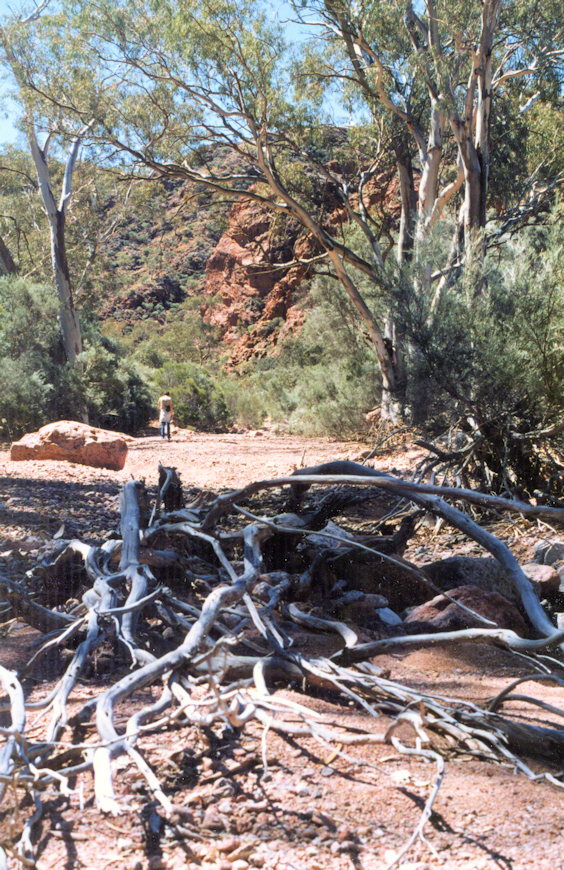
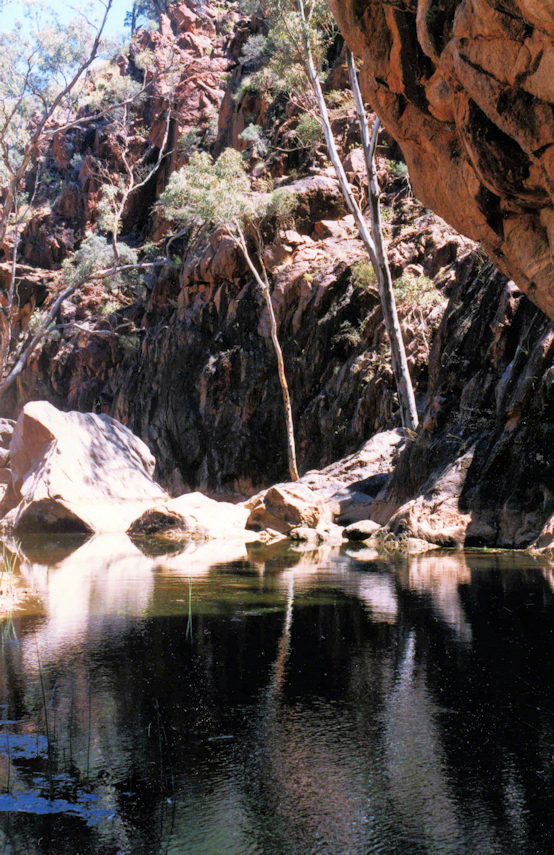
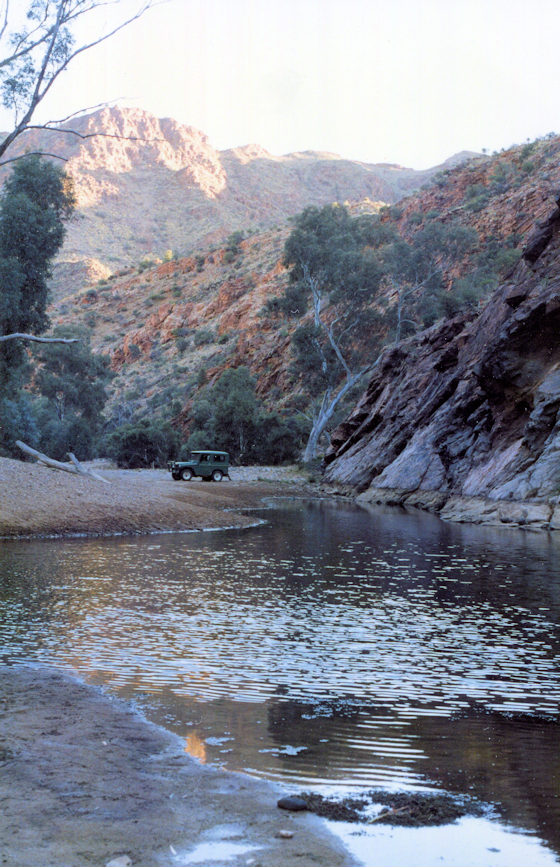
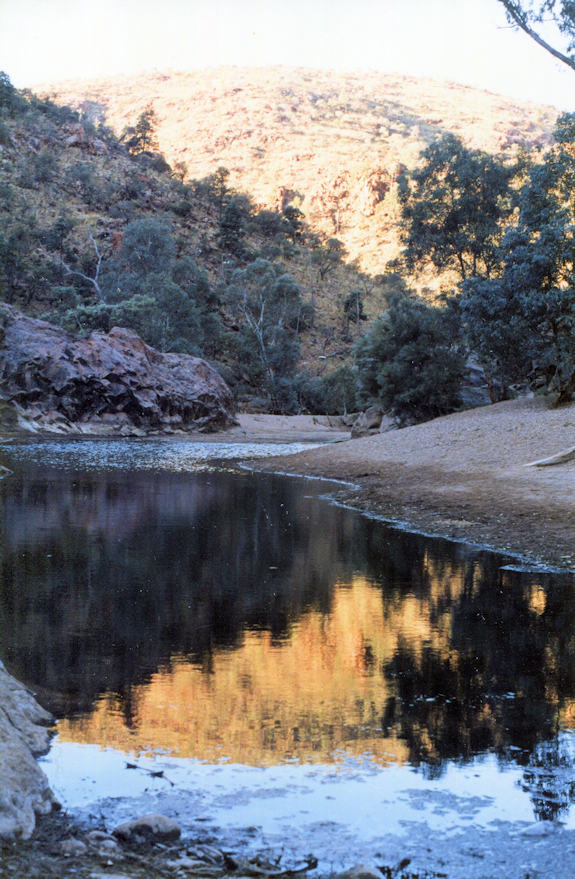
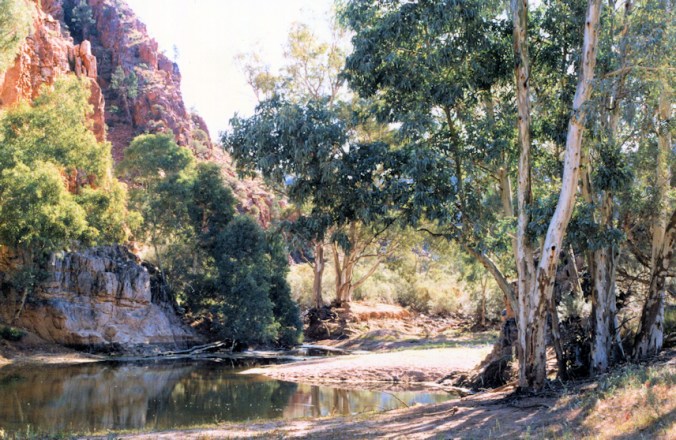
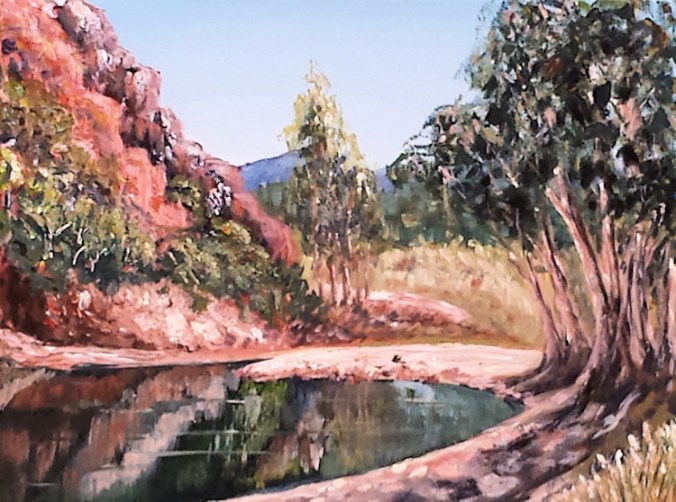
In the restaurant, and eating the cheapest meal offered, I spied a photo adorning the wall behind my beloved. A waterhole with red cliffs on one side and cool but majestic eucalypt trees on the other side. ‘Echo Camp,’ I read. ‘I want to go there.’
He who was driving, turned into the track. ‘You’re quite right. Ready for some adventure?’
‘Okay, well, it says Echo Camp’s only a few kilometres down the track.’
My husband drove up and down the track. It soon became obvious why the track was meant for “authorised” vehicles. But we were committed, and the track became so narrow, with one side rocky cliffs and the other sheer drops, we had no choice but to lurch forward, upward, downward, sideways and every-which-way. While I clutched the bar on the dashboard, my husband had fun, relishing the roller-coaster ride to Echo Camp.
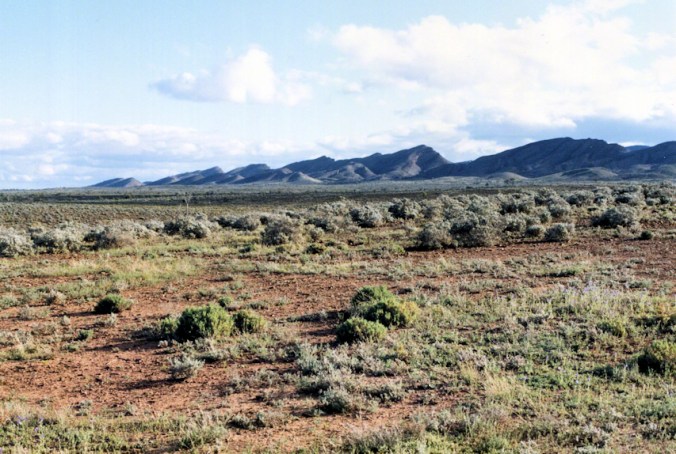
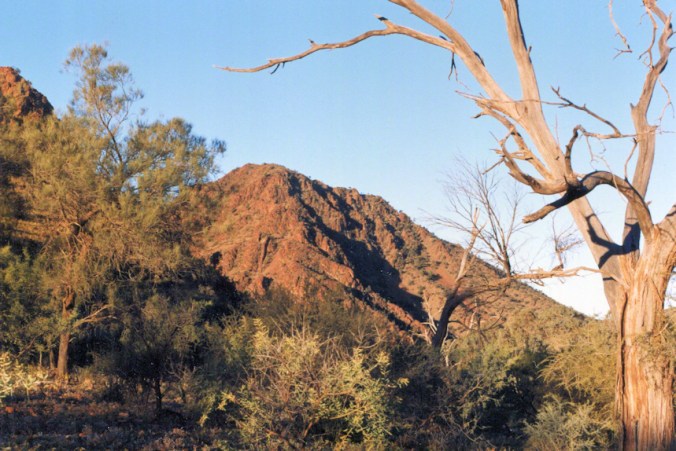
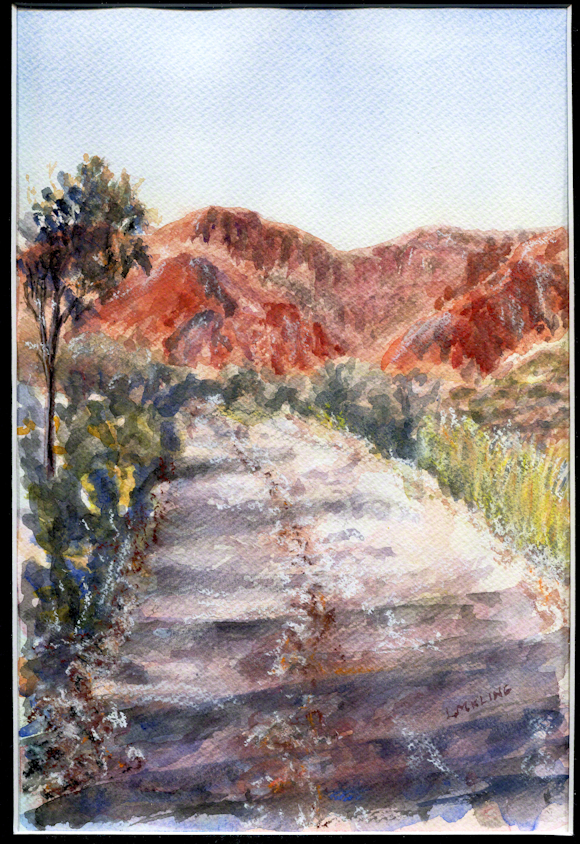
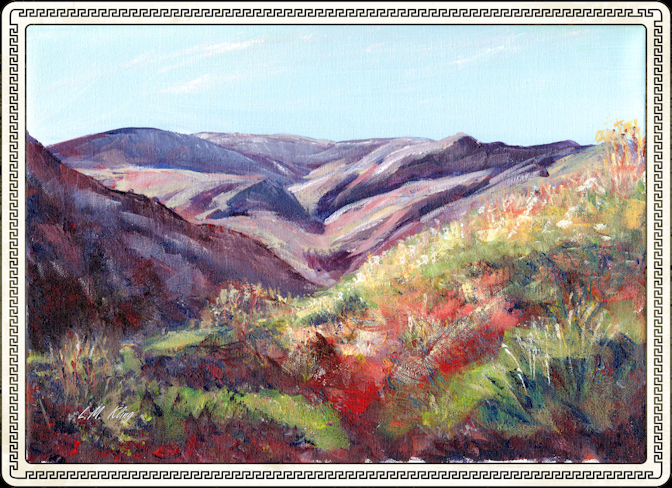
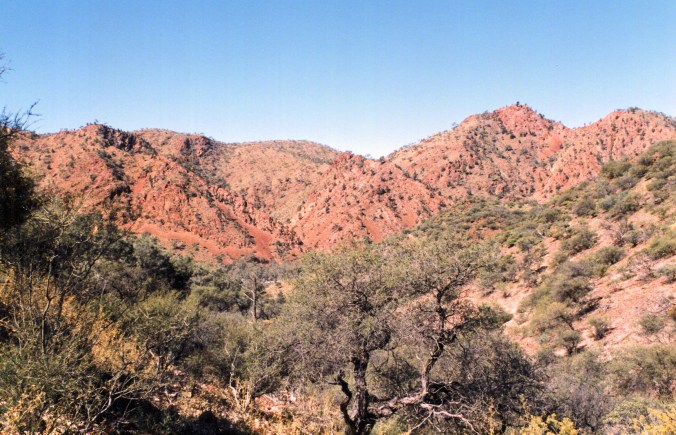
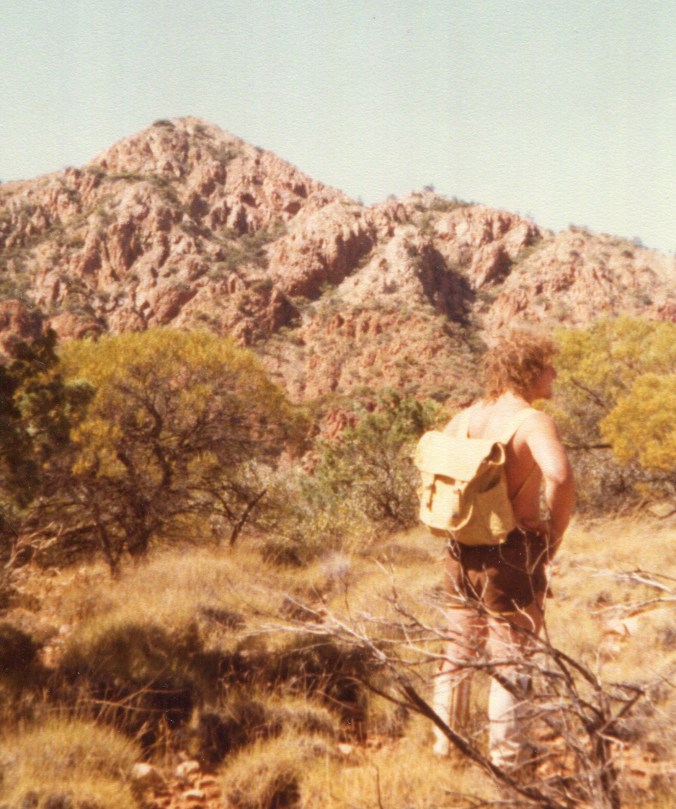
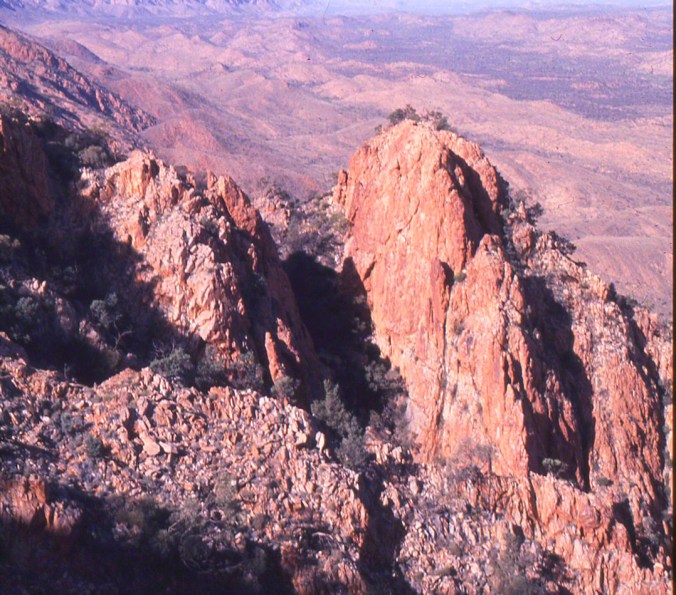
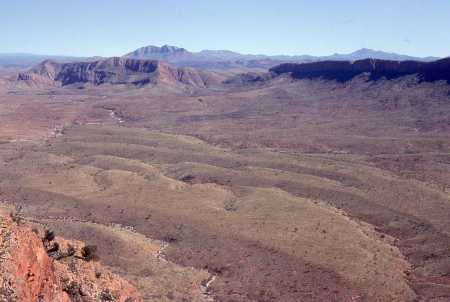
We reached a relatively flat area where we parked our four-wheel drive vehicle. The Painter Sanctuary mountains rose and dipped like waves before us. A feast for the eyes with shades of sienna, blue and mauve. I captured this beauty with my Nikon film camera.
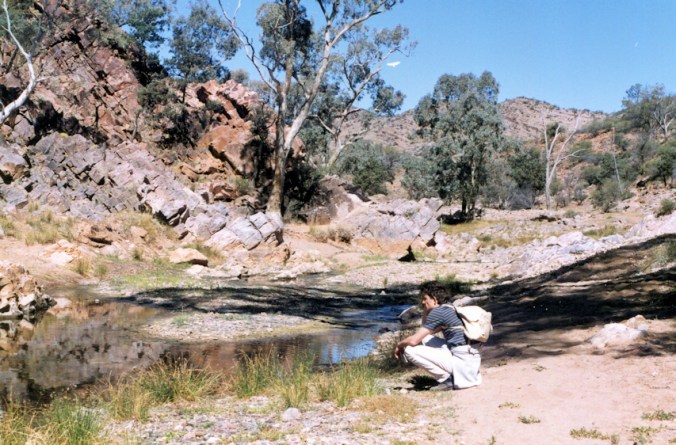
We back tracked and found the way leading to Echo Camp. By this time, the sun hung low in the sky, so our time savouring Echo Camp was limited to no more than half an hour, wandering near the rock pool, taking photos, and enjoying the peace and silence of this land untouched by civilisation, and reserved for the “authorised” apparently.
I admire a former convict, an ancestor of mine. Okay, you may think, yeah, of course, she’s an Australian—these days they wear their convict heritage like a badge of honour.
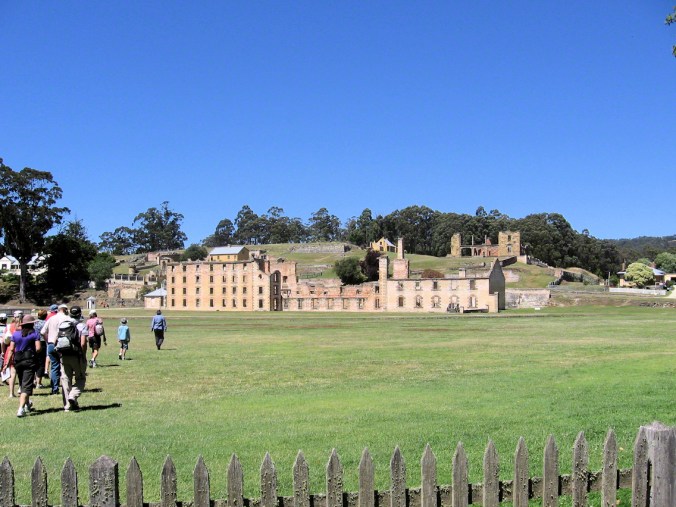
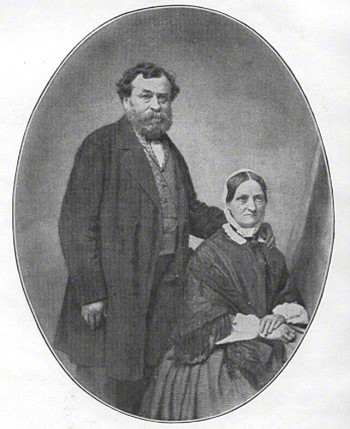
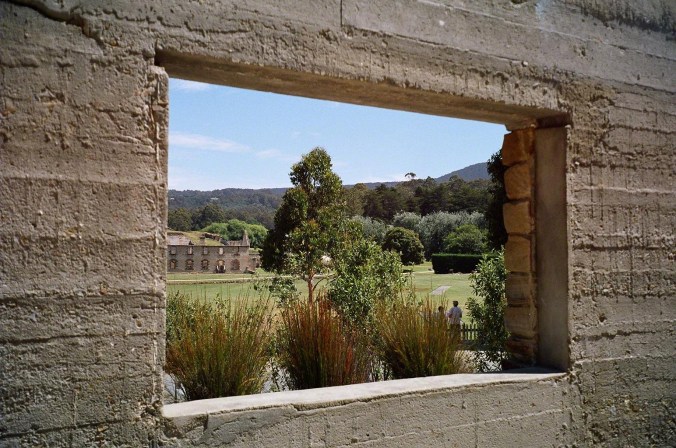
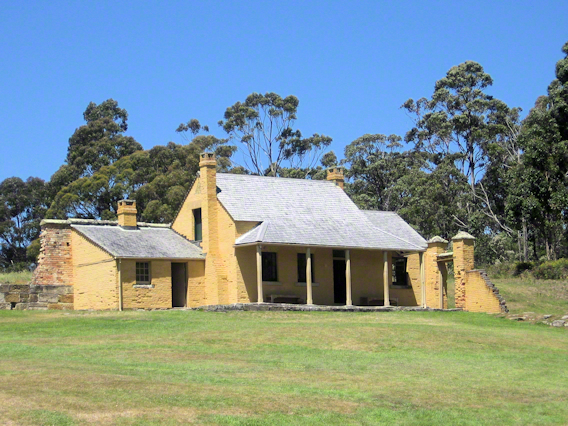
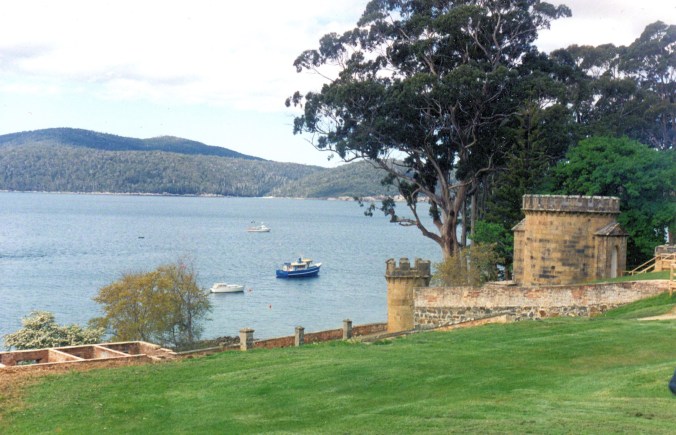
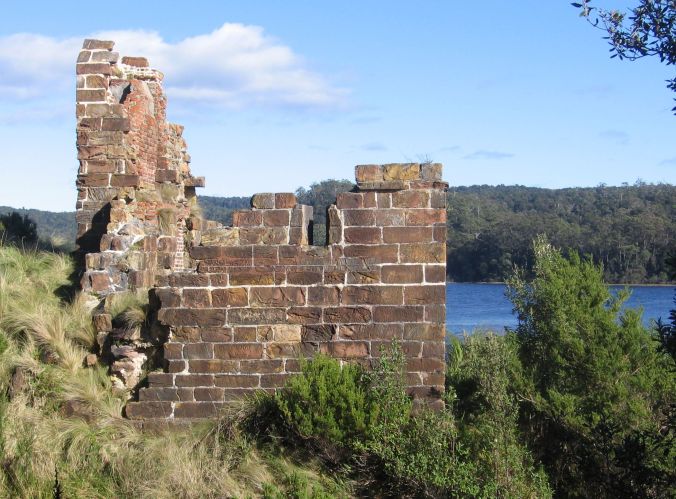
No, actually, my great-great-grandfather lived in Saxony, which is now part of East Germany or Poland today. Rubber borders, you see. His crime was trivial by our 21st Century standards in the West. But then, so were the crimes of shiploads of convicts who were transported from Britain and Ireland to Australia in the early 19th century. (For this reason, I have included photos from my visits to convict settlements, Port Arthur and Sarah Island, Tasmania, as my two-times Great-Grandfather, Friedrich August Schammer, was living his life in Silesia around the same time, in the early nineteenth century.)
Friedrich August spent less than three months in prison for a crime he did not commit, but I admire the way he managed his dire situation.
How did he get into this trouble?
According to the family history book, of this particular branch of the family, in the town in which Friedrich August Schammer studied as a medical student in the 1820s, the military came to power and enforced strict and arbitrary rules. I might add here that my ancestor had already endured hardship, having been orphaned as a child, suffered poverty, and then, his older brother, who was his guardian, died from typhus. I imagine these events spurred him on to be a doctor.
Anyway, in this university town of Jena, the students protested against their restrictions on their liberty by reacting against the ridiculous laws the military had brought to the town. Some of these laws were that there be no singing in the streets, no wearing of caps, and no waving of flags. The students protested by marching in the streets to the town square, singing and waving flags. All went smoothly and peacefully with no trouble from the authorities.
Then some of the young men, probably after drinking a few beers, became bolder as young men tend to become. They threw rocks at windows, an action that got the authorities’ attention.
The military swooped in and arrested many of the protestors. My great-great-grandfather was walking past the action and was in the proverbial wrong place at the wrong time.
Arrested and tried, though otherwise of exemplary character as a good Christian belonging to the Moravian Brethren, Friedrich was convicted and sentenced to prison for six months.
It seems by his account and letters, a certain beadle in town had it in for Friedrich August.
Yet Friedrich accepted his time in prison and made the best of the situation both for himself and others. He studied, enjoyed the view of the valley from his prison room (I think he was in a low-security prison), and used his medical knowledge and skills to help those around him.
The authorities noticed great-great-grandfather Friedrich’s quiet conduct and enrichment of the prison community, and they released him less than three months into his term.
Released, Friedrich’s ordeal was not over. The university where he’d been studying banned him from returning to study there. His reputation tarnished, the villagers shunned Friedrich.
However, Friedrich did not give up. He moved to Berlin and, keeping a low profile, completed his studies at the Charité Hospital and graduated as a Doctor of Medicine. He had a heart for the poor, having been poor himself, and would treat those in need without demanding payment.
Friedrich August Schammer demonstrated those godly qualities I admire—justice, mercy, and compassion. And perseverance, even in the face of adversity.
Philippians 2:14-15—Do everything without complaining or arguing, so that you may become blameless and pure, children of God without fault in a crooked and depraved generation, in which you shine like stars in the universe…
Note: Port Arthur housed what British authorities considered the worst of the convicts transported to Australia in the early to mid-nineteenth century. I visited this convict settlement in 1981, 1995 and 2009. A place well-worth visiting to learn from the mistakes made from the past (how not to treat fellow human beings). Although the place appears serene, the presence of the tortured ghosts of the convict past can still be felt.
Sarah Island situated in the Macquarie Harbour on the west coast of Tasmania, imprisoned the worst of the worst convicts transported to Australia in the early nineteenth century.
I have visited Sarah Island as part of the Gordon-Franklin River Cruise, both in 2001, 2011 and again in 2016. I highly recommend this cruise—a bucket list for travellers—history, wilderness, rare beauty of unspoilt rivers and rainforest and…excellent food.
[It’s time for my newest fur-baby to have her yearly vet check and vaccination. That will be a challenge. Just a sniff of such an adventure and Lily hides. My parents had a cat like Lily—Molly.]
Dad sipped his cappuccino, and then, licking his lips, he leaned over. ‘I have a mystery concerning Molly.’
A tram rattled past. How the three ladies in their designer clothes and ability to talk through their noses could hear their own conversation, I’ll never know. Maybe the nasal accent was just the right pitch to override the rumbling of trams, and then, added to the tram noise, the screaming of toddlers begging for their babycinos.
I waited for the tram to pass. Dad, in his mid-70s, didn’t have such a strong voice. And my hearing’s never been good. ‘What do you mean, Molly? What mystery?’
‘Er, um, I think she’s missing Mum.’
I gasped. ‘Oh, no! You haven’t lost her. Like Zorro. The last time, when Mum went to Sydney, New Year’s Eve 2000 with all the fireworks, Zorro got spooked. He was outside when the booms began, and he was off. He’s never been seen since. You don’t have a good record when it comes to cats and Mum being away.’
‘Oh, no, no, no!’ Dad said. ‘I mean, she’s been sleeping in funny places. Just the other day I found her in my underwear drawer. She was sleeping so peacefully, I left her there.’
‘How cute.’ I paused as another tram rumbled past. The ladies by the window exploded into laughter. When they quietened, I continued, ‘But you said she was missing.’
‘Oh, no, I mean, she’s …’ Dad coughed. Always does when he’s only telling the truth in part. ‘She’s … somewhere.’
‘How can you be sure? Maybe you left her out, and she’s run away.’
‘Oh, no, no, no! I put food out for her at night. Inside. And in the morning, it’s gone. She’s eating it. She’s just hiding.’
‘I see.’
‘I mean, I think she’s just found a nice little place to sleep. Where I can’t find her.’
‘I guess.’ I scraped out the last frothy bits of my cappuccino. ‘I’ll have a look for her when I come tomorrow.’
The next day, after school, the boys and I rolled up the driveway, piled out and then entered through the back door of my parents’ old housing-trust home. While Mum’s away, I liked to visit Dad to make sure he’s okay.
My sons raced off to the computer room, but I lingered in the kitchen where I cleared away a day’s worth of coffee cups from the dining table and stacked them on the sink.
‘Have you found Molly?’ I asked Dad.
‘No, but the food’s eaten. I think she’s hiding under the bed in the spare room, so I put the cat’s meat there, and in the morning, again it was all gone.’
I followed Dad to the spare room to witness the evidence of an empty bowl with a few morsels of dried fish flakes remaining at the bottom.
I sniffed.
A nasty, festering sort of smell lingered in the air.
Calling my eldest, I decided we should start our Molly-search in the spare room. ‘Would you help me lift the bed-base?’
My son joined me in the small room. Two single beds, a dressing table and a large wardrobe crowded the room. We manoeuvred ourselves around one bed and lifted one end. No Molly.
‘What’s the stink?’ my son asked.
‘Not sure, but it doesn’t bode well.’ I remembered the dead mouse I’d found in that very same room when I moved to Melbourne. ‘Come on, I reckon Molly might be under the other bed.’
My son and I edged around the bed and, taking hold of each side, we hoisted up one side of the base.
Molly crouched in the corner and snarled. Dried blood had matted her fur.
Reaching, I gently lifted the tortoiseshell tabby from the furthest corner under the raised bed base. Around her neck and in the pit of her front leg, the fur had been rubbed away, exposing a raw wound. Sticky ooze stained my sleeve.
My son put down the bed and dashed to the linen cupboard in the passageway, where he grabbed a towel. We wrapped Molly up in the towel and stood in the passageway.
My younger son had extracted himself from his computer game and met us in the passage with Dad. ‘What’s wrong with her?’ he asked.
‘She’s been injured; that’s why she was hiding,’ I said.
Molly narrowed her eyes at Dad and growled.
‘Wasn’t me,’ Dad said. ‘The last time I saw her, she was fine.’
‘We have to take her to the vet,’ I said.
So swaddled in the towel like a newborn, and weak from her injury, Molly rode in my arms in the car without resistance.
At the vet, the nurse ushered us in to see the veterinary doctor without the obligatory wait. The vet-doctor, a fresh-faced man in his 30’s, unwrapped the towel from Molly.
‘Oh,’ he said with a grimace, ‘it looks like she got her collar stuck under her front leg. Must’ve been like that for a while.’
Dad blushed and coughed.
‘You didn’t notice?’ the vet-doctor said, looking straight at Dad.
‘Yeah, well,’ Dad said as he shifted around the table, ‘my wife’s gone …’
The vet’s eyes widened with that look of pity. ‘Oh, I’m sorry—’
‘No, I mean, she’s gone to Sydney—on holiday.’
‘Oh.’
We all laughed.
‘Molly is my wife’s cat. And she took to hiding when my wife went away.’
We’d found Molly just in time. The veterinary doctor treated her with antibiotics and a stay in the animal hospital. She made a full recovery.
Not sure that Dad ever fully recovered from the wrath of Mum when she returned from Sydney to discover he’d almost lost another cat in his care.
***
In Memory of Molly who lived to the respectable old (cat) age of 18.
As the Good Book, the Bible, says in Matthew 6:26-27
“Look at the birds of the air; they do not sow or reap or store away in barns, and yet your heavenly Father feeds them. Are you not much more valuable than they? Who of you by worrying can add a single hour to his life?”
All afternoon, our backyard echoed with the hum of the cement-mixer, and intermittent scraping. Dad, armed with a trowel, smoothed the cement over an area pegged to become the back patio. Metre by metre, he pasted his way back.
Mum stood on the porch, and with hands on her hips, remarked, ‘And how are you going to get out of this one?’
In an ocean of soft cement, Dad looked around him, lost. ‘Er … um … I’ll work it out.’
Tracks back to the lawn-edge smoothed, Dad stood and admired his DIY job.
Next morning, paw-prints made their way to the rainwater tank.
Dad sucked on his lemon (a proven refreshment and guard against dehydration). ‘About a-quarter-to-twelve.’ He continued to sit and suck on his lemon as if in no hurry.
‘A-quarter-to-twelve?’ I stood. ‘We’ll never get there. We can’t even see the trig.’
‘Well, um-er, we better get a move on.’ Dad rose and slung his pack over his shoulder. The T-men shuffled up a worn kangaroo track. I took a quick swig of water and bounded after them.
We stopped at a three-pronged fork in the trail. Three mountain points stood before us. ‘Now, which way shall we go?’ You’d think Dad would’ve worked the route out before we embarked on this project, using his compass and detailed maps. But apparently, he hadn’t.
Phillip (older cousin) raised an eyebrow. Richard (my brother) scratched his chin. Ashleigh (younger cousin) shook his head, and I shrugged.
Dad hummed and hawed.
‘We could hike up and down the gully to see,’ Richard said.
Ashleigh sighed. ‘That would take too much time.’
‘What about the saddle?’ I asked.
The men looked at me, their eyes narrowed. ‘To which point?’ Dad spoke for them all. For the next few precious minutes, the men bantered about what option to take, cutting me out of the decision-making.
‘Ah, well, time’s running out. I guess we can’t expect to reach the top,’ Dad announced with the damning tone of resignation.
I bolted on southwards and upwards to the spur. Even menacing prickle bushes didn’t stand a chance as I charged through them. Behind me I could hear the Thwack! Thwack! Thwack! as Dad hacked his way in pursuit of me. ‘Come back! You can’t go off on your own!’
Scratched and sore from the fight with the bushes, I stopped. A tightrope path lay ahead. Not even enough width for my feet on this razorback. I turned and watched the shrubs shake.
Dad emerged, brushing seeds and thorns from his arms. He shaded his eyes as he looked up. ‘You’ve taken the correct action.’
‘What?’ I scratched my eyebrows. Dad’s big words confused my exhausted mind.
Wheezing, Dad caught up to me. ‘See?’
He pointed at the nearest mound. ‘See, the trig?’
I squinted towards where the hill met the cobalt blue of the sky. At the highest point, a thin wire shimmered in the heat. ‘Oh, yeah!’
While Dad and I gulped down some water, Richard, Phillip and Ashleigh galloped past us. ‘Watch your step on the spur!’ Dad warned.
We picked our way along the razor back ridge. I held my breath and resisted the urge to look down past the tight-rope path where I placed each step. Holding my arms out straight either side, I teetered and tottered to the end of my ordeal. When I reached the slope at the other end, an incline with generous girth and no cliff in sight, I collapsed to my knees, then bent over and kissed the sandstone.
However, my rejoicing was short-lived, and I rose to my sore feet to push on. After plodding up and down more ridges, more rocky slopes, and more frequent rests to nurse my aching calves, our allotted time to reach the summit by 12:30pm lapsed.
We gathered around Dad.
‘What’s the verdict?’ I asked. A breeze cooled the back of my neck.
Flies gathered on Phillip’s back. Richard slapped between Ashleigh’s shoulder blades and clapped the flattened insects from his palms. ‘Twenty.’ He flicked the last of the sticky flies from his palm.
‘Well,’ Dad took a deep breath, ‘We’ve come this far, we might as well go all the way.’
‘We have a full moon, that’ll help,’ Ashleigh said.
Phillip waved a pesky fly from his face. ‘Okay!’
‘Let’s go!’ Richard slapped his hands together near Phil’s nose and killed that fly too.
‘Alright!’ I said.
Determined to reach the peak, we plunged forward, despite being famished, wrung of perspiration, weary and late. We were so close. Every so often, the trig teased us, appearing as we reached a high point, and then vanishing as we dipped into a valley. Richard and Phil raced each other.
I climbed over a wall of rock and saw the trig wobbling above the slope in the oily heat. I scrambled upwards. A saddle stretched and rose before me. Damn! Another false top! I struggled over the saddle to face another false top. After staggering over the fifth false top, I saw the trig and blinked. Was it real? Or was it a mirage? I limped up the jagged path, pain shooting down my calf muscles with each step. The trig disappeared behind an outcrop of rocks. We’ll never get there!
I skirted the rocks and saw the trig fifty meters away, bold, rusty, and high. Under the shade of an orange sheet that fluttered like a flag in the wind, Richard, Phil and Ash lounged by the stone cairn, packs off their backs, stirring Salvital into their cups of water and then sipping with delight the reward of their labour. The time was one o’clock.
Ten minutes later, Dad dragged himself over the last ridge and limped to the summit. There, he sat on a rock and rubbed his knee. ‘O-o-oh!’ He inspected the damage, red and swollen. ‘I tripped and fell on my knee. I hope I can get down alright.’
‘You better,’ Phillip laughed. ‘You can’t exactly camp up here.’
‘You’ll have to get down,’ Richard said.
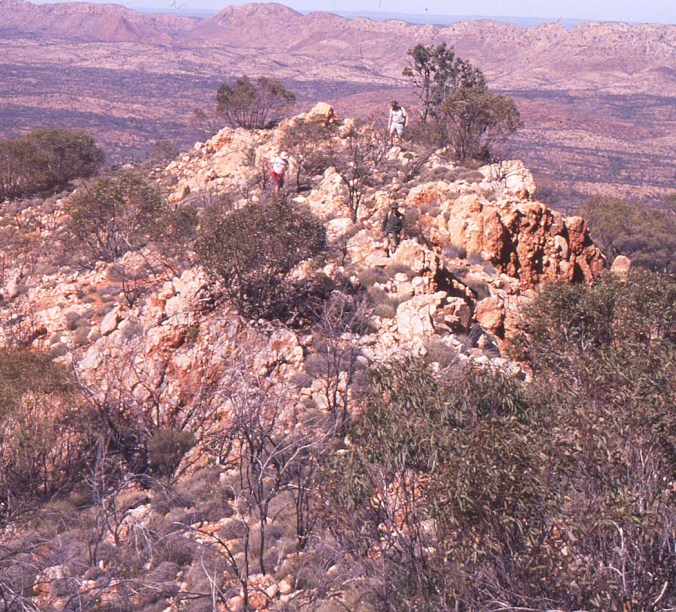
‘Yeah!’ I gazed at the view, entranced by the once-ancient ocean bed surrounded by islands of mountain ranges that snaked like the backbone of a prehistoric creature into the haze on the horizon.
‘Hey, look at these!’ Phillip excavated some calling cards from a tin can wedged in the monument to the summit. Our predecessors had conquered the mountain one year earlier to the day. The scribe wrote: “The climb was well worth the effort”. They described ascending to the peak by the southern ridge starting from Giles Spring. This tip gave us the idea to descend by the south ridge and traverse west through the pound to the camp.
We celebrated with lunch of “scroggin” (a muxture of nuts, dried fruit and chocolate) and copious amounts of Milo and strawberry-flavoured Quick mixed with powdered milk and water. We took photos of the stunning scenery and each other as evidence of our triumph over adversity.
The T-Team With Mr B (14)—The Olgas and Ayers Rock
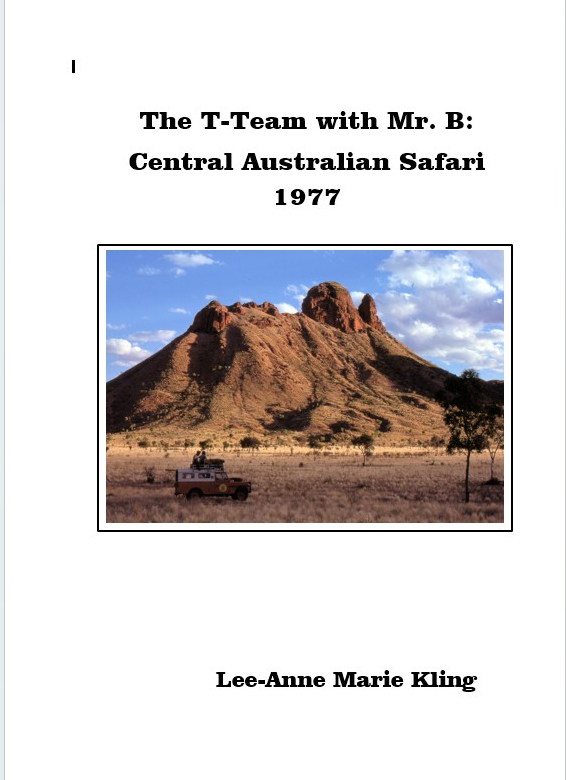
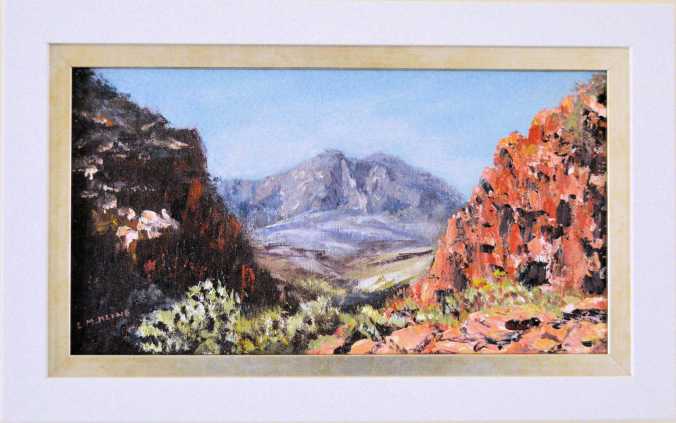
[For the SALA month of August, my painting, “Sunrise on Kata Tjuta”, is displayed at Marino Community Hall. So, this week I am revisiting my travel memoir,The T-Team with Mr. B: Central Australian Safari 1977, a prequel toTrekking With the T-Team: Central Australian Safari 1981.
In this episode, the T-Team suffers more carnage to the trailer. This time the tyres take a beating. But there are unexpected rewards for those who wait …]
Tyre Carnage On Way to the Rock
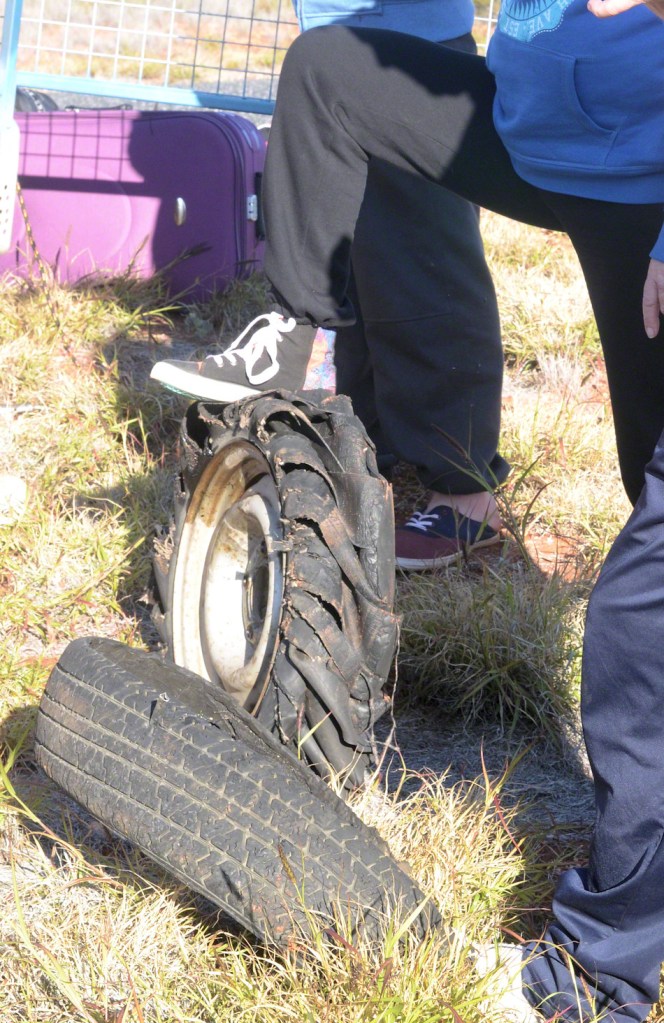
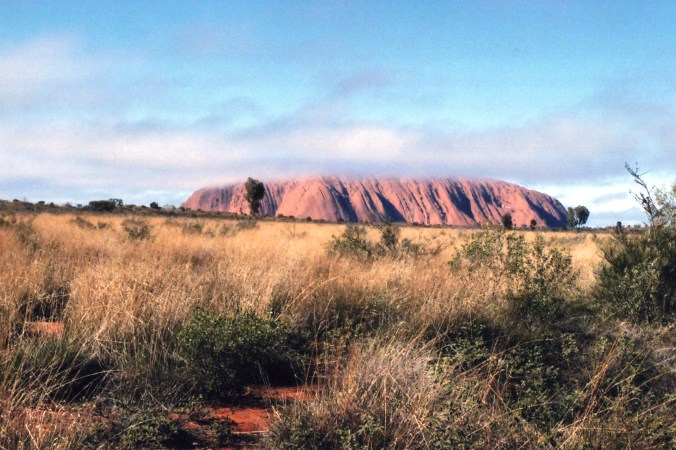
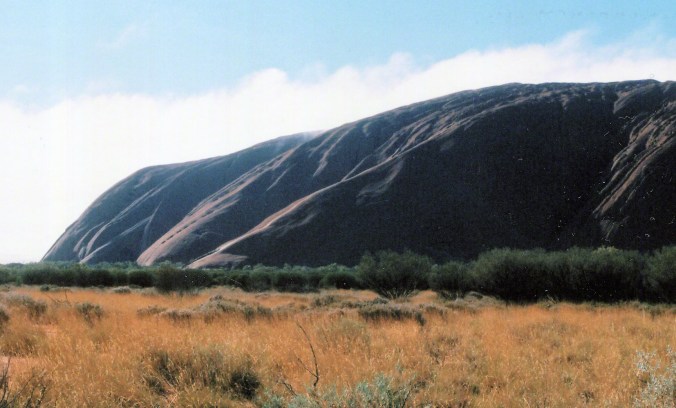
We sailed along on the road to Uluru, the warmth of the sun on our cheeks and breeze in our hair. Sand-hills rolled up and down and then into the distance. Black trunks of ironwood trees flitted past. The Rock made random appearances and disappeared. A wheel flew past and bounced into the bush.
The men gathered around the trailer and discussed their options in lowered tones. Dad frowned, he put his hands on his hips and gazed at the ground as Mr. B glared at him.
‘Poor! Very poor for a trailer!’ Mr. B muttered. ‘What are we going to do about it, mate?’
Dad shifted his feet and then with his boot scuffed the stones. ‘I don’t know. What do you reckon, Richard?’
Richard shrugged.
‘I say, laddie, can you find that tyre?’ Mr. B asked.
‘It’s long gone,’ Richard said. ‘But I’ll try.’
‘They’re expensive.’ Dad kicked the one remaining trailer tyre. The men stared at the one-wheeled trailer as though they were visiting a gravesite.
‘Alright,’ Richard muttered, ‘I’ll go and see if I can find it.’
Richard stomped down the road. He placed his hand above his eyes and peered in the direction the tyre had vanished into the scrub.
Matt caught my gaze. ‘Boring!’
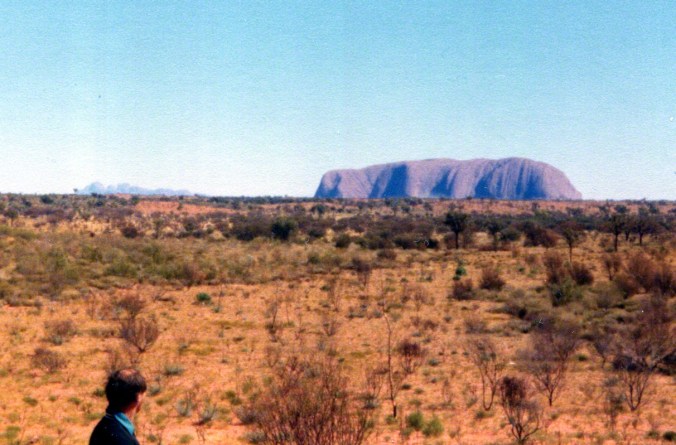
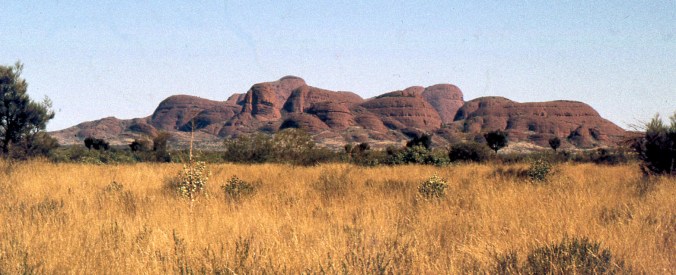
‘Let’s go up that hill and see if we can take a photo of Ayers Rock and the Olgas,’ I said. As we were walking, I conveyed the information I had gleaned from Dad about the Olgas. ‘Did you know, Matt, that the people who own this land call this amazing collection of giant boulders, Kata Tjuta which means “many heads”?’
‘How far are the Olgas from Ayers Rock?’ Matt asked.
‘My dad reckons they are 30 miles west of Uluru,’ I replied. ‘he says we’re going to camp outside the national park, just beyond the Olgas.’
‘Olgas, that’s a funny name.’
‘Yeah, it’s German, I think. Dad was telling me that in 1872, the pioneer explorer Ernest Giles discovered them and called them “The Olgas”, after Queen Olga of the German Kingdom of Württemberg.’
‘Imagine having a few rocks named after you.’ Matt laughed. ‘The Boulders of Lee-Anne.’
‘Matt’s Massif,’ I joked.
Matt tittered. ‘What about, Richard’s Rock?’
‘Hey, I just remembered, back in Ernabella, there’s a Trudinger Hill. How cool is that?’
‘So, every time, people see those funny rocks and boulders in the distance, they will be reminded of some mouldy old German queen.’
‘Now that you put it that way, sounds a bit odd, us Europeans putting our names on the features of this ancient land. I wonder if they’ll eventually change the names back to what the Pitjantjara peoples call it someday.’
The men decided to leave the trailer on the side of the road and fix it upon our return when we passed that way. By then we hoped to have the parts and equipment required to reattach the rogue wheel that Richard had found and then hidden underneath the trailer.