Trekking Thursday–Way out West

Lost on Liebig (2)

[While Mr. B and his son, Matt stayed back at camp, three of the T-Team faced the challenge of climbing Mt. Liebig. And finding their way down. After a successful climb (except for the lost quart can) to summit Mt. Liebig, (Read Part 1 of this adventure), the T-Team lose their way…]

Extract from The T-Team with Mr. B: Central Australia 1977, a prequel to Trekking With the T-Team: Central Australian Safari 1981. Both books now available on Amazon.]

The T-Team Lost

We heard a blood-curdling scream.

‘What’s that?’ I asked.

‘Rick, I hope he’s alright.’

We scrambled down the last of the gully and ran along the ridge in the direction of Rick’s cries.

Rick rose above the mounds of spinifex rubbing his behind.

[Photo 1: Surveying the descent © L.M. Kling (nee Trudinger) 1977]

‘Are you okay?’ I fought my way through the prickly barbs to my brother.

‘I’m fine, except I fell, bottom first in the spinifex.’

‘Oh, so it’s just a false alarm then, we thought you were really hurt,’ I said. His scream was worse than the prickly bushes’ sting.

‘Well, I’m going to avoid any more painful encounters,’ he said and with that he stomped away from me and within minutes, drifted out of view.
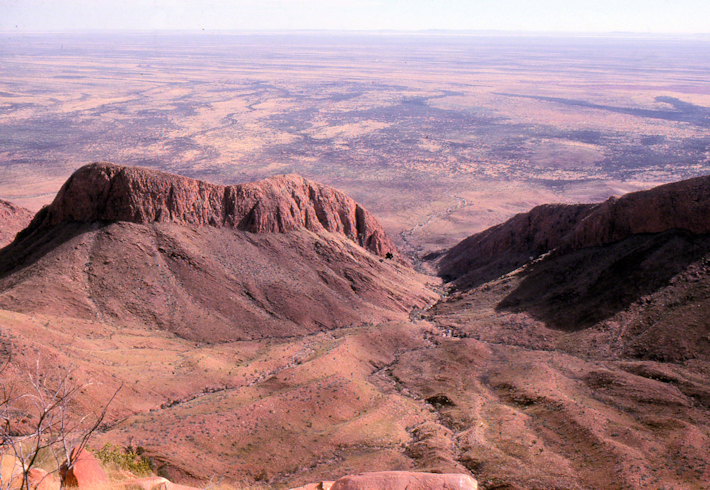
[Photo 2: Dangerous descent as far as Rick and spinifex is concerned © C.D. Trudinger 1977]

We also diverged. Dad was confident that all gullies lead to the big one at the base of the slope. ‘Ah, well! We will meet Rick in the gully below,’ he assured me.

But contrary to Dad’s prediction, we did not meet Rick. I could not help thinking, this was not the first time as far as Rick was concerned. We’d already lost him in the sand dunes near Uluru. Almost.

[Photo 3: Memories of a lost Rick in the sand dunes near Uluru © L.M. Kling (nee Trudinger) 1977]

Dad continued to search for his quart can. But that little friend Dad had cherished since the fifties, eluded him also.

We weaved our way down the main gully for about an hour. A huge spider in a web spanning the width of the gully confronted us. The spider, the size of a small bird, appeared uninviting, so we backtracked and decided to hike up and down the ridges.
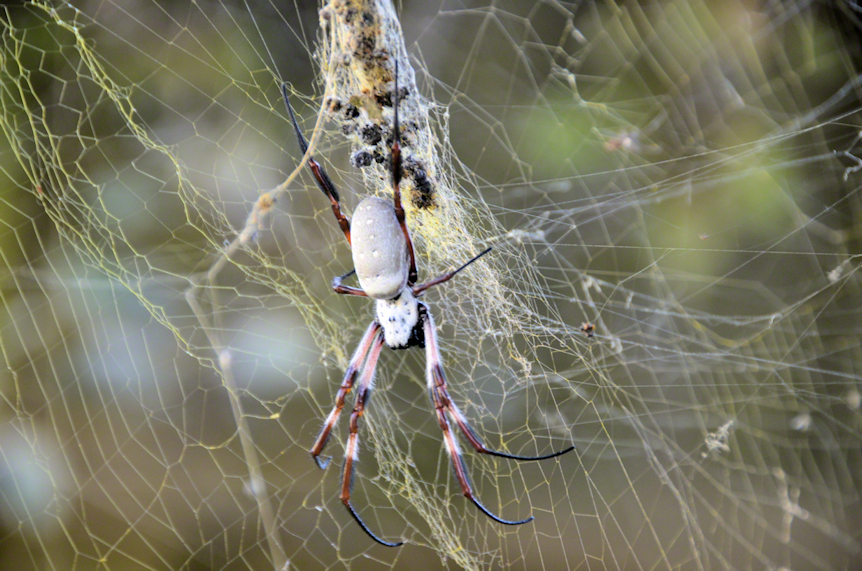
[Photo 4: Another big uninviting spider (Orb Weaver); they’re everywhere in Australia © L.M. Kling 2011]

For several hours, we struggled over ridges. Up and down, we tramped, yet seemed to make little progress; the rise and dips went on forever. The sun sank low, and so did our water supplies.

[Photo 5: Late afternoon on the Liebig Range © C.D. Trudinger 1981]

The heat drained me. My tongue stuck to the roof of my mouth. But we had to ration water.

Dad slumped on a slab of rock at the bottom of a gully. ‘Drink?’

I took the canteen from him and filled my cup. Then I spooned in some Salvital. I chugged down the water as it fizzed. So refreshing!

‘Oh, Lee-Anne!’ Dad quibbled. ‘You didn’t leave much for me!’ He poured the last drops of water from his canteen into his mouth and gazed in despair at the lengthening shadows of the mountain.

‘Oh, but Dad! It’s not fair! We will never get out of this place! We are lost forever.’ I had visions of future hikers coming upon our dried-up old bones thirty years later. ‘What are we going to do?’

[Photo 6: Dried bones; not human, kangaroo. Brachina Gorge Flinders Ranges © L.M. Kling 1999]

‘Well, um, perhaps we better pray God will help us.’ Dad bowed his head and clasped his hands. ‘Dear Lord, please help us find our way back to the truck. And forgive me for growling at Lee-Anne.’

‘Forgive me too. Help us not to run out of food and water, too.’

‘Bit late for that,’ Dad muttered. ‘Ah, well.’

We had barely finished praying, when an idea struck me. ‘Why don’t we climb up a ridge and walk along it. Surely if we go high enough, we’ll see the landmark and the land rover.’

‘Oh, I don’t know. We need to conserve our energy.’

‘Just one ridge won’t harm us.’

Dad sighed. ‘Okay, it’s worth a try.’

I raced up the hill and strode along the ridge. I climbed higher and higher. I glanced towards the east expecting, hoping, willing the Rover to appear. But with each stride, each hopeful gaze, nothing. I resolved to climb further up the slope before turning back.

[Photo 7: Ridges leading up to Liebig © C.D. Trudinger 1977]

After a few more steps, still nothing. With the heaviness of defeat, I turned to climb down. Then I saw it. The Land Rover sat at the base of the mountain, glistening in the last rays of the setting sun.

‘There it is!’ I jumped up and down over-reacting with excitement.

‘Praise the Lord!’ Dad’s shout echoed in the valley.

With renewed energy, we attacked the last mounds that lay between the vehicle and us.

‘Rick will probably be sitting there waiting for us wondering what has happened,’ Dad said puffing as we strode up to the land rover. ‘Can’t wait to have a few gallons of water.’

We rambled over to the rover. Dad circled the vehicle and returned to me shaking his head. ‘He’s not here.’

[Photo 8: Foreboding, Mt. Liebig at sunset © C.D. Trudinger 1981]

I wandered around the clearing searching for Rick. I looked behind bushes and under some neighbouring bean trees. My brother was nowhere in sight.

But worse still, when Dad tried to fill his cup, only a few drops of water trickled from the land rover’s water tank.

Dad stared at the ground and tapped his pockets. ‘This is not good. This is not good,’ he said.

The sun had set and a cold chill cut through me. He’s lost. My brother is lost in this wilderness. ‘What if he’s had an accident?’

‘We need to pray,’ Dad said.

Dad prayed, ‘Father, bring Rick home and provide us with water too.’

We waited watching the colours on the mountain fade and our hopes fade with them.

‘I guess we better get going,’ Dad said. He opened the door of the Land Rover.

Rick staggered around a nearby outcrop of rocks.

We ran to greet him.

‘Rick, you’re okay,’ Dad said hugging him.

‘What happened?’ I asked.

‘I took the long way and trekked around the base of the mountain. I thought it wouldn’t take that long, but it just went on and on.’

[Photo 9: Around the base of Mt. Liebig © S.O. Gross 1946]

As we walked to the Land Rover, Dad studied the vehicle. ‘You know, it’s on a slope, if I get it to level ground, we might have enough water.’

Dad drove the Rover to where the ground flattened out. Water never tasted so sweet.

© Lee-Anne Marie Kling 2016; updated 2019; 2021;2023

Feature: Painting acrylic on canvas: Descent from Liebig © Lee-Anne Marie Kling 2014

***

Find out how the adventure with Mr. B progresses.  

Click on the link, The T-Team with Mr. B and join the journey back in time to the 70’s and into the Centre of Australia.

Dreaming of an Aussie Outback Adventure?

Click the link below:

Trekking With the T-Team: Central Australian Safari 1981,

To download your Amazon Kindle copy of the story…

And escape in time and space to Centre of Australia 1981…

Trekking Thursday–Ernabella

[The T-Team with Mr. B Dad’s friend Mr. Banks and his son, Matt, joined Dad, my brother (Rick) and me on this journey of adventure. I guess Dad had some reservations how I would cope… But it soon became clear that the question was, how would Mr. B, a middle-aged man who was used to a life of luxury, cope?]

Deserted

[An extract from The T-Team with Mr. B: Central Australian Safari 1977, my newly released travel memoir, based on true events but names and events may have changed.]

We stopped in at Fregon, another Indigenous settlement much like Mimili; a row of tin sheds and deserted. Then at about 2.30pm we arrived at Ernabella.

A teacher friend of Dad’s invited us into his home for refreshments and each of us had a hot shower. I enjoyed the warm cascade of water on me. My treat for the week. Below rivers of red mud spun into the drain hole of the bath. I scrubbed my hair with shampoo. The soap refused to lather. I scrubbed and scrubbed.

‘Lee-Anne!’ Dad called. ‘Don’t take all day, the boys need a wash too.’

‘Oh, alright.’ I turned off the tap. I guess the boys did need to wash, probably more than me. They were getting quite ripe at close quarters in the Rover. After all, it had almost been a week since we had a proper wash.

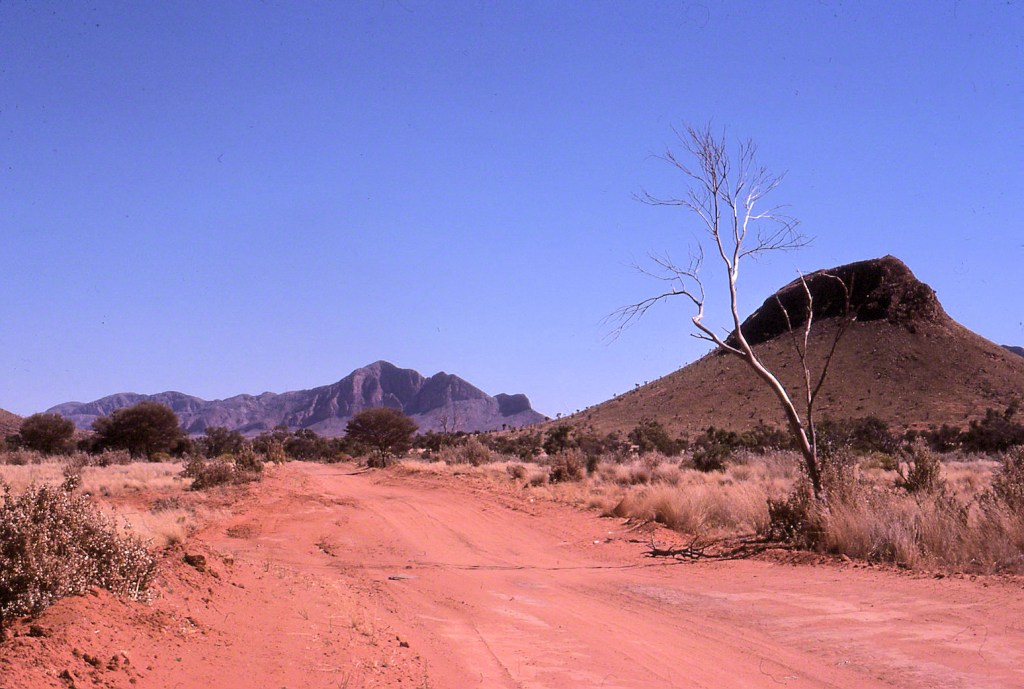
All showered and smelling sweet again with soap and deodorant, we trailed after Dad who gave us a tour of the settlement, including the school. Ernabella lies at the foot of the Musgrave Ranges, south of the South Australian and Northern Territory border. The land belongs to the Pitjantjara people. The mostly prefabricated buildings were neatly arranged around a random collection of unsealed roads.

[Photo 1: Approaching Ernabella © C.D. Trudinger circa1942]

Dad guided us around the school which appeared empty. We followed him circling the white building. ‘Must be closed,’ Dad said.

‘School holidays, I guess,’ I remarked.

Dad scanned the transportable blocks and then screwed up his nose. ‘We need to find someone to fix up the trailer.’

We walked through the settlement. The white buildings stood sentinel to the roads void of human activity and traffic. The crunching of stones under our feet was magnified by a town suffering from a bad case of abandonment.

‘Where are all the people?’ Mr. B asked.

‘Wow! The place is tidy and look how clean the streets, are,’ I said.

‘Except for the gravel,’ Richard mumbled.

Matt sniggered.

We wandered after Dad who was having a hard time finding someone to fix our trailer. Anyone…No one seemed to be around. I wondered if Ernabella was a ghost town.

Mr. B suggested we wait by the store that seemed closed and suffering a severe case of neglect. This we did.

‘The reason the settlement is so tidy,’ Dad explained, ‘is because everybody, I mean the aborigines, have a job to do here. They don’t get their welfare payment unless they do their job. They probably have someone cleaning the streets of rubbish and all sorts of other jobs.’

‘Not the store, apparently,’ Mr. B said.

‘Ah, well, they have to get the stock from down south, from Adelaide. Perhaps they’ve run out.’ Dad coughed.

[Photo 2: Building in Ernabella © C.D. Trudinger 1992]

An Indigenous man sauntered up to us.

Dad strode to meet the man and he guided him to the trailer still perched on top of the Rover.

While the trailer was being repaired, I climbed a hill. I figured the trailer would take ages to be fixed so I had time to sun bake. I wanted a tan. Treading up the hill, I noticed Matt running after me.

I stood and sighed. Great! Just when I wanted space to myself.

Matt held up a stick. ‘Look what I found!’

I examined the carved piece of wood. ‘Oh, yeah?’

‘What do you think it is?’

‘I dunno, a corroboree stick, I suppose.’

‘Oh, cool! Can you take a photo of me with it?’

‘Yeah, okay.’

[Photo 3: Corroboree Stick on Trudinger Hill © L.M. Kling (nee Trudinger)] 

I photographed Matt proudly holding a corroboree stick. The Musgrave Ranges behind were cast in hues of gold from the rays of the late afternoon sun. When we had descended the hill and found Dad, he told us that the “mountain” we had climbed was named “Mount Trudinger” after his brother who had been a teacher in Ernabella.

Near evening, we visited an Indigenous pastor. As the Musgrave Ranges is sacred to the Pitjantjatjara People, Dad and the pastor discussed the possibility of getting a couple of guides to be our companions as we climbed Mt. Woodroffe.

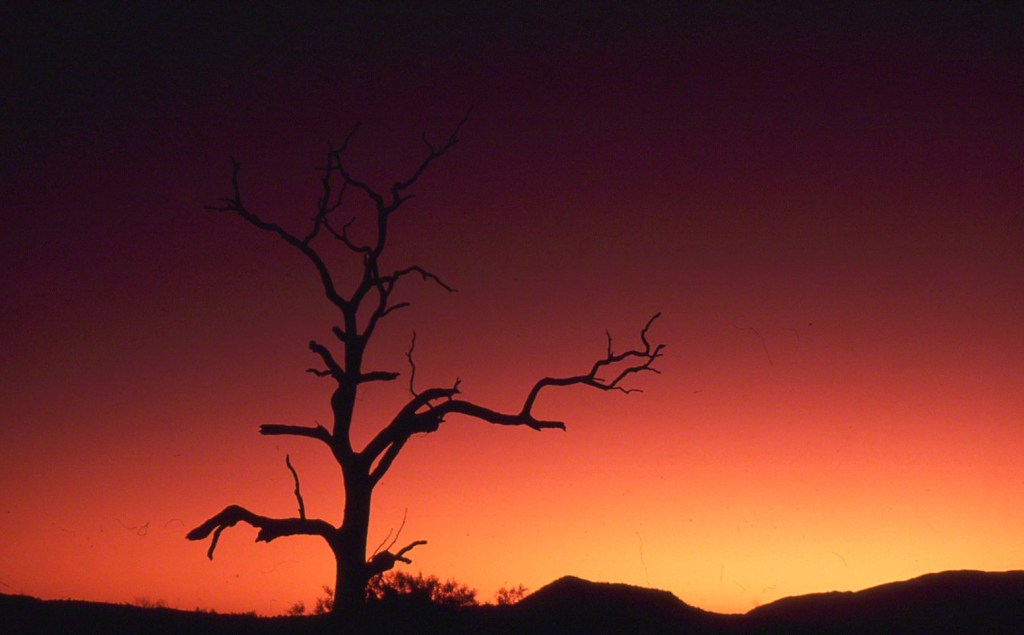
[Photo 4 and feature: Dead Tree Sunset © C.D. Trudinger circa 1992]

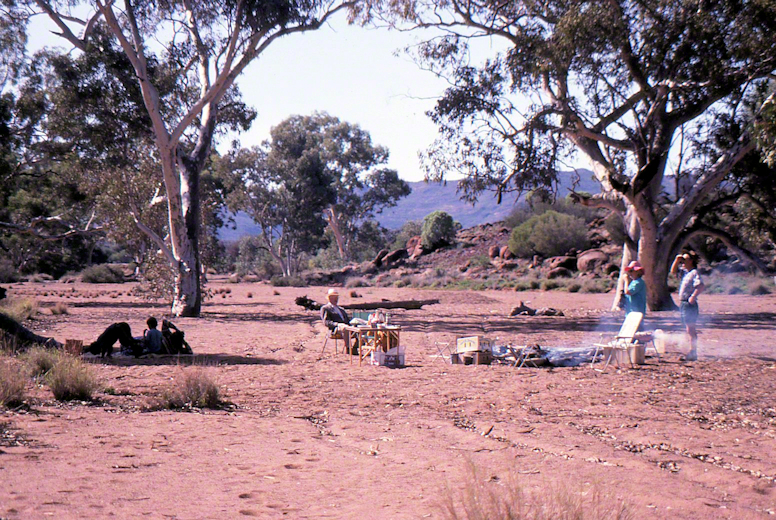
For the night we camped in Two Mile Creek which is not far from Ernabella. Dad conceded to camp not alongside, but right in the dry creek bed on the soft sand. This arrangement made Mr. B very happy. ‘For once I get to sleep on soft sand,’ he said.

‘Just remember, if we have even a hint of rain, we pack up and go to higher ground,’ Dad answered.

Mr B chuckled. ‘No chance of that, the weather’s been as dry as the bones of that deceased camel we saw on the side of the road.’

‘The water comes rushing down if there’s a storm,’ Dad said.

‘Oh, of course, Captain.’ Mr B then turned over and snored.

Rick muttered, ‘The only storm will be if Mr B doesn’t get a good night’s sleep.’

Matt sniggered.

[Photo 5: Picinic on Soft Sand, at last! © C.D. Trudinger circa 1992]

© Lee-Anne Marie Kling 2018

Feature Photo: Dead Tree sunset in Musgraves © C.D. Trudinger circa 1992

***

Keen to read more of the adventures of the T-Team with Mr. B?

Click on the link and come along for the adventure.

 The T-Team with Mr. B: Central Australian Safari 1977

Want more but too expensive to travel down under?

Why not take a virtual travel with the T-Team Adventures in Australia?

Click here on:

Trekking With the T-Team: Central Australian Safari 1981

And escape in time and space to Central Australia 1981…

Travelling Thursday–Gosse Range

T-Team Series — Tnorala Mystery

 [The T-Team with Mr. BDad’s friend Mr. Banks and his son, Matt, joined Dad, my brother (Rick) and me on this journey of adventure. I guess Dad had some reservations how I would cope… But it soon became clear that the question was, how would Mr B who was used to a life of luxury cope?

*A story based on real life events but some names and how those events have been remembered have changed.]

Tnorala — Gosse Range

An episode in the prequel to my memoir, Trekking With the T-Team: Central Australian Safari 1981. Books both in Kindle and paperback available on Amazon.

Our Indigenous guide, Sammy jiggled his knee. He clutched the paper-bag containing his pie, his fingers curled tight scrunching the top of the bag.

‘Aren’t you going to eat it?’ I asked.

The T-Team had just left Papunya; our first contact of “civilisation” since the trek way out west to Mt Liebig and Talipata Spring. Sammy’s first meat pie for at least a week, I reckon, and all he did was hold it in the bag like a prized souvenir.

[Photo 1: Haasts Bluff near Papunya © C.D. Trudinger 1977]

Dad promised us barbeque beef steak and sausages at Gosse Range before travelling onto Areyonga. Mr. B, our family friend who with his son Matt, had accompanied us on this trip, seemed pleased with this proposal.

‘I dare say, David,’ Mr. B said, ‘I can’t help having a certain satisfaction eating steak after what one of their sort did to us, there, camping near Mt Liebig. I mean, that beast of a bull terrorized Matt and me while you and your son and daughter hiked up the mountain.’

Dad sighed. ‘It is cattle country and we did camp on their territory.’

‘Hmm, I thought you would’ve checked that out, mate. Most uncomfortable.’

[Photo 2: Cattle near Gosse Range © L.M. Kling 2013]

With the mention of uncomfortable, I glanced at our Indigenous guides, Sammy who I’ve mentioned, and Harry. As the Rover lurched and rumbled along the corrugated road to the Gosse Range, Sammy fidgeted, twisting the top of the paper bag in his fist, while Harry sat relaxed, rolling with the bumps.

[Photo 3: Road to Gosse Range © L.M. Kling 2013]

I nudged my brother, Rick. ‘Why isn’t he eating his pie?’

Rick shrugged. ‘Perhaps he’s being polite, not eating in front of people.’

‘I don’t mind.’ I gestured to Sammy. ‘It’s okay, you can eat it.’

I watched Sammy pull the meat pie from the bag and bite into it. He chewed each piece as if a cow chewing cud. He grimaced. He looked like he was eating a pie full of worms. With each bite and grimace, I giggled.

Sammy persevered, his mouth downturned. Every so often, he muttered to Harry in their Aranda language. Harry nodded.

‘I reckon he doesn’t like the pie,’ I muttered to Rick.

‘Probably cold,’ Rick mumbled.

I snorted. ‘He took long enough to start eating it.’

[Photo 4: Outside Gosse Range © L.M. Kling (nee Trudinger) 1977]

A glimpse of the jagged peaks of the Gosse Range flitted past through the dusty Rover windows. I peered past Sammy who had finished his pie to catch more views of the range.

‘Hey, Rick, look!’ I pointed. ‘The Gosse Range, it’s just like the painting Grandma’s got in her lounge room.’

From the front of the Rover Mr. B asked, ‘Did you say, David that you met the famous Albert Namatjira when you lived up in Hermannsburg?’

‘Oh, of course. My father-in-law was a great supporter of Albert’s art.’

‘How did the Gosse Range come about?’ I asked my audience from the back of the Rover.

Rick sniffed. ‘A meteor, I think.’

‘Or comet?’ I added. ‘What do you think, Sammy?’

Sammy wiped his mouth and didn’t respond.

‘Harry?’

Harry smiled and also remained mute on the subject.

I sighed and said, ‘Another thing I have to look up in the encyclopaedia.’

Harry looked in my direction. ‘Sammy wants to leave before we go to Areyonga.’

‘Why?’

‘He doesn’t want to go there. No friends. Not his family.’

‘Oh, that’s a funny reason.’

The Rover began to jerk and rumble over rocks and ditches. The jagged walls of the Gosse Range towered above us as the T-Team navigated the track leading into the middle of the range.

[Photo 5: Track leading into the Gosse Range © L.M. Kling 2013]

Sammy glanced left and right and wrung his hands together. Beads of sweat collected on his forehead and temples.

Once inside, Dad built a fire for the barbeque. Rick and Matt dangled sausages on sticks over the yellow flames. I gazed around the plain, its dry flat surface dusted with red-tinted sand and golden grasses. The range in shades of salmon pink surrounded this paddock. There seemed to be one lonely tree in the vast field that spanned several kilometres, and this was the tree we found to picnic under. While Mr. B and Harry set up picnic essentials on the tarpaulin, I watched Sammy pace back and forth.

[Photo 6: Picnic in the Gosse Range © L.M. Kling (nee Trudinger) 1977]

‘Lee-Anne, can you select your beef steak, please, and put it on the grille?’ Dad called.

I turned and picked out a smaller portion to add to the sizzling pieces of meat on the grill on top of the coals. Then I looked up to track Sammy’s progress. Sammy had vanished.

‘What’s the matter with Sammy? Where’s he gone?’ I asked Harry.

Harry nodded. ‘The real reason Sammy no want to go to Areyonga—there’s a big initiation ceremony, a corroboree going on there.’

‘Ah, yes,’ Dad said. ‘He’s scared.’

‘Sammy’s not from that tribe,’ Harry explained.

‘Would he get killed if they saw him?’ Dad asked.

Harry nodded. ‘Even if he didn’t see the ceremony, they’d kill him just for being there.’

‘Really?’ I said. ‘No wonder Sammy wasn’t himself. He’s usually laughing and so funny. But not today.’

[Photo 7: Inside the Gosse Range © C.D. Trudinger 1977]

Munching on my steak, I absorbed the expanse of dried grass, and the ochre range that’s eroded, yet the mystery of the rites and customs of the Indigenous of this land on this day at least, fascinated me more than a crater created by a meteorite thousands of years ago. Still, I did wonder at the devastation and effect on the Earth such an impact would’ve had. The crater spans 4.5km in diameter, so must’ve been one big rock.

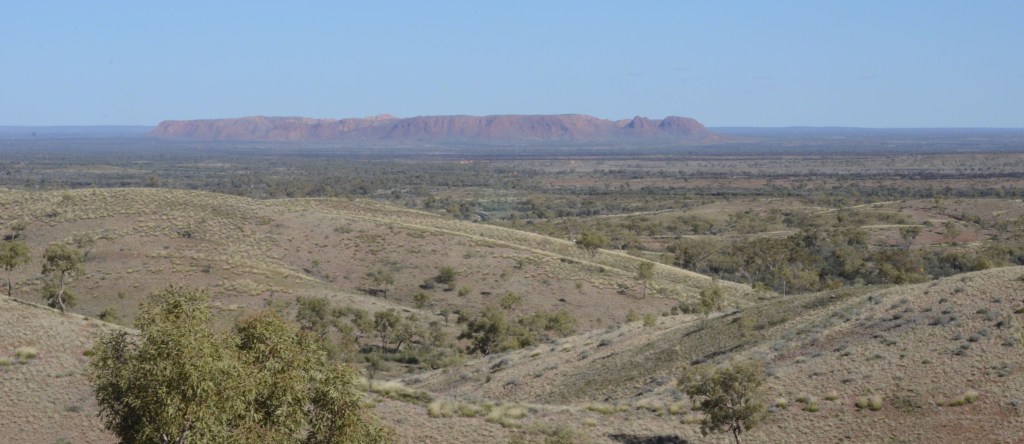
[Photo 8: Gosse Range from lookout © L.M. Kling 2013]

After lunch, we left Sammy in the Gosse Range, his country, and headed for the lookout. There the Gosses appeared mauve in the afternoon light.

Dad tapped his pocket. ‘I think we’ll go from here to Hermannsburg, it’s too late to drop into Areyonga.’

‘Pity,’ I remarked, ‘Sammy could’ve come with us, after all.’

© Lee-Anne Marie Kling 2018; Updated 2019

 Feature Photo: Sunset on Gosse Range © S.O. Gross circa 1946 (courtesy of M.E. Trudinger)

***

Keen to read more of the adventures of the T-Team with Mr. B?

Click on the link and come along for the adventure.

The T-Team with Mr. B: Central Australian Safari 1977

***

Want more but too expensive to travel down under? Why not take a virtual travel with the T-Team Adventures in Australia?

Click here on Trekking With the T-Team: Central Australian Safari 1981

And escape in time and space to Central Australia 1981…
Fantastic Friday Fiction–Choice bits (4)

Last Slice of the Black Forest — Gunter’s Wish

Gunter hobbled up the path to his house. His feet squashed into shoes too small for him. Just before he entered, Gunter examined his reflection in the window. He touched his pink cheeks and admired the sculptured perfection—the high forehead with no acne, the strong chin with no spots but a beard like a man, and hair straight golden and manageable. He patted the top of his head. ‘Hmm, a bit thin on top,’ he mumbled. ‘Oh, well, now I can be happy that not even my brother Johann was perfect.’

Grandmother flung open the door. Gunter slammed against the window. The wood panel blocked her view of Gunter. ‘Now what am I going to do? The dinner is burnt,’ she said. ‘Where is he?’

‘Forgotten something?’ Boris said as he peeped around the corner of the house. He handed Gunter a pile of folded clothes. ‘Can’t go around the village dressed like a boy, now can you.’ Boris then vanished into the night.

Once Grandmother withdrew back into the house, Gunter tip-toed to the outhouse and changed into Johann’s dapper tights, striped breeches and white shirt with the obligatory lacy sleeves. As he strolled to the front door, he heard screams and then a slap. Then he observed Anna run down the path, and a gangly looking fellow in underclothes loping after her.

Gunter pushed open the door and waltzed into the kitchen. Grandmother continued to sweep the cracked black and white tiles. A cloud of dust chased her around the room as she swept. ‘Your soup is on the stove, Johann.’

Salome leaned on the balustrade of the stairs, her blonde locks pasted to her perspiring temples. She shook her head. ‘At the inn again, I presume.’

Gunter tugged at the hem of his shirt as Johann always did and said what Johann always said, ‘A man has got to do what a man has got to do.’

The door burst open and his brother stumbled in sporting a red welt on his cheek.

Salome launched into him like a fish-monger’s wife on an errant husband. ‘What have you been doing? How hard is it to find your brother? No supper for you. Off you go—bed—go on!’ She grabbed Grandmother’s broom and chased Johann in the form of Gunter into his sleeping quarters with Johann crying protests all the way.

Gunter hid his urge to smile behind his hand.

After helping himself to pumpkin soup and bread, Gunter yawned and mumbled his excuses for an early night and trotted upstairs to the bed he shared with his older now younger brother. Oh what a night it would be, sleeping on the less lumpy side for once, hogging the quilt and tormenting his brother. It was payback time.

The benefits of being Johann did not stop there. Next day, as he strolled in the village streets, men tipped their hats, women weaved out of their way through the crowd over to him and gifted him with fruit, home-made honey biscuits and apple cake. Milk maids, those same ones who reviled him the day before, this time, fluttered their lashes, blushed and shot him sideways glances. The tallest of the three sidled up to him as he stood talking to the tailor as they discussed his jacket for the May Day dance, and she pressed a note into his hand. Mein Gott, what a life!

Meanwhile his brother languished under the whip of Grandmother’s broom when she heard he’d been expelled from school—again. Ah, sweet revenge.

Then the icing on the kuchen—lunch with Anna. He arranged a picnic by the river. Blue skies, tulips blooming, green grass, the birds singing and the bees humming. What a picture! What a day with is maiden in his arms. Anna talked non-stop the whole two hours. Gunter as his brother, held his tongue when she prattled on about how much she didn’t like Johann’s younger brother, especially after the prank he pulled the previous night.

‘He’s creepy,’ she said and shuddered, ‘he tried to grope me. Ugh!’

Her words stabbed at his insides. He realised as Gunter he never had a chance.

After Gunter walked Anna back to the school where she helped her father, he spent the afternoon brooding, drinking beer at the Bierhaus until he was almost sick. Then he tramped through the forest alone. The novelty of being Johann had worn off and revenge didn’t seem as sweet anymore.

At the dinner table Johann as Gunter raged. ‘I’m not Gunter,’ he yelled and stabbed the table with his fork. ‘What is wrong with you people?’

Their mother made one of her rare appearances downstairs but she seemed far away and unmoved by Johann’s tantrum.

Gunter decided he had to leave. His face tingled as he slipped out of the house and hastened to the clearing with the moss-covered log; the meeting place designated by Boris.

The ground glowed with warped and weird shapes under the strange luminous disk that hovered over the hill. No frogs croaked. No birds chirped. The air was still and cold. Even the cows refrained from braying.

Gunter sat on the log and waited. Time seemed to stop in the silence.

A beam shimmered from the disk. Gunter rubbed his eyes and blinked. Boris materialised in the centre of the beam. He appeared cockroach-shaped, then, as he strode toward Gunter, he morphed into human-form.

‘Well, now, Herr Fahrer, have you decided?’ Boris asked.

‘Yes, I have.’

‘Well, then.’

‘More than anything else, I want to be handsome, brave, attractive to the ladies like my brother Johann. But, I want to be myself, not someone else.’

Boris raised one side of the hairy eye-brow that spanned his forehead. ‘Very well, then.’

‘And one more thing, you know, like a package?’

‘Yes?’

‘Could I, with this new face, have a new life, say like in the Great South Land?’

‘Hmm,’ Boris nodded, ‘that can be arranged, if you wish. But…’

‘What?’

Boris coughed and flapped his wings. ‘You’re not going to fit in with the people who live there at the moment. I’d say wait until I’ve finished with Great Britain…’ He paced the clearing with his hands tucked behind his back. ‘In the meantime, I could take you on an adventure up there, into the far reaches of the galaxy. Consider it an added bonus, seeing what no man on this planet has seen before. What do you say?’

‘Ja, voll!’

‘Just sign here.’

Boris presented Gunter with the tablet, its screen chock full of tiny black lines. ‘Don’t worry,’ he said, ‘it’s all routine. Just basically says you take responsibility for your decisions. Just covering my back and yours. You know, some civilisations can be quite litigious.’ Boris handed a fine pointy stick to Gunter. ‘Use this pen to sign your name.’

Gunter wrote his name using the fine script he had learnt at school, and within seconds, he sat in a velvet-covered chair on the bridge of Boris’ ship. The walls shone with fresh white paint, the silver instruments gleamed, and the furnishings were scented with potpourri. He studied the sun as it shrank to just a speck of light amongst many specks of light.

Boris reclined on his seat, fully armoured, fully cockroach. ‘You should notice the changes in your form soon, my fellow.’

Gunter tingled all over and he glanced at his hand. His warm, fuzzy sensation turned to cold hard panic.

‘My hand!’ he cried wriggling his three elongated fingers. ‘I’m turning grey!’

‘So, there you go,’ Boris said as he adjusted his light shields. ‘Right on schedule.’

Gunter picked up a looking-glass placed at his side and his hand trembled. He glared bug-eyed at his reflection. ‘I’m turning into a praying-mantis.’

‘You didn’t specify you wanted to be human.’

‘But a stick-insect? I’m hideous!’

Boris folded his four hands over his barrel chest. ‘So? Most Greys are females. So you, as a male, will be most attractive to them.’

Gunter unstrapped himself and jumped from his seat. He ran to the viewing screen. With his long fingers he traced the planets and sun of his solar system. ‘I have changed my mind. I want to go home.’

Boris smacked his lips and readjusted his bottom’s position on his seat. ‘Too late. You’ve signed the contract. Didn’t you read the fine print? All choices are final and cannot be changed.’

© Lee-Anne Marie Kling 2018; updated 2023

Feature photo: A door, Romantic Road, Bavaria © L.M. Kling 2014

***

Read more of the consequences of Gunter’s choices, the adventure, the war against Boris. Discover the up close, personal and rather awkward relationship between Gunter and that nasty piece of cockroach-alien work Boris in my novels…

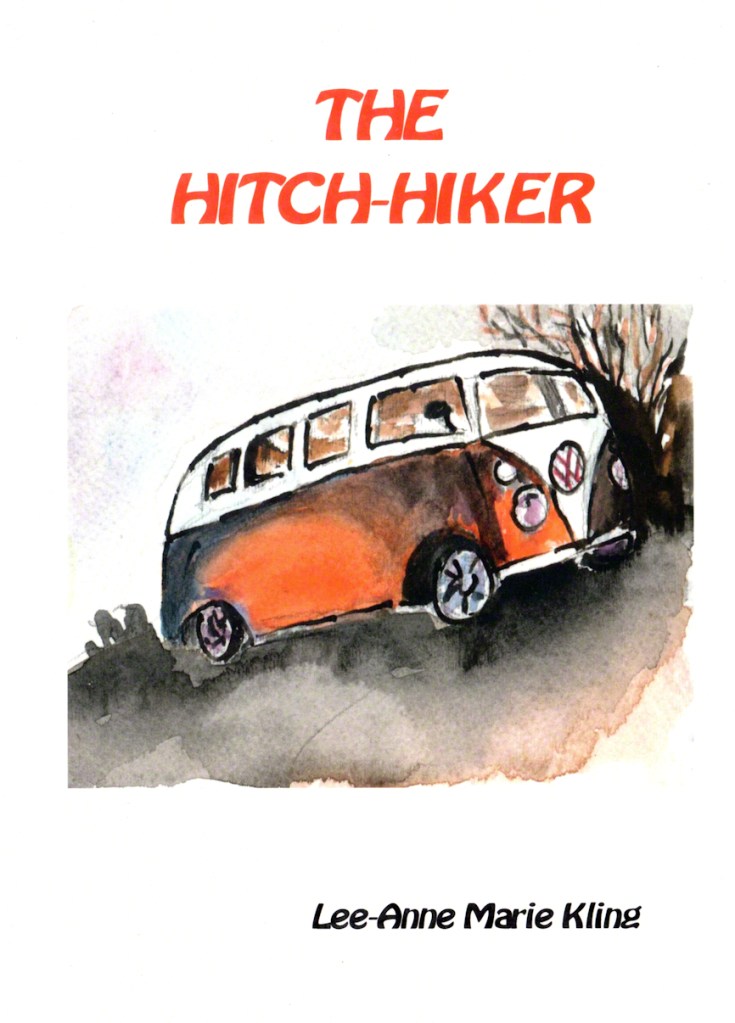
The Hitch-hiker

Mission of the Unwilling

The Lost World of the Wends

Or

Join the journey of discovery,

With my new release…

The T-Team with Mr. B: Central Australian Safari 1977

Travelling Thursday–The T-Team with Mr. B: Uluru

ULURU SUNSET—Lost

 [Finally, The T-Team with Mr. B: Central Australian Safari 1977 is published on Amazon Kindle.

This time, the customary viewing of an icon of Australia, doesn’t quite go to plan.]

Dad meant what he said; he believed we, as the T-Team were travellers, not tourists. So, when the sun began its journey to the other side of the earth, and edged towards the western horizon, Dad drove further west and far away from the popular tourist haunts for the sunset on the Rock.

‘Don’t go too far,’ Mr. B said as he glanced back at the diminishing size of the Rock. ‘I want a red rock of considerable size.’

‘I know what I’m doing,’ Dad replied.

But every vantage point that we considered photo-worthy, so did clusters of tourists. The ants may have been heading for bed, but the road west of Uluru swarmed with sightseers scrambling over the landscape to capture that momentous event of the sunset on Uluru.

*[Photo 1: Two blokes waiting for Uluru to turn © L.M. Kling (nee Trudinger) 1977]

‘I hope we’re not going to miss Uluru turning red, ‘cos that’s what I came here to see,’ Mr. B said.

‘Plenty of time,’ Dad said. ‘Trust me.’

‘I’ll hold you to that promise, mate.’

Dad sighed and then turned into the next available place to park the Rover.

Mr. B glanced at his gold watch. ‘I mean to say, it’s nearly six o’clock. The sun sets at six, doesn’t it?’

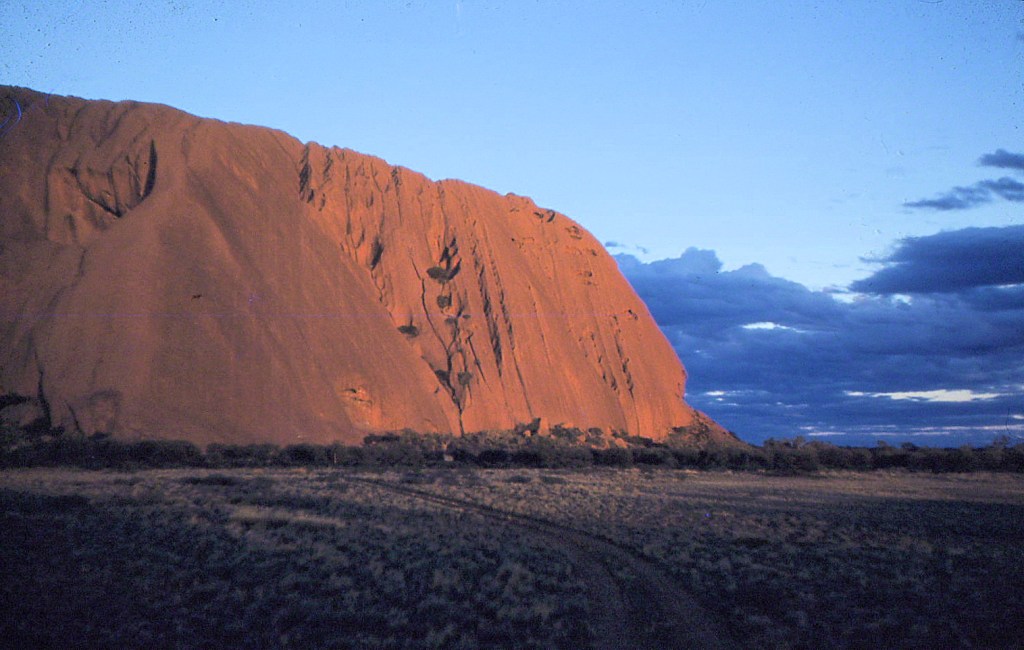
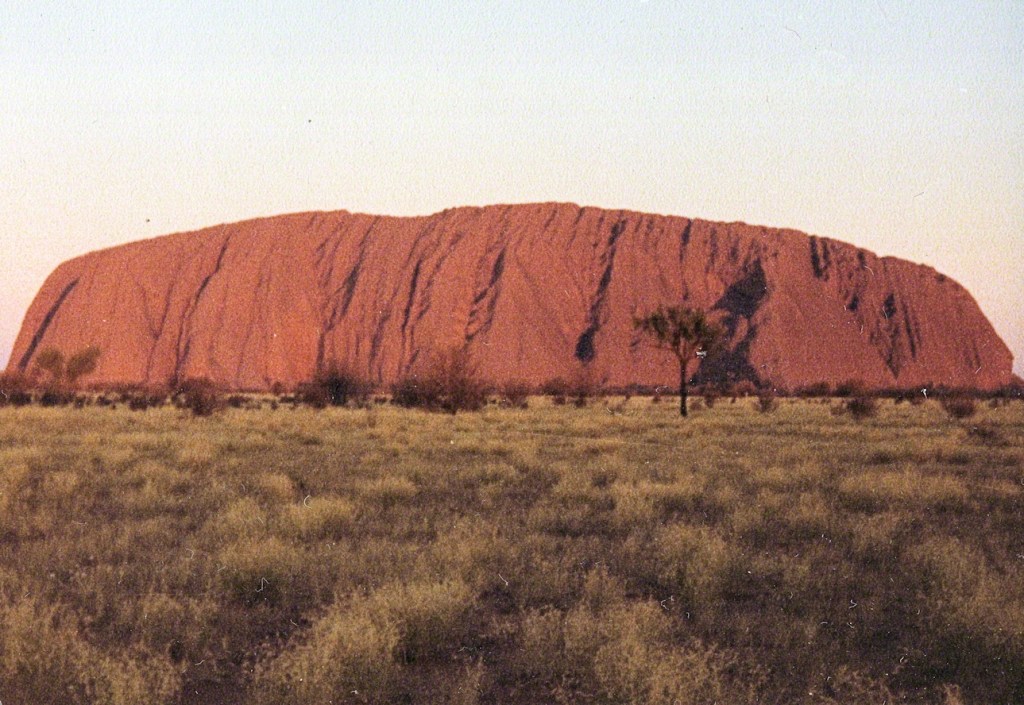
We joined the tourists in the small clearing to take the Uluru-at-sunset-photos. There’s one snap I took of two travellers admiring the Rock as it deepened in colour, more a rusty-red, than the scarlet I’d seen on calendars. So, it’s taken with an instamatic camera and the quality is pitiful compared to the chocolate-box number my grandpa took in the 1950’s, but I reckon it captures the atmosphere.

*[Photo 2: Nothing like the Uluru sunset my Grandpa took © S.O. Gross circa 1950]

‘Enough of these tourists,’ Richard grumbled. Clutching his polaroid camera, he stormed up the nearest hill.

‘Wait!’ I called and raced after him.

My brother ignored me and quickened his stride. I tried to catch up but soon tired of his fast pace. I watched him vanish behind some spinifex bushes and decided his quest for tourist-free photos was pointless. I gazed at the Rock squatting behind waves of sand-hills and bushes. The view’s going to be just as good, if not better by the road and the masses, I thought and rushed back to Dad before the sun went down too far and the Rock had lost its lustre.

*[Photo 3: I mean, where’s the colour?? © L.M. Kling (nee Trudinger) 1977]

Uluru faded from clay-red to a dull grey and the tourist congregation thinned, trickling away in their cars and buses towards the camping ground situated east of the Rock.

‘Is that it?’ I quizzed Dad. The Uluru at sunset in my mind had been spectacular in its failure to deliver. ‘Why didn’t it turn bright red?’

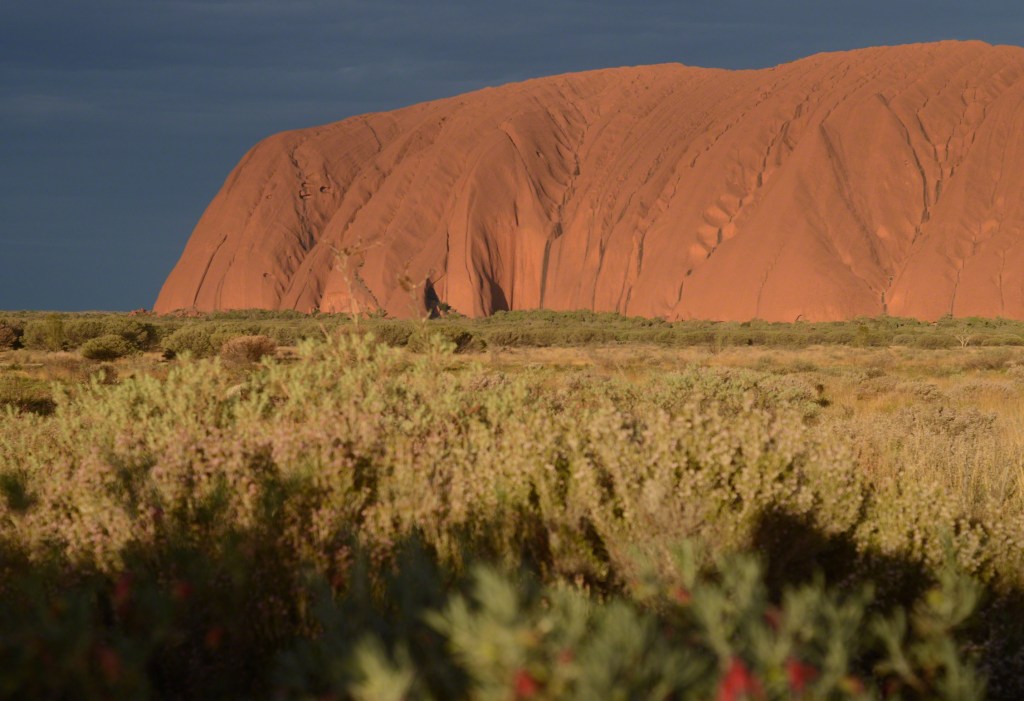
[Photo 4: You mean, like this? Picture perfect, chocolate box in 2013 © L.M. Kling 2013]

‘You need clouds for that. Clouds make all the difference,’ Dad said, his lips forming a beak. ‘Glad my camera’s out of action and I didn’t waste film on it.’

‘You mean, the Rock doesn’t always turn red?’

‘No, it’s the clouds that make the difference.’

‘What on the Rock?’

‘No, to the west, where the sun sets.’

*[Photo 5: Yeah, clouds like the ones we had in 2013 © L.M. Kling 2013]

‘But the photo of a red Ayres Rock taken by Grandpa had clouds around it.’

‘Yeah, well, there would’ve been clouds in the west too,’ Dad explained. ‘See, the sky is clear tonight, so that’s it for the Rock.’

‘Disappointing! A very poor show, ol’ friend.’ Mr. B sauntered past us with Matt tagging behind. ‘Come on, we better get to camp. Don’t want to be cooking in the dark. Don’t want the likes of egg soup again.’

Dad peered into the distant black lumps of hills. ‘Where’s Richard?’

I stared into the thickening darkness. No Richard. ‘Dunno, went into the sand-hills,’ I said with a shrug.

‘Oh, well, I guess he’s gone for a walk,’ Dad said.

*[Photo 6: So different in 2013—All golden © L.M. Kling 2013]

The Rock became a dull silhouette on the horizon. We packed away our cameras and waited. And waited for Richard. Darkness settled on the land. We waited some more. The icy cold of the night air seeped into our bones. We waited but he did not appear.

‘Where could he be?’ Dad said and then stormed into the bush.

Minutes later, Dad tramped back to us waiting at the Rover. His search in the nearby scrub was fruitless.

Each one of us stood silent; silent sentinels around the Rover.

‘I hope he’s alright,’ my comment plopped in the well of silence. A chill coursed down my spine. What if an accident had befallen my lost brother? The dark of night had swallowed my brother up.

Dad grabbed the torch from the glove box in the Rover, and then marched back up the sand-hill.

I paced up and down the road. Mr. B folded his arms across his chest and scrutinised the shadows of bush that had now consumed Dad. Matt gazed up at the emerging mass of the Milky Way.

‘I hope they’re okay. I hope Dad finds Richard.’ My chest hurt with the pain of losing my brother.

Mr. B sighed. ‘Probably just a—’

‘What?’ I asked.

‘There they are,’ Mr. B said. ‘All that worry for nothing. You’ll get grey hairs if you keep worrying like that.’

I pulled at my hair and then raced up to my brother. ‘Where were you?’

‘I went out along the dunes. I kept walking and walking trying to find a good spot,’ Richard said.

Dad chuckled. ‘And when he did, he waited for the Rock to turn red.’

*[Photo 7: More of the “Red” Rock close up © L.M. Kling 2013]

For the night we camped in an aboriginal reserve seven miles out of the Uluru—Kata Tjuta Reserve. In preparation for the trip, Dad had successfully applied for permission to camp there. This time Dad and I had two fires going each side of us as the previous night was so cold that I had little sleep. We hoped that two fires would be better than one to keep the chills away. Mr. B and his son Matt on the other hand, settled for one shared fire and superior fibres of their expensive sleeping bags to keep the cold out.

And Richard, after all his effort to scare us by almost getting lost, buried himself in his rather ordinary cotton sleeping bag, next to his single fire, and was the first one, after our rather simple rice dinner, to be snoring away, lost in the land of nod.

© Lee-Anne Marie Kling 2016; updated 2018; 2022; 2023

*Feature Photo: Sunset on the Rock © Lee-Anne Marie Kling (nee Trudinger) 1977

***

Find out how the adventure with Mr. B progresses.  

Click on the link, The T-Team with Mr. B

And join the journey back in time to the 70’s and into the Centre of Australia.