Virtual Trekking Behind the Art: Ocean Beach Tasmania
[In the last few weeks, after months of drought, rain. And, almost a month after storms and extra high tides, more extra high tides last Tuesday. So, in memory of the cold stormy weather, here’s an old piece of calm from our Tasmanian travels.]
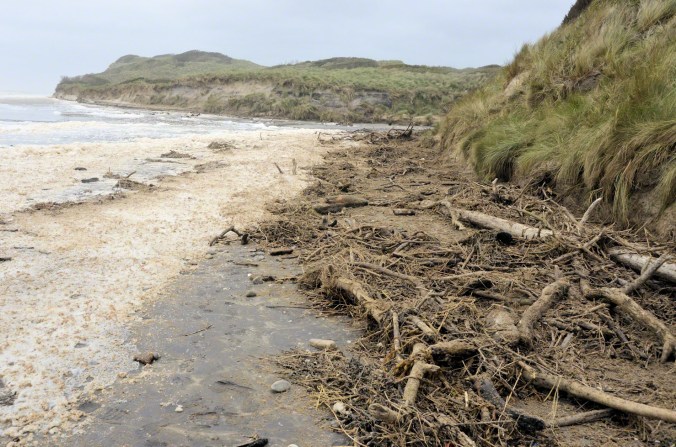
Ocean Beach lies on the West Coast of Tasmania near Strahan. The wild winds of the roaring forties (between the 40-and 50-degrees latitude) attack the coast with relentless ferocity.
In 2001 I visited Ocean Beach with my family to see the mutton birds coming home to roost for the night. I had barely stepped out of the car before the biting cold wind blasted me and I made a hasty retreat back into the car. No view of mutton birds that evening. Result, no photos.
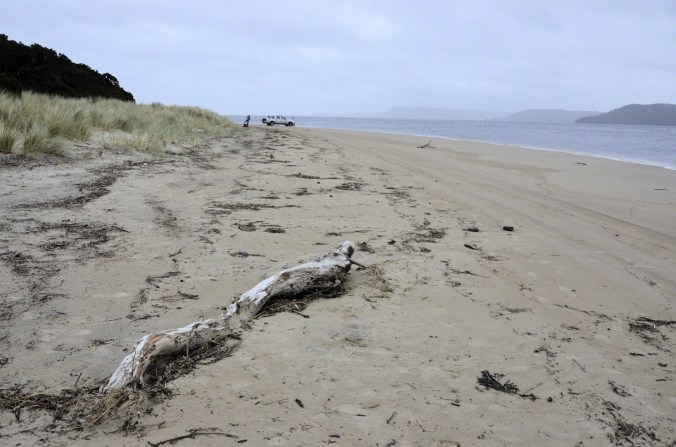
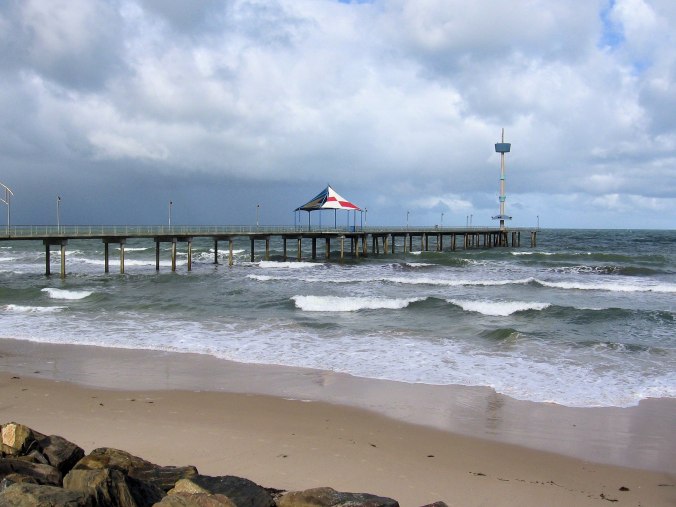
Ten years later, my mum and I visited Ocean Beach. While the East Coast was inundated with floods, Ocean Beach that afternoon was calm. We explored the beach, taking many photos of this rare state of the beach.
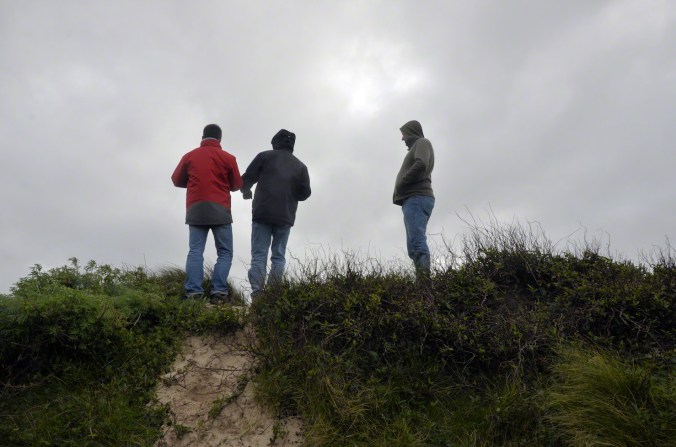
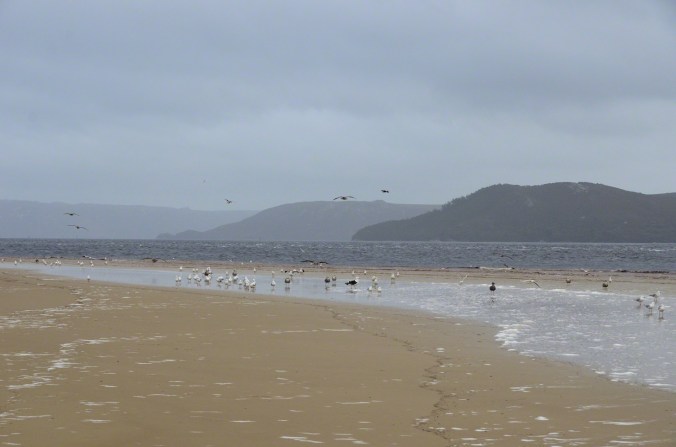
October 2016, the K-Team ventured onto the sands of Ocean Beach on perhaps a not-so-calm day; calm enough though, that we were able to walk along the beach. Not being satisfied with just an obligatory few metres up and down, my husband led us way up the estuary where we spotted a variety of birds, some fishermen, and the lighthouse sitting out there near the heads. Gotta get our money’s worth. After all, he’d seen the potential from the dizzy distance of the cruise boat as it sailed past the heads of Macquarie Harbour. I think if we’d allowed him, we’d still be walking along the coast somewhere around Tasmania.
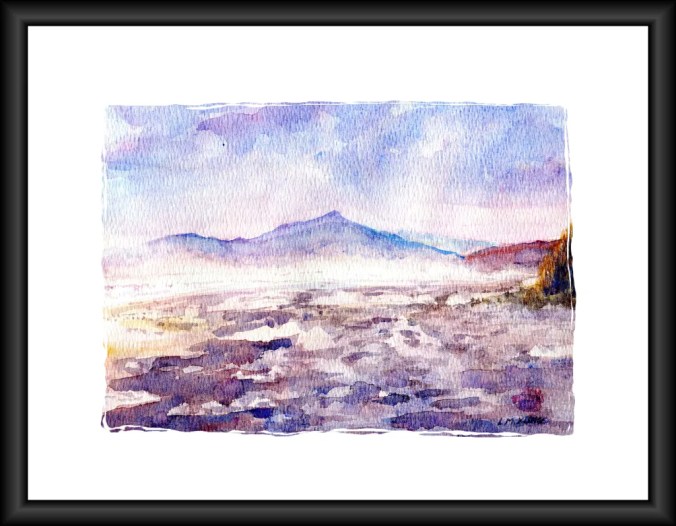
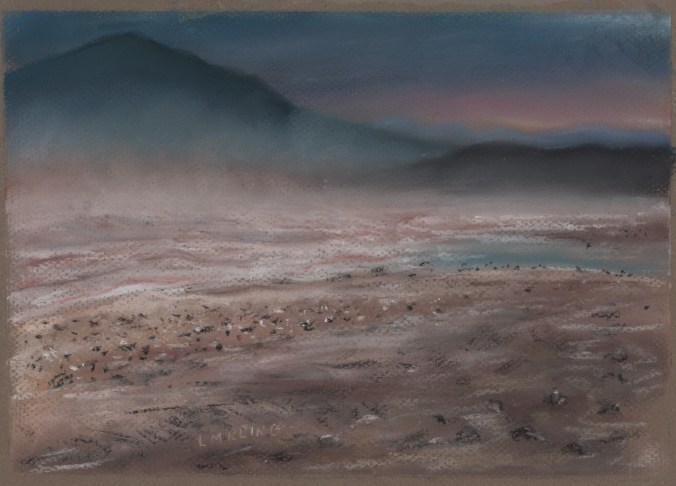
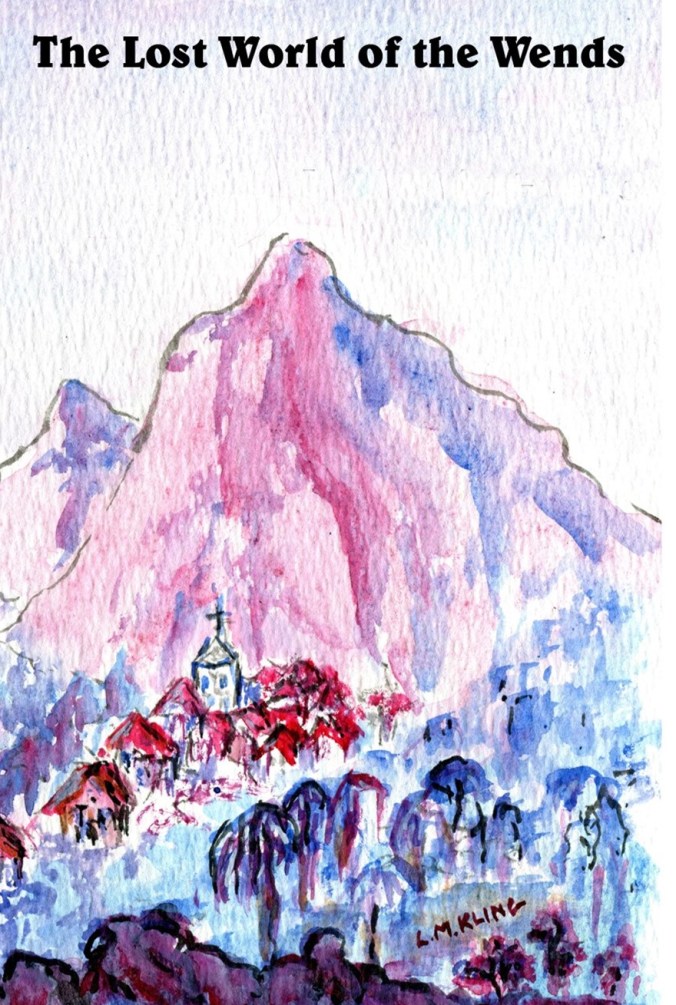
Oh, dear! I must’ve been deep in the rabbit-hole of painting yesterday. See what I painted in one sunny mid-winter’s afternoon, yesterday. Anyway, being what was intended to be Family History Friday for Tru-Kling Creations, went down a rabbit-hole and ended up somewhere else.
Check out the re-blog of the story of my great-great grandfather from Silesia.
Again, a detective sat opposite Francis. This one was female and wore a smug expression. Introduced herself as Detective Dee Berry. She announced that she had further questions that must be answered into the cold case inquiry of the hit-and-run of Milo Katz.
Francis Renard watched as this woman who he vaguely remembered from his youth purse her lips as if her mouth were full of berries. He noted that his wife, Eloise had made herself scarce. Gone for a walk on the beach. A fine morning for it, so she said after hearing Dee Berry was coming to visit.
“You’ll be fine,” El promised, before departing, leaving him to be fed to the “shark”. “Text me if she becomes too much of a problem. Besides, Zoe’s in the next room.”
So, this lady detective opened her strawberry-coloured lips and said sweetly, ‘I have some news for you, Mr. Renard.’
‘Really?’ he shifted his wiry body in the occasional lounge chair making it squeak. ‘I really think I told your partner, Dan Hooper everything I can remember from back then.’
‘Can you remind me who you spent the night with, and where on the night in question?’
‘Er…um…well, it’s a long time ago,’ Renard paused, and decided to change the subject. ‘You look familiar, do I know you from a past life?’
Her expression soured. ‘We used to go out, around that time, Francis.’
‘Did we? I-I don’t…’
‘Obviously not,’ Dee said, glaring at him. ‘Just to clear the air, you stood me up at my own end of school party. Then later, you said that you were there, but you weren’t. I have it in my diary and you’re in none of the photos. And…’ Dee raised her hand for emphasis, ‘this is the best part, we have witnesses, and subsequent evidence that place you and your Kombi at Sellicks Beach on that night when Milo Katz was run over. Would you like to comment, Mr. Renard?’
‘Er…er…’ Renard fiddled with his phone trying to surreptitiously send an S.O.S. to El. ‘Wh-what evidence?’
‘Some pretty solid evidence,’ Dee rubbed her hands together. ‘On the night in question, witnesses reported that you spent the evening with a certain young lady. Do you remember? Or have you forgotten her too?’
‘Um…probably, there were a lot of them back then.’
Dee leaned back in her chair. Looking smug, she said, ‘It would seem there was fruit from your labours, Mr. Renard. Nine months later, a girl called Zoe Thomas was born. We believe this child is yours Mr. Renard.’
Renard looked up and beyond Dee. He smiled, ‘Oh, yes, I know all about Zoe.’
The blonde standing behind Detective Berry grinned. ‘Did I hear my name in vain?’
‘Huh?’ Dee turned; her eyes widened. ‘I’m conducting an investigation here, Miss. Who are you?’
‘Zoe Thomas, Ma’am,’ she held out her hand to Dee. ‘Barrister.’
Dee refused to take her hand. ‘I see, so you’re not just a wee bit curious about your mother?’
‘I am, but at this present time, I’m more concerned with the current investigation of my father.’
‘Why?’
‘It would seem from your tone and attitude, and from what I could hear, that your history with him makes it too close and personal for you to be involved.’ Zoe narrowed her eyes at Dee. ‘You may conclude your discussion and leave now.’
[Twelve years ago, the T-Team, next generation embarked on their pilgrimage to Central Australia. Purpose: to scatter Dad’s ashes in his beloved Central Australia, in Ormiston Gorge.
Over the next few months, I will take you on a virtual trip to the Centre and memories of that unforgettable holiday in 2013, with my brother and his family; the T-Team Next Generation.
This time, the T-Team farewell Glen Helen, then struggle with the concept of driving in convoy.]
Hermannsburg
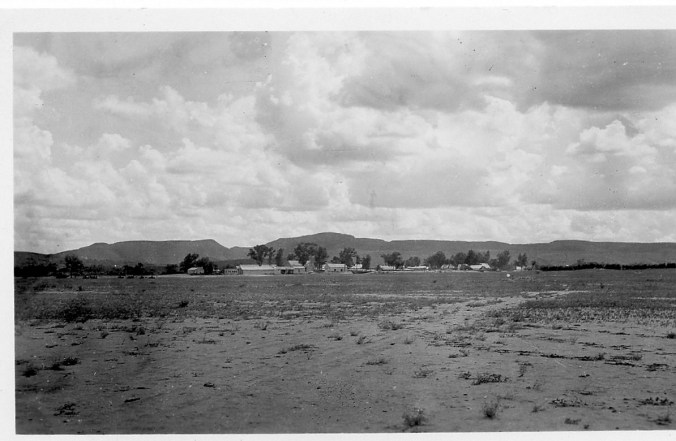
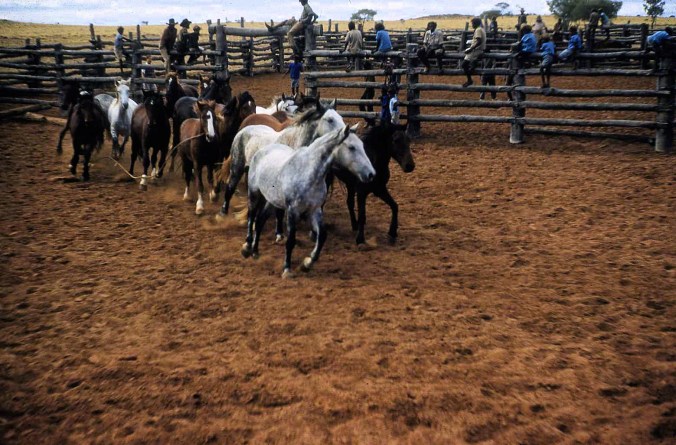
Midday, and Mt. Hermannsburg rose up above the desert scrub; just red sand dotted with tee tree bushes, spinifex and the invasive buffel grass. At regular intervals, horse poo appeared in high piles on the roadside.
I read later that buffel grass was introduced to stablise the desert soil and reduce the risk of bushfire. The problem with this grass is that it is pervasive, compromising the growth of native plant species. PIRSA (Primary Industries and Regions, South Australia) has declared “Buffel Grass under the Landscape South Australia Act 2019”.
A massive animal carcass on the side of the road flitted past.
‘What’s that?’ I pointed, then placed my hand back on the steering wheel. ‘It’s too big to be a roo and too woolly to be a brumby.’
Son 2 piped up. ‘Camel?’
‘Hmmm, hate to think what happened to the vehicle that struck that camel,’ I said.
Not long after the camel carcass, we passed the memorial to Hermannsburg Mission and then a sign welcoming us to Ntaria—Hermannsburg. To our left, a supermarket, a pale brick structure languishing on the edge of a paddock near the road.
‘That’s where our friend, P, from church works,’ I announced. Our friends, P and wife, K had invited us to stay with them in Hermannsburg.
The convoy came to stop on the gravel road edge by the store.
I hopped out of the car and entered the store. Searching for P, I wandered up and down the aisles, filled with the owners of the Land, the Arunda people, but shelves empty of anything to buy. Except for the pie warmer, choc-full of pies, chips and other fast foods.
I approached the check out where an Indigenous lady served a long line of customers, who each held pies, chips, hot dogs, and burgers. I stood in line and waited my turn to purchase an answer to my question.
Finally, my turn. ‘Could you tell me where I can find P?’
The checkout lady stared past me.
‘P? I thought he worked in the supermarket,’ I said.
I waited about 10 minutes while she served a stream of customers purchasing their pies and other junk food.
So, I left.
‘Perhaps we’ll find an answer or P at the Historic Precinct,’ Mum said.
The T-Team convoy led by Mum’s hire car, then continued through Hermannsburg to the Historic Precinct. We passed a gated community. Yes, you heard right, a gated community. Houses painted in bright pastel green, yellow and pink, could be viewed through the cyclone fence, and their occupants sitting in backyards of red sand.
Further on, we rolled past another store. This one painted in pastel blue and decorated with a mural of native bush, mountains, and a kangaroo. Near a broken window, a faded sign, stating its identity as the “Finke River Mission” Store.
Mum waved a hand in the store’s direction. ‘I reckon P works here.’
The door appeared locked by a security gate of thick metal bars. Without stopping, or alighting from the car, I said, ‘I think it is closed on Sunday.’
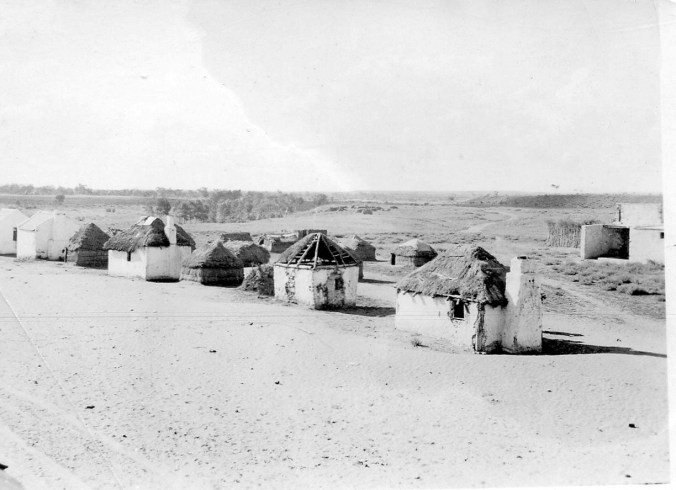
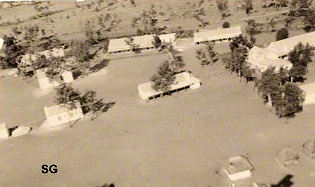
A few metres on, we parked just outside the Historic Precinct. The wooden gate leading to the old buildings swung in the breeze, open. To one side, though, a formidable sign discouraged us with the words in black letters, “Closed”. Despite this sign and its statement, people wandered across the compound and in and out the buildings.













 Tru-Kling Creations