He Wanted us to Know God’s Love

In Memory and celebration of my father’s life…

Remembering his passing 9 years ago this week…

DAVID BY NAME CLEMENT BY NATURE

Ron and Lina Trudinger’s third child was born in Adelaide on January 13, 1928. His parents named him Clement David Trudinger. He was a much longed for child as he arrived eight years after his older sister, Agnes.

[Photo 1: Growing family with Clement David baby no. 3 © courtesy C.D. Trudinger collection circa 1928]

“Clement?” his aunts cried. “We don’t like the name Clement.”

So they called the babe by his second name, David, and David he has been ever since. Except, of course when he goes to hospital, then he’s Clement, officially.

Throughout his life, God watched over David who has shared many stories of how he showed His love towards him, protecting, and providing for him and his family. He shared how he felt he didn’t deserve God’s love; he wasn’t perfect, yet God loved him. It is this love that David would want all of you to know.

[Photo 2: David, the boy © courtesy C.D. Trudinger collection circa 1930]

He began to write down his life-story, and in the last few weeks began to tell all, especially his grandchildren, how God worked in his life and how his Heavenly Father protected him.

When he was two years old, his missionary parents took David and his younger brother Paul to Sudan, in Africa. Not the kind of place to take small children. But God protected David and his brother from a hippopotamus, cobras, car accidents, and mad men. (He’s written in more detail about these incidents and I will share these in the future.)
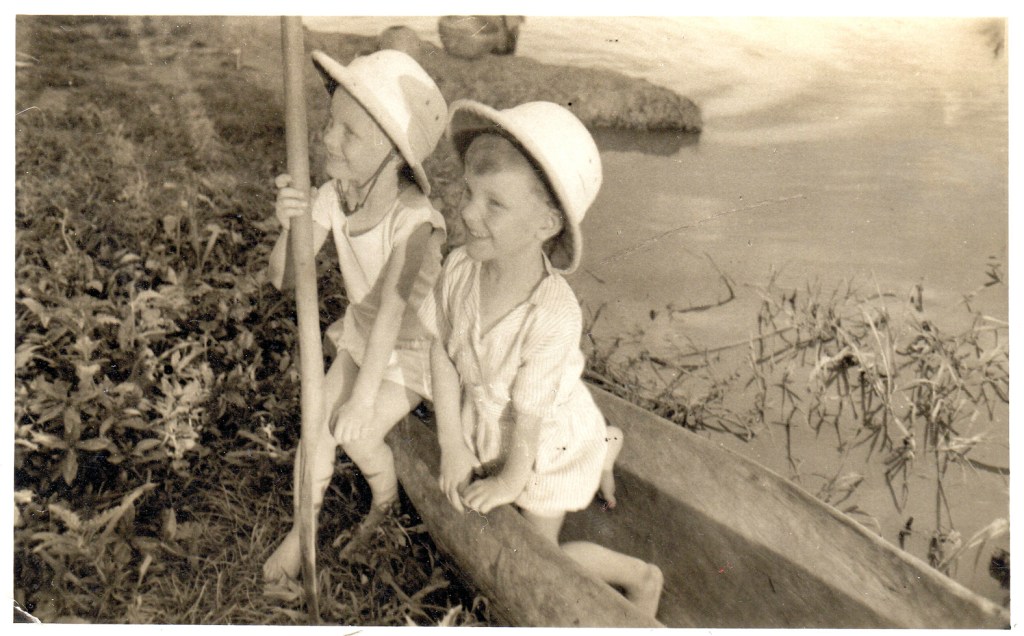
[Photo 3: David and his brother on the Nile © courtesy C.D. Trudinger collection 1932]

God also blessed him with a loving and God-fearing family. Some may say, too God-fearing, for his parents continued their mission work in Sudan while David from the age of seven, and Paul from five, commenced their schooling in Adelaide. As a student, David only saw his parents every five years when they returned home on furlough. He shared how despite missing his parents, he enjoyed his childhood, with so many aunts doting on him, and the game afternoons they had. I think his love of games started there in the Northumberland Street parlour. He’d even created a few games in his latter years.
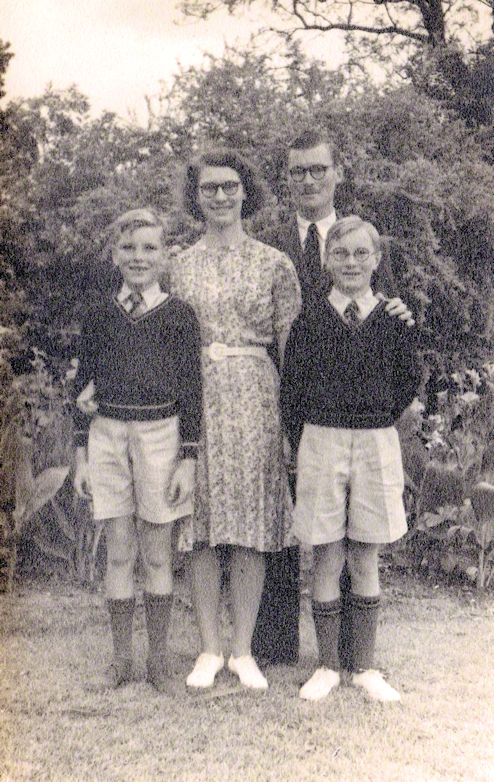
[Photo 4: With siblings in Adelaide © courtesy C.D. Trudinger collection 1940]

His other great love was sport, especially football. God blessed David with fitness, agility, and a few trophies along the way. In retirement, he played golf, and when his legs couldn’t keep up trekking the 18 holes, he took up table tennis instead. He was still playing table tennis up until a few months ago. Sport kept his body and mind young.

David also enjoyed hiking and exploring. During school holidays he’d visit his older brother Ron, a teacher at Ernabella. While there, he made friends with the Pitjantjatjara children and go into the Musgrave Ranges on hiking expeditions. One hot day, David and a friend became lost in the ranges without water, or salt. They wandered for hours parched and at the point of dehydration, before coming across a waterhole, the most welcome sight David had ever seen. I’m sure God protected and guided them back home. I’m also sure that’s when David’s love of salt began.

[Photo 5: Younger Brothers in Ernabella © courtesy C.D. Trudinger collection circa 1940]

David progressed through his schooling, and gifted in art, he trained to be an art and woodwork teacher. After a couple of years at Lameroo, he won a position at Hermannsburg Mission as headmaster.

He taught at Hermannsburg for five years. In that time, he became close to the Aranda people, especially the students he taught. They took him on expeditions into the MacDonnell Ranges, Palm Valley, and gorges and beauty spots along the Finke River. David also became close to Pastor Gross’ daughter, Marie.

[Photo 6: Teacher in Hermannsburg (David far right) © S.O. Gross circa 1955]

On January 23, 1958, he married Marie in Hermannsburg.

However, his romance with Central Australia was cut short, when, for health reasons, he and Marie had to move down to Adelaide. On October 30, his first child, Richard was born.

David continued teaching, first at Ridley Grove Primary School, and then St. Leonards P.S. The little Trudinger family moved from schoolhouse to schoolhouse.

May 3, 1963, his daughter, Lee-Anne was born. By this time, Glenelg Primary School planned to convert their little rented home into a library. As his family grew and Marie grew more unsettled with the constant shifting, David faced the challenge to buy a house. But how could he on a teacher’s wage? He looked at his lovely stamp collection of rare Sudanese stamps. Could he trade them in to help pay for a deposit?
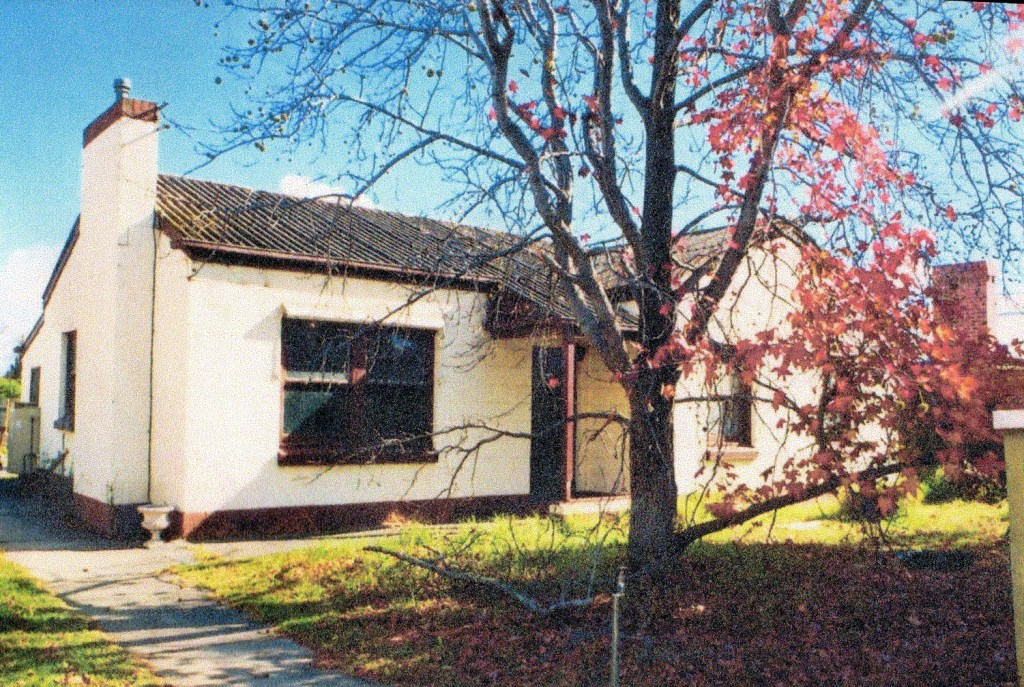
[Photo 7: David and Marie’s first own home © L.M. KLing 2005]

They looked at a few homes. A bungalow on Cross Road appealed to him, but not Marie. His father wasn’t impressed either. Marie didn’t like that pokey little home on the main road with no back yard at all and the property was right next to the rail line. Then a trust home at Gilbert Road Somerton Park came up for sale, and the deal was done. David regretted selling his stamp collection but reasoned that this was an investment for the children. And, many years down the track, it was, especially with the two lovely court yard homes, one of which David and Marie have lived in from 2006.

[Photo 8: New and improved courtyard home © L.M. King 2021]

God blessed David’s career. He taught at Port Adelaide Primary School from the late 1960’s until he retired in 1985 at the age of 57. In that time he studied to teach Indonesian, became Deputy Principal, and won a government research grant to go to Indonesia. He became interested in the Indonesian musical instrument, the Anklung. He brought a set home and proceeded to teach pupils how to play. He had bands of students playing in the Festival of Music until 2010. He continued to visit the school now LeFever Primary and train students to play the Anklung, right up till the beginning of this year. He also tutored indigenous students.

David lived life to the full and grasped every opportunity to explore the wild and untouched land God has created, especially Central Australia. With his long service leave, and then time in his early retirement, he made regular pilgrimages to the Centre. And God protected him. I like to think that now he is with the Lord, his guardian angel is enjoying a well-deserved rest.
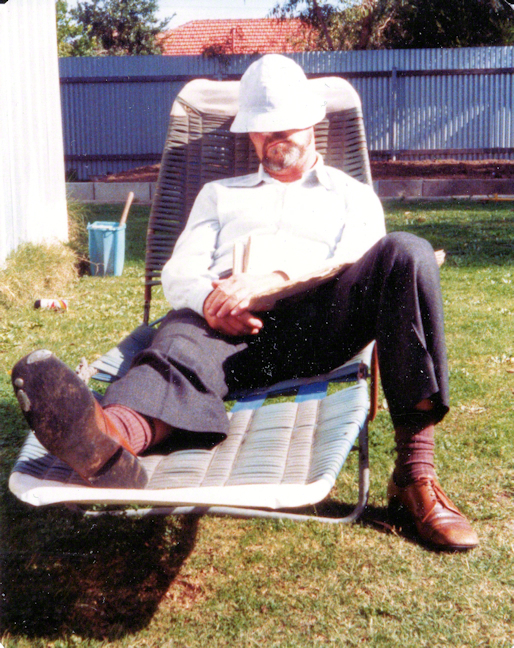
[Photo 9: Dad having a well-deserved Sunday afternoon rest © L.M. Kling (nee Trudinger) 1983]

One example he gave of God’s protection was on a hiking trip in the Western Wilderness of Tasmania with a friend. On one narrow path climbing around a cliff-face, he felt his heavy pack over-balance and he began to fall. “This is it,” he thought. Then he felt the pressure of someone pushing him back against the rock and he was able to step two metres further to a wider path. He knew an angel of the Lord rescued him, preserving his life, not just for his sake, but for his friend’s sake, and also because his work on earth was not complete.

[Photo 10: Cradle Mountain, Tasmania © L.M. Kling 2009]

But on August 25, 2012, David’s work on earth was done. There are probably many things he has done that will be remembered as a blessing and encouragement to all who knew him. He was a regular member of Faith Lutheran Warradale church; he took an active role, and was a vital member of the congregation for over 54 years. He was a Sunday School teacher, an elder, and a Bible Study leader.

We will miss his cheerful nature, how he grasped life, lived it to the full and shared God’s love with all he came across.

He may have been David by name, but he was Clement by nature.
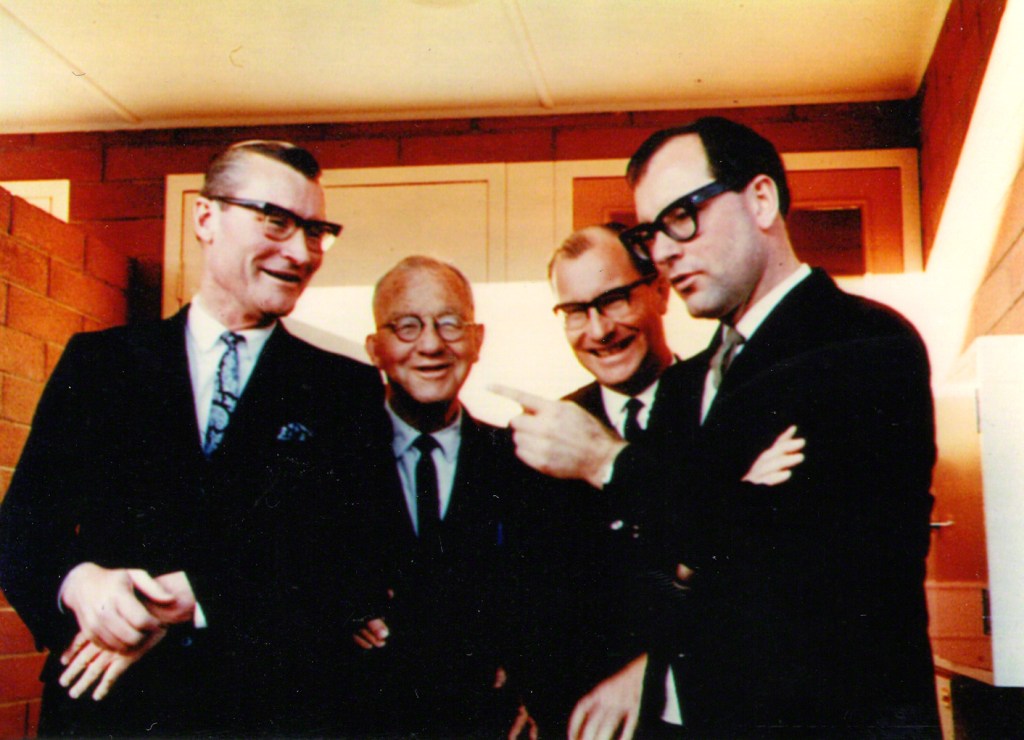
[Photo 11: The original men of the T-Team, David (3rd from left) and his father and brothers © C.D. Trudinger collection 1967]

First published as a eulogy to Clement David Trudinger by Lee-Anne Marie Kling ©2012

Revised © 2016; 2021

 Feature  photo: Central Australian sunrise © C.D. Trudinger 1977

***

More of my dad’s intrepid adventures in Central Australia in my memoir,

Trekking with the T-Team: Central Australian Safari 1981

Trekking with the T-Team: Central Australian Safari. (Australia)

Trekking With the T-Team: Central Australian Safari (United States)

Trekking With the T-Team: Central Australian Safari (UK)

Trekking With the T-Team: Central Australian Safari (Germany]

Trekking With the T-Team: Central Australian Safari [France]

Trekking With the T-Team: Central Australian Safari (India)

Trekking With the T-Team: Central Australian Safari [Canada]

Trekking With the T-Team: Central Australian Safari [Mexico]

Trekking With the T-Team: Central Australian Safari [Italy]

Trekking With the T-Team: Central Australian Safari [Brazil]

Trekking With the T-Team: Central Australian Safari [Spain]

Trekking With the T-Team: Central Australian Safari [Japan]

Trekking With the T-Team: Central Australian Safari [Netherlands]

How to Blog–Without re-inventing the Wheel (2)

[Last week this time, I met my mum and son at a local bakery for coffee and chocolate éclair. We discussed our plans to travel to Central Australia. Next day, new cases of covid 19 were detected, and the following day, the state went into lockdown. Not sure if we will be able to travel to Central Australia now.

So, while we once again are confined to our homes, time to tackle the challenge of launching into the world of blogging…

Here’s part 2 of How to Blog (without reinventing the wheel)]

Part 2 — Connecting with Others

  1. Right, Content — As with any publication, be respectful and avoid anything that might be offensive. A turn-off for some is offensive language. Too many words of the four-letter and “F” variety, and some people won’t read or follow that blog. The Oxford English dictionary has officially 171,476 words, so surely, a writer of substance can find more effective alternatives to vent their frustration. Just my opinion. Another turn-off is the eternally looo-ng post. 500 – 1000 words has worked for me, both ways.
  2. Right, Networking — Think of your own life and how you live it. If you sit in your room and never go out and about, never go to parties or gatherings, never join clubs or interest groups, how is anyone going to know that you exist? I was out the other day with my mum and cousin. My cousin and I are both extroverts and have wide-ranging networks. At the restaurant, I bumped into a friend from art group. And at the bookshop across the road, my cousin met a friend. ‘I’m amazed,’ my mum said to my cousin and me, ‘everywhere we go, you meet people you know.’ It’s the same with blogging. It’s a worldwide community. But how is anyone going to know that your blog exists, if you don’t promote it? The simplest way to develop an online presence is to visit other bloggers’ websites and blog posts, like and comment. I have found that as I do this, Word Press (my platform of choice), sends the blogger a message to invite them to check out my blog post/website.
  3. Right, Views — Photos, ones that grab attention and draw the reader in have worked in my experience, especially for my travel blogs. Readers love that virtual travel adventure, particularly at the moment with our nemesis Co-vid stifling travel. Well, for us Australians who can’t travel overseas and bans on travel into our fair land. However, keep the photo files down around 1 MB, if posting a number of them. Otherwise, the post can take forever to load. Which can put off some readers.
  4. Right, Guest Posts — What about inviting other bloggers to be a guest author on your website? I haven’t done this personally on mine, except for a few re-blogs of posts from other bloggers. But I have been a guest author on other bloggers’ websites and it has worked for me to increase my readership. It works both ways, though. A guest author gives fresh content and attracts more readers to the website. One website that works well for this is a website belonging to Mohamed Al Karbi.
  5. Right Links — Facebook and Twitter do this well. There’s buttons and tick boxes in settings to set this all up so it happens automatically. Instagram, meh, hasn’t worked for me as it won’t link to my WordPress posts. The main advice here is to stick to one platform and allow the links to feed into it. It all depends on your audience and how they manage their social networks. These days I regularly get views from readers through Facebook, but most of my readers still come from WordPress.

Finally, this whole WWW thing is constantly moving and changing. Rather than give up and crawl into the foetal position under your doona, get out there, connect with others online, face to face, and as the Japanese (since it’s the Tokyo Olympics) say, “Gambatte, kudasai” (persevere and do your best).

© Lee-Anne Marie Kling 2021

Feature Photo: Sheep ready for shearing, South Australian outback © C.D. Trudinger circa 1995

***

Virtual Travel Opportunity

For the price of a cup of coffee (takeaway, these days),

Click on the link and download your kindle copy of my travel memoir,

Trekking with the T-Team: Central Australian Safari. (Australia)

Trekking With the T-Team: Central Australian Safari (United States)

Trekking With the T-Team: Central Australian Safari (UK)

Trekking With the T-Team: Central Australian Safari (Germany]

Trekking With the T-Team: Central Australian Safari [France]

Trekking With the T-Team: Central Australian Safari (India)

Trekking With the T-Team: Central Australian Safari [Canada]

Trekking With the T-Team: Central Australian Safari [Mexico]

Trekking With the T-Team: Central Australian Safari [Italy]

Trekking With the T-Team: Central Australian Safari [Brazil]

Trekking With the T-Team: Central Australian Safari [Spain]

Trekking With the T-Team: Central Australian Safari [Japan]

Trekking With the T-Team: Central Australian Safari [Netherlands]

Monday Musings–How To Blog…

…While Not Re-inventing the Wheel

Part 1 — Right Frame of Mind

  1. Right Worldview — I like to think of the blogging community as a group; a world-wide group. Think of the local writers’ group you attend if you’re a writer. Then imagine that group spanning the globe comprising of every imaginable country and culture. That’s the breadth and beauty of blogging. But remember, each one of your potential followers are people, real people.
  2. Right Mindset — Gathering those real people, followers takes time. Marketing likes to depersonalise the whole experience and calls those visits from readers “traffic”. They are not traffic, they are individuals who have searched for your particular topic of interest and taken the time to read it. When I first began blogging 6 years ago, one of my first international visitors was from the Bahamas. I imagined that person sitting on the beach sipping their mint julep, reading from their jewel-studded iPad, and dreaming of the Central Australian adventure I had written. Just one person but imagining that person made all the difference to me, that they had connected with my story.
  3. Right Attitude — My first like (besides my faithful friends and mother) was a well-known Romanian blogger. He has written many posts on how to blog, so I feel, I don’t need to repeat his good advice in this article. The following is a link to Christian Mihai’s website, The Art of Blogging. My main takeaway from one article I read from there, was that if we don’t have the right attitude to blogging, if we are amateurish in our approach, we may spread our web of information wide, but we won’t touch many in a way that is meaningful or truly influential. And the reality about developing authentic relationships that change and grow us and others, is that they take time.
  4. Right Timing — I think there’s enough on the internet about how to set up a blog and post, so, I won’t go into detail about that. Check out Wiki how for setting up a blog, or website. But what you need to do is be regular. Followers, once you get them, are creatures of habit and if you post once a week on a Tuesday, for instance, they will look for your post, once a week on a Tuesday. One of the frustrating things I found when I first entered the blogging community, was finding those bloggers who I liked. Some would seem to vanish into the vortex of the world wide web, never to be seen again.  It took me a while to figure out that if I “followed” these bloggers, they would turn up in my “Reader Feed”. Other bloggers have mentioned that this is the reason they “like” posts. They then look at their “likes” to find their favourite bloggers again. Regular posting, I found, helped raise my profile in the plethora of websites and posts and make those blessed algorithms work for me. I knew that my blogs were rising like cream when I observed a reader emerging out of “Search Engine” in the stats of my post. When starting up my blog, though, I invited as many friends and family to follow my blog through email, and Facebook.
  5. Right, Don’t Give Up — It’s three months into you’re blogging venture, and nothing; not a hump, nor a bump raising those statistics. ‘I don’t know,’ my mother said, ‘no one has visited my posts in ages. I think I’ll give up.’ And yeah, it seemed as though the WWW “gods” were doing everything in their power to squash my mother’s enthusiasm to continue. As they tried to do some years before with my blog. As they have done with a number of writer friends of mine who have set up blog sites or websites and then with a failure to thrive, they have silently let them slide into obscurity. Again, it takes time for your website or blog site to gain traction. Just be patient.

[to be continued…]

© Lee-Anne Marie Kling 2021

Feature photo: Somerton Beach Dreaming © L.M. Kling 2010

***

Virtual Travel Opportunity

For the price of a cup of coffee (takeaway, these days),

Click on the link and download your kindle copy of my travel memoir,

Trekking with the T-Team: Central Australian Safari. (Australia)

Trekking With the T-Team: Central Australian Safari (United States)

Trekking With the T-Team: Central Australian Safari (UK)

Trekking With the T-Team: Central Australian Safari (Germany]

Trekking With the T-Team: Central Australian Safari [France]

Trekking With the T-Team: Central Australian Safari (India)

Trekking With the T-Team: Central Australian Safari [Canada]

Trekking With the T-Team: Central Australian Safari [Mexico]

Trekking With the T-Team: Central Australian Safari [Italy]

Trekking With the T-Team: Central Australian Safari [Brazil]

Trekking With the T-Team: Central Australian Safari [Spain]

Trekking With the T-Team: Central Australian Safari [Japan]

Trekking With the T-Team: Central Australian Safari [Netherlands]

Out of Time (5.4)

[The continuation of the Survivor Short Story “project” in the War On Boris the Bytrode series. This time, back in time, 1967, following the adventures of middle-aged mum, Letitia…

In this episode (5.4) Celebration as Letitia fixes the computer… But is it all just a bit too easy?]

A Computer Called Clarke

Part 4

In the spacious cabin, spacious for a yacht that is, which Wilhelm had dubbed the “Phone box” as it appeared larger on the inside than it seemed on the outside, the computer blinked, goading Letitia. The inane IGSF symbol menaced the screen a touch longer than it ought to. Letitia shuddered. She had never contended with a computer of this particular vintage.

When she first arrived in the Mirror Universe of 1986, she had toyed with a Commodore computer, a deceptively simple machine Frieda had given her to play games of story puzzles and space invaders; a sort of easing into the digital world. The computers on the Mother Ship had admittedly been constructed centuries ago and modified by a computer engineer named Clarke and his protégé, John, Frieda’s son. But on Mirror, by 2015, the prevailing Mirror Computer monopoly had been dismantled and thrown to the four or more existing richest multinationals to encourage competition. It had long been established that Mirrorsoft Works (as it was known on Mirror World) was a conundrum, an irony, as in most cases the system did not work. The same problems seemed to be manifesting with the IGSF programming in 1967. Had Boris hacked into the system and sabotaged it?

She fiddled around the edges of the system wishing that she could get her mind grafted into it and pretend that she had her head around the problem at hand. Meanwhile Wilhelm disappeared to the deck for the purpose of tightening ropes and fixing sails ready to sail. His parting words to her before rising to the deck were, ‘We acquired this computer six months ago, it was state of the art, it had all the bells and whistles, how could it? I can’t understand how it could break down like this.’

‘Boris, I reckon,’ she mumbled to the obnoxious piece of useless circuitry and the screen that stared back at her, blank and prehistoric. There it was, that stupid blue screen and mindless blathering of words and formulas scrawled across the window.

‘Fatal error!’ she exclaimed. ‘I haven’t seen anything so ridiculous in all my years of programming and managing Mirror’s networks. Oh, what’s this sinister box announcing that I have made a “fatal error” and that the computer must shut down immediately and all my information lost? If the threat wasn’t so ridiculous, it would be pathetic. Wilhelm, my friend, you have been ripped off. You have a lemon!’

Once more, she glared at the blue screen of death. ‘Probably is sabotage by Boris.’ She hurled her hands in the air. ‘Wipe it out and start again. That’s all I can do,’ she hissed at the screen spraying droplets over the LCD screen.

‘How are you going there?’ Wilhelm poked his head down the ladder from above.

‘Do you mind if I wipe everything out and start again?’ Letitia scoffed as she dabbed the screen with a tissue.

‘Yeah, that’s alright,’ Wilhelm replied. ‘Go ahead, if that solves the problem.’

A pale blue Cradle Mountain and cartoon caricatures of icons winked at her, daring her to programme them out of existence. She began the process. Pressed “start”, clicked “control panel” and paused to begin the road to computer condemnation.

With finger poised over the delete key, she breathed, ‘Say your prayers, Clarke!’ Then, she remembered. Always save data, files…anything. While this archaic monstrosity had some glimmer of life in it, she must endeavour to save what she could. She fished out a USB stick stored in the tin box below the screen. In the side of Clarke’s box-like body, a quartet of receptacles where these vintage sticks could be plugged. She again paused the execution process.

‘Will, have you saved all your data?’ she asked.

‘Save? Save? Do I have to save something?’ Wilhelm called from above through the floorboards.

‘Um, I’m just wondering if it isn’t a good idea – I don’t think I would have time to programme it all back in. It’s like spaghetti code,’ she said trying to sound as in control as possible. After the computer had consumed the whole morning, Letitia was ready to eat this computer like pasta.

 Wilhelm’s voice floated in from above. ‘Can those little sticky things I have in the tin box, will they be able to hold all the information?’

‘Only one way to find out.’

Letitia examined the tube. She pulled off the top and matched the probe to the plug on the box that held the menacing machine and proceeded to insert the device into the slot. ‘Do not crash! Do not crash!’ she commanded the computer as a mantra. It seemed to work. The computer obeyed and did not crash.

Several more hours dragged by. Saving. Wiping. Back to factory settings. And then finally, loading the multitudes of programmes back onto the device. She had discovered that to a certain extent she had picked up all the old IGSF computer system’s quirks and nuances. The basics of Clarke’s system were not vastly different from what she had managed on Mirror and was able to adapt to working and wrestling with this computer. Perhaps in hindsight, she should have been suspicious that she had become so adept controlling this yacht’s computer in such a short amount of time, but in the moment, it was an enemy that had to be subdued. After all, the system she had managed on Mirror, had been designed and run essentially, by Boris.

By four o’clock in the afternoon, with sweat dripping from Letitia’s forehead and soaking her back, she presented Wilhelm with a computer, baptised, cleansed from any Boris-contamination, and reborn to be fully IGSF-functional.

Wilhelm marvelled at the speedy IGSF satellite connection and lightning-fast processing.

Letitia mentioned in passing, ‘Oh, by the way, Clarke does not like the heat.’

‘You speak as if the computer is a person.’ Wilhelm remarked with mock surprise as he viewed a satellite image of Melbourne.

‘But, Wilhelm, he is,’ Letitia jested with only half her tongue in her cheek. She did not share with Wilhelm that she had put some of her mind and soul into the very core of the computer’s hard drive to stabilise it from further Boris attacks, and to cause it to run more efficiently. She wasn’t going to divulge to Wilhelm that she had ordered the computer to obey only her and Will’s command. After all, in Wilhelm’s early twentieth-century mind, computers were merely machines. She did not want to spoil for Will or anyone else in this time and place, any illusion that they were not.

***

Upon the triumph of Letitia over the computer, they spent one last night on shore celebrating. Wilhelm invited Letitia to join him for a function at the Cascade Brewery. Wilhelm was immensely popular and there was always a party in need of his presence. In that way, John, as Letitia remembered Mirror John, and Wilhelm were similar. The apple doesn’t fall far from the tree, Letitia mused as she watched Wilhelm entertain the other guests with his exploits as head psychiatrist at the Royal Hobart Hospital. Another old adage surfaced to describe both John and Wilhelm. She smiled remembering, You can’t have a party without them. After all, John is Wilhelm’s son on this Earth as well as Mirror World.

A different story for Frieda, though. Her absence was fobbed off as “not well”, “migraine” and actually, trouble finding a babysitter for Johnny. Although Wilhelm had confided in her that Frieda had been rather tired and sick in the mornings lately…

‘Here’s to Letitia, the Legend,’ Wilhelm toasted Letitia as they stood by the nineteenth century sculptured fountain in the middle of the lush green lawn.

‘Hmm!’ Letitia raised her glass of claret. If they only knew, she thought. If this is real Earth, my Earth in 1967, if only they knew what the next fifty years have in store for them…

Over by the wall of window that spanned one side of the historic building, Wilhelm entertained the cluster of elites from the hospital. They seemed perfectly at ease, perfectly comfortable in their space, time, and important positions. It was as if the plane crash in Antarctica had never happened; as if there were no terrorists; as if there never had been nor will be any nuclear attacks. As if Boris himself was null and void.

‘If they only knew,’ Letitia repeated.

© Lee-Anne Marie Kling 2021

Feature Photo (artistically enhanced): Memories of Cascade Brewery © L.M. Kling 1995

***

Want more?

More than before?

Read the mischief and mayhem Boris the over-sized alien cockroach gets up to…

Click on the link to my new novel, The Lost World of the Wends

Below…

Or discover how it all began in The Hitch-Hiker

And how it continues with Mission of the Unwilling

Tuesday Thoughts–Identity Theft

After a busy week of birthday celebrations and Mother’s Day, I found this little pond of thoughts from a post way back in my past when my blogging life first began…

Identity Theft

We’ve all heard of the unfortunate person who’s gone for a loan, only to discover their application has been rejected—not because they have a poor credit rating—no, previously, their rating has been perfect—but because some creep has stolen their identity, spent all their credit, and accrued a bad credit-rating.

Identity theft—not nice, and it can take years for the victim to clear their name and regain a good credit-rating.

However, I’ve come across a more subtle, more disturbing, more widespread form identity theft. In fact, with this sort of theft, the victim is a passive participant in the whole deal, and willingly hands over their identity to the perpetrator.

How do you convince another person of who you really are? This is a question I have heard people ask. I have asked this question and struggled with the insidious theft of my identity since…I became self-aware.

As if a character in a novel or a play, from birth, we are cast in our roles. These roles are set by another’s attitudes and world view. In reality a great many people go through life playing a role as someone else’s character in that someone else’s book of life, without ever discovering who they really are, their true identity.

And it’s fair to say, all of us, at one time or another, have scripted others into our drama without ever seeing that person for who they really are.

I must admit, as a victim of this form of identity theft, which for the most part, I cannot control as I cannot control another’s attitudes and way they see the world, I enjoy the freedom of writing. When writing fiction, I get in touch with my real self through my characters. Also in non-fiction, such as my memoirs, I redeem my true identity from those who have stolen it for their own particular narratives. Most of the time. I have to admit, though I struggle with attitudes and judging others that get in the way of seeing another person for who they really are.

So, in answer to the question, how do you reveal who you really are to another and thus change their view of you—even when you are yourself?

The key is listening to another with empathy and non-judgementally. As in most lessons of life, we need to lead by example. We also need to be aware of our own narratives and attitudes that get in the way of being open to seeing another for who they really are. We need listen and be open to entering another’s world that will be different from ours. As we do this and listen to another and engage in their world, they will feel safe and trust you enough to open themselves up to listen and see who you really are.

Being seen for who you really are, jumping off the stage and ripping up the script, even with the tool of listening is not a quick fix. Changing our culture, attitudes and habits takes time. Maybe like the recovery from a stolen credit identity, it takes time, maybe years to restore. But isn’t it preferable to be proactive in being the person we truly are, rather than passively being someone else’s perception of us? And isn’t it a good thing to listen and see another for who they really are?

© Lee-Anne Marie Kling 2016; updated 2021

Feature Photo: Actor on Stage © L.M. Kling 2007

References

Books I have found helpful in relation to the above article:

 Born to Win by Murial James & Dorothy Jongeward ©1971

The 3rd Alternative by Stephen R. Covey ©2011

***

Virtual Travel Opportunity

For the price of a cup of coffee (takeaway, these days),

Click on the link and download your kindle copy of my travel memoir,

Trekking with the T-Team: Central Australian Safari. (Australia)

Trekking With the T-Team: Central Australian Safari (United States)

Trekking With the T-Team: Central Australian Safari (UK)

Trekking With the T-Team: Central Australian Safari (Germany]

Trekking With the T-Team: Central Australian Safari [France]

Trekking With the T-Team: Central Australian Safari (India)

Trekking With the T-Team: Central Australian Safari [Canada]

Trekking With the T-Team: Central Australian Safari [Mexico]

Trekking With the T-Team: Central Australian Safari [Italy]

Trekking With the T-Team: Central Australian Safari [Brazil]

Trekking With the T-Team: Central Australian Safari [Spain]

Trekking With the T-Team: Central Australian Safari [Japan]

Trekking With the T-Team: Central Australian Safari [Netherlands]