The T-Team with Mr B — In 1977Dad’s friend Mr Banks and his son, Matt (not their real names), joined Dad, my brother (Rick) and me on this journey of adventure. I guess Dad had some reservations how I would cope…But it soon became clear that the question was, how would Mr B who was used to a life of luxury cope?
This time the T-Team encounter a snake…
SNAKE OF PALMER RIVER
We sailed onwards from Curtin Springs. On this stretch of road, Matt and I were the Captain and Skipper of the good ship Land Rover. We rode up and over waves of copper-coloured sand dunes, juddered along stormy corrugations, and crept through stony creek beds.
As the sun hovered above a line of gum trees in the distance, a sign to Palmer River rose out of the mirage. Crossing the dry creek bed lined with eucalypt trees, their trunks white and thick and branches covered with lush green leaves, Dad slowed the vehicle to a crawl. He then turned into the creek and drove the Rover along a track of soft sand. After travelling some distance down the dry riverbed, he stopped. The men stepped out from the Rover.
‘You’ve got no argument with me,’ Mr. B replied. He gazed around at the cream-coloured sand and shady gum trees. ‘Now why didn’t you find somewhere like this before?’
Dad shrugged.
Mr. B rubbed his hands together. ‘Right time to get the BBQ together and fire it up.’
While the older men cooked the meat, the lads ventured out to shoot some meat of their own. I followed at a safe distance. Walking over to a track that crossed the riverbed, I spotted a dark long object.
‘Hey, look at this,’ I yelled to the boys.
They stopped and turned.
‘Careful,’ Richard said.
‘Is that a snake?’ Matt asked. He raised his rifle.
I tip-toed up to the long dark creature and peered at it. A brown snake, two metres in length, lay across the track.
‘Get out the way,’ Richard said. He raised his rifle and squinted lining up the target with his “iron sight” (the bit at the end of the rifle’s nozzle that helps with the shooter’s aim).
I trod a couple of steps closer. ‘It’s not moving.’
‘What are you doing? It might strike,’ Richard shouted.
‘They’re poisonous, you know,’ Matt added.
‘It’s alright.’ I walked up to it. In two places the snake appeared to be flattened. ‘There’s tyre marks across its body. It’s dead. Very dead.’
Richard crouched down beside the effigy and then picked it up. ‘Yep, it’s dead.’
‘And some car’s the culprit,’ Matt said.
As the sun sank into the horizon, casting its tangerine magic on the trunks of the river gums, the T-Team gathered around the BBQ.
‘Well, ma boys,’ Mr B flipped a steak in the pan, ‘you got anything to add?’
Richard and Matt glanced at each other and then gazed at the pink and grey waves of sand of Palmer River.
I giggled. ‘They wanted to, but their shooting venture was fruitless.’
‘That’s a shame,’ Dad said. ‘Ah, well.’
‘We could have the snake,’ I said.
‘I don’t think so,’ Dad cleared his throat, ‘we’re not that desperate.’
So, while parrots chattered in the gum trees celebrating another brilliant day in the Centre of Australia, having escaped the boys’ efforts to shoot them, we savoured our juicy steak from Curtin Springs Station.
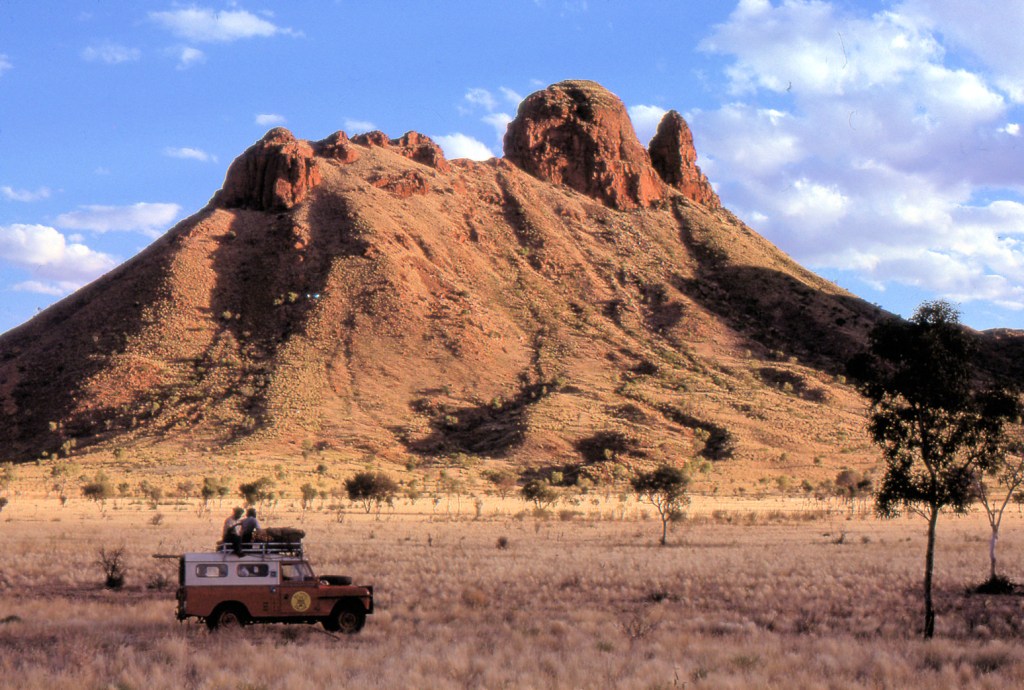
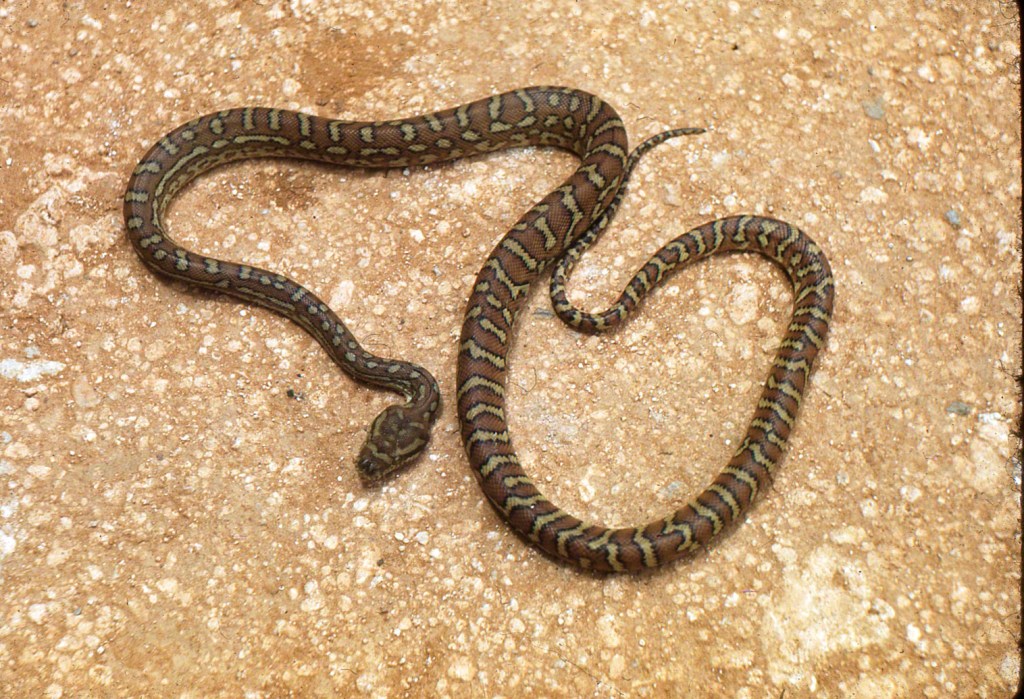
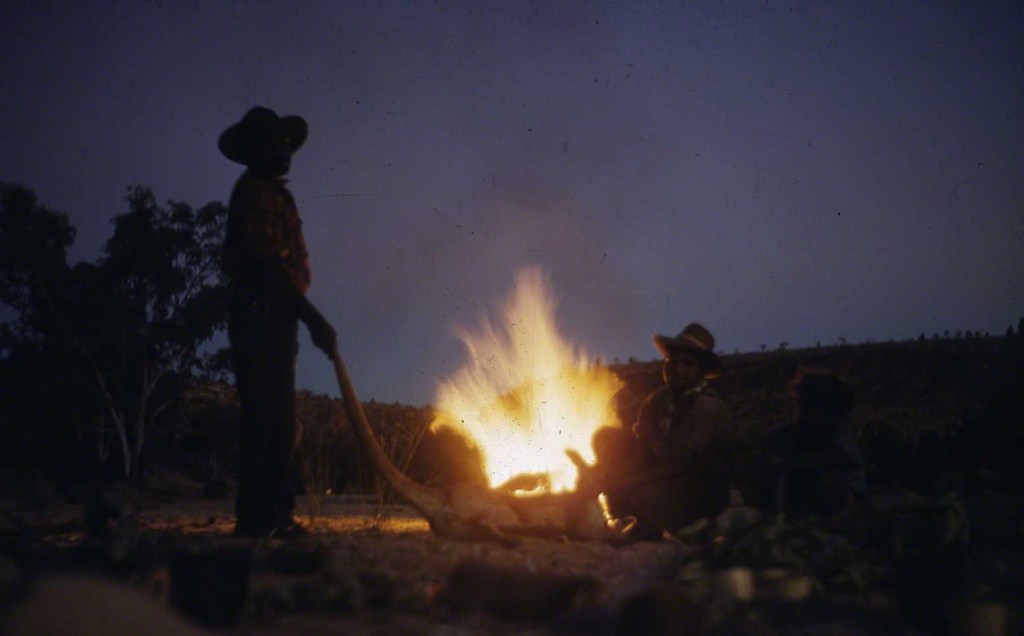
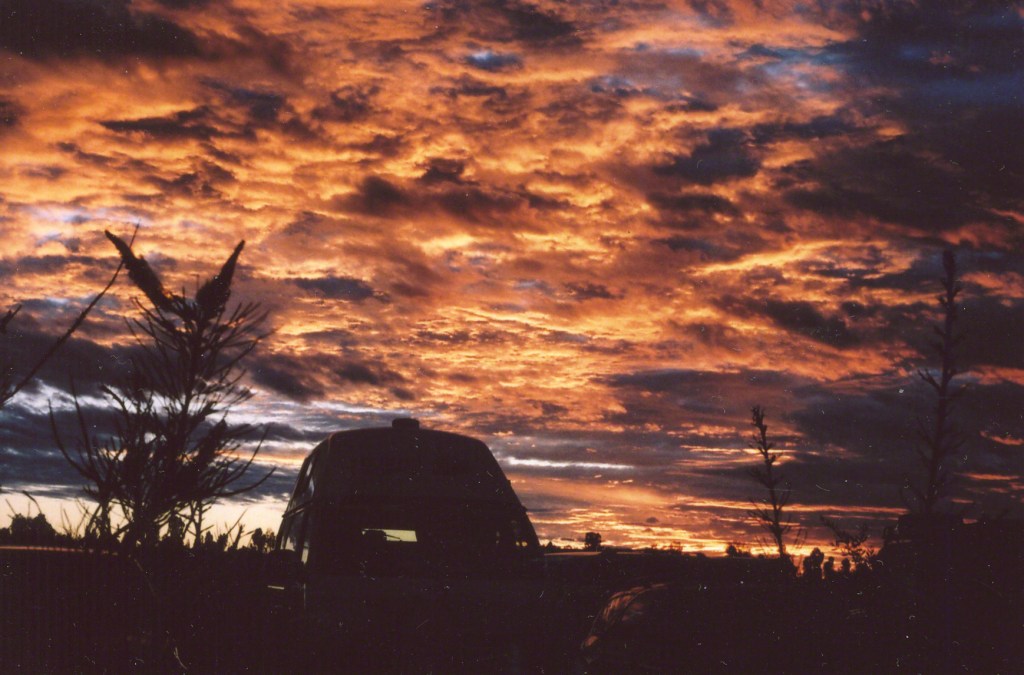
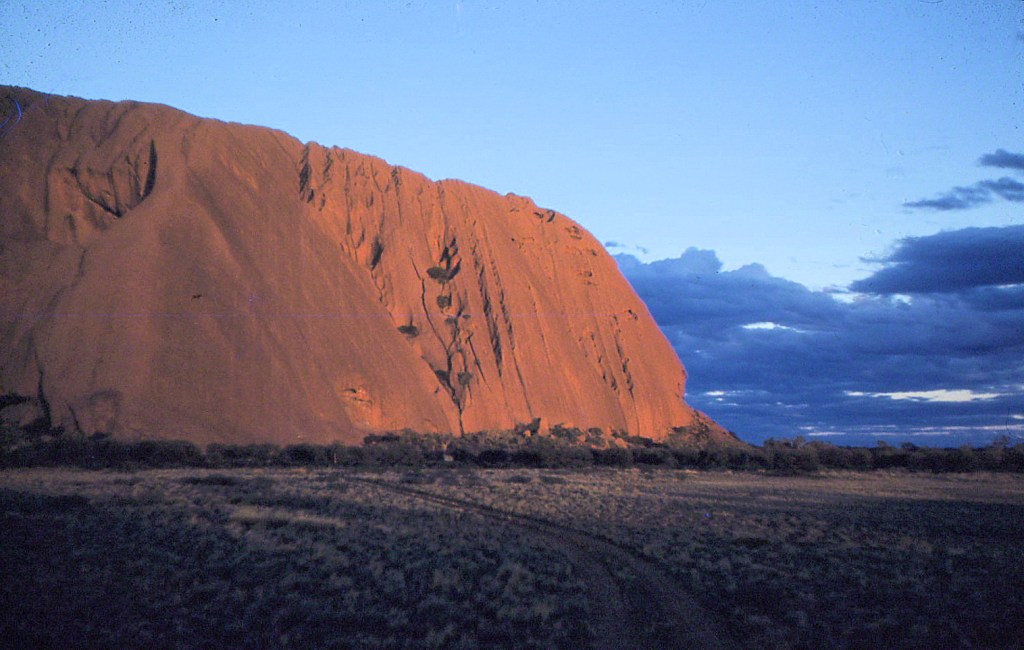
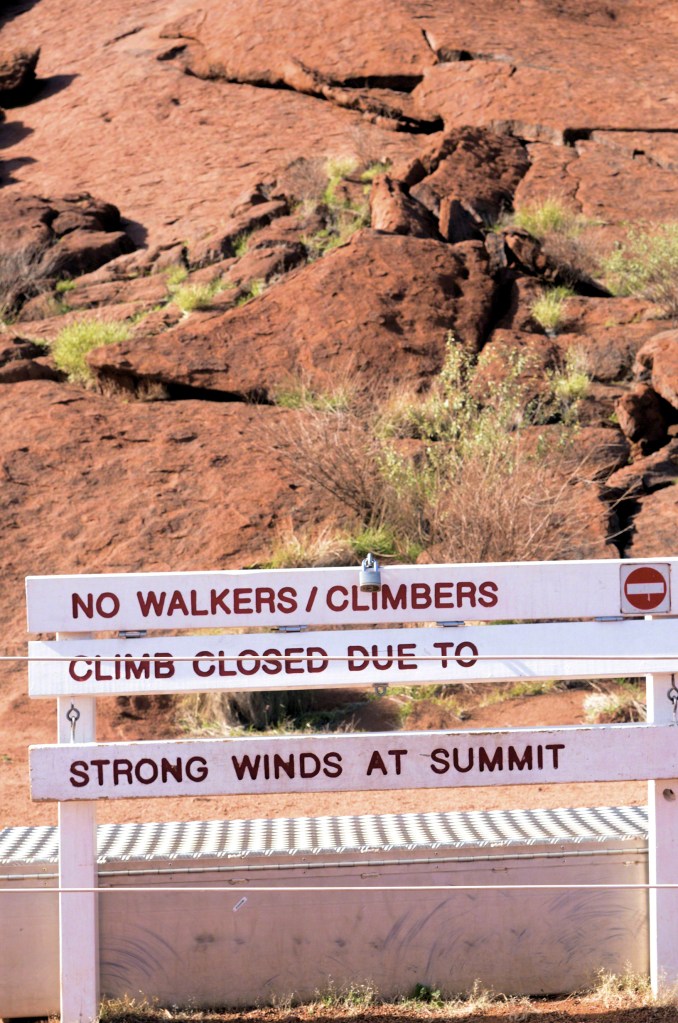
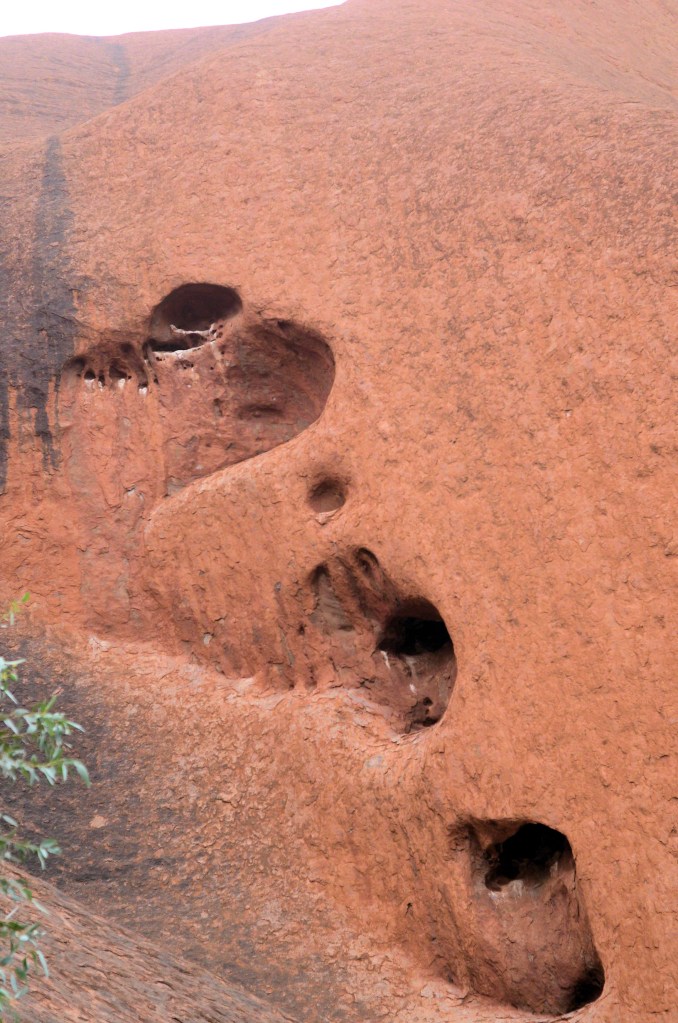
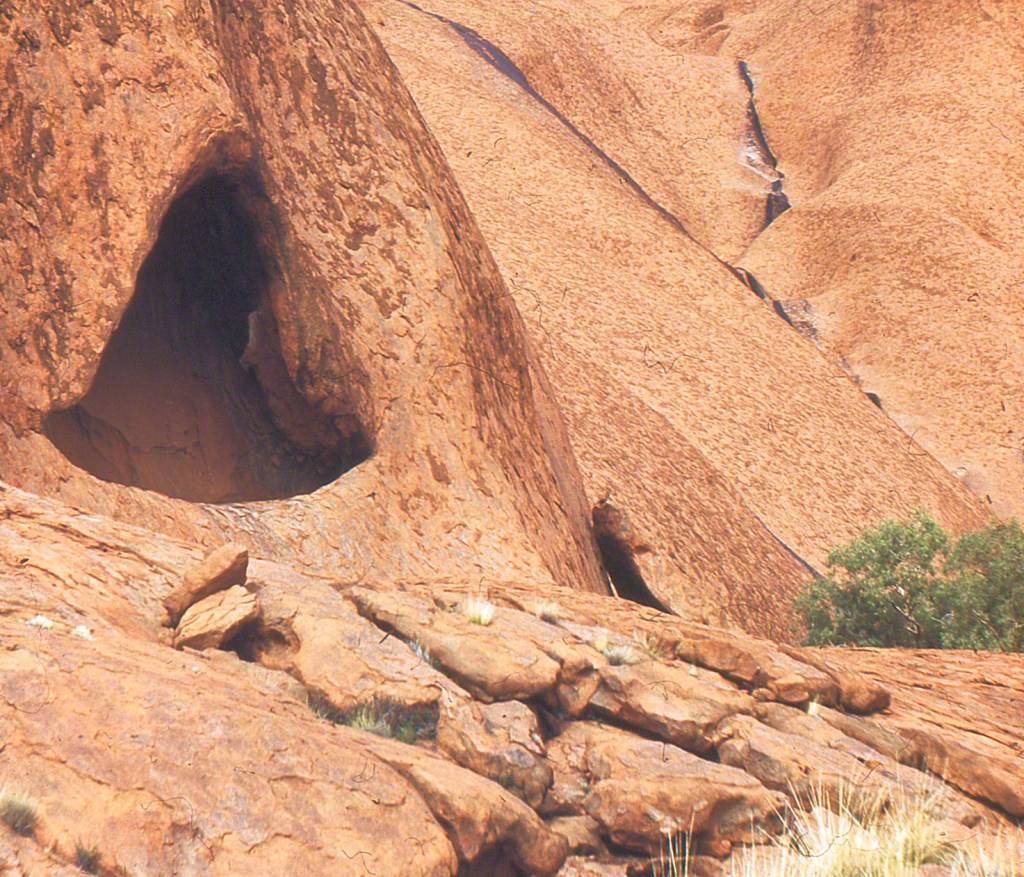
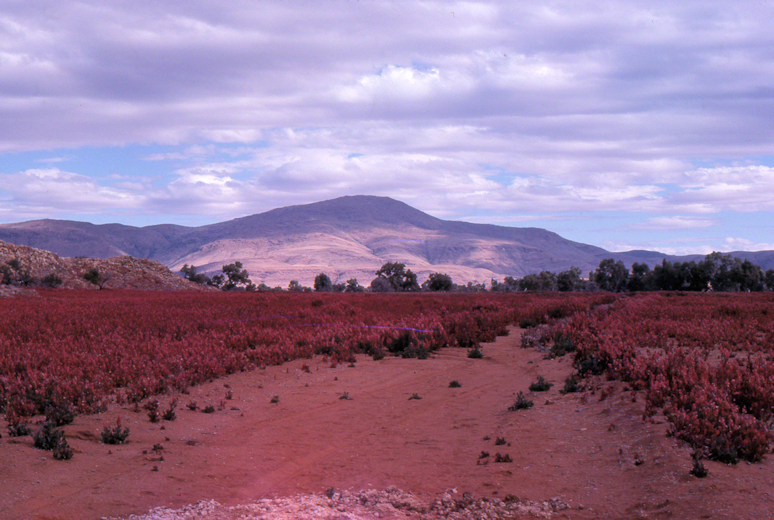
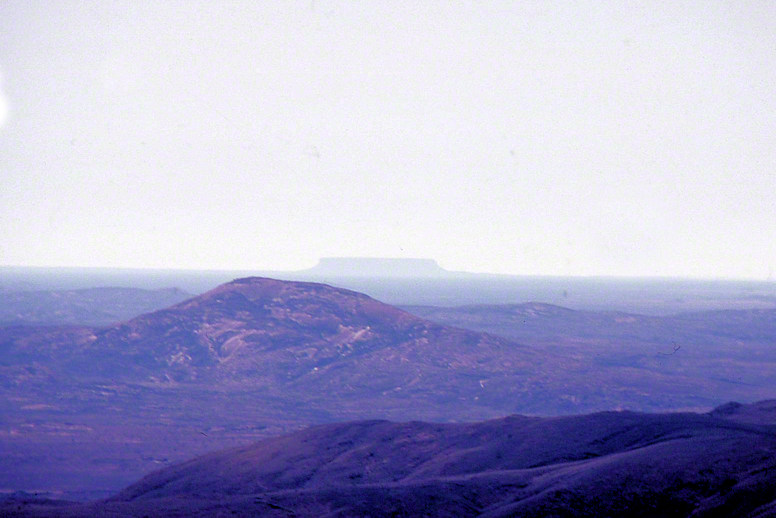
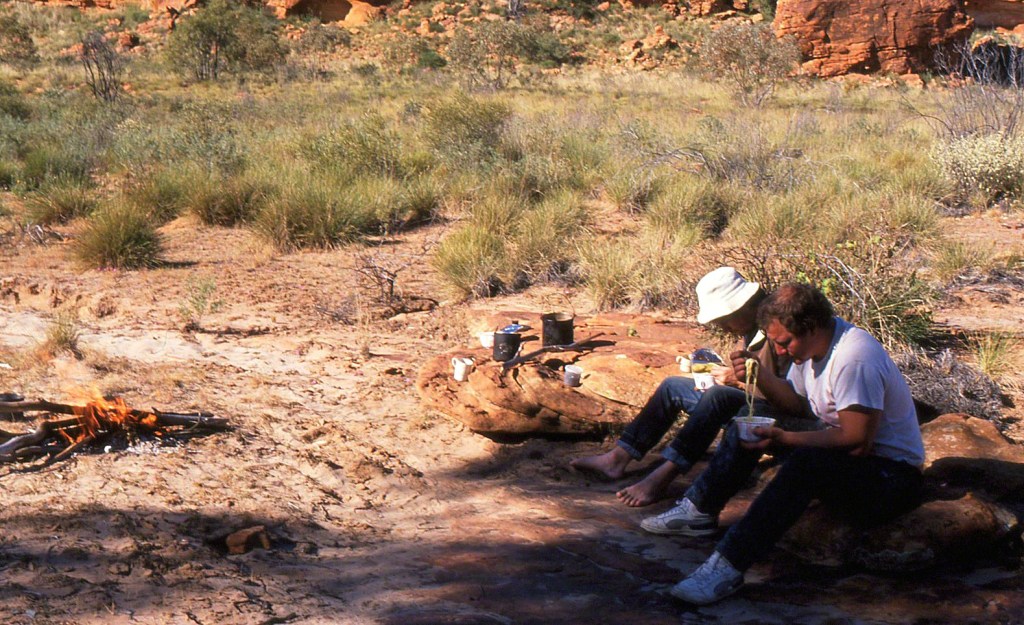
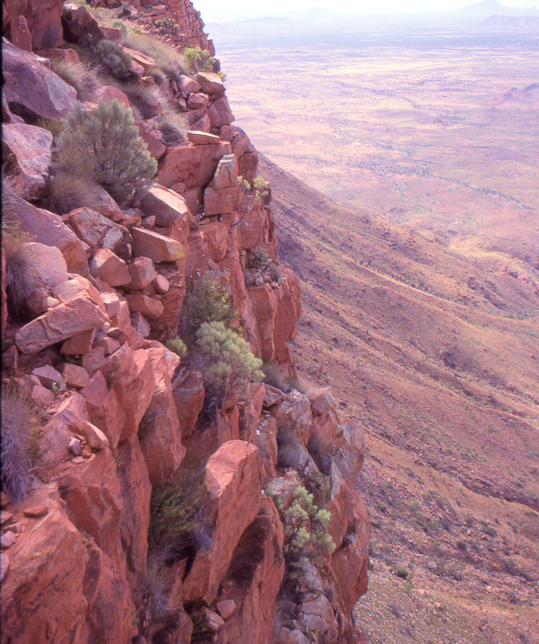
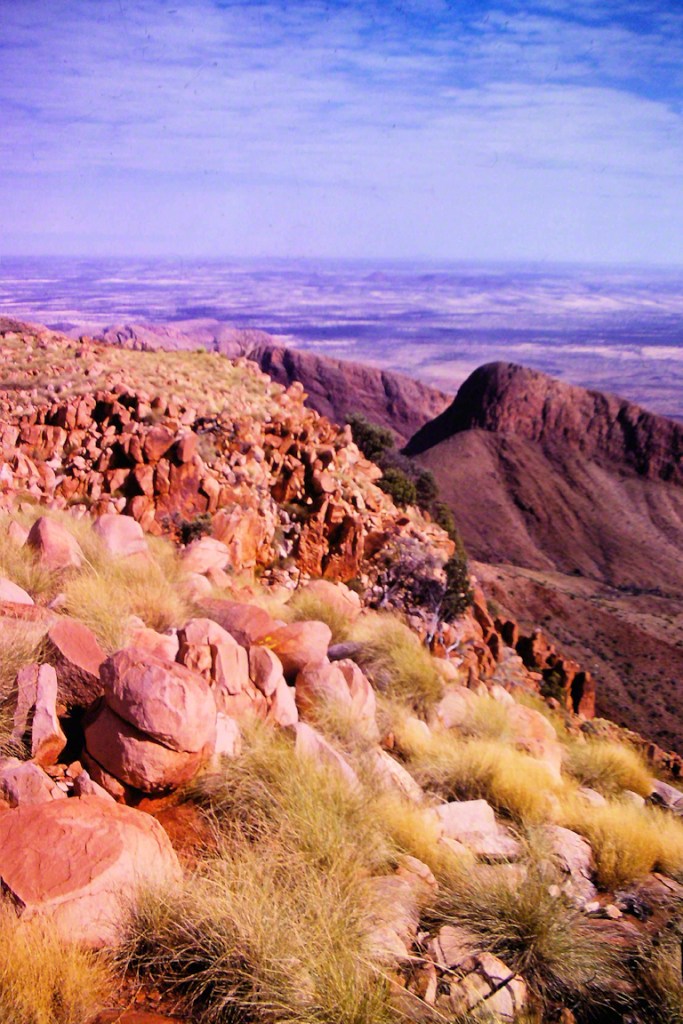
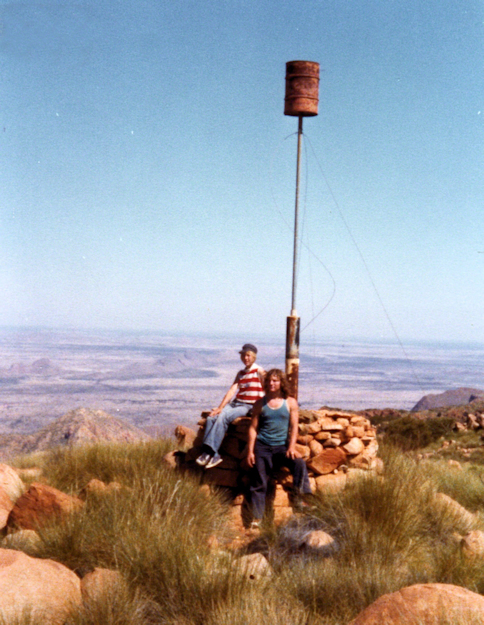
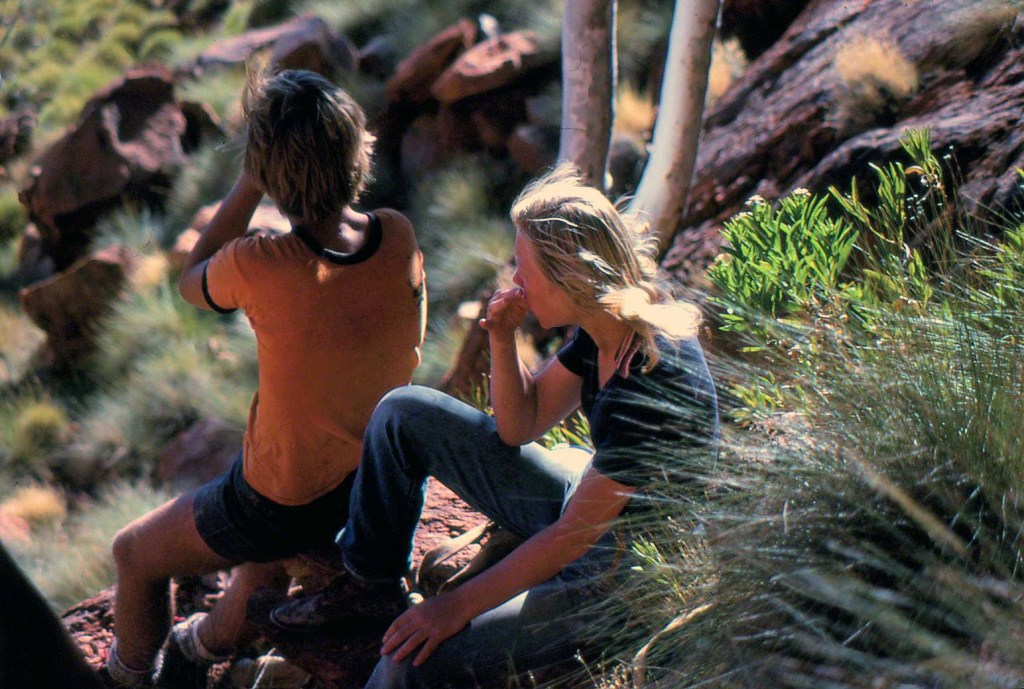
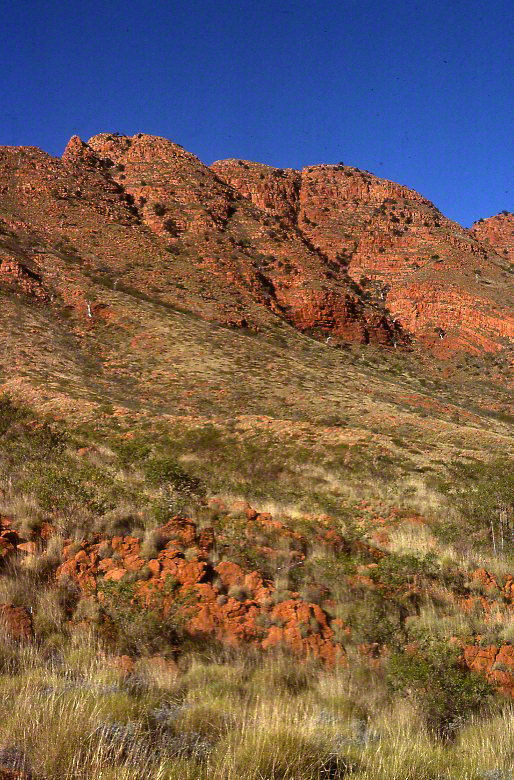
[Palmer River is a tributary of the Finke River. Some of the photos above remind me of our Palmer River campsite.]
***
Read more of the adventures of the T-Team in my memoir, Trekking with the T-Team: Central Australian Safari 1981 available on Amazon and Kindle. Check it out, click on the link below:
[The last few months I have revisited The T-Team with Mr. B: Central Australian Safari 1977 which is a prequel to Trekking With the T-Team: Central Australian Safari 1981. In preparation for its release later this year, I will be sharing posts of this adventure.
This time, the customary viewing of an icon of Australia, doesn’t quite go to plan.]
Dad meant what he said; he believed we, as the T-Team were travellers, not tourists. So, when the sun began its journey to the other side of the earth, and edged towards the western horizon, Dad drove further west and far away from the popular tourist haunts for the sunset on the Rock.
‘Don’t go too far,’ Mr. B said as he glanced back at the diminishing size of the Rock. ‘I want a red rock of considerable size.’
‘I know what I’m doing,’ Dad replied.
But every vantage point that we considered photo-worthy, so did clusters of tourists. The ants may have been heading for bed, but the road west of Uluru swarmed with sightseers scrambling over the landscape to capture that momentous event of the sunset on Uluru.
‘I hope we’re not going to miss Uluru turning red, ‘cos that’s what I came here to see,’ Mr. B said.
‘Plenty of time,’ Dad said. ‘Trust me.’
‘I’ll hold you to that promise, mate.’
Dad sighed and then turned into the next available place to park the Rover.
Mr. B glanced at his gold watch. ‘I mean to say, it’s nearly six o’clock. The sun sets at six, doesn’t it?’
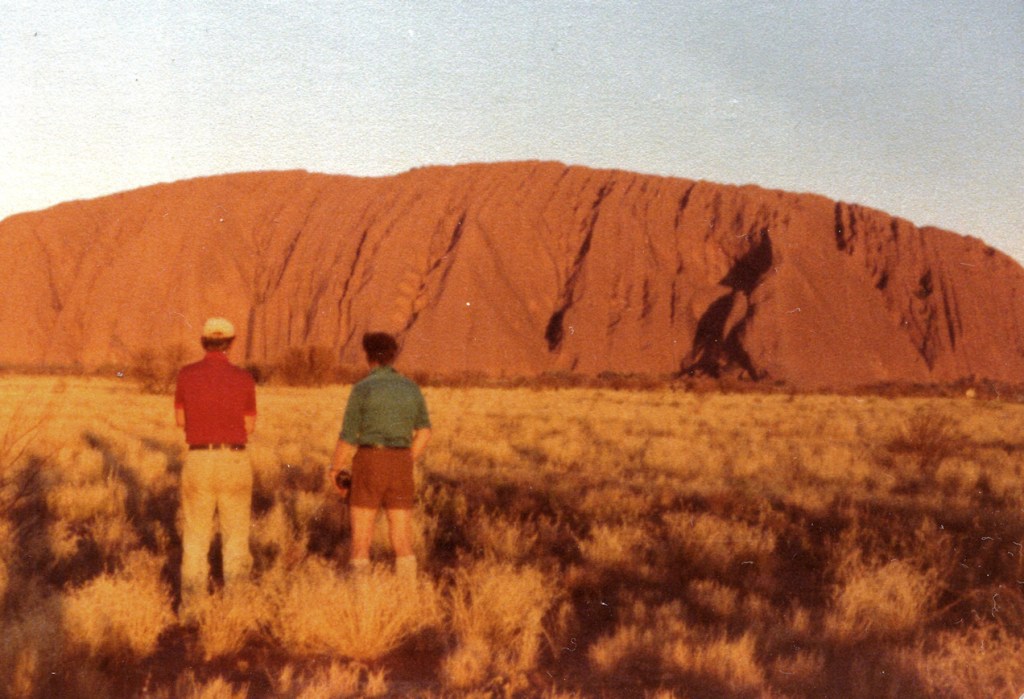
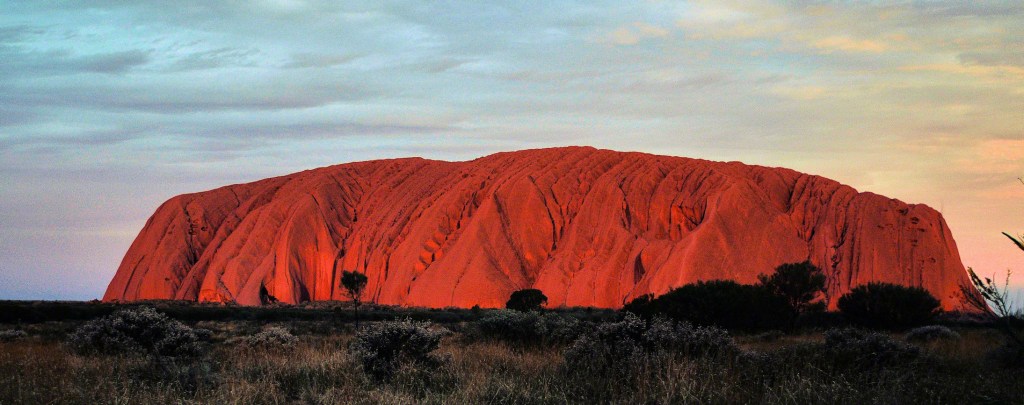
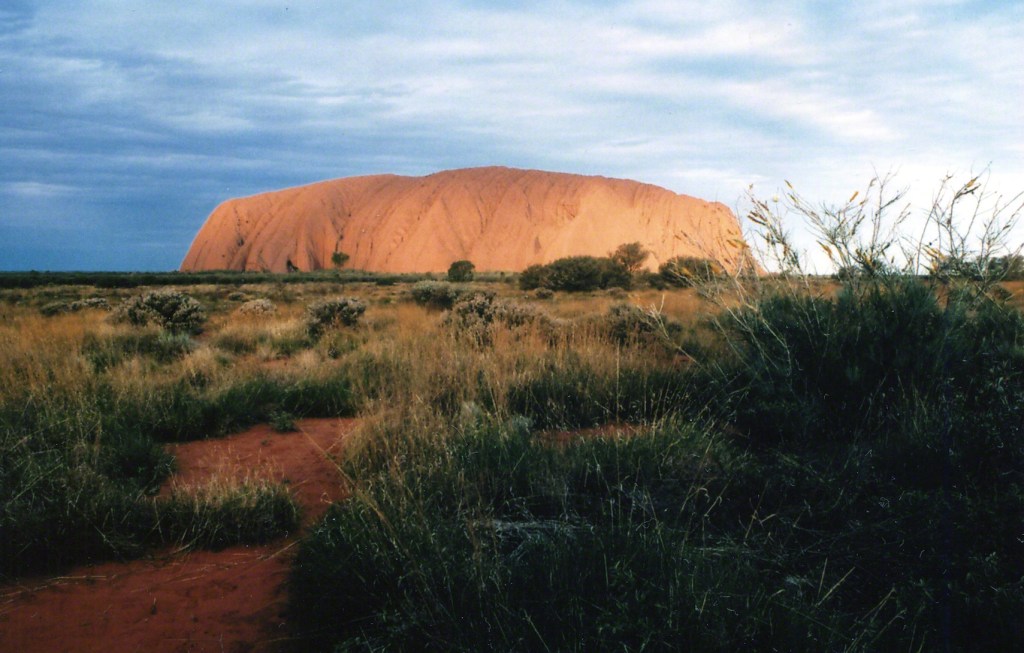
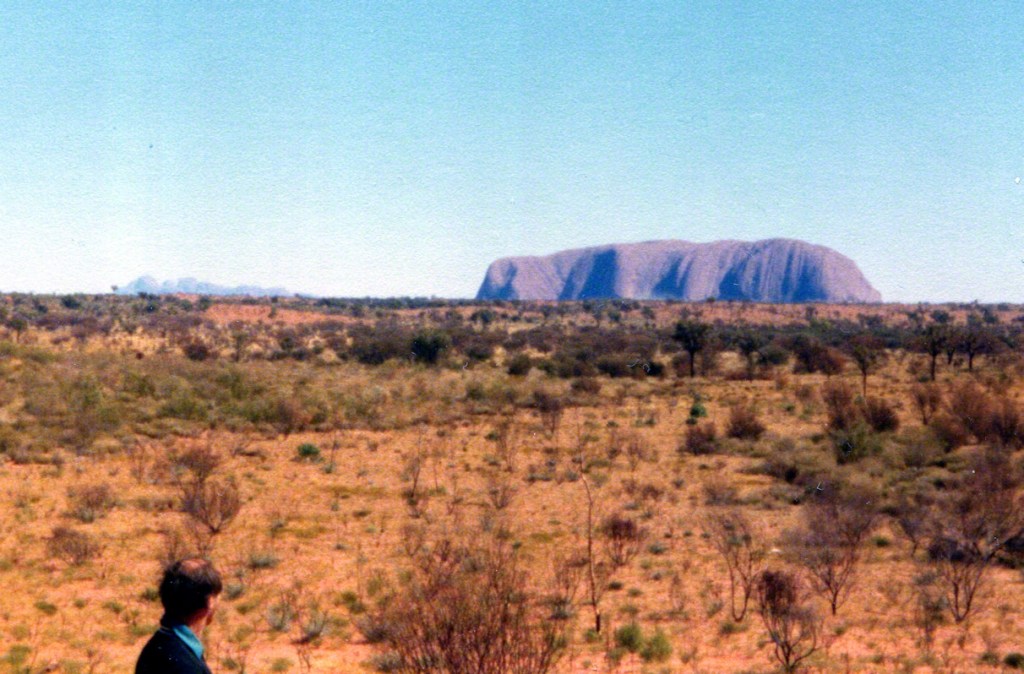
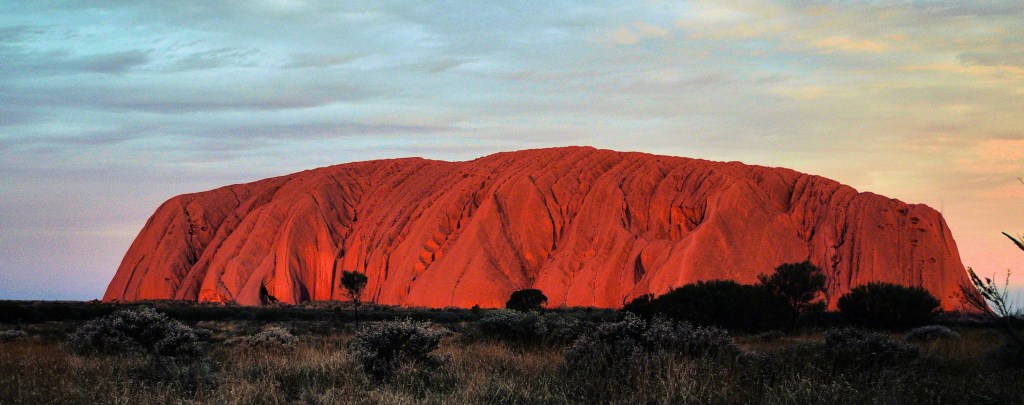
We joined the tourists in the small clearing to take the Uluru-at-sunset-photos. There’s one snap I took of two travellers admiring the Rock as it deepened in colour, more a rusty-red, than the scarlet I’d seen on calendars. So, it’s taken with an instamatic camera and the quality is pitiful compared to the chocolate-box number my grandpa took in the 1950’s, but I reckon it captures the atmosphere.
‘Enough of these tourists,’ Richard grumbled. Clutching his polaroid camera, he stormed up the nearest hill.
‘Wait!’ I called and raced after him.
My brother ignored me and quickened his stride. I tried to catch up but soon tired of his fast pace. I watched him vanish behind some spinifex bushes and decided his quest for tourist-free photos was pointless. I gazed at the Rock squatting behind waves of sand-hills and bushes. The view’s going to be just as good, if not better by the road and the masses, I thought and rushed back to Dad before the sun went down too far and the Rock had lost its lustre.
Uluru faded from clay-red to a dull grey and the tourist congregation thinned, trickling away in their cars and buses towards the camping ground situated east of the Rock.
‘Is that it?’ I quizzed Dad. The Uluru at sunset in my mind had been spectacular in its failure to deliver. ‘Why didn’t it turn bright red?’
‘You need clouds for that. Clouds make all the difference,’ Dad said, his lips forming a beak. ‘Glad my camera’s out of action and I didn’t waste film on it.’
‘But the photo of a red Ayres Rock taken by Grandpa had clouds around it.’
‘Yeah, well, there would’ve been clouds in the west too,’ Dad explained. ‘See, the sky is clear tonight, so that’s it for the Rock.’
‘Disappointing! A very poor show, ol’ friend.’ Mr. B sauntered past us with Matt tagging behind. ‘Come on, we better get to camp. Don’t want to be cooking in the dark. Don’t want the likes of egg soup again.’
Dad peered into the distant black lumps of hills. ‘Where’s Richard?’
I stared into the thickening darkness. No Richard. ‘Dunno, went into the sand-hills,’ I said with a shrug.
‘Oh, well, I guess he’s gone for a walk,’ Dad said.
The Rock became a dull silhouette on the horizon. We packed away our cameras and waited. And waited for Richard. Darkness settled on the land. We waited some more. The icy cold of the night air seeped into our bones. We waited but he did not appear.
‘Where could he be?’ Dad said and then stormed into the bush.
Minutes later, Dad tramped back to us waiting at the Rover. His search in the nearby scrub was fruitless.
Each one of us stood silent; silent sentinels around the Rover.
‘I hope he’s alright,’ my comment plopped in the well of silence. A chill coursed down my spine. What if an accident had befallen my lost brother? The dark of night had swallowed my brother up.
Dad grabbed the torch from the glove box in the Rover, and then marched back up the sand-hill.
I paced up and down the road. Mr. B folded his arms across his chest and scrutinised the shadows of bush that had now consumed Dad. Matt gazed up at the emerging mass of the Milky Way.
‘I hope they’re okay. I hope Dad finds Richard.’ My chest hurt with the pain of losing my brother.
Mr. B sighed. ‘Probably just a—’
‘What?’ I asked.
‘There they are,’ Mr. B said. ‘All that worry for nothing. You’ll get grey hairs if you keep worrying like that.’
I pulled at my hair and then raced up to my brother. ‘Where were you?’
‘I went out along the dunes. I kept walking and walking trying to find a good spot,’ Richard said.
Dad chuckled. ‘And when he did, he waited for the Rock to turn red.’
For the night we camped in an aboriginal reserve seven miles out of the Uluru—Kata Tjuta Reserve. In preparation for the trip, Dad had successfully applied for permission to camp there. This time Dad and I had two fires going each side of us as the previous night was so cold that I had little sleep. We hoped that two fires would be better than one to keep the chills away. Mr. B and his son Matt on the other hand, settled for one shared fire and superior fibres of their expensive sleeping bags to keep the cold out.
And Richard, after all his effort to scare us by almost getting lost, buried himself in his rather ordinary cotton sleeping bag, next to his single fire, and was the first one, after our rather simple rice dinner, to be snoring away, lost in the land of nod.
[The last few months I have revisited The T-Team with Mr. B: Central Australian Safari 1977 which is a prequel to Trekking With the T-Team: Central Australian Safari 1981. In preparation for its release later this year, I will be sharing posts of this adventure.
In this episode we climb Uluru/Ayers Rock and Mr. B startles us with his dream for the Rock…]
Mr. B’s Dream for the Rock
Tourist buses lined the carpark. They looked like caterpillars all in a row ready for a race. People swarmed like ants around the base of the Rock and a steady stream of them marched up and down the slope.
Dad slowed the Rover to a crawl and slotted into a space at the end of the carpark. ‘Well, there’s the tourists,’ he said.
‘And what are we?’ Mr B asked.
‘I like to think we are travellers.’
‘What’s the difference?’
‘Tourists come to a place like the Rock, they climb it, snap a few photos and then they move on,’ Dad said. ‘Travellers take their time. They explore. They get to know the people who live here. They appreciate the culture and history of the place.’
‘So we’re tourists then,’ Mr B remarked, his expression dead-pan.
Dad scratched his brow. ‘Oh, no, I wouldn’t say that.’
‘I’m climbing the Rock,’ Matt said and then bolted out the back door.
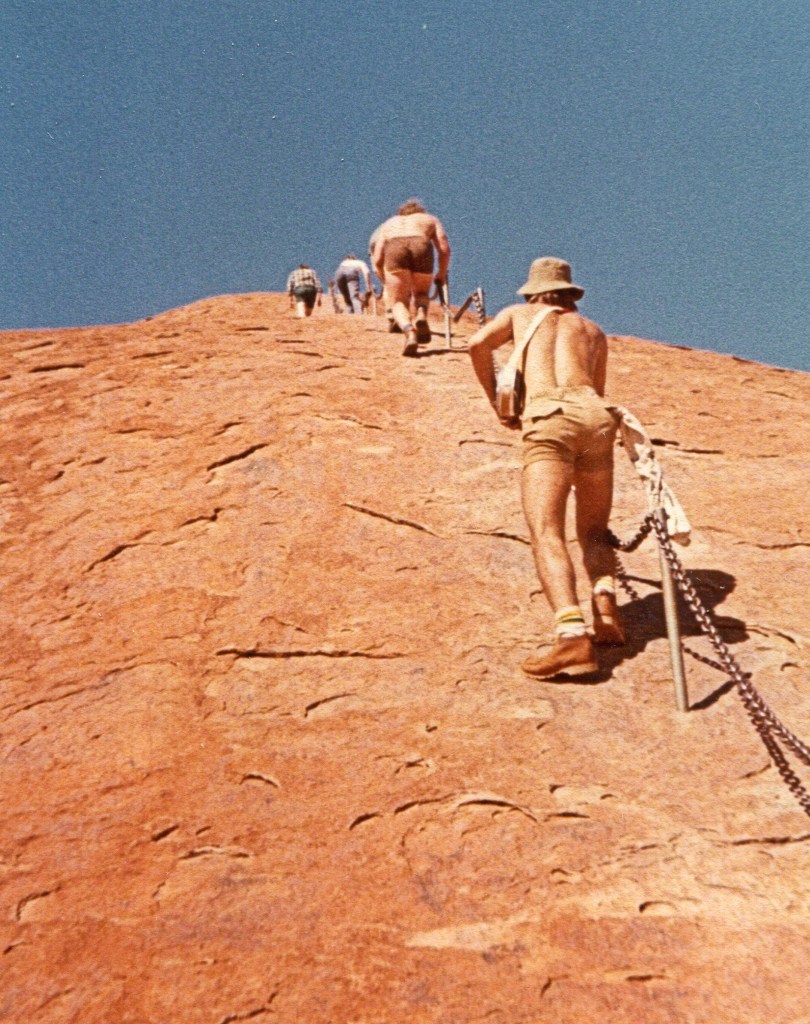
Richard and I chased after Matt. We scrambled up the slope following the painted white line. Further up several tourists inched their way grasping chain rails that were secured into the rock.
‘You forgot your water-bottles and lunch for the top,’ Mr B said.
‘Come on Matt,’ Richard called out to Matt who’d sprinted ahead, ‘better get our packs and stuff.’
Matt, Richard and I plodded back to Dad and Mr B where we collected our backpacks of supplies from them. Then as a group we recommenced our haul up the monolith.
The first part was treacherously steep. Before I even reached the rails, my shins ached from the gradient. We followed the broken white line. Deviation from the nominated path could be fatal. A plaque at the base of the Rock was a solemn reminder that several people had fallen to their deaths.
And yet, while climbing, I recall my mum telling me that when she climbed Ayers Rock back in the 1950’s, there was no white line, and not rail to clutch onto. Then she told me a funny story about an earlier time when a filmmaker took footage of the climb up the Rock with a local Indigenous guide. I have seen this film where at the top of the rock, there were pools from recent heavy rain, and the guide can be seen splashing in the water. Perhaps life and the way the Rock was viewed was different back then in the 1940’s and 50’s.
Richard and Matt scampered ahead of me. I puffed my way up the slope behind them and soon lost sight of them. Dad and Mr B laboured behind me. Mr B rested every few steps. He swore he’d die of a heart attack before he fell to his death. Dad stayed with him and encouraged him to keep on going.
Tourists passed me as they descended the Rock. They nodded and said, ‘G’day’ and remarked that the climb was well worth the effort.
Spurred by these recent Uluru conquerors, I took a deep breath and continued the climb.
The steep slope eased into endless ridges. Up and down. Up and down. At least my shins experienced some relief. But I seemed to be hiking over these rocky hills and dales forever, as if Uluru was the Tardis of distance. I glanced at my watch. I’d been hiking over an hour. Was the Rock that big?
I stopped, took a swig of water from my canteen and surveyed the plain beneath. The Olgas shimmered like mauve marbles above the land striped in sienna and gold in the afternoon sun.
‘You’re almost there,’ Richard called. He raced up to me and then pointed. ‘The cairn is just over there.’
‘Where?’
‘Are you blind?’
‘I can’t see it.’
‘Come on.’
Richard led me to the pile of stones set in concrete. Half a dozen tourists plus Richard and Matt milled around the cairne, posing for photos and pointing at the various landmarks below. Richard, Matt and I conformed to the way of the tourists taking turns photographing each of us standing next to the cairn with Kata Tjuta behind us.
As we waited for our fathers, we admired the awesome scenery; the land below bathed in waves of pink, purple, blue and yellow. The boulders of Kata Tjuta changed from deep purple to blue with the movement of the sun as it travelled west. ‘Wow!’ I exclaimed. ‘This climb was well worth it.’
Other tourists summited, stayed a few minutes to snap a few shots and then trooped away down the Rock.
After Richard, Matt and I had eaten our sandwiches, signed the log book on the cairn, explored some bushes that grew out of the Rock and then watched the third lot of people arrive and disappear, Dad and Mr B staggered to the summit. Their faces glowed with perspiration.
Mr B clutched his chest and slumped down by the cairn. ‘I thought those corrugations would never end!’
Dad patted Mr. B on the back. ‘Ah, well, we made it.’
Mr B slurped water from his canteen, then standing up, he paced around the cairn while scrutinising the landscape with his binoculars. Dad pointed out the landmarks, Mt. Conner to the east, Kata Tjuta to the west and the Musgrave Ranges to the south, and so directing Mr B’s binocular-gaze.
After several minutes admiring the view, Mr B remarked, ‘Amazing! Certainly well worth the climb, ol’ boy.’ He then sidled up to Dad and put his arm around his shoulders. ‘I dare say, ol’ chap, the experience could be improved.’
‘What? A cable-car up to the top?’
‘Oh, hadn’t thought of that. No, I suggest there should be a fast food restaurant up the top here. The place needs refreshments. I mean to say, all these people have spent two hours climbing up here. They need some refreshments, don’t you think?’
Dad cleared his throat. ‘Er, um…’
Is this man for real? I thought. On the climb and also when we visited the cave, I sensed the Rock was holy, sacred. How could Mr B even contemplate building anything on its surface? ‘I reckon there should be less people climbing the Rock, not more,’ I said.
‘And another thing,’ Mr B was not finished, ‘the Rock needs a swimming pool halfway up. I’ve already picked out the perfect location. You see, while I was resting and contemplating during that terrible steep climb, I saw it, the perfect place for a pool. What do you say, ol’ chap?’
‘The Indigenous owners will never agree,’ Dad replied.
‘Well, I have some advice for the natives,’ Mr B said. ‘They need to get with the times. I mean, look at all the tourists. Look at all the opportunities.’
‘I doubt it,’ Dad shook his head, ‘come on, we better get down.’
After Dad and Mr B signed their names in the log book, we made our way down the Rock tracking along the white line. We nodded at the people climbing up and said, ‘G’day’ to them and advised them that the climb was well worth the effort.
[The last few months I have revisited The T-Team with Mr. B: Central Australian Safari 1977 which is a prequel to Trekking With the T-Team: Central Australian Safari 1981. In preparation for its release later this year, I will be sharing posts of this adventure.
In this episode we venture up close and personal to Uluru/Ayers Rock…]
When we arrived at the fence that bordered the Ayers Rock-Olgas Reserve (as it was known back in 1977) *, we took more photos of the Rock, rusty-red with black streaks, and towering above us. We drove to the Park Ranger’s office to pay an admission fee to enter the reserve and see the Rock. Once Dad had returned from fee-paying, we commenced our drive around the Rock.
As there were more tourists in their Land Rovers and cars also circling the Rock, Richard and I descended from our high status on the top of the Rover and crammed into the back cabin. The roads, though not sealed, were better graded with gravel tempering the bull dust, so though the dust was still a nuisance, it didn’t make me cough.
‘When are we going to climb the Rock?’ Matt asked his dad.
‘Soon, ma boy, soon.’
‘Have you climbed the Rock?’ I asked Dad.
‘Erm…’ Dad coughed.
‘Of course, you did. Back in the 1950’s. Not so many tourists then, I reckon. Were you the only ones camping near the Rock back then?’
‘Um…er…umm…’
‘You went with mum and her family back then, didn’t you Dad?’
Dad put his dusty handkerchief over his mouth and coughed.
‘I remember the beautiful photos taken by Grandpa. He was a missionary pastor at Hermannsburg, you know, Mr B. And Dad was a teacher at Hermannsburg. That’s where he met mum, did you know, Mr B?’
‘The roads are better,’ Dad said. ‘They were just tracks back in the fifties.’
‘I dare say, ol’ chap,’ Mr. B butted into our conversation, ‘the Rock must still be the same.’
Dad chewed his lip. ‘Well, er, yes, I s’pose.’
‘If you ask me, all looks primitive to me,’ Mr. B said. ‘I mean to say, the land looks like we’re back in the 1950’s. I really think they should invest in some decent hotels or motels. Perhaps a tourist village. For the tourists. I mean, just look at the Rock—they’re missing money-making opportunities.’
Dad shifted his weight in the driver’s seat. ‘Er, I don’t know if having lots of tourists is a good idea for the Rock. The Indigenous consider the Rock sacred. I think they’d want less tourists, not more.’
‘Tourism, that’s where it’s at. And from what I’ve seen of the natives in this part of the land, they could do with some money to boost their living conditions.’
Richard and I glanced at each other. I pondered, Was this man for real?
Dad pursed his lips and turned into road leading to a cave in the Rock. ‘Before we climb the Rock, there’s this cave. It has ancient aboriginal artwork on the walls’, Dad said.
We walked along a narrow path under the shade of ironwood and acacia trees. The Rock awed me by its size. If I had a camera with unlimited capacity to take thousands of photos, I would have spent the whole trek to the cave snapping away behind the lens. Nearer, the Rock surprised me with shades of tangerine, crimson, umber and red of the iron stone. As we got up close and personal with the Rock, I thought it looked like a giant elephant’s flank all scaly and knobbly. It had looked so smooth from far away.
We entered a cave which appeared as though it was a huge umbrella from the inside. In a zone of wonder we walked along the narrow passage under the roof. I imagined that waves had crashed against it and carved out its form. In one part, I studied the carvings of the ancient owners of this land.
We trod through the cave in silence. This was sacred ground.
[*Note: Named by William Gosse in 1873 in honour of the chief secretary of south Australia, Henry Ayers. In 1993 the rock received the dual name, Uluru/Ayers Rock, Uluru being the Pitjantjatjara name for this sacred site.]
***
Want more?
1977 gave the fledgling T-Team a taste for adventure…
Find out how they fared on a full-two-month safari to the Centre in 1981…
Why not binge on the T-Team Adventures in outback Australia?
[The last few months I have revisited The T-Team with Mr. B: Central Australian Safari 1977 which is a prequel to Trekking With the T-Team: Central Australian Safari 1981. In preparation for its release later this year, I will be sharing posts of this adventure.
In this episode more carnage to the trailer. This time the tyres take a beating. But there are unexpected rewards for those who wait…]
Tyre Carnage On Way to the Rock
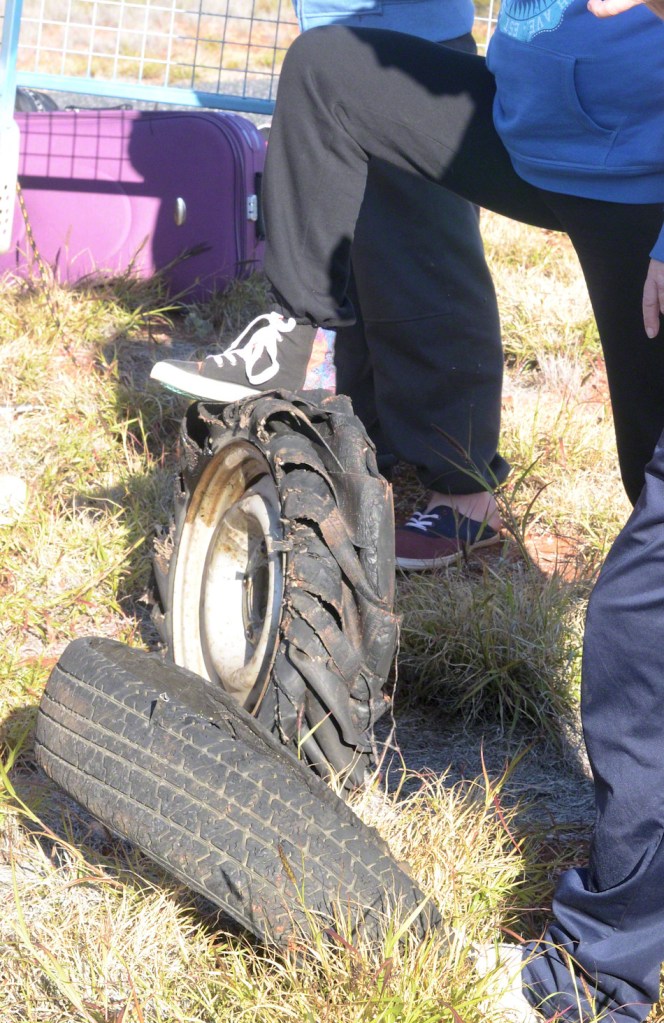
We sailed along on the road to Uluru, the warmth of the sun on our cheeks and breeze in our hair. Sand-hills rolled up and down and then into the distance. Black trunks of ironwood trees flitted past. The Rock made random appearances and disappeared. A wheel flew past and bounced into the bush.
The men gathered around the trailer and discussed their options in lowered tones. Dad frowned, he put his hands on his hips and gazed at the ground as Mr. B glared at him.
‘Poor! Very poor for a trailer!’ Mr. B muttered. ‘What are we going to do about it, mate?’
Dad shifted his feet and then with his boot scuffed the stones. ‘I don’t know. What do you reckon, Richard?’
Richard shrugged.
‘I say, laddie, can you find that tyre?’ Mr. B asked.
‘It’s long gone,’ Richard said. ‘But I’ll try.’
‘They’re expensive.’ Dad kicked the one remaining trailer tyre. The men stared at the one-wheeled trailer as though they were visiting a gravesite.
‘Alright,’ Richard muttered, ‘I’ll go and see if I can find it.’
Richard stomped down the road. He placed his hand above his eyes and peered in the direction the tyre had vanished into the scrub.
Matt caught my gaze. ‘Boring!’
‘Let’s go up that hill and see if we can take a photo of Ayers Rock and the Olgas,’ I said. As we were walking, I conveyed the information I had gleaned from Dad about the Olgas. ‘Did you know, Matt, that the people who own this land call this amazing collection of giant boulders, Kata Tjuta which means “many heads”?’
‘How far are the Olgas from Ayers Rock?’ Matt asked.
‘My dad reckons they are 30 miles west of Uluru,’ I replied. ‘he says we’re going to camp outside the national park, just beyond the Olgas.’
‘Olgas, that’s a funny name.’
‘Yeah, it’s German, I think. Dad was telling me that in 1872, the pioneer explorer Ernest Giles discovered them and called them “The Olgas”, after Queen Olga of the German Kingdom of Württemberg.’
‘Imagine having a few rocks named after you.’ Matt laughed. ‘The Boulders of Lee-Anne.’
‘Matt’s Massif,’ I joked.
Matt tittered. ‘What about, Richard’s Rock?’
‘Hey, I just remembered, back in Ernabella, there’s a Trudinger Hill. How cool is that?’
‘So, every time, people see those funny rocks and boulders in the distance, they will be reminded of some mouldy old German queen.’
‘Now that you put it that way, sounds a bit odd, us Europeans putting our names on the features of this ancient land. I wonder if they’ll eventually change the names back to what the Pitjantjara peoples call it someday.’
The men decided to leave the trailer on the side of the road and fix it upon our return when we passed that way. By then we hoped to have the parts and equipment required to reattach the rogue wheel that Richard had found and then hidden underneath the trailer.
[The last few months I have revisited The T-Team with Mr. B: Central Australian Safari 1977 which is a prequel to Trekking With the T-Team: Central Australian Safari 1981. In preparation for its release later this year, I will be sharing posts of this adventure.
In this episode,the T-Team with Mr. B scale the heights of the highest mountain in South Australia, Mt. Woodroffe. Even back in 1977, Mt. Woodroffe being on land owned by the Indigenous people, we needed permission and a guide. Don’t know what happened to the guide back then, but we had permission. The situation has changed in the 44 years since we climbed…more about that later.]
The Top of SA — Mt. Woodroffe
The sun climbed over the horizon, its rays touching the clouds in hues of red and Mount Woodroffe in pink.
In the golden light, packs on our backs we filed up the gully. The narrow creek in the hill-face gave way to the slopes leading to the summit. With no defined track except for euro (small kangaroo) ruts, we picked our way through the spinifex. Rick carried his .22 rifle in the hope of game for dinner.
‘You’ve got to watch that spinifex,’ Dad said. ‘If you get pricked by it, the needle stays inside your body for years.’
‘Years?’ I asked. ‘What does it do there?’
‘It works its way through your body and eventually it comes out through your hands or feet or somewhere.’
‘Yuck!’
‘Ouch!’ Rick screamed. ‘The spinifex just stung me.’ My brother stopped and pulled up his trouser leg to inspect the damage and then muttered, ‘Next time I’m making shin-guards.’
‘I guess one should be careful when one answers the call of nature out here,’ Mr. B said.
Matt sniggered.
I gazed at the acres of spikey bushes and decided to resist the call of nature.
I studied the three odd-shaped purple monoliths popping up from the plain. After the strenuous hike to the top of South Australia, I gazed at the ranges resembling waves rising and falling in the sea of the desert was filled with euphoria.
‘Wow!’ I gushed. ‘Apart from spinifex, the climb was a walk in the park—a most worthwhile journey.’
Mr. B folded his arms and grunted.
Still on a high, I ran around the stone pile, snapping photos from every direction with my instamatic film camera. Then I gathered the T-Team. ‘Come on, get around the cairn. We must record this momentous occasion for posterity.’
The men followed my orders like a group of cats and refused to arrange themselves. Mr. B hung at the back of the group and snapped, ‘Hurry up! We need to eat.’
Lunch of corned beef and relish sandwiches at the top of South Australia was Dad’s reward to us for persevering. We rested for an hour on the summit taking in the warmth of the sun, the blue skies dotted with fluffy clouds and the stunning views of the Musgrave Ranges and desert.
After photos, we began to climb down those jagged rocks, carefully avoiding the spinifex. But try as he might to avoid the menacing bushes, more spikes attacked Rick’s tender legs. ‘Definitely going to wear leg guards the next time I come to Central Australia to climb mountains,’ he grumbled.
We reached a rock pool, just a puddle of slime, actually. I pulled off my shoes and emptied grass seeds and sand onto the surface of slate. Then I ripped off my socks. They looked similar to red-dusty porcupines, covered in spinifex needles. My feet itched with the silicone pricks of the spinifex. I dipped my prickle-assaulted feet in the muddy water.
‘You mean, David, old chap,’ Mr. B massaged his feet and turned to Dad, ‘we’re stuck with the prickly critters long after our climbing days are over?’
During rest at the poor excuse of a rock pool, nature called, and this time I could no longer resist. I hunted for a suitable spot, but everywhere I looked, ants scrambled about, millions of them. The longer I looked, the more ants congregated and the more desperate I became. But I had to go, ants or no ants. At least the patch was clear of spinifex. I suppose for the ants, my toilet stop might have been the first rain in weeks.
Back at camp, we began our ritual of preparing the bedding. Mr. B stomped around the creek bed until he found the softest sand. Dad grabbed the sleeping bags one by one and tossed them to each of us.
‘Argh!’ Mr. B cried.
‘What?’ Dad asked.
‘Oh, no!’ Rick moaned.
‘What?’ Dad asked.
‘Who’s been piddling on my sleeping bag?’ Rick grizzled.
‘Piddling?’ Dad stomped over to Rick.
‘It’s all wet.’
‘I say, boy, why’s my sleeping bag all wet? Couldn’t you use a bush?’ Mr. B remarked.
Matt turned away. ‘Wasn’t me.’ He unrolled his sleeping bag. ‘Oh, no, mine’s wet too.’
Rick looked at me.
‘Hey, I stopped wetting the bed years ago,’ I snapped. ‘Anyway, mine’s dry.’
‘I wasn’t going to say anything,’ Rick replied.
I raised my voice. ‘You were, you were looking at me like…’
‘There, there, cut it out,’ Dad strode over to Rick and me. He held up a bucket. ‘The washing buckets leaked on the sleeping bags.’
These days, in the days of the “new normal”, as a result of Covid, climbing Mt. Woodroffe may not be possible. I did a little Google research about it. During the times of the “old normal”, permission from the Indigenous Owners of the APY Lands was still necessary, but it seems the Mt. Woodroffe climb was part of an organised tour. To find out more, here are the links below:
[An extract from The T-Team With Mr. B: Central Australian Safari 1977; a yet to be published prequel to my travel memoir, Trekking with the T-Team: Central Australian Safari 1981, available on Amazon.
[The last few months I have revisited The T-Team with Mr. B: Central Australian Safari 1977 which is a prequel to Trekking With the T-Team: Central Australian Safari 1981. In preparation for its release later this year, I will be sharing posts of this adventure.
In this episode, my dad (Mr. T) brews up an unusual “stew” by accident…]
Egg Soup
The sun lingered above the horizon as we returned from a hike to our campsite at the base of Mount Woodroffe.
‘Ah, an early tea,’ Dad said. ‘It’s always best to cook while there’s daylight. We can make an early start.’
‘Well, after that disappointing jaunt to find that damned waterhole you went on about David, I’m pooped. I’m going to have a lie down,’ Dad’s friend, Mr. B said as he slumped onto a nearby log. ‘I hope you’ve found us some nice soft sand to sleep on. I haven’t had a good night’s sleep yet on this trip.’
‘Yes, well, um,’ Dad called after him, ‘I need some help stirring the pots.’
‘Get your daughter,’ Mr. B replied, ‘I dare say, she’s a girl, that’s what she ought to be doing—cooking, I mean.’
I stopped blowing up my mattress. Uh-oh, now I have to cook and miss out on all the fun, I thought as air slowly wheezed out of the mattress.
Dad coughed. ‘Er, um, actually, I’ve asked Lee-Anne to sort out the bedding and to pump up the mattresses. And the boys, Richard and your son, Matthew, have gone out shooting, getting us some roo to cook. I have it all organised. So I would like you to stir the pot, please.’
I breathed out and then started blowing up the mattress again. Phew! Dodged that bullet.
‘Oh, very well, then,’ Mr. B said as he negotiated his path through an obstacle course of billy cans, tucker boxes and tarpaulin back to the campfire.
I thought, there is always a danger being too early and organised. So it was this evening when Dad, who prided himself as “chef-extraordinaire”, prepared scrambled eggs and soup for dinner.
I hopped over to Dad. ‘Do you need some help with dinner?’
Dad patted his pockets and shifted his weight from one foot to the other. ‘No, I have Mr. B helping me. You go and pump up the mattresses.’
‘But my jaws are sore from all the blowing,’ I said. ‘I need a break.’
‘No, I have it all covered. It’s about time Mr. B does his fair share.’
I could see from Dad’s expression, the pursing of his lips, keeping the chuckle from bursting out, Dad thought he was being really clever asking Mr. B to help stir the soup pot.
As I shuffled around the campsite sorting out my bedding, I distinctly heard Mr. B mutter, ‘My goodness this soup is awfully thick.’
Being the only female in the crew, Dad appointed me to call in the troops. I tramped through the scrub in search of the boys. My brother Richard and Matt loved to shoot with their .22 rifles. But neither were good at it. I could hear the rifles popping, but in the dimming light I failed to locate the lads. So I returned to camp.
There the men were, all of them (minus the roo for dinner), their spoons dipping in and out of their cups.
Mr. B grimaced as he put another spoonful of soup to his lips. ‘Ugh! This is awful! This is the worst feed yet!’
‘It’s alright,’ Dad said as he bustled around the campfire. His cup wobbled on a rock as he handed my portion to me. He gave the other billy a maddening stir.
‘What’s in there?’ I asked.
‘Egg, egg scramble,’ Dad said and handed me the ladle. ‘Go on, you can stir it.’
I peered in at the watery mist. ‘It’s awfully thin, are you sure?’
‘Just stir will you?’ Dad snapped. ‘I’ve got other things to do.’
‘Alright.’
I sipped my soup and stirred the pot.
Richard and Matt stood by the fire and stared at their metal mugs.
‘Come on, drink up,’ Dad commanded.
The boys dutifully slurped up their soup.
Mr. B raised his voice. ‘So what sort of soup do you call this? You know, it tastes awfully like egg. You’re sure that you didn’t mix up the billies?’
‘Oh, no, not at all!’ Dad replied.
I took another sip. The soup tasted nice. I quite liked it. Then again, anything tastes good when you are a starving teenager.
As Dad settled himself by the fire, Mr. B slavishly gulped down the remainder of his soup. ‘Well, that is the worst soup, I’ve ever had in my life. Oh, for some decent food! And a decent night’s sleep. I didn’t sleep a wink last night and my back’s aching!’ He spied his son playing with his soup. ‘Eat up, boy! Look! Tha girl’s eating hers.’
Dad began to take a spoonful of soup. ‘Hang on. This’s not right.’ He pointed at a billy sitting on the ground to the side of the fire. ‘Lee-Anne, can you just check the other billy?’
‘What for?’
‘Don’t ask, just check, would you!’
‘Okay!’ I grumbled and hobbled over to the billy sitting in the cold, the contents supposedly waiting for the frypan. I lifted the brew onto the wooden spoon. In the fading twilight, I spied water, peas, carrots and corn, but not an ounce of egg. ‘Looks like soup to me.’
Dad pushed me out the way. He had to check for himself. ‘O-oh!’
‘So we did have egg soup!’ Mr. B said, ‘I knew it.’ Even after less than a week with this pompous friend of Dad’s, I suspected this fellow would never let Dad hear the end of it. I imagined, from now on, till the end of Mr. B’s days, Dad’s culinary skills would amount to egg soup.
‘I’m so sorry,’ Dad said. ‘My mistake.’
‘I knew we were just too well organised,’ I said.
‘I won’t forget this occasion,’ Mr. B said. ‘Egg soup, what next?’
Poor Dad.
Dad boiled the correct soup and dolled it out in the dark.
We drank our portions void of conversation until an awkward “Oops!” cut through the icy air. Matt had spilt soup all over the tarpaulin.
‘Oh, Matt, did you have to?’ Mr. B said. ‘Now, clean it up and be more careful next time.’
As Mr. B harangued his son to clean up, drink up and for-heaven’s-sake be careful, and where-on-earth did you put the cup, son, we don’t want another accident, Dad sighed and ushered my brother and me to retreat to our sleeping quarters and away from Mr. B’s ire.
In the sanctuary of space away from Mr. B and son, we washed our clothes and prepared for the climb up Mt. Woodroffe the next day.
‘We need to make an early start,’ Dad said.
I reckon Dad did not want to add any more disasters to his list.
[ January 2009, and my turn to be the Team Leader of K-Team, the Younger (K-T-Y), who were teenagers; one, of whom was a certain 15-year-old son who would’ve preferred to be playing computer games rather than travelling around Tasmania. This time the K-T-Y team venture to Coles Bay on the Freycinet Peninsula which is on the East Coast of Tasmania.]
We need an Aussie “Brat Camp, I thought as we trudged up the steep path. The best beach in the world, but did Son 2 care?
I turned and yelled, ‘Come on, son!’
My 15-year-old Son 2 shuffled up the slope, his head shrouded in emo black hair bent as he stared at the gravel. A cry sounding like a demented “Chewbacca” echoed through the valley, ‘It’s too hard!’
Son 1 and girlfriend had raced ahead.
‘Hurry up! We’re being left behind,’ I waved my arms about, ‘it’s getting late!’
‘Urgh! There’s flies!’ Son 2 batted the air around his face. ‘I need a rest! I’m tired!’
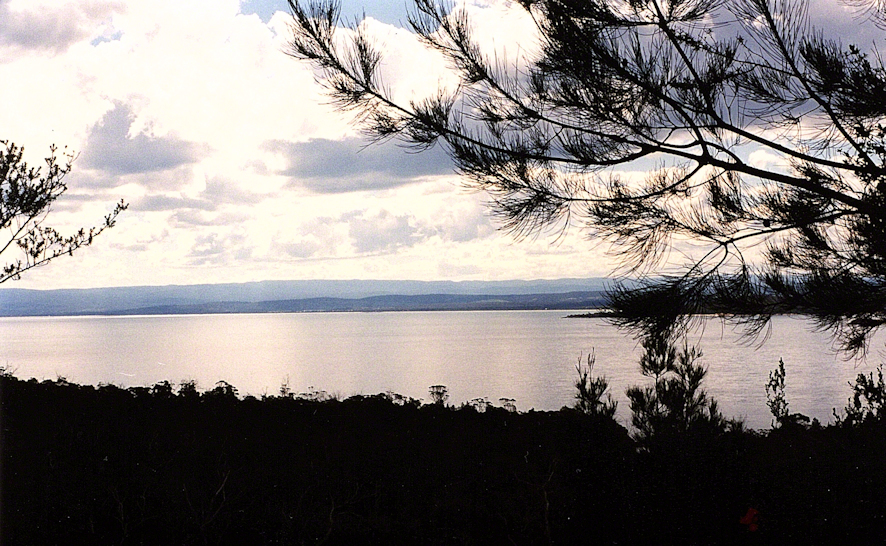
I stumped back to my son who then leaned against a rail. Oyster Bay glistened blue in the afternoon light and boats with white sails bobbed on the water. I was beginning to appreciate the effort and patience my Dad took to take my brother, cousins and me on safari all those years ago in 1981; our adventures documented in Trekking with the T-Team: Central Australian Safari 1981.
I waved a hand over the scene. ‘How can you not appreciate that view?’
Son 2 grunted.
‘It’s better on the other side,’ I said remembering our previous foray eight years earlier up and over the rise of the peninsula to Wineglass Bay.
I imagined Son 1 and girlfriend way ahead. But there, at the next lookout, Son 1 bent down, hands on knees, his girlfriend patting him on the back.
‘What’s wrong?’ I asked.
‘I don’t feel so well,’ Son 1 said. ‘I feel dizzy.’
Plan to hike to Wineglass Bay postponed until next morning, we trudged down to the car, and then drove the 20 minutes back to our cabin at Coles Bay Caravan Park. Son 2 grizzled all the way back. ‘Oh, why can’t we? I was just getting into it.’
Bright and early next morning, the K-T-Y team made their second attempt to hike to Wineglass Bay. What a difference a good night’s sleep and early start make? So much easier; the air still cool from the night, and no mosquitos. In 2001, when a much younger K-T-Y team tackled the hike up and over the hummocks to Wineglass Bay, huge mosquitos, hovered around us. The route to the lookout over the bay seemed different, too; not as strenuous. Or was I just more fit?
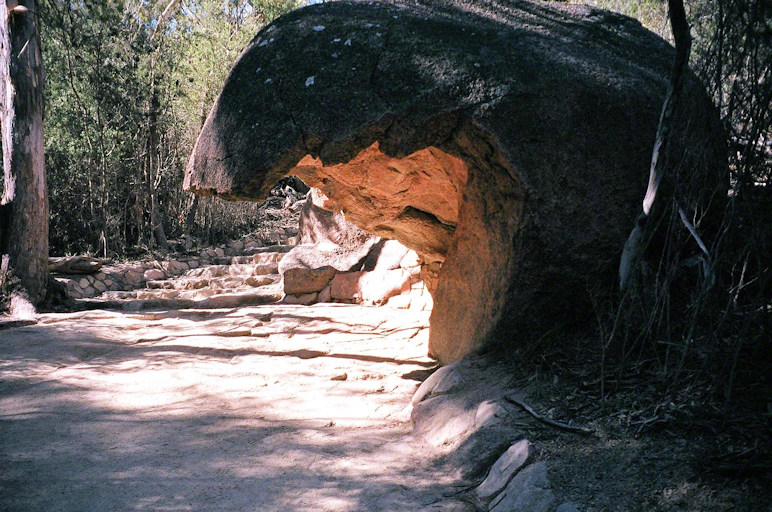
Son 1 tried to catch tadpoles with his fingers while Son 2 rested on a crazy seat. I enjoyed photographing a cave nearby. After the umbrella rock, a narrow-slatted path lead to the lookout already crammed with other hikers.
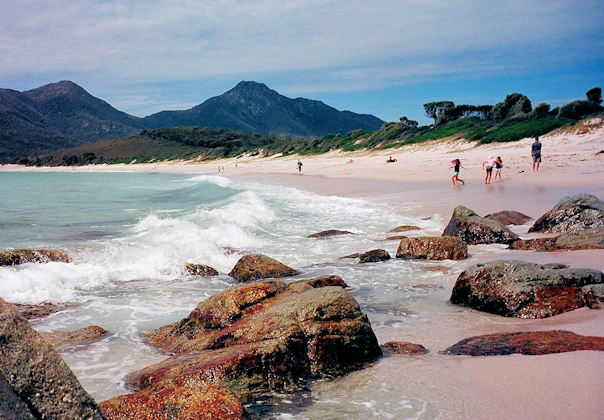
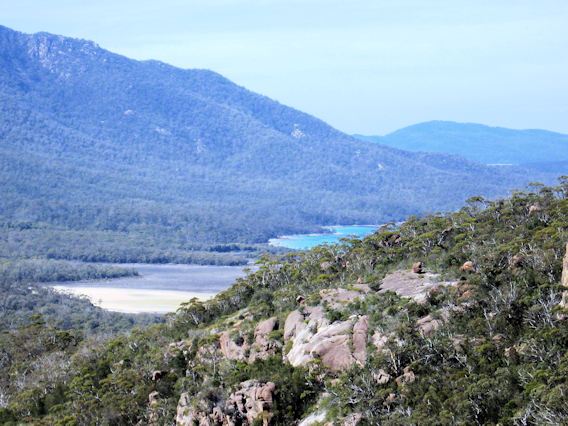
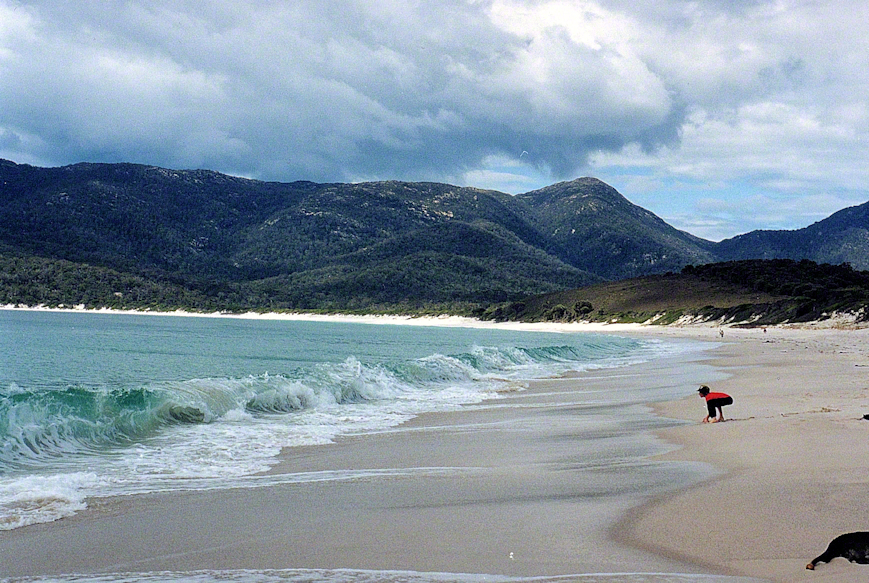
Wineglass Bay in all its morning glory wooed us and once I had my turn to snap a few shots of the bay, we trod down the steep and slippery path to the beach. More amazing views through the trees and I unfurled my camera from its case. ‘O-oh,’ I checked the settings, ‘I must’ve had the camera set for the cave still.’ I realised that all the Wineglass Bay photos from up there would be over-exposed. Must take shots on way back.
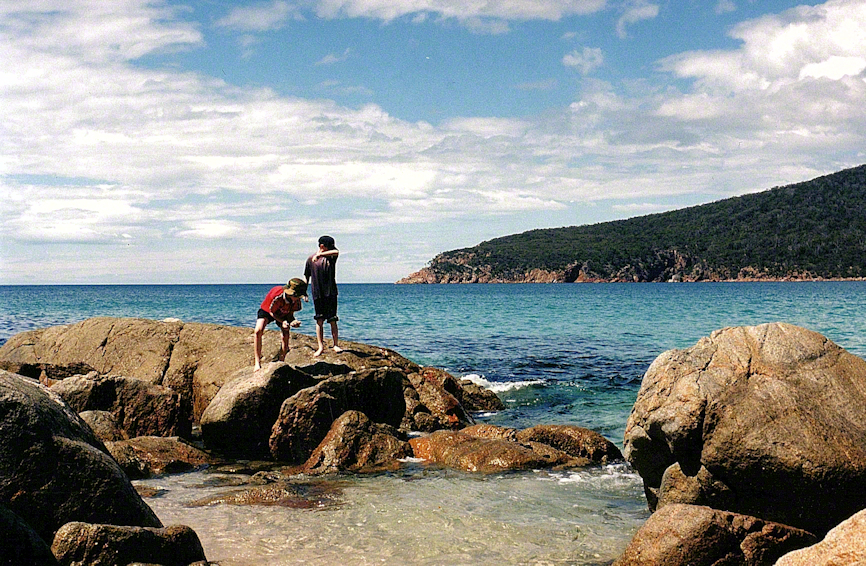
I remembered the time we enjoyed back in 2001, the boys playing pirates on the rocks, Mr. K and me relaxing on the shore of white sand watching clear cold waves crash to shore.
This time, in 2009, we spent about 30 to 45 minutes at the beach, scrambling over the rocks, sitting and eating our nuts and chocolate, and taking oodles of photos. The kids hunted for fish, crabs and starfish. Son 1 chased fish with his camera, while Son 2 avoided the lens and disappeared.
I wandered over the black rugged boulders in search of Son 2. There in the distance, he appeared, stepping awkwardly from rock to rock, and then, in slow motion tumbling over.
We battled the stiff return climb up the hill and then relaxed as we trotted down the slope. The early afternoon sun shone on Oyster Bay and speed boats tracked across the water. And, once again, Son 2 was glad he’d ventured to Wineglass Bay.
All alone, I fidgeted. How long were they going to be? Where have they all gone? I edged towards the height of the gully and looked over. A loose stone skittered down the cliff. I retreated to the safety of the gully and waited. I bit my nails. Had they all fallen to their deaths? Do I join them? I stuck my head through the gap, then my shoulders, and finally my whole body. I placed my hand on the granite. How did they get up here? My height-challenged frame failed to reach the footholds and niches necessary to climb this rock wall. How did they do it? I stood on tiptoes, trying to reach a notch. Just too high. Just my luck, I’ve been left here all alone.
‘I don’t know. Splattered on the rocks at the foot of the mountain.’ I reached for my brother. ‘Where have you been? Where are the others?’
‘At the top,’ Richard, my brother said.
‘But what about me?’
‘Don’t worry, I’ll help you.’ My brother scrambled down. ‘Now climb on my shoulders and David will pull you up. Then you’ll be right. This is the hardest part.’
I did as I was told. I steadied myself on my brother’s shoulders and from there David grabbed my wrist and pulled me to the next level. Then I negotiated the rock-pile obstacle course on my own and made it to the summit of Mt Liebig a second time. My arrival recorded at 9:28am.
Older cousin (C1) perched himself on a flat stone and wrote his diary. Rick fiddled with his spinifex shin guards and muttered, ‘Fat lot of use they were.’ He picked at cunning spikes that had slipped past the guard. Younger cousin (C2) munched on an apple. Dad peeled an orange and with hearty slurps sucked its juices. David wandered around the summit, gazing at the land below, and then examining the cairn of stones.
‘We are on the right peak, aren’t we?’ Dad wiped the orange drips from his beard. He pointed at the other peak. ‘There’s a cairn of stones over there.’
‘Hmmm.’ David stroked his beard. ‘I think so. That one’s used for surveying.’ He picked up a rock and then as if by magic, extracted a rusty old can from the cavity. Without saying a word, he pulled out a roll of paper. He unfurled the paper and his eyes darted from right to left over the page.
C1 ran his finger along the top of the page. ‘The 27th of August 1981.’
Dad counted on his fingers and then said, ‘Well, fancy that! Exactly four years to the day.’
‘Must be the date to climb Mount Liebig,’ C1 said and returned to scribing in his journal.
We remained at the summit at least an hour, engraving our names with the amazing date onto a stone, and celebrating our Liebig conquest with fruitcake for morning tea.
[Note from the author: We ascended to the summit, not two weeks before that Dad had calculated, but one day before Mr. MacQueen and Smith summited. We climbed Mt Liebig on August 26, 1977. Read our adventures in the series Travelling with the T-Team: Central Australia 1977, particularly our previous venture climbing Mt. Liebig, “We almost Perished”.]
Dad looked at his watch and said, ‘The time is 7:05 am.’ I imagined him continuing with “Captain’s Log, Star Date the 27th of August 1981…” But Dad’s focus switched to negotiating the lumps and bumps of the make-shift road ahead.
We parked near the foot of the range and then hiked through the second gully from the north-eastern edge of mountainous waves jutting up from the plain. We trekked up and down four ridges until we arrived at the base of the gully nearest Mt. Liebig. The lads bounded up the gully while I lagged behind with Dad.
My father seemed to be dragging his feet. He looked left and right, and every so often screwed up his nose.
‘You won’t find it,’ I said.
Dad kicked a spinifex clump. ‘No harm in trying.’
‘You lost the quart can last time we climbed four years ago, way before the gully leading to the summit. Besides, we went a different way.’
‘Oh, I thought it was around about here… You never know.’
Dad scanned the prickle bushes, loose rocks and red sand for his beloved quart can. How Dad survived the intervening years between 1977 and now, without his quart can, I’ll never know.
‘I remember that ghost gum,’ Dad said and pointed at the gum as if its pure white bark set against the blend of purples in the cliffs shadows held special powers to cause Dad’s quart can to materialise.
We rested under the ghost gum, eating apples, sucking lemons to find strength to continue, but we failed to locate Dad’s trusty old quart can. Dad gazed over the valley of silver slopes of grass, his mouth downturned, and his glasses fogged over. He missed that quart can. He stood and patted his pockets. ‘Ah, well! We better keep on going.’
One by one we hauled our packs on our backs, and loaded up as pack animals, we picked our route over rocks, loose stones and sharp spinifex spears. My brother wore home-made vinyl shin guards. Much had changed since we last hiked up here in 1977; boulders had fallen down, the spinifex grew in more abundance, and effigies of burnt trees dotted the terrain. Single-file we mounted the steep ascent until we reached the pair of five-metre-high walls at the top of the gully.
Dad shaded his eyes and squinted up the barrier of rocks to the west. ‘I don’t know,’ he said. Some of the ledges on the cliff had crumbled.
My brother sprinted up through a gap in the boulders. We waited for his return and signal to proceed.
The wind whistled through the alley of cliffs. I looked through the crevice between the rocks. No sign of My brother.
‘I hope he’s alright,’ I said.
More minutes passed. We sat poised to move at any moment as if sitting on spinifex, yet we remained calm, mesmerized by the emptiness of the landscape, and the silence.
I looked through the gap again and asked, ‘What’s taking him so long?’ Then I slumped onto a large stone. Visions of my brother falling off the cliff plagued my imagination.
‘I’ll go up and have a look,’ David R (our guide) said, and then he disappeared through the hole.
More minutes ticked by. I glanced at the hole that had swallowed up David. ‘What’s happened?’
‘Just be patient.’ Dad seemed content to sit staring at the scenery. ‘They’ll come back.’
But they didn’t. Instead, the hole drew in older cousin (C1), followed soon after by younger cousin(C2). I peered into the tunnel of no return.
Dad hovered at my back. ‘Don’t go up there.’
‘Why not?’ I replied. ‘Everyone else has.’
‘Let me see,’ Dad said as he nudged me away. He crawled further in the hole and traced the granite wall inside with his fingers.
‘Don’t you leave me behind.’ I saw Dad place his foot in a crag and lever his way up to a ledge. ‘You tell someone to come back and help me, you hear.’
Dad called back. ‘Don’t you move.’
Easy for him to say. ‘Yeah, okay, but don’t forget about me.’

































 Tru-Kling Creations