Family History Friday–Family Mythology

The Deep Fake of Family “Myth-ory”

Gaslighting—it’s something we believe is a modern practice, AI generated. But, in truth, fudging the truth is as old as history itself.


You could say that creating one’s own reality is a global pastime and no one is immune to it. As humans, we interpret, or mis-interpret the world around us through our experiences, what we see, hear, taste and touch. We use our worldviews to form our identity and place in the world and to serve as a personal force-field to protect our beliefs. Our personal paradigm helps us navigate our way through life, predicting the challenges life may throw at us.


It is fair to say that our worldviews are limited, and often skewed as we encounter the worlds of others. Naturally, we believe our truth is the one and only way. To feel secure, we impose our version of reality on others. We are right. They are wrong.


People I know repeat their version of truth and make it their mission to convince others. One relative is convinced that I had the worst time while travelling in Europe in 2014. Every opportunity they will preach their story of my perceived misery to all glory and sundry, including my mother. They are of the belief that if you repeat a lie often enough, people will believe it. Don’t believe them. I had a wonderful time in Europe, beautiful memories, and one day we hope to travel there again. Or have I been deluded by my own interpretation of reality? Hmmm. I did miss the Matterhorn…and the Basel Kunst Museum…No, I will have to agree to disagree with that relative, I did enjoy Europe.

*[Photo 1: Sculpture in courtyard of Basel Kunst Museum © L.M. Kling 2014]

Anyway, the same can be said for our own personal family history. I remember reading an article in a Genealogy magazine about family myths and to be wary of them. It’s not enough to believe a story, a narrative. Good research requires facts, preferably primary resources.


With this in mind, I have been researching on the internet, the history of Nördlingen and the Kaiser Hof Hotel Sönne. Did my Trüdinger ancestors own it for two hundred years, as my relatives have been led to believe? It wasn’t our branch as my great-grandfather Karl August Trüdinger and family emigrated from Bavaria to England in the 1860’s, and then from England to Australia in 1886. He was a textile merchant trading in wool in Yorkshire England and then in Australia he set up a business selling textiles in Adelaide city. Now, here again, the details get a bit murky, and I need to do some more research into the actual work history of Karl August in Adelaide. Suffice to say, from my gleaning of Trove, Karl August was a fine Christian family man who together with his wife Clara Theresa, raised eight of his twelve surviving children to enter the mission field. Vastly different from the family origins in Nördlingen who were apparently rich and influential enough to own the hotel that entertained royalty.

[Photo 2: Trudinger Family in Adelaide, South Australia courtesy L.M. Kling circa 1890]


Yet, as I delved deeper into the rabbit-hole of internet searches, I discovered that my four-times great grandfather, Balthas Trüdinger was a soldier in the Teutonic order. Why else was he living in Lierheim (a castle near Nördlingen) which at the time was owned by the Teutonic order. Oh, the shame that this brought on the family, having a mercenary soldier in their ranks! Another myth. Sure, Balthas was a soldier. Sure, as a soldier in the Teutonic Order he was paid. But was the Teutonic Order so bad?
When I first mentioned the fact of Balthas belonging to the Teutonic Order, my son and husband joked that he was most certainly a neo-Nazi of his time. I began to imagine Balthas all buff, shaved head and going around on crusades killing anyone who wasn’t Christian. According to my research, Wikipedia, mainly, Hitler portrayed the Teutonic Order as the exemplar of the Aryan race and cause.
Again, this was a myth. As soon as Hitler’s achieved his purpose using them, he then turned against them and discarded the Teutonic Order.
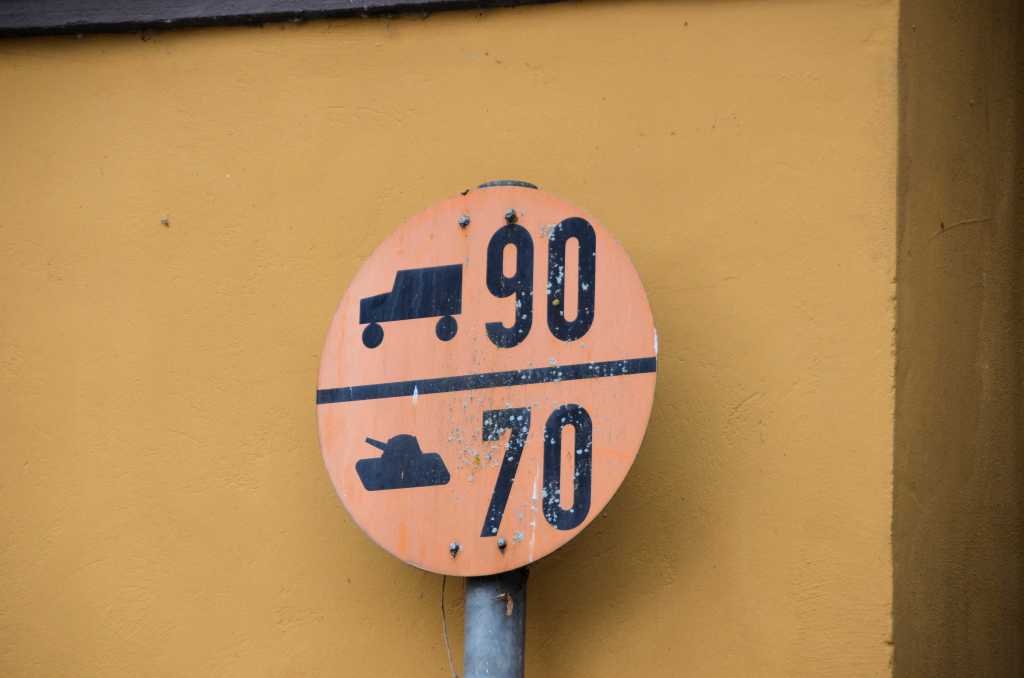
*[Photo 3: Reminders of war, Dinkelsbuhl © L.M. Kling 2014]


According to my limited research, although the Teutonic Order went on Crusades to Christianise Europe, and paid mercenaries to fight, they also did a great deal of good. Way back when they formed in 1191, they protected travellers making their pilgrimage to the Holy Land. They organised and built hospitals, initially for wounded soldiers and these days the order is primarily a charitable organisation.
Anyway, it would seem from the records compiled from my uncle Ron Trudinger, that Balthas didn’t stay in Lierheim, but, after the birth of his son Georg, he moved to Nördlingen. Here, no mention of Georg being an innkeeper, but instead a linen weaver and Burgermeister of the town.


From a research paper on Nördlingen in the 17th Century called Early Capitalism and its Enemies: The Wörner Family and the Weavers of Nördlingen* (Published online by Cambridge University Press: 11 June 2012) which I accessed online through Jastor, I was able to surmise that for Georg to become the Mayor of Nördlingen, he would’ve needed to be seriously cashed up. I mean rich, one of the wealthiest in the town, if not, the wealthiest. It would seem he landed on his feet so to speak as a linen weaver or had come into a sizable inheritance. Or, had he or his father married into money in the town? The owner of the hotel, perhaps?
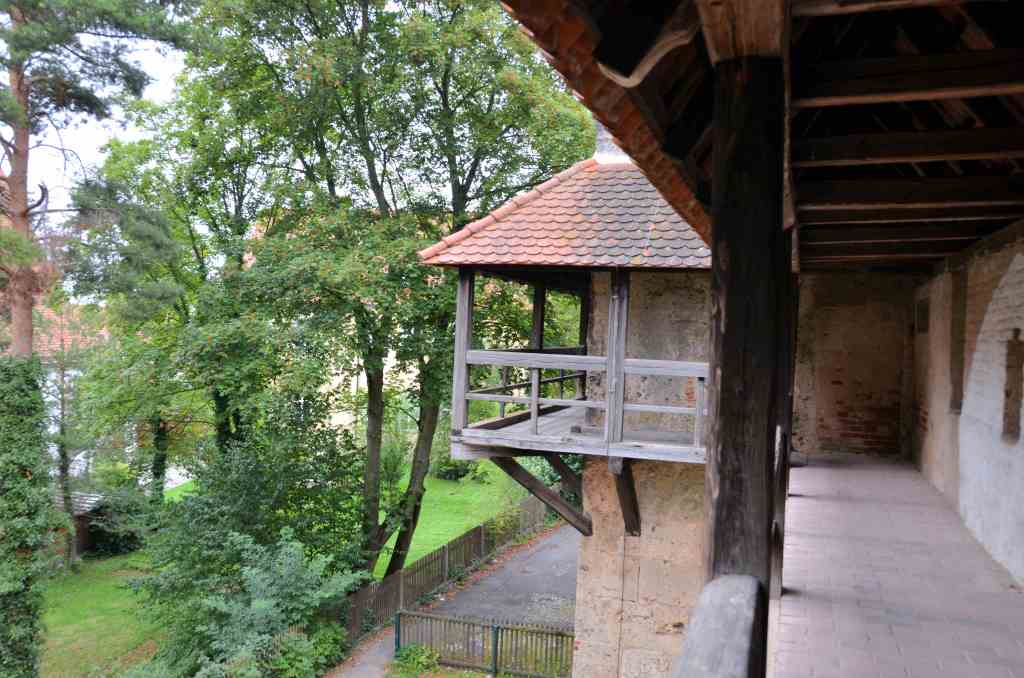
*[Photo 4: Unbroken Wall of Nördlingen © L.M. Kling 2014]

Nowhere in my gleanings on the town do I see that he was the innkeeper or owner of Kaiser Hof Hotel Sonne. The above-mentioned article had a breakdown of income, which I presume was yearly, of people in the town. According to a study accessed online called “Nordlingen, 1580-1700: society, government and impact of war”, in 1700, the owner of the Kaiser Hof Hotel Sonne had the highest income of all, a salary of 41 Florin. A teacher at the time received one to four Florin per year. And a soldier, which is what Georg’s father, Balthas was, received eleven Florin per year.

[Photo 5: Red rooves of Nördlingen made famous by the movie “Willy Wonka and the Chocolate Factory” © L.M. Kling 2014]

Again, as far as the Trüdinger family is concerned, it’s all conjecture and where myths start to grow and take a life of their own.

One thing for certain, though, is that in family history, experiences that family members have had hold weight for evidence. After all, they are the life-experience of that person and from their point of view. My second cousin, who married a German, and lived in Bavaria, decided to visit the Kaiser Hof Hotel Sonne in the 1960s. Family there living in Germany, informed her that a Trüdinger relative owned the hotel. Upon seeing the hotel, my second cousin was impressed by how high-class it was with fancy décor and loads of antique furniture. The food offered was out of her budget, but my second cousin tried to talk to her hotel-owning relative.


The encounter didn’t progress the way my cousin had hoped. Although my second cousin could speak fluent German, the hotel owner seemed distant and appeared reluctant to engage with her. Maybe, the lady was having a difficult day…Or hadn’t been given enough warning that a cousin was going to visit the hotel unannounced.


My second cousin left the establishment and decided to eat elsewhere.

*[Photo 6: Our experience dining at Kaiser Hof Hotel Sonne, Nördlingen © A.N. Kling 2014]


When we visited my second cousin in Germany, she told me this story and mentioned that by the end of the 1960’s the Trüdinger relatives had sold the hotel. She believed that the hotel had been in the family for 200 years.


I am still trying to figure out if this a fact, or if it is a myth.


Do you or someone you know have information on the history of the Kaiser Hof Hotel Sonne Nördlingen? Are you related to the Trüdinger family? You are most welcome to leave a comment. Or you may contact me through the My Heritage Trudinger-Kling website.

© Lee-Anne Marie Kling 2024
*Feature photo: Kaiser Hof Hotel Sonne, Nördlingen © L.M. Kling 2014

References
Teutonic Order – Wikipedia
Nördlingen, 1580-1700: society, government and impact of war

***

Want more, but different?

Check out my Central Australian adventures.

Click on the links:

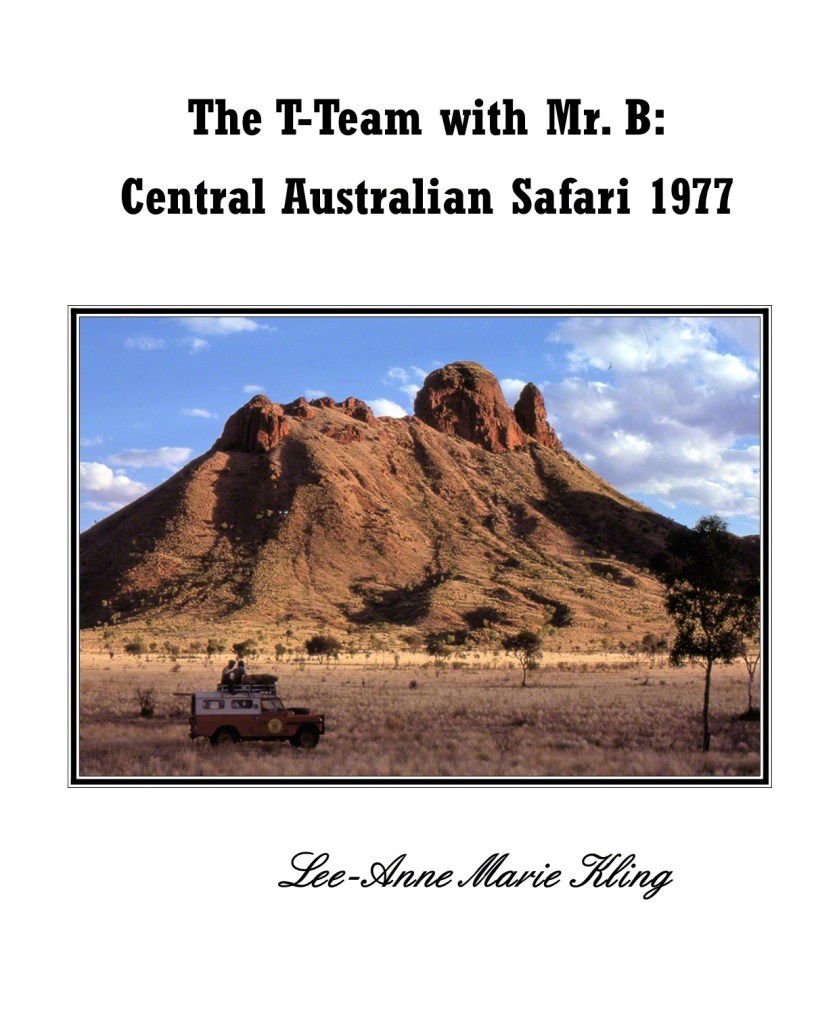
The T-Team with Mr. B: Central Australian Safari 1977
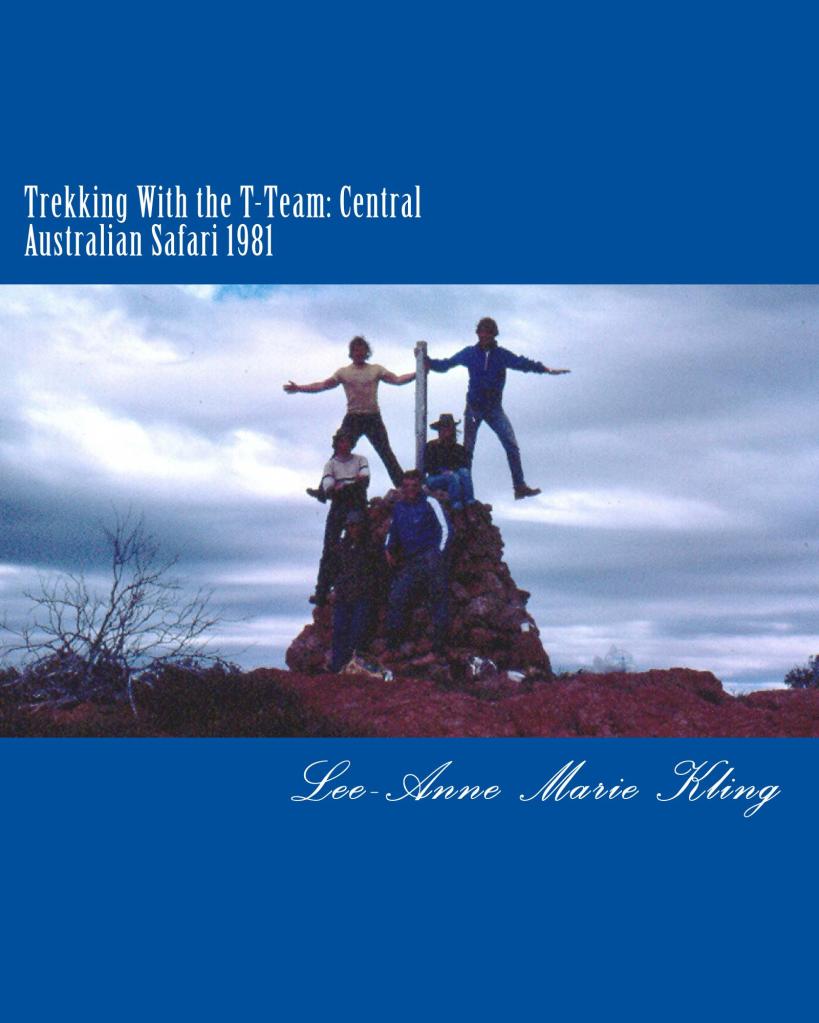
Trekking with the T-Team: Central Australian Safari 1981
Family History Friday–1939

Letters from our forebears give us today a rich picture of them, their personalities and their lives. As it’s my maternal grandmother’s birthday tomorrow (March 16), I am sharing the first part of a circular letter written by Elsa of the family’s relocation from the Murray Riverland to the desert Centre of Australia back in October 1939. My grandpa, Sam, Elsa’s husband had been called to be a missionary pastor in Hermannsburg, Northern Territory. Note the timing of this adventure. World War Two had just broken out, but no mention in this letter.

CIRCULAR WRITTEN by ELSA GROSS from HERMANNSBURG,

OCTOBER 1939

                                                                        Hermannsburg

                                                                        via Alice Springs

                                                                        October 1939

[Photo 1: The Family © S.O. Gross 1939]

Dear Friends,

        Well, here we are at Hermannsburg at last, our long journey is at an end.  We have a home again, although till now our goods haven’t arrived – we are anxiously waiting for them to be able to pack away our things – but – this is the land of ‘wait-a-while’ – so we will just have to wait until they come.

[Photo 2: Moving home chaos, home in Berri, Riverland South Australia © S.O. Gross September 1939]

        We had a very pleasant journey up from Adelaide.  Went as far as Port Augusta in my father’s car, after having stayed overnight at a cousin’s place in Murraytown.  It was very nice going up by car, it saved changing twice and with all our luggage it would have been quite a picnic.  We had arranged to meet Karl in Port Augusta, but when we arrived there we discovered he had German Measles, so we could only speak to him from the other side of the room; he was in bed, and he couldn’t even come to see us off, which was quite disappointing.

[Photo 3: On Father’s (my grandmother’s father pastor F.W. Basedow) Car © S.O. Gross 1939]

        Anyhow, at 4.30am on Thursday 28th we steamed out of the Port Augusta station.  We had sleeping berths, the children and I with 2 other ladies in the one compartment, 4 berths in each, and Sam & 3 other men in the next compartment.  During the day we were mostly alone in Sam’s compartment, the other men went on the other part of the train and just came back to sleep.  It was very nice because then the children had room to romp around a bit.  The sleeping berths were very comfortable, 2 at the top and 2 at the bottom.  We all had bottom ones, Ruth & Marie in one, I in the other one and Margaret between in her basket.  During the day the beds are just ordinary seats and for the night they put the back-leans down and it makes a comfortable bed.  The children stood the travelling very well, they were very excited of course to go in the train.  The end of the second day (Friday) they got a bit tired of it, but soon got over that.  The only one who didn’t enjoy it too much was Margaret, she was running a temperature most of the time and was particularly grizzly on Saturday afternoon.  The next morning we could see why – she had German Measles, but the rash didn’t last long, and now she is just about right again.  Now we are wondering if Ruth and Marie will get it, they have colds, so we are keeping ourselves isolated out here, we don’t want to give it to the natives, they always get things so much worse than the whites.  One of the ladies in our compartment had them too, she was very miserable, was in bed for most of the trip.

[Photo 4: On the Ghan heading up north to Alice Springs © S.O. Gross 1939]

        Well, to go on with our trip.  From Port Augusta to Oodnadatta, which we reached at 9 o’clock on Friday night, there wasn’t much to see, flat deserty-looking country, a lot of it covered with stones, not nice smooth ones, were like broken bits, it makes a person wonder where they all came from — no hills, just these plains covered with stones.  We also passed a lake, but that looked as dreary and dead-looking as all the rest of the country.  That was to Oodnadatta, when it was night.  But when we woke the next morning it was different, grass and trees and ranges and wild flowers.  One advantage about this trip is, that they stop at every station or siding, sometimes there are just one or 2 houses, other places a few more.  One place we stopped at, Anna Creek, by name, the 2 or 3 railway houses had lovely gardens and lawns, such a contrast to all the surrounding country.  We saw something similar at Rumbalara , where the police station is.  At this place we had to wait for nearly 2 hours as our engine had broken something and they had to steam up another one.  This long stay enabled us to see some of the wild flowers growing along the line.  They are altogether different to the ones in the south, and such a variety, too, and they appeared to be past their best too.  It must be a wonderful sight when they are all out.  This delay at Rumbalara made us late, of course, at Alice Springs.  We arrived there at quarter to 5 instead of 2.15.  Missionary Albrecht arrived to meet us a few minutes after the train was in, and took us and our host of luggage to Johannsens, where we slept.

[Photo 5: A picnic lunch on the way © S.O. Gross 1939]

        After we had had tea Missionary Albrecht took us out to the little church which they have in Alice Springs.  It was presented by Mr Materne of Nuriootpa as a Thank offering.  It is a nice little church with a fairly large vestry and a sleep-out, so that anyone coming in from the mission station has somewhere to stay.  At the church we met some of the natives of Alice Springs, they are being cared for by the evangelist Martin, who holds services twice every Sunday, when there is no missionary there and also gives baptismal instruction.  He is a very fine man.  Here the children met the first natives.  They had seen some from the train already and were greatly excited.  To our amazement they weren’t at all afraid of them, and not any more shy, if as shy, as with white children.  They shook hands with them much to the natives delight.

[Photo 6: Where’s our homely contents? © S.O. Gross 1939]

        The next day services were held there, in the morning it was in Arunda, but during the service Missionary Albrecht welcomed Sam and he then spoke a few words to them in English.  In the afternoon Sam conducted the service and preached the sermon, in English of course.  There were about 60 natives there for the services, not as many as usual so they said, some were away working.  Several whites came to the afternoon service, Johannsens and others.  Unfortunately I wasn’t able to go as Margaret was sick, I was so sorry I had to miss it.

[Photo 7: The moving van back then on its way to Hermannsburg © S.O. Gross 1939]

        On Monday Sam and Missionary Albrecht had quite a lot of business to see to, and then on Tuesday morning we set off for Hermannsburg at about 11 o’clock, Sam and Marie on the back of the loaded truck with a native man, and Missionary Albrecht and Ruth, Margaret and I in the front seat.  It was a fairly hot day but not unpleasant.  We called in at “The Jay”, 25 miles from “The Alice”, the home of Mr & Mrs T. Strehlow.  They persuaded us to stay there for dinner.  They have a nice little home, 3 rooms, with a lovely wide verandah, made of cement bricks.  They also have a refrigerator.  It was just lovely to have the nice cool water and also ice cream, a real luxury way out in the bush.  At about 3 o’clock we went on.  It wasn’t quite so hot then.  Up to the Jay the road had been fair, it had been made some time ago for the Governor General.  After we left the Jay it wasn’t quite so good, it had been washed out by the heavy rains and that meant driving fairly slowly with the loaded truck.  We had to cross over so many creeks and of course there were no bridges, but stones and sand instead.  The truck had to pull and pant and bump to get across in some places.  The scenery was quite nice though.  Before we came to the Jay we were travelling right in the ranges, but after passing there the country was more open, a plain, with ranges along both sides.  But there is nothing like a desert around here.  It is more like one of the back roads in the mallee, only of course more creek beds to cross.

[Photo 8: The Arrival of all the goods and chattels © S.O. Gross 1939]

        I quite forgot to mention that after we left the Jay we drove around the native camp, where blind Moses is the evangelist.  These natives live in grass huts.  They were very pleased see us and of course we had to shake hands all around.  Then they sang a hymn, after which Missionary Albrecht offered up a prayer and they all then recited the Lord’s Prayer, all in Arunta of course. It was wonderful to think that out there in the bush, underneath the gum trees, those natives praying and singing praises to their Saviour just as the white people do in their Churches.  The natives were very interested in our children, and of course our children were very interested in them too.  Before we left Missionary Albrecht had to take orders for the different ones, they had a few pennies to spend, one wanted a hair clasp, another some lollies and so on.  Next time somebody from here goes to Alice Springs the things have to be taken to them from the store here.

[…to be continued]

© Elsa Gross 1939

Feature Photo: The Gross Girls on the Ghan © S.O. Gross 1939

***

Virtual Travel Opportunity

For the price of a cup of coffee (takeaway, these days),

Click on the link and download your kindle copy of one of my travel memoirs,

Experience Historic Australian outback adventure with Mr. B

in

The T-Team with Mr. B: Central Australian Safari 1977

Or come on a trek with the T-Team in

Trekking with the T-Team: Central Australian Safari 1981.

100-Word Challenge–Bathsheba


[Driving around Adelaide these days, I see many classic cars. Brings back memories of our family cars from my childhood…]

Bathsheba

After 50 years, I have discovered the significance of our Holden FC’s name.

My dad was called David. In the Bible, there’s a King David who has an illicit affair with a woman he spies in a bath on a roof top. Her name, Bathsheba. Bath-she-ba; an apt name considering
the circumstances of their meeting.

Did Mum think that when Dad bought this car, this silver-pointed beauty was his “mistress’?

Similarities: Both Davids were master of their realms. Both Bathshebas, not new, used, yet beautiful. And both Bathshebas became parked in their David’s palace, in a harem, their love
shared.

© Lee-Anne Marie Kling 2019; updated 2022

Feature Photo: Bathsheba in our Backyard © L.M. Kling nee Trudinger) 1969


***

Catch up on the exploits of Boris the over-grown alien cockroach, and the mischief
and mayhem he generates. Click on the links below…


The Lost World of the Wends


Discover how it all started…

The Hitch-hiker

And how it continued in…

Mission of the Unwilling

EPSON scanner image

Out of Time (6.2.2)

Lunch in Launceston

Part 2

[The continuation of the Survivor Short Story “project” in the War On Boris the Bytrode series. This time, back in time, 1967, following the adventures of middle-aged mum, Letitia…In this episode (6.2.2) while lunching in Launceston’s Cataract Gorge, Wilhelm and Letitia witness the harassment of peacocks.

Note: I have changed the character’s name from Will to Wilhelm to add an extra layer to this character’s personality and how in 1967, he had taken on all the airs and graces of a pseudo psychiatrist.

Just another indication that this reworked novel draft that had been marinating in the “drawer” for more than 10 years, is a rework in progress.]

Call Me Wilhelm

Wilhelm guided the steering wheel with one index finger. With his other, he conducted the orchestra playing Vivaldi, The Four Seasons, playing on the classical ABC Radio Station, thus masking the tape of his recent performance in his head.

While Frieda slept the previous night, Wilhelm had sidled up to the computer, switched it on, connected it to the IGSF satellite and then linked it to IGSF’s Admiral August Fahrer with face-to-face television-visual mode.

The Admiral reclined on a kangaroo-skin rug, eating a sausage in bread. In the background of the screen, Jemima, his granddaughter hunched over the flames of a modest fire.

‘You took your time there, Al,’ August said through a mouthful of bread.

‘It’s way past my bedtime, Wilhelm,’ Jemima grumbled. ‘Ten-o’clock! I hope you’ve been behaving yourself.’

Wilhelm rolled his eyes. ‘I have her. Your mum. You didn’t tell me she was such a whizz on the computer.’

Jemima laughed, ‘You didn’t ask. Better the less you know the better.’

‘Oh, and another thing,’ Wilhelm said, ‘My name’s Wil-helm, sir. Not…’

August smiled. ‘You’ll always be Al to me. Remember how we met?’

‘What? You mean your wife? Or me?’

‘No, you as Al. Remember I came home from war? And there you were, in my house. Everyone else had gone. Including my wife.’

‘What happened to your first wife, Grandpapa?’ Jemima asked.

‘Don’t ask,’ Wilhelm murmured.

‘She vanished into a parallel universe. Like our socks do, dear.’

Will rubbed his pounding temples. The snow of interference descended on August’s and Jemima’s images. Their voices distorted and muted. Wilhelm hammered the “enter” key, but the screen continued to fade.

Screaming added to the hammering in his brain. Wilhelm cradled his head in both hands and begged it to stop.

A small voice behind his ear wailed, ‘I’m right here!’

‘Go away! Leave me alone!’ he cried. Then rummaged in the medicine cabinet for the bottle of Valium.

© Lee-Anne Marie Kling 2021

Feature Photo: Campfire © L.M. Kling 2010

***

Want more?

More than before?

Read the mischief and mayhem Boris the over-sized alien cockroach gets up to…

Click on the link to my new novel, The Lost World of the Wends

Below…

Or discover how it all began in The Hitch-Hiker

And how it continues with Mission of the Unwilling

Out of Time (6.1)

Launceston for Lunch

Part 1

[The continuation of the Survivor Short Story “project” in the War On Boris the Bytrode series. This time, back in time, 1967, following the adventures of middle-aged mum, Letitia…In this episode (6.1), Wilhelm and Letitia begin their journey to Launceston in Will’s Aston Martin.]

Real-estate at Richmond

Letitia’s influence over the computer did not even last the night. The morning greeted her with barely four hours sleep, a hung-over and grumpy Wilhelm, his yacht bathed in an orange hue, and a computer in mutiny. The dream performance of yester-noon, was replaced by abject refusal to work. Clarke, the computer had downed tools, gone on strike, and short of blowing up in a puff of smoke, plainly refused to go.

After conceding that moronic model was a “lemon”, Wilhelm made a hasty trip home to settle a seedy and rather irate Frieda. Then, by mid-morning Wilhelm and Letitia could be seen, at speed in the Aston Martin, clipping across the vast dry plains of Eastern Tasmania, heading northwards to Devonport. Plans had been hastily altered and tickets for the ferry purchased through a very obliging travel agent friend of Wilhelm’s. For some reason, Wilhelm had been reluctant to sail the vessel without a functioning computer. And then, for some unexplained reason for which Letitia was most grateful, Wilhelm preferred to drive to Devonport rather than fly. Even though, he risked the ire of his wife who currently accused him of neglect while she was so poorly. Letitia asked no questions. After her not so distant altercation in such a craft, she had had enough of aeroplanes.

Morning tea and the pair who appeared as mother and son, picnicked on the banks of a river that accommodated the oldest bridge in Tasmania, if not Australia. Letitia admired the family of ducks that possessed this sloped grassy land, while Wilhelm wandered off to investigate some prospective investment property.

‘Real estate, that’s where it’s at.’ Wilhelm upon his return from wandering remarked. He unscrewed the lid from the thermos in the picnic basket and poured steaming coffee into two waiting metal cups. He then held up a tube of condensed milk. ‘Milk?’

Letitia nodded and Wilhelm squeezed a dose into her cup.

Chuckling Letitia remarked, ‘The ducks look as though they already own the bridge from the dawn of Tasmanian history.’

Wilhelm plonked himself down on the tartan blanket placed on the grassy slope and briskly shuffled through the recent acquisition of colourful real estate flyers. He admired his property prospects while Letitia silently sipped her morning coffee. Every so often he would mutter, ‘Hmm! Richmond. Now there’s a good investment.’

The ducks had waddled under the shadow of the bridge and disappeared. The coffee also vanished slowly consumed in the comfort of the mid-morning Richmond sun. Letitia was being lulled into a false sense of forgetfulness. Perhaps, she reasoned, nothing else mattered but basking in the sun on a grassy slope admiring an old stone bridge.

‘Where did you say your house was, Letitia?’ Wilhelm interrupted her dreaming.

Letitia looked up and frowned. ‘On Mirror? Or before? When I lived with Mum and Dad.’

Wilhelm blinked. ‘Before, I suppose. Before you went missing on us.’

‘Sydney, near Bondi,’ she said, ‘the house was walking distance to a park where the lion statues were.’

‘Sydney, ah, yes, of course.’

‘Your father came from a village in the Black Forest, though.’

‘Hmm, yes, I know. A long time ago. But my mother, Gertrude, came from Adelaide. He met her there in the Botanical Gardens, after the war.’

Wilhelm turned from his coffee drinking and studied Letitia. ‘Are you that old? I mean, you look older than I remember you, but…’

‘No, yes, actually, I was born 1935, technically…But I lived on Mirror twenty-six years. I have a daughter who is all grown up…’

Wilhelm sniffed and nodded. ‘Oh, yes, that makes sense, now. And then you travelled back in…’

‘Time.’ Letitia concluded. ‘It seems, unless this is an alternate…’ then as if to steer the direction of the conversation, she asked, ‘Did you know my father? August?’

Wilhelm blushed and mumbled, ‘Hmmm, yes, quite well, actually.’

Letitia noted the reaction. Her eyes widened. ‘Really? So what’s your story, Doctor Thumm?’

Wilhelm rose and stretched. ‘Well, must be getting on. Must be in Launceston for lunch. There’s a lovely little café in Cataract Gorge I want you to try.’

That was awkward, Letitia thought. With the picnic basket hooked over her elbow she followed him. His avoidance on the subject intrigued her.

As they left the picnic place, the ducks emerged from under the sheltered darkness of the bridge to possess the river reeds and banks of lawn.

[to be continued…]

© Lee-Anne Marie Kling 2021

Feature Photo: Ducks of Richmond Bridge, Tasmania © L.M. Kling (nee Trudinger) 1981

***

Want more?

More than before?

Read the mischief and mayhem Boris the over-sized alien cockroach gets up to…

Click on the link to my new novel, The Lost World of the Wends

Below…

Or discover how it all began in The Hitch-Hiker

And how it continues with Mission of the Unwilling

Out Of Time (3.1)

[The continuation of the Survivor Short Story “project” in the War On Boris the Bytrode series. This time, back in time, 1967, following the adventures of middle-aged mum, Letitia…

In this episode (3.1) Letitia meets an old friend…]

The Point of Batteries

Part 1

‘You must come to my place. You must!’ the blonde said.

Letitia glanced around the almost empty street. The crowds had dwindled to nothing in the golden light of the late afternoon sun. Her suggestion was not a bad one under the circumstances.

‘You must come for tea.’ The lady grabbed Letitia’s arm and dragged her along the road lined by warehouses. ‘We’ll grab takeaway on the way home. There’s a lovely little fish’n chip shop just up the road near our place. Remember when we were kids and we used to ride our bikes up to The Rocks and get a three-pence bag of chips? They were the best chips, weren’t they?’ The blonde ferried her up some steep steps.

‘Hmm!’ Letitia tried to remain polite and in the know. Rocks? Riding bikes? Fish and chips? Three-pence? All familiar images that hinted at the nameless friend’s identity. Her fuzzing mind tried to stretch her still frozen memory to capture who this woman was. The harder she tried, the more futile her efforts at name retrieval became. ‘How embarrassing! I apparently knew this lady from childhood,’ she muttered.

The blonde gave a tiny snort of laughter. ‘Gunter loved those chips. Remember? He said they were the best chips in Australia.’ She paused and for a moment gazed over the cove which spread beneath the hilltop vantage point. ‘Poor Gunter!’ she remarked, ‘Boris got him, ya know.’

The sun had crept behind Mount Wellington casting muted shadows over the historic houses, the pebble-strewn beach and the calm waters in hues of purple and blue. ‘Hmm! Poor Gunter!’ Letitia parroted. She paused in thought. Gunter, my half-brother?

Bright, colourful sails of boats dotted the river. The vivid reds, yellows, and whites pitted against the deep blue of the waters almost succeeded in converting Letitia to cheerfulness. However, the reality that she may have left her old world permanently behind, lurked in the shadows of her subconscious and troubled her. Letitia tried to agree to sound as if she knew what the blonde was talking about. She tried in vain to match Gunter with this lady’s elusive name. Perhaps it’s a case of mistaken identity.

How did anyone from the past recognise her? Mirror World and nanobot repair from the burns in her first accident had darkened her skin. Letitia checked her hand. Still the colour of cedar.

 ‘Poor Gunter, we haven’t been able to find him. He left after the disaster, you know, the bombing of our ship. He blamed himself for your disappearance.’ The lady guided her, striding towards the banks of the river. ‘But…it was my fault; I should’ve never…’ She stopped at a corner and announced, ‘Here we are! The Fish’n Chip shop!’

She led the way through the open white-framed doorway to the full-bodied aroma of sizzling oil, batter and chips, tessellated tiles and stainless-steel benches. A few bored customers reclined on a wooden bench seat that lined the shopfront, reading Readers Digests from the 1950’s.

Letitia peered at the magazine of a disinterested patron to the left of her. “Behind the Iron Curtain” the cover advertised. Letitia leaned back to check what that article was all about. The man narrowed his eyes and glared at her. Then, he stood up, marched to the counter, and spoke to the manageress in muffled tones, furtive glances and fingers pointed in her direction.

Letitia’s chest tightened. They’re going to ask me to leave, she thought.

‘Do you want whiting, Letitia?’ her blonde friend, also standing at the counter, called back over her shoulder.

‘Yeah, okay,’ while waiting for the inevitable directive to move outside. After all, it was the 1960’s and Letitia was the wrong colour.

Letitia noticed the blonde make an emphasised gesture in her direction, and say, ‘My friend will have one piece of whiting and I’ll have one piece of garfish with minimum chips.’

The manageress, a woman with bottled auburn waves, and olive-toned skin, looked at Letitia, and opened her mouth to speak.

The blonde cut off her unspoken words and in her best German accent, said, ‘Listen lady, she’s my friend, got it? We’re better than that, aren’t we? That’s why we come to Australia. We are all different, but we are all human beings. Besides, I don’t know why she’s so tanned, but she is as white as me; I know her parents, they come from Europe, migrants from Germany, just as you are a migrant from Greece, am I right? So, just make those fish and chips, okay?’

Something clicked. A key turned in her mind. Letitia studied the blonde lady handing over the cash to the Greek vendor. Frieda. Only Frieda Muller would have the courage to stand up for her rights; human rights. Frieda who tolerated no nonsense. Frieda, who once confided that she’d defied Hitler, and somehow survived. Something to do with being Lebensborn, she remembered. Admittedly the last time she met Frieda, she had become Frieda Thumm and was well into her fifties (give or take a decade or two with the distortion of light-speed travel). Letitia wondered how she could have struggled to recognise her. She who defended her in the fish and chip shop and now stood before her with a newspaper parcel of battered fish and chips was Frieda. But which Frieda? Letitia assumed this world’s Frieda.

Letitia perched on the bench.

The man adjusted his black-rimmed glasses, and with head bowed, walked back to the space next to Letitia. He mumbled an apology which Letitia acknowledged with a slight nod.

Letitia rubbed her hands together and smiled at Frieda. She had retrieved the name. She had found her friend’s identity. At least that was one good outcome from an otherwise less than ordinary day. At least she had one friend in a world and time when she calculated to have few friends. There was Fritz. But where was Fritz?

Frieda strode up to her and she leapt up to follow her friend. ‘Come,’ she commanded, ‘Let’s get to my house before the chips get cold.’

In the lingering late afternoon sun, the sun that refused to go away, the sun that refused to set, the friends wended through the narrow streets of this aged and historic part of town. The roads were steep as they were narrow. Parked cars on both sides, blocked some roadways which had not caught up to the 20th Century. Letitia marvelled at the vintage nature of the vehicles. She had not seen a FJ Holden in decades. The place was cluttered with them. And brand-new Holden Premiers, the luxury version, a collector’s dream on Mirror World. And there, she mused, was a Ford Falcon, more angular than its Holden counterpart; commonly a hoon car on Mirror World (in the eastern states of Australia, mostly). In Mirror Baudin State (South Australia), only Renaults and Peugeots would do. Letitia had to hide the smirk on her face as she contemplated the ugly future of these carbon spewing air-polluting machines.

‘So, Frieda, what may I ask are you doing in this part of the world?’ Letitia ventured to enquire.

Frieda frowned. ‘What do you mean?’

‘I mean…um…’ Letitia hesitated hoping to guess correctly, and whispered, ‘um, um, Hobart?’

‘Hobart? But Letitia, we’ve been here for ages,’ Frieda replied. ‘Thing is, how did you end up here?’ She made a sharp turn at a white rendered wall of a two-story bungalow overlooking the bay.

‘Long story,’ Letitia exhaled briefly, relieved that she had guessed correctly, about Hobart. ‘I mean, are you working?’

Frieda returned a pan-faced expression which read as “are you stupid?” Then she pressed the small hand-held device and magically the gate in the wall opened. ‘Nup, I don’t need to work. I’m a lady of leisure. I’ve achieved “effluence”.’ Frieda’s tongue remained firmly in her cheek.

‘You mean, affluence? Lucky you!’ Letitia remarked admiring the fine leadlight birds that framed the light-coloured pine door. She absorbed the unique brisk scent of pine and commented almost involuntarily, ‘Wow! What’s that smell?’

‘You mean the door? It’s Huon Pine. Solid…’ Frieda began to explain before another, fouler odour accompanied by a large darker four-legged creature, assaulted Letitia.

Frieda’s train of thought and keys were lost in her black Labrador’s excitement to greet the unfortunate visitor, namely Letitia. In between the fever of yelps and her face covered in fermented slobber, she could hear Frieda yell, ‘Jack! Off Jack! Down! Down! Sit Jack! Naughty boy! Get off Jack!’ But her commands were in vain. Jack, the dog kept on jumping all over Letitia, and slathering to his heart’s content.

As the torture by dog continued, Frieda’s tone changed from playful to serious and Letitia nostrils were disturbed by a particularly pungent smell that lingered on her clothes. It had that thin weedy, off-meaty, faecal, with a touch of compost aroma about it. She brushed her uniform defensively and shrieked, ‘Ugh! What’s that smell?’ Bits of pitch-black dirt the consistency of sludge clung to her fingertips.

The Labrador gave a final yelp and flung itself after a flying fried fish.

‘Quick, while he’s distracted.’ Frieda pushed her friend through the door and slammed it shut. Once inside in a darkened entrance hall, she exclaimed with disgust, ‘Pooh! What’s that smell? It’s revolting!’

Smeared over Letitia’s lime green pants and top were the tell-tale marks of a dog’s misadventure. ‘Ugh! What is this stuff?’ She choked on the strong stench of sewerage. ‘It’s worse than Boris! When you said that you was “effluent”, I didn’t think you meant literally.’ She pinched her nose with added effect.

‘Oh, gore! The bleeding dog’s got into the blood ‘n bone. Sheisse!’ Frieda’s language was becoming increasingly colourful, and Letitia had no doubt that she was indeed Frieda. She grabbed a hold of Letitia’s arm and escorted her up the stairs. ‘Come on, you better get out of these rags – have a shower – I’ll get a change of clothes – and put these…’ she covered her nose with her sleeve and breathed out a nasal cry, ‘Phew! These into the wash must go!’

[to be continued…]

© Lee-Anne Marie Kling 2021

Feature Photo: Battery Point, Hobart town behind harbour © L.M. Kling 2016

***

Want more?

More than before?

Read the mischief and mayhem Boris the over-sized alien cockroach gets up to…

Click on the link to my new novel, The Lost World of the Wends

Below…

Or discover how it all began in The Hitch-Hiker

And how it continues with Mission of the Unwilling