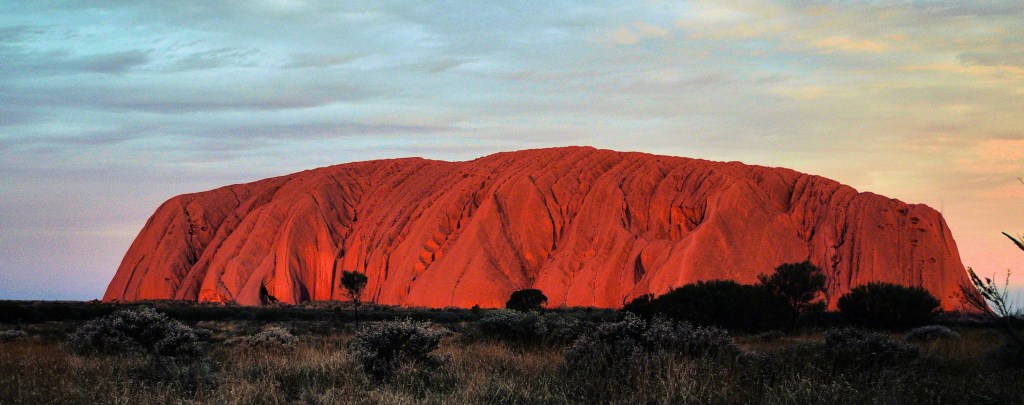
T-Team Series–Climbing Ayers Rock

The T-Team With Mr B (16)

 [The last few months I have revisited The T-Team with Mr. B: Central Australian Safari 1977 which is a prequel to Trekking With the T-Team: Central Australian Safari 1981. In preparation for its release later this year, I will be sharing posts of this adventure.

In this episode we climb Uluru/Ayers Rock and Mr. B startles us with his dream for the Rock…]

Mr. B’s Dream for the Rock

Tourist buses lined the carpark. They looked like caterpillars all in a row ready for a race. People swarmed like ants around the base of the Rock and a steady stream of them marched up and down the slope.

Dad slowed the Rover to a crawl and slotted into a space at the end of the carpark. ‘Well, there’s the tourists,’ he said.

‘And what are we?’ Mr B asked.

‘I like to think we are travellers.’

‘What’s the difference?’

‘Tourists come to a place like the Rock, they climb it, snap a few photos and then they move on,’ Dad said. ‘Travellers take their time. They explore. They get to know the people who live here. They appreciate the culture and history of the place.’

‘So we’re tourists then,’ Mr B remarked, his expression dead-pan.

Dad scratched his brow. ‘Oh, no, I wouldn’t say that.’

‘I’m climbing the Rock,’ Matt said and then bolted out the back door.

Richard and I chased after Matt. We scrambled up the slope following the painted white line. Further up several tourists inched their way grasping chain rails that were secured into the rock.

*[Photo 1: Open at Last to climb the Rock © L.M. Kling 2013]

‘Hoy!’ Dad yelled. ‘Wait! We all go together.’

‘You forgot your water-bottles and lunch for the top,’ Mr B said.

‘Come on Matt,’ Richard called out to Matt who’d sprinted ahead, ‘better get our packs and stuff.’

Matt, Richard and I plodded back to Dad and Mr B where we collected our backpacks of supplies from them. Then as a group we recommenced our haul up the monolith.

The first part was treacherously steep. Before I even reached the rails, my shins ached from the gradient. We followed the broken white line. Deviation from the nominated path could be fatal. A plaque at the base of the Rock was a solemn reminder that several people had fallen to their deaths.

And yet, while climbing, I recall my mum telling me that when she climbed Ayers Rock back in the 1950’s, there was no white line, and not rail to clutch onto. Then she told me a funny story about an earlier time when a filmmaker took footage of the climb up the Rock with a local Indigenous guide. I have seen this film where at the top of the rock, there were pools from recent heavy rain, and the guide can be seen splashing in the water. Perhaps life and the way the Rock was viewed was different back then in the 1940’s and 50’s.

*[Photo 2: No rails or white line back in the 1950’s © S.O. Gross circa 1953]

Richard and Matt scampered ahead of me. I puffed my way up the slope behind them and soon lost sight of them. Dad and Mr B laboured behind me. Mr B rested every few steps. He swore he’d die of a heart attack before he fell to his death. Dad stayed with him and encouraged him to keep on going.
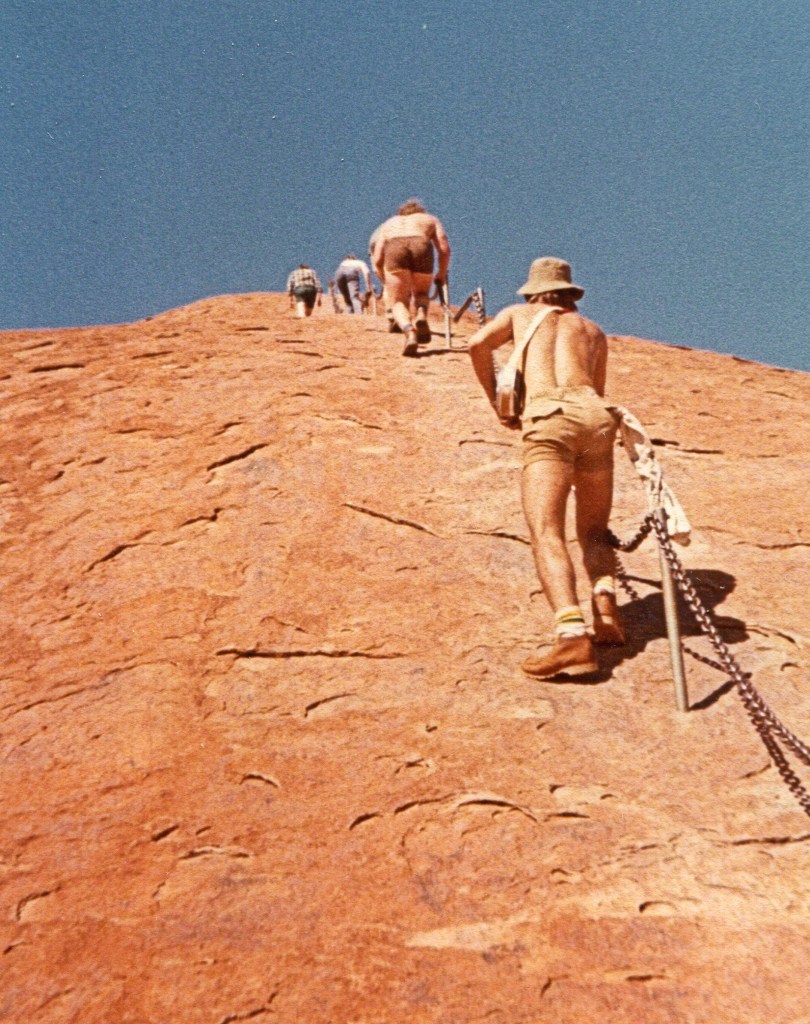
*[Photo 3: Climbing with Help © L.M. Kling (nee Trudinger) 1981]

Tourists passed me as they descended the Rock. They nodded and said, ‘G’day’ and remarked that the climb was well worth the effort.

Spurred by these recent Uluru conquerors, I took a deep breath and continued the climb.

The steep slope eased into endless ridges. Up and down. Up and down. At least my shins experienced some relief. But I seemed to be hiking over these rocky hills and dales forever, as if Uluru was the Tardis of distance. I glanced at my watch. I’d been hiking over an hour. Was the Rock that big?

*[Photo 4: Those undulations © R.M Trudinger 1981]

I stopped, took a swig of water from my canteen and surveyed the plain beneath. The Olgas shimmered like mauve marbles above the land striped in sienna and gold in the afternoon sun.

‘You’re almost there,’ Richard called. He raced up to me and then pointed. ‘The cairn is just over there.’

‘Where?’

‘Are you blind?’

‘I can’t see it.’

‘Come on.’

Richard led me to the pile of stones set in concrete. Half a dozen tourists plus Richard and Matt milled around the cairne, posing for photos and pointing at the various landmarks below. Richard, Matt and I conformed to the way of the tourists taking turns photographing each of us standing next to the cairn with Kata Tjuta behind us.

*[Photo 5: The Young Ones On the summit © L.M. Kling (nee Trudinger) 1977]

As we waited for our fathers, we admired the awesome scenery; the land below bathed in waves of pink, purple, blue and yellow. The boulders of Kata Tjuta changed from deep purple to blue with the movement of the sun as it travelled west. ‘Wow!’ I exclaimed. ‘This climb was well worth it.’

Other tourists summited, stayed a few minutes to snap a few shots and then trooped away down the Rock.

After Richard, Matt and I had eaten our sandwiches, signed the log book on the cairn, explored some bushes that grew out of the Rock and then watched the third lot of people arrive and disappear, Dad and Mr B staggered to the summit. Their faces glowed with perspiration.

Mr B clutched his chest and slumped down by the cairn. ‘I thought those corrugations would never end!’

Dad patted Mr. B on the back. ‘Ah, well, we made it.’

Mr B slurped water from his canteen, then standing up, he paced around the cairn while scrutinising the landscape with his binoculars. Dad pointed out the landmarks, Mt. Conner to the east, Kata Tjuta to the west and the Musgrave Ranges to the south, and so directing Mr B’s binocular-gaze.

*[Photo 6: The Oldies finally reach their goal © L.M. Kling (nee Trudinger) 1977]

After several minutes admiring the view, Mr B remarked, ‘Amazing! Certainly well worth the climb, ol’ boy.’ He then sidled up to Dad and put his arm around his shoulders. ‘I dare say, ol’ chap, the experience could be improved.’

‘What? A cable-car up to the top?’

‘Oh, hadn’t thought of that. No, I suggest there should be a fast food restaurant up the top here. The place needs refreshments. I mean to say, all these people have spent two hours climbing up here. They need some refreshments, don’t you think?’

Dad cleared his throat. ‘Er, um…’

Is this man for real? I thought. On the climb and also when we visited the cave, I sensed the Rock was holy, sacred. How could Mr B even contemplate building anything on its surface? ‘I reckon there should be less people climbing the Rock, not more,’ I said.

‘And another thing,’ Mr B was not finished, ‘the Rock needs a swimming pool halfway up. I’ve already picked out the perfect location. You see, while I was resting and contemplating during that terrible steep climb, I saw it, the perfect place for a pool. What do you say, ol’ chap?’

‘The Indigenous owners will never agree,’ Dad replied.

‘Well, I have some advice for the natives,’ Mr B said. ‘They need to get with the times. I mean, look at all the tourists. Look at all the opportunities.’

‘I doubt it,’ Dad shook his head, ‘come on, we better get down.’

After Dad and Mr B signed their names in the log book, we made our way down the Rock tracking along the white line. We nodded at the people climbing up and said, ‘G’day’ to them and advised them that the climb was well worth the effort.
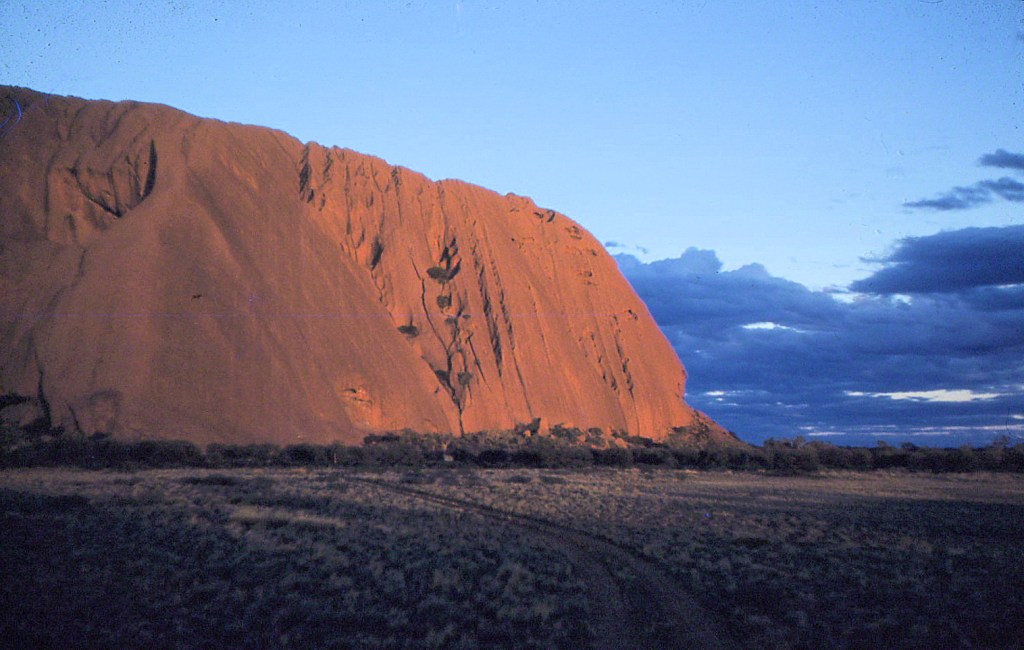
*[Photo 7: Uluru rest finally at sunset © S.O. Gross circa 1953]

© Lee-Anne Marie Kling 2016; updated 2022

*Feature Photo: Uluru Climbers Like Ants © Lee-Anne Marie Kling 2013

***

Want more but too expensive to travel down under?

Why not take a virtual travel with the T-Team Adventures in Australia?

Click below:

Trekking With the T-Team: Central Australian Safari 1981

And escape in time and space to the Centre of Australia 1981…

T-Team Series (15)–The Cave

The T-Team with Mr B—Uluru (Ayers Rock Back then)

The Cave

 [The last few months I have revisited The T-Team with Mr. B: Central Australian Safari 1977 which is a prequel to Trekking With the T-Team: Central Australian Safari 1981. In preparation for its release later this year, I will be sharing posts of this adventure.

In this episode we venture up close and personal to Uluru/Ayers Rock…]

When we arrived at the fence that bordered the Ayers Rock-Olgas Reserve (as it was known back in 1977) *, we took more photos of the Rock, rusty-red with black streaks, and towering above us. We drove to the Park Ranger’s office to pay an admission fee to enter the reserve and see the Rock. Once Dad had returned from fee-paying, we commenced our drive around the Rock.

As there were more tourists in their Land Rovers and cars also circling the Rock, Richard and I descended from our high status on the top of the Rover and crammed into the back cabin. The roads, though not sealed, were better graded with gravel tempering the bull dust, so though the dust was still a nuisance, it didn’t make me cough.

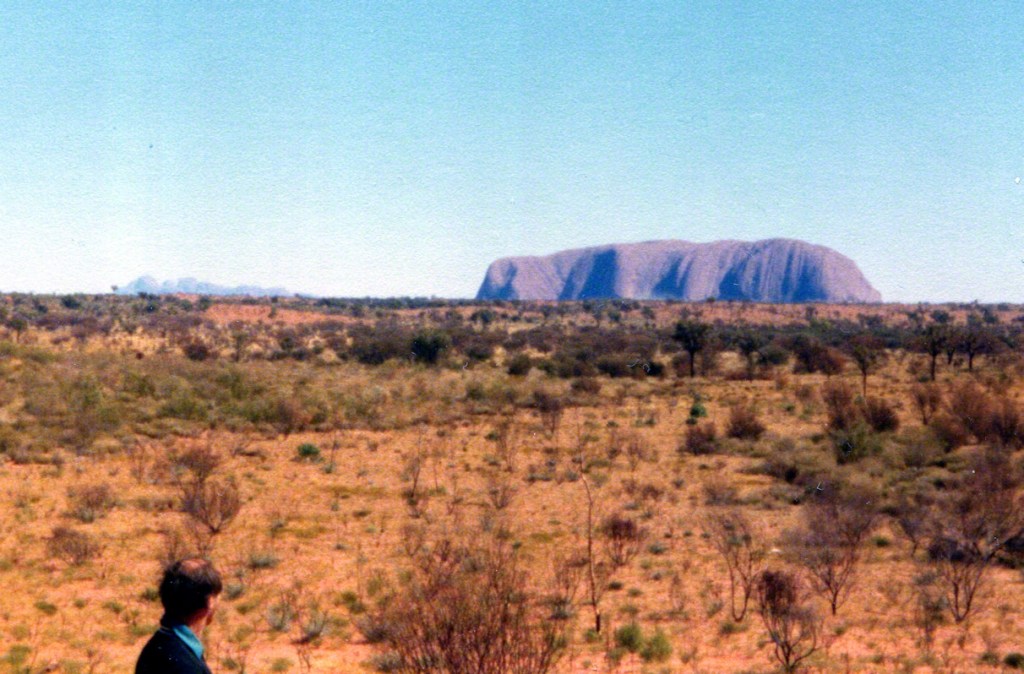
*[Photo 1: Approaching the Rock © L.M. Kling (nee Trudinger) 1977]

‘When are we going to climb the Rock?’ Matt asked his dad.

‘Soon, ma boy, soon.’

‘Have you climbed the Rock?’ I asked Dad.

‘Erm…’ Dad coughed.

‘Of course, you did. Back in the 1950’s. Not so many tourists then, I reckon. Were you the only ones camping near the Rock back then?’

‘Um…er…umm…’

 ‘You went with mum and her family back then, didn’t you Dad?’

Dad put his dusty handkerchief over his mouth and coughed.

‘I remember the beautiful photos taken by Grandpa. He was a missionary pastor at Hermannsburg, you know, Mr B. And Dad was a teacher at Hermannsburg. That’s where he met mum, did you know, Mr B?’

*[Photo 2: Ayers Rock 1950’s © S.O. Gross circa 1950]

Mr B rolled his eyes. ‘I know.’

‘I bet the place has changed a lot since then.’

Richard chuckled, ‘More tourists.’

‘The roads are better,’ Dad said. ‘They were just tracks back in the fifties.’

‘I dare say, ol’ chap,’ Mr. B butted into our conversation, ‘the Rock must still be the same.’

Dad chewed his lip. ‘Well, er, yes, I s’pose.’

‘If you ask me, all looks primitive to me,’ Mr. B said. ‘I mean to say, the land looks like we’re back in the 1950’s. I really think they should invest in some decent hotels or motels. Perhaps a tourist village. For the tourists. I mean, just look at the Rock—they’re missing money-making opportunities.’

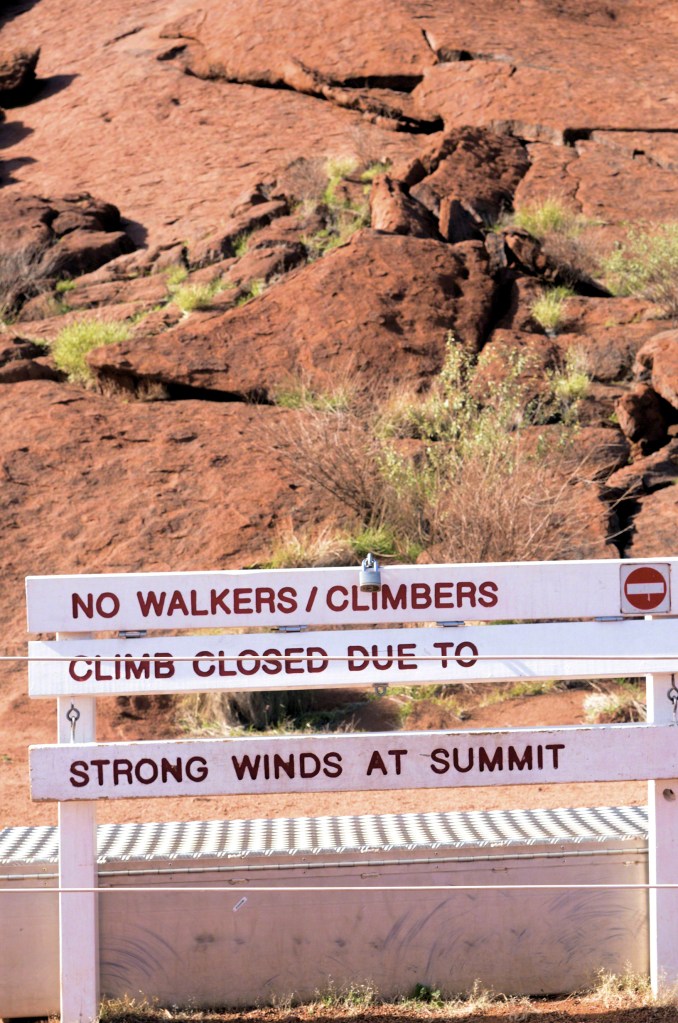
*[Photo 3: Sign and reasons not to climb Rock © L.M. Kling 2013]
*[Photo 4: Tourists climbing the Rock when allowed © L.M. Kling 2013]

Dad shifted his weight in the driver’s seat. ‘Er, I don’t know if having lots of tourists is a good idea for the Rock. The Indigenous consider the Rock sacred. I think they’d want less tourists, not more.’

‘Tourism, that’s where it’s at. And from what I’ve seen of the natives in this part of the land, they could do with some money to boost their living conditions.’

Richard and I glanced at each other. I pondered, Was this man for real?

Dad pursed his lips and turned into road leading to a cave in the Rock. ‘Before we climb the Rock, there’s this cave. It has ancient aboriginal artwork on the walls’, Dad said.

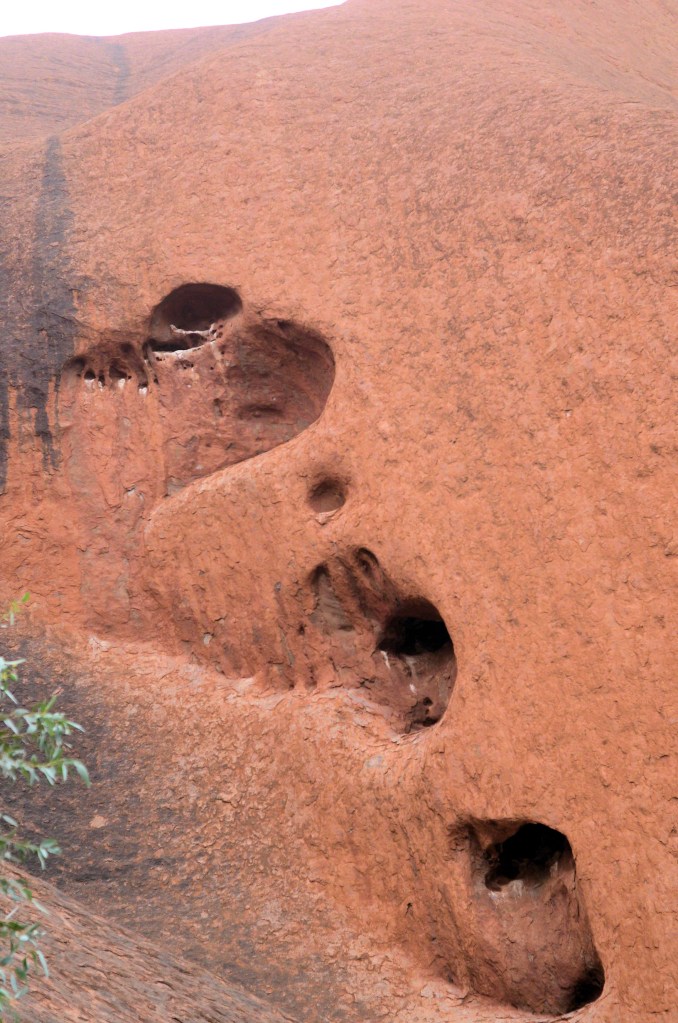
*[Photo 5 & 6: Aspects of the walk around the Rock, Caves & Liver Spot © L.M. Kling 2013]

We walked along a narrow path under the shade of ironwood and acacia trees. The Rock awed me by its size. If I had a camera with unlimited capacity to take thousands of photos, I would have spent the whole trek to the cave snapping away behind the lens. Nearer, the Rock surprised me with shades of tangerine, crimson, umber and red of the iron stone. As we got up close and personal with the Rock, I thought it looked like a giant elephant’s flank all scaly and knobbly. It had looked so smooth from far away.

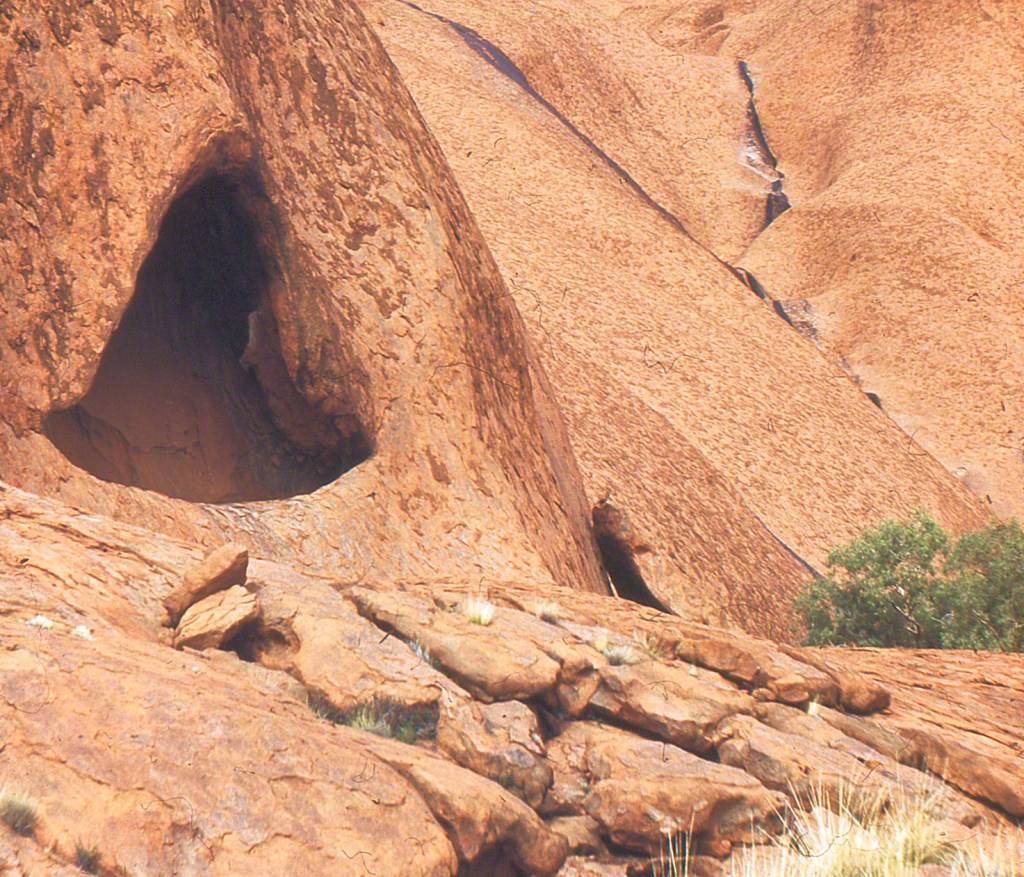
We entered a cave which appeared as though it was a huge umbrella from the inside. In a zone of wonder we walked along the narrow passage under the roof. I imagined that waves had crashed against it and carved out its form. In one part, I studied the carvings of the ancient owners of this land.

We trod through the cave in silence. This was sacred ground.

[Photo 7 & 8: More aspects of the cave © S.O Gross circa 1950 and L.M. Kling 2013]

To be continued…

© Lee-Anne Marie Kling 2016; updated 2022

Feature Photo: In Awe of an Uluru Cave © Lee-Anne Marie Kling 2013

[*Note: Named by William Gosse in 1873 in honour of the chief secretary of south Australia, Henry Ayers. In 1993 the rock received the dual name, Uluru/Ayers Rock, Uluru being the Pitjantjatjara name for this sacred site.]

***

Want more?

1977 gave the fledgling T-Team a taste for adventure…

Find out how they fared on a full-two-month safari to the Centre in 1981…

Why not binge on the T-Team Adventures in outback Australia?

Click here on Trekking With the T-Team: Central Australian Safari 1981

And escape in time and space to the Centre of Australia 1981…

T-Team Series–Tyre Carnage

The T-Team With Mr B (14)

 [The last few months I have revisited The T-Team with Mr. B: Central Australian Safari 1977 which is a prequel to Trekking With the T-Team: Central Australian Safari 1981. In preparation for its release later this year, I will be sharing posts of this adventure.

In this episode more carnage to the trailer. This time the tyres take a beating. But there are unexpected rewards for those who wait…]

Tyre Carnage On Way to the Rock

We sailed along on the road to Uluru, the warmth of the sun on our cheeks and breeze in our hair. Sand-hills rolled up and down and then into the distance. Black trunks of ironwood trees flitted past. The Rock made random appearances and disappeared. A wheel flew past and bounced into the bush.

*[Photo 1: Glimpse of Uluru and Kata Tjuta © L.M. Kling (nee Trudinger) 1977]

I looked at Richard. ‘What was that?’

‘A tyre.’

‘Where did that come from?’

‘The trailer,’ Richard remarked with a sigh and pointed.

The trailer scudded on its side, red dust billowing all around it.

Richard leaned over the rail and thumped the driver’s window. The Rover eased to a stop and Dad leapt out. ‘What?’

‘The trailer!’ Richard said. ‘Again!’

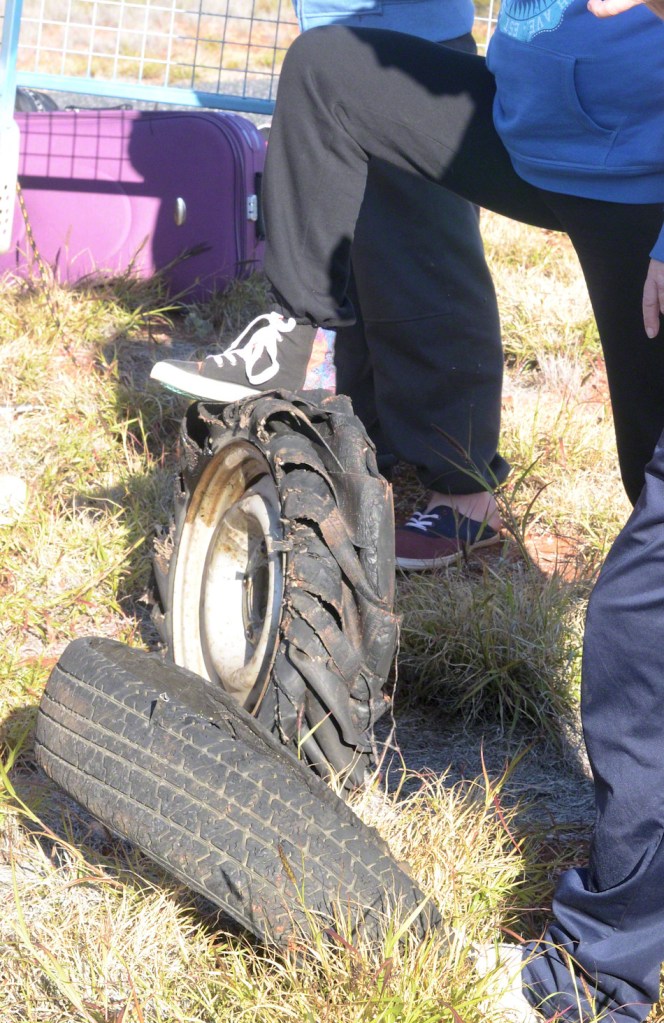
*[Photo 2: Shredded tyre travails of the T-Team’s travels © L.M. Kling 2013]

The men gathered around the trailer and discussed their options in lowered tones. Dad frowned, he put his hands on his hips and gazed at the ground as Mr. B glared at him.

‘Poor! Very poor for a trailer!’ Mr. B muttered. ‘What are we going to do about it, mate?’

Dad shifted his feet and then with his boot scuffed the stones. ‘I don’t know. What do you reckon, Richard?’

Richard shrugged.

‘I say, laddie, can you find that tyre?’ Mr. B asked.

‘It’s long gone,’ Richard said. ‘But I’ll try.’

‘They’re expensive.’ Dad kicked the one remaining trailer tyre. The men stared at the one-wheeled trailer as though they were visiting a gravesite.

‘Alright,’ Richard muttered, ‘I’ll go and see if I can find it.’

Richard stomped down the road. He placed his hand above his eyes and peered in the direction the tyre had vanished into the scrub.

Matt caught my gaze. ‘Boring!’

‘Let’s go up that hill and see if we can take a photo of Ayers Rock and the Olgas,’ I said. As we were walking, I conveyed the information I had gleaned from Dad about the Olgas. ‘Did you know, Matt, that the people who own this land call this amazing collection of giant boulders, Kata Tjuta which means “many heads”?’

‘How far are the Olgas from Ayers Rock?’ Matt asked.

‘My dad reckons they are 30 miles west of Uluru,’ I replied. ‘he says we’re going to camp outside the national park, just beyond the Olgas.’

‘Olgas, that’s a funny name.’

 ‘Yeah, it’s German, I think. Dad was telling me that in 1872, the pioneer explorer Ernest Giles discovered them and called them “The Olgas”, after Queen Olga of the German Kingdom of Württemberg.’

 ‘Imagine having a few rocks named after you.’ Matt laughed. ‘The Boulders of Lee-Anne.’

‘Matt’s Massif,’ I joked.

Matt tittered. ‘What about, Richard’s Rock?’

‘Hey, I just remembered, back in Ernabella, there’s a Trudinger Hill. How cool is that?’

‘So, every time, people see those funny rocks and boulders in the distance, they will be reminded of some mouldy old German queen.’

‘Now that you put it that way, sounds a bit odd, us Europeans putting our names on the features of this ancient land. I wonder if they’ll eventually change the names back to what the Pitjantjara peoples call it someday.’

*[Photos 3,4, & 5: Views of Uluru and Kata Tjuta © L.M. Kling 2013]

[Photo 3: Uluru under a cloud © L.M. Kling 2013]
[Photo 4: Uluru’s Flank © L.M. Kling 2013]
[Photo 5: Many Heads of Kata Tjuta © C.D. Trudinger 1981]

We mounted the nearby rise and admired the Rock, bathed in the blue of midday.

‘There are certain advantages to trailers breaking up,’ I remarked.

Matt nodded. ‘Yep, sure are.’

‘It’s like an adventure.’

‘Yep, sure is.’

*[Photo 6: Sunset on Uluru © L.M. Kling 2013]

The men decided to leave the trailer on the side of the road and fix it upon our return when we passed that way. By then we hoped to have the parts and equipment required to reattach the rogue wheel that Richard had found and then hidden underneath the trailer.

© Lee-Anne Marie Kling 2018; updated 2022

*Feature Photo: Kata Tjuta (Known as The Olgas until 1993 but by 2002, its name has been officially reverted to its indigenous name, Kata Tjuta) © L.M. Kling 2013

***

Want more? Want to know exactly how many tyres the T-Team trashed?

Why not binge on the T-Team Adventures in the Centre?

Click here on Trekking With the T-Team: Central Australian Safari 1981

And escape in time and space to the centre of Australia 1981…