Family History Friday–Grandpa Trudinger

Doctor Ronald Trudinger

The Legendary Missionary

In the previous tale, I mentioned a certain friend attached pride to the superiority of the Aussie farmer—a pragmatic soul, jack-of-all-trades and survivor of harsh outback conditions. So, with pride, I wrote about my maternal grandfather, Sam Gross.

My paternal grandfather was none of that. He was a “city slicker” as the “cockies” called them, born and bred in the city and not the farm.

Ronald Trudinger was the first in his family to be born in Australia in August 1886.
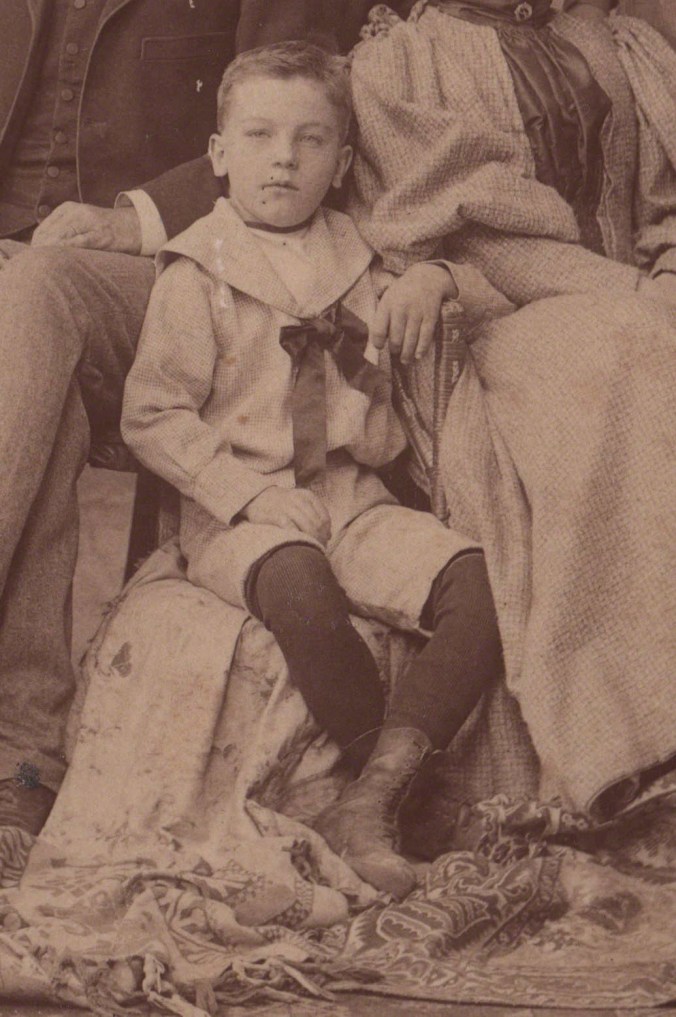
*[Photo 1: Ronald as a child in the Trudinger family photo in Adelaide © courtesy of L.M. Kling circa 1890]

His father, Karl August Trudinger, was born in Nördlingen, Bavaria, while his mother, Clara Theresa, was born in Kleinwalka, Saxony. His parents first emigrated to Bradford, Yorkshire, where they lived for about twenty years and became British citizens. They didn’t like Bismarck and his ideas of unifying Germany. The first twelve of Karl’s and Clara’s children were born in England.

*[Photo 2: The young Trudinger clan in England © courtesy L.M. Kling circa 1880]

Karl August was a textile merchant; hence, living in towns or cities worked best for him. Ronald’s mother, Clara Theresa, grew up in the Moravian Brethren community in Saxony. Faith in God and education were her values. She had yearned to be a missionary, but that door was closed to her at the time. As a result, she prayed for her children that they would become missionaries. Eight out of her thirteen offspring did.

One of them was my grandpa, Ronald, who became a missionary in Sudan.

So, although he wasn’t the venerated Aussie icon of tough “cocky” farmer, his calling was different but just as valuable. He became an intrepid missionary in Sudan, based in Melut on the White Nile. He spent decades translating the New Testament into Dinka and other African languages.

*[Photo 3: Ronald had a wonderful vegetable garden in Sudan as plants grew well in the fertile soil on the banks of the Nile © courtesy L.M. Kling circa 1930]

How thankful I am to My Heritage and the links to news articles matching Dr. Ronald Trudinger—100 at least. In the early 1900s until the late 1950s, he appeared as a local celebrity, especially in church circles. His deputation talks on the “Soudan” and the Muslims, and the risks and challenges the family faced in Africa, particularly during the War in the 1940s, were a source of fascination, if not entertainment, for the public of that time.

Much has been written about Dr. Ronald Trudinger’s adventures in Sudan. If you want to read more about his mission work, my dad wrote his father’s biography for the Australian Dictionary of Evangelical Biography – TRUDINGER, Ronald (1886-1968).

But what was the rest of his life like?

Ronald Trudinger grew up in Norwood, a suburb of Adelaide, South Australia. From what I can gather, again from various news articles about the family, he may have lived in Kapunda and Broken Hill. His father, new to Australia and a merchant, had to go to where the work was. When they first arrived in Australia, according to Ronald’s birth certificate, his father was a greengrocer. Humble beginnings after being a wool merchant in Yorkshire.

A few years later, news reports have Karl August working in a jewellery store in Kapunda. Then, as I mentioned, there was a time the family was in Broken Hill, where Ronald’s eleven-year-old older sister died of typhus.

Eventually, so the family narrative goes, they settled in Marryatville, a subdivision/estate in Norwood, and father, Karl August, teamed up with a Mr. Zimmermann to manage a textile store in Adelaide city. While his father supported the family as a merchant, and some of his older siblings set off for China as missionaries with China Inland Mission, Ronald became highly educated, attending Adelaide University and becoming a Doctor of Medicine.

As a child, Ronald was exceptionally gifted, and by the age of four he was reading the Bible, and at five, Homer’s Odyssey, so my father says. Apart from these fragments of information passed down the generations by word of mouth, Ronald’s childhood remains a mystery.

News reports at the time have helped fill in some of the gaps in Ronald’s interests as he grew up. One of these was tennis competition reports. Although Ronald was born with one arm shorter than the other, he still enjoyed a hit of tennis and played in competition. He was described as a fierce competitor.

Ronald grew up in a God-fearing family, and from all the Sunday School prizes he won (recorded in the local newspapers), I imagine he came to faith in his Lord Jesus as a young child. His family attended Maylands Presbyterian Church. Although they were from a Moravian Brethren background, there was no such church in Adelaide. There was one in Bethany in the Barossa—too far to travel from Norwood. Anyway, the family probably chose a church and congregation that would support missionaries. When Ronald began his missionary work, he and Lina joined the Burnside Christian Church, which faithfully supported their work in Sudan.

Meanwhile, back at the family home base in Norwood, youthful Ronald Trudinger enjoyed evenings with the family playing games—a tradition passed down to the current generation of the T-Team. This never included playing cards, as such cards were deemed “sinful” and associated with gambling. Games my father taught us were taught to him by his maiden aunts, who had learnt them from their parents. A parlour card game called “Chook Chook” was certainly one game the Trudinger family had and loved playing. “Chook Chook” is all about egg farming, teaching the player the different breeds of chickens, trading and negotiating, and accounting. Other games that Ronald would’ve been familiar with were word games and story games, which his mother created for the education of her children.

*[Photo 4: “Chook Chook” © L.M. Kling 2017]

My father remembers his dad’s fondness for chess. Even in my grandpa’s old age, my father never could beat his dad at chess. Another relative recalled Ronald taught her mother to play the piano. So, I gather another of Ronald’s interests was music, a love which he passed down to his children.

After completing his Bachelor of Science degree from 1908 to 1912, Ronald studied to become a Doctor of Medicine at the University of Adelaide. The University student magazine has him attending the Evangelical Union Christian group there, which would become EU, the Christian group I joined eighty years later.

While at university, Ronald won awards and scholarships for his outstanding results. He even won a scholarship to study tropical infectious diseases in Queensland.

During this time, around 1908, he met a young nurse called Lina Hoopmann. They fell in love and privately became engaged. However, they had to wait many years before they were able to marry. She was Lutheran, and he was not. Her father, a staunch Lutheran minister, refused to give his blessing for the union; he called Ronald a heretic as he wasn’t Lutheran and had come from a Moravian Brethren heritage.

*[Photo 5: Upon their engagement, Ronald and Lina © courtesy of L.M. Kling circa 1911]

So, they had to wait until Lina was 30. She would’ve been legally able to marry without her father’s consent at this time. I doubt, though, being God-fearing folk, they would’ve shown such dishonour and break the third commandment to honour thy parents. I imagine that her father finally gave his blessing, and the marriage went ahead on December 11, 1917. That being said, the family photo of the wedding doesn’t have Lina’s father present. I’d like to give him the benefit of the doubt that he took the photo.

*[Photo 6: Ronald and Lina’s Wedding © courtesy of L.M. Kling 1917]

Others of Lina’s family, such as her sister Dora, had no problem with the Trudinger family. In her diary, she enjoyed many visits to the Trudinger’s in Norwood. Plus, she was overjoyed when Ronald and Lina became engaged and then were able to marry.

From 1912, Ronald commenced his calling to be a missionary doctor in Sudan. He returned on furlough in 1917 to marry Lina. Ronald worked as a doctor at the Royal Adelaide Hospital during this time. By 1918, Ronald, together with his wife, had returned to Sudan. His first two children, Ronald Martin and Agnes Dora, were born in Africa.

In 1927, Ronald and Lina, with Ron junior (9) and Agnes (7), returned to Australia on furlough. They came back for their children to start their education in Australia.

This time, Ron accepted work as a physician and locum in Macclesfield, taking on the challenging task of coronial duties, including being a witness for a high-profile murder case.
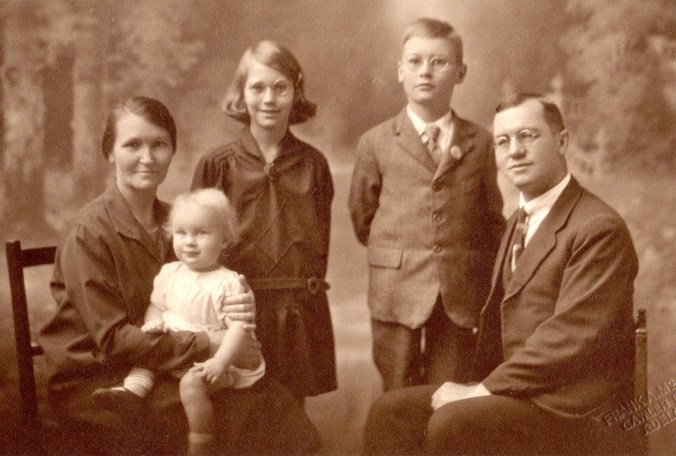
*[Photo 7: The young growing family © courtesy L.M. Kling 1929]

My dad, Clement David Trudinger, was born on January 13, 1928, in Norwood. By May 1929, Ronald and Lina, with their young baby son, were on the ship steaming back to Sudan. Dad’s younger brother Leonhard Paul was born in Melut, Sudan.

As with their first two children, the younger sons must return to live with their maiden aunts in Adelaide for their education. Ronald and Lina returned to Adelaide, South Australia, in 1935. The plan was to stay a year, and then off to Sudan once again. However, it didn’t go as planned. Agnes, their daughter, became gravely ill with meningitis early in 1936. She survived but had to learn to walk and talk again.
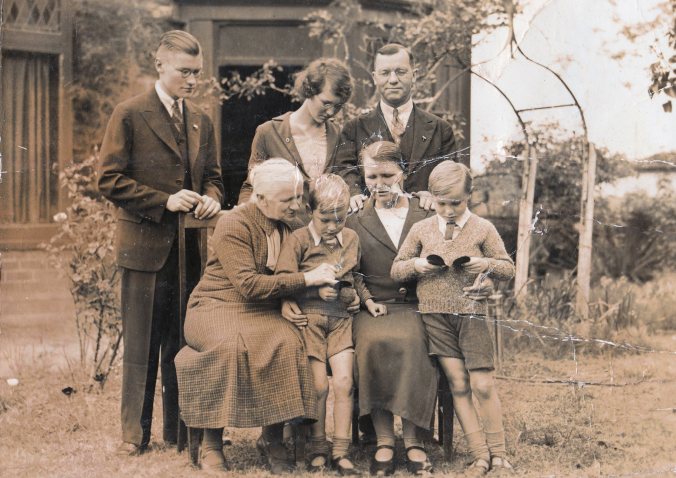
*[Photo 8: 1935 Furlough with family together and Aunt Clara © courtesy L.M. Kling 1935]

Consequently, later in 1936, Ronald set off for Sudan alone after Agnes had recovered.

In Agnes’s memoir, their mum took the boys to live with her family in Yorktown for a year in 1938 while their dad was away on mission in Sudan.

In 1939, Lina joined her husband in Sudan while my dad and Paul stayed with the maiden aunts. During the war years, from 1939 to 1944, Ronald and Lina were on mission in Sudan.

The values of this era were self-sacrifice and obeying God’s calling before family. Plus they considered their children’s educational needs would be better served in Adelaide, South Australia rather than Sudan. Hence, Ronald’s and Lina’s decision to once more venture back to Sudan without their children—a decision the future wives of David and Paul (the dear aunts preferred David to Clement, and Paul to Leonhard), had an issue with. David, Clement by nature, and just that little bit older, took the separation from his mother with a stiff upper lip and in his stride. Dad had fond memories of staying with his maiden aunts. But Paul, being younger, was more of a feisty character and suffered from a sense of abandonment as a child.

Ronald then took two more mission trips to Sudan; 1946 to 1950, then 1951 to 1954. During his time on furlough in 1950, he visited Ernabella where his eldest son Ron was teaching the Pitjantjatjara people, and also Hermannsburg where my Grandpa Sam Gross was pastor at the time. This was before my dad and mum had met each other. It shows the connections in Christian circles and across denominations.

Lina stayed in Adelaide for the 1946 —1950 stint to Sudan but joined Ronald for his final 1951—1954 visit.

In 1954, Ronald had “retired” from the mission field and had taken up a position as a doctor at Hillcrest Psychiatric Hospital. He made an indelible impression there, remembered fondly by former patients.

Even in his golden years of real retirement, furthering the cause of Christ remained the driving force of his life. He never stopped witnessing and sharing the gospel whenever the Lord provided opportunities. In the last years of his life, after his dear wife died, he moved up to Alice Springs to manage a Christian bookshop.

*[Photo 8: A Visit to New Zealand © Bob Alcorn 1968]

However, this venture didn’t last as he became ill with leukemia. He returned to Adelaide and moved into a flat in the Lutheran Homes Retirement village in Payneham.

Illness didn’t stop him from being a missionary on home soil. In the months before he died, he bought an Italian dictionary so that he could share God’s love and the good news of salvation with his Italian gardener.

I remember my grandpa as a kind man who had a smile with his one remaining tooth in his mouth. He would make a joke about the Trudinger trait (pronounced tray) of twiddling thumbs. He taught my brother Richard to make bird calls with a leaf.

By the time I was born, Ronald and Lina were living in Walsall Street, Kensington Park, in the Norwood area. At three, I remember getting bored with all the people around for a big T-Team family gathering. I went off exploring, and mum found me sleeping under the bed on a pair of shoes.
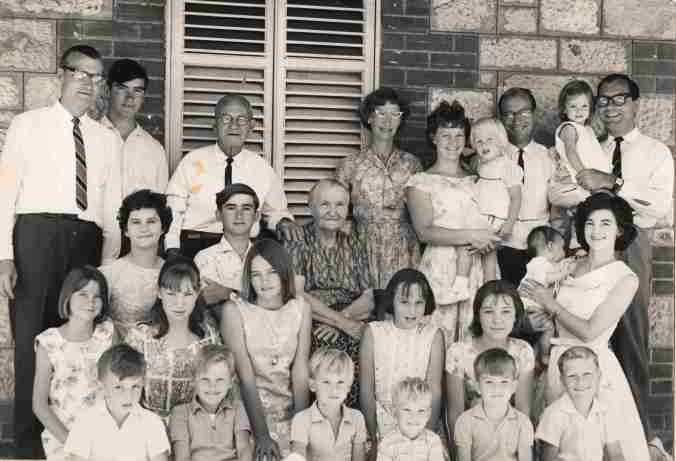
*[Photo 9: The T-Team Gathering: Ronald and Lina and descendants © J.W. Gross 1966]

I know where I was when Grandpa died. I was five. We were in the FJ Holden driving up to “see” Grandpa. Well, I thought we were. Then Dad announced that Grandpa had died. I was confused why we’d been going to see Grandpa if he had died. Hadn’t he gone to Heaven? After all, he was one of the most God-loving people I knew. Upon reflection, perhaps Dad needed to visit Grandpa’s flat to sort out some paperwork with the Lutheran Homes.

Ronald Trudinger died December 21, 1968. He had lived a full and productive life and with his missionary heart had spread the good news of Jesus Christ, his Lord and Saviour.

© Lee-Anne Marie Kling 2025

Feature Photo: Ronald Trudinger with his sons © courtesy L.M. Kling circa 1965

Resources:

Australian Dictionary of Evangelical Biography – TRUDINGER, Ronald (1886-1968)

Trove

My Heritage Old News Articles and links

Diary of Dora Hoopmann

Memoir of Agnes Dora Alcorn

Die Familie Schammer © Reinhold Becker 1922 (Translated into English by Rebecca Gnüchtel 2009)

***

Want to discover more about the T-Team?

Join the adventures of the Intrepid T-Team as they embark on their Central Australian Safaris in my travel memoirs:

The T-Team With Mr. B: Central Australian Safari 1977

Trekking with the T-Team: Central Australian Safari 1981

Family History Friday–Grandpa Gross

Tale of Two Grandpas

Grandpa 1—Sam Gross

Recently I shared how my dad relied on the Readers Digest “How to Fix” book to tackle DIY jobs. Having a double mortgage, and money being tight, Dad didn’t have much cash to splash on the “experts” in such fields as plumbing, electricity and general home maintenance.

The response met with a hint of dismissal from my older friends who prided themselves on their pedigree of farmer fathers. These, they boasted were real men, Aussie men, who fixed all things by pragmatic problem solving without the help of a book. The wisdom of their farming forebears imparted to them by osmosis, apparently.


*[Photo 1: One of those Some Mothers do ‘ave ‘em moments © L.M. Kling (nee Trudinger) circa 1978]


In contrast, my father was a lesser being, a city dweller who had to refer to a book, of all things. My dad was a much-loved teacher, gifted in music, art and sport. He coached a winning football team of Indigenous players from Hermannsburg, Northern Territory in his youth, led a choir of Indigenous singers, and later school student Anklung bands for the South Australian Festival of Music. No flies on my dad. But I must admit, when it came to DIY, his forays into such exploits would rival the character Frank Spencer in the British sit-com, “Some Mothers do ’ave ‘em”. Still, I’m proud of my dad and love him.
But then I realised that these superior beings who were my friend’s fathers, were from my grandparents’ era.

So, I cast my mind and research back to my two grandpas: Reverend Sam Gross (my mother’s father) and Dr. Ron Trudinger (my father’s father).

Now these friends held up their ties to the land as superior. Although both my grandfathers are highly educated with Reverend and doctor between them, I can claim a link to the land too, through my maternal grandfather, Sam. His family were farmers with I imagine generations of farmers before them from Horsham Victoria in the 1850’s and extending back to Prussia.


*[Photo 2: The Gross Family Farmhouse, near Horsham, Victoria © L.M. Kling 1996]


Sam was born in 1905 and grew up with all that practical knowhow bred into his being. I never met Sam, he died before I was born, but I remember my mum saying he was good at fixing things like cars. He could’ve been an engineer, but he became a Lutheran pastor. I reckon my brother inherited some of Sam’s traits—he’s a jack of all trades—the ideal DIY man.

As a child, Sam suffered rheumatic fever which affected his heart. Consequently, he got the education with the view of becoming a minister and wasn’t expected to continue with the farm like his brothers.
The doctors told Sam he wouldn’t live past the age of thirty. But being extremely fit and maintaining his health, Sam defied those expectations.

After ordination to become a minister, and then a few years posted to Berri, in the Riverland of South Australia, Sam with his wife, Elsa (my grandma) and three young daughters (one my mother), ventured to Hermannsburg, Northern Territory. There God had called them to be missionaries to the Arrernte people.


*[Photo 3: Leaving Berri © S.O. Gross 1939]


Now, Hermannsburg is remote, more so in 1939 when they moved there. The settlement became even more isolated once war broke out.

*[Photo 4: Pastor Sam Gross with fellow ministers in Hermannsburg © courtesy of M.E. Trudinger circa 1940]


Sam’s pragmatic skills, bred and imparted to him from generations who had lived and struggled on the land as poor subsistence farmers in Germany, then as pioneer farmers in the Victorian Western districts in Australia, came to the fore in the harsh isolated conditions in Central Australia.

Sam had to venture to even more remote places in the desert west of the MacDonnell Ranges—Haast Bluff for instance. One trip in 1942, the truck broke down. Despite putting his mechanic hat on and trying to fix the car, an essential part of the engine was kaput and the much-needed part not available. Sam’s problem-solving prowess kicked in, donkeys were found and the car towed by donkey-power back to “civilisation”—Hermannsburg.

*[Photo 5: Donkey-power © S.O. Gross 1942]


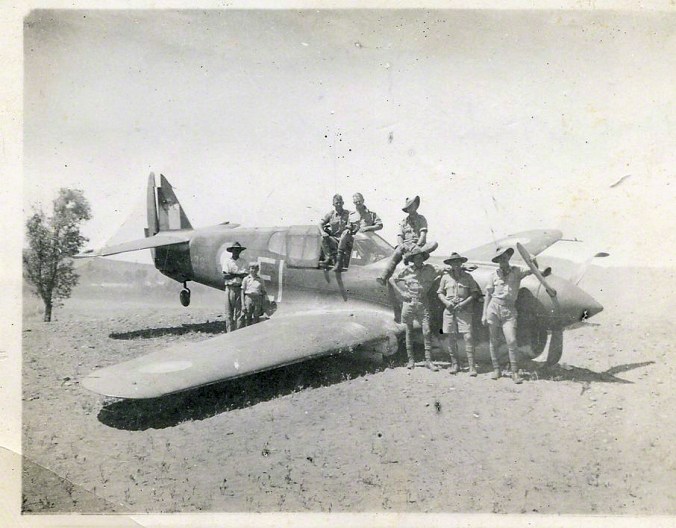
A year or so after their arrival in Hermannsburg, the supervising pastor, F.W. Albrecht was stuck in Adelaide as a result of the war. Hermannsburg came under suspicion, as it was a mission set up by German missionaries back in the 1880’s, and as such with ties to the Lutheran church, had a German name and tradition. The British Army being paranoid of anything that hinted of German, was suspicious of Hermannsburg. They feared German spies were hiding out there. So, they sent officers to check out Hermannsburg.

*[Photo 6: A visit by the Airforce © S.O. Gross circa 1942]


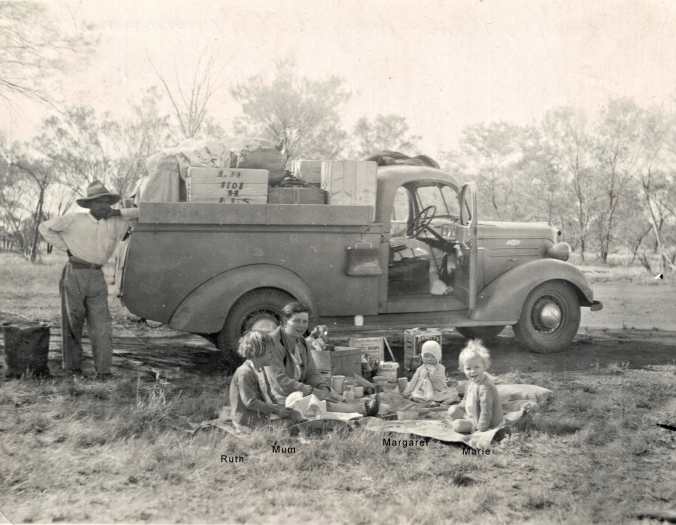
On one of these visits, without their chief, Pastor Albrecht, Sam and Elsa had to entertain these one-eyed wary characters. How did Sam survive their investigation? My mum says her father had the gift of the gab. My grandma had the gift of hospitality. In “A Straight-Out man” by F.W. Albrecht, I remember reading the Arrernte said that Sam would be alright, he’s so Aussie they won’t suspect him. Besides, the name Gross is found in England too. Also, Sam’s first language was English and when at school, he had trouble learning German. Although German was spoken at Hermannsburg and in the family, Mum can’t remember what they did when these British Intelligence Officers came, but thinks the children were kept out the way. Maybe someone took the kinder (children) on a picnic…


*[Photo 7: Mum and her sisters on a picnic © S.O. Gross circa 1942]


Sam and his family survived the officer’s interrogation. However, the pedal two-way radio was confiscated, and later Rex Batterbee was appointed to keep an eye on the mission. This Rex did and taught Albert Namatjira to paint.

There’s much more to Sam’s story. I think this post gives a glimpse into his generation and German farming ancestry, migrants making good, living in isolation, making do, thinking on one’s feet and problem-solving.

Did I mention Sam still found time to indulge (as the Mission Board put it—another saga) his passion for photography? He used these photos of Central Australia for deputations to garner support for the mission. Many of his photos are now stored in the Strehlow Centre in Alice Springs.

*[Photo 8: One of my favourites of Sam’s photos, Ghost Gum © S.O. Gross circa 1942]


And finally, Sam outlived his doctor’s expectations. He lived to the age of 57.

© Lee-Anne Marie Kling 2025
Feature Photo: Sam and Elsa Gross © courtesy M.E. Trudinger circa 1960


VIRTUAL TRAVEL OPPORTUNITY

FOR THE PRICE OF A CUP OF COFFEE (TAKEAWAY, THESE DAYS),

CLICK ON THE LINK AND DOWNLOAD YOUR KINDLE COPY OF ONE OF MY TRAVEL MEMOIRS,

EXPERIENCE HISTORIC AUSTRALIAN OUTBACK ADVENTURE WITH MR. B
IN

The T-Team with Mr. B: Central Australian Safari 1977

OR COME ON A TREK WITH THE T-TEAM IN

Trekking with the T-Team: Central Australian Safari 1981.

He Wanted us to Know God’s Love

In Memory and celebration of my father’s life…

Remembering his passing 9 years ago this week…

DAVID BY NAME CLEMENT BY NATURE

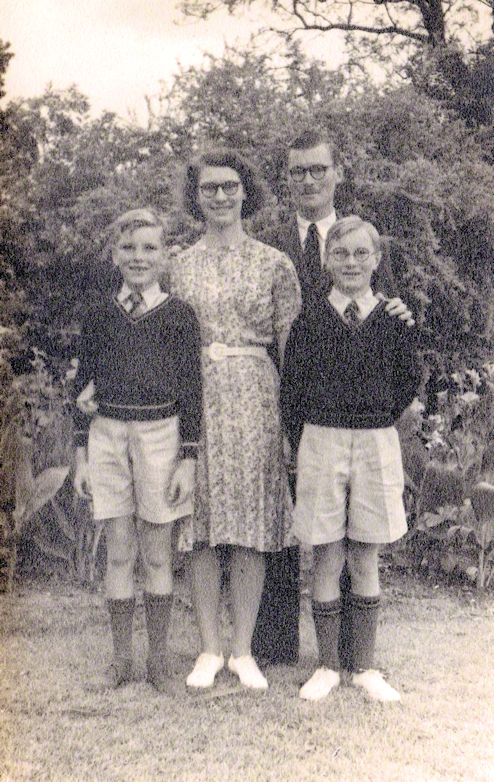
Ron and Lina Trudinger’s third child was born in Adelaide on January 13, 1928. His parents named him Clement David Trudinger. He was a much longed for child as he arrived eight years after his older sister, Agnes.

[Photo 1: Growing family with Clement David baby no. 3 © courtesy C.D. Trudinger collection circa 1928]

“Clement?” his aunts cried. “We don’t like the name Clement.”

So they called the babe by his second name, David, and David he has been ever since. Except, of course when he goes to hospital, then he’s Clement, officially.

Throughout his life, God watched over David who has shared many stories of how he showed His love towards him, protecting, and providing for him and his family. He shared how he felt he didn’t deserve God’s love; he wasn’t perfect, yet God loved him. It is this love that David would want all of you to know.

[Photo 2: David, the boy © courtesy C.D. Trudinger collection circa 1930]

He began to write down his life-story, and in the last few weeks began to tell all, especially his grandchildren, how God worked in his life and how his Heavenly Father protected him.

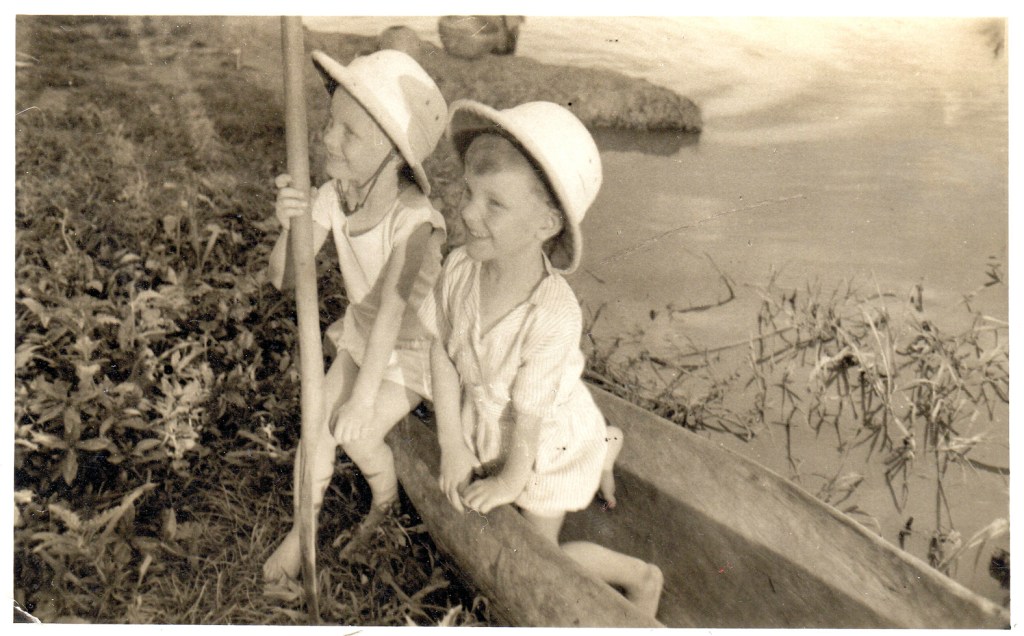
When he was two years old, his missionary parents took David and his younger brother Paul to Sudan, in Africa. Not the kind of place to take small children. But God protected David and his brother from a hippopotamus, cobras, car accidents, and mad men. (He’s written in more detail about these incidents and I will share these in the future.)

[Photo 3: David and his brother on the Nile © courtesy C.D. Trudinger collection 1932]

God also blessed him with a loving and God-fearing family. Some may say, too God-fearing, for his parents continued their mission work in Sudan while David from the age of seven, and Paul from five, commenced their schooling in Adelaide. As a student, David only saw his parents every five years when they returned home on furlough. He shared how despite missing his parents, he enjoyed his childhood, with so many aunts doting on him, and the game afternoons they had. I think his love of games started there in the Northumberland Street parlour. He’d even created a few games in his latter years.

[Photo 4: With siblings in Adelaide © courtesy C.D. Trudinger collection 1940]

His other great love was sport, especially football. God blessed David with fitness, agility, and a few trophies along the way. In retirement, he played golf, and when his legs couldn’t keep up trekking the 18 holes, he took up table tennis instead. He was still playing table tennis up until a few months ago. Sport kept his body and mind young.

David also enjoyed hiking and exploring. During school holidays he’d visit his older brother Ron, a teacher at Ernabella. While there, he made friends with the Pitjantjatjara children and go into the Musgrave Ranges on hiking expeditions. One hot day, David and a friend became lost in the ranges without water, or salt. They wandered for hours parched and at the point of dehydration, before coming across a waterhole, the most welcome sight David had ever seen. I’m sure God protected and guided them back home. I’m also sure that’s when David’s love of salt began.

[Photo 5: Younger Brothers in Ernabella © courtesy C.D. Trudinger collection circa 1940]

David progressed through his schooling, and gifted in art, he trained to be an art and woodwork teacher. After a couple of years at Lameroo, he won a position at Hermannsburg Mission as headmaster.

He taught at Hermannsburg for five years. In that time, he became close to the Aranda people, especially the students he taught. They took him on expeditions into the MacDonnell Ranges, Palm Valley, and gorges and beauty spots along the Finke River. David also became close to Pastor Gross’ daughter, Marie.

[Photo 6: Teacher in Hermannsburg (David far right) © S.O. Gross circa 1955]

On January 23, 1958, he married Marie in Hermannsburg.

However, his romance with Central Australia was cut short, when, for health reasons, he and Marie had to move down to Adelaide. On October 30, his first child, Richard was born.

David continued teaching, first at Ridley Grove Primary School, and then St. Leonards P.S. The little Trudinger family moved from schoolhouse to schoolhouse.

May 3, 1963, his daughter, Lee-Anne was born. By this time, Glenelg Primary School planned to convert their little rented home into a library. As his family grew and Marie grew more unsettled with the constant shifting, David faced the challenge to buy a house. But how could he on a teacher’s wage? He looked at his lovely stamp collection of rare Sudanese stamps. Could he trade them in to help pay for a deposit?

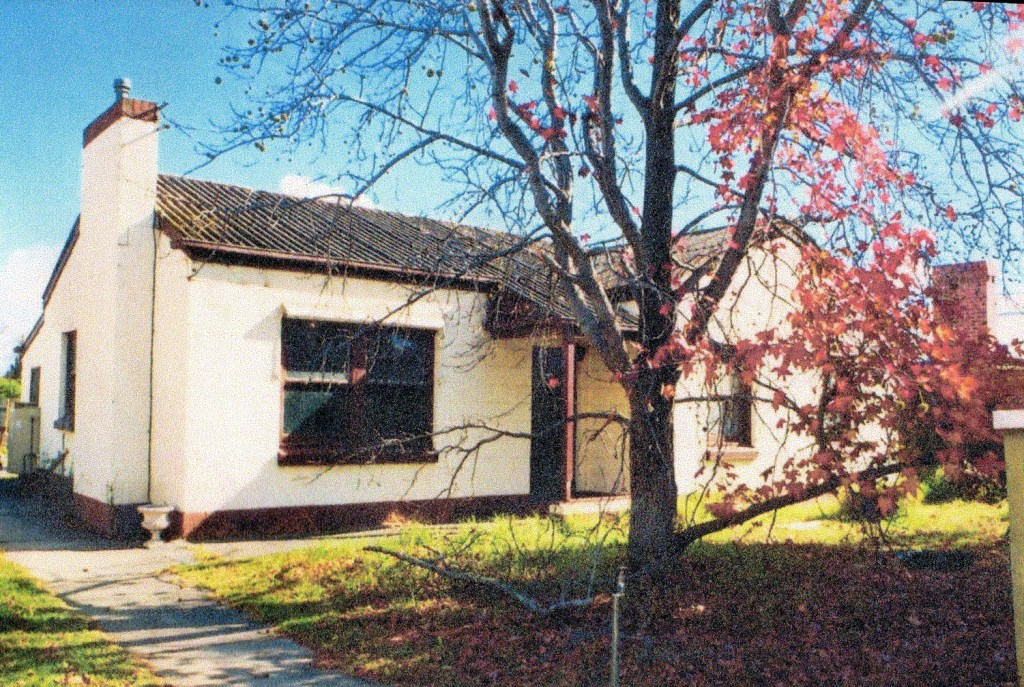
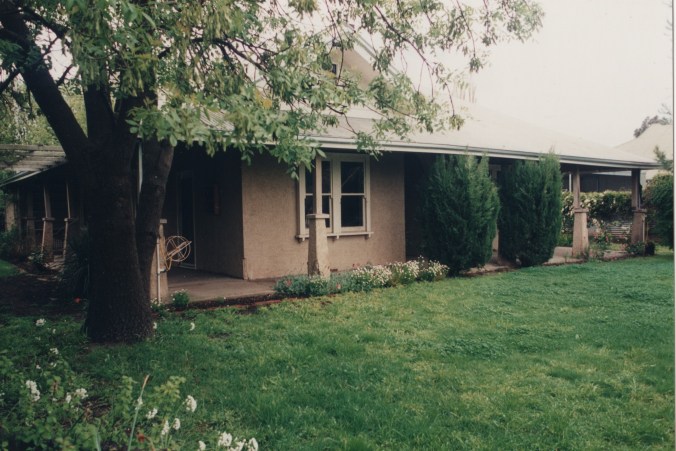
[Photo 7: David and Marie’s first own home © L.M. KLing 2005]

They looked at a few homes. A bungalow on Cross Road appealed to him, but not Marie. His father wasn’t impressed either. Marie didn’t like that pokey little home on the main road with no back yard at all and the property was right next to the rail line. Then a trust home at Gilbert Road Somerton Park came up for sale, and the deal was done. David regretted selling his stamp collection but reasoned that this was an investment for the children. And, many years down the track, it was, especially with the two lovely court yard homes, one of which David and Marie have lived in from 2006.

[Photo 8: New and improved courtyard home © L.M. King 2021]

God blessed David’s career. He taught at Port Adelaide Primary School from the late 1960’s until he retired in 1985 at the age of 57. In that time he studied to teach Indonesian, became Deputy Principal, and won a government research grant to go to Indonesia. He became interested in the Indonesian musical instrument, the Anklung. He brought a set home and proceeded to teach pupils how to play. He had bands of students playing in the Festival of Music until 2010. He continued to visit the school now LeFever Primary and train students to play the Anklung, right up till the beginning of this year. He also tutored indigenous students.

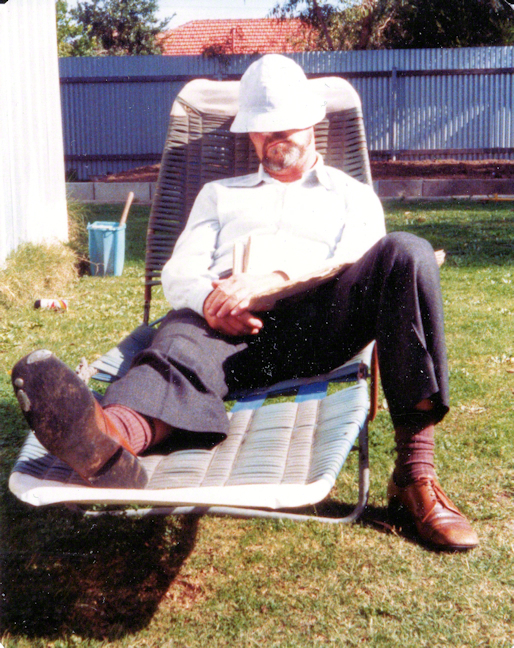
David lived life to the full and grasped every opportunity to explore the wild and untouched land God has created, especially Central Australia. With his long service leave, and then time in his early retirement, he made regular pilgrimages to the Centre. And God protected him. I like to think that now he is with the Lord, his guardian angel is enjoying a well-deserved rest.

[Photo 9: Dad having a well-deserved Sunday afternoon rest © L.M. Kling (nee Trudinger) 1983]

One example he gave of God’s protection was on a hiking trip in the Western Wilderness of Tasmania with a friend. On one narrow path climbing around a cliff-face, he felt his heavy pack over-balance and he began to fall. “This is it,” he thought. Then he felt the pressure of someone pushing him back against the rock and he was able to step two metres further to a wider path. He knew an angel of the Lord rescued him, preserving his life, not just for his sake, but for his friend’s sake, and also because his work on earth was not complete.

[Photo 10: Cradle Mountain, Tasmania © L.M. Kling 2009]

But on August 25, 2012, David’s work on earth was done. There are probably many things he has done that will be remembered as a blessing and encouragement to all who knew him. He was a regular member of Faith Lutheran Warradale church; he took an active role, and was a vital member of the congregation for over 54 years. He was a Sunday School teacher, an elder, and a Bible Study leader.

We will miss his cheerful nature, how he grasped life, lived it to the full and shared God’s love with all he came across.

He may have been David by name, but he was Clement by nature.

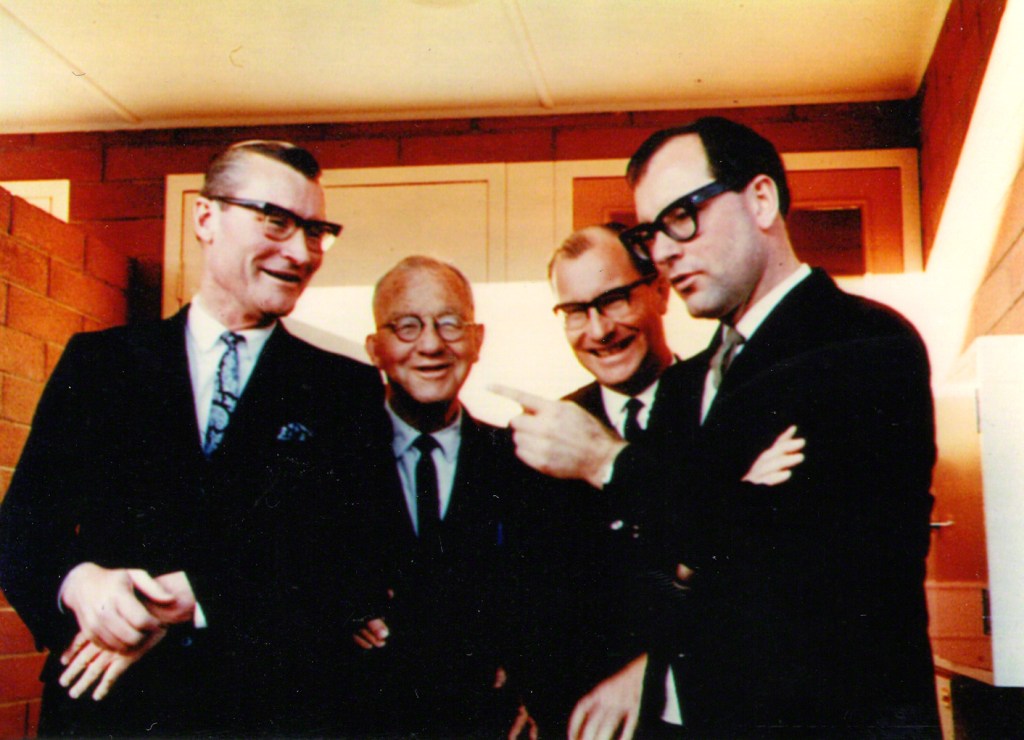
[Photo 11: The original men of the T-Team, David (3rd from left) and his father and brothers © C.D. Trudinger collection 1967]

First published as a eulogy to Clement David Trudinger by Lee-Anne Marie Kling ©2012

Revised © 2016; 2021

 Feature  photo: Central Australian sunrise © C.D. Trudinger 1977

***

More of my dad’s intrepid adventures in Central Australia in my memoir,

Trekking with the T-Team: Central Australian Safari 1981
Trekking with the T-Team: Central Australian Safari. (Australia)

Trekking With the T-Team: Central Australian Safari (United States)

Trekking With the T-Team: Central Australian Safari (UK)

Trekking With the T-Team: Central Australian Safari (Germany]

Trekking With the T-Team: Central Australian Safari [France]

Trekking With the T-Team: Central Australian Safari (India)

Trekking With the T-Team: Central Australian Safari [Canada]

Trekking With the T-Team: Central Australian Safari [Mexico]

Trekking With the T-Team: Central Australian Safari [Italy]

Trekking With the T-Team: Central Australian Safari [Brazil]

Trekking With the T-Team: Central Australian Safari [Spain]

Trekking With the T-Team: Central Australian Safari [Japan]

Trekking With the T-Team: Central Australian Safari [Netherlands]