Trekking Thursday–Ernabella

[The T-Team with Mr. B Dad’s friend Mr. Banks and his son, Matt, joined Dad, my brother (Rick) and me on this journey of adventure. I guess Dad had some reservations how I would cope… But it soon became clear that the question was, how would Mr. B, a middle-aged man who was used to a life of luxury, cope?]

Deserted

[An extract from The T-Team with Mr. B: Central Australian Safari 1977, my newly released travel memoir, based on true events but names and events may have changed.]

We stopped in at Fregon, another Indigenous settlement much like Mimili; a row of tin sheds and deserted. Then at about 2.30pm we arrived at Ernabella.

A teacher friend of Dad’s invited us into his home for refreshments and each of us had a hot shower. I enjoyed the warm cascade of water on me. My treat for the week. Below rivers of red mud spun into the drain hole of the bath. I scrubbed my hair with shampoo. The soap refused to lather. I scrubbed and scrubbed.

‘Lee-Anne!’ Dad called. ‘Don’t take all day, the boys need a wash too.’

‘Oh, alright.’ I turned off the tap. I guess the boys did need to wash, probably more than me. They were getting quite ripe at close quarters in the Rover. After all, it had almost been a week since we had a proper wash.

All showered and smelling sweet again with soap and deodorant, we trailed after Dad who gave us a tour of the settlement, including the school. Ernabella lies at the foot of the Musgrave Ranges, south of the South Australian and Northern Territory border. The land belongs to the Pitjantjara people. The mostly prefabricated buildings were neatly arranged around a random collection of unsealed roads.

[Photo 1: Approaching Ernabella © C.D. Trudinger circa1942]

Dad guided us around the school which appeared empty. We followed him circling the white building. ‘Must be closed,’ Dad said.

‘School holidays, I guess,’ I remarked.

Dad scanned the transportable blocks and then screwed up his nose. ‘We need to find someone to fix up the trailer.’

We walked through the settlement. The white buildings stood sentinel to the roads void of human activity and traffic. The crunching of stones under our feet was magnified by a town suffering from a bad case of abandonment.

‘Where are all the people?’ Mr. B asked.

‘Wow! The place is tidy and look how clean the streets, are,’ I said.

‘Except for the gravel,’ Richard mumbled.

Matt sniggered.

We wandered after Dad who was having a hard time finding someone to fix our trailer. Anyone…No one seemed to be around. I wondered if Ernabella was a ghost town.

Mr. B suggested we wait by the store that seemed closed and suffering a severe case of neglect. This we did.

‘The reason the settlement is so tidy,’ Dad explained, ‘is because everybody, I mean the aborigines, have a job to do here. They don’t get their welfare payment unless they do their job. They probably have someone cleaning the streets of rubbish and all sorts of other jobs.’

‘Not the store, apparently,’ Mr. B said.

‘Ah, well, they have to get the stock from down south, from Adelaide. Perhaps they’ve run out.’ Dad coughed.

[Photo 2: Building in Ernabella © C.D. Trudinger 1992]

An Indigenous man sauntered up to us.

Dad strode to meet the man and he guided him to the trailer still perched on top of the Rover.

While the trailer was being repaired, I climbed a hill. I figured the trailer would take ages to be fixed so I had time to sun bake. I wanted a tan. Treading up the hill, I noticed Matt running after me.

I stood and sighed. Great! Just when I wanted space to myself.

Matt held up a stick. ‘Look what I found!’

I examined the carved piece of wood. ‘Oh, yeah?’

‘What do you think it is?’

‘I dunno, a corroboree stick, I suppose.’

‘Oh, cool! Can you take a photo of me with it?’

‘Yeah, okay.’

[Photo 3: Corroboree Stick on Trudinger Hill © L.M. Kling (nee Trudinger)] 

I photographed Matt proudly holding a corroboree stick. The Musgrave Ranges behind were cast in hues of gold from the rays of the late afternoon sun. When we had descended the hill and found Dad, he told us that the “mountain” we had climbed was named “Mount Trudinger” after his brother who had been a teacher in Ernabella.

Near evening, we visited an Indigenous pastor. As the Musgrave Ranges is sacred to the Pitjantjatjara People, Dad and the pastor discussed the possibility of getting a couple of guides to be our companions as we climbed Mt. Woodroffe.
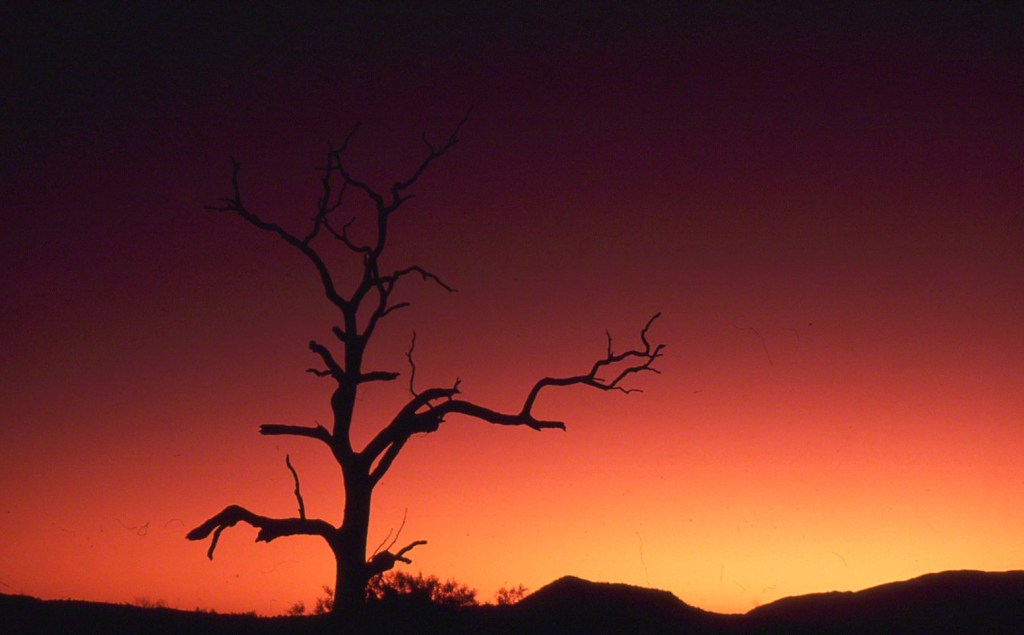
[Photo 4 and feature: Dead Tree Sunset © C.D. Trudinger circa 1992]

For the night we camped in Two Mile Creek which is not far from Ernabella. Dad conceded to camp not alongside, but right in the dry creek bed on the soft sand. This arrangement made Mr. B very happy. ‘For once I get to sleep on soft sand,’ he said.

‘Just remember, if we have even a hint of rain, we pack up and go to higher ground,’ Dad answered.

Mr B chuckled. ‘No chance of that, the weather’s been as dry as the bones of that deceased camel we saw on the side of the road.’

‘The water comes rushing down if there’s a storm,’ Dad said.

‘Oh, of course, Captain.’ Mr B then turned over and snored.

Rick muttered, ‘The only storm will be if Mr B doesn’t get a good night’s sleep.’

Matt sniggered.
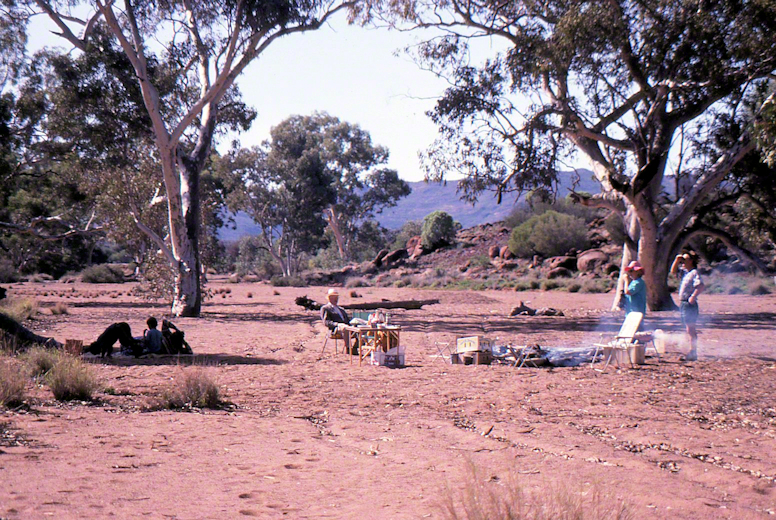
[Photo 5: Picinic on Soft Sand, at last! © C.D. Trudinger circa 1992]

© Lee-Anne Marie Kling 2018

Feature Photo: Dead Tree sunset in Musgraves © C.D. Trudinger circa 1992

***

Keen to read more of the adventures of the T-Team with Mr. B?

Click on the link and come along for the adventure.

 The T-Team with Mr. B: Central Australian Safari 1977

Want more but too expensive to travel down under?

Why not take a virtual travel with the T-Team Adventures in Australia?

Click here on:

Trekking With the T-Team: Central Australian Safari 1981

And escape in time and space to Central Australia 1981…

T-Team (the younger) Series–Chambers Gorge

The Road-Trip of No Destination

[Watched the first two of the Mad Max series, lately. Memories of the younger of the T-Team (my brother and me with a couple of friends) surfaced. We piled into my brother’s Chrysler Charger or whatever, and with roughin’ it on our minds, we travel up north of Adelaide to the Flinders Ranges; our sights set on Chambers Gorge…]

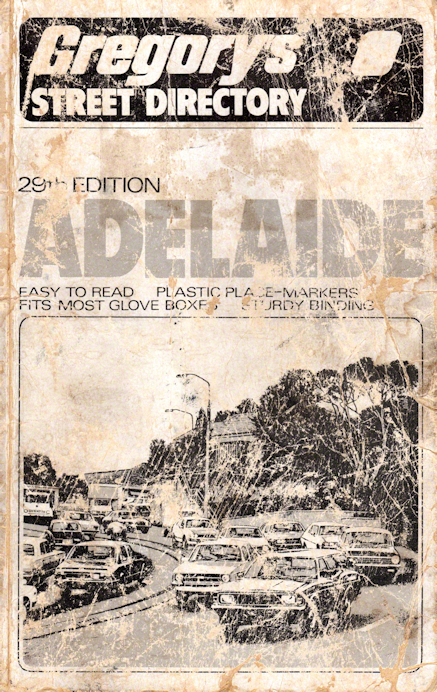
Back in the mid-1980’s my brother rarely used a map, not a map I could see. The Adelaide Street Directory, all faded and lying on the back seat under the stiff-from-salt-beach towels, doesn’t cover way-out country areas such as the Flinders Ranges.

[Photo 1: A street directory much like this one, courtesy of L.M. Kling]

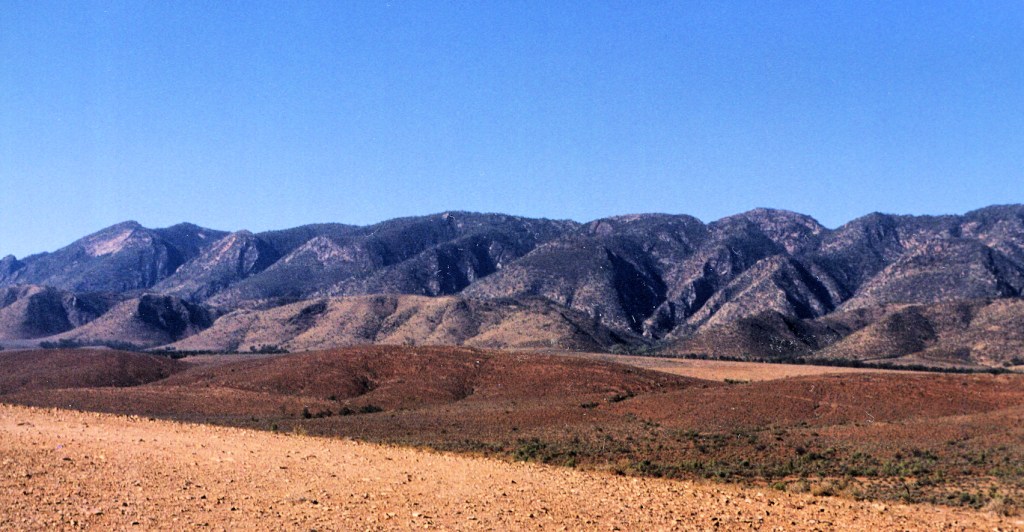
Every Easter, commencing Maundy Thursday, we’d pile into my brother’s latest Chrysler charger or whatever, and roll along to the car stereo-cassette player blasting out local South Australian band Red Gum. Up Port Wakefield Road we’d go, and if we were fortunate enough not the break down there, as one tends to do on Port Wakefield Road, we’d sally on forth to the Flinders Ranges, about four hundred kilometres north of Adelaide.

[Photo 2: Classic view of the Flinders Ranges from the highway © L.M. Kling 1999]

We’d start our journey late, usually after nine at night, as some of my brother’s friends had work and had to eat dinner, then finally pack before they were ready to leave.

[Photo 3: We probably took the trip in my brother’s red Chrysler Charger © courtesy of L.M. Kling]

One time, my brother and I took friends Barney and Doris (not their real names) on a planned trip to Chambers Gorge, situated in the north-eastern part of the Flinders Ranges. We must’ve left closer to midnight, and my brother and Barney shared the driving through the night. Dirt roads at that time, caused the driving to slow and by the time we neared our destination in the Flinders, the watery blue sky of dawn crept over low hills in the east. In the back seat, Doris and I rested our heads on our bags and slept, while my brother willed himself to keep awake rocking to British band, Dire Straits. There was a short stop as he then, too weary, swapped with Barney.

[Photo 4: Sunrise in the Flinders Ranges © C.D. Trudinger 1981]

Doris and I kept on sleeping.

Then…Bang! The car skidded to a halt.

We spilled out of the car. I rubbed my eyes and looked around. The sun peeped over the horizon of flat desert plains, mountains to the west, jutted like pimples on the edge, still dark, untouched by the sun.

My brother checked the front of the car. ‘It’s all right, no damage. The bull bar took the brunt.’

Barney sauntered down the road, and then returned to us. ‘We hit a roo,’ he said.

‘So, we’ll have roo for breakfast?’ I asked, half-joking.

‘Why not? I’m hungry,’ Barney replied.

‘You can cook it, then,’ my brother said.

‘Okay.’

[Photo 5: Kangaroos in Onkaparinga Gorge; the descendants of ones that avoided having unhappy encounters with cars © L.M. Kling 2019]

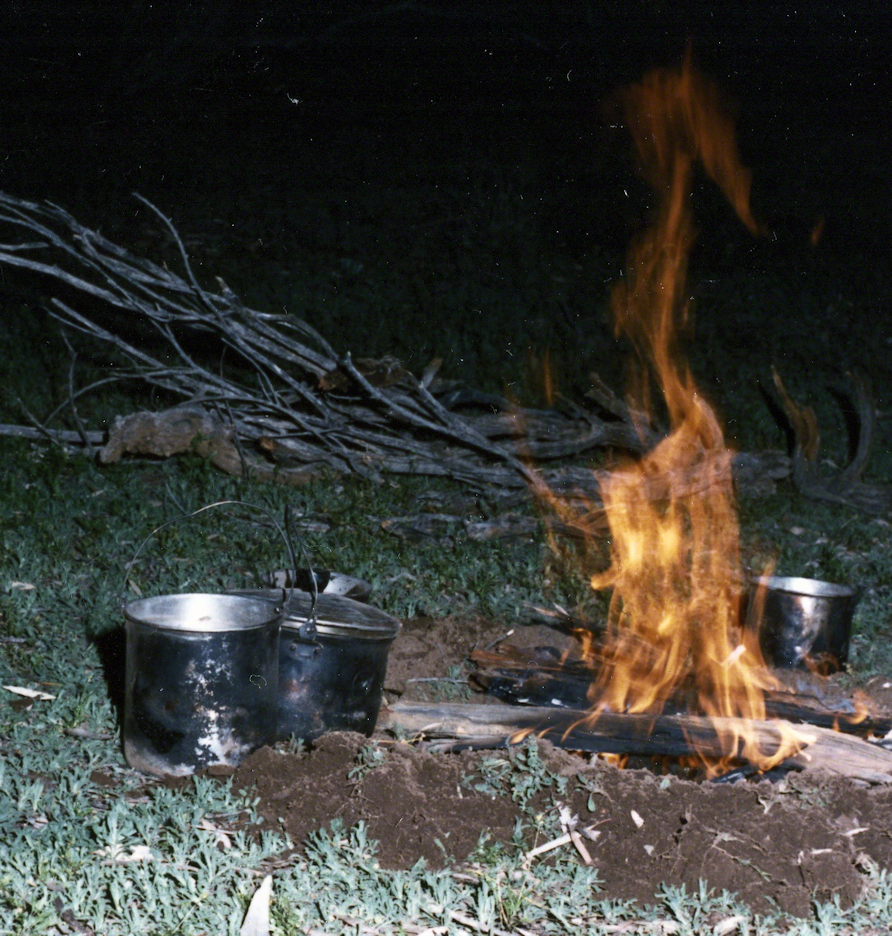
So as the sun rose over the distant mountains capping the peaks in pink, we roasted the skinned roo-roadkill over the campfire. While we waited for the meat to cook, Barney swilled his breakfast beverage of choice—beer. My brother, a teetotaller and body builder, drank his concoction of protein powder mixed with water and raw egg. Doris and I boiled a billy of water and then brewed ourselves a cup of instant coffee and condensed milk.

[Photo 6: Campfire © L.M. Kling 1986]

Doris clutched her metal mug, then sipped her coffee and said, ‘Not sure about the kangaroo for breakfast.’

‘It’ll be alright,’ I said. ‘I’ve had kangaroo—not so bad. Although, not sure about eating after the way Barney’s cooked it. We fried it once like that on our Central Australian trip, and I had a terrible tummy ache and bad gas. Smelt like rotten eggs. My brother and his cousin had competitions rating the potency of their gas. They thought it was hilarious, but the stink was awful.’

Doris grimaced and put down her coffee mug. ‘I don’t want to know.’

‘You won’t have any choice when we’re stuck in the car driving to Chambers Gorge.’

‘Speaking of Chambers Gorge, where is it from here?’

‘Haven’t a clue. I guess my brother will just keep on driving until we see a sign to Chambers Gorge.’

‘Oh.’

Barney called, ‘Roo’s ready.’

Doris and I trooped over to the campfire and inspected Barney’s efforts. Barney waved away the smoke to reveal bone and sinew reduced to charcoal.

Doris screwed up her nose and said, ‘I’ll pass.’

‘Me too.’ I grimaced. ‘I don’t fancy the after-effects from that.’

‘Aw, bit over-cooked, but charcoal’s good for you,’ Barney said. He took a few bites and then frowned as he forced the hardened lumps of gristle down.

Barney then took the remnants of the roo behind a bush and gave the poor animal a good Christian burial in a shallow grave.

[Photo 7: Then onto Chambers Gorge © L.M. Kling 1985]

[to be continued…]

© Lee-Anne Marie Kling 2016; updated 2019; 2021

Photo: Lee-Anne on a Limb, Flinders Ranges © Lee-Anne Marie Kling 1984

***

Want more but too expensive or unable to travel down under? Why not take a virtual journey with the T-Team Adventures in Australia?

Click here on Trekking With the T-Team: Central Australian Safari 1981…

And escape in time and space to Central Australia 1981…

T-Team Next Gen–Alice to Adelaide (2)

[In 2013, the T-Team, next generation embarked on their pilgrimage to Central Australia. Purpose: to scatter Dad’s ashes in his beloved Central Australia, in Ormiston Gorge.

Over the past year, I have taken you on a virtual trip to the Centre and memories of that unforgettable holiday in 2013, with my brother and his family; the T-Team Next Generation.

This time, with the trip coming to a close, the T-K Team continue their return to Adelaide after camping at Marla for the night.]

The Trucks of Terror

Morning and the dawning realisation why this campsite may not have been popular. Anthony stomped around the tent grumbling.

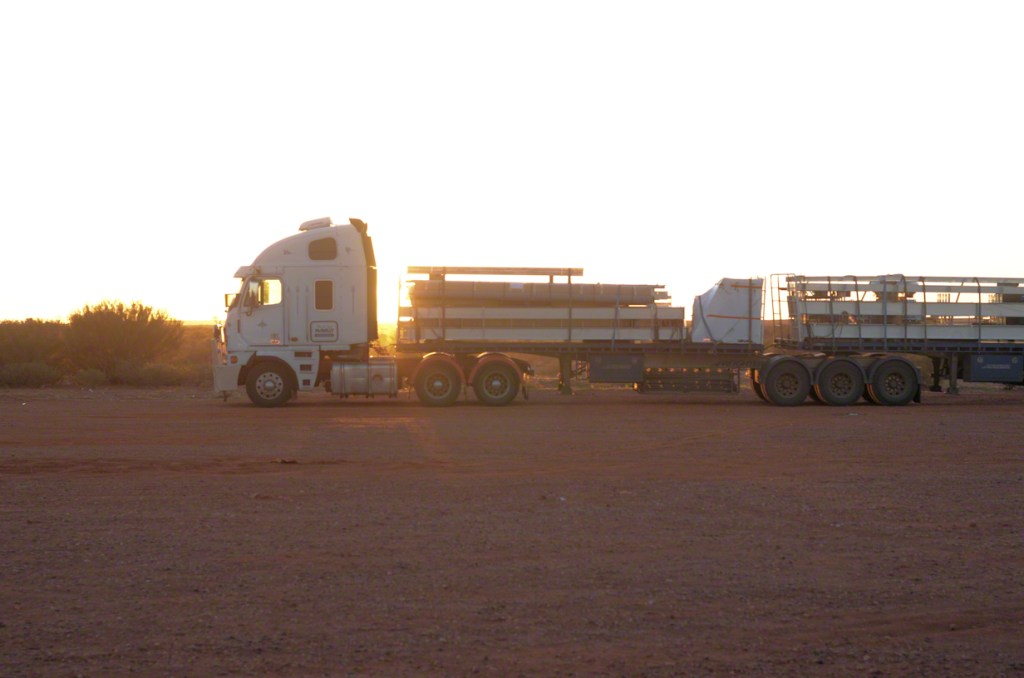
‘I got no sleep last night,’ he snapped. ‘Kept getting woken up by those trucks rumbling all night. And their lights. Just as I drifted off to sleep. Those lights kept shining into our tent.’

‘Will you be alright to drive?’ I asked.

‘Why wouldn’t I be?’ he sniffed. Anthony was a man after all and infallible.

We moved like snails packing up. I loaded the Ford’s rear with stuff. Next minute, Anthony was there unloading and repacking. Must do it right, even on the last leg of our journey.

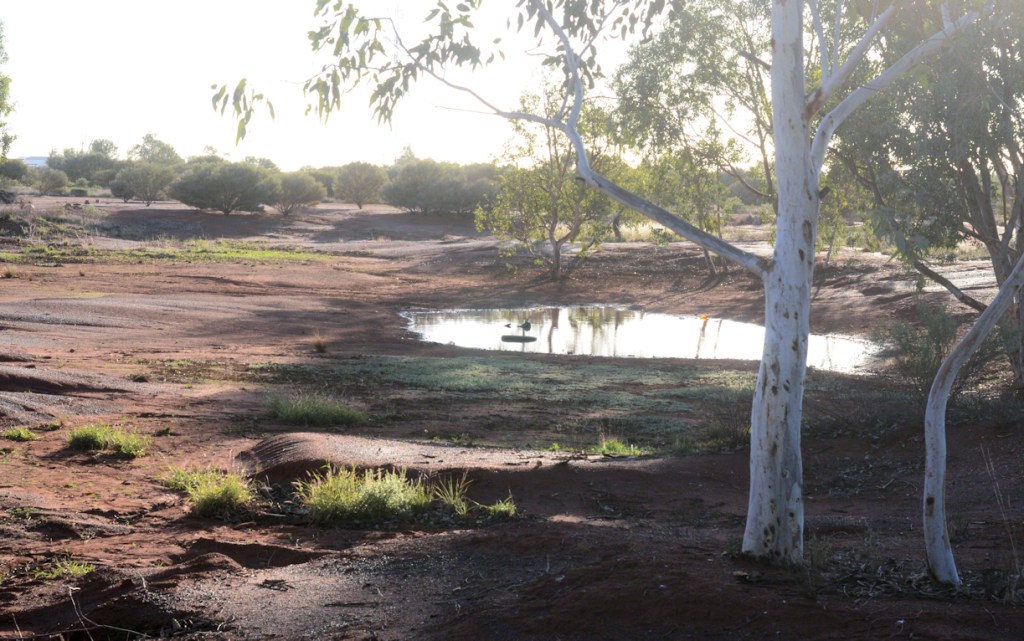
[Photo 1: While I waited, morning view from Marla campsite © L.M. Kling 2013]

While he played his version of luggage-tetris, I wandered off to the BBQ hut to check for any forgotten items that might lurk there. And behold, sitting rather smugly in a rather obvious position on the bench next to the BBQ facilities, Anthony’s water bottle. You just have to wonder whether the water bottle had legs and hid when we were searching for it the previous night. Then, when it realised that it might be left behind, it positioned itself in the fail-safe position to be found. The water bottle is not the first item to “hide” from me and then “reappear” in a place where I have looked a dozen times before…

There was much rejoicing over the lost water bottle that was found.

Owing to Anthony’s meticulous care in packing, we were the last to leave the campsite.

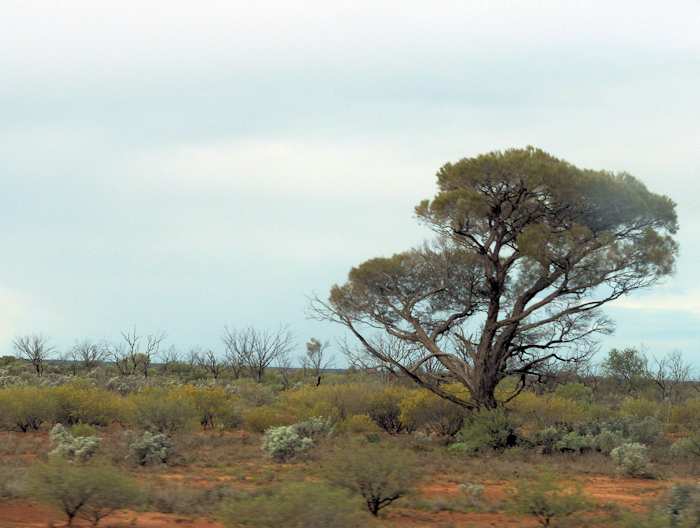
As we travelled the long monotonous stretch, I slept a bit, wrote in my diary a bit, and then stared out the window at the red earth, gibber plains and twisted corkwood trees. I even filmed the landscape flitting past a bit.

[Photo 2: Trees twisted on the gibber plains © L.M. Kling 2013]

Anthony took my hand. ‘I’m sorry I was grumpy.’

‘That’s okay, blame it on the trucks that kept us awake all night.’

‘I swear that there was a truck that shone its lights straight into our tent.’

‘Yeah, it seemed that way,’ I replied. ‘Perhaps we can stay at Woomera in a cabin tonight and get a decent night’s sleep.’

‘Yeah, why not!’

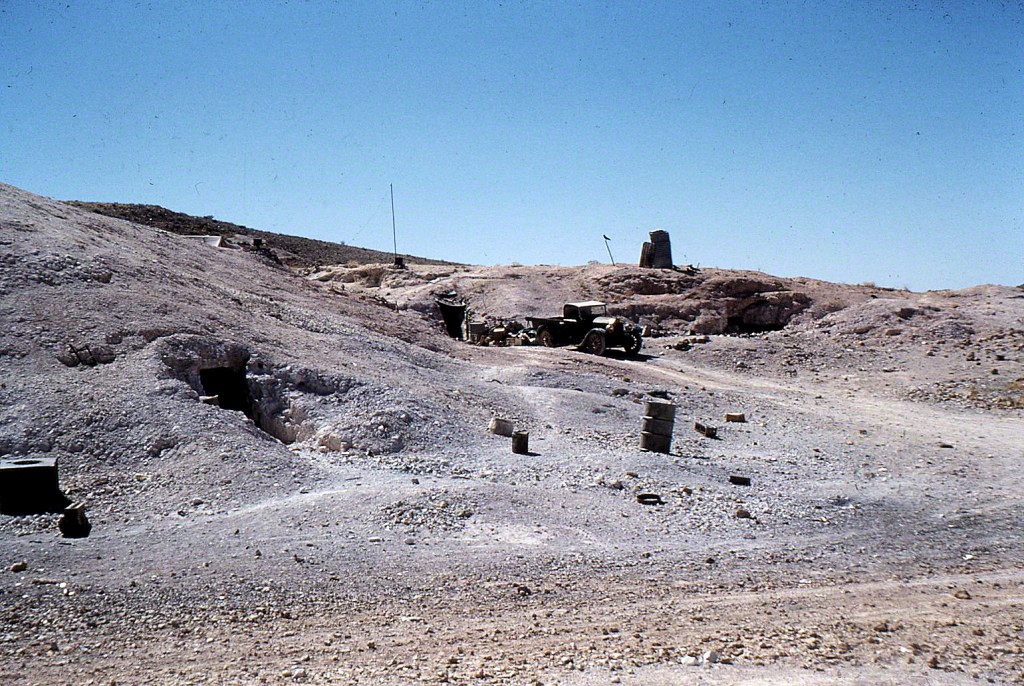
Around two o’clock and the landscape evolved from flat, and stone scattered to low-lying hills pockmarked with what appeared to be giant rabbit holes. Signs warned visitors to beware of mine-shafts.

[Photo 3: Mine-shaft-pitted mountains © M.E. Trudinger (nee Gross) 1956]

‘Lunch at Coober Pedy?’ Anthony said.

‘Yes, but…first a toilet-stop.’

‘And where do you suggest?’ Anthony glanced at me and then gazed at the mineshaft littered hill face.

‘A service-station? Or a pub?’

‘And where’s the service-station?’

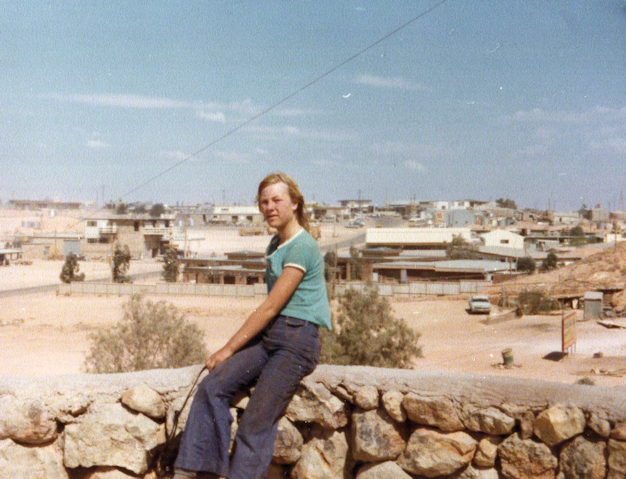
[Photo 4: View over Coober Pedy, but where are the service stations in Coober Pedy? © R.M. Trudinger 1977]

A tour of Coober Pedy yielded no service-stations that we could find. And He who wanted to save money and eat a picnic lunch was not willing to enter a pub for the loo in case it entrapped us into eating in there.

‘What about the playground and BBQ area where we had tea with the T-Team on the way up to Central Australia?’ Anthony suggested.

Bad suggestion…

But, at the time I agreed. Lunch and loo visit in one hit.

[to be continued…next time I contend with a psycho dunny…]

© Lee-Anne Marie Kling 2021

Feature photo (below): Road Train at dawn near Marla ©L.M. Kling 2013

***

Virtual Travel Opportunity

For the price of a cup of coffee (takeaway, these days),

Click on the link and download your kindle copy of my travel memoir,

Trekking with the T-Team: Central Australian Safari. (Australia)

Trekking With the T-Team: Central Australian Safari (United States)

Trekking With the T-Team: Central Australian Safari (UK)

Trekking With the T-Team: Central Australian Safari (Germany]

Trekking With the T-Team: Central Australian Safari [France]

Trekking With the T-Team: Central Australian Safari (India)

Trekking With the T-Team: Central Australian Safari [Canada]

Trekking With the T-Team: Central Australian Safari [Mexico]

Trekking With the T-Team: Central Australian Safari [Italy]

Trekking With the T-Team: Central Australian Safari [Brazil]

Trekking With the T-Team: Central Australian Safari [Spain]

Trekking With the T-Team: Central Australian Safari [Japan]

Trekking With the T-Team: Central Australian Safari [Netherlands]