Family History Come Travel Friday–Amsterdam

Postcards — Amsterdam

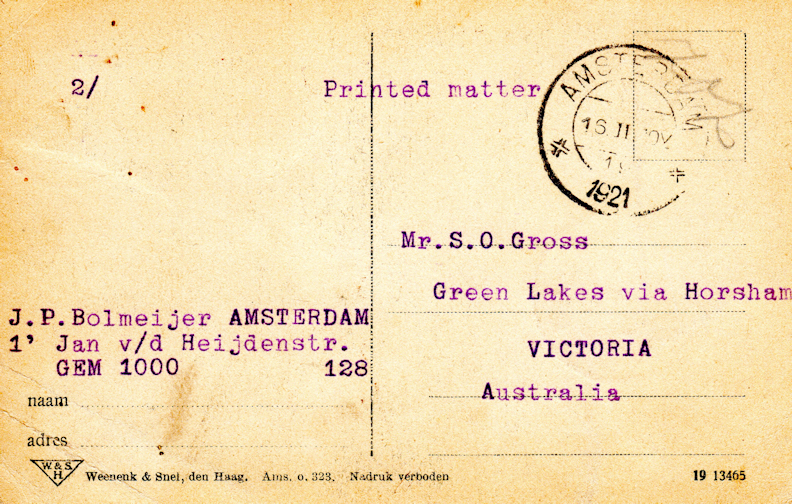
Remember the humble postcard? My maternal grandfather used to collect them…100 years ago. This week, I’m embarking a journey into K-Team history as well as glimpsing life in the past from a postcard taken 100-years ago.

I am amazed at what one can glean from a simple card. Imagine, a postcard in 1921 cost 1-cent to post from the Netherlands! On the flip side, a tiny little script in the middle reads “nadruk verboden”(copying is forbidden). I’m hoping from my understanding of copyright laws, that this restriction has long since expired.  That being said, I acknowledge the publishers “Weekenk and Snell, den Haag” and have shared this postcard for historical and educational purposes.

So, we travel forward in time, when my husband and I visited Amsterdam at the start of our European adventures in 2014.

We arrived in Amsterdam and after breezing through customs, Hubby rang up Renault to get someone to pick us up and drive us to the Renault office to pick up the leasing car, the Duster. ‘You’ll recognise us,’ the Renault guy promised. We waited half an hour. No guy, no van. Dragging my big red suitcase, Hubby paced back and forth along the front entrance and I trailed behind him, his smaller suitcase bumping over the pavement. After 45 minutes of no joy, no guy, and no Renault van, Hubby rang Renault again. Apparently, the pickup guy had made several laps of the Airport pick up area searching for us. Hubby suggested we rendezvous by a well-known hotel near the overpass. We waited there for a couple of minutes before Hubby got itchy feet and off he went a-wandering. I began to follow and then looked back. The Renault van rolled around the corner. I ran, and with my free hand I waved at the driver getting out of the van.

[Photo 1: Another mode of transport more common in Amsterdam—bikes, lots of them © L.M. Kling 2014]

‘Yay!’ I called out.

‘I was looking for a red suitcase,’ the guy said.

I apologised for my husband’s impatience and then we waved at him as he approached.

After picking up the Duster from the office, Hubby embarked on the challenge of driving in Amsterdam on the right side of the road. He took a little while to adjust to not over-compensating and bumping into the kerb on the right. Which he did a few times.
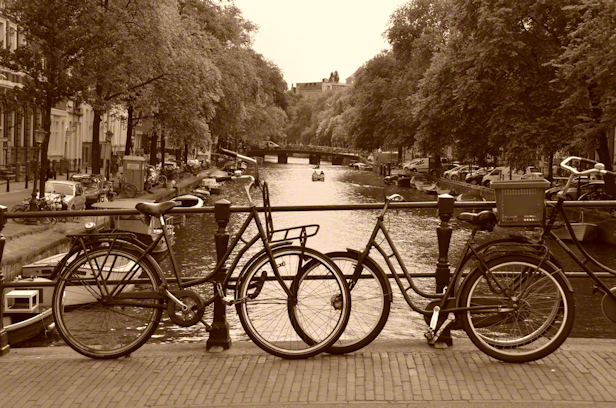
[Photo 2: Bikes abandoned over canal © L.M. Kling 2014]

We gingerly drove the short way to the service station and after parking and hunting through the French instructions, found how to open the fuel cap. Hubby had learned French at school, so was able to decipher the information without spending too many hours trawling through the tome of a manual. So, we filled up with fuel and began our journey to our apartment. Our navigation system, a Tom-Tom which we named “Tomina” since it had a pleasant, if not slightly passive-aggressive female voice, lead us to the highway and then off the beaten track, then told us to turn around. Back where we started, Tomina said, ‘Turn right.’

‘Turn right,’ I said.

Hubby obliged by tuning left and into the highway. Cars coming from our right tooted us as we entered the highway. We had to go ‘round the block to get back on track. Then we saw that where Hubby turned was a sign that read, “No Left Turn”.
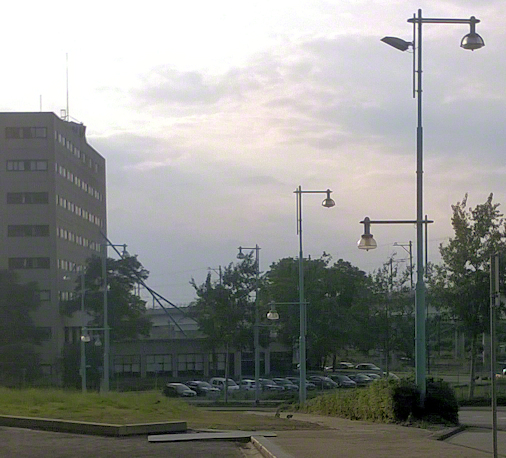
[Photo 3: Rabbits in the car park near our hotel accommodation © A.N. Kling 2014]

We found the apartments and since check-in was only from three o’clock, we had the staff hold our luggage while we explored the local station. We admired the rainbow-coloured flags that decorated the apartment block and surrounds, thinking they looked so pretty and decorative. Hungry by this time, we ate lunch, then bought a card, wine and flowers for his aunt Ada who had her birthday on the 30th July. A highlight of the trip for Hubby was visiting his aunts and cousins that afternoon. Had a lovely time meeting and getting to know his father’s relatives over coffee and cake. Some of his aunts Hubby hadn’t seen for 40 years.

[Photo 4: Motorbike racing down rich Amsterdam road © L.M. Kling 2014]

The next three days in Amsterdam we spent walking. Hubby had taken it upon himself to become my personal trainer. We must get fit. We walked the roads of Amsterdam absorbing the summertime atmosphere, admiring the canals, the graceful architecture, the boats and hundreds of bikes—everywhere people riding bikes. The town was packed with people, tourists, and revellers, eating, drinking and shopping. As it turned out, we had chosen unwittingly, I might add, to spend the weekend when Amsterdam was celebrating the Rainbow Festival. We did see some unusual sights as well as the usual antics common to drunken behaviour. My foot suffered blisters as it adapted to new hiking sandals. Good thing we had a first aid kit and some blister pads from Rogaining a couple of years ago.

[Photo 5: Canals of Amsterdam © L.M. Kling 2014]

We did the usual tourist stuff, one day five hours in the Reich Museum, next day lining up and herding through the Van Gough museum-art gallery, and then an hour cruise through the canals. We had a 24-hour pass so we could hop on and off certain trams around the city. One tram though, decided to close its doors on me as I tried to get off leaving Hubby abandoned on the footpath. I alighted at the next tram stop around the corner and walked back. What joy to see my husband walking towards me.
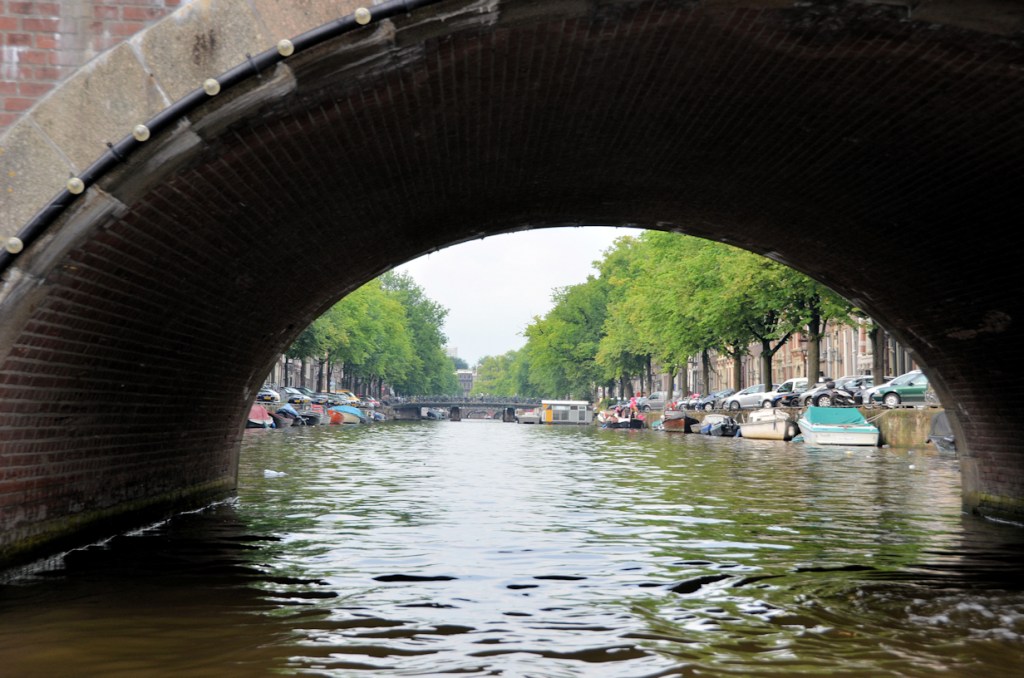
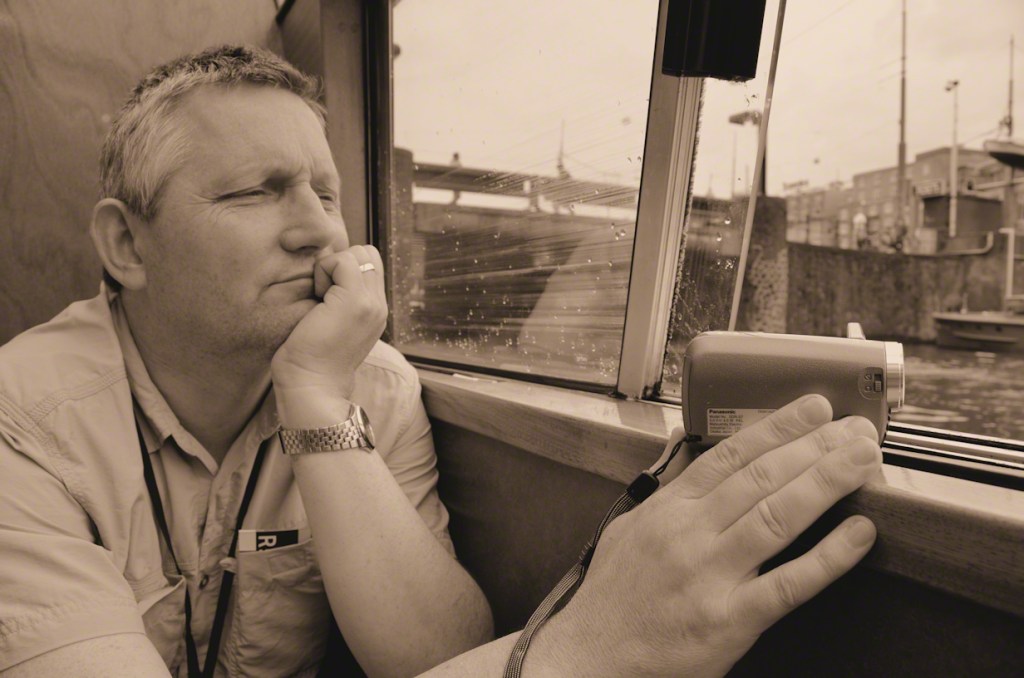
[Photo 6 & 7: Canal cruising © L.M. Kling 2014]

Although we mostly ate at our apartment, the last day in Amsterdam we enjoyed pancake with apple and honey for lunch, and for dinner Argentinian steak—tender juicy steak. I’m not sure what it is about Argentinian steak houses, but in Amsterdam, they’re everywhere.
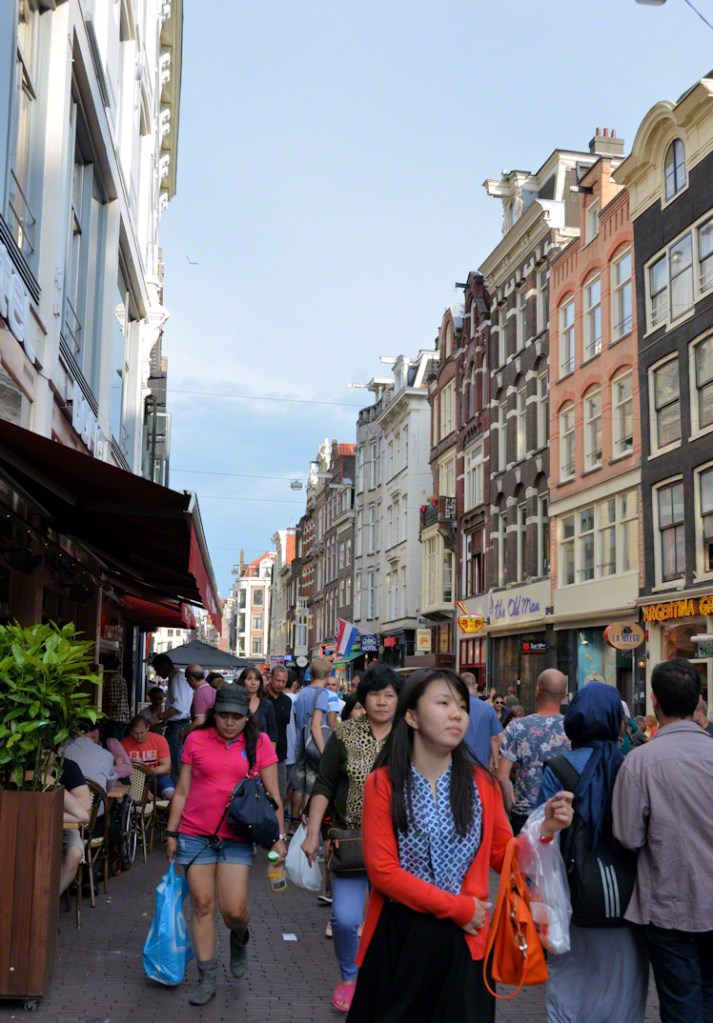
[Photo 8: Crowded Streets of Amsterdam © L.M. Kling 2014]

© Lee-Anne Marie Kling 2014; updated 2020; 2024

Feature Photo: Postcard of Amsterdam, Kalverstraat © Weenenk & Snel, den Haag circa 1920.
***

And now, for something different…from Europe…

Dreaming of an Aussie Outback Adventure?

Click on the links below:

The T-Team with Mr. B: Central Australian Safari 1977
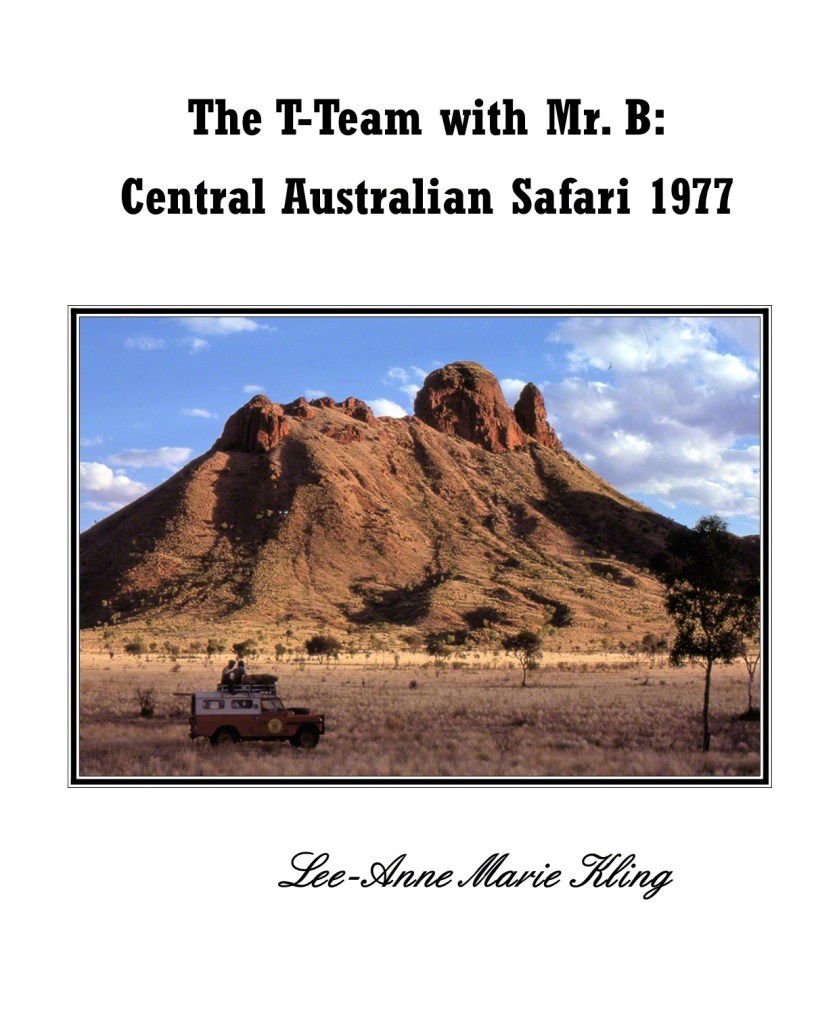
Trekking With the T-Team: Central Australian Safari 1981,
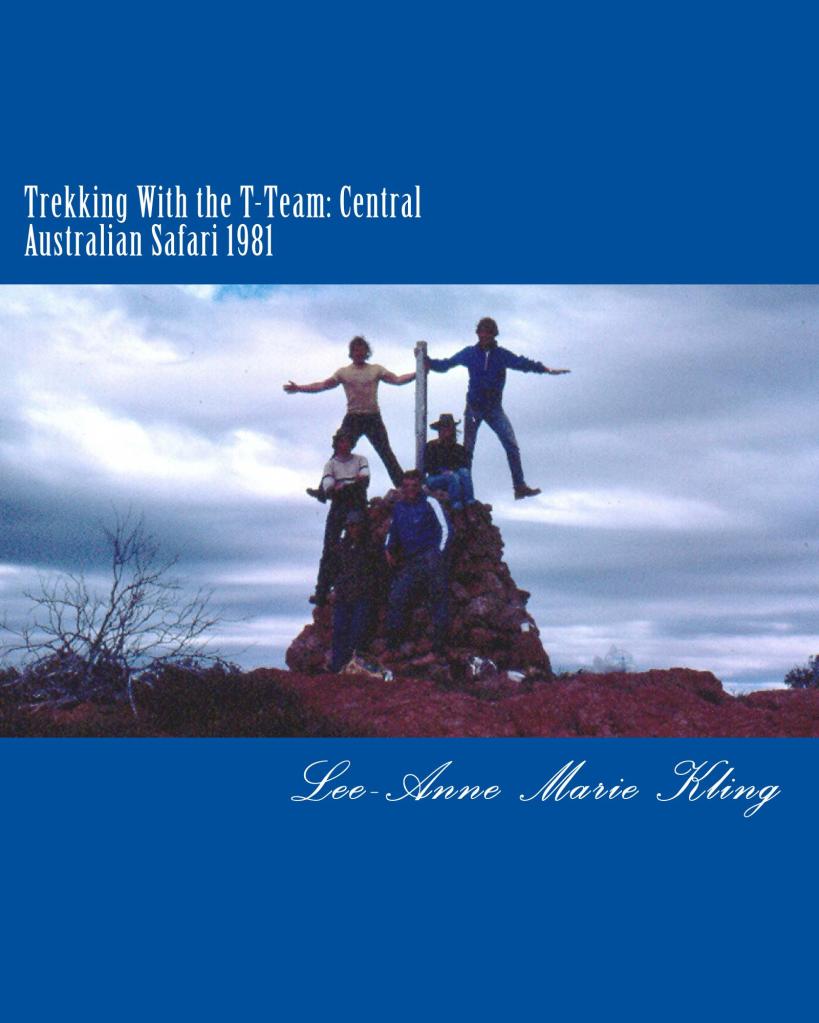
To download your Amazon Kindle copy of the story…

And escape in time and space to Centre of Australia 1981…

Family History Friday–Family Mythology

The Deep Fake of Family “Myth-ory”

Gaslighting—it’s something we believe is a modern practice, AI generated. But, in truth, fudging the truth is as old as history itself.


You could say that creating one’s own reality is a global pastime and no one is immune to it. As humans, we interpret, or mis-interpret the world around us through our experiences, what we see, hear, taste and touch. We use our worldviews to form our identity and place in the world and to serve as a personal force-field to protect our beliefs. Our personal paradigm helps us navigate our way through life, predicting the challenges life may throw at us.


It is fair to say that our worldviews are limited, and often skewed as we encounter the worlds of others. Naturally, we believe our truth is the one and only way. To feel secure, we impose our version of reality on others. We are right. They are wrong.


Have you ever had the experience where someone reckons you said a certain thing, but you’re sure you didn’t? I have had friends “quote me”, attributing wise words to me, and I have no idea I’d ever said that. Wish I had. Maybe I had; I just can’t remember. Either way, our respective worldviews have filtered facts in and screened information out.

*[Photo 1: Sculpture in courtyard of Basel Kunst Museum © L.M. Kling 2014]

Anyway, the same can be said for our own personal family history. I remember reading an article in a Genealogy magazine about family myths and to be wary of them. It’s not enough to believe a story, a narrative. Good research requires facts, preferably primary resources.


With this in mind, I have been researching on the internet, the history of Nördlingen and the Kaiser Hof Hotel Sönne. Did my Trüdinger ancestors own it for two hundred years, as my relatives have been led to believe? It wasn’t our branch as my great-grandfather Karl August Trüdinger and family emigrated from Bavaria to England in the 1860’s, and then from England to Australia in 1886. He was a textile merchant trading in wool in Yorkshire England and then in Australia he set up a business selling textiles in Adelaide city. Now, here again, the details get a bit murky, and I need to do some more research into the actual work history of Karl August in Adelaide. Suffice to say, from my gleaning of Trove, Karl August was a fine Christian family man who together with his wife Clara Theresa, raised eight of his twelve surviving children to enter the mission field. Vastly different from the family origins in Nördlingen who were apparently rich and influential enough to own the hotel that entertained royalty.

[Photo 2: Trudinger Family in Adelaide, South Australia courtesy L.M. Kling circa 1890]


Yet, as I delved deeper into the rabbit-hole of internet searches, I discovered that my four-times great grandfather, Balthas Trüdinger was a soldier in the Teutonic order. Why else was he living in Lierheim (a castle near Nördlingen) which at the time was owned by the Teutonic order? Oh, the shame that this brought on the family, having a mercenary soldier in their ranks! Another myth. Sure, Balthas was a soldier. Sure, as a soldier in the Teutonic Order he was paid. But was the Teutonic Order so bad?
When I first mentioned the fact of Balthas belonging to the Teutonic Order, my son and husband joked that he was most certainly a neo-Nazi of his time. I began to imagine Balthas all buff, shaved head and going around on crusades killing anyone who wasn’t Christian. According to my research, Wikipedia, mainly, Hitler portrayed the Teutonic Order as the exemplar of the Aryan race and cause.
Again, this was a myth. As soon as Hitler had achieved his purpose using them, he then turned against them and discarded the Teutonic Order.

*[Photo 3: Reminders of war, Dinkelsbuhl © L.M. Kling 2014]


According to my limited research, although the Teutonic Order went on Crusades to Christianise Europe, and paid mercenaries to fight, they also did a great deal of good. Way back when they formed in 1191, they protected travellers making their pilgrimage to the Holy Land. They organised and built hospitals, initially for wounded soldiers and these days the order is primarily a charitable organisation.
Anyway, it would seem from the records compiled from my uncle Ron Trudinger, that Balthas didn’t stay in Lierheim, but, after the birth of his son Georg, he moved to Nördlingen. Here, no mention of Georg being an innkeeper, but instead a linen weaver and Burgermeister of the town.


From a research paper on Nördlingen in the 17th Century called Early Capitalism and its Enemies: The Wörner Family and the Weavers of Nördlingen* (Published online by Cambridge University Press: 11 June 2012) which I accessed online through Jastor, I was able to surmise that for Georg to become the Mayor of Nördlingen, he would’ve needed to be seriously cashed up. I mean rich, one of the wealthiest in the town, if not, the wealthiest. It would seem he landed on his feet so to speak as a linen weaver or had come into a sizable inheritance. Or, had he or his father married into money in the town? The owner of the hotel, perhaps?

*[Photo 4: Unbroken Wall of Nördlingen © L.M. Kling 2014]

Nowhere in my gleanings on the town do I see that he was the innkeeper or owner of Kaiser Hof Hotel Sonne. The above-mentioned article had a breakdown of income, which I presume was yearly, of people in the town. According to a study accessed online called “Nordlingen, 1580-1700: society, government and impact of war”, in 1700, the owner of the Kaiser Hof Hotel Sonne had the highest income of all, a salary of 41 Florin. A teacher at the time received one to four Florin per year. And a soldier, which is what Georg’s father, Balthas was, received eleven Florin per year.

[Photo 5: Red rooves of Nördlingen made famous by the movie “Willy Wonka and the Chocolate Factory” © L.M. Kling 2014]

Again, as far as the Trüdinger family is concerned, it’s all conjecture and where myths start to grow and take a life of their own.

One thing for certain, though, is that in family history, experiences that family members have had hold weight for evidence. After all, they are the life-experience of that person and from their point of view. My second cousin, who married a German, and lived in Bavaria, decided to visit the Kaiser Hof Hotel Sonne in the 1960s. Family there living in Germany, informed her that a Trüdinger relative owned the hotel. Upon seeing the hotel, my second cousin was impressed by how high-class it was with fancy décor and loads of antique furniture. The food offered was out of her budget, but my second cousin tried to talk to her hotel-owning relative.


The encounter didn’t progress the way my cousin had hoped. Although my second cousin could speak fluent German, the hotel owner seemed distant and appeared reluctant to engage with her. Maybe, the lady was having a difficult day…Or hadn’t been given enough warning that a cousin was going to visit the hotel unannounced.


My second cousin left the establishment and decided to eat elsewhere.

*[Photo 6: Our experience dining at Kaiser Hof Hotel Sonne, Nördlingen © A.N. Kling 2014]


When we visited my second cousin in Germany, she told me this story and mentioned that by the end of the 1960s the Trüdinger relatives had sold the hotel. She believed that the hotel had been in the family for 200 years.


I am still trying to figure out if this a fact, or if it is a myth.


Do you or someone you know have information on the history of the Kaiser Hof Hotel Sonne Nördlingen? Are you related to the Trüdinger family? You are most welcome to leave a comment. Or you may contact me through the My Heritage Trudinger-Kling website.

© Lee-Anne Marie Kling 2024: updated 2026
*Feature photo: Kaiser Hof Hotel Sonne, Nördlingen © L.M. Kling 2014

References
Teutonic Order – Wikipedia
Nördlingen, 1580-1700: society, government and impact of war

***

Want more, but different?

Check out my Central Australian adventures.

Click on the links:

The T-Team with Mr. B: Central Australian Safari 1977

Trekking with the T-Team: Central Australian Safari 1981

Family History Friday–Grandma’s Letter Part 2

Grandma’s circular letter

CIRCULAR WRITTEN by ELSA GROSS from HERMANNSBURG,

OCTOBER 1939

From Riverland to Desert (part 2)

About quarter to 7 we arrived at the station and there was the whole station out to meet us, black and white, big and little, and such a noise too, it sounded just like a whole lot of parrots or galahs.  Then the truck came to a standstill and Sam got out and had to shake hands all around.  I had to stay in the truck on account of the measles.  I could only talk to them from a distance.  It was just like a dream and to see all the natives running to and fro, reminded me of the movie films which Lou Borgelt had taken in New Guinea.

*[Photo 1: Greetings on arrival in Hermannsburg © S.O. Gross 1939]

        Well, after all the greetings were over we were taken across to our new home, which by the way isn’t very new, it’s one of the oldest houses on the station.  Mrs Albrecht was going to have us over there for the first few days for meals, but through this measles business we decided it was best if we stayed isolated for a while so as not to infect the natives.  Mrs Albrecht sent us over our tea, then, and such a huge tea, too, and we did full justice to it, too.

        And now began our life on the station.  But so far we haven’t seen very much of it, I haven’t been out of the place at all, Sam has gone to the other places more, but we keep away as much as possible.  And now, last weekend, Ruth gets the German Measles, she was fairly miserable, but is alright again now, except for a cough.  Now it means we have to stay isolated for another 10 days or so, in case Marie gets them.  It is a real nuisance, because we can’t get to anything properly.  The only advantage it has is that we can get things a bit straight around the place.

*[Photo 2: The not-so-new home—even older in 2021!!! © L.M. Kling 2021]

        Such a lot wants doing, the doors don’t fit, and the floors need doing, and the garden has to be made.  These last two days Sam has had 2 natives helping him with all sorts of odd jobs, yesterday and today they dug the front garden and this morning we planted the lawn and tomorrow I want to put in some flowers.

        The first 2 days we were here were terribly windy and dusty and hot.  The dust came in everywhere, it was just like a real dusty day in the mallee.   Our box of goods was supposed to come out the same day that we got out here, but it didn’t come Wednesday, we waited Thursday, and still didn’t come.  By this time Missionary Albrecht was getting worried, he thought the thing might have tipped over.  Friday morning we got a wire to say they couldn’t get it off the truck in Alice Springs.  They had been trying to get the wire through since Tuesday but the weather had been too bad, they couldn’t get it through.  So Sam had to pack up an go into Alice Springs and there saw to the unloading.  Eventually on Sunday afternoon the lorry arrived and was duly unpacked, of course the natives were very interested in everything, especially the piano.

*[Photo 3: The arduous journey of belongings to Hermannsburg © S.O. Gross 1939]

        So far I haven’t any house girls yet, as soon as we are out of quarantine I will get two.  Mrs Albrecht has been baking my bread for me until I get the girls.  Milk I have brought over every morning, also cream and from that I make my own butter, but unfortunately I am not a good hand at it yet.  There are some nice vegetables in our garden, which is quite a big one, we have over 20 date palms in it, 4 orange trees and 3 figs and quite a number of vines.  This last week we had about an inch of rain which was quite nice for the gardens and settled the dust.

*[Photo 4: Garden view to Mt. Hermannsburg—yes, the palms still exist in 2021 © L.M. Kling 2021]

        I am afraid it will take me quite a while to get to know all the natives and all their names too.  I know Albert, the artist, by sight, of course, he always wears an overcoat and is quite proud of his appearance.  I also know,

Manasse the leather worker, also Herbert and Ferdinand the two Sam had helping him.  Of the women, I think the only one I know by name is,        

Cecelia, an older woman who always wears a red dress.  Some of the children are lifted up so that they look over the fence to watch the children play and when we come out they scoot.  Some of their attire is pretty weird too.  One little chap wears his father’s shirt, it reaches nearly to the ground and has to have the sleeves rolled up.  Another little girl has her big sister’s dress on, and every time she runs she has to hold it up or she would fall over it.  Another little chap has a “has been” shirt on, his father’s, it’s only strips now.  Most of the men wear hats, some felt, some harvester hats.  The boys that Sam has have straw hats on but they look as though the mice have been at them.  Yesterday morning the one came along with feathers sticking out of the holes, I don’t know if he had visited the fowl-house or not.

*[Photo 5: Hermannsburg back in the day © S.O. Gross circa 1950]

        And now we have been here nearly 4 weeks and haven’t been able to do any real work yet, but we hope it won’t be much longer before we can start.

        And so begins our life on the Hermannsburg Mission Station.  May God make us a blessing to many.

© Elsa Gross 1939

*Feature Photo: My grandma, Elsa looking out from her Hermannsburg home © S.O. Gross circa 1940

***

Want more, but different?

Check out my Central Australian adventures.

Click on the links:

The T-Team with Mr. B: Central Australian Safari 1977

Trekking with the T-Team: Central Australian Safari 1981

Flash Back Friday–100-Word Challenge

Character Study

I have spent a few hours of this good Friday reading the diary of my Great Aunt Dora. The story begins all full of the hopes of a young 18-year-old first-generation Australian girl whose parents had migrated from Germany to South Australia around 1877. I know her story, I knew and loved my great Aunt Dora. She will never marry. One of many women of her time, when, after World War 1, there were not enough men to go around. I imagine this is what life in the 1920’s was like for her, a maiden aunt caring for her parents.

Dora

She had one once. Before the war.

He came from Hamburg. A distant relative from the family.

But the Great War intruded. He was the enemy.

Interned. Never to return.

She perched on the bench in the Royal Botanical Gardens. Watching. Men promenading in pale pinstriped suits, on their arms women in their frilly-white Sunday best, giggling.

Easy for the men, she thought. Pick and choose. Pick and choose. Even the damaged men, the cripples, have a chance.

She sniffed.

What about me? Is that my future? Caring for my aging parents? No choice but to be an old maid?

© Lee-Anne Marie Kling 2020; updated 2024

Feature Photo: A lone date palm, Botanical Gardens © L.M. Kling (nee Trudinger) 1986

***

Want more memoir? Some travel?

Take a journey into Central Australia with the T-Team…

Click on the link:

The T-Team with Mr. B: Central Australian Safari 1977

Trekking with the T-Team: Central Australian Safari 1981

Or

If Sci-fi is more your thing

Check out my War Against Boris series…

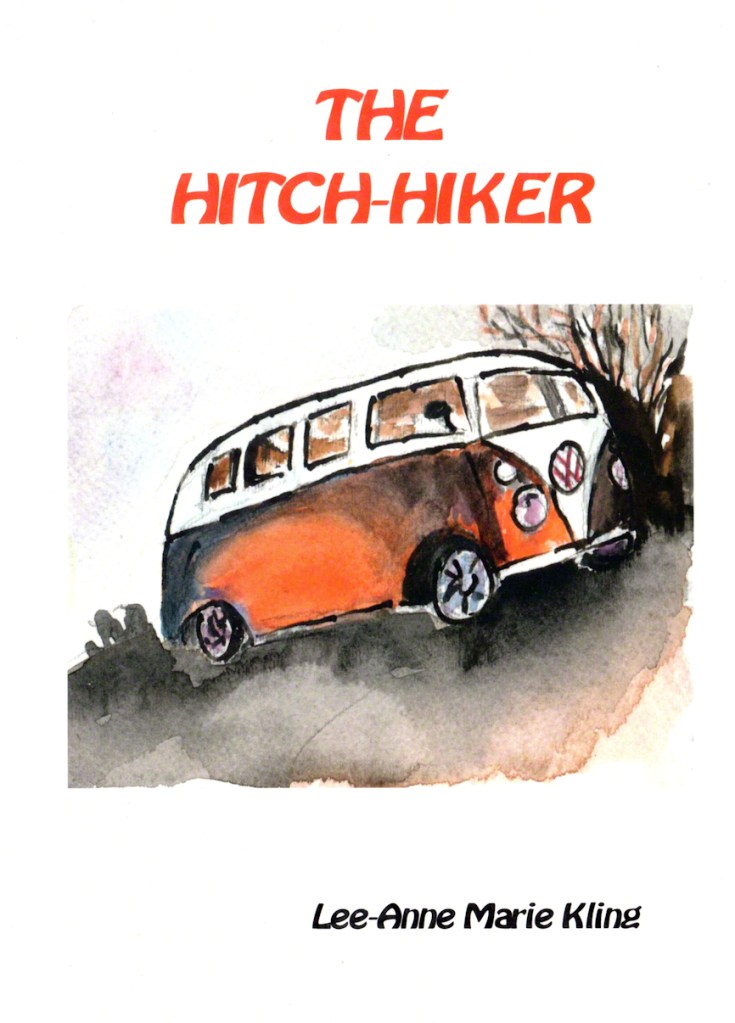
The Hitch-hiker

Mission of the Unwilling

The Lost World of the Wends

Family History Friday–1939

Letters from our forebears give us today a rich picture of them, their personalities and their lives. As it’s my maternal grandmother’s birthday tomorrow (March 16), I am sharing the first part of a circular letter written by Elsa of the family’s relocation from the Murray Riverland to the desert Centre of Australia back in October 1939. My grandpa, Sam, Elsa’s husband had been called to be a missionary pastor in Hermannsburg, Northern Territory. Note the timing of this adventure. World War Two had just broken out, but no mention in this letter.

CIRCULAR WRITTEN by ELSA GROSS from HERMANNSBURG,

OCTOBER 1939

                                                                        Hermannsburg

                                                                        via Alice Springs

                                                                        October 1939

[Photo 1: The Family © S.O. Gross 1939]

Dear Friends,

        Well, here we are at Hermannsburg at last, our long journey is at an end.  We have a home again, although till now our goods haven’t arrived – we are anxiously waiting for them to be able to pack away our things – but – this is the land of ‘wait-a-while’ – so we will just have to wait until they come.

[Photo 2: Moving home chaos, home in Berri, Riverland South Australia © S.O. Gross September 1939]

        We had a very pleasant journey up from Adelaide.  Went as far as Port Augusta in my father’s car, after having stayed overnight at a cousin’s place in Murraytown.  It was very nice going up by car, it saved changing twice and with all our luggage it would have been quite a picnic.  We had arranged to meet Karl in Port Augusta, but when we arrived there we discovered he had German Measles, so we could only speak to him from the other side of the room; he was in bed, and he couldn’t even come to see us off, which was quite disappointing.

[Photo 3: On Father’s (my grandmother’s father pastor F.W. Basedow) Car © S.O. Gross 1939]

        Anyhow, at 4.30am on Thursday 28th we steamed out of the Port Augusta station.  We had sleeping berths, the children and I with 2 other ladies in the one compartment, 4 berths in each, and Sam & 3 other men in the next compartment.  During the day we were mostly alone in Sam’s compartment, the other men went on the other part of the train and just came back to sleep.  It was very nice because then the children had room to romp around a bit.  The sleeping berths were very comfortable, 2 at the top and 2 at the bottom.  We all had bottom ones, Ruth & Marie in one, I in the other one and Margaret between in her basket.  During the day the beds are just ordinary seats and for the night they put the back-leans down and it makes a comfortable bed.  The children stood the travelling very well, they were very excited of course to go in the train.  The end of the second day (Friday) they got a bit tired of it, but soon got over that.  The only one who didn’t enjoy it too much was Margaret, she was running a temperature most of the time and was particularly grizzly on Saturday afternoon.  The next morning we could see why – she had German Measles, but the rash didn’t last long, and now she is just about right again.  Now we are wondering if Ruth and Marie will get it, they have colds, so we are keeping ourselves isolated out here, we don’t want to give it to the natives, they always get things so much worse than the whites.  One of the ladies in our compartment had them too, she was very miserable, was in bed for most of the trip.

[Photo 4: On the Ghan heading up north to Alice Springs © S.O. Gross 1939]

        Well, to go on with our trip.  From Port Augusta to Oodnadatta, which we reached at 9 o’clock on Friday night, there wasn’t much to see, flat deserty-looking country, a lot of it covered with stones, not nice smooth ones, were like broken bits, it makes a person wonder where they all came from — no hills, just these plains covered with stones.  We also passed a lake, but that looked as dreary and dead-looking as all the rest of the country.  That was to Oodnadatta, when it was night.  But when we woke the next morning it was different, grass and trees and ranges and wild flowers.  One advantage about this trip is, that they stop at every station or siding, sometimes there are just one or 2 houses, other places a few more.  One place we stopped at, Anna Creek, by name, the 2 or 3 railway houses had lovely gardens and lawns, such a contrast to all the surrounding country.  We saw something similar at Rumbalara , where the police station is.  At this place we had to wait for nearly 2 hours as our engine had broken something and they had to steam up another one.  This long stay enabled us to see some of the wild flowers growing along the line.  They are altogether different to the ones in the south, and such a variety, too, and they appeared to be past their best too.  It must be a wonderful sight when they are all out.  This delay at Rumbalara made us late, of course, at Alice Springs.  We arrived there at quarter to 5 instead of 2.15.  Missionary Albrecht arrived to meet us a few minutes after the train was in, and took us and our host of luggage to Johannsens, where we slept.

[Photo 5: A picnic lunch on the way © S.O. Gross 1939]

        After we had had tea Missionary Albrecht took us out to the little church which they have in Alice Springs.  It was presented by Mr Materne of Nuriootpa as a Thank offering.  It is a nice little church with a fairly large vestry and a sleep-out, so that anyone coming in from the mission station has somewhere to stay.  At the church we met some of the natives of Alice Springs, they are being cared for by the evangelist Martin, who holds services twice every Sunday, when there is no missionary there and also gives baptismal instruction.  He is a very fine man.  Here the children met the first natives.  They had seen some from the train already and were greatly excited.  To our amazement they weren’t at all afraid of them, and not any more shy, if as shy, as with white children.  They shook hands with them much to the natives delight.

[Photo 6: Where’s our homely contents? © S.O. Gross 1939]

        The next day services were held there, in the morning it was in Arunda, but during the service Missionary Albrecht welcomed Sam and he then spoke a few words to them in English.  In the afternoon Sam conducted the service and preached the sermon, in English of course.  There were about 60 natives there for the services, not as many as usual so they said, some were away working.  Several whites came to the afternoon service, Johannsens and others.  Unfortunately I wasn’t able to go as Margaret was sick, I was so sorry I had to miss it.

[Photo 7: The moving van back then on its way to Hermannsburg © S.O. Gross 1939]

        On Monday Sam and Missionary Albrecht had quite a lot of business to see to, and then on Tuesday morning we set off for Hermannsburg at about 11 o’clock, Sam and Marie on the back of the loaded truck with a native man, and Missionary Albrecht and Ruth, Margaret and I in the front seat.  It was a fairly hot day but not unpleasant.  We called in at “The Jay”, 25 miles from “The Alice”, the home of Mr & Mrs T. Strehlow.  They persuaded us to stay there for dinner.  They have a nice little home, 3 rooms, with a lovely wide verandah, made of cement bricks.  They also have a refrigerator.  It was just lovely to have the nice cool water and also ice cream, a real luxury way out in the bush.  At about 3 o’clock we went on.  It wasn’t quite so hot then.  Up to the Jay the road had been fair, it had been made some time ago for the Governor General.  After we left the Jay it wasn’t quite so good, it had been washed out by the heavy rains and that meant driving fairly slowly with the loaded truck.  We had to cross over so many creeks and of course there were no bridges, but stones and sand instead.  The truck had to pull and pant and bump to get across in some places.  The scenery was quite nice though.  Before we came to the Jay we were travelling right in the ranges, but after passing there the country was more open, a plain, with ranges along both sides.  But there is nothing like a desert around here.  It is more like one of the back roads in the mallee, only of course more creek beds to cross.

[Photo 8: The Arrival of all the goods and chattels © S.O. Gross 1939]

        I quite forgot to mention that after we left the Jay we drove around the native camp, where blind Moses is the evangelist.  These natives live in grass huts.  They were very pleased see us and of course we had to shake hands all around.  Then they sang a hymn, after which Missionary Albrecht offered up a prayer and they all then recited the Lord’s Prayer, all in Arunta of course. It was wonderful to think that out there in the bush, underneath the gum trees, those natives praying and singing praises to their Saviour just as the white people do in their Churches.  The natives were very interested in our children, and of course our children were very interested in them too.  Before we left Missionary Albrecht had to take orders for the different ones, they had a few pennies to spend, one wanted a hair clasp, another some lollies and so on.  Next time somebody from here goes to Alice Springs the things have to be taken to them from the store here.

[…to be continued]

© Elsa Gross 1939

Feature Photo: The Gross Girls on the Ghan © S.O. Gross 1939

***

Virtual Travel Opportunity

For the price of a cup of coffee (takeaway, these days),

Click on the link and download your kindle copy of one of my travel memoirs,

Experience Historic Australian outback adventure with Mr. B

in

The T-Team with Mr. B: Central Australian Safari 1977

Or come on a trek with the T-Team in

Trekking with the T-Team: Central Australian Safari 1981.

Friday Crime Fiction–Under the Bridge (3)

[In this bite-sized chapter, we meet Zoe Thomas who makes a discovery that will change her life and unbeknown to her at the time, unearth a more than 40-year-old mystery. This will ultimately open the proverbial pandora’s box and cause chaos to a number of now-settled individuals and their families. In future episodes, this revelation, for our Detective Inspector Dan Hooper, will add to his workload as the chief investigating officer, and force his partner in crime-fighting, Eloise Delaney to cut short her long-service leave and return to work.]

Who do ya think ya woz?

Monday January 17, 2022, 10:00 hours

Huon Valley, Tasmania

Zoe Thomas

While the mourners and well-meaning well-wishers and the like gathered in the church hall, loading their plates with condolences and their mouths with egg sandwiches, Zoe Thomas slipped out. Unnoticed, she slid around the corner away from the toilets and then leant up against the whitewashed wall warmed by the summer sun.

‘Oy!’ her dad called. ‘Y’ all right?’

She sighed. ‘Yeah, fine for a girl who’s just lost her mother, if you could call her that.’

‘What do ya mean by that?’ Dad rolled out a cigarette, flicked his lighter to flame, then cupped his hands to gently start the smoking ritual. Then with the cigarette hanging from his mouth said, ‘Don’t speak ill of the dead.’

‘You’re not my father, so how do I know that she’s my mother?’

‘Oh, what makes you think that I’m not ya pa?’

Zoe pulled a folded piece of paper, a computer printout, from her little black handbag. She opened it up and while he puffed away, she held it in front of him. ‘This says that a Francis Renard is my closest relative, my father, most probably. How do you explain that, Dad? I mean Greg.’

Greg blanched. ‘Oh, yes, well.’

‘Well? Did mum have a fling with this Francis Renard forty years ago? In 1981?’

Her father looked away before taking another drag on his cigarette. ‘She said neva to tell ya this. Ova ‘er dead body, she did. Well, now the bosses gone, I need to get somethink off me chest.’

‘What?’

‘Ya mutha woz not ya mutha.’ Greg coughed, a hacking cough.

‘What are you saying, Dad?’ She punched Greg softly on the arm. ‘You need to quit smoking before it…I don’t want to be staring down at you in a coffin or organising your funeral so soon after mum’s.’

Her dad cleared his throat. ‘Yeah, I know. Must give up.’ Then in a husky voice. ‘You woz adopted, luv.’

‘Oh, that explains it. You don’t mind if I chase up my birth parents, then? Which adoption agency did you go through?’

‘We didn’t. You came out of the apple orchard, ‘n paid for like.’

‘Huh? Come again?’

 ‘The truth woz, you wozn’t exactly a legal adoption.’ Greg sighed. ‘More like an arrangement between friends. Well, what I mean to say is that we ‘elped a girl who got ‘erself into trouble, out of ‘er trouble.’

‘For her financial benefit,’ Zoe said.

‘Yeah, but please don’t tell anyone. The missus, your mum didn’t want any trouble for us or the girl. She had a sad life and we just wanted to make sure she got off on the right foot and could make a go of it. And well, we couldn’t ‘ave children, so it was well, an arrangement that suited both parties.’

Zoe looked at Greg. ‘Do I know my birth mother? Did you stay connected with her?’

Greg shook his head. ‘It’s a long time ago, pet. Mum thought it best we didn’t. We didn’t want the townsfolk asking too many questions or the cops getting involved. And losing you.’

‘What was her name?’

Greg shrugged.

‘Do you know where she came from, at least?’

‘From the mainland, I think.’ Greg threw the spent stub on the pavement and ground it with his foot. ‘Came here for the apple picking season when we ‘ad the orchard in the Huon Valley. Stayed on in a caravan in the paddock till you woz born.’

‘You must’ve got to know where on the mainland?’

Greg rolled another cigarette. ‘All I know woz, she had a posh accent, like from England. It was a long time ago, luv. A long time…all under the bridge, now.’

[…continued next Friday fortnight]

© Tessa Trudinger 2024

Feature Photo: Sleeping Beauty over Huon River © L.M. Kling 2016

***

Sometimes characters spring from real life,

Sometimes real life is stranger than fiction.

Sometimes real life is just real life.

Check out my travel memoirs,

And escape in time and space

To Central Australia.

Click on the links:

The T-Team with Mr. B: Central Australian Safari 1977

Trekking with the T-Team: Central Australian Safari 1981

Or for a greater escape into another world…

Check out my Sci-fi/ dystopian novel,

And click on the link:

The Lost World of the Wends

Family History Friday–Detective Work

In the steps of Sherlock Holmes

This last week, Hubby and I have received our DNA results. Dear Hubby received his last Friday, but mine only arrived today.

So, the last week I have been familiarising myself with the process and slowly building our family trees. Early on, I discovered a truth, you could say a “skeleton” in one of our ancestral lines. I added the details to see if anything further came up. My Heritage, call this a “smart match”. Nothing did, but I left it there.

For certain family members this truth appeared absurd, and too difficult to comprehend. Surely, that ancestor wouldn’t. Didn’t. Noone told us that. You have it all wrong, Lee-Anne.

Hence, Lee-Anne (me) being a good person only wanting the best for the family, deleted the suspect members from that branch of the family.

Then, curiosity set in. Who was that ancestor’s mother? Father? My husband suggested we go down the line to the descendants and put in a particular name.

This I did.

You wouldn’t believe it, but the same results, only this time verified by the official birth and marriage records. My original hunch had been correct. Moreover, in the spirit of Sherlock Holmes, I managed to crossmatch the added, yet odd family members with DNA and behold, a match.

Now, the reason I’m being so vague about the whole ancestral situation, which I might add, is responsible for our existence, is because out of respect for some people, the details of such conceptions are to remain private/personal; too personal to be published.

Isn’t it interesting that for people who want to protect their reputation, the unacceptable behaviour of other members of their family, ancestors or close relatives, must remain hidden, buried and plainly, not discussed. Such individuals may even be ostracised from the family.

Yet, such flawed individuals can still be, in other circles, a valued and much-loved member of the community.

My dad’s cousin, Dr. Malcolm Trudinger for instance. The story goes that he had a problem with alcohol. Legend has it that he couldn’t do surgery without a nip or two before the operation.

Malcolm’s alcohol addiction was too much for his immediate family who it would seem distanced themselves from him. Maybe it was the other way around and he felt not good enough for them. Whatever…

According to articles about Malcolm on Trove, he was regularly in trouble with the law. Infractions that in the 21st century, we’d consider a nuisance, or minor, but in the 1940’s and 50’s were serious. For example, his car engine making too much noise at night in town. Or even one time, merely driving his car late at night. Another time he was charged for making a scene at a function.

Despite these misdemeanours, as I see them (glad my brother and I didn’t live in those times—my brother loved doing “donuts” and “burnouts” in his car like in Top Gear at night with his mates in his youth), the folk on the West Coast of South Australia, loved Dr. Malcolm Trudinger. He was their hero. He once helped rescue people from a shipwreck off the coast during a storm. He cared and was always there for the sick and injured.

I remember my mother telling me the story how a person upon meeting my father, and learning his name was Trudinger, sang high praises for his cousin Malcolm. The sad thing was, that although he was still alive when Mum and Dad were first married, Mum never got to meet Malcolm.

[Photo 1: Dr. Malcolm Trudinger © photo courtesy of L.M. Kling circa 1930]

Dr. Malcolm Trudinger was such a vital part of the West coast community, they established a rose garden was in his honour after he died in the early 1960’s. We have heard that rose cultivation was his passion and his roses were prize-winning. My niece discovered the garden when she and her partner were on a road trip passing through Elliston. She couldn’t have been more chuffed having found a Trudinger with a rose garden to his name. It showed Malcolm was a loved member of the community despite his demons.

This is what, I believe, grace is all about—valuing and loving people as they are. We are all flawed. Rather than hide the imperfections, celebrate the person, their life and goodness they bring or have brought to the community. It’s our pride and wanting to look good to others that makes us cover up our sins or those of our kin. But also, we may be protecting their reputation too, which is a reasonable thing to do.

The reality is, we are all fallen and we all struggle. No one is perfect. We are all cracked pots. Yet like in the Japanese art of Kingsugu (the repairing of broken pots), there is beauty that shines out through the cracks.

And so, it is with our imperfect ancestors. When you think about it, it’s the ones whose stories are different and colourful that we find most interesting.

© Lee-Anne Marie Kling 2024

Feature Photo: Hubby as Sherlock Holmes, Reichenbach Falls © L.M. Kling 2014

***

Want more, but different?

Check out my Central Australian adventures.

Click on the links:

The T-Team with Mr. B: Central Australian Safari 1977

Trekking with the T-Team: Central Australian Safari 1981

Family History Friday–The Romantic Road

Virtual Travel—Postcards: Bavaria (Bayern)

[Over our Australian summer Holidays, I have been down that proverbial rabbit-hole of family history research.


While researching the Kaiserhof Hotel Sonne in Nördlingen, which my family have claimed the Trüdinger ancestors owned for a couple of hundred years until the 1960’s, I discovered that, according to the information provided by the hotel’s website, that Goethe lived there for a year in 1788.


It’s amazing how life works and how the threads of our lives weave in and out. How our attitudes and values are influenced by how we see the world, and who we see in it. While Goethe was living in Nördlingen, Captain Cook in the Endeavour claimed Australia as belonging to Britain (as one who belonged to the British Empire would back then). And I wonder what Goethe thought of Nördlingen and my ancestors. Did he give much thought to the discovery of Australia and that someday, a little over a century hence, a descendant of those Trüdinger ancestors, or perhaps a relative who may have visited the hotel, would be emigrating to Australia with their family…erm, from Great Britain. That’s another story, suffice to say, my great-grandfather, a Trüdinger from Bavaria, was not a fan of Bismark.


Meanwhile, in 1788, a former Swiss noblewoman, Henriette Jeanette Crousaz de Prelaz (her father had died leaving the young family of mother and ten children in financial strife) relocated to the Christian community of Herrnhut. Did she have any idea that almost one hundred years later, her grandchild would marry my great-grandfather Karl August Trüdinger and relocate to Australia?
Below is our modern experience of this famous road, joining the many people who have travelled it.]

The Romantic Road

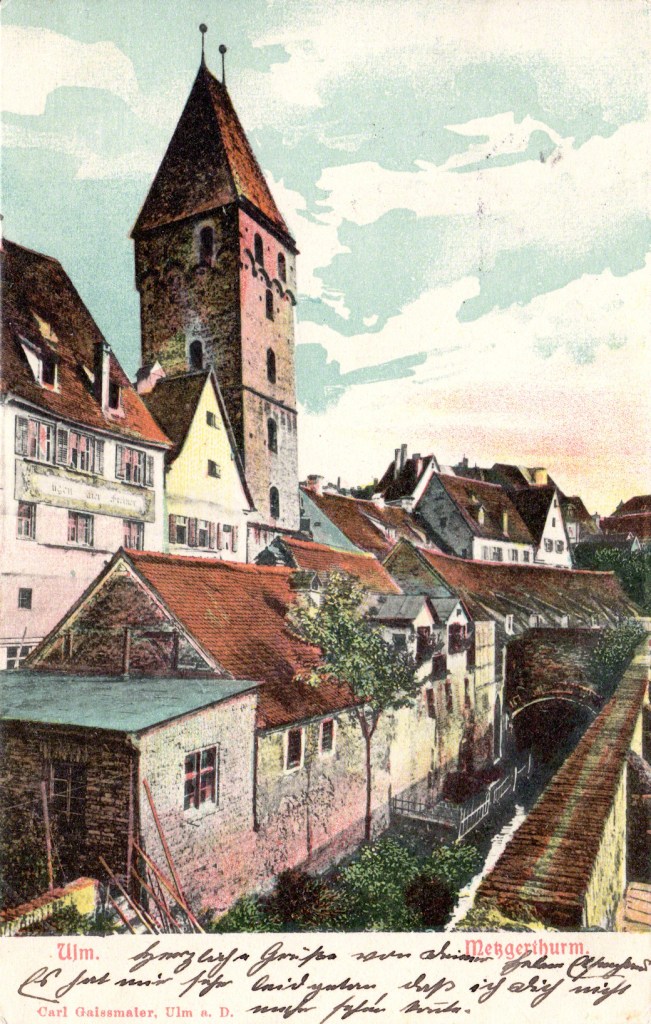
We passed through Ulm which was featured in this postcard but didn’t visit Ulm. We stayed in a town nearby called Burgau for a few days while we explored the Romantic Road. Our Tom-Tom, which we named Tomina, took great delight in leading us astray. In our quest to reach our Burgau apartment, Tomina decided to take us on a roadway that was closed to traffic.
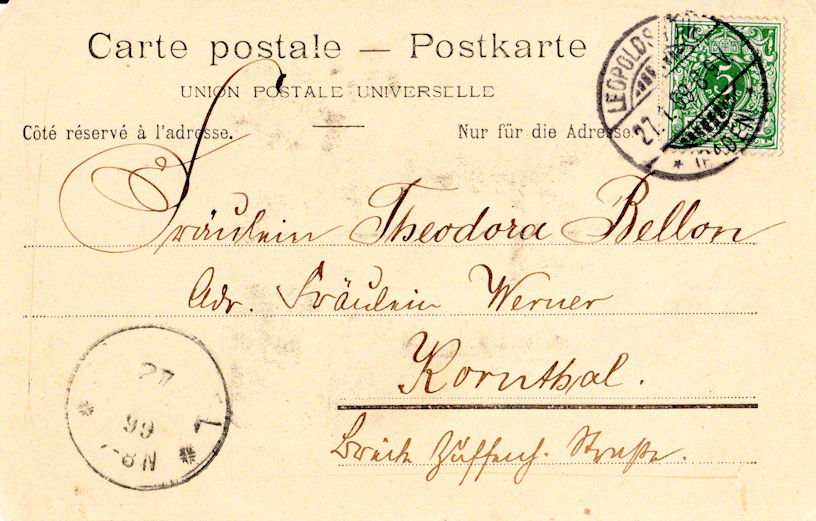
Similarly, over one-hundred years ago, this postcard chased Theodora Bellan across Bavaria, originating in Sofflingen (a town that Google maps doesn’t recognise), then Nussdorf, and finally found her in Ludwigsburg.

The Romantic Road was one part of Germany, that despite the wars and modernisation of the twentieth century, never lost its Medieval charm. A reason I so wanted to travel this road of the Romans when we travelled to Germany in 2014.

Romantic Road


The next few days we explored the Romantic Road, although Tom Tom always tried to get us on the freeway. Friday, we did Tomina’s circuits in by never obeying her commands and instead following the Romantic Road signs.
Highlights of the Romantic Road:
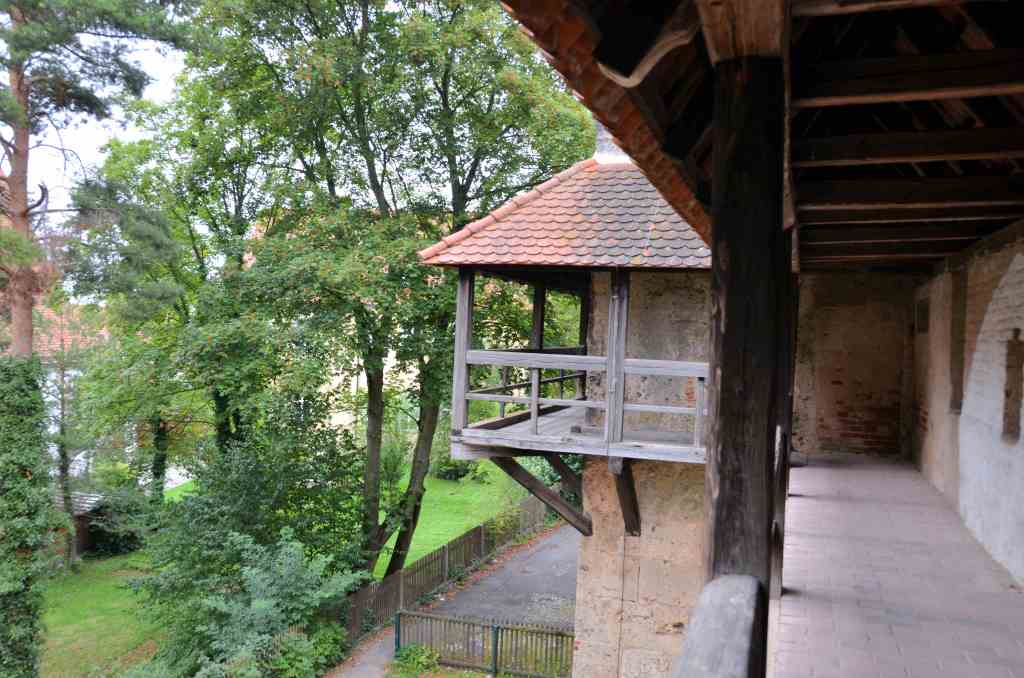
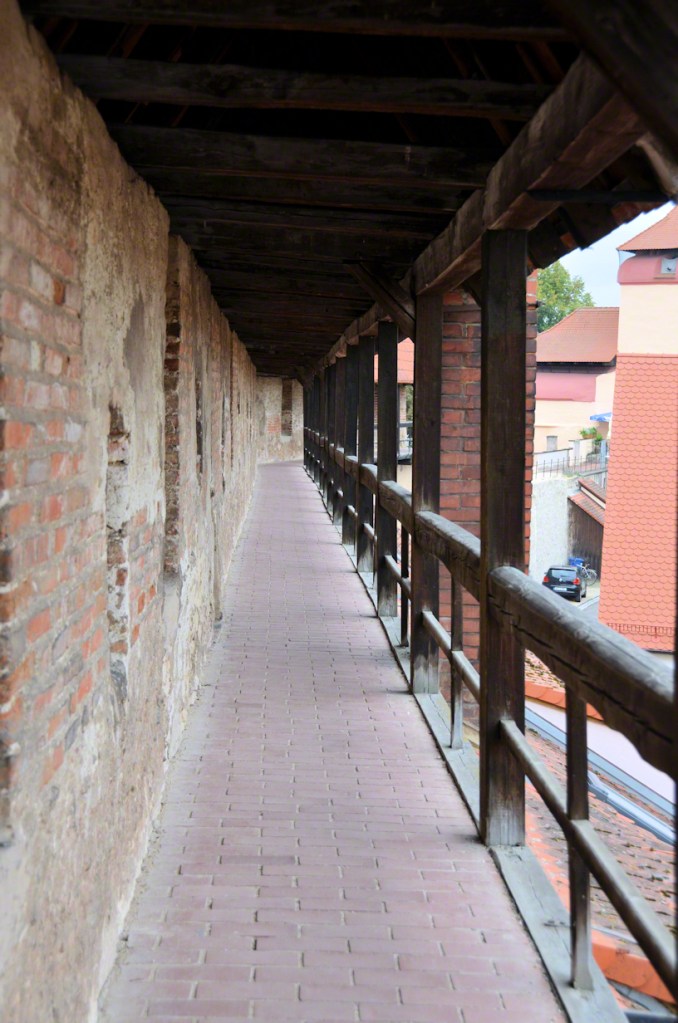
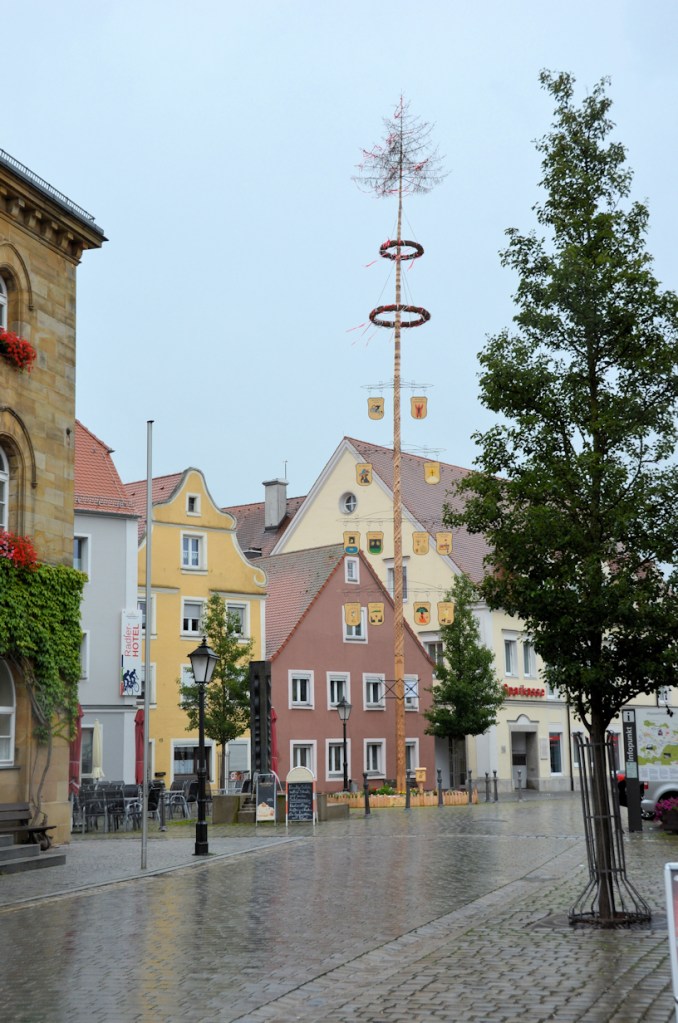
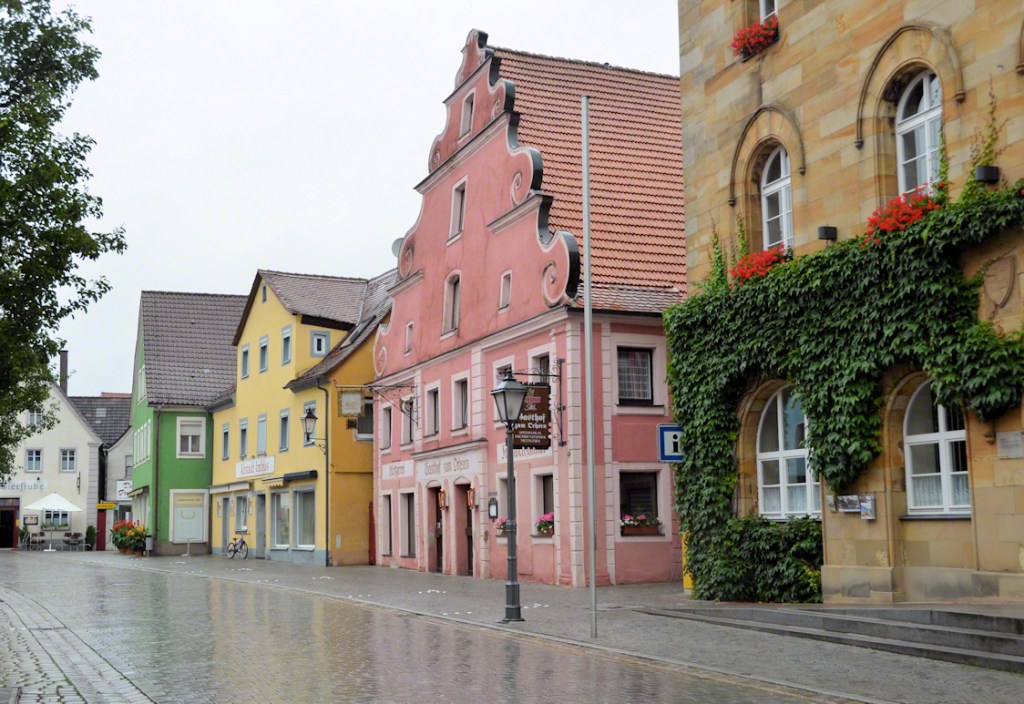
Nördlingen–the town of my Trüdinger ancestors and having lunch in the Kaiserhof Hotel Sonne restaurant which, we believe, was owned by the Trüdinger family until the 1960s. We then walked around the medieval wall. Hubby amused fellow travellers by greeting them with an Aussie “G’day”.

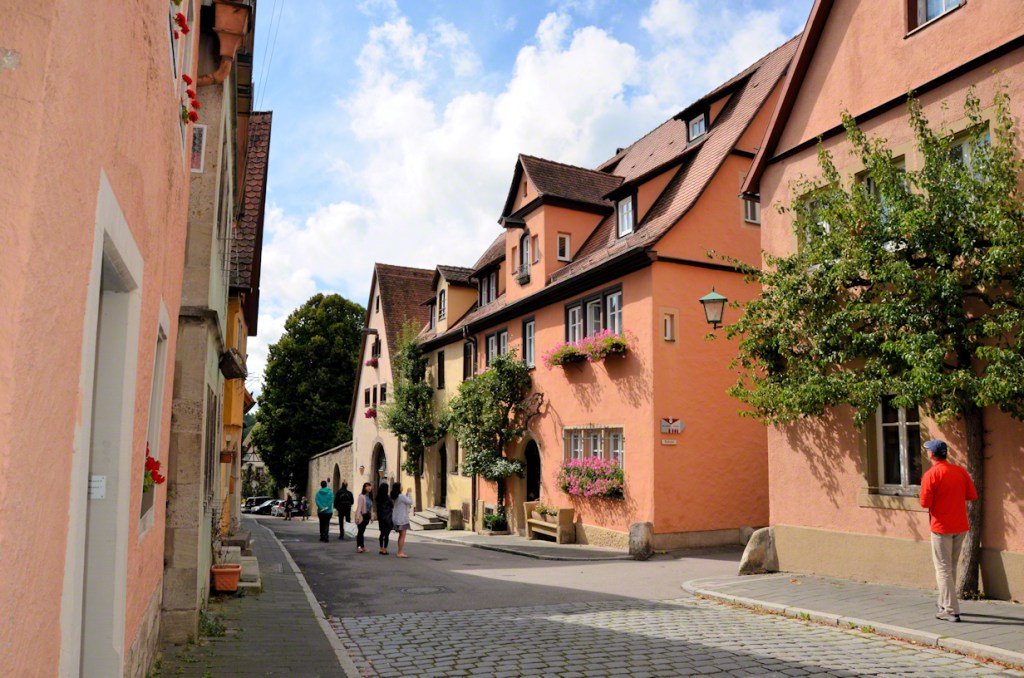
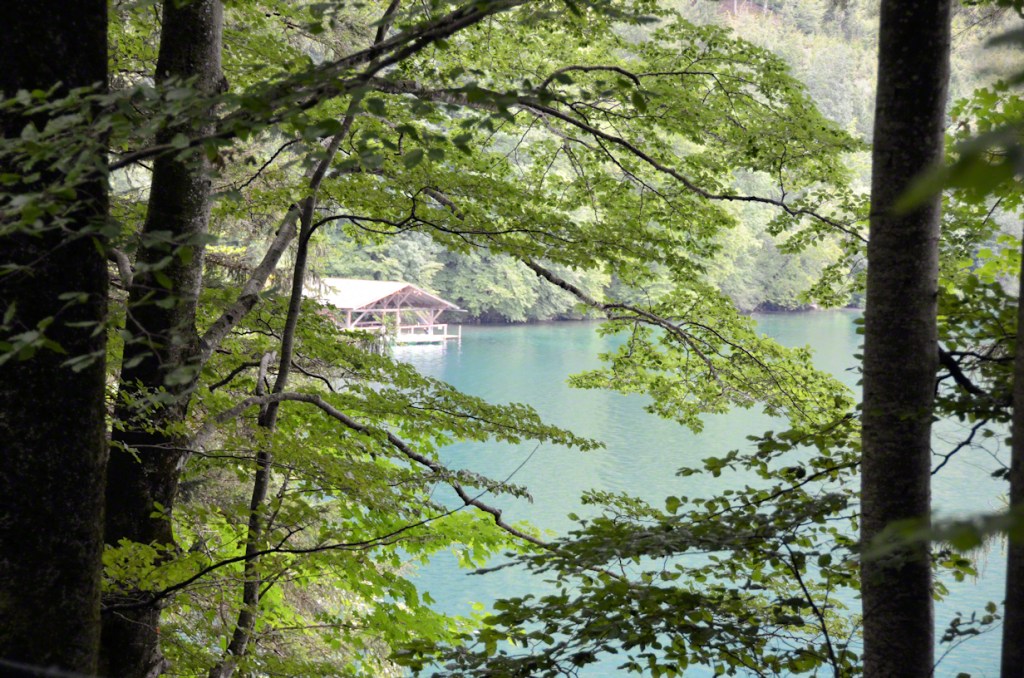
[Photos 1, 2, and 3 Aspects of Nördlingen, 4 & 5 Wassertrüdingen © L.M. Kling 2014]

Photo 1: Red Rooves were filmed in Willy Wonka and the Chocolate Factory.
Photo 2: The Wall of Nördlingen.
Photo 3: Kaiserhof Hotel Sonne
Photo 4: Rain in Wassertrüdingen
Photo 5: Reflections in the water of Wassertrüdingen

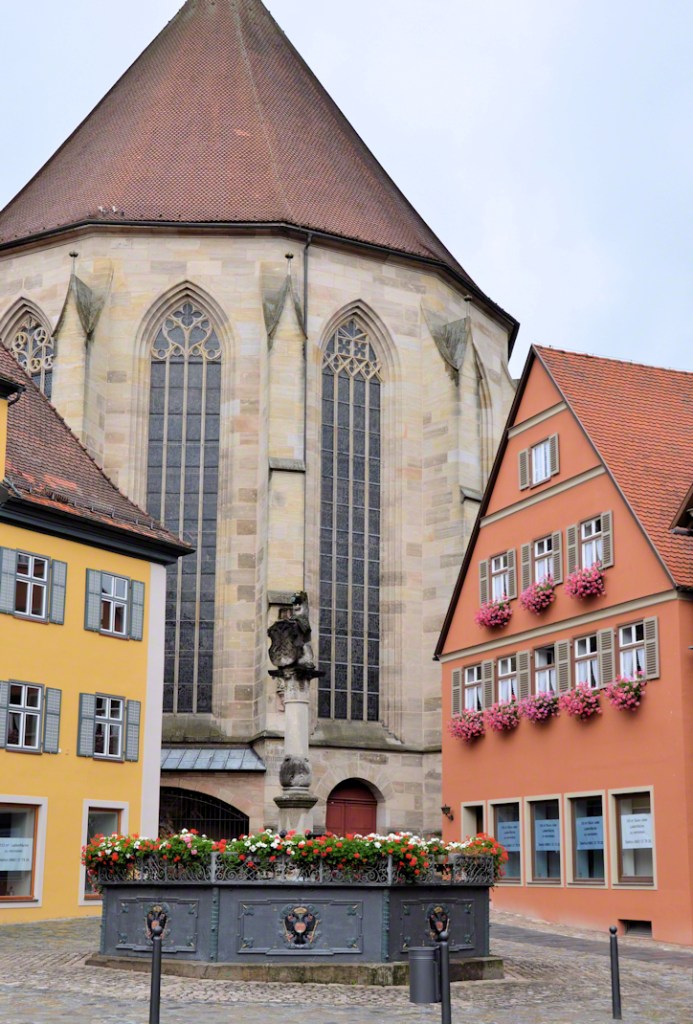
Dinkelsbuhl–the church, St. Georges Minster, the ornate carvings and artwork and the bejewelled skeleton of a martyr executed by Emperor Nero on display. And…that day, Goths and Emos aplenty.


[Photos 6 & 7: Dinkelsbuhl © L.M. Kling 2014]

Photo 6: St. Georges Minster
Photo 7: Segringer Tor

Rothenburg ob der Tauber where we enjoyed the delicious sweet pastry as well as the beautiful sunny day that showed off its cobblestone roads and medieval buildings at its best.


[Photos 8 & 9: Rothenburg ob der Tauber (c) L.M. Kling 2014]

Photo 8: Sweet Treats
Photo 9: Typical Rothenburg Street
Photo 10: Rothenburg ob der Tauber most popular

Challenges of the Romantic Road:


• Too many tourists especially at Füssen on the Saturday we visited, caused us to be trapped in a massive traffic jam that held us in a virtual carpark for an hour.
• So many tourists at Neuschwanstein (Mad Ludwig’s Castle). If we’d attempted to buy a ticket, we would have waited four and a half hours or more to enter the castle!
• Traffic jams and rain, both especially heavy that particular Saturday in August.

[Photos 11 & 12: Neuschwanstein and surrounds © L.M. Kling 2014]

Photo 11: Neuschwanstein with Schloss Hohenschwagau in foreground
Photo 12: Schwansee

    We took a break from the Romantic Road one day to visit my relatives. Tomina had trouble with the “dud” roundabout, so we ended up travelling the “scenic route” through the back way off the motorway through corn fields and behind slow tractors. The hour’s trip took two hours, but once we arrived, we had a wonderful day.
    Back in our apartment in Burgau we had no internet. I think Hubby coped…although to be honest, he was grumpy at times. I guess there’s something to be said to slow down to the pace of snail mail and send postcards as folk did over 100 years ago…especially when there’s no internet.

    © Lee-Anne Marie Kling 2020; updated 2022; 2024
    Feature Postcard: Ulm © 1905

    Postcard Front: Ulm, Bayern
    Postcard Back


    And now, for something different…from Europe…

    Dreaming of an Aussie Outback Adventure?

    Click the link below:

    The T-Team with Mr. B: Central Australian Safari 1977

    Trekking With the T-Team: Central Australian Safari 1981…

    To download your Amazon Kindle copy of the story…

    And escape in time and space to the Centre of Australia way back when…

    Family History Friday–Remembering My Dad

    [As I may have mentioned in a previous post, I have embarked on a journey of discovery, down the rabbit hole of family history. To be honest, I have spent more time researching than on writing new blog posts. So, as it’s my late-dad’s birthday tomorrow, I am revisiting his life-story which was the eulogy read out at his funeral.

    It is interesting that usually at this time of year, way back when he was with us, we would plan to celebrate his birthday. Inevitably, being Adelaide, South Australia and the middle of summer, the temperature would be nudging 40 degrees Celsius, or over, and the party would be cancelled. Too hot for my mum who, having lived in the heat of the Centre of Australia in her youth, couldn’t tolerate the blazing heat.

    [Intro photo: Celebrating Dad’s birthday with mum’s specialty, sponge cake © L.M. Kling 1996]

    When we finally did celebrate his birthday, on a cooler day several weeks later, if there was a lull or even if there wasn’t, Dad would rest his head in his arms at the table and take a nap. He even did this once when his brother was visiting from Canada.

    This week is no different, after a cooler and wetter than usual start to summer, today is typically the hot, dry heat that Adelaide does best; a reminder of all those cancelled birthdays of Dad’s, yet remembering what he emphasised was most important in life—God’s love.]

    He Wanted Us to Know God’s Love

    In Memory and celebration of my father’s life…

    Remembering his birthday 96 years ago, Saturday January 13…

    DAVID BY NAME CLEMENT BY NATURE

    Ron and Lina Trudinger’s third child was born in Adelaide on January 13, 1928. His parents named him Clement David Trudinger. He was a much longed for child as he arrived eight years after his older sister, Agnes.

    [Photo 1: Growing family with Clement David baby no. 3 © courtesy C.D. Trudinger collection circa 1928]

    “Clement?” his aunts cried. “We don’t like the name Clement.”

    So they called the babe by his second name, David, and David he has been ever since. Except, of course when he goes to hospital, then he’s Clement, officially.

    Throughout his life, God watched over David who has shared many stories of how he showed His love towards him, protecting, and providing for him and his family. He shared how he felt he didn’t deserve God’s love; he wasn’t perfect, yet God loved him. It is this love that David would want all of you to know.

    [Photo 2: David, the boy © courtesy C.D. Trudinger collection circa 1930]

    He began to write down his life-story, and in the last few weeks began to tell all, especially his grandchildren, how God worked in his life and how his Heavenly Father protected him.

    When he was two years old, his missionary parents took David and his younger brother Paul to Sudan. Not the kind of place to take small children. But God protected David and his brother from a hippopotamus, cobras, car accidents, and mad men. (He’s written in more detail about these incidents and I will share these in the future.)

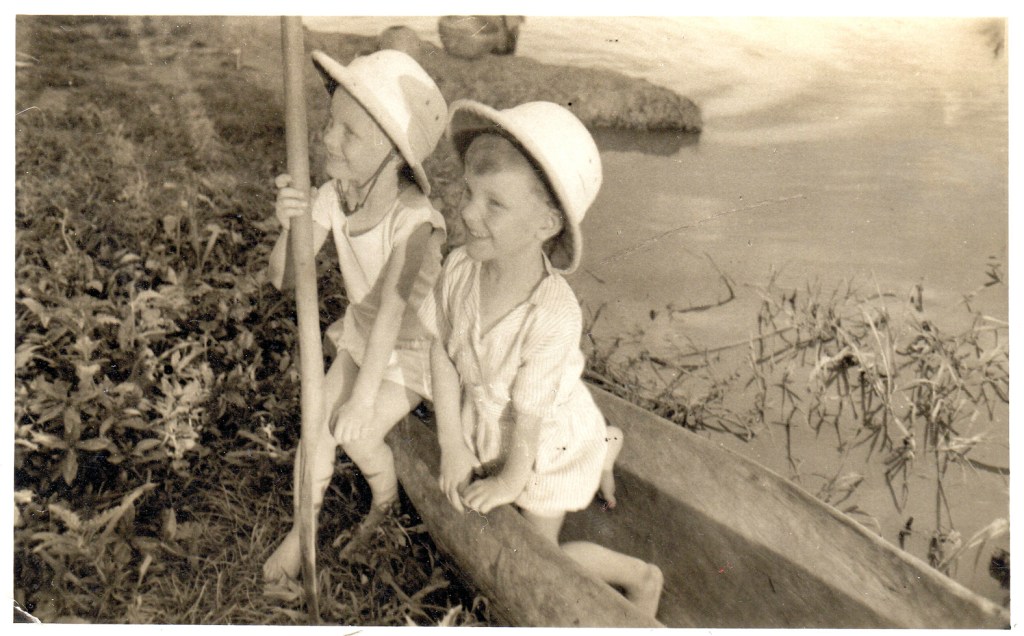
    [Photo 3: David and his brother on the Nile © courtesy C.D. Trudinger collection 1932]

    God also blessed him with a loving and God-fearing family. Some may say, too God-fearing, for his parents continued their mission work in Sudan while David from the age of seven, and Paul from five, commenced their schooling in Adelaide. As a student, David only saw his parents every five years when they returned home on furlough. He shared how despite missing his parents, he enjoyed his childhood, with so many aunts doting on him, and the game afternoons they had. I think his love of games started there in the Northumberland Street parlour. He’d even created a few games in his latter years.

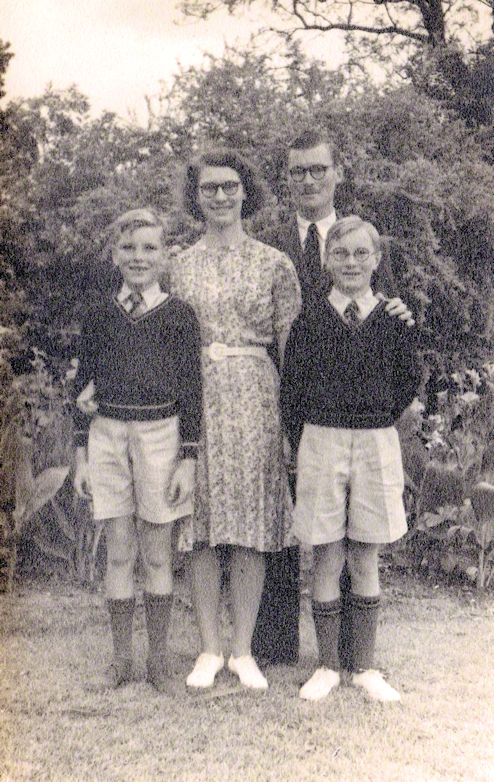
    [Photo 4: With siblings in Adelaide © courtesy C.D. Trudinger collection 1940]

    His other great love was sport, especially football. God blessed David with fitness, agility, and a few trophies along the way. In retirement, he played golf, and when his legs couldn’t keep up trekking the 18 holes, he took up table tennis instead. He was still playing table tennis up until a few months ago. Sport kept his body and mind young.

    David also enjoyed hiking and exploring. During school holidays he’d visit his brother Ron, a teacher at Ernabella. While there, he made friends with the Pitjantjatjara children and go into the Musgrave Ranges on hiking expeditions. One hot day, David and a friend became lost in the ranges without water, or salt. They wandered for hours parched and at the point of dehydration, before coming across a waterhole, the most welcome sight David had ever seen. I’m sure God protected and guided them back home. I’m also sure that’s when David’s love of salt began.

    [Photo 5: Brothers in Ernabella © courtesy C.D. Trudinger collection circa 1940]

    David progressed through his schooling, and gifted in art, he trained to be an art and woodwork teacher. After a couple of years at Lameroo, he won a position at Hermannsburg Mission as headmaster.

    He taught at Hermannsburg for five years. In that time, he became close to the Aranda people, especially the students he taught. They took him on expeditions into the MacDonnell Ranges, Palm Valley, and gorges and beauty spots along the Finke River. David also became close to Pastor Gross’ daughter, Marie.

    [Photo 6: Teacher in Hermannsburg © S.O. Gross circa 1955]

    On January 23, 1958, he married Marie in Hermannsburg.

    However, his romance with Central Australia was cut short, when, for health reasons, he and Marie had to move down to Adelaide. On October 30, his first child, Richard was born.

    David continued teaching, first at Ridley Grove Primary School, and then St. Leonards P.S. The little Trudinger family moved from schoolhouse to schoolhouse.

    May 3, 1963, his daughter, Lee-Anne was born. By this time, Glenelg Primary School planned to convert their little rented home into a library. As his family grew and Marie grew more unsettled with the constant shifting, David faced the challenge to buy a house. But how could he on a teacher’s wage? He looked at his lovely stamp collection of rare Sudanese stamps. Could he trade them in to help pay for a deposit?

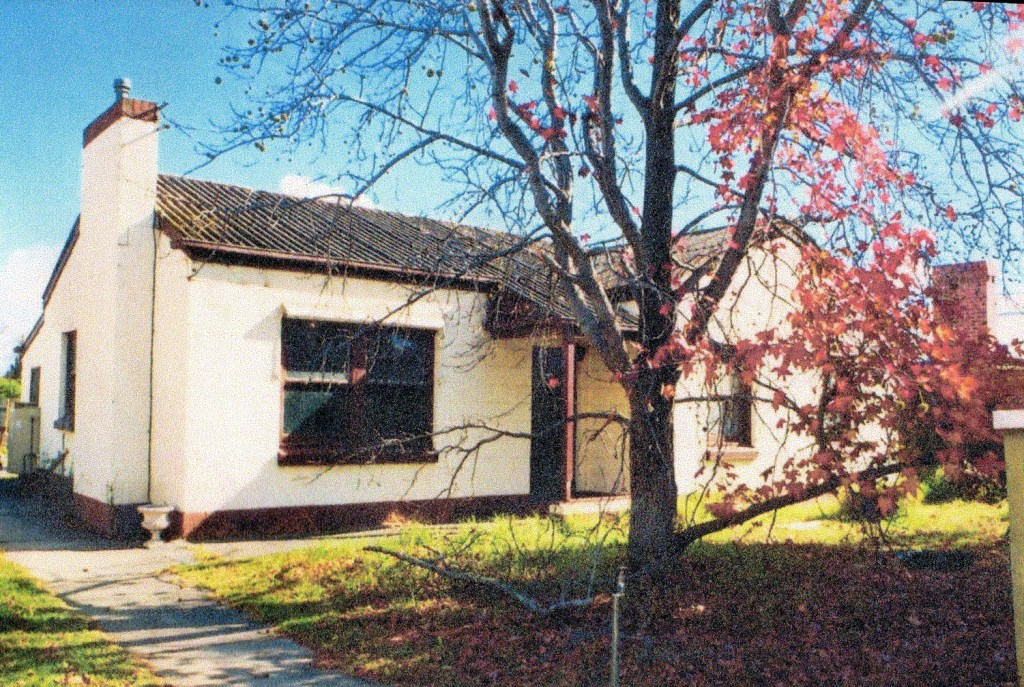
    *[Photo 7: David and Marie’s first own home. Bought in 1963 © C.D. Trudinger 2005]

    They looked at a few homes. A bungalow on Cross Road appealed to him, but not Marie. His father wasn’t impressed either. Marie didn’t like that pokey little home on the main road with no back yard at all and the property was right next to the rail line. Then a trust home at Gilbert Road Somerton Park came up for sale, and the deal was done. David regretted selling his stamp collection but reasoned that this was an investment for the children. And, many years down the track, it was, especially with the two lovely court yard homes, one of which David and Marie have lived in from 2006.

    [Photo 8: New and improved courtyard home. Built in 2006 © L.M. King 2021]

    God blessed David’s career. He taught at Port Adelaide Primary School from the late 1960’s until he retired in 1985 at the age of 57. In that time he studied to teach Indonesian, became Deputy Principal, and won a government research grant to go to Indonesia. He became interested in the Indonesian musical instrument, the Anklung. He brought a set home and proceeded to teach pupils how to play. He had bands of students playing in the Festival of Music until 2010. He continued to visit the school now LeFever Primary and train students to play the Anklung, right up till the beginning of this year. He also tutored indigenous students.

    David lived life to the full and grasped every opportunity to explore the wild and untouched land God has created, especially Central Australia. With his long service leave, and then time in his early retirement, he made regular pilgrimages to the Centre. And God protected him. I like to think that now he is with the Lord, his guardian angel is enjoying a well-deserved rest.

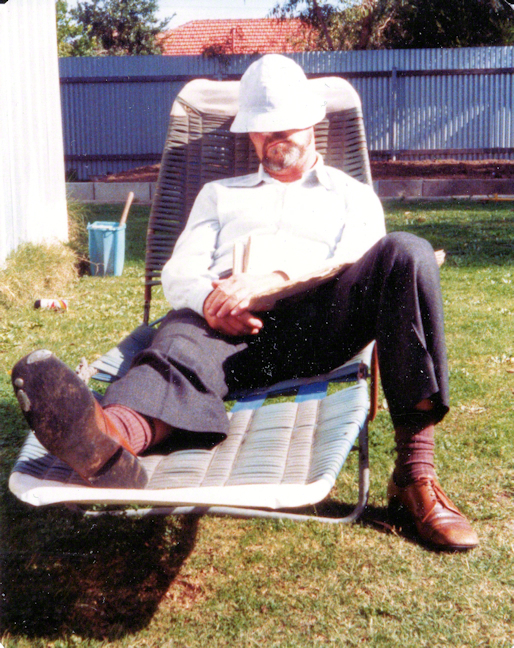
    [Photo 9: Dad having a well-deserved Sunday afternoon rest © L.M. Kling (nee Trudinger) 1983]

    One example he gave of God’s protection was on a hiking trip in the Western Wilderness of Tasmania with a friend. On one narrow path climbing around a cliff-face, he felt his heavy pack over-balance and he began to fall. “This is it,” he thought. Then he felt the pressure of someone pushing him back against the rock and he was able to step two metres further to a wider path. He knew an angel of the Lord rescued him, preserving his life, not just for his sake, but for his friend’s sake, and also because his work on earth was not complete.

    [Photo 10: Cradle Mountain, Tasmania © L.M. Kling 2009]

    But on August 25, 2012, David’s work on earth was done. There are probably many things he has done that will be remembered as a blessing and encouragement to all who knew him. He was a regular member of Faith Lutheran Warradale church; he took an active role and was a vital member of the congregation for over 54 years. He was a Sunday School teacher, an elder, and a Bible Study leader.

    We will miss his cheerful nature, how he grasped life, lived it to the full and shared God’s love with all he came across.

    He may have been David by name, but he was Clement by nature.

    [Photo 11: The original men of the T-Team, David (3rd from left) and his father and brothers © C.D. Trudinger collection 1967]

    First published as a eulogy to Clement David Trudinger by Lee-Anne Marie Kling ©2012

    Revised © 2016; 2021; 2024

     Feature photo: Central Australian sunrise © C.D. Trudinger ©1977

    ***

    More of my dad’s intrepid adventures in Central Australia in my memoirs:

    The T-Team with Mr. B: Central Australian Safari 1977

    Trekking with the T-Team: Central Australian Safari 1981

    Family History Friday–My Rogue Ancestry

    [As a child, I frequently had dreams where I was locked up in a prison cell and couldn’t get out. When, through family history research, I discovered the plight of my young (at the time) great-great Grandfather, I realised the origins, genetic or spiritual, of those dreams.]

    My “Convict” History

    I admire a former convict, an ancestor of mine. Okay, you may think, yeah, of course, she’s an Australian—these days they wear their convict heritage like a badge of honour.

    No, actually, my great-great grandfather Friedrich Schammer lived in Silesia which is now part of East Germany or Poland today. Rubber borders, you see. His crime was trivial by our standards today in the West. But then, so were the crimes of shiploads of convicts who were transported from Britain and Ireland to Australia in the early nineteenth century. (For this reason, I have included photos from my visits to convict settlements, Port Arthur and Sarah Island, Tasmania, as my two-times great grandfather, was living his life in Silesia around the same time, in the early nineteenth century.)

    [Photo 1: Port Arthur was a recipient of many convicts from Britain and Ireland © L.M. Kling 2009]

    My great-great grandfather Friedrich spent less than three months in prison for this crime he did not commit, but I admire the way he handled his dire situation.

    How did he get into this trouble?

    According to the family history book of this particular branch of the family, in the town in which my great-great grandfather studied as a medical student in the 1820’s, the military came to power and enforced strict and arbitrary rules. I might add here that my ancestor had already endured hardship, having been orphaned as a child, suffered poverty and then, his older brother who was his guardian, died from typhus. I imagine, these events spurred him on to be a doctor.

    [Copy of Portrait painting: Two-times Great Grandfather, Friedrich August Schammer courtesy of Schammer Family History © 1922. Painting circa 1850]

    Anyway, in this university town of Jena, the students protested against their restrictions to their liberty by reacting against the ridiculous laws the military had brought on the town. Some of these laws were that there be no singing in the streets, no wearing of caps and waving of flags. The students protested by marching in the streets to the town square, singing and waving flags. All went smoothly and peacefully with no trouble from the authorities.

    Then some of the young men, probably after drinking a few beers, became bolder as young men do tend to become. They threw rocks at windows; action that got the authorities’ attention.

    [Photo 2: View from window of former café in Port Arthur © L.M. Kling 2009]

    The military swooped and arrested many of the protestors. My great-great grandfather was walking past the action and was in the proverbial wrong place at the wrong time.

    Arrested and tried, though otherwise of exemplary character as a good Christian belonging to the Moravian Brethren, Friedrich was convicted and sentenced to prison for six months. I might add here that I have learnt recently that in Europe, the judge or judges determine the fate of the defendant. Whereas in the United Kingdom, United States and in Australia a jury (twelve randomly selected citizens) under the decide the fate of the accused.

    It seems by his account and letters, a certain beadle in town had it in for my great-great grandfather Friedrich.

    [Photo 3: Captain’s Quarters up on the hill, Port Arthur © L.M. Kling 2009]

    Yet Friedrich accepted his time in prison and made the best of the situation both for himself and others. He studied, enjoyed the view of the valley from his prison room (I think he was in a low security prison) and used his medical knowledge and skills to help those around him.

    Great-great grandfather Friedrich’s quiet conduct and enrichment of the prison community was noticed by the authorities, and they released him less than three months into his term.

    [Photo 4: A view of convicts on the other side of Friedrich’s world may or may not have enjoyed in Port Arthur © L.M. Kling 1995]

    Released, Friedrich’s ordeal was not over. The university where he’d been studying banned him from returning to study there. His reputation tarnished, the villagers shunned Friedrich.

    However, Friedrich did not give up. He moved to Berlin and keeping a low profile, completed his studies at The Charite University Hospital and graduated as a Doctor of Medicine. He had a heart for the poor, having been poor himself, and would treat those in need without demanding payment.

    My great-great grandfather demonstrated those godly qualities I admire—justice, mercy and compassion. And perseverance, even in the face of adversity.

    Philippians 2:14-15—Do everything without complaining or arguing, so that you may become blameless and pure, children of God without fault in a crooked and depraved generation, in which you shine like stars in the universe…

    Feature Photo: The Cry of the Convicts, Sarah Island Ruins © Lee-Anne Marie Kling 2011

    *** 

    Note: Port Arthur housed what British authorities considered the worst of the convicts transported to Australia in the early to mid-nineteenth century. I visited this convict settlement in 1981, 1995 and 2009. A place well-worth visiting to learn from the mistakes made from the past (how not to treat fellow human beings). Although the place appears serene, the presence of the tortured ghosts of the convict past can still be felt.

    Sarah Island situated in the Macquarie Harbour on the west coast of Tasmania, imprisoned the worst of the worst convicts transported to Australia in the early nineteenth century.

    I have visited Sarah Island as part of the Gordon-Franklin River Cruise, both in 2001, and 2011. I highly recommend this cruise—a bucket list for travellers—history, wilderness, rare beauty of unspoilt rivers and rainforest and…excellent food. And not to mention entertainment. After your cruise I highly recommend that you see the historic play, The Ship that Never Was. It’s about convicts who build a ship to escape their prison island to make their way to South America. In January in 2024, this play celebrated 30 years of performances in Strahan.

    © Lee-Anne Marie Kling 2016; updated 2020; 2023; 2025

    Resource: History of the Schammer Family, Based on the work of Dr. A.H. Francke and J. Gemuseus, Written by Reinhold Becker, Herrnhut, 1922, Printed Gustav Winter, Herrnhut in Saxony and Translated from German by Rebecca Gnüchtel 2009

    ***

    Virtual Travel Opportunity

    For the price of a cup of coffee (takeaway, these days),

    Click on the link and download your kindle copy of one of my travel memoirs,

    Experience Historic Australian outback adventure with Mr. B

    in

    The T-Team with Mr. B: Central Australian Safari 1977

    Or come on a trek with the T-Team in

    Trekking with the T-Team: Central Australian Safari 1981.