Family History Friday–1939

Letters from our forebears give us today a rich picture of them, their personalities and their lives. As it’s my maternal grandmother’s birthday tomorrow (March 16), I am sharing the first part of a circular letter written by Elsa of the family’s relocation from the Murray Riverland to the desert Centre of Australia back in October 1939. My grandpa, Sam, Elsa’s husband had been called to be a missionary pastor in Hermannsburg, Northern Territory. Note the timing of this adventure. World War Two had just broken out, but no mention in this letter.

CIRCULAR WRITTEN by ELSA GROSS from HERMANNSBURG,

OCTOBER 1939

                                                                        Hermannsburg

                                                                        via Alice Springs

                                                                        October 1939

[Photo 1: The Family © S.O. Gross 1939]

Dear Friends,

        Well, here we are at Hermannsburg at last, our long journey is at an end.  We have a home again, although till now our goods haven’t arrived – we are anxiously waiting for them to be able to pack away our things – but – this is the land of ‘wait-a-while’ – so we will just have to wait until they come.

[Photo 2: Moving home chaos, home in Berri, Riverland South Australia © S.O. Gross September 1939]

        We had a very pleasant journey up from Adelaide.  Went as far as Port Augusta in my father’s car, after having stayed overnight at a cousin’s place in Murraytown.  It was very nice going up by car, it saved changing twice and with all our luggage it would have been quite a picnic.  We had arranged to meet Karl in Port Augusta, but when we arrived there we discovered he had German Measles, so we could only speak to him from the other side of the room; he was in bed, and he couldn’t even come to see us off, which was quite disappointing.

[Photo 3: On Father’s (my grandmother’s father pastor F.W. Basedow) Car © S.O. Gross 1939]

        Anyhow, at 4.30am on Thursday 28th we steamed out of the Port Augusta station.  We had sleeping berths, the children and I with 2 other ladies in the one compartment, 4 berths in each, and Sam & 3 other men in the next compartment.  During the day we were mostly alone in Sam’s compartment, the other men went on the other part of the train and just came back to sleep.  It was very nice because then the children had room to romp around a bit.  The sleeping berths were very comfortable, 2 at the top and 2 at the bottom.  We all had bottom ones, Ruth & Marie in one, I in the other one and Margaret between in her basket.  During the day the beds are just ordinary seats and for the night they put the back-leans down and it makes a comfortable bed.  The children stood the travelling very well, they were very excited of course to go in the train.  The end of the second day (Friday) they got a bit tired of it, but soon got over that.  The only one who didn’t enjoy it too much was Margaret, she was running a temperature most of the time and was particularly grizzly on Saturday afternoon.  The next morning we could see why – she had German Measles, but the rash didn’t last long, and now she is just about right again.  Now we are wondering if Ruth and Marie will get it, they have colds, so we are keeping ourselves isolated out here, we don’t want to give it to the natives, they always get things so much worse than the whites.  One of the ladies in our compartment had them too, she was very miserable, was in bed for most of the trip.

[Photo 4: On the Ghan heading up north to Alice Springs © S.O. Gross 1939]

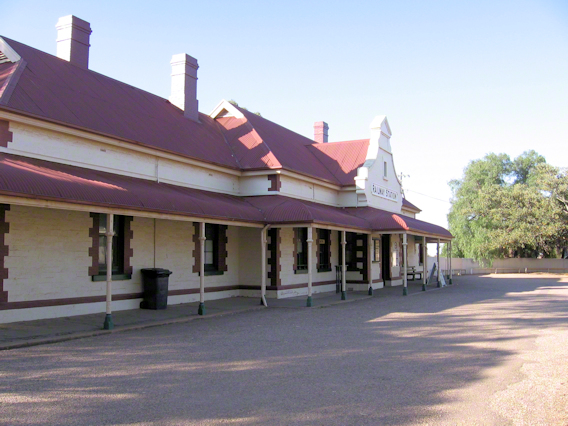
        Well, to go on with our trip.  From Port Augusta to Oodnadatta, which we reached at 9 o’clock on Friday night, there wasn’t much to see, flat deserty-looking country, a lot of it covered with stones, not nice smooth ones, were like broken bits, it makes a person wonder where they all came from — no hills, just these plains covered with stones.  We also passed a lake, but that looked as dreary and dead-looking as all the rest of the country.  That was to Oodnadatta, when it was night.  But when we woke the next morning it was different, grass and trees and ranges and wild flowers.  One advantage about this trip is, that they stop at every station or siding, sometimes there are just one or 2 houses, other places a few more.  One place we stopped at, Anna Creek, by name, the 2 or 3 railway houses had lovely gardens and lawns, such a contrast to all the surrounding country.  We saw something similar at Rumbalara , where the police station is.  At this place we had to wait for nearly 2 hours as our engine had broken something and they had to steam up another one.  This long stay enabled us to see some of the wild flowers growing along the line.  They are altogether different to the ones in the south, and such a variety, too, and they appeared to be past their best too.  It must be a wonderful sight when they are all out.  This delay at Rumbalara made us late, of course, at Alice Springs.  We arrived there at quarter to 5 instead of 2.15.  Missionary Albrecht arrived to meet us a few minutes after the train was in, and took us and our host of luggage to Johannsens, where we slept.

[Photo 5: A picnic lunch on the way © S.O. Gross 1939]

        After we had had tea Missionary Albrecht took us out to the little church which they have in Alice Springs.  It was presented by Mr Materne of Nuriootpa as a Thank offering.  It is a nice little church with a fairly large vestry and a sleep-out, so that anyone coming in from the mission station has somewhere to stay.  At the church we met some of the natives of Alice Springs, they are being cared for by the evangelist Martin, who holds services twice every Sunday, when there is no missionary there and also gives baptismal instruction.  He is a very fine man.  Here the children met the first natives.  They had seen some from the train already and were greatly excited.  To our amazement they weren’t at all afraid of them, and not any more shy, if as shy, as with white children.  They shook hands with them much to the natives delight.

[Photo 6: Where’s our homely contents? © S.O. Gross 1939]

        The next day services were held there, in the morning it was in Arunda, but during the service Missionary Albrecht welcomed Sam and he then spoke a few words to them in English.  In the afternoon Sam conducted the service and preached the sermon, in English of course.  There were about 60 natives there for the services, not as many as usual so they said, some were away working.  Several whites came to the afternoon service, Johannsens and others.  Unfortunately I wasn’t able to go as Margaret was sick, I was so sorry I had to miss it.

[Photo 7: The moving van back then on its way to Hermannsburg © S.O. Gross 1939]

        On Monday Sam and Missionary Albrecht had quite a lot of business to see to, and then on Tuesday morning we set off for Hermannsburg at about 11 o’clock, Sam and Marie on the back of the loaded truck with a native man, and Missionary Albrecht and Ruth, Margaret and I in the front seat.  It was a fairly hot day but not unpleasant.  We called in at “The Jay”, 25 miles from “The Alice”, the home of Mr & Mrs T. Strehlow.  They persuaded us to stay there for dinner.  They have a nice little home, 3 rooms, with a lovely wide verandah, made of cement bricks.  They also have a refrigerator.  It was just lovely to have the nice cool water and also ice cream, a real luxury way out in the bush.  At about 3 o’clock we went on.  It wasn’t quite so hot then.  Up to the Jay the road had been fair, it had been made some time ago for the Governor General.  After we left the Jay it wasn’t quite so good, it had been washed out by the heavy rains and that meant driving fairly slowly with the loaded truck.  We had to cross over so many creeks and of course there were no bridges, but stones and sand instead.  The truck had to pull and pant and bump to get across in some places.  The scenery was quite nice though.  Before we came to the Jay we were travelling right in the ranges, but after passing there the country was more open, a plain, with ranges along both sides.  But there is nothing like a desert around here.  It is more like one of the back roads in the mallee, only of course more creek beds to cross.

[Photo 8: The Arrival of all the goods and chattels © S.O. Gross 1939]

        I quite forgot to mention that after we left the Jay we drove around the native camp, where blind Moses is the evangelist.  These natives live in grass huts.  They were very pleased see us and of course we had to shake hands all around.  Then they sang a hymn, after which Missionary Albrecht offered up a prayer and they all then recited the Lord’s Prayer, all in Arunta of course. It was wonderful to think that out there in the bush, underneath the gum trees, those natives praying and singing praises to their Saviour just as the white people do in their Churches.  The natives were very interested in our children, and of course our children were very interested in them too.  Before we left Missionary Albrecht had to take orders for the different ones, they had a few pennies to spend, one wanted a hair clasp, another some lollies and so on.  Next time somebody from here goes to Alice Springs the things have to be taken to them from the store here.

[…to be continued]

© Elsa Gross 1939

Feature Photo: The Gross Girls on the Ghan © S.O. Gross 1939

***

Virtual Travel Opportunity

For the price of a cup of coffee (takeaway, these days),

Click on the link and download your kindle copy of one of my travel memoirs,

Experience Historic Australian outback adventure with Mr. B

in

The T-Team with Mr. B: Central Australian Safari 1977

Or come on a trek with the T-Team in

Trekking with the T-Team: Central Australian Safari 1981.

Final Trek Friday–T-Team Next Gen

Woomera, Then Home (part 2)

[I never actually finished the story of the T-Team, Next Generation’s adventures in Central Australia in 2013. So, here is the final chapter in the series. Next month, I will commence the journey at the beginning, as I revisit our journey to scatter my dad’s ashes in Central Australia eleven years ago.]

Woomera II and the Final Leg of our Journey

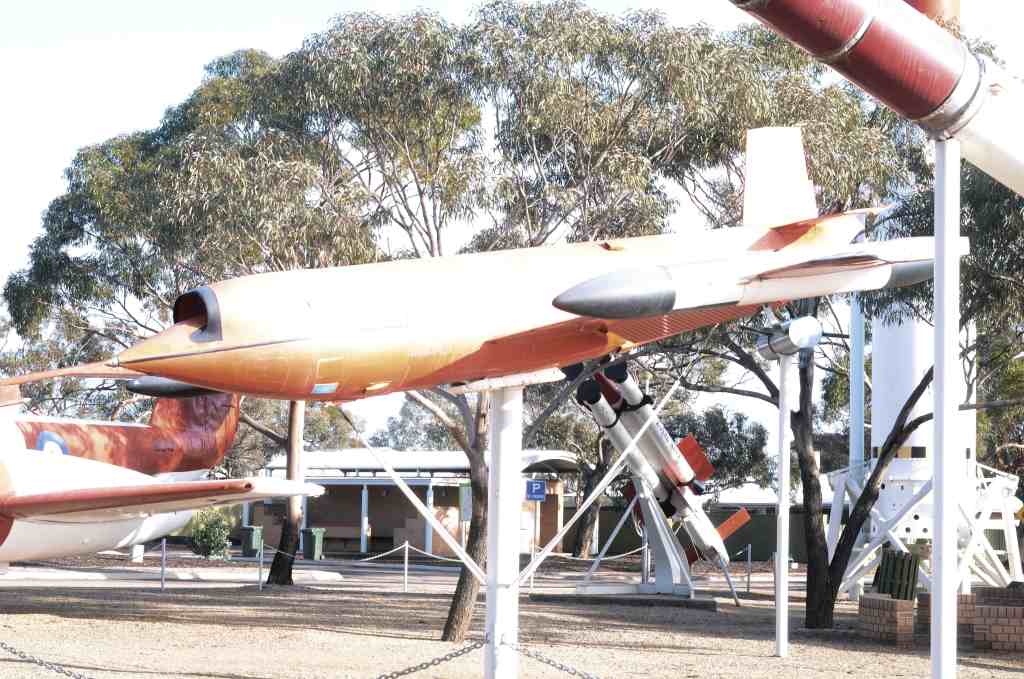
In the cool crisp morning, sun shining lemon yellow rays but not much warmth, we strolled around the Woomera Rocket Museum. Rockets of all shapes and configurations stood in the open-air, testimony of what once was. This RAAF Base and village was once a lively town in the 1950’s and 60’s, as an Anglo-Australian Cold War defence project. On this day Saturday July 20, 2013, the place seemed a mere shell of its former self, a cemetery of what once was, rockets rising like giant tombstones to the sky.

We meandered around the rockets, reading signs, eulogies from the past when threats from enemy nations was imminent. I was reminded of older friends telling me of a time when they practised drills of hiding under their school desk in the event of enemy attack.

*[Photo 1: Monument, A Rocket at Woomera © L.M. Kling 2013]

My mother recalled when on February 19, 1942, Darwin was bombed. She was a girl in Hermannsburg at the time and whenever a plane flew over, the Aranda women would wail, fearing disaster.

*[Photo 2: Twists and turns © L.M. Kling 2013]

Now, Hermannsburg was a mission set up by German missionaries in 1877. Although, by the 1940’s the mission was fair dinkum Australian having existed in Australia for all that time, with the advent of World War II and the conflict with Germany, the name, being German, raised the suspicions of the Allies. Hence, Mum remembers British Officers* drove into Hermannsburg to check the place out. They had to make sure there were no German spies. My grandpa, Pastor Sam Gross and his wife (my grandma) hosted these officers and put on a lovely spread of lunch for them.

[Photo 3: The Hermannsburg welcome Spread © C.D. Trudinger circa 1955]

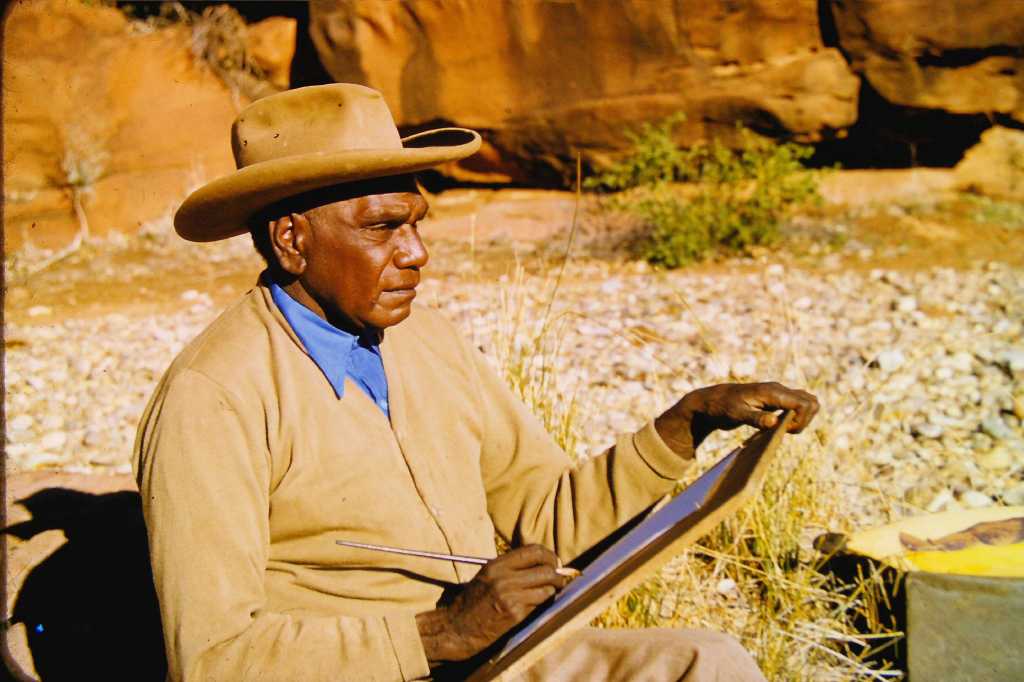
After investigating any mitigating threats, the British Officers* drove away in their propeller plane satisfied that Hermannsburg was no threat. Never-the-less, they confiscated the one and only link to civilisation, the community pedal radio. Just in case they really were spies, I guess. Further, to make sure that no threat to the allies arose from this humble mission, they sent Rex Batterbee, a world War I veteran, to oversee the mission in the role of “protector of the aborigines”. As he had visited and then lived in Central Australia since the mid-1930’s, Rex taught Albert Namatjira to paint watercolours and helped him launch his career as a renowned artist.

*[Photo 4: Albert Namatjira at work © S.O. Gross circa 1950]

Homeward Bound

Needless to say, in 2013, such threats of foreign enemies seemed in the distant past. But, being only 446 km from our home town, Adelaide, we were reluctant to linger amongst the rockets. Having packed, and checked out of our overnight accommodation, we were eager to start our journey home.

At a steady 90 km/h, we made progress down the highway that split the gibber plains in halves.

‘I bet the T-Team (my brother’s family) are home by now,’ I said. ‘No hanging around of taking time to look at any more places for them.’

‘Why don’t you ring them just to see where they’re at,’ my hubby said.

I texted my niece. The time was 10:30am.

“We are in Port Augusta,” she replied by text.

‘There’s no way we’ll catch up to them,’ I said, and then texted back, “Have a safe trip home.”

*[Photo 5: Off we go over the gibber plains © L.M. Kling 2013]

Clouds and rain descended on the land the further we drove south. By the time we reached Port Wakefield, the cold had seeped into the car. I put my parka on my legs to keep warm. Yet, for lunch Hubby insisted we eat alfresco in the rotunda at Port Wakefield. After all, despite his aversion to the cold, he needed to stretch his legs. Plus, it seemed no café existed in the town.

The rain and cold became more intense as we approached Adelaide. After driving through the grey, sodden streets, we arrived home, just as darkness fell at 5:30pm.

What disaster awaited us?

Hubby opened the door and we trod inside. Son 1 played a computer game on the PC in the dining/living annex. He ignored us. We tiptoed through the family room. Not too much mess and the carpet remained visible, and clean.

We found Son 2 all rugged up and cosy in his room playing World of Warcraft. He said, “Hello” and then asked for a coffee, then followed the conversation up with, “I’m hungry, what’s for tea?”

In the kitchen, as I prepared a drink, I noticed the dishes had been done and the cats fed. I thanked Son 1 for the effort. He took all the glory and remarked that his brother had done nothing.

The Aftermath

There’s always casualties that follow every holiday. And this one was no different. Two paintings which I had planned to exhibit in the upcoming Marion Art Group exhibition had gone AWOL. I’d like to think they were stolen…but I reckon they would be found in some odd place sometime in the future.

*[Painting: Dad’s resting place, Ormiston Gorge © L.M. Kling 2018]

Eleven years hence as I write this final chapter, I wonder what paintings they were.

Oh, and the other casualty, Hubby, who proudly exalted that he had taken thousands of photos of the Central Australian trip on his mobile phone, can no longer find where those photos went. It would seem those photos went AWOL too.

As for the T-Team, they actually arrived home after us, having spent a night at Port Germaine. They decided to treat themselves after roughing it for the past two weeks.

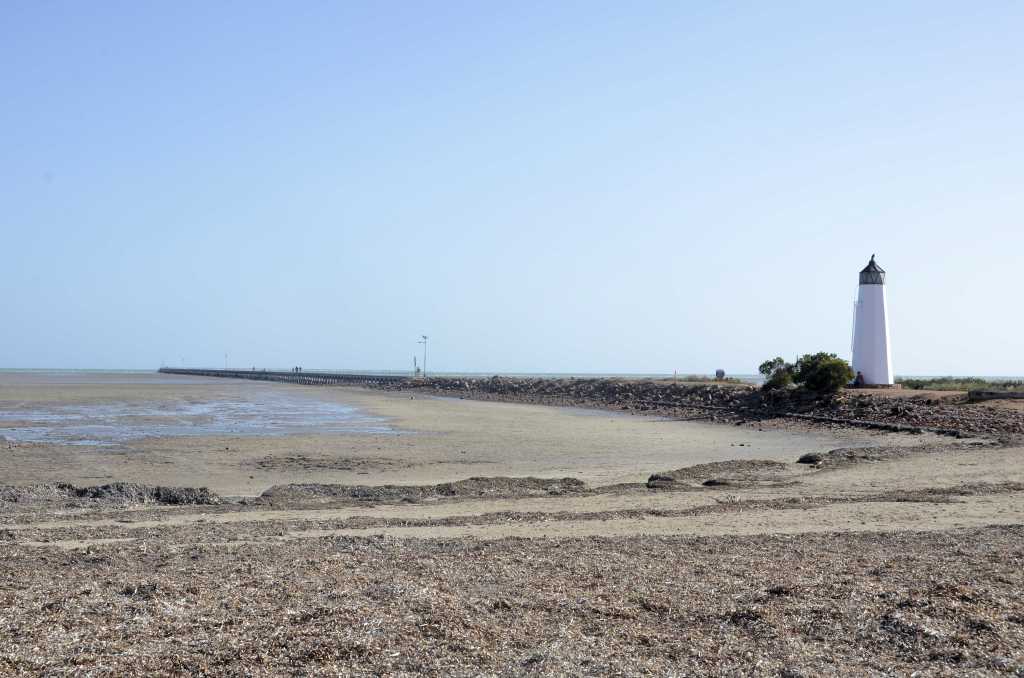
*[Photo 6: Port Germaine Jetty © L.M. Kling 2024]

***

Note: *My mum, Mrs. T checked this and questioned whether they were British. She thinks they were more likely to be Australian. However, I have read a letter written by these officers and the words they used made them sound British. When I find the letter, I will investigate the background of the visiting officers and plan to write a more detailed account of my grandparent’s experience.

© Lee-Anne Marie Kling 2024

Feature Photo: Woomera Open-air Museum in the morning © L.M. Kling 2013

***

Want more? More than before?

Take a virtual trip with the T-Team and their adventures in Central Australia.

Click below on…

The T-Team with Mr. B: Central Australian Safari 1977

Trekking With the T-Team: Central Australian Safari 1981…

To download your Amazon Kindle copy of the story…

And escape in time and space to the Centre of Australia.

Trekking Thursday–Franklin-Gordon River Cruise

[Last week, Hubby and I were talking to someone who had recently visited Tasmania. They went to Strahan, but for some reason didn’t do the Franklin-Gordon river cruise. We recommended that next time they go to Tassie, they revisit Strahan and do the cruise. Hence, to encourage prospective travellers to Tasmania, a re-visit in my blogs to Strahan on the West Coast of Tasmania. Ah, memories of travels with my husband, his brother (P1), and cousin from Switzerland (P2), to Tasmania; a brilliant and beautiful destination.]

K-Team Adventures—Strahan and Gordon River Cruises

An early start, just what the K-Team love. We were to board the Wilderness Cruise Boat by 8.45am. Not as early as the last time I took the cruise. Then, in 2011, I journeyed with my mother (Mrs T), for whatever reason, the ship departed much earlier than 8.45am. Fearing we’d miss the boat, Mum and I rose at the crack of dawn and ate our breakfast at a hotel opposite the wharf while watching the sun rise on the calm waters of Macquarie Harbour; an oil painting in hues of gold and pink with ducks on the jetty. Mum’s breakfast of Eggs Benedict was less than perfect; uncooked, runny and the “whites” not white. She’s never had Eggs Benedict again. I guess there had to be some compensation for the ideal weather we had that August day in 2011.

[Photo 1: Calm on Macquarie Harbour before Eggs Benedict © L.M. Kling 2011]

Not so for the K-Team in 2016. A perfect mix of personalities, no conflicts—apart from some initial altercation between my husband’s phone GPS navigator and the Kluger’s Pandora navigational system. Now that was something out of the box, so we packed away any semblance of pairing our phones with the car’s computer system and relied on the navigational system God had given us—our brains…and some forward planning with Google Maps. So, instead we had the weather as our thorn-in-the-side member of the K-Team. At least someone up there, I mean God, had been looking after us.

[Photo 2: Sign of weather come. A hiking trail in Hogarth Falls near Strahan © L.M. Kling 2016]

When we booked our cruise, the lady asked us, ‘Do you want to go on the ABT Railway up to Queenstown?’

‘How much?’ I asked.

The lady showed the prices.

‘What time does it get back?’

‘Oh, 5pm.’

‘Nah, we’re meeting my cousin at 4.30pm. So, we’ll take the cruise.’

A narrow escape. We heard that night while dining with my cousin, Kiah who at the time ran the Strahan Visitors Centre, that fallen trees on the railway track had stranded the tourists on the train for several hours. They arrived back in Strahan at 8.30pm. The next day, on the cruise, Kiah overheard some girls who had been on the train trip say they were going to write a reality TV show about bored kids.

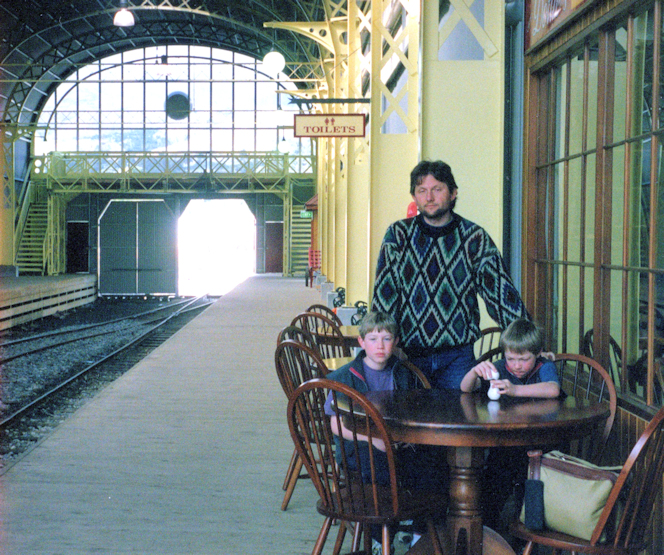
[Photo 3: Thankfully, not stranded at Queenstown; ABT Railway Station with K-Team, the younger way back when…Looks like my kids can get bored at Railway Stations too. © L.M. Kling 2001]

The cruise, definitely not boring. First a ride out through the narrow heads and into the full force of the roaring 40’s and rough seas; P2’s highlight of the Tassie Trip. Hubby was surprised I didn’t get seasick. I’d remembered to take my ginger tablets.

[Photo 4: High seas past the heads, but the birds hang on. © L.M. Kling 2016]
[Photo 5: The safety of the lighthouse © L.M. Kling 2016]
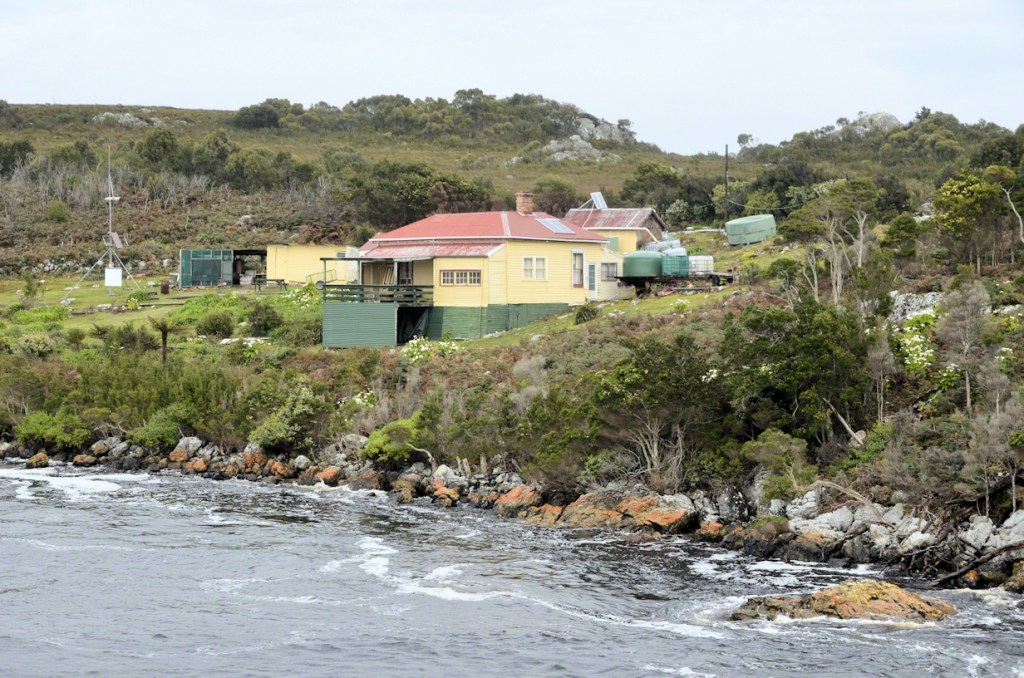
[Photo 6: The lighthouse keepers’ cottage? © L.M. Kling 2016]

Then, after returning back into the safety of the harbour, a tour of the salmon farms; big, netted rings full of fish.

[Photo 7: Salmon Farms © L.M. Kling 2016]

Kiah and her team would be our guides on Sarah Island, the worst penal colony in the whole British Empire in the early nineteenth century. We spent an hour or so on the island touring around the various sites, the tour guides giving lively and entertaining accounts of Sarah Island’s history.

[Photo 8: Sarah Island approach © L.M. Kling 2016]

Walking up the gangway, I studied the wilderness mountains jutting above the forest lining the harbour and detected the vague outline of Frenchman’s Cap, clouds shrouding it from a clear view.

[Photo 9: So different with Mrs T; Frenchman’s Cap perfect through swamped trees of Sarah Island. © M.E. Trudinger 2011]

As we raced up the river, the Captain rabbited on about Sarah Island’s convict history and then he said, ‘While we travel up the river, think about what it would’ve been like living in those times on Sarah Island as a convict.’

[Photo 9: The Lookout © L.M. Kling 2011]
[Photo 10: Mrs T contemplates while crowd listens to tour guide © L.M. Kling 2011]

I recalled the play we’d seen the night before, The Ship that Never Was; the political climate and social conditions of nineteenth century Britain that created the huge gap between the rich and the poor, unemployment and homelessness, and the solution to send shiploads of social rejects (the convicts) to Australia—the worst offenders to the most remote place on earth, Sarah Island. Yet, in all of that condemnation and hopelessness, redemption. Some of these convicts, when they received their ticket of leave (freedom), became leaders in the colony; their skills not going to waste. Treat people like they matter, give them a chance. This is how I understood David Hoy, Master Shipwright treated the convicts. I could go on, but best if you ever go to Tasmania, go to Strahan, do the cruise and see the play.

[Photo 11: Scene from the Ship that Never Was © L.M. Kling 2001]

And while we were there, clutching the mini hot water bottles loaned to us for the duration of the performance, and waiting for the play to start, the tour group we encountered the previous day, joined the audience. Some of them ended up participating in the play. So did P2 helping the ship (just a pile of wood, really) sail to close to the coast of Chile…before it…well, you’ll have to see the play to find out what happened.

[Photo 12: Perfect reflections on a perfect day up the Gordon River © L.M. Kling 2011]

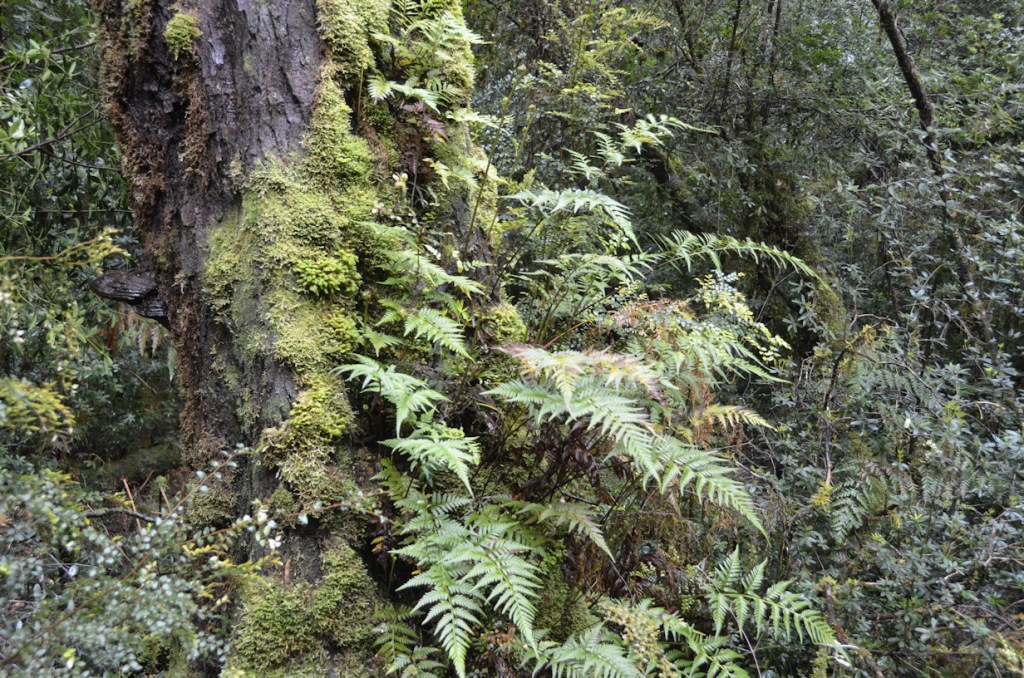
After a tasty buffet lunch of smoked salmon, cheese, bread and salad, we had a half-hour walk in the rainforest. Amazed at the variety and abundance of plant-life and how plants grow out of tree trunks and stumps. The old Huon pine stump that had been struck down by lightning a decade or so ago, was now a garden of seedlings, native laurel, moss, lichen, and ferns.

[Photo 13: New Life springs from That old Huon Pine © L.M. Kling 2016]
[Photo 14: A taste of a temperate rainforest © L.M. Kling 2011]

Then the race back to Strahan. In all we had travelled 140km on tour of the Macquarie Harbour, some way up the Gordon River and then back to Strahan.

P1 disappointed with the cloudy weather said, ‘How can I get good photos when there’s no sun?’

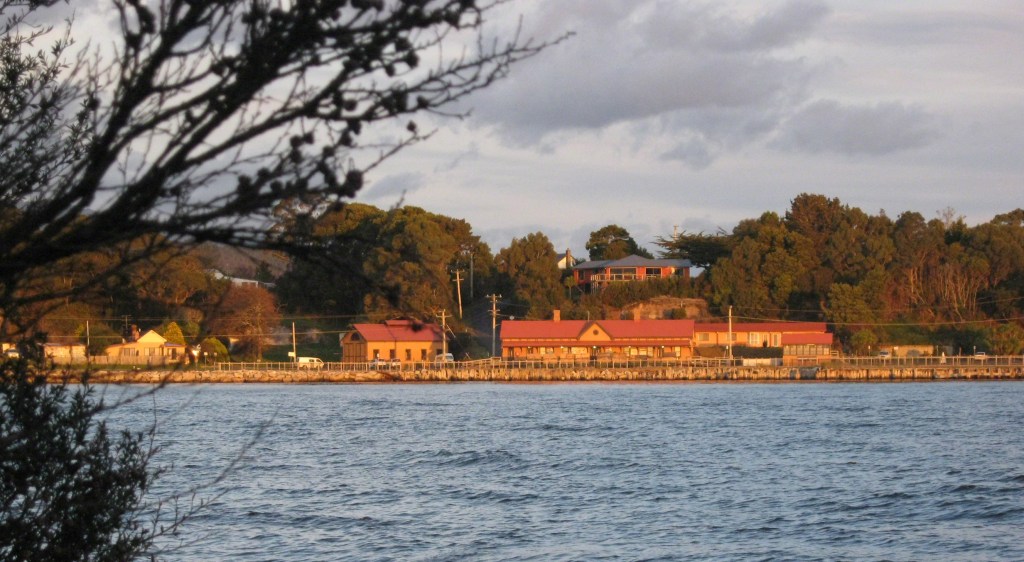
[Photo 15: And so, the sun sets on Strahan © L.M. Kling 2011]

‘They’re mood photos,’ I replied. Cheeky, I know, since in 2011, the sun shone on Mum and me, and I had dozens of chocolate-box photos of the Gordon River like glass reflecting perfectly vivid green forest trees. Oh, well. We were blessed that day in 2011. The western wilderness of Tasmania gets on average around 4000mm of rain a year. So more likely to get cloudy rainy days on a cruise than sunny, I guess.

Besides, did P1 have an Eggs Benedict like my mum had eaten that morning in 2011?

© Lee-Anne Marie Kling 2016; updated 2019; 2021; 2024

Feature Photo: Chocolate Box Reflections on the Gordon-Franklin River © L.M. Kling 2011

***

Want more? More than before?

Take a virtual trip with the T-Team and their adventures in Central Australia.

Click here on…

The T-Team with Mr. B: Central Australian Safari 1977

Trekking With the T-Team: Central Australian Safari 1981…

To download your Amazon Kindle copy of the story…

And escape in time and space to Centre of Australia 1981…

Family History Friday–The Romantic Road

Virtual Travel—Postcards: Bavaria (Bayern)

[Over our Australian summer Holidays, I have been down that proverbial rabbit-hole of family history research.


While researching the Kaiserhof Hotel Sonne in Nördlingen, which my family have claimed the Trüdinger ancestors owned for a couple of hundred years until the 1960’s, I discovered that, according to the information provided by the hotel’s website, that Goethe lived there for a year in 1788.


It’s amazing how life works and how the threads of our lives weave in and out. How our attitudes and values are influenced by how we see the world, and who we see in it. While Goethe was living in Nördlingen, Captain Cook in the Endeavour claimed Australia as belonging to Britain (as one who belonged to the British Empire would back then). And I wonder what Goethe thought of Nördlingen and my ancestors. Did he give much thought to the discovery of Australia and that someday, a little over a century hence, a descendant of those Trüdinger ancestors, or perhaps a relative who may have visited the hotel, would be emigrating to Australia with their family…erm, from Great Britain. That’s another story, suffice to say, my great-grandfather, a Trüdinger from Bavaria, was not a fan of Bismark.


Meanwhile, in 1788, a former Swiss noblewoman, Henriette Jeanette Crousaz de Prelaz (her father had died leaving the young family of mother and ten children in financial strife) relocated to the Christian community of Herrnhut. Did she have any idea that almost one hundred years later, her grandchild would marry my great-grandfather Karl August Trüdinger and relocate to Australia?
Below is our modern experience of this famous road, joining the many people who have travelled it.]

The Romantic Road

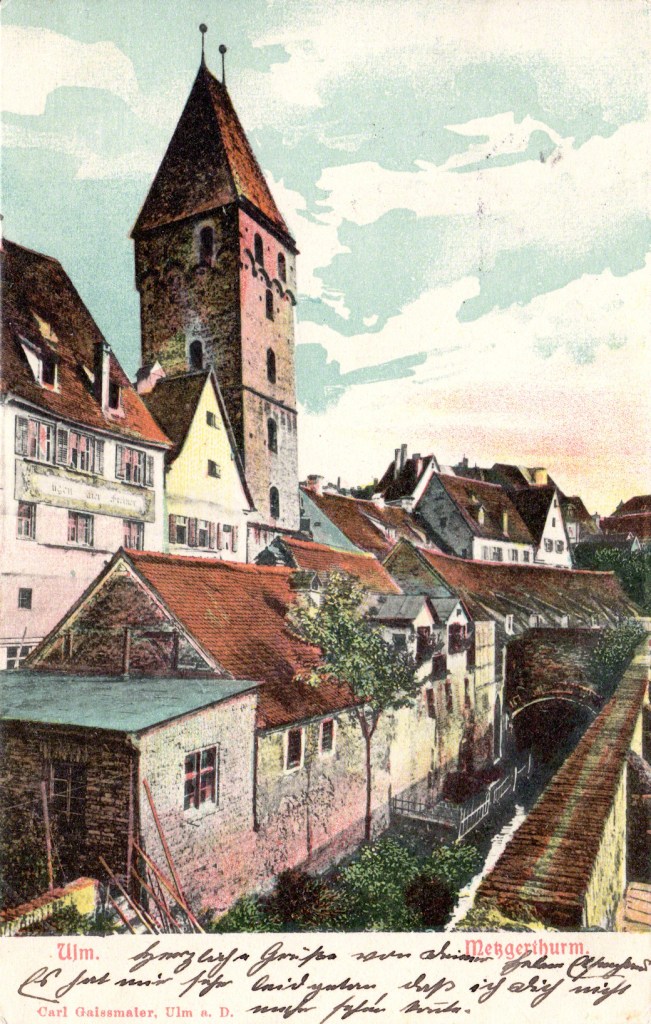
We passed through Ulm which was featured in this postcard but didn’t visit Ulm. We stayed in a town nearby called Burgau for a few days while we explored the Romantic Road. Our Tom-Tom, which we named Tomina, took great delight in leading us astray. In our quest to reach our Burgau apartment, Tomina decided to take us on a roadway that was closed to traffic.
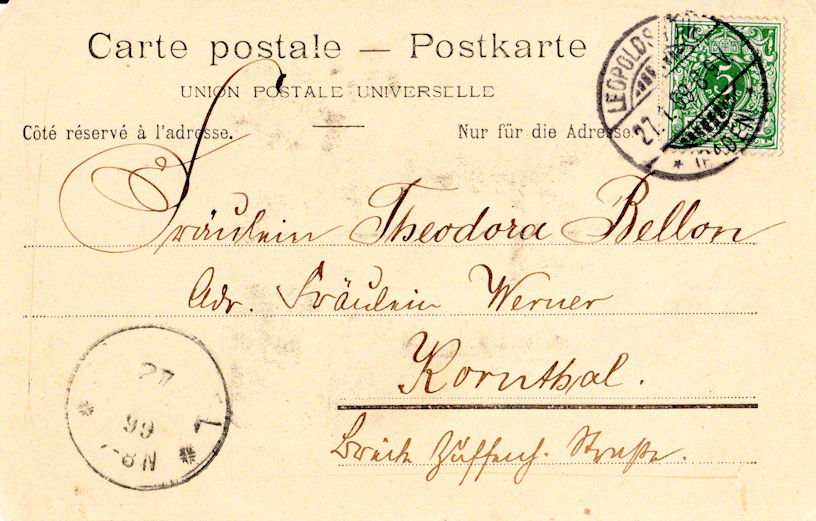
Similarly, over one-hundred years ago, this postcard chased Theodora Bellan across Bavaria, originating in Sofflingen (a town that Google maps doesn’t recognise), then Nussdorf, and finally found her in Ludwigsburg.

The Romantic Road was one part of Germany, that despite the wars and modernisation of the twentieth century, never lost its Medieval charm. A reason I so wanted to travel this road of the Romans when we travelled to Germany in 2014.

Romantic Road


The next few days we explored the Romantic Road, although Tom Tom always tried to get us on the freeway. Friday, we did Tomina’s circuits in by never obeying her commands and instead following the Romantic Road signs.
Highlights of the Romantic Road:
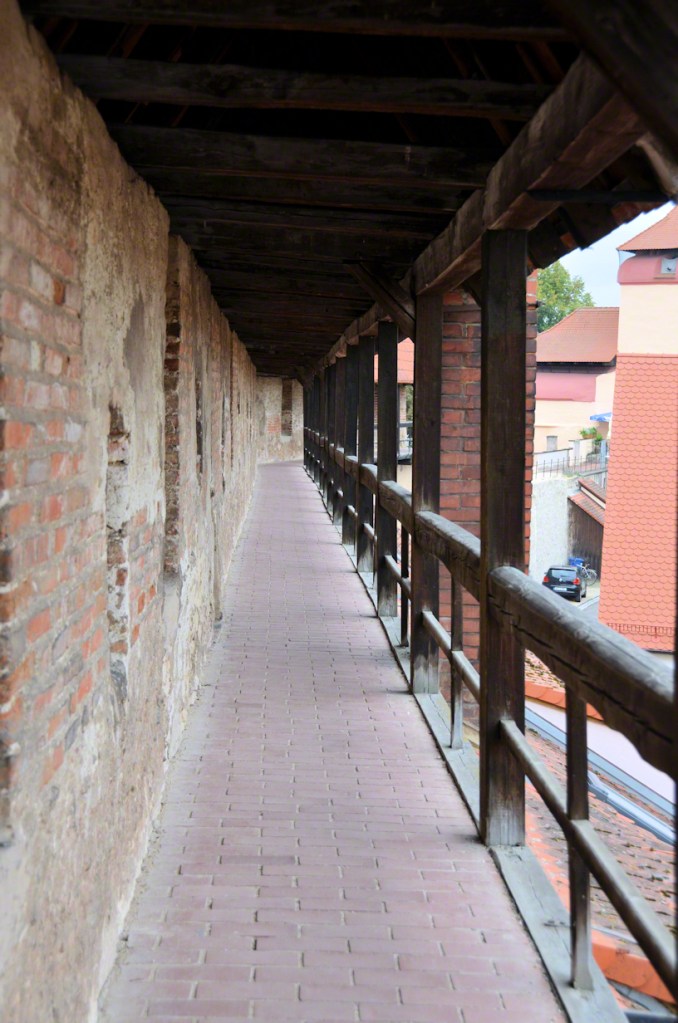
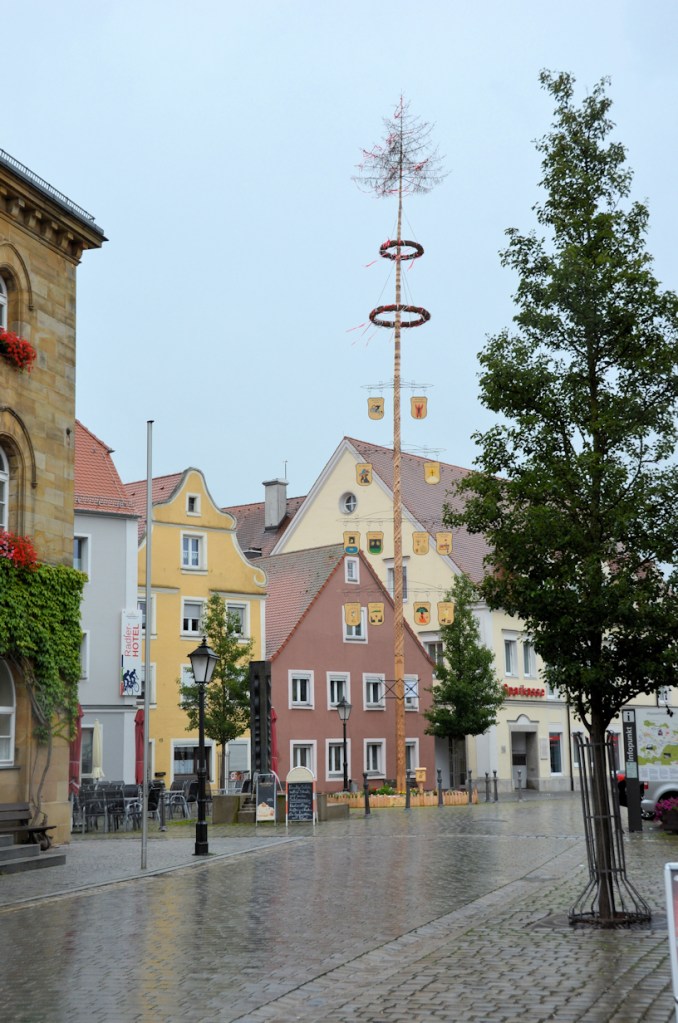
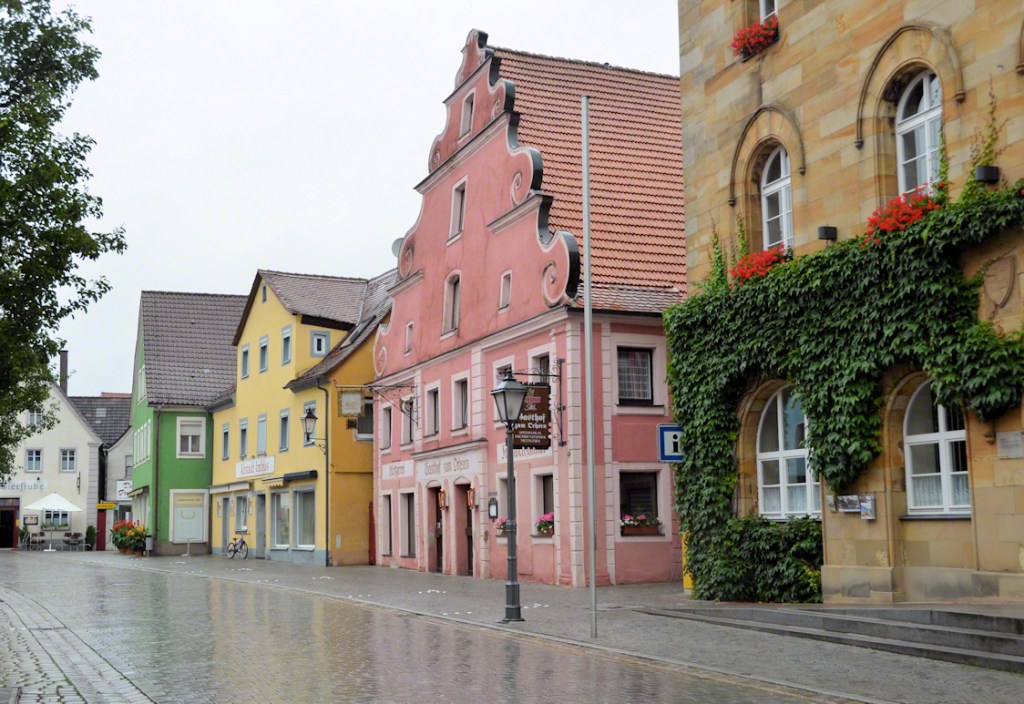
Nördlingen–the town of my Trüdinger ancestors and having lunch in the Kaiserhof Hotel Sonne restaurant which, we believe, was owned by the Trüdinger family until the 1960s. We then walked around the medieval wall. Hubby amused fellow travellers by greeting them with an Aussie “G’day”.

[Photos 1, 2, and 3 Aspects of Nördlingen, 4 & 5 Wassertrüdingen © L.M. Kling 2014]

Photo 1: Red Rooves were filmed in Willy Wonka and the Chocolate Factory.
Photo 2: The Wall of Nördlingen.
Photo 3: Kaiserhof Hotel Sonne
Photo 4: Rain in Wassertrüdingen
Photo 5: Reflections in the water of Wassertrüdingen

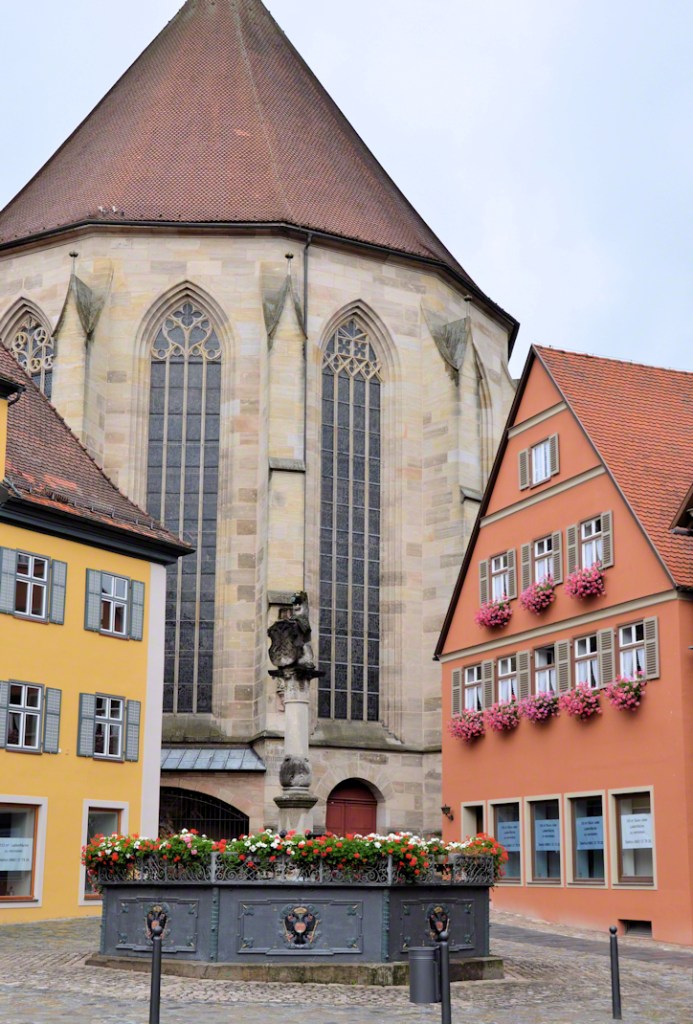
Dinkelsbuhl–the church, St. Georges Minster, the ornate carvings and artwork and the bejewelled skeleton of a martyr executed by Emperor Nero on display. And…that day, Goths and Emos aplenty.


[Photos 6 & 7: Dinkelsbuhl © L.M. Kling 2014]

Photo 6: St. Georges Minster
Photo 7: Segringer Tor

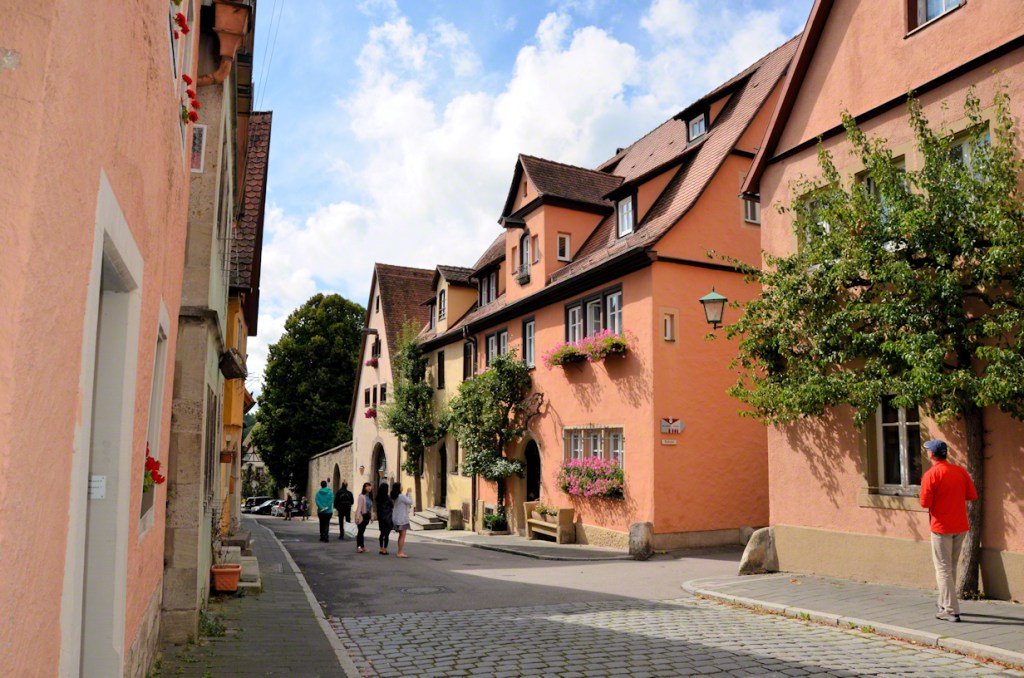
Rothenburg ob der Tauber where we enjoyed the delicious sweet pastry as well as the beautiful sunny day that showed off its cobblestone roads and medieval buildings at its best.


[Photos 8 & 9: Rothenburg ob der Tauber (c) L.M. Kling 2014]

Photo 8: Sweet Treats
Photo 9: Typical Rothenburg Street
Photo 10: Rothenburg ob der Tauber most popular

Challenges of the Romantic Road:


• Too many tourists especially at Füssen on the Saturday we visited, caused us to be trapped in a massive traffic jam that held us in a virtual carpark for an hour.
• So many tourists at Neuschwanstein (Mad Ludwig’s Castle). If we’d attempted to buy a ticket, we would have waited four and a half hours or more to enter the castle!
• Traffic jams and rain, both especially heavy that particular Saturday in August.

[Photos 11 & 12: Neuschwanstein and surrounds © L.M. Kling 2014]

Photo 11: Neuschwanstein with Schloss Hohenschwagau in foreground
Photo 12: Schwansee

    We took a break from the Romantic Road one day to visit my relatives. Tomina had trouble with the “dud” roundabout, so we ended up travelling the “scenic route” through the back way off the motorway through corn fields and behind slow tractors. The hour’s trip took two hours, but once we arrived, we had a wonderful day.
    Back in our apartment in Burgau we had no internet. I think Hubby coped…although to be honest, he was grumpy at times. I guess there’s something to be said to slow down to the pace of snail mail and send postcards as folk did over 100 years ago…especially when there’s no internet.

    © Lee-Anne Marie Kling 2020; updated 2022; 2024
    Feature Postcard: Ulm © 1905

    Postcard Front: Ulm, Bayern
    Postcard Back


    And now, for something different…from Europe…

    Dreaming of an Aussie Outback Adventure?

    Click the link below:

    The T-Team with Mr. B: Central Australian Safari 1977

    Trekking With the T-Team: Central Australian Safari 1981…

    To download your Amazon Kindle copy of the story…

    And escape in time and space to the Centre of Australia way back when…

    Trekking Thursday–Hike Around Dove Lake

    [An unexpected shower while walking along the beach the other day reminded me of our Tasmanian adventure back in 2001, when our boys were young (about 11 and 8). That time Hubby was most concerned about keeping his charges dry. However, he went to great lengths to make sure all was done as frugally as possible.]

    K-Team, the Younger: Tasmania 2001

    Dove Lake Hike in Garbage Bags–Cradle Mountain National Park

    Hubby paced the floor of the mountain cabin. ‘Yes, that’ll work. Garbage bags’ll work.’ He was in his frugal element and raced around the small room as if he’d won the lottery. ‘Oh, and so cheap!’

    He spent the rest of the evening cutting and taping two garbage bags and fashioning them into ponchos for our young sons.

    Sons 1 and 2, unaware of the fate that awaited them, marvelled at the possum perched on the balcony.

    ***

    Next morning, a shroud of mist covered the valley.

    ‘Hmm, the weather doesn’t look good,’ my husband said. ‘Don’t know if we’ll see much of Cradle Mountain. Boys’ll definitely need the ponchos I made when we hike around Dove Lake.’

    Hubby grinned as he pushed the garbage bags into our packs.

    *[Photo 1: Possum © A. Kling 2001]

    I slung my camera’s bulky telescopic lens in its case over my shoulder and tucked it under my parka. I remembered the words of a professional photographer friend who had visited Cradle Mountain before me. ‘Even on cloudy days, you never know when the peak will appear. So, be prepared.’ Besides, I thought, mist and fog give the scenery character.

    In our hire car Ford sedan, we crawled in the tourist-congo to Dove Lake.  Signs warned us of an unsealed section of road suitable only for four-wheel drive vehicles. But did that stop Hubby? No, we bumped along the track behind a bus with him plopping in remarks. ‘Brachina Gorge was worse.’ Or, ‘What are they talking about, this is nothing.’

    After parking, Hubby leapt from the car. ‘Oh, looks like rain.’ He pulled out the “raincoats” and waved them in the air. ‘Come on boys, you need to be waterproof.’

    Son 1 recoiled. ‘I’m not wearing that.’

    ‘No!’ Son 2 screamed and hid behind me.

    ‘Oh, yes, you will!’ their father said. ‘You’ll get wet and a chill and then catch a death of cold, if you don’t.’

    ‘No!’ both boys squealed and then scampered up the path.

    A battle ensued; Hubby with garbage bag-ponchos verses sons refusing to wear the garbage bags.

    Dad won, and with the g-b-ponchos draped over two unhappy boys, the young K-Team trooped along the Dove Lake track.

    A blanket of cloud covered the mountain, and drizzle blurred the view of the lake. The shifting mist mesmerised me. I slowly pulled out my camera and then attached the telescopic lens.

    ‘Get this off me!’ Son 2 cried. He fought with his garbage bag in the wind, and then tore it off.

    ‘No! You must keep it on!’ his dad grabbed the bag-poncho and struggled to put it back over him. Then, with success, clasping his son’s hand, Dad marched ahead, dragging Son 2 behind him.

    *[Photo 2: All waterproof © L.M. Kling 2001]

    ‘I hate this walk!’ Son 1 cried. ‘Why do I have to wear this sack!’

    ‘So you don’t get wet!’ Dad said as they disappeared around a bend of pine trees, branches like arms all twisted and gnarled; monsters in the fog.

    As I progressed around that same bend, I spied No. 2 son sitting on a stump by the path. The sun peeped through the clouds. ‘I’m not wearing this,’ Son 2 said. ‘It’s too hot.’

    I glanced around. No Hubby. ‘Okay.’ I took the garbage bag cloak off Son 2, then peeled off my parka.

    The lake shimmered as rays of sun filtered through the mist and gaps in the cloud. A photographer’s paradise. I aimed my camera and snapped several shots of Dove Lake.

    *[Photo 3: Waterfall over Dove Lake © L.M. Kling 2001] 


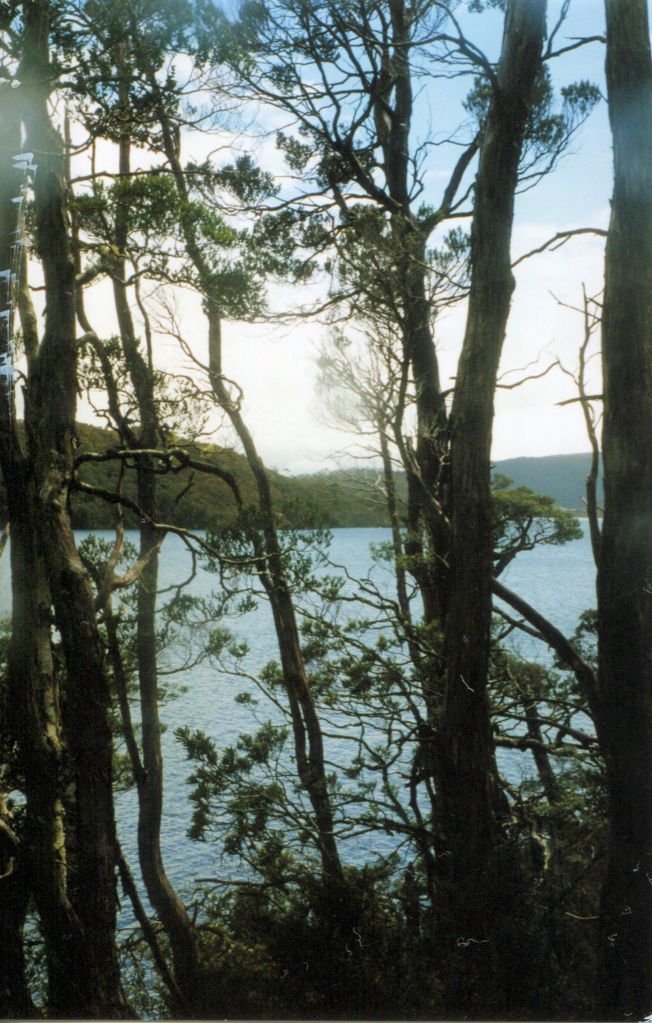
    *[Photo 4: Dove Lake through pines © L.M. Kling 2001] 


    ‘Mum! Come on!’ Son 2 yelled.

    ‘Hurry up!’ Hubby beckoned. ‘We’ve hardly started! And what are you doing without your rain cover?’

    More protests as Hubby wrestled with Son 2 to get garbage bag-poncho again over his head.

    Just in time. Dark clouds loomed, followed by rain pelting down on us. Hubby knew what he was doing; he was making sure the boys stayed dry.

    As we plodded along the path, once again wrapped and water-proofed, the rain turned to sleet. Icy drops cut into my face.

    ‘I’m tired,’ Son 2 whined. ‘How much longer?’

    ‘It’s an hour’s walk, I replied.

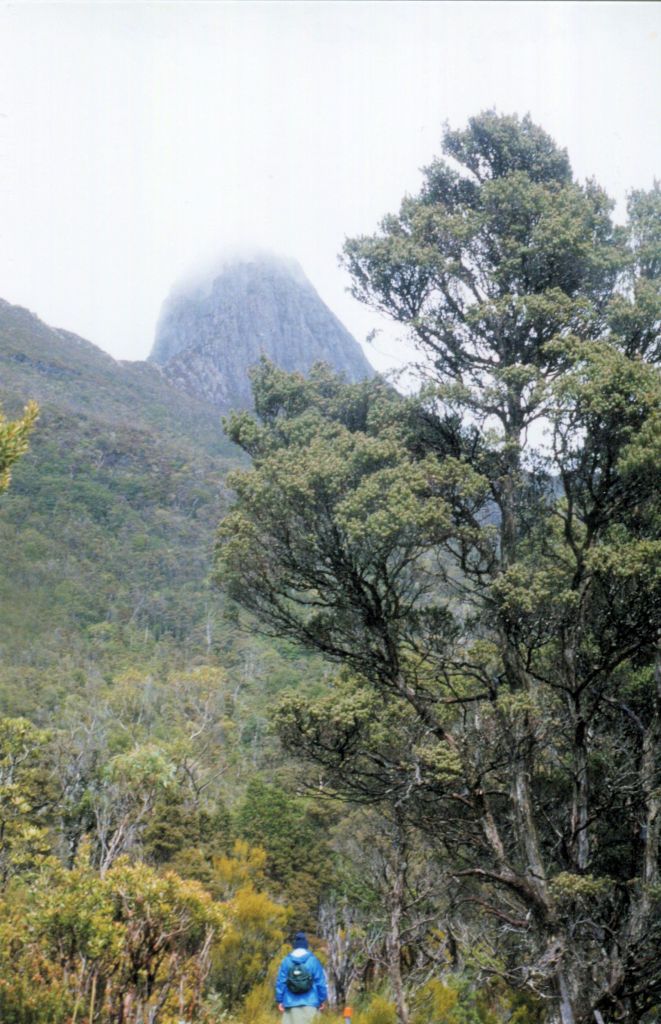
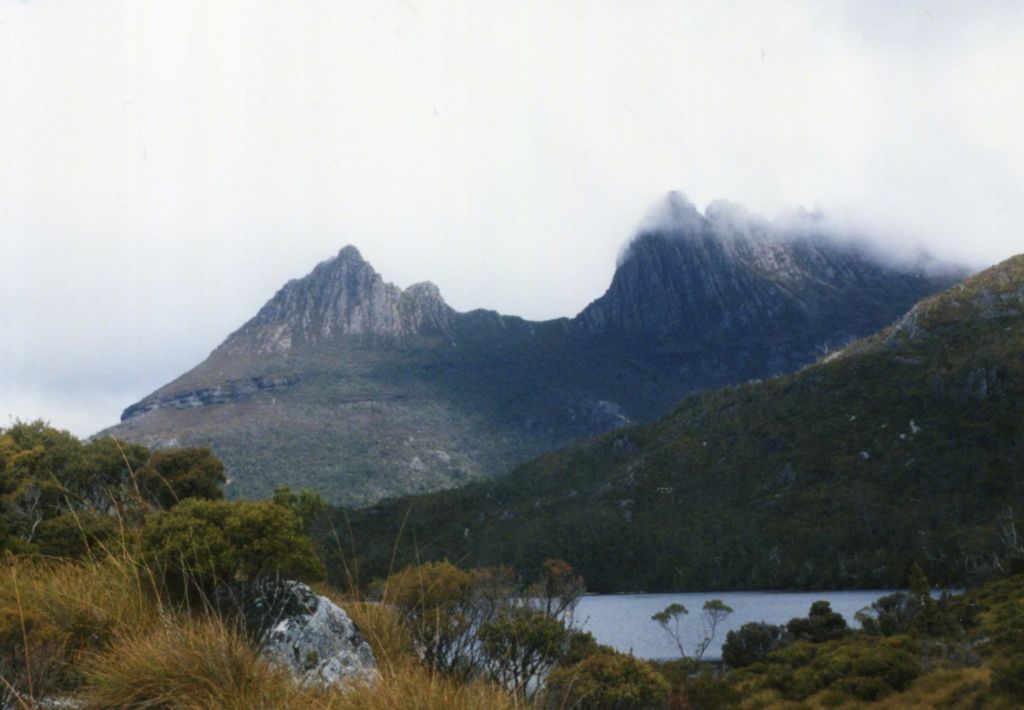
    The sun appeared, and so did the peaks of Cradle Mountain—fleeting, peeping from the curtain of clouds.

    *[Photo 5: Cradle Mountain in Mist © L.M. Kling 2001]

    ‘Wow!’ I halted, shed my rain-jacket, shrugged off the tangle of bags and camera equipment, then caught the image of the mountain before it disappeared.

    Son 2 shed his garbage bag-cloak too.  He sighed, ‘How embarrassing!’

    I packed the embarrassing cover into my bag and we continued the trek around Dove Lake. Every few metres I paused to take another photo.

    ‘Are we there yet?’ Son 2 asked as we crossed a stream.

    Hubby stood before us. ‘What’s taking you so long?’

    ‘There’s so many beautiful scenes to capture,’ I said. ‘The clouds are always shifting and changing. How can I resist?’

    ‘Should only take an hour. It’s been two hours and we’re only half-way.’ Hubby said.

    ‘But, the photos…’

    A pair of hikers passed us from the other direction.

    ‘How far to go?’ they asked.

    ‘A couple of hours,’ I said. ‘How long have you been hiking?’

    ‘From the boathouse, about half-an-hour.’

    ‘Not long to go then.’

    ‘Right, I’m off,’ Hubby said. ‘See you at the boathouse.’

    Hubby and Son 1 marched off while Son 2 and I shuffled behind. We tried to keep up.

    *[Photo 6: Dove Lake Through trees © L.M. Kling 2001]
    *[Photo 7: Cradle Mountain Revealed© L.M. Kling 2001]

    Emerging through the twisted branches of snow-gums, the lake beckoned, then hints of Cradle Mountain begged me to photograph. Father and Son 1 drifted further…and further ahead, while I remained suspended in the fairyland of Dove Lake, Cradle Mountain and fast-shifting mist and cloud. Even Son 2 deserted me to catch up with his dad and brother.

    I arrived at the boathouse.

    ‘Four hours!’ Hubby greeted me. ‘That must be a record.’

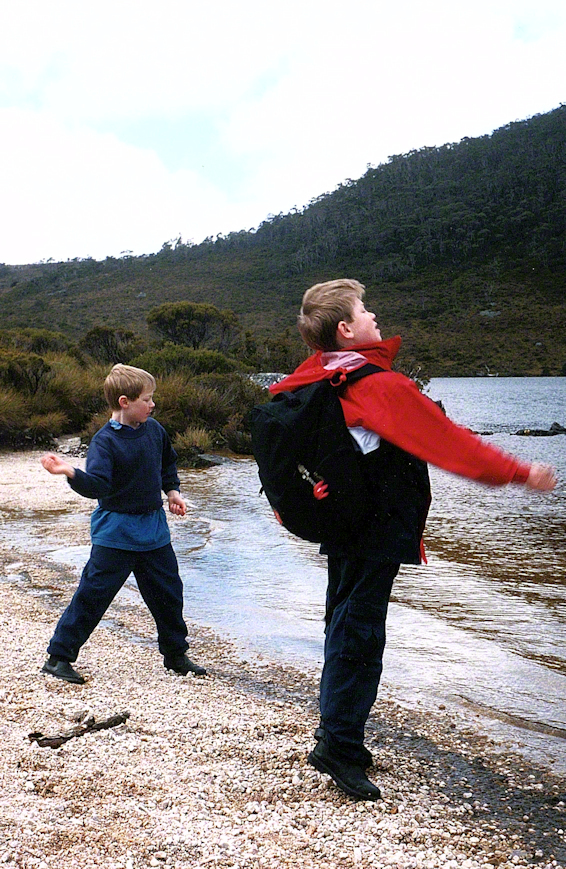
    Our sons, minus garbage bags, skipped stones on the smooth surface of the lake while mist descended over the mountain. I extracted my camera and aimed, taking care to focus.

    ‘Hurry up!’ Hubby snapped, ‘It’s way past lunch.’

    During lunch Hubby scrunched up the green plastic of garbage bags and dumped them into a nearby bin.

    *[Photo 8: After 4 Hours… © L.M. Kling 2001]
    *[Photo 9: K-Boys skipping stones © L.M. Kling 2001]
    *[Photo 10: Cradle Mountain on a better, no, the best day 8 years later © L.M. Kling 2009]

    © Lee-Anne Marie Kling 2017; updated 2019; 2023

    Feature Photo: Cradle Mountain Revealed © L.M. Kling 2001

    [Stay tune for next fortnight and see what a difference a few years make. And how the K-Team the younger, just a little bit older, tackle the hike around Dove Lake on a perfect sunny day in the summer of 2009.

    Next week I will be sharing some of my discoveries in my venture into family history, perhaps I can find the reason why I would take 4 hours to walk around Dove Lake. Is it written into my genetic code???]

    ***

    Want more? More than before?

    Take a virtual trip with the T-Team and their adventures in Central Australia.

    Click on the links:

    The T-Team with Mr. B: Central Australian Safari 1977

    Trekking with the T-Team: Central Australian Safari 1981

    To download your Amazon Kindle copy of the story…

    And escape in time and space to the Centre of Australia…

    T-Team @ Home–Glenelg

    [Slowing down after Christmas/ New Year and feeling nostalgic, this time I meander down to my childhood stamping ground, Glenelg.]

    My Old Stamping Ground

    I grew up in Somerton Park which is about a ten-minute bike-ride from Glenelg. Even today, though I live in the Adelaide foothills, I go to Glenelg to shop, have coffee at the Broadway Cafe with Mum, and many times I drive through Glenelg on my way up north to Salisbury, or to the Barossa.

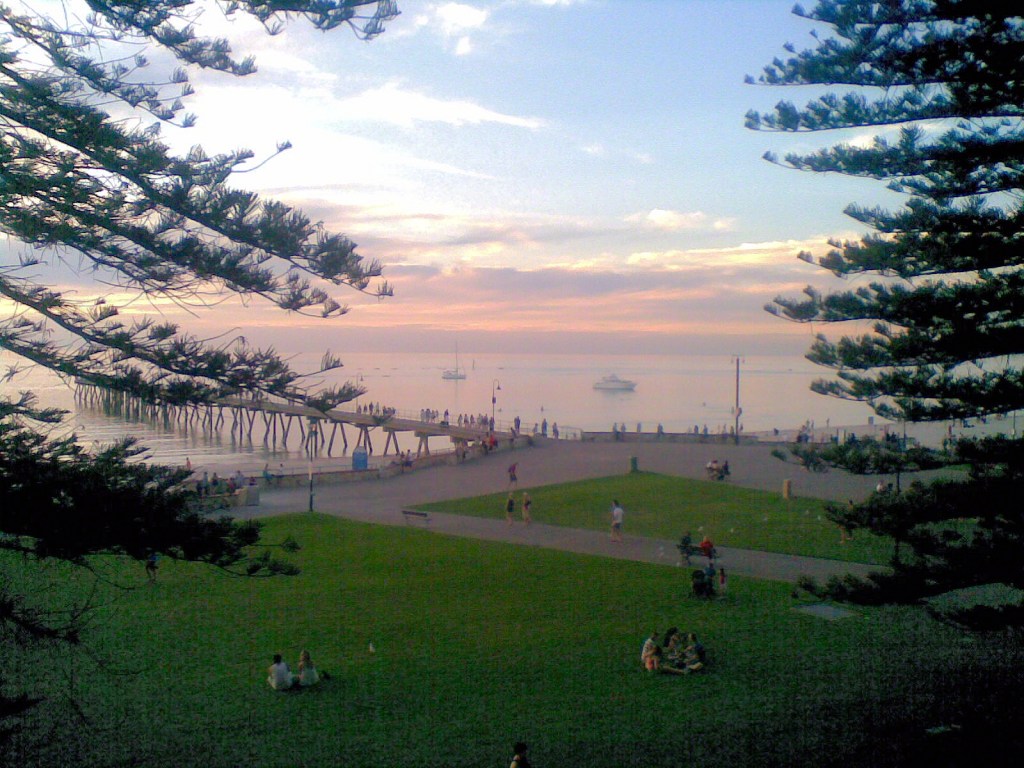
    [Photo 1: View of Glenelg beach south © L.M. Kling 2018]

    So, while tourists snap their memories of Glenelg frozen in time, for me images of my childhood and grown-up years remain fluid, layers in my head and marinated with the changes and experiences over the decades. Glenelg has changed; the land/seascape of my memories unrecognisable as the shops, the trams, the jetty and the coastline shift and develop. Although some places have changed, some have stayed the same.

    *[Photo 2: Somerton Beach Catamarans © L.M. Kling nee Trudinger 1977]

    Gone: The Gift Store

    At the tender age of one-year-old, I committed my first (and only) criminal offense at this shop; a five-finger discount of a face-washer. Mum caught me in time, and blushing, returned the stolen item, replacing it on the shelf before anyone noticed.

    The gift store, a favourite of mine, provided birthday presents for me to buy for friends and knick-knacks with my pocket money.

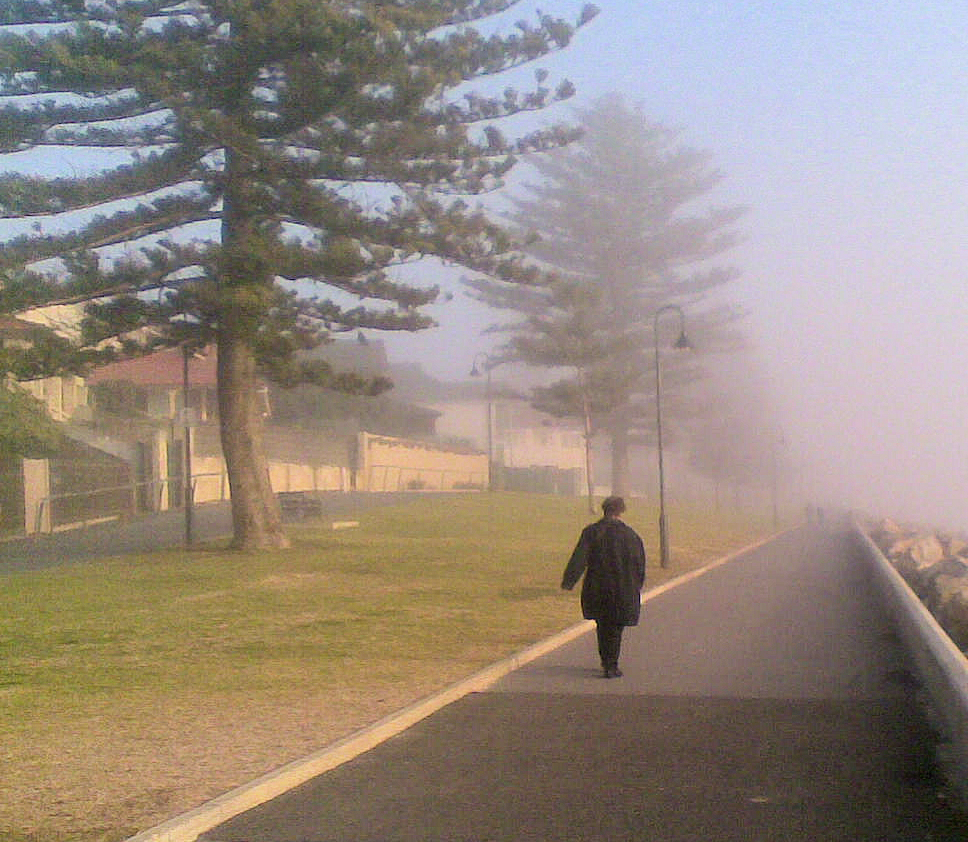
    *[Photo 3: Sea Mist near Glenelg © L.M. Kling 2012]

    Gone: The Historic Cinemas

    One with its red carpet, sweeping staircase and chandeliers. It’s a Woolworths complex now. Many happy moments with family and friends watching movies, eating popcorn and occasionally rolling Jaffa’s down the carpeted aisle.

    The other, halfway down Jetty Road towards the sea, disappeared in the 1980’s. I remember watching the film Heidi there, and before the movie started, the pre-film entertainer conducted a singing competition. My friend won first prize.

    That cinema space became a mini shopping mall which, as a university student, I mopped every Saturday morning for $12. Today, a restaurant resides in that space.

    After several years bereft of cinematic entertainment, a new cinema complex has been built off Partridge Street.

    Gone: Tom the Cheaper Grocer

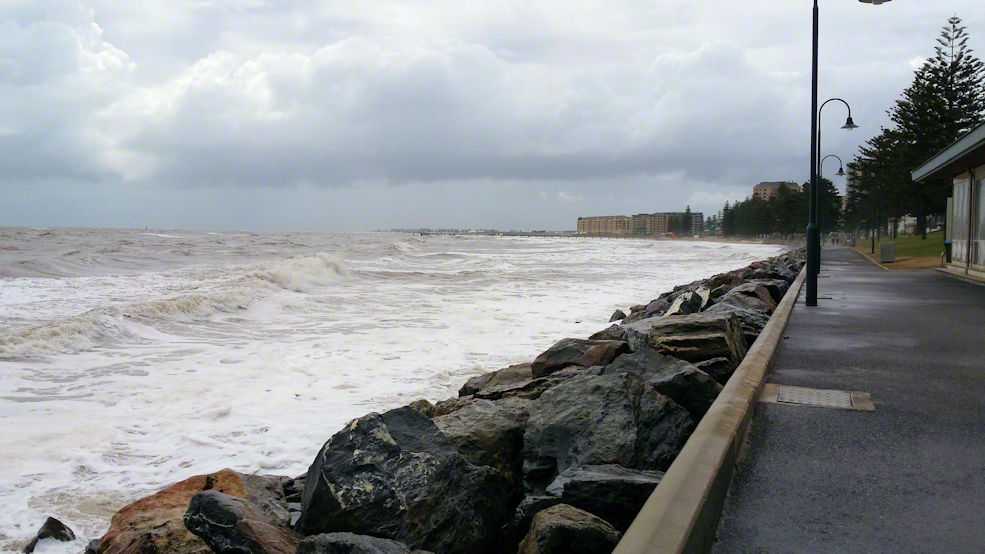
    While Mum shopped at Toms the Grocer on Mosely Square, my brother and I hung out near the sea wall by the jetty. I loved winter when the waves crashed against the wall. Toms was sold off decades ago and today the old building houses cafés and restaurants.

    *[Photo 4 & 5:  Waves crashing near Broadway Cafe © L.M. Kling 2018]

    Gone: Charlies Café

    At three, I crawled under the table at Charlies Café and my auntie uninvited me to her wedding reception.

    When sixteen, we dined at Charlies as a youth group. The guy I was dating didn’t show. After the supper, near tears from being stood up, I waited with my friends for this guy to arrive and drive us home. There were not enough cars amongst the group to drive us all. In a flash, this guy appeared in his silver car. He glanced at us and then kept on driving down Jetty Road.

    My brother had to make two trips to carry us all safely home.

    Charlies is long gone. So’s that guy. I dropped him.

    ***

    Here today Despite Time and Changes

    As my friend from Youth Group was fond of saying, ‘Thank God somethings stay the same.’

    *[Photo 6: View from the Broadway Café; a favourite haunt for my mum and me. © L.M. Kling 2018]

    Still There: Glenelg Jetty

    At least an updated and cemented version from one of many over the years of storms that regularly destroy the jetty. Each time the jetty is damaged by a “storm of the century”, it’s repaired or another one is built to maintain that steady icon that makes Glenelg.

    *[Photo 7:  Jetty Boys © M.E. Trudinger circa 1958]
    *[Photo 8: From the Jetty to the Hills © L.M. Kling 2011]

    Still There: Moseley Square

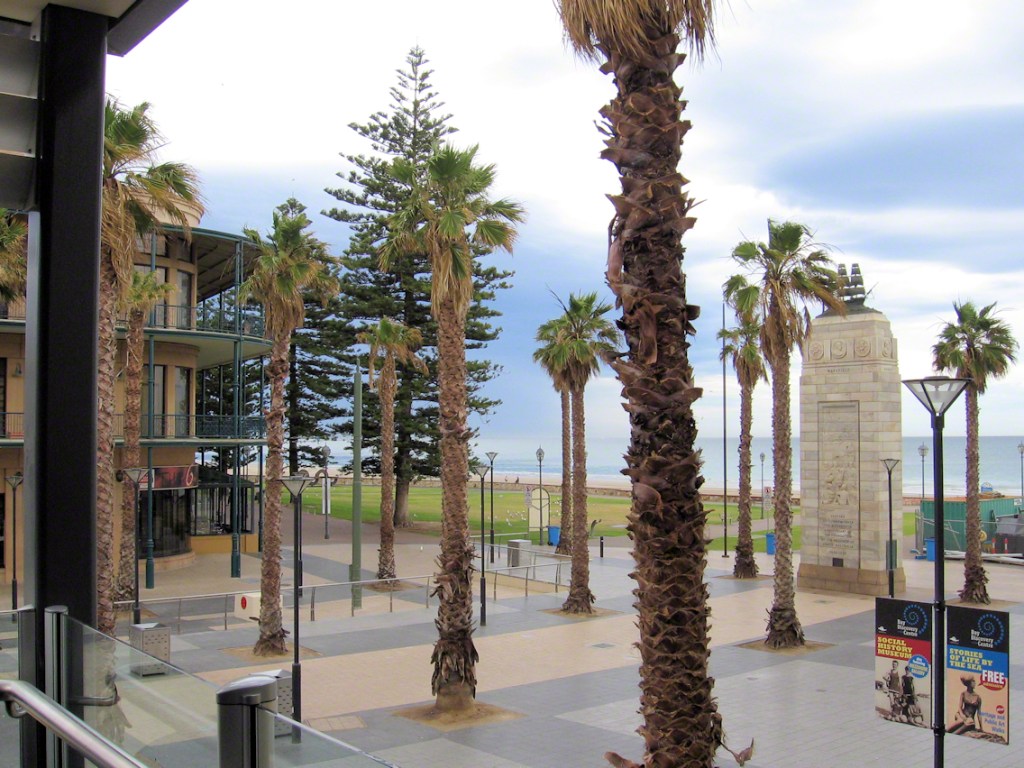
    Tarted up over the decades, today with tall palms and water-features. The shops, cafés and restaurants that line jetty road leading up to Moseley Square, though they change, they are still there and most importantly for the tourists, are open Sundays and public holidays.

    *[Photo 9: Moseley Square © L.M. Kling 2006]
    [Photo 10: Sunset over Moseley Square © L.M. Kling 2010]

    Still There: Some Sort of Amusement Park

    That’s why we go to Glenelg, right? A famous dating place or hang-out for youth. In my teenage years, I followed my date around the games arcade as he sampled all the pinball machines. Yawn!

    A friend sourced the sideshow for lovers and got herself into “trouble”.

    Memories of parking in the carpark in the early morning under the inert Ferris Wheel, and furtive romantic moments before the inevitable knock on the window by the local policeman.

    Over the years, the sideshow alley vanished, but still near the carpark at the end of Anzac Highway, the Ferris Wheel sat idle, a skeleton of its light-garnished self. Then this carpark turned into a round-about, high-rise apartments grew along the foreshore, and the sideshow morphed into a massive brown lump called “The Magic Mountain”.

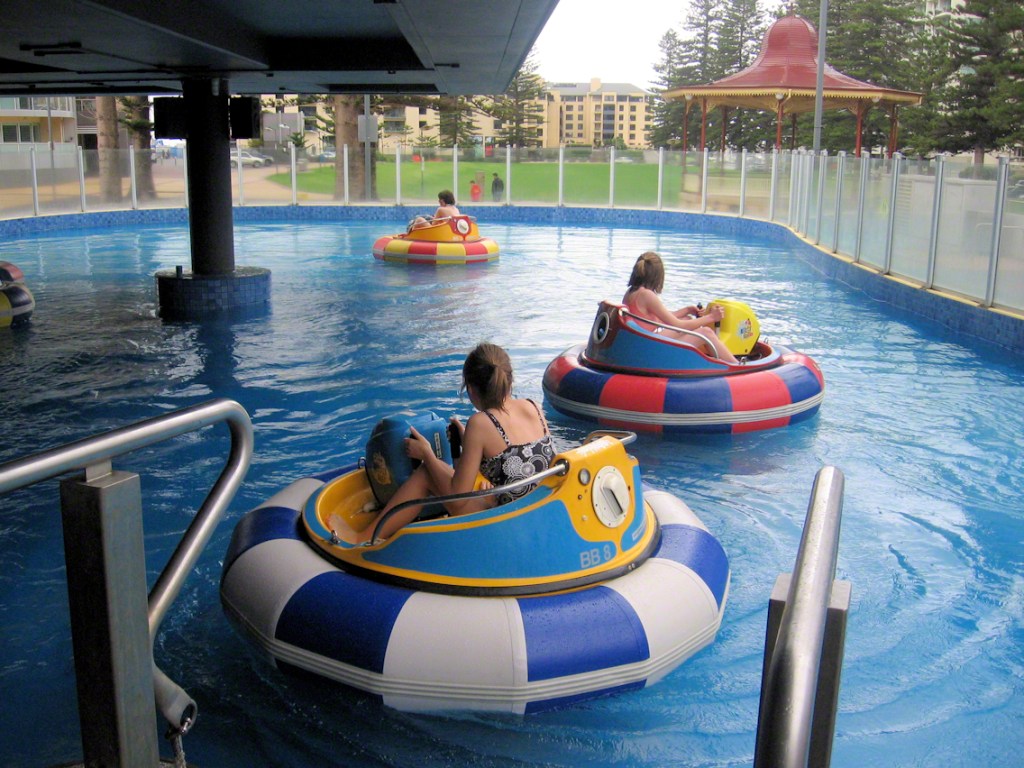
    My sons enjoyed birthday parties in this mountain’s cave, chasing Pokemon, bumping in floating boats, and slipping down the waterslide.

    Then the “Magic Mountain” went off, replaced by “The Beach house”. Same amusements as before without the “magic” of the mountain. The Ferris Wheel now sits in front of “The Beach house”.

    *[Photo 11: Boat Bumping at Beach House © Lee-Anne Marie Kling 2010]

    Nearby, high-rise apartments have grown alongside the marina and with them, a delicious array of cafes and restaurants to feed the foreshore wanderer.

    *[Photo 12: Marina in the moonlight © L.M. Kling 2017]
    *[Photo 13: Now the ferris wheel has moved, centre stage in Moseley Square © L.M. Kling 2021]

    Still there: The Beach

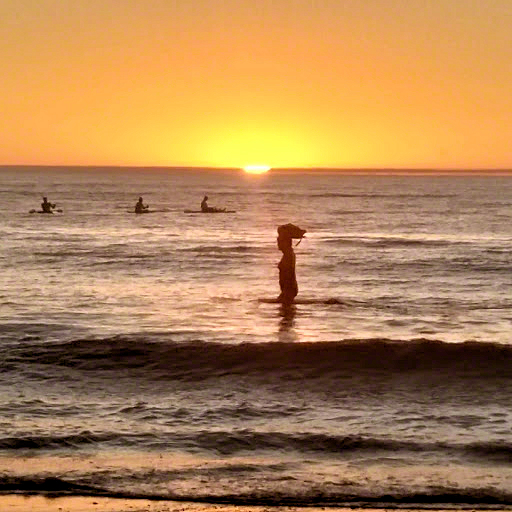
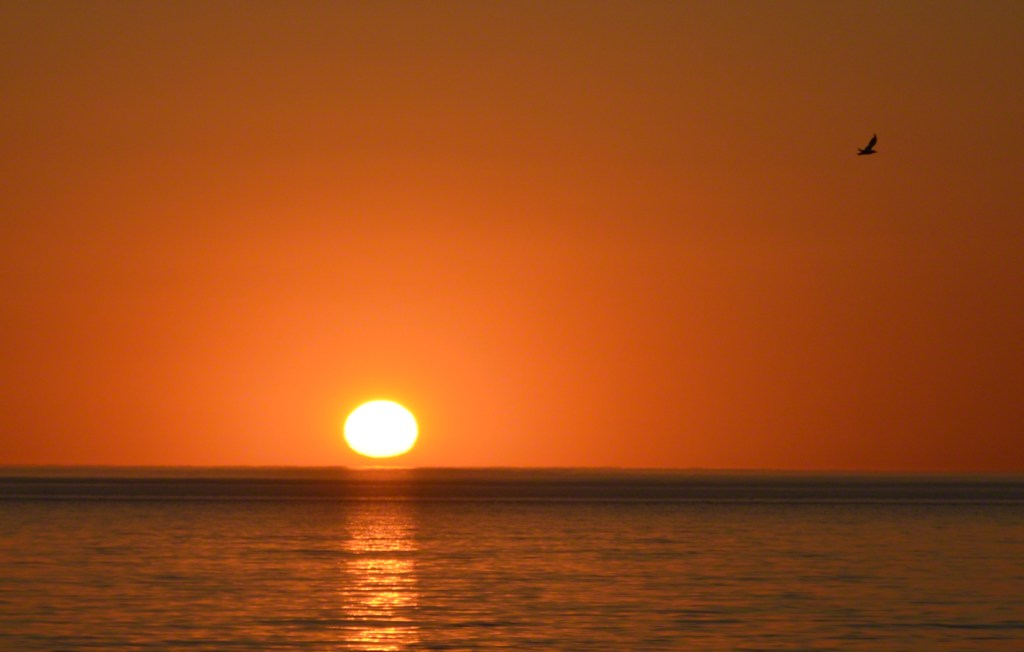
    Ever faithful, ever beautiful, the setting to summers filled with family teas by the beach on the lawns, fish ‘n chips with soft drink or cheese and gherkin sandwiches with cordial. Grandparents busy themselves with crossword puzzles while Mums and Dads swim in the waves with kids by the jetty. Then after, while sitting and licking an ice-cream, families watch the sun bulge bright orange as it sinks below the horizon of sea, overhead in the cloudless sky, a plane from Perth streaks a jet-stream, and on the water, there’s a sailboat, swimmers and paddle-boarders.

    [Photo 14: Watching paddle-boarders © L.M. Kling 2018]
    [Photo 15: Foreshore fun © L.M. Kling 2008]
    [Photo 16: Kitsch Sunset with seagull © L.M. Kling 2018]


    And people, who walk the boardwalk, play on the sand, and frolic in the water, on a balmy summer’s evening, beam with smiles on their faces. This is the constant memory, through the decades of changes, this is the memory that stays with me of Glenelg.

    *[Photo 17: Sunset contemplation of Mr K © L.M. Kling 2018]

    © Lee-Anne Marie Kling 2017; updated 2019; 2020; 2024

    *Feature Photo: Sunset at Glenelg © L.M. Kling 2019

    ***

    Dreaming of Adventure?

    Read more of the adventures of the T-Team in my memoir, The T-Team with Mr. B: Central Australian Safari 1977 and Trekking With the T-Team: Central Australian Safari 1981 available on Amazon and Kindle. Check them out, click on the links below:

    The T-Team with Mr. B: Central Australian Safari 1977

    Trekking With the T-Team: Central Australian Safari 1981

    Trekking Thursday–Free Christmas Treat

    PANICKED

    [Extract from Trekking With the T-Team: Central Australian Safari, available free on Amazon.]

    Rain, Mud and Lost in the Flinders

    Monday July 20, 1981

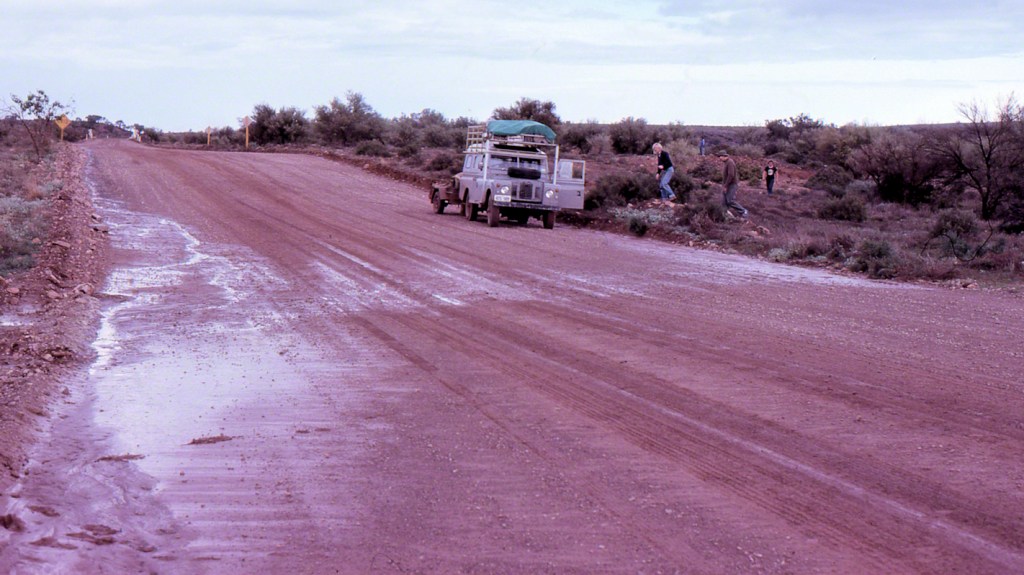
    Fat dollops of rain struck my sleeping bag, waking me.

    ‘Oh, al-right!’ I mumbled before peeling the sleeping bag from me. I slipped on my shoes and as I was already fully clothed, I shuffled to the campfire.

    The rain stopped.

    [Photo 1: Rain on the Road © C.D. Trudinger 1981]

    Hours dragged as we struggled to eat our cereal, drink beverages, answer the call of nature, and then pack our bags.

    My older cousin, C1 was missing for what seemed an eternity. Younger cousin, C2 commented that his brother liked to read on his “business” ventures.

    I laughed, ‘Our toilet is inaccessible for hours when my brother goes. He doesn’t like books, so I don’t know what he does when he goes.’.

    ‘Well, at least it’s only twice a week,’ my body-building brother said.

    Dad’s eyes widened. ‘What? You only go twice a week?’

    ‘Yeah? How often do you go, Dad?’

    ‘Two or three times a day,’ he replied.

    ‘What?’

    ‘Yeah, that’s normal.’ Dad poked the coals and flames leapt into action. ‘Sure you’re not constipated? I’m not sure your Protein diet is a good idea.’

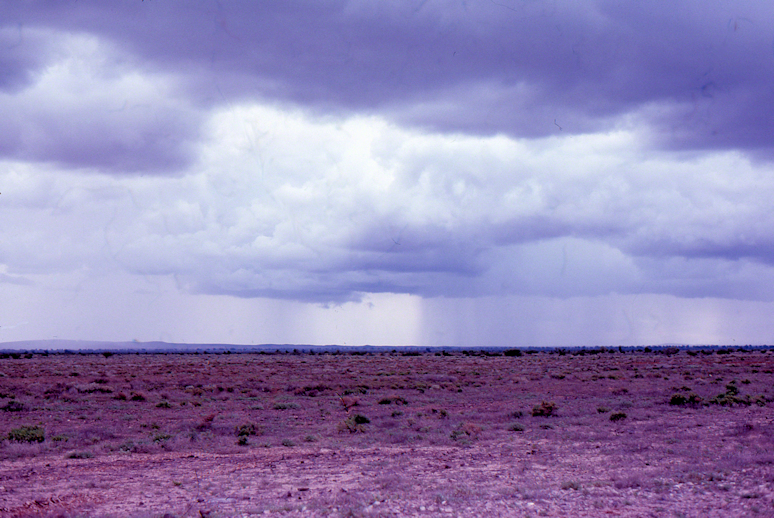
    [Photo 2: Desert Storm (c) C.D. Trudinger 1981]

    Richard shook his concoction and examined the plastic Tupperware containing Protein-powder mixture. ‘Nup, it’s fine.’ With a teaspoon, he stirred the raw egg floating on top of the bubbles, and then swallowed his liquid breakfast in three gulps.

    C1 returned shovel in hand and a grin spread between his over-night shadow. ‘Ah! That’s better!’

    Dad grabbed the shovel and toilet paper and disappeared into the bush. As we waited for each member to do their “nature-walk”, rain plopped into the sand.

    [Photo 3: Flinders Ranges © C.D. Trudinger 1981]

    We left the Flinders camp mid-morning in the rain, then rattled over corrugations and lumbered through water-washed floodways. An hour into our journey, we stopped at Hawker where the boys selected lollies, and chewing gum to occupy their bored mouths for the hours of travel to come.

    C1 and C2 picked out miscellaneous items they’d forgotten to pack. C1 placed his purchases on the weathered bench and reached for his back pocket. He patted it, and his eyes widened. He jammed his fingers into his pocket, patted his side pockets, and pushed his hands into them and pulled out the lining. He glanced around his feet. ‘Oh, oh! I think I left my wallet behind in the creek,’ he said. While he continued to search the floor, and his pockets, we pooled our money to cover C1’s expenses.

    Despite C1’s lamentations that his wallet contained his driver’s license, passport, visa, and thirty dollars, a wall of steady rain threatening floods, discouraged us from returning to the camp. Dad was sure it was too late to find it. ‘The floods would’ve washed it away,’ he said.

    [Photo 4: Hawker © L. M. Kling 2007]

    On the road through the Flinders Ranges, Dad stopped driving for us to photograph the ranges cloaked in mist. On one of our photo stops, the boys discovered the sport of rock-throwing.

    Our family friend, TR tracked us with his film camera as we all tried to smash beer bottles with rocks.

    Further north, rain pelted our vehicle and lightening flashed. At the bridge near Leigh Creek, we passed a car, bonnet jacked up, and a couple peering at their dead engine.

    [Photo 5: Road on way to Leigh Creek and Woomera © L.M. Kling 2013]

    Richard, came to the rescue and within thirty minutes, resolved their engine issues and sent them on their way. I wish he could have been that efficient with the Rover’s pack-rack!

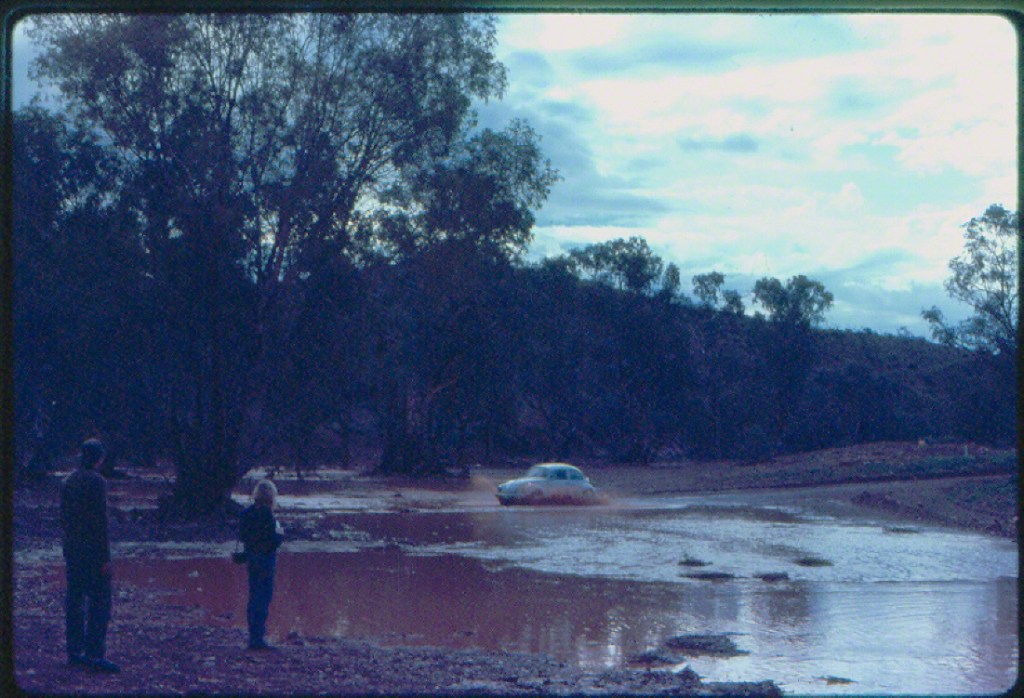
    While Richard was repairing the car, we inspected the railroad track, the bridge of the over-flowing creek, and then watched a Volkswagen splashing through a pool of muddy water.

    [Photo 6: Volkswagen having fun with puddles © C.D. Trudinger 1981]

    At Lyndhurst, we filled up with petrol. Twelve miles out from there, we camped by a disused train track. We used some of the sleepers for firewood. Birds gathered in a cluster of She oak and eucalyptus trees. Stratus and high cumulous clouds gave rise to a stunning sunset of gold, orange and flares of red.

    [Photo 7: Desert Sunset © C.D. Trudinger 1981]

    ‘Wow! What a glorious sunset!’ I said and then turned to C1. ‘Pity about the rain and losing your wallet.’

    C1 looked up from his book-reading and sighed, ‘I’ll have to manage without it, I guess.’

    [Photo 8: Skipping Stones © C.D. Trudinger 1981]

    ‘Perhaps we can look for it on the way back.’

    ‘Ah, Lee-Anne, always the optimist.’

    © Lee-Anne Marie Kling 2017; updated 2020; 2023

    Feature photo: Railway Track Leigh Creek © C.D. Trudinger 1981

    ***

    Christmas Treat Free!

    How did, I as one eighteen-year-old girl with five men, survive camping two months in the outback?

    What did the T-Team discover as they boldly explored where few people have gone before?

    And, did C1 ever find his wallet?

    Find my travel memoir on Amazon and in Kindle.

    Click on the link below:

    Trekking With the T-Team: Central Australian Safari 1981

    Travelling Thursday–Mt. Giles, Central Australia

    Christmas Holidays are approaching. For me it’s been party time this week. One party after another, especially yesterday with three parties, all in one day. I’m hoping that once the rush and busyness is over, I can rest, relax and start planning our next holiday. Perhaps it’s the same for you.

    In the meantime, here’s a revisit to Central Australia and the T-Team. This time when my brother and I became lost on our descent from Mt. Giles.

    Virtual Travel Opportunity

    For the price of a cup of coffee (takeaway, these days),

    Click on the link and download your kindle copy of my travel memoirs,

    The T-Team With Mr. B: Central Australian Safari 1977

    The T-Team with Mr. B: Central Australian Safari 1977

    Trekking with the T-Team: Central Australian Safari. (Australia)

    Trekking With the T-Team: Central Australian Safari (United States)

    Time Travelling Thursday–Postcard from Basel

    Postcards: Basel, Switzerland

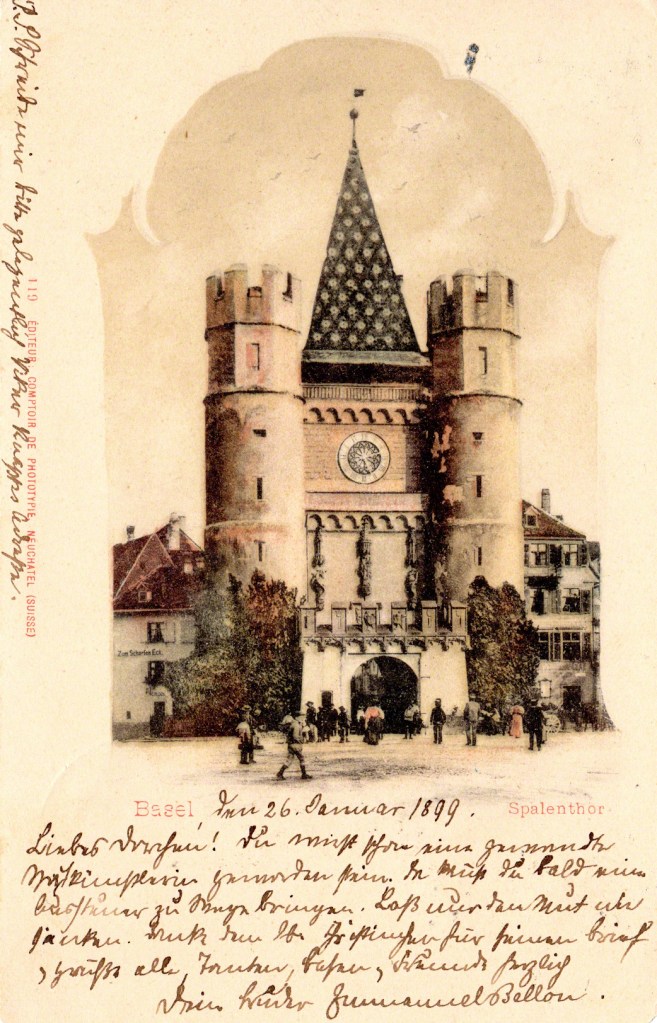
    [This postcard of the Basel Minster (German: Basler Münster) was delivered to its recipient in 1899. Theodora Bellan, the recipient was my Great-grandmother’s house maid. Imagine! Those were the days when ancestors had house maids. My grandfather who was my Great-grandma’s son-in-law, collected postcards and so, ended up with this one. I wonder if he considered, back then, probably some 80 to 90 years ago, that, one of his descendants (me) with the K-Team would visit the birthplace of my husband’s mother? Would he have envisaged the changes to this city and the challenges the K-Team faced visiting this city of Switzerland?]

    K-Team Adventures in Basel — August 2014

    Not so early, for once, on this particular Saturday morning, Hubby’s brother P1, Granny K, Hubby and I headed for Basel. We regretted not rising early. Near Zurich, cars on the autobahn came to a virtual standstill and continued that way till Basel.

    [Photo 1: First impressions of Basel; Münster Fahre © L.M. Kling 1998]

    Having taken twice as long to get to Basel, and then taking time to squeeze into a very narrow car park in the middle of the city, once released from the confines of the car, Granny went in search of toilet facilities. She found some close by only to discover they took her Swiss Franc and failed to deliver relief as she couldn’t open the door. We hunted down the street in search of a toilet. Migros would surely facilitate the desperate. No, only if you patronise the establishment do you get the code to get into the room of relief. The Rathaus? No, joy there—closed for business. Ah, MacDonald’s! Off Granny and I ran. By this time, I was becoming a tad desperate for a wee break. I had a plan. Buy some McChips and a McWrap and get the Mac-code and we’re in business. Had to line up, though. The men waited outside. We waited. They waited. Finally! Service and the sacred code of the Holy Mac-Grail, the toilet.

    [Photo 2: The Rathaus closed for a meeting © L.M. Kling 2014]

    When we eventually emerged, much relieved, Hubby said, ‘You took your time. We’ve been waiting 25 minutes.’

    ‘It’s not like Basel’s flush with them,’ I replied.

    ‘I guess that’s why I haven’t seen many people walking around with bottles of water,’ Hubby muttered.

    [Photo 3: The crowds through the Rathaus Gate © L.M. Kling 2014]

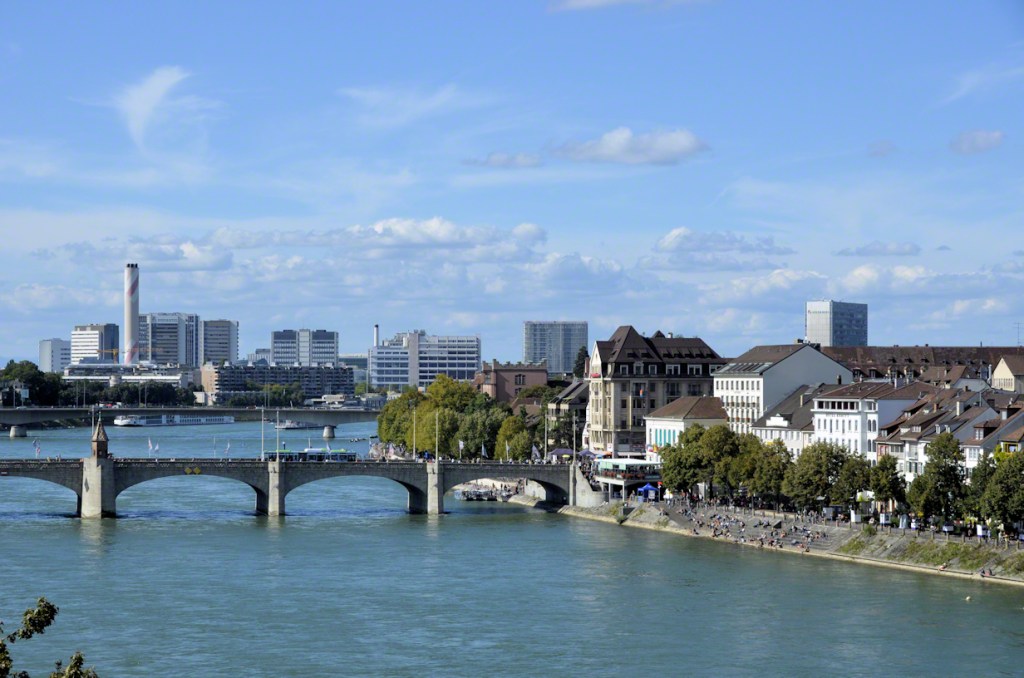
    We fought our way through the Saturday shoppers and holiday crowd over the bridge and to the Kleine Alstadt to find a bench to sit and eat our lunch. Ironically, free benches were the Holy Grail there, but toilets, now we didn’t need one, were in abundance, including open air urinals!

    We did find some ratty old seats near a playground and some youth nearby with a ghetto blaster booming out Spanish hip-hop! Oh, well, it was a seat and I enjoyed watching the people and the happy ambience of the sunny Saturday afternoon.

    [Photo 4: Altstadt (old town) © L.M. Kling 2014]

    But P1 slouched in his seat and pouted.

    ‘What’s wrong?’ Granny asked.

    ‘We haven’t seen anything,’ P1 mumbled.

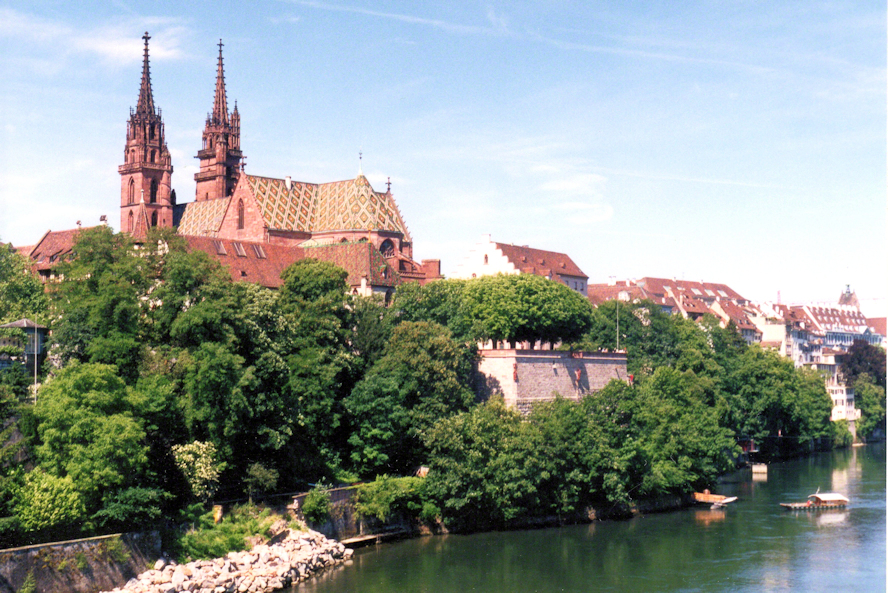
    However soon enough we did see some sights. We saw the outside of the Rathaus with its mural artworks—the inside still closed for a meeting! Approaching the cathedral known as the Basel Minster, I exclaimed, ‘Ah, I’ve been wanting to see inside this cathedral with the tapestry roof for ages. Last time when we were here in 1998, we didn’t have time to look inside.’

    [Photo 5: Basel Minster © L.M. Kling 1998]

    ‘It was Sunday, then and the Cathedral was closed for a service,’ Hubby said.

    ‘Oh.’

    We entered the Basel Minster and marvelled at the simple beauty of the sanctuary. A service was starting in half an hour, so we had to be silent and not take photos. But I did take some anyway…

    [Photo 6: Inside the Minster’s sanctuary © L.M. Kling 2014]

    After a while, Hubby found me and asked, ‘Have you seen P1?’

    ‘No.’

    Granny came up to us. ‘Have you seen P1?’

    ‘No, he must’ve climbed the tower,’ I said.

    Hubby texted P1 and he replied he’d been asked to leave as a service was about to take place. It just hasn’t been P1’s day.

    [Photo 7: The Cloisters—Basel Minster © L.M. Kling 2014]

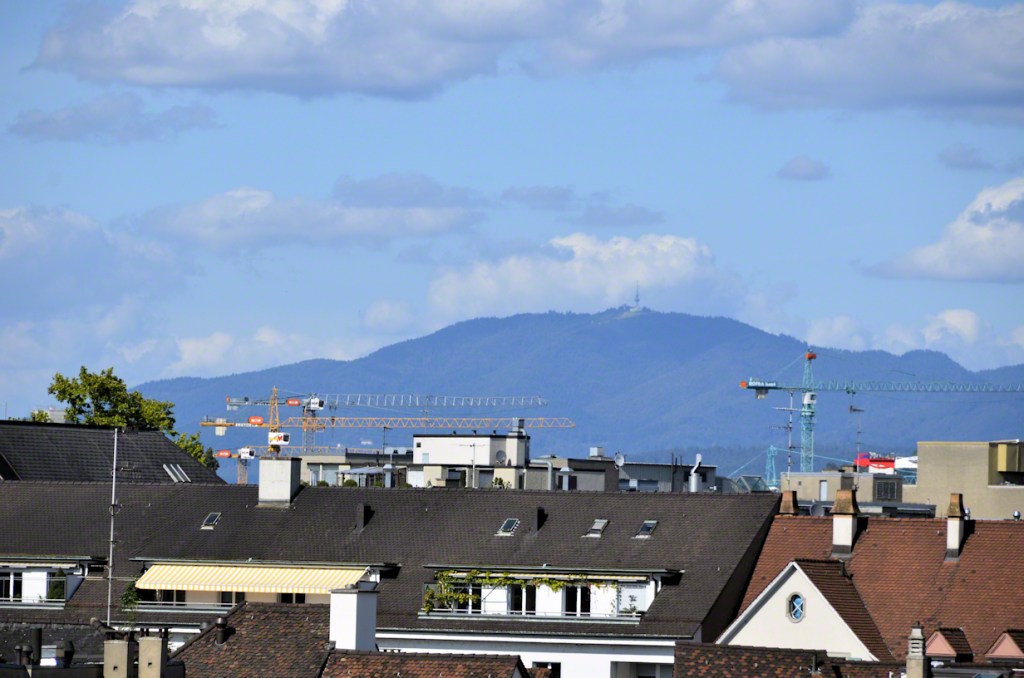
    After meeting P1 in the square, we then walked through the cloisters next door to the Basel Minster and then marvelled at the vista of the Rhine, the city and the mountains in the distance. Hubby pointed out the Blauen Hoch, the mountain we’d climbed while in Badenweiler.

    [Photo 8: Rhine vista © L.M. Kling 2014]

     [Photo 9: Blauen Hoch in distance © L.M. Kling 2014]

    On our way back to the car, we walked through the Altstadt to the Kunst Museum. Too late by this time to explore but Hubby and I hoped we could return next weekend to see the museum. Never happened…Maybe next time???

    [Photo 10: Hubby and the Rodin sculpture in courtyard of Kunst Museum, Basel © L.M. Kling 2014]

    And finally, Granny asked Hubby to drive past the church where she was baptised. Unfortunately, it was only a drive through, more road works and nowhere to park. At least the church bells started ringing as we crawled past to the delight of Granny.

    © Lee-Anne Marie Kling 2014; updated 2020

    Feature photo: Postcard of Basel Minster Front and Back © 1899

    ***

    And now, for something different…from Europe…

    Dreaming of an Aussie Outback Adventure?

    Experience Historic Australian outback adventure with Mr. B

    in

    The T-Team with Mr. B: Central Australian Safari 1977

    Or come on a trek with the T-Team in

    Trekking with the T-Team: Central Australian Safari 1981.

    ***

    And keep an eye out for a Black Friday Free offer…

    Free from Friday November 24, 2023 until November 28, 2023…

    My novel that ventures into an alternate universe in the

    War Against Boris Series…

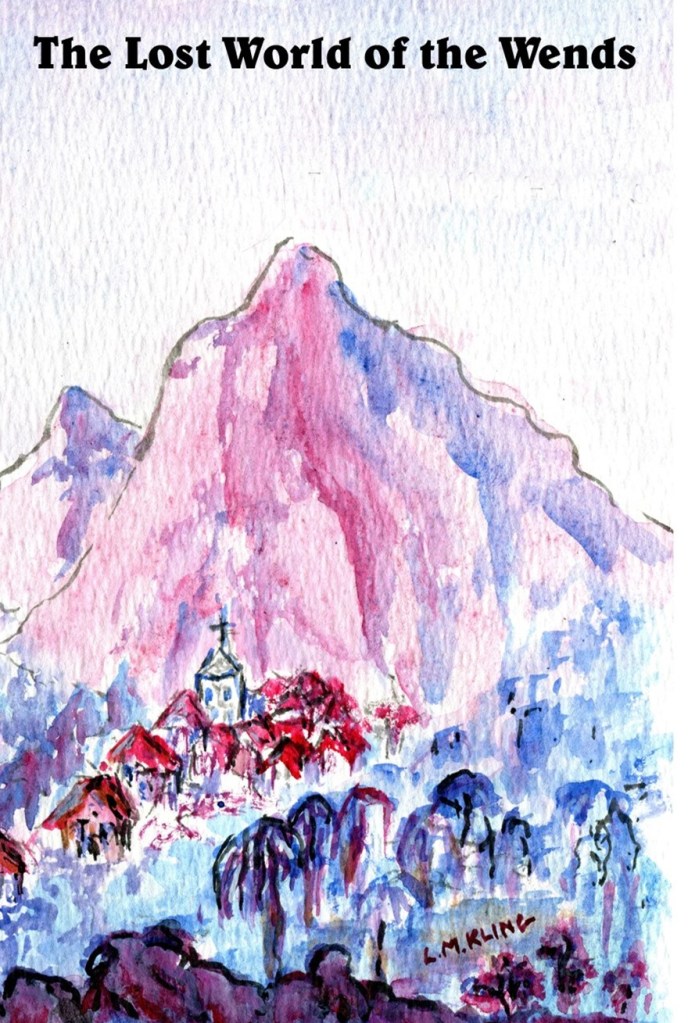
    The Lost World of the Wends

    Where 19th Century Eastern Europe meets the 21st Century…

    Family History Friday–My Rogue Ancestry

    [As a child, I frequently had dreams where I was locked up in a prison cell and couldn’t get out. When, through family history research, I discovered the plight of my young (at the time) great-great Grandfather, I realised the origins, genetic or spiritual, of those dreams.]

    My “Convict” History

    I admire a former convict, an ancestor of mine. Okay, you may think, yeah, of course, she’s an Australian—these days they wear their convict heritage like a badge of honour.

    No, actually, my great-great grandfather Friedrich Schammer lived in Silesia which is now part of East Germany or Poland today. Rubber borders, you see. His crime was trivial by our standards today in the West. But then, so were the crimes of shiploads of convicts who were transported from Britain and Ireland to Australia in the early nineteenth century. (For this reason, I have included photos from my visits to convict settlements, Port Arthur and Sarah Island, Tasmania, as my two-times great grandfather, was living his life in Silesia around the same time, in the early nineteenth century.)

    [Photo 1: Port Arthur was a recipient of many convicts from Britain and Ireland © L.M. Kling 2009]

    My great-great grandfather Friedrich spent less than three months in prison for this crime he did not commit, but I admire the way he handled his dire situation.

    How did he get into this trouble?

    According to the family history book of this particular branch of the family, in the town in which my great-great grandfather studied as a medical student in the 1820’s, the military came to power and enforced strict and arbitrary rules. I might add here that my ancestor had already endured hardship, having been orphaned as a child, suffered poverty and then, his older brother who was his guardian, died from typhus. I imagine, these events spurred him on to be a doctor.

    [Copy of Portrait painting: Two-times Great Grandfather, Friedrich August Schammer courtesy of Schammer Family History © 1922. Painting circa 1850]

    Anyway, in this university town of Jena, the students protested against their restrictions to their liberty by reacting against the ridiculous laws the military had brought on the town. Some of these laws were that there be no singing in the streets, no wearing of caps and waving of flags. The students protested by marching in the streets to the town square, singing and waving flags. All went smoothly and peacefully with no trouble from the authorities.

    Then some of the young men, probably after drinking a few beers, became bolder as young men do tend to become. They threw rocks at windows; action that got the authorities’ attention.

    [Photo 2: View from window of former café in Port Arthur © L.M. Kling 2009]

    The military swooped and arrested many of the protestors. My great-great grandfather was walking past the action and was in the proverbial wrong place at the wrong time.

    Arrested and tried, though otherwise of exemplary character as a good Christian belonging to the Moravian Brethren, Friedrich was convicted and sentenced to prison for six months. I might add here that I have learnt recently that in Europe, the judge or judges determine the fate of the defendant. Whereas in the United Kingdom, United States and in Australia a jury (twelve randomly selected citizens) under the decide the fate of the accused.

    It seems by his account and letters, a certain beadle in town had it in for my great-great grandfather Friedrich.

    [Photo 3: Captain’s Quarters up on the hill, Port Arthur © L.M. Kling 2009]

    Yet Friedrich accepted his time in prison and made the best of the situation both for himself and others. He studied, enjoyed the view of the valley from his prison room (I think he was in a low security prison) and used his medical knowledge and skills to help those around him.

    Great-great grandfather Friedrich’s quiet conduct and enrichment of the prison community was noticed by the authorities, and they released him less than three months into his term.

    [Photo 4: A view of convicts on the other side of Friedrich’s world may or may not have enjoyed in Port Arthur © L.M. Kling 1995]

    Released, Friedrich’s ordeal was not over. The university where he’d been studying banned him from returning to study there. His reputation tarnished, the villagers shunned Friedrich.

    However, Friedrich did not give up. He moved to Berlin and keeping a low profile, completed his studies at The Charite University Hospital and graduated as a Doctor of Medicine. He had a heart for the poor, having been poor himself, and would treat those in need without demanding payment.

    My great-great grandfather demonstrated those godly qualities I admire—justice, mercy and compassion. And perseverance, even in the face of adversity.

    Philippians 2:14-15—Do everything without complaining or arguing, so that you may become blameless and pure, children of God without fault in a crooked and depraved generation, in which you shine like stars in the universe…

    Feature Photo: The Cry of the Convicts, Sarah Island Ruins © Lee-Anne Marie Kling 2011

    *** 

    Note: Port Arthur housed what British authorities considered the worst of the convicts transported to Australia in the early to mid-nineteenth century. I visited this convict settlement in 1981, 1995 and 2009. A place well-worth visiting to learn from the mistakes made from the past (how not to treat fellow human beings). Although the place appears serene, the presence of the tortured ghosts of the convict past can still be felt.

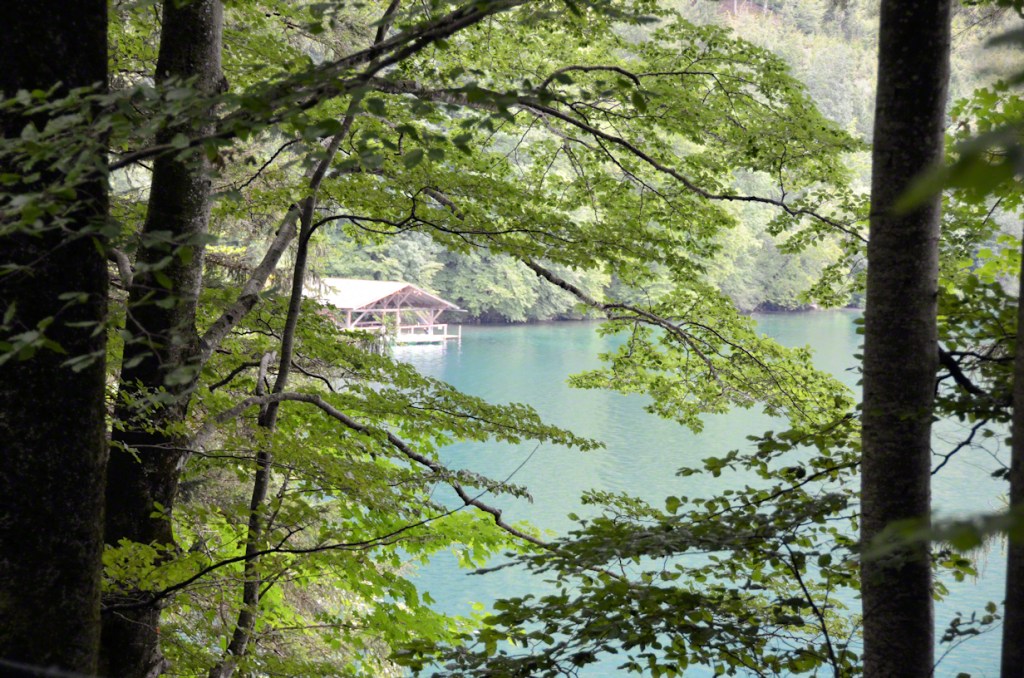
    Sarah Island situated in the Macquarie Harbour on the west coast of Tasmania, imprisoned the worst of the worst convicts transported to Australia in the early nineteenth century.

    I have visited Sarah Island as part of the Gordon-Franklin River Cruise, both in 2001, and 2011. I highly recommend this cruise—a bucket list for travellers—history, wilderness, rare beauty of unspoilt rivers and rainforest and…excellent food. And not to mention entertainment. After your cruise I highly recommend that you see the historic play, The Ship that Never Was. It’s about convicts who build a ship to escape their prison island to make their way to South America. In January in 2024, this play celebrated 30 years of performances in Strahan.
    © Lee-Anne Marie Kling 2016; updated 2020; 2023; 2025

    Resource: History of the Schammer Family, Based on the work of Dr. A.H. Francke and J. Gemuseus, Written by Reinhold Becker, Herrnhut, 1922, Printed Gustav Winter, Herrnhut in Saxony and Translated from German by Rebecca Gnüchtel 2009

    ***

    Virtual Travel Opportunity

    For the price of a cup of coffee (takeaway, these days),

    Click on the link and download your kindle copy of one of my travel memoirs,

    Experience Historic Australian outback adventure with Mr. B

    in

    The T-Team with Mr. B: Central Australian Safari 1977

    Or come on a trek with the T-Team in

    Trekking with the T-Team: Central Australian Safari 1981.