Tuesday Thoughts–On Writing

[Again, COVID, that uninvited guest has thwarted my visit to Carol’s. This time although she’s well, she’s a close contact and must isolate for 7 days. Meanwhile, I have been working on my writing and have been reflecting on what I have learnt makes for a good story.]

Unbelievable to Believable

Unbelievable, that’s what they said about my novel. Unbelievable. Is that why my first novel, Mission of the Unwilling has failed to thrive? Why there’s no feedback? Or is it a case of someone who’s not a Young Adult, and just not into Sci-Fi?

Whatever, I consider this feedback valid and believable. Over the next few months, I plan to revisit Minna’s world and her adventures at the mercy of Boris and learn from my venture into self-publishing. Nothing is wasted. The take-away from the most recent honest feedback—make my stories believable.

What does this mean for me as I refine the craft of story-telling?

  1. My characters are real to the reader.
  2. The setting is authentic, so that the reader can step into my constructed “world” suspending all disbelief.
  3. The audience buy into the journey they take into that world.

But, what does “suspending disbelief” mean. I mean, really? I mean, when I revisit my stories, to me, the characters are alive, the setting an on-site movie set, and I gladly invest in the tale told. Not so for some of my readers, apparently. In truth, I’m too close to my work to view it objectively. I need and appreciate feedback from others. I’d go as far as to say that most writers benefit from a second, third, fourth or umpteenth pair of eyes to make their work the best it possibly can be.

Photo: How believable do you find Sherlock Holmes? © Lee-Anne Marie Kling 2014

So, from the perspective as a reader, that extra pair of eyes on other works, here’s what I’ve learnt that suspends disbelief and do some unpacking of techniques that make characters, setting and journey more believable.

  1. Believable characters: Someone with whom you connect. You know that person. You’ve met them. You’ve had lunch them. You’ve admired them. They’ve annoyed you with their quirky habits. They’re those people you see across a crowded coffee shop and already you’ve constructed a whole story around them, by observing their posture, expressions and gestures. You invest time following what they’ll do, what will happen to them. Believable characters don’t have to be human, but they do need human qualities and personality for readers to relate to them.
  2. Believable setting: Best woven into the forward-moving action of the story. The writer describes the setting with the five senses, what you: 1) see, 2) hear, 3) touch, 4) smell, and 5) taste. And for the world to be memorable, the author picks up something unique or odd about the place. For example, I may write of Palm Valley in Central Australia, ‘Ghost gums jut out of the tangerine rock-face, and a soft wind rustles through the prehistoric palms.’
  3. Believable Story: You need to convince your readers that such a sequence of events can happen. A skilful writer uses the technique of cause and effect. The character makes a choice, and their actions result in consequences often leading to dilemma that must be resolved. Readers are more likely to engage with proactive characters who influence their environment and others, and who make active choices to change and grow, rather than the passive characters who have every disaster happen to them, and their problems magically solved.

Yes, pile on the misery, pile on the challenges, don’t be afraid to get your characters into strife; that’s what the reader’s looking for. But remember, the chain of events must be believable. An article by Laurence Block, Keeping Your Fiction Shipshape*, describes the relationship between storyteller and audience is like enticing readers onto a cruise ship, keeping them there, and delivering them back to port with a good satisfying end.

It’s the skill of the storyteller to convince the audience. If the characters are believable, the setting is believable, and the action believable, your readers will enjoy the ride and complete the journey you, as the storyteller, takes them on.

© Lee-Anne Marie Kling 2016; updated 2022

Feature Photo: Line up for Notre dame Cathedral © Lee-Anne Marie Kling 2014

[Why Notre dame? Victor Hugo, the author of Hunchback of Notre-Dame, spent the first three-quarters of the book describing the setting. Useful if you visit Paris, but does nothing for moving the story forward.

Also tourists willing to invest in the journey to climb Notre-Dame by waiting several hours in the long line that stretched the length of the Cathedral. What will they see? The gargoyles (characters), a view of Paris (setting) and a climb and walk through the Cathedral (the journey).]

*Reference: Laurance Block, “Keeping Your Fiction Shipshape”, article in The Writers Project Handbook of Novel Writing © 1992

***
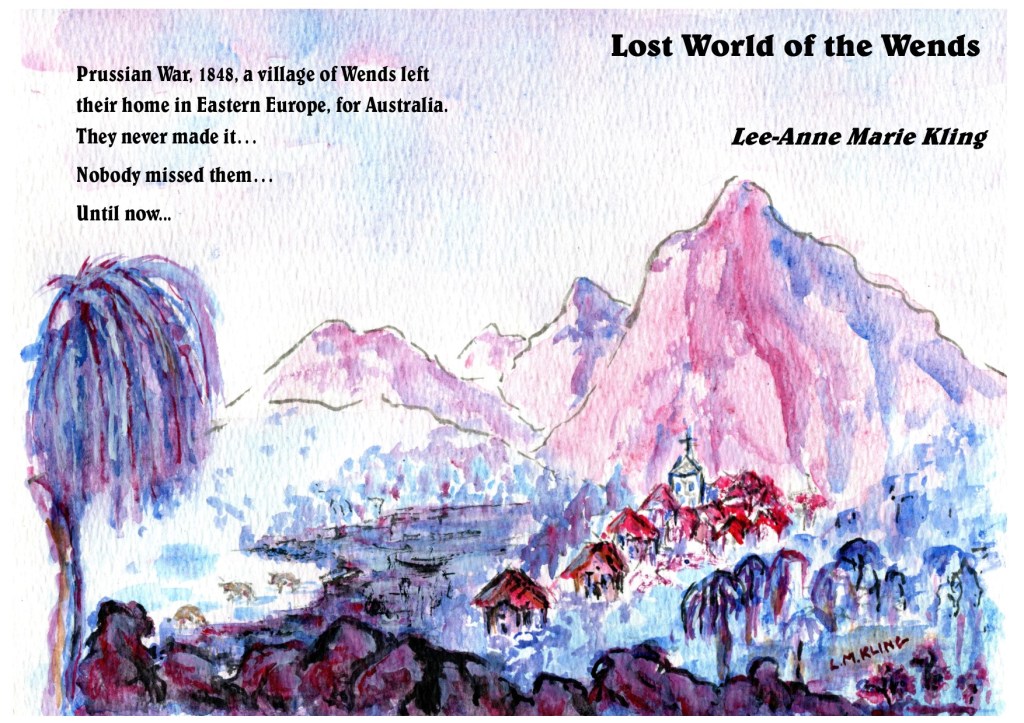
Read more, and lose yourself in this tale where the nineteenth century meets the twenty-first…

Click on the link,

To download my novel

The Lost World of the Wends

Or…

Or discover how it all began in The Hitch-Hiker

And how it continues with Mission of the Unwilling

Short Story Sunday–Much Ado About Golf

[Triggered today by all these shifty and inconsistent rules by which we must abide in this day and age, reminds me of some traumatic experiences concerning rules playing golf with my beloved late father.

This story is based on those experiences, but the characters and situation have been changed. As so often happens with us writers, life experiences can be good material for a short story, or even a chapter in some future novel.]

TRUE LOVE

Polly

Australia Day, and the last vestiges of a less-than-perfect summer holiday wilt in the sweltering heat in the foothills of Adelaide. A blowfly beats against the window, in time to the droning of the radio, doom and gloom, global warming, and politics. Nine in the morning and thirty-four degrees Celsius—already!

I sit at the kitchen table. I’m the sitting-dead, the zombie of no sleep after a hot night, no gully breeze and me sticky and sweaty, tossing and turning and Mum’s chainsaw of snoring filling the house.

Mum enters the family room and I recoil. ‘Ugh! Mum! How could you!’

‘It’s our family day, Polly, dear. I’m wearing my lucky golf shorts.’

‘Those legs should not be seen in public! Oh! How embarrassing!’ I cover my eyes shielding against the assault of mum’s white legs under cotton tartan shorts. At least she wears a white T-shirt; better than nothing. Matches the legs, I guess.

Dad drifts into the family room. He’s looking at the polished cedar floorboards while tying up his waist-length hair in a ponytail. He wears his trademark blue jeans and white t-shirt with a logo of some rusty metal band. That’s Dad. He’s a musician.

I look to Dad. ‘Dad, why do we have to play golf? Why can’t we just have a barbecue by the beach like my friends?’

‘Because, this is what Mum wants to do,’ Dad says. ‘We’re having a family day together before Mum gets all busy with work, and you get all busy with Year 12.’

‘But, Dad, we always play golf. And it’s not family-building, it’s soul destroying.’

‘We’re doing this for Mum.’

‘That’s right, Polly.’ Mum strides down the hallway and lifts her set of golf clubs. ‘Ready?’

Dad and I follow Mum to the four-wheel drive all-terrain vehicle. The only terrain that vehicle has seen is the city, oh, and the only rough terrain, pot holes.

‘The person who invented golf should be clubbed,’ I mutter.

‘Polly!’ Dad says. ‘Mum loves golf. We play golf on Australia Day because we love Mum, okay?’

I sigh. ‘Okay.’

***

‘What a way to ruin a pleasant walk!’ I grumble as I hunt for that elusive white ball in the bushes. Rolling green hills all manicured, a gentle breeze rustles the leaves of the gum trees either side. My ball has a thing for the trees and bushes and heads for them every time I hit the ball. And if there’s a sandbank, my ball plops in it like a magnet. And don’t get me started on the artificial lake.

Dad and Mum wait at the next tee ushering ahead groups of golfers.

My ball doesn’t like the green and flies past it. I’m chopping away at the bushes near Mum and Dad.

Mum smiles at me and says, ‘Are you having a bad day, Polly?’

Understatement of the year. I swing at the pesky white ball.

‘Remember to keep your eye on the ball,’ Mum says.

I fix my gaze on Mum and poke my tongue at her.

***

It gets worse.

I straggle to the tenth after twenty shots on the ninth. Mum and Dad sit on a bench sipping cans of lemonade.

‘Well done! You’ve finally made it halfway,’ Mum says.

I stare at her. The cheek! Now she’s got white zinc cream over her nose and cheeks. ‘You look stupid, Mum. Like a clown.’

‘You look sunburnt, dear,’ Mum offers the sunscreen, ‘come and put some on. There’s a pet.’

I glance at my reddening arms. ‘Can I stop now?’

‘You may not,’ Mum says. ‘We’re only half way. Now, come and I’ll put some sunscreen on. You don’t want to get skin cancer.’

‘I won’t if I stop.’

‘Come now, Poll, it’s our family day,’ Dad says.

‘Oh, alright.’

Mum pastes me with sunscreen. ‘Where’s your hat? Have you lost it? You need your hat.’ She finishes covering me with a bottle-full of sunscreen and offers me her tartan beret. ‘Here, you can wear mine.’

I jump away. ‘No! Ee-ew!’

‘Come on!’ Mum thrusts her hat in my face.

‘No!’ I say. ‘I’m not wearing any hat! It gives me hat hair.’

Mum shakes her head, replaces the beret on her bleached bob before placing her ball on the tee. As she stands, legs apart, eyes on the ball, the wooden club raised ready to strike, I watch her behind; not a pretty sight, I might add.

Mum turns slowly, her eyes narrowed at me. ‘Would you please stand back? You’re casting a shadow. Don’t you know that it’s against golfing etiquette to cast a shadow?’

I step aside. ‘No, I seemed to have missed that one.’

Mum swings her club back. She stops again. She rotates her body and glares at me. ‘You’re still casting a shadow.’

‘This isn’t the Australian Open and you’re not the “Shark”. Have I missed the television crews?’

‘Don’t be sarcastic,’ Mum says. She’s acting like a shark.

‘Sorry!’ I say with a bite of sarcasm and then retreat behind a nearby Morton Bay Fig tree.

Mum arches back her polished wood, then stops a third time. She marches over to me and snarls, ‘You are in my line of vision. Take that smirk off your face!’

Dad shakes his head while tossing his golf ball in the air and catching it.

‘It’s not for a sheep station,’ I say and then edge further around the thick trunk.

Mum stomps her foot and rants. ‘Now, that’s just ridiculous! Over-reacting! You haven’t changed. You always over-react. Grow up, Polly!’

I slink over to Dad and stand next to him. ‘Am I in your way, now, Mum?’

Mum shakes her club at me. ‘I’m warning you.’

Dad tosses the ball higher in the air and says, ‘Ladies, calm down.’

Mum puffs, lowers the club and strolls back to the tee. She swings.

‘She’s not in a happy place, Dad,’ I say, ‘she can’t be enjoying this family day. Next Australia Day we’re having a barbecue. And we’re using her golf sticks for firewood.’

Mum looks up. The club having shaved the top of the ball, caused it to dribble a few centimetres from the tee. Mum’s fuming.

I snigger and then say, ‘Good shot!’

Mum points at the ball. ‘Pick it up! Pick it up, Polly!’

Dad hides his mouth and giggles.

‘What’s your problem, Mum? I’m the one losing here.’

‘Oh, stop being a bad sport and pick up my ball!’

‘Don’t tell me what to do.’ I stride up to the ball. ‘I’m not one of your students.’

‘Do it!’

‘Get a life!’ I say and then grind the ball into the recently watered earth.

Dad claps.

Mum sways her head and clicks her tongue. ‘You have seriously lost it, Polly.’ Then she places another ball on the tee. ‘Oh, well, I was just practising, considering the circumstances.’ She swings and lobs the ball into the air. Shading her eyes, she watches the ball land on the green.

‘That’s cheating!’ I say.

‘It’s just a game,’ Dad says with a shrug.

‘Mum’s psycho,’ I say taking my place at the tee.

A crowd has banked up behind us. I chip the silly white ball and watch it hook into the thick the pine tree forest. Mum and Dad head down the fairway and I commence my next ball-hunting expedition.

***

I catch up with my parents on the eleventh. I’d given up forcing the ball in the hole.

Mum holds a pencil over a yellow card. ‘Score?’

‘Twenty,’ I fib.

Mum says, ‘I don’t believe you.’

‘Thirty, then.’

‘Oh, come on!’ Her beret flops over her left eye. She looks ridiculous.

I wave. ‘Whatever!’

We reach the circle of smooth green grass. Mum races up to the flag and lifts it. She grins at the sound of a satisfying plop. She stands still, her eyes fixed on the hole. Then she raises her arms and dances a jig on the spot. ‘I did it! I did it!’

‘Is she okay?’ I ask Dad.

‘Hole in one, Polly. Hole in one.’

I gaze at Mum performing a River Dance, trampling over the green in her tartan shorts and white legs. She still looks ridiculous. How embarrassing, there’s an audience gathering, watching her performance. Now she’s hopping and clapping away from us.

I sigh. ‘Just my luck! Now she’ll be gloating for the rest of the game.’

‘It has been her day,’ Dad says. He waves at Mum. ‘Well done, dear.’

‘She’s demented,’ I turn to Dad. ‘I don’t know how you put up with her.’

Dad pulls out a handkerchief and wipes his eyes. ‘It’s called love, Poll. You put up with the good, the bad and the ugly.’

‘I say you’re putting up with ugly most of the time.’

‘Your mum’s been through a lot. She had it tough growing up. That’s what love is about. You don’t throw it away, just because it’s not perfect all the time. I mean, none of us are perfect.’

‘But Mum?’

‘You’ll see,’ Dad says and then he taps my back. ‘Come on, it’s our family day. Better get on. I reckon Mum’s danced her way to the thirteenth already.’

© Lee-Anne Marie Kling 2017; updated 2022

Photo: Poatina Golf Course, Tasmania © Lee-Anne Marie Kling 2010

***

In the mid-nineteenth century, a village of Wends, on their way to Australia, mysteriously disappeared…

Who was responsible? How did they vanish?

Want to know more about the trials and tribulations of these missing people from Nineteenth Century Eastern Europe?

Click on the link below:

The Lost World of the Wends