The heat is upon us here in Adelaide. Finally, summer, as I remember it, just in time for school and Australia Day which heralds the end of the summer holidays. This Australia Day will be renowned for being the hottest on record at 45 degrees Celsius.
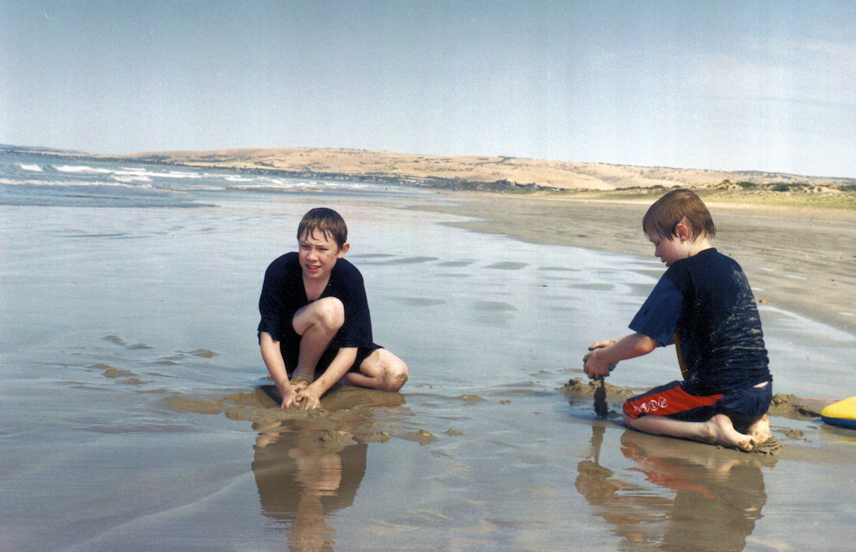
What better way to keep cool than reminisce summers spent cooling down at the beach and hunting for cockle shells at Goolwa.
[May’s our horror party month. We endure enjoy several family birthdays plus Mother’s Day. The last few days I have been stressing because the chosen restaurant for a special “0” birthday, seemed to be dragging their proverbial heels in getting back to us confirming if we could be seated there. Actually, I had used a tried and, so I discovered, not so true that uses the symbol of a familiar table implement, and they had been the one’s inconveniently delaying the response. So, I contacted the restaurant directly by email and received confirmation in the positive of our booking the next morning. Big sigh of relief!
Anyway, this trial reminded me of the recently celebrated Mother’s Day and one that happened and that I shared a few years ago. I will share some of our celebrations and scenery from May/June parties past and present.]
FROM KUITPO TO MEADOWS
Everyone, and I mean everyone in Adelaide must celebrate Mother’s Day. And everyone and their mother go out—eat out, picnic out, filling the parks, beaches, hills and car parks. The whole city—and their mothers, jump on the bandwagon of “mother-worship”, the restaurants filled to capacity, and unless you book months in advance, you won’t get a table for you and your mother.
My mother doesn’t like crowds, and our family struggle to organise themselves a few weeks in advance, let alone months. So, with that in mind, my mother has designated the Sunday after Mother’s Day, as her day.
On that Sunday, a week after all the mother-fuss was over, or so we thought, my family and Mum set off for Kuitpo forest (about forty kilometres south-east of Adelaide CBD). After a week of rain which began the previous Sunday, we were treated with the sun shining, no clouds and a clement twenty-two degrees Celsius. Perfect for sitting around a small wood fire and barbeque. Just what Mum and I wanted for our “Mother’s Day”.
We piled into Mum’s station wagon and cruised down past Clarendon taking the road to Meadows.
‘What happened to the others?’ my older son asked.
‘They couldn’t make it. They had other things on,’ I said. I guess there’s always a cost to changing “Mother’s Day” to suit ourselves as mothers.
After my faulty human navigation skills led us astray as we turned down a road too early, we turned and we trundled back to the Meadows Road. There we sailed to the next turn off, this one sign-posted, white letters on brown, to Kuitpo. I apologised for leading us astray while my husband reminded me he knew the way.
Within ten minutes, we rolled into Chookarloo Camping ground. We’d picnicked here for our designated “Mother’s Day” a few years earlier and had found a clearing for a wood-fire with ease. I remembered a happy, though cloudy day, cold, but the company of family warm. The kids collected a stick insect and I took photos.
The sign at the entrance, though, warned of change. I read it and exclaimed, ‘Oh, we can only have fires in designated fire-rings.’
‘And where are these rings?’ Hubby asked.
‘Around,’ I said. ‘We have to drive around.’
We circled the camp grounds twice. Every clearing furnished with a fire-ring was filled with jolly campers and families munching on their chops and sausages. Cars guarded the cement rings where the occupants had finished lunch and gone on a hike.
We trekked off to Meadows, parked in the main street and trooped into the bakery. The aroma of fresh baked bread and brewed coffee greeted us. So did a variety of empty tables and chairs in the wide porch area with wall-to-wall views through the glass of the Meadows country-side. We settled down at a long table and basked in the sun shining through the windows.
As we supped on our pies and sausage rolls and sipped our cappuccinos, my younger son gazed out at the majestic gum trees, green hills and people with smiles walking up and down the street.
‘I like it here,’ younger son said. ‘It’s peaceful.’
After a pleasant family time, we wound our way back home. More than once, each of us in the car commented on the stunning scenic drive to and from Meadows: the golden sun glinting through the autumnal leaves of the deciduous trees that line the road, the gnarled eucalypt tress, the cows nibbling on grass in the paddocks and horses grazing in the field. We stopped for my older son to photograph the view of the rolling hills to the sea.
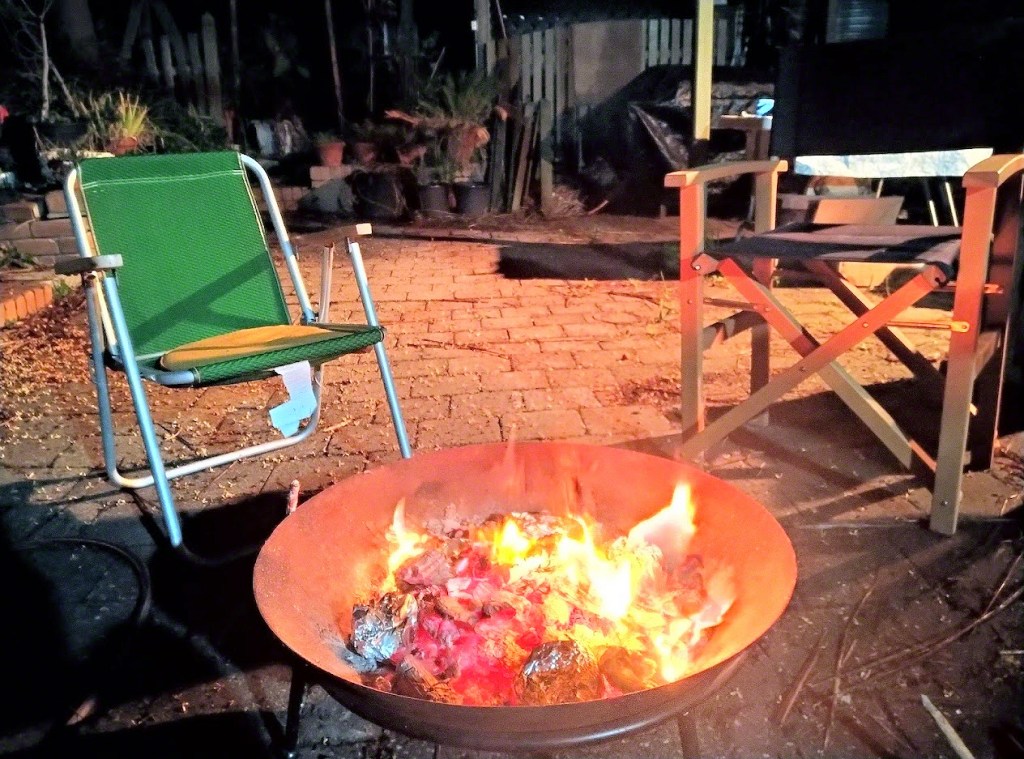
At home, I fired up the brazier. The crowds had commandeered all the fire-rings at Kuitpo, but they couldn’t touch my brazier in my back yard. Let me tell you, we have a country-feel in our back yard. The neighbours’ two huge gum trees with wide girth shade our lawn, parrots congregate and chatter in the branches of those trees, and we even have the occasional koala visit.
My husband cooked the chops and sausages that had been assigned for our lunch in Kuitpo. We had the meat for tea instead. As a family, we sat around the brazier fire and enjoyed a simple barbeque, with a glass of wine. Family stories and adventures were shared into the night.
A perfect end to a perfect day, even though, perhaps as a result of the rule-change at Kuitpo. The secret? We actually talked with each other and listened to each other’s stories.
‘Thank you for a lovely day,’ Mum said, ‘and I mean it. Because going for a drive in the hills, sitting around at the café and then the brazier fire, I got time to spend with my daughter, son-in-law and my grandsons. That’s what I wanted to do.’
[In answer to today’s prompt, I have never been to Kangaroo Island.So close and yet, so expensive to get there.One day I hope to travel there. In the meantime, I’ll continue to enjoy the beautiful beaches of Adelaide and down the Fleurieu coast.]
Sensational Sellicks Beachat Sunset
[Part 2 of the K-Team’s adventure on the Fantastic Fleurieu.]
‘Let’s see Sellicks Beach at sunset,’ I said, ‘it’s a perfect day for a sunset on the cliffs.’
This time, like sheep, the K-Team heeded my voice and followed Hubby and me out from Hallett Cove, and then by car, we made a convoy up Lonsdale Road to the expressway heading for Sellicks Beach.
After the expressway, on South Road, we passed the turn-off to Victor Harbour. I looked back. ‘Um, I can see P1’s car, but where’s your other brother, M’s car?’
‘Behind P1, I think,’ Hubby said. ‘Can’t you see the car?’
I glimpsed something resembling M’s car. ‘I think so.’
He who argues with Sat Nav’s and ignores their instructions, didn’t turn where I told him to, but kept driving on the road above the cliffs. ‘Where do I turn?’ he bleated.
I indicated behind us, but not in a smooth-calm voice that the Sat Nav would have. ‘Back there!’
‘What? Why didn’t you say so?’
Huffing and puffing, Hubby manoeuvred the Ford around making a U-turn. Then he detected a car park on the same level as the road. ‘We should park there.’
‘I think he took the road to Victor Harbour,’ P1 said. ‘He seemed to disappear around the time of that turn-off.’
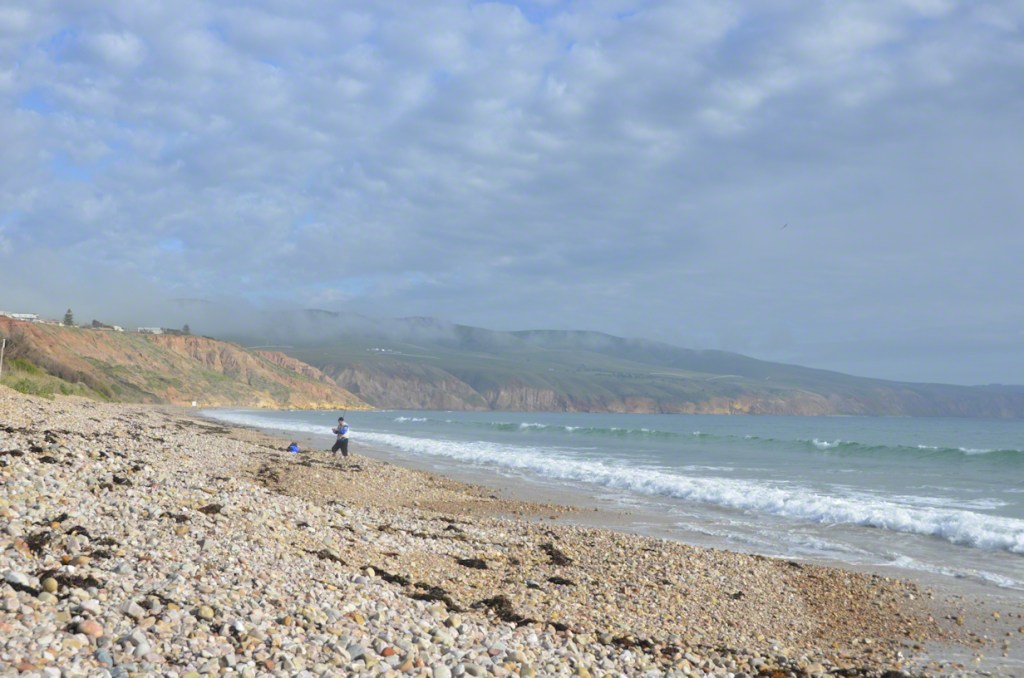
Hubby pursed his lips and shook his head. We waited and observed cars parked on the beach. Waves already lapped at the ramp leading to the beach. Seemed some drivers had left it a little too late to escape the beach and rising tide. Perhaps the owners planned to camp the night and fish. One four-wheel drive vehicle drove through the surf to climb the ramp back to the road.
‘Let’s have some afternoon tea while we wait,’ I said and then opened up the back of the station wagon. Before I’d finished serving coffee and hot cross buns, M’s car rolled down the ramp and parked beside P1’s car. We gathered around as M and his Swiss passengers stepped out.
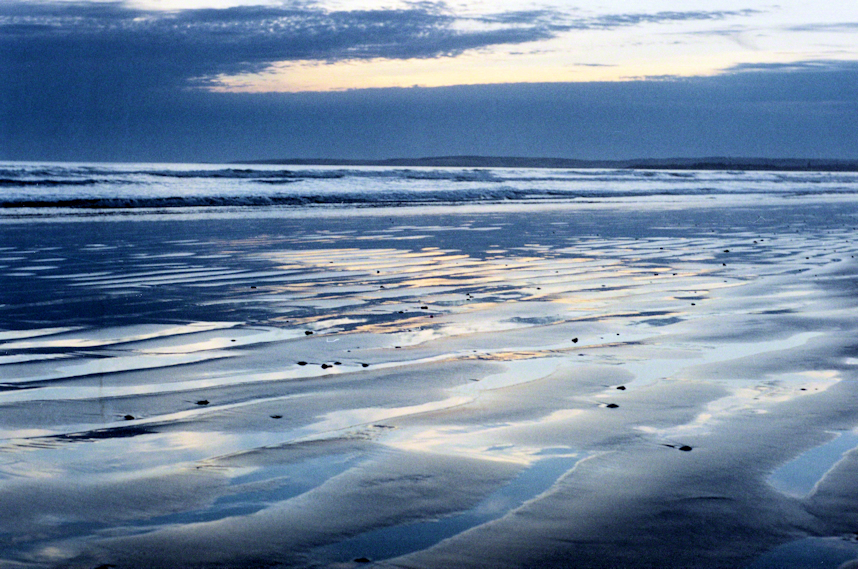
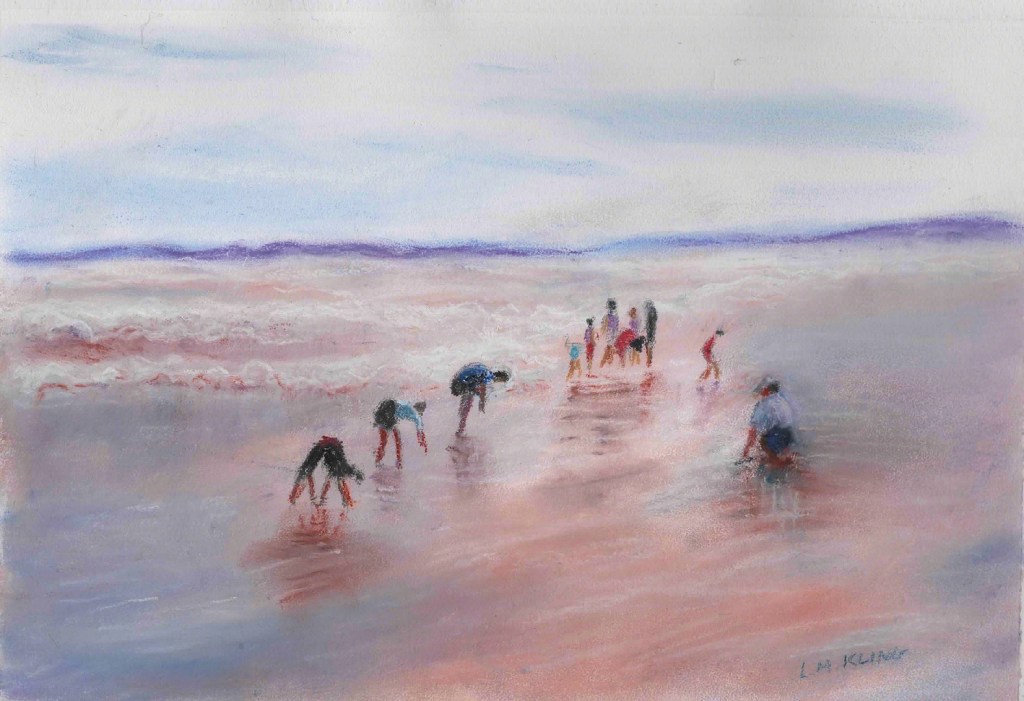
A picture, they say, tells a thousand words. So, what is Cockling at Goolwa’s story? How can the simple heel-toe dance of “cocklers” (people who dig for cockle shells), their feet sinking in soggy sand of the in-coming tide, in the flux of early summer warmth, on a remote beach south of Adelaide tell us? What story worth a thousand words? What was it about this scene that attracted me to capture it? First in photo and then several years later, on canvas in acrylic, and recently in pastel.
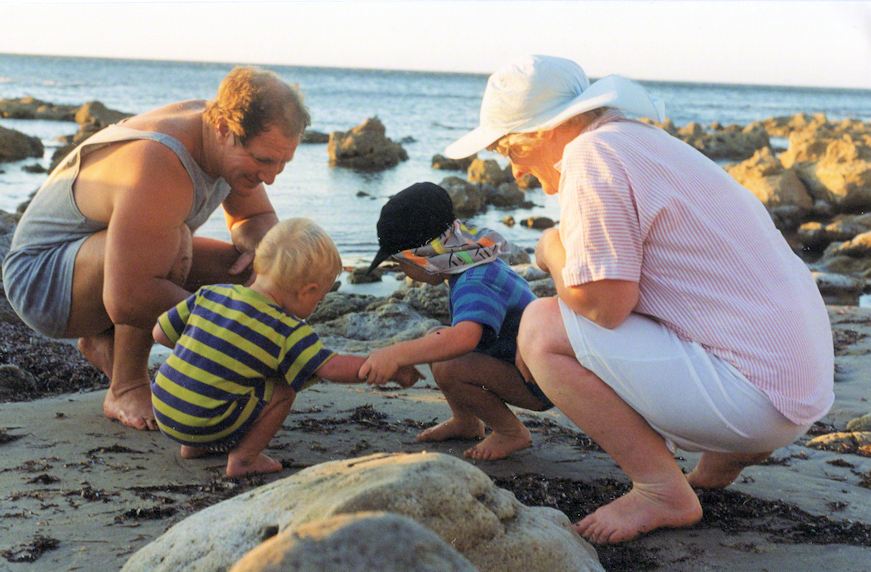
I think the water reflecting the sky, all silver, the people on the wet sand, a mirror, swaying and twisting for cockles captured my attention. I’d been there, on the glassy surface, watching for bubbles, grinding my heel into the bog, feeling for the sharp edges of shell and plucking out the cockles that snapped shut when exposed to air.
‘What will you do with all those cockles?’ I asked.
‘They’re for fishing,’ one of our friends said. ‘Bait for fish.’
‘Hopefully, we’ll catch a few fish and have them for dinner tonight,’ another said.
I imagined fish, fresh from the sea, thrown on the barbeque and the cockle bait inside them buried once again in our stomachs. We continued digging for cockles…family and friends, one with the ancient, outside time—nothing else matters but the cockles.
Goolwa, if I remember, has mounds of spent shells in the sand hills, monuments to generations upon generations of Indigenous Australians, their open-air kitchens and meals. Did they perform the same ritual, on the same patch of wet sand, delving for cockles to fry on their fires? A quick perusal of Google reveals they used nets to collect cockles and catch fish. They then cooked the cockles on a campfire.
We are here, they are gone, but their spirit of history lingers, reminding us, though we seem different, we are the same. We are digging, dancing and delving for our dinner. We are still, in the moment, alone in our thoughts in a forgotten corner of the world, unknown by the world, yet one with this country’s past. And God knows each one of us—each part of us, even the unknown parts of ourselves and our secrets.
What if I shared a little secret—an artist’s secret? Okay, I’ll tell you. I painted this picture in less than two hours. Now, that I’ve told you, would the painting be worth less to you? Must time be equated with worth? Sometimes I do take hours upon hours, layers upon layers, and more hours planning to get the work right. But not Cockling at Goolwa.
I love the beginning of a painting; laying the foundation, engaging my inner-natural child, the paint flowing from a thick brush on a damp canvas, colours blending, mixing as I go. One side of the brush crimson, the other blue and a dab of white. Sienna somewhere there in the foreground shadowing the sand. Mid-yellow added incrementally to shroud the distance in light grey for perspective. Then just a hint of heads of land jutting out halfway across the horizon with a suggestion of ultramarine in the grey. So simple, and sometimes, like with Cockling at Goolwa, the scene emerged before my eyes. In the world of artists, I believe the term “magic brush” or “magic hand” has been used. Um, trade secret, so don’t go spreading it around.
So, there you have it, in less than an hour, surf, sand, sky and tones in all the right places.
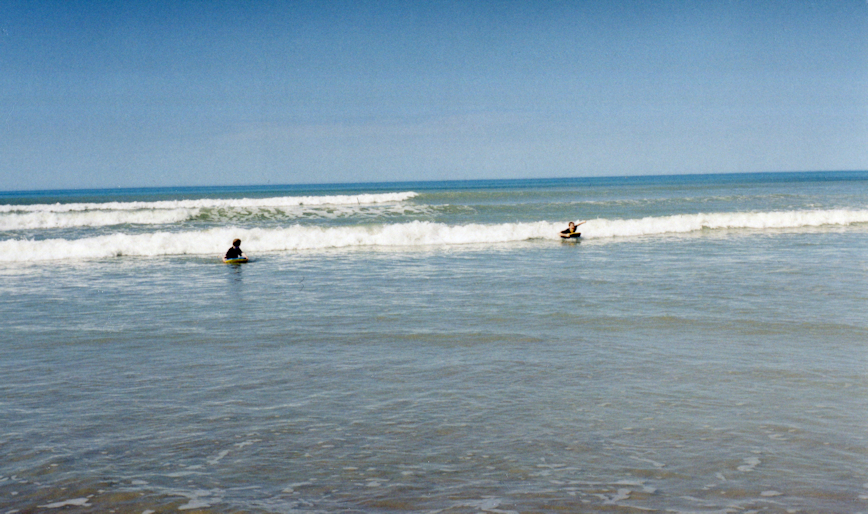
Now for the people, the twisting, turning people, their feet in the boggy sand. How do I paint them? I had a break and drank a cup of tea. I remember not all the children hunted for cockles. Some kids body-surfed in the shallows, some played cricket and one little boy with a wish to be hunted, or to be warm, buried all his body except his head in the sand. I found him and he broke out of his sand-grave, the sand zombie.
‘Don’t go tracking your sandy footprints into the shack,’ I said.
He washed himself off in the surf, then sat wrapped in a towel and shivering in the sun while watching the cockle hunt.
All the while the “cocklers” cockled for cockle shells. Soon the boy joined the hunt for cockles.
Then when the paint was dry, I plotted the people in with pencil and then painted them in with a finer brush.
‘I like that painting,’ a fellow member of the art group said. ‘Don’t do another thing to it. Don’t even frame it. I’ll buy it as it is. How much do you want for it?’
Paint barely dry, I took the work home, signed it and then the next week at our Christmas lunch, I delivered Cockling at Goolwa to them. The buyer showed the work to others at their table and all admired it.
What made another person connect with Cockling at Goolwa? For this person, their son and family spent many summer holidays at Goolwa, doing just that, cockling. Time out, out of time, unwinding, relaxing, happy times, happy memories, captured on canvas…in less than two hours. And I must admit, the story is slightly less than one thousand words.
But, perhaps as you look at the copy of Cockling at Goolwa, you may have a story of your own about the painting. Maybe a painting’s story is not just one person’s story, but stories from many people, one thousand words, or more…












 Tru-Kling Creations