Have you ever played the game, “Telestrations”? It’s all the rage at the moment. It’s like “Chinese whispers” but done with pictures. Long story short, so to speak, after a picture and its associated word goes through eight people, the results can be hilarious.
Let’s just say, I had a “Telestration” moment this morning. A friend showed me a mention of a Trudinger in a book, my uncle, who conducted an orchestra–yes, so far, so good–but who also was missionary in northern Australia. Now I was confused. I don’t remember my orchestra conducting uncle being a missionary in Central Australia. My dad and his older brother were. I reckon the writer had blended the facts of the three brothers together. However, I will check with my aunt.
So, in light of the way history can be twisted and changed over time, below a post from the past …
[Heading up to Christmas, reminds me we all have them: the proverbial “black sheep” in our families. Or it might be the skeletons we want remain hidden.
As it was, in the past week, I didn’t intend to, but it happened. I made another discovery which I can’t wait to tell my mum. I tell my mum everything.
It all began when I did some research on backyard burning and the iconic Besser block incinerator from the 1960s. A fellow writer in our writers’ group was adamant that burning was banned during the summer months back then. However, I remember things differently, and so does Hubby. Anyway, as I was researching, I came across a map of Adelaide CBD during the 1920s. Don’t I just love incidental detective work! After a little more “digging,” I think I’ve found my great-uncle’s clothing shop location. Amazing!
Then, as I delved into the relatives from that branch, My Heritage offered some fascinating information which kept me burrowing down another rabbit hole. I will not bore you with the details, but I will be telling my mum.
So, on another note, here’s a refined re-blog from not so long ago.]
In the Steps of Sherlock Holmes
Some time ago, Hubby and I received our DNA results. Dear Hubby received his a few days before me.
So, over the last year, I have been familiarising myself with the process and slowly building our family trees. Early on, I discovered a truth, which could be said to be a “skeleton” in one of our ancestral lines. I added the details to see if anything further came up. My Heritage calls this a “smart match”. Nothing did, but I left it there.
For certain family members, this truth appeared absurd and too difficult to comprehend. Surely, that ancestor wouldn’t. Didn’t. No one told us that. You have it all wrong, Lee-Anne.
Hence, Lee-Anne (me), being a good person, only wanting the best for the family, deleted the suspect members from that branch of the family.
Then, curiosity set in. Who was that ancestor’s mother? Father? My husband suggested we go down the line to the descendants and put in a particular name.
This I did.
You wouldn’t believe it, but the same results, only this time verified by the official birth and marriage records. My original hunch had been correct. Moreover, in the spirit of Sherlock Holmes, I managed to cross-match the added, yet odd, family members with DNA, and behold, a match.
Now, the reason I’m being so vague about the whole ancestral situation, which I might add, is responsible for our existence, is because out of respect for some people, the details of such conceptions are to remain private/personal; too personal to be published.
Isn’t it interesting that for people who want to protect their reputation, the unacceptable behaviour of other members of their family, ancestors, or close relatives must remain hidden, buried, and plainly, not discussed. Such individuals may even be ostracised from the family.
Yet, such flawed individuals can still be in other circles and be a valued and much-loved member of the community.
My dad’s cousin, Dr. Malcolm Trudinger, for instance. The story goes that he had a problem with alcohol. Legend has it that he couldn’t do surgery without a nip or two before the operation.
Malcolm’s alcohol addiction was too much for his immediate family, who, it would seem, distanced themselves from him. Maybe it was the other way around, and he felt not good enough for them. Whatever…
According to articles about Malcolm on Trove, he was regularly in trouble with the law. Infractions that in the 21st century, we’d consider a nuisance, or minor, but in the 1940’s and 50’s were important. For example, his car making too much noise at night in town. Or even one time, merely driving his car late at night. Another time, he was charged with causing a scene at a function.
Despite these misdemeanours, as I see them (glad my brother and I didn’t live in those times—in his youth, my brother loved doing “donuts” and “burnouts” in his car like in Top Gear at night with his mates), the folk on the West Coast of South Australia loved Dr. Malcolm Trudinger. He was their hero. He once helped rescue people from a shipwreck off the coast during a storm. He cared and was always there for the sick and injured.
I remember my mother telling me the story of how a person, upon meeting my father, and learning his name was Trudinger, sang high praises for his cousin Malcolm. The sad thing was that although he was still alive when Mum and Dad were first married, Mum never got to meet Malcolm.
Dr. Malcolm Trudinger was such a vital part of the West Coast community that they established a rose garden in his honour after he passed away in the early 1960s. We have heard that rose cultivation was his passion, and his roses were prize-winning. My niece discovered the garden when she and her partner were on a road trip passing through Elliston. She couldn’t have been more chuffed having found a Trudinger with a rose garden to his name. It showed Malcolm was a loved member of the community despite his demons.
This is what, I believe, grace is all about—valuing and loving people as they are. We are all flawed. Rather than hide the imperfections, celebrate the person, their life, and the goodness they brought to the community. It’s our pride and wanting to look good to others that makes us cover up our sins or those of our kin. But also, we may be protecting their reputation too.
The reality is, we are all fallen, and we all struggle. No one is perfect. We are all cracked pots. Yet, like in the Japanese art of Kintsugi (the repairing of broken pots), there is beauty that shines out through the cracks.
And so, it is with our imperfect ancestors. When you think about it, it’s the ones whose stories are different and colourful that we find most interesting.
For a sample of where some of the main characters have come from, a short story which will be serialised over the next few weeks. This one focuses on Minna’s future love-interest, Günter and his origins.]
The Choice—Bits
Short Story: Black Forest…in Bite-sized Bits
Bit 1: The Centripetal Force of Günter
Herr Crankendinger cracked the switch on Günter’s open hand. The lad, fourteen years old, the in-between of boy and man, clenched his teeth. He locked eyes with the scowling school master. Günter had the urge to snigger. Not a good urge to have when the school master is beating his hand. Günter pushed down the bubble of snigger rising from his beating chest. His stomach churned, and all fizzed up, the snigger with a mind of its own, rumbled in his throat and then slipped out of his curled mouth.
‘Dumkopf!’ Herr Crankdinger screamed. He hammered the boy’s palm again and again. ‘You will learn!’
‘Aber, the water in the bucket is held by centripetal force, not magic. The man at the Show is not the devil.’
Herr C’s face glowed red and his ice-blue eyes bulged. He stomped his one foot and peg-leg (a casualty of the Thirty Years War), and cried, ‘Heretic!’
In the candle-lit chapel, thirty-nine pairs of eyes stared at their castigated classmate, and the owners of those eyes froze on their cedar benches. One boy in the back row tittered.
Encouraged by the titter of support, Günter continued, ‘Gravity, have you not heard of gravity? Have you not heard of Isaac Newton?’
‘Oaf!’ The teacher pointed at the door. ‘Witch! And don’t come back! Your education is finished. Understand?’
‘Never learnt anything here,’ Günter muttered as he strode between the rows of school boys towards the heavy doors made of oak.
He pushed one open, squeezed through and then bolted. Pigeons fluttered as Günter ripped through the town square, of the small village in the Schwartzwald (Black Forest). First flush of spring made Günter a bundle of nervous energy, especially when he saw three milk maids delivering their buckets full of cow juice to the stalls in the square. He looked at the blonde triplets in their puffy cotton sleeves and blue pinafore dresses, and he stumbled on the cobble stones.
The girls sheered away from him.
‘Oh, keep away from the plague,’ one said loud enough for him to hear.
‘Ugh, he smells like cow dung.’
‘No one would want to marry him.’
‘All he attracts is bugs and flies.’
And the three girls giggled.
‘You’re no beauties yourselves,’ Günter muttered as he dug his hands in his pockets. He didn’t care it was bad manners to dig hands in pockets. Too bad, he thought, then tramped up the hill to his home.
On the way up, Günter glanced in a pond. His nose like the Blauen-Hoch dominated his dusky face, and pimples gathered in clumps like pine trees on his high forehead, square chin and of course, his mountain of a nose. He pulled his thick dark curls over his face to hide the awkward ugliness, and then with his head down and hands buried in his pockets, Günter shuffled up to his home presiding over the village, a mansion crumbling with neglect.
How long before his home looks like those Roman ruins down the road? Günter wondered. Another victim of the Thirty years war that had dominated life in the 17th Century. So close to the sanctuary of Switzerland, and yet…his father had to go and join the cause. So did his older brother Johann. How could Günter as a boy keep the house and home together?
Go on a reading binge and discover the up close, personal and rather awkward relationship between Günter and that nasty piece of cockroach-alien work Boris in…
Oh, dear! I must’ve been deep in the rabbit-hole of painting yesterday. See what I painted in one sunny mid-winter’s afternoon, yesterday. Anyway, being what was intended to be Family History Friday for Tru-Kling Creations, went down a rabbit-hole and ended up somewhere else.
Check out the re-blog of the story of my great-great grandfather from Silesia.
After the phone call to Fifi, Dee leaned back in her chair. ‘Gotcha, Mr. Renard. Gotcha!’ She couldn’t believe her good fortune in Fifi. Didn’t take that “Rannga” much to turn against her former friend.
However, youth group rumours were not enough to “hang” Lillie, she needed hard facts—evidence. She started with the local council office at Glen Huon. After all, most apple picking happened in the Huon Valley, Tasmania. So, a good place to commence digging dirt on her nemesis.
Thankful that she woke up the sleepy young man in the office before the council chambers closed, she trawled through the files he sent her. She was glad that such information about payrolls and workers in the area in 1981, had been digitised. Lillie von Erikson was listed as working for apple orchard owners, Greg and Janine Thomas. However, no mention of a baby or her being pregnant. Dee puzzled over the fact that Lillie, according to Fifi, seemed to have been in Tasmania long after the apple-picking season was over.
What was she doing there after apple picking? Dee wondered.
She moved onto Trove, an online digital archive, that has recorded historic newspaper articles and publications. Searched Lillie’s name in the local and state newspapers from the day.
Nothing.
She calculated when the baby would arrive if conceived in November. Then scrutinized state and also national papers for a birth in the personal pages. August—September 1981, in particular. Nothing. Still, all is not lost. Perhaps she didn’t put the birth in the paper if she adopted the child out.
But a quick check of newspaper dates available revealed that Trove only published papers up to 1950. What a disappointment!
A visit to the South Australian State Library was the next step in the search. There she trawled through the microfiche files for the Tasmanian newspapers, concentrating on births around August and September.
After an unsatisfactory August, she scanned the first week in September.
‘Ah! That looks more like it,’ Dee murmured.
She zoomed in on the notice of a daughter, Zoe, born to Lillie’s apple picking bosses, Greg and Janine Thomas. Detective Dee Berry smiled while resting her clasped hands on her belly. September 1, right in the timeframe too.
‘Interesting,’ she murmured. ‘Did the moll stay to help Mrs Thomas? Or did she give the baby to Mrs. Thomas?’
A check of the births, deaths, and marriages register, and confirmed. Mrs. Janine Thomas was over 40 when she had her first child, Zoe.
‘Not impossible, but suspicious,’ Dee muttered. ‘I think a little trip to Tasmania is what I must do.’ After saving the information onto a file labelled “Moll”, she put in an application for a visit to Tasmania courtesy of the government. After all, it was an enquiry into a murder investigation.
Who knows, Dee smirked, my enemy may be a suspect that needs to be eliminated; one way or another I’ll get her.
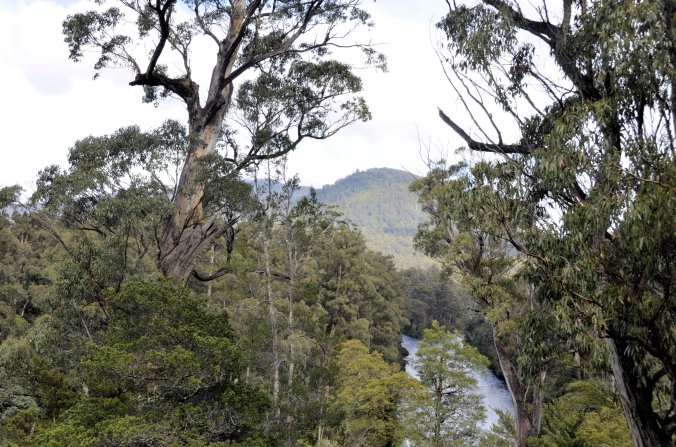
Dee gripped the leather-bound steering wheel of Toyota Corolla hire car as it rumbled up the unsealed road. Won’t tell the hire company about that little detour, she thought. From the Council records, the Thomas farm was hidden way out west, close to the “Great Western wilderness”. The further west she drove, the thinner and rougher the road became.
She passed a tiny town with houses painted in gaudy orange and pastel greens. A purple house stood sentinel at a fork in the road. Dee took the left track hoping to reach her destination soon. She’d given up on the Sat Nav. The designated voice, named Jilly was vague and hadn’t a clue where to go.
Dee was proud that she could still read maps and follow the directions of an old local manning the service station at Glen Huon. He said he’d remembered someone like Lillie 40-odd years back. Strangers were a rarity in a small town of fifty-odd people from where he had come. He said Lillie had walked into the church, and all twenty heads turned to size up the blonde from the mainland.
‘It wasn’t long before rumours were flying,’ the station owner said, ‘pregnant, just like the lady who lived in that purple house you’ll see when you get to the town up there. Rumour has it, she’s got a child from ten different men. Anyways, that’s a lifetime ago now. Back then, if someone sneezed across the valley there, everyone in town would know about it and the person who sneezed would have died from pneumonia. Not much better now.’
Dee must have given him a strange look, because the station owner added, ‘Oh, er, don’t believe the rumours. Them folk up there are all related, married cousins and what not, but they don’t have two heads.’
‘Didn’t think they had,’ Dee replied, ‘I just want to know how to get to the Thomas farm.’
‘Don’t know why you want to go there; the family left years ago.’
‘Do you know where they went?’
The man shrugged. ‘The missus died, so I heard. Daughter’s become some big shot lawyer in Melbourne. Something not right there, she never fitted, you know what I mean. She wasn’t one of us.’
‘Did she look like Lillie, the blonde?’ Dee showed the man a photo she had scanned to her phone of 17-year-old Lillie.
The man paused, squinted and then nodded. ‘Yeah, there were rumours. But we could never prove it. Janine, Mr. Thomas’s missus, always insisted the baby was hers.’
Sometimes characters spring from real life, Sometimes real life is stranger than fiction. Sometimes real life is just real life. Check out my travel memoirs, And escape in time and space To Central Australia.
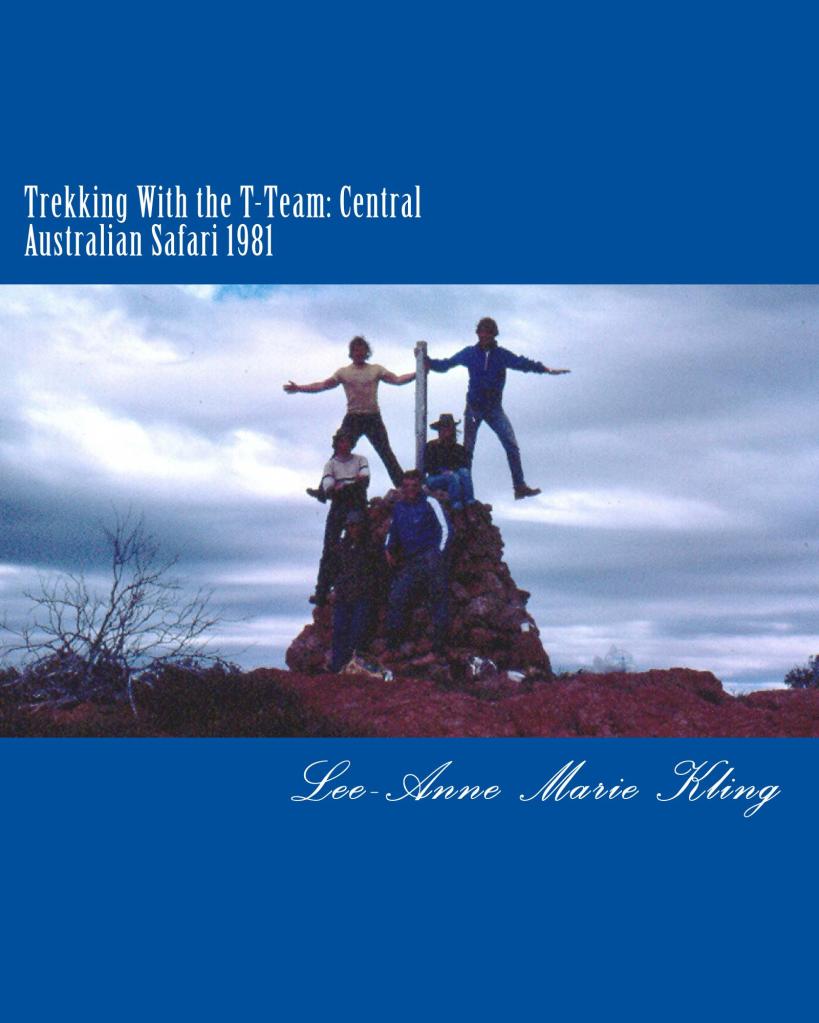
[In 2013, the T-Team, next generation embarked on their pilgrimage to Central Australia. Purpose: to scatter Dad’s ashes in his beloved Central Australia, in Ormiston Gorge. Over the next few months, I will take you on a virtual trip to the Centre and memories of that unforgettable holiday, with my brother and his family; the T-Team Next Generation. This time, the T-Team gather and multiply as we greet our adult sons and our mother (Mum T also known as Mrs T senior) for the day, and the expanded T-Team of us set off to camp at Glen Helen.]
The T-children wanted a campfire. My brother had promised them a campfire. But bushfires in the past year had made campfires, even in the middle of winter in the middle of Australia, almost extinct. On our trip up north this time, each camping ground up until Glen Helen, had restricted fires, and denied the children the pleasure of a campfire. That’s not to say the T-Team Next Generation missed out entirely of some sort of fire to cook our food. We did spend one night in one of those free parking “camps” 30 kilometres south of Marla where we attempted to make a campfire. However, the area was so well picked over for firewood, the few sticks we did scrounge together barely made enough flames to boil a billy. So, no satisfaction regarding campfires. That is, until Glen Helen.
Even far out in the bush, the Glen Helen camping grounds had strict conditions and regulations controlling the operation of campfires. In the Glen Helen camping grounds, there was a designated place for the fire, and we had to provide our own wood. Again, dead wood around the immediate camping site was scarce.
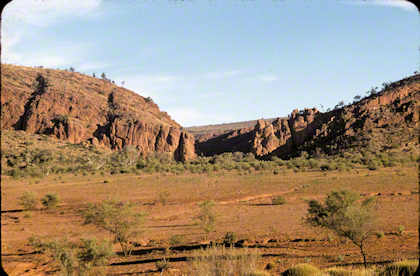
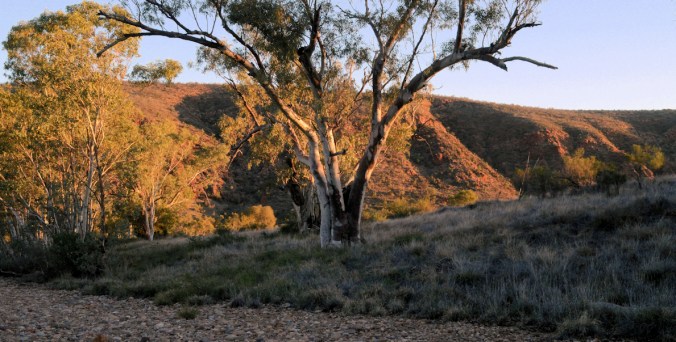
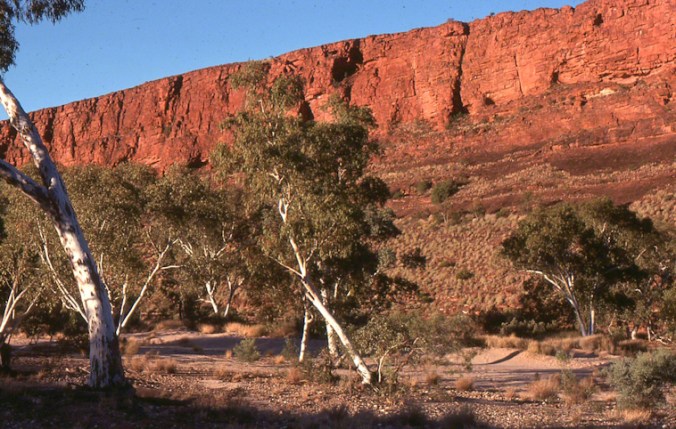
So as the sun sank towards the Western horizon, golden rays blessing the cliffs in hues of pink and scarlet, and the humps of spinifex glowing like lumps of gold, my son and I set out in Mum’s Ford station wagon, down the road in search of a creek offering dead branches for firewood.
As the setting sun deepened the walls of the gorge into hues of crimson, I hobbled down the dry creek filled with smooth rounded river stones. Hard to imagine the creek gushing with water in flood, rushing over those stones, smoothing them to the size and consistency of bocci balls threatening to twist my ankles.
With my camera, a constant companion and permanent fixture hanging from my neck, my focus was not only on dry sticks and logs, but on the scenery. While my son snapped off armfuls of tinder from uprooted river gums that had become casualties of former flooding, I collected snapshots in time of the setting sun, blood-red cliffs, ancient eucalypts towering above the banks and the dry river-bed of stones. Night stole the thin grey-blue light of dusk. With the station wagon stacked full of wood for the fire, and my camera’s memory card full of brilliant photos for my art, we returned to camp.
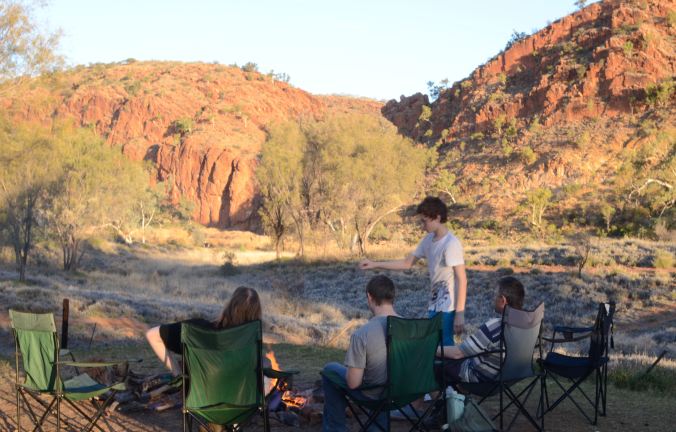
What joy the T-Team Next Generation family had. Well, apart from their schnitzels that had gone off. Thankfully, we were able to share the extra and expensive lamb chops we had bought the day before at the supermarket. We gathered around the fire. The fire that cooked our dinner, then warmed us and the conversation late into the cloud-free night frozen with a sky packed full of stars.
In the past, a fire would burn slowly all night, keeping animals away from camp. The rules of the camping ground forbade that strategy. Conscious that the local fauna may come foraging, my husband packed away all the foodstuffs and loose items back in Mum T’s station wagon.
Some of the T-Lings were not so concerned about the threat of such animals. During the night, though, a half-full cereal packet would prove fair game for a roving dingo.
So, stories told, marshmallows burnt and eaten, most of the T-Team Next Gen retreated to their tents and snuggled into their sleeping bags. Mum T had gone to her cabin way before the rest of us. She hoped to rise early, with my help, to catch the sunrise on Mt. Sonder.
My brother and his son stayed chatting around the campfire. A dingo howled. Freaky. An eerie haunting cry. My nephew was sure he’d come face-to-face with the dingo when he’d taken a trip to the toilets. I left my brother and his son to their conversation around the fire and with the responsibility of waking mum before dawn, I headed to the tent to join my husband and sleep.
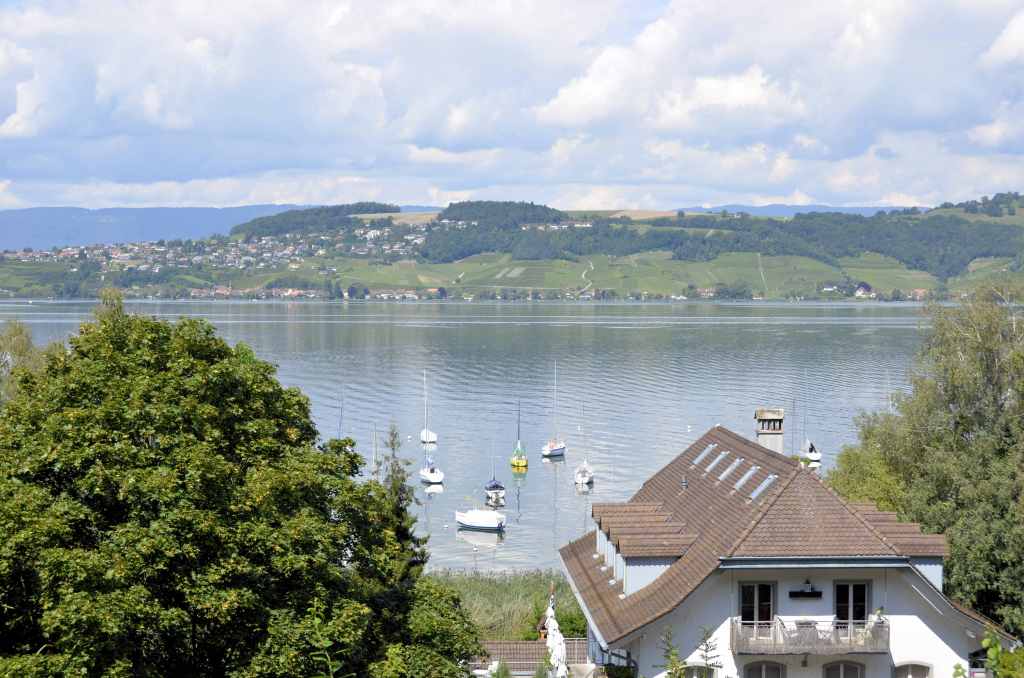
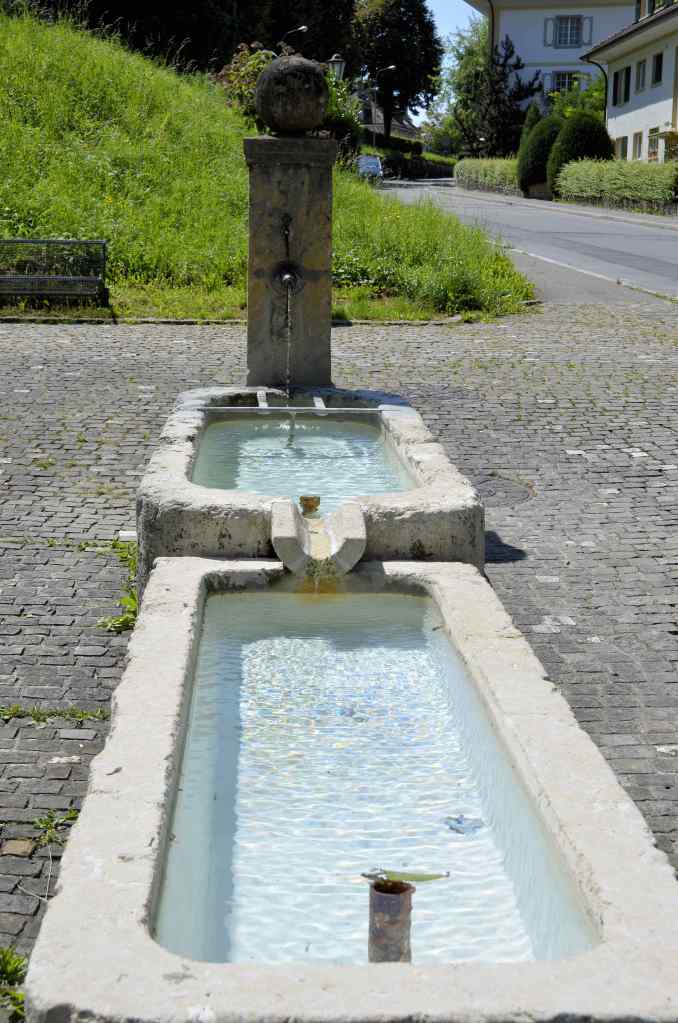
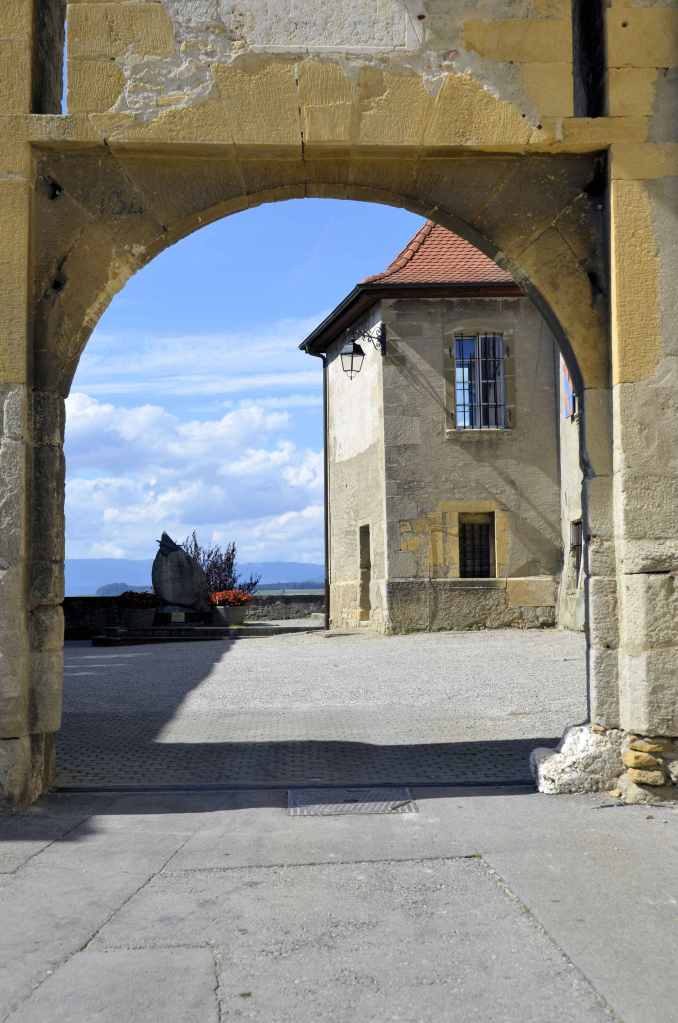
[Have you ever been to a place and had an immediate affinity with it? Well, that’s how it was for me when the T-K Team on their Swiss adventures visited Murten. Loved the place. I’m sure, now, that it wasn’t just the perfect weather, the picture postcard views of the lake and the charming medieval architecture so perfectly preserved. There was something more, which I was to discover recently.
Of course, my younger son would insist on putting a dampener on my dreams—’How can you be related? You’ve got no Western German in your ethnicity,’ he harps on and on about that point. Anyway, we will put that matter aside and I’ll take it up with My Heritage.
All I can say, is that there must be something in the connection I felt with the place. While doing my family history, I came across some ancestors, the De Bons, who lived in Murten, my five times great-grandfather was a protestant pastor in Murten. There were Huguenot connections in the family. And note the museum, where I mention that the Celts lived in Murten. According to my DNA results from My Heritage, my ethnicity is 25% Celt.]
Murten/Morat
Thursday, August 21, 2014, even earlier up as we planned to drive across the country to Bern and beyond, near the French part of Switzerland. Granny excused herself as the last two days had exhausted her and besides, she really needed to catch up with her uncle and auntie.
I might add here that Granny and her family, being Swiss German, were not fans of the French part of Switzerland. The feeling, I’ve heard, is mutual. (Thanks to Nepoleon, the French part of Switzerland only became thus in the early 1800’s. So, when my ancestors were living there in the 1700’s, they would’ve identified as French.)
In Murten, the people speak French. So, when P1 spoke Swiss German to the Museum attendant, she was not amused. We almost didn’t get a Museum pass.
Back to the timeline, and some photos.
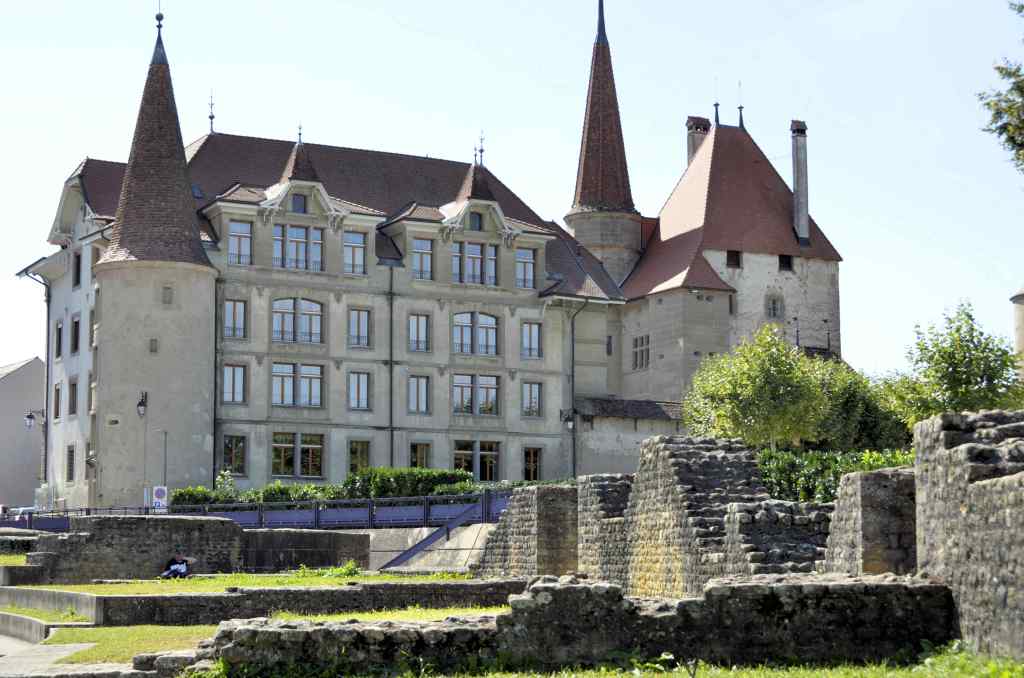
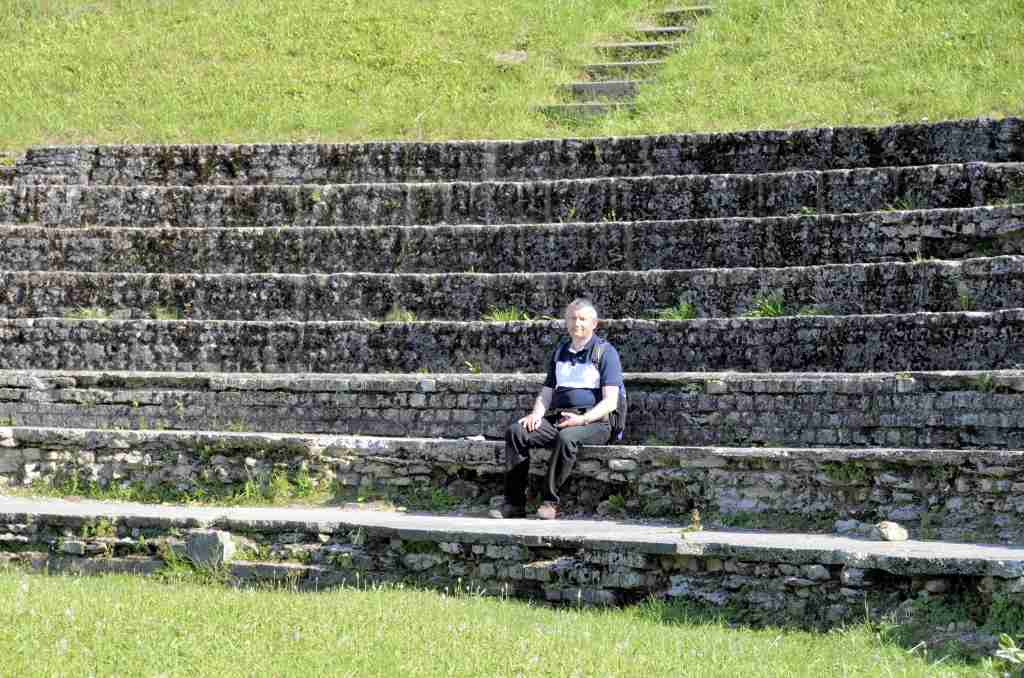
Despite Tomina’s (Tom Tom) and my under par navigational performance (early morning—yawn), we arrived at 11.30am in Morat/Murten and relished a day of summer, eating lunch by the lake, exploring the Old town and its buildings garnished with flowers, the museum of Stone Age, Celtic, Roman and Medieval relics spanning 10,000 years of human settlement around Murten. Followed by a visit to the Roman ruins in Avenches, the ancient capital of the Roman province of Helvitica.
On our return, we suffered the frustration stuck in peak hour traffic, and Granny suffered stress worrying about our late arrival “home”.
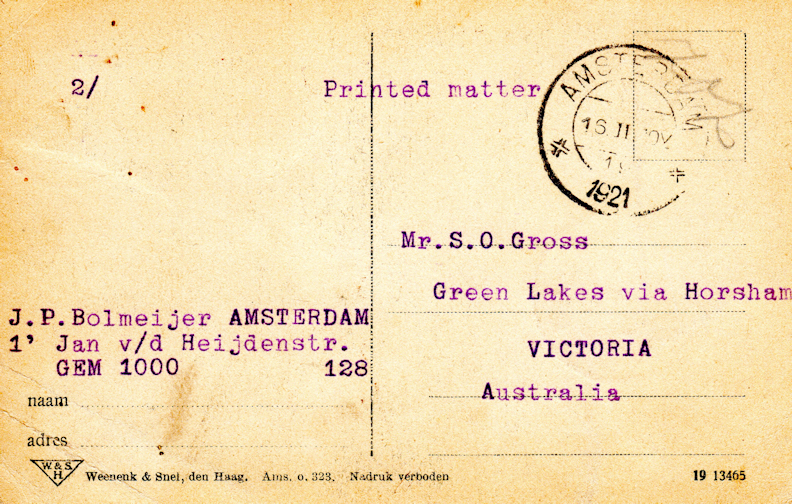
Remember the humble postcard? My maternal grandfather used to collect them…100 years ago. This week, I’m embarking a journey into K-Team history as well as glimpsing life in the past from a postcard taken 100-years ago.
I am amazed at what one can glean from a simple card. Imagine, a postcard in 1921 cost 1-cent to post from the Netherlands! On the flip side, a tiny little script in the middle reads “nadruk verboden”(copying is forbidden). I’m hoping from my understanding of copyright laws, that this restriction has long since expired. That being said, I acknowledge the publishers “Weekenk and Snell, den Haag” and have shared this postcard for historical and educational purposes.
So, we travel forward in time, when my husband and I visited Amsterdam at the start of our European adventures in 2014.
We arrived in Amsterdam and after breezing through customs, Hubby rang up Renault to get someone to pick us up and drive us to the Renault office to pick up the leasing car, the Duster. ‘You’ll recognise us,’ the Renault guy promised. We waited half an hour. No guy, no van. Dragging my big red suitcase, Hubby paced back and forth along the front entrance and I trailed behind him, his smaller suitcase bumping over the pavement. After 45 minutes of no joy, no guy, and no Renault van, Hubby rang Renault again. Apparently, the pickup guy had made several laps of the Airport pick up area searching for us. Hubby suggested we rendezvous by a well-known hotel near the overpass. We waited there for a couple of minutes before Hubby got itchy feet and off he went a-wandering. I began to follow and then looked back. The Renault van rolled around the corner. I ran, and with my free hand I waved at the driver getting out of the van.
I apologised for my husband’s impatience and then we waved at him as he approached.
After picking up the Duster from the office, Hubby embarked on the challenge of driving in Amsterdam on the right side of the road. He took a little while to adjust to not over-compensating and bumping into the kerb on the right. Which he did a few times.
We gingerly drove the short way to the service station and after parking and hunting through the French instructions, found how to open the fuel cap. Hubby had learned French at school, so was able to decipher the information without spending too many hours trawling through the tome of a manual. So, we filled up with fuel and began our journey to our apartment. Our navigation system, a Tom-Tom which we named “Tomina” since it had a pleasant, if not slightly passive-aggressive female voice, lead us to the highway and then off the beaten track, then told us to turn around. Back where we started, Tomina said, ‘Turn right.’
‘Turn right,’ I said.
Hubby obliged by tuning left and into the highway. Cars coming from our right tooted us as we entered the highway. We had to go ‘round the block to get back on track. Then we saw that where Hubby turned was a sign that read, “No Left Turn”.
We found the apartments and since check-in was only from three o’clock, we had the staff hold our luggage while we explored the local station. We admired the rainbow-coloured flags that decorated the apartment block and surrounds, thinking they looked so pretty and decorative. Hungry by this time, we ate lunch, then bought a card, wine and flowers for his aunt Ada who had her birthday on the 30th July. A highlight of the trip for Hubby was visiting his aunts and cousins that afternoon. Had a lovely time meeting and getting to know his father’s relatives over coffee and cake. Some of his aunts Hubby hadn’t seen for 40 years.
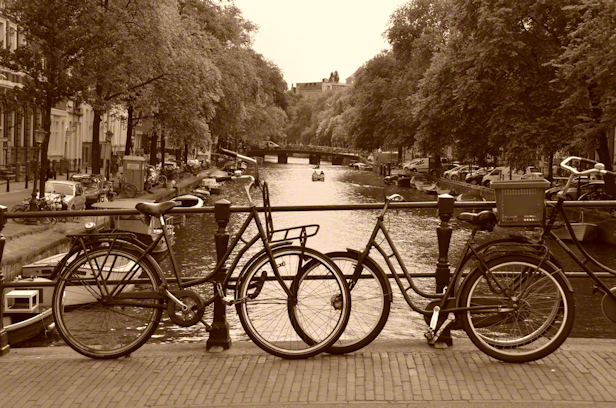
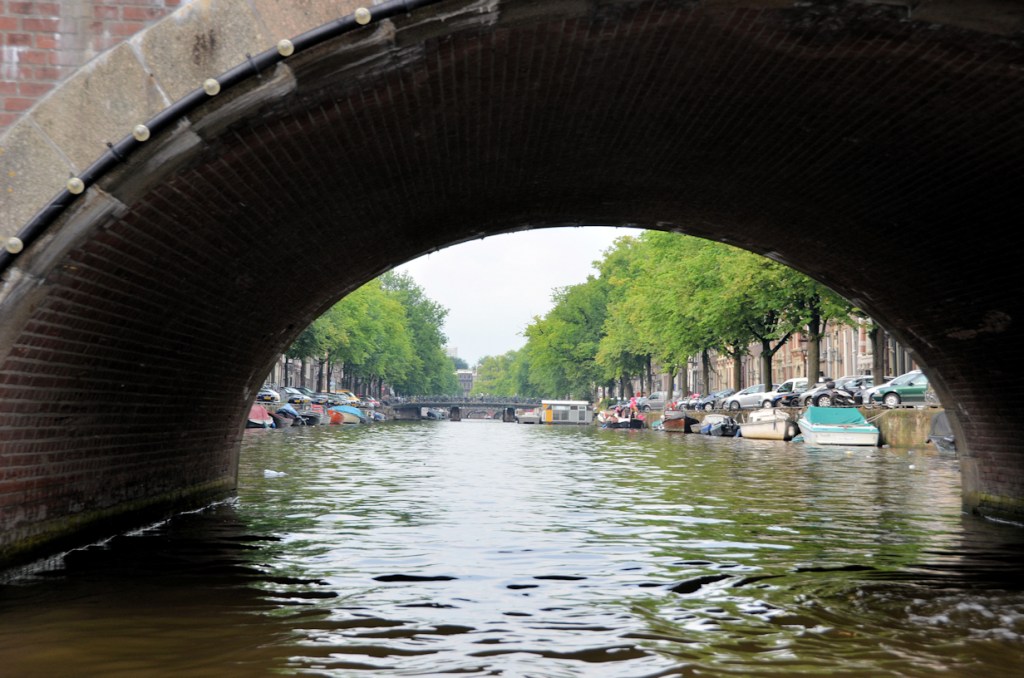
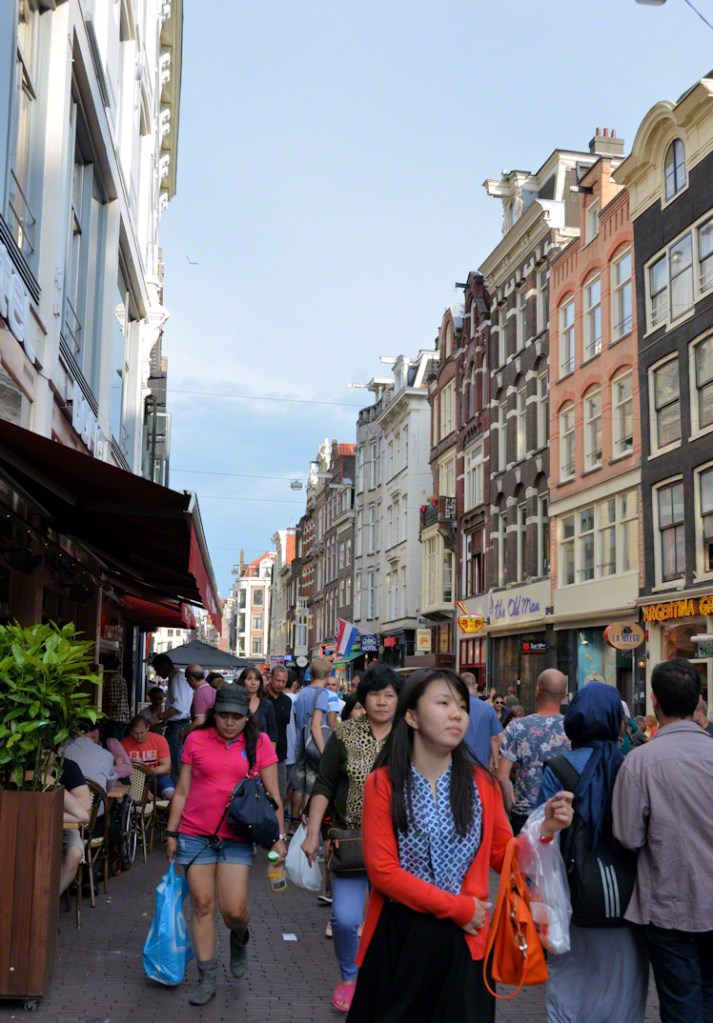
The next three days in Amsterdam we spent walking. Hubby had taken it upon himself to become my personal trainer. We must get fit. We walked the roads of Amsterdam absorbing the summertime atmosphere, admiring the canals, the graceful architecture, the boats and hundreds of bikes—everywhere people riding bikes. The town was packed with people, tourists, and revellers, eating, drinking and shopping. As it turned out, we had chosen unwittingly, I might add, to spend the weekend when Amsterdam was celebrating the Rainbow Festival. We did see some unusual sights as well as the usual antics common to drunken behaviour. My foot suffered blisters as it adapted to new hiking sandals. Good thing we had a first aid kit and some blister pads from Rogaining a couple of years ago.
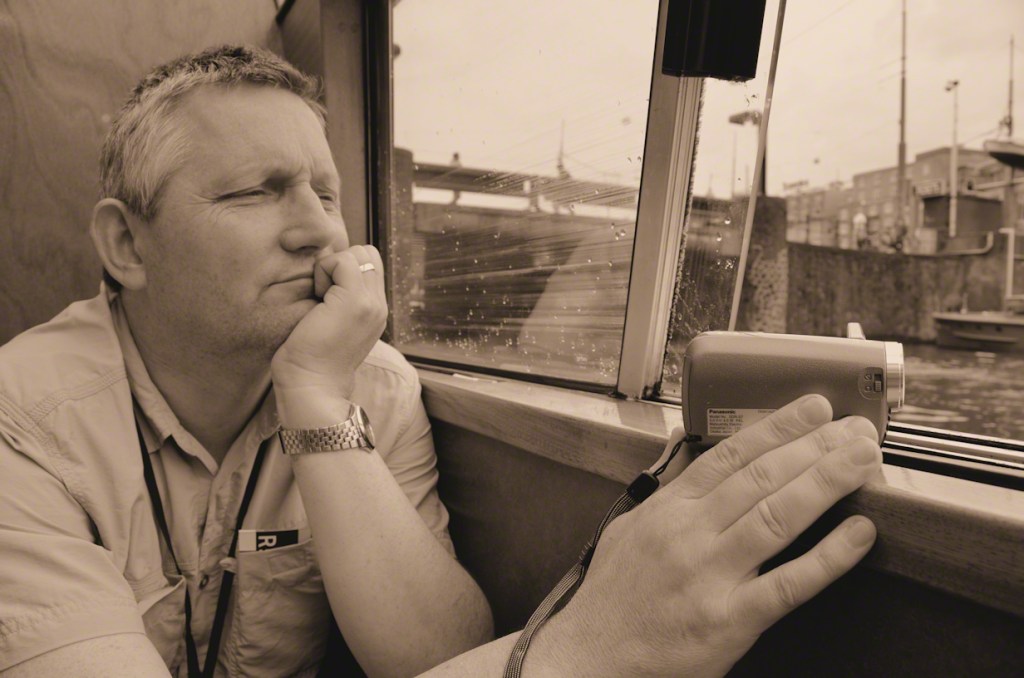
We did the usual tourist stuff, one day five hours in the Reich Museum, next day lining up and herding through the Van Gough museum-art gallery, and then an hour cruise through the canals. We had a 24-hour pass so we could hop on and off certain trams around the city. One tram though, decided to close its doors on me as I tried to get off leaving Hubby abandoned on the footpath. I alighted at the next tram stop around the corner and walked back. What joy to see my husband walking towards me.
Although we mostly ate at our apartment, the last day in Amsterdam we enjoyed pancake with apple and honey for lunch, and for dinner Argentinian steak—tender juicy steak. I’m not sure what it is about Argentinian steak houses, but in Amsterdam, they’re everywhere.
Gaslighting—it’s something we believe is a modern practice, AI generated. But, in truth, fudging the truth is as old as history itself.
You could say that creating one’s own reality is a global pastime and no one is immune to it. As humans, we interpret, or mis-interpret the world around us through our experiences, what we see, hear, taste and touch. We use our worldviews to form our identity and place in the world and to serve as a personal force-field to protect our beliefs. Our personal paradigm helps us navigate our way through life, predicting the challenges life may throw at us.
It is fair to say that our worldviews are limited, and often skewed as we encounter the worlds of others. Naturally, we believe our truth is the one and only way. To feel secure, we impose our version of reality on others. We are right. They are wrong.
Have you ever had the experience where someone reckons you said a certain thing, but you’re sure you didn’t? I have had friends “quote me”, attributing wise words to me, and I have no idea I’d ever said that. Wish I had. Maybe I had; I just can’t remember. Either way, our respective worldviews have filtered facts in and screened information out.
Anyway, the same can be said for our own personal family history. I remember reading an article in a Genealogy magazine about family myths and to be wary of them. It’s not enough to believe a story, a narrative. Good research requires facts, preferably primary resources.
With this in mind, I have been researching on the internet, the history of Nördlingen and the Kaiser Hof Hotel Sönne. Did my Trüdinger ancestors own it for two hundred years, as my relatives have been led to believe? It wasn’t our branch as my great-grandfather Karl August Trüdinger and family emigrated from Bavaria to England in the 1860’s, and then from England to Australia in 1886. He was a textile merchant trading in wool in Yorkshire England and then in Australia he set up a business selling textiles in Adelaide city. Now, here again, the details get a bit murky, and I need to do some more research into the actual work history of Karl August in Adelaide. Suffice to say, from my gleaning of Trove, Karl August was a fine Christian family man who together with his wife Clara Theresa, raised eight of his twelve surviving children to enter the mission field. Vastly different from the family origins in Nördlingen who were apparently rich and influential enough to own the hotel that entertained royalty.
[Photo 2: Trudinger Family in Adelaide, South Australia courtesy L.M. Kling circa 1890]
Yet, as I delved deeper into the rabbit-hole of internet searches, I discovered that my four-times great grandfather, Balthas Trüdinger was a soldier in the Teutonic order. Why else was he living in Lierheim (a castle near Nördlingen) which at the time was owned by the Teutonic order? Oh, the shame that this brought on the family, having a mercenary soldier in their ranks! Another myth. Sure, Balthas was a soldier. Sure, as a soldier in the Teutonic Order he was paid. But was the Teutonic Order so bad? When I first mentioned the fact of Balthas belonging to the Teutonic Order, my son and husband joked that he was most certainly a neo-Nazi of his time. I began to imagine Balthas all buff, shaved head and going around on crusades killing anyone who wasn’t Christian. According to my research, Wikipedia, mainly, Hitler portrayed the Teutonic Order as the exemplar of the Aryan race and cause. Again, this was a myth. As soon as Hitler had achieved his purpose using them, he then turned against them and discarded the Teutonic Order.
According to my limited research, although the Teutonic Order went on Crusades to Christianise Europe, and paid mercenaries to fight, they also did a great deal of good. Way back when they formed in 1191, they protected travellers making their pilgrimage to the Holy Land. They organised and built hospitals, initially for wounded soldiers and these days the order is primarily a charitable organisation. Anyway, it would seem from the records compiled from my uncle Ron Trudinger, that Balthas didn’t stay in Lierheim, but, after the birth of his son Georg, he moved to Nördlingen. Here, no mention of Georg being an innkeeper, but instead a linen weaver and Burgermeister of the town.
From a research paper on Nördlingen in the 17th Century called Early Capitalism and its Enemies: The Wörner Family and the Weavers of Nördlingen* (Published online by Cambridge University Press: 11 June 2012) which I accessed online through Jastor, I was able to surmise that for Georg to become the Mayor of Nördlingen, he would’ve needed to be seriously cashed up. I mean rich, one of the wealthiest in the town, if not, the wealthiest. It would seem he landed on his feet so to speak as a linen weaver or had come into a sizable inheritance. Or, had he or his father married into money in the town? The owner of the hotel, perhaps?
Nowhere in my gleanings on the town do I see that he was the innkeeper or owner of Kaiser Hof Hotel Sonne. The above-mentioned article had a breakdown of income, which I presume was yearly, of people in the town. According to a study accessed online called “Nordlingen, 1580-1700: society, government and impact of war”, in 1700, the owner of the Kaiser Hof Hotel Sonne had the highest income of all, a salary of 41 Florin. A teacher at the time received one to four Florin per year. And a soldier, which is what Georg’s father, Balthas was, received eleven Florin per year.
Again, as far as the Trüdinger family is concerned, it’s all conjecture and where myths start to grow and take a life of their own.
One thing for certain, though, is that in family history, experiences that family members have had hold weight for evidence. After all, they are the life-experience of that person and from their point of view. My second cousin, who married a German, and lived in Bavaria, decided to visit the Kaiser Hof Hotel Sonne in the 1960s. Family there living in Germany, informed her that a Trüdinger relative owned the hotel. Upon seeing the hotel, my second cousin was impressed by how high-class it was with fancy décor and loads of antique furniture. The food offered was out of her budget, but my second cousin tried to talk to her hotel-owning relative.
The encounter didn’t progress the way my cousin had hoped. Although my second cousin could speak fluent German, the hotel owner seemed distant and appeared reluctant to engage with her. Maybe, the lady was having a difficult day…Or hadn’t been given enough warning that a cousin was going to visit the hotel unannounced.
My second cousin left the establishment and decided to eat elsewhere.
When we visited my second cousin in Germany, she told me this story and mentioned that by the end of the 1960s the Trüdinger relatives had sold the hotel. She believed that the hotel had been in the family for 200 years.
I am still trying to figure out if this a fact, or if it is a myth.
Do you or someone you know have information on the history of the Kaiser Hof Hotel Sonne Nördlingen? Are you related to the Trüdinger family? You are most welcome to leave a comment. Or you may contact me through the My Heritage Trudinger-Kling website.
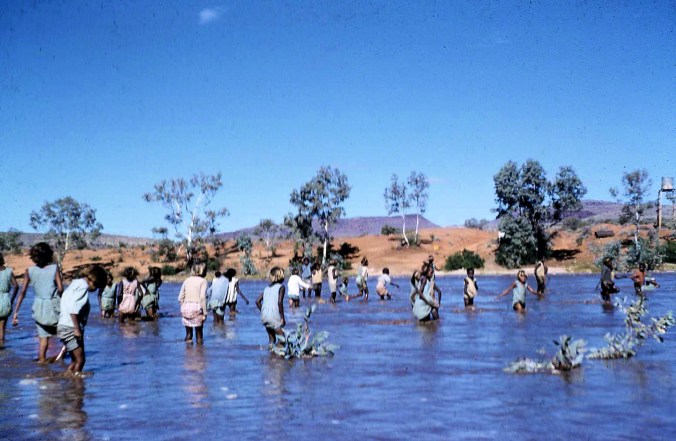
About quarter to 7 we arrived at the station and there was the whole station out to meet us, black and white, big and little, and such a noise too, it sounded just like a whole lot of parrots or galahs. Then the truck came to a standstill and Sam got out and had to shake hands all around. I had to stay in the truck on account of the measles. I could only talk to them from a distance. It was just like a dream and to see all the natives running to and fro, reminded me of the movie films which Lou Borgelt had taken in New Guinea.
Well, after all the greetings were over we were taken across to our new home, which by the way isn’t very new, it’s one of the oldest houses on the station. Mrs Albrecht was going to have us over there for the first few days for meals, but through this measles business we decided it was best if we stayed isolated for a while so as not to infect the natives. Mrs Albrecht sent us over our tea, then, and such a huge tea, too, and we did full justice to it, too.
And now began our life on the station. But so far we haven’t seen very much of it, I haven’t been out of the place at all, Sam has gone to the other places more, but we keep away as much as possible. And now, last weekend, Ruth gets the German Measles, she was fairly miserable, but is alright again now, except for a cough. Now it means we have to stay isolated for another 10 days or so, in case Marie gets them. It is a real nuisance, because we can’t get to anything properly. The only advantage it has is that we can get things a bit straight around the place.
Such a lot wants doing, the doors don’t fit, and the floors need doing, and the garden has to be made. These last two days Sam has had 2 natives helping him with all sorts of odd jobs, yesterday and today they dug the front garden and this morning we planted the lawn and tomorrow I want to put in some flowers.
The first 2 days we were here were terribly windy and dusty and hot. The dust came in everywhere, it was just like a real dusty day in the mallee. Our box of goods was supposed to come out the same day that we got out here, but it didn’t come Wednesday, we waited Thursday, and still didn’t come. By this time Missionary Albrecht was getting worried, he thought the thing might have tipped over. Friday morning we got a wire to say they couldn’t get it off the truck in Alice Springs. They had been trying to get the wire through since Tuesday but the weather had been too bad, they couldn’t get it through. So Sam had to pack up an go into Alice Springs and there saw to the unloading. Eventually on Sunday afternoon the lorry arrived and was duly unpacked, of course the natives were very interested in everything, especially the piano.
So far I haven’t any house girls yet, as soon as we are out of quarantine I will get two. Mrs Albrecht has been baking my bread for me until I get the girls. Milk I have brought over every morning, also cream and from that I make my own butter, but unfortunately I am not a good hand at it yet. There are some nice vegetables in our garden, which is quite a big one, we have over 20 date palms in it, 4 orange trees and 3 figs and quite a number of vines. This last week we had about an inch of rain which was quite nice for the gardens and settled the dust.
I am afraid it will take me quite a while to get to know all the natives and all their names too. I know Albert, the artist, by sight, of course, he always wears an overcoat and is quite proud of his appearance. I also know,
Manasse the leather worker, also Herbert and Ferdinand the two Sam had helping him. Of the women, I think the only one I know by name is,
Cecelia, an older woman who always wears a red dress. Some of the children are lifted up so that they look over the fence to watch the children play and when we come out they scoot. Some of their attire is pretty weird too. One little chap wears his father’s shirt, it reaches nearly to the ground and has to have the sleeves rolled up. Another little girl has her big sister’s dress on, and every time she runs she has to hold it up or she would fall over it. Another little chap has a “has been” shirt on, his father’s, it’s only strips now. Most of the men wear hats, some felt, some harvester hats. The boys that Sam has have straw hats on but they look as though the mice have been at them. Yesterday morning the one came along with feathers sticking out of the holes, I don’t know if he had visited the fowl-house or not.




























 Tru-Kling Creations