[So, if you could go back and talk with your 5-year-old self, what would you say? What would your 5-year-old self say to your future self? Here’s a story where I imagine just that.]
MESSAGE FROM MY FUTURE ME
“Grandma, can I excuse the table?” I asked.
Grandma chuckled. “You mean, be excused from the table, dear.”
I nodded and then pushed my chair from the old wooden table.
“Yes, you may, but don’t go too far,” Grandma said. “Go only to the end of the road and then you must turn back.”
I escaped out the back door and down the gravel driveway. The street spanned before me, begging adventure. Sunday lawns green, pungent with fresh Saturday clippings piled behind an assortment of fences.
“Go away, will you,” she said in her grimy blue dress. She leaned over the stone wall and pushed me.
I brushed off her greasy prints and walked on, leaving the willow tree and that girl snarling in the shade behind me. As I strolled into the sun, I ran my hand over cracked rendered walls, rattling cyclone fences and peering through the oleander bushes for signs of life in quiet houses.
“Don’t go over the road,” Grandma’s voice warned in my head.
No, I won’t. I rubbed my bottom in memory of the Belair Sunday school picnic adventure when my brother lost me. Promise! Careful not to step on the lines in the pavement. Bad luck. I tiptoed and danced along the pavement in my pink ballerina shoes.
A shadow wriggled over the pavers. Stobie pole to my right, plastered its stunted midday image on the asphalt. I halted. Casting my focus up, I spied this big girl. I squealed and clapped my hands over my mouth. This lady-girl was dressed all in lace and brown velvet as if in Grandma’s clothes.
“Hello, you must be Lee-lee.”
“Why did you know my name?” I pointed at her; rude, I know. “Ha, ha! Why are you wearing funny clothes?”
She blushed and rubbed her stubby fingers over the velvet. “They’re trendy where I come from.” She smiled and straightened her long dress that swept past her ankles. “Actually, where I come from, I know a lot about you.”
“Why?”
“Because I have the same name as you.”
“So? I know more than you do. You’re dumb. So there, ner!” I planted my hands on my hips and poked out my tongue.
“That’s no way to talk about yourself.”
“Huh?” I pulled at my pigtail and chewed the ends of my hair.
“Elementary girl.” She flicked her long blonde strands and smirked. “I am the future you. In fact, I know more than you do because I know what’s going to happen to you.”
“Future me?” I scratched my cheek and screwed up my nose. “What does future mean?”
“Oh!” I wiggled a loose tooth. “Does that mean your teeth all fell out? Did you get grown-up teeth or did you get them all pulled out and get false teeth like Grandma’s?” I zoomed up to Future Me’s face and ogled at her mouth. “Come on, show me your false teeth.”
She bared her perfect row of pearly whites and nudged me back. “They are real. Orthodontically corrected, but real.”
“Arthur—what?”
“I had braces on my teeth.”
“Why? Were they crippled?”
“No, they were crooked.”
“Ugh! Crooked teeth.” I turned from her and poked stones with the point of my shoe. “I don’t think I like being you. Grandma clothes, crooked teeth that need Arthur’s braces. I’ll never be like you. You’re just pretending. ‘Sides, how could I be you?”
I squinted at this tall slim blonde who transferred her weight from one leg to the other. I noticed the worn back-pack groaning full of books, straps straining to pull the load from her waist. Future Me stroked her chin between her thumb and forefinger. “Well, it’s hard to explain to someone as little as you. You’re in Prep, aren’t you?”
“Yes, I’m a big schoolgirl, now.” I thrust my chest forward and with hands each side of my tummy, swung my hips.
“Well, big schoolgirl, Lee-Lee, to put it simply, it’s called T.T.T—thought, time, transportation.”
“What then?” I watched my pink dress swish as I swayed.
“You just think and instead of thinking time as moving forward, you make it move backward for you.”
“Just like that?”
“Well, actually, it’s more complicated than that—a kind of scientific experiment that my big brother Warwick invented. He put electrodes on my head and well, something happens that I can’t fully explain.”
“Oh, did you have a brother, Warwick too? Does your Warwick snort when he laughs?” I cupped my hand over my mouth and tittered.
The lady-girl raised her lace sleeve to her mouth and giggled. “Yes, he does.”
“You must be me.” Repressing the urge to gnaw my fingernails before my future-self, I clasped my hands together and looked in her eyes. “So, me, what’s going to happen to me?”
She avoided my gaze. “That’s for me to know and you to find out.
“That’s not fair! Why can’t I?” I grabbed at her, but she slipped through my fingers and drifted from me. “Plee-ease!”
“I can’t!”
I watched her move further away and shimmer in the sunlight.
“But why not? Please! Just a little bit.” I chased her and swiped at her. “Just a tincy-wincy-little bit. I won’t tell! Promise!”
“Alright, if you insist.” She floated above the greying plaster fence. “But I must be leaving soon.”
She faded, blending in with the oleander and honeysuckle bushes. I strained to see her. I attempted to touch her, but my hand passed through her.
The wind whistled through the bushes. “Have a good time with Jilly.”
“You didn’t tell me! You lied, me!” I cried.
I hunched over and plodded back towards Grandma’s house. Shouts and squeals from a yard on my left, caught the corner of my eye. A girl my age bounced on an old double-spring bed.
“Hello, my name’s Lee, what’s yours?”
“Hello, my name’s Jilly. Do you want to play on the trampoline with me?”
“For I know the plans I have for you,” declares the Lord, “plans to prosper you and not to harm you, plans to give you hope and a future.” Jeremiah 29:11
***
Dreaming of being transported to another world?
Time for some weekend reading?
Take a break and journey to another world, another time to …
In the previous tale, I mentioned a certain friend attached pride to the superiority of the Aussie farmer—a pragmatic soul, jack-of-all-trades and survivor of harsh outback conditions. So, with pride, I wrote about my maternal grandfather, Sam Gross.
My paternal grandfather was none of that. He was a “city slicker” as the “cockies” called them, born and bred in the city and not the farm.
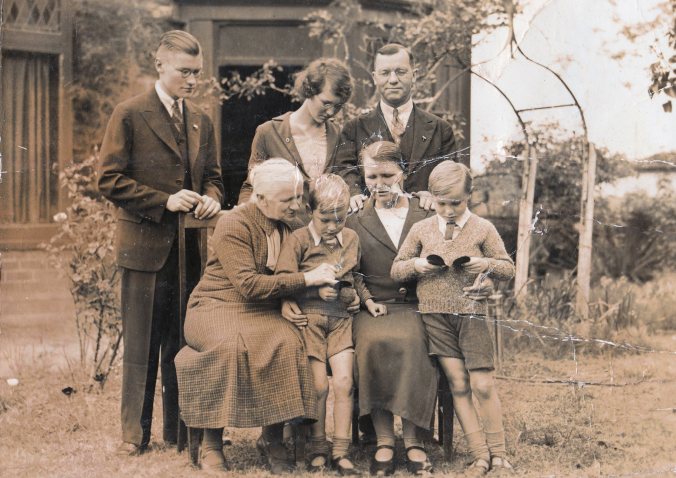
Ronald Trudinger was the first in his family to be born in Australia in August 1886.
His father, Karl August Trudinger, was born in Nördlingen, Bavaria, while his mother, Clara Theresa, was born in Kleinwalka, Saxony. His parents first emigrated to Bradford, Yorkshire, where they lived for about twenty years and became British citizens. They didn’t like Bismarck and his ideas of unifying Germany. The first twelve of Karl’s and Clara’s children were born in England.
Karl August was a textile merchant; hence, living in towns or cities worked best for him. Ronald’s mother, Clara Theresa, grew up in the Moravian Brethren community in Saxony. Faith in God and education were her values. She had yearned to be a missionary, but that door was closed to her at the time. As a result, she prayed for her children that they would become missionaries. Eight out of her thirteen offspring did.
One of them was my grandpa, Ronald, who became a missionary in Sudan.
So, although he wasn’t the venerated Aussie icon of tough “cocky” farmer, his calling was different but just as valuable. He became an intrepid missionary in Sudan, based in Melut on the White Nile. He spent decades translating the New Testament into Dinka and other African languages.
How thankful I am to My Heritage and the links to news articles matching Dr. Ronald Trudinger—100 at least. In the early 1900s until the late 1950s, he appeared as a local celebrity, especially in church circles. His deputation talks on the “Soudan” and the Muslims, and the risks and challenges the family faced in Africa, particularly during the War in the 1940s, were a source of fascination, if not entertainment, for the public of that time.
Ronald Trudinger grew up in Norwood, a suburb of Adelaide, South Australia. From what I can gather, again from various news articles about the family, he may have lived in Kapunda and Broken Hill. His father, new to Australia and a merchant, had to go to where the work was. When they first arrived in Australia, according to Ronald’s birth certificate, his father was a greengrocer. Humble beginnings after being a wool merchant in Yorkshire.
A few years later, news reports have Karl August working in a jewellery store in Kapunda. Then, as I mentioned, there was a time the family was in Broken Hill, where Ronald’s eleven-year-old older sister died of typhus.
Eventually, so the family narrative goes, they settled in Marryatville, a subdivision/estate in Norwood, and father, Karl August, teamed up with a Mr. Zimmermann to manage a textile store in Adelaide city. While his father supported the family as a merchant, and some of his older siblings set off for China as missionaries with China Inland Mission, Ronald became highly educated, attending Adelaide University and becoming a Doctor of Medicine.
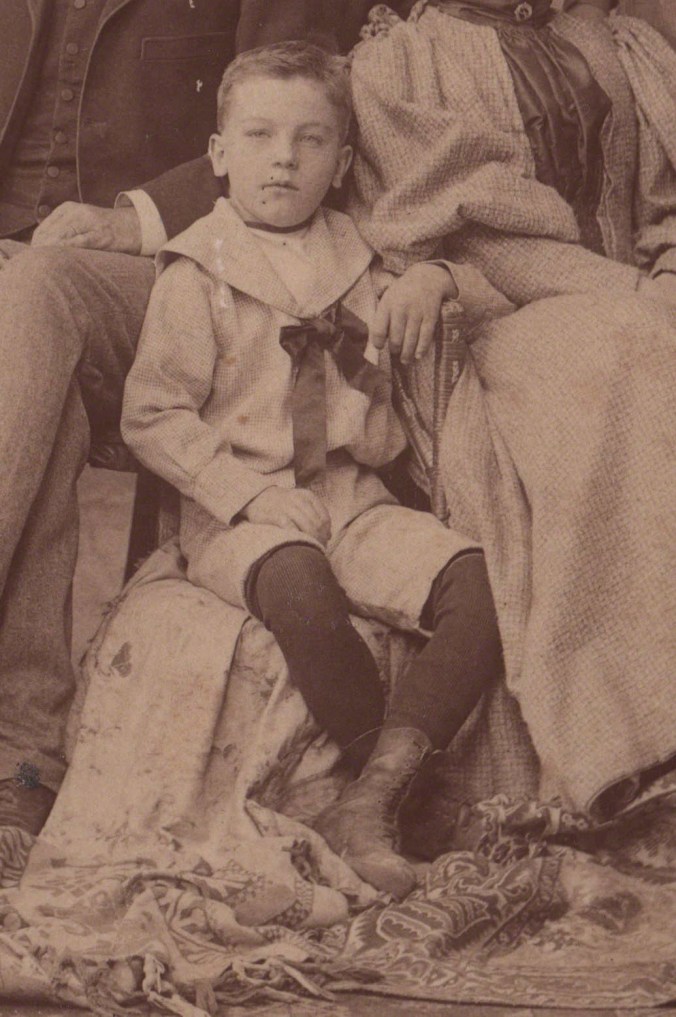
As a child, Ronald was exceptionally gifted, and by the age of four he was reading the Bible, and at five, Homer’s Odyssey, so my father says. Apart from these fragments of information passed down the generations by word of mouth, Ronald’s childhood remains a mystery.
News reports at the time have helped fill in some of the gaps in Ronald’s interests as he grew up. One of these was tennis competition reports. Although Ronald was born with one arm shorter than the other, he still enjoyed a hit of tennis and played in competition. He was described as a fierce competitor.
Ronald grew up in a God-fearing family, and from all the Sunday School prizes he won (recorded in the local newspapers), I imagine he came to faith in his Lord Jesus as a young child. His family attended Maylands Presbyterian Church. Although they were from a Moravian Brethren background, there was no such church in Adelaide. There was one in Bethany in the Barossa—too far to travel from Norwood. Anyway, the family probably chose a church and congregation that would support missionaries. When Ronald began his missionary work, he and Lina joined the Burnside Christian Church, which faithfully supported their work in Sudan.
Meanwhile, back at the family home base in Norwood, youthful Ronald Trudinger enjoyed evenings with the family playing games—a tradition passed down to the current generation of the T-Team. This never included playing cards, as such cards were deemed “sinful” and associated with gambling. Games my father taught us were taught to him by his maiden aunts, who had learnt them from their parents. A parlour card game called “Chook Chook” was certainly one game the Trudinger family had and loved playing. “Chook Chook” is all about egg farming, teaching the player the different breeds of chickens, trading and negotiating, and accounting. Other games that Ronald would’ve been familiar with were word games and story games, which his mother created for the education of her children.
My father remembers his dad’s fondness for chess. Even in my grandpa’s old age, my father never could beat his dad at chess. Another relative recalled Ronald taught her mother to play the piano. So, I gather another of Ronald’s interests was music, a love which he passed down to his children.
After completing his Bachelor of Science degree from 1908 to 1912, Ronald studied to become a Doctor of Medicine at the University of Adelaide. The University student magazine has him attending the Evangelical Union Christian group there, which would become EU, the Christian group I joined eighty years later.
While at university, Ronald won awards and scholarships for his outstanding results. He even won a scholarship to study tropical infectious diseases in Queensland.
During this time, around 1908, he met a young nurse called Lina Hoopmann. They fell in love and privately became engaged. However, they had to wait many years before they were able to marry. She was Lutheran, and he was not. Her father, a staunch Lutheran minister, refused to give his blessing for the union; he called Ronald a heretic as he wasn’t Lutheran and had come from a Moravian Brethren heritage.
So, they had to wait until Lina was 30. She would’ve been legally able to marry without her father’s consent at this time. I doubt, though, being God-fearing folk, they would’ve shown such dishonour and break the third commandment to honour thy parents. I imagine that her father finally gave his blessing, and the marriage went ahead on December 11, 1917. That being said, the family photo of the wedding doesn’t have Lina’s father present. I’d like to give him the benefit of the doubt that he took the photo.
Others of Lina’s family, such as her sister Dora, had no problem with the Trudinger family. In her diary, she enjoyed many visits to the Trudinger’s in Norwood. Plus, she was overjoyed when Ronald and Lina became engaged and then were able to marry.
From 1912, Ronald commenced his calling to be a missionary doctor in Sudan. He returned on furlough in 1917 to marry Lina. Ronald worked as a doctor at the Royal Adelaide Hospital during this time. By 1918, Ronald, together with his wife, had returned to Sudan. His first two children, Ronald Martin and Agnes Dora, were born in Africa.
In 1927, Ronald and Lina, with Ron junior (9) and Agnes (7), returned to Australia on furlough. They came back for their children to start their education in Australia.
This time, Ron accepted work as a physician and locum in Macclesfield, taking on the challenging task of coronial duties, including being a witness for a high-profile murder case.
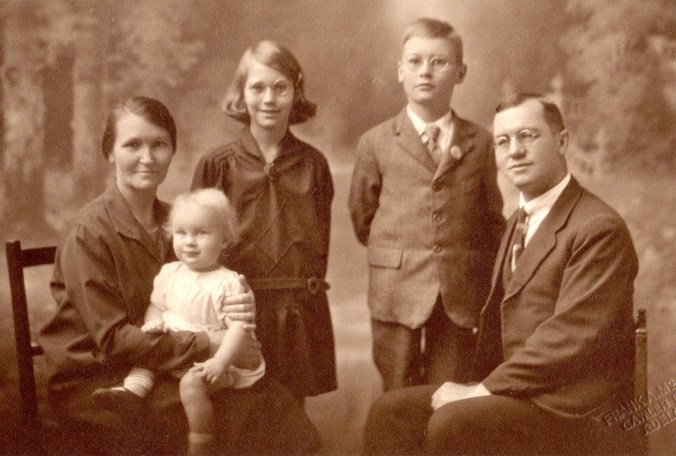
My dad, Clement David Trudinger, was born on January 13, 1928, in Norwood. By May 1929, Ronald and Lina, with their young baby son, were on the ship steaming back to Sudan. Dad’s younger brother Leonhard Paul was born in Melut, Sudan.
As with their first two children, the younger sons must return to live with their maiden aunts in Adelaide for their education. Ronald and Lina returned to Adelaide, South Australia, in 1935. The plan was to stay a year, and then off to Sudan once again. However, it didn’t go as planned. Agnes, their daughter, became gravely ill with meningitis early in 1936. She survived but had to learn to walk and talk again.
Consequently, later in 1936, Ronald set off for Sudan alone after Agnes had recovered.
In Agnes’s memoir, their mum took the boys to live with her family in Yorktown for a year in 1938 while their dad was away on mission in Sudan.
In 1939, Lina joined her husband in Sudan while my dad and Paul stayed with the maiden aunts. During the war years, from 1939 to 1944, Ronald and Lina were on mission in Sudan.
The values of this era were self-sacrifice and obeying God’s calling before family. Plus they considered their children’s educational needs would be better served in Adelaide, South Australia rather than Sudan. Hence, Ronald’s and Lina’s decision to once more venture back to Sudan without their children—a decision the future wives of David and Paul (the dear aunts preferred David to Clement, and Paul to Leonhard), had an issue with. David, Clement by nature, and just that little bit older, took the separation from his mother with a stiff upper lip and in his stride. Dad had fond memories of staying with his maiden aunts. But Paul, being younger, was more of a feisty character and suffered from a sense of abandonment as a child.
Ronald then took two more mission trips to Sudan; 1946 to 1950, then 1951 to 1954. During his time on furlough in 1950, he visited Ernabella where his eldest son Ron was teaching the Pitjantjatjara people, and also Hermannsburg where my Grandpa Sam Gross was pastor at the time. This was before my dad and mum had met each other. It shows the connections in Christian circles and across denominations.
Lina stayed in Adelaide for the 1946 —1950 stint to Sudan but joined Ronald for his final 1951—1954 visit.
In 1954, Ronald had “retired” from the mission field and had taken up a position as a doctor at Hillcrest Psychiatric Hospital. He made an indelible impression there, remembered fondly by former patients.
Even in his golden years of real retirement, furthering the cause of Christ remained the driving force of his life. He never stopped witnessing and sharing the gospel whenever the Lord provided opportunities. In the last years of his life, after his dear wife died, he moved up to Alice Springs to manage a Christian bookshop.
However, this venture didn’t last as he became ill with leukemia. He returned to Adelaide and moved into a flat in the Lutheran Homes Retirement village in Payneham.
Illness didn’t stop him from being a missionary on home soil. In the months before he died, he bought an Italian dictionary so that he could share God’s love and the good news of salvation with his Italian gardener.
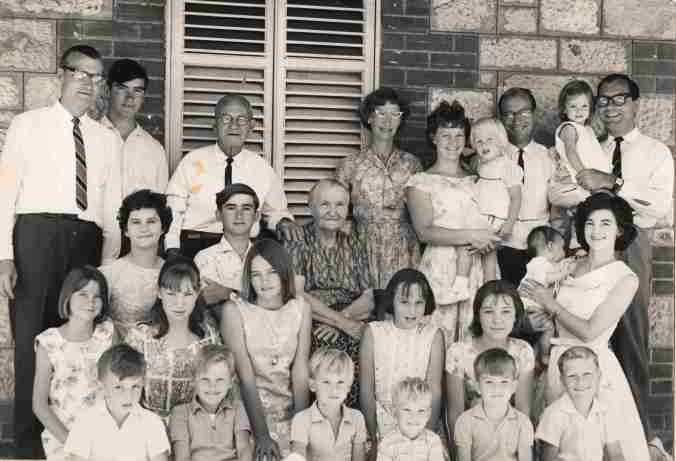
I remember my grandpa as a kind man who had a smile with his one remaining tooth in his mouth. He would make a joke about the Trudinger trait (pronounced tray) of twiddling thumbs. He taught my brother Richard to make bird calls with a leaf.
By the time I was born, Ronald and Lina were living in Walsall Street, Kensington Park, in the Norwood area. At three, I remember getting bored with all the people around for a big T-Team family gathering. I went off exploring, and mum found me sleeping under the bed on a pair of shoes.
I know where I was when Grandpa died. I was five. We were in the FJ Holden driving up to “see” Grandpa. Well, I thought we were. Then Dad announced that Grandpa had died. I was confused why we’d been going to see Grandpa if he had died. Hadn’t he gone to Heaven? After all, he was one of the most God-loving people I knew. Upon reflection, perhaps Dad needed to visit Grandpa’s flat to sort out some paperwork with the Lutheran Homes.
Ronald Trudinger died December 21, 1968. He had lived a full and productive life and with his missionary heart had spread the good news of Jesus Christ, his Lord and Saviour.
‘I remember you,’ says a lady from church, my mum’s age, ‘you couldn’t keep still. I felt sorry for your poor mother.’
Another lady nods. ‘She had her hands full, your mum.’
‘Ooh, there was the time you escaped and ran up to the altar—oh, your poor mother!’
I smile and nod. So different now.
***
Back then, mid 1960’s…
The Children’s Carol service Christmas Eve—the bag full of sweets and honey biscuits stacked under the live Christmas tree, an incentive to stand in front of the congregation, singing my little three-year-old heart out. I love singing. Then when the Pastor preaches, the Sunday School teacher, Mrs. S, tells me to sit still, be quiet and don’t sin. Be good if you want your bag of lollies.
So, unless I’m told, I sit, am quiet and I don’t sin. Being good means not singing unless told to sing. I thought that’s what Mrs. S meant. And, being good means the reward of sweets at the end of the service. Oh, dear! How long is the pastor going to preach! I try not to wriggle. Everyone’s looking at me. But it’s so hot and stuffy in the church. Poor baby Jesus born in the middle of summer when it’s so hot! My halo’s itching my head. I take it off and scratch my head.
Mrs. S holds up her hand to me. ‘Lee-Anne! Be still! You want your sweets, don’t you?’
I try and put the halo on my head. It’s crooked and slips over my ear.
Mrs. S snatches the halo off my head. She has a cross look in her eyes.
Oh, dear, I hope I haven’t been naughty. I wasn’t sinning, was I? I hunch over and hold my fidgety hands tight. Must be still. Must be quiet. Must not sin. Want those sweets.
Mrs. S gestures for us children to rise. Goody, I can sing! I stand, take a deep breath of pine-air. ‘Joy to the World!’
The service ends. We wait by the tree. I marvel at the white “crismons”, the symbolic decorations from our great-great Grandfathers from Germany. These white shapes made out of Styrofoam and sprinkled with glitter make me wonder, is this what snow looks like? I’ve never seen snow. Snow is for cold places and Adelaide is always hot. Except in winter when it’s cold enough to have the kerosene heater going in the kitchen. But Adelaide’s not cold enough for snow, mummy says.
I go up to the tree and she hands me my bag of sweets and a children’s book with my name in it.
‘This is for attending Sunday School every week and learning all your bible verses,’ Mrs. S says. ‘Good girl.’
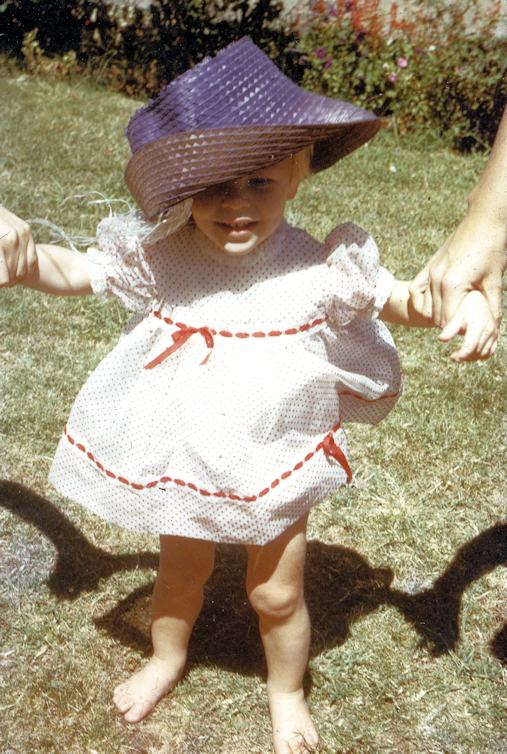
I take the gifts in my arms and careful not to drop my cargo, I take one step at a time out the church as if I’m a flower girl in a wedding. I know about weddings. My Aunty K was married in this church and I wore a new pink dress that my mummy made. And I had this lacy hat, and everybody took photos of me.
I’m in the courtyard, lost in a forest of legs. I search for mummy’s legs. She has ones under her pretty aqua dress with frills at the bottom. That’s her new dress for Christmas. My mummy’s a dressmaker and she always makes a new dress for her and me at Christmas. I mean, what are daughter’s for but to be dressed up in the prettiest, frilliest dresses at Christmas?
I can’t see mummy’s dress, or legs. I weave through the legs and scamper down the gravel drive to the back of the church to the car park. She’s in the car, our FJ Holden, Bathsheba, surely. I look in the car. No, she’s not there.
Tramping behind me. A roar. ‘Naughty girl!’ Dad all red-faced. ‘You know not to go down the drive on your own!’ Dad smacks me on the back of my legs.
‘But I was looking for mummy!’ I howl.
Mummy comes running. ‘Ah, you found her. I was getting worried.’
My always-good-brother strolls up to the car. He rolls his eyes and mutters, ‘Lee-Anne, always getting lost.’
‘Now get in the car,’ Dad snaps.
I adjust my load. A biscuit drops onto the dirt. I bend to pick it up. Can’t waste good food.
‘I told you!’ Dad says with another stinging slap to the legs. ‘Get in the car! Behave yourself, or else!’
I climb in and assume “or else” means another smack on the legs. Dad crushes the biscuit with his shoe and then slams the door behind me.
‘Doesn’t matter how much you smack her,’ Mummy mumbles. ‘She never seems to learn to be good.’
As Dad drove down the road he glances at me and says, ‘We’re off to Grandma’s now, so be good, or else.’
Be good, what does that mean? I pondered in my three-year-old mind. I thought it had something to do with not getting into trouble or getting a slap on the legs. I still hadn’t worked it all out, this “being good” business. It had something to do with following my older brother’s and cousins’ example. Something to do with being still. Being quiet and not upsetting the big people. But I don’t know, just when I think I’ve got it worked out, I do something I’ve no idea is wrong and the next thing, I get a smack. All I know is sitting still and being quiet means I’m being good.
Our car tyres crunch on the stones in Grandma’s driveway. We climb out of Bathsheba and enter the house through the back door and greet Grandma who’s piling plates with honey biscuits. We side-step around the table in the dining area and into the lounge lined with couches, dining chairs, and a piano. The lounge room is filled with the smell of pine tree. Pinned in the corner another real Christmas tree, all lit with electric candle lights and decorated with colourful baubles. I move to the tree to touch the pretty decorations. I must be careful not to step on the presents wrapped in red and green paper under the tree.
‘Now, Lee-Anne, you sit on the floor,’ Mum says. ‘The chairs are for grown-ups.’
I sit cross-legged by the fireplace.
‘You better sit still and be quiet,’ Dad warns, ‘or else.’
Cousins, aunts and uncles, and the odd, lonely soul from church crowd into Grandma’s lounge room.
I try hard to follow my cousins’, all older than me, example. Sit still and don’t make a sound. I must be good. I watch the grown-ups all chatting, getting up and down, laughing and joking. Must be fun to be a grown-up.
Clothed in her purple swirly dress and beige apron, Grandma settles her generous backside on the piano stool. ‘Let’s sing some carols,’ she says and begins hammering on the keys.
In joyous and rousing strains, we sing our way through the black hymn book’s carols.
I like singing and can’t help but join in. Then I remember. Be still. Be quiet. Maybe only big people can sing. I glance at Dad. He’s singing, eyes closed. My brother next to me barely opens his mouth. He fidgets. Not a good sign. I’m meant to follow my brother’s example, aren’t I?
But I love singing. I love Christmas carols. I raise my voice and sing. Everybody’s happy. Everybody, except Richard sings. I check my cousins. They’re singing. Must be alright to sing if my cousins are singing. So, I keep singing.
Mum pipes up. ‘Well, surely that’s enough singing. The children want to open their presents.’
‘What’s wrong with singing some more Christmas carols?’ the odd, lonely guy from church asks.
Mum points at the mantelpiece clock from the Fatherland. ‘I just think it’s getting late for the children.’
Dad blushes and cleares his throat while the other grown-ups look from my mum to Grandma.
Grandma looks down and wipes her hands on her apron.
Was my mum being naughty?
I reckon they’ve got the wrong person being the naughty one. Who’s the one who’s always told to sit still, be quiet and not sin? Me, of course.
I stand up and say, ‘It’s alright. I like sinning.’
Everyone laughs.
‘She means “singing” carols.’ Grandma’s tummy jiggles up and down as she chuckles. ‘Yes, it is getting late. Let’s open the presents. And Lee-Anne, since you are the youngest, you can help your mother hand out the Christmas presents.’
[This Sunday morning’s sermon tackled the parable of the Lost Sheep, Luke 15;4-7. I recall an ancient post I had written way back when I first began blogging in 2015. Then today, the parable’s meaning was reinforced when I spent all afternoon searching for a document vital for our tax return. Strange how items vanish…We gave up on the paper and were able to retrieve a copy from the relevant website.
However, each person is unique. If a person goes missing, you can’t just replace them by copying them. Every year in Australia, around 38000 people go missing. Most are found within few weeks, but 2600 remain missing after three months.
The following post is a re-blog of the one I published in 2015.]
Lost Sheep
A fellow writer criticized the Mission of the Unwilling saying, ‘How can so many people go into space without others missing them on Earth?’
Good point—and I duly corrected that detail. As a part of the Intergalactic Space Force, each recruit had their explanation which they gave to family and friends why they wouldn’t be around for a while. Yes, fixed that…but—just wait a minute—did I have to do that to make the story believable?
Thousands of people around the world go missing every day…and if I think about it, I know people who have.
Sure, there’s the famous cases. Yes, Adelaide, South Australia, my hometown, is known for a few of those strange cases, both unsolved and solved. I remember as a child told not to talk to strangers…remember those children ‘round the corner? Never seen again.
But then there’s the willing missing—the ones who for whatever reason drop off the radar, leaving behind family and friends, to start their lives afresh. And they might have good reason to disappear if they’ve been the victim of an abusive relationship, or they’re a witness who needs protection.
Each community and clan deal with this jump off the radar differently. As is evident from my own observations of this current society, they are not all like my fellow writer who would make a beeline for the nearest police station when a loved one of theirs goes missing. In fact, there have been recent examples in Australia where the missing persons have met untimely permanent pushes off the radar from perpetrators who have then pretended, through text messages and the use of their bank accounts to deceive family and friends into believing their missing loved one is alive, but just doesn’t want contact. And in some cases, family and friends have believed these lies for months, years.
Isn’t this a cause for concern? Has our community become so disconnected, so focussed on the rights of the individual, we consider it a “social crime” to intrude on another’s privacy? Is society so fragmented, that when we receive a text or internet message from a loved one, saying, ‘Leave me alone,’ we accept it as gospel, as coming from the loved one, and sit back and leave them alone? Is there a problem these days speaking face to face, and treating people like they matter? Is it possible some people go missing because they feel no one cares; that they don’t matter?
In the parable of the Lost Sheep Luke 15:4-7, the shepherd leaves the ninety-nine sheep to search for the lost one. In this society, such a person who goes looking for the lost, the “Black Sheep” of the family, is labelled “crazy”. But in God’s Kingdom each person is precious. Our world may not value these “lost sheep”, but God does, and His people do. I guess in the world’s eyes, God is crazy; He loves and values every human being. And the thing about lost “sheep”, they may not know they are lost, they may not want to be found, they may feel invisible in the sea of billions of “sheep”, but God knows who they are. I reckon there’s a bit of “lost sheep” in each of us. When we make others visible, treat them like they matter, and care for each other, this is community; we find the “lost sheep” and God finds us. This is our challenge, to value and love one another and treat each person with value and respect because they matter.
I don’t know about you, but I’d rather others label me as “crazy” because I care and want to relate to real people, rather than be considered “sane” and thus disconnected, living my life only virtually through a screen.
[Triggered today by all these shifty and inconsistent rules by which we must abide in this day and age, reminds me of some traumatic experiences concerning rules playing golf with my beloved late father.
This story is based on those experiences, but the characters and situation have been changed. As so often happens with us writers, life experiences can be good material for a short story, or even a chapter in some future novel.]
TRUE LOVE
Polly
Australia Day, and the last vestiges of a less-than-perfect summer holiday wilt in the sweltering heat in the foothills of Adelaide. A blowfly beats against the window, in time to the droning of the radio, doom and gloom, global warming, and politics. Nine in the morning and thirty-four degrees Celsius—already!
I sit at the kitchen table. I’m the sitting-dead, the zombie of no sleep after a hot night, no gully breeze and me sticky and sweaty, tossing and turning and Mum’s chainsaw of snoring filling the house.
Mum enters the family room and I recoil. ‘Ugh! Mum! How could you!’
‘It’s our family day, Polly, dear. I’m wearing my lucky golf shorts.’
‘Those legs should not be seen in public! Oh! How embarrassing!’ I cover my eyes shielding against the assault of mum’s white legs under cotton tartan shorts. At least she wears a white T-shirt; better than nothing. Matches the legs, I guess.
Dad drifts into the family room. He’s looking at the polished cedar floorboards while tying up his waist-length hair in a ponytail. He wears his trademark blue jeans and white t-shirt with a logo of some rusty metal band. That’s Dad. He’s a musician.
I look to Dad. ‘Dad, why do we have to play golf? Why can’t we just have a barbecue by the beach like my friends?’
‘Because, this is what Mum wants to do,’ Dad says. ‘We’re having a family day together before Mum gets all busy with work, and you get all busy with Year 12.’
‘But, Dad, we always play golf. And it’s not family-building, it’s soul destroying.’
‘We’re doing this for Mum.’
‘That’s right, Polly.’ Mum strides down the hallway and lifts her set of golf clubs. ‘Ready?’
Dad and I follow Mum to the four-wheel drive all-terrain vehicle. The only terrain that vehicle has seen is the city, oh, and the only rough terrain, pot holes.
‘The person who invented golf should be clubbed,’ I mutter.
‘Polly!’ Dad says. ‘Mum loves golf. We play golf on Australia Day because we love Mum, okay?’
I sigh. ‘Okay.’
***
‘What a way to ruin a pleasant walk!’ I grumble as I hunt for that elusive white ball in the bushes. Rolling green hills all manicured, a gentle breeze rustles the leaves of the gum trees either side. My ball has a thing for the trees and bushes and heads for them every time I hit the ball. And if there’s a sandbank, my ball plops in it like a magnet. And don’t get me started on the artificial lake.
Dad and Mum wait at the next tee ushering ahead groups of golfers.
My ball doesn’t like the green and flies past it. I’m chopping away at the bushes near Mum and Dad.
Mum smiles at me and says, ‘Are you having a bad day, Polly?’
Understatement of the year. I swing at the pesky white ball.
‘Remember to keep your eye on the ball,’ Mum says.
I fix my gaze on Mum and poke my tongue at her.
***
It gets worse.
I straggle to the tenth after twenty shots on the ninth. Mum and Dad sit on a bench sipping cans of lemonade.
‘Well done! You’ve finally made it halfway,’ Mum says.
I stare at her. The cheek! Now she’s got white zinc cream over her nose and cheeks. ‘You look stupid, Mum. Like a clown.’
‘You look sunburnt, dear,’ Mum offers the sunscreen, ‘come and put some on. There’s a pet.’
I glance at my reddening arms. ‘Can I stop now?’
‘You may not,’ Mum says. ‘We’re only half way. Now, come and I’ll put some sunscreen on. You don’t want to get skin cancer.’
‘I won’t if I stop.’
‘Come now, Poll, it’s our family day,’ Dad says.
‘Oh, alright.’
Mum pastes me with sunscreen. ‘Where’s your hat? Have you lost it? You need your hat.’ She finishes covering me with a bottle-full of sunscreen and offers me her tartan beret. ‘Here, you can wear mine.’
I jump away. ‘No! Ee-ew!’
‘Come on!’ Mum thrusts her hat in my face.
‘No!’ I say. ‘I’m not wearing any hat! It gives me hat hair.’
Mum shakes her head, replaces the beret on her bleached bob before placing her ball on the tee. As she stands, legs apart, eyes on the ball, the wooden club raised ready to strike, I watch her behind; not a pretty sight, I might add.
Mum turns slowly, her eyes narrowed at me. ‘Would you please stand back? You’re casting a shadow. Don’t you know that it’s against golfing etiquette to cast a shadow?’
I step aside. ‘No, I seemed to have missed that one.’
Mum swings her club back. She stops again. She rotates her body and glares at me. ‘You’re still casting a shadow.’
‘This isn’t the Australian Open and you’re not the “Shark”. Have I missed the television crews?’
‘Don’t be sarcastic,’ Mum says. She’s acting like a shark.
‘Sorry!’ I say with a bite of sarcasm and then retreat behind a nearby Morton Bay Fig tree.
Mum arches back her polished wood, then stops a third time. She marches over to me and snarls, ‘You are in my line of vision. Take that smirk off your face!’
Dad shakes his head while tossing his golf ball in the air and catching it.
‘It’s not for a sheep station,’ I say and then edge further around the thick trunk.
Mum stomps her foot and rants. ‘Now, that’s just ridiculous! Over-reacting! You haven’t changed. You always over-react. Grow up, Polly!’
I slink over to Dad and stand next to him. ‘Am I in your way, now, Mum?’
Mum shakes her club at me. ‘I’m warning you.’
Dad tosses the ball higher in the air and says, ‘Ladies, calm down.’
Mum puffs, lowers the club and strolls back to the tee. She swings.
‘She’s not in a happy place, Dad,’ I say, ‘she can’t be enjoying this family day. Next Australia Day we’re having a barbecue. And we’re using her golf sticks for firewood.’
Mum looks up. The club having shaved the top of the ball, caused it to dribble a few centimetres from the tee. Mum’s fuming.
I snigger and then say, ‘Good shot!’
Mum points at the ball. ‘Pick it up! Pick it up, Polly!’
Dad hides his mouth and giggles.
‘What’s your problem, Mum? I’m the one losing here.’
‘Oh, stop being a bad sport and pick up my ball!’
‘Don’t tell me what to do.’ I stride up to the ball. ‘I’m not one of your students.’
‘Do it!’
‘Get a life!’ I say and then grind the ball into the recently watered earth.
Dad claps.
Mum sways her head and clicks her tongue. ‘You have seriously lost it, Polly.’ Then she places another ball on the tee. ‘Oh, well, I was just practising, considering the circumstances.’ She swings and lobs the ball into the air. Shading her eyes, she watches the ball land on the green.
‘That’s cheating!’ I say.
‘It’s just a game,’ Dad says with a shrug.
‘Mum’s psycho,’ I say taking my place at the tee.
A crowd has banked up behind us. I chip the silly white ball and watch it hook into the thick the pine tree forest. Mum and Dad head down the fairway and I commence my next ball-hunting expedition.
***
I catch up with my parents on the eleventh. I’d given up forcing the ball in the hole.
Mum holds a pencil over a yellow card. ‘Score?’
‘Twenty,’ I fib.
Mum says, ‘I don’t believe you.’
‘Thirty, then.’
‘Oh, come on!’ Her beret flops over her left eye. She looks ridiculous.
I wave. ‘Whatever!’
We reach the circle of smooth green grass. Mum races up to the flag and lifts it. She grins at the sound of a satisfying plop. She stands still, her eyes fixed on the hole. Then she raises her arms and dances a jig on the spot. ‘I did it! I did it!’
‘Is she okay?’ I ask Dad.
‘Hole in one, Polly. Hole in one.’
I gaze at Mum performing a River Dance, trampling over the green in her tartan shorts and white legs. She still looks ridiculous. How embarrassing, there’s an audience gathering, watching her performance. Now she’s hopping and clapping away from us.
I sigh. ‘Just my luck! Now she’ll be gloating for the rest of the game.’
‘It has been her day,’ Dad says. He waves at Mum. ‘Well done, dear.’
‘She’s demented,’ I turn to Dad. ‘I don’t know how you put up with her.’
Dad pulls out a handkerchief and wipes his eyes. ‘It’s called love, Poll. You put up with the good, the bad and the ugly.’
‘I say you’re putting up with ugly most of the time.’
‘Your mum’s been through a lot. She had it tough growing up. That’s what love is about. You don’t throw it away, just because it’s not perfect all the time. I mean, none of us are perfect.’
‘But Mum?’
‘You’ll see,’ Dad says and then he taps my back. ‘Come on, it’s our family day. Better get on. I reckon Mum’s danced her way to the thirteenth already.’












 Tru-Kling Creations