[Another fond memory from my childhood…and Dad’s catchcry, “for the time being” took a breather when, after being promoted to Deputy Principal, he bought the Holden Premier. Also, a timely piece as our recent Remembrance Day, November 11, marked the 50th anniversary of the sacking of our then prime Minister Gough Whitlam by the Governor General Sir John Kerr. I still remember where I was when that happened. At home watching the news and old Gough saying: ‘Well may we say, “God save the Queen”, because nothing will save the Governor-General.’
Anyway, a car tale from our journey to Canberra where my education in Australian politics began.]
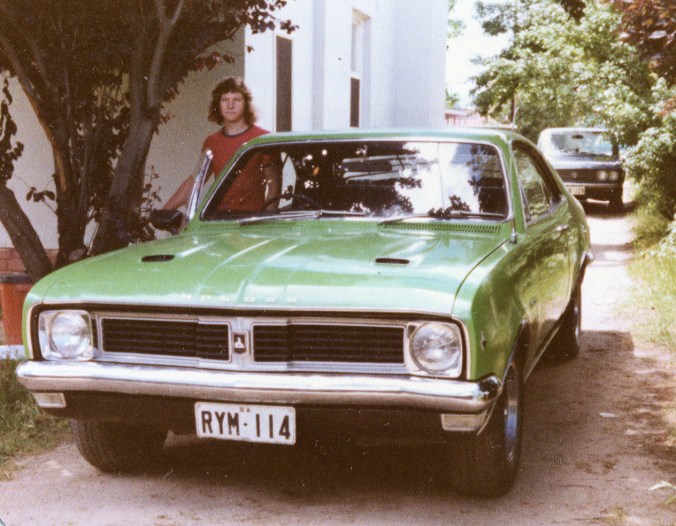
The Dream Car—Holden Premier EH, Serena (100-word challenge)
Serena, our dream family car ferried the T-Team to Canberra. In 1975, hardly a maiden for this voyage, she drove us to our destination; a comfortable, safe ride over the Hay Plains. No breakdowns. No stranded waiting for road service on the hot dusty side of the road. A smooth ride that rocked me to sleep; the vinyl with scent fresh from the caryard to us.
She mounted the snow shovelled roads to Thredbo. From her window, my first sight of snow on a brilliant sunny day, snow shining on twisted eucalypt branches.
[So, if you could go back and talk with your 5-year-old self, what would you say? What would your 5-year-old self say to your future self? Here’s a story where I imagine just that.]
MESSAGE FROM MY FUTURE ME
“Grandma, can I excuse the table?” I asked.
Grandma chuckled. “You mean, be excused from the table, dear.”
I nodded and then pushed my chair from the old wooden table.
“Yes, you may, but don’t go too far,” Grandma said. “Go only to the end of the road and then you must turn back.”
I escaped out the back door and down the gravel driveway. The street spanned before me, begging adventure. Sunday lawns green, pungent with fresh Saturday clippings piled behind an assortment of fences.
“Go away, will you,” she said in her grimy blue dress. She leaned over the stone wall and pushed me.
I brushed off her greasy prints and walked on, leaving the willow tree and that girl snarling in the shade behind me. As I strolled into the sun, I ran my hand over cracked rendered walls, rattling cyclone fences and peering through the oleander bushes for signs of life in quiet houses.
“Don’t go over the road,” Grandma’s voice warned in my head.
No, I won’t. I rubbed my bottom in memory of the Belair Sunday school picnic adventure when my brother lost me. Promise! Careful not to step on the lines in the pavement. Bad luck. I tiptoed and danced along the pavement in my pink ballerina shoes.
A shadow wriggled over the pavers. Stobie pole to my right, plastered its stunted midday image on the asphalt. I halted. Casting my focus up, I spied this big girl. I squealed and clapped my hands over my mouth. This lady-girl was dressed all in lace and brown velvet as if in Grandma’s clothes.
“Hello, you must be Lee-lee.”
“Why did you know my name?” I pointed at her; rude, I know. “Ha, ha! Why are you wearing funny clothes?”
She blushed and rubbed her stubby fingers over the velvet. “They’re trendy where I come from.” She smiled and straightened her long dress that swept past her ankles. “Actually, where I come from, I know a lot about you.”
“Why?”
“Because I have the same name as you.”
“So? I know more than you do. You’re dumb. So there, ner!” I planted my hands on my hips and poked out my tongue.
“That’s no way to talk about yourself.”
“Huh?” I pulled at my pigtail and chewed the ends of my hair.
“Elementary girl.” She flicked her long blonde strands and smirked. “I am the future you. In fact, I know more than you do because I know what’s going to happen to you.”
“Future me?” I scratched my cheek and screwed up my nose. “What does future mean?”
“Oh!” I wiggled a loose tooth. “Does that mean your teeth all fell out? Did you get grown-up teeth or did you get them all pulled out and get false teeth like Grandma’s?” I zoomed up to Future Me’s face and ogled at her mouth. “Come on, show me your false teeth.”
She bared her perfect row of pearly whites and nudged me back. “They are real. Orthodontically corrected, but real.”
“Arthur—what?”
“I had braces on my teeth.”
“Why? Were they crippled?”
“No, they were crooked.”
“Ugh! Crooked teeth.” I turned from her and poked stones with the point of my shoe. “I don’t think I like being you. Grandma clothes, crooked teeth that need Arthur’s braces. I’ll never be like you. You’re just pretending. ‘Sides, how could I be you?”
I squinted at this tall slim blonde who transferred her weight from one leg to the other. I noticed the worn back-pack groaning full of books, straps straining to pull the load from her waist. Future Me stroked her chin between her thumb and forefinger. “Well, it’s hard to explain to someone as little as you. You’re in Prep, aren’t you?”
“Yes, I’m a big schoolgirl, now.” I thrust my chest forward and with hands each side of my tummy, swung my hips.
“Well, big schoolgirl, Lee-Lee, to put it simply, it’s called T.T.T—thought, time, transportation.”
“What then?” I watched my pink dress swish as I swayed.
“You just think and instead of thinking time as moving forward, you make it move backward for you.”
“Just like that?”
“Well, actually, it’s more complicated than that—a kind of scientific experiment that my big brother Warwick invented. He put electrodes on my head and well, something happens that I can’t fully explain.”
“Oh, did you have a brother, Warwick too? Does your Warwick snort when he laughs?” I cupped my hand over my mouth and tittered.
The lady-girl raised her lace sleeve to her mouth and giggled. “Yes, he does.”
“You must be me.” Repressing the urge to gnaw my fingernails before my future-self, I clasped my hands together and looked in her eyes. “So, me, what’s going to happen to me?”
She avoided my gaze. “That’s for me to know and you to find out.
“That’s not fair! Why can’t I?” I grabbed at her, but she slipped through my fingers and drifted from me. “Plee-ease!”
“I can’t!”
I watched her move further away and shimmer in the sunlight.
“But why not? Please! Just a little bit.” I chased her and swiped at her. “Just a tincy-wincy-little bit. I won’t tell! Promise!”
“Alright, if you insist.” She floated above the greying plaster fence. “But I must be leaving soon.”
She faded, blending in with the oleander and honeysuckle bushes. I strained to see her. I attempted to touch her, but my hand passed through her.
The wind whistled through the bushes. “Have a good time with Jilly.”
“You didn’t tell me! You lied, me!” I cried.
I hunched over and plodded back towards Grandma’s house. Shouts and squeals from a yard on my left, caught the corner of my eye. A girl my age bounced on an old double-spring bed.
“Hello, my name’s Lee, what’s yours?”
“Hello, my name’s Jilly. Do you want to play on the trampoline with me?”
“For I know the plans I have for you,” declares the Lord, “plans to prosper you and not to harm you, plans to give you hope and a future.” Jeremiah 29:11
***
Dreaming of being transported to another world?
Time for some weekend reading?
Take a break and journey to another world, another time to …
Games days, Central Australian pilgrimmages, his garden, golf, table tennis…always having to win. These are the things that spring to mind when I remember my dad. Last Monday, he would’ve turned 97 if he hadn’t left this Earth for a more perfect life in heaven in 2012.
Another defining memory of Dad was his cars, except for his first one, a Gogo mobile, the rest were cheap, second-hand and the “that’ll do for the time being variety”.
This week I look back at the memory of one of these cars in the 100-word challenge.
[Driving around Adelaide these days, I see many classic cars. Brings back memories of our family cars from my childhood…]
Bathsheba
After 50 years, I have discovered the significance of our Holden FC’s name. My dad was called David. In the Bible, there’s a King David who has an illicit affair with a woman he spies in a bath on a roof top. Her name, Bathsheba. Bath-she-ba; an apt name considering the circumstances of their meeting. Did Mum think that when Dad bought this car, this silver-pointed beauty was his “mistress’? Similarities: Both Davids were master of their realms. Both Bathshebas, not new, used, yet beautiful. And both Bathshebas became parked in their David’s palace, in a harem, their love shared.
[Why 1978? Nostalgia for one. Some snapshot of the past for future generations. And, well…I do wish I could share the shenanigans of current family, but I think that would leave me Christmas card less and spending the next 40 years on my own at Christmas sipping some sort of spirits to drown my sorrows, forget my regrets and missing all the entertainment Christmas in Australia brings. So, what harm would be done to reminisce about one warm Christmas Day when life was simple, and the stars of this show are now twinkling in the sky of remembrance. Needless to say, like Mr B, I will not use their real names to protect the not-so innocent, and the little bit affected.]
Christmas to a T
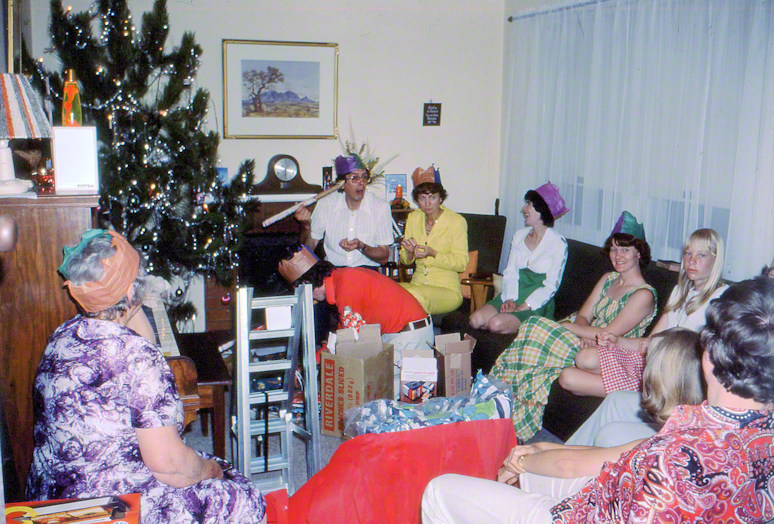
The sun filtered through the dusty window golden and warm. I flung off my sheet and raced to the Christmas tree; a real one that filled the lounge room with the scent of pine.
Mum, still in her nightie, watched me as I opened my presents: two skirts and a pair of scuffs.
I hugged her. ‘Thank you, Mummy.’
‘You’re welcome.’
‘So, what church do you think we should go to, today?’
‘I was thinking Maughan Church in the city.’
‘Excellent, I like that church.’
‘Well, then,’ Mum glanced down the passage way, ‘you better get ready.’
I hurried to my room and changed into my new Christmas skirt, relishing the T-female tradition of new clothes for Christmas. Even better, home sewn by mum, so no one would have the same dress as me. I pulled on a white lace shirt to match the simple V-cut skirt of fine red and white plaid.
Mum called out from the kitchen, ‘Hurry, we have to get there by half-past nine.’
‘Alright.’ Easy for her to say, but the challenge was my Dad and brother, Rick. How to wake the men who lay in their bed-tombs asleep?
Mum had an idea. ‘Why don’t you put the radio on? Make it loud. Really loud.’
I followed Mum’s suggestion and tuned the radio to 5KA and turned up the volume dial until it would turn no more.
Boney-Em blasted out a Christmas carol causing Mum to jump. ‘Not that loud,’ she cried through a mouth full of milk and Weeties cereal mixed with her ever-faithful All-Bran.
An unimpressed and bleary-eyed Rick and Dad joined us on our jaunt into the city to celebrate Christmas Uniting Church style, not much different from the Lutheran Church service. Rick nodded off during the sermon all the same.
Then, the highlight of our year, Christmas at Grandma’s. Always a spread, but as it was simmering around 35-degrees Celsius, cold chicken and ham, for meat, and potato salad, coleslaw, tomato and onion salad, cucumber and beans from Dad’s garden swimming in mayonnaise, and for our serve of greens a bowl of iceberg lettuce.
The food was only second to the company. Grandma, with her G (she wasn’t a T) gifting of hospitality, had invited some friends from church. My uncle and aunty from the inner suburbs of Adelaide also came to complete the gathering around the old oak extendable table. That year, the numbers being not large, I sat with the adults. Other years children were relegated out in the passageway or exiled to the back garden to sit at the “kindertisch”. Anyway, at 15, I was almost an adult.
After lunch, we lingered at Grandma’s all afternoon, waiting for the second wave of visitors to arrive. I flicked through Grandma’s photo albums and then read some of her books from the bookshelf in the spare room. Actually, that’s what I did, after helping Grandma and mum wash and wipe the dishes while the others lazed around chatting and playing cards.
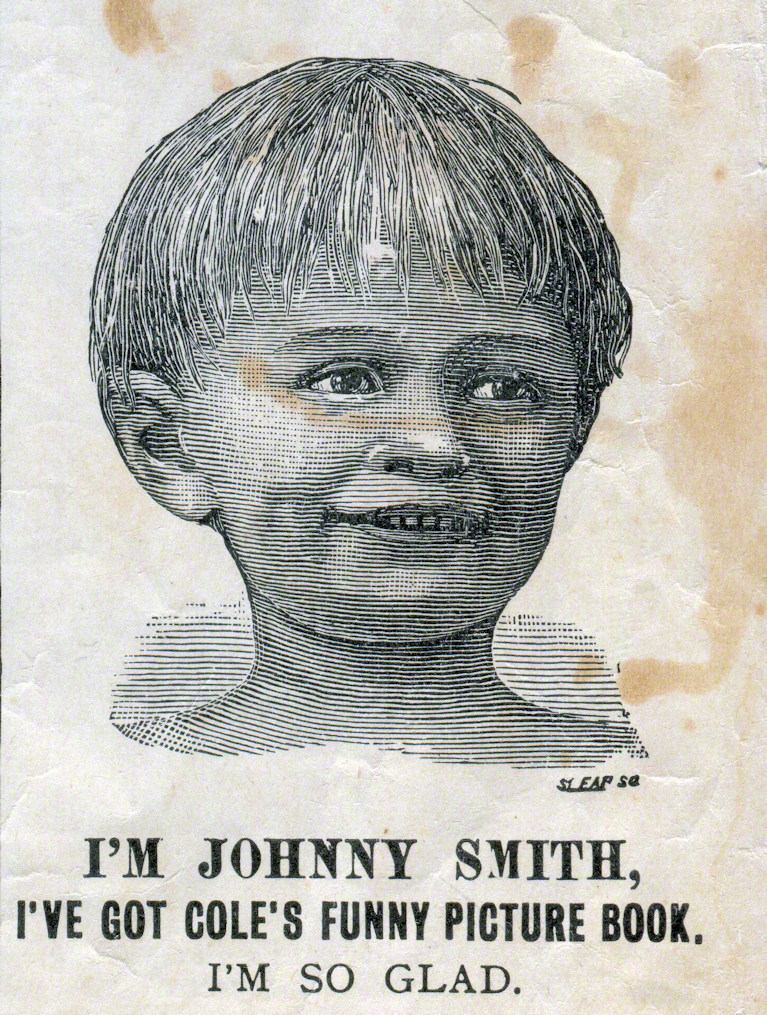
I’d started on The Coles Funny Picture Book when called to bid one of Grandma’s friends, my uncle and aunty goodbye. Within minutes, the next influx of relatives rolled up the gravel drive. Aunt Wilma and her husband Jack stepped from their yellow Volkswagen Passat. The couple impressed me; so striking with Aunt Wilma’s elegance, matching her husband’s movie star looks and Scottish wit.
Sidling up to Mum, I asked, ‘Why didn’t the others stay?’
Mum mumbled something I didn’t quite catch before rushing up to her sister and hugging her. I followed mum with the greeting rituals of hug and kiss my aunt and uncle. Then, while the adults engaged in honey biscuits, tea and banter, I resumed my perusal of The Coles Funny Picture Book.
Dinner was left-overs from lunch. Sorry Wilma and Jack, but that’s the tradition. Waste not, want not, my Grandma used to say. She was a parson’s daughter and married a parson, not just any old parson, but a missionary one, during the Depression. And she and her missionary husband moved up to Hermannsburg at the start of World War 2. I was convinced that she still had rusty tins of food mouldering at the back of her cupboard from the “Dark Ages”.
Uncle Jack was in fine form—they’d obviously had a merry time at the last Christmas appointment. True to form, he kept us entertained with his brogue accent and humour, repeating variations of the Wattle ditty. Here’s how it goes with his accent:
“This ‘ere is a wat’le, The emblem of our land, You can stick it in a bot’le, Or ‘old it in your ‘and.’
Jack performed this with variations, and some subtle actions that at fifteen, I was a tad too innocent to “get”, but we all laughed anyway.
As the night progressed, the bolder Uncle Jack’s jokes grew and the more most of us laughed. Perhaps not Grandma’s friends who had dared to stay on; they kept glancing at Grandma, the expression on their faces reading, “Pull your son-in-law into line, dear.”
My dad sat on the piano stool, hands under his bottom, his lips doing the bird-in-mouth thing and a snort escaping with every new and daring quip from Jack. Dad hoped to play the piano as we sang some Christmas carols, but as each joke escalated in levels of risqué, clever though they were, the likelihood of carol singing became less likely.
One of Grandma’s friends suggested we should sing some carols. Ah, the innocence of good Christian folk in the 1970’s.
Rick and I commenced our own rendition of We Three Kings…
Grandma picked up a present and quietly said, ‘I don’t think we will sing this year. Let’s open our presents. Lee-Anne, you’re the youngest, you can start.’
So, here’s how I scored in 1978: Cosmetic mask from Aunt Wilma and Uncle Jack, hairdryer from Mum and Dad, photo album and book from Grandma and a cassette tape from my country cousins. Grandma’s present, a book, interested me the most and I stayed up to 2am reading it.
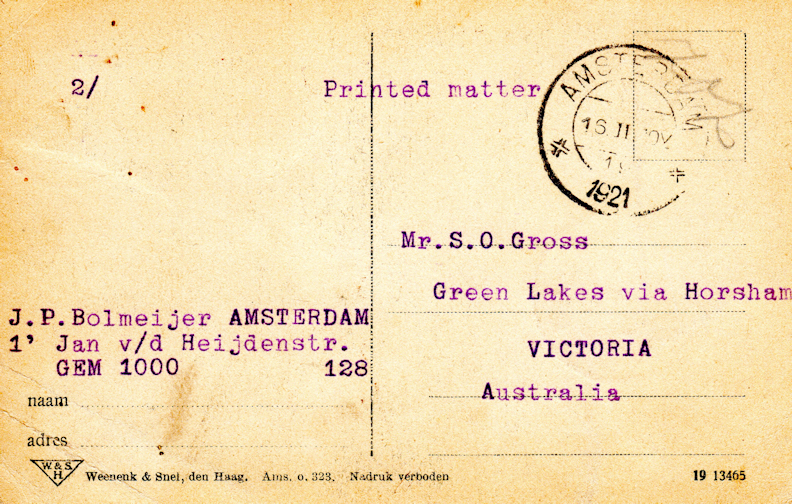
Remember the humble postcard? My maternal grandfather used to collect them…100 years ago. This week, I’m embarking a journey into K-Team history as well as glimpsing life in the past from a postcard taken 100-years ago.
I am amazed at what one can glean from a simple card. Imagine, a postcard in 1921 cost 1-cent to post from the Netherlands! On the flip side, a tiny little script in the middle reads “nadruk verboden”(copying is forbidden). I’m hoping from my understanding of copyright laws, that this restriction has long since expired. That being said, I acknowledge the publishers “Weekenk and Snell, den Haag” and have shared this postcard for historical and educational purposes.
So, we travel forward in time, when my husband and I visited Amsterdam at the start of our European adventures in 2014.
We arrived in Amsterdam and after breezing through customs, Hubby rang up Renault to get someone to pick us up and drive us to the Renault office to pick up the leasing car, the Duster. ‘You’ll recognise us,’ the Renault guy promised. We waited half an hour. No guy, no van. Dragging my big red suitcase, Hubby paced back and forth along the front entrance and I trailed behind him, his smaller suitcase bumping over the pavement. After 45 minutes of no joy, no guy, and no Renault van, Hubby rang Renault again. Apparently, the pickup guy had made several laps of the Airport pick up area searching for us. Hubby suggested we rendezvous by a well-known hotel near the overpass. We waited there for a couple of minutes before Hubby got itchy feet and off he went a-wandering. I began to follow and then looked back. The Renault van rolled around the corner. I ran, and with my free hand I waved at the driver getting out of the van.
I apologised for my husband’s impatience and then we waved at him as he approached.
After picking up the Duster from the office, Hubby embarked on the challenge of driving in Amsterdam on the right side of the road. He took a little while to adjust to not over-compensating and bumping into the kerb on the right. Which he did a few times.
We gingerly drove the short way to the service station and after parking and hunting through the French instructions, found how to open the fuel cap. Hubby had learned French at school, so was able to decipher the information without spending too many hours trawling through the tome of a manual. So, we filled up with fuel and began our journey to our apartment. Our navigation system, a Tom-Tom which we named “Tomina” since it had a pleasant, if not slightly passive-aggressive female voice, lead us to the highway and then off the beaten track, then told us to turn around. Back where we started, Tomina said, ‘Turn right.’
‘Turn right,’ I said.
Hubby obliged by tuning left and into the highway. Cars coming from our right tooted us as we entered the highway. We had to go ‘round the block to get back on track. Then we saw that where Hubby turned was a sign that read, “No Left Turn”.
We found the apartments and since check-in was only from three o’clock, we had the staff hold our luggage while we explored the local station. We admired the rainbow-coloured flags that decorated the apartment block and surrounds, thinking they looked so pretty and decorative. Hungry by this time, we ate lunch, then bought a card, wine and flowers for his aunt Ada who had her birthday on the 30th July. A highlight of the trip for Hubby was visiting his aunts and cousins that afternoon. Had a lovely time meeting and getting to know his father’s relatives over coffee and cake. Some of his aunts Hubby hadn’t seen for 40 years.
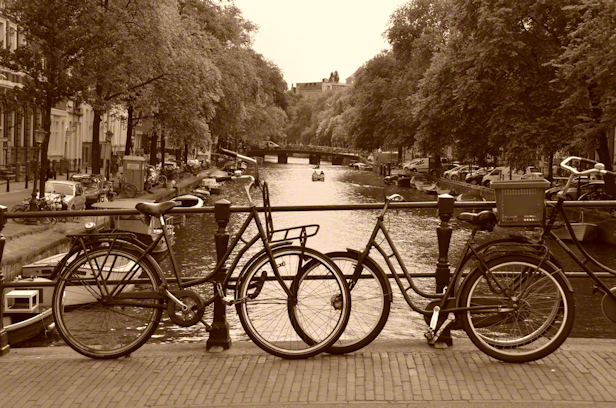
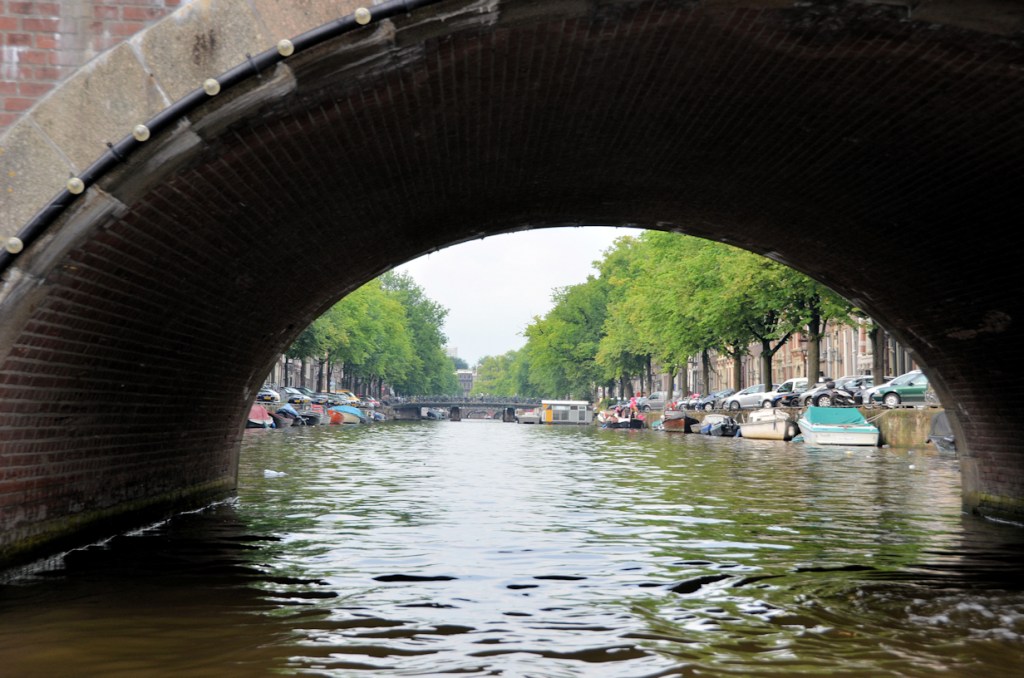
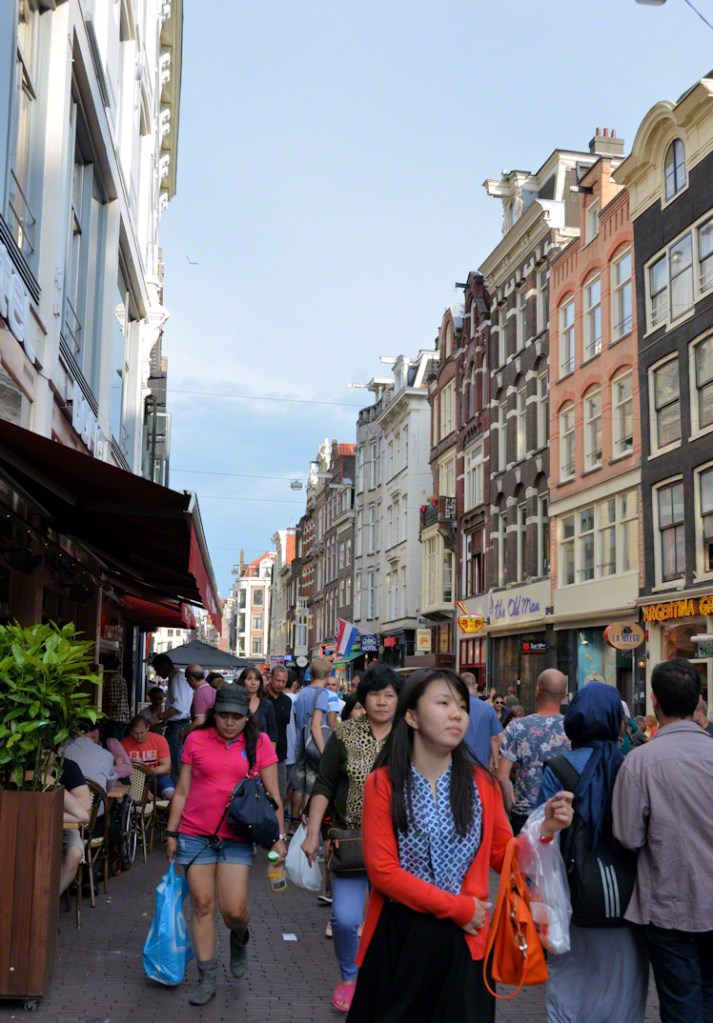
The next three days in Amsterdam we spent walking. Hubby had taken it upon himself to become my personal trainer. We must get fit. We walked the roads of Amsterdam absorbing the summertime atmosphere, admiring the canals, the graceful architecture, the boats and hundreds of bikes—everywhere people riding bikes. The town was packed with people, tourists, and revellers, eating, drinking and shopping. As it turned out, we had chosen unwittingly, I might add, to spend the weekend when Amsterdam was celebrating the Rainbow Festival. We did see some unusual sights as well as the usual antics common to drunken behaviour. My foot suffered blisters as it adapted to new hiking sandals. Good thing we had a first aid kit and some blister pads from Rogaining a couple of years ago.
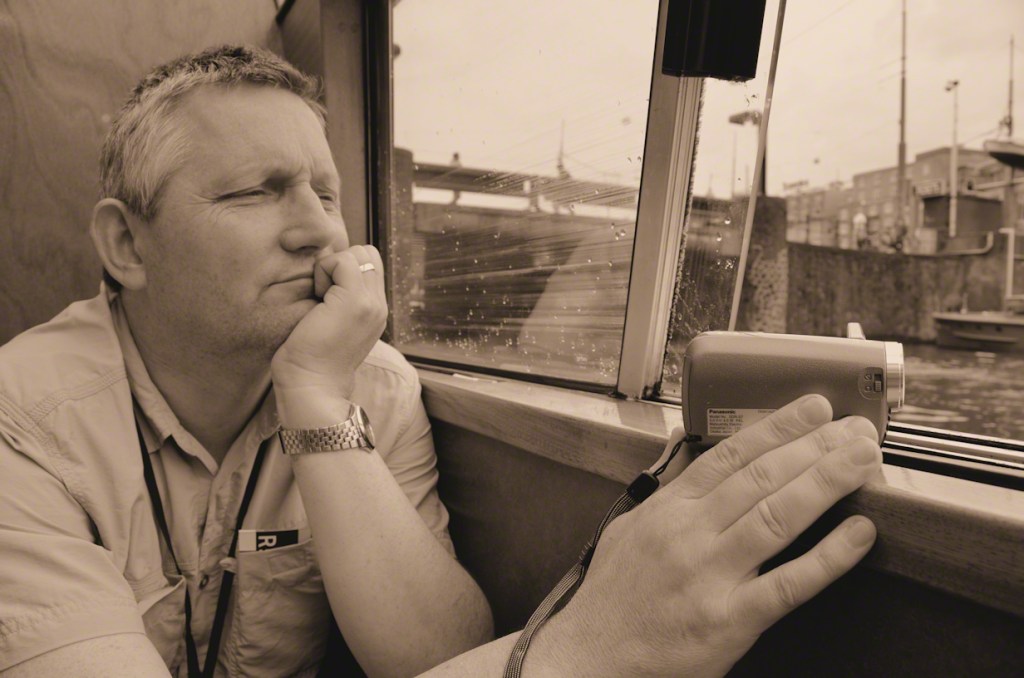
We did the usual tourist stuff, one day five hours in the Reich Museum, next day lining up and herding through the Van Gough museum-art gallery, and then an hour cruise through the canals. We had a 24-hour pass so we could hop on and off certain trams around the city. One tram though, decided to close its doors on me as I tried to get off leaving Hubby abandoned on the footpath. I alighted at the next tram stop around the corner and walked back. What joy to see my husband walking towards me.
Although we mostly ate at our apartment, the last day in Amsterdam we enjoyed pancake with apple and honey for lunch, and for dinner Argentinian steak—tender juicy steak. I’m not sure what it is about Argentinian steak houses, but in Amsterdam, they’re everywhere.
[As I may have mentioned in a previous post, I have embarked on a journey of discovery, down the rabbit hole of family history. To be honest, I have spent more time researching than on writing new blog posts. So, as it’s my late-dad’s birthday tomorrow, I am revisiting his life-story which was the eulogy read out at his funeral.
It is interesting that usually at this time of year, way back when he was with us, we would plan to celebrate his birthday. Inevitably, being Adelaide, South Australia and the middle of summer, the temperature would be nudging 40 degrees Celsius, or over, and the party would be cancelled. Too hot for my mum who, having lived in the heat of the Centre of Australia in her youth, couldn’t tolerate the blazing heat.
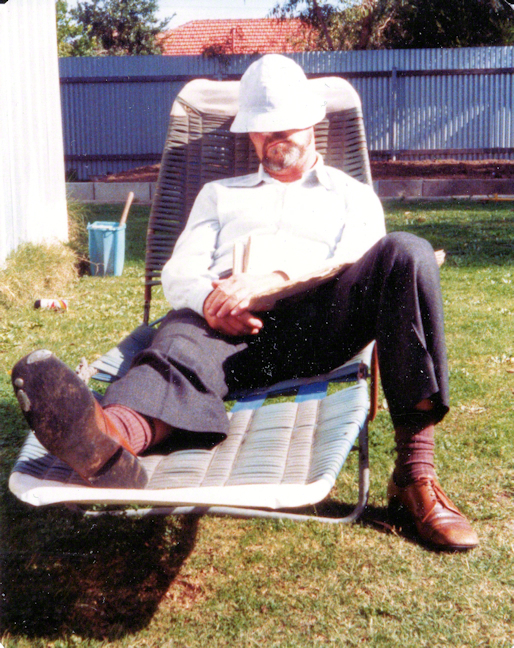
When we finally did celebrate his birthday, on a cooler day several weeks later, if there was a lull or even if there wasn’t, Dad would rest his head in his arms at the table and take a nap. He even did this once when his brother was visiting from Canada.
This week is no different, after a cooler and wetter than usual start to summer, today is typically the hot, dry heat that Adelaide does best; a reminder of all those cancelled birthdays of Dad’s, yet remembering what he emphasised was most important in life—God’s love.]
He Wanted Us to Know God’s Love
In Memory and celebration of my father’s life…
Remembering his birthday 96 years ago, Saturday January 13…
DAVID BY NAME CLEMENT BY NATURE
Ron and Lina Trudinger’s third child was born in Adelaide on January 13, 1928. His parents named him Clement David Trudinger. He was a much longed for child as he arrived eight years after his older sister, Agnes.
“Clement?” his aunts cried. “We don’t like the name Clement.”
So they called the babe by his second name, David, and David he has been ever since. Except, of course when he goes to hospital, then he’s Clement, officially.
Throughout his life, God watched over David who has shared many stories of how he showed His love towards him, protecting, and providing for him and his family. He shared how he felt he didn’t deserve God’s love; he wasn’t perfect, yet God loved him. It is this love that David would want all of you to know.
He began to write down his life-story, and in the last few weeks began to tell all, especially his grandchildren, how God worked in his life and how his Heavenly Father protected him.
When he was two years old, his missionary parents took David and his younger brother Paul to Sudan. Not the kind of place to take small children. But God protected David and his brother from a hippopotamus, cobras, car accidents, and mad men. (He’s written in more detail about these incidents and I will share these in the future.)
God also blessed him with a loving and God-fearing family. Some may say, too God-fearing, for his parents continued their mission work in Sudan while David from the age of seven, and Paul from five, commenced their schooling in Adelaide. As a student, David only saw his parents every five years when they returned home on furlough. He shared how despite missing his parents, he enjoyed his childhood, with so many aunts doting on him, and the game afternoons they had. I think his love of games started there in the Northumberland Street parlour. He’d even created a few games in his latter years.
His other great love was sport, especially football. God blessed David with fitness, agility, and a few trophies along the way. In retirement, he played golf, and when his legs couldn’t keep up trekking the 18 holes, he took up table tennis instead. He was still playing table tennis up until a few months ago. Sport kept his body and mind young.
David also enjoyed hiking and exploring. During school holidays he’d visit his brother Ron, a teacher at Ernabella. While there, he made friends with the Pitjantjatjara children and go into the Musgrave Ranges on hiking expeditions. One hot day, David and a friend became lost in the ranges without water, or salt. They wandered for hours parched and at the point of dehydration, before coming across a waterhole, the most welcome sight David had ever seen. I’m sure God protected and guided them back home. I’m also sure that’s when David’s love of salt began.
David progressed through his schooling, and gifted in art, he trained to be an art and woodwork teacher. After a couple of years at Lameroo, he won a position at Hermannsburg Mission as headmaster.
He taught at Hermannsburg for five years. In that time, he became close to the Aranda people, especially the students he taught. They took him on expeditions into the MacDonnell Ranges, Palm Valley, and gorges and beauty spots along the Finke River. David also became close to Pastor Gross’ daughter, Marie.
On January 23, 1958, he married Marie in Hermannsburg.
However, his romance with Central Australia was cut short, when, for health reasons, he and Marie had to move down to Adelaide. On October 30, his first child, Richard was born.
David continued teaching, first at Ridley Grove Primary School, and then St. Leonards P.S. The little Trudinger family moved from schoolhouse to schoolhouse.
May 3, 1963, his daughter, Lee-Anne was born. By this time, Glenelg Primary School planned to convert their little rented home into a library. As his family grew and Marie grew more unsettled with the constant shifting, David faced the challenge to buy a house. But how could he on a teacher’s wage? He looked at his lovely stamp collection of rare Sudanese stamps. Could he trade them in to help pay for a deposit?
They looked at a few homes. A bungalow on Cross Road appealed to him, but not Marie. His father wasn’t impressed either. Marie didn’t like that pokey little home on the main road with no back yard at all and the property was right next to the rail line. Then a trust home at Gilbert Road Somerton Park came up for sale, and the deal was done. David regretted selling his stamp collection but reasoned that this was an investment for the children. And, many years down the track, it was, especially with the two lovely court yard homes, one of which David and Marie have lived in from 2006.
God blessed David’s career. He taught at Port Adelaide Primary School from the late 1960’s until he retired in 1985 at the age of 57. In that time he studied to teach Indonesian, became Deputy Principal, and won a government research grant to go to Indonesia. He became interested in the Indonesian musical instrument, the Anklung. He brought a set home and proceeded to teach pupils how to play. He had bands of students playing in the Festival of Music until 2010. He continued to visit the school now LeFever Primary and train students to play the Anklung, right up till the beginning of this year. He also tutored indigenous students.
David lived life to the full and grasped every opportunity to explore the wild and untouched land God has created, especially Central Australia. With his long service leave, and then time in his early retirement, he made regular pilgrimages to the Centre. And God protected him. I like to think that now he is with the Lord, his guardian angel is enjoying a well-deserved rest.
One example he gave of God’s protection was on a hiking trip in the Western Wilderness of Tasmania with a friend. On one narrow path climbing around a cliff-face, he felt his heavy pack over-balance and he began to fall. “This is it,” he thought. Then he felt the pressure of someone pushing him back against the rock and he was able to step two metres further to a wider path. He knew an angel of the Lord rescued him, preserving his life, not just for his sake, but for his friend’s sake, and also because his work on earth was not complete.
But on August 25, 2012, David’s work on earth was done. There are probably many things he has done that will be remembered as a blessing and encouragement to all who knew him. He was a regular member of Faith Lutheran Warradale church; he took an active role and was a vital member of the congregation for over 54 years. He was a Sunday School teacher, an elder, and a Bible Study leader.
We will miss his cheerful nature, how he grasped life, lived it to the full and shared God’s love with all he came across.
He may have been David by name, but he was Clement by nature.
‘I remember you,’ says a lady from church, my mum’s age, ‘you couldn’t keep still. I felt sorry for your poor mother.’
Another lady nods. ‘She had her hands full, your mum.’
‘Ooh, there was the time you escaped and ran up to the altar—oh, your poor mother!’
I smile and nod. So different now.
***
Back then, mid 1960’s…
The Children’s Carol service Christmas Eve—the bag full of sweets and honey biscuits stacked under the live Christmas tree, an incentive to stand in front of the congregation, singing my little three-year-old heart out. I love singing. Then when the Pastor preaches, the Sunday School teacher, Mrs. S, tells me to sit still, be quiet and don’t sin. Be good if you want your bag of lollies.
So, unless I’m told, I sit, am quiet and I don’t sin. Being good means not singing unless told to sing. I thought that’s what Mrs. S meant. And, being good means the reward of sweets at the end of the service. Oh, dear! How long is the pastor going to preach! I try not to wriggle. Everyone’s looking at me. But it’s so hot and stuffy in the church. Poor baby Jesus born in the middle of summer when it’s so hot! My halo’s itching my head. I take it off and scratch my head.
Mrs. S holds up her hand to me. ‘Lee-Anne! Be still! You want your sweets, don’t you?’
I try and put the halo on my head. It’s crooked and slips over my ear.
Mrs. S snatches the halo off my head. She has a cross look in her eyes.
Oh, dear, I hope I haven’t been naughty. I wasn’t sinning, was I? I hunch over and hold my fidgety hands tight. Must be still. Must be quiet. Must not sin. Want those sweets.
Mrs. S gestures for us children to rise. Goody, I can sing! I stand, take a deep breath of pine-air. ‘Joy to the World!’
The service ends. We wait by the tree. I marvel at the white “crismons”, the symbolic decorations from our great-great Grandfathers from Germany. These white shapes made out of Styrofoam and sprinkled with glitter make me wonder, is this what snow looks like? I’ve never seen snow. Snow is for cold places and Adelaide is always hot. Except in winter when it’s cold enough to have the kerosene heater going in the kitchen. But Adelaide’s not cold enough for snow, mummy says.
I go up to the tree and she hands me my bag of sweets and a children’s book with my name in it.
‘This is for attending Sunday School every week and learning all your bible verses,’ Mrs. S says. ‘Good girl.’
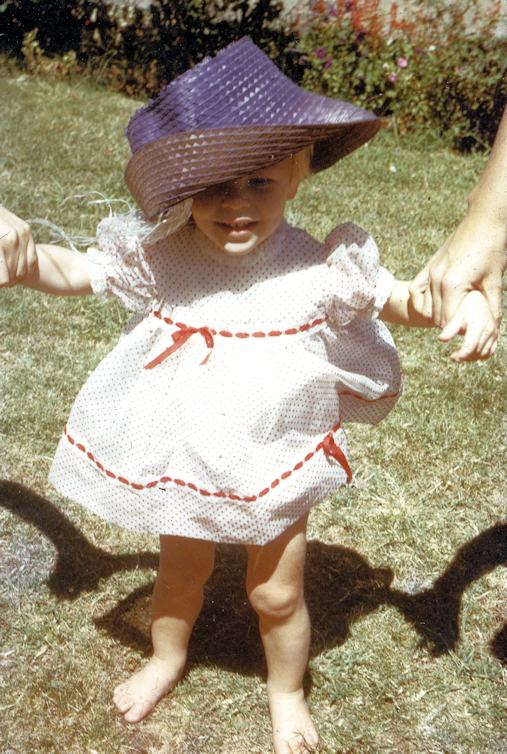
I take the gifts in my arms and careful not to drop my cargo, I take one step at a time out the church as if I’m a flower girl in a wedding. I know about weddings. My Aunty K was married in this church and I wore a new pink dress that my mummy made. And I had this lacy hat, and everybody took photos of me.
I’m in the courtyard, lost in a forest of legs. I search for mummy’s legs. She has ones under her pretty aqua dress with frills at the bottom. That’s her new dress for Christmas. My mummy’s a dressmaker and she always makes a new dress for her and me at Christmas. I mean, what are daughter’s for but to be dressed up in the prettiest, frilliest dresses at Christmas?
I can’t see mummy’s dress, or legs. I weave through the legs and scamper down the gravel drive to the back of the church to the car park. She’s in the car, our FJ Holden, Bathsheba, surely. I look in the car. No, she’s not there.
Tramping behind me. A roar. ‘Naughty girl!’ Dad all red-faced. ‘You know not to go down the drive on your own!’ Dad smacks me on the back of my legs.
‘But I was looking for mummy!’ I howl.
Mummy comes running. ‘Ah, you found her. I was getting worried.’
My always-good-brother strolls up to the car. He rolls his eyes and mutters, ‘Lee-Anne, always getting lost.’
‘Now get in the car,’ Dad snaps.
I adjust my load. A biscuit drops onto the dirt. I bend to pick it up. Can’t waste good food.
‘I told you!’ Dad says with another stinging slap to the legs. ‘Get in the car! Behave yourself, or else!’
I climb in and assume “or else” means another smack on the legs. Dad crushes the biscuit with his shoe and then slams the door behind me.
‘Doesn’t matter how much you smack her,’ Mummy mumbles. ‘She never seems to learn to be good.’
As Dad drove down the road he glances at me and says, ‘We’re off to Grandma’s now, so be good, or else.’
Be good, what does that mean? I pondered in my three-year-old mind. I thought it had something to do with not getting into trouble or getting a slap on the legs. I still hadn’t worked it all out, this “being good” business. It had something to do with following my older brother’s and cousins’ example. Something to do with being still. Being quiet and not upsetting the big people. But I don’t know, just when I think I’ve got it worked out, I do something I’ve no idea is wrong and the next thing, I get a smack. All I know is sitting still and being quiet means I’m being good.
Our car tyres crunch on the stones in Grandma’s driveway. We climb out of Bathsheba and enter the house through the back door and greet Grandma who’s piling plates with honey biscuits. We side-step around the table in the dining area and into the lounge lined with couches, dining chairs, and a piano. The lounge room is filled with the smell of pine tree. Pinned in the corner another real Christmas tree, all lit with electric candle lights and decorated with colourful baubles. I move to the tree to touch the pretty decorations. I must be careful not to step on the presents wrapped in red and green paper under the tree.
‘Now, Lee-Anne, you sit on the floor,’ Mum says. ‘The chairs are for grown-ups.’
I sit cross-legged by the fireplace.
‘You better sit still and be quiet,’ Dad warns, ‘or else.’
Cousins, aunts and uncles, and the odd, lonely soul from church crowd into Grandma’s lounge room.
I try hard to follow my cousins’, all older than me, example. Sit still and don’t make a sound. I must be good. I watch the grown-ups all chatting, getting up and down, laughing and joking. Must be fun to be a grown-up.
Clothed in her purple swirly dress and beige apron, Grandma settles her generous backside on the piano stool. ‘Let’s sing some carols,’ she says and begins hammering on the keys.
In joyous and rousing strains, we sing our way through the black hymn book’s carols.
I like singing and can’t help but join in. Then I remember. Be still. Be quiet. Maybe only big people can sing. I glance at Dad. He’s singing, eyes closed. My brother next to me barely opens his mouth. He fidgets. Not a good sign. I’m meant to follow my brother’s example, aren’t I?
But I love singing. I love Christmas carols. I raise my voice and sing. Everybody’s happy. Everybody, except Richard sings. I check my cousins. They’re singing. Must be alright to sing if my cousins are singing. So, I keep singing.
Mum pipes up. ‘Well, surely that’s enough singing. The children want to open their presents.’
‘What’s wrong with singing some more Christmas carols?’ the odd, lonely guy from church asks.
Mum points at the mantelpiece clock from the Fatherland. ‘I just think it’s getting late for the children.’
Dad blushes and cleares his throat while the other grown-ups look from my mum to Grandma.
Grandma looks down and wipes her hands on her apron.
Was my mum being naughty?
I reckon they’ve got the wrong person being the naughty one. Who’s the one who’s always told to sit still, be quiet and not sin? Me, of course.
I stand up and say, ‘It’s alright. I like sinning.’
Everyone laughs.
‘She means “singing” carols.’ Grandma’s tummy jiggles up and down as she chuckles. ‘Yes, it is getting late. Let’s open the presents. And Lee-Anne, since you are the youngest, you can help your mother hand out the Christmas presents.’






















 Tru-Kling Creations