Family History Friday–Grandma’s Letter Part 2

Grandma’s circular letter

CIRCULAR WRITTEN by ELSA GROSS from HERMANNSBURG,

OCTOBER 1939

From Riverland to Desert (part 2)

About quarter to 7 we arrived at the station and there was the whole station out to meet us, black and white, big and little, and such a noise too, it sounded just like a whole lot of parrots or galahs.  Then the truck came to a standstill and Sam got out and had to shake hands all around.  I had to stay in the truck on account of the measles.  I could only talk to them from a distance.  It was just like a dream and to see all the natives running to and fro, reminded me of the movie films which Lou Borgelt had taken in New Guinea.

*[Photo 1: Greetings on arrival in Hermannsburg © S.O. Gross 1939]

        Well, after all the greetings were over we were taken across to our new home, which by the way isn’t very new, it’s one of the oldest houses on the station.  Mrs Albrecht was going to have us over there for the first few days for meals, but through this measles business we decided it was best if we stayed isolated for a while so as not to infect the natives.  Mrs Albrecht sent us over our tea, then, and such a huge tea, too, and we did full justice to it, too.

        And now began our life on the station.  But so far we haven’t seen very much of it, I haven’t been out of the place at all, Sam has gone to the other places more, but we keep away as much as possible.  And now, last weekend, Ruth gets the German Measles, she was fairly miserable, but is alright again now, except for a cough.  Now it means we have to stay isolated for another 10 days or so, in case Marie gets them.  It is a real nuisance, because we can’t get to anything properly.  The only advantage it has is that we can get things a bit straight around the place.

*[Photo 2: The not-so-new home—even older in 2021!!! © L.M. Kling 2021]

        Such a lot wants doing, the doors don’t fit, and the floors need doing, and the garden has to be made.  These last two days Sam has had 2 natives helping him with all sorts of odd jobs, yesterday and today they dug the front garden and this morning we planted the lawn and tomorrow I want to put in some flowers.

        The first 2 days we were here were terribly windy and dusty and hot.  The dust came in everywhere, it was just like a real dusty day in the mallee.   Our box of goods was supposed to come out the same day that we got out here, but it didn’t come Wednesday, we waited Thursday, and still didn’t come.  By this time Missionary Albrecht was getting worried, he thought the thing might have tipped over.  Friday morning we got a wire to say they couldn’t get it off the truck in Alice Springs.  They had been trying to get the wire through since Tuesday but the weather had been too bad, they couldn’t get it through.  So Sam had to pack up an go into Alice Springs and there saw to the unloading.  Eventually on Sunday afternoon the lorry arrived and was duly unpacked, of course the natives were very interested in everything, especially the piano.

*[Photo 3: The arduous journey of belongings to Hermannsburg © S.O. Gross 1939]

        So far I haven’t any house girls yet, as soon as we are out of quarantine I will get two.  Mrs Albrecht has been baking my bread for me until I get the girls.  Milk I have brought over every morning, also cream and from that I make my own butter, but unfortunately I am not a good hand at it yet.  There are some nice vegetables in our garden, which is quite a big one, we have over 20 date palms in it, 4 orange trees and 3 figs and quite a number of vines.  This last week we had about an inch of rain which was quite nice for the gardens and settled the dust.

*[Photo 4: Garden view to Mt. Hermannsburg—yes, the palms still exist in 2021 © L.M. Kling 2021]

        I am afraid it will take me quite a while to get to know all the natives and all their names too.  I know Albert, the artist, by sight, of course, he always wears an overcoat and is quite proud of his appearance.  I also know,

Manasse the leather worker, also Herbert and Ferdinand the two Sam had helping him.  Of the women, I think the only one I know by name is,        

Cecelia, an older woman who always wears a red dress.  Some of the children are lifted up so that they look over the fence to watch the children play and when we come out they scoot.  Some of their attire is pretty weird too.  One little chap wears his father’s shirt, it reaches nearly to the ground and has to have the sleeves rolled up.  Another little girl has her big sister’s dress on, and every time she runs she has to hold it up or she would fall over it.  Another little chap has a “has been” shirt on, his father’s, it’s only strips now.  Most of the men wear hats, some felt, some harvester hats.  The boys that Sam has have straw hats on but they look as though the mice have been at them.  Yesterday morning the one came along with feathers sticking out of the holes, I don’t know if he had visited the fowl-house or not.

*[Photo 5: Hermannsburg back in the day © S.O. Gross circa 1950]

        And now we have been here nearly 4 weeks and haven’t been able to do any real work yet, but we hope it won’t be much longer before we can start.

        And so begins our life on the Hermannsburg Mission Station.  May God make us a blessing to many.

© Elsa Gross 1939
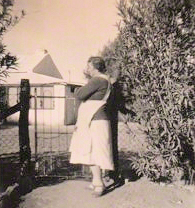
*Feature Photo: My grandma, Elsa looking out from her Hermannsburg home © S.O. Gross circa 1940

***

Want more, but different?

Check out my Central Australian adventures.

Click on the links:

The T-Team with Mr. B: Central Australian Safari 1977

Trekking with the T-Team: Central Australian Safari 1981

Family History Friday–Remembering My Dad

[As I may have mentioned in a previous post, I have embarked on a journey of discovery, down the rabbit hole of family history. To be honest, I have spent more time researching than on writing new blog posts. So, as it’s my late-dad’s birthday tomorrow, I am revisiting his life-story which was the eulogy read out at his funeral.

It is interesting that usually at this time of year, way back when he was with us, we would plan to celebrate his birthday. Inevitably, being Adelaide, South Australia and the middle of summer, the temperature would be nudging 40 degrees Celsius, or over, and the party would be cancelled. Too hot for my mum who, having lived in the heat of the Centre of Australia in her youth, couldn’t tolerate the blazing heat.

[Intro photo: Celebrating Dad’s birthday with mum’s specialty, sponge cake © L.M. Kling 1996]

When we finally did celebrate his birthday, on a cooler day several weeks later, if there was a lull or even if there wasn’t, Dad would rest his head in his arms at the table and take a nap. He even did this once when his brother was visiting from Canada.

This week is no different, after a cooler and wetter than usual start to summer, today is typically the hot, dry heat that Adelaide does best; a reminder of all those cancelled birthdays of Dad’s, yet remembering what he emphasised was most important in life—God’s love.]

He Wanted Us to Know God’s Love

In Memory and celebration of my father’s life…

Remembering his birthday 96 years ago, Saturday January 13…

DAVID BY NAME CLEMENT BY NATURE

Ron and Lina Trudinger’s third child was born in Adelaide on January 13, 1928. His parents named him Clement David Trudinger. He was a much longed for child as he arrived eight years after his older sister, Agnes.

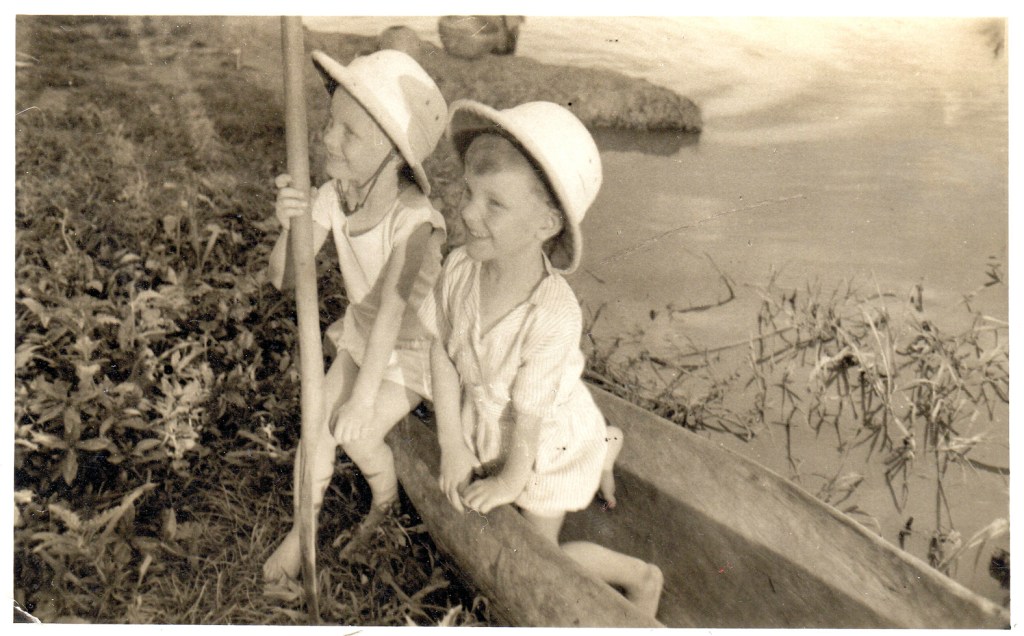
[Photo 1: Growing family with Clement David baby no. 3 © courtesy C.D. Trudinger collection circa 1928]

“Clement?” his aunts cried. “We don’t like the name Clement.”

So they called the babe by his second name, David, and David he has been ever since. Except, of course when he goes to hospital, then he’s Clement, officially.

Throughout his life, God watched over David who has shared many stories of how he showed His love towards him, protecting, and providing for him and his family. He shared how he felt he didn’t deserve God’s love; he wasn’t perfect, yet God loved him. It is this love that David would want all of you to know.

[Photo 2: David, the boy © courtesy C.D. Trudinger collection circa 1930]

He began to write down his life-story, and in the last few weeks began to tell all, especially his grandchildren, how God worked in his life and how his Heavenly Father protected him.

When he was two years old, his missionary parents took David and his younger brother Paul to Sudan. Not the kind of place to take small children. But God protected David and his brother from a hippopotamus, cobras, car accidents, and mad men. (He’s written in more detail about these incidents and I will share these in the future.)

[Photo 3: David and his brother on the Nile © courtesy C.D. Trudinger collection 1932]

God also blessed him with a loving and God-fearing family. Some may say, too God-fearing, for his parents continued their mission work in Sudan while David from the age of seven, and Paul from five, commenced their schooling in Adelaide. As a student, David only saw his parents every five years when they returned home on furlough. He shared how despite missing his parents, he enjoyed his childhood, with so many aunts doting on him, and the game afternoons they had. I think his love of games started there in the Northumberland Street parlour. He’d even created a few games in his latter years.

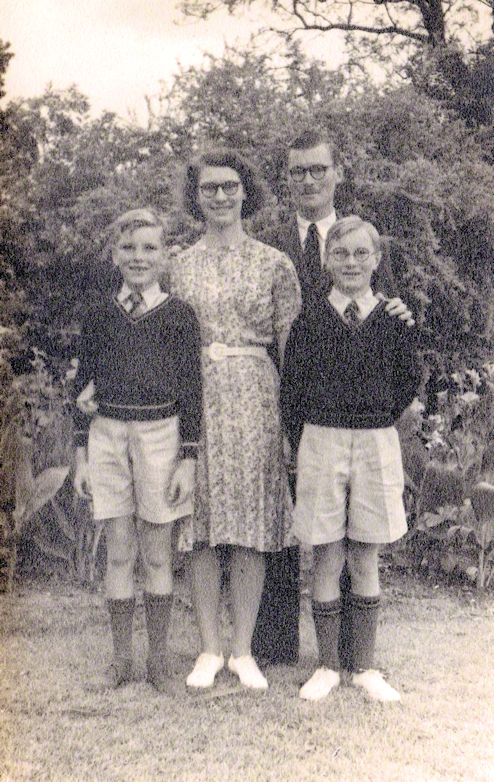
[Photo 4: With siblings in Adelaide © courtesy C.D. Trudinger collection 1940]

His other great love was sport, especially football. God blessed David with fitness, agility, and a few trophies along the way. In retirement, he played golf, and when his legs couldn’t keep up trekking the 18 holes, he took up table tennis instead. He was still playing table tennis up until a few months ago. Sport kept his body and mind young.

David also enjoyed hiking and exploring. During school holidays he’d visit his brother Ron, a teacher at Ernabella. While there, he made friends with the Pitjantjatjara children and go into the Musgrave Ranges on hiking expeditions. One hot day, David and a friend became lost in the ranges without water, or salt. They wandered for hours parched and at the point of dehydration, before coming across a waterhole, the most welcome sight David had ever seen. I’m sure God protected and guided them back home. I’m also sure that’s when David’s love of salt began.

[Photo 5: Brothers in Ernabella © courtesy C.D. Trudinger collection circa 1940]

David progressed through his schooling, and gifted in art, he trained to be an art and woodwork teacher. After a couple of years at Lameroo, he won a position at Hermannsburg Mission as headmaster.

He taught at Hermannsburg for five years. In that time, he became close to the Aranda people, especially the students he taught. They took him on expeditions into the MacDonnell Ranges, Palm Valley, and gorges and beauty spots along the Finke River. David also became close to Pastor Gross’ daughter, Marie.

[Photo 6: Teacher in Hermannsburg © S.O. Gross circa 1955]

On January 23, 1958, he married Marie in Hermannsburg.

However, his romance with Central Australia was cut short, when, for health reasons, he and Marie had to move down to Adelaide. On October 30, his first child, Richard was born.

David continued teaching, first at Ridley Grove Primary School, and then St. Leonards P.S. The little Trudinger family moved from schoolhouse to schoolhouse.

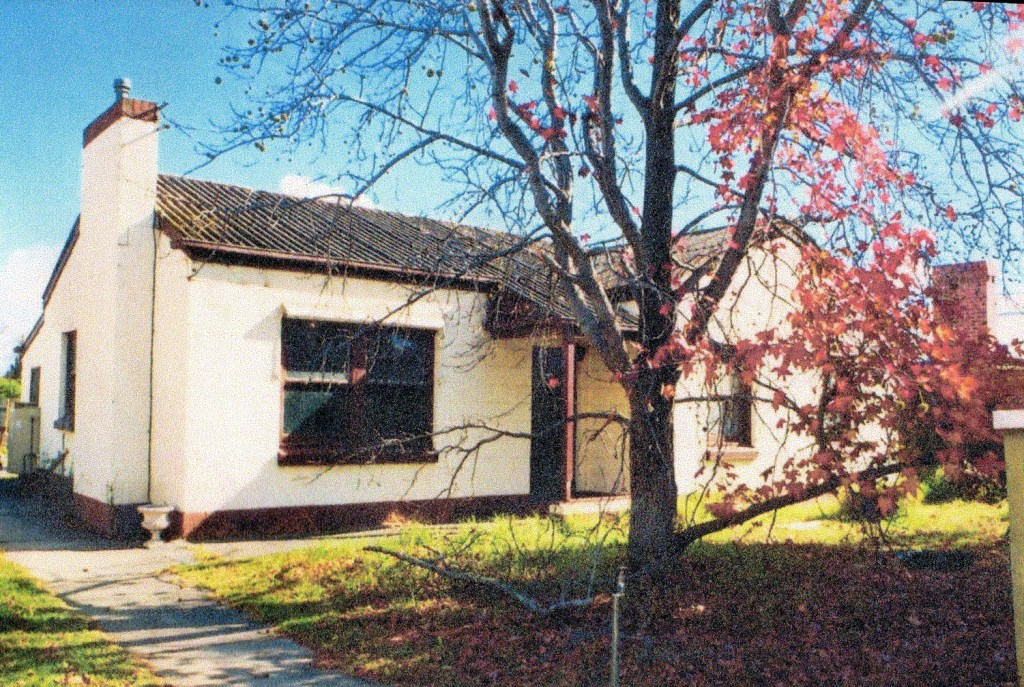
May 3, 1963, his daughter, Lee-Anne was born. By this time, Glenelg Primary School planned to convert their little rented home into a library. As his family grew and Marie grew more unsettled with the constant shifting, David faced the challenge to buy a house. But how could he on a teacher’s wage? He looked at his lovely stamp collection of rare Sudanese stamps. Could he trade them in to help pay for a deposit?

*[Photo 7: David and Marie’s first own home. Bought in 1963 © C.D. Trudinger 2005]

They looked at a few homes. A bungalow on Cross Road appealed to him, but not Marie. His father wasn’t impressed either. Marie didn’t like that pokey little home on the main road with no back yard at all and the property was right next to the rail line. Then a trust home at Gilbert Road Somerton Park came up for sale, and the deal was done. David regretted selling his stamp collection but reasoned that this was an investment for the children. And, many years down the track, it was, especially with the two lovely court yard homes, one of which David and Marie have lived in from 2006.

[Photo 8: New and improved courtyard home. Built in 2006 © L.M. King 2021]

God blessed David’s career. He taught at Port Adelaide Primary School from the late 1960’s until he retired in 1985 at the age of 57. In that time he studied to teach Indonesian, became Deputy Principal, and won a government research grant to go to Indonesia. He became interested in the Indonesian musical instrument, the Anklung. He brought a set home and proceeded to teach pupils how to play. He had bands of students playing in the Festival of Music until 2010. He continued to visit the school now LeFever Primary and train students to play the Anklung, right up till the beginning of this year. He also tutored indigenous students.

David lived life to the full and grasped every opportunity to explore the wild and untouched land God has created, especially Central Australia. With his long service leave, and then time in his early retirement, he made regular pilgrimages to the Centre. And God protected him. I like to think that now he is with the Lord, his guardian angel is enjoying a well-deserved rest.

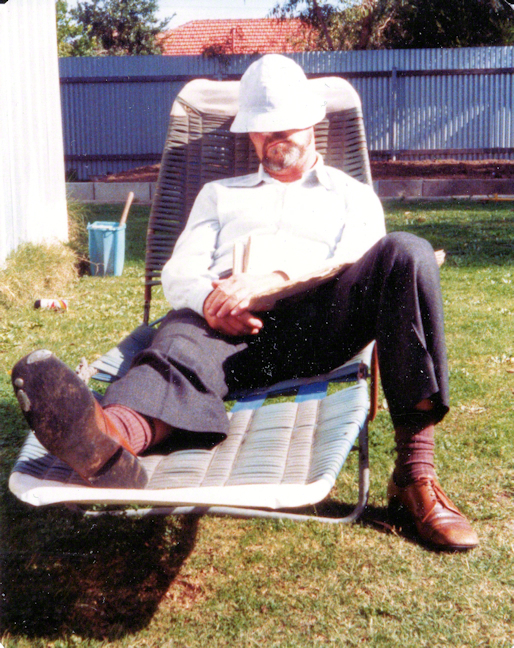
[Photo 9: Dad having a well-deserved Sunday afternoon rest © L.M. Kling (nee Trudinger) 1983]

One example he gave of God’s protection was on a hiking trip in the Western Wilderness of Tasmania with a friend. On one narrow path climbing around a cliff-face, he felt his heavy pack over-balance and he began to fall. “This is it,” he thought. Then he felt the pressure of someone pushing him back against the rock and he was able to step two metres further to a wider path. He knew an angel of the Lord rescued him, preserving his life, not just for his sake, but for his friend’s sake, and also because his work on earth was not complete.

[Photo 10: Cradle Mountain, Tasmania © L.M. Kling 2009]

But on August 25, 2012, David’s work on earth was done. There are probably many things he has done that will be remembered as a blessing and encouragement to all who knew him. He was a regular member of Faith Lutheran Warradale church; he took an active role and was a vital member of the congregation for over 54 years. He was a Sunday School teacher, an elder, and a Bible Study leader.

We will miss his cheerful nature, how he grasped life, lived it to the full and shared God’s love with all he came across.

He may have been David by name, but he was Clement by nature.

[Photo 11: The original men of the T-Team, David (3rd from left) and his father and brothers © C.D. Trudinger collection 1967]

First published as a eulogy to Clement David Trudinger by Lee-Anne Marie Kling ©2012

Revised © 2016; 2021; 2024

 Feature photo: Central Australian sunrise © C.D. Trudinger ©1977

***

More of my dad’s intrepid adventures in Central Australia in my memoirs:

The T-Team with Mr. B: Central Australian Safari 1977

Trekking with the T-Team: Central Australian Safari 1981

Remembering my Grandma

Elsa

Born March 16, 1906 – March 4, 1981

THE DOOR IS ALWAYS OPEN

Grandma rarely locked the back door; not when home or if she ran short errands. The only times she did lock the back door was when she went away on holiday. Ah! Those were the days! The 1960’s—Adelaide, the front door greeted strangers and salespeople, the back door welcomed friends and family who didn’t knock, but walked straight in.

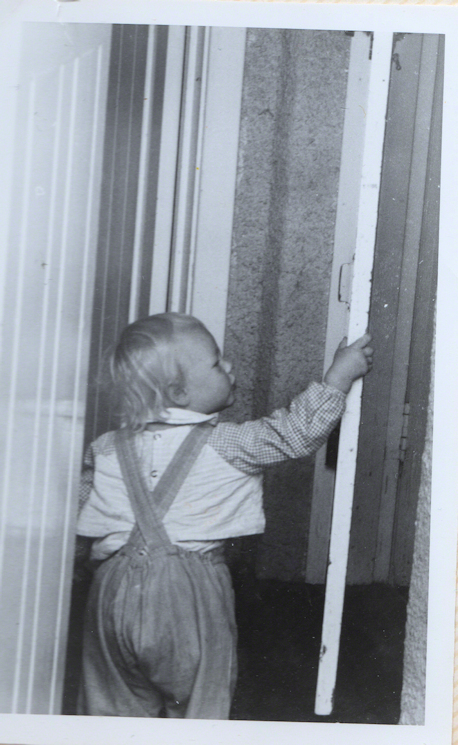
[Photo 1: Opening the door to Grandma’s “Lace” © C.D. Trudinger 1964]

Grandma lived a ten-minute walk from my home in Somerton Park. Throughout my childhood and teenage years, I walked or rode the route down Baker Street, across “busy” Diagonal Road, and into Panton Crescent. Then I trod down her gravel drive of her Trust home to her back door; a door always unlocked and without any ceremony of knocking, I pulled open the fly-screen door, pushed open the wooden door, and walked into Grandma’s small kitchen. I still dream of Grandma’s place, “Grandma’s Lace” as I used to call it as a child, her huge backyard with fruit trees and hen house.

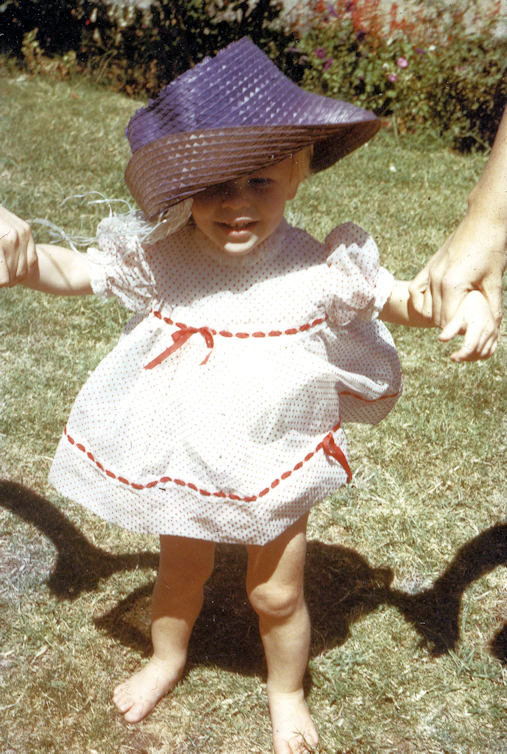
[Photo 2: Escape from Grandma’s “Lace” © C.D. Trudinger 1966

The same as her home, Grandma had an open heart with time available to be there for me. From the time I was born, she was there. She bought and moved into her Somerton Park home nearby, about the same time my mum and dad with my brother and me, bought and moved into our home.

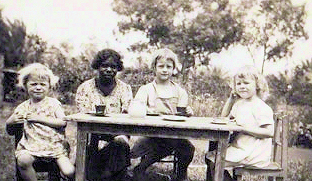
Every Sunday all the family which included mum’s brothers and sisters and their spouses, gathered in her tiny kitchen dining area for Sunday roast. The home filled with laughter as we enjoyed Grandma’s roast beef and crunchy roast potatoes—the best ever! Dessert of jelly and ice-cream followed, topped with a devotion, then the Sunday Mail quiz. Holidays held extra treats of cousins from Cleve, all five of them and Auntie and Uncle. Grandma fitted us all in, albeit us younger ones sat at the “kinder tisch” in the passageway. Often friends from church or elsewhere joined us for Sunday lunch. The door was open for them too, and somehow Grandma made the food stretch and the table expand for unexpected guests.

Photo 3: An example followed by her children from early on © S.O. Gross circa 1941]

One of the first times I took advantage of Grandma’s “open door policy” was at two years old. I’d dreamt my cousins were visiting and no one told me. My beloved cousins were at “Grandma’s Lace” and I was missing out.

So early that hot summer’s morning, I climbed out of my cot, dumped my nappy, and naked, I navigated my way to Grandma’s. I streaked over Diagonal Road, not so busy at dawn, and then toddled down Grandma’s driveway. I pushed open the back door and tiptoed through the kitchen and passageway. Then I peered into the bedrooms one by one. Each room was empty. Where were they? Where’s my cousins? I was sure they were here.

[Photo 4: Lined up with Country Cousins © C.D. Trudinger circa 1965]

I entered Grandma’s room. The mound of bedding rose and fell with each puff of breath Grandma made.

I tapped Grandma and asked, ‘Where’s my cousins?’

Grandma startled and her eyes sprang open. ‘Oh! Oh! What are you doing here?’

‘I come to play with my cousins,’ I said. ‘Where are they?’

‘Oh, my goodness—no dear—they’re not here.’ Grandma climbed out of bed and waddled to the bathroom. ‘Now, let’s get you decent.’

After wrapping a towel around me, she picked up the telephone. I stuck by her solid legs while she spoke to my mum. ‘Marie, just wondering, are you missing a daughter?…You might like to bring some clothes…’

As I grew older, Grandma’s open-door policy included her home-made honey biscuits. My friends and I visited Grandma on a regular basis. We’d enter through the back door and make a beeline for the biscuit tin. Then we’d meander into the lounge room. With my mouth full of biscuit, I’d ask, ‘Grandma, may I have a biscuit?’

Grandma would always smile and reply, ‘Yes, dear.’

Grandma’s open-door policy helped as a refuge when love-sick boys stalked me. Mum and I arranged that when I rode home from school, if my blind was up, I was safe from unwanted attention. But if the blind was pulled down, I would turn around and ride to Grandma’s place.

Photo 5: Grandma with her white cat © C.D. Trudinger 1965

Grandma was there also when I had trouble at school. I remember at fifteen, having boy-trouble of the unrequited love kind. Grandma listened. She was good at that. She sat in her chair as I talked and talked, pouring out my heart, while emptying her biscuit tin.

When I paused one time, after exhausting all my words, she said, ‘Lee-Anne, one thing that may help—you need to have Jesus as your Lord and Saviour.’

Grandma passed on from this life to meet her Lord and Saviour in early 1981, less than two weeks’ shy of her seventy-fifth birthday. Her old Trust home on the big block with the fruit trees and chook-yard were razed and redeveloped into four units—front doors locked and no easy way to their back doors.

[Photo 6: Looking beyond into the Hermannsburg compound © Courtesy M.E. Trudinger circa 1950]

The Sunday after the funeral, it seemed to me strange not to gather at Grandma’s. Then Christmas, the brothers and sisters celebrated separately with their own family or partners. I missed the whole Christmas connection with my cousins, aunts and uncles. Time had moved on and our family had evolved to the next stage of our lives.

[Photo 7: Christmas Memories (Grandma in her iconic purple dress far left) © C.D. Trudinger 1977]

These days, leaving one’s back door open, even during the day, seems an odd and risky thing to do. Times have changed—more dangerous, or perhaps we’re more fearful of imagined dangers outside our castles. And now in 2025…Well, Grandma’s life and her “open door” policy in a more trusting time, has made me ponder: How open and available am I to others? How willing am I to listen and value others and their world?

© Lee-Anne Marie Kling 2016; updated 2019; updated 2021; 2023; 2025

Feature Photo: My Grandma and Grandpa courtesy of Marie Trudinger circa 1950

***

The adventure began in 1981…

Check out my memoir, click on the link below:

The T-Team with Mr. B: Central Australian Safari 1977

Trekking With the T-Team: Central Australian Safari 1981

Or

If a Science Fiction mystery is more your thing, have a look at my new book.

Click here on The Lost World of the Wends.

Some Thoughts on a Sunday–Lost Sheep

[This Sunday morning’s sermon tackled the parable of the Lost Sheep, Luke 15;4-7. I recall an ancient post I had written way back when I first began blogging in 2015. Then today, the parable’s meaning was reinforced when I spent all afternoon searching for a document vital for our tax return. Strange how items vanish…We gave up on the paper and were able to retrieve a copy from the relevant website.

However, each person is unique. If a person goes missing, you can’t just replace them by copying them. Every year in Australia, around 38000 people go missing. Most are found within few weeks, but 2600 remain missing after three months.

The following post is a re-blog of the one I published in 2015.]

Lost Sheep

A fellow writer criticized the Mission of the Unwilling saying, ‘How can so many people go into space without others missing them on Earth?’

Good point—and I duly corrected that detail. As a part of the Intergalactic Space Force, each recruit had their explanation which they gave to family and friends why they wouldn’t be around for a while. Yes, fixed that…but—just wait a minute—did I have to do that to make the story believable?

Thousands of people around the world go missing every day…and if I think about it, I know people who have.

Sure, there’s the famous cases. Yes, Adelaide, South Australia, my hometown, is known for a few of those strange cases, both unsolved and solved. I remember as a child told not to talk to strangers…remember those children ‘round the corner? Never seen again.

But then there’s the willing missing—the ones who for whatever reason drop off the radar, leaving behind family and friends, to start their lives afresh. And they might have good reason to disappear if they’ve been the victim of an abusive relationship, or they’re a witness who needs protection.

Each community and clan deal with this jump off the radar differently. As is evident from my own observations of this current society, they are not all like my fellow writer who would make a beeline for the nearest police station when a loved one of theirs goes missing. In fact, there have been recent examples in Australia where the missing persons have met untimely permanent pushes off the radar from perpetrators who have then pretended, through text messages and the use of their bank accounts to deceive family and friends into believing their missing loved one is alive, but just doesn’t want contact. And in some cases, family and friends have believed these lies for months, years.

Isn’t this a cause for concern? Has our community become so disconnected, so focussed on the rights of the individual, we consider it a “social crime” to intrude on another’s privacy? Is society so fragmented, that when we receive a text or internet message from a loved one, saying, ‘Leave me alone,’ we accept it as gospel, as coming from the loved one, and sit back and leave them alone? Is there a problem these days speaking face to face, and treating people like they matter? Is it possible some people go missing because they feel no one cares; that they don’t matter?

In the parable of the Lost Sheep Luke 15:4-7, the shepherd leaves the ninety-nine sheep to search for the lost one. In this society, such a person who goes looking for the lost, the “Black Sheep” of the family, is labelled “crazy”. But in God’s Kingdom each person is precious. Our world may not value these “lost sheep”, but God does, and His people do. I guess in the world’s eyes, God is crazy; He loves and values every human being. And the thing about lost “sheep”, they may not know they are lost, they may not want to be found, they may feel invisible in the sea of billions of “sheep”, but God knows who they are. I reckon there’s a bit of “lost sheep” in each of us. When we make others visible, treat them like they matter, and care for each other, this is community; we find the “lost sheep” and God finds us. This is our challenge, to value and love one another and treat each person with value and respect because they matter.

I don’t know about you, but I’d rather others label me as “crazy” because I care and want to relate to real people, rather than be considered “sane” and thus disconnected, living my life only virtually through a screen.

 © Lee-Anne Marie Kling 2016; updated 2022

Feature Photo: Sheep in the green paddock © L.M. Kling 2009

***

Want to read more of those who are lost?

A whole village?

Of Wends?

From the 19th Century?

Lose yourself in the tale where 19th Century meets 21st..

Click on the link for my novel on Amazon:

The Lost World of the Wends