Trekking Thursday–Franklin-Gordon River Cruise

[Last week, Hubby and I were talking to someone who had recently visited Tasmania. They went to Strahan, but for some reason didn’t do the Franklin-Gordon river cruise. We recommended that next time they go to Tassie, they revisit Strahan and do the cruise. Hence, to encourage prospective travellers to Tasmania, a re-visit in my blogs to Strahan on the West Coast of Tasmania. Ah, memories of travels with my husband, his brother (P1), and cousin from Switzerland (P2), to Tasmania; a brilliant and beautiful destination.]

K-Team Adventures—Strahan and Gordon River Cruises

An early start, just what the K-Team love. We were to board the Wilderness Cruise Boat by 8.45am. Not as early as the last time I took the cruise. Then, in 2011, I journeyed with my mother (Mrs T), for whatever reason, the ship departed much earlier than 8.45am. Fearing we’d miss the boat, Mum and I rose at the crack of dawn and ate our breakfast at a hotel opposite the wharf while watching the sun rise on the calm waters of Macquarie Harbour; an oil painting in hues of gold and pink with ducks on the jetty. Mum’s breakfast of Eggs Benedict was less than perfect; uncooked, runny and the “whites” not white. She’s never had Eggs Benedict again. I guess there had to be some compensation for the ideal weather we had that August day in 2011.
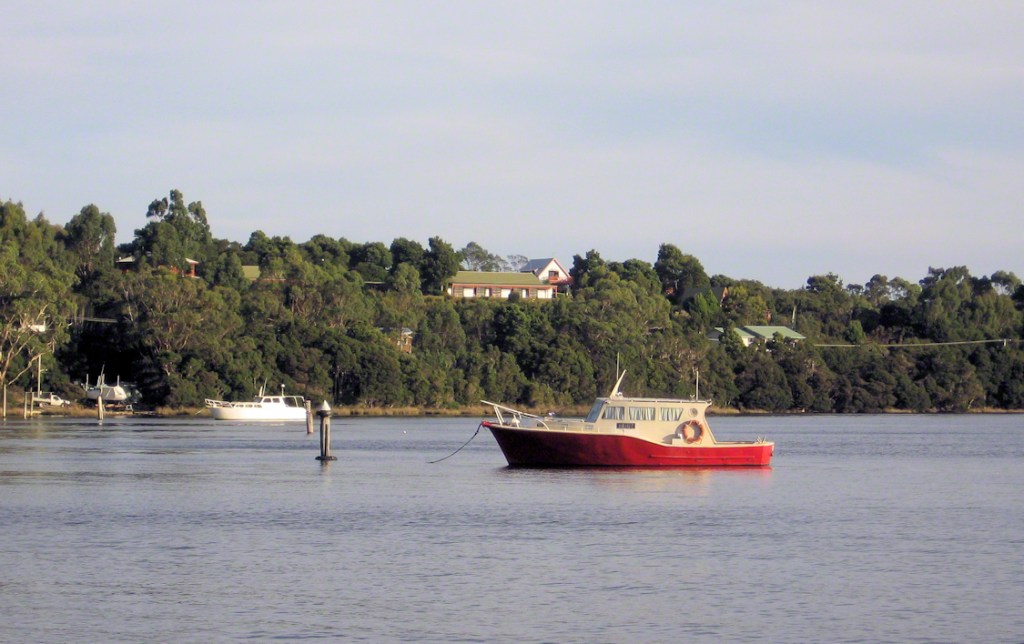
[Photo 1: Calm on Macquarie Harbour before Eggs Benedict © L.M. Kling 2011]

Not so for the K-Team in 2016. A perfect mix of personalities, no conflicts—apart from some initial altercation between my husband’s phone GPS navigator and the Kluger’s Pandora navigational system. Now that was something out of the box, so we packed away any semblance of pairing our phones with the car’s computer system and relied on the navigational system God had given us—our brains…and some forward planning with Google Maps. So, instead we had the weather as our thorn-in-the-side member of the K-Team. At least someone up there, I mean God, had been looking after us.

[Photo 2: Sign of weather come. A hiking trail in Hogarth Falls near Strahan © L.M. Kling 2016]

When we booked our cruise, the lady asked us, ‘Do you want to go on the ABT Railway up to Queenstown?’

‘How much?’ I asked.

The lady showed the prices.

‘What time does it get back?’

‘Oh, 5pm.’

‘Nah, we’re meeting my cousin at 4.30pm. So, we’ll take the cruise.’

A narrow escape. We heard that night while dining with my cousin, Kiah who at the time ran the Strahan Visitors Centre, that fallen trees on the railway track had stranded the tourists on the train for several hours. They arrived back in Strahan at 8.30pm. The next day, on the cruise, Kiah overheard some girls who had been on the train trip say they were going to write a reality TV show about bored kids.
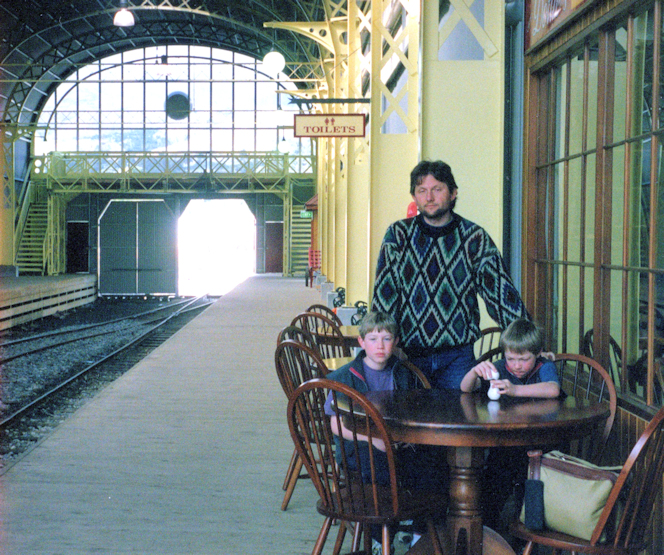
[Photo 3: Thankfully, not stranded at Queenstown; ABT Railway Station with K-Team, the younger way back when…Looks like my kids can get bored at Railway Stations too. © L.M. Kling 2001]

The cruise, definitely not boring. First a ride out through the narrow heads and into the full force of the roaring 40’s and rough seas; P2’s highlight of the Tassie Trip. Hubby was surprised I didn’t get seasick. I’d remembered to take my ginger tablets.

[Photo 4: High seas past the heads, but the birds hang on. © L.M. Kling 2016]
[Photo 5: The safety of the lighthouse © L.M. Kling 2016]
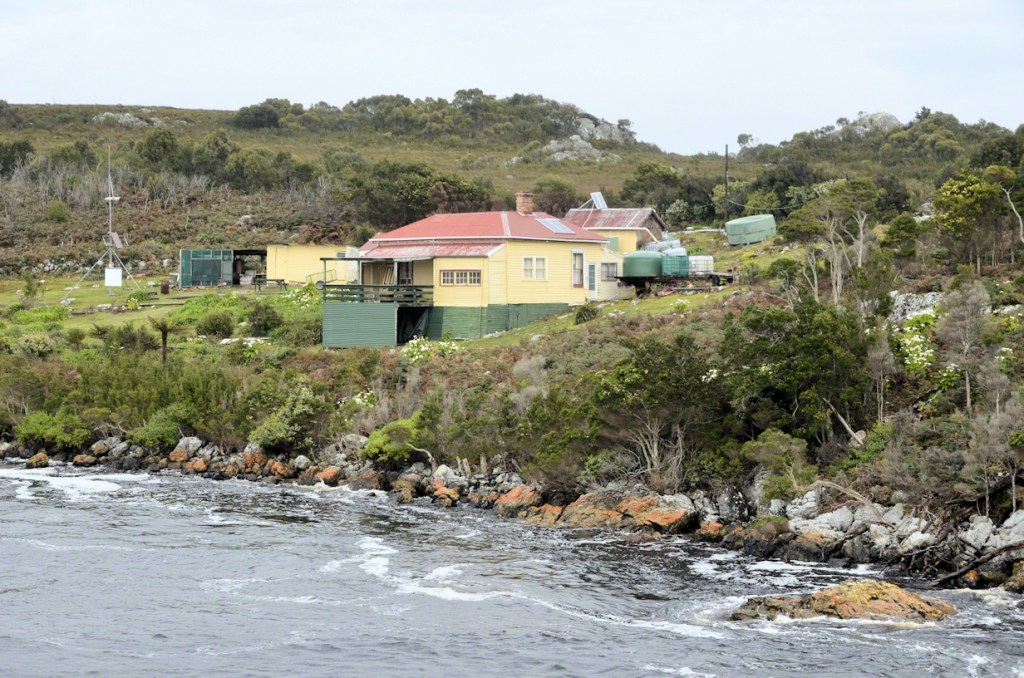
[Photo 6: The lighthouse keepers’ cottage? © L.M. Kling 2016]

Then, after returning back into the safety of the harbour, a tour of the salmon farms; big, netted rings full of fish.

[Photo 7: Salmon Farms © L.M. Kling 2016]

Kiah and her team would be our guides on Sarah Island, the worst penal colony in the whole British Empire in the early nineteenth century. We spent an hour or so on the island touring around the various sites, the tour guides giving lively and entertaining accounts of Sarah Island’s history.

[Photo 8: Sarah Island approach © L.M. Kling 2016]

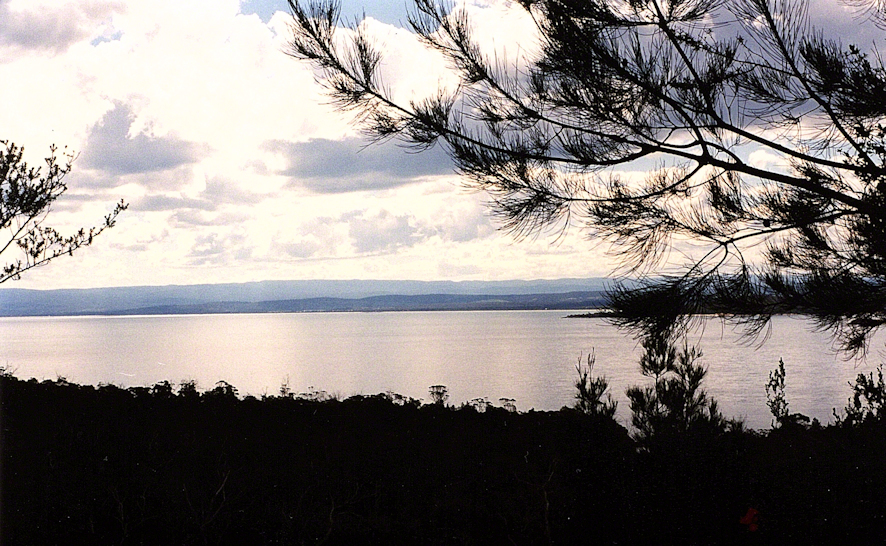
Walking up the gangway, I studied the wilderness mountains jutting above the forest lining the harbour and detected the vague outline of Frenchman’s Cap, clouds shrouding it from a clear view.

[Photo 9: So different with Mrs T; Frenchman’s Cap perfect through swamped trees of Sarah Island. © M.E. Trudinger 2011]

As we raced up the river, the Captain rabbited on about Sarah Island’s convict history and then he said, ‘While we travel up the river, think about what it would’ve been like living in those times on Sarah Island as a convict.’

[Photo 9: The Lookout © L.M. Kling 2011]
[Photo 10: Mrs T contemplates while crowd listens to tour guide © L.M. Kling 2011]

I recalled the play we’d seen the night before, The Ship that Never Was; the political climate and social conditions of nineteenth century Britain that created the huge gap between the rich and the poor, unemployment and homelessness, and the solution to send shiploads of social rejects (the convicts) to Australia—the worst offenders to the most remote place on earth, Sarah Island. Yet, in all of that condemnation and hopelessness, redemption. Some of these convicts, when they received their ticket of leave (freedom), became leaders in the colony; their skills not going to waste. Treat people like they matter, give them a chance. This is how I understood David Hoy, Master Shipwright treated the convicts. I could go on, but best if you ever go to Tasmania, go to Strahan, do the cruise and see the play.

[Photo 11: Scene from the Ship that Never Was © L.M. Kling 2001]

And while we were there, clutching the mini hot water bottles loaned to us for the duration of the performance, and waiting for the play to start, the tour group we encountered the previous day, joined the audience. Some of them ended up participating in the play. So did P2 helping the ship (just a pile of wood, really) sail to close to the coast of Chile…before it…well, you’ll have to see the play to find out what happened.

[Photo 12: Perfect reflections on a perfect day up the Gordon River © L.M. Kling 2011]

After a tasty buffet lunch of smoked salmon, cheese, bread and salad, we had a half-hour walk in the rainforest. Amazed at the variety and abundance of plant-life and how plants grow out of tree trunks and stumps. The old Huon pine stump that had been struck down by lightning a decade or so ago, was now a garden of seedlings, native laurel, moss, lichen, and ferns.

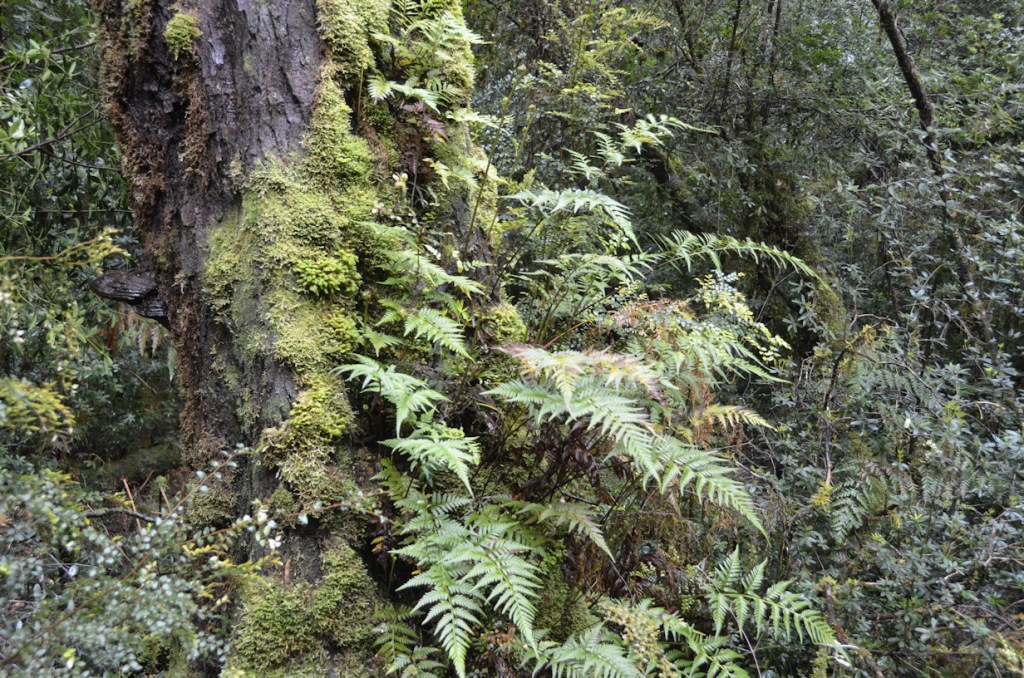
[Photo 13: New Life springs from That old Huon Pine © L.M. Kling 2016]
[Photo 14: A taste of a temperate rainforest © L.M. Kling 2011]

Then the race back to Strahan. In all we had travelled 140km on tour of the Macquarie Harbour, some way up the Gordon River and then back to Strahan.

P1 disappointed with the cloudy weather said, ‘How can I get good photos when there’s no sun?’
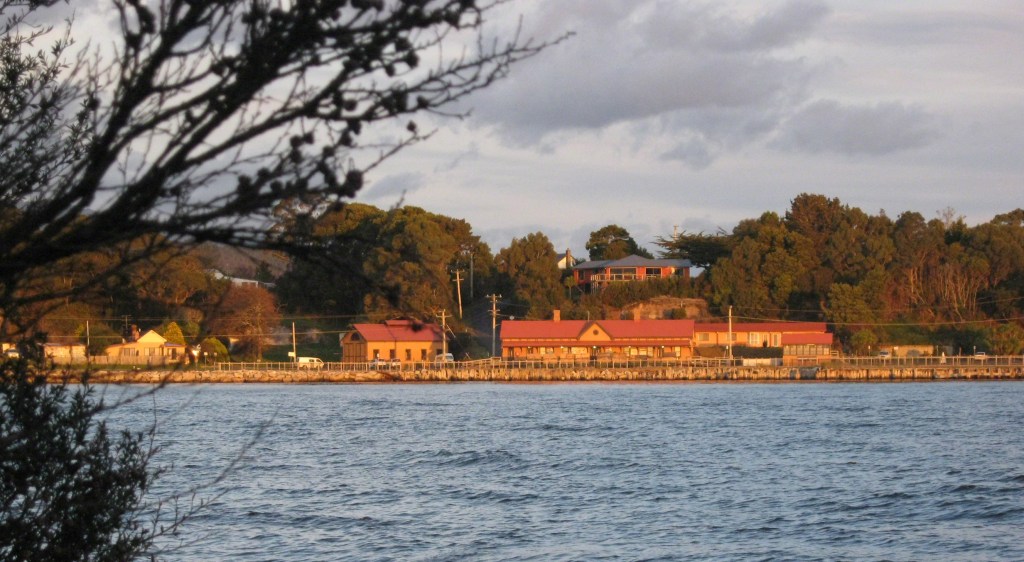
[Photo 15: And so, the sun sets on Strahan © L.M. Kling 2011]

‘They’re mood photos,’ I replied. Cheeky, I know, since in 2011, the sun shone on Mum and me, and I had dozens of chocolate-box photos of the Gordon River like glass reflecting perfectly vivid green forest trees. Oh, well. We were blessed that day in 2011. The western wilderness of Tasmania gets on average around 4000mm of rain a year. So more likely to get cloudy rainy days on a cruise than sunny, I guess.

Besides, did P1 have an Eggs Benedict like my mum had eaten that morning in 2011?

© Lee-Anne Marie Kling 2016; updated 2019; 2021; 2024

Feature Photo: Chocolate Box Reflections on the Gordon-Franklin River © L.M. Kling 2011

***

Want more? More than before?

Take a virtual trip with the T-Team and their adventures in Central Australia.

Click here on…

The T-Team with Mr. B: Central Australian Safari 1977

Trekking With the T-Team: Central Australian Safari 1981…

To download your Amazon Kindle copy of the story…

And escape in time and space to Centre of Australia 1981…

Family History Friday–My Rogue Ancestry

[As a child, I frequently had dreams where I was locked up in a prison cell and couldn’t get out. When, through family history research, I discovered the plight of my young (at the time) great-great Grandfather, I realised the origins, genetic or spiritual, of those dreams.]

My “Convict” History

I admire a former convict, an ancestor of mine. Okay, you may think, yeah, of course, she’s an Australian—these days they wear their convict heritage like a badge of honour.

No, actually, my great-great grandfather Friedrich Schammer lived in Silesia which is now part of East Germany or Poland today. Rubber borders, you see. His crime was trivial by our standards today in the West. But then, so were the crimes of shiploads of convicts who were transported from Britain and Ireland to Australia in the early nineteenth century. (For this reason, I have included photos from my visits to convict settlements, Port Arthur and Sarah Island, Tasmania, as my two-times great grandfather, was living his life in Silesia around the same time, in the early nineteenth century.)

[Photo 1: Port Arthur was a recipient of many convicts from Britain and Ireland © L.M. Kling 2009]

My great-great grandfather Friedrich spent less than three months in prison for this crime he did not commit, but I admire the way he handled his dire situation.

How did he get into this trouble?

According to the family history book of this particular branch of the family, in the town in which my great-great grandfather studied as a medical student in the 1820’s, the military came to power and enforced strict and arbitrary rules. I might add here that my ancestor had already endured hardship, having been orphaned as a child, suffered poverty and then, his older brother who was his guardian, died from typhus. I imagine, these events spurred him on to be a doctor.

[Copy of Portrait painting: Two-times Great Grandfather, Friedrich August Schammer courtesy of Schammer Family History © 1922. Painting circa 1850]

Anyway, in this university town of Jena, the students protested against their restrictions to their liberty by reacting against the ridiculous laws the military had brought on the town. Some of these laws were that there be no singing in the streets, no wearing of caps and waving of flags. The students protested by marching in the streets to the town square, singing and waving flags. All went smoothly and peacefully with no trouble from the authorities.

Then some of the young men, probably after drinking a few beers, became bolder as young men do tend to become. They threw rocks at windows; action that got the authorities’ attention.

[Photo 2: View from window of former café in Port Arthur © L.M. Kling 2009]

The military swooped and arrested many of the protestors. My great-great grandfather was walking past the action and was in the proverbial wrong place at the wrong time.

Arrested and tried, though otherwise of exemplary character as a good Christian belonging to the Moravian Brethren, Friedrich was convicted and sentenced to prison for six months. I might add here that I have learnt recently that in Europe, the judge or judges determine the fate of the defendant. Whereas in the United Kingdom, United States and in Australia a jury (twelve randomly selected citizens) under the decide the fate of the accused.

It seems by his account and letters, a certain beadle in town had it in for my great-great grandfather Friedrich.

[Photo 3: Captain’s Quarters up on the hill, Port Arthur © L.M. Kling 2009]

Yet Friedrich accepted his time in prison and made the best of the situation both for himself and others. He studied, enjoyed the view of the valley from his prison room (I think he was in a low security prison) and used his medical knowledge and skills to help those around him.

Great-great grandfather Friedrich’s quiet conduct and enrichment of the prison community was noticed by the authorities, and they released him less than three months into his term.

[Photo 4: A view of convicts on the other side of Friedrich’s world may or may not have enjoyed in Port Arthur © L.M. Kling 1995]

Released, Friedrich’s ordeal was not over. The university where he’d been studying banned him from returning to study there. His reputation tarnished, the villagers shunned Friedrich.

However, Friedrich did not give up. He moved to Berlin and keeping a low profile, completed his studies at The Charite University Hospital and graduated as a Doctor of Medicine. He had a heart for the poor, having been poor himself, and would treat those in need without demanding payment.

My great-great grandfather demonstrated those godly qualities I admire—justice, mercy and compassion. And perseverance, even in the face of adversity.

Philippians 2:14-15—Do everything without complaining or arguing, so that you may become blameless and pure, children of God without fault in a crooked and depraved generation, in which you shine like stars in the universe…

Feature Photo: The Cry of the Convicts, Sarah Island Ruins © Lee-Anne Marie Kling 2011

*** 

Note: Port Arthur housed what British authorities considered the worst of the convicts transported to Australia in the early to mid-nineteenth century. I visited this convict settlement in 1981, 1995 and 2009. A place well-worth visiting to learn from the mistakes made from the past (how not to treat fellow human beings). Although the place appears serene, the presence of the tortured ghosts of the convict past can still be felt.

Sarah Island situated in the Macquarie Harbour on the west coast of Tasmania, imprisoned the worst of the worst convicts transported to Australia in the early nineteenth century.

I have visited Sarah Island as part of the Gordon-Franklin River Cruise, both in 2001, and 2011. I highly recommend this cruise—a bucket list for travellers—history, wilderness, rare beauty of unspoilt rivers and rainforest and…excellent food. And not to mention entertainment. After your cruise I highly recommend that you see the historic play, The Ship that Never Was. It’s about convicts who build a ship to escape their prison island to make their way to South America. In January in 2024, this play celebrated 30 years of performances in Strahan.

© Lee-Anne Marie Kling 2016; updated 2020; 2023; 2025

Resource: History of the Schammer Family, Based on the work of Dr. A.H. Francke and J. Gemuseus, Written by Reinhold Becker, Herrnhut, 1922, Printed Gustav Winter, Herrnhut in Saxony and Translated from German by Rebecca Gnüchtel 2009

***

Virtual Travel Opportunity

For the price of a cup of coffee (takeaway, these days),

Click on the link and download your kindle copy of one of my travel memoirs,

Experience Historic Australian outback adventure with Mr. B

in

The T-Team with Mr. B: Central Australian Safari 1977

Or come on a trek with the T-Team in

Trekking with the T-Team: Central Australian Safari 1981.

Arty Friday–Ocean Beach, Tasmania

Virtual Trekking Behind the Art: Ocean Beach Tasmania

[This week Adelaide has endured a dramatic start to winter. After a beautiful warm weekend, storms descended upon the city with a bang of rolling thunder and constant flashes of lightning early Wednesday morning. Then the rain like an apocalyptic flood dumped on us. I walked to the bathroom and felt a damp patch on the carpet. Oh, dear, the roof is leaking …again! Still nothing like the church where I go for Bible Study. Arrived there to find the whole foyer flooded and mopping up in operation. The ceiling had collapsed under the weight of a leaking roof and had the heavens descended. Fortunately, there were still dry areas to meet. Then, that afternoon, after Writers’ group, my friend and I began our trip home in sunshine. But, ten minutes into the journey, hail pummeled my car. We quickly sought some refuge under a tree until the hailstorm passed.

So, seeking respite from the rugged week, here’s an old piece of calm from our Tasmanian travels.]

Calm on Ocean Beach

Ocean Beach lies on the West Coast of Tasmania near Strahan. The wild winds of the roaring forties (between the 40-and 50-degrees latitude) attack the coast with relentless ferocity.

In 2001 I visited Ocean Beach with my family to see the mutton birds coming home to roost for the night. I had barely stepped out of the car before the biting cold wind blasted me and I made a hasty retreat back into the car. No view of mutton birds that evening. Result, no photos.

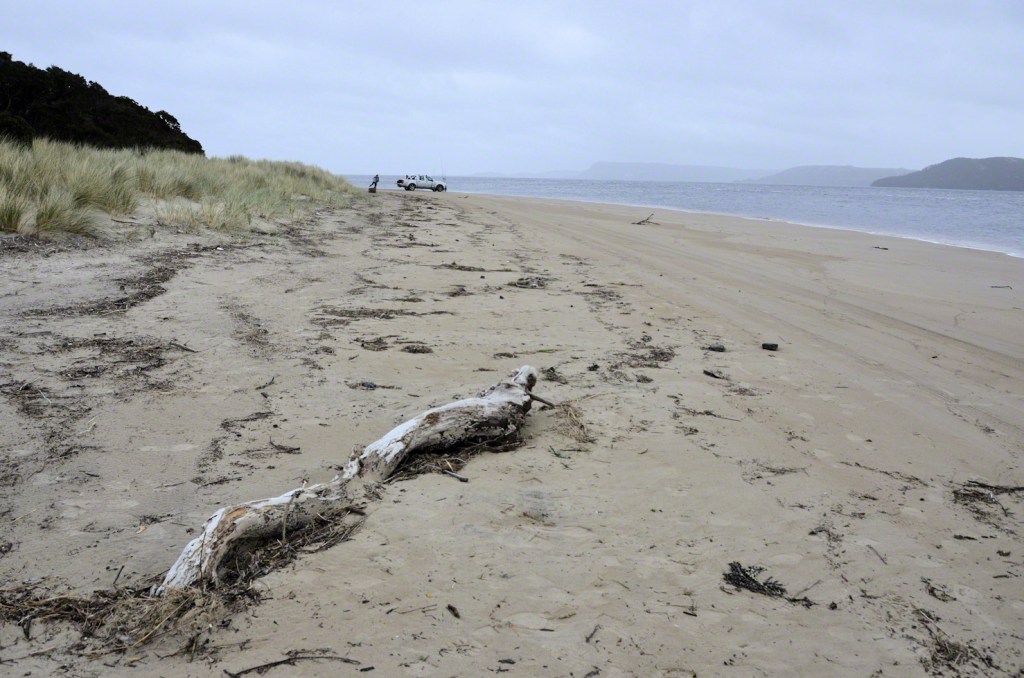
Ten years later, my mum and I visited Ocean Beach. While the East Coast was inundated with floods, Ocean Beach that afternoon was calm. We explored the beach, taking many photos of this rare state of the beach.

*Photo 1: Ocean Beach through Dunes © M.E. Trudinger 2011
*Photo 2: Ocean Beach View the Distant storm © L.M. Kling 2011
*Photo 3: Ocean Beach gentle tide-flow © L.M. Kling 2011
*Photo 4: Ocean Beach—Lunch at the Lookout © L.M. Kling 2011

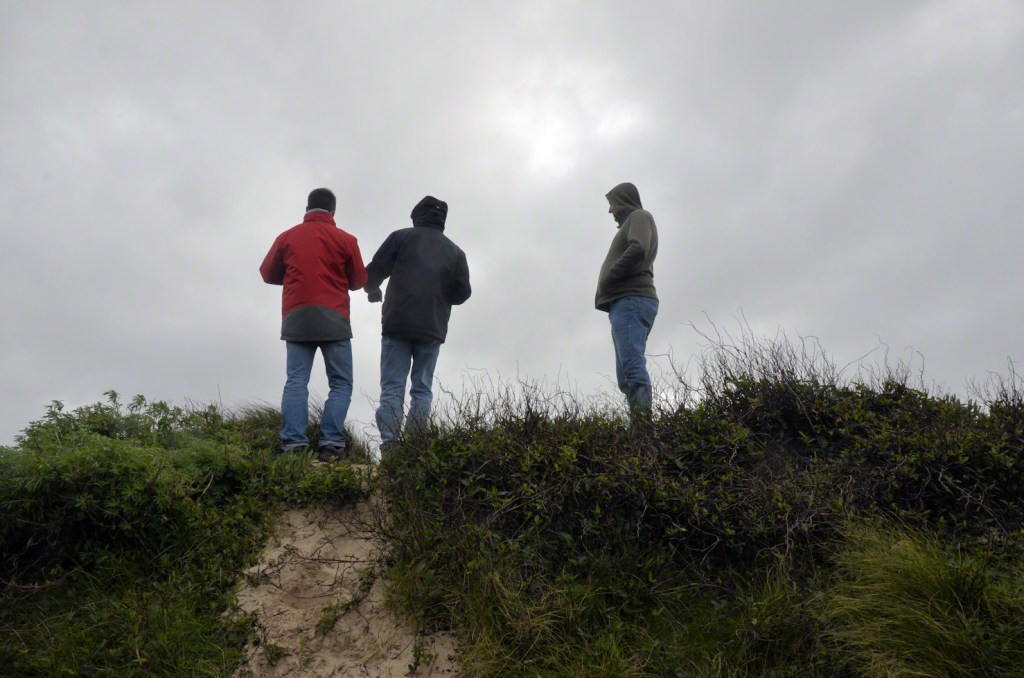
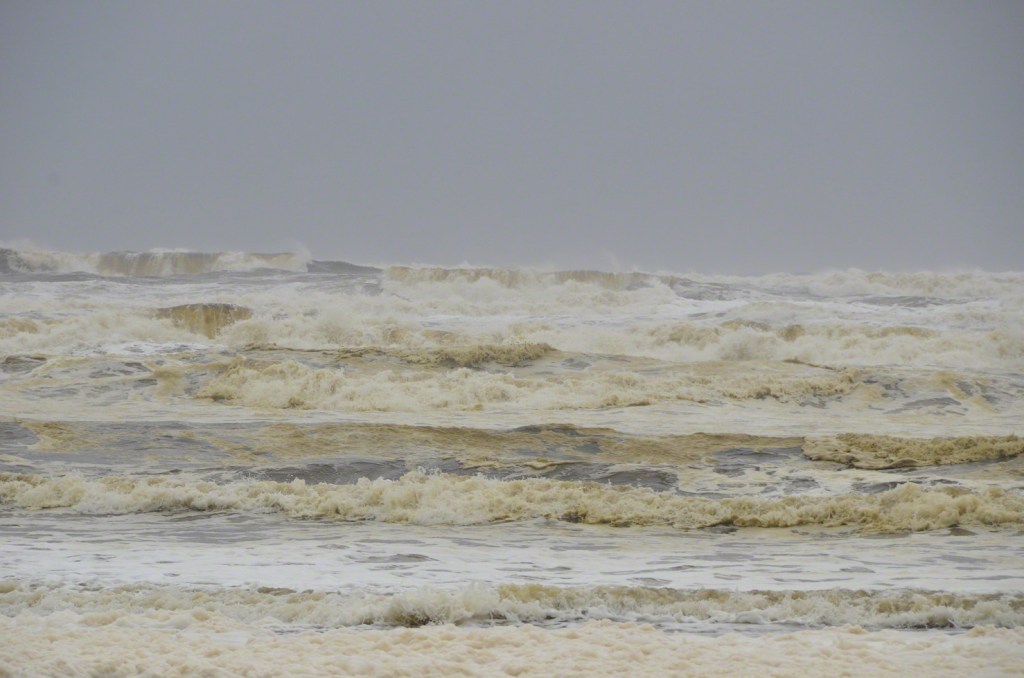
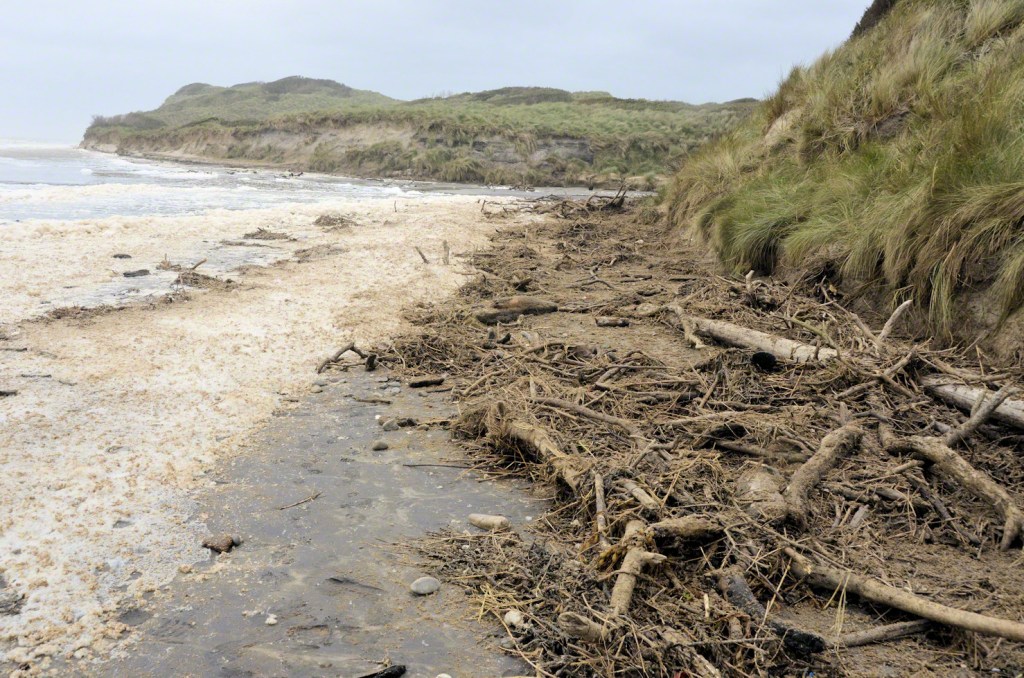
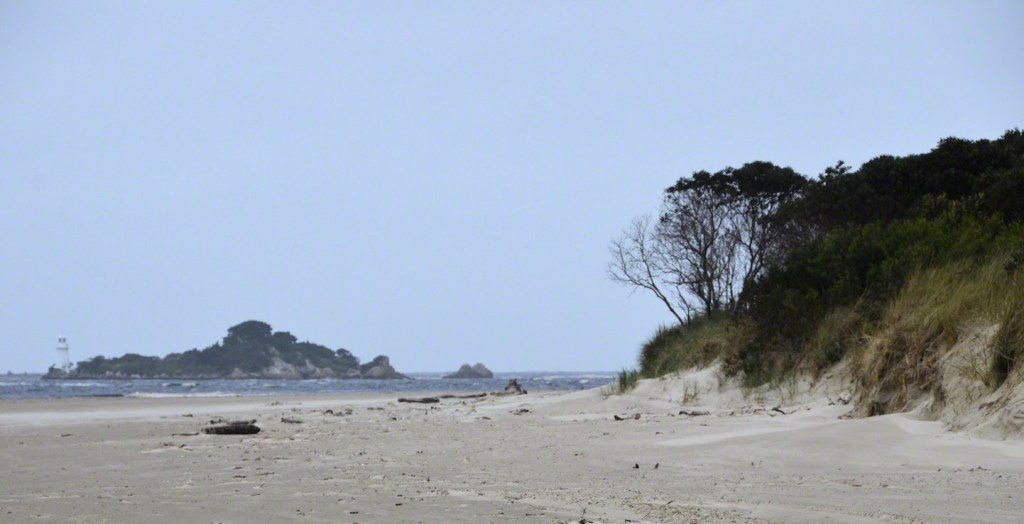
October 2016, the K-Team ventured onto the sands of Ocean Beach on perhaps a not-so-calm day; calm enough though, that we were able to walk along the beach. Not being satisfied with just an obligatory few metres up and down, my husband led us way up the estuary where we spotted a variety of birds, some fishermen, and the lighthouse sitting out there near the heads. Gotta get our money’s worth. After all, he’d seen the potential from the dizzy distance of the cruise boat as it sailed past the heads of Macquarie Harbour. I think if we’d allowed him, we’d still be walking along the coast somewhere around Tasmania.

*Photo 5: K-Team in dunes of Ocean Beach © L.M. Kling 2016
*Photo 6: Rough Surf of Ocean Beach © L.M. Kling 2016
*Photo 7: Debris from Storm of Ocean Beach © L.M. Kling 2016
*Photo 8: Walk of Ocean Beach and view of island © L.M. Kling 2016
*Photo 9: Fishermen of Ocean Beach © L.M. Kling 2016
*Photo 10: The birds of Ocean Beach © L.M. Kling 2016
*Photo 11: The Lighthouse of the Macquarie Harbour Heads © L.M. Kling 2016

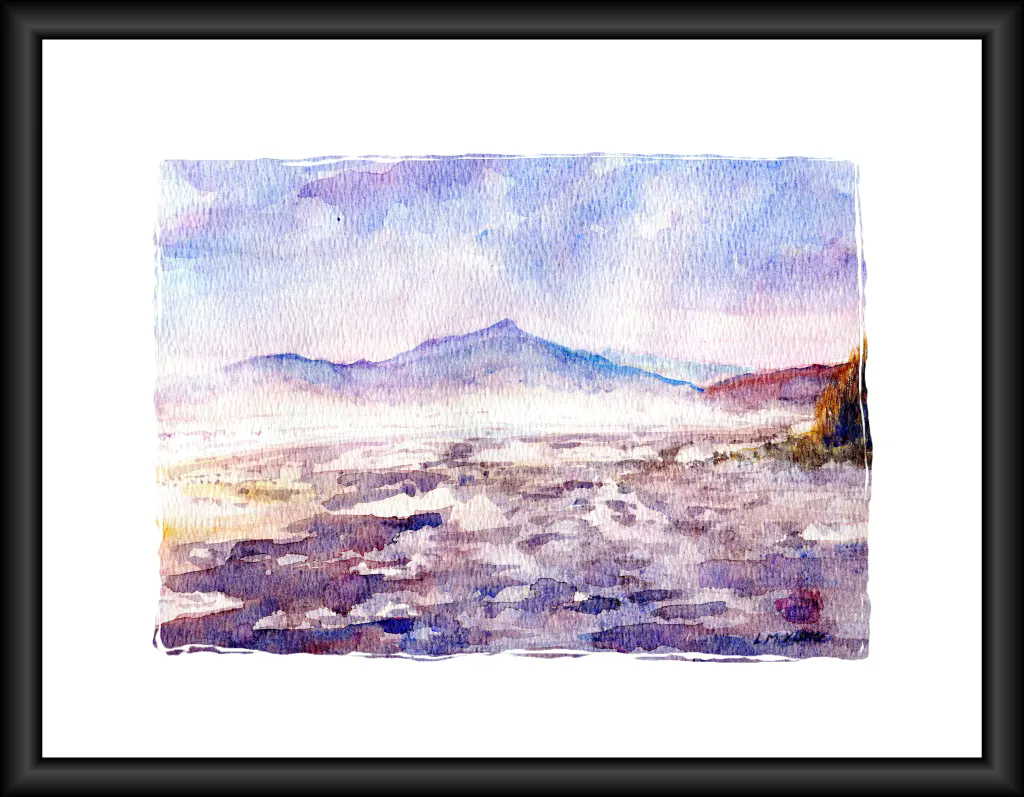
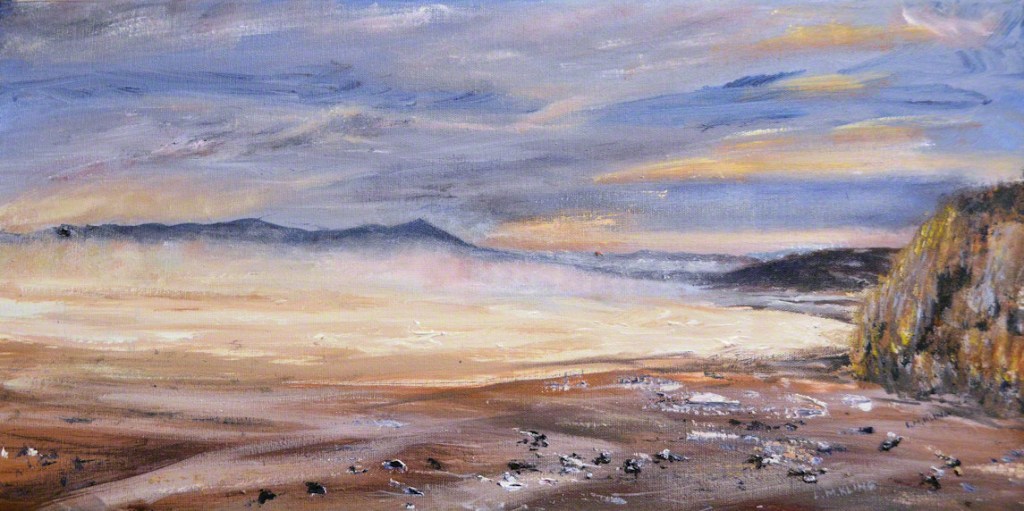
Still, nothing like a thorough study of my muse which I have now painted in miniature on Huon Pine and on canvas in acrylic—each time different.

*Painting 1: Calm on Ocean Beach (Watercolour) © Lee-Anne Marie Kling 2016
*Painting 2: Ocean Beach Calm (Acrylic on canvas) © Lee-Anne Marie Kling 2018
*Painting 3: Misty Calm, Ocean Beach (Pastel) © L.M. Kling 2022

© Lee-Anne Marie Kling 2016; Updated 2018; updated 2020; 2023

***

Virtual Travel Opportunity

For the price of a cup of coffee (takeaway, these days),

Click on the link and download your kindle copy of my travel memoir,

Trekking with the T-Team: Central Australian Safari. (Australia)

Trekking With the T-Team: Central Australian Safari (United States)

Trekking With the T-Team: Central Australian Safari (UK)

Trekking With the T-Team: Central Australian Safari (Germany]

Trekking With the T-Team: Central Australian Safari [France]

Trekking With the T-Team: Central Australian Safari (India)

Trekking With the T-Team: Central Australian Safari [Canada]

Trekking With the T-Team: Central Australian Safari [Mexico]

Trekking With the T-Team: Central Australian Safari [Italy]

Trekking With the T-Team: Central Australian Safari [Brazil]

Trekking With the T-Team: Central Australian Safari [Spain]

Trekking With the T-Team: Central Australian Safari [Japan]

Trekking With the T-Team: Central Australian Safari [Netherlands]

K-T-Y Tassie Adventures–Wineglass Bay

Wineglass Bay, Freycinet Peninsula

[ January 2009, and my turn to be the Team Leader of K-Team, the Younger (K-T-Y), who were teenagers; one, of whom was a certain 15-year-old son who would’ve preferred to be playing computer games rather than travelling around Tasmania. This time the K-T-Y team venture to Coles Bay on the Freycinet Peninsula which is on the East Coast of Tasmania.]

We need an Aussie “Brat Camp, I thought as we trudged up the steep path. The best beach in the world, but did Son 2 care?

I turned and yelled, ‘Come on, son!’

My 15-year-old Son 2 shuffled up the slope, his head shrouded in emo black hair bent as he stared at the gravel. A cry sounding like a demented “Chewbacca” echoed through the valley, ‘It’s too hard!’

Son 1 and girlfriend had raced ahead.

‘Hurry up! We’re being left behind,’ I waved my arms about, ‘it’s getting late!’

‘Urgh! There’s flies!’ Son 2 batted the air around his face. ‘I need a rest! I’m tired!’

[Photo 1: Oyster Bay to the West with Maria Island © L.M. Kling 2001]

I stumped back to my son who then leaned against a rail. Oyster Bay glistened blue in the afternoon light and boats with white sails bobbed on the water. I was beginning to appreciate the effort and patience my Dad took to take my brother, cousins and me on safari all those years ago in 1981; our adventures documented in Trekking with the T-Team: Central Australian Safari 1981.

I waved a hand over the scene. ‘How can you not appreciate that view?’

Son 2 grunted.

‘It’s better on the other side,’ I said remembering our previous foray eight years earlier up and over the rise of the peninsula to Wineglass Bay.

[Photo 2: Memories of Wineglass Bay © L.M. Kling 2001]

Another grunt, then, ‘Okay, let’s go.’

We trod up the path.

I imagined Son 1 and girlfriend way ahead. But there, at the next lookout, Son 1 bent down, hands on knees, his girlfriend patting him on the back.

‘What’s wrong?’ I asked.

‘I don’t feel so well,’ Son 1 said. ‘I feel dizzy.’

Plan to hike to Wineglass Bay postponed until next morning, we trudged down to the car, and then drove the 20 minutes back to our cabin at Coles Bay Caravan Park. Son 2 grizzled all the way back. ‘Oh, why can’t we? I was just getting into it.’

[Photo 3: Compensation: Sunset on Coles Bay Beach © L.M. Kling 2009]

***

Bright and early next morning, the K-T-Y team made their second attempt to hike to Wineglass Bay. What a difference a good night’s sleep and early start make? So much easier; the air still cool from the night, and no mosquitos. In 2001, when a much younger K-T-Y team tackled the hike up and over the hummocks to Wineglass Bay, huge mosquitos, hovered around us. The route to the lookout over the bay seemed different, too; not as strenuous. Or was I just more fit?

[Photo 4: The seat of rest © L.M. Kling 2001]
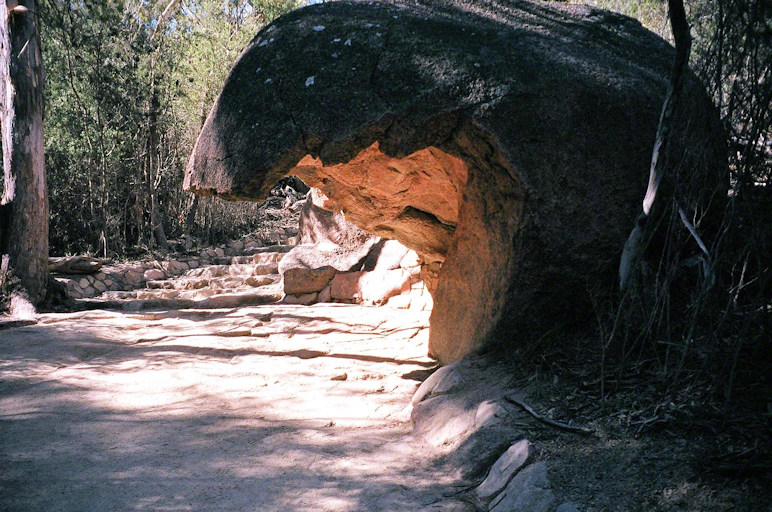
[Photo 5: Umbrella Rock © L.M. Kling 2009]

Son 1 tried to catch tadpoles with his fingers while Son 2 rested on a crazy seat. I enjoyed photographing a cave nearby. After the umbrella rock, a narrow-slatted path lead to the lookout already crammed with other hikers.

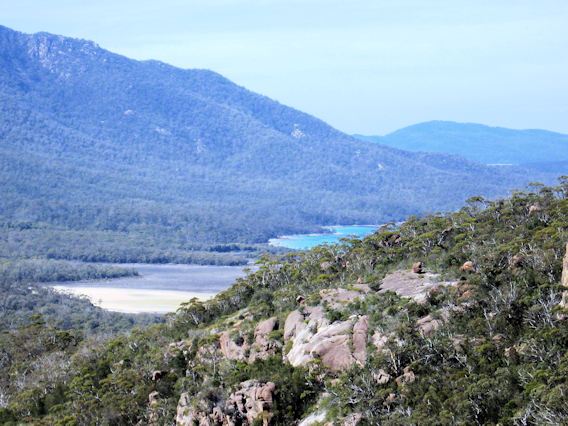
Wineglass Bay in all its morning glory wooed us and once I had my turn to snap a few shots of the bay, we trod down the steep and slippery path to the beach. More amazing views through the trees and I unfurled my camera from its case. ‘O-oh,’ I checked the settings, ‘I must’ve had the camera set for the cave still.’ I realised that all the Wineglass Bay photos from up there would be over-exposed. Must take shots on way back.

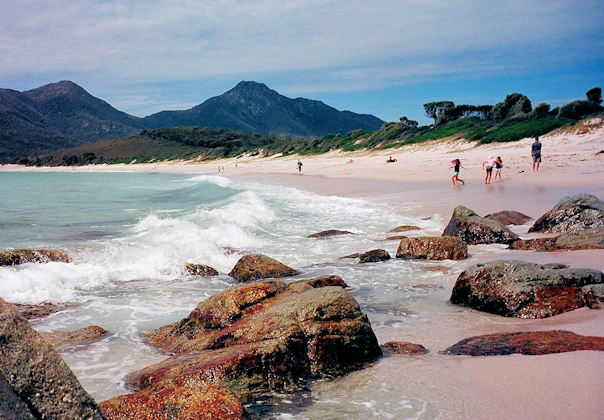
[Photo 6, 7 & 8: Aspects of Wineglass Bay from Lookout © L.M. Kling 2009]

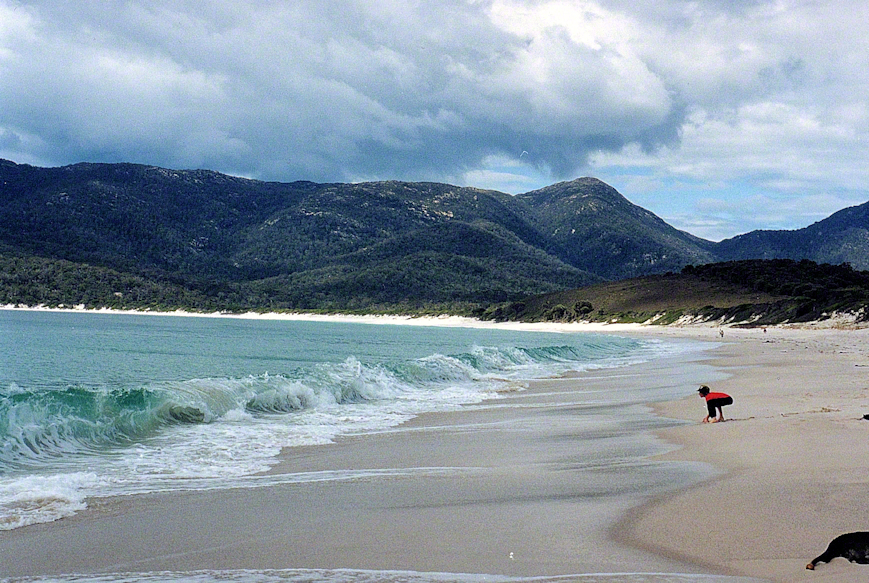
I remembered the time we enjoyed back in 2001, the boys playing pirates on the rocks, Mr. K and me relaxing on the shore of white sand watching clear cold waves crash to shore.

[Photos 9, 10 & 11: Memories of Wineglass Bay Play © L.M. Kling 2001]

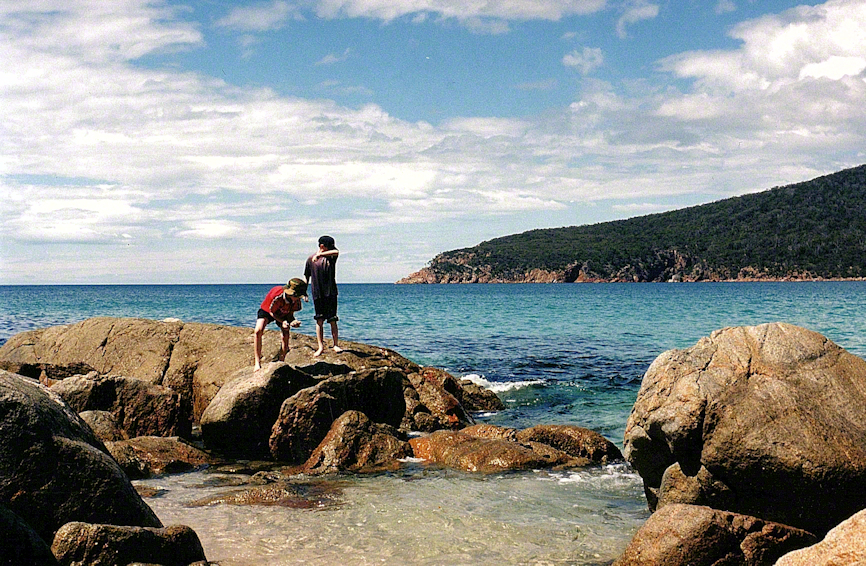
This time, in 2009, we spent about 30 to 45 minutes at the beach, scrambling over the rocks, sitting and eating our nuts and chocolate, and taking oodles of photos. The kids hunted for fish, crabs and starfish. Son 1 chased fish with his camera, while Son 2 avoided the lens and disappeared.

[Photos 12, 13 & 14: Catching sea creatures with camera © W.A. Kling 2009]

12. Fishy
13. Spot the starfish
14. Spot the Crab

I wandered over the black rugged boulders in search of Son 2. There in the distance, he appeared, stepping awkwardly from rock to rock, and then, in slow motion tumbling over.

[Photos 15: If hiking over the steep hill is not your thing, you can take a sailboat cruise to Wineglass Bay © L.M. Kling 2009]

‘Are you alright?’ I called. I had visions of broken arms, legs, and face all smashed up.

Son 2 emerged, again awkwardly stepping from rock to rock. ‘I’m fine,’ he replied.

[Photo 16: Stitched together (not perfect as you can see): A wide-angle view of Wineglass Bay. A several-day hiking trek exists for those who are game © L.M. Kling 2009]

We battled the stiff return climb up the hill and then relaxed as we trotted down the slope. The early afternoon sun shone on Oyster Bay and speed boats tracked across the water. And, once again, Son 2 was glad he’d ventured to Wineglass Bay.

[Photo 17: Up and over, view of Oyster Bay © L.M. Kling 2009]

© Lee-Anne Marie Kling 2019; updated 2022

Feature Photo: Best Beach in the World © L.M. Kling 2009

***

Want more but too expensive to travel down under?

Take a virtual journey with the T-Team Adventures in Australia?

Click here on Trekking With the T-Team: Central Australian Safari 1981…

And escape in time and space to Central Australia 1981…