Travelling on a Friday–Historic Hermannsburg

[In 2013, the T-Team, next generation embarked on their pilgrimage to Central Australia. Purpose: to scatter Dad’s ashes in his beloved Central Australia, in Ormiston Gorge.

Over the next few months, I will take you on a virtual trip to the Centre and memories of that unforgettable holiday, with my brother and his family; the T-Team Next Generation.

This time, the T-Team explore historic Hermannsburg, but fail to find any ghosts.]

Mystery in Historic Hermannsburg

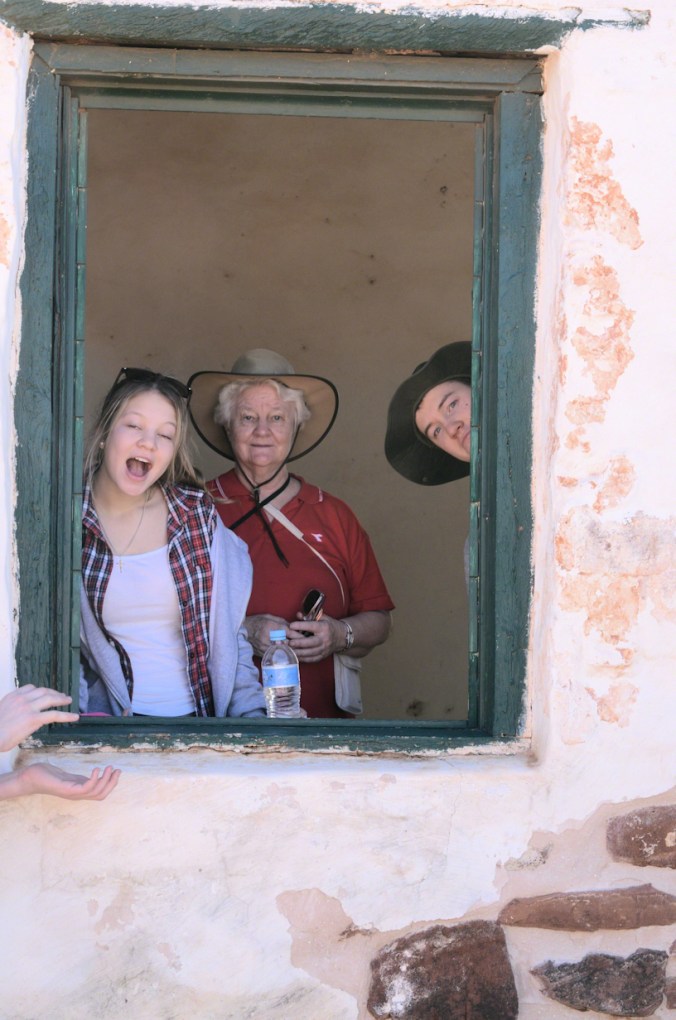
We checked out the old school room. Mum reminisced the terrors of teaching the fellow missionary kids who were barely younger than her. They just refused to listen or obey her. Some were constantly daydreaming and never did their lessons. Mum vowed never to teach again. She escaped this teaching fate by getting married…to Dad.

[Photo 1: T-Team Next Gen gazes out the school room © L.M. Kling 2013]

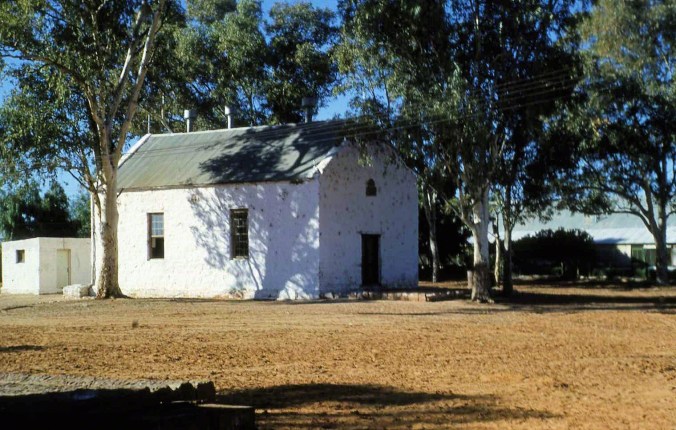
Then we proceeded to the church.

‘The only time we wore shoes was for church,’ Mum said. ‘Sundays was for Sunday best.’

[Photo 2: The historic church back in the olden days © C.D. Trudinger circa 1955]

T-Tummies began to grumble and so, the T-Team Next Gen decided to head for the Precinct Café which had been the Manse of the Hermannsburg Missionary Supervisor.

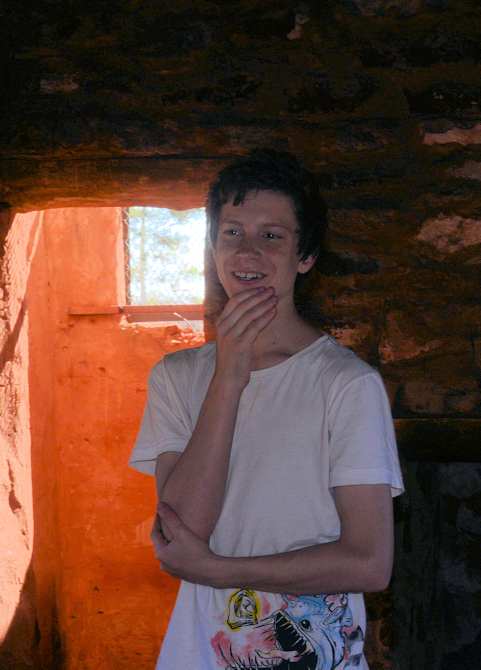
As we investigated the old rooms that had been converted into a souvenir shop and tea rooms, Mum said, ‘This is the room Dad and I stayed after we got married.’ I took a photo of Mum in that room which was now filled with souvenir clothes and hats.

[Photo 3: Mum T in her old room © L.M. Kling 2013]

Finally, Mum and I approached the counter and asked the young Arunda lady serving, if we could have a table for our party of ten.

She guided us to some tables on the porch where we could sit. Along the way, Mum mentioned to her that she used to live in the house. From that moment on, this lady could not do enough for us, making sure we had the best slices of apple strudel and helping us with the self-serve tea and coffee.

[Photo 4: The Manse and what was then, what would be, the front porch where we sat © C.D. Trudinger circa 1955]

When she had left us to serve someone else, Mum whispered to me, ‘I think she is GW’s (an elder) granddaughter.’

Later, as we were leaving to explore more of the village, the girl who had served us ran up to the T-Team to continue the conversation with us about the Hermannsburg of old and answer any of our questions about Hermannsburg today.

[Photo 5: Hermannsburg of old—the compound © circa S.O. Gross circa 1940]
[Photo 6: Hermannsburg in 2013—the compound © L.M. Kling 2013]

Then, she had a question for us. ‘Have you seen or sensed any ghosts?’

We shook our collective heads. ‘No, we haven’t.’

‘Apparently, some people have seen a girl in period clothing, circa 1900. And some have seen an old man in this café. The young girl plays with my children,’ the lady who served us said.

[Photo 7: Funeral for a Mission Worker © courtesy S.O. Gross circa 1941]

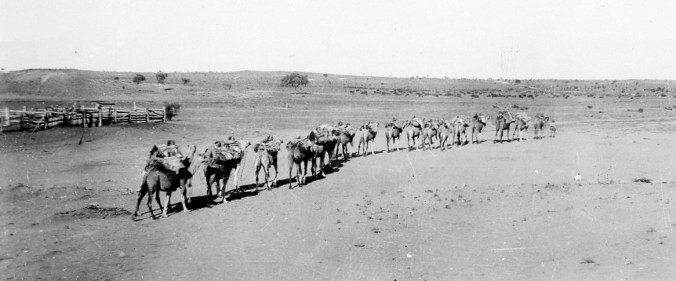
I tried to think back to my previous visits to Hermannsburg. Can’t recall any ghosts then…just dreams of the olden days, way back when…And the pioneer missionaries and Afghans trekking across the desert on horses and camels.

[Photo 8: Caravan of camels starting out desert trek © S.O. Gross circa 1942]

More exploration of the Historic Precinct where Mum walked us through her childhood. First, her old home and the porch converted into a bedroom in which she slept. Now, the home is “renovated” into an art gallery. Her room fetches up to something like one thousand dollars a night for an authentic experience of yesteryear’s accommodation. To think, I did that virtually for free in the 1970’s…not her room, but…

[Photo 9: Inside Mum’s old childhood home (at last!) © L.M. Kling 2013]

Then, the native girls’ quarters and the native boys’ quarters. Once upon a time, one hundred years ago, they were locked in at night, so they wouldn’t escape and get up to mischief.

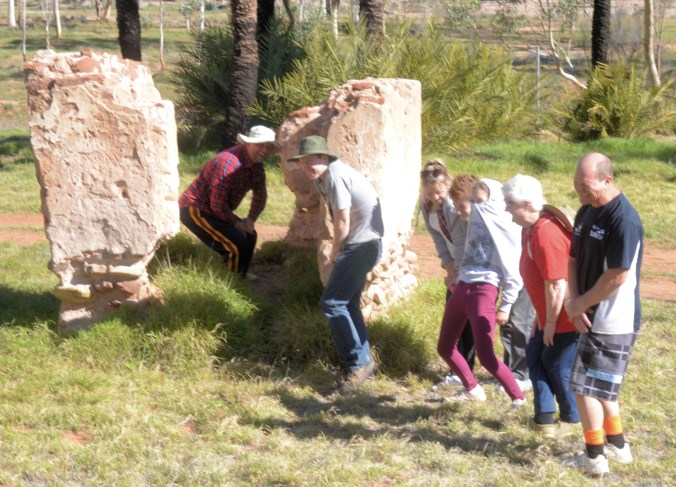
Photo 10: Meanwhile locked out and waiting to go; a re-enactment by the T-Team. Mum said that my grandpa spent “hours” in there, while my young mum hopped around the outside waiting her turn © L.M. Kling 2013]

Then the huge shed; a museum of machinery and long-forgotten technology, for butchering cattle, and tanning of kangaroo skins. Outside, my niece sat on an old tractor.

[Photo 11: On the old tractor © L.M. Kling 2013]

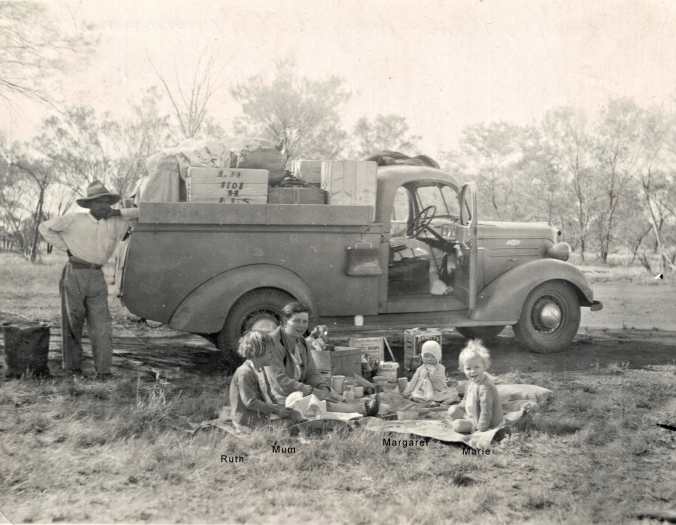
‘I wonder what happened to the green Mission truck?’ Mum said.

[Photo 12: Memories of the Green Mission truck. Dad T seen sitting inside © S.O. Gross circa 1955]

While the T-Team Next Gen rested at a picnic table by the morgue, and Anthony filled the water canteens, Mum shared how, as a child, she and her sisters played funerals. ‘We’d dance around the table pinching our noses.’ Apparently, back then, funerals were a regular occurrence. Mum added, ‘The most eerie experience was the wailing by the Arunda when someone died. Sent shivers down my spine.’

[Photo 13: Funeral © S.O. Gross circa 1940]

Meanwhile Anthony battled with the nearby water pump which was situated just behind the Historic church building.

Mum glanced over and remarked, ‘Last time we visited in 2010, we were told about this competition Hermannsburg and another mission were in for who had the holiest water. Someone had drunk the water from this other mission where the water had bubbled up to the surface through the sand and was healed. So, then, Hermannsburg had to out-do this other mission and also make water with healing qualities.’

[Photo 14: Near the site of holy water tap © L.M. Kling 2013]

The T-Team laughed.

‘Hey, Anthony, you’re pumping holy water,’ my sister-in-law, Mrs. T called out. ‘Are you allowed to do that?’

‘It’ll be alright,’ Mum said. ‘No one’s looking.’

Anthony took a sip and frowned. ‘It tastes awful!’

‘Too salty?’ I asked.

‘Well, that’s convinced me!’ Anthony put his hands on his hips. ‘We’re going back to Alice Springs for the night.’

So, with our water containers empty, Anthony and I joined the T-Team on the return trek to Alice Springs.

‘I hope we can get a campsite at the Stuart Camping Ground,’ Anthony said.

[to be continued…]

© Lee-Anne Marie Kling 2021; updated 2025

Feature Photo: Hermannsburg Historic church © L.M. Kling 2013

***

Virtual Travel Opportunity

For the price of a cup of coffee (takeaway, these days),

Click on the link and download your kindle copy of my travel memoirs:

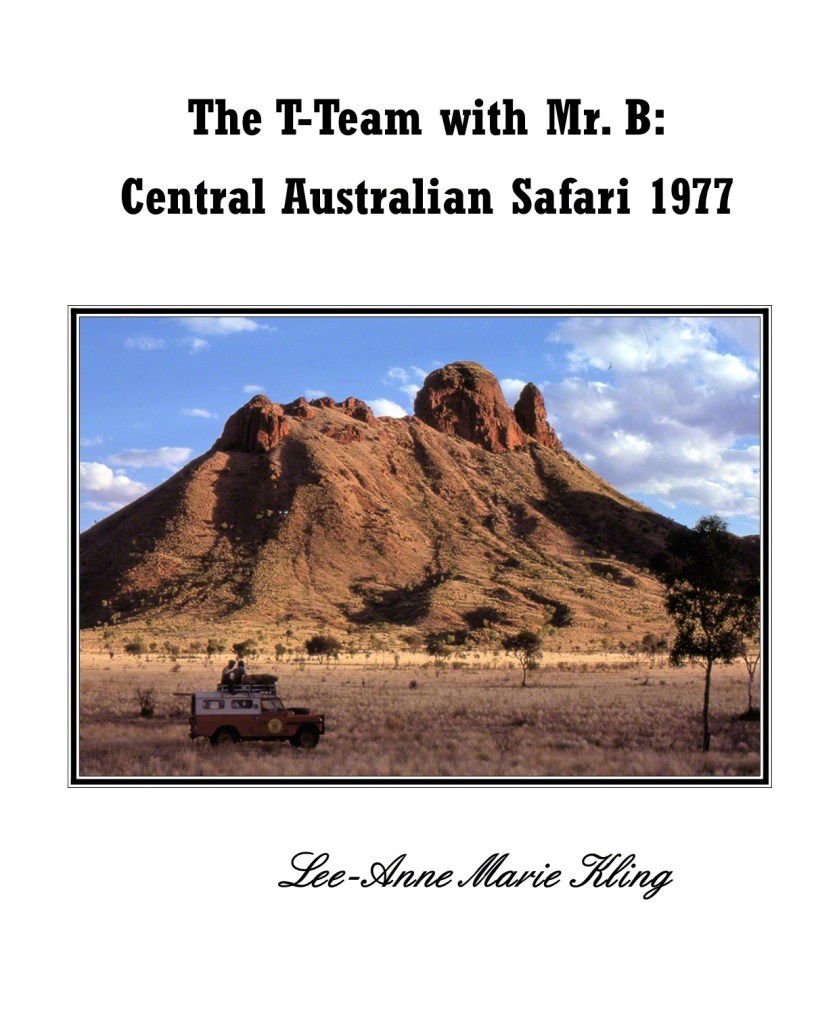
The T-Team with Mr. B: Central Australian Safari 1977

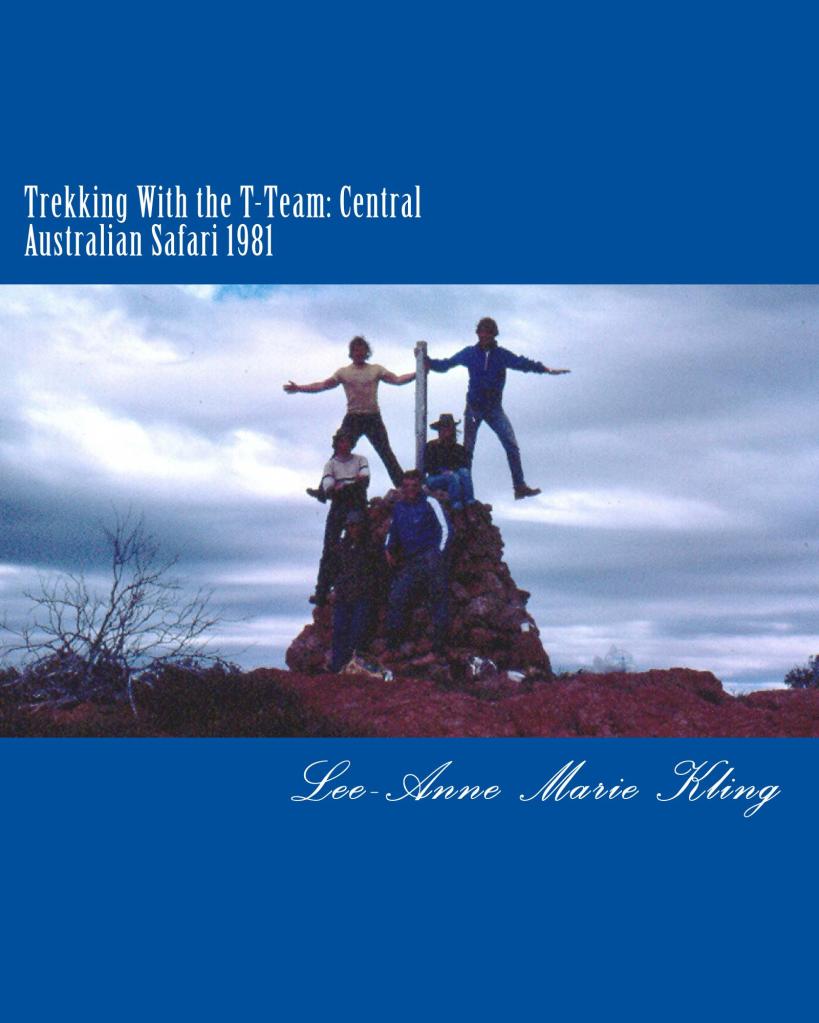
Trekking with the T-Team: Central Australian Safari. (Australia)

Trekking With the T-Team: Central Australian Safari (United States)

Trekking With the T-Team: Central Australian Safari (UK)

Family History Friday–Grandpa Gross

Tale of Two Grandpas

Grandpa 1—Sam Gross

Recently I shared how my dad relied on the Readers Digest “How to Fix” book to tackle DIY jobs. Having a double mortgage, and money being tight, Dad didn’t have much cash to splash on the “experts” in such fields as plumbing, electricity and general home maintenance.

The response met with a hint of dismissal from my older friends who prided themselves on their pedigree of farmer fathers. These, they boasted were real men, Aussie men, who fixed all things by pragmatic problem solving without the help of a book. The wisdom of their farming forebears imparted to them by osmosis, apparently.


*[Photo 1: One of those Some Mothers do ‘ave ‘em moments © L.M. Kling (nee Trudinger) circa 1978]


In contrast, my father was a lesser being, a city dweller who had to refer to a book, of all things. My dad was a much-loved teacher, gifted in music, art and sport. He coached a winning football team of Indigenous players from Hermannsburg, Northern Territory in his youth, led a choir of Indigenous singers, and later school student Anklung bands for the South Australian Festival of Music. No flies on my dad. But I must admit, when it came to DIY, his forays into such exploits would rival the character Frank Spencer in the British sit-com, “Some Mothers do ’ave ‘em”. Still, I’m proud of my dad and love him.
But then I realised that these superior beings who were my friend’s fathers, were from my grandparents’ era.

So, I cast my mind and research back to my two grandpas: Reverend Sam Gross (my mother’s father) and Dr. Ron Trudinger (my father’s father).

Now these friends held up their ties to the land as superior. Although both my grandfathers are highly educated with Reverend and doctor between them, I can claim a link to the land too, through my maternal grandfather, Sam. His family were farmers with I imagine generations of farmers before them from Horsham Victoria in the 1850’s and extending back to Prussia.


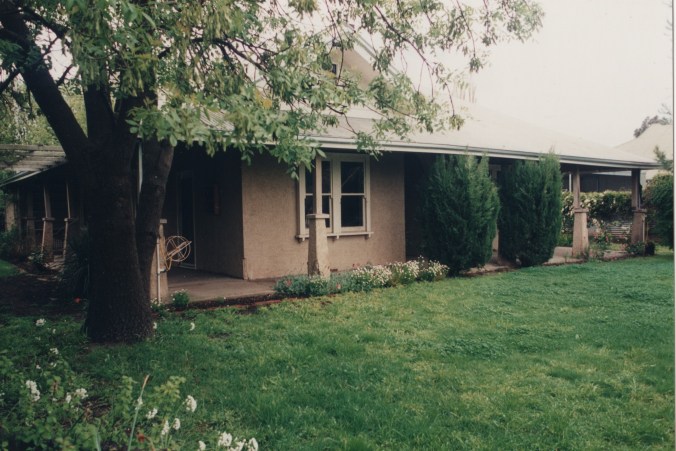
*[Photo 2: The Gross Family Farmhouse, near Horsham, Victoria © L.M. Kling 1996]


Sam was born in 1905 and grew up with all that practical knowhow bred into his being. I never met Sam, he died before I was born, but I remember my mum saying he was good at fixing things like cars. He could’ve been an engineer, but he became a Lutheran pastor. I reckon my brother inherited some of Sam’s traits—he’s a jack of all trades—the ideal DIY man.

As a child, Sam suffered rheumatic fever which affected his heart. Consequently, he got the education with the view of becoming a minister and wasn’t expected to continue with the farm like his brothers.
The doctors told Sam he wouldn’t live past the age of thirty. But being extremely fit and maintaining his health, Sam defied those expectations.

After ordination to become a minister, and then a few years posted to Berri, in the Riverland of South Australia, Sam with his wife, Elsa (my grandma) and three young daughters (one my mother), ventured to Hermannsburg, Northern Territory. There God had called them to be missionaries to the Arrernte people.


*[Photo 3: Leaving Berri © S.O. Gross 1939]


Now, Hermannsburg is remote, more so in 1939 when they moved there. The settlement became even more isolated once war broke out.

*[Photo 4: Pastor Sam Gross with fellow ministers in Hermannsburg © courtesy of M.E. Trudinger circa 1940]


Sam’s pragmatic skills, bred and imparted to him from generations who had lived and struggled on the land as poor subsistence farmers in Germany, then as pioneer farmers in the Victorian Western districts in Australia, came to the fore in the harsh isolated conditions in Central Australia.

Sam had to venture to even more remote places in the desert west of the MacDonnell Ranges—Haast Bluff for instance. One trip in 1942, the truck broke down. Despite putting his mechanic hat on and trying to fix the car, an essential part of the engine was kaput and the much-needed part not available. Sam’s problem-solving prowess kicked in, donkeys were found and the car towed by donkey-power back to “civilisation”—Hermannsburg.

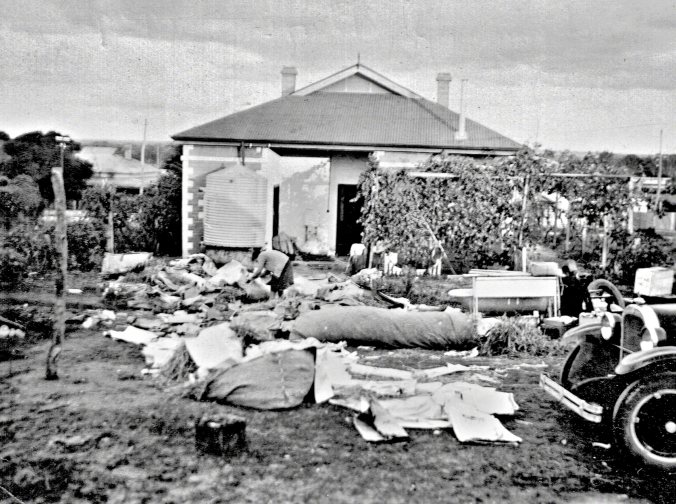
*[Photo 5: Donkey-power © S.O. Gross 1942]


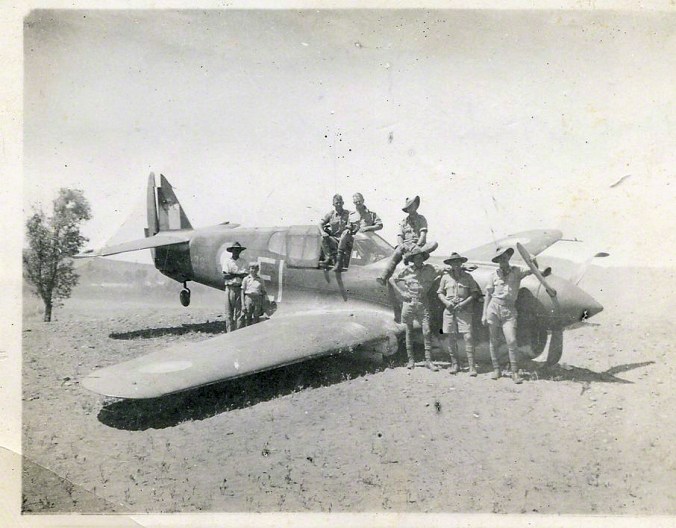
A year or so after their arrival in Hermannsburg, the supervising pastor, F.W. Albrecht was stuck in Adelaide as a result of the war. Hermannsburg came under suspicion, as it was a mission set up by German missionaries back in the 1880’s, and as such with ties to the Lutheran church, had a German name and tradition. The British Army being paranoid of anything that hinted of German, was suspicious of Hermannsburg. They feared German spies were hiding out there. So, they sent officers to check out Hermannsburg.

*[Photo 6: A visit by the Airforce © S.O. Gross circa 1942]


On one of these visits, without their chief, Pastor Albrecht, Sam and Elsa had to entertain these one-eyed wary characters. How did Sam survive their investigation? My mum says her father had the gift of the gab. My grandma had the gift of hospitality. In “A Straight-Out man” by F.W. Albrecht, I remember reading the Arrernte said that Sam would be alright, he’s so Aussie they won’t suspect him. Besides, the name Gross is found in England too. Also, Sam’s first language was English and when at school, he had trouble learning German. Although German was spoken at Hermannsburg and in the family, Mum can’t remember what they did when these British Intelligence Officers came, but thinks the children were kept out the way. Maybe someone took the kinder (children) on a picnic…


*[Photo 7: Mum and her sisters on a picnic © S.O. Gross circa 1942]


Sam and his family survived the officer’s interrogation. However, the pedal two-way radio was confiscated, and later Rex Batterbee was appointed to keep an eye on the mission. This Rex did and taught Albert Namatjira to paint.

There’s much more to Sam’s story. I think this post gives a glimpse into his generation and German farming ancestry, migrants making good, living in isolation, making do, thinking on one’s feet and problem-solving.

Did I mention Sam still found time to indulge (as the Mission Board put it—another saga) his passion for photography? He used these photos of Central Australia for deputations to garner support for the mission. Many of his photos are now stored in the Strehlow Centre in Alice Springs.

*[Photo 8: One of my favourites of Sam’s photos, Ghost Gum © S.O. Gross circa 1942]


And finally, Sam outlived his doctor’s expectations. He lived to the age of 57.

© Lee-Anne Marie Kling 2025
Feature Photo: Sam and Elsa Gross © courtesy M.E. Trudinger circa 1960


VIRTUAL TRAVEL OPPORTUNITY

FOR THE PRICE OF A CUP OF COFFEE (TAKEAWAY, THESE DAYS),

CLICK ON THE LINK AND DOWNLOAD YOUR KINDLE COPY OF ONE OF MY TRAVEL MEMOIRS,

EXPERIENCE HISTORIC AUSTRALIAN OUTBACK ADVENTURE WITH MR. B
IN

The T-Team with Mr. B: Central Australian Safari 1977

OR COME ON A TREK WITH THE T-TEAM IN

Trekking with the T-Team: Central Australian Safari 1981.

Family History Friday–Family Mythology

The Deep Fake of Family “Myth-ory”

Gaslighting—it’s something we believe is a modern practice, AI generated. But, in truth, fudging the truth is as old as history itself.


You could say that creating one’s own reality is a global pastime and no one is immune to it. As humans, we interpret, or mis-interpret the world around us through our experiences, what we see, hear, taste and touch. We use our worldviews to form our identity and place in the world and to serve as a personal force-field to protect our beliefs. Our personal paradigm helps us navigate our way through life, predicting the challenges life may throw at us.


It is fair to say that our worldviews are limited, and often skewed as we encounter the worlds of others. Naturally, we believe our truth is the one and only way. To feel secure, we impose our version of reality on others. We are right. They are wrong.


People I know repeat their version of truth and make it their mission to convince others. One relative is convinced that I had the worst time while travelling in Europe in 2014. Every opportunity they will preach their story of my perceived misery to all glory and sundry, including my mother. They are of the belief that if you repeat a lie often enough, people will believe it. Don’t believe them. I had a wonderful time in Europe, beautiful memories, and one day we hope to travel there again. Or have I been deluded by my own interpretation of reality? Hmmm. I did miss the Matterhorn…and the Basel Kunst Museum…No, I will have to agree to disagree with that relative, I did enjoy Europe.

*[Photo 1: Sculpture in courtyard of Basel Kunst Museum © L.M. Kling 2014]

Anyway, the same can be said for our own personal family history. I remember reading an article in a Genealogy magazine about family myths and to be wary of them. It’s not enough to believe a story, a narrative. Good research requires facts, preferably primary resources.


With this in mind, I have been researching on the internet, the history of Nördlingen and the Kaiser Hof Hotel Sönne. Did my Trüdinger ancestors own it for two hundred years, as my relatives have been led to believe? It wasn’t our branch as my great-grandfather Karl August Trüdinger and family emigrated from Bavaria to England in the 1860’s, and then from England to Australia in 1886. He was a textile merchant trading in wool in Yorkshire England and then in Australia he set up a business selling textiles in Adelaide city. Now, here again, the details get a bit murky, and I need to do some more research into the actual work history of Karl August in Adelaide. Suffice to say, from my gleaning of Trove, Karl August was a fine Christian family man who together with his wife Clara Theresa, raised eight of his twelve surviving children to enter the mission field. Vastly different from the family origins in Nördlingen who were apparently rich and influential enough to own the hotel that entertained royalty.

[Photo 2: Trudinger Family in Adelaide, South Australia courtesy L.M. Kling circa 1890]


Yet, as I delved deeper into the rabbit-hole of internet searches, I discovered that my four-times great grandfather, Balthas Trüdinger was a soldier in the Teutonic order. Why else was he living in Lierheim (a castle near Nördlingen) which at the time was owned by the Teutonic order. Oh, the shame that this brought on the family, having a mercenary soldier in their ranks! Another myth. Sure, Balthas was a soldier. Sure, as a soldier in the Teutonic Order he was paid. But was the Teutonic Order so bad?
When I first mentioned the fact of Balthas belonging to the Teutonic Order, my son and husband joked that he was most certainly a neo-Nazi of his time. I began to imagine Balthas all buff, shaved head and going around on crusades killing anyone who wasn’t Christian. According to my research, Wikipedia, mainly, Hitler portrayed the Teutonic Order as the exemplar of the Aryan race and cause.
Again, this was a myth. As soon as Hitler’s achieved his purpose using them, he then turned against them and discarded the Teutonic Order.

*[Photo 3: Reminders of war, Dinkelsbuhl © L.M. Kling 2014]


According to my limited research, although the Teutonic Order went on Crusades to Christianise Europe, and paid mercenaries to fight, they also did a great deal of good. Way back when they formed in 1191, they protected travellers making their pilgrimage to the Holy Land. They organised and built hospitals, initially for wounded soldiers and these days the order is primarily a charitable organisation.
Anyway, it would seem from the records compiled from my uncle Ron Trudinger, that Balthas didn’t stay in Lierheim, but, after the birth of his son Georg, he moved to Nördlingen. Here, no mention of Georg being an innkeeper, but instead a linen weaver and Burgermeister of the town.


From a research paper on Nördlingen in the 17th Century called Early Capitalism and its Enemies: The Wörner Family and the Weavers of Nördlingen* (Published online by Cambridge University Press: 11 June 2012) which I accessed online through Jastor, I was able to surmise that for Georg to become the Mayor of Nördlingen, he would’ve needed to be seriously cashed up. I mean rich, one of the wealthiest in the town, if not, the wealthiest. It would seem he landed on his feet so to speak as a linen weaver or had come into a sizable inheritance. Or, had he or his father married into money in the town? The owner of the hotel, perhaps?

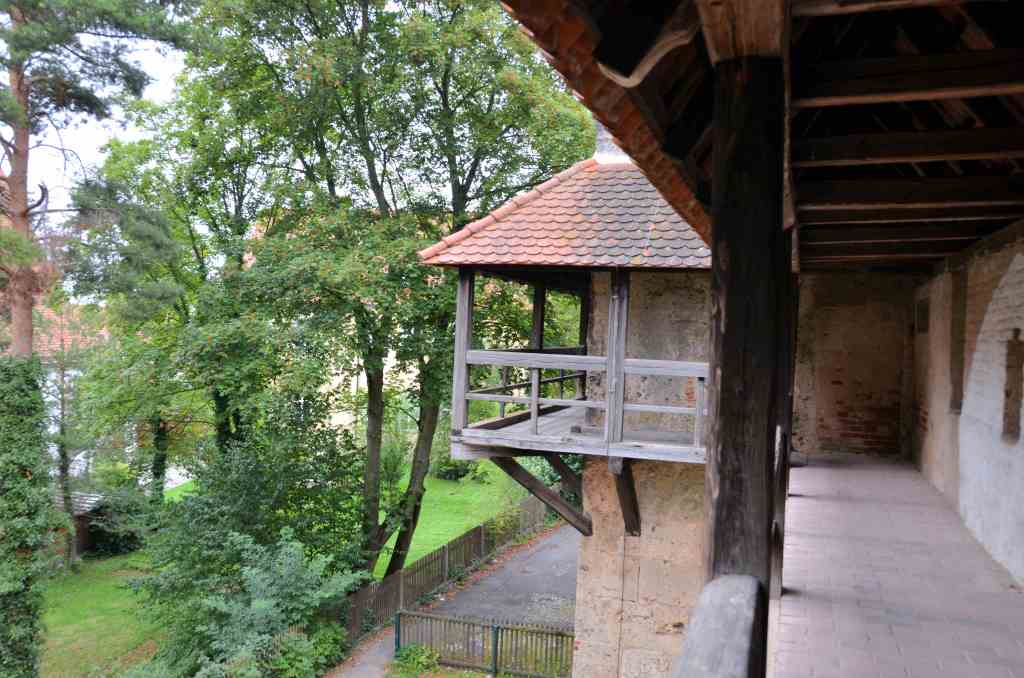
*[Photo 4: Unbroken Wall of Nördlingen © L.M. Kling 2014]

Nowhere in my gleanings on the town do I see that he was the innkeeper or owner of Kaiser Hof Hotel Sonne. The above-mentioned article had a breakdown of income, which I presume was yearly, of people in the town. According to a study accessed online called “Nordlingen, 1580-1700: society, government and impact of war”, in 1700, the owner of the Kaiser Hof Hotel Sonne had the highest income of all, a salary of 41 Florin. A teacher at the time received one to four Florin per year. And a soldier, which is what Georg’s father, Balthas was, received eleven Florin per year.

[Photo 5: Red rooves of Nördlingen made famous by the movie “Willy Wonka and the Chocolate Factory” © L.M. Kling 2014]

Again, as far as the Trüdinger family is concerned, it’s all conjecture and where myths start to grow and take a life of their own.

One thing for certain, though, is that in family history, experiences that family members have had hold weight for evidence. After all, they are the life-experience of that person and from their point of view. My second cousin, who married a German, and lived in Bavaria, decided to visit the Kaiser Hof Hotel Sonne in the 1960s. Family there living in Germany, informed her that a Trüdinger relative owned the hotel. Upon seeing the hotel, my second cousin was impressed by how high-class it was with fancy décor and loads of antique furniture. The food offered was out of her budget, but my second cousin tried to talk to her hotel-owning relative.


The encounter didn’t progress the way my cousin had hoped. Although my second cousin could speak fluent German, the hotel owner seemed distant and appeared reluctant to engage with her. Maybe, the lady was having a difficult day…Or hadn’t been given enough warning that a cousin was going to visit the hotel unannounced.


My second cousin left the establishment and decided to eat elsewhere.

*[Photo 6: Our experience dining at Kaiser Hof Hotel Sonne, Nördlingen © A.N. Kling 2014]


When we visited my second cousin in Germany, she told me this story and mentioned that by the end of the 1960’s the Trüdinger relatives had sold the hotel. She believed that the hotel had been in the family for 200 years.


I am still trying to figure out if this a fact, or if it is a myth.


Do you or someone you know have information on the history of the Kaiser Hof Hotel Sonne Nördlingen? Are you related to the Trüdinger family? You are most welcome to leave a comment. Or you may contact me through the My Heritage Trudinger-Kling website.

© Lee-Anne Marie Kling 2024
*Feature photo: Kaiser Hof Hotel Sonne, Nördlingen © L.M. Kling 2014

References
Teutonic Order – Wikipedia
Nördlingen, 1580-1700: society, government and impact of war

***

Want more, but different?

Check out my Central Australian adventures.

Click on the links:

The T-Team with Mr. B: Central Australian Safari 1977

Trekking with the T-Team: Central Australian Safari 1981

Final Trek Friday–T-Team Next Gen

Woomera, Then Home (part 2)

[I never actually finished the story of the T-Team, Next Generation’s adventures in Central Australia in 2013. So, here is the final chapter in the series. Next month, I will commence the journey at the beginning, as I revisit our journey to scatter my dad’s ashes in Central Australia eleven years ago.]

Woomera II and the Final Leg of our Journey

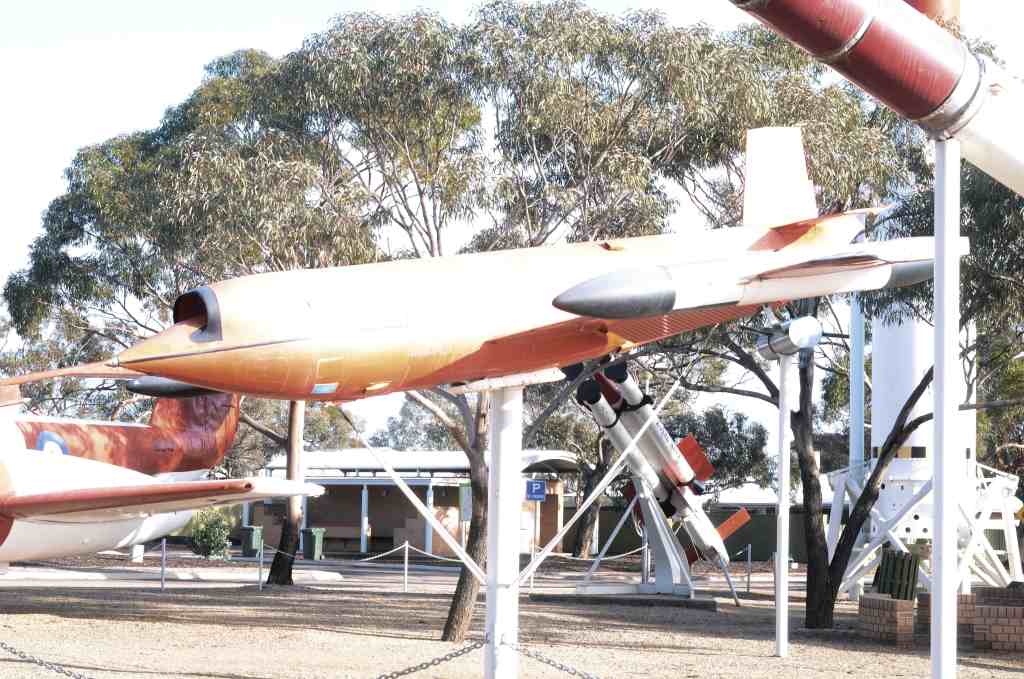
In the cool crisp morning, sun shining lemon yellow rays but not much warmth, we strolled around the Woomera Rocket Museum. Rockets of all shapes and configurations stood in the open-air, testimony of what once was. This RAAF Base and village was once a lively town in the 1950’s and 60’s, as an Anglo-Australian Cold War defence project. On this day Saturday July 20, 2013, the place seemed a mere shell of its former self, a cemetery of what once was, rockets rising like giant tombstones to the sky.

We meandered around the rockets, reading signs, eulogies from the past when threats from enemy nations was imminent. I was reminded of older friends telling me of a time when they practised drills of hiding under their school desk in the event of enemy attack.

*[Photo 1: Monument, A Rocket at Woomera © L.M. Kling 2013]

My mother recalled when on February 19, 1942, Darwin was bombed. She was a girl in Hermannsburg at the time and whenever a plane flew over, the Aranda women would wail, fearing disaster.

*[Photo 2: Twists and turns © L.M. Kling 2013]

Now, Hermannsburg was a mission set up by German missionaries in 1877. Although, by the 1940’s the mission was fair dinkum Australian having existed in Australia for all that time, with the advent of World War II and the conflict with Germany, the name, being German, raised the suspicions of the Allies. Hence, Mum remembers British Officers* drove into Hermannsburg to check the place out. They had to make sure there were no German spies. My grandpa, Pastor Sam Gross and his wife (my grandma) hosted these officers and put on a lovely spread of lunch for them.

[Photo 3: The Hermannsburg welcome Spread © C.D. Trudinger circa 1955]

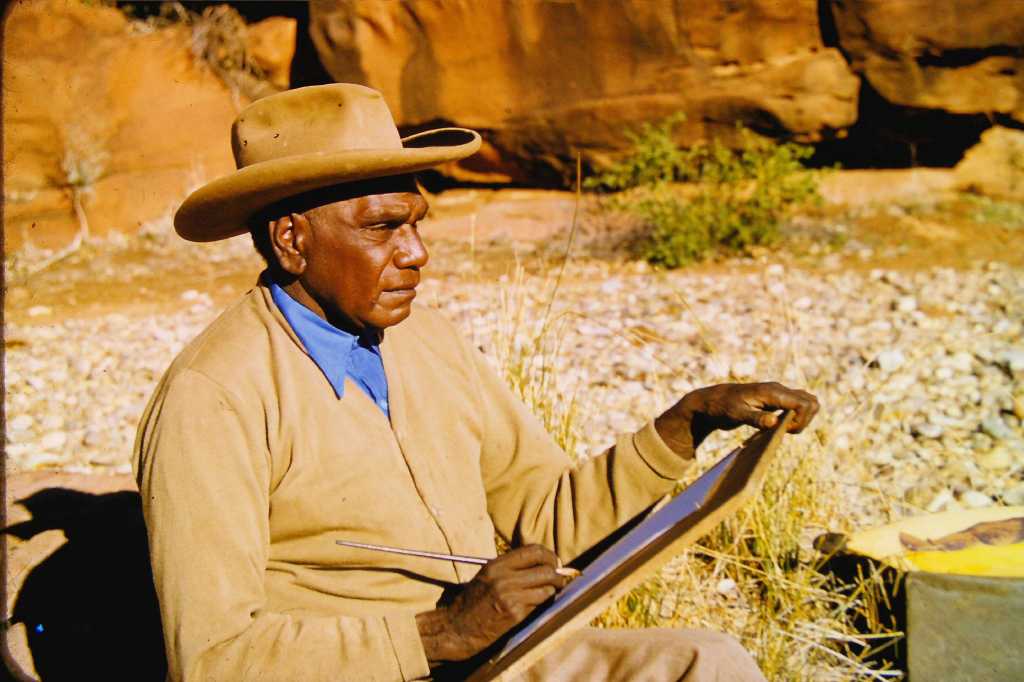
After investigating any mitigating threats, the British Officers* drove away in their propeller plane satisfied that Hermannsburg was no threat. Never-the-less, they confiscated the one and only link to civilisation, the community pedal radio. Just in case they really were spies, I guess. Further, to make sure that no threat to the allies arose from this humble mission, they sent Rex Batterbee, a world War I veteran, to oversee the mission in the role of “protector of the aborigines”. As he had visited and then lived in Central Australia since the mid-1930’s, Rex taught Albert Namatjira to paint watercolours and helped him launch his career as a renowned artist.

*[Photo 4: Albert Namatjira at work © S.O. Gross circa 1950]

Homeward Bound

Needless to say, in 2013, such threats of foreign enemies seemed in the distant past. But, being only 446 km from our home town, Adelaide, we were reluctant to linger amongst the rockets. Having packed, and checked out of our overnight accommodation, we were eager to start our journey home.

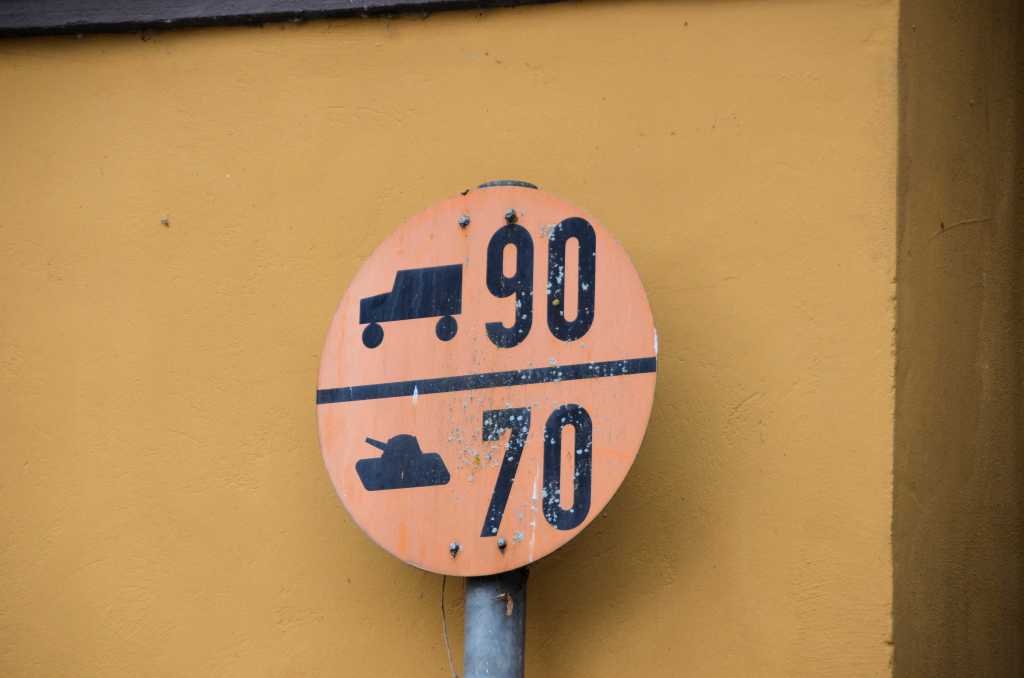
At a steady 90 km/h, we made progress down the highway that split the gibber plains in halves.

‘I bet the T-Team (my brother’s family) are home by now,’ I said. ‘No hanging around of taking time to look at any more places for them.’

‘Why don’t you ring them just to see where they’re at,’ my hubby said.

I texted my niece. The time was 10:30am.

“We are in Port Augusta,” she replied by text.

‘There’s no way we’ll catch up to them,’ I said, and then texted back, “Have a safe trip home.”

*[Photo 5: Off we go over the gibber plains © L.M. Kling 2013]

Clouds and rain descended on the land the further we drove south. By the time we reached Port Wakefield, the cold had seeped into the car. I put my parka on my legs to keep warm. Yet, for lunch Hubby insisted we eat alfresco in the rotunda at Port Wakefield. After all, despite his aversion to the cold, he needed to stretch his legs. Plus, it seemed no café existed in the town.

The rain and cold became more intense as we approached Adelaide. After driving through the grey, sodden streets, we arrived home, just as darkness fell at 5:30pm.

What disaster awaited us?

Hubby opened the door and we trod inside. Son 1 played a computer game on the PC in the dining/living annex. He ignored us. We tiptoed through the family room. Not too much mess and the carpet remained visible, and clean.

We found Son 2 all rugged up and cosy in his room playing World of Warcraft. He said, “Hello” and then asked for a coffee, then followed the conversation up with, “I’m hungry, what’s for tea?”

In the kitchen, as I prepared a drink, I noticed the dishes had been done and the cats fed. I thanked Son 1 for the effort. He took all the glory and remarked that his brother had done nothing.

The Aftermath

There’s always casualties that follow every holiday. And this one was no different. Two paintings which I had planned to exhibit in the upcoming Marion Art Group exhibition had gone AWOL. I’d like to think they were stolen…but I reckon they would be found in some odd place sometime in the future.

*[Painting: Dad’s resting place, Ormiston Gorge © L.M. Kling 2018]

Eleven years hence as I write this final chapter, I wonder what paintings they were.

Oh, and the other casualty, Hubby, who proudly exalted that he had taken thousands of photos of the Central Australian trip on his mobile phone, can no longer find where those photos went. It would seem those photos went AWOL too.

As for the T-Team, they actually arrived home after us, having spent a night at Port Germaine. They decided to treat themselves after roughing it for the past two weeks.

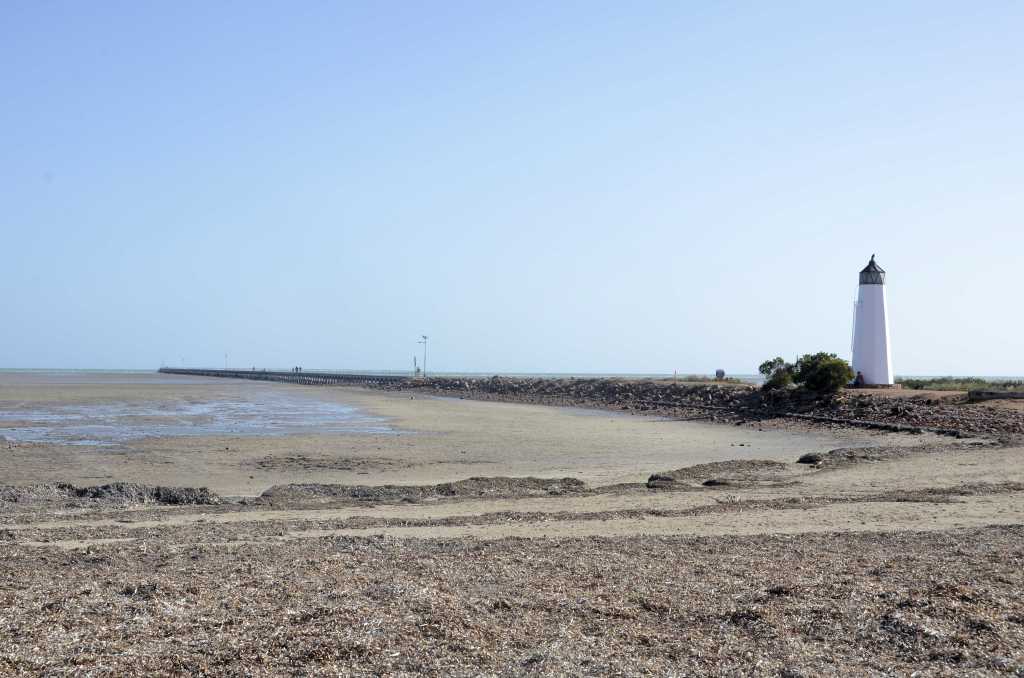
*[Photo 6: Port Germaine Jetty © L.M. Kling 2024]

***

Note: *My mum, Mrs. T checked this and questioned whether they were British. She thinks they were more likely to be Australian. However, I have read a letter written by these officers and the words they used made them sound British. When I find the letter, I will investigate the background of the visiting officers and plan to write a more detailed account of my grandparent’s experience.

© Lee-Anne Marie Kling 2024

Feature Photo: Woomera Open-air Museum in the morning © L.M. Kling 2013

***

Want more? More than before?

Take a virtual trip with the T-Team and their adventures in Central Australia.

Click below on…

The T-Team with Mr. B: Central Australian Safari 1977

Trekking With the T-Team: Central Australian Safari 1981…

To download your Amazon Kindle copy of the story…

And escape in time and space to the Centre of Australia.

T-Team @ Home–Glenelg

[Slowing down after Christmas/ New Year and feeling nostalgic, this time I meander down to my childhood stamping ground, Glenelg.]

My Old Stamping Ground

I grew up in Somerton Park which is about a ten-minute bike-ride from Glenelg. Even today, though I live in the Adelaide foothills, I go to Glenelg to shop, have coffee at the Broadway Cafe with Mum, and many times I drive through Glenelg on my way up north to Salisbury, or to the Barossa.

[Photo 1: View of Glenelg beach south © L.M. Kling 2018]

So, while tourists snap their memories of Glenelg frozen in time, for me images of my childhood and grown-up years remain fluid, layers in my head and marinated with the changes and experiences over the decades. Glenelg has changed; the land/seascape of my memories unrecognisable as the shops, the trams, the jetty and the coastline shift and develop. Although some places have changed, some have stayed the same.

*[Photo 2: Somerton Beach Catamarans © L.M. Kling nee Trudinger 1977]

Gone: The Gift Store

At the tender age of one-year-old, I committed my first (and only) criminal offense at this shop; a five-finger discount of a face-washer. Mum caught me in time, and blushing, returned the stolen item, replacing it on the shelf before anyone noticed.

The gift store, a favourite of mine, provided birthday presents for me to buy for friends and knick-knacks with my pocket money.

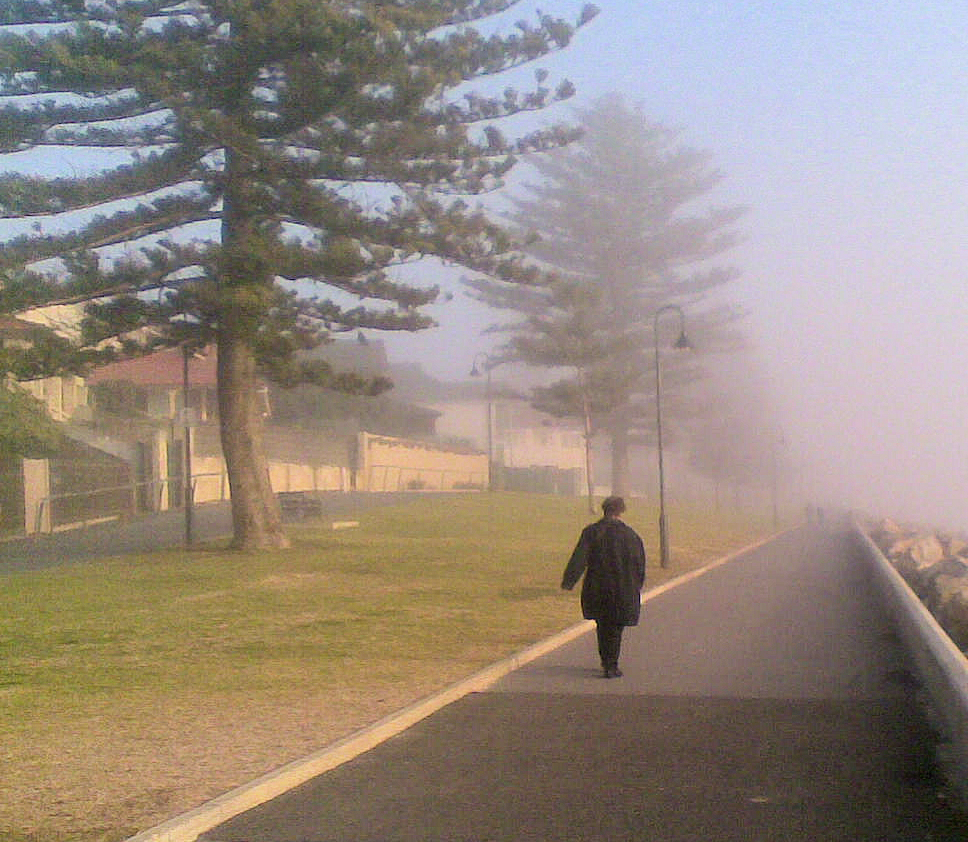
*[Photo 3: Sea Mist near Glenelg © L.M. Kling 2012]

Gone: The Historic Cinemas

One with its red carpet, sweeping staircase and chandeliers. It’s a Woolworths complex now. Many happy moments with family and friends watching movies, eating popcorn and occasionally rolling Jaffa’s down the carpeted aisle.

The other, halfway down Jetty Road towards the sea, disappeared in the 1980’s. I remember watching the film Heidi there, and before the movie started, the pre-film entertainer conducted a singing competition. My friend won first prize.

That cinema space became a mini shopping mall which, as a university student, I mopped every Saturday morning for $12. Today, a restaurant resides in that space.

After several years bereft of cinematic entertainment, a new cinema complex has been built off Partridge Street.

Gone: Tom the Cheaper Grocer

While Mum shopped at Toms the Grocer on Mosely Square, my brother and I hung out near the sea wall by the jetty. I loved winter when the waves crashed against the wall. Toms was sold off decades ago and today the old building houses cafés and restaurants.

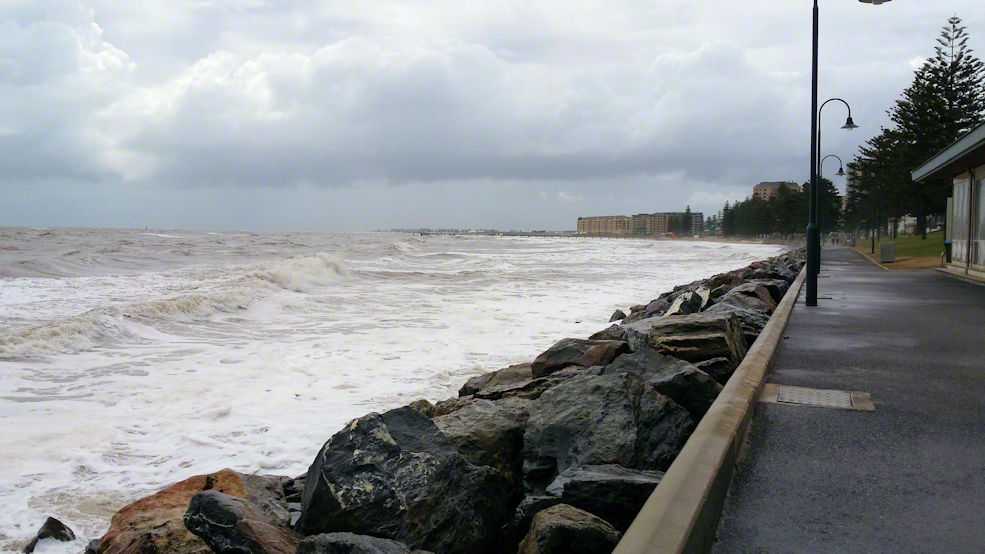
*[Photo 4 & 5:  Waves crashing near Broadway Cafe © L.M. Kling 2018]

Gone: Charlies Café

At three, I crawled under the table at Charlies Café and my auntie uninvited me to her wedding reception.

When sixteen, we dined at Charlies as a youth group. The guy I was dating didn’t show. After the supper, near tears from being stood up, I waited with my friends for this guy to arrive and drive us home. There were not enough cars amongst the group to drive us all. In a flash, this guy appeared in his silver car. He glanced at us and then kept on driving down Jetty Road.

My brother had to make two trips to carry us all safely home.

Charlies is long gone. So’s that guy. I dropped him.

***

Here today Despite Time and Changes

As my friend from Youth Group was fond of saying, ‘Thank God somethings stay the same.’

*[Photo 6: View from the Broadway Café; a favourite haunt for my mum and me. © L.M. Kling 2018]

Still There: Glenelg Jetty

At least an updated and cemented version from one of many over the years of storms that regularly destroy the jetty. Each time the jetty is damaged by a “storm of the century”, it’s repaired or another one is built to maintain that steady icon that makes Glenelg.

*[Photo 7:  Jetty Boys © M.E. Trudinger circa 1958]
*[Photo 8: From the Jetty to the Hills © L.M. Kling 2011]

Still There: Moseley Square

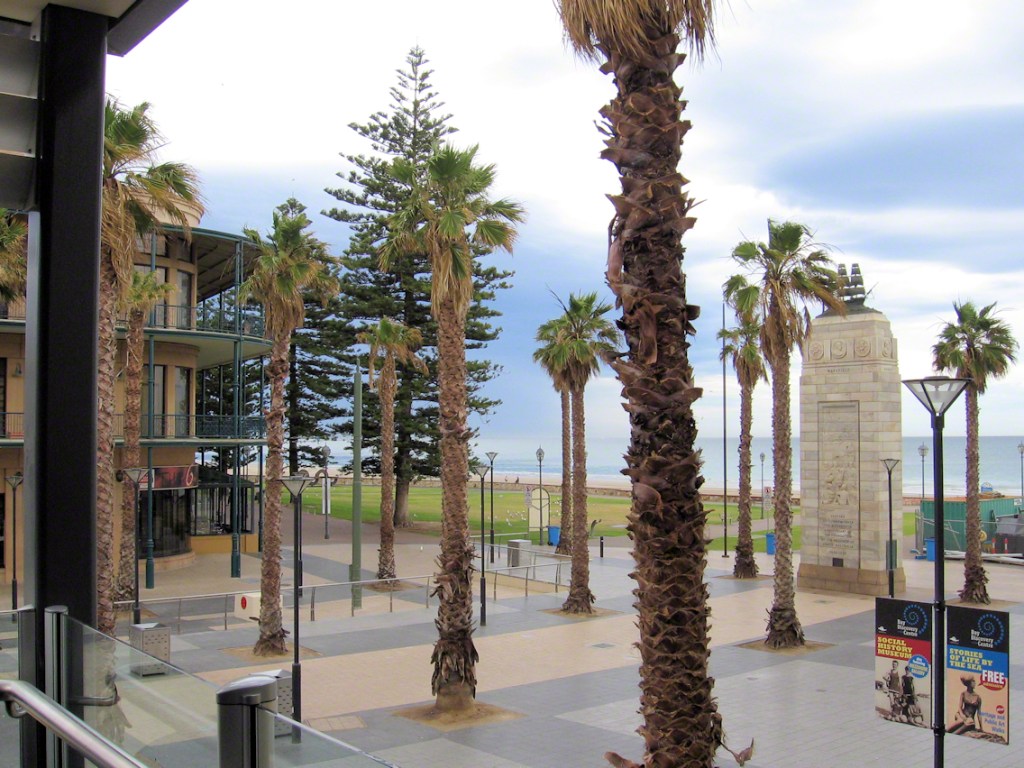
Tarted up over the decades, today with tall palms and water-features. The shops, cafés and restaurants that line jetty road leading up to Moseley Square, though they change, they are still there and most importantly for the tourists, are open Sundays and public holidays.

*[Photo 9: Moseley Square © L.M. Kling 2006]
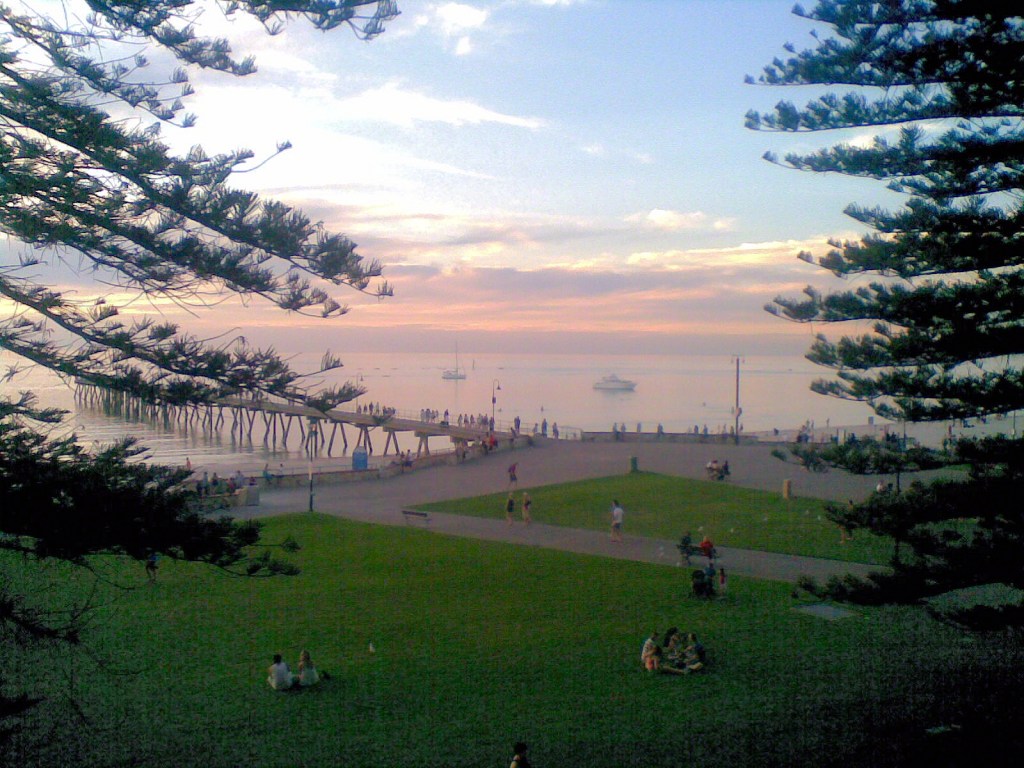
[Photo 10: Sunset over Moseley Square © L.M. Kling 2010]

Still There: Some Sort of Amusement Park

That’s why we go to Glenelg, right? A famous dating place or hang-out for youth. In my teenage years, I followed my date around the games arcade as he sampled all the pinball machines. Yawn!

A friend sourced the sideshow for lovers and got herself into “trouble”.

Memories of parking in the carpark in the early morning under the inert Ferris Wheel, and furtive romantic moments before the inevitable knock on the window by the local policeman.

Over the years, the sideshow alley vanished, but still near the carpark at the end of Anzac Highway, the Ferris Wheel sat idle, a skeleton of its light-garnished self. Then this carpark turned into a round-about, high-rise apartments grew along the foreshore, and the sideshow morphed into a massive brown lump called “The Magic Mountain”.

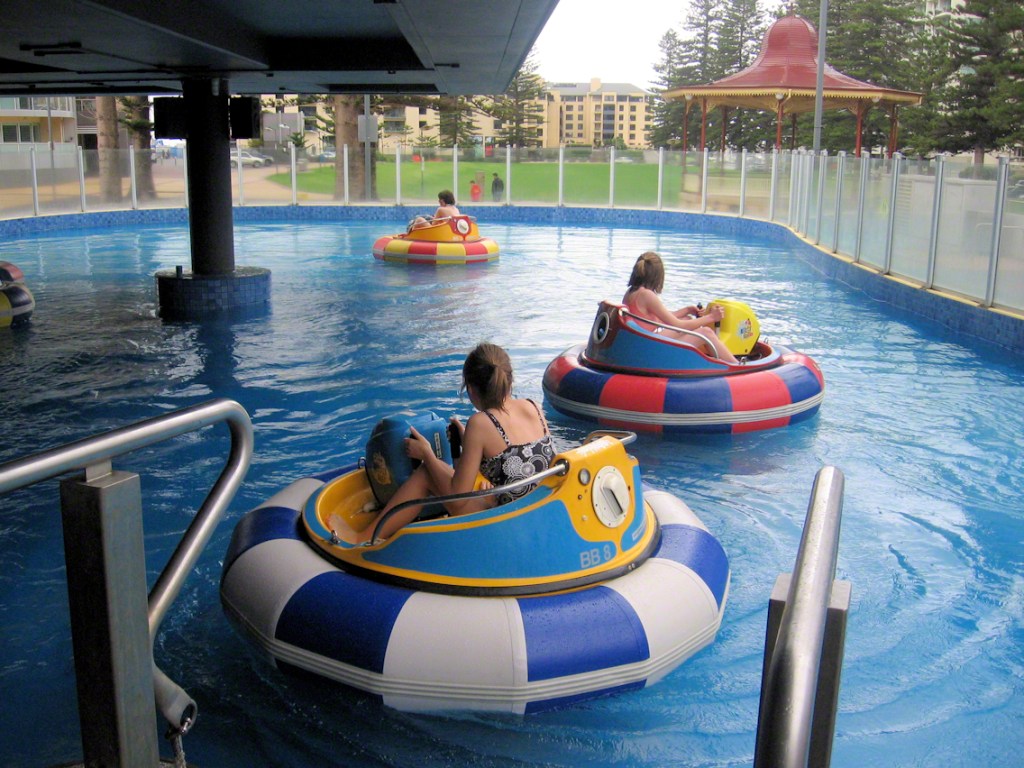
My sons enjoyed birthday parties in this mountain’s cave, chasing Pokemon, bumping in floating boats, and slipping down the waterslide.

Then the “Magic Mountain” went off, replaced by “The Beach house”. Same amusements as before without the “magic” of the mountain. The Ferris Wheel now sits in front of “The Beach house”.

*[Photo 11: Boat Bumping at Beach House © Lee-Anne Marie Kling 2010]

Nearby, high-rise apartments have grown alongside the marina and with them, a delicious array of cafes and restaurants to feed the foreshore wanderer.

*[Photo 12: Marina in the moonlight © L.M. Kling 2017]
*[Photo 13: Now the ferris wheel has moved, centre stage in Moseley Square © L.M. Kling 2021]

Still there: The Beach

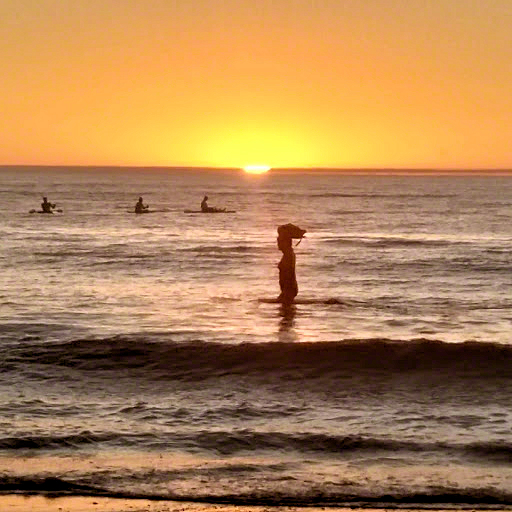
Ever faithful, ever beautiful, the setting to summers filled with family teas by the beach on the lawns, fish ‘n chips with soft drink or cheese and gherkin sandwiches with cordial. Grandparents busy themselves with crossword puzzles while Mums and Dads swim in the waves with kids by the jetty. Then after, while sitting and licking an ice-cream, families watch the sun bulge bright orange as it sinks below the horizon of sea, overhead in the cloudless sky, a plane from Perth streaks a jet-stream, and on the water, there’s a sailboat, swimmers and paddle-boarders.

[Photo 14: Watching paddle-boarders © L.M. Kling 2018]
[Photo 15: Foreshore fun © L.M. Kling 2008]
[Photo 16: Kitsch Sunset with seagull © L.M. Kling 2018]


And people, who walk the boardwalk, play on the sand, and frolic in the water, on a balmy summer’s evening, beam with smiles on their faces. This is the constant memory, through the decades of changes, this is the memory that stays with me of Glenelg.

*[Photo 17: Sunset contemplation of Mr K © L.M. Kling 2018]

© Lee-Anne Marie Kling 2017; updated 2019; 2020; 2024

*Feature Photo: Sunset at Glenelg © L.M. Kling 2019

***

Dreaming of Adventure?

Read more of the adventures of the T-Team in my memoir, The T-Team with Mr. B: Central Australian Safari 1977 and Trekking With the T-Team: Central Australian Safari 1981 available on Amazon and Kindle. Check them out, click on the links below:

The T-Team with Mr. B: Central Australian Safari 1977

Trekking With the T-Team: Central Australian Safari 1981

Travelling Thursday–Mt. Giles, Central Australia

Christmas Holidays are approaching. For me it’s been party time this week. One party after another, especially yesterday with three parties, all in one day. I’m hoping that once the rush and busyness is over, I can rest, relax and start planning our next holiday. Perhaps it’s the same for you.

In the meantime, here’s a revisit to Central Australia and the T-Team. This time when my brother and I became lost on our descent from Mt. Giles.

Virtual Travel Opportunity

For the price of a cup of coffee (takeaway, these days),

Click on the link and download your kindle copy of my travel memoirs,

The T-Team With Mr. B: Central Australian Safari 1977

The T-Team with Mr. B: Central Australian Safari 1977

Trekking with the T-Team: Central Australian Safari. (Australia)

Trekking With the T-Team: Central Australian Safari (United States)