Friday Crime Fiction–Under the Bridge (4)

Chapter 3

Painting Pals

Monday, January 17, 2022

Church Hall in a Seaside Suburb of Adelaide

Eloise

The sun’s rays filtered through the dust motes of the church hall near the seaside. The air conditioner thrummed pumping out the sticky 40-degree Celsius heat that Monday afternoon in January.

Eloise Delaney unloaded her motley collection of watercolour palettes, colour-splattered former honey jars and 300-gsm paper framed with masking tape. She then arranged her brushes. Thick sable, round and soft, like the tip of her tabby cat, Spike’s tail. Great for that initial wash of sky, sea and sand.

She had lined up the thinner brushes in order of detail as the painting progressed. She stroked the finest brush, the one used for her flourish of a signature; the one more than 70-years old from her maternal grandfather’s collection salvaged after the bombing of his home in Nördlingen, Bavaria 1945. It was premium quality being made in Germany.

She sighed, ‘Must do this so nothing is lost.’

‘Talking to yourself already?’ a voice sang. ‘Sign of madness, ya know.’

‘Consequences of early retirement, I guess.’ Eloise laughed. ‘Least I had a social life when I was working.’

‘What do you call this?’ Eloise’s pear-shaped friend flicked a wiry lock of henna tinted hair from her freckled face. ‘Is this seat taken?’

‘Nah, go ahead. I could do with the company, Fi.’

Fifi settled herself on the plastic chair diagonally opposite Eloise, and after fumbling in her tote-bag, produced a mini flask. The thin mauve cannister wobbled on the newspaper that covered the trestle table. ‘I’m economising today; made my own brew.’

‘I’m celebrating,’ Eloise said and held up her takeaway cappuccino from the café down the road. ‘The “Rabbit hole” beareth fruit.’

Fifi pulled out her sketch pad, set of Derwent pencils and three scrunched up tissues. Then she leaned forward ‘What? Oh, your family history. Any noble? Kings and queens? Or, let me guess, some royal fruit from the other side of the royal bed?’

‘Well, actually, sort of…’ Eloise dipped her brush in the former honey pot full of water. ‘France, actually. And a bed of his ancestor’s made long, long ago.’

[Photo 1: Eiffel Tower, Paris © L.M. Kling 2014]

‘Well, I could have told you that, him being French, I mean.’ Fifi wiggled her generous behind on the chair, and then smoothed a fresh page of her sketchbook. ‘Do tell.’

El opened her mouth to spill forth all the juicy gossip about tracing her husband’s tree, a royal line stretching way back beyond Charlemagne and to Julius Caesar—all done without the help of DNA, but hours of research—when the leader stood and welcomed the small art group back from the holiday break.

Plus, there was that strange woman sitting behind them who was listening to every word El spoke. That woman, Sharon Katz, nicknamed Shatz, with the mouse-brown hair and the poisonous mushrooms (picked from the forest and dried) she foisted on El just before Christmas—insisted she take them. Lucky for El, her husband, Francis Renard, as a keen gardener and scientist, warned her of the dangers and she threw the suspect fungi into the bin. The next week, Shatz made a point of asking how El how she was feeling. All holidays El puzzled over Shatz. Had she had a run-in with this Shatz in times past while doing her duty as a police officer? Or was Shatz one of Francis’s former lovers?

‘Tell you another time,’ El whispered. ‘Probably should get Francis’ permission first.’

‘Oh, okay, then.’ Fifi sighed. ‘So, how was your Christmas?’

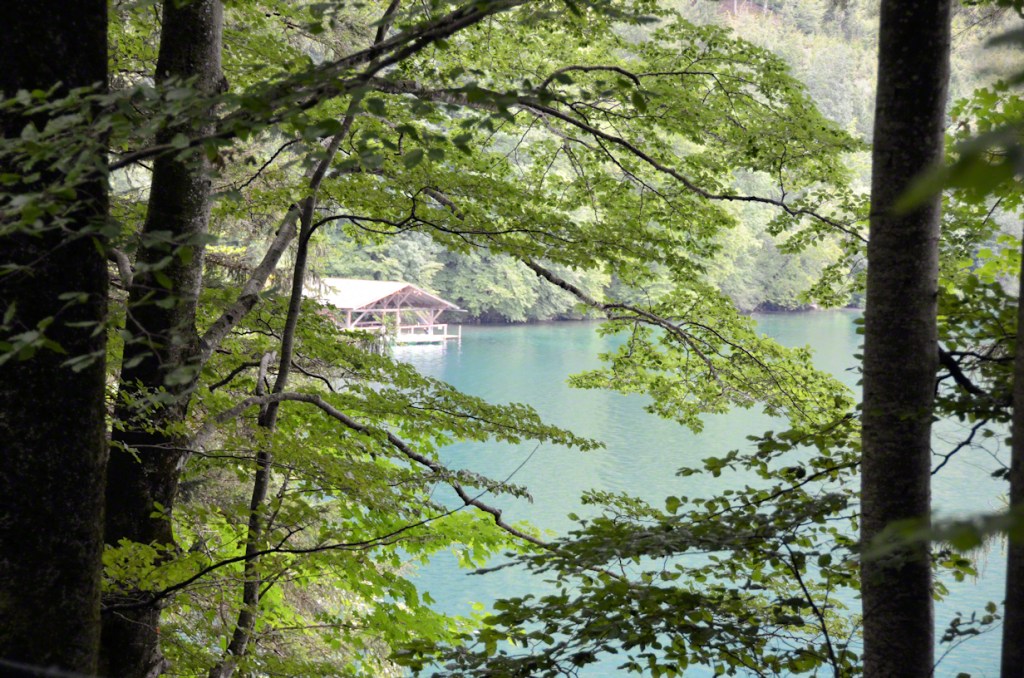
‘Meh! Glad it’s over for another year, Fi.’ Eloise smiled. ‘Francis and I had a quiet one on the actual day, then we all went to my cousin’s in Flagstaff Hill on Boxing Day. It was a disaster. You know, in the middle of Christmas lunch, which I might add, was leftovers from their Christmas day, someone, not mentioning any names, just had to bring up the latest controversy circulating on Fox News. Next thing, arguments all round. Renard and I left early and walked around the newly opened Happy Valley Reservoir. At least that part of Boxing Day was enjoyable.’
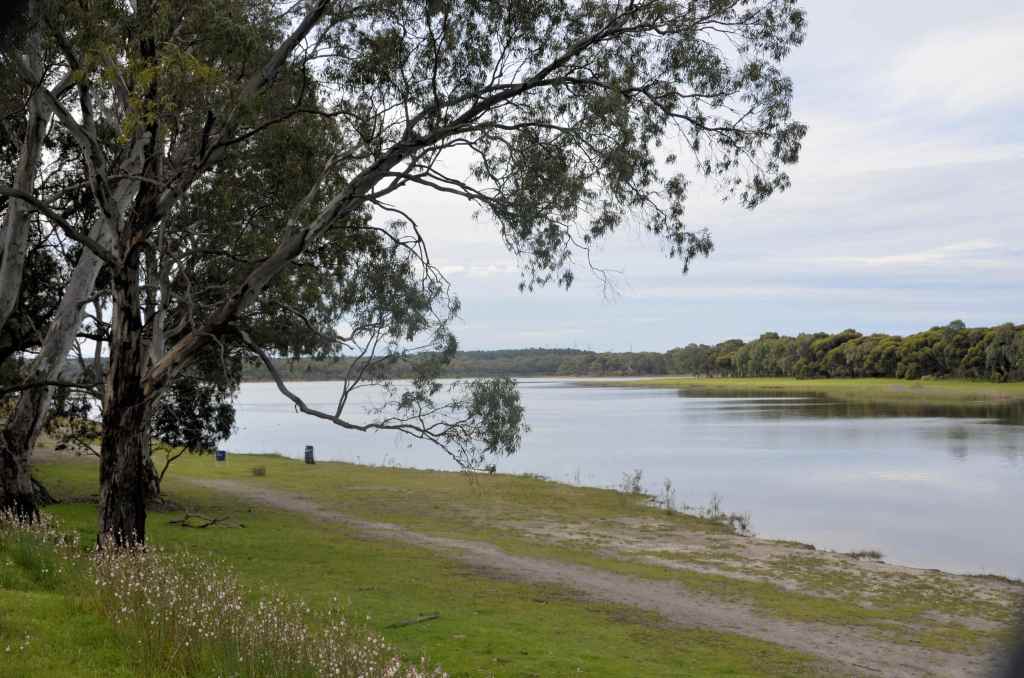
[Photo 2: Happy Valley Reservoir © L.M. Kling 2022]

‘Well, my Christmas Day, thanks for asking, Eloise,’ Fifi’s lips tightened for a moment, ‘I don’t know why we bother and make such a fuss about the whole thing.’

‘Yeah, I know, the novelty wore off years ago. I just wish we could get back to the basics, the real meaning of Christmas and celebrate that.’

Fifi nodded. ‘Yeah, who needs another voucher? All we do is exchange money and vouchers these days. Where did the love go? Although, in my family, even with all those kids my parents had, there wasn’t much love.’

‘Really? I always envied your big family.’

Fifi sniffed. ‘If you really knew my family and what went on behind closed doors, you wouldn’t be envious.’

‘Why?’ Eloise may have been taking time out from her job as a detective, but she had not lost her inquisitive nature. ‘What went on behind closed doors?’

‘My dad, when he was around, was a pompous twat.’

‘How so?’ Eloise asked. She noticed Shatz, lifting her head, looking at them and listening again. Her curiosity annoyed El and she turned around and glared at the woman. Shatz dropped her eyes down to her sheet of paper and pretended to work on her pastel rendition of a bullfrog.

Shatz’s eavesdropping didn’t bother Fifi who continued, ‘He was hard on us kids. If we did the slightest thing wrong, he’d thrash us. Typical of his generation and background, European, you see. He thought you hit kids into submission. And, as for girls, they were to be seen, but not heard. He treated us girls like slaves.’ Fifi thumped the table. ‘I hated him.’

Fifi’s cannister of coffee toppled from the table and rolled on the floor.

Shatz picked up the cannister and handed it back to Fifi. ‘My dad was the same,’ she said before El’s frown drove her back to her seat to resume painting.

El then said, ‘He didn’t mellow in his old age?’

‘He left and…’ Fifi paused, ‘…and I was glad. Life improved after he was gone.’

Eloise studied Fifi and the freckles that danced on her face as her eyes blinked and her mouth twitched. ‘I sense that your father did more than just leave, Fi.’

Fifi’s eyes widened. ‘How did you know that?’

‘Part of the job, Fi. So, what did he really do?’

 ‘It was the strangest thing, Eloise.’ Fifi took a deep breath. ‘One day, my friend Lillie, and Jimmy my brother and I went for a hike up to Mount Lofty. On the way down, we did a bit of exploring. I can’t remember whose idea it was. Anyway, I go looking at this culvert. I had in mind that this hole in the side of the hill could be some disused mine and that I could find gold there. But, when I go down there, I see this body. Just bones and leathery skin over the bones like…but I recognised the boots. Those boots. I had lost count of the times those boots had kicked me…I knew it was my dad. But at the same time, I didn’t want it to be true. I just hoped they, whoever they were, were somebody else with the same type of boots.’

[Photo 3: Mt. Lofty Botanical Gardens © L.M. Kling 2014]

‘Oh, right, when was that?’ Eloise had turned over her paper and had begun to take notes with a piece of charcoal. ‘How long ago, did you say?’

‘Over forty years.’ Fifi replied softly. ‘He’s been gone since January 1978.’

‘Forty-four—exactly.’

‘How did he end up in a ditch? Near an old mine?’

Fifi shrugged. ‘Not sure, but he had enemies.’

‘I see.’

‘You see, we did report it to the police. But nothing happened. Forty years, and nothing. I mean, I know he was a creep and often rubbed people up the wrong way, but he was still my dad. And I just wanted to…you know, find out why he ended up there. Why anyone would. Dead. And no one seems to care.’

Silence for a few minutes. Fifi sipped her coffee while Eloise studied her notes. The happy chatter from fellow artists provided background noise. The air conditioner continued to thrum.

‘Mm,’ Shatz began in a soft voice, ‘my brother was killed in a motorbike…’

El turned and narrowed her eyes at Shatz. Was this woman trying to get attention? she thought.

‘Sorry,’ Shatz said. ‘But I knew Mr. Edwards, he was a real…’

‘Well, of course you did,’ Fifi huffed, ‘we went to the same church, remember?’

‘Never mind, sorry,’ Shatz mumbled.

Another pause.

After the pause, Eloise looked up. ‘Would you like me to follow this up?’

‘I don’t know.’ Fifi wiped her eye. ‘I guess. But isn’t it a bit awkward for you now that you’re…?’

‘No trouble. I can call Dan, my partner, or should I say, my ex, or whatever he is now that I’m on leave. I can still use the phone.’

‘Thanks.’

‘I’ll see what I can do. No promises. But it’s worth a try, don’t you think?’
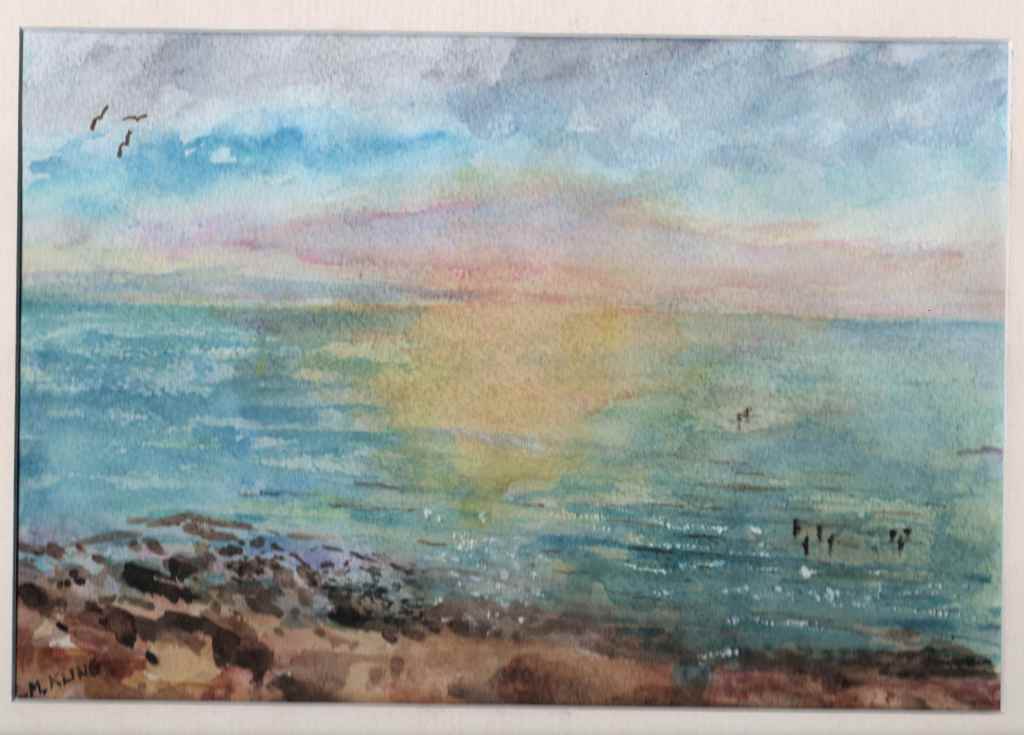
[Painting 2: Late Summer Sunset Kingston Park, Brighton in Watercolour © L.M. Kling 2023]

The rest of the afternoon, Eloise and Fifi occupied their thoughts with painting and sketching. The cheerful chatter of the other artists continued, none the wiser of Fifi’s loss and childhood trauma. Except for Shatz. El wished that woman who attempted to poison her wouldn’t be so nosey and would mind her own business.

The air conditioner kept on thrumming until the rush for pack up and departure. Then as the last person locked up the building, they turned off the infernal humming machine and the heat of late afternoon in Adelaide seeped into the empty hall.

© Lee-Anne Marie Kling 2024

Feature Painting: Seacliff Beach Sunset in pastel © L.M. Kling 2021

***

Sometimes characters spring from real life,

Sometimes real life is stranger than fiction.

Sometimes real life is just real life.

Check out my travel memoirs,

And escape in time and space

To Central Australia.

Click on the links:

The T-Team with Mr. B: Central Australian Safari 1977

Trekking with the T-Team: Central Australian Safari 1981

***

Or for a greater escape into another world…

Check out my Sci-fi/ dystopian novel,

And click on the link:

The Lost World of the Wends

Family History Friday–1939

Letters from our forebears give us today a rich picture of them, their personalities and their lives. As it’s my maternal grandmother’s birthday tomorrow (March 16), I am sharing the first part of a circular letter written by Elsa of the family’s relocation from the Murray Riverland to the desert Centre of Australia back in October 1939. My grandpa, Sam, Elsa’s husband had been called to be a missionary pastor in Hermannsburg, Northern Territory. Note the timing of this adventure. World War Two had just broken out, but no mention in this letter.

CIRCULAR WRITTEN by ELSA GROSS from HERMANNSBURG,

OCTOBER 1939

                                                                        Hermannsburg

                                                                        via Alice Springs

                                                                        October 1939

[Photo 1: The Family © S.O. Gross 1939]

Dear Friends,

        Well, here we are at Hermannsburg at last, our long journey is at an end.  We have a home again, although till now our goods haven’t arrived – we are anxiously waiting for them to be able to pack away our things – but – this is the land of ‘wait-a-while’ – so we will just have to wait until they come.

[Photo 2: Moving home chaos, home in Berri, Riverland South Australia © S.O. Gross September 1939]

        We had a very pleasant journey up from Adelaide.  Went as far as Port Augusta in my father’s car, after having stayed overnight at a cousin’s place in Murraytown.  It was very nice going up by car, it saved changing twice and with all our luggage it would have been quite a picnic.  We had arranged to meet Karl in Port Augusta, but when we arrived there we discovered he had German Measles, so we could only speak to him from the other side of the room; he was in bed, and he couldn’t even come to see us off, which was quite disappointing.

[Photo 3: On Father’s (my grandmother’s father pastor F.W. Basedow) Car © S.O. Gross 1939]

        Anyhow, at 4.30am on Thursday 28th we steamed out of the Port Augusta station.  We had sleeping berths, the children and I with 2 other ladies in the one compartment, 4 berths in each, and Sam & 3 other men in the next compartment.  During the day we were mostly alone in Sam’s compartment, the other men went on the other part of the train and just came back to sleep.  It was very nice because then the children had room to romp around a bit.  The sleeping berths were very comfortable, 2 at the top and 2 at the bottom.  We all had bottom ones, Ruth & Marie in one, I in the other one and Margaret between in her basket.  During the day the beds are just ordinary seats and for the night they put the back-leans down and it makes a comfortable bed.  The children stood the travelling very well, they were very excited of course to go in the train.  The end of the second day (Friday) they got a bit tired of it, but soon got over that.  The only one who didn’t enjoy it too much was Margaret, she was running a temperature most of the time and was particularly grizzly on Saturday afternoon.  The next morning we could see why – she had German Measles, but the rash didn’t last long, and now she is just about right again.  Now we are wondering if Ruth and Marie will get it, they have colds, so we are keeping ourselves isolated out here, we don’t want to give it to the natives, they always get things so much worse than the whites.  One of the ladies in our compartment had them too, she was very miserable, was in bed for most of the trip.

[Photo 4: On the Ghan heading up north to Alice Springs © S.O. Gross 1939]

        Well, to go on with our trip.  From Port Augusta to Oodnadatta, which we reached at 9 o’clock on Friday night, there wasn’t much to see, flat deserty-looking country, a lot of it covered with stones, not nice smooth ones, were like broken bits, it makes a person wonder where they all came from — no hills, just these plains covered with stones.  We also passed a lake, but that looked as dreary and dead-looking as all the rest of the country.  That was to Oodnadatta, when it was night.  But when we woke the next morning it was different, grass and trees and ranges and wild flowers.  One advantage about this trip is, that they stop at every station or siding, sometimes there are just one or 2 houses, other places a few more.  One place we stopped at, Anna Creek, by name, the 2 or 3 railway houses had lovely gardens and lawns, such a contrast to all the surrounding country.  We saw something similar at Rumbalara , where the police station is.  At this place we had to wait for nearly 2 hours as our engine had broken something and they had to steam up another one.  This long stay enabled us to see some of the wild flowers growing along the line.  They are altogether different to the ones in the south, and such a variety, too, and they appeared to be past their best too.  It must be a wonderful sight when they are all out.  This delay at Rumbalara made us late, of course, at Alice Springs.  We arrived there at quarter to 5 instead of 2.15.  Missionary Albrecht arrived to meet us a few minutes after the train was in, and took us and our host of luggage to Johannsens, where we slept.

[Photo 5: A picnic lunch on the way © S.O. Gross 1939]

        After we had had tea Missionary Albrecht took us out to the little church which they have in Alice Springs.  It was presented by Mr Materne of Nuriootpa as a Thank offering.  It is a nice little church with a fairly large vestry and a sleep-out, so that anyone coming in from the mission station has somewhere to stay.  At the church we met some of the natives of Alice Springs, they are being cared for by the evangelist Martin, who holds services twice every Sunday, when there is no missionary there and also gives baptismal instruction.  He is a very fine man.  Here the children met the first natives.  They had seen some from the train already and were greatly excited.  To our amazement they weren’t at all afraid of them, and not any more shy, if as shy, as with white children.  They shook hands with them much to the natives delight.

[Photo 6: Where’s our homely contents? © S.O. Gross 1939]

        The next day services were held there, in the morning it was in Arunda, but during the service Missionary Albrecht welcomed Sam and he then spoke a few words to them in English.  In the afternoon Sam conducted the service and preached the sermon, in English of course.  There were about 60 natives there for the services, not as many as usual so they said, some were away working.  Several whites came to the afternoon service, Johannsens and others.  Unfortunately I wasn’t able to go as Margaret was sick, I was so sorry I had to miss it.

[Photo 7: The moving van back then on its way to Hermannsburg © S.O. Gross 1939]

        On Monday Sam and Missionary Albrecht had quite a lot of business to see to, and then on Tuesday morning we set off for Hermannsburg at about 11 o’clock, Sam and Marie on the back of the loaded truck with a native man, and Missionary Albrecht and Ruth, Margaret and I in the front seat.  It was a fairly hot day but not unpleasant.  We called in at “The Jay”, 25 miles from “The Alice”, the home of Mr & Mrs T. Strehlow.  They persuaded us to stay there for dinner.  They have a nice little home, 3 rooms, with a lovely wide verandah, made of cement bricks.  They also have a refrigerator.  It was just lovely to have the nice cool water and also ice cream, a real luxury way out in the bush.  At about 3 o’clock we went on.  It wasn’t quite so hot then.  Up to the Jay the road had been fair, it had been made some time ago for the Governor General.  After we left the Jay it wasn’t quite so good, it had been washed out by the heavy rains and that meant driving fairly slowly with the loaded truck.  We had to cross over so many creeks and of course there were no bridges, but stones and sand instead.  The truck had to pull and pant and bump to get across in some places.  The scenery was quite nice though.  Before we came to the Jay we were travelling right in the ranges, but after passing there the country was more open, a plain, with ranges along both sides.  But there is nothing like a desert around here.  It is more like one of the back roads in the mallee, only of course more creek beds to cross.

[Photo 8: The Arrival of all the goods and chattels © S.O. Gross 1939]

        I quite forgot to mention that after we left the Jay we drove around the native camp, where blind Moses is the evangelist.  These natives live in grass huts.  They were very pleased see us and of course we had to shake hands all around.  Then they sang a hymn, after which Missionary Albrecht offered up a prayer and they all then recited the Lord’s Prayer, all in Arunta of course. It was wonderful to think that out there in the bush, underneath the gum trees, those natives praying and singing praises to their Saviour just as the white people do in their Churches.  The natives were very interested in our children, and of course our children were very interested in them too.  Before we left Missionary Albrecht had to take orders for the different ones, they had a few pennies to spend, one wanted a hair clasp, another some lollies and so on.  Next time somebody from here goes to Alice Springs the things have to be taken to them from the store here.

[…to be continued]

© Elsa Gross 1939

Feature Photo: The Gross Girls on the Ghan © S.O. Gross 1939

***

Virtual Travel Opportunity

For the price of a cup of coffee (takeaway, these days),

Click on the link and download your kindle copy of one of my travel memoirs,

Experience Historic Australian outback adventure with Mr. B

in

The T-Team with Mr. B: Central Australian Safari 1977

Or come on a trek with the T-Team in

Trekking with the T-Team: Central Australian Safari 1981.

Friday Crime Fiction–Under the Bridge (3)

[In this bite-sized chapter, we meet Zoe Thomas who makes a discovery that will change her life and unbeknown to her at the time, unearth a more than 40-year-old mystery. This will ultimately open the proverbial pandora’s box and cause chaos to a number of now-settled individuals and their families. In future episodes, this revelation, for our Detective Inspector Dan Hooper, will add to his workload as the chief investigating officer, and force his partner in crime-fighting, Eloise Delaney to cut short her long-service leave and return to work.]

Who do ya think ya woz?

Monday January 17, 2022, 10:00 hours

Huon Valley, Tasmania

Zoe Thomas

While the mourners and well-meaning well-wishers and the like gathered in the church hall, loading their plates with condolences and their mouths with egg sandwiches, Zoe Thomas slipped out. Unnoticed, she slid around the corner away from the toilets and then leant up against the whitewashed wall warmed by the summer sun.

‘Oy!’ her dad called. ‘Y’ all right?’

She sighed. ‘Yeah, fine for a girl who’s just lost her mother, if you could call her that.’

‘What do ya mean by that?’ Dad rolled out a cigarette, flicked his lighter to flame, then cupped his hands to gently start the smoking ritual. Then with the cigarette hanging from his mouth said, ‘Don’t speak ill of the dead.’

‘You’re not my father, so how do I know that she’s my mother?’

‘Oh, what makes you think that I’m not ya pa?’

Zoe pulled a folded piece of paper, a computer printout, from her little black handbag. She opened it up and while he puffed away, she held it in front of him. ‘This says that a Francis Renard is my closest relative, my father, most probably. How do you explain that, Dad? I mean Greg.’

Greg blanched. ‘Oh, yes, well.’

‘Well? Did mum have a fling with this Francis Renard forty years ago? In 1981?’

Her father looked away before taking another drag on his cigarette. ‘She said neva to tell ya this. Ova ‘er dead body, she did. Well, now the bosses gone, I need to get somethink off me chest.’

‘What?’

‘Ya mutha woz not ya mutha.’ Greg coughed, a hacking cough.

‘What are you saying, Dad?’ She punched Greg softly on the arm. ‘You need to quit smoking before it…I don’t want to be staring down at you in a coffin or organising your funeral so soon after mum’s.’

Her dad cleared his throat. ‘Yeah, I know. Must give up.’ Then in a husky voice. ‘You woz adopted, luv.’

‘Oh, that explains it. You don’t mind if I chase up my birth parents, then? Which adoption agency did you go through?’

‘We didn’t. You came out of the apple orchard, ‘n paid for like.’

‘Huh? Come again?’

 ‘The truth woz, you wozn’t exactly a legal adoption.’ Greg sighed. ‘More like an arrangement between friends. Well, what I mean to say is that we ‘elped a girl who got ‘erself into trouble, out of ‘er trouble.’

‘For her financial benefit,’ Zoe said.

‘Yeah, but please don’t tell anyone. The missus, your mum didn’t want any trouble for us or the girl. She had a sad life and we just wanted to make sure she got off on the right foot and could make a go of it. And well, we couldn’t ‘ave children, so it was well, an arrangement that suited both parties.’

Zoe looked at Greg. ‘Do I know my birth mother? Did you stay connected with her?’

Greg shook his head. ‘It’s a long time ago, pet. Mum thought it best we didn’t. We didn’t want the townsfolk asking too many questions or the cops getting involved. And losing you.’

‘What was her name?’

Greg shrugged.

‘Do you know where she came from, at least?’

‘From the mainland, I think.’ Greg threw the spent stub on the pavement and ground it with his foot. ‘Came here for the apple picking season when we ‘ad the orchard in the Huon Valley. Stayed on in a caravan in the paddock till you woz born.’

‘You must’ve got to know where on the mainland?’

Greg rolled another cigarette. ‘All I know woz, she had a posh accent, like from England. It was a long time ago, luv. A long time…all under the bridge, now.’

[…continued next Friday fortnight]

© Tessa Trudinger 2024

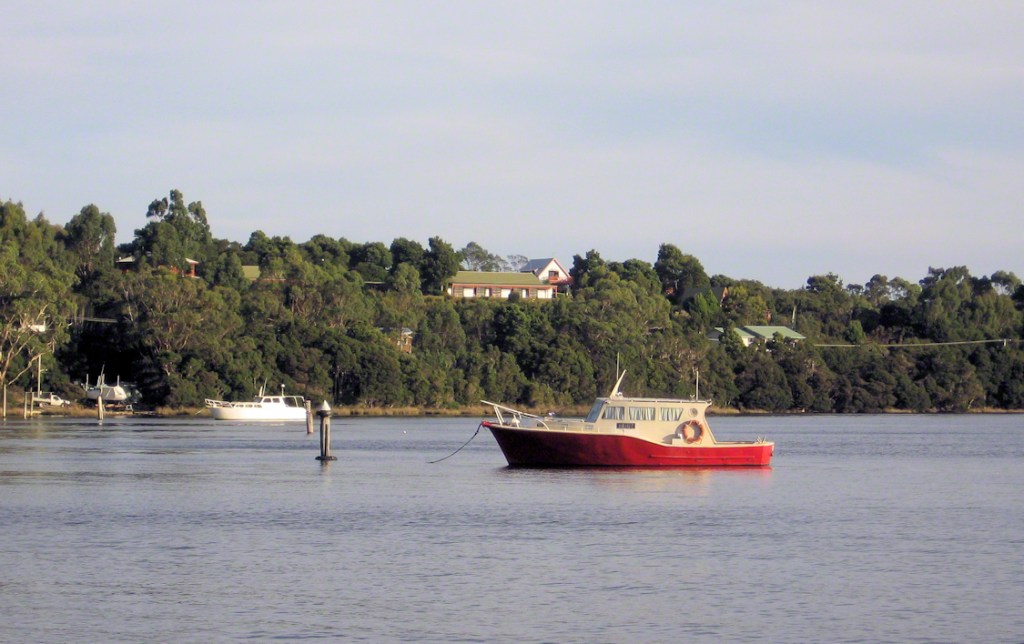
Feature Photo: Sleeping Beauty over Huon River © L.M. Kling 2016

***

Sometimes characters spring from real life,

Sometimes real life is stranger than fiction.

Sometimes real life is just real life.

Check out my travel memoirs,

And escape in time and space

To Central Australia.

Click on the links:

The T-Team with Mr. B: Central Australian Safari 1977

Trekking with the T-Team: Central Australian Safari 1981

Or for a greater escape into another world…

Check out my Sci-fi/ dystopian novel,

And click on the link:

The Lost World of the Wends

Final Trek Friday–T-Team Next Gen

Woomera, Then Home (part 2)

[I never actually finished the story of the T-Team, Next Generation’s adventures in Central Australia in 2013. So, here is the final chapter in the series. Next month, I will commence the journey at the beginning, as I revisit our journey to scatter my dad’s ashes in Central Australia eleven years ago.]

Woomera II and the Final Leg of our Journey

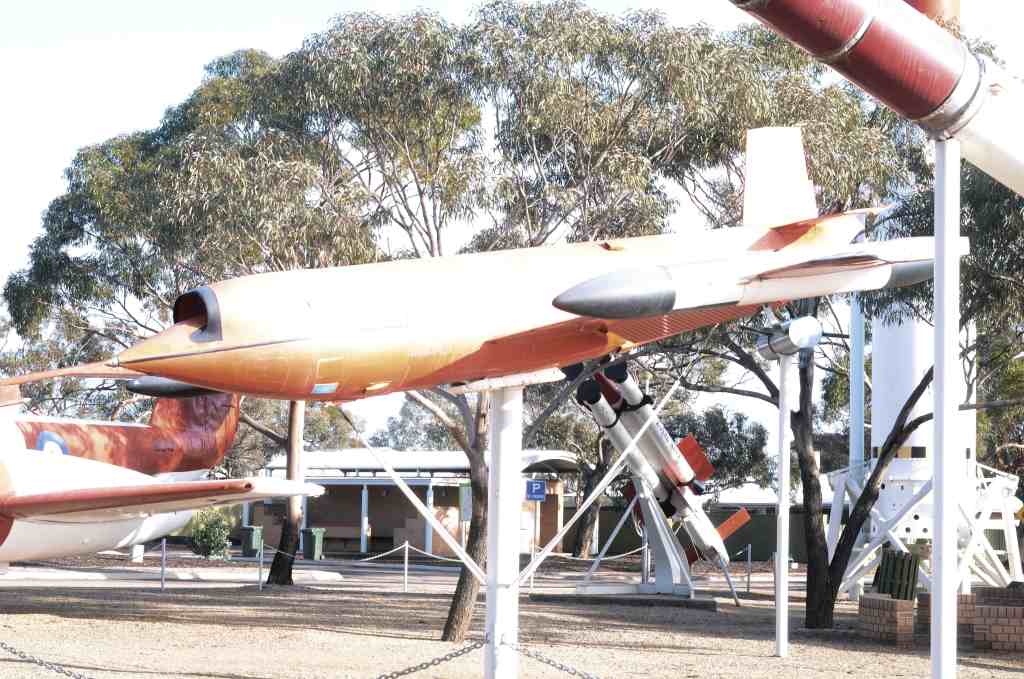
In the cool crisp morning, sun shining lemon yellow rays but not much warmth, we strolled around the Woomera Rocket Museum. Rockets of all shapes and configurations stood in the open-air, testimony of what once was. This RAAF Base and village was once a lively town in the 1950’s and 60’s, as an Anglo-Australian Cold War defence project. On this day Saturday July 20, 2013, the place seemed a mere shell of its former self, a cemetery of what once was, rockets rising like giant tombstones to the sky.

We meandered around the rockets, reading signs, eulogies from the past when threats from enemy nations was imminent. I was reminded of older friends telling me of a time when they practised drills of hiding under their school desk in the event of enemy attack.

*[Photo 1: Monument, A Rocket at Woomera © L.M. Kling 2013]

My mother recalled when on February 19, 1942, Darwin was bombed. She was a girl in Hermannsburg at the time and whenever a plane flew over, the Aranda women would wail, fearing disaster.

*[Photo 2: Twists and turns © L.M. Kling 2013]

Now, Hermannsburg was a mission set up by German missionaries in 1877. Although, by the 1940’s the mission was fair dinkum Australian having existed in Australia for all that time, with the advent of World War II and the conflict with Germany, the name, being German, raised the suspicions of the Allies. Hence, Mum remembers British Officers* drove into Hermannsburg to check the place out. They had to make sure there were no German spies. My grandpa, Pastor Sam Gross and his wife (my grandma) hosted these officers and put on a lovely spread of lunch for them.

[Photo 3: The Hermannsburg welcome Spread © C.D. Trudinger circa 1955]

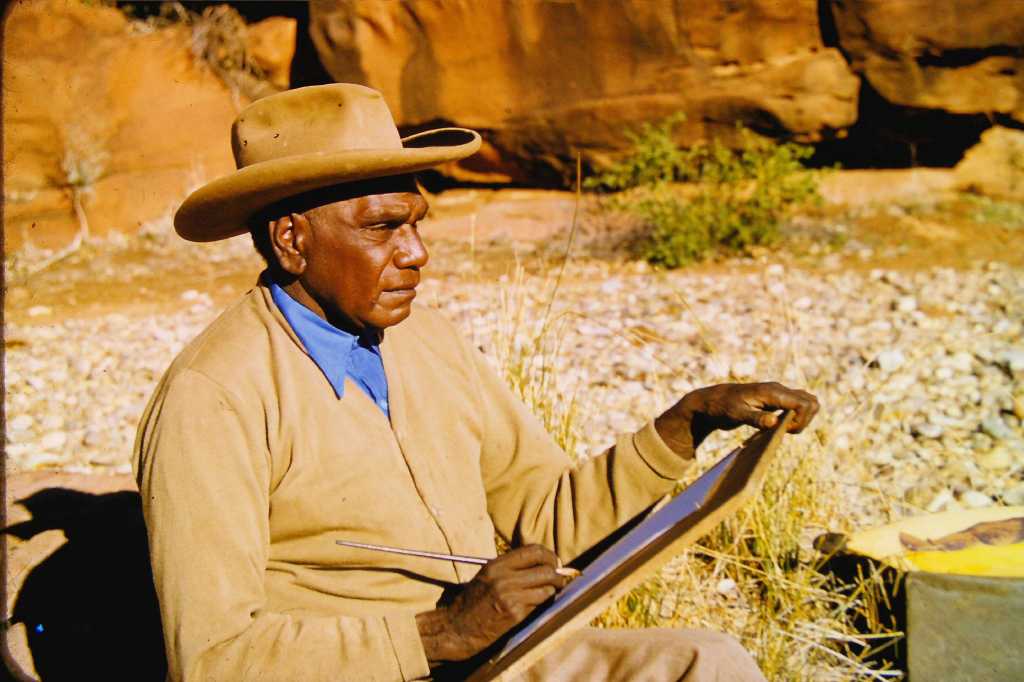
After investigating any mitigating threats, the British Officers* drove away in their propeller plane satisfied that Hermannsburg was no threat. Never-the-less, they confiscated the one and only link to civilisation, the community pedal radio. Just in case they really were spies, I guess. Further, to make sure that no threat to the allies arose from this humble mission, they sent Rex Batterbee, a world War I veteran, to oversee the mission in the role of “protector of the aborigines”. As he had visited and then lived in Central Australia since the mid-1930’s, Rex taught Albert Namatjira to paint watercolours and helped him launch his career as a renowned artist.

*[Photo 4: Albert Namatjira at work © S.O. Gross circa 1950]

Homeward Bound

Needless to say, in 2013, such threats of foreign enemies seemed in the distant past. But, being only 446 km from our home town, Adelaide, we were reluctant to linger amongst the rockets. Having packed, and checked out of our overnight accommodation, we were eager to start our journey home.

At a steady 90 km/h, we made progress down the highway that split the gibber plains in halves.

‘I bet the T-Team (my brother’s family) are home by now,’ I said. ‘No hanging around of taking time to look at any more places for them.’

‘Why don’t you ring them just to see where they’re at,’ my hubby said.

I texted my niece. The time was 10:30am.

“We are in Port Augusta,” she replied by text.

‘There’s no way we’ll catch up to them,’ I said, and then texted back, “Have a safe trip home.”

*[Photo 5: Off we go over the gibber plains © L.M. Kling 2013]

Clouds and rain descended on the land the further we drove south. By the time we reached Port Wakefield, the cold had seeped into the car. I put my parka on my legs to keep warm. Yet, for lunch Hubby insisted we eat alfresco in the rotunda at Port Wakefield. After all, despite his aversion to the cold, he needed to stretch his legs. Plus, it seemed no café existed in the town.

The rain and cold became more intense as we approached Adelaide. After driving through the grey, sodden streets, we arrived home, just as darkness fell at 5:30pm.

What disaster awaited us?

Hubby opened the door and we trod inside. Son 1 played a computer game on the PC in the dining/living annex. He ignored us. We tiptoed through the family room. Not too much mess and the carpet remained visible, and clean.

We found Son 2 all rugged up and cosy in his room playing World of Warcraft. He said, “Hello” and then asked for a coffee, then followed the conversation up with, “I’m hungry, what’s for tea?”

In the kitchen, as I prepared a drink, I noticed the dishes had been done and the cats fed. I thanked Son 1 for the effort. He took all the glory and remarked that his brother had done nothing.

The Aftermath

There’s always casualties that follow every holiday. And this one was no different. Two paintings which I had planned to exhibit in the upcoming Marion Art Group exhibition had gone AWOL. I’d like to think they were stolen…but I reckon they would be found in some odd place sometime in the future.

*[Painting: Dad’s resting place, Ormiston Gorge © L.M. Kling 2018]

Eleven years hence as I write this final chapter, I wonder what paintings they were.

Oh, and the other casualty, Hubby, who proudly exalted that he had taken thousands of photos of the Central Australian trip on his mobile phone, can no longer find where those photos went. It would seem those photos went AWOL too.

As for the T-Team, they actually arrived home after us, having spent a night at Port Germaine. They decided to treat themselves after roughing it for the past two weeks.

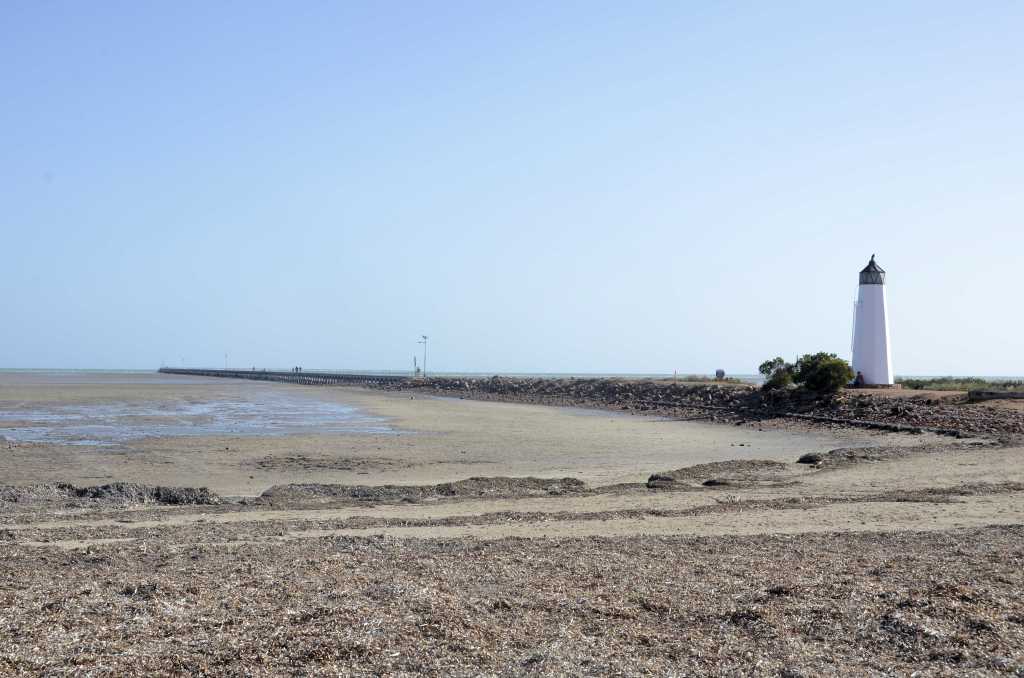
*[Photo 6: Port Germaine Jetty © L.M. Kling 2024]

***

Note: *My mum, Mrs. T checked this and questioned whether they were British. She thinks they were more likely to be Australian. However, I have read a letter written by these officers and the words they used made them sound British. When I find the letter, I will investigate the background of the visiting officers and plan to write a more detailed account of my grandparent’s experience.

© Lee-Anne Marie Kling 2024

Feature Photo: Woomera Open-air Museum in the morning © L.M. Kling 2013

***

Want more? More than before?

Take a virtual trip with the T-Team and their adventures in Central Australia.

Click below on…

The T-Team with Mr. B: Central Australian Safari 1977

Trekking With the T-Team: Central Australian Safari 1981…

To download your Amazon Kindle copy of the story…

And escape in time and space to the Centre of Australia.

Friday Crime Fiction–Under the Bridge (2)

[A continuation of my foray into crime writing]

Chapter 1

Part 2

UNDER THE BRIDGE

The Guilt of Omission (part 2)

Saturday June 27, 1980

2pm

Hiking Trail enroute to Mt. Lofty

Lillie

Raindrops stung the frozen tips of Lillie’s fingers. ‘There’s no way I’m staying it’s raining, now,’ she said rubbing her numb digits then taking a few steps along the path. The further she could get from her guilt the better. No one need know. But what if they found out? What if Fifi showed the necklace and the detectives linked her to the man’s death?  Lillie trembled. She’d never get a job, a boyfriend; she’d lose everything—possibly even her freedom.

Fifi blocked her. ‘There’s a cave. You can shelter in that.’

‘What?’ Lillie recoiled. ‘With the body?’

‘It’s dead – just bones, it can’t harm you,’ Fifi said.

‘I’ve got a bad vibe, man! Bad vibes.’ Jimmy paced back and forth, swaying his flowing locks. ‘I’m not staying.’

‘I won’t be long, just thirty minutes at the most.’ Fifi stomped further up the track. The rain intensified, drops pummeling their parkas. She whipped around and pointed at Lillie and Jimmy. ‘You two stay here!’

‘No!’ Jimmy strode a few steps towards her and stopped. ‘Look, I really have a bad feeling about this.’ He looked back at Lillie.

[Photo 1: Ice-Sculpture, Hokkaido © L.M. Kling (nee Trudinger 1985]

Lillie froze to the spot like an ice-sculpture. A flock of black parrots shrieked above in the violet clouds. The birds dipped and whirled on the wind currents. Fifi’s words rang in her head. You have to tell. She knew deep in the emotion curdled base of her stomach, no one would miss that man, that horrible man. Wasn’t my fault, he deserved it. She reasoned and focussed on Jimmy shaking his pink fist at Fifi. The parrots circled above their heads, and as if bored with the rain, darted in formation south. With a dull throb of resignation, Lillie made her decision. ‘I’ll go,’ she said. ‘Fifi, Jimmy, you stay here.’

‘I’ll come with you, Lillie,’ Jimmy offered.

‘No, it’s alright. Fifi looks brave, but she needs company,’ Lillie said.

Lillie forced her stiff legs to move, one foot in front of the other, each step she believed closer to a life with no future; her living death. She paced through the driving rain, down the path by the falls leading to the carpark below.

Lillie hopped in the car and hurtled down the winding road to Greenhill Road and then home. She had no intention of reporting to police. What if they suspected her?

[Photo 2: Home in a beachside suburb of Adelaide © L.M. Kling 2006]

7 Months later…

Mum was out cold, stone asleep on whiskey and an afternoon of television serials. Good, Lillie thought as she rushed to her room, pulled her sports-bag from under the bed, collected two drop-waist dresses, a pair of jeans and large tee-shirt from her wardrobe and stuffed them in the bag.

‘Bad timing,’ she muttered.

Winter had rolled into spring, exams, end of school celebrations and choices made that she had begun to regret. Like the body of that man, her friends’ father, who festered just beneath the surface of her conscience, another secret silently grew…

But she didn’t want to spoil Christmas, then New Year and plans for travel and seasonal work in Tasmania. She’d missed three periods.

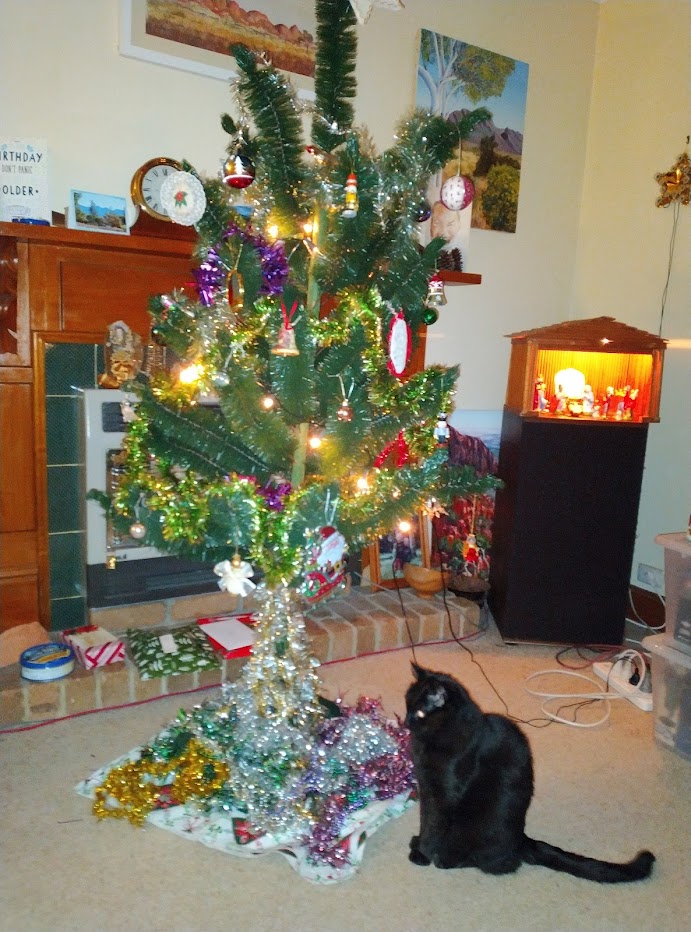
*[Photo 3: Christmas Tree © L.M. Kling 2023]

 She fobbed off her friends telling them, ‘Yes, I did go to the police, but…you know, they have to keep it under wraps so as to not scare off the killer.’

However, she knew they’d figure it out and her image would be ruined. Francis Renard, the man involved in her bad choices and situation, wouldn’t want her in that condition. And she wouldn’t want him till death do us part—he was too much like her dead-beat father who abandoned the family long ago. She had to get away.

She moved the bed and pushed her fist through a hole in the wall; a hole hidden by an old Sherbert, the band, poster. She fished around before latching onto a small tin and pulled it out. Lillie opened the tin and then scraped out the notes and coins. ‘I have a ferry to catch,’ she said as she inserted the money into her purse. ‘All I wanted to do was have a quiet life with my friends. How dare that creep rear his bony head.’

*[Photo 4 and feature: The crimson rose © L.M. Kling 2006]

She sat down at her desk, picked out a pale pink sheet of paper. She wrote, taking care to avoid the crimson rose in the corner:

‘Dear Fifi and Jimmy,

I have to go away for a while. I have a job in Tasmania. None in Adelaide, ha-ha.

I went to the police station again and reminded them of the bones under the bridge. The nice policeman took down my details—AGAIN! and accepted my statement and said he’d deal with it. So don’t worry, it’s in the hands of the police. They are going to keep it quiet because they already have their suspicions who did it, and they don’t want to scare them off. They reckon they’re getting close. So don’t tell anyone, promise, please.

Take care of yourselves. And look after my brother, Sven while I’m away. I will miss you, my friends.

Love,

Lillie.’

*[Photo 5: My black cat, Storm standing in for the fictional Moe © L.M. Kling 2024]

Lillie sealed the letter in the envelope and pressed the stamp of the queen in the top right-hand corner.

Moe, her black cat scuttled under the table as Lillie raced past and out the door. She headed for the cream and red Kombi parked around the corner at the end of her street. A man with dark curls and a pair of square, black-rimmed glasses, opened the passenger door. ‘Are you ready for a road-trip to Melbourne?’

Lillie panted and then caught her breath. ‘Yes, Francis,’ she said as she scrambled in. ‘Just need to drop by the letter box.’ She stared at the letter addressed to Fifi and Jimmy Edwards. She had another one for Francis Renard. And her mum and Sven, of course. She left that note on the kitchen table.

She planned to travel on the ferry from Melbourne, Victoria to Devonport, Tasmania, alone.

[…continued in a fortnight]

© Tess Trudinger 2024

*Feature Photo: The Crimson Rose © L.M. Kling 2006

***

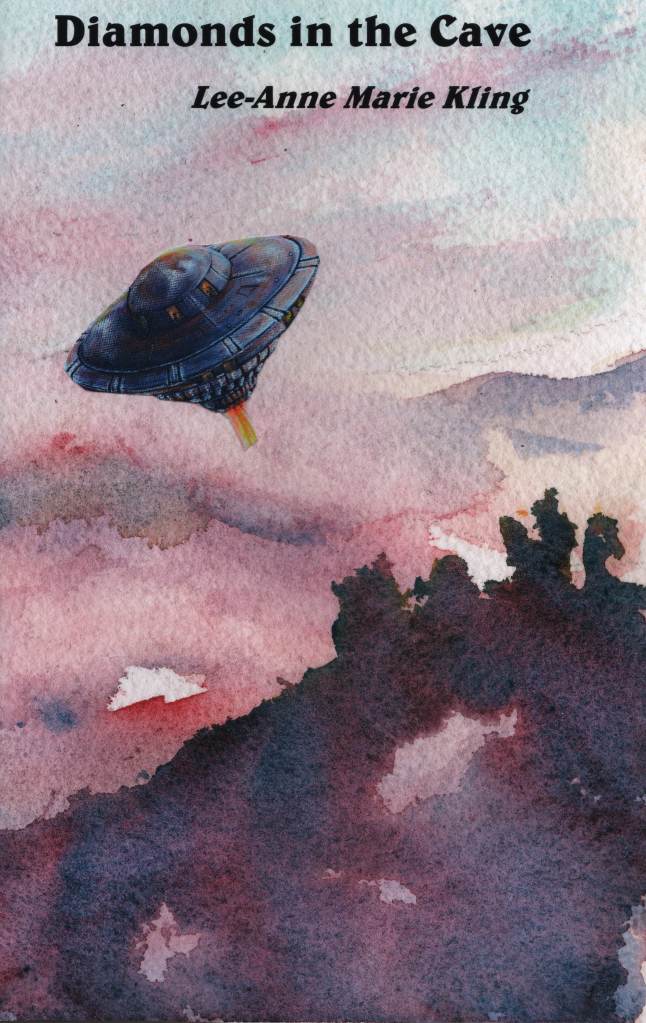
Check out my other writing project, a speculative novel, Diamonds in the Cave on Wattpad.

The Wends, they were such a gentle group of people…until someone put it in their heads that there were witches amongst them…

Want to find out more? Click on the link to my story on Wattpad,

Diamonds in the Cave.

Family History Friday–Detective Work

In the steps of Sherlock Holmes

This last week, Hubby and I have received our DNA results. Dear Hubby received his last Friday, but mine only arrived today.

So, the last week I have been familiarising myself with the process and slowly building our family trees. Early on, I discovered a truth, you could say a “skeleton” in one of our ancestral lines. I added the details to see if anything further came up. My Heritage, call this a “smart match”. Nothing did, but I left it there.

For certain family members this truth appeared absurd, and too difficult to comprehend. Surely, that ancestor wouldn’t. Didn’t. Noone told us that. You have it all wrong, Lee-Anne.

Hence, Lee-Anne (me) being a good person only wanting the best for the family, deleted the suspect members from that branch of the family.

Then, curiosity set in. Who was that ancestor’s mother? Father? My husband suggested we go down the line to the descendants and put in a particular name.

This I did.

You wouldn’t believe it, but the same results, only this time verified by the official birth and marriage records. My original hunch had been correct. Moreover, in the spirit of Sherlock Holmes, I managed to crossmatch the added, yet odd family members with DNA and behold, a match.

Now, the reason I’m being so vague about the whole ancestral situation, which I might add, is responsible for our existence, is because out of respect for some people, the details of such conceptions are to remain private/personal; too personal to be published.

Isn’t it interesting that for people who want to protect their reputation, the unacceptable behaviour of other members of their family, ancestors or close relatives, must remain hidden, buried and plainly, not discussed. Such individuals may even be ostracised from the family.

Yet, such flawed individuals can still be, in other circles, a valued and much-loved member of the community.

My dad’s cousin, Dr. Malcolm Trudinger for instance. The story goes that he had a problem with alcohol. Legend has it that he couldn’t do surgery without a nip or two before the operation.

Malcolm’s alcohol addiction was too much for his immediate family who it would seem distanced themselves from him. Maybe it was the other way around and he felt not good enough for them. Whatever…

According to articles about Malcolm on Trove, he was regularly in trouble with the law. Infractions that in the 21st century, we’d consider a nuisance, or minor, but in the 1940’s and 50’s were serious. For example, his car engine making too much noise at night in town. Or even one time, merely driving his car late at night. Another time he was charged for making a scene at a function.

Despite these misdemeanours, as I see them (glad my brother and I didn’t live in those times—my brother loved doing “donuts” and “burnouts” in his car like in Top Gear at night with his mates in his youth), the folk on the West Coast of South Australia, loved Dr. Malcolm Trudinger. He was their hero. He once helped rescue people from a shipwreck off the coast during a storm. He cared and was always there for the sick and injured.

I remember my mother telling me the story how a person upon meeting my father, and learning his name was Trudinger, sang high praises for his cousin Malcolm. The sad thing was, that although he was still alive when Mum and Dad were first married, Mum never got to meet Malcolm.

[Photo 1: Dr. Malcolm Trudinger © photo courtesy of L.M. Kling circa 1930]

Dr. Malcolm Trudinger was such a vital part of the West coast community, they established a rose garden was in his honour after he died in the early 1960’s. We have heard that rose cultivation was his passion and his roses were prize-winning. My niece discovered the garden when she and her partner were on a road trip passing through Elliston. She couldn’t have been more chuffed having found a Trudinger with a rose garden to his name. It showed Malcolm was a loved member of the community despite his demons.

This is what, I believe, grace is all about—valuing and loving people as they are. We are all flawed. Rather than hide the imperfections, celebrate the person, their life and goodness they bring or have brought to the community. It’s our pride and wanting to look good to others that makes us cover up our sins or those of our kin. But also, we may be protecting their reputation too, which is a reasonable thing to do.

The reality is, we are all fallen and we all struggle. No one is perfect. We are all cracked pots. Yet like in the Japanese art of Kingsugu (the repairing of broken pots), there is beauty that shines out through the cracks.

And so, it is with our imperfect ancestors. When you think about it, it’s the ones whose stories are different and colourful that we find most interesting.

© Lee-Anne Marie Kling 2024

Feature Photo: Hubby as Sherlock Holmes, Reichenbach Falls © L.M. Kling 2014

***

Want more, but different?

Check out my Central Australian adventures.

Click on the links:

The T-Team with Mr. B: Central Australian Safari 1977

Trekking with the T-Team: Central Australian Safari 1981

Friday Fiction–Under the Bridge

[Hey, I had planned a profile of an ancestor, but somehow time got away and it never happened. Still more digging and researching must be done. So, in the meantime, here’s the beginning of my attempt at Crime fiction. (I stress that the following tale is fiction, the characters are fiction, and I’m writing under the name of my alter-ego/crime-fighting name, Tessa Trudinger). I’d love to know what you think as I tackle this challenge to develop my Detective Dan series.]

Chapter 1

Part 1

The Guilt of Omission

Saturday June 27, 1981

2pm

Hiking Trail enroute to Mt. Lofty

Lillie

Fifi’s voice echoed through the steep gully, ‘Hey, what’s this? Some cow carcass!’ The blackberry bushes around her rustled in the icy breeze. ‘Come on, Lillie! Have a look! It’s gross! I nearly slid right into it.’

Lillie brushed past the liquorice plants and tottered down the slippery clay of the embankment. ‘I really don’t want to see a dead cow.’ She held out the billy while hunting for clear running water from the storm water pipe. ‘I hope the water’s not diseased.’

‘Nah, you’ll be right.’ Fifi poked her auburn curls above the bush and beckoned. ‘Looks like it’s been there for years – it’s just bones.’ Her russet crown disappeared. ‘Just wait.’

Lillie stepped forward. The clattering of the stream over stone was louder here. She stood still and drew in the sweet, scented blend of rain-soaked eucalypt, liquorice and mud. The aroma awakened a memory. I’ve been here before. She thought. The sun’s golden rays parted a curtain of thick cumulous clouds, causing the droplets on the leaves to sparkle like a million diamonds.

‘Hey, Lillie! A chain.’ Fifi held up a blackened necklace, a tear-drop pendant with a quartz stone shimmering in the light. The hand and chain vanished behind the tangle of mint-coloured leaves and thorny branches. ‘Just a minute.’

Lillie’s heart galloped, slamming against her rib cage as if in a desperate attempt to escape. She wanted to run, straight up the hill back to the campsite, back to the comfort of the fire and Jimmy Edward’s, arms. No, that wouldn’t be proper. He’s just a friend. Fifi’s brother. Her legs turned to jelly and froze. ‘What?’ She squeaked through a constricted throat. She had been here before. Summer, five years ago when she was twelve. The landscape dusted in tan and yellow. The moist green of mid-winter had lulled her into a false sense of ignorance.

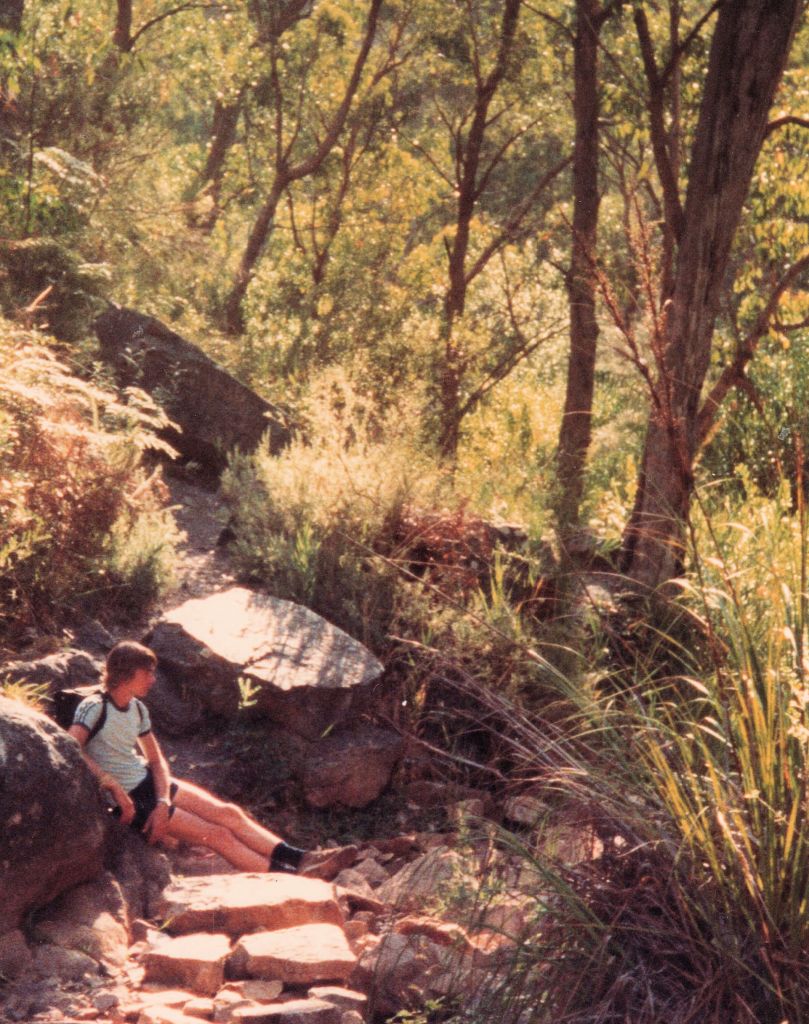
[Photo 1: Resting enroute to Mt. Lofty © L.M. Kling (nee Trudinger) 1983]

A scream pierced the winter silence. ‘Oh, my God!’ Fifi ripped through the tangled bush, her freckly face flushed and green eyes wide as saucers. ‘It’s not a cow! It’s – It’s…’

‘What?’ Lillie rasped puffing out plumes of breath into the frigid air. Blood rushed through her head, roaring, while remembering the hike she preferred to forget.

January 1975: She’d only gone to the creek to fill her canteen. On a 38-degree Celsius day, hiking with her friends, the same friends plus her brother Sven, she was thirsty and needed water; they all needed water. That day Fifi had already fainted from dehydration. What was the harm in getting water from the storm water drain? What was his problem? That man?

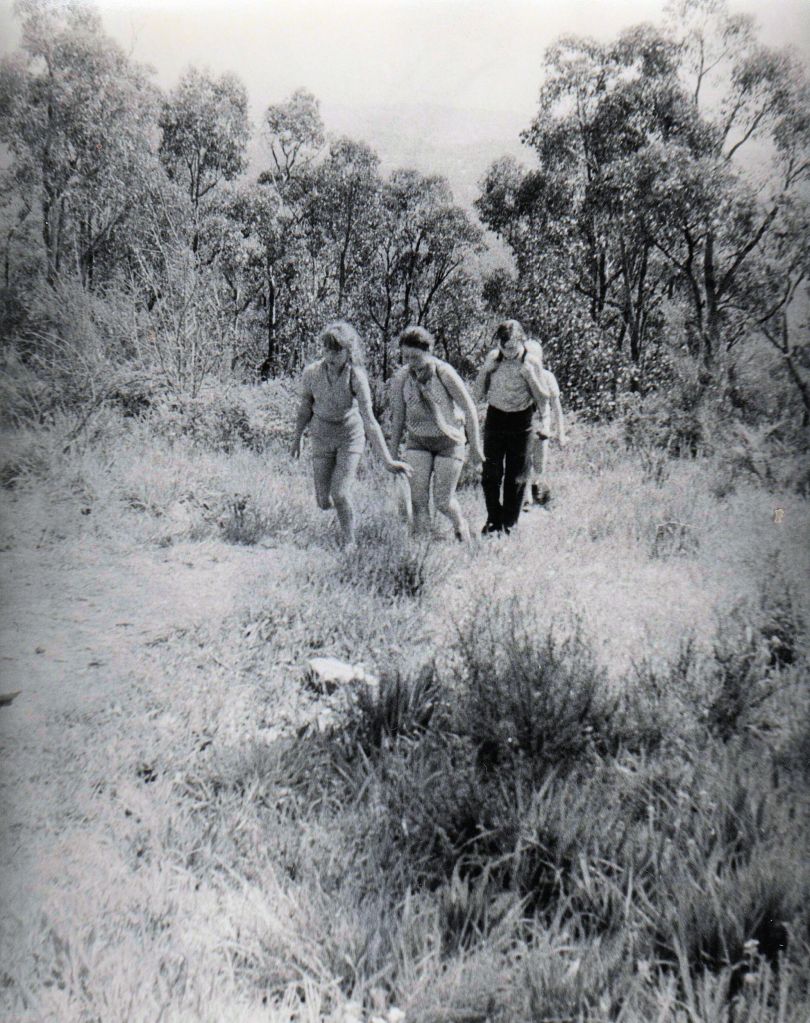
[Photo 2: Hiking with school friends up to the summit of Mt. Lofty © C.D. Trudinger 1969]

‘Human!’ Fifi announced.

At that single word, the ball of anxiety swirling into Lillie’s chest converged in the sickening centre and dropped, thudding to the base of her stomach. ‘Oh, dear!’ she said as a blizzard of shock swept over her mind blanking out any thought.

Fifi scrambled up to Lillie and grabbed her hand ordering her to see the skull, commanding her to check out the leather coat, demanding she follow her to under the drain bridge to view the grisly find. Her best friend pulled her down to the creek, to the cavity under the bridge, her body meekly following like a frightened lamb to the slaughtered, her mind viewing the sequence of events as if from above in the clouds.

At first the sight before her resembled a side of beef at the abattoir, except the remains of him lay half sheltered at the base of the sand-stone bridge, and melted into years of silt, moss and sour-sobs. The leather hide of dry skin had sunk into the ribcage, and a disjointed hand of bones reached into the subterranean cave.

That time, when she was twelve, Lillie intended to explore up the creek in search of water. She thought she heard the water rushing. She was sure she did. The creek proved disappointing. Just a trickle. The hot northerly breeze had gypped her. She listened. A faint mewing. A kitten? A poor little kitten mewing from further up. Tracking through the dry creek bed crowded with brittle sticks of shrivelled saplings and prickle bushes laden with green unripe berries, she discovered the man-sized drainpipe. Water dribbled out into a stinky puddle surrounded by a cracked clay pan and rocks, broken tree branches and salt bushes caked in white like plaster of Paris. The kitten’s cries echoed in the black hole that penetrated deep into the hillside.

‘There you are! Ripe for the picking.’ A man’s hot breath stung the back of her neck. Cold hard metal gouged into her shoulder-blade. She turned and caught the look in his eyes, glazed, pupils dilated. He looked like a hungry wolf.

Lillie pushed him away and ran, scampering up the slope like a frightened rabbit.

[Photo 3: Calmer times resting by the creek at Waterfall Gully © L.M. Kling (nee Trudinger) 1986]

‘We have to tell the police.’ Fifi stared at the coat of membrane and bones.

‘Why?’ Lillie patted her straight blonde hair. She remembered his boots thumping after her.

‘Cos it’s the right thing to do.’

[to be continued…Friday fortnight]

© Tessa Trudinger

Feature Photo: Waterfall Gully © L.M. Kling 1996

***

Sometimes characters spring from real life,

Sometimes real life is stranger than fiction.

Sometimes real life is just real life.

Check out my travel memoirs,

And escape in time and space

To Central Australia.

Click on the links:

The T-Team with Mr. B: Central Australian Safari 1977

Trekking with the T-Team: Central Australian Safari 1981

Or for a greater escape into another world…

Check out my Sci-fi/ dystopian novel,

And click on the link:

The Lost World of the Wends

Trekking Thursday–Franklin-Gordon River Cruise

[Last week, Hubby and I were talking to someone who had recently visited Tasmania. They went to Strahan, but for some reason didn’t do the Franklin-Gordon river cruise. We recommended that next time they go to Tassie, they revisit Strahan and do the cruise. Hence, to encourage prospective travellers to Tasmania, a re-visit in my blogs to Strahan on the West Coast of Tasmania. Ah, memories of travels with my husband, his brother (P1), and cousin from Switzerland (P2), to Tasmania; a brilliant and beautiful destination.]

K-Team Adventures—Strahan and Gordon River Cruises

An early start, just what the K-Team love. We were to board the Wilderness Cruise Boat by 8.45am. Not as early as the last time I took the cruise. Then, in 2011, I journeyed with my mother (Mrs T), for whatever reason, the ship departed much earlier than 8.45am. Fearing we’d miss the boat, Mum and I rose at the crack of dawn and ate our breakfast at a hotel opposite the wharf while watching the sun rise on the calm waters of Macquarie Harbour; an oil painting in hues of gold and pink with ducks on the jetty. Mum’s breakfast of Eggs Benedict was less than perfect; uncooked, runny and the “whites” not white. She’s never had Eggs Benedict again. I guess there had to be some compensation for the ideal weather we had that August day in 2011.

[Photo 1: Calm on Macquarie Harbour before Eggs Benedict © L.M. Kling 2011]

Not so for the K-Team in 2016. A perfect mix of personalities, no conflicts—apart from some initial altercation between my husband’s phone GPS navigator and the Kluger’s Pandora navigational system. Now that was something out of the box, so we packed away any semblance of pairing our phones with the car’s computer system and relied on the navigational system God had given us—our brains…and some forward planning with Google Maps. So, instead we had the weather as our thorn-in-the-side member of the K-Team. At least someone up there, I mean God, had been looking after us.

[Photo 2: Sign of weather come. A hiking trail in Hogarth Falls near Strahan © L.M. Kling 2016]

When we booked our cruise, the lady asked us, ‘Do you want to go on the ABT Railway up to Queenstown?’

‘How much?’ I asked.

The lady showed the prices.

‘What time does it get back?’

‘Oh, 5pm.’

‘Nah, we’re meeting my cousin at 4.30pm. So, we’ll take the cruise.’

A narrow escape. We heard that night while dining with my cousin, Kiah who at the time ran the Strahan Visitors Centre, that fallen trees on the railway track had stranded the tourists on the train for several hours. They arrived back in Strahan at 8.30pm. The next day, on the cruise, Kiah overheard some girls who had been on the train trip say they were going to write a reality TV show about bored kids.

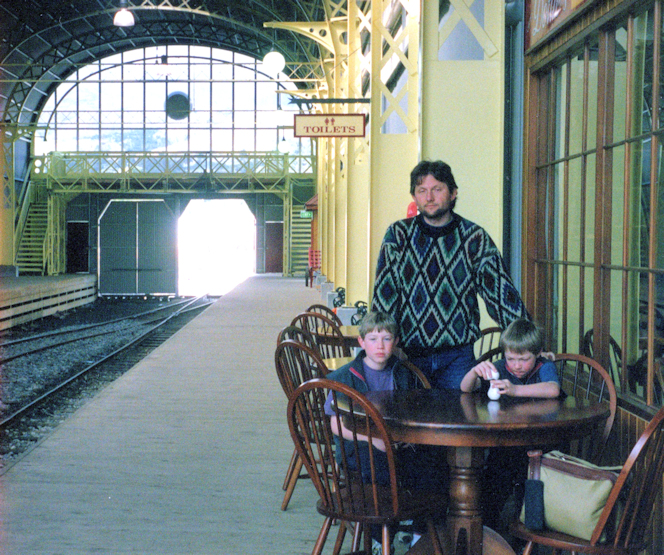
[Photo 3: Thankfully, not stranded at Queenstown; ABT Railway Station with K-Team, the younger way back when…Looks like my kids can get bored at Railway Stations too. © L.M. Kling 2001]

The cruise, definitely not boring. First a ride out through the narrow heads and into the full force of the roaring 40’s and rough seas; P2’s highlight of the Tassie Trip. Hubby was surprised I didn’t get seasick. I’d remembered to take my ginger tablets.

[Photo 4: High seas past the heads, but the birds hang on. © L.M. Kling 2016]
[Photo 5: The safety of the lighthouse © L.M. Kling 2016]
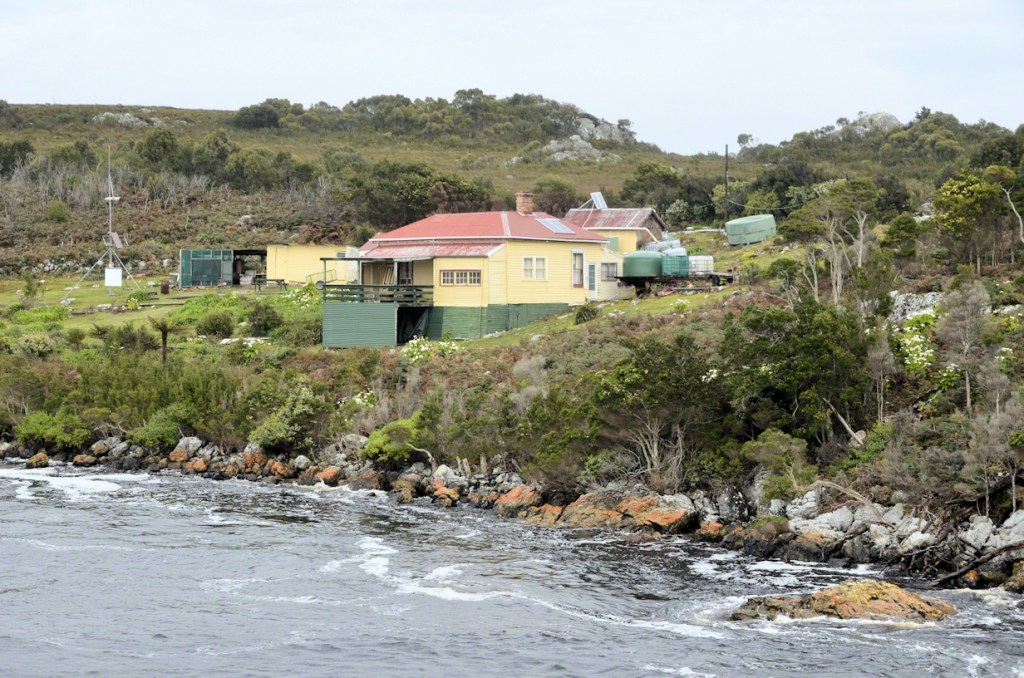
[Photo 6: The lighthouse keepers’ cottage? © L.M. Kling 2016]

Then, after returning back into the safety of the harbour, a tour of the salmon farms; big, netted rings full of fish.

[Photo 7: Salmon Farms © L.M. Kling 2016]

Kiah and her team would be our guides on Sarah Island, the worst penal colony in the whole British Empire in the early nineteenth century. We spent an hour or so on the island touring around the various sites, the tour guides giving lively and entertaining accounts of Sarah Island’s history.

[Photo 8: Sarah Island approach © L.M. Kling 2016]

Walking up the gangway, I studied the wilderness mountains jutting above the forest lining the harbour and detected the vague outline of Frenchman’s Cap, clouds shrouding it from a clear view.

[Photo 9: So different with Mrs T; Frenchman’s Cap perfect through swamped trees of Sarah Island. © M.E. Trudinger 2011]

As we raced up the river, the Captain rabbited on about Sarah Island’s convict history and then he said, ‘While we travel up the river, think about what it would’ve been like living in those times on Sarah Island as a convict.’

[Photo 9: The Lookout © L.M. Kling 2011]
[Photo 10: Mrs T contemplates while crowd listens to tour guide © L.M. Kling 2011]

I recalled the play we’d seen the night before, The Ship that Never Was; the political climate and social conditions of nineteenth century Britain that created the huge gap between the rich and the poor, unemployment and homelessness, and the solution to send shiploads of social rejects (the convicts) to Australia—the worst offenders to the most remote place on earth, Sarah Island. Yet, in all of that condemnation and hopelessness, redemption. Some of these convicts, when they received their ticket of leave (freedom), became leaders in the colony; their skills not going to waste. Treat people like they matter, give them a chance. This is how I understood David Hoy, Master Shipwright treated the convicts. I could go on, but best if you ever go to Tasmania, go to Strahan, do the cruise and see the play.

[Photo 11: Scene from the Ship that Never Was © L.M. Kling 2001]

And while we were there, clutching the mini hot water bottles loaned to us for the duration of the performance, and waiting for the play to start, the tour group we encountered the previous day, joined the audience. Some of them ended up participating in the play. So did P2 helping the ship (just a pile of wood, really) sail to close to the coast of Chile…before it…well, you’ll have to see the play to find out what happened.

[Photo 12: Perfect reflections on a perfect day up the Gordon River © L.M. Kling 2011]

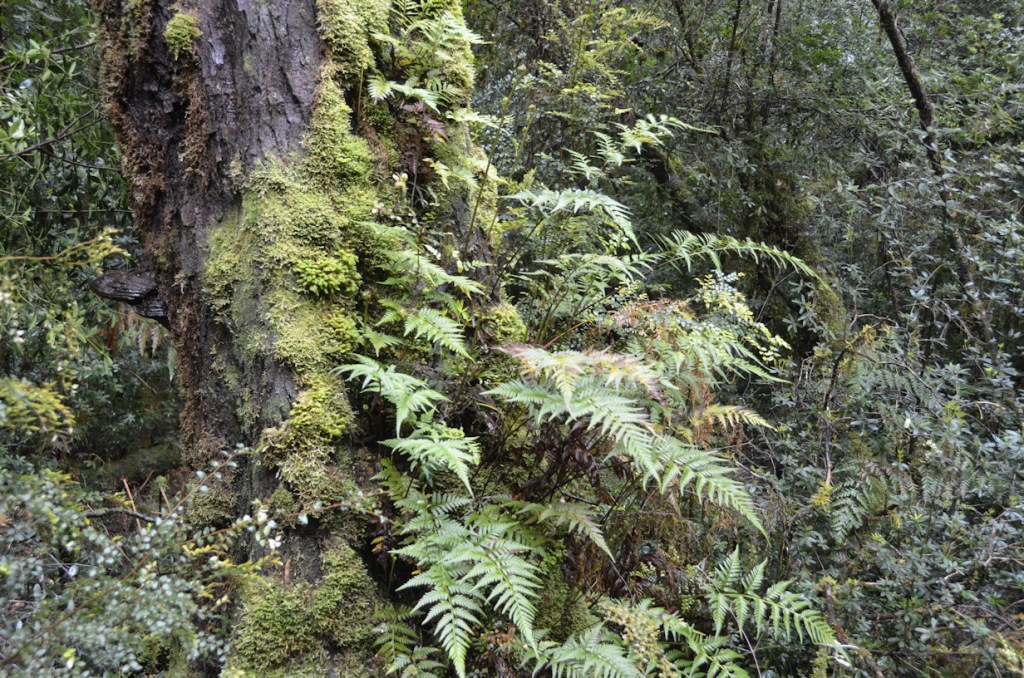
After a tasty buffet lunch of smoked salmon, cheese, bread and salad, we had a half-hour walk in the rainforest. Amazed at the variety and abundance of plant-life and how plants grow out of tree trunks and stumps. The old Huon pine stump that had been struck down by lightning a decade or so ago, was now a garden of seedlings, native laurel, moss, lichen, and ferns.

[Photo 13: New Life springs from That old Huon Pine © L.M. Kling 2016]
[Photo 14: A taste of a temperate rainforest © L.M. Kling 2011]

Then the race back to Strahan. In all we had travelled 140km on tour of the Macquarie Harbour, some way up the Gordon River and then back to Strahan.

P1 disappointed with the cloudy weather said, ‘How can I get good photos when there’s no sun?’

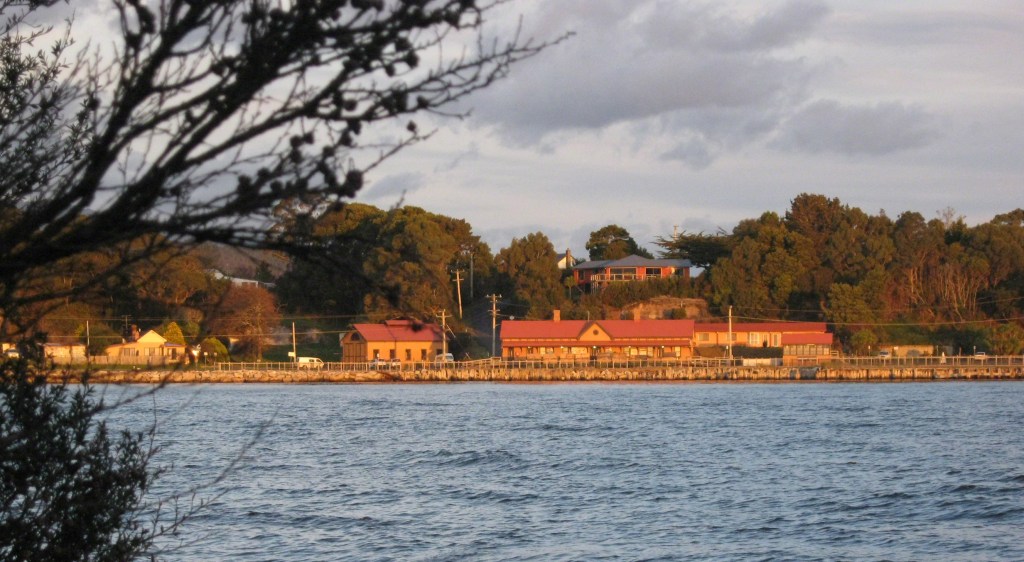
[Photo 15: And so, the sun sets on Strahan © L.M. Kling 2011]

‘They’re mood photos,’ I replied. Cheeky, I know, since in 2011, the sun shone on Mum and me, and I had dozens of chocolate-box photos of the Gordon River like glass reflecting perfectly vivid green forest trees. Oh, well. We were blessed that day in 2011. The western wilderness of Tasmania gets on average around 4000mm of rain a year. So more likely to get cloudy rainy days on a cruise than sunny, I guess.

Besides, did P1 have an Eggs Benedict like my mum had eaten that morning in 2011?

© Lee-Anne Marie Kling 2016; updated 2019; 2021; 2024

Feature Photo: Chocolate Box Reflections on the Gordon-Franklin River © L.M. Kling 2011

***

Want more? More than before?

Take a virtual trip with the T-Team and their adventures in Central Australia.

Click here on…

The T-Team with Mr. B: Central Australian Safari 1977

Trekking With the T-Team: Central Australian Safari 1981…

To download your Amazon Kindle copy of the story…

And escape in time and space to Centre of Australia 1981…

Family History Friday–The Romantic Road

Virtual Travel—Postcards: Bavaria (Bayern)

[Over our Australian summer Holidays, I have been down that proverbial rabbit-hole of family history research.


While researching the Kaiserhof Hotel Sonne in Nördlingen, which my family have claimed the Trüdinger ancestors owned for a couple of hundred years until the 1960’s, I discovered that, according to the information provided by the hotel’s website, that Goethe lived there for a year in 1788.


It’s amazing how life works and how the threads of our lives weave in and out. How our attitudes and values are influenced by how we see the world, and who we see in it. While Goethe was living in Nördlingen, Captain Cook in the Endeavour claimed Australia as belonging to Britain (as one who belonged to the British Empire would back then). And I wonder what Goethe thought of Nördlingen and my ancestors. Did he give much thought to the discovery of Australia and that someday, a little over a century hence, a descendant of those Trüdinger ancestors, or perhaps a relative who may have visited the hotel, would be emigrating to Australia with their family…erm, from Great Britain. That’s another story, suffice to say, my great-grandfather, a Trüdinger from Bavaria, was not a fan of Bismark.


Meanwhile, in 1788, a former Swiss noblewoman, Henriette Jeanette Crousaz de Prelaz (her father had died leaving the young family of mother and ten children in financial strife) relocated to the Christian community of Herrnhut. Did she have any idea that almost one hundred years later, her grandchild would marry my great-grandfather Karl August Trüdinger and relocate to Australia?
Below is our modern experience of this famous road, joining the many people who have travelled it.]

The Romantic Road

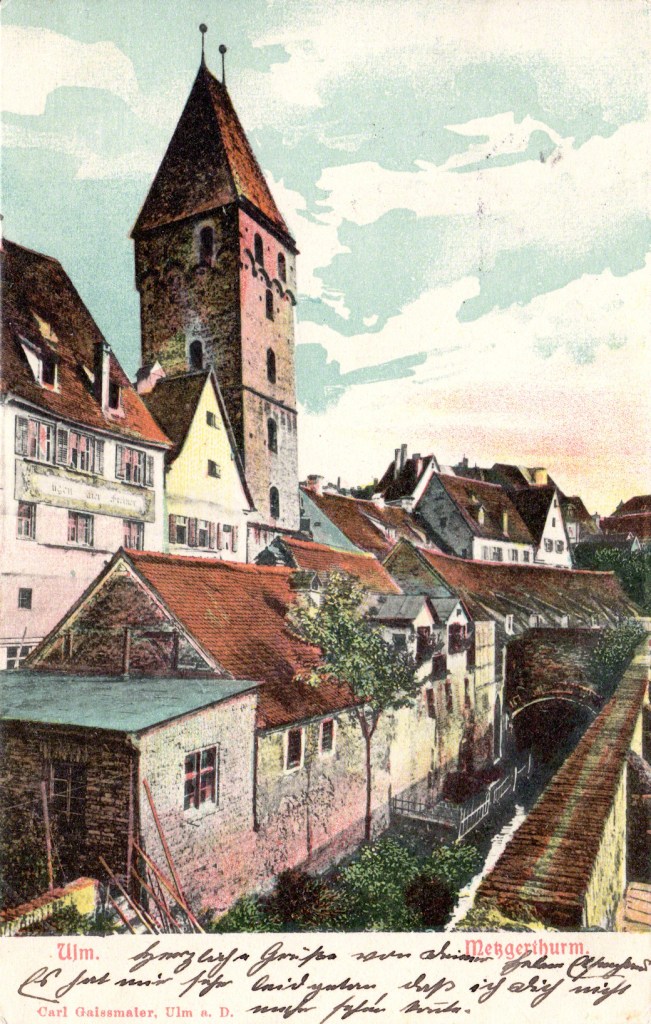
We passed through Ulm which was featured in this postcard but didn’t visit Ulm. We stayed in a town nearby called Burgau for a few days while we explored the Romantic Road. Our Tom-Tom, which we named Tomina, took great delight in leading us astray. In our quest to reach our Burgau apartment, Tomina decided to take us on a roadway that was closed to traffic.
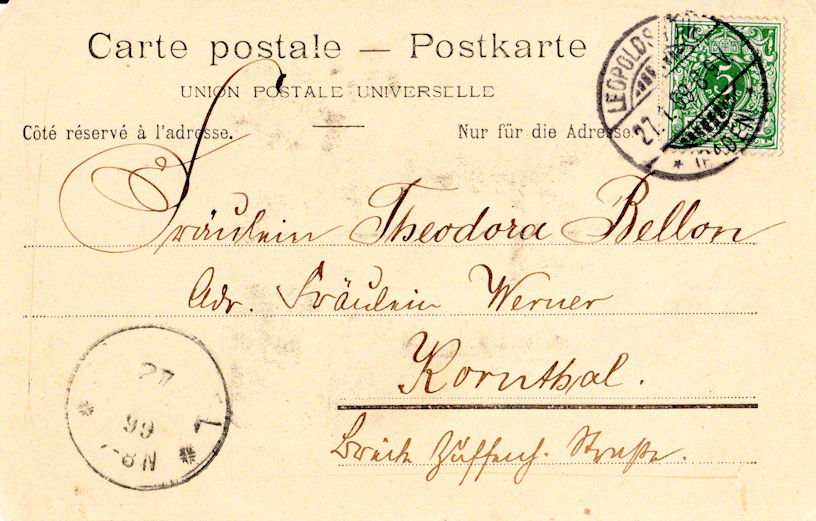
Similarly, over one-hundred years ago, this postcard chased Theodora Bellan across Bavaria, originating in Sofflingen (a town that Google maps doesn’t recognise), then Nussdorf, and finally found her in Ludwigsburg.

The Romantic Road was one part of Germany, that despite the wars and modernisation of the twentieth century, never lost its Medieval charm. A reason I so wanted to travel this road of the Romans when we travelled to Germany in 2014.

Romantic Road


The next few days we explored the Romantic Road, although Tom Tom always tried to get us on the freeway. Friday, we did Tomina’s circuits in by never obeying her commands and instead following the Romantic Road signs.
Highlights of the Romantic Road:
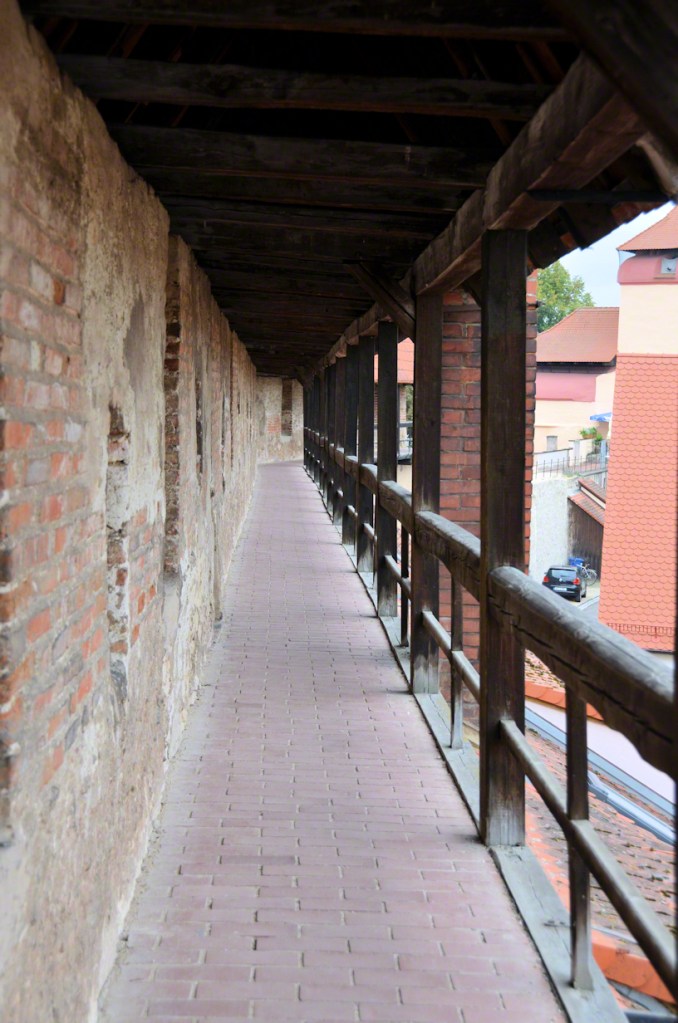
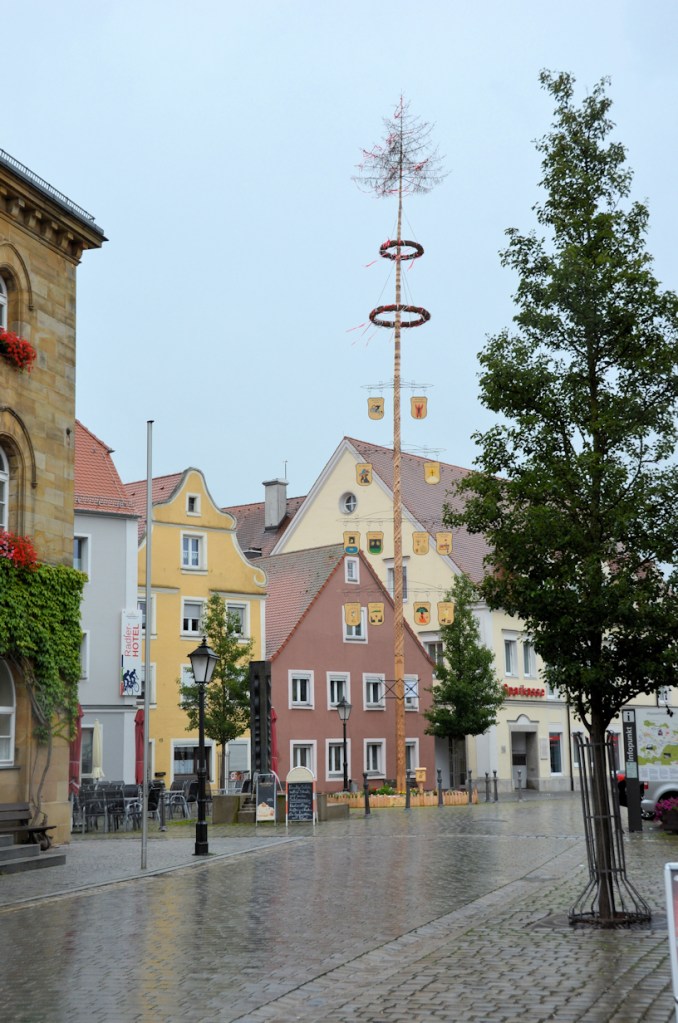
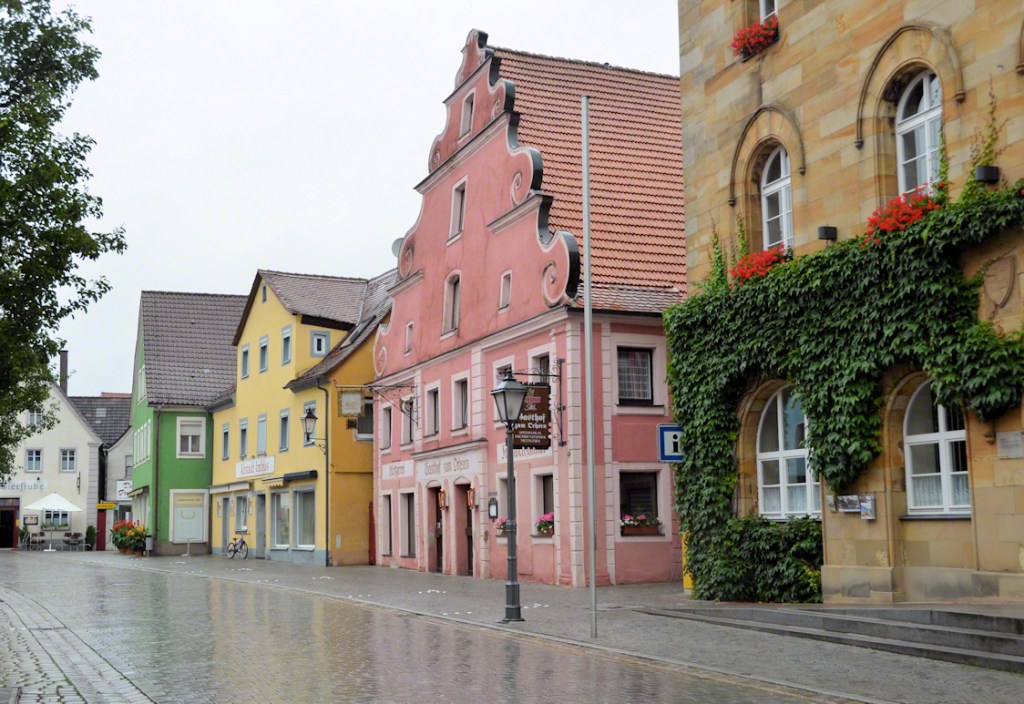
Nördlingen–the town of my Trüdinger ancestors and having lunch in the Kaiserhof Hotel Sonne restaurant which, we believe, was owned by the Trüdinger family until the 1960s. We then walked around the medieval wall. Hubby amused fellow travellers by greeting them with an Aussie “G’day”.

[Photos 1, 2, and 3 Aspects of Nördlingen, 4 & 5 Wassertrüdingen © L.M. Kling 2014]

Photo 1: Red Rooves were filmed in Willy Wonka and the Chocolate Factory.
Photo 2: The Wall of Nördlingen.
Photo 3: Kaiserhof Hotel Sonne
Photo 4: Rain in Wassertrüdingen
Photo 5: Reflections in the water of Wassertrüdingen

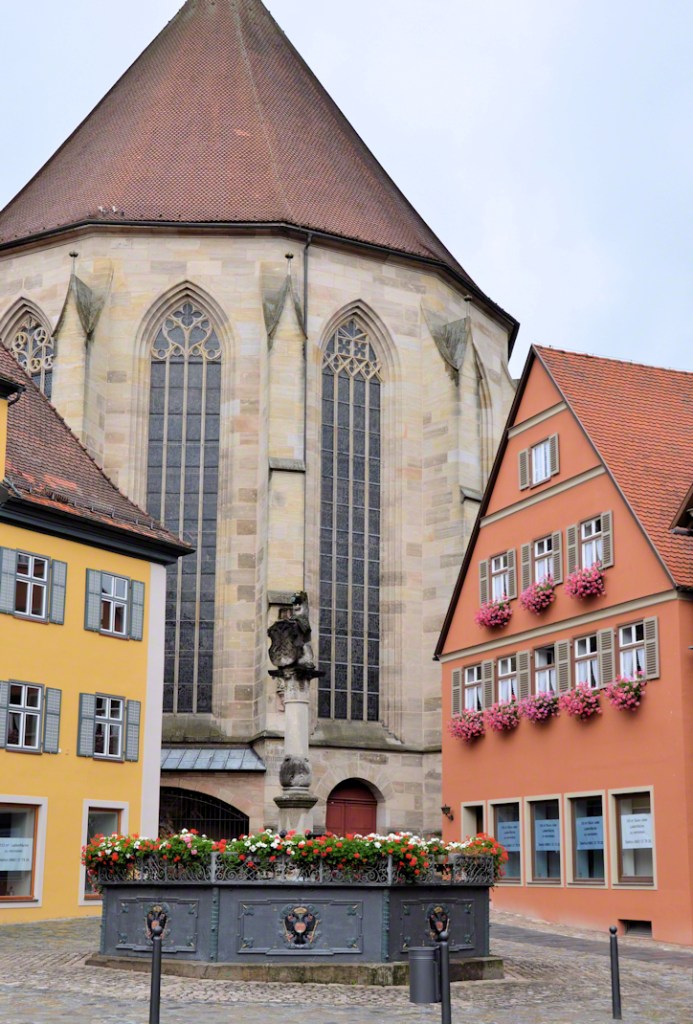
Dinkelsbuhl–the church, St. Georges Minster, the ornate carvings and artwork and the bejewelled skeleton of a martyr executed by Emperor Nero on display. And…that day, Goths and Emos aplenty.


[Photos 6 & 7: Dinkelsbuhl © L.M. Kling 2014]

Photo 6: St. Georges Minster
Photo 7: Segringer Tor

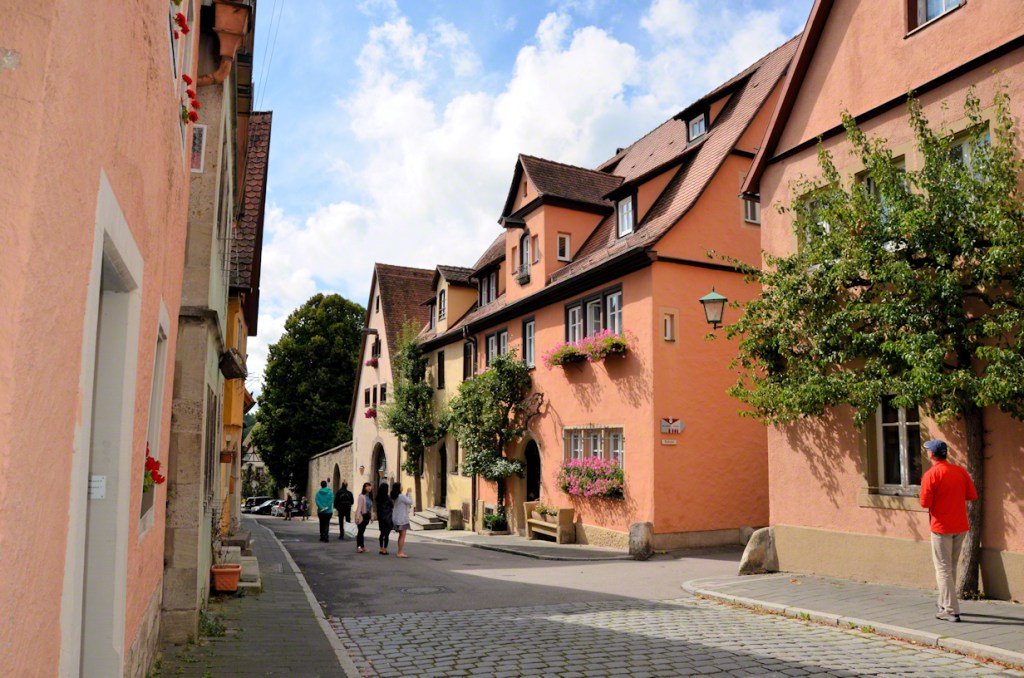
Rothenburg ob der Tauber where we enjoyed the delicious sweet pastry as well as the beautiful sunny day that showed off its cobblestone roads and medieval buildings at its best.


[Photos 8 & 9: Rothenburg ob der Tauber (c) L.M. Kling 2014]

Photo 8: Sweet Treats
Photo 9: Typical Rothenburg Street
Photo 10: Rothenburg ob der Tauber most popular

Challenges of the Romantic Road:


• Too many tourists especially at Füssen on the Saturday we visited, caused us to be trapped in a massive traffic jam that held us in a virtual carpark for an hour.
• So many tourists at Neuschwanstein (Mad Ludwig’s Castle). If we’d attempted to buy a ticket, we would have waited four and a half hours or more to enter the castle!
• Traffic jams and rain, both especially heavy that particular Saturday in August.

[Photos 11 & 12: Neuschwanstein and surrounds © L.M. Kling 2014]

Photo 11: Neuschwanstein with Schloss Hohenschwagau in foreground
Photo 12: Schwansee

    We took a break from the Romantic Road one day to visit my relatives. Tomina had trouble with the “dud” roundabout, so we ended up travelling the “scenic route” through the back way off the motorway through corn fields and behind slow tractors. The hour’s trip took two hours, but once we arrived, we had a wonderful day.
    Back in our apartment in Burgau we had no internet. I think Hubby coped…although to be honest, he was grumpy at times. I guess there’s something to be said to slow down to the pace of snail mail and send postcards as folk did over 100 years ago…especially when there’s no internet.

    © Lee-Anne Marie Kling 2020; updated 2022; 2024
    Feature Postcard: Ulm © 1905

    Postcard Front: Ulm, Bayern
    Postcard Back


    And now, for something different…from Europe…

    Dreaming of an Aussie Outback Adventure?

    Click the link below:

    The T-Team with Mr. B: Central Australian Safari 1977

    Trekking With the T-Team: Central Australian Safari 1981…

    To download your Amazon Kindle copy of the story…

    And escape in time and space to the Centre of Australia way back when…

    Trekking Thursday–Hike Around Dove Lake

    [An unexpected shower while walking along the beach the other day reminded me of our Tasmanian adventure back in 2001, when our boys were young (about 11 and 8). That time Hubby was most concerned about keeping his charges dry. However, he went to great lengths to make sure all was done as frugally as possible.]

    K-Team, the Younger: Tasmania 2001

    Dove Lake Hike in Garbage Bags–Cradle Mountain National Park

    Hubby paced the floor of the mountain cabin. ‘Yes, that’ll work. Garbage bags’ll work.’ He was in his frugal element and raced around the small room as if he’d won the lottery. ‘Oh, and so cheap!’

    He spent the rest of the evening cutting and taping two garbage bags and fashioning them into ponchos for our young sons.

    Sons 1 and 2, unaware of the fate that awaited them, marvelled at the possum perched on the balcony.

    ***

    Next morning, a shroud of mist covered the valley.

    ‘Hmm, the weather doesn’t look good,’ my husband said. ‘Don’t know if we’ll see much of Cradle Mountain. Boys’ll definitely need the ponchos I made when we hike around Dove Lake.’

    Hubby grinned as he pushed the garbage bags into our packs.

    *[Photo 1: Possum © A. Kling 2001]

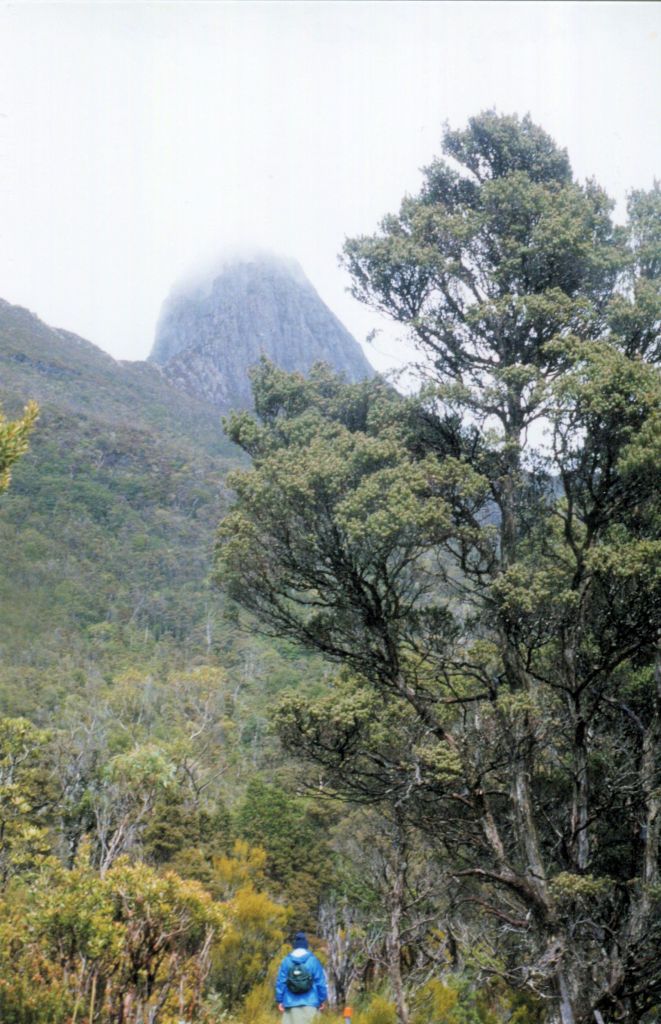
    I slung my camera’s bulky telescopic lens in its case over my shoulder and tucked it under my parka. I remembered the words of a professional photographer friend who had visited Cradle Mountain before me. ‘Even on cloudy days, you never know when the peak will appear. So, be prepared.’ Besides, I thought, mist and fog give the scenery character.

    In our hire car Ford sedan, we crawled in the tourist-congo to Dove Lake.  Signs warned us of an unsealed section of road suitable only for four-wheel drive vehicles. But did that stop Hubby? No, we bumped along the track behind a bus with him plopping in remarks. ‘Brachina Gorge was worse.’ Or, ‘What are they talking about, this is nothing.’

    After parking, Hubby leapt from the car. ‘Oh, looks like rain.’ He pulled out the “raincoats” and waved them in the air. ‘Come on boys, you need to be waterproof.’

    Son 1 recoiled. ‘I’m not wearing that.’

    ‘No!’ Son 2 screamed and hid behind me.

    ‘Oh, yes, you will!’ their father said. ‘You’ll get wet and a chill and then catch a death of cold, if you don’t.’

    ‘No!’ both boys squealed and then scampered up the path.

    A battle ensued; Hubby with garbage bag-ponchos verses sons refusing to wear the garbage bags.

    Dad won, and with the g-b-ponchos draped over two unhappy boys, the young K-Team trooped along the Dove Lake track.

    A blanket of cloud covered the mountain, and drizzle blurred the view of the lake. The shifting mist mesmerised me. I slowly pulled out my camera and then attached the telescopic lens.

    ‘Get this off me!’ Son 2 cried. He fought with his garbage bag in the wind, and then tore it off.

    ‘No! You must keep it on!’ his dad grabbed the bag-poncho and struggled to put it back over him. Then, with success, clasping his son’s hand, Dad marched ahead, dragging Son 2 behind him.

    *[Photo 2: All waterproof © L.M. Kling 2001]

    ‘I hate this walk!’ Son 1 cried. ‘Why do I have to wear this sack!’

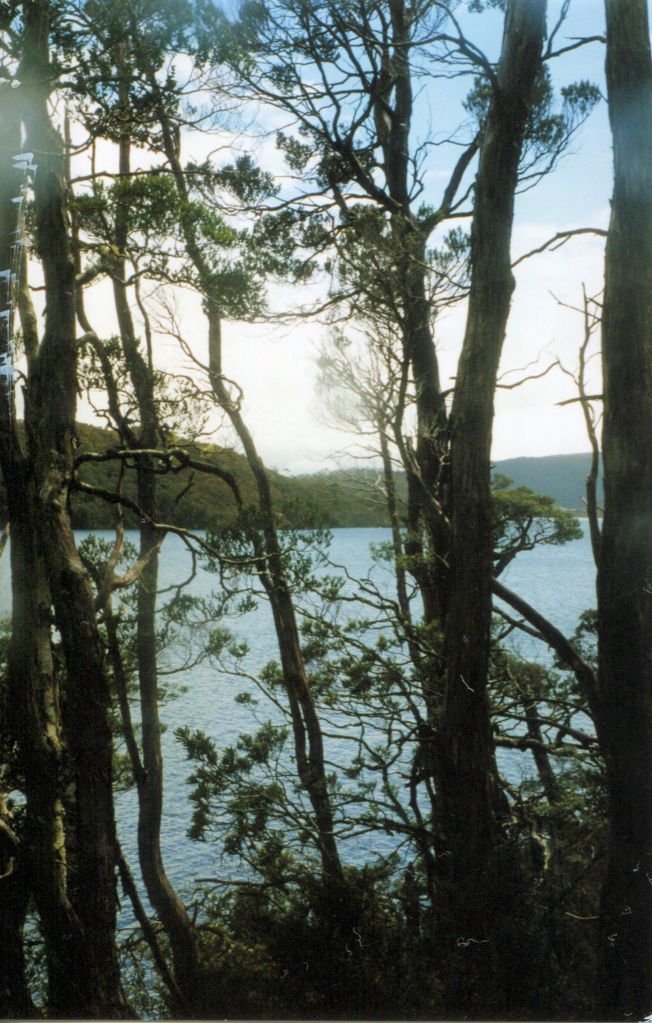
    ‘So you don’t get wet!’ Dad said as they disappeared around a bend of pine trees, branches like arms all twisted and gnarled; monsters in the fog.

    As I progressed around that same bend, I spied No. 2 son sitting on a stump by the path. The sun peeped through the clouds. ‘I’m not wearing this,’ Son 2 said. ‘It’s too hot.’

    I glanced around. No Hubby. ‘Okay.’ I took the garbage bag cloak off Son 2, then peeled off my parka.

    The lake shimmered as rays of sun filtered through the mist and gaps in the cloud. A photographer’s paradise. I aimed my camera and snapped several shots of Dove Lake.

    *[Photo 3: Waterfall over Dove Lake © L.M. Kling 2001] 


    *[Photo 4: Dove Lake through pines © L.M. Kling 2001] 


    ‘Mum! Come on!’ Son 2 yelled.

    ‘Hurry up!’ Hubby beckoned. ‘We’ve hardly started! And what are you doing without your rain cover?’

    More protests as Hubby wrestled with Son 2 to get garbage bag-poncho again over his head.

    Just in time. Dark clouds loomed, followed by rain pelting down on us. Hubby knew what he was doing; he was making sure the boys stayed dry.

    As we plodded along the path, once again wrapped and water-proofed, the rain turned to sleet. Icy drops cut into my face.

    ‘I’m tired,’ Son 2 whined. ‘How much longer?’

    ‘It’s an hour’s walk, I replied.

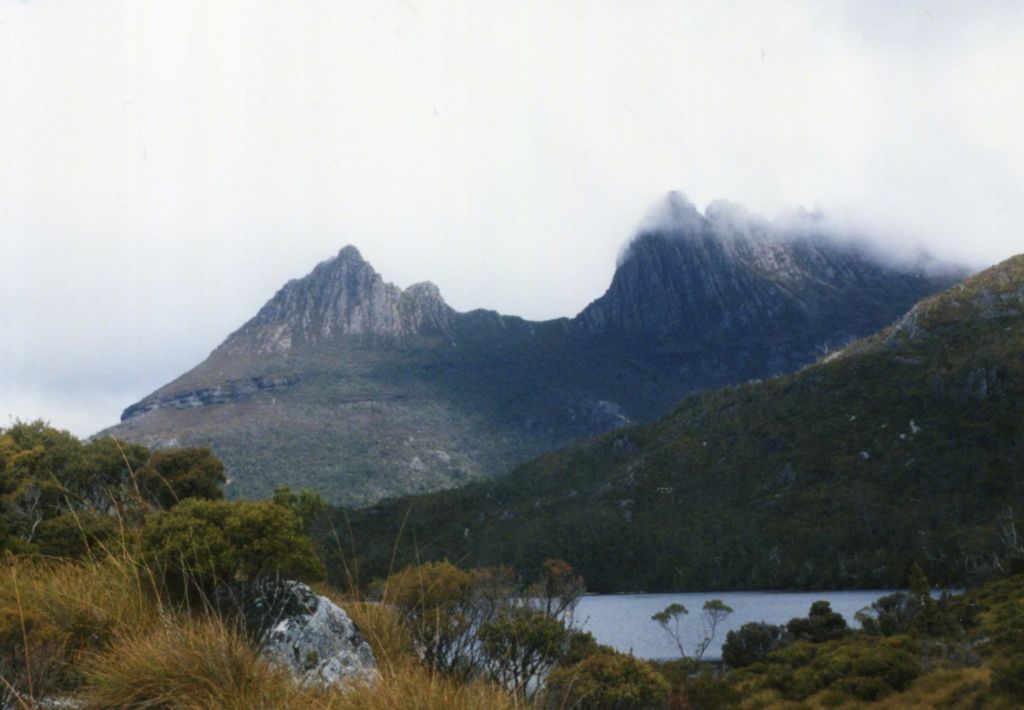
    The sun appeared, and so did the peaks of Cradle Mountain—fleeting, peeping from the curtain of clouds.

    *[Photo 5: Cradle Mountain in Mist © L.M. Kling 2001]

    ‘Wow!’ I halted, shed my rain-jacket, shrugged off the tangle of bags and camera equipment, then caught the image of the mountain before it disappeared.

    Son 2 shed his garbage bag-cloak too.  He sighed, ‘How embarrassing!’

    I packed the embarrassing cover into my bag and we continued the trek around Dove Lake. Every few metres I paused to take another photo.

    ‘Are we there yet?’ Son 2 asked as we crossed a stream.

    Hubby stood before us. ‘What’s taking you so long?’

    ‘There’s so many beautiful scenes to capture,’ I said. ‘The clouds are always shifting and changing. How can I resist?’

    ‘Should only take an hour. It’s been two hours and we’re only half-way.’ Hubby said.

    ‘But, the photos…’

    A pair of hikers passed us from the other direction.

    ‘How far to go?’ they asked.

    ‘A couple of hours,’ I said. ‘How long have you been hiking?’

    ‘From the boathouse, about half-an-hour.’

    ‘Not long to go then.’

    ‘Right, I’m off,’ Hubby said. ‘See you at the boathouse.’

    Hubby and Son 1 marched off while Son 2 and I shuffled behind. We tried to keep up.

    *[Photo 6: Dove Lake Through trees © L.M. Kling 2001]
    *[Photo 7: Cradle Mountain Revealed© L.M. Kling 2001]

    Emerging through the twisted branches of snow-gums, the lake beckoned, then hints of Cradle Mountain begged me to photograph. Father and Son 1 drifted further…and further ahead, while I remained suspended in the fairyland of Dove Lake, Cradle Mountain and fast-shifting mist and cloud. Even Son 2 deserted me to catch up with his dad and brother.

    I arrived at the boathouse.

    ‘Four hours!’ Hubby greeted me. ‘That must be a record.’

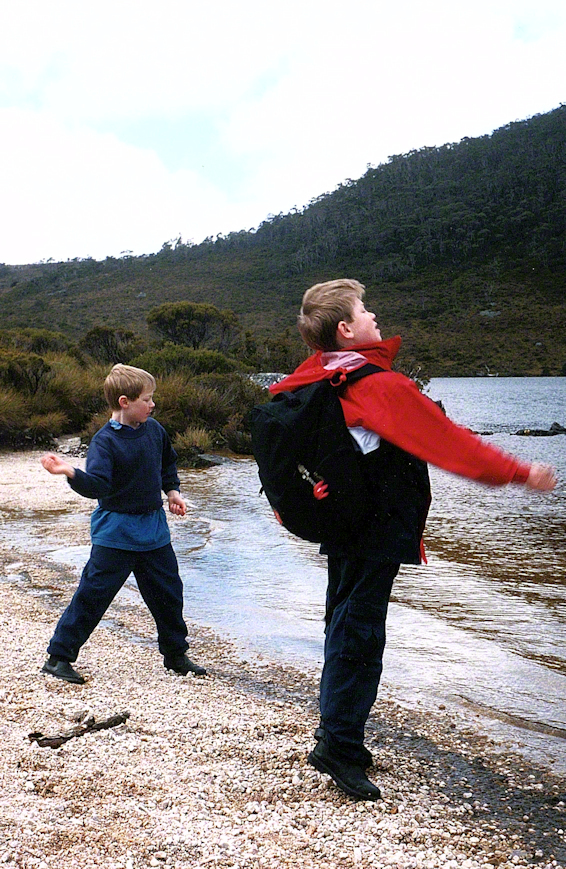
    Our sons, minus garbage bags, skipped stones on the smooth surface of the lake while mist descended over the mountain. I extracted my camera and aimed, taking care to focus.

    ‘Hurry up!’ Hubby snapped, ‘It’s way past lunch.’

    During lunch Hubby scrunched up the green plastic of garbage bags and dumped them into a nearby bin.

    *[Photo 8: After 4 Hours… © L.M. Kling 2001]
    *[Photo 9: K-Boys skipping stones © L.M. Kling 2001]
    *[Photo 10: Cradle Mountain on a better, no, the best day 8 years later © L.M. Kling 2009]

    © Lee-Anne Marie Kling 2017; updated 2019; 2023

    Feature Photo: Cradle Mountain Revealed © L.M. Kling 2001

    [Stay tune for next fortnight and see what a difference a few years make. And how the K-Team the younger, just a little bit older, tackle the hike around Dove Lake on a perfect sunny day in the summer of 2009.

    Next week I will be sharing some of my discoveries in my venture into family history, perhaps I can find the reason why I would take 4 hours to walk around Dove Lake. Is it written into my genetic code???]

    ***

    Want more? More than before?

    Take a virtual trip with the T-Team and their adventures in Central Australia.

    Click on the links:

    The T-Team with Mr. B: Central Australian Safari 1977

    Trekking with the T-Team: Central Australian Safari 1981

    To download your Amazon Kindle copy of the story…

    And escape in time and space to the Centre of Australia…