Johann glanced back at the bug of the man settled on the tucker box. ‘Cup? You want a cup? Be my guest, they’re in the tucker box, I think.’
I sidestepped that idea and ran to the Kombi. The coke bottle, I’d use the coke bottle.
After emptying out the icky liquid, I raced to the other side of the van. I reached as far as I could on tippy toes. No use. I was just too short. I jumped. I tried climbing up the roof rack. Failed. No footholds to launch me up. I slumped on the edge of the road and cried. No one cared that we were in danger. Liesel had given up without even trying. She didn’t care. And worse, I didn’t matter. Me, a nobody. Thirsty and no one bothered to give me a drink. Aware that I was all alone, I sniffed. Nothing could make me happy, not even the smell of kangaroo steak wafting under my nose.
‘Oh, little girl, why so sad?’
I looked up to see Boris in his grey skirt towering over me. I was sick to the stomach, like I had eaten a cocktail of worms and cockroaches.
‘What is wrong my pet?’ he asked.
I shuddered but refused to answer.
‘Maybe I can help you.’
For a price, I thought.
‘Just tell me what you want more than anything in the whole wide world.’
I glared at him. Over my dead body. What is this man?
Tears blurred my view.
He extended an arm to me. ‘Anything, anything at all.’ his arm seemed so skinny; more like a tentacle than a limb.
I rubbed my eyes.
It crouched beside me. ‘Come on, you can tell me. You can trust me. I can grant you anything, any wish you have.’
I blinked.
Beside me perched a man-size cockroach. Its oily armour glistened in the golden rays of the risen sun.
‘I don’t think I need anything, Sir.’ I tried to stay cool and resisted the urge to recoil.
Its antennae twitched. ‘Anything. Just say the word. Your wish is my command.’
‘I want you to leave me alone,’ I said. All thoughts of thirst evaporated.
Its beady eyes bored through me into my soul trying to suck out all my goodness, my life. ‘My dear girl, I’d beg you to reconsider. With the gifts you possess, the universe is your oyster—if you follow me.’
I gulped. A cold breeze cut through me and as if I’d faced death itself; the Grim Reaper. I pushed myself up, and staggered from it. ‘No thanks, I’ll have none of what you offer.’
It reached out a spiny hand. ‘But you’ll—’
‘None at all.’ I dropped the bottle, and bolted to the campsite.
The pinnacle of the K-T-Y’s (K-Team, the Younger) road trip around Tasmania was Cradle Mountain. I might add here that we’d abandoned my husband (Hubby)in Poatina on a Christian Leaders Training course, while I chauffeured the younger members of our family to the scenic sights in the Central Highlands and East Coast.
So, Sunday January 18, 2009, with Cradle Mountain National Park our goal, we drove the hills, dales, twists and turns. And we fended off near-misses with drivers who apparently didn’t know which side of the road they were meant to be on.
Before entering the National Park, we had to buy The Pass. And the K-Team kids took the opportunity to have some lunch at the café in the Visitors’ Centre.
Then another wait on the sealed but narrow road. We watched the procession of cars squeeze past us as they exited the park. The boom gate took what seemed an eternity to rise. I reminded my “lambs” that good things come to those who wait. However, the only positive my 15-year-old Son 2 could muster was more atheistic zeal to preach to his captive audience.
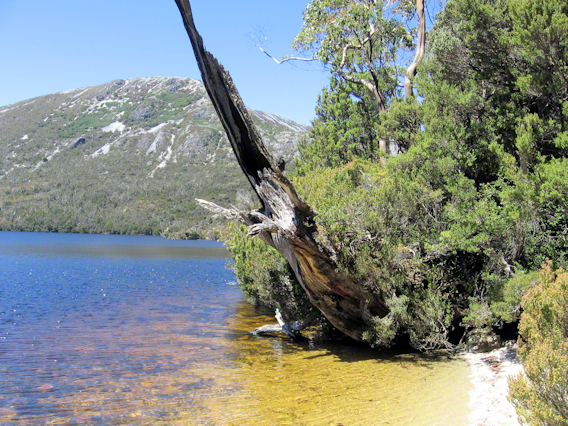
Finally, the boom gate rose, and I ferried the K-Team Young’uns to a highly sought-after carpark. We piled out of the car, sorted out backpacks, and with the sun warming our backs, commenced the hike around Dove Lake. At first, I had to drag a reluctant Son 2 to join us on this adventure, but soon, wooed by the brilliant scenery, he raced ahead to catch up to his older brother.
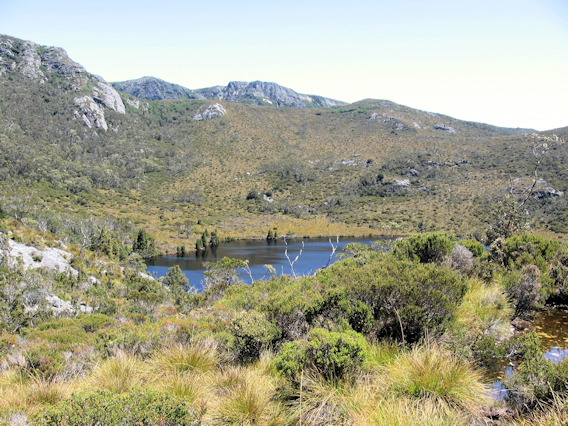
This time we hiked the opposite way around the lake from the way we did in 2001. Following the well-trodden path, a small lake emerged.
‘I don’t think so,’ I replied. ‘I remember it being bigger than this.’
A sign designated to the pond, confirmed that it wasn’t Dove Lake.
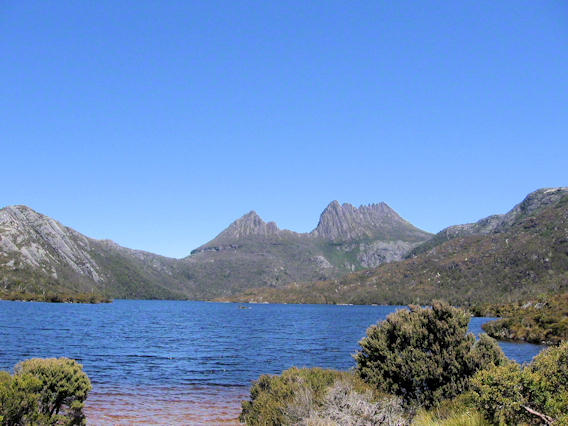
A little further on, we reached the boat house and Cradle Mountain framing the view of Dove Lake. On the shore of pebbles and sand, a photographer perched near his sturdy tripod and SLR camera with telescopic lens, while his wife, long-suffering, sat under a beach umbrella enjoying a novel.
We continued our trek around the lake. Son 2 ceased his drone about the meaninglessness of life, while Son 1 captured the beauty on the little digital camera I had lent him.
We marvelled at the sun sparkling diamonds on ripples of water.
Within an hour, the K-T-Y had reached the halfway mark. What a difference eight years make! What took more than two hours in 2001, half the time this time.
Over a hotel dinner at Deloraine, the result of the boys needing a “dunny stop” and me not wanting to cook tea that night, we reminisced the tale of two Cradle Mountain trips. And Son 2 had to admit that the hike around Dove Lake this time was not bad. And maybe, just maybe, there was a God who created this amazing world.
[This time, some of the T-K Team step back in time into the Mt. Painter Sanctuary, Northern Flinders Ranges, South Australia; a land offering a glimpse of prehistory…]
Late 1980’s, and my husband and I planned a honeymoon stay in Arkaroola, the town within the Mt. Painter sanctuary, Northern Flinders Ranges. When we arrived, we rolled up to the motel and presented our VISA card for payment.
‘Oh, I’m so sorry,’ said the manager, ‘we don’t take VISA. Only MasterCard.’
‘What?’ But we were counting on our VISA to cover the costs.
We scraped together the cash amount for the three-nights of accommodation and emptied our wallets of all but a few notes. Romantic dinners in the restaurant, off our menu. The longed-for Ridge-Top Tour, off our track. Then cold hard panic struck, how were we to pay for petrol when we returned to Adelaide? The amount in our tank, Dad’s four-wheel-drive vehicle that he loaned us for the holiday, may not last the journey back to Hawker. All because the town in which we chose to spend our honeymoon, was so remote, they did not deal in VISA.
We sat on our motel bed and counted our measly amount of cash. What were we going to do? It’s not like I hadn’t gone without before—on the T-Team with my Dad. Being like-minded and frugal, we dealt with the disappointment, and decided we’d cook our own meals using the barbecue facilities and not venture too far from the town. Besides, there were plenty of places to which we could hike.
I took a deep breath and picked up the book our pastor had given us as a wedding gift. Inside the front cover I discovered an envelope. ‘I wonder what this says,’ I said to my husband.
I took out the card and opened it. An orange-coloured note fluttered onto the floor. I picked it up. ‘Hey, look! Twenty dollars.’ I waved the note in my husband’s face. ‘Twenty dollars! Pastor must’ve known we’d need the money.’
‘I think God did,’ my husband said. ‘Twenty dollars makes all the difference.’
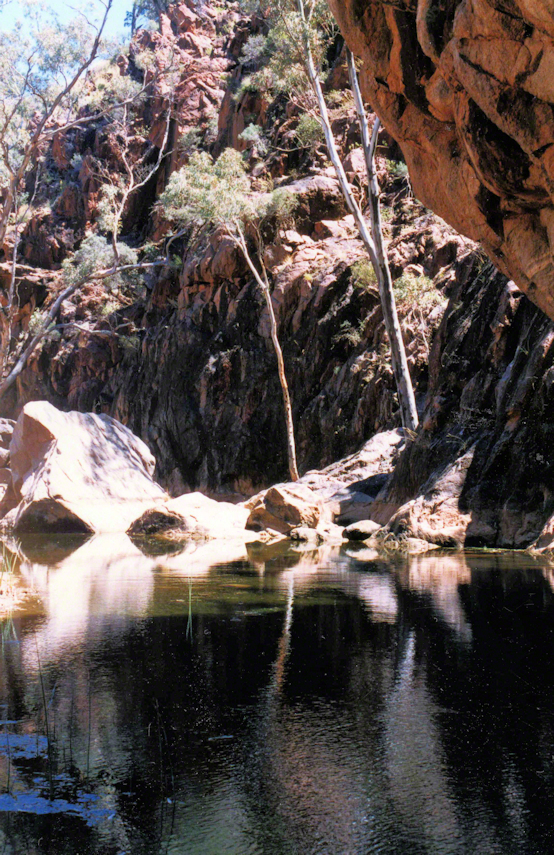
In the restaurant, and eating the cheapest meal offered, I spied a photo adorning the wall behind my beloved. A waterhole with red cliffs on one side and cool but majestic eucalypt trees on the other side. ‘Echo Camp,’ I read. ‘I want to go there.’
He who was driving, turned into the track. ‘You’re quite right. Ready for some adventure?’
‘Okay, well, it says Echo Camp’s only a few kilometres down the track.’
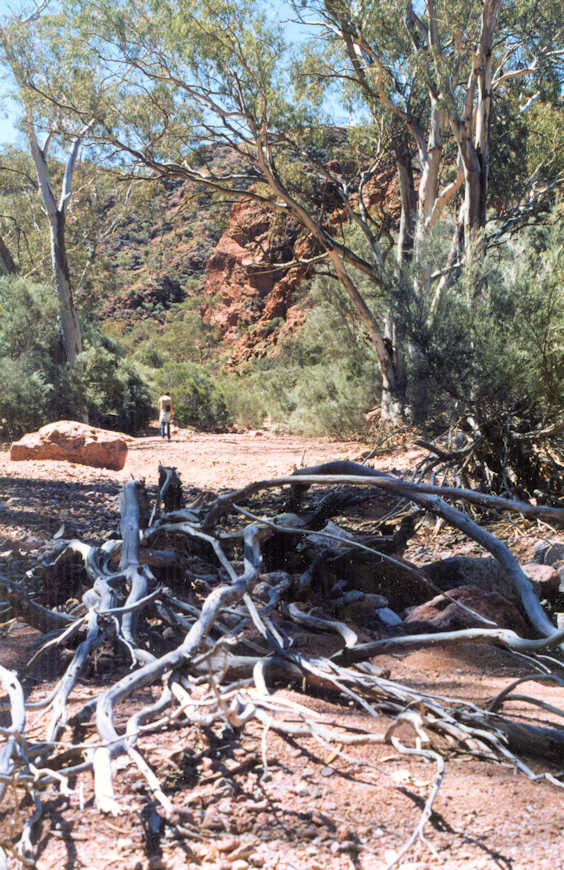
My husband drove up and down the track. It soon became obvious why the track was meant for “authorised” vehicles. But we were committed, and the track became so narrow, with one side rocky cliffs and the other sheer drops, we had no choice but to lurch forward, upward, downward, sideways and every-which-way. While I clutched the bar on the dashboard, my husband had fun, relishing the roller-coaster ride to Echo Camp.
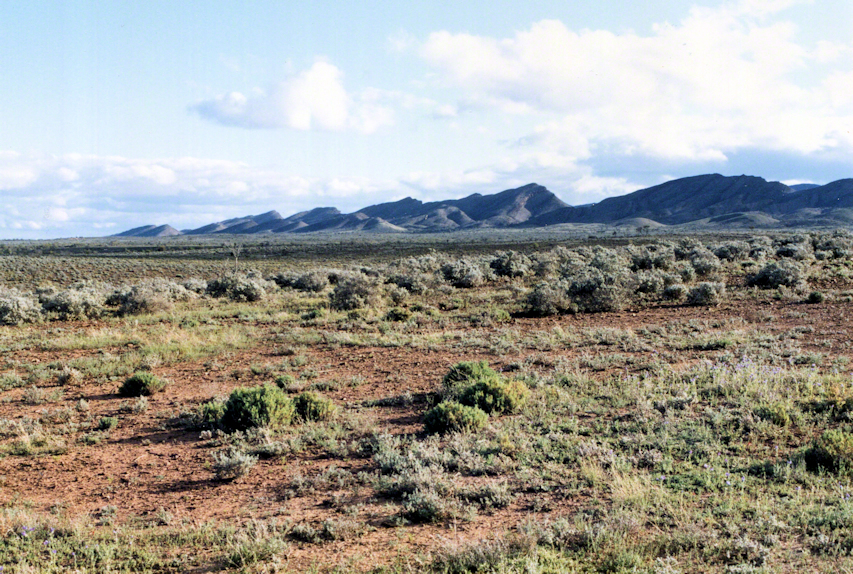
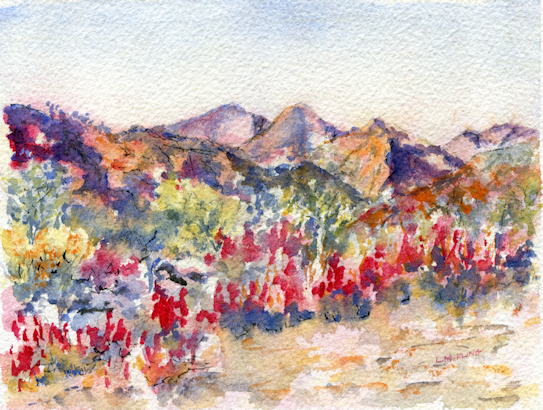
We reached a relatively flat area where we parked our four-wheel drive vehicle. The Painter Sanctuary mountains rose and dipped like waves before us. A feast for the eyes with shades of sienna, blue and mauve. I captured this beauty with my Nikon film camera.
We back tracked and found the way leading to Echo Camp. By this time, the sun hung low in the sky, so our time savouring Echo Camp was limited to no more than half an hour, wandering near the rock pool, taking photos, and enjoying the peace and silence of this land untouched by civilisation, and reserved for the “authorised” apparently.
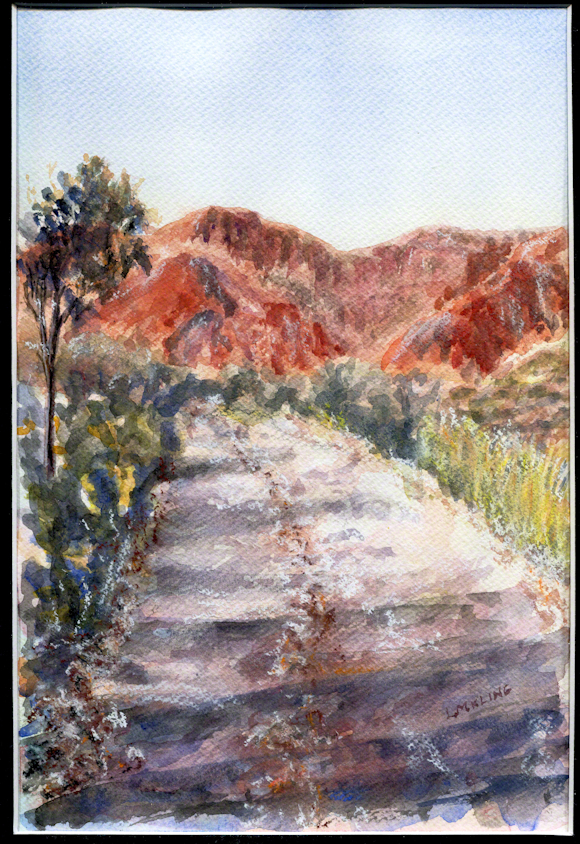
My most recent painting of Arkaroola landscape, Dinnertime Northern Flinders is for sale at the Marion Art Group exhibition at Brighton Central. You can also check out my work on the Gallery 247 website.
Marion Art Group’s exhibition (first in three years) is to be held from Monday October 17 to Sunday October 30, Brighton Central, 525 Brighton Road, Brighton, South Australia.
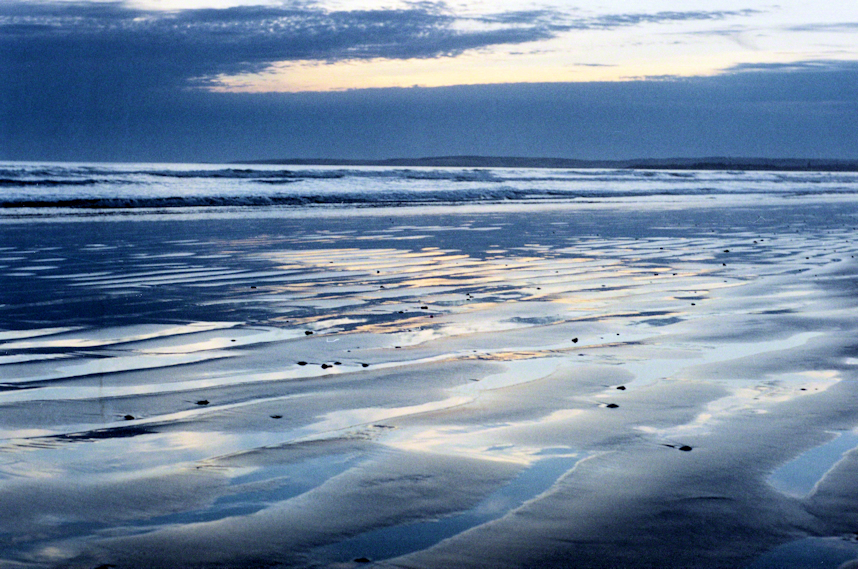
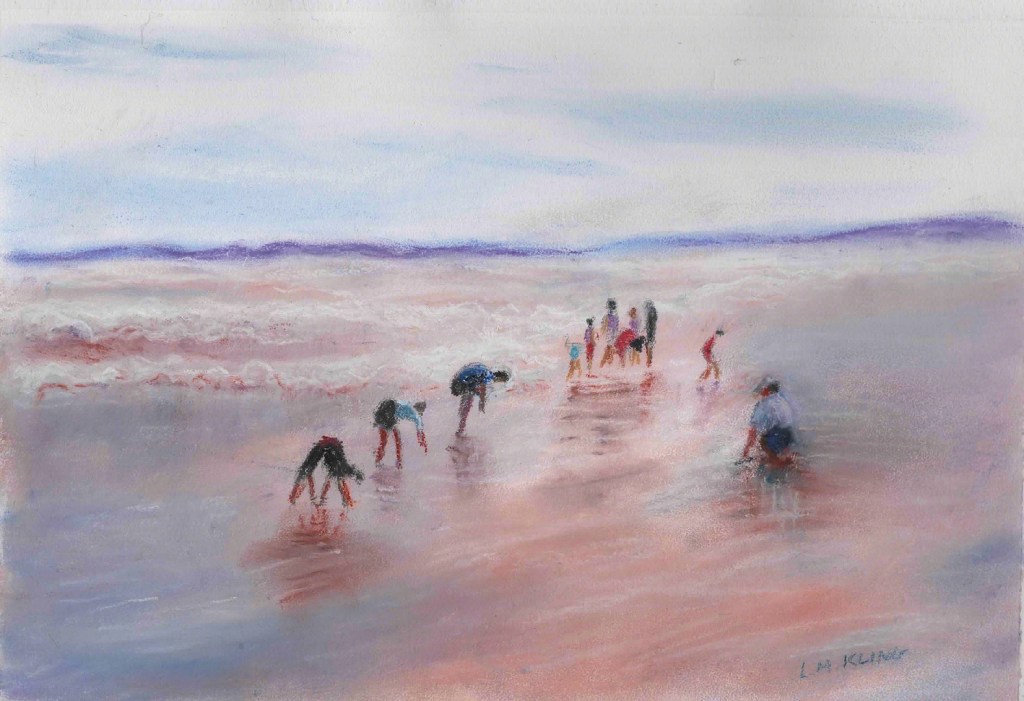
A picture, they say, tells a thousand words. So, what is Cockling at Goolwa’s story? How can the simple heel-toe dance of “cocklers” (people who dig for cockle shells), their feet sinking in soggy sand of the in-coming tide, in the flux of early summer warmth, on a remote beach south of Adelaide tell us? What story worth a thousand words? What was it about this scene that attracted me to capture it? First in photo and then several years later, on canvas in acrylic, and recently in pastel.
I think the water reflecting the sky, all silver, the people on the wet sand, a mirror, swaying and twisting for cockles captured my attention. I’d been there, on the glassy surface, watching for bubbles, grinding my heel into the bog, feeling for the sharp edges of shell and plucking out the cockles that snapped shut when exposed to air.
‘What will you do with all those cockles?’ I asked.
‘They’re for fishing,’ one of our friends said. ‘Bait for fish.’
‘Hopefully, we’ll catch a few fish and have them for dinner tonight,’ another said.
I imagined fish, fresh from the sea, thrown on the barbeque and the cockle bait inside them buried once again in our stomachs. We continued digging for cockles…family and friends, one with the ancient, outside time—nothing else matters but the cockles.
Goolwa, if I remember, has mounds of spent shells in the sand hills, monuments to generations upon generations of Indigenous Australians, their open-air kitchens and meals. Did they perform the same ritual, on the same patch of wet sand, delving for cockles to fry on their fires? A quick perusal of Google reveals they used nets to collect cockles and catch fish. They then cooked the cockles on a campfire.
We are here, they are gone, but their spirit of history lingers, reminding us, though we seem different, we are the same. We are digging, dancing and delving for our dinner. We are still, in the moment, alone in our thoughts in a forgotten corner of the world, unknown by the world, yet one with this country’s past. And God knows each one of us—each part of us, even the unknown parts of ourselves and our secrets.
What if I shared a little secret—an artist’s secret? Okay, I’ll tell you. I painted this picture in less than two hours. Now, that I’ve told you, would the painting be worth less to you? Must time be equated with worth? Sometimes I do take hours upon hours, layers upon layers, and more hours planning to get the work right. But not Cockling at Goolwa.
I love the beginning of a painting; laying the foundation, engaging my inner-natural child, the paint flowing from a thick brush on a damp canvas, colours blending, mixing as I go. One side of the brush crimson, the other blue and a dab of white. Sienna somewhere there in the foreground shadowing the sand. Mid-yellow added incrementally to shroud the distance in light grey for perspective. Then just a hint of heads of land jutting out halfway across the horizon with a suggestion of ultramarine in the grey. So simple, and sometimes, like with Cockling at Goolwa, the scene emerged before my eyes. In the world of artists, I believe the term “magic brush” or “magic hand” has been used. Um, trade secret, so don’t go spreading it around.
So, there you have it, in less than an hour, surf, sand, sky and tones in all the right places.
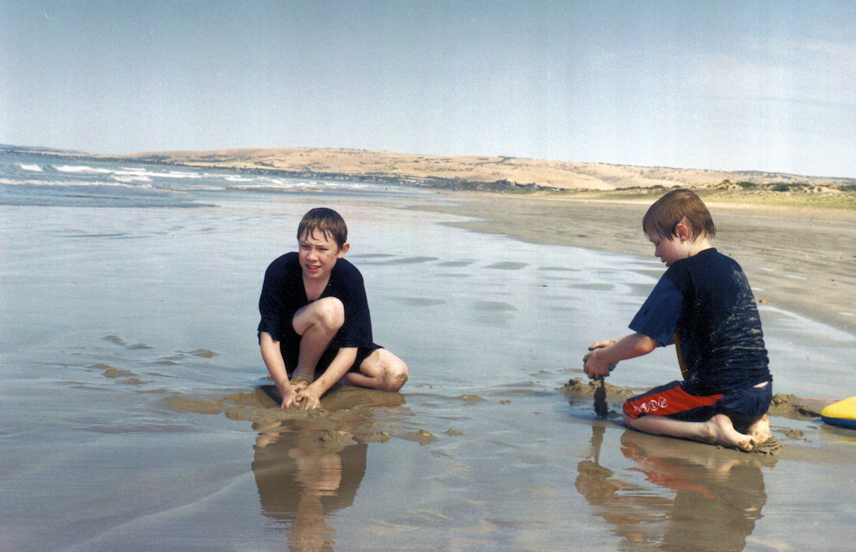
Now for the people, the twisting, turning people, their feet in the boggy sand. How do I paint them? I had a break and drank a cup of tea. I remember not all the children hunted for cockles. Some kids body-surfed in the shallows, some played cricket and one little boy with a wish to be hunted, or to be warm, buried all his body except his head in the sand. I found him and he broke out of his sand-grave, the sand zombie.
‘Don’t go tracking your sandy footprints into the shack,’ I said.
He washed himself off in the surf, then sat wrapped in a towel and shivering in the sun while watching the cockle hunt.
All the while the “cocklers” cockled for cockle shells. Soon the boy joined the hunt for cockles.
Then when the paint was dry, I plotted the people in with pencil and then painted them in with a finer brush.
‘I like that painting,’ a fellow member of the art group said. ‘Don’t do another thing to it. Don’t even frame it. I’ll buy it as it is. How much do you want for it?’
Paint barely dry, I took the work home, signed it and then the next week at our Christmas lunch, I delivered Cockling at Goolwa to them. The buyer showed the work to others at their table and all admired it.
What made another person connect with Cockling at Goolwa? For this person, their son and family spent many summer holidays at Goolwa, doing just that, cockling. Time out, out of time, unwinding, relaxing, happy times, happy memories, captured on canvas…in less than two hours. And I must admit, the story is slightly less than one thousand words.
But, perhaps as you look at the copy of Cockling at Goolwa, you may have a story of your own about the painting. Maybe a painting’s story is not just one person’s story, but stories from many people, one thousand words, or more…
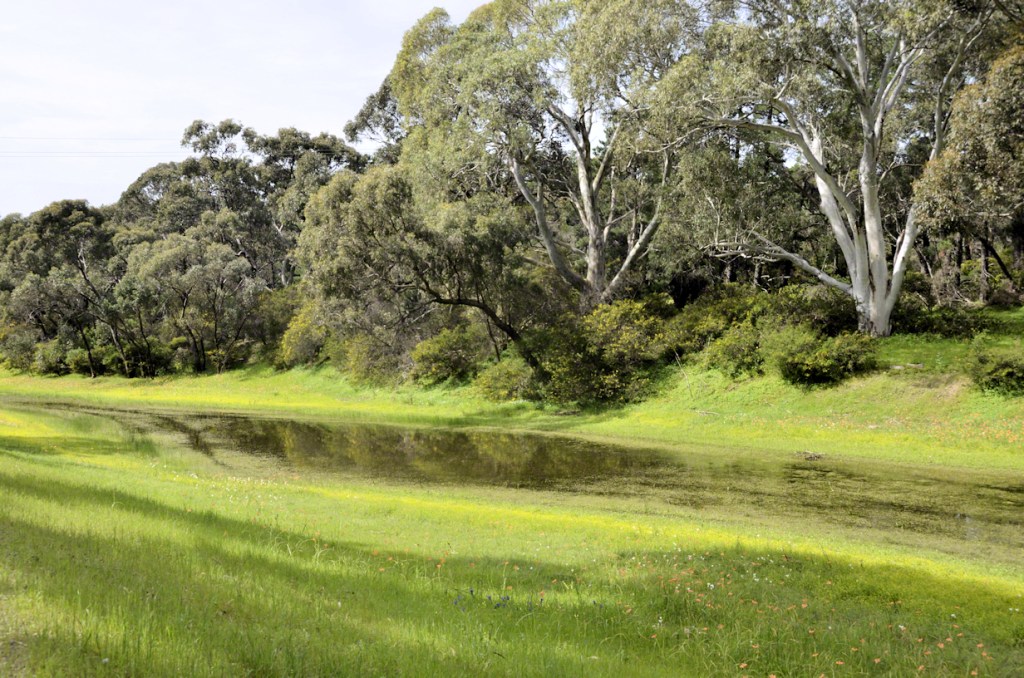
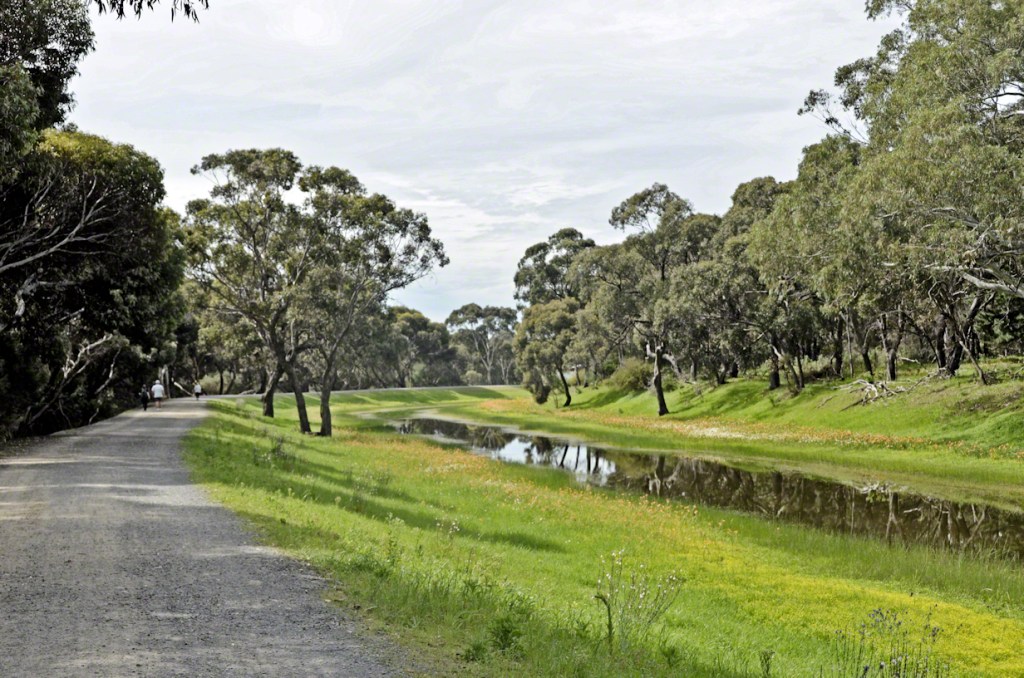
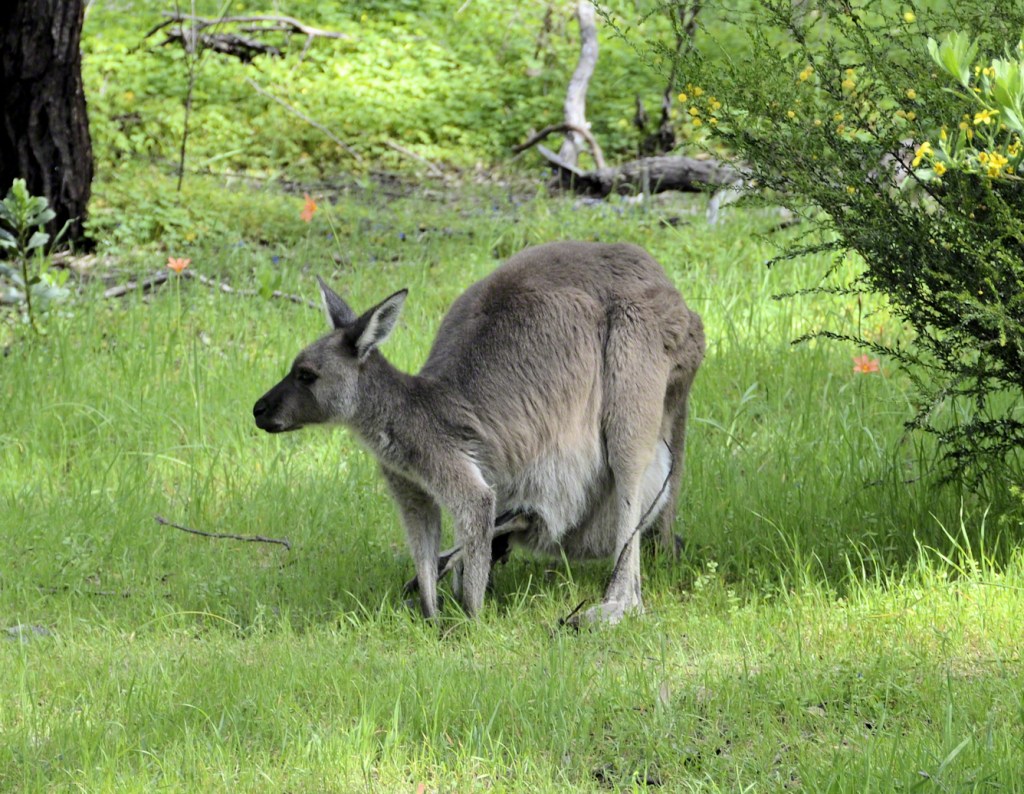
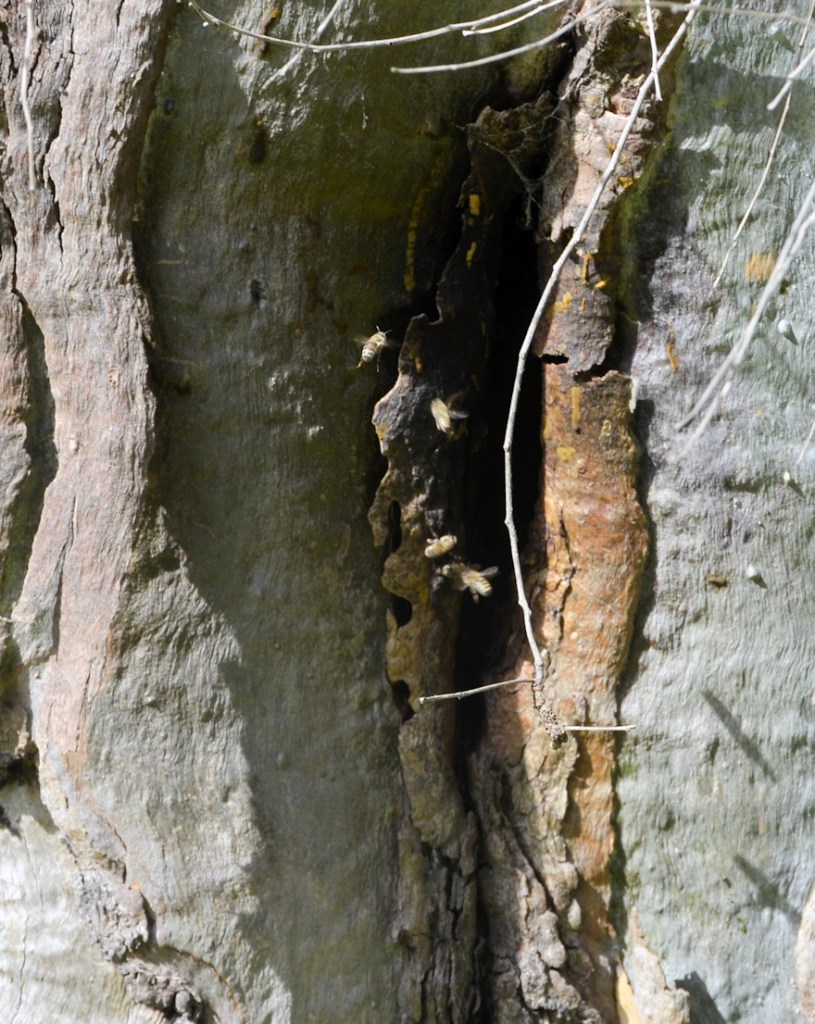
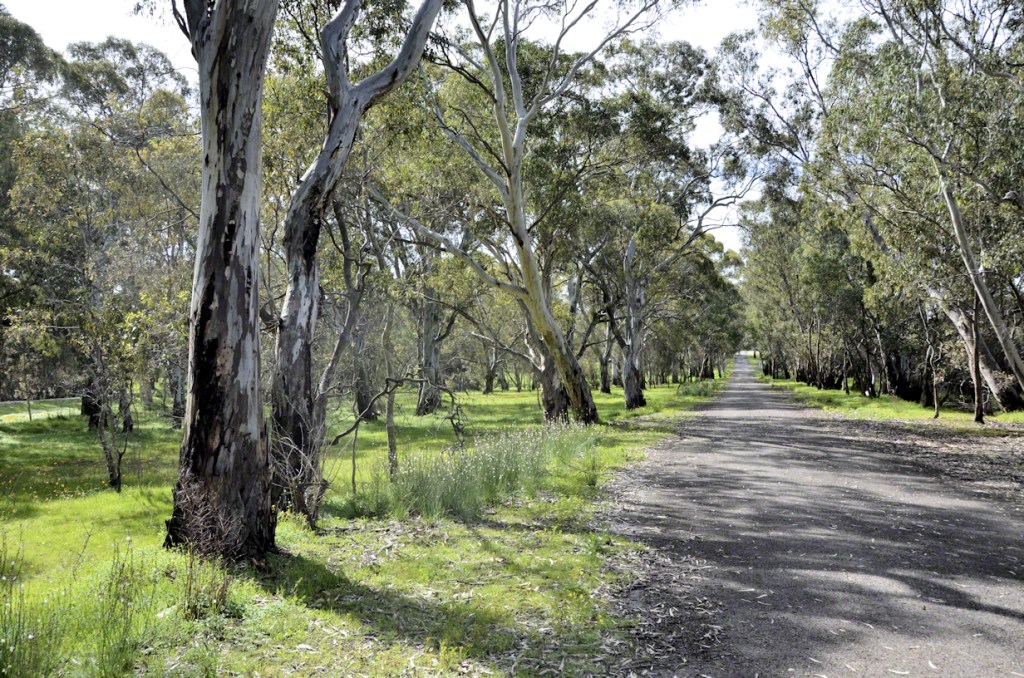
This day being a public holiday in South Australia, hubby and I took a meander around the Happy Valley Reservoir. This Reservoir has been open since last December and this is the first time we’ve entered this reserve.
Before December 2021, the reservoir was closed to the public to keep the water supply clean. However, I gather that water purification technology has advanced enough to allow the public to enjoy the ambient nature of this now recreational park.
Below are some moments captured in time from our Monday Meandering around the reservoir.
[With life returning to some semblance of normality, a post from the pre-pandemic past…]
The Kingdom of God is Like…
A dilemma many of us have faced, maybe it’s a wedding, or a party — we want to invite all our friends and family, but can we? Is it possible to have an open invitation without the situation getting out of hand?
I remember as a young teenager being upset because my older brother received invitations to parties and not me. I remember standing at the kitchen counter, invitation to my brother in hand and complaining, ‘It’s not fair. I’m friends with them too. Why wasn’t I invited?’
‘Stop complaining,’ my mum would say, ‘your time will come.’
Didn’t help that our youth group friends had a saying: ‘You can’t have a party without my brother.’
Hey, I’m the sociable extrovert here! My brother’s the shy awkward type who prefers staying in his room making telescopes and short-wave radios.
So, I lived with these multiple rejections as I believed them to be…
…Until one day, I collected the mail from the letterbox. What’s this? A letter for me? I tore it open and read:
‘Dear Lee-Anne,
You’re invited to ***’s birthday party…’
Huh? I re-read the invitation. Must be a mistake. Where’s my brother’s name? Invitations always had my brother’s name attached, and occasionally my name included, especially where the youth group friends were concerned. Her invite made my teenage decade, for once, she invited me and not my brother.
But…what if there were parties or celebrations without restrictions on who’s in and who’s out? What if all who want to be invited could be invited? Are we inviting trouble if we make an event open to all?
I want to celebrate my late-Grandmother who demonstrated this openness and was successful. She looked outward at those in need of friendship and love. Her table was never too small and somehow, no matter the number of guests she had for Sunday lunch, she always made the food stretch. Something of the loaves and fishes plus Jesus’ effect. (Read in the Bible how Jesus feeds the 5000.Matthew 14:13 – 21)
So that’s all very well and good opening our homes and sharing dinner with others. But back to the party or community event idea. Is it possible to have a party without restrictions on who and how many come without fear of it getting out of control?
I believe it is possible—when we look beyond our limitations and look to God and others to enable us to achieve success; a piece of God’s Kingdom where all people are welcome, all people are valued and seen. And where those running such an event demonstrate the values of justice, mercy and compassion. With the right training, this type of event can provide a safe and caring environment.
Over the years I have participated in open-crowd events, often taking place in parks. There’s usually a variety of fun activities such as puzzles, stilts, giant snakes and ladders game, and a group game for all ages. People may join in if they want to, or just watch if they prefer. No one’s forced to join in. Even so, people from the event team connect with the on-lookers, getting to know them and by the end of the afternoon, they will be smiling and chatting with team members.
One time, two of my friends whom I’d brought along joined, for the first time, in the group game of water-balloon volleyball. They had so much fun, their faces were glowing.
‘I’m so glad I joined in,’ one said. ‘If I’d sat and watched, I would’ve regretted it. It was so much fun.’
My other friend said, ‘We enjoyed the event so much and before we knew it, the time had come to pack up and go.’
This welcoming experience, I think gives a glimpse of God’s Kingdom—it’s free and available to all who want to join in and engage with others in the community. Did I say it’s free? There is a cost—a change in our world view—a change from an inward-looking one where we are the centre of our universe, to an outward-looking one where we see others and value others and see that with others (and God) our perceived weaknesses become our strength.
We have a choice. We could stay safe in our “castle” reinforcing the walls to guard against fear and failure, and so leave others to stay isolated in their “castles”. Or we can look outwards, break out of our “castles”, reach out and connect with others making our communities better places to live.
If you’d like to polish your writing skills or find out more about our new project, a self-publishing collective, click on the link to Indie Scriptorium…
[Extract from The T-Team with Mr. B: Central Australia 1977, a prequel to Trekking With the T-Team: Central Australian Safari 1981.
The T-Team with Mr B — In 1977 Dad’s friend Mr Banks and his son, Matt (not their real names), joined Dad, my brother (Rick) and me on this journey of adventure. I guess Dad had some reservations how I would cope… But it soon became clear that the question was, how would Mr B who was used to a life of luxury cope?
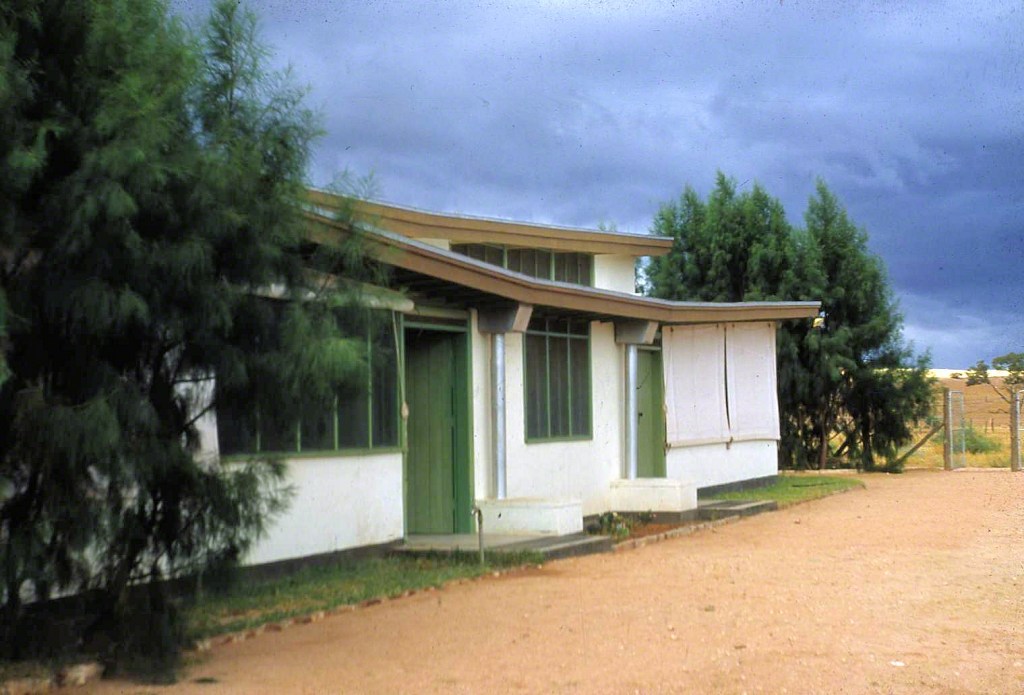
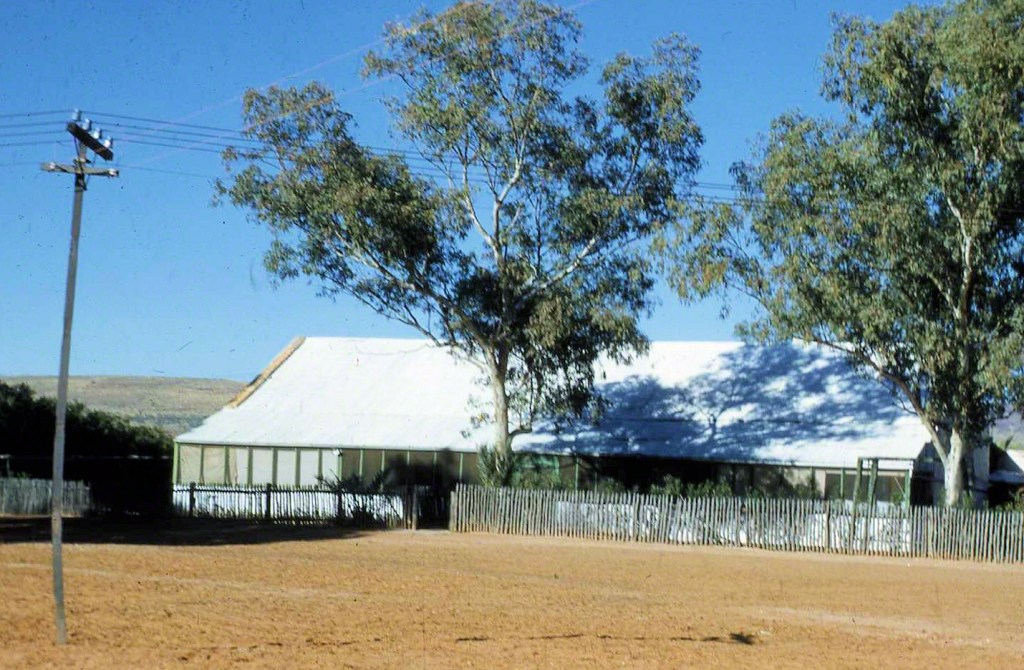
And our accommodation in Hermannsburg had sent us on a tour back in time…]
Living in History
I lay in bed and gazed up at the ceiling. Wish I hadn’t. A hessian sheet hung above me, pinned to the four corners of the room and sagging in the middle. It appeared the sand from the Central desert had worked its way into the sheet, threatening to burst all over me. How long before the sheet would no longer be able to contain its weight? I sat up and swung my feet to the floor. A cockroach scuttled under the wardrobe made of oak. I shuddered. Better sand fall on me than cockroaches.
I grabbed my towel and toiletry bag, then padded out my room and down the dark hallway to the bathroom. There I gazed around the small room, sealed with green and white tiles, some broken. In the 1950’s wash basin, waist-high and looking like an enamel pastel-green pulpit, a line of rust coursed from the faucet to the drain. The matching bath suffered a permanent rusty-brown ring, a reminder of how full to fill the tub. I scanned around the room and above the bath. No shower—not even a rusty one.
I heard a knock at the door. ‘Lee-Anne, are you in there?’
‘Yes, Dad,’ I replied. ‘Where’s the shower?’
Dad opened the door and poked his head through. He screwed up his nose and swivelled his head left, right, up and down. ‘Oh, no shower. I guess you’ll have to have a bath.’
‘Oh, al-right.’
‘Hurry, though, we’re off to see Mr. C and his school.’
‘Oh.’ Last year Mr. C was my mathematics teacher. Then, in 1977, he’d taken up a position teaching the Arunta children in their camps near Hermannsburg.
I turned on the tap. Water dribbled into the bath, brown and making the pipes groan. I gazed at the tea-coloured brew pooling at the base of the tub. I like baths, normally. Not sure about this one.
‘Don’t fill it too full,’ Dad said.
‘No, Dad.’ No danger of that happening. The bath looked like it’d take an eternity to cover even to the depth of an inch.
‘Don’t take too long,’ Dad added.
‘No, Dad.’
I reached in and tested the water. Cold. I then placed my fingers under the dribble from the tap. Cold. Great! Not much water and it’s cold. Yep, I’ll have a quick wash.
I stopped the dismal flow and rushed through the motions of washing. After raking dry shampoo through my limp strands of hair, I bunched them into pig-tails and returned to my room to change.
Then I walked into the kitchen. Light through the louvers reflected dust motes drifting through the air.
Dad looked up from his bowl of porridge. ‘Oh, you’re finished already?’
‘Yep.’
I helped myself to the saucepan of porridge on the ancient stove. The cooker squatted there in the corner, brass fittings attached to afford gas to the rings on top. And lime green. I could see Hermannsburg had a theme going—shades of green. Except the table, washed with the thin coat of white paint. Perhaps it was green once, at the turn of the century.
As if taking advantage of my abbreviated bathroom visit, Dad took his sweet time. So, while we waited, Richard and I played cards, on the kitchen table.
‘Mr. B and Matt are taking their time,’ I said gathering up the cards.
‘They’re sleeping in,’ Richard laughed. ‘I think Mr. B’s exhausted.’
‘He didn’t know what he was getting himself into coming on this trip.’
Richard snorted. ‘Bet he’s never been camping in his life.’
[This Sunday morning’s sermon tackled the parable of the Lost Sheep, Luke 15;4-7. I recall an ancient post I had written way back when I first began blogging in 2015. Then today, the parable’s meaning was reinforced when I spent all afternoon searching for a document vital for our tax return. Strange how items vanish…We gave up on the paper and were able to retrieve a copy from the relevant website.
However, each person is unique. If a person goes missing, you can’t just replace them by copying them. Every year in Australia, around 38000 people go missing. Most are found within few weeks, but 2600 remain missing after three months.
The following post is a re-blog of the one I published in 2015.]
Lost Sheep
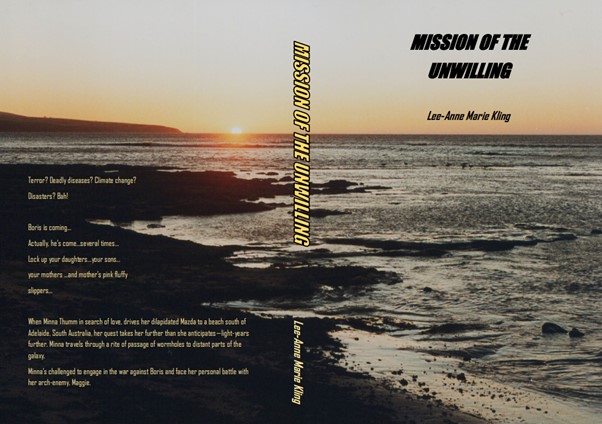
A fellow writer criticized the Mission of the Unwilling saying, ‘How can so many people go into space without others missing them on Earth?’
Good point—and I duly corrected that detail. As a part of the Intergalactic Space Force, each recruit had their explanation which they gave to family and friends why they wouldn’t be around for a while. Yes, fixed that…but—just wait a minute—did I have to do that to make the story believable?
Thousands of people around the world go missing every day…and if I think about it, I know people who have.
Sure, there’s the famous cases. Yes, Adelaide, South Australia, my hometown, is known for a few of those strange cases, both unsolved and solved. I remember as a child told not to talk to strangers…remember those children ‘round the corner? Never seen again.
But then there’s the willing missing—the ones who for whatever reason drop off the radar, leaving behind family and friends, to start their lives afresh. And they might have good reason to disappear if they’ve been the victim of an abusive relationship, or they’re a witness who needs protection.
Each community and clan deal with this jump off the radar differently. As is evident from my own observations of this current society, they are not all like my fellow writer who would make a beeline for the nearest police station when a loved one of theirs goes missing. In fact, there have been recent examples in Australia where the missing persons have met untimely permanent pushes off the radar from perpetrators who have then pretended, through text messages and the use of their bank accounts to deceive family and friends into believing their missing loved one is alive, but just doesn’t want contact. And in some cases, family and friends have believed these lies for months, years.
Isn’t this a cause for concern? Has our community become so disconnected, so focussed on the rights of the individual, we consider it a “social crime” to intrude on another’s privacy? Is society so fragmented, that when we receive a text or internet message from a loved one, saying, ‘Leave me alone,’ we accept it as gospel, as coming from the loved one, and sit back and leave them alone? Is there a problem these days speaking face to face, and treating people like they matter? Is it possible some people go missing because they feel no one cares; that they don’t matter?
In the parable of the Lost Sheep Luke 15:4-7, the shepherd leaves the ninety-nine sheep to search for the lost one. In this society, such a person who goes looking for the lost, the “Black Sheep” of the family, is labelled “crazy”. But in God’s Kingdom each person is precious. Our world may not value these “lost sheep”, but God does, and His people do. I guess in the world’s eyes, God is crazy; He loves and values every human being. And the thing about lost “sheep”, they may not know they are lost, they may not want to be found, they may feel invisible in the sea of billions of “sheep”, but God knows who they are. I reckon there’s a bit of “lost sheep” in each of us. When we make others visible, treat them like they matter, and care for each other, this is community; we find the “lost sheep” and God finds us. This is our challenge, to value and love one another and treat each person with value and respect because they matter.
I don’t know about you, but I’d rather others label me as “crazy” because I care and want to relate to real people, rather than be considered “sane” and thus disconnected, living my life only virtually through a screen.
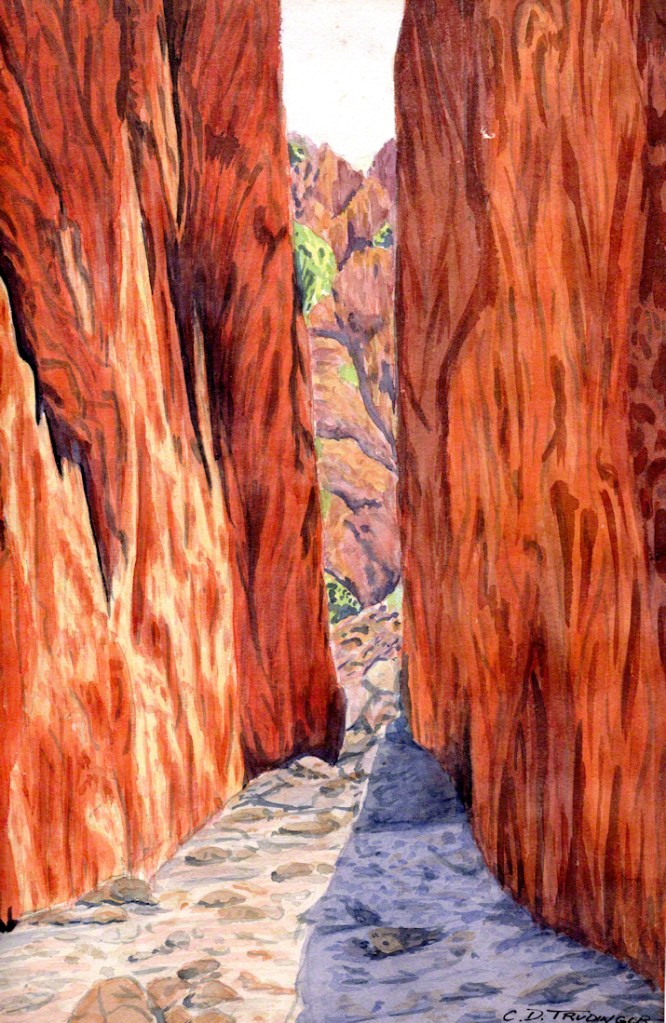
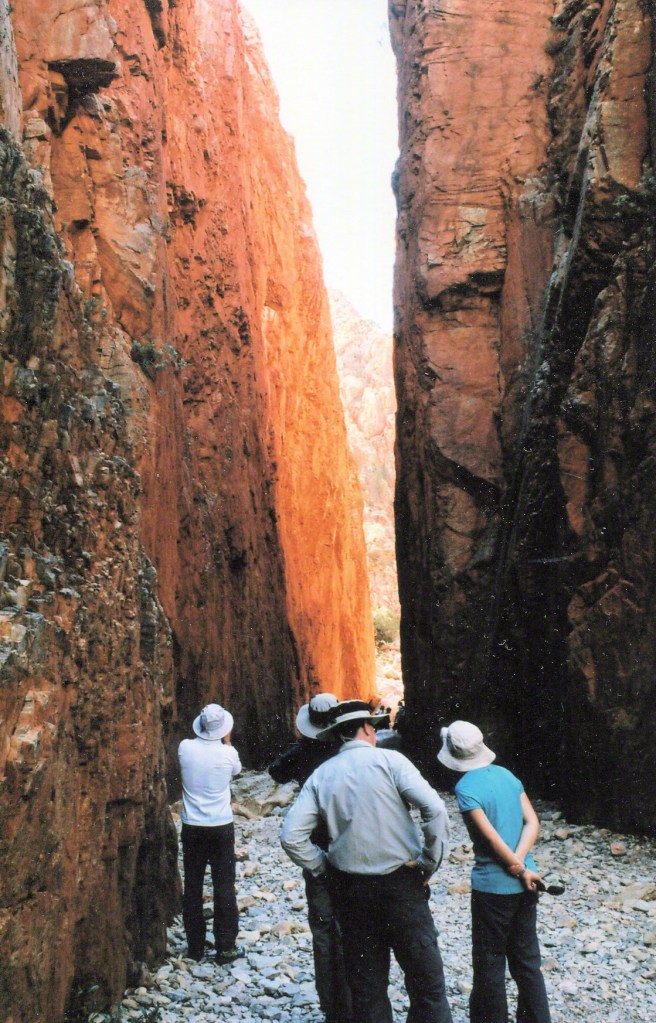
[While painting this scene of a group of older men gathering to admire the glowing walls of Standley Chasm, I was reminded of the T-Team’s trek in 1977 with Mr. B. This wealthy man used to comfort and luxury, took on the challenges of roughing it camping with the T-Team. This stunning chasm is about 50km west of Alice Springs and is one of the first of many beautiful sites to visit in the MacDonnell Ranges.]
The T-Team With Mr B (26)
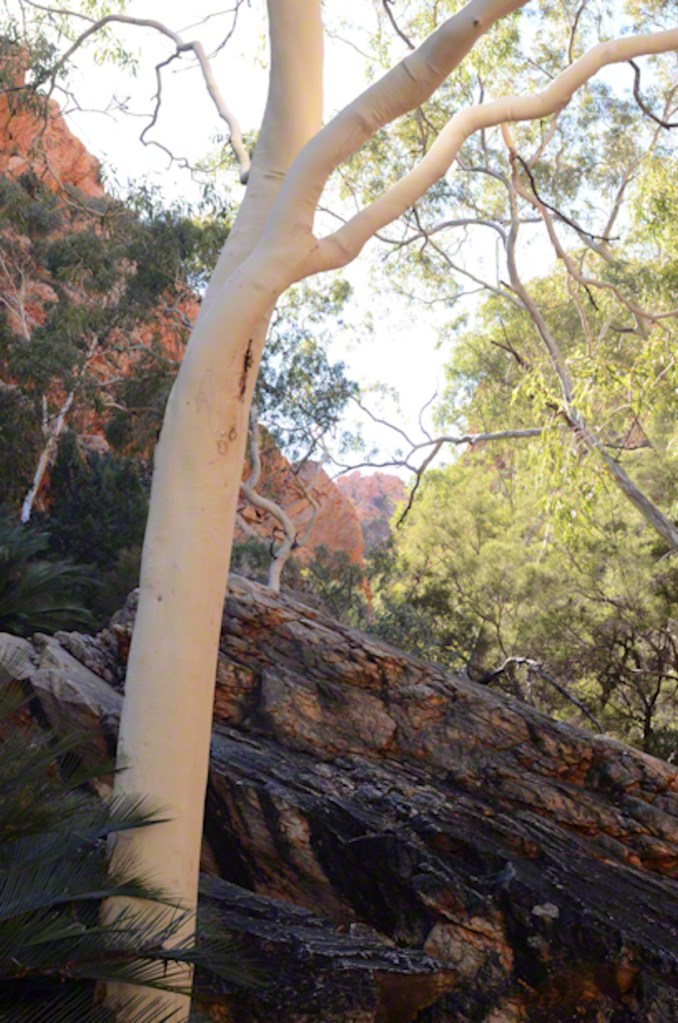
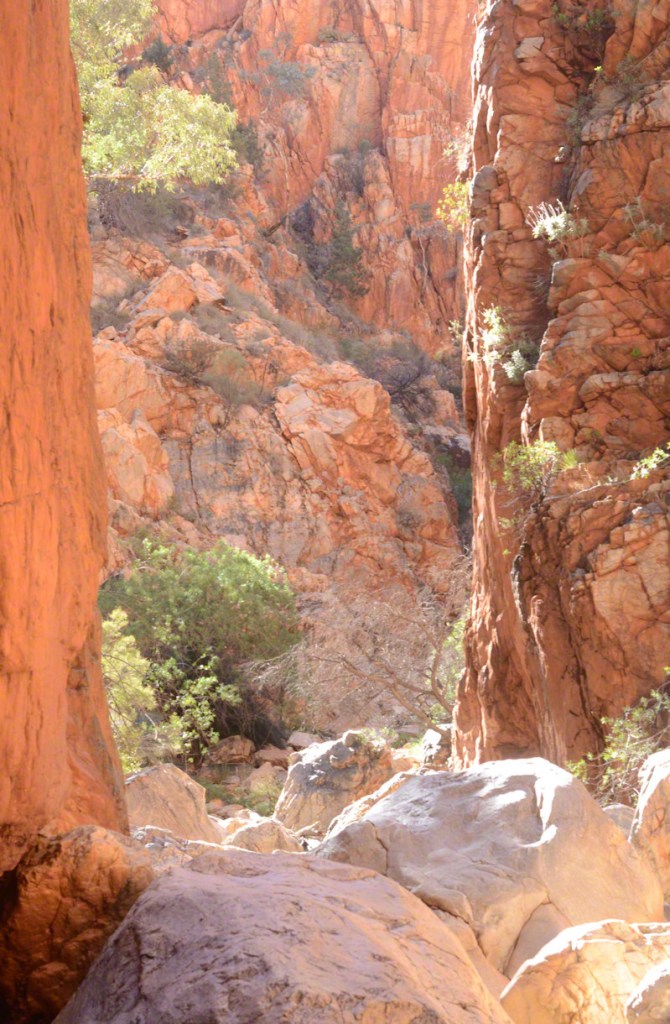
Mr. B slowed the Rover and eased it into a park joining the line of cars, land rovers, and buses awaiting their owners’ return. The T-Team piled out of the Rover and in single-file, followed Dad along the narrow track heading towards Standley Chasm. In the twists and turns of the trail that hugged the dry creek bed, I spotted ferns in the shadow of rock mounds the colour of yellow ochre, and ghost gums sprouting out of russet walls of stone. Hikers marched past us returning to the car park.
A leisurely short stroll became a race to the finish as we struggled to keep up with Dad; scrambling over boulders on the track, squeezing past more tourists going to and from the chasm, Dad snapping and cracking the verbal whip, and Mr. B moaning and groaning that “it’s not for a sheep station”.
The crowd thickened, stranding us in a jam of people, fat bottoms wobbling, parents hauling their whinging kids, and men clutching cameras to their eyes for the perfect shot. Dad checked his watch and then shifted the weight from one foot to the other.
‘Are we there yet?’ I asked.
Wrong question. Especially when asking a grumpy Dad.
‘Not yet!’ Dad barked.
‘I reckon we’re not far away,’ I said. ‘All the tourists have stopped. Must be some reason.’
Dad screwed up his nose. ‘I dunno, it doesn’t look right.’
‘Excuse me! Excuse me!’ Mr. B, one arm stretched out before him, parted the sea of people and strode through.
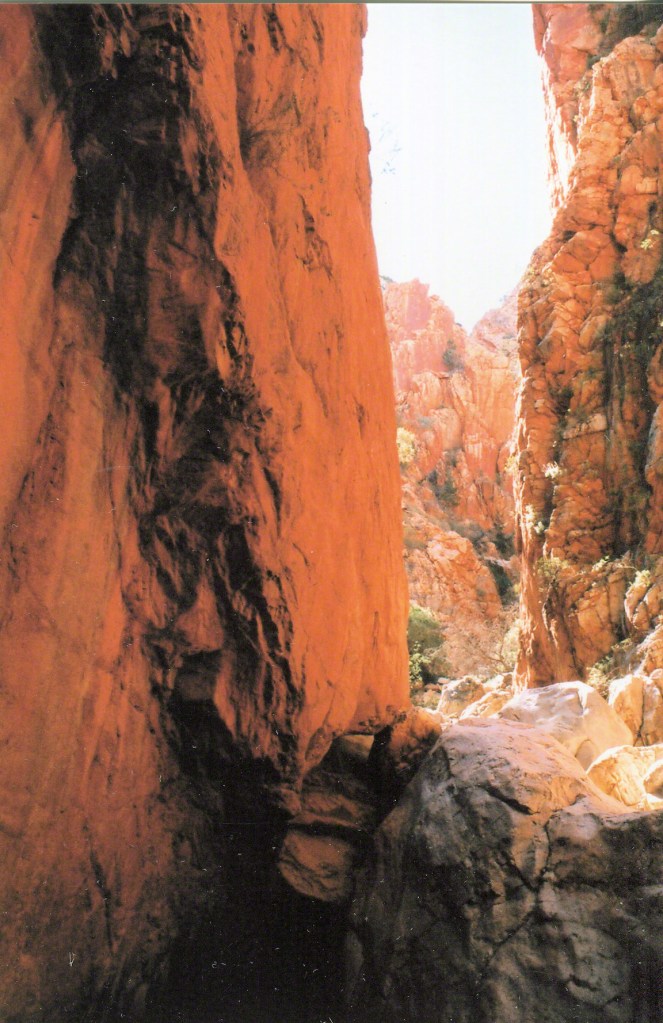
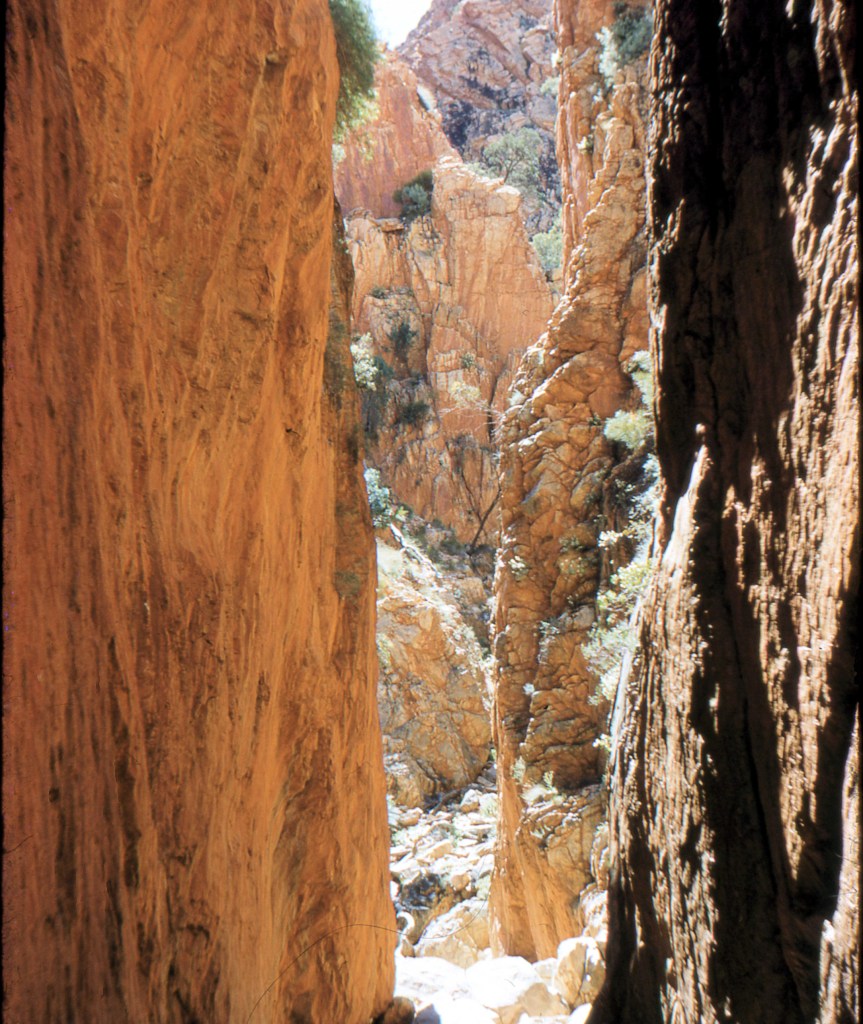
We followed in Mr. B’s wake and within twenty paces, there it glowed. Standley Chasm. Both walls in hues of gold to ochre. Dozens of people milled around its base.
Then we waited. The tourists snapped their shots and then filtered away.
‘When’s it going to turn red?’ I asked for the fourth time.
‘Be patient,’ Dad said.
‘This is boring,’ Matt mumbled.
‘Let’s see what’s the other side.’ Richard tapped Matt on the arm. The two lads scrambled over the rocks and I watched them hop from one boulder to the next over a small waterhole.
I watched mesmerized by the sunlight playing on the walls. They turned from a russet-brown on one side, gold on the other, to both glowing a bright orange. But by then, most of the tourists had left, thinking the Chasm had finished its performance for the day.







































 Tru-Kling Creations