Games days, Central Australian pilgrimmages, his garden, golf, table tennis…always having to win. These are the things that spring to mind when I remember my dad. Last Monday, he would’ve turned 97 if he hadn’t left this Earth for a more perfect life in heaven in 2012.
Another defining memory of Dad was his cars, except for his first one, a Gogo mobile, the rest were cheap, second-hand and the “that’ll do for the time being variety”.
This week I look back at the memory of one of these cars in the 100-word challenge.
[Driving around Adelaide these days, I see many classic cars. Brings back memories of our family cars from my childhood…]
Bathsheba
After 50 years, I have discovered the significance of our Holden FC’s name. My dad was called David. In the Bible, there’s a King David who has an illicit affair with a woman he spies in a bath on a roof top. Her name, Bathsheba. Bath-she-ba; an apt name considering the circumstances of their meeting. Did Mum think that when Dad bought this car, this silver-pointed beauty was his “mistress’? Similarities: Both Davids were master of their realms. Both Bathshebas, not new, used, yet beautiful. And both Bathshebas became parked in their David’s palace, in a harem, their love shared.
[Eleven years ago, the T-Team, next generation embarked on their pilgrimage to Central Australia. Purpose: to scatter Dad’s ashes in his beloved Central Australia, in Ormiston Gorge.
Over the next few months, once a month, I will take you on a virtual trip to the Centre and memories of that unforgettable holiday in 2013, with my brother and his family; the T-Team Next Generation. This time, the T-Team arrive, and again for us, rather precariously, in Alice Springs.]
The remaining 160km to Alice Springs progressed through sundown and twilight uneventfully…
Except for the car towing a camel trailer who decided to overtake us. An oncoming truck caused it to swerve back into our lane; the camels’ heads struggling to catch up with their necks at the force of the turn.
‘Missed the truck by that much,’ I remarked holding my fingers in pincer mode.
‘What the —! How do you get the thing to record?’ Hubby fiddled with the video camera. ‘Too late. Missed it.’
We watched the camel trailer disappear around a bend. ‘Bet that’s another event the T-Lings missed being too absorbed on their phones.’
Hubby pouted. ‘I should’ve been driving, then you could’ve caught it on video.’
6:30pm and a thick blanket of darkness had set in by the time we reached Alice Springs. By some miracle we’d managed to stay in convoy with the T-Team and had followed them through Heavitree Gap and into streets of the town. The blackness of night seemed to suck the glow out of the streetlights.
It was not long before, the T-Team too, were absorbed into the darkness after we missed the first set of traffic lights.
‘We’re stuffed now,’ Hubby grizzled. ‘Where’s the map?’ He turned and groped around the baggage on the back seat. A fruitless search.
‘There’s Richard.’ I flashed the car’s lights and he remained parked as I overtook the van.
‘Why didn’t you stop?’ Hubby started to panic. ‘You can’t stop now. You’re embarrassing everyone.’ This all said on the quiet and empty streets of Alice Springs. ‘Hey! Where are you going?’
‘There’s nowhere to park,’ I finally managed a word in edgewise as my hubby took a breath in between his hysteria and panic. I then stopped near the entrance to the Chifley Hotel. I glanced at the enticing amber lights leading to luxury and comfort. ‘You did mention staying at a hotel.’
‘Oh, you’ve lost them!’ Hubby snapped. ‘I’ll take over. You have no idea!’
I allowed Hubby to take control of the car. We wandered around the hotel resort carpark, and then out onto the road. We meandered around some more streets until we ended up on a dead-end road near a backpacker’s hotel.
I rang my brother, Richard and he instructed us to drive to a road with a name and stay put. We were to tell Richard the name of the road, and with the help of his Sat-Nav, he’d find us.
More driving round, and round…until we chanced upon a road with an actual name attached to it. Stott Street. There we parked. And waited. And waited…and waited.
‘You better get out that road map for a list of motels,’ Hubby said. ‘Can’t wait around here all night.’
I hunted in the dark for my bag, then finding that little treasure, I fumbled around its clutter for the road map. Under the dim glow of the streetlight, I scanned the pages. You would think that such a brochure would have a handy list of hotels and motels…but no. ‘There’s no list of accommodation I can see.’
‘Oh, that’s just great!’ Hubby sniffed.
‘I’m sorry, I made a mistake. I should’ve stopped near Richard, even if it had been an illegal park,’ I said. ‘Would you forgive me?’
‘Oh, all right,’ he sighed. ‘Sorry for snapping.’
Just at that moment, the T-Team van appeared, and we followed them, very slowly and carefully to their friend’s home.
Although their house was huge, by this time Hubby and I were not sure about setting our tent up in the dark, in their back yard. We had been warned of visiting or possibly resident wildlife, namely dingoes.
While drinking a most welcome cup of tea, we discussed and scanned the phone book for hotel accommodation. Our hostess was fine about us staying in a hotel as she wasn’t sure about the wildlife in her backyard either, or whether we’d be able to secure our tent as the ground was quite hard. She suggested a couple of hotels, but they had already closed their bookings for the night.
By this time, it was about 7.30pm, and our stomachs were rumbling. The T-Lings insisted on Hungry Jacks as our nephew had accrued some vouchers. So, Richard drove us all in the van to this venue for burgers.
The line-up was long, and the service was, to say the least, slow; partly because a certain T-Ling was very particular about getting value for his voucher. By the time my nephew had finished his order, I had eaten my chips. I think the African girl who was serving looked relieved after such voucher discussions with my nephew. Making the discussions and our orders understood were not helped by the fact that both girls serving struggled to comprehend what we said, as English was not their first language.
Then, as we waited for our nieces to receive their orders, a group of Indigenous people piled out of a bus and walked in. I noticed that they wore T-shirts with Areyonga written on them. I smiled at them and silently remembered the special time we, as the T-Team, had there in 1981; the oasis, the beautiful singing of the Indigenous who lived there and the hospitality shown to us.
When we left the burger shop and had piled into our van, my older niece said, ‘Now I know what it feels like to be a minority.’
Hubby and I managed to book a room at the Chifley Hotel. The receptionist apologised to Hubby that they only had a standard room available. But for us, the standard room was most acceptable; it even had a print of Mt. Hermannsburg on the wall.
We flopped down on the bed and relished in our comfort and luxury.
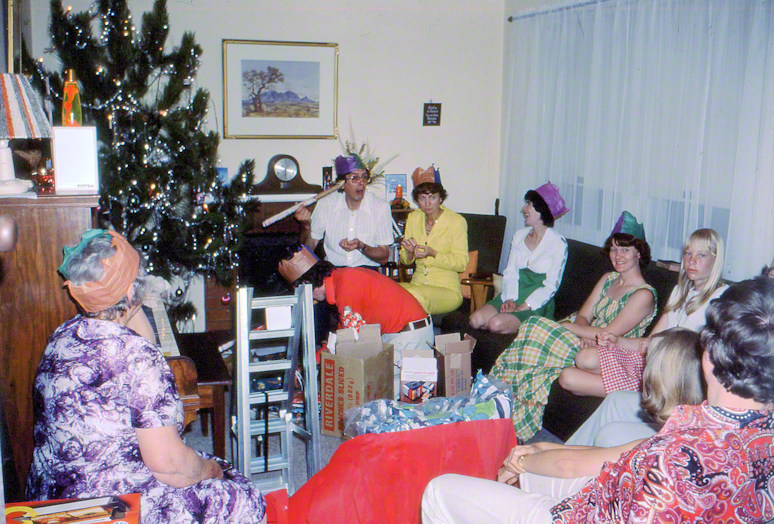
[Why 1978? Nostalgia for one. Some snapshot of the past for future generations. And, well…I do wish I could share the shenanigans of current family, but I think that would leave me Christmas card less and spending the next 40 years on my own at Christmas sipping some sort of spirits to drown my sorrows, forget my regrets and missing all the entertainment Christmas in Australia brings. So, what harm would be done to reminisce about one warm Christmas Day when life was simple, and the stars of this show are now twinkling in the sky of remembrance. Needless to say, like Mr B, I will not use their real names to protect the not-so innocent, and the little bit affected.]
Christmas to a T
The sun filtered through the dusty window golden and warm. I flung off my sheet and raced to the Christmas tree; a real one that filled the lounge room with the scent of pine.
Mum, still in her nightie, watched me as I opened my presents: two skirts and a pair of scuffs.
I hugged her. ‘Thank you, Mummy.’
‘You’re welcome.’
‘So, what church do you think we should go to, today?’
‘I was thinking Maughan Church in the city.’
‘Excellent, I like that church.’
‘Well, then,’ Mum glanced down the passage way, ‘you better get ready.’
I hurried to my room and changed into my new Christmas skirt, relishing the T-female tradition of new clothes for Christmas. Even better, home sewn by mum, so no one would have the same dress as me. I pulled on a white lace shirt to match the simple V-cut skirt of fine red and white plaid.
Mum called out from the kitchen, ‘Hurry, we have to get there by half-past nine.’
‘Alright.’ Easy for her to say, but the challenge was my Dad and brother, Rick. How to wake the men who lay in their bed-tombs asleep?
Mum had an idea. ‘Why don’t you put the radio on? Make it loud. Really loud.’
I followed Mum’s suggestion and tuned the radio to 5KA and turned up the volume dial until it would turn no more.
Boney-Em blasted out a Christmas carol causing Mum to jump. ‘Not that loud,’ she cried through a mouth full of milk and Weeties cereal mixed with her ever-faithful All-Bran.
An unimpressed and bleary-eyed Rick and Dad joined us on our jaunt into the city to celebrate Christmas Uniting Church style, not much different from the Lutheran Church service. Rick nodded off during the sermon all the same.
Then, the highlight of our year, Christmas at Grandma’s. Always a spread, but as it was simmering around 35-degrees Celsius, cold chicken and ham, for meat, and potato salad, coleslaw, tomato and onion salad, cucumber and beans from Dad’s garden swimming in mayonnaise, and for our serve of greens a bowl of iceberg lettuce.
The food was only second to the company. Grandma, with her G (she wasn’t a T) gifting of hospitality, had invited some friends from church. My uncle and aunty from the inner suburbs of Adelaide also came to complete the gathering around the old oak extendable table. That year, the numbers being not large, I sat with the adults. Other years children were relegated out in the passageway or exiled to the back garden to sit at the “kindertisch”. Anyway, at 15, I was almost an adult.
After lunch, we lingered at Grandma’s all afternoon, waiting for the second wave of visitors to arrive. I flicked through Grandma’s photo albums and then read some of her books from the bookshelf in the spare room. Actually, that’s what I did, after helping Grandma and mum wash and wipe the dishes while the others lazed around chatting and playing cards.
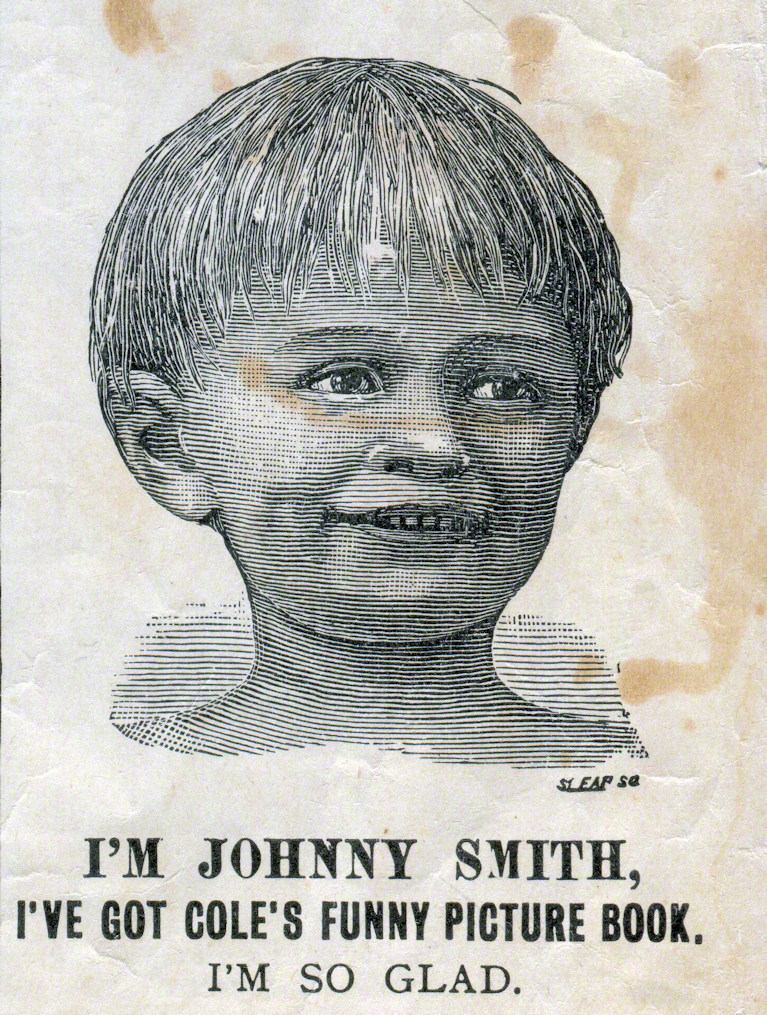
I’d started on The Coles Funny Picture Book when called to bid one of Grandma’s friends, my uncle and aunty goodbye. Within minutes, the next influx of relatives rolled up the gravel drive. Aunt Wilma and her husband Jack stepped from their yellow Volkswagen Passat. The couple impressed me; so striking with Aunt Wilma’s elegance, matching her husband’s movie star looks and Scottish wit.
Sidling up to Mum, I asked, ‘Why didn’t the others stay?’
Mum mumbled something I didn’t quite catch before rushing up to her sister and hugging her. I followed mum with the greeting rituals of hug and kiss my aunt and uncle. Then, while the adults engaged in honey biscuits, tea and banter, I resumed my perusal of The Coles Funny Picture Book.
Dinner was left-overs from lunch. Sorry Wilma and Jack, but that’s the tradition. Waste not, want not, my Grandma used to say. She was a parson’s daughter and married a parson, not just any old parson, but a missionary one, during the Depression. And she and her missionary husband moved up to Hermannsburg at the start of World War 2. I was convinced that she still had rusty tins of food mouldering at the back of her cupboard from the “Dark Ages”.
Uncle Jack was in fine form—they’d obviously had a merry time at the last Christmas appointment. True to form, he kept us entertained with his brogue accent and humour, repeating variations of the Wattle ditty. Here’s how it goes with his accent:
“This ‘ere is a wat’le, The emblem of our land, You can stick it in a bot’le, Or ‘old it in your ‘and.’
Jack performed this with variations, and some subtle actions that at fifteen, I was a tad too innocent to “get”, but we all laughed anyway.
As the night progressed, the bolder Uncle Jack’s jokes grew and the more most of us laughed. Perhaps not Grandma’s friends who had dared to stay on; they kept glancing at Grandma, the expression on their faces reading, “Pull your son-in-law into line, dear.”
My dad sat on the piano stool, hands under his bottom, his lips doing the bird-in-mouth thing and a snort escaping with every new and daring quip from Jack. Dad hoped to play the piano as we sang some Christmas carols, but as each joke escalated in levels of risqué, clever though they were, the likelihood of carol singing became less likely.
One of Grandma’s friends suggested we should sing some carols. Ah, the innocence of good Christian folk in the 1970’s.
Rick and I commenced our own rendition of We Three Kings…
Grandma picked up a present and quietly said, ‘I don’t think we will sing this year. Let’s open our presents. Lee-Anne, you’re the youngest, you can start.’
So, here’s how I scored in 1978: Cosmetic mask from Aunt Wilma and Uncle Jack, hairdryer from Mum and Dad, photo album and book from Grandma and a cassette tape from my country cousins. Grandma’s present, a book, interested me the most and I stayed up to 2am reading it.
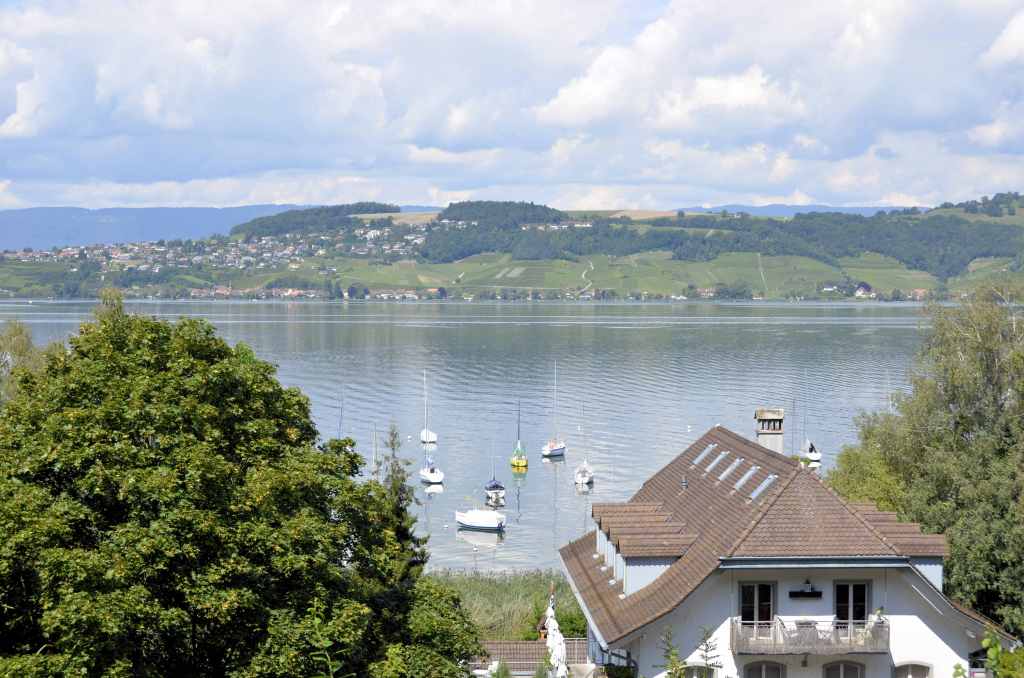
[Have you ever been to a place and had an immediate affinity with it? Well, that’s how it was for me when the T-K Team on their Swiss adventures visited Murten. Loved the place. I’m sure, now, that it wasn’t just the perfect weather, the picture postcard views of the lake and the charming medieval architecture so perfectly preserved. There was something more, which I was to discover recently.
Of course, my younger son would insist on putting a dampener on my dreams—’How can you be related? You’ve got no Western German in your ethnicity,’ he harps on and on about that point. Anyway, we will put that matter aside and I’ll take it up with My Heritage.
All I can say, is that there must be something in the connection I felt with the place. While doing my family history, I came across some ancestors, the De Bons, who lived in Murten, my five times great-grandfather was a protestant pastor in Murten. There were Huguenot connections in the family. And note the museum, where I mention that the Celts lived in Murten. According to my DNA results from My Heritage, my ethnicity is 25% Celt.]
Murten/Morat
Thursday, August 21, 2014, even earlier up as we planned to drive across the country to Bern and beyond, near the French part of Switzerland. Granny excused herself as the last two days had exhausted her and besides, she really needed to catch up with her uncle and auntie.
I might add here that Granny and her family, being Swiss German, were not fans of the French part of Switzerland. The feeling, I’ve heard, is mutual. (Thanks to Nepoleon, the French part of Switzerland only became thus in the early 1800’s. So, when my ancestors were living there in the 1700’s, they would’ve identified as French.)
In Murten, the people speak French. So, when P1 spoke Swiss German to the Museum attendant, she was not amused. We almost didn’t get a Museum pass.
Back to the timeline, and some photos.
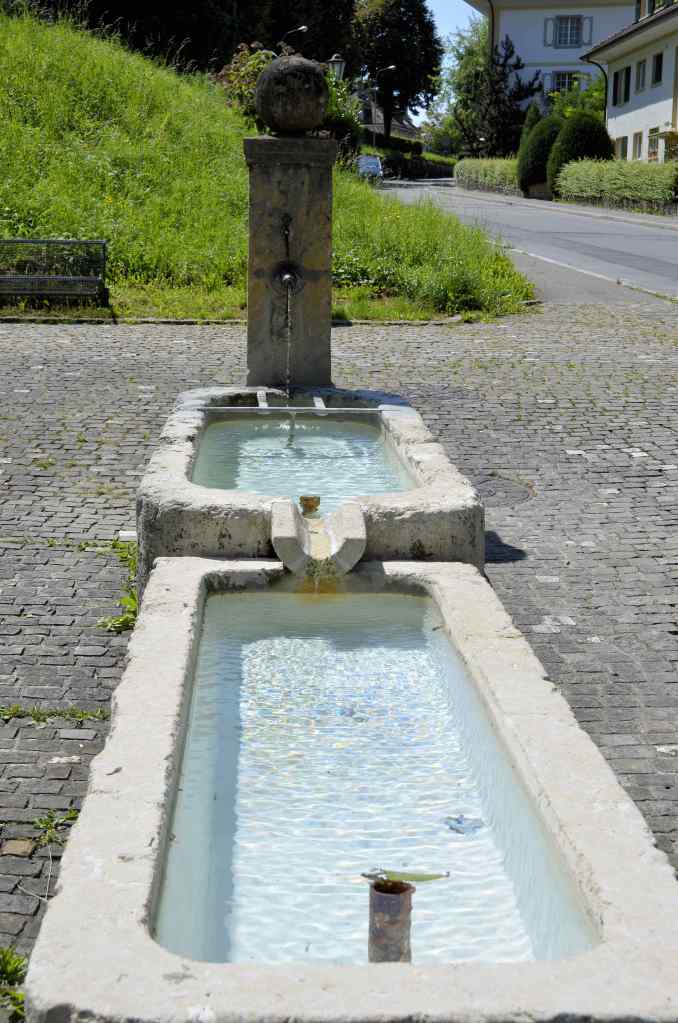
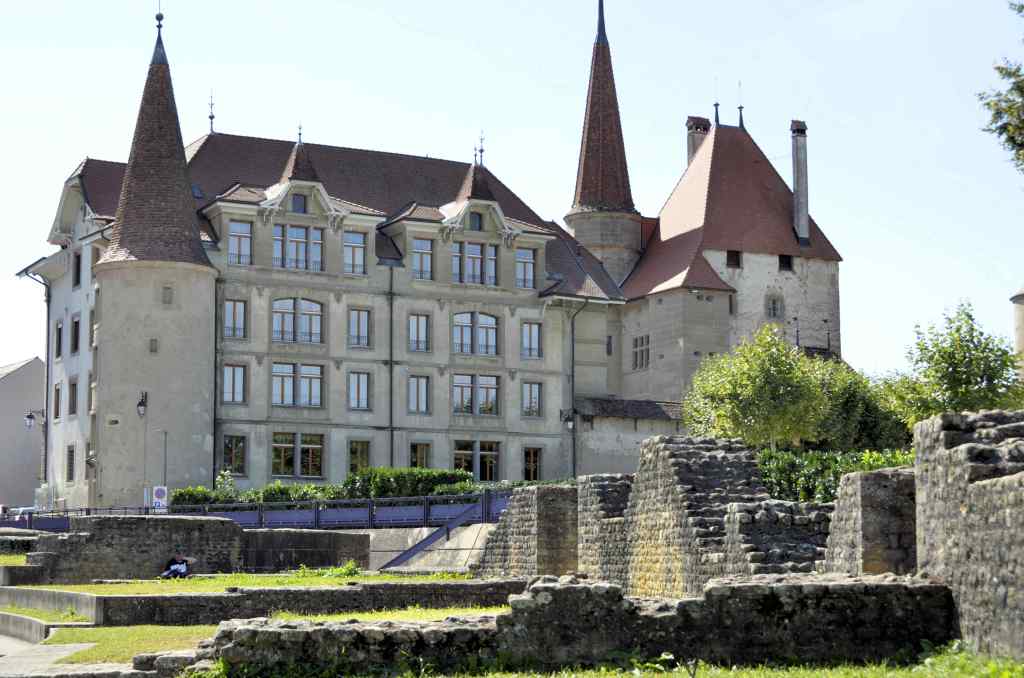
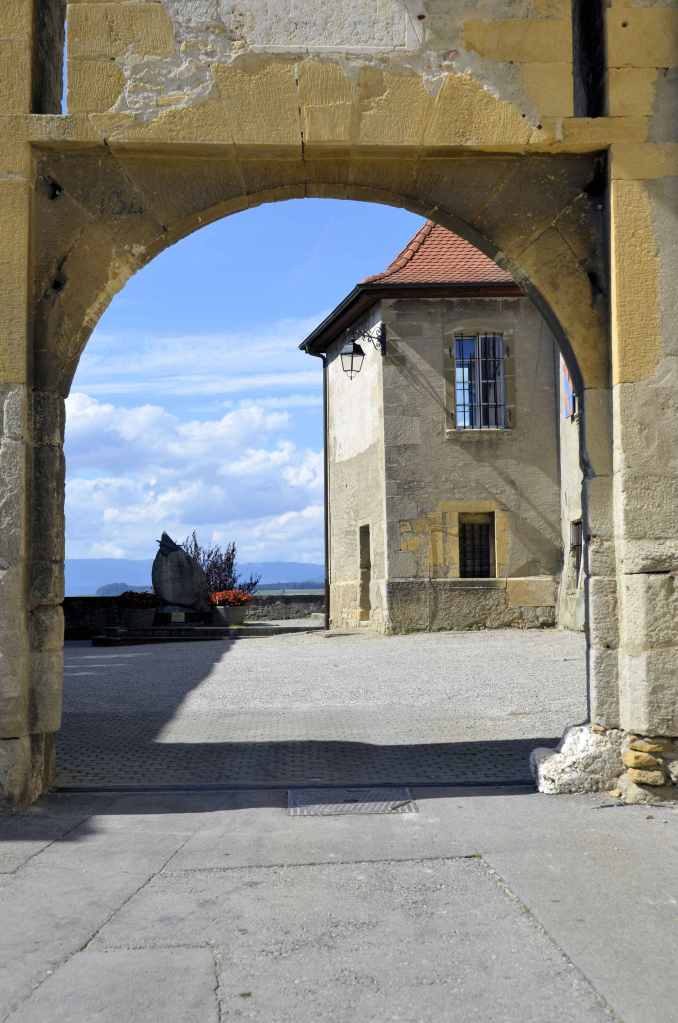
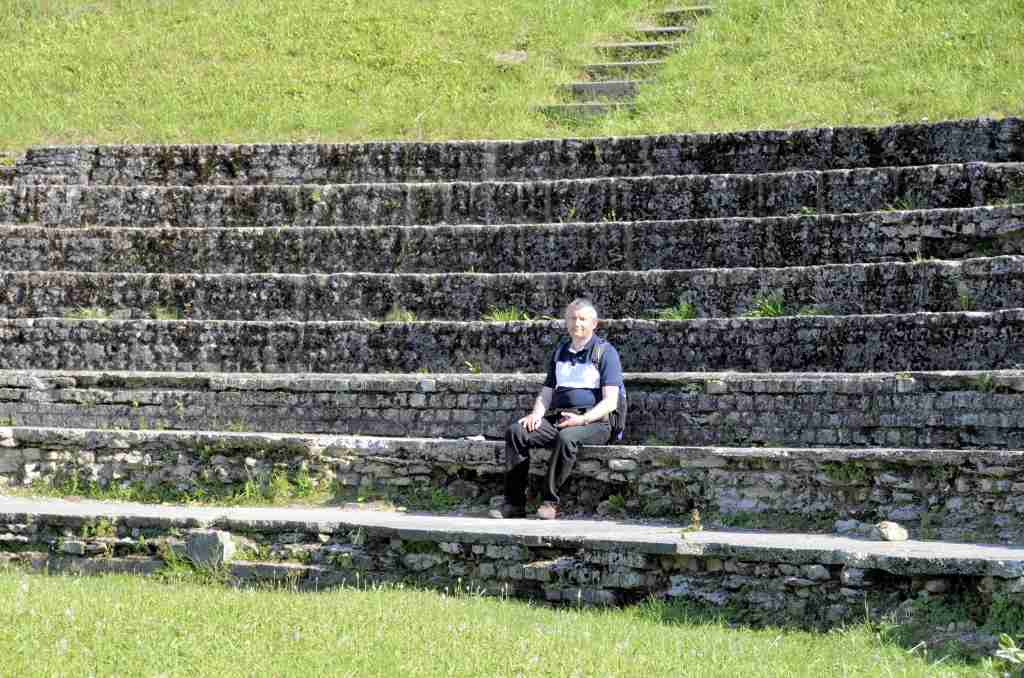
Despite Tomina’s (Tom Tom) and my under par navigational performance (early morning—yawn), we arrived at 11.30am in Morat/Murten and relished a day of summer, eating lunch by the lake, exploring the Old town and its buildings garnished with flowers, the museum of Stone Age, Celtic, Roman and Medieval relics spanning 10,000 years of human settlement around Murten. Followed by a visit to the Roman ruins in Avenches, the ancient capital of the Roman province of Helvitica.
On our return, we suffered the frustration stuck in peak hour traffic, and Granny suffered stress worrying about our late arrival “home”.
[Eleven years ago, the T-Team, next generation embarked on their pilgrimage to Central Australia. Purpose: to scatter Dad’s ashes in his beloved Central Australia, in Ormiston Gorge. In “Ready for the Weekend Friday”, I will take you on a virtual trip to the Centre and memories of that unforgettable holiday in 2013, with my brother and his family; the T-Team Next Generation. This time, the T-Team make their way, rather precariously, to Alice Springs.]
Rest Stop at Curtain Springs
We paused for lunch at the rest stop just outside Curtain Springs. There we sat and ate our sandwiches and watched the passing parade of tourists, trundling through in their RVs, and caravans. They’d park, snap a few photos of Mt Conner, walk stiff-legged to long-drop toilet, then stagger out waving the flies away before climbing back into the comfort of luxury on wheels and trundling away down the road to Uluru.
A big bus roared into the rest stop and a young Indigenous family alighted. The wife and children joined the queue for the toilets. Meanwhile, the husband gazed at the view of Mt Conner. As he walked back to his bus, he gave a nod and greeted us. He was the only one of the passing multitudes who did.
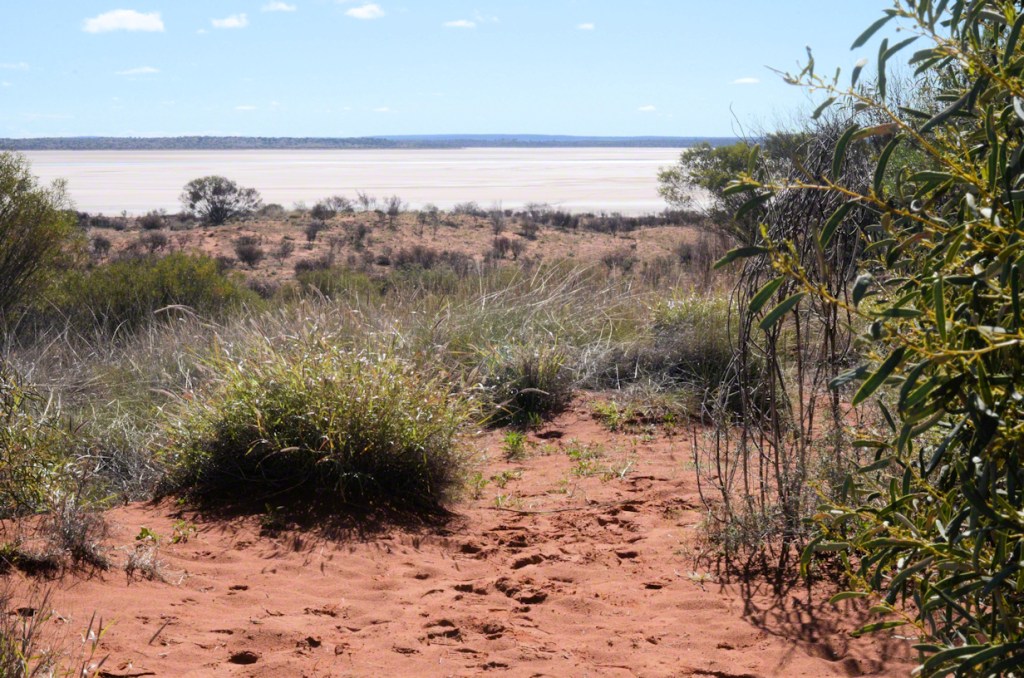
After our lunch, Anthony and I climbed up the sand hill opposite the rest stop. At the top, we viewed a salt lake in the distance. Maybe, I assumed, it was the tail-end of Lake Amadeus.
‘Wow!’ I said, ‘and all those tourists just go past and never bother to climb this hill and see the lake.’
No answer.
I turned. Where was Anthony? I scrambled around the scrub in search of my husband. ‘Anthony? Where are you?’
No Anthony in sight, I assumed he had returned to the car. Upon my return to the car, I discovered he was not there either. After checking the toilets and discovering only flies and the stink, I traipsed up the hill again. Where was he?
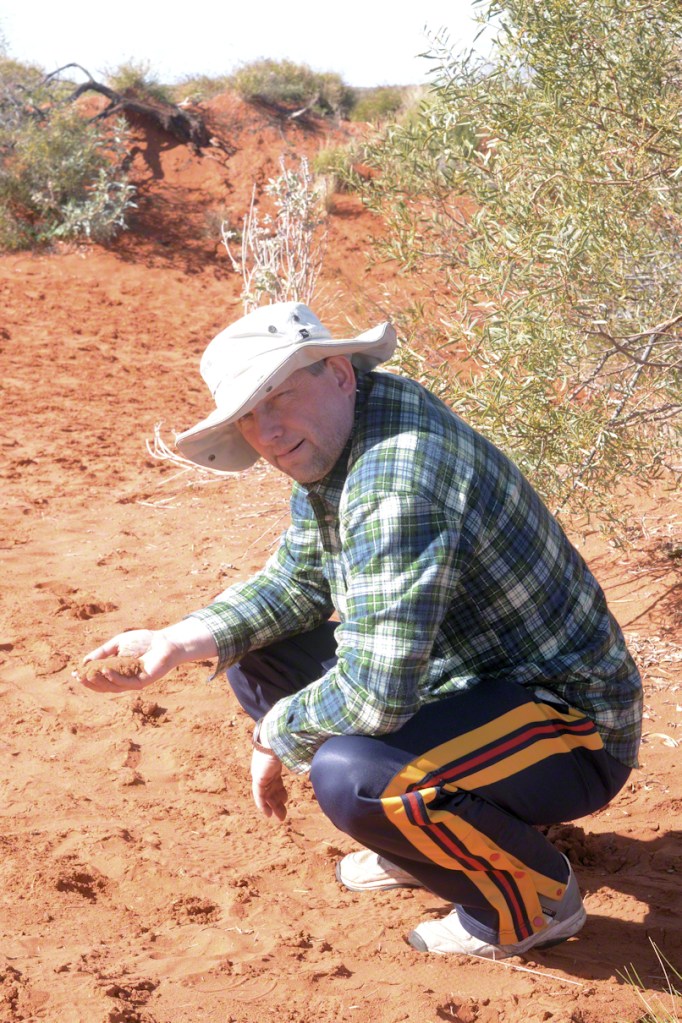
Just as I was about to give up on him and call in a search party, I almost stumbled over Anthony. He was squatting on the sand, sifting the grains through his fingers. ‘I can’t believe how red the sand is,’ he said.
At Erldunda we filled up the car with gas and I took over driving. As we headed for Alice Springs, I remarked, ‘The T-Team must almost be in Alice Springs.’ ‘Mrs. T will like that,’ Anthony replied, ‘she was in a hurry to get there.’ ‘Do we know how to get to her friend’s place where we are staying?’ My husband shrugged. ‘Guess we’ll have to call my brother and get directions. Haven’t got their friend’s address,’ I said. ‘Or we could stay in a motel.’ ‘That’s an option, if we can’t contact them.’ Anthony sighed, ‘Yeah, but, how easy will it be to find accommodation if we haven’t booked?’
We hadn’t travelled more than 40 km when we spotted a family on the side of the road and in distress. Maybe we should stop and help them, I thought.
As I slowed down, I noted that a lady stood at the edge of the road waving her arms. ‘What the heck?!’ Anthony exclaimed. ‘I think they’re in trouble,’ I said, and as we drew closer, ‘It’s Mrs. T waving her arms about.’ I braked. ‘Hey! Not so hard!’ Anthony screamed. Took my foot off the brake and then eased the car to a stop by the side of the road. All the while the T-Team grew smaller and smaller in our rear vision mirror.
‘What! Stop! What are you doing? Stop! Brake hard!’ I slammed my foot on the brake and jolted to a stop on the dirt. ‘Why did you stop so far away? Reverse back to them,’ Anthony snapped. ‘No!’ I retorted. ‘We can walk. Who knows what junk is lying in the dirt ready to puncture our tyres.’
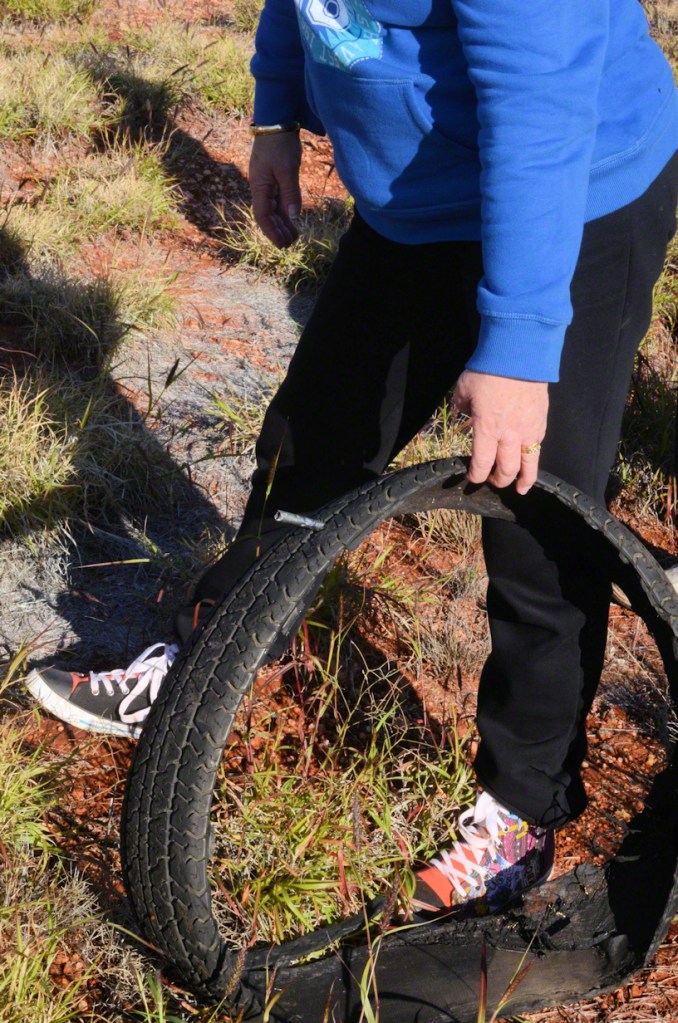
In a huff, my husband raced ahead of me to where Richard was operating on the trailer. As I approached the T-Team, I noticed that my brother was pulling off one tyre carcass and proceeding to mount the spare.
‘The tyre got staked,’ Mrs. T held up what looked like an antenna, ‘by this metal thing.’
‘And we’d just changed a tyre at Erldunda; one that got shredded,’ Richard pointed at some rubber remnants on the verge, and then shook his head. ‘The mechanic didn’t do anything about wheel-balancing. The tyres got so worn they came to pieces. The other tyre was nearly worn through, so I changed them around.’
‘Why do we have such bad luck?’ Mrs. T cried. ‘It’s the curse of the Rock,’ my older niece said. ‘Who stole a rock from the Rock?’ my nephew asked. The T-Lings had been sitting in the van playing their phone games, but they emerged to join in the family conversation.
‘What d’ya mean?’ Mrs. T said. ‘I bought this rock as a souvenir!’ ‘Yeah, but, my brother did run down the Rock barefoot some twenty years ago,’ I laughed. ‘Perhaps the Rock remembers.’ ‘Well, one thing for sure,’ Richard rubbed his hands, ‘first thing tomorrow, I’m ringing the mechanics who did our wheel balance…’ ‘It’s just not safe,’ I said. ‘I know,’ my older niece held up her hands as if holding a steering wheel at an angle, ‘I told them something was not right and that I had to hold it like this all the time. But they wouldn’t believe me.’
With tyres fixed and resolution to acquire replacements in Alice Springs, plus promises to catch up in the same town, the T-Team disappeared down Stuart Highway in the late afternoon haze.
But our ordeals reaching our next place of accommodation were not over yet. [To be continued…]
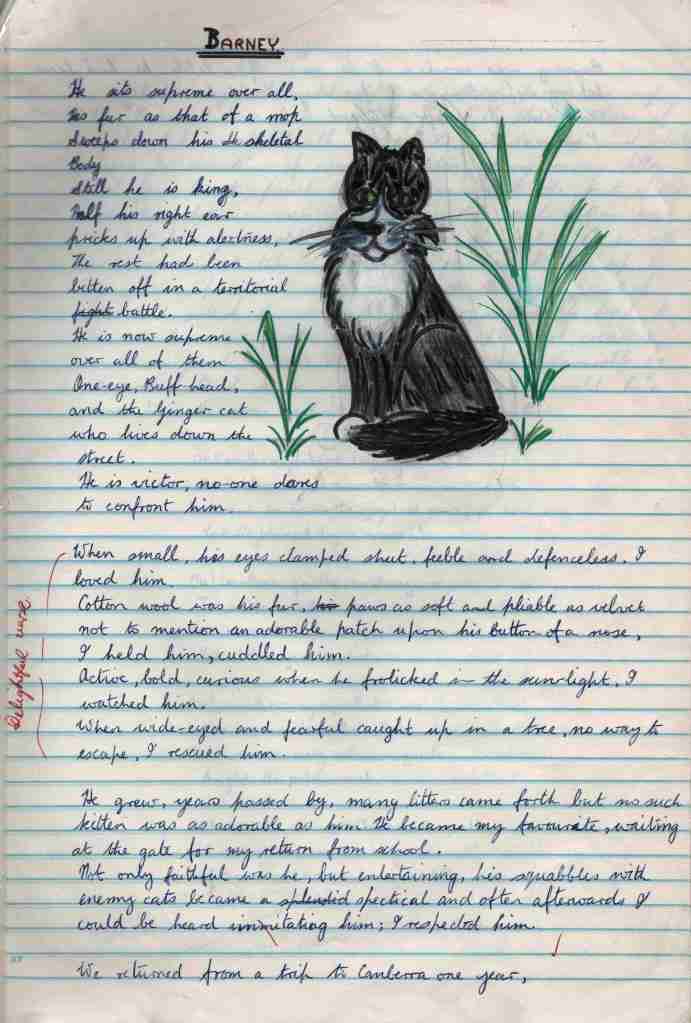
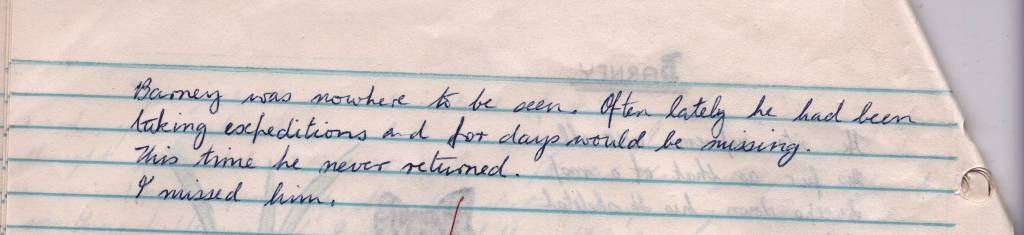
A thunderstorm right over our home last Tuesday and one that rattled the windows threatening to blow out our modem, caused us to switch off our internet. Screen-free for the day, I spent my time excavating my writings from the depths of the closet. There, I discovered this memory from my childhood, and a special cat in my life, Barney.
The poem/prose was handwritten, so I have transcribed it. The original is set below this one.
Barney
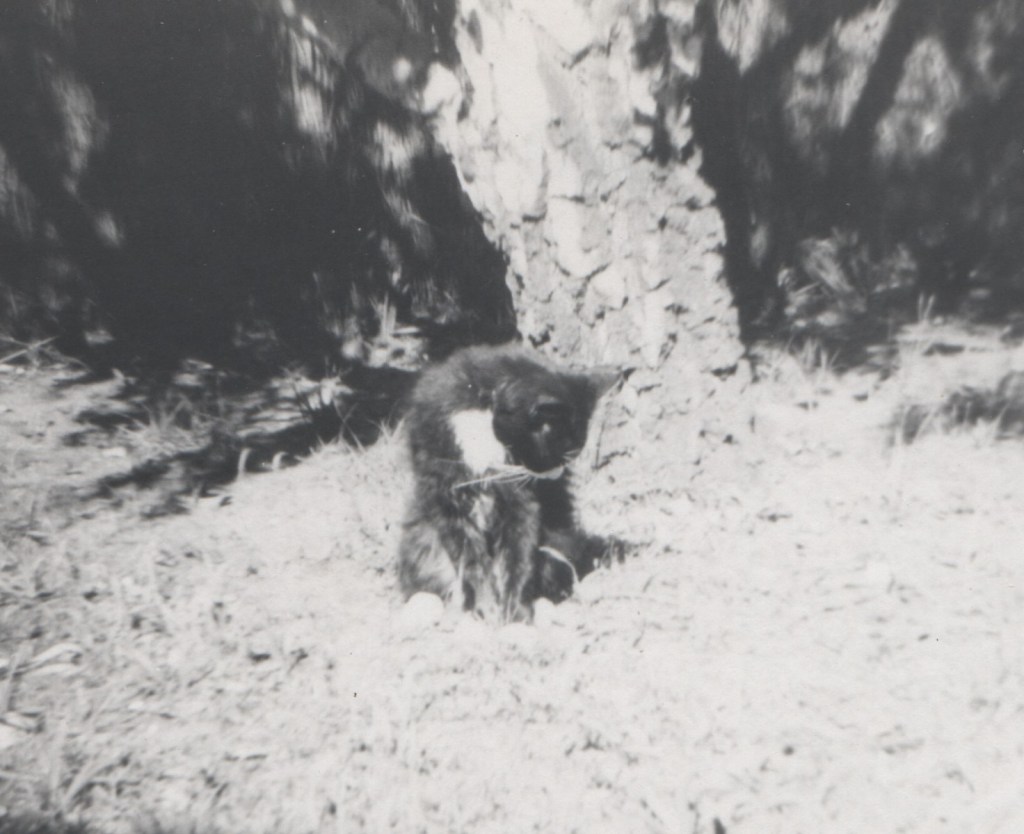
He sits supreme over all, His fur as that of a mop Sweeps down his skeletal body. Still, he is king. Half his right ear Pricks up with alertness, The rest had been bitten off in a territorial battle. He is now supreme. Over all of them, One-eye, Buff-head, And the ginger cat who lives down the street. He is victor, no one dares to confront him.
When small, his eyes clamped shut, feeble and defenceless, I loved him. Cotton wool was his fur, paws as soft and pliable as velvet, Not to mention an adorable patch upon his button of a nose. I held him, cuddled him. Active, bold, curious when he frolicked in the sunlight, I watched him. When wide-eyed and fearful caught up in a tree, no way to escape, I rescued him.
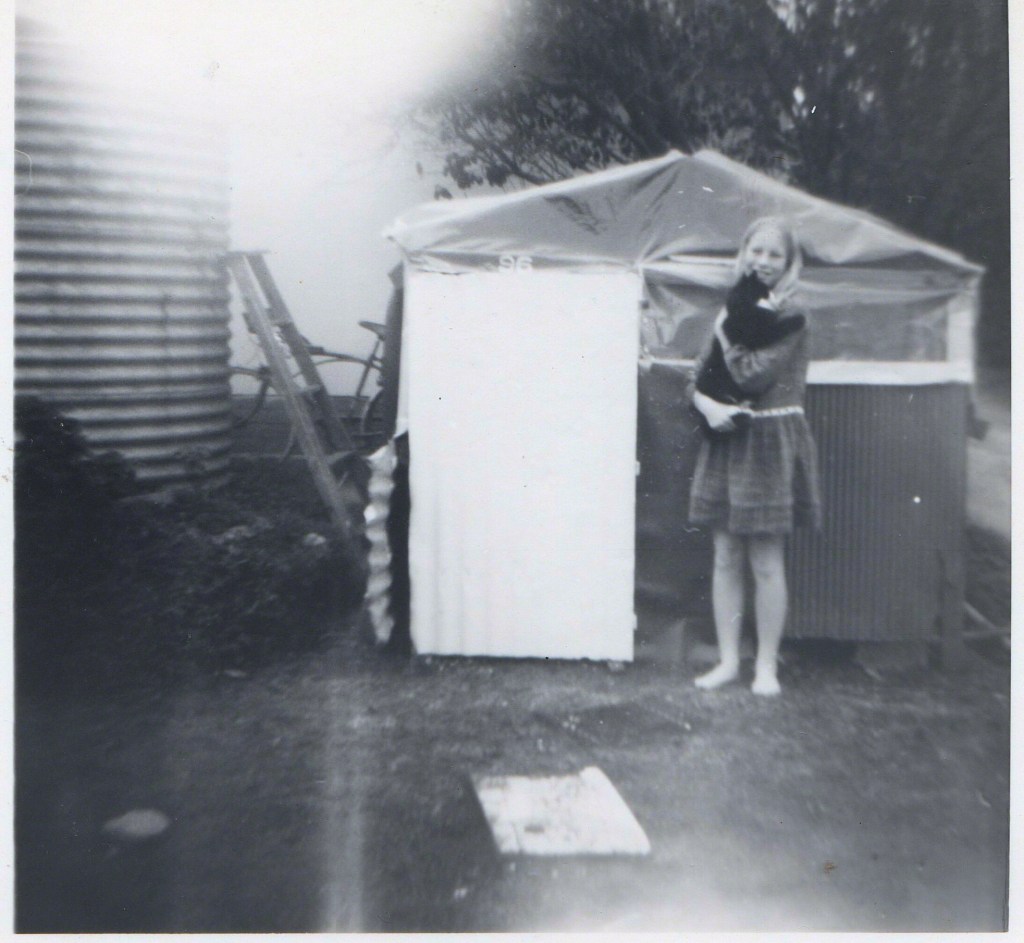
He grew, years passed by many litters came forth, but no such kitten was as adorable as him. He became my favourite, waiting at the gate for my return from school. Not only faithful was he, but entertaining, his squabbles with enemy cats became a spectacle and often afterwards I could be heard imitating him; I respected him. We returned from a trip to Canberra one year, Barney was nowhere to be seen. Often lately he had been taking expeditions and for days would be missing. This time, he never returned. I missed him.
As a child, I enjoyed creating what I see or images in my mind with colour on paper or canvas. I would go into “the creative zone” and spend hours drawing or painting. Once I missed a visit by favourite relatives because I was “in the zone” painting a Central Australian mountain range.
I remember at eight years old, painting with acrylics at my grandmother’s house. I loved the process of paint gliding and flowing from the brush and how my mountain became a volcano smoke billowing from its mouth and snow gracing its slopes. I was hooked.
But, in the 1970’s, with the rise of the status of women in society, the prevailing attitude was that every woman has a right to education, university and a career. The culture of the day was instilled in me that art was merely a hobby. So I never considered doing art as a career. My year eleven teacher cried as I chose Chemistry over Art for my final year. I reasoned I could always pick up art (as a hobby) once I left school.
This I did in 1981, my gap year. I joined a local Art Class in Glenelg and Arthur Phillips taught me to paint with precision, like a photograph, layer upon layer, with acrylics. I admired Arthur’s skill and enjoyed the classes that were always filled with laughter.
However, as a poor university student, I had to give up Art Classes. I thought the Art Club at University would suffice. But it didn’t. The University Art Club at that time, seemed to be more focussed on social activities than getting together to paint.
After graduating in 1985 with a Bachelor of Arts (majoring in Japanese and English), and then in 1986 a Graduate Diploma of Education, I entered the teaching profession and in 1987 relocated to Melbourne for my first job. After eighteen months of teaching teenagers, many of whom did not want to learn, coupled with a feeling my life had been hijacked by school, I quit teaching. I then took up a Research Officer position with Fusion Australia, a youth and community organisation that had an office in Murrumbeena, not far from where my husband and I lived.
Soon after I began working there, the community centre associated with where I worked, put on a community event—painting a mural with the help of a well-known local artist, Arthur Boyd. He shared his struggles as a professional artist over his career, making ends meet. This conversation opened my mind to the idea that for some (who were good enough) art can be more than a hobby. I now wonder what happened to the mural he helped us paint. The church in which the community centre was housed at Murrumbeena was knocked down and the land developed into a nursing home in the early 1990’s.
In 1989, my friend from church, organised art classes with artist Geoff Rogers as our teacher. Geoff taught me to loosen up with my paintings—more flow and movement in the scenes of the Flinders Ranges I painted.
At the same time, the local community centre offered art classes which I joined. There I continued my loose-with-palette-knife rendition of the Gammon Ranges’ Bunyip Chasm. The art teacher discouraged me. ‘You can’t do that, it looks awful,’ she said.
Later a friend came up to me as I was painting and remarked, ‘I love it! Can I buy it when you’re finished?’
I decided Geoff Rogers’ style suited me and kept with the loose style. I framed Bunyip Chasm which at the time cost $80 and then offered the painting to my friend for $100.
‘Oh, I can’t afford $100, dear,’ she said, ‘can you make it less?’
I loved my Bunyip Chasm and said, ‘I’m sorry, I can’t lower the price as the frame cost $80.’ To be honest, I was too attached to my painting to part from it.
For the next twenty-two years, Bunyip Chasm decorated the walls of the homes we lived in. I gave it as a fiftieth birthday present to my sister-in-law as it was a favourite of hers. I then painted another Bunyip Chasm in the same style, but different, and that sold too.
When my children entered our world, I couldn’t paint—no room in a two-bedroom unit, and even when we progressed to a larger home, life was busy raising a family. So nineteen years passed without touching a brush or canvas. When we returned to Adelaide, with the boys at school, I enquired about art classes, but was told the same story again and again—the classes are fully booked, you’d have to go on a waiting list. There must be a lot of people doing art in Adelaide, I thought.
Then in 2009, I joined a writers’ group. At the same time, the art-bug had bitten, and I began painting with an artist friend from church. I shared how I found it hard to separate from my paintings, they were like my babies. My friend’s husband said, ‘But you need to share your work and bring happiness to others.’
Half-way through the year, a fellow writer invited me to join Marion Art Group (MAG). ‘Just bring along some of your work,’ she said.
Gulp! What if they don’t like my work? But I steeled myself and armed with three recent pieces of art, I went down to the hall where the group was held.
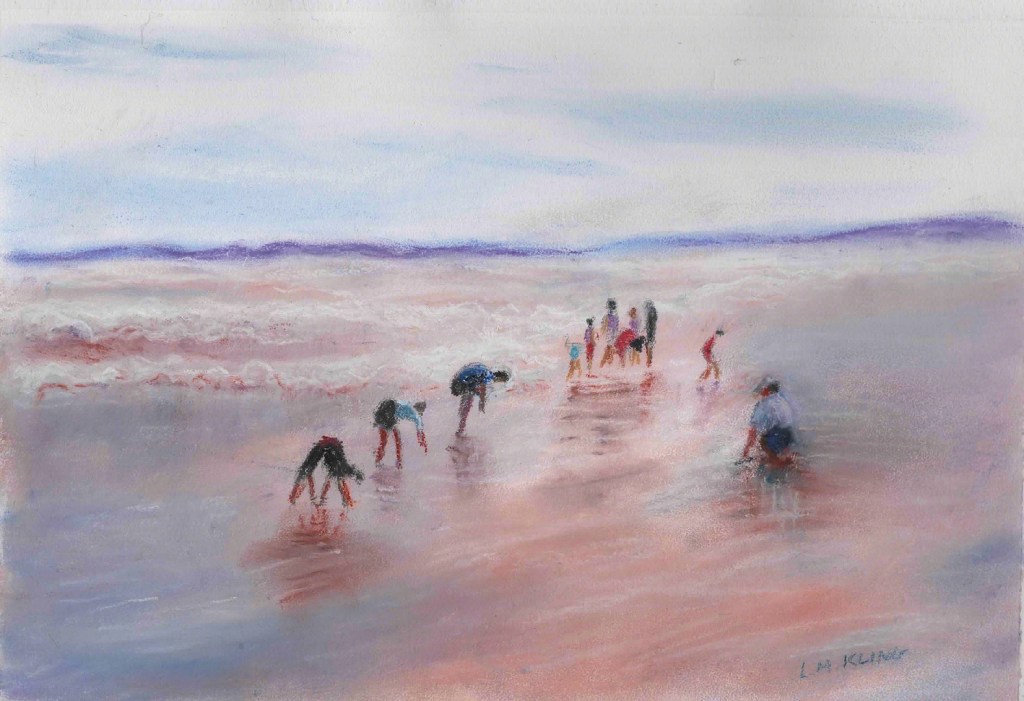
No worries, I was accepted. And by the end of the year, I’d sold my first painting, Cockling at Goolwa, to another MAG member.
In my first MAG exhibition at a local shopping centre, I sold my second painting, Brachina Sunrise. Then…nothing sold for two years. Effects of the GST, perhaps. Customers not spending on luxuries like art.
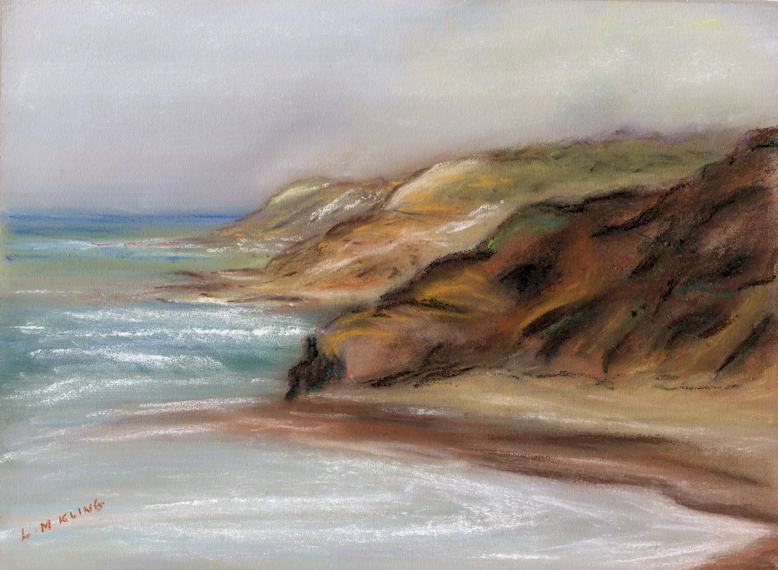
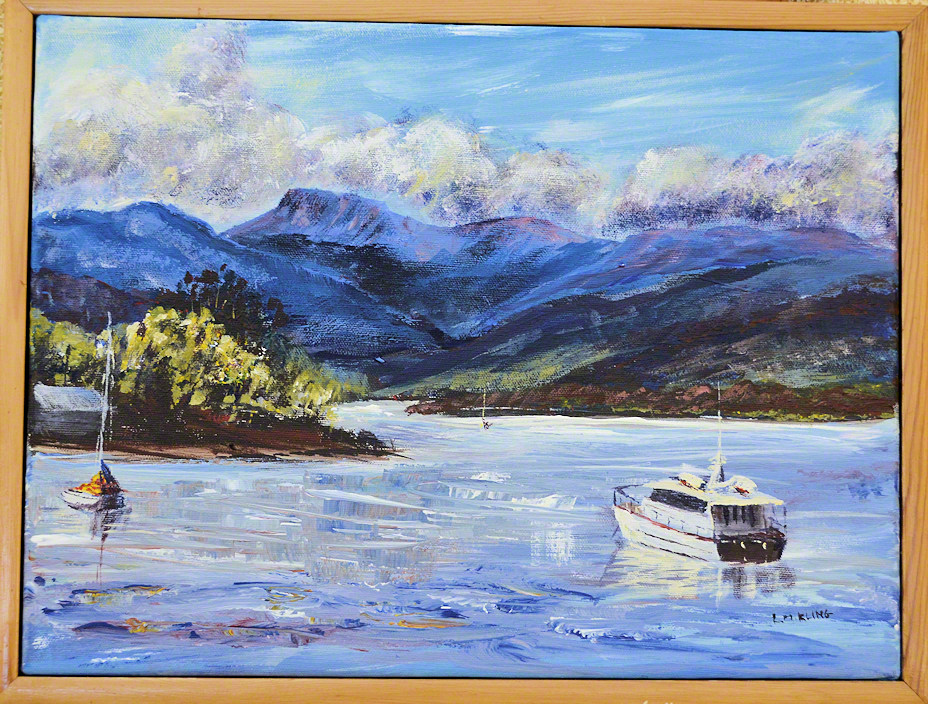
I persevered with painting, attending MAG studio sessions every Monday morning, and exhibiting my work with MAG and with the local Rotary Art Show. Through workshops, videos and practice, I taught myself watercolour painting. The sale-drought made me work through why I paint. I came to the conclusion I paint because I enjoy it and can express the joy and glory of God’s creation. Perhaps that’s why I mostly paint landscapes.
Then, in 2012, I put my work in another exhibition. This time, I invested in a full screen—I had so many paintings piling up and reasoned if they don’t sell, at least my friends and family can enjoy going down to the shopping centre and looking at them. I came home one afternoon, and the phone message light was flashing. I listened to the recorded message. ‘Congratulations you have sold…’
Hooray! Since then, I have sold paintings—some years more, some years less. I guess at this stage the money made is “hobby money”. And I remind myself, it’s not what I sell, that’s important, but that I enjoy the process of painting…getting in the creative zone. And maybe for others who connect with my paintings, bringing joy into their lives too.
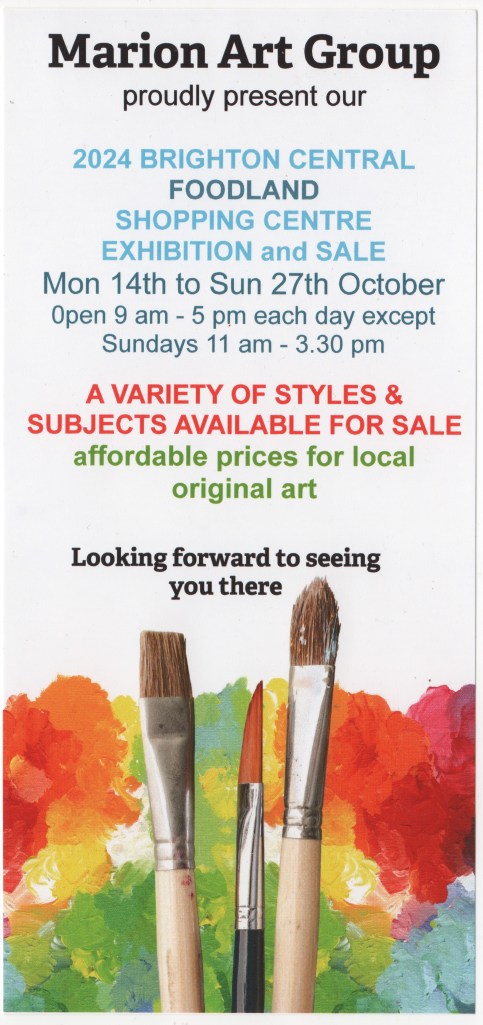
Oops! Almost one week into Marion Art Group’s (my art group) exhibition at the local shopping centre, and I have failed to mention it. Been too busy writing, appraising hopeful writer’s works, and transcribing a friend’s biography of her mother who lived through the horrors of World War II. Plus burrowing away in the family history rabbit hole.
I have been pondering where my art genes have come from. No mention of renown artists in my ancestry. My dad was an artist with some potential, emphasis on potential as he channeled his talents more into music than art. My maternal grandfather, Sam Gross was an amazing photographer. But as a missionary pastor in Central Australia, he was discouraged from furthering his photographic endeavours as the mission board frowned on it and said he was spending too much money on camera equipment and film.
So, in light of my predecessor’s unrealised potential and the fact that I am still using the watercolour paints and brushes my dad left behind, I will share an afternoon that we spent painting in Central Australia in 1981.
Mount Hermannsburg
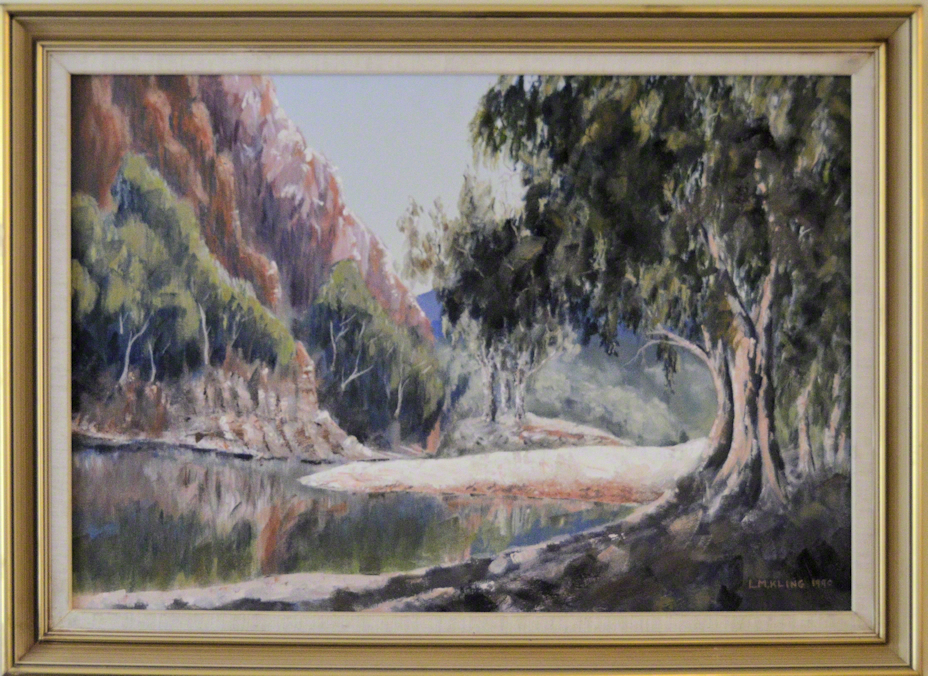
My father and I sat in the dry river bed of the Finke River painting Mt Hermannsburg which towered above the river gums and spinifex. We painted our muse on site; Dad painted in watercolour and I painted in acrylic.
After a couple of hours, Dad packed up his brushes and palette and returned to the town of Hermannsburg. I stayed, in the creative zone, dibbing and dabbing, the setting sun casting shadows over the river bed and a cool breeze pricking me with goose bumps on my bare arms.
I made the final touches as the sun sank below the horizon and I was called in for tea. I signed with my maiden name, naturally, as I was only 18.
Dad’s painting and mine sat side by side on our host’s piano where all who saw, admired our work. I kept walking past and gazing at my painting. Did I really do this? Wow! Did I really?
Friday has rolled around and once again, the well-researched, edited and polished article on some nascent topic of family history has failed to materialize. Too busy researching and chasing promising leads down rabbit holes. Plus making a concerted effort to finish the first draft of “Under the Bridge”, now titled The Culvert.
Hence, I am blatantly and unashamedly going to ramble and keeping to the theme of rabbits, rabbit on.
A fellow writer has the penchant to invite the reader to get comfortable in their favourite armchair with a cuppa and a bikkie, and then travel along with her in her latest story. So, I’m doing something similar today. Imagine we are in your café of choice, I’m having my decaf cappuccino with almond milk and you’re having your beverage of choice, and we are having a chat about family history. Admittedly, I’m the one doing all the talking—for a start. You can have your say at the end in the comment section.
I’ll start with the food. Early on in My Heritage forays, the computer offered some guidance with AI (artificial intelligence) in finding those relatives who would prefer to remain hidden in the distant past.
I took the AI up on the offer, to my regret.
After many questions that became more ridiculous as time went on, the robot which I might prefer to call a “bubble-headed booby”, asked the ultimate in absurdity. ‘What did your ancestor like to eat for breakfast?’
You need to understand that AI was asking about an ancestor who lived three hundred years in the past. If I knew the answer to the breakfast question, I wouldn’t be asking AI, would I?
I decided then to avoid researching with the AI after that interaction.
It got me thinking, though. What did my ancestors eat for breakfast? Too late for most of them to tell me. Even the famous ones don’t include a breakfast menu.
So, for future generations, here’s my offering for the few of my immediate family of whom I know their breakfast preferences.
My dad, Clement David Trudinger grew up during the depression and Second World War times. He loved bread with dripping. I’m not sure if this was a breakfast go-to, but he did say. Just saying.
My mum has to have her cup of coffee first thing in the morning. Coffee gets her going.
A few nuts and a cup of Caro does me for breakfast.
I’m not sure what my maternal grandma, Elsa Gross liked for breakfast, but she didn’t eat meat. I remember her having toast with butter and jam.
As for my maternal grandpa, Sam Gross, and my paternal grandma and grandpa, Ron and Lina Trudinger, I have no idea. And that’s only going back two generations.
All I can say for AI is good luck with that one going back three hundred years.
Digging back further, I discovered that one of my ancestors and an ancestor of my friend, and Indie Scriptorium teammate, Mary McDee’s, were shipmates travelling over to England from Normandy way back when England was invaded by William the Conqueror. I wondered whether they were friends and what their conversation was like. Mary was adamant that her ancestor probably wouldn’t have had much to do with mine as they were likely different ranks. But hey, ships back then weren’t that big, so I wonder…One thing for sure, they probably weren’t discussing their latest books and giving feedback to each other on how to improve their manuscripts.
Continuing on my research voyage, Mary did ask me, “What’s a good Christian girl like you writing such content of bloodshed and gore. How did you come up with such an evil character like Boris?’
As I’m exploring those murky depths of my ancestral past, I’m beginning to understand. A relative of mine once read The Hitchhiker and was so shocked she gave it a poor rating. “This is not the person I knew,” she wrote as a comment. Little did she know that my ancestors and her husband’s were not the “Sarah Janes”, “Pollyannas” or “Saint Whoever” of the past. Quite the opposite. Think of Game of Thrones which is based on the War of the Roses, and you get the picture. One was likely a bishop, though, sorry to say…
And no, the dreams that formulated my Sci-Fi novels were seemingly not from ancestral memories from the mercenary soldier, Balthas Trudinger that the family was so ashamed of.
I looked into that and discovered that Balthas who lived at Lierheim which is a castle near Nördlingen, Bavaria, most probably belonged to the Teutonic Order. The Teutonic Order at the time of Balthas’ coming of age, had bought the castle there and were renovating it. Hitler gave the Teutonic Order a reputation as the exemplar of the all-German, all-Aryan fighting force. But once he won power, he ditched the Teutonic order—banned them. Actually, the order from what I can glean did much good over the centuries. They started around the end of the 12th Century as guards protecting pilgrims to Jerusalem. I bet Hitler kept that fact quiet. Although it was an army that did fighting and stuff in the past, these days it’s a charitable organisation.
I could go on rabbiting, but I think that’s enough random thoughts for one day. hubby has come home and we’re off to dinner for our 37th Wedding Anniversary.
Happy Friday and hope you enjoyed your cuppa and bikkie.
If you have a Family History comment or story, I’d love you to drop a line in the comment section below.
[Eleven years ago, the T-Team, Next Generation embarked on their pilgrimage to Central Australia. Purpose: to scatter Dad’s ashes in his beloved Central Australia, in Ormiston Gorge.
Now just a teeny-weeny bit on the Family History front. I delved into some research concerning family traits. You see, the T-team pride themselves on their T-Traits (Dad stresses that the word “trait” is pronounced “tray”.) So, I decided to have a peek at what characteristics, us who are the T-Team, have that make us distinct from other families. I’ll elaborate in a future blog. But briefly, what comes to mind that aligns with the posts I read on Google, are hairline (straight but peaked up at each side of the temple), high forehead (Dad’s cousin always remarked this trait as a sign of intelligence), high cheek bones, good teeth, a penchant for puns and a certain amount of daring for adventure; hence the T-Team and their treks into the outback.
So, again, the virtual journey continues, to the Centre, Uluru and memories of that unforgettable holiday in 2013, with my brother and his family; the T-Team Next Generation.]
Marla Track
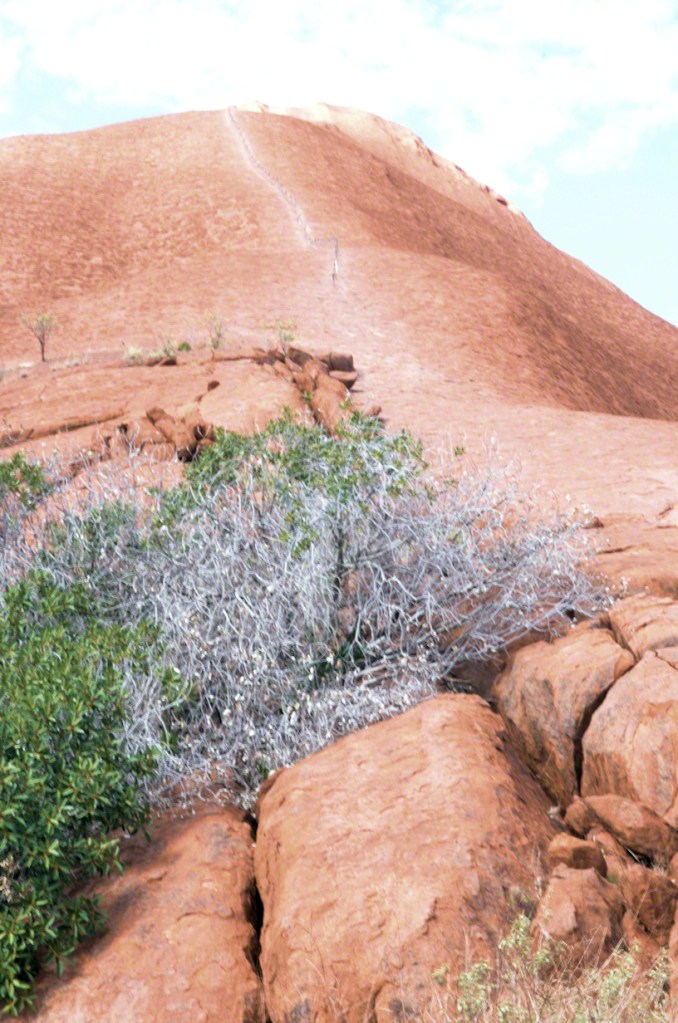
Mrs. T slept in the T-Van, while the rest of the T-Team walked the Marla Track to Kantju Gorge. There, we were awed by the caves hollowed out as if by waves crashing into them. We marvelled at the vivid red ochre paintings in rock caves carved out by the sea of time. Tourists filled these caves, spilling out the sides and edges, listening intently to the guides explaining the stories behind the artwork.
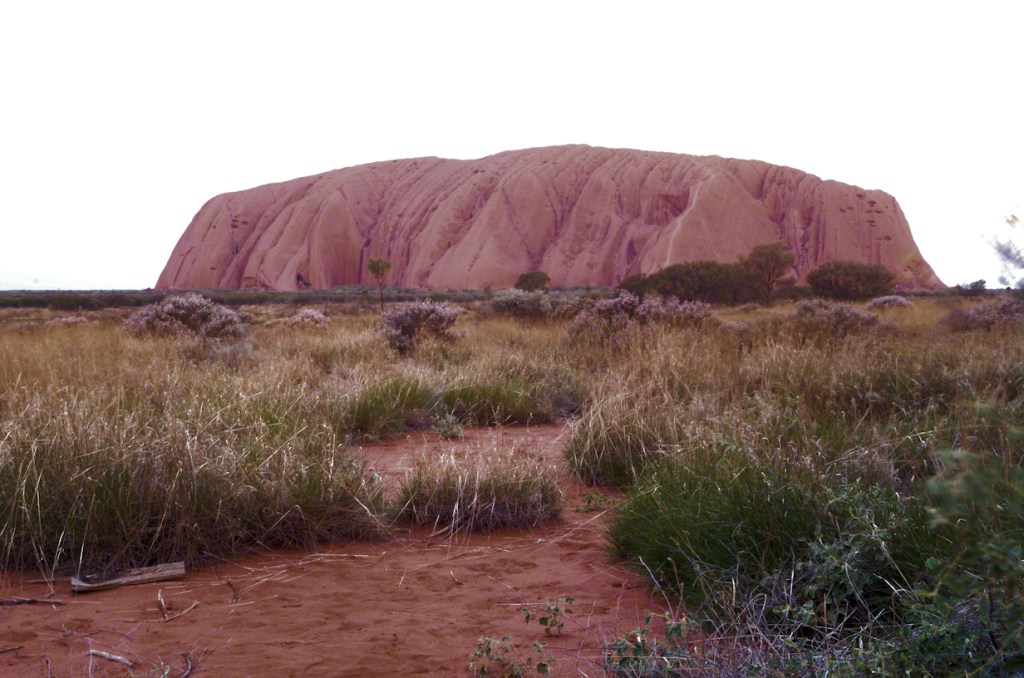
As the cloud and damp set in during the day of July 9, the T-Team congratulated themselves on completing the mission to view the sunset on the Rock the previous night. Anthony reported, ‘Alice Springs had one of its lowest temperatures ever; 8 degrees Celsius maximum.’
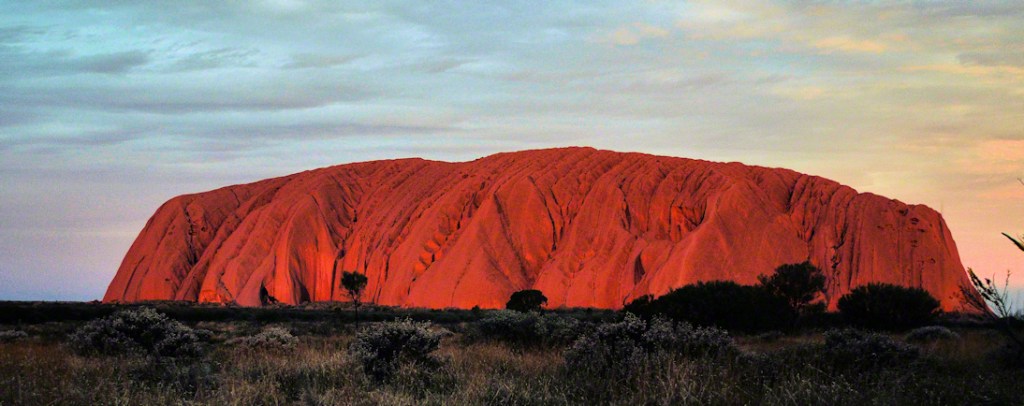
‘Wow! Just as well we saw the rock in all its glory last night,’ I added. ‘Dad always said that the Rock is at its best at sunset when there are clouds to the West.’
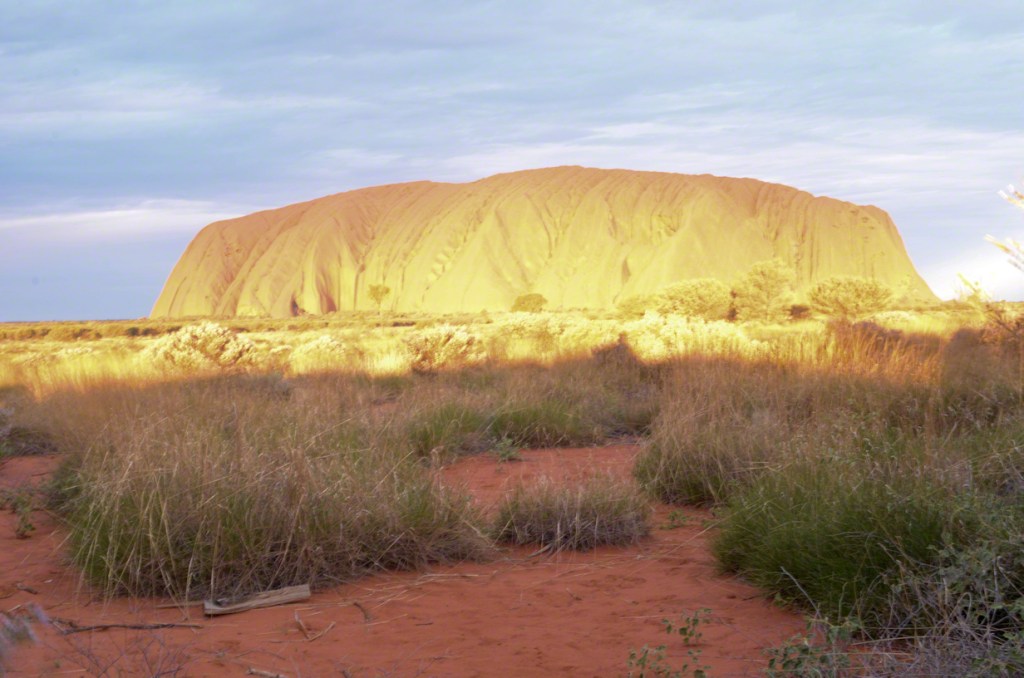
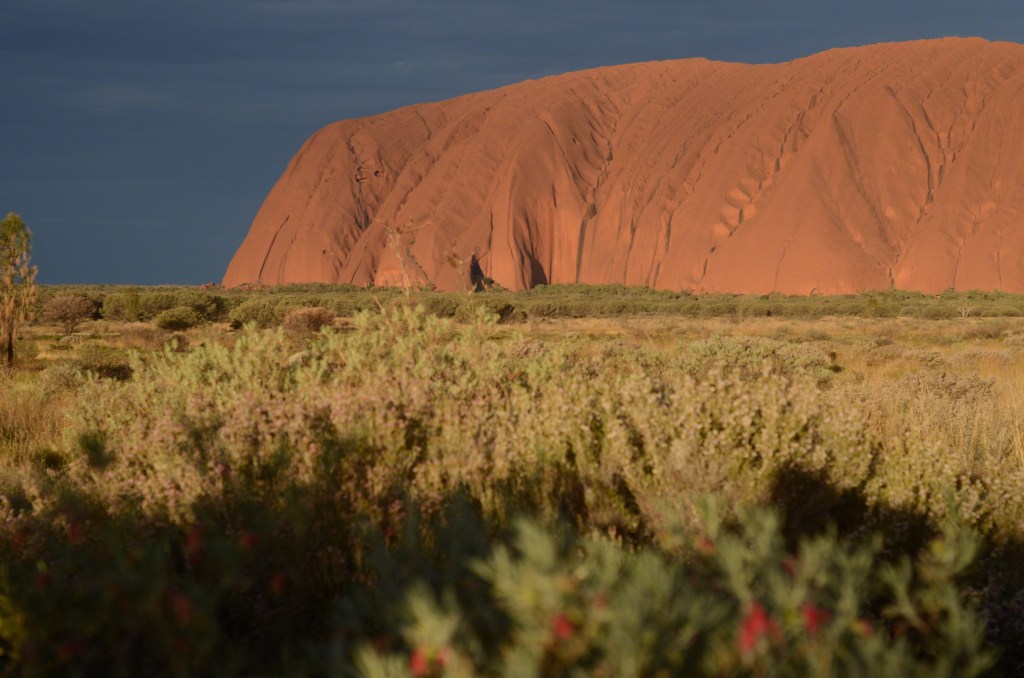
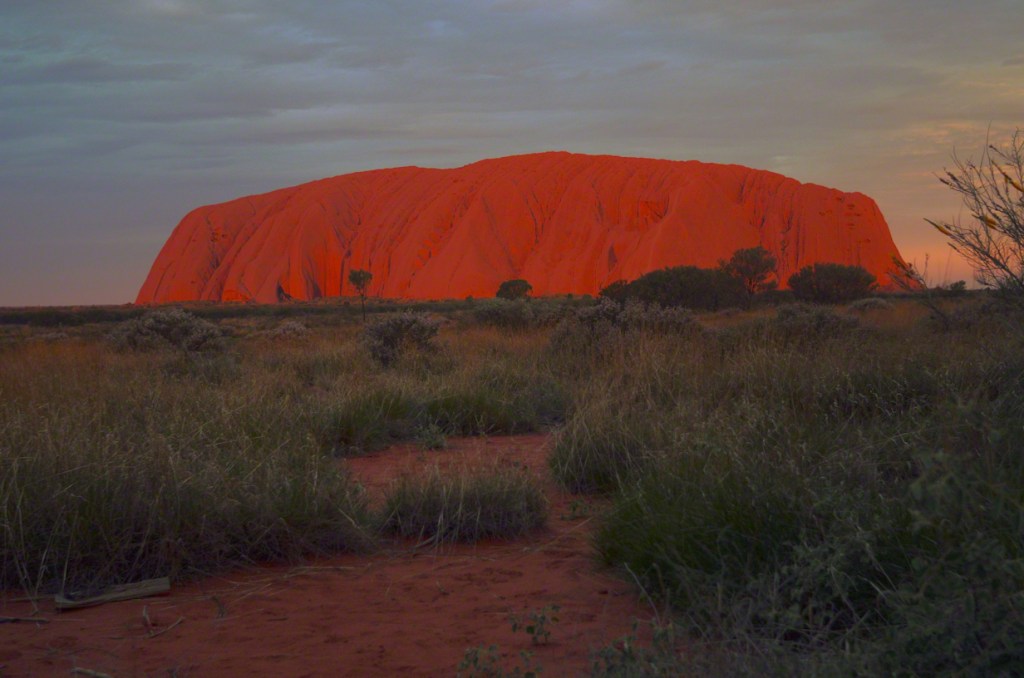
The ever-changing colours of the massif amazed me; golden, then orange, then tangerine…until a rich deep red with the golden grasses glowing in the foreground.
And, with the photoshop features on my digital camera, I was able to make my image of Uluru, almost “chocolate box” quality. Not cheating, just capturing how I actually saw the famous Rock.
And on that night, as I stood transfixed, taking photo after photo of the Rock, Mrs. T called out, ‘Hey! Look the other way!’
We turned.
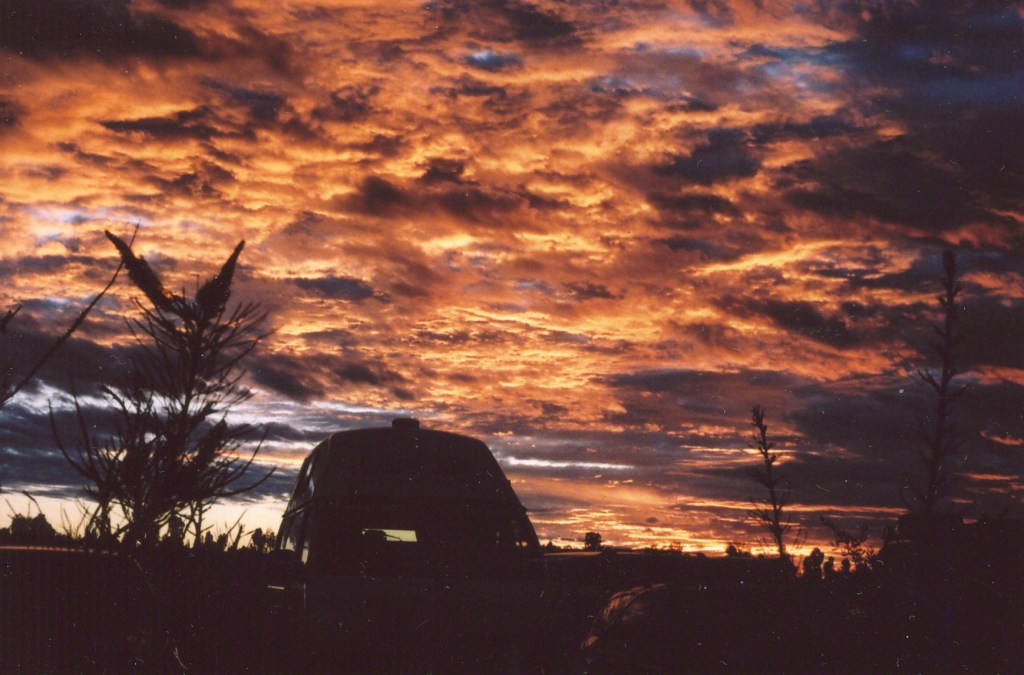
‘Wow!’ I exclaimed. ‘What a show!’ The expanse of sky painted in every hue from yellow to crimson; the sun’s parting gift as it sank from this evening’s horizon.
Evening, and I used our portable camp stove to cook rice for tea. Anthony no longer complained about the use of the stove instead of the cooking facilities. Having skipped lunch, he was hungry, and he knew better than to expect the public BBQ to perform; especially considering a biting wind had sprung up.
The T-Lings, as they had done every night, planted their mobile phones at the base of the power pole which was not far from the BBQ. With cables attached, they left them there to charge up. ‘Would you look after our phones?’ they each asked, expecting me, as I was cooking, to keep an eye on their treasures.
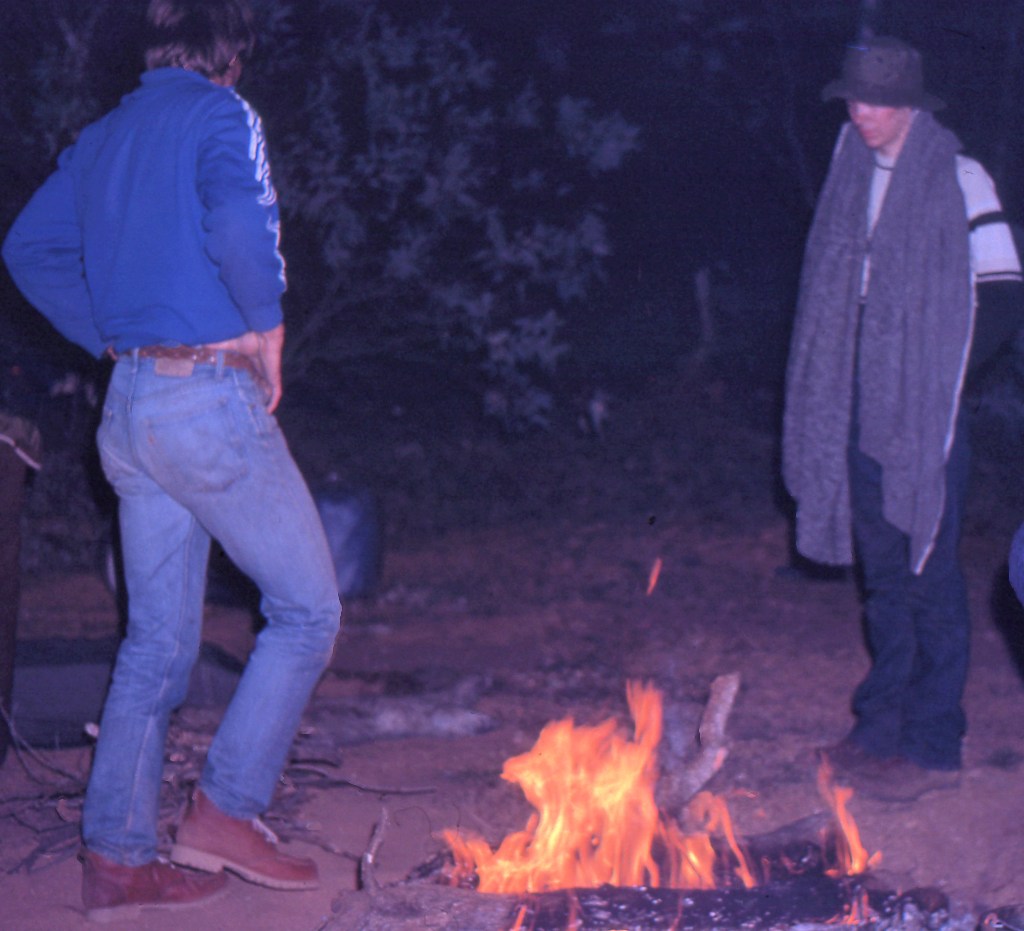
Night fell and as the wind turned bitterly cold, I made a toilet visit where I donned my thermals. On the way back from the toilet, I observed a group gathered around the communal firepit. They asked if I wanted to join, but I declined. The T-Team were playing games.
In some ways I regretted not accepting the invitation. We played card games but as the T-Crowd was too large for the small tent, I ended up playing cards outside in the cold and dark. There, half-frozen despite the best efforts of the thermal underwear, I taught my younger niece to play Patience.
Then, how pleasant it was to snuggle into our minus seven sleeping bags for sleep.
‘Oh, no!’ a T-Ling cried, then rustling. ‘Our phones!’
























 Tru-Kling Creations