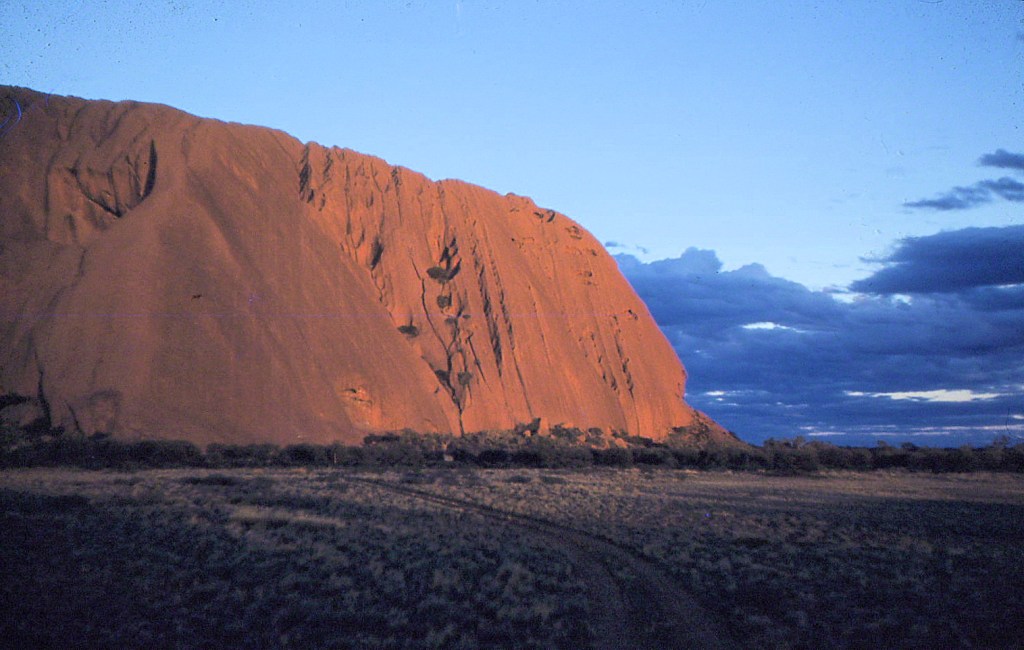
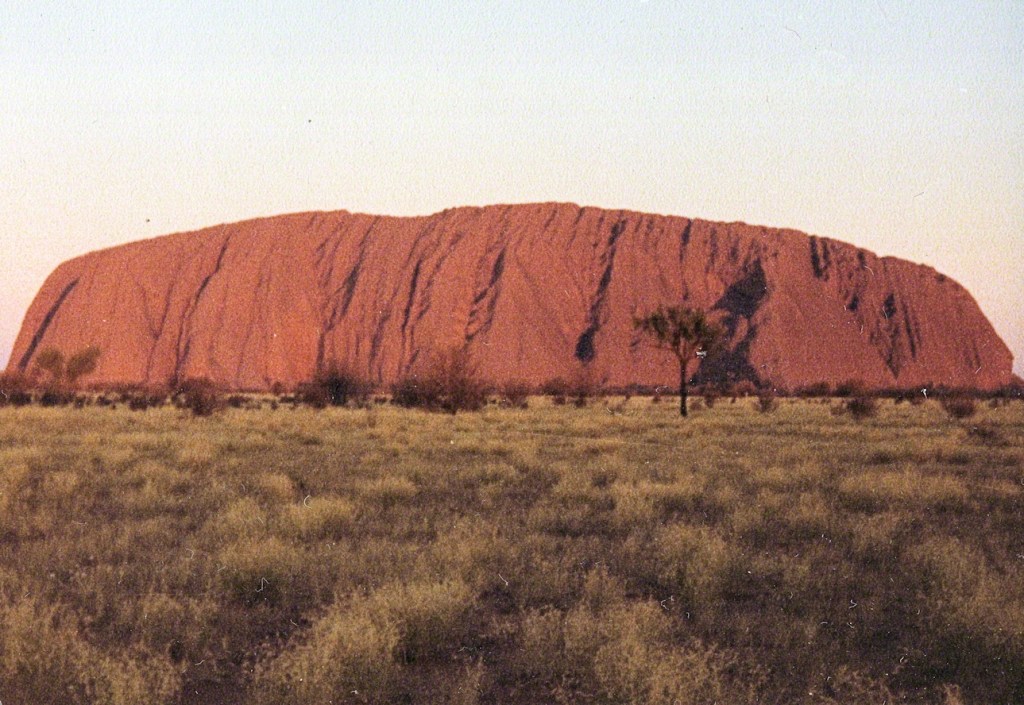
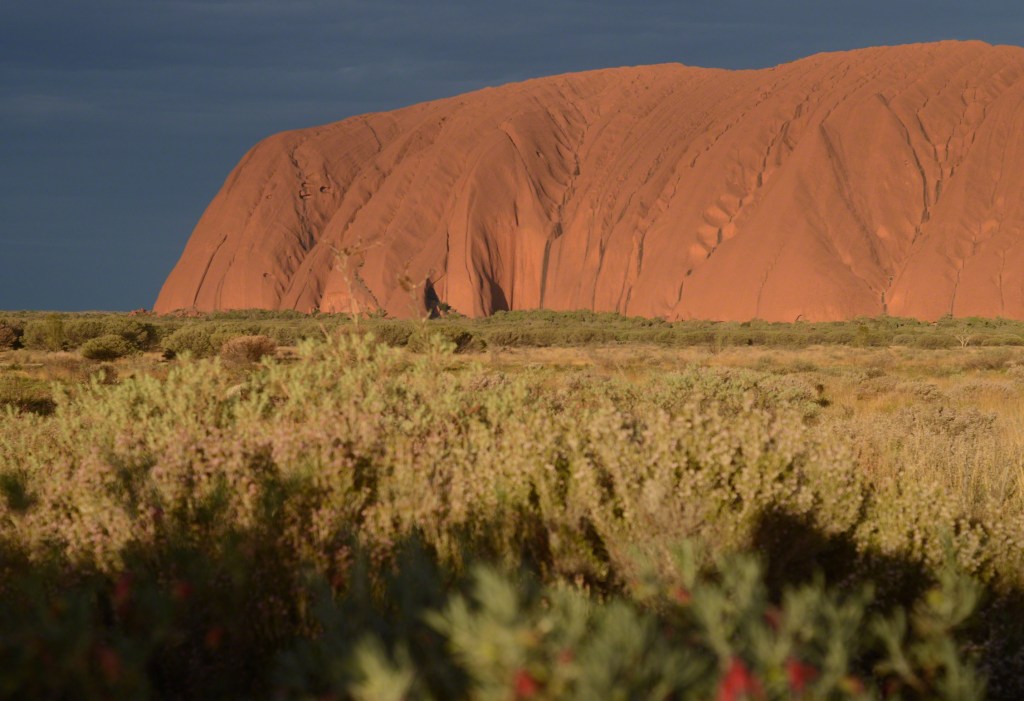
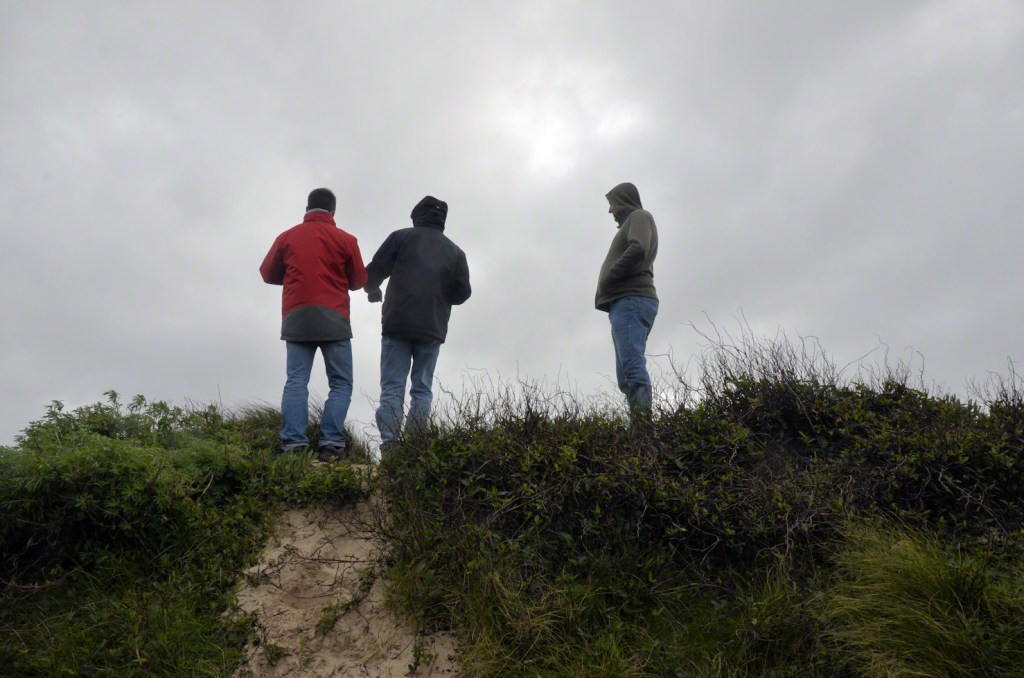
…Is now available on Amazon Kindle.
Click here to download your copy.

[This week Adelaide has endured a dramatic start to winter. After a beautiful warm weekend, storms descended upon the city with a bang of rolling thunder and constant flashes of lightning early Wednesday morning. Then the rain like an apocalyptic flood dumped on us. I walked to the bathroom and felt a damp patch on the carpet. Oh, dear, the roof is leaking …again! Still nothing like the church where I go for Bible Study. Arrived there to find the whole foyer flooded and mopping up in operation. The ceiling had collapsed under the weight of a leaking roof and had the heavens descended. Fortunately, there were still dry areas to meet. Then, that afternoon, after Writers’ group, my friend and I began our trip home in sunshine. But, ten minutes into the journey, hail pummeled my car. We quickly sought some refuge under a tree until the hailstorm passed.
So, seeking respite from the rugged week, here’s an old piece of calm from our Tasmanian travels.]
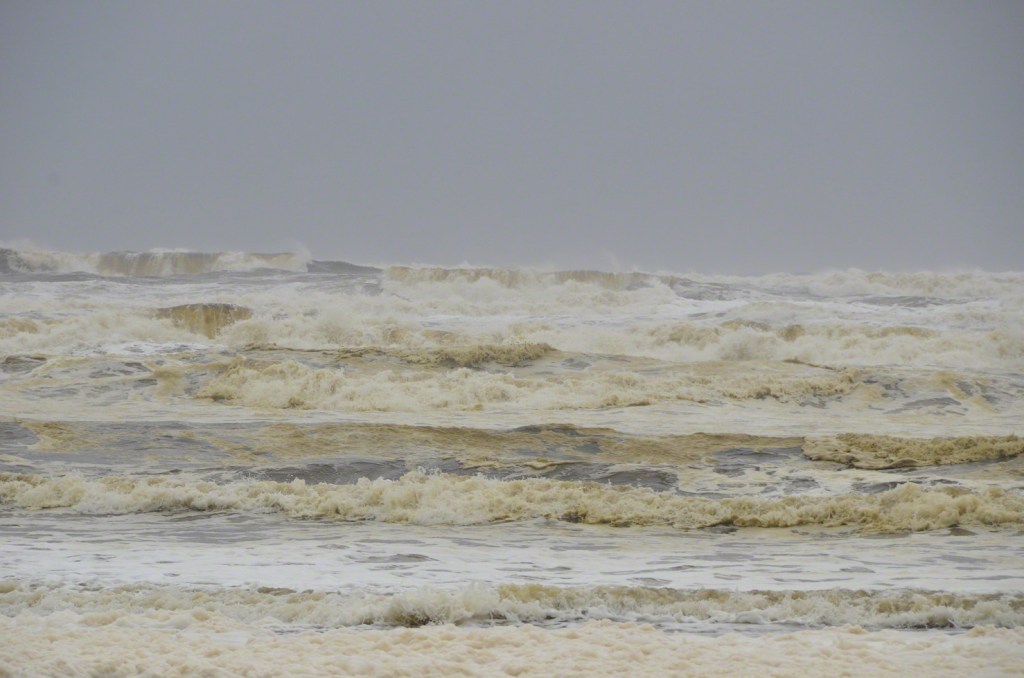
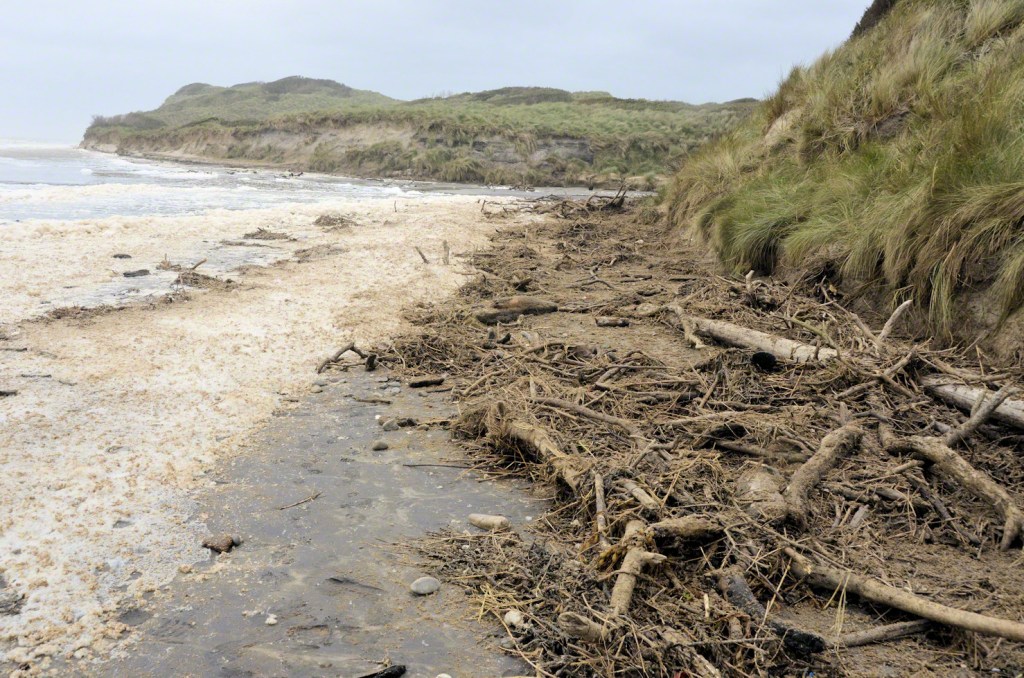
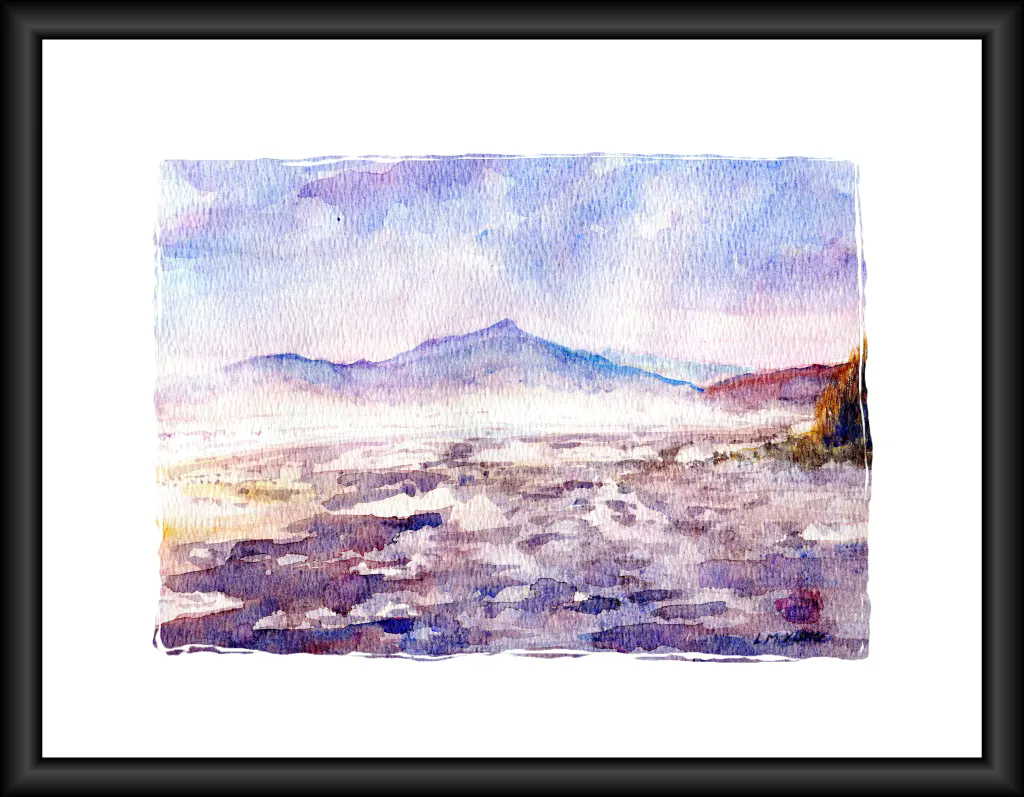
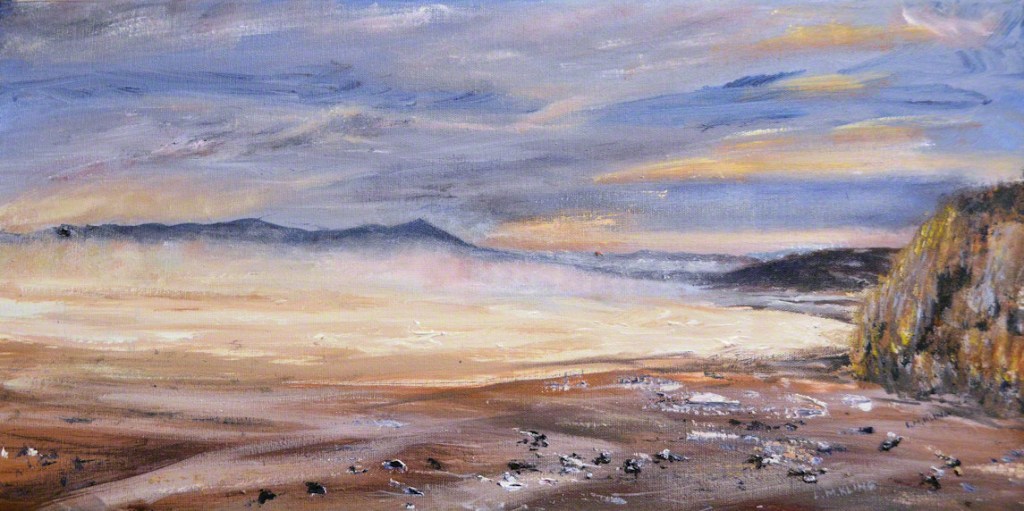
Ocean Beach lies on the West Coast of Tasmania near Strahan. The wild winds of the roaring forties (between the 40-and 50-degrees latitude) attack the coast with relentless ferocity.
In 2001 I visited Ocean Beach with my family to see the mutton birds coming home to roost for the night. I had barely stepped out of the car before the biting cold wind blasted me and I made a hasty retreat back into the car. No view of mutton birds that evening. Result, no photos.
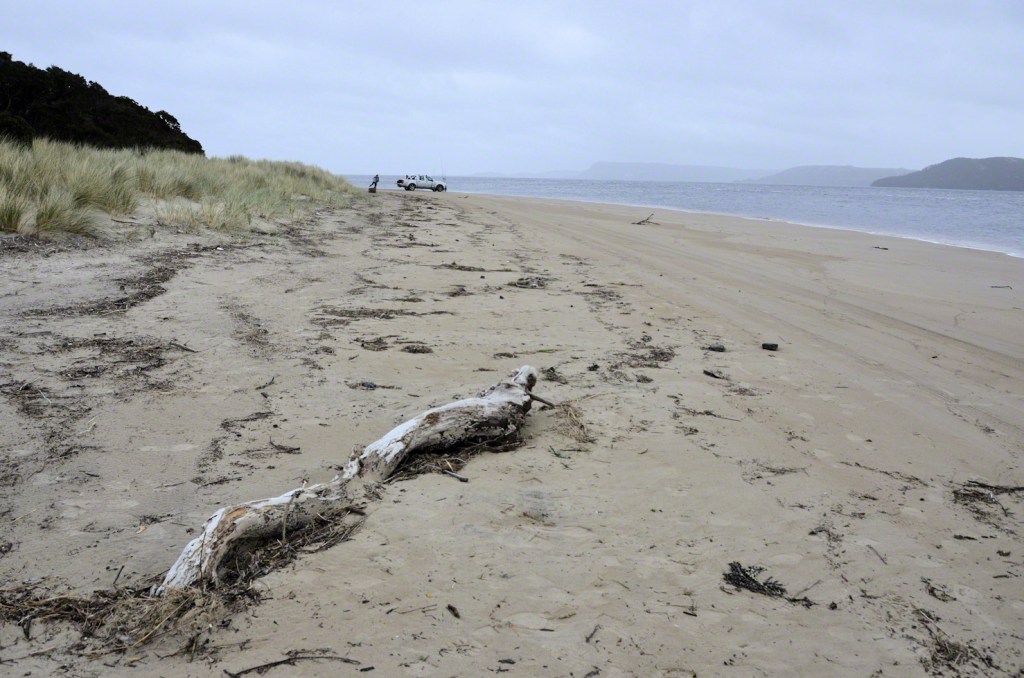
Ten years later, my mum and I visited Ocean Beach. While the East Coast was inundated with floods, Ocean Beach that afternoon was calm. We explored the beach, taking many photos of this rare state of the beach.


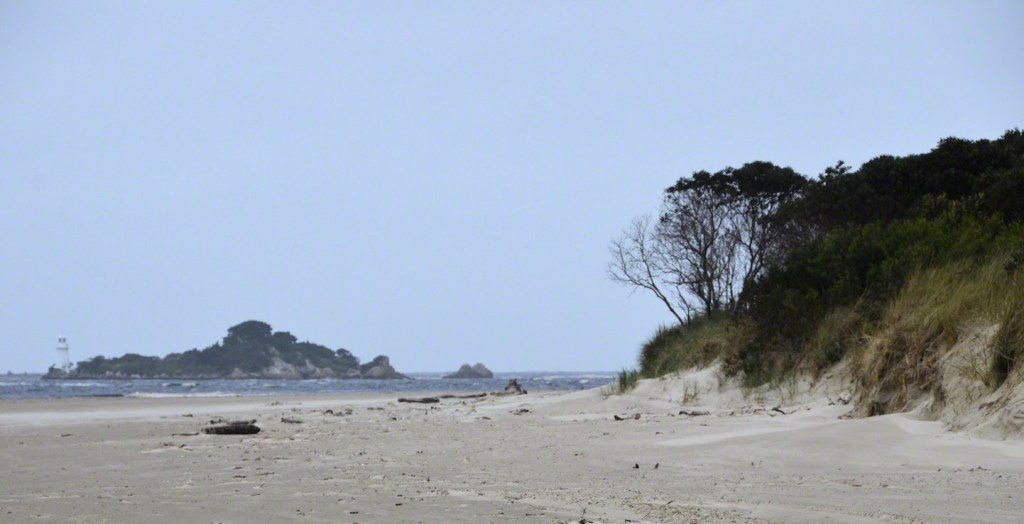
October 2016, the K-Team ventured onto the sands of Ocean Beach on perhaps a not-so-calm day; calm enough though, that we were able to walk along the beach. Not being satisfied with just an obligatory few metres up and down, my husband led us way up the estuary where we spotted a variety of birds, some fishermen, and the lighthouse sitting out there near the heads. Gotta get our money’s worth. After all, he’d seen the potential from the dizzy distance of the cruise boat as it sailed past the heads of Macquarie Harbour. I think if we’d allowed him, we’d still be walking along the coast somewhere around Tasmania.


Still, nothing like a thorough study of my muse which I have now painted in miniature on Huon Pine and on canvas in acrylic—each time different.


© Lee-Anne Marie Kling 2016; Updated 2018; updated 2020; 2023
***

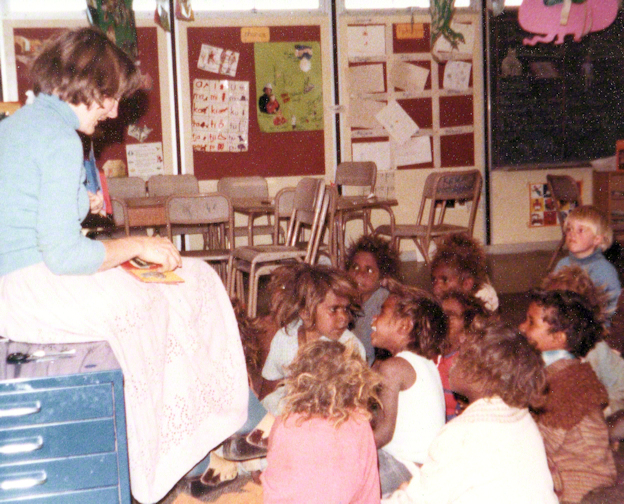
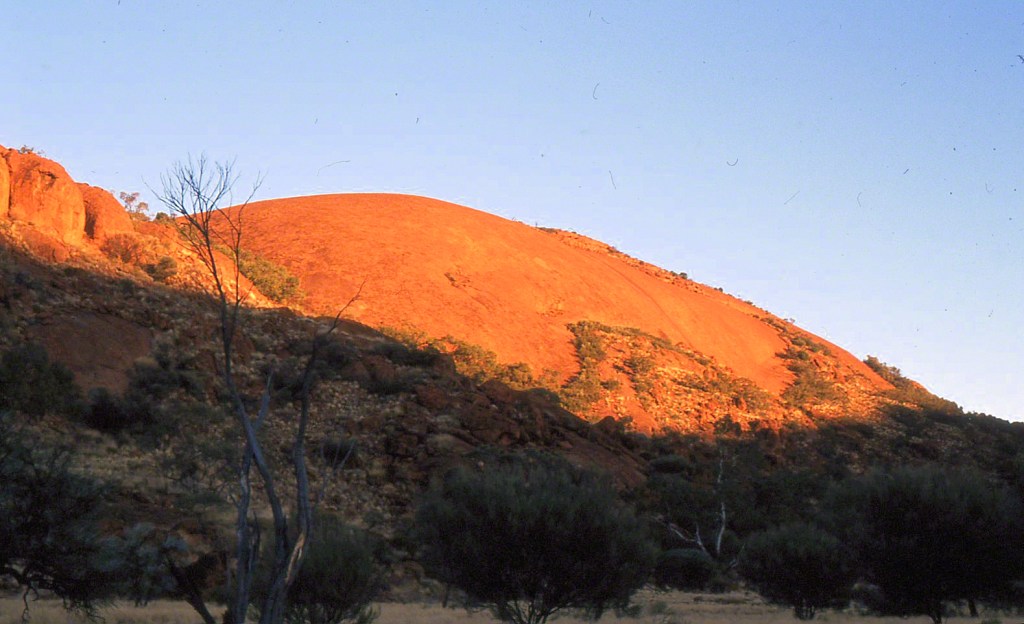
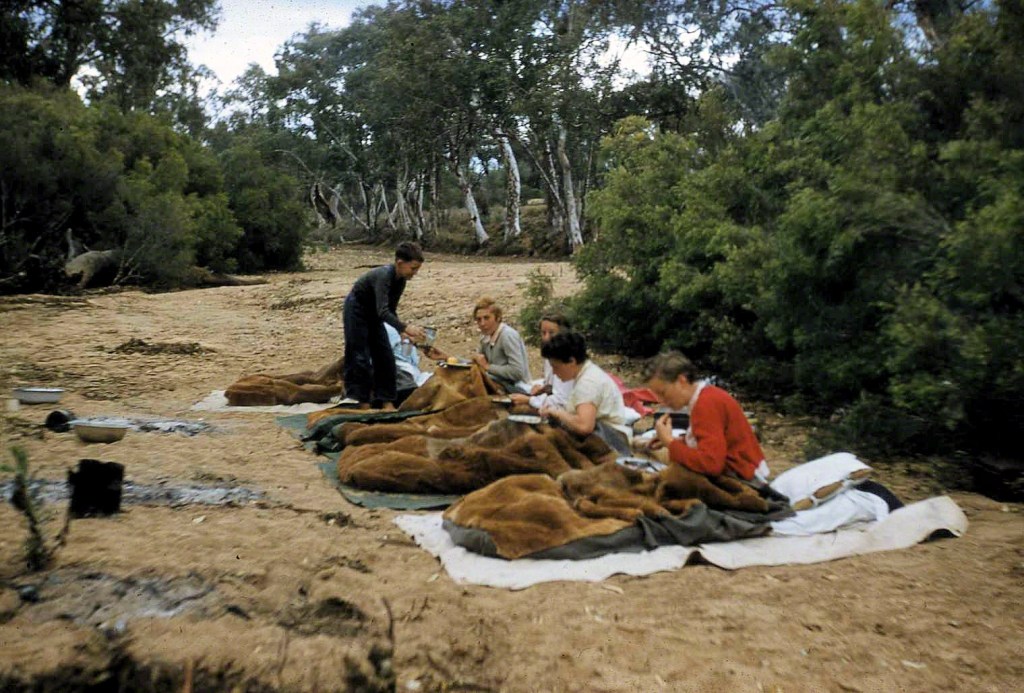
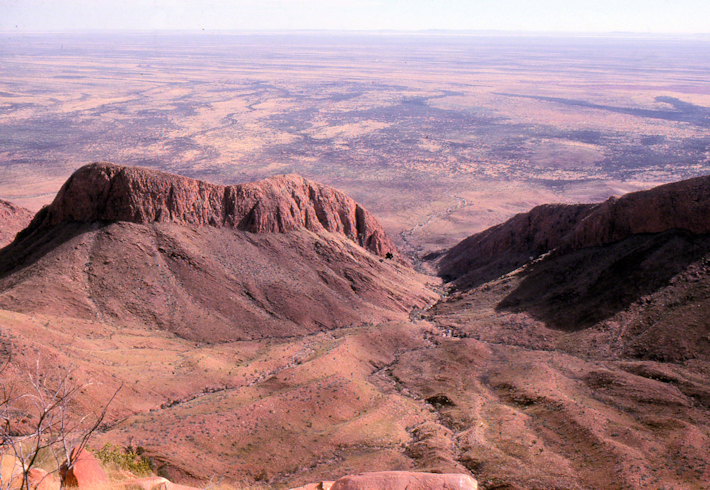
Trekking With the T-Team: Central Australian Safari (Germany]
Trekking With the T-Team: Central Australian Safari [France]
Trekking With the T-Team: Central Australian Safari (India)
Trekking With the T-Team: Central Australian Safari [Canada]
Trekking With the T-Team: Central Australian Safari [Mexico]
Trekking With the T-Team: Central Australian Safari [Italy]
Trekking With the T-Team: Central Australian Safari [Brazil]
Trekking With the T-Team: Central Australian Safari [Spain]
Trekking With the T-Team: Central Australian Safari [Japan]
Trekking With the T-Team: Central Australian Safari [Netherlands]
Our Mother’s Day Secret
[May’s our horror party month. We endure enjoy several family birthdays plus Mother’s Day. The last few days I have been stressing because the chosen restaurant for a special “0” birthday, seemed to be dragging their proverbial heels in getting back to us confirming if we could be seated there. Actually, I had used a tried and, so I discovered, not so true that uses the symbol of a familiar table implement, and they had been the one’s inconveniently delaying the response. So, I contacted the restaurant directly by email and received confirmation in the positive of our booking the next morning. Big sigh of relief!
Anyway, this trial reminded me of the recently celebrated Mother’s Day and one that happened and that I shared a few years ago. I will share some of our celebrations and scenery from May/June parties past and present.]
FROM KUITPO TO MEADOWS
Everyone, and I mean everyone in Adelaide must celebrate Mother’s Day. And everyone and their mother go out—eat out, picnic out, filling the parks, beaches, hills and car parks. The whole city—and their mothers, jump on the bandwagon of “mother-worship”, the restaurants filled to capacity, and unless you book months in advance, you won’t get a table for you and your mother.

My mother doesn’t like crowds, and our family struggle to organise themselves a few weeks in advance, let alone months. So, with that in mind, my mother has designated the Sunday after Mother’s Day, as her day.
On that Sunday, a week after all the mother-fuss was over, or so we thought, my family and Mum set off for Kuitpo forest (about forty kilometres south-east of Adelaide CBD). After a week of rain which began the previous Sunday, we were treated with the sun shining, no clouds and a clement twenty-two degrees Celsius. Perfect for sitting around a small wood fire and barbeque. Just what Mum and I wanted for our “Mother’s Day”.

We piled into Mum’s station wagon and cruised down past Clarendon taking the road to Meadows.
‘What happened to the others?’ my older son asked.
‘They couldn’t make it. They had other things on,’ I said. I guess there’s always a cost to changing “Mother’s Day” to suit ourselves as mothers.
After my faulty human navigation skills led us astray as we turned down a road too early, we turned and we trundled back to the Meadows Road. There we sailed to the next turn off, this one sign-posted, white letters on brown, to Kuitpo. I apologised for leading us astray while my husband reminded me he knew the way.
Within ten minutes, we rolled into Chookarloo Camping ground. We’d picnicked here for our designated “Mother’s Day” a few years earlier and had found a clearing for a wood-fire with ease. I remembered a happy, though cloudy day, cold, but the company of family warm. The kids collected a stick insect and I took photos.

The sign at the entrance, though, warned of change. I read it and exclaimed, ‘Oh, we can only have fires in designated fire-rings.’
‘And where are these rings?’ Hubby asked.
‘Around,’ I said. ‘We have to drive around.’
We circled the camp grounds twice. Every clearing furnished with a fire-ring was filled with jolly campers and families munching on their chops and sausages. Cars guarded the cement rings where the occupants had finished lunch and gone on a hike.

We crawled past a clearing surrounded by a ring of trees but no fireplace.
‘If only I’d packed the portable barbeque,’ Hubby said.
‘Let’s go to the bakery at Meadows,’ I said.
‘Why not?’ Mum said.
‘What a shame they’ve spoilt Kuitpo with these rules,’ my younger son said.
‘It’s not the same, anymore,’ my older son said.
‘They have the rules because of the fire in Kuitpo a couple of years ago. They’re making sure it doesn’t happen again,’ I explained.
‘Stop complaining, Lee-Anne,’ my husband raised his voice, ‘the rules say you can’t have a fire.’
‘That’s what I was explaining, the National Park are making sure we don’t have another fire. The last one was pretty bad.’
My sons grumbled.
‘We had all this rain.’
‘How’s there going to be a bushfire?’
‘Let’s go to the bakery at Meadows,’ Mum said. ‘Anyway, it’s been a nice drive.’
Hubby shook his head and then exited the Chookarloo Camping ground.

We trekked off to Meadows, parked in the main street and trooped into the bakery. The aroma of fresh baked bread and brewed coffee greeted us. So did a variety of empty tables and chairs in the wide porch area with wall-to-wall views through the glass of the Meadows country-side. We settled down at a long table and basked in the sun shining through the windows.
As we supped on our pies and sausage rolls and sipped our cappuccinos, my younger son gazed out at the majestic gum trees, green hills and people with smiles walking up and down the street.
‘I like it here,’ younger son said. ‘It’s peaceful.’
After a pleasant family time, we wound our way back home. More than once, each of us in the car commented on the stunning scenic drive to and from Meadows: the golden sun glinting through the autumnal leaves of the deciduous trees that line the road, the gnarled eucalypt tress, the cows nibbling on grass in the paddocks and horses grazing in the field. We stopped for my older son to photograph the view of the rolling hills to the sea.

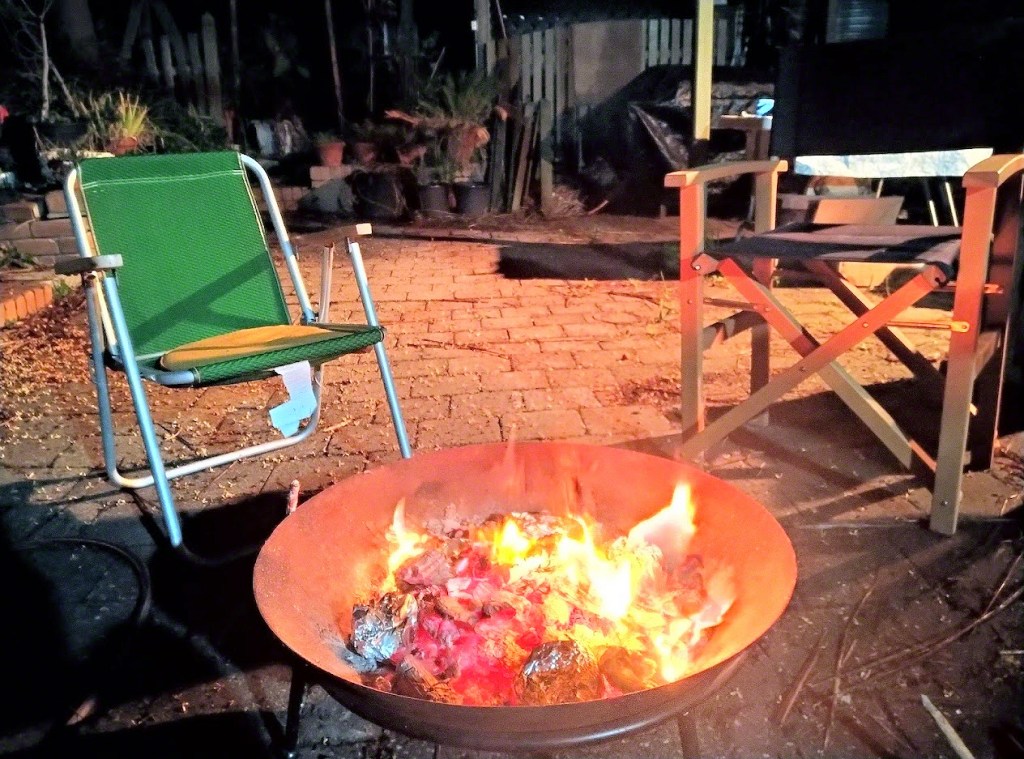
At home, I fired up the brazier. The crowds had commandeered all the fire-rings at Kuitpo, but they couldn’t touch my brazier in my back yard. Let me tell you, we have a country-feel in our back yard. The neighbours’ two huge gum trees with wide girth shade our lawn, parrots congregate and chatter in the branches of those trees, and we even have the occasional koala visit.
My husband cooked the chops and sausages that had been assigned for our lunch in Kuitpo. We had the meat for tea instead. As a family, we sat around the brazier fire and enjoyed a simple barbeque, with a glass of wine. Family stories and adventures were shared into the night.
A perfect end to a perfect day, even though, perhaps as a result of the rule-change at Kuitpo. The secret? We actually talked with each other and listened to each other’s stories.

‘Thank you for a lovely day,’ Mum said, ‘and I mean it. Because going for a drive in the hills, sitting around at the café and then the brazier fire, I got time to spend with my daughter, son-in-law and my grandsons. That’s what I wanted to do.’
© Lee-Anne Marie Kling 2016; updated 2023
Photo: Willunga Hills near Meadows © Lee-Anne Marie Kling 2011
***
Longing for more travel adventures?
Dreaming of exploring Australia?
Read the T-Team’s Aussie adventures, click on the link below:
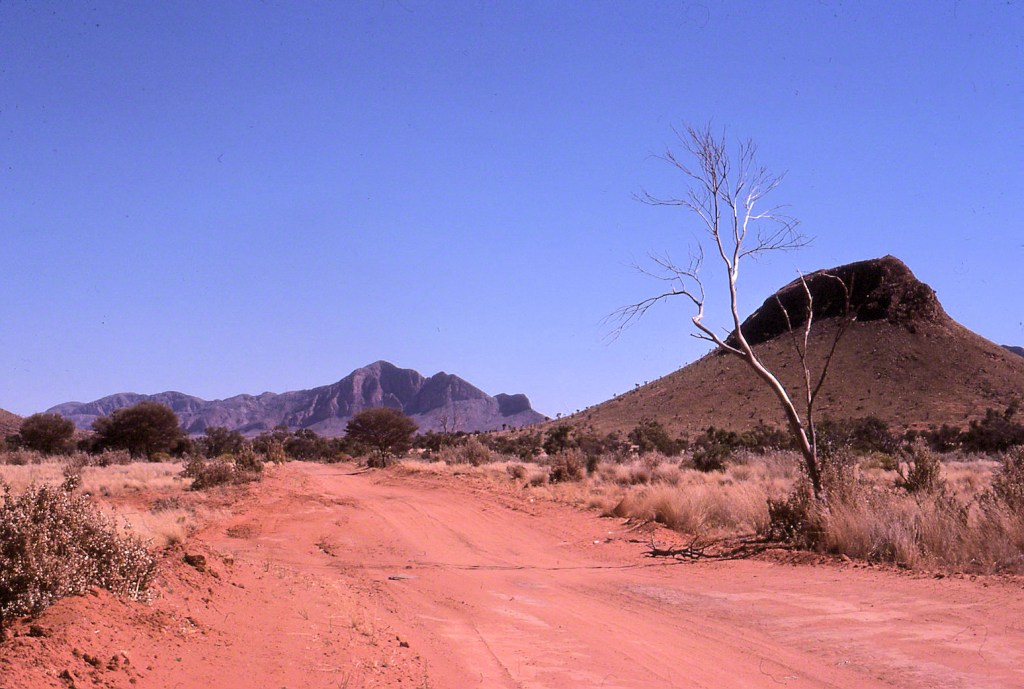
Trekking the T-Team: Central Australian Safari 1981

Road Trip to Sydney in the Charger (final)
[Based on real events but some names have been changed. And some details of events may differ. After all, it was over 40-years ago.
Finally…the intrepid road trip travellers reach Sydney.]

The conference and Rick’s never had a girlfriend
As far as conferences went, not a bad one. Lots of singing, worshipping God, that is, lectures, Bible Study, eating, and meeting new friends and old friends too. Our accommodation was down Anzac Parade, about five kilometres, halfway to the beach. I shared a small apartment with Rick and Dad. Dad drove me back and forth from the conference centre at Randwick. Not sure what Cordelia did, but I think she connected with other members of her family who attended the conference and stayed with them. Rick, I think ferried Mitch and Jack to and from the conference centre.
This arrangement becomes relevant later in the week of the conference.
One session that stands out, was the one on relationships.
Rick and I sat side by side, in the front row.
This will be interesting, I thought. Maybe I’ll get some tips on how to get a boyfriend and be popular like Cordelia.
‘So,’ the speaker said, ‘How many of you have had a boyfriend or girlfriend?’
Everyone including me, raised their hands. Everyone, that is, except my brother Rick.
‘What? You’ve never had a girlfriend, Laddie?’
‘Nope?’
The speaker pointed at me. ‘What about that lovely girl next to you?’
‘She’s my sister.’
Laughter.

Abandoned at the hostel and trek up Anzac Parade
Towards the end of the conference, one more event stood out.
Dad told me to wait for him at the hostel apartment where we were staying. After lunch we had an afternoon of free time before the final worship session.
I returned to the apartment lunch with my brother and friends eager to catch up on some rest and losing myself in a book. Maybe some journal writing which had been neglected in all the activity and excitement of the conference.
However upon my return to the dreary grey corridors of the hostel, my door was locked. Oh, well, Dad said he won’t be long.
I had nothing with me. All my supplies of entertainment and comfort were locked away in the apartment.
So I sat.
For hours.
After two hours, I began to sniff.
Then snivel.
Then finally, cry.
A lady poked her head out of a nearby door. ‘Are you all right?’
I wiped my eyes. ‘Yeah, I’m fine.’
She retreated into her apartment.
I looked at my watch. Five o’clock! Almost three hours I’d been waiting for Dad.
Convinced that he’s forgotten me and I’d be waiting further five hours with that lady sticking her nose in my business every so often, I stood up. Stiffening my lip in grim determination, I marched out the hostel and strode up Anzac Parade.
I prayed that God would protect me.

Along the cracked pavement. Past long neglected houses. And cared-for ones. Over busy roads at the lights. Narrowly escaping any impact with red-light running cars. In the humidity. Under light rain. Taking a wide berth around the many hotels. And leering drunks who spilled out onto the footpath. In the ever-fading light that faded into dusk.
Five kilometres and forty minutes later, I entered the conference centre. The session where all had gathered, was concluding with prayers. All in a circle holding hands. I slipped in the circle.
The boy next to me squeezed my hand.
Oh, he’s just being kind to poor little old me, I thought. After all, if even my father forgets me…
After, over tea and biscuits, my miffed Dad asked, ‘Where were you?’
‘What do you mean? I waited three hours,’ I retorted.
‘Couldn’t you be patient?’
‘Not when I couldn’t get into the room,’ I said. There was a limit to my patience.
‘I went to pick you up and you weren’t there,’ Dad said. ‘I told you to wait.’
‘And, what time was that?’
‘Oh, er, um, about…’ Dad’s voice faded, ‘about five.’
‘Well, I was there at five, and I didn’t see you.’ I sniffed. ‘So, I walked.’
‘But don’t you know how dangerous that was to walk here?’ Dad showing so much concern, after forgetting me for the whole afternoon.
‘I’m here, aren’t I?’ I replied. ‘I prayed and God protected me.’
‘He did. Praise the Lord,’ Dad said and then wagged a finger at me. ‘But don’t you ever do that again.’
‘Yes, Dad.’ As long as you don’t forget me again.
Passing through the Blue Mountains

Our return to the less crowded and more sedate city of Adelaide, was serene and uneventful as the fair city itself. Especially at the time in 1979.
A few highlights. Mostly, in fact, all associated with the Blue Mountains. We had missed the beauty and wonder of the mountains on our journey to Sydney, so, Rick endeavoured for us to see these mountains in daytime on our trek home.
At the lookout to the Three Sisters, we lunched and admired the majesty of God’s creation. Even Rick using his polaroid camera, took photos of us admiring the scene. He was taken with the layers of misty blues and subtle greens cascading down into the depths, while the cliff tomes forming the Three Sisters presided over the valley.
I burst out in song and Cordelia joined in.
After a chorus, Cordelia said, ‘You should try out for the worship band.’
‘Me?’
‘You have such a sweet voice, although it does need to be stronger.’
On the drive home I considered the prospect of trying out for the band. Perhaps singing in front of the church would make me more popular with the boys. Like Cordelia. But in the end, I decided against it. Too hard. Too much of a challenge for plain old me. After all, the worship band was a highly coveted affair, where lead singers jealously guarded their position. I’d never have a chance. Sweet voice, but not strong voice would never cut it.
Back at school, I continued my enjoyment of music singing in the choir. But I’d always secretly envy the solos with their stand-out song voices. The stars with their melodic strong notes, the audience’s focus on them alone.
Instead, that new year of 1979, my passion turned to art…and writing. These were the gifts God had given me.
© Lee-Anne Marie Kling 2023
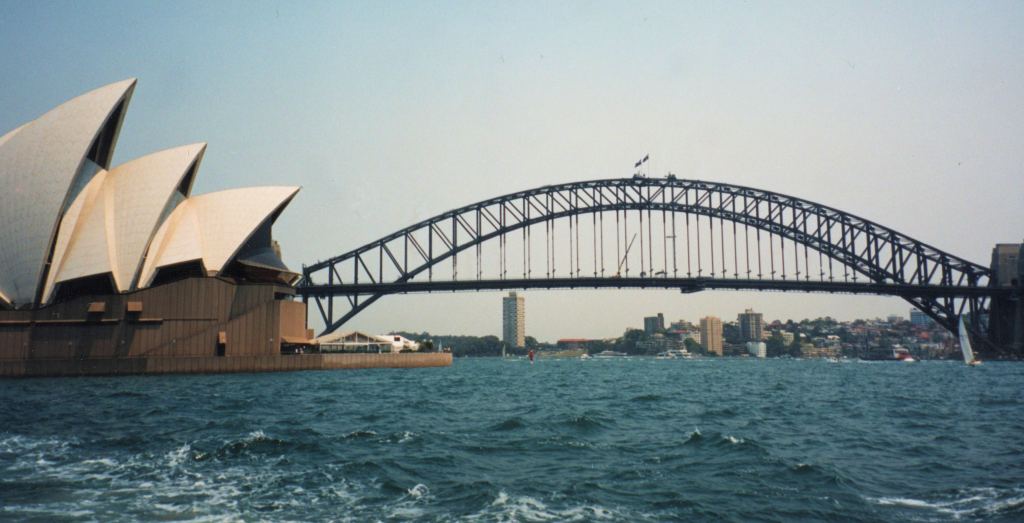
Feature Photo: Sydney Harbour from Ferry © L.M. Kling 2002
***
Want more, but too impossible to travel down under? Why not take a virtual journey with the T-Team Adventures in Australia?
Click here on Trekking With the T-Team: Central Australian Safari 1981…
And escape in time and space to Central Australia 1981…

Road Trip to Sydney in the Charger (3)
Crammed in the Charger of No Sleep
We parked in the car park of a closed service station come garage. By this time Cordelia’s request for a doctor had been forgotten. She remained silent and didn’t remind us. I wasn’t going to mention her need. She looked well enough to me when we extracted ourselves from the car and stretched our legs. She was upright and not running off to the nearest public toilet.
After a brief stamp of our legs and rubbing of our arms, Rick said, ‘We’ll need to get some sleep.’
‘How are we going to do that?’ asked Jack.
‘In the car, I guess,’ Rick replied.
Mitch herded us back into the car. ‘Come on, in we go.’
Again, we piled in. Again, Mitch crammed in the middle of us two girls, while Rick and Jack reclined in semi-luxury in the front seats.
I observed that Cordelia had no complaints and her need for a doctor remained a non-urgent issue. For now. She snuggled up to Mitch, who also made no drama of the arrangement. No sleep for me, though. I squashed myself up against the side, putting as much space between me and my cousin as humanly possible. All through the hours of darkness, I sat upright trying to sleep while Mitch twitched, and my brother snored.

In the grey light of pre-dawn, I spied Mitch pacing the gravelly clearing of the carpark. How did he get out? The Charger is only a two-door car. On the other side of the back seat, Cordelia slept soundly. Rick snorted and shifted his weight in the driver’s seat while Jack lay stock still. Looked like a corpse. Then he moved.
In an effort not to disturb the three sleepers, I slowly, gingerly, silently, crawled over Rick. My brother snorted as I landed on his knees.
‘Sorry,’ I whispered. ‘Have to answer the call of nature.’
‘Why didn’t you say so,’ Rick said, smacked his lips and continued snoring.
I pushed open the car door and crept out.
‘What are you doing?’ I asked my cousin.
‘Stretching my legs,’ he said.
‘Weren’t you comfortable?’
‘No,’ Mitch said, ‘sleeping upright and squashed up next to…next to,’ he jerked his head in the direction of the car, ‘I found it very—very…uncomfortable.’
I glanced at Cordelia sleeping like a kitten but decided not to comment on the arrangement. ‘Well, it wasn’t a Sunday School picnic for me, either. I didn’t sleep a wink.’
‘Oh, yes, you did,’ Mitch said. ‘You were snoring.’
‘No, I wasn’t; that was Rick. He always snores. Anyway, I was awake all night.’
But Mitch was adamant that I snored. Just like Rick.
‘What do we do for breakfast?’ I asked.
Mitch shrugged.
‘Perhaps there’s a roadhouse around here somewhere,’ I said. ‘I’m starving.’
Mitch though advised that we must wait until the others had risen before we venture into town to find a place to eat.
I gazed in the direction of the main street with the shabby buildings all monochrome, the sun’s rays yet to burst over the horizon. I hoped that there was a place to eat in this sleepy town.
‘Is this Dubbo?’ I asked.
Mitch again shrugged.
‘Looks awfully small for Dubbo.’ I remembered when our family had visited Dubbo on the way back from Canberra three years earlier. We had toured the zoo there at that time. Didn’t take much time to tour the zoo. Rather small, actually and I went away disappointed. Still, my memory of Dubbo was that it was much bigger than this tiny collection of real estate.
‘I think so,’ Mitch replied. ‘We’re on the outskirts.’
‘Lucky I found this garage,’ Rick said while strolling up to us.
Mitch smiled. ‘Well, that’s an answer to prayer. We won’t have to go looking for one.’
‘No, just a place to eat. I’m hungry,’ I said.

By the time the sun had peeped over the horizon, Jack and Cordelia had woken and piled out of the Charger.
While Rick commenced preparatory work on the Charger, the rest of us four, ventured down the main street in search of a roadhouse. We figured that at this early hour of the day, nothing much else would be open. However, the roadhouse remained elusive, and we returned to the Charger at the garage hungry.
Upon our return we noticed Rick and a man standing under the raised bonnet of the car. They were in deep discussion.
As we approached, the man waved at Rick and walked away towards the garage, now open.

‘What’s happening?’ I asked.
‘That’s the owner of the garage,’ Rick replied. ‘He saw our car here and came over to find out what we were doing parked here.’
‘Oh, yeah, and?’
‘He thinks he might have an alternator for us, so I’ll be able to fix the car and then we can be on our way.’
‘That’s good,’ Mitch said. ‘How long will that take?’
‘Oh, not long, just a half an hour once I get the part.’
‘So, we can swing by the roadhouse on the other side of the town on our way out once the car is fixed, then,’ Mitch said all hopeful.
© Lee-Anne Marie Kling 2023
***
Want more, but too impossible to travel down under? Why not take a virtual journey with the T-Team Adventures in Australia?
Click here on Trekking With the T-Team: Central Australian Safari 1981…
And escape in time and space to Central Australia 1981…

Road Trip Adventure in the Charger (2)
Part 2
No Headlights
The highway, so straight, never curving to the right nor the left, was hypnotic. Again, in the late afternoon, the burning sun on the back of my neck, now sinking in the West, and the rushing of air from the open window, lulled me into a state of semi-sleep.
By increments, as sunset turned to dusk, the air cooled. I trusted Rick to keep us safe on the highway to Sydney. I noted Cordelia resting her head on Mitch’s shoulder and then I sank into a deep satisfying sleep.

‘Oh, no!’ Rick said.
‘What?’ Mitch cried.
‘We have no headlights.’
‘What do you mean, no headlights?’ I asked.
Car slowed to a stop by the side of the road, again. Groggy from sleep and the hypnotic effect of the endless highway, we piled out of the Charger and milled around the non-functioning headlights.
Mitch peered at the offending lights. ‘Are you able to fix them, Rick?’
Rick pulled up the bonnet and in the dim light examined the engine. He poked around at the dark nether regions of the Charger’s insides.
Mitch hovered over Rick’s back while he prodded and poked at the parts in the dimness. ‘Do you need a torch?’
‘Do you have one, Mitch?’
Mitch shrugged. ‘I don’t…didn’t think…would you have one in the glove box?’
‘Might have, but the battery’s gone flat,’ all mumbled to the engine.
Mitch had already left to torch-hunt in the Charger’s glove box. At this time, I watched Jack busy himself sorting through luggage at the rear of the vehicle.
Cordelia sat all hunched over on her duffel bag. ‘I still don’t feel well,’ she said.
‘Are you carsick?’ I asked.
‘No, it’s worse than that,’ she answered. ‘I think I need to see a doctor.’
I gazed around the silent darkened landscape. ‘Maybe at the next town, we can try to find one.’
Jack called, ‘Hey, I’ve found another torch.’
The feeble light of Rick’s torch wandered over the car engine.
‘It’s the alternator, it’s cactus. Needs replacing,’ Rick said. ‘We’ll need to park here for the night and in the morning, I’ll fix it at the next town.’
Cordelia clutching her stomach walked up to the lads. ‘I need to see a doctor; I’m not feeling at all well.’
Mitch glanced at the girl, his eyes wide and brow furrowed. ‘Perhaps we better push on and find a doctor—hospital—something.’
‘How can we?’ Jack said. ‘We have no headlights. It’d be dangerous.’
‘I’m not driving without headlights,’ Rick said.
‘How far to the nearest town?’ Mitch raised his voice. ‘The girl needs help.’
‘Yeah,’ I said. ‘How far is it to Dubbo?’
Mitch grabbed the RAA strip map, Jack handed him the torch and with the stronger light Mitch flipped the pages and then studied the relevant page.
Cordelia sat down on her bag and was silent.

‘Says here,’ Mitch began, and then continued, ‘we are twenty miles from Dubbo.’
‘I’m still not sure…’ Jack said.
‘Oh, come on,’ Mitch huffed, ‘only twenty miles. If we use the torches for our light, we can get there safely.’
‘What, waving the torches out the side of the windows,’ Rick said, ‘Are you mad?’
‘If we go slowly, we can make it,’ Mitch said. ‘Come on, give it a try. For Cordelia’s sake, we have to try.’

At Mitch’s insistence to save this damsel in distress, we piled back in the car, and crawled down the highway, torches flashing back and forth from the rear windows.
After a few minutes, Rick shook his head, his curls flopping about his damp forehead. ‘It’s not working.’
‘What about,’ Mitch sighed, ‘what about, if I sit in the front and you and me shine the torches from the front.’
‘If you think it’ll make a difference,’ Rick muttered.
Mitch changed places with Rick who was driving, and Rick moved into the front passenger seat where Jack had been sitting. Jack then bumped Cordelia into the middle and sat behind Mitch.
The car crawled a few metres with Rick and Mitch waving torches from their front positions.
I looked behind me at the expanse of dark landscape, and the sky clotted with the Milky Way.
‘I hope the cops don’t catch us,’ I murmured.
‘What cops?’ Jack said.
The Charger slowed, and then stopped.
‘It’s not working,’ Rick said.
‘But we’ve hardly moved,’ Mitch said.
‘I think it’ll be better if we don’t use the torches and I drive by the starlight.’ Rick sniffed. ‘I think my eyes will adjust. And we’ll take it slowly.’
‘I can do that,’ Mitch said.
‘No, I’ll drive.’ Rick pushed open his door and marched over to the driver’s side. ‘It’s my car. I know how to handle it.’
Mitch breathed in and out with an emphasised sigh. ‘If you insist.’
Rick forged ahead on the highway to Dubbo at a leisurely twenty miles an hour. I know it was twenty miles (not kilometres) an hour as it took us an hour to reach the outskirts of Dubbo. Mitch couldn’t resist the urge to hang his arm out with Jack’s torch, offering slim beams of light to guide Rick as he drove. Fortunately, we met no police on patrol.
[to be continued…]
© Lee-Anne Marie Kling 2023
***
Join the Free Adventure into space beyond the Holiday season.
A treat for all my friends and followers.
Download for free (from April 9—13) from Kindle
Click here on Mission of the Unwilling

With an exhibition coming up in April, I thought this cheeky little piece, a 100-word challenge might fit the bill, so to speak. The actual incident of imagined “water/wine-theft” took place several years ago, but I believe the gallery involved still takes their rules very seriously.
‘Where can we get some water?’ my friend asked.
I pointed at the casket of spring water languishing in the gallery. ‘There’s some just there.’ A glass wall confined the well-watered and wined gallery guests. We had been guests, but this gallery was devoid of seats. We wanted to sit. And eat.
‘Sign there bans wine not water.’
I stowed into gallery, collected cups of water and walked to the door.
‘Where do you think you’re going?’ self-appointed wine-police snapped.
I placed the stolen water back on the table and left.
Transubstantiation. My first virtual miracle; turning water into wine.
© Lee-Anne Marie Kling 2019; updated 2023
Feature Painting: Sleeping Beauty on Huon © L.M. Kling 2017 (currently displayed at Brews &Views Café, Marino)
***
Want more memoir? Some travel?
Take a journey into Central Australia with the T-Team…
Click on the link:
Trekking with the T-Team: Central Australian Safari 1981

Or
If Sci-fi is more your thing
Check out my War Against Boris series…


I Threw the Book Back at the Teacher
Mrs. Cranky (not her real name), our relief teacher looked like she’d stepped out of a Dickens’ tale—that’s what I remember of her from when I was in Grade 1. At the age of six, to me, she appeared so old, as though she were prehistoric; all skin and bone and a scowl fixed on her face.
Mrs. Cranky’s methods of discipline matched her looks; old fashioned and mean. I started school in the late 1960’s in Australia.
The regular infant schoolteachers were kind and gentle. I loved school. I loved learning. I came from a home that valued education. The regular teachers perhaps tired of my constant hand-in-the-air to answer every question and tried to dampen my enthusiasm saying, ‘Give someone else a go.’ But I experienced no trouble until Mrs. Cranky took over our Grade 1 class for a term.
Mrs. Cranky seemed to have been buried in the education system and then dug up. I reckon probably as a last resort and I’m sure the headmistress must’ve done an archaeological dig in search of a relief teacher and come up with this old fossil.
I mean to say, if the department had known what archaic methods this woman was using to control the class of us infants, surely, she would’ve been asked to retire.
As Grade 1 students, we submitted to her authority with fear and trembling, not to mention a few toileting accidents on the classroom’s linoleum floor. I guess Mrs. Cranky’s colleagues congratulated Mrs. Cranky on her class of obedient and quiet students.
How was I to know, as a six-year-old, that a teacher shaking, hitting and shouting at children was not appropriate? But I sensed something was off.
So, on one dull winter’s day, Mrs. Cranky presided over her class from her desk. She’d taught us our arithmetic lesson which seemed to make her particularly angry.
As we finished our work, simple sums where neatness was prized over correctness, we lined up at the desk, our work to be marked by Mrs. Cranky.
I finished my sums and joined the queue which by this stage stretched from the desk to the door. Now I was not the most observant pupil and as work was too easy, I tended to daydream. My mind wandered out the window and floated to the clouds as I waited.
A mathematics exercise book flew past me. My mind returned to my body in the classroom. I looked from the book, pages strewn on the floor, and then at the teacher’s desk.
‘This is rubbish!’ Mrs. Cranky screeched and tossed another book across the room.
As I watched that book land in the aisle, one more book whizzed past me.
‘Go pick it up!’ Mrs. Cranky said.
My classmate scuttled over to the book on the floor, picked it up and slunk back to her seat.
Mrs. Cranky was on a roll. ‘Rubbish!’ she cried, and I ducked yet another book-missile.
‘What’s going on?’ I asked the boy in front of me.
The boy shrugged.
Mrs. Cranky glared at me and said, ‘Go to the back of the line, Lee-Anne!’
I took my place at the end of the line. I checked my work. Yes, one plus one is two. Yes, all my sums neat and correct in my estimation.
A book landed at my feet. I went to pick it up.
‘Don’t you dare, Lee-Anne!’
I straightened up and watched another poor pupil pick up his book, bite his trembling lip and shuffle to his desk.
This is not right, I thought. As I waited my turn, I imagined my counterattack if the teacher cast my sterling efforts across the room. It seemed to me I’d wasted half a lesson standing in line and watching the Maths books fly.
My turn. Surely Mrs. Cranky would see my superior efforts and not throw my book.
She did throw my book. And with much demented screaming and ranting that my work was the worst she’d seen in all her years of teaching. Considering how old she looked, boy, that must be bad.
Her implications that I must be the worst student in the history of the world sank in. What? How dare she! No, that can’t be right. I won’t let her get away with that. She had crossed the line.
I paced over to my wreck of a Maths book, plucked it up and then flung it back at Mrs. Cranky.
O-oh, bad move. Very bad move.
I’d stuck my neck out, executed justice for me and my classmates, but had not considered the consequences.
Mrs. Cranky’s face flushed red. Her eyes bulged from her bony sockets. She bared her teeth.
My situation was not looking good.
I fled. First, I scampered down the nearest aisle to the back of the class. Mrs. Cranky armed with a twelve-inch ruler clattered behind me. She screamed and raged. ‘Why you little…!’
I ran along the back of the class. Mrs. Cranky followed. She swatted the ruler at me. Missed!
I weaved through the maze of desks and chairs. I searched for refuge from the teacher’s rage and ruler.
I dove under a desk. But the boy with red hair swung his feet.
Mrs. Cranky gained on me. She growled. She waved the ruler at me.
I fell to my hands and knees and scrambled under another desk. More legs, more kicking at me. I crawled along the floor. Mrs. Cranky chased me into a corner.
I had nowhere to go.
Mrs. Cranky cut the ruler into my tender thighs. ‘There, that’ll teach you for throwing the book at me,’ she said.
***
Education, I decided was not so much for gaining knowledge as to learn to submit to the control of authority. The system taught me that to be successful and get good grades I must behave, be quiet, don’t upset the norm or challenge the people who had power over me. So, I learnt to be a “good” student, and when I grew up, a “good” citizen, minding my own business out of fear of that wrath, that punishment, if I question or challenge the status quo.
However, recently, as I’ve matured and seen injustice and oppression, sometimes suffered by those close to me, I have been challenged and I wonder: Have I allowed evil to prosper because I’m too afraid to speak up?
This is why I write. My words can be used to promote God, His love and goodness. They can also be used to speak out against deception and injustice. Part of me is still afraid of retribution, that figurative “twelve-inch-ruler” ready to strike because symbolically I’m “throwing the book back at the teacher”.
In the good book, the Bible, 1 Peter 3:17 says: ‘It is better, if it is God’s will, to suffer doing good than doing evil.’
True, as a Grade 1 student, it was not the wisest choice to make and “throw the book back at the teacher”, but as an adult, it is my hope and intention to “throw the book”, that is, my words into the world and community for good; right the wrongs, stick up for the oppressed, defend the victims of bullying and make waves to change attitudes and thus generate God’s character and values of justice, truth, responsibility and love.
© Lee-Anne Marie Kling 2016; updated 2023
Feature Painting: Sunrise over Brachina Gorge (c) Lee-Anne Marie Kling 2014
(Brachina Gorge is in the Flinders Ranges, South Australia. Brachina Gorge is known for the abundance of fossils that can be found there. Probably won’t find the likes of Mrs. Cranky, there though.)
***
Want to explore some more?
Another world? Another place and time?
Escape into some space adventure? Or just delve into some plain dystopian adventure?
Click on the links to my novels below and learn how this war on the alien cockroach Boris began and will continue…


***

Born March 16, 1906 – March 4, 1981
THE DOOR IS ALWAYS OPEN
Grandma rarely locked the back door; not when home or if she ran short errands. The only times she did lock the back door was when she went away on holiday. Ah! Those were the days! The 1960’s—Adelaide, the front door greeted strangers and salespeople, the back door welcomed friends and family who didn’t knock, but walked straight in.

Grandma lived a ten-minute walk from my home in Somerton Park. Throughout my childhood and teenage years, I walked or rode the route down Baker Street, across “busy” Diagonal Road, and into Panton Crescent. Then I trod down her gravel drive of her Trust home to her back door; a door always unlocked and without any ceremony of knocking, I pulled open the fly-screen door, pushed open the wooden door, and walked into Grandma’s small kitchen. I still dream of Grandma’s place, “Grandma’s Lace” as I used to call it as a child, her huge backyard with fruit trees and hen house.

The same as her home, Grandma had an open heart with time available to be there for me. From the time I was born, she was there. She bought and moved into her Somerton Park home nearby, about the same time my mum and dad with my brother and me, bought and moved into our home.
Every Sunday all the family which included mum’s brothers and sisters and their spouses, gathered in her tiny kitchen dining area for Sunday roast. The home filled with laughter as we enjoyed Grandma’s roast beef and crunchy roast potatoes—the best ever! Dessert of jelly and ice-cream followed, topped with a devotion, then the Sunday Mail quiz. Holidays held extra treats of cousins from Cleve, all five of them and Auntie and Uncle. Grandma fitted us all in, albeit us younger ones sat at the “kinder tisch” in the passageway. Often friends from church or elsewhere joined us for Sunday lunch. The door was open for them too, and somehow Grandma made the food stretch and the table expand for unexpected guests.

One of the first times I took advantage of Grandma’s “open door policy” was at two years old. I’d dreamt my cousins were visiting and no one told me. My beloved cousins were at “Grandma’s Lace” and I was missing out.
So early that hot summer’s morning, I climbed out of my cot, dumped my nappy, and naked, I navigated my way to Grandma’s. I streaked over Diagonal Road, not so busy at dawn, and then toddled down Grandma’s driveway. I pushed open the back door and tiptoed through the kitchen and passageway. Then I peered into the bedrooms one by one. Each room was empty. Where were they? Where’s my cousins? I was sure they were here.

I entered Grandma’s room. The mound of bedding rose and fell with each puff of breath Grandma made.
I tapped Grandma and asked, ‘Where’s my cousins?’
Grandma startled and her eyes sprang open. ‘Oh! Oh! What are you doing here?’
‘I come to play with my cousins,’ I said. ‘Where are they?’
‘Oh, my goodness—no dear—they’re not here.’ Grandma climbed out of bed and waddled to the bathroom. ‘Now, let’s get you decent.’
After wrapping a towel around me, she picked up the telephone. I stuck by her solid legs while she spoke to my mum. ‘Marie, just wondering, are you missing a daughter?…You might like to bring some clothes…’
As I grew older, Grandma’s open-door policy included her home-made honey biscuits. My friends and I visited Grandma on a regular basis. We’d enter through the back door and make a beeline for the biscuit tin. Then we’d meander into the lounge room. With my mouth full of biscuit, I’d ask, ‘Grandma, may I have a biscuit?’
Grandma would always smile and reply, ‘Yes, dear.’
Grandma’s open-door policy helped as a refuge when love-sick boys stalked me. Mum and I arranged that when I rode home from school, if my blind was up, I was safe from unwanted attention. But if the blind was pulled down, I would turn around and ride to Grandma’s place.

Grandma was there also when I had trouble at school. I remember at fifteen, having boy-trouble of the unrequited love kind. Grandma listened. She was good at that. She sat in her chair as I talked and talked, pouring out my heart, while emptying her biscuit tin.
When I paused one time, after exhausting all my words, she said, ‘Lee-Anne, one thing that may help—you need to have Jesus as your Lord and Saviour.’
Grandma passed on from this life to meet her Lord and Saviour in early 1981, less than two weeks’ shy of her seventy-fifth birthday. Her old Trust home on the big block with the fruit trees and chook-yard were razed and redeveloped into four units—front doors locked and no easy way to their back doors.

The Sunday after the funeral, it seemed to me strange not to gather at Grandma’s. Then Christmas, the brothers and sisters celebrated separately with their own family or partners. I missed the whole Christmas connection with my cousins, aunts and uncles. Time had moved on and our family had evolved to the next stage of our lives.

These days, leaving one’s back door open, even during the day, seems an odd and risky thing to do. Times have changed—more dangerous, or perhaps we’re more fearful of imagined dangers outside our castles. And now in 2025…Well, Grandma’s life and her “open door” policy in a more trusting time, has made me ponder: How open and available am I to others? How willing am I to listen and value others and their world?
© Lee-Anne Marie Kling 2016; updated 2019; updated 2021; 2023; 2025

Feature Photo: My Grandma and Grandpa courtesy of Marie Trudinger circa 1950
***
The adventure began in 1981…
Check out my memoir, click on the link below:


Part 2
Passing Road Trains
Bill reclined in the row of seats in front of them, making no comment. Rob in the front passenger seat, dozed as he rested his curly mop on the passenger window.
Petrol at Orange and the youth filled their tanks with lollies, chips and soft drink.
I found the “ladies”, a grotty dive around the corner. Tania ignored me as she primped her ebony bob and patted her round cheeks with blush in front of the scratched-metal excuse of a mirror.
I sauntered back over the cracked pavement of the service station to the van crouching by the pumps. Tom sat there, in my seat, hands hugging the steering wheel and a grin on his lips.
“Right, we’ve wasted enough time, I’m driving,” Tom said.
“Are you sure that’s a good idea?” I asked. Tom was 18, full of testosterone and a sense of immortality. “What about your P-plates?”
“Pff! Who needs them, we’re in the country,” Tom replied. “The cops won’t care.”
My manager’s warning echoed in my mind. Don’t let the youth drive. This was a company van. “l think it would be better if someone else drives.”
Bill stretched out, comatose on the middle bench seat, while Rob leant against the bonnet, eyes averted and licking an ice cream.
“Rob?” I pleaded.
“It’s alright.” He bit into the cone. In a languid tone, he said, “I’m sure Tom’s a good driver.”
Tania planted herself in the front passenger seat. She curled her lip and snarled, “Better driver than you. At least we’ll get somewhere.”
“Fine then, I hope you know what you’re doing.
“Relax! I know what I’m doing. We’ll be at the conference in no time,” Tom said and turned the key. The engine puttered contented with its new master. “Anyway, we’ve wasted enough time with you stuffing around.”
I gritted my teeth and crawled into the dark recesses of the Toyota. I chose not to fight this battle. I needed a rest, but had an uneasy feeling about the next few hours.

Our new driver, engaged the gears, and catapulted the car onto the highway. Tyres spun on the bitumen. I smelt burnt rubber.
Bill rolled off his seat and woke up with a start. “What’s happening?” He rubbed his eyes, and then batted at the wads of sleeping bags, sweet wrappers and lemonade bottles. He craned his neck peering at Rob and me each side of the back three-seater bench with Karen holding her duffle bag in the middle. Confused, he pulled himself upright using the driver’s seat and eye-balled Tom. Then he looked back at us, eyes wide. “What’s going on?”
“Don’t ask!” I said. Reflector posts and shadows of trees flitted past. In the dim light, the whites of Bill’s eyes glowed. “You’re letting him drive?”
“He insisted.”
He jerked his muscular arms. “Do you know how fast he is going?”
“What?” I peered at the speedometer. The needle hovered between 160 and 170 kilometres per hour. “Oh, crap.”
The vehicle mounted a low rise and flew for a few seconds. The floozies strapped into their respective seats screamed as if they were on a roller-coaster ride.
Bill gripped my arm. “You’re in charge, do something.
I tried. “Hey, Tom, I think you’re going a bit fast, could you slow it down a little.”
Tom ignored my pleas and we watched the needle creep up to 180 km/h. “Tom, slow down,” Bill urged. He patted the lad’s arm. “You’ll get a speeding fine.”
“No, I won’t,” Tom said.
“We have to make up for lost time. We’re already three hours late,” Tania whined.
“So what if we are late?” I begged. “Better that, than dead on arrival.”

Tom’s Teutonic features hardened like flint, eyes staring through the screen, mouth a thin line set in grim determination, and his jumbo ears deaf to our pleas. The more we urged and begged, the more resistant he became and the more he pumped the accelerator. The more we feared for our lives.
“Come on, Tom. We don’t want to have an accident.” Bill put a strong hand on Tom’s shoulder. “The angels jump off when you go over the speed limit.”
“No they don’t.” Keeping his sight fixed on the road, Tom flicked the hand from him. “We have three hours to catch up. I want to get to Brisbane by the four in the afternoon.” The needle pushed up to 190 km/h.
Bill, Rob and I withdrew, accepting our fate and praying that the angels will hang onto the van for our sake. I was not sure how much time had passed. For a moment, time seemed irrelevant. All was clear, all was calm. I forced myself to stay awake. We pelted along the highway in the dark countryside.

Somewhere along the stretch of Tom’s speedway, we rearranged ourselves. Bill moved to the front passenger seat, and Rob and I sat in the middle row. The girls curled up in the back of the van, putting their full trust and unbelted bodies at the mercy of Tom’s driving. Titan-size trucks, sympathetic to our driver’s need for speed, waved us on and we passed the road-trains of travelling tonnes of steel.
“The angels jump off at this speed, Tom,” Rob said and then yawned.
Tom laughed and made the whole van wobble and swerve into the gravel. He then swung the van to the wrong side of the road and stayed there.
“I’m not happy Tom! What do you think you’re doing?” I batted him. Blinding lights bore down on us. “Watch out, Tom!” I pressed my foot on an imaginary brake-pedal and screamed.
“Calm down, Grandma!” Tom laughed as he slipped back into the left lane with only millimetres to spare. The van shuddered with the slipstream.
“God! That was close!” Bill wiped beads of sweat from his forehead.
“That’s nothing!” Tom pressed the throttle to the floor and relished the roar of the speeding engine.
The needle on the fuel gauge sank into the red zone. Hope. We would have to stop for petrol. Using my finger as a signal, I alerted Bill to the need for petrol.
[To be continued…finale next week]
© Lee-Anne Marie Kling 2023
Feature Photo: Road train at Dawn © L.M. Kling 2013
***
Want more Australian Adventure, but too expensive to travel down under?
Why not take a virtual travel with the T-Team Adventures in Australia?
Click here on Trekking With the T-Team: Central Australian Safari 1981…
And escape in time and space to Central Australia 1981…