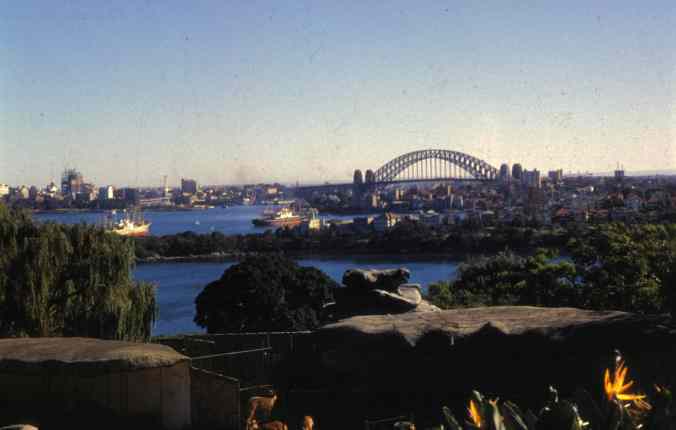
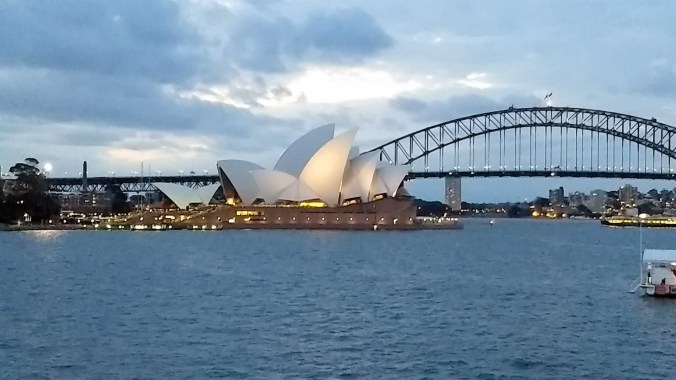
As far as conferences went, not a bad one. Lots of singing, worshipping God, that is, lectures, Bible Study, eating, and meeting new friends and old friends too. Our accommodation was down Anzac Parade, about five kilometres, halfway to the beach. I shared a small apartment with Rick and Dad. Dad drove me back and forth from the conference centre at Randwick. Not sure what Cordelia did, but I think she connected with other members of her family who attended the conference and stayed with them. Rick, I think, ferried Mitch and Jack to and from the conference centre.
This arrangement becomes relevant later in the week of the conference.
One session that stands out was the one on relationships.
Rick and I sat side by side in the front row.
This will be interesting, I thought. Maybe I’ll get some tips on how to get a boyfriend and be popular like Cordelia.
‘So,’ the speaker said, ‘How many of you have had a boyfriend or girlfriend?’
Everyone, including me, raised their hands. Everyone, that is, except my brother Rick.
‘What? You’ve never had a girlfriend, Laddie?’
‘Nope?’
The speaker pointed at me. ‘What about that lovely girl next to you?’
Towards the end of the conference, one more event stood out.
Dad told me to wait for him at the hostel apartment where we were staying. After lunch, we had an afternoon of free time before the final worship session.
I returned to the apartment for lunch with my brother and friends, eager to catch up on some rest and lose myself in a book. Maybe some journal writing, which had been neglected in all the activity and excitement of the conference.
However, upon my return to the dreary grey corridors of the hostel, my door was locked. Oh, well, Dad said he won’t be long.
I had nothing with me. All my supplies of entertainment and comfort were locked away in the apartment.
So, I sat.
For hours.
After two hours, I began to sniff.
Then snivel.
Then finally, cry.
A lady poked her head out of a nearby door. ‘Are you all right?’
I wiped my eyes. ‘Yeah, I’m fine.’
She retreated into her apartment.
I looked at my watch. Five o’clock! I’d been waiting for almost three hours for Dad.
Convinced that he’s forgotten me and I’d be waiting for another five hours with that lady sticking her nose in my business every so often, I stood up. Stiffening my lip in grim determination, I marched out of the hostel and strode up Anzac Parade.
Along the cracked pavement. Past long neglected houses. And cared-for ones. Over busy roads at the lights. Narrowly escaping any impact with red-light-running cars. In the humidity. Under light rain. Taking a wide berth around the many hotels. And leering drunks who spilled out onto the footpath. In the ever-fading light that faded into dusk.
Five kilometres and forty minutes later, I entered the conference centre. The session where all had gathered was concluding with prayers. All in a circle holding hands. I slipped in the circle.
The boy next to me squeezed my hand.
Oh, he’s just being kind to poor little old me, I thought. After all, if even my father forgets me …
After over tea and biscuits, my miffed Dad asked, ‘Where were you?’
‘What do you mean? I waited three hours,’ I retorted.
‘Couldn’t you be patient?’
‘Not when I couldn’t get into the room,’ I said. There was a limit to my patience.
‘I went to pick you up, and you weren’t there,’ Dad said. ‘I told you to wait.’
‘And what time was that?’
‘Oh, er, um, about …’ Dad’s voice faded, ‘about five.’
‘Well, I was there at five, and I didn’t see you.’ I sniffed. ‘So, I walked.’
‘But don’t you know how dangerous it was to walk here?’ Dad is showing so much concern after forgetting me for the whole afternoon.
‘I’m here, aren’t I?’ I replied. ‘I prayed, and God protected me.’
‘He did. Praise the Lord,’ Dad said, and then wagged a finger at me. ‘But don’t you ever do that again.’
Our return to the less crowded and more sedate city of Adelaide was serene and uneventful, as was the fair city itself. Especially at the time in 1979.
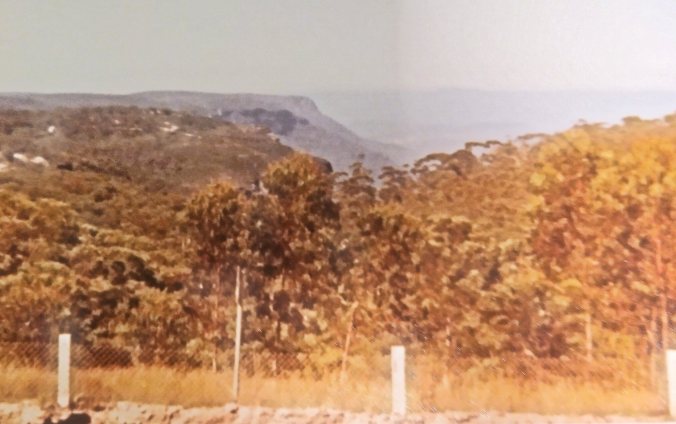
A few highlights. Mostly, in fact, all are associated with the Blue Mountains. We had missed the beauty and wonder of the mountains on our journey to Sydney, so Rick endeavoured to show us these mountains in daytime on our trek home.
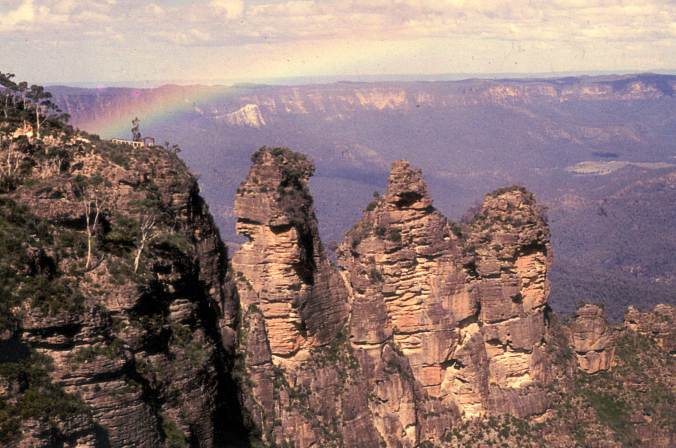
At the lookout to the Three Sisters, we lunched and admired the majesty of God’s creation. Even Rick, using his Polaroid camera, took photos of us admiring the scene. He was taken with the layers of misty blues and subtle greens cascading down into the depths, while the cliff tomes forming the Three Sisters presided over the valley.
I burst out in song, and Cordelia joined in.
After a chorus, Cordelia said, ‘You should try out for the worship band.’
‘Me?’
‘You have such a sweet voice, although it does need to be stronger.’
On the drive home, I considered the prospect of trying out for the band. Perhaps singing in front of the church would make me more popular with the boys. Like Cordelia. But in the end, I decided against it. Too hard. Too much of a challenge for plain old me. After all, the worship band was a highly coveted affair, where lead singers jealously guarded their position. I’d never have a chance. Sweet voice, but not a strong voice, would never cut it.
Back at school, I continued my enjoyment of music, singing in the choir. But I’d always secretly envy the soloists with their stand-out song voices. The stars, with their melodic, strong notes, capture the audience’s focus on them alone.
Instead, in the new year of 1979, my passion turned to art … and writing. These were the gifts God had given me.
Jack woke and rubbed his eyes. ‘What’s happening?’
‘What are you doing?’ Mitch asked.
‘What do ya think?’ Rick said as he slowed to the 60 km/h speed limit of the town.
Mitch pointed the other way, out of town. ‘Couldn’t we just…’
‘No,’ Rick said.
‘Cordelia’s going to be sick,’ I chimed in.
Rick slammed on the brakes and skidded on the rubble on the side of the road.
‘Not yet,’ Cordelia said in a soft voice. ‘But I need a hospital.’
None of us asked the reason we needed a hospital for Cordelia. Under the light of the newly functioning headlights, I studied the strip map for the district hospital. Not much joy there. The map only showed the strip of road or highway from town A to town B, no diversions. However, we did find a 24-hour service station where Mitch asked for directions to the hospital.
Upon arriving, Cordelia insisted on entering the premises on her own while the rest of us waited in the car park. Making the most of the opportunity not to be cramped up in the car, we sat or paced around the car in the balmy night.
An hour or so later, Cordelia emerged feeling better. No explanation.
And once more, we piled in the car and headed for Sydney.
‘If we drive through the night, we’ll reach Sydney by morning,’ Mitch said. ‘Plenty of time for the conference.’
Rick adjusted his grip on the steering wheel and grunted. ‘As long as nothing else happens.’
I squeezed myself against the back passenger door. I had lost my place in the front with Rick to Cordelia. I had been relegated to the back seat with Mitch and Jack.
The gentle rocking of the drive lulled me to sleep.
Lost in Sydney
I yawned and stretched.
‘Hey, watch it!’ Mitch said and pushed my hand away.
‘Sorry.’ I covered my mouth and yawned again.
The Charger crawled along following bumper-to-bumper traffic. High-rise buildings towered over the narrow road, and every side street garnered either a black and white “One Way” sign or red and white “No Entry” sign. Sydney Harbour bridge, appearing like a giant coat hanger, peeped through a gap in the buildings.
‘Oh, Sydney,’ I said. ‘How come we’re not at the conference?’
‘You tell me,’ Rick muttered.
‘We’re having trouble …’ Mitch began.
‘It’s all these one-way streets,’ Rick said. ‘Whoever designed Sydney must’ve had rocks in their head.’
Jack suggested we head for Bondi Beach for a swim as it’s so bleeping hot, reasoning that if we hadn’t had the car trouble, we’d have had a day to take in the sights and go for a swim.
‘Aren’t we late for the conference?’ I asked.
Rick rolled his eyes. ‘Rate we’re going, we’ll never get there.’
‘But, if we go to Bondi,’ Mitch said, ‘perhaps we can find a park and work out where we are and how to get to the conference.’
‘But how do we do that?’ Rick asked. He moved the car at the speed of a tortoise along the road chock-full of nearly stationary vehicles.
I pointed at a sign which read, “Bondi”. Head east, follow that sign. I’d given up on attending the conference, and, believing we’d be stuck in Sydney city traffic forever, resolved to content myself with the promise of the beach sometime in the next week. Not sure how Dad would feel about us not turning up, though. He’d made it his mission to persuade our little tribe to come. And, here we were, lost in the city traffic, wandering in circles around one-way streets.
I imagined Dad pacing the floor of the conference centre, wearing a groove in the carpet, glancing at his watch, and peering out the window. ‘Where are those children?’ he’d be saying, ‘They should be here by now.’
‘Where, exactly, is the conference?’ I asked. ‘Is it near Bondi?’
‘Have you got rocks in your head?’ Rick said. His face was flushed with beads of perspiration dripping from his temples. ‘Of course it’s not. And at this rate, no matter where it is, we won’t get there. We’re stuck.’
‘Um,’ Jack interrupted Rick’s rant, ‘I think it’s at Randwick Racecourse.’
‘And where’s that?’ I chimed in.
‘Perhaps, if we go to Bondi, find a park, then we can study the map, and work out where to go,’ Mitch said.
‘Or we could lob into a corner shop and ask someone directions,’ I suggested.
The guys ignored my idea, as guys do. All this time Cordelia remained silent, contributing nothing to the discussion. Perhaps to be more popular with the boys, as Cordelia certainly was, I considered I should remain silent. But me, being me, I just couldn’t help myself. Being one of the “lads” and voicing my opinion, that is.
We reached Bondi. Early afternoon.
I remember the weather. Warm, cloudy, and humid. Specks of rain assaulted the windscreen. Despite the inclement weather by my Adelaide standards, the streets around this beachside suburb were cluttered with more cars and even more people. It seemed to me that Bondi was crowded with the entire rest of the population of Sydney, the ones who were not still stuck in traffic in the city centre.
As a result, no parks. Nowhere. Not a thin strip anywhere to put the Charger.
Rick sighed and drove through the park-less and crowded Bondi, along some coastal road, and then up a road heading east again.
Jack, who had been studying a simple map of Sydney that the RAA strip map provided, pointed at a road on the map. ‘I’m pretty sure if we turn down Anzac Parade and follow it all the way down, we will reach our destination.’
Rick followed Jack’s directions, and we arrived at the conference just in time for afternoon tea. And, I might add, a roasting from Dad who could not understand how we could get lost in Sydney.
Mitch, though, was philosophical. ‘It could’ve been worse, but I was praying the whole time, and God got us here safe and sound.’
Dad sniffed and tapped his trouser pocket. ‘Hmm, yes, you are right, Mitch. Ah, well, praise the Lord.’
Want more, but now, probably due to current world events, (Again! Sigh!) too impossible to travel down under? Why not escape all the world drama and take a virtual journey back in time and space, with the T-Team Adventures in Australia?
[Recently, I’ve been dipping my toes into memoir writing. This experience happened when I was about ten.]
Supernatural Snoring
I tossed and turned on my mattress. It’s so hot; not even a puff of sea breeze to cool me. My brother and I had parked our mattresses in the backyard to find cool respite on this hot summer’s night.
I turned to check on my brother.
In the moonlight, his mattress glowed white and empty. I turned away from him, glad that I had a brief window of opportunity to fall asleep undisturbed by his incessant snoring.
Rustling woke me.
Then, his snoring was back.
Peeved, I moved towards my brother to whack him on the arm and stop the constant rumbling. However, shadowy figures by the Hills Hoist clothesline caught my attention.
A young woman and a little boy were standing watching us. They were dressed in mid-nineteenth-century garb.
She wore a dark full-length dress, a white lace scarf with frills, and a hooded cape. He was dressed in a navy-blue outfit, like a sailor suit. The girl showed the boy a medallion. It looked like a fob watch or perhaps a compass.
I leaned up on one elbow to examine them. They seemed unaware I was watching them. The girl was absorbed in gazing at the device.
I wanted to say something to them, to call out, to get their attention, but my voice failed me; as if I were in a glass vacuum, and my words had no sound.
They seemed unperturbed by my brother and me sleeping there in the middle of the backyard on a hot night.
I turned back to my brother and nudged him. ‘Hey! Wake up! Look!’
Brother snorted with a start. ‘Wh-what? Huh?’
I shook my brother. ‘There’s people standing by the clothesline.’
He stared past me. ‘What? What’s by the clothesline? I don’t see anything. You must be hallucinating.’
‘But I saw them! They were right there!’ I screamed.
‘Well, they are not there now,’ my brother grunted, then rolled over and resumed snoring.
‘But I did! I saw them!’ I jumped up from the mattress and, in the moonlight, hunted around the clothesline for evidence.
I found nothing. Except for a few stray clothes pegs and a heat-stiffened rag.
A light went on in the kitchen.
‘Is everything alright?’ Mum called from inside.
‘Yes, Mum!’ we replied in unison.
Still, the visitors to our backyard had disturbed me. I packed up my bedding and ran inside to sleep in the safety of my room. Didn’t care my room was boiling.
[In 2013, the T-Team, next generation, embarked on their pilgrimage to Central Australia. Purpose: to scatter Dad’s ashes in his beloved Central Australia, in Ormiston Gorge.
Over the next few weeks, I will take you on a virtual trip to the Centre and memories of that unforgettable holiday in 2013, with my brother and his family, the T-Team Next Generation.
This time, the T-K Team visits Emily Gap.]
Lunch With the Ants
Our plans changed. Hubby decided we could take a risk with our fuel situation, so since we were in the vicinity of the Eastern MacDonnell Ranges, we visited Emily Gap and had lunch before refuelling the Ford.
‘After all,’ I said to Hubby, ‘it is almost two o’clock, and I’m hungry.’
He just had to reply, ‘Hungry? Unlike you, I can wait till teatime.’
‘Hmm, yet another similarity you have to my father. Only he could fast from breakfast as well as lunch.’
As we rolled into the shady climes of the Emily Gap car park, I remarked, ‘But such a lovely place to sit and have a picnic, don’t you think?’ I had already sourced some nuts and chocolate from my bag in case he disagreed with my suggestion.
‘We’ll go for a walk first to see the rock paintings and then have some lunch,’ Hubby grumbled. ‘I don’t want to walk on a full stomach.’
While Hubby marched ahead to find the rock paintings before they disappeared, I trailed behind and nibbled my nuts and chocolate. Needed reinforcements to do the walk.
Hubby vanished around a corner. A few minutes later, he appeared, jogging towards me. ‘They’re here! Come, look!’
‘Oh, yeah,’ I replied, remembering 1981 when TR baited us with some significant discovery of Indigenous art. That art turned out to be less ancient and more modern.
I followed Hubby. Around the bend, he pointed. ‘Look! There they are.’
Gazing at the entrance to a shallow cave, I said, ‘Oh, yeah! So, there are. They look like giant caterpillars.’
We spent some time examining the array of caterpillar paintings and carvings; the totem of the Easter Aranda people, we assumed.
‘I think my dad took us to Jesse Gap,’ I said as we walked back to the picnic area. ‘I’ve never seen those paintings before. When he took us out to the Eastern MacDonnell’s, all we saw was artwork of the Western kind, graffiti. When we suggested visiting Emily Gap, it was already nearly dark, and Dad thought there would only be graffiti there too. After all, we had just been to the Devil’s Marbles, after sunset, so it was getting too dark to see anything at that time.’
In the shade of the gum trees in the picnic area, we “shared” our lunch of canned tuna and buttered bread with some inch ants. Had to put our food on a rock and then move the picnic rug, but the inch ants followed us.
After lunch, we found the BP petrol station that my brother had told us about. And finally, the Ford had its fill of LP Gas. Then, on our way back to the Caravan park where we were staying for the night, we swung by the local IGA. There I bought mince, button mushrooms, two onions, shampoo and conditioner. Would you believe that the shampoo and conditioner I had brought from home had not lasted the distance of our two-week Central Australian journey?
In the golden light of late afternoon, while I helped Anthony put up the tent, I watched another family pitch theirs. The father sat in his director’s chair and directed the rest of the family, the women and children, on how to put up their tent.
But, ah, what bliss to cook tea in the light of the common kitchen. Spag Bog, and plum pudding. Dessert, hot chocolate.
[Heading up to Christmas, reminds me we all have them: the proverbial “black sheep” in our families. Or it might be the skeletons we want remain hidden.
As it was, in the past week, I didn’t intend to, but it happened. I made another discovery which I can’t wait to tell my mum. I tell my mum everything.
It all began when I did some research on backyard burning and the iconic Besser block incinerator from the 1960s. A fellow writer in our writers’ group was adamant that burning was banned during the summer months back then. However, I remember things differently, and so does Hubby. Anyway, as I was researching, I came across a map of Adelaide CBD during the 1920s. Don’t I just love incidental detective work! After a little more “digging,” I think I’ve found my great-uncle’s clothing shop location. Amazing!
Then, as I delved into the relatives from that branch, My Heritage offered some fascinating information which kept me burrowing down another rabbit hole. I will not bore you with the details, but I will be telling my mum.
So, on another note, here’s a refined re-blog from not so long ago.]
In the Steps of Sherlock Holmes
Some time ago, Hubby and I received our DNA results. Dear Hubby received his a few days before me.
So, over the last year, I have been familiarising myself with the process and slowly building our family trees. Early on, I discovered a truth, which could be said to be a “skeleton” in one of our ancestral lines. I added the details to see if anything further came up. My Heritage calls this a “smart match”. Nothing did, but I left it there.
For certain family members, this truth appeared absurd and too difficult to comprehend. Surely, that ancestor wouldn’t. Didn’t. No one told us that. You have it all wrong, Lee-Anne.
Hence, Lee-Anne (me), being a good person, only wanting the best for the family, deleted the suspect members from that branch of the family.
Then, curiosity set in. Who was that ancestor’s mother? Father? My husband suggested we go down the line to the descendants and put in a particular name.
This I did.
You wouldn’t believe it, but the same results, only this time verified by the official birth and marriage records. My original hunch had been correct. Moreover, in the spirit of Sherlock Holmes, I managed to cross-match the added, yet odd, family members with DNA, and behold, a match.
Now, the reason I’m being so vague about the whole ancestral situation, which I might add, is responsible for our existence, is because out of respect for some people, the details of such conceptions are to remain private/personal; too personal to be published.
Isn’t it interesting that for people who want to protect their reputation, the unacceptable behaviour of other members of their family, ancestors, or close relatives must remain hidden, buried, and plainly, not discussed. Such individuals may even be ostracised from the family.
Yet, such flawed individuals can still be in other circles and be a valued and much-loved member of the community.
My dad’s cousin, Dr. Malcolm Trudinger, for instance. The story goes that he had a problem with alcohol. Legend has it that he couldn’t do surgery without a nip or two before the operation.
Malcolm’s alcohol addiction was too much for his immediate family, who, it would seem, distanced themselves from him. Maybe it was the other way around, and he felt not good enough for them. Whatever…
According to articles about Malcolm on Trove, he was regularly in trouble with the law. Infractions that in the 21st century, we’d consider a nuisance, or minor, but in the 1940’s and 50’s were important. For example, his car making too much noise at night in town. Or even one time, merely driving his car late at night. Another time, he was charged with causing a scene at a function.
Despite these misdemeanours, as I see them (glad my brother and I didn’t live in those times—in his youth, my brother loved doing “donuts” and “burnouts” in his car like in Top Gear at night with his mates), the folk on the West Coast of South Australia loved Dr. Malcolm Trudinger. He was their hero. He once helped rescue people from a shipwreck off the coast during a storm. He cared and was always there for the sick and injured.
I remember my mother telling me the story of how a person, upon meeting my father, and learning his name was Trudinger, sang high praises for his cousin Malcolm. The sad thing was that although he was still alive when Mum and Dad were first married, Mum never got to meet Malcolm.
Dr. Malcolm Trudinger was such a vital part of the West Coast community that they established a rose garden in his honour after he passed away in the early 1960s. We have heard that rose cultivation was his passion, and his roses were prize-winning. My niece discovered the garden when she and her partner were on a road trip passing through Elliston. She couldn’t have been more chuffed having found a Trudinger with a rose garden to his name. It showed Malcolm was a loved member of the community despite his demons.
This is what, I believe, grace is all about—valuing and loving people as they are. We are all flawed. Rather than hide the imperfections, celebrate the person, their life, and the goodness they brought to the community. It’s our pride and wanting to look good to others that makes us cover up our sins or those of our kin. But also, we may be protecting their reputation too.
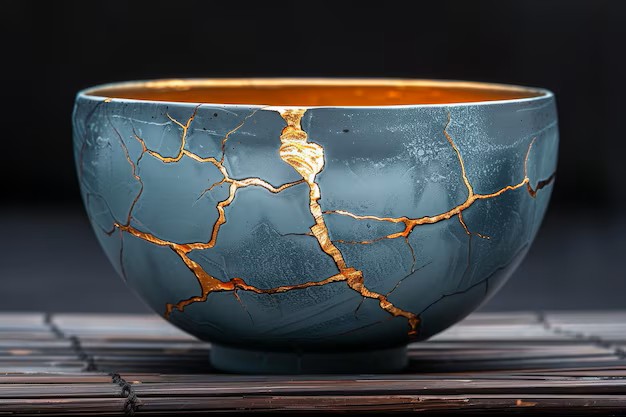
The reality is, we are all fallen, and we all struggle. No one is perfect. We are all cracked pots. Yet, like in the Japanese art of Kintsugi (the repairing of broken pots), there is beauty that shines out through the cracks.
And so, it is with our imperfect ancestors. When you think about it, it’s the ones whose stories are different and colourful that we find most interesting.
[Keeping with the car-theme this week. Bought a new secondhand car. Sold our car. I say, if I’m a bit muddle-headed, it’s because of all the dealing with vehicles, banking, and paperwork that goes with it. The new-for-us car is beautiful, though and everybody involved is smiling.]
Road Trip to Sydney, the summer of 1979 – Episode 1
[Based on real events. Some names have been changed. And some details of events may differ. After all, it was over 40 years ago.]
Lost Control
A conference on the gifts of the Holy Spirit. I wonder what gifts God has for me? I pondered while dozing in the back seat of my brother Rick’s Chrysler Charger. And Dad…why was it that Dad had to go all on his own by car to the conference? Oh, well…much more fun travelling with my peers.
Crunch!
I sat up. Rubbed my eyes. ‘What happened?’
The car fishtailed. Rocking the carload of us back and forth.
‘Hey, mate!’ Rick, my brother, yelled at the driver, ‘Jack! You trying to kill us?’
Without reply, Jack bit his thin upper lip and swung the Charger to the right, and into oncoming traffic.
I gasped.
A truck bore down on us.
Jack, who reminded me of Abraham Lincoln, clenched his strong jaw and corrected back to the left. Keep left, that’s what you do when driving in Australia. Jack’s usually blonde curls appeared dark from perspiration.
The semitrailer gushed past us, sucking the air out of our open windows.
Rick held up his thumb and forefinger in pincer mode. ‘You missed them by that much.’
Rick’s navy-blue tank top was soaked with sweat around the neckline under his mouse-brown curls, and under his strong arms. Mid-January and the full car with only open windows for air-con, steamed with heat. And body odour.
To my right in the back seat, Mitch, taller and thinner than my brother but sporting chestnut brown curly hair, wiped his damp mauve polo shirt and then sighed, ‘That was close.’
Cordelia, in the briefest of shorts and a tight-fitting t-shirt, showing off her classic beauty and assets, sat on the other side of Mitch. She clutched her stomach. ‘I feel sick.’
Mitch leaned forward and tapped Rick on the arm. ‘How long till we reach the next town?’
‘I think I’m going to throw up,’ Cordelia said.
Rick nudged Jack. ‘I think you’d better stop.’
Jack rubbed one hand on his blue jeans, straightened his long white shirt, placed his hand again on the steering wheel, and kept driving.
Cordelia cupped her hand under her chin and groaned.
I smoothed my white wrap-around skirt and then brushed my light cream-coloured blouse patterned with blue roses. No way did I want Cordelia to mess up my most flattering-to-my-slim-figure- figure clothes.
‘I can’t!’ Jack said and continued to speed down the highway. The golden expanse of the Hay Plains, dried out by the fierce summer heat, spanned the horizon. White posts flitted past. The red-brown line of bitumen of the highway stretched to its vanishing point on that horizon. A faded white sign flashed past. Dubbo, 265 miles. How long had Australia been metric? A few years at least; not that one would know, travelling in outback Australia in early 1979. Still…
Another groan from Cordelia.
Rick screamed at Jack. ‘Stop!’
Jack slowed the car and rumbled onto the gravel beside the road.
Cordelia leapt out and hunched over a shrivelled wheat stalk. I looked away and covered my ears from the inevitable sound of chunder.
‘That was close,’ Mitch said.
‘Remember that drunk guy, your brother brought back to Grandma’s?’ Rick said. ‘Took me a week to get the smell out of her Toyota.’
‘Hmm,’ Mitch replied. ‘That was unfortunate.’
‘You mean, the guy who kept singing “Black Betty”?’ I asked. I remembered that fellow. He had messy blonde hair and a moustache. He lounged on the back seat of Grandma’s car while I sat all prim and proper in the front, waiting for Mitch’s brother to drive us to Lighthouse Coffee Lounge. ‘He kept saying I was so innocent.’
‘Well,’ Mitch said, ‘you are.’
I guess I was 15, but hated to admit it.
Cordelia stumbled back into the car. ‘That’s better.’
Rick and Jack arranged to swap places. So, after a brief stretch of legs and a nearby scraggly-looking bush receiving five visitors, we set off on our quest for Sydney. After all, we still had ages to go before arriving there for the Revival Conference. We hoped to arrive with enough spare time to see the sights Sydney had to offer.
[In 2013, the T-Team, Next Generation embarked on their pilgrimage to Central Australia. Purpose: to scatter Dad’s ashes in his beloved Central Australia, in Ormiston Gorge.
Over the next few months, I will take you on a virtual trip to the Centre and memories of that unforgettable holiday in 2013, with my brother and his family; the T-Team Next Generation.
This time, the T-K Team (my husband and I) return to Hermannsburg and catch up with friends there.]
Hermannsburg Here We Come
As we powered along the sealed Larapinta Highway, I mused, what a difference some 60-70 years makes. When Mum T lived in Hermannsburg, back in the 1940’s and 50’s, the trip to Alice Springs was a long arduous half-a-day journey on a dirt track in a truck where one spent several days in Alice Springs stocking up on supplies.
As we passed the turn off to Jay creek, I said to Hubby, ‘Mum told us the story of her mum (Grandma Gross) who, when the Finke flooded, had to wade through the waters to reach the other side to continue the journey to Alice Springs. She was 8-months pregnant at the time.’
‘Hard to imagine the creek flooding,’ Hubby glanced at the dip, a dry riverbed, that signalled the up-coming fork in the road leading the Hermannsburg. ‘But I know from camping in the Flinders Ranges, at the first drops of rain, you don’t hang around, you get out.’
‘Your mum and friend didn’t when they camped at Parachilna,’ I said. ‘They were stuck there on an island with the river all around them for days.’
A sign with an image of a cow, and below written, “Beware of wandering stock”, flashed by. Brumbies galloped on the side, as if racing with us. Hawks soared in the cobalt blue sky above. A lone wedge-tail eagle, having gorged on a carcass of roadkill, waddled off the road just in time, avoiding the same fate as its feed.
This time, when we arrived in Hermannsburg, we made a beeline for the FRM store where we located our friend, P. He welcomed us and gave us a tour of the store. So much bigger than in 1981; more like the size of our local IGA store in size and shelves fully stocked. It even stocked fridges and washing machines. P proudly showed us the bakery where fresh bread is made each day and he introduced us to the Indigenous workers at the store.
After settling into our P and K’s home, we spent the afternoon drinking coffee and storytelling with P and K. Storytelling continued over dinner. Much had changed since the T-team visited in 1981. The population of Hermannsburg has now grown to 600, the Finke River Mission still exists there, and the Christian community is growing. However, there remain challenges for the Indigenous community as there are in communities all over Australia, and the world. ‘It just is,’ as P stated, ‘we’re at the coal-face, being a small, isolated outback community; you see everything…’
‘Whereas,’ I concluded, ‘in the city it’s hidden by numbers, a larger population and behind the walls of our castles.’ Then I changed the subject. ‘Oh, by the way, this is the house I stayed in when the T-team visited Hermannsburg in 1981.’
The T-Team with Mr B — In 1977 Dad’s friend Mr Banks and his son, Matt (not their real names), joined Dad, my brother (Rick) and me on this journey of adventure. I guess Dad had some reservations how I would cope… But it soon became clear that the question was, how would Mr. B who was used to a life of luxury cope? And how would the T-Team cope with him?]
Secret Men’s Business
Mangaruka
Dad scraped up the last few oats at the bottom of his metal bowl and then said, ‘I’ve asked our guides to take us to a place which is very special to them.’
‘What? The Gosse Range?’ I piped up. ‘Are we going to that meteorite site?’
‘Better, than that.’ Dad’s mouth did his signature cat-with-bird-in-the-mouth expression. Then he explained that after discussion with our Indigenous guides, they had agreed to take the scenic route via Mangaruka Gorge; the entry to a sacred site. While Mr. B groaned at the prospect of hiking up yet another gorge, my father allayed his friend’s concerns by saying that we would only travel to the gorge’s entrance, and if we had time, just explore the beginnings of it.
Mr. B grumbled, ‘But we don’t want to be searching for a camp near Talipata in the dark.’
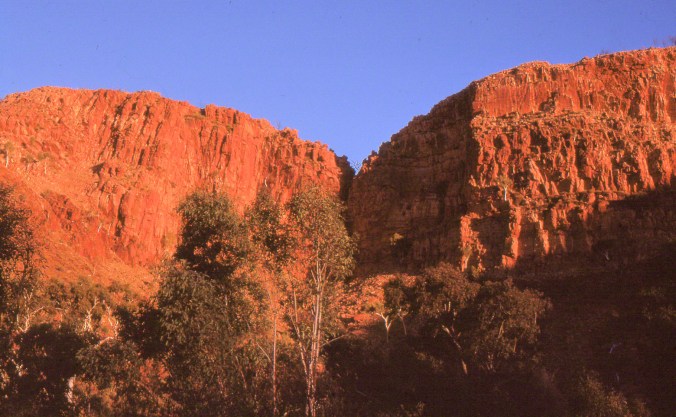
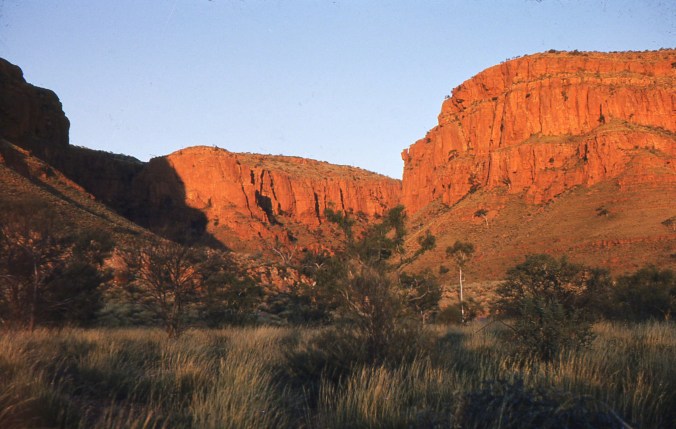
‘Don’t worry,’ Dad patted Mr. B on his rounded shoulder, ‘Talipata is not far from there. Besides, the cliffs of Mangaruka at sunset are stunning, especially with the ghost gums set against them.’
I remembered the exact image Dad was dreaming about. On lazy afternoons at my Grandma’s home, I used to rummage through photos and slides from her family’s time in Central Australia. My grandfather was, in my opinion, an amazing photographer. In one corner of Grandma’s bookshelf in the back room, rested a pile photo prints that were kept in pristine condition encased in special cardboard like a card; the best of Grandpa’s work. One scene that I have painted was a ghost gum, it’s white trunk against the deep purple cliffs of Mangaruka Gorge. Another slide that impressed me was the same scene with the ghost gum at sunset. No wonder Dad wanted to stop there on our way to Talipata.
After having breakfast, we packed up and drove out into the wild west. The dirt road exemplified that rugged feel.
At Haasts Bluff station we filled up with petrol, water, and supplies to last us in this virgin land. We were going where not many people, except the Indigenous, had gone before. Upon entering the land belonging to these people; there would be no shops, no houses, and no roads. To salute our departure from civilisation, we bought something to eat and drink. I ate a meat pie.
Our guides directed us off the narrow, yet graded road onto an almost invisible track. One sat on the bonnet of the Rover and directed our venture into the desert. We bumped and crawled along faded wheel ruts until a small range emerged through the low dunes and the folds and creases in the flat-topped hill, formed a gorge. We had reached Mungaraka Gorge.
Dad slowed the Land Rover, parking it just before some soft sand that threatened to engulf its wheels. The T-Team stepped out of the vehicle to be greeted by a welcoming party of small pesky flies. They were most unwelcome.
Swishing the pests away from his nose, eyes and mouth, Dad said, ‘Mungaraka, I reckon the name of the place has something to do with flies.’
‘Certainly a feature of the place,’ Mr. B sniffed. ‘Oh, darn it! I just got one up my nose.’
Richard, my brother clapped.
Mr. B glared at him.
With eyes wide, Richard looked at Mr. B. He then examined his palms. ‘Twenty.’ He flicked the flattened black flecks from his hands and then clapped again.
Mr. B then turned to his son, Matt. ‘Don’t even think about killing tha flies, ma son. They have germs. You don’t want germs, ma boy.’
‘No, Dad.’ Matt pulled his cap over his eyes, turned away and strolled down the track towards Mangaruka.
Dad, who had been laying out a spread of food on the tarpaulin, stopped preparations and ran after the boy. ‘Hoy! Matt! Wait! Lunch first, then the gorge.’
Richard laughed. ‘And for extra protein—flies.’
Lunch became a battle of hasty bites of cheese and gherkin sandwiches while trying to avoid the added bits of protein of flies that were only too willing to add flavour to our meal. After, we sipped our billy tea probably flavoured with the odd thirsty fly.
Our guides sat apart from us, and, unperturbed by our uninvited swarm of guests, they ate their bread and murmured quietly to each other. Dad perched on the tucker box and watched them.
I gulped down my last drop of tea. ‘Well, aren’t we going to explore the gorge?’
Dad stood up. ‘Right, let’s go.’
‘What about our guides?’ I asked.
‘Oh, they won’t be going. Mangaruka’s sacred to the Arunda, so they won’t go near it.’
‘What? Are they afraid of the place, Dad?’
‘It’s more complicated than that. They keep sacred stones called “Tjuringa” there in a cave. And they are afraid of spirits there.’
‘Can we go there?’
‘Sorry, Lee-Anne, girls are not allowed. Nor us. Not them. Only the elders. So, we’ll only go to the entrance of the gorge.’
Mangaruka held no ghost for us, only flies. Dad, Mr. B and Matt, and I walked up to the entrance of the gorge. Richard stayed behind to keep our two guides company. On the rocky slopes in the gorge, a smooth brown and white stone caught my eye.
‘Girls not allowed,’ Mr. B added, and then called out to Matt who had scampered further up the gorge. ‘Come on son, time to go back.’
On our return, I tried to take a photo of us all in front of this gorge, but our aboriginal companions refused. In the end, Dad took a photo of me in front of Mungaraka. Dad would have like to stay longer to wait for the rocks to turn red, but we had to move on.
[So, if you could go back and talk with your 5-year-old self, what would you say? What would your 5-year-old self say to your future self? Here’s a story where I imagine just that.]
MESSAGE FROM MY FUTURE ME
“Grandma, can I excuse the table?” I asked.
Grandma chuckled. “You mean, be excused from the table, dear.”
I nodded and then pushed my chair from the old wooden table.
“Yes, you may, but don’t go too far,” Grandma said. “Go only to the end of the road and then you must turn back.”
I escaped out the back door and down the gravel driveway. The street spanned before me, begging adventure. Sunday lawns green, pungent with fresh Saturday clippings piled behind an assortment of fences.
“Go away, will you,” she said in her grimy blue dress. She leaned over the stone wall and pushed me.
I brushed off her greasy prints and walked on, leaving the willow tree and that girl snarling in the shade behind me. As I strolled into the sun, I ran my hand over cracked rendered walls, rattling cyclone fences and peering through the oleander bushes for signs of life in quiet houses.
“Don’t go over the road,” Grandma’s voice warned in my head.
No, I won’t. I rubbed my bottom in memory of the Belair Sunday school picnic adventure when my brother lost me. Promise! Careful not to step on the lines in the pavement. Bad luck. I tiptoed and danced along the pavement in my pink ballerina shoes.
A shadow wriggled over the pavers. Stobie pole to my right, plastered its stunted midday image on the asphalt. I halted. Casting my focus up, I spied this big girl. I squealed and clapped my hands over my mouth. This lady-girl was dressed all in lace and brown velvet as if in Grandma’s clothes.
“Hello, you must be Lee-lee.”
“Why did you know my name?” I pointed at her; rude, I know. “Ha, ha! Why are you wearing funny clothes?”
She blushed and rubbed her stubby fingers over the velvet. “They’re trendy where I come from.” She smiled and straightened her long dress that swept past her ankles. “Actually, where I come from, I know a lot about you.”
“Why?”
“Because I have the same name as you.”
“So? I know more than you do. You’re dumb. So there, ner!” I planted my hands on my hips and poked out my tongue.
“That’s no way to talk about yourself.”
“Huh?” I pulled at my pigtail and chewed the ends of my hair.
“Elementary girl.” She flicked her long blonde strands and smirked. “I am the future you. In fact, I know more than you do because I know what’s going to happen to you.”
“Future me?” I scratched my cheek and screwed up my nose. “What does future mean?”
“Oh!” I wiggled a loose tooth. “Does that mean your teeth all fell out? Did you get grown-up teeth or did you get them all pulled out and get false teeth like Grandma’s?” I zoomed up to Future Me’s face and ogled at her mouth. “Come on, show me your false teeth.”
She bared her perfect row of pearly whites and nudged me back. “They are real. Orthodontically corrected, but real.”
“Arthur—what?”
“I had braces on my teeth.”
“Why? Were they crippled?”
“No, they were crooked.”
“Ugh! Crooked teeth.” I turned from her and poked stones with the point of my shoe. “I don’t think I like being you. Grandma clothes, crooked teeth that need Arthur’s braces. I’ll never be like you. You’re just pretending. ‘Sides, how could I be you?”
I squinted at this tall slim blonde who transferred her weight from one leg to the other. I noticed the worn back-pack groaning full of books, straps straining to pull the load from her waist. Future Me stroked her chin between her thumb and forefinger. “Well, it’s hard to explain to someone as little as you. You’re in Prep, aren’t you?”
“Yes, I’m a big schoolgirl, now.” I thrust my chest forward and with hands each side of my tummy, swung my hips.
“Well, big schoolgirl, Lee-Lee, to put it simply, it’s called T.T.T—thought, time, transportation.”
“What then?” I watched my pink dress swish as I swayed.
“You just think and instead of thinking time as moving forward, you make it move backward for you.”
“Just like that?”
“Well, actually, it’s more complicated than that—a kind of scientific experiment that my big brother Warwick invented. He put electrodes on my head and well, something happens that I can’t fully explain.”
“Oh, did you have a brother, Warwick too? Does your Warwick snort when he laughs?” I cupped my hand over my mouth and tittered.
The lady-girl raised her lace sleeve to her mouth and giggled. “Yes, he does.”
“You must be me.” Repressing the urge to gnaw my fingernails before my future-self, I clasped my hands together and looked in her eyes. “So, me, what’s going to happen to me?”
She avoided my gaze. “That’s for me to know and you to find out.
“That’s not fair! Why can’t I?” I grabbed at her, but she slipped through my fingers and drifted from me. “Plee-ease!”
“I can’t!”
I watched her move further away and shimmer in the sunlight.
“But why not? Please! Just a little bit.” I chased her and swiped at her. “Just a tincy-wincy-little bit. I won’t tell! Promise!”
“Alright, if you insist.” She floated above the greying plaster fence. “But I must be leaving soon.”
She faded, blending in with the oleander and honeysuckle bushes. I strained to see her. I attempted to touch her, but my hand passed through her.
The wind whistled through the bushes. “Have a good time with Jilly.”
“You didn’t tell me! You lied, me!” I cried.
I hunched over and plodded back towards Grandma’s house. Shouts and squeals from a yard on my left, caught the corner of my eye. A girl my age bounced on an old double-spring bed.
“Hello, my name’s Lee, what’s yours?”
“Hello, my name’s Jilly. Do you want to play on the trampoline with me?”
“For I know the plans I have for you,” declares the Lord, “plans to prosper you and not to harm you, plans to give you hope and a future.” Jeremiah 29:11
***
Dreaming of being transported to another world?
Time for some weekend reading?
Take a break and journey to another world, another time to …
In the previous tale, I mentioned a certain friend attached pride to the superiority of the Aussie farmer—a pragmatic soul, jack-of-all-trades and survivor of harsh outback conditions. So, with pride, I wrote about my maternal grandfather, Sam Gross.
My paternal grandfather was none of that. He was a “city slicker” as the “cockies” called them, born and bred in the city and not the farm.
Ronald Trudinger was the first in his family to be born in Australia in August 1886.
His father, Karl August Trudinger, was born in Nördlingen, Bavaria, while his mother, Clara Theresa, was born in Kleinwalka, Saxony. His parents first emigrated to Bradford, Yorkshire, where they lived for about twenty years and became British citizens. They didn’t like Bismarck and his ideas of unifying Germany. The first twelve of Karl’s and Clara’s children were born in England.
Karl August was a textile merchant; hence, living in towns or cities worked best for him. Ronald’s mother, Clara Theresa, grew up in the Moravian Brethren community in Saxony. Faith in God and education were her values. She had yearned to be a missionary, but that door was closed to her at the time. As a result, she prayed for her children that they would become missionaries. Eight out of her thirteen offspring did.
One of them was my grandpa, Ronald, who became a missionary in Sudan.
So, although he wasn’t the venerated Aussie icon of tough “cocky” farmer, his calling was different but just as valuable. He became an intrepid missionary in Sudan, based in Melut on the White Nile. He spent decades translating the New Testament into Dinka and other African languages.
How thankful I am to My Heritage and the links to news articles matching Dr. Ronald Trudinger—100 at least. In the early 1900s until the late 1950s, he appeared as a local celebrity, especially in church circles. His deputation talks on the “Soudan” and the Muslims, and the risks and challenges the family faced in Africa, particularly during the War in the 1940s, were a source of fascination, if not entertainment, for the public of that time.
Ronald Trudinger grew up in Norwood, a suburb of Adelaide, South Australia. From what I can gather, again from various news articles about the family, he may have lived in Kapunda and Broken Hill. His father, new to Australia and a merchant, had to go to where the work was. When they first arrived in Australia, according to Ronald’s birth certificate, his father was a greengrocer. Humble beginnings after being a wool merchant in Yorkshire.
A few years later, news reports have Karl August working in a jewellery store in Kapunda. Then, as I mentioned, there was a time the family was in Broken Hill, where Ronald’s eleven-year-old older sister died of typhus.
Eventually, so the family narrative goes, they settled in Marryatville, a subdivision/estate in Norwood, and father, Karl August, teamed up with a Mr. Zimmermann to manage a textile store in Adelaide city. While his father supported the family as a merchant, and some of his older siblings set off for China as missionaries with China Inland Mission, Ronald became highly educated, attending Adelaide University and becoming a Doctor of Medicine.
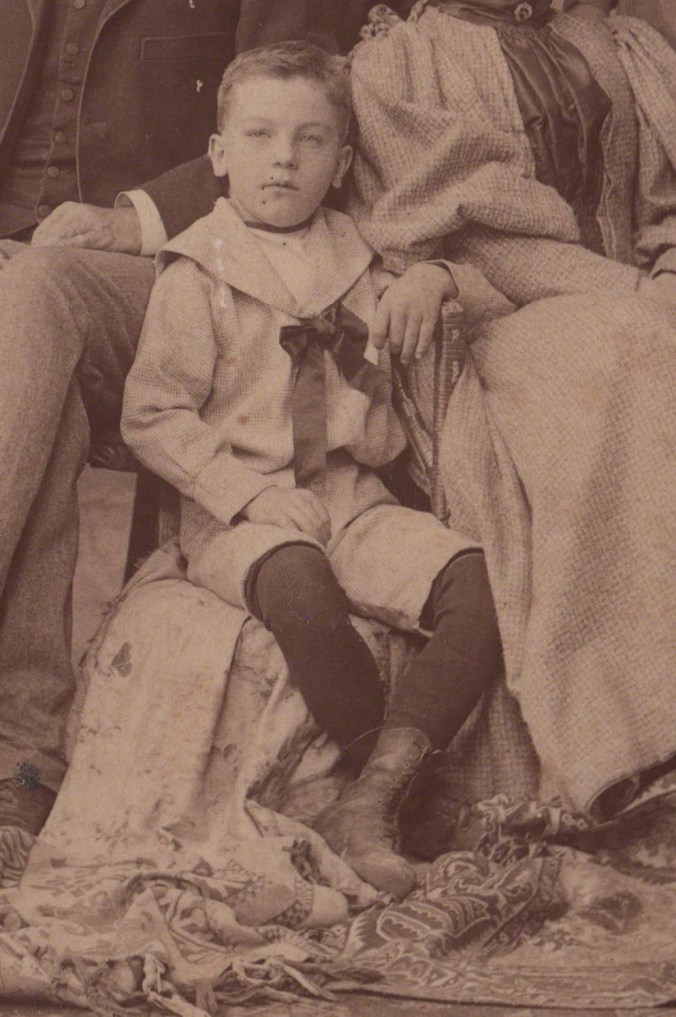
As a child, Ronald was exceptionally gifted, and by the age of four he was reading the Bible, and at five, Homer’s Odyssey, so my father says. Apart from these fragments of information passed down the generations by word of mouth, Ronald’s childhood remains a mystery.
News reports at the time have helped fill in some of the gaps in Ronald’s interests as he grew up. One of these was tennis competition reports. Although Ronald was born with one arm shorter than the other, he still enjoyed a hit of tennis and played in competition. He was described as a fierce competitor.
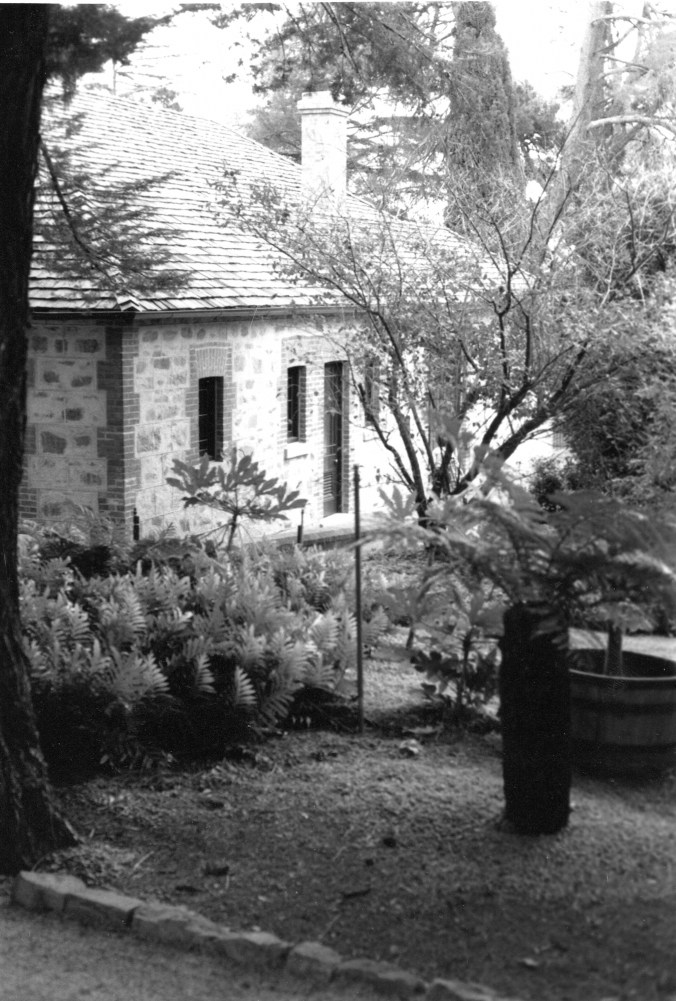
Ronald grew up in a God-fearing family, and from all the Sunday School prizes he won (recorded in the local newspapers), I imagine he came to faith in his Lord Jesus as a young child. His family attended Maylands Presbyterian Church. Although they were from a Moravian Brethren background, there was no such church in Adelaide. There was one in Bethany in the Barossa—too far to travel from Norwood. Anyway, the family probably chose a church and congregation that would support missionaries. When Ronald began his missionary work, he and Lina joined the Burnside Christian Church, which faithfully supported their work in Sudan.
Meanwhile, back at the family home base in Norwood, youthful Ronald Trudinger enjoyed evenings with the family playing games—a tradition passed down to the current generation of the T-Team. This never included playing cards, as such cards were deemed “sinful” and associated with gambling. Games my father taught us were taught to him by his maiden aunts, who had learnt them from their parents. A parlour card game called “Chook Chook” was certainly one game the Trudinger family had and loved playing. “Chook Chook” is all about egg farming, teaching the player the different breeds of chickens, trading and negotiating, and accounting. Other games that Ronald would’ve been familiar with were word games and story games, which his mother created for the education of her children.
My father remembers his dad’s fondness for chess. Even in my grandpa’s old age, my father never could beat his dad at chess. Another relative recalled Ronald taught her mother to play the piano. So, I gather another of Ronald’s interests was music, a love which he passed down to his children.
After completing his Bachelor of Science degree from 1908 to 1912, Ronald studied to become a Doctor of Medicine at the University of Adelaide. The University student magazine has him attending the Evangelical Union Christian group there, which would become EU, the Christian group I joined eighty years later.
While at university, Ronald won awards and scholarships for his outstanding results. He even won a scholarship to study tropical infectious diseases in Queensland.
During this time, around 1908, he met a young nurse called Lina Hoopmann. They fell in love and privately became engaged. However, they had to wait many years before they were able to marry. She was Lutheran, and he was not. Her father, a staunch Lutheran minister, refused to give his blessing for the union; he called Ronald a heretic as he wasn’t Lutheran and had come from a Moravian Brethren heritage.
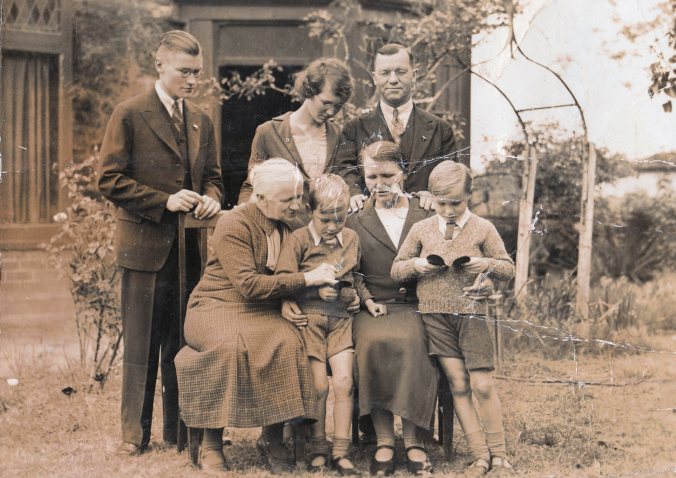
So, they had to wait until Lina was 30. She would’ve been legally able to marry without her father’s consent at this time. I doubt, though, being God-fearing folk, they would’ve shown such dishonour and break the third commandment to honour thy parents. I imagine that her father finally gave his blessing, and the marriage went ahead on December 11, 1917. That being said, the family photo of the wedding doesn’t have Lina’s father present. I’d like to give him the benefit of the doubt that he took the photo.
Others of Lina’s family, such as her sister Dora, had no problem with the Trudinger family. In her diary, she enjoyed many visits to the Trudinger’s in Norwood. Plus, she was overjoyed when Ronald and Lina became engaged and then were able to marry.
From 1912, Ronald commenced his calling to be a missionary doctor in Sudan. He returned on furlough in 1917 to marry Lina. Ronald worked as a doctor at the Royal Adelaide Hospital during this time. By 1918, Ronald, together with his wife, had returned to Sudan. His first two children, Ronald Martin and Agnes Dora, were born in Africa.
In 1927, Ronald and Lina, with Ron junior (9) and Agnes (7), returned to Australia on furlough. They came back for their children to start their education in Australia.
This time, Ron accepted work as a physician and locum in Macclesfield, taking on the challenging task of coronial duties, including being a witness for a high-profile murder case.
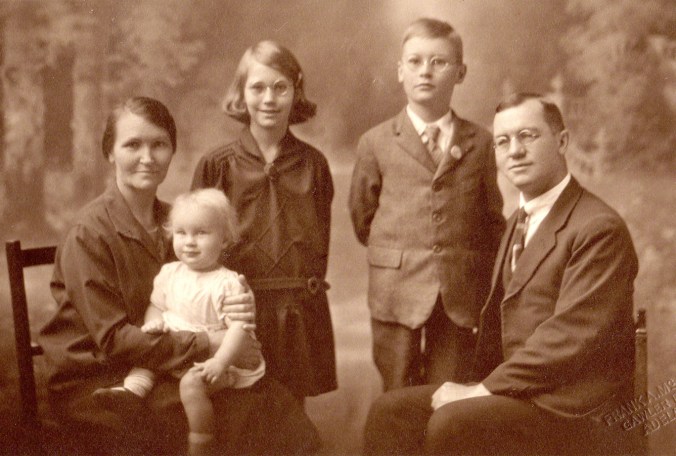
My dad, Clement David Trudinger, was born on January 13, 1928, in Norwood. By May 1929, Ronald and Lina, with their young baby son, were on the ship steaming back to Sudan. Dad’s younger brother Leonhard Paul was born in Melut, Sudan.
As with their first two children, the younger sons must return to live with their maiden aunts in Adelaide for their education. Ronald and Lina returned to Adelaide, South Australia, in 1935. The plan was to stay a year, and then off to Sudan once again. However, it didn’t go as planned. Agnes, their daughter, became gravely ill with meningitis early in 1936. She survived but had to learn to walk and talk again.
Consequently, later in 1936, Ronald set off for Sudan alone after Agnes had recovered.
In Agnes’s memoir, their mum took the boys to live with her family in Yorktown for a year in 1938 while their dad was away on mission in Sudan.
In 1939, Lina joined her husband in Sudan while my dad and Paul stayed with the maiden aunts. During the war years, from 1939 to 1944, Ronald and Lina were on mission in Sudan.
The values of this era were self-sacrifice and obeying God’s calling before family. Plus they considered their children’s educational needs would be better served in Adelaide, South Australia rather than Sudan. Hence, Ronald’s and Lina’s decision to once more venture back to Sudan without their children—a decision the future wives of David and Paul (the dear aunts preferred David to Clement, and Paul to Leonhard), had an issue with. David, Clement by nature, and just that little bit older, took the separation from his mother with a stiff upper lip and in his stride. Dad had fond memories of staying with his maiden aunts. But Paul, being younger, was more of a feisty character and suffered from a sense of abandonment as a child.
Ronald then took two more mission trips to Sudan; 1946 to 1950, then 1951 to 1954. During his time on furlough in 1950, he visited Ernabella where his eldest son Ron was teaching the Pitjantjatjara people, and also Hermannsburg where my Grandpa Sam Gross was pastor at the time. This was before my dad and mum had met each other. It shows the connections in Christian circles and across denominations.
Lina stayed in Adelaide for the 1946 —1950 stint to Sudan but joined Ronald for his final 1951—1954 visit.
In 1954, Ronald had “retired” from the mission field and had taken up a position as a doctor at Hillcrest Psychiatric Hospital. He made an indelible impression there, remembered fondly by former patients.
Even in his golden years of real retirement, furthering the cause of Christ remained the driving force of his life. He never stopped witnessing and sharing the gospel whenever the Lord provided opportunities. In the last years of his life, after his dear wife died, he moved up to Alice Springs to manage a Christian bookshop.
However, this venture didn’t last as he became ill with leukemia. He returned to Adelaide and moved into a flat in the Lutheran Homes Retirement village in Payneham.
Illness didn’t stop him from being a missionary on home soil. In the months before he died, he bought an Italian dictionary so that he could share God’s love and the good news of salvation with his Italian gardener.
I remember my grandpa as a kind man who had a smile with his one remaining tooth in his mouth. He would make a joke about the Trudinger trait (pronounced tray) of twiddling thumbs. He taught my brother Richard to make bird calls with a leaf.
By the time I was born, Ronald and Lina were living in Walsall Street, Kensington Park, in the Norwood area. At three, I remember getting bored with all the people around for a big T-Team family gathering. I went off exploring, and mum found me sleeping under the bed on a pair of shoes.
I know where I was when Grandpa died. I was five. We were in the FJ Holden driving up to “see” Grandpa. Well, I thought we were. Then Dad announced that Grandpa had died. I was confused why we’d been going to see Grandpa if he had died. Hadn’t he gone to Heaven? After all, he was one of the most God-loving people I knew. Upon reflection, perhaps Dad needed to visit Grandpa’s flat to sort out some paperwork with the Lutheran Homes.
Ronald Trudinger died December 21, 1968. He had lived a full and productive life and with his missionary heart had spread the good news of Jesus Christ, his Lord and Saviour.