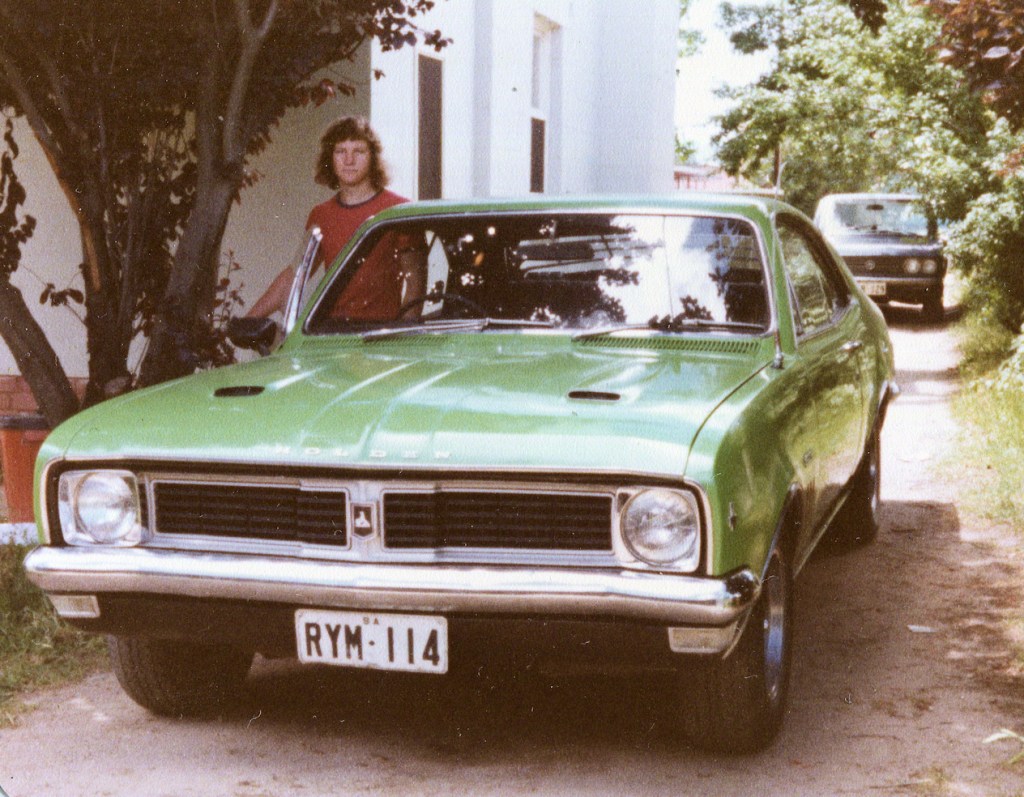
[Another fond memory from my childhood…and Dad’s catchcry, “for the time being” took a breather when, after being promoted to Deputy Principal (Primary School), he bought the Holden Premier.]
Serena, our dream family car ferried the T-Team to Canberra. In 1975, hardly a maiden for this voyage, she drove us to our destination; a comfortable, safe ride over the Hay Plains. No breakdowns. No stranded waiting for road service on the hot dusty side of the road. A smooth ride that rocked me to sleep; the vinyl with scent fresh from the caryard to us.
She mounted the snow shovelled roads to Thredbo. From her window, my first sight of snow on a brilliant sunny day, snow shining on twisted eucalypt branches.
Note: in the back of the photo, you’ll see the lurking the unfortunate successor to the Holden Premier and focus of the next week’s blog featuring my childhood family’s cars.
***
Catch up on the exploits of Boris the over-grown alien cockroach, and the mischief and mayhem he generates.
[My dad’s catchcry, “for the time being” dogged the choice of cars he brought home. The Austin was no exception… ]
The Austin appeared one winter’s afternoon in our backyard; Dad’s solution to the worthless Wolseley, and of course, just for the time being.
Only cost $100. What a bargain!
Next morning, his breath steaming with excitement, Dad marched up to the green lump of a car. I sat sulking in this woe-begone wreck, the vinyl seat threatening frostbite on my delicate buns.
Dad hopped in and turned the ignition key. Nothing. Not even a squeak on this icy morning.
‘Ah, well, we have to crank it,’ Dad said.
Crank it? Yep, we had to crank this ancient Austin to life.
[Another relic from my childhood…and Dad’s catchcry, “for the time being” dogged the choice of cars he brought home.]
The Wolsley 6/99 Saloon
Dad’s midlife crisis began in earnest in the early 1970’s. His penchant for early model, British-made cars was disguised as “this’ll do for the time being”.
The blue and cream saloon took up residence in the backyard behind the Hills Hoist washing line while presiding over Dad’s vegetable garden. On weekdays, it attempted to ferry us to school, but more often than not, failed in its endeavours.
So began my education into mechanics (and my older brother’s), alternators, batteries, starter motors and lemons.
One positive, the Wolsley made a great hideaway because it never went anywhere — for the time being.
Having both studied English at university, the subject that comes up often when visiting Carol is about all things writing and what makes a good story. So, one of my first blog posts came to mind…to encourage and inspire all of us who are writers.
Writers’ Privilege
‘Writing is a lonely craft,’ my university tutor said.
All of us in the group nodded and I thought: Yes, a writer has to hide away in their study clacking away on their typewriter. They have to concentrate. Those were the days back in the 1980’s…
I recalled as a student, hours locked up in my bedroom, writing my essays, trying to concentrate while my family went about their business, stomping in the passageway, dishes clattering in the kitchen and the television blaring in the lounge room. Not to mention my dear brother lifting weights, and dropping the things with the inevitable clunk and thud, in the lounge room. Did I mention trying to concentrate? Yes, trying, but not succeeding. And even now, as I write this blog, can’t go five minutes without interruptions. These days, though, I write my first draft, by hand, in a quiet place at a quiet time, and then I write this blog on the computer as a second draft.
Suffice to say, the statement by my tutor all those years ago, has an element of truth. And compared to being an artist or musician, writing is a lonely craft. I belong to an art group and enjoy going each week as the hall is filled with happy chatter and my fellow artists are friendly and welcoming. And I can imagine a musician, mostly has to play and sing with others in a band, their craft has to be performed to an audience. The lonely parts of a musician’s life, from my observation, is the process of composing music. Although, many musicians collaborate when they jam together and create new songs together.
On reflection, though, my experiences over time with the process of writing as isolating, no longer resonates with me. I don’t write alone. I have my characters. I go into their world. Call me crazy, but it’s like when I was a child and had imaginary friends. Come to think of it, perhaps because I was lonely, I became a writer. Figures, hours after school, on weekends and holidays to fill. There’s only so many hours my brother, five years older than me, would share with me playing games. And friends, too weren’t with me all the time. So, books became my friends, as well as characters in the world of fantasy I conjured up. I swooned away, sitting in my cubby house, and whole days drifted by in my other life of fiction, science fiction.
As I grew up, I became used to my own space. My loneliness transformed into the joy and peace of being alone. Time to think and explore ideas, the “what if’s” of life’s path, stories of people I’ve met, my story, and also the stories of my characters. Time to express these stories, writing them down. Many of these stories remain hidden in my journal, a hand-written scrawl; a mental work-out, sorting out ideas and emotions. Some make it to a Word File on the computer, others a blog post, and a few hundred pages have ended up as works buried on the shelves of Amazon—self-published but published all the same. And for six years, now, there’s my blog, again mostly hidden in the blog-pile of the world-wide web, but more visible today than in 2015 when I started the blogging journey.
Yet, once I’ve written the first draft in quietness and peace, the craft of writing becomes a collaborative process. Good writing needs feedback, editing and proof-reading. An effective piece of work needs a second, third and numerous sets of eyes, and many minds to weed the “gremlins” that beset the plot, content, and pacing. And a keen set of eyes to comb through the text to pick up grammar and spelling issues. The computer’s spell and grammar check are not enough.
I love to go to writers’ group. I heard someone on radio say that reading is the ultimate empathy tool. When we read, we enter into another’s world and how they see the world. Exploring another’s world—how much more social can one get? This is what happens at writers’ group. We share our own world through our writing, and we explore other writer’s world as we listen to each other’s stories; a privilege and an honour to be trusted with these gems. As fellow writers we need each other to hone our skills as a writer. We need each other’s feedback. How else will we refine our craft without feedback?
Still, there is an aspect of writing that makes it a lonely existence. As writers we are modern-day prophets, proclaiming words given to us, believing these words can and will make a difference in another’s life. Hoping, the change will be for good. The word is a powerful tool; a double-edged sword. God’s Word is described as a double-edged sword. (Hebrews 4:12) There’s a saying that sticks and stones can break bones, but words cannot hurt me. Not true. Words can hurt. Words can also heal. Spoken words can sting or soothe, and then are gone, but the written word can endure and have power. People believe something is true because it’s in print. Reputations have risen and fallen on the power of the written word.
The printing press revolutionised the fifteenth century. Imagine words once written and hidden in some monastic library, then with the advent of the printed word, being duplicated and spread, and even appearing on church doors, for all to read. In our times we have witnessed the evolution of the power of the word through the internet. Need I say more—the gatekeepers of the past, by-passed, allowing all who are wanting to have a voice, freedom of written expression.
However, with freedom and power to influence, comes responsibility to use our gift and passion to write wisely and for the good of others. As a writer, I have written with good intentions to help others grow, help others see the world differently, change attitudes and effect a positive change in the world. Even so, my good intentions posted on my blog may have affected others in ways I didn’t intend. So, I have an understanding now what it means that writing can be a lonely craft as there will always be someone who doesn’t see the world as I do and may find my public interpretation of life offensive. My voice in the world-wide wilderness of the web may actually alienate me from others. So, I’m back where I started as a child, alone, with time and space to explore my world of fantasy with my characters as friends.
I guess that’s why I’m drawn to write. With fiction, it’s out there, it’s fantasy and it’s a safe platform to explore ideas, issues and ways of looking at the world, the other world of “what-ifs”, that help readers open their minds to investigate alternative attitudes and create discussion. And with fact through my travel memoirs, sharing my life and worldview, joys, challenges and faith. Through this process, I hope to bring goodness and personal growth to all who are willing to join in the journey into my world.
[Again, COVID, that uninvited guest has thwarted my visit to Carol’s. This time although she’s well, she’s a close contact and must isolate for 7 days. Meanwhile, I have been working on my writing and have been reflecting on what I have learnt makes for a good story.]
Unbelievable to Believable
Unbelievable, that’s what they said about my novel. Unbelievable. Is that why my first novel, Mission of the Unwilling has failed to thrive? Why there’s no feedback? Or is it a case of someone who’s not a Young Adult, and just not into Sci-Fi?
Whatever, I consider this feedback valid and believable. Over the next few months, I plan to revisit Minna’s world and her adventures at the mercy of Boris and learn from my venture into self-publishing. Nothing is wasted. The take-away from the most recent honest feedback—make my stories believable.
What does this mean for me as I refine the craft of story-telling?
My characters are real to the reader.
The setting is authentic, so that the reader can step into my constructed “world” suspending all disbelief.
The audience buy into the journey they take into that world.
But, what does “suspending disbelief” mean. I mean, really? I mean, when I revisit my stories, to me, the characters are alive, the setting an on-site movie set, and I gladly invest in the tale told. Not so for some of my readers, apparently. In truth, I’m too close to my work to view it objectively. I need and appreciate feedback from others. I’d go as far as to say that most writers benefit from a second, third, fourth or umpteenth pair of eyes to make their work the best it possibly can be.
So, from the perspective as a reader, that extra pair of eyes on other works, here’s what I’ve learnt that suspends disbelief and do some unpacking of techniques that make characters, setting and journey more believable.
Believable characters: Someone with whom you connect. You know that person. You’ve met them. You’ve had lunch them. You’ve admired them. They’ve annoyed you with their quirky habits. They’re those people you see across a crowded coffee shop and already you’ve constructed a whole story around them, by observing their posture, expressions and gestures. You invest time following what they’ll do, what will happen to them. Believable characters don’t have to be human, but they do need human qualities and personality for readers to relate to them.
Believable setting: Best woven into the forward-moving action of the story. The writer describes the setting with the five senses, what you: 1) see, 2) hear, 3) touch, 4) smell, and 5) taste. And for the world to be memorable, the author picks up something unique or odd about the place. For example, I may write of Palm Valley in Central Australia, ‘Ghost gums jut out of the tangerine rock-face, and a soft wind rustles through the prehistoric palms.’
Believable Story: You need to convince your readers that such a sequence of events can happen. A skilful writer uses the technique of cause and effect. The character makes a choice, and their actions result in consequences often leading to dilemma that must be resolved. Readers are more likely to engage with proactive characters who influence their environment and others, and who make active choices to change and grow, rather than the passive characters who have every disaster happen to them, and their problems magically solved.
Yes, pile on the misery, pile on the challenges, don’t be afraid to get your characters into strife; that’s what the reader’s looking for. But remember, the chain of events must be believable. An article by Laurence Block, Keeping Your Fiction Shipshape*, describes the relationship between storyteller and audience is like enticing readers onto a cruise ship, keeping them there, and delivering them back to port with a good satisfying end.
It’s the skill of the storyteller to convince the audience. If the characters are believable, the setting is believable, and the action believable, your readers will enjoy the ride and complete the journey you, as the storyteller, takes them on.
[Why Notre dame? Victor Hugo, the author of Hunchback of Notre-Dame, spent the first three-quarters of the book describing the setting. Useful if you visit Paris, but does nothing for moving the story forward.
Also tourists willing to invest in the journey to climb Notre-Dame by waiting several hours in the long line that stretched the length of the Cathedral. What will they see? The gargoyles (characters), a view of Paris (setting) and a climb and walk through the Cathedral (the journey).]
[I first wrote this story over thirty years ago in response to a newspaper murder mystery competition. Upon completing the story, I never submitted it for scrutiny. Since then, the tale has endured several edits and reworkings, the latest being just last week.
The story is pure fantasy but is based on real life events from my youth. Over the last 30 years the characters have evolved to become on the whole, fictional.
Note, bonfires are no longer permitted on beaches near Adelaide. However, cars are still allowed to drive on the sands of some beaches south of Adelaide, such as Sellicks Beach.]
The Uninvited
The five friends huddled in the firelight, reflecting on the ritual burning of Lillie’s matriculation Modern History textbooks and the year past. The Doors boomed in the background.
A sand-splattered blood-red Ford Falcon XB and a bright orange Kombi-van, guarded Geoffrey Fox and Lillie Hughson, Lillie’s older brother Sven and her best friend Fifi Edwards and Fifi’s brother Jimmy from any unwanted intruders.
An old man on the cliff top waved an angry fist, his threats carried away by the sharp November breeze. Sven returned the gesture shaking his fist with menace at the old man.
‘Sven!’ Lillie slapped Sven’s arm. ‘Behave yourself! You might be a brickie, but you don’t need to act like one.’
‘Nothing wrong with brickies, Lillie. Anyway, that old man, he’s probably calling for Wally,’ Fifi said while rubbing her nose. The sea air icy and stung with salt. She had moulded into Sven’s embrace. ‘Hey, Sven, you’re so cool, yet so hot.’
A burst of laughter. The tape came to a climactic end and petered out.
‘Hey, hey, have you heard this?’ Fifi wet her lips. ‘Six o’clock. The whole street was quiet, not a sound was heard. Except the occasional croak of a cricket as night fell.’ Mesmerized by the lapping waves and rhythm of Fifi’s voice, the others listened. ‘All was calm, then out of the darkness, a cry pierced the air.’
Jimmy, Fifi’s older brother shovelled a handful of salt and vinegar chips into his mouth and crunched. Lillie glared at him. He paused, chipmunk cheeked, and glued his attention to his sister Fifi.
“Wally! Wal-Wal-Waaalee! Dinner’s ready!”
The five young people roared. Jimmy’s potato chips sprayed out and fuelled the coals. Fifi pouted mimicking Wally’s mother, Mrs. Katz. Lillie joined her. Jerking her legs as if in a Monty Python sketch, Fifi broke free of Sven’s hold and walked a Wally walk, while Lillie jumped from Geoffrey Fox’s embrace and flailed her arms and danced a Wally dance.
Sounds of puttering filled the cove. ‘Who could that be?’ Lillie craned her neck over Sven’s leather clad shoulder to see bulk roaring wheels.
The girls froze, and in unison uttered, ‘Oh, no! Wally!’
More chips spluttered from Jimmy’s mouth and fuelled the coals. Sven rolled up his sleeves. Admiring his wiry yet powerful form, Fifi preened her blonde perm and sighed. ‘Just when we’re having a good time!’
Sand plopped in the flames and their faces. With a grunt his Kawasaki bike scudded, throwing Wally towards a rocky outcrop.
Wally picked himself up and dusted grains from his blubber. He advanced towards the group laughing, ‘Ho! Ho! Ho!’.
With his thumbs inserted in his tight pockets, Sven stepped towards the Wally. ‘Who invited you?’
‘Gate crasher! Gate crasher!’ Lillie and Fifi cried, hurling abuse and wads of sand.
Sven pitched his cider bottle. ‘Go home to your mummy, Wally!’
Wally dodged Sven’s missile. ‘Hey, I just wanna good time.’
‘You are not welcome here. Go away.’ Sven plucked up a rock. ‘Move it!’
‘Why not? I have every right to be here.’
‘Are you thick or something?’ Sven shook his stone-wrapped fist.
‘Did you call me thick? Did you call me thick?’
‘Yes, you moron! Now, go home!’ Sven spat and then hurled the stone, crashing it into Wally’s helmet.
‘Hey! That’s my head you hit!’ Wally raised his fists and leered at Sven. ‘You wanna fight?’
‘Be my guest, fool!’ Sven jabbed Wally’s rounded shoulder with his right fist.
‘Oh, cut it out boys!’ Fifi marched to the stoushing males, splitting the two cocks sparring in the shadows.
Uneasy truce, Wally one side of the fire, in the smoke, Sven and the rest of the group crowded on the other side. Waves crashed, the sea’s beat interrupted by the rare plop and thud of dead conversation.
Fifi nudged Lillie. ‘This is boring!’
Lillie rubbed her hands over the glowing coals. ‘Mmm. Why doesn’t Wally take the hint?’
Jimmy munched through his third bagful of chips. Chicken, this time.
Wally coughed. Wally spluttered. Wally blew his nose into a grimy handkerchief and inspected the contents. Wally sidled out of the smoke, closer to the group.
‘Oh, no you don’t!’ Sven poked the embers emitting brief flames. ‘Too crowded over here with you, Wally.’
‘Why not! I’m choking over here,’ Wally said and then cupped the rag over his mouth and insisted edging to the smokeless side.
‘Are you dense?’ Sven lunged at Wally, forcing his boot into the glowing coals. ‘Go home, Wally.’
Wrestling, the rooster and the sumo teetered at the rim of fire, toppled onto the sand crushing beer cans, steam-rolled one on top of the other singeing leather pants and denim jacket, rising from the ashes in a slow dance of boxing and fists and cuffs, and culminating in Sven’s $50 Reflecto Polaroid sunglasses flying into the fire. They melted on impact.
‘My shades! You’ve destroyed my shades!’ Sven clutched Wally’s throat. ‘Get outa here before I kill you!’
Fox who had been hanging back and watching the action, stepped up to Wally. ‘You better go Wally. Nothing personal. But you better take the hint and go.’
Fifi patted Sven on the back, ‘Come on mate, that’s enough fighting for one night. It’s only sunglasses.’
Sven loosened his grip and sauntered towards the boulders, silhouetted by the cliff-face. Wally skulked back to his bike and with a departing roar, pelted sand over the dying coals.
‘We had that one!’ That’s what my brother would say when mum read him the same story when he was young.
“We had that one!” maybe was the cry from readers all over the world, as this is what I have done with the Out of Time project. For four weeks. How did I not notice?
Anyway, I think I know how it happened. I changed the sequence of chapters as one does in the editing process. Then up came that particular chapter and it was repeated. All part of the editing process.
So, in the spirit of the day, here’s a post from the past on feedback, which also is about a vital part of refining our work and making our stories the best they can be.
Feedback
I like to celebrate. As a child, when I received full-marks for a spelling test, Dad rewarded me with a Kitchener Bun from the Fish ‘n Chip shop/Bakery which in the good ol’ days of my childhood was situated opposite Glenelg Primary School. A few years ago, when I used to drive my son his course in Magill, my mum and I treated ourselves to lunch at the local hotel.
Every so often, I check my Amazon account. I wipe off the virtual cobwebs of neglect, and dig deep in the files of my mind, retrieving the password to enter. I expect nothing much to have changed.
I’ve been busy with my blog and the rewards, small, though they are, compared to the rest of blogging world, but the steady trickle of views, likes and comments, satisfies me. Over the years, the number of followers has steadily grown.
Once long ago, now, I made a daring move, and posted my short story, Boris’ Choice—not for the faint-hearted or while one eats breakfast…After the post, I checked for results on Amazon with my War on Boris Series books?
Then, I checked the reviews. Now, I don’t know how other writers have fared with reviews, but for many months since my books were published, I had received no reviews. Yes, I asked my readers to do the deed and tick the star-boxes and comment, with no results. Yes, they’d say and the weeks went by and nothing. Were they just being polite? I have no illusions and the reality is that art and literature are subjective—what one person likes another won’t.
Anyway, back to checking the reviews…I looked again at one of the countries one of my books sold. The page appeared different. A yellow bar, and a comment. Genuine feedback. Not a great appraisal, but an appraisal all the same. I knew the person responsible for this first-ever comment for my book, but was not surprised at their response. I did wonder at the time how my novella would work for them—not well—just as I imagined when they informed me they’d bought the book on kindle. As I said before, Boris and his antics are well…not for everyone.
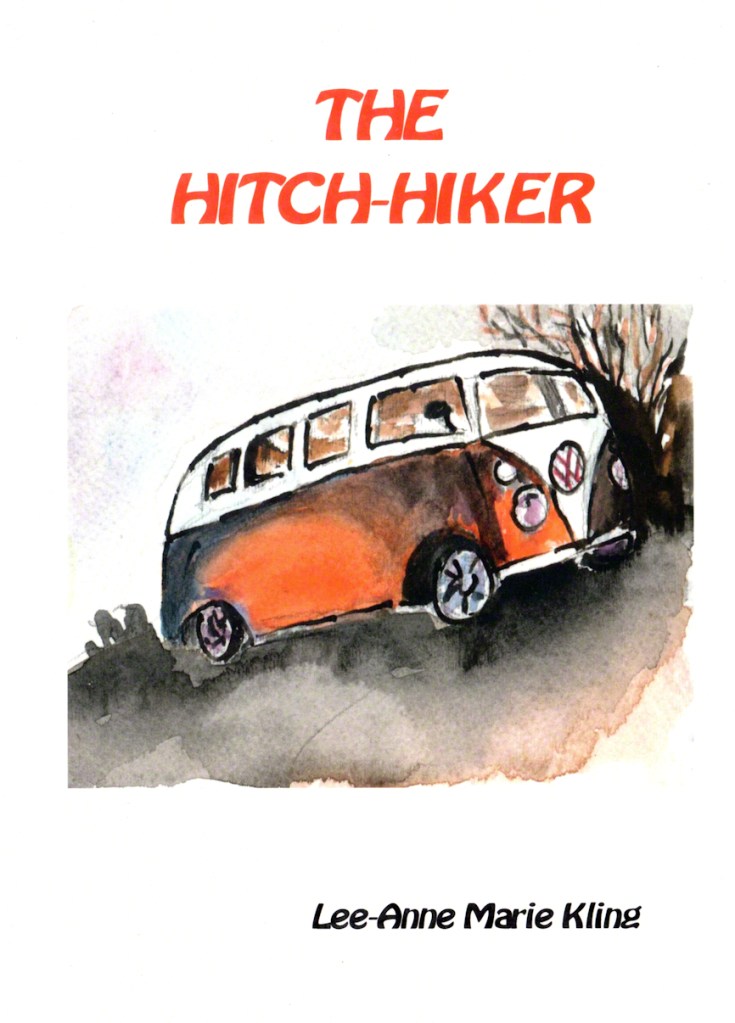
That being said, and for fear my works may be misunderstood, I would describe the over-riding theme of my stories are the classic fight of good against evil. How evil, like Boris, can creep into our lives. And when for whatever reason, usually when we maintain and enhance our self, and to avoid discomfort, we allow evil to stay. This evil, however subtle, will drive us to isolated places in our lives, much like Boris does in The Hitch-hiker; places we never wanted to go. I want young adults and people young at heart, to make choices and use their energy for goodness and to fight evil, so they can live a full life and also be an agent for good in their community and the world.
[The continuation of the Survivor Short Story “project” in the War On Boris the Bytrode series. This time, back in time, 1967, following the adventures of middle-aged mum, Letitia…Now, being a project of sorts, over the summer holidays, I have pieced together the story from beginning to end, and then revised it. A main thread has evolved. Something to do with murder and Letitia’s unfortunate involvement in it. Characters such as Frieda have been developed. Plus, characters, like Ella, have emerged from the shadows of past backstories that never before have been in print. In this episode (13.1) we have the meeting of these two characters…]
An Untimely Visitor
Part 1
Frieda
Meanwhile in Tasmania, the grass was dry and the weather about to heat up for the start of school.
The first rays of dawn filtered through the lace curtains of Frieda’s bedroom. After glimpsing the start of a new day, she turned over and settled back into a deep sleep.
‘Mummy!’
Frieda groaned. ‘Go back to bed Johnny.’
‘Mummy!’ Johnny pushed at her back, rocking her. ‘There’s a funny lady in our good room.’
‘What’s she doing there?’
‘I let her in, Mummy,’ Johnny sighed. ‘She says she’s my “Cross-mother”.’ Another sigh. ‘But she doesn’t look like a “Cross-mother”, she looks too young and pretty to be cross.’
‘Now you are making me cross, Johnathon, dear. Go back to bed. You must’ve been dreaming.’
Johnny tugged at Frieda’s hand. ‘No, Mummy, she’s a real cross-mother. You must see her. You must!’
Frieda rolled her eyes and gulped down a rising sense of seediness. ‘Oh, alright, if I must.’
Mother and son pad down the stairs and into the lounge room.
A petite figure dressed in a blue dirndl stood gazing at the panoramic view of the Derwent.
She turned and flicked a platinum plait away from her face.
Frieda gasped.
The stranger smiled, her deep blue eyes twinkling. ‘Beautiful view. I love it when the sun rises over the sea. Don’t you?’
‘Who are you?’
The woman stepped towards Frieda and took her hand. ‘Come, sit down. There’s something I need to explain.’
‘What?’ Frieda asked.
The German lady paused.
‘Well, don’t just stand there. Tell me.’
‘You need to sit. It’s important.’
Frieda exhaled and shook her head. ‘Fine, then, I will sit.’
She perched on the edge of the couch. The German lady sat beside her and caressed the frills on her baby blue dress.
‘I’m sitting,’ Frieda said.
‘So, you are.’
Johnny peered into the German lady’s blue, blue eyes. ‘Why are you cross, lady?’
‘I am not cross.’ The lady smiled. ‘My name is Ella and I am a friend of your mother’s.’
‘I find that hard to believe.’ Frieda leaned back and studied this strange woman called Ella. ‘You must’ve been a very young friend, my mother died during the war. So did my father. I am an orphan.’
‘To tell the truth, Frieda, your mother is very much alive. She is living in Melbourne now. You see, you were not an orphan; you were kidnapped.’
‘Really? All this time, since I was a child, I have believed I was an orphan, Lebensborn, they called me. Bred pure for the Reich. And now you tell me my mother is in Melbourne?’
‘Yes. Are you not happy about that?’
‘Ecstatic!’ Frieda scoffed. ‘And how long have you known about my mother and me?’
‘Um…’ Ella shrugged. ‘A little while.’
‘And why did it take you such a long while to come over to Tasmania to tell me?’
‘I have been elsewhere…on business. Out of…’ Ella touched Frieda’s arm. ‘But I am here now telling you. And she wants to see you. She wants you to come to Melbourne and for you to meet.’
‘And how exactly are we to travel to Melbourne?’
‘You have a sailboat, don’t you?’
‘Yes, but…I can’t…’
‘But I can.’
‘But my husband Wilhelm won’t…’
Ella’s eyes twinkled. ‘Don’t worry Frieda, I have been in close contact with your husband. In fact, I met him in Melbourne recently. One of the reasons he went there, to meet with your mother. And yes, he has agreed to lend us the boat.’
‘Not too close, I hope.’ Frieda frowned. ‘You and my husband.’
‘No! Not at all!’ Ella laughed. ‘We go way back, Wilhelm and me. Just old friends, to tell the truth.’
Johnny danced on the spot. ‘Are we going on a sailing trip, Mummy?’
Frieda nodded. ‘Yes, my darling boy. And you are going to meet my mummy, your grandma.’
Ella
As Frieda and Johnny packed clothes and essentials into a suitcase, Ella sipped a cup of tea that Frieda had prepared for her. Ella watched them and while the pair were busy packing, she chuckled. I remember Gunter, my youngest at Johnny’s age, she mused. So sweet, so innocent.
Right Worldview — I like to think of the blogging community as a group; a world-wide group. Think of the local writers’ group you attend if you’re a writer. Then imagine that group spanning the globe comprising of every imaginable country and culture. That’s the breadth and beauty of blogging. But remember, each one of your potential followers are people, real people.
Right Mindset — Gathering those real people, followers takes time. Marketing likes to depersonalise the whole experience and calls those visits from readers “traffic”. They are not traffic, they are individuals who have searched for your particular topic of interest and taken the time to read it. When I first began blogging 6 years ago, one of my first international visitors was from the Bahamas. I imagined that person sitting on the beach sipping their mint julep, reading from their jewel-studded iPad, and dreaming of the Central Australian adventure I had written. Just one person but imagining that person made all the difference to me, that they had connected with my story.
Right Attitude — My first like (besides my faithful friends and mother) was a well-known Romanian blogger. He has written many posts on how to blog, so I feel, I don’t need to repeat his good advice in this article. The following is a link to Christian Mihai’s website, The Art of Blogging. My main takeaway from one article I read from there, was that if we don’t have the right attitude to blogging, if we are amateurish in our approach, we may spread our web of information wide, but we won’t touch many in a way that is meaningful or truly influential. And the reality about developing authentic relationships that change and grow us and others, is that they take time.
Right Timing — I think there’s enough on the internet about how to set up a blog and post, so, I won’t go into detail about that. Check out Wiki how for setting up a blog, or website. But what you need to do is be regular. Followers, once you get them, are creatures of habit and if you post once a week on a Tuesday, for instance, they will look for your post, once a week on a Tuesday. One of the frustrating things I found when I first entered the blogging community, was finding those bloggers who I liked. Some would seem to vanish into the vortex of the world wide web, never to be seen again. It took me a while to figure out that if I “followed” these bloggers, they would turn up in my “Reader Feed”. Other bloggers have mentioned that this is the reason they “like” posts. They then look at their “likes” to find their favourite bloggers again. Regular posting, I found, helped raise my profile in the plethora of websites and posts and make those blessed algorithms work for me. I knew that my blogs were rising like cream when I observed a reader emerging out of “Search Engine” in the stats of my post. When starting up my blog, though, I invited as many friends and family to follow my blog through email, and Facebook.
Right, Don’t Give Up — It’s three months into you’re blogging venture, and nothing; not a hump, nor a bump raising those statistics. ‘I don’t know,’ my mother said, ‘no one has visited my posts in ages. I think I’ll give up.’ And yeah, it seemed as though the WWW “gods” were doing everything in their power to squash my mother’s enthusiasm to continue. As they tried to do some years before with my blog. As they have done with a number of writer friends of mine who have set up blog sites or websites and then with a failure to thrive, they have silently let them slide into obscurity. Again, it takes time for your website or blog site to gain traction. Just be patient.
[The continuation of the Survivor Short Story “project” in the War On Boris the Bytrode series. This time, back in time, 1967, following the adventures of middle-aged mum, Letitia…
In this episode (3.1) Letitia meets an old friend…]
The Point of Batteries
Part 1
‘You must come to my place. You must!’the blonde said.
Letitia glanced around the almost empty street. The crowds had dwindled to nothing in the golden light of the late afternoon sun. Her suggestion was not a bad one under the circumstances.
‘You must come for tea.’ The lady grabbed Letitia’s arm and dragged her along the road lined by warehouses. ‘We’ll grab takeaway on the way home. There’s a lovely little fish’n chip shop just up the road near our place. Remember when we were kids and we used to ride our bikes up to The Rocks and get a three-pence bag of chips? They were the best chips, weren’t they?’ The blonde ferried her up some steep steps.
‘Hmm!’ Letitia tried to remain polite and in the know. Rocks? Riding bikes? Fish and chips? Three-pence? All familiar images that hinted at the nameless friend’s identity. Her fuzzing mind tried to stretch her still frozen memory to capture who this woman was. The harder she tried, the more futile her efforts at name retrieval became. ‘How embarrassing! I apparently knew this lady from childhood,’ she muttered.
The blonde gave a tiny snort of laughter. ‘Gunter loved those chips. Remember? He said they were the best chips in Australia.’ She paused and for a moment gazed over the cove which spread beneath the hilltop vantage point. ‘Poor Gunter!’ she remarked, ‘Boris got him, ya know.’
The sun had crept behind Mount Wellington casting muted shadows over the historic houses, the pebble-strewn beach and the calm waters in hues of purple and blue. ‘Hmm! Poor Gunter!’ Letitia parroted. She paused in thought. Gunter, my half-brother?
Bright, colourful sails of boats dotted the river. The vivid reds, yellows, and whites pitted against the deep blue of the waters almost succeeded in converting Letitia to cheerfulness. However, the reality that she may have left her old world permanently behind, lurked in the shadows of her subconscious and troubled her. Letitia tried to agree to sound as if she knew what the blonde was talking about. She tried in vain to match Gunter with this lady’s elusive name. Perhaps it’s a case of mistaken identity.
How did anyone from the past recognise her? Mirror World and nanobot repair from the burns in her first accident had darkened her skin. Letitia checked her hand. Still the colour of cedar.
‘Poor Gunter, we haven’t been able to find him. He left after the disaster, you know, the bombing of our ship. He blamed himself for your disappearance.’ The lady guided her, striding towards the banks of the river. ‘But…it was my fault; I should’ve never…’ She stopped at a corner and announced, ‘Here we are! The Fish’n Chip shop!’
She led the way through the open white-framed doorway to the full-bodied aroma of sizzling oil, batter and chips, tessellated tiles and stainless-steel benches. A few bored customers reclined on a wooden bench seat that lined the shopfront, reading Readers Digests from the 1950’s.
Letitia peered at the magazine of a disinterested patron to the left of her. “Behind the Iron Curtain” the cover advertised. Letitia leaned back to check what that article was all about. The man narrowed his eyes and glared at her. Then, he stood up, marched to the counter, and spoke to the manageress in muffled tones, furtive glances and fingers pointed in her direction.
Letitia’s chest tightened. They’re going to ask me to leave, she thought.
‘Do you want whiting, Letitia?’ her blonde friend, also standing at the counter, called back over her shoulder.
‘Yeah, okay,’ while waiting for the inevitable directive to move outside. After all, it was the 1960’s and Letitia was the wrong colour.
Letitia noticed the blonde make an emphasised gesture in her direction, and say, ‘My friend will have one piece of whiting and I’ll have one piece of garfish with minimum chips.’
The manageress, a woman with bottled auburn waves, and olive-toned skin, looked at Letitia, and opened her mouth to speak.
The blonde cut off her unspoken words and in her best German accent, said, ‘Listen lady, she’s my friend, got it? We’re better than that, aren’t we? That’s why we come to Australia. We are all different, but we are all human beings. Besides, I don’t know why she’s so tanned, but she is as white as me; I know her parents, they come from Europe, migrants from Germany, just as you are a migrant from Greece, am I right? So, just make those fish and chips, okay?’
Something clicked. A key turned in her mind. Letitia studied the blonde lady handing over the cash to the Greek vendor. Frieda. Only Frieda Muller would have the courage to stand up for her rights; human rights. Frieda who tolerated no nonsense. Frieda, who once confided that she’d defied Hitler, and somehow survived. Something to do with being Lebensborn, she remembered. Admittedly the last time she met Frieda, she had become Frieda Thumm and was well into her fifties (give or take a decade or two with the distortion of light-speed travel). Letitia wondered how she could have struggled to recognise her. She who defended her in the fish and chip shop and now stood before her with a newspaper parcel of battered fish and chips was Frieda. But which Frieda? Letitia assumed this world’s Frieda.
Letitia perched on the bench.
The man adjusted his black-rimmed glasses, and with head bowed, walked back to the space next to Letitia. He mumbled an apology which Letitia acknowledged with a slight nod.
Letitia rubbed her hands together and smiled at Frieda. She had retrieved the name. She had found her friend’s identity. At least that was one good outcome from an otherwise less than ordinary day. At least she had one friend in a world and time when she calculated to have few friends. There was Fritz. But where was Fritz?
Frieda strode up to her and she leapt up to follow her friend. ‘Come,’ she commanded, ‘Let’s get to my house before the chips get cold.’
In the lingering late afternoon sun, the sun that refused to go away, the sun that refused to set, the friends wended through the narrow streets of this aged and historic part of town. The roads were steep as they were narrow. Parked cars on both sides, blocked some roadways which had not caught up to the 20th Century. Letitia marvelled at the vintage nature of the vehicles. She had not seen a FJ Holden in decades. The place was cluttered with them. And brand-new Holden Premiers, the luxury version, a collector’s dream on Mirror World. And there, she mused, was a Ford Falcon, more angular than its Holden counterpart; commonly a hoon car on Mirror World (in the eastern states of Australia, mostly). In Mirror Baudin State (South Australia), only Renaults and Peugeots would do. Letitia had to hide the smirk on her face as she contemplated the ugly future of these carbon spewing air-polluting machines.
‘So, Frieda, what may I ask are you doing in this part of the world?’ Letitia ventured to enquire.
Frieda frowned. ‘What do you mean?’
‘I mean…um…’ Letitia hesitated hoping to guess correctly, and whispered, ‘um, um, Hobart?’
‘Hobart? But Letitia, we’ve been here for ages,’ Frieda replied. ‘Thing is, how did you end up here?’ She made a sharp turn at a white rendered wall of a two-story bungalow overlooking the bay.
‘Long story,’ Letitia exhaled briefly, relieved that she had guessed correctly, about Hobart. ‘I mean, are you working?’
Frieda returned a pan-faced expression which read as “are you stupid?” Then she pressed the small hand-held device and magically the gate in the wall opened. ‘Nup, I don’t need to work. I’m a lady of leisure. I’ve achieved “effluence”.’ Frieda’s tongue remained firmly in her cheek.
‘You mean, affluence? Lucky you!’ Letitia remarked admiring the fine leadlight birds that framed the light-coloured pine door. She absorbed the unique brisk scent of pine and commented almost involuntarily, ‘Wow! What’s that smell?’
‘You mean the door? It’s Huon Pine. Solid…’ Frieda began to explain before another, fouler odour accompanied by a large darker four-legged creature, assaulted Letitia.
Frieda’s train of thought and keys were lost in her black Labrador’s excitement to greet the unfortunate visitor, namely Letitia. In between the fever of yelps and her face covered in fermented slobber, she could hear Frieda yell, ‘Jack! Off Jack! Down! Down! Sit Jack! Naughty boy! Get off Jack!’ But her commands were in vain. Jack, the dog kept on jumping all over Letitia, and slathering to his heart’s content.
As the torture by dog continued, Frieda’s tone changed from playful to serious and Letitia nostrils were disturbed by a particularly pungent smell that lingered on her clothes. It had that thin weedy, off-meaty, faecal, with a touch of compost aroma about it. She brushed her uniform defensively and shrieked, ‘Ugh! What’s that smell?’ Bits of pitch-black dirt the consistency of sludge clung to her fingertips.
The Labrador gave a final yelp and flung itself after a flying fried fish.
‘Quick, while he’s distracted.’ Frieda pushed her friend through the door and slammed it shut. Once inside in a darkened entrance hall, she exclaimed with disgust, ‘Pooh! What’s that smell? It’s revolting!’
Smeared over Letitia’s lime green pants and top were the tell-tale marks of a dog’s misadventure. ‘Ugh! What is this stuff?’ She choked on the strong stench of sewerage. ‘It’s worse than Boris! When you said that you was “effluent”, I didn’t think you meant literally.’ She pinched her nose with added effect.
‘Oh, gore! The bleeding dog’s got into the blood ‘n bone. Sheisse!’ Frieda’s language was becoming increasingly colourful, and Letitia had no doubt that she was indeed Frieda. She grabbed a hold of Letitia’s arm and escorted her up the stairs. ‘Come on, you better get out of these rags – have a shower – I’ll get a change of clothes – and put these…’ she covered her nose with her sleeve and breathed out a nasal cry, ‘Phew! These into the wash must go!’


 Tru-Kling Creations