Tuesdays with Carol–Good Storytelling

Having both studied English at university, the subject that comes up often when visiting Carol is about all things writing and what makes a good story. So, one of my first blog posts came to mind…to encourage and inspire all of us who are writers.

Writers’ Privilege

‘Writing is a lonely craft,’ my university tutor said.

All of us in the group nodded and I thought: Yes, a writer has to hide away in their study clacking away on their typewriter. They have to concentrate. Those were the days back in the 1980’s…

I recalled as a student, hours locked up in my bedroom, writing my essays, trying to concentrate while my family went about their business, stomping in the passageway, dishes clattering in the kitchen and the television blaring in the lounge room. Not to mention my dear brother lifting weights, and dropping the things with the inevitable clunk and thud, in the lounge room. Did I mention trying to concentrate? Yes, trying, but not succeeding. And even now, as I write this blog, can’t go five minutes without interruptions. These days, though, I write my first draft, by hand, in a quiet place at a quiet time, and then I write this blog on the computer as a second draft.

Suffice to say, the statement by my tutor all those years ago, has an element of truth. And compared to being an artist or musician, writing is a lonely craft. I belong to an art group and enjoy going each week as the hall is filled with happy chatter and my fellow artists are friendly and welcoming. And I can imagine a musician, mostly has to play and sing with others in a band, their craft has to be performed to an audience. The lonely parts of a musician’s life, from my observation, is the process of composing music. Although, many musicians collaborate when they jam together and create new songs together.

[Painting and Feature: Alone Sellicks Beach (watercolour) © L.M. Kling 2016)

On reflection, though, my experiences over time with the process of writing as isolating, no longer resonates with me. I don’t write alone. I have my characters. I go into their world. Call me crazy, but it’s like when I was a child and had imaginary friends. Come to think of it, perhaps because I was lonely, I became a writer. Figures, hours after school, on weekends and holidays to fill. There’s only so many hours my brother, five years older than me, would share with me playing games. And friends, too weren’t with me all the time. So, books became my friends, as well as characters in the world of fantasy I conjured up. I swooned away, sitting in my cubby house, and whole days drifted by in my other life of fiction, science fiction.

As I grew up, I became used to my own space. My loneliness transformed into the joy and peace of being alone. Time to think and explore ideas, the “what if’s” of life’s path, stories of people I’ve met, my story, and also the stories of my characters. Time to express these stories, writing them down. Many of these stories remain hidden in my journal, a hand-written scrawl; a mental work-out, sorting out ideas and emotions. Some make it to a Word File on the computer, others a blog post, and a few hundred pages have ended up as works buried on the shelves of Amazon—self-published but published all the same. And for six years, now, there’s my blog, again mostly hidden in the blog-pile of the world-wide web, but more visible today than in 2015 when I started the blogging journey.

Yet, once I’ve written the first draft in quietness and peace, the craft of writing becomes a collaborative process. Good writing needs feedback, editing and proof-reading. An effective piece of work needs a second, third and numerous sets of eyes, and many minds to weed the “gremlins” that beset the plot, content, and pacing. And a keen set of eyes to comb through the text to pick up grammar and spelling issues. The computer’s spell and grammar check are not enough.

[Photo 1: Miyajima Monkeys a-grooming © L.M. Kling (nee Trudinger) 1985)

I love to go to writers’ group. I heard someone on radio say that reading is the ultimate empathy tool. When we read, we enter into another’s world and how they see the world. Exploring another’s world—how much more social can one get? This is what happens at writers’ group. We share our own world through our writing, and we explore other writer’s world as we listen to each other’s stories; a privilege and an honour to be trusted with these gems. As fellow writers we need each other to hone our skills as a writer. We need each other’s feedback. How else will we refine our craft without feedback?

Still, there is an aspect of writing that makes it a lonely existence. As writers we are modern-day prophets, proclaiming words given to us, believing these words can and will make a difference in another’s life. Hoping, the change will be for good. The word is a powerful tool; a double-edged sword. God’s Word is described as a double-edged sword. (Hebrews 4:12) There’s a saying that sticks and stones can break bones, but words cannot hurt me. Not true. Words can hurt. Words can also heal. Spoken words can sting or soothe, and then are gone, but the written word can endure and have power. People believe something is true because it’s in print. Reputations have risen and fallen on the power of the written word.

The printing press revolutionised the fifteenth century. Imagine words once written and hidden in some monastic library, then with the advent of the printed word, being duplicated and spread, and even appearing on church doors, for all to read. In our times we have witnessed the evolution of the power of the word through the internet. Need I say more—the gatekeepers of the past, by-passed, allowing all who are wanting to have a voice, freedom of written expression.

However, with freedom and power to influence, comes responsibility to use our gift and passion to write wisely and for the good of others. As a writer, I have written with good intentions to help others grow, help others see the world differently, change attitudes and effect a positive change in the world. Even so, my good intentions posted on my blog may have affected others in ways I didn’t intend. So, I have an understanding now what it means that writing can be a lonely craft as there will always be someone who doesn’t see the world as I do and may find my public interpretation of life offensive. My voice in the world-wide wilderness of the web may actually alienate me from others. So, I’m back where I started as a child, alone, with time and space to explore my world of fantasy with my characters as friends.

[Photo 2: Shikoku Sunset © L.M. Kling (nee Trudinger) 1985]

I guess that’s why I’m drawn to write. With fiction, it’s out there, it’s fantasy and it’s a safe platform to explore ideas, issues and ways of looking at the world, the other world of “what-ifs”, that help readers open their minds to investigate alternative attitudes and create discussion. And with fact through my travel memoirs, sharing my life and worldview, joys, challenges and faith. Through this process, I hope to bring goodness and personal growth to all who are willing to join in the journey into my world.

© Lee-Anne Marie Kling 2016; updated 2020; 2022

[Painting and Feature: Alone Sellicks Beach (watercolour) © L.M. Kling 2016)

***

Catch a Free ride with the T-Team…

One more day until Wednesday May 11

Longing for more travel adventures? Dreaming of exploring Australia?

Read the T-Team’s Aussie adventures, click on the link below:

Trekking the T-Team: Central Australian Safari 1981

***

Or if fiction is more your thing

Read more, and lose yourself in this tale where the nineteenth century meets the twenty-first…

Click on the link,

To download my novel

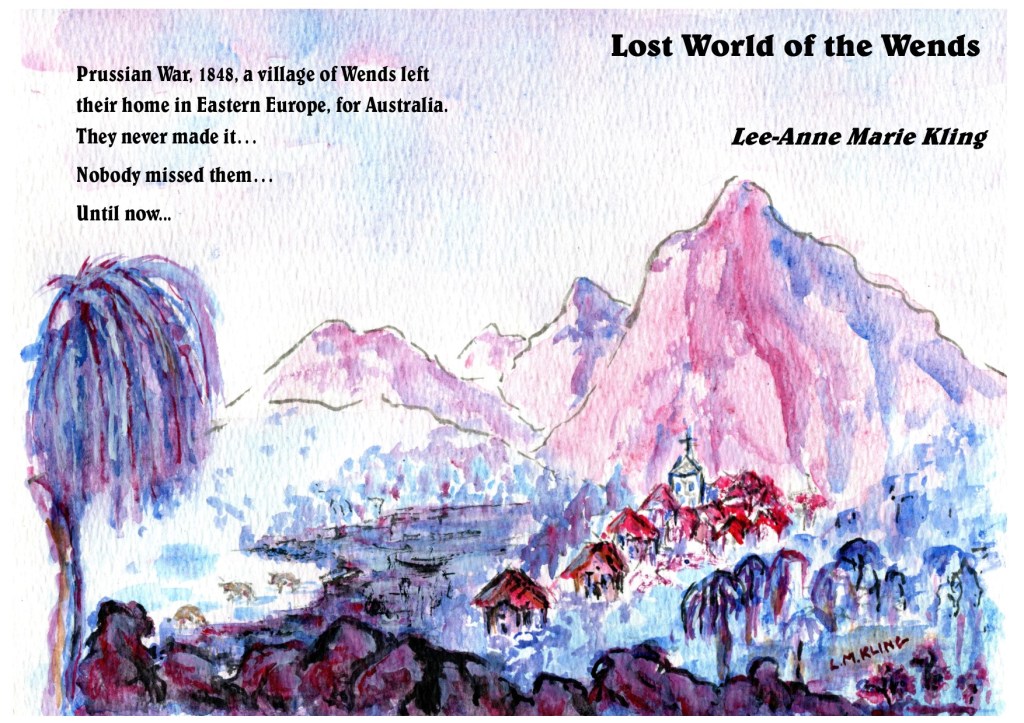
The Lost World of the Wends

Or…

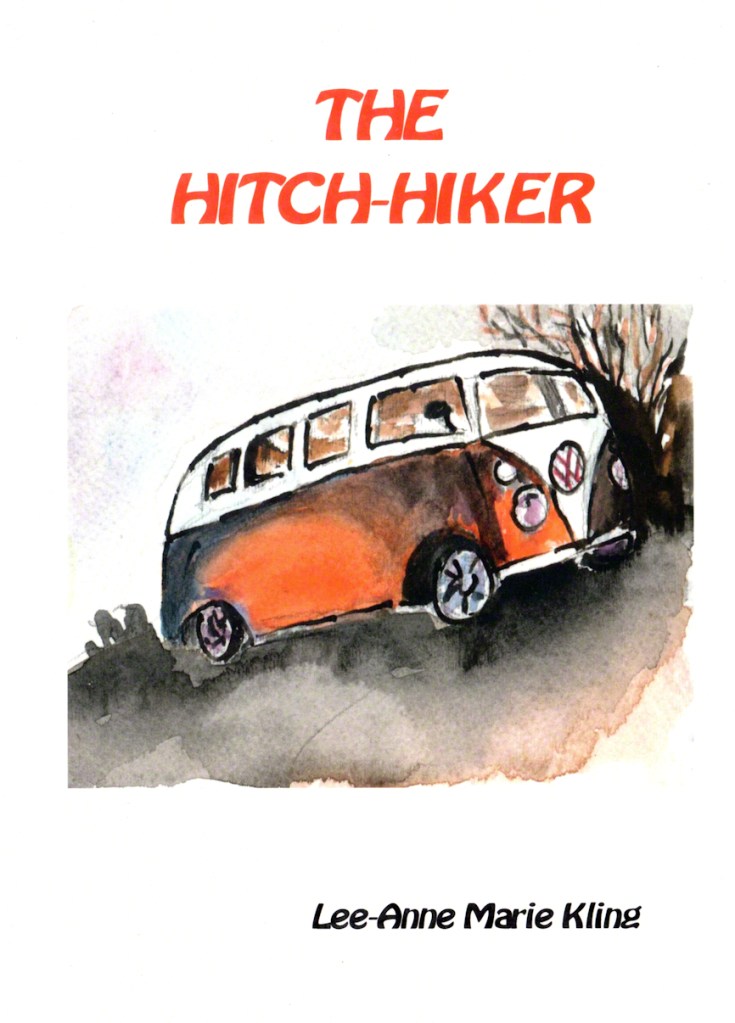
Or discover how it all began in The Hitch-Hiker

And how it continues with Mission of the Unwilling

Tuesday Thoughts–On Writing

[Again, COVID, that uninvited guest has thwarted my visit to Carol’s. This time although she’s well, she’s a close contact and must isolate for 7 days. Meanwhile, I have been working on my writing and have been reflecting on what I have learnt makes for a good story.]

Unbelievable to Believable

Unbelievable, that’s what they said about my novel. Unbelievable. Is that why my first novel, Mission of the Unwilling has failed to thrive? Why there’s no feedback? Or is it a case of someone who’s not a Young Adult, and just not into Sci-Fi?

Whatever, I consider this feedback valid and believable. Over the next few months, I plan to revisit Minna’s world and her adventures at the mercy of Boris and learn from my venture into self-publishing. Nothing is wasted. The take-away from the most recent honest feedback—make my stories believable.

What does this mean for me as I refine the craft of story-telling?

  1. My characters are real to the reader.
  2. The setting is authentic, so that the reader can step into my constructed “world” suspending all disbelief.
  3. The audience buy into the journey they take into that world.

But, what does “suspending disbelief” mean. I mean, really? I mean, when I revisit my stories, to me, the characters are alive, the setting an on-site movie set, and I gladly invest in the tale told. Not so for some of my readers, apparently. In truth, I’m too close to my work to view it objectively. I need and appreciate feedback from others. I’d go as far as to say that most writers benefit from a second, third, fourth or umpteenth pair of eyes to make their work the best it possibly can be.

Photo: How believable do you find Sherlock Holmes? © Lee-Anne Marie Kling 2014

So, from the perspective as a reader, that extra pair of eyes on other works, here’s what I’ve learnt that suspends disbelief and do some unpacking of techniques that make characters, setting and journey more believable.

  1. Believable characters: Someone with whom you connect. You know that person. You’ve met them. You’ve had lunch them. You’ve admired them. They’ve annoyed you with their quirky habits. They’re those people you see across a crowded coffee shop and already you’ve constructed a whole story around them, by observing their posture, expressions and gestures. You invest time following what they’ll do, what will happen to them. Believable characters don’t have to be human, but they do need human qualities and personality for readers to relate to them.
  2. Believable setting: Best woven into the forward-moving action of the story. The writer describes the setting with the five senses, what you: 1) see, 2) hear, 3) touch, 4) smell, and 5) taste. And for the world to be memorable, the author picks up something unique or odd about the place. For example, I may write of Palm Valley in Central Australia, ‘Ghost gums jut out of the tangerine rock-face, and a soft wind rustles through the prehistoric palms.’
  3. Believable Story: You need to convince your readers that such a sequence of events can happen. A skilful writer uses the technique of cause and effect. The character makes a choice, and their actions result in consequences often leading to dilemma that must be resolved. Readers are more likely to engage with proactive characters who influence their environment and others, and who make active choices to change and grow, rather than the passive characters who have every disaster happen to them, and their problems magically solved.

Yes, pile on the misery, pile on the challenges, don’t be afraid to get your characters into strife; that’s what the reader’s looking for. But remember, the chain of events must be believable. An article by Laurence Block, Keeping Your Fiction Shipshape*, describes the relationship between storyteller and audience is like enticing readers onto a cruise ship, keeping them there, and delivering them back to port with a good satisfying end.

It’s the skill of the storyteller to convince the audience. If the characters are believable, the setting is believable, and the action believable, your readers will enjoy the ride and complete the journey you, as the storyteller, takes them on.

© Lee-Anne Marie Kling 2016; updated 2022

Feature Photo: Line up for Notre dame Cathedral © Lee-Anne Marie Kling 2014

[Why Notre dame? Victor Hugo, the author of Hunchback of Notre-Dame, spent the first three-quarters of the book describing the setting. Useful if you visit Paris, but does nothing for moving the story forward.

Also tourists willing to invest in the journey to climb Notre-Dame by waiting several hours in the long line that stretched the length of the Cathedral. What will they see? The gargoyles (characters), a view of Paris (setting) and a climb and walk through the Cathedral (the journey).]

*Reference: Laurance Block, “Keeping Your Fiction Shipshape”, article in The Writers Project Handbook of Novel Writing © 1992

***

Read more, and lose yourself in this tale where the nineteenth century meets the twenty-first…

Click on the link,

To download my novel

The Lost World of the Wends

Or…

Or discover how it all began in The Hitch-Hiker

And how it continues with Mission of the Unwilling

Sunday Story–Bonfire

Bonfire on the Beach

Part 1

[I first wrote this story over thirty years ago in response to a newspaper murder mystery competition. Upon completing the story, I never submitted it for scrutiny. Since then, the tale has endured several edits and reworkings, the latest being just last week.

The story is pure fantasy but is based on real life events from my youth. Over the last 30 years the characters have evolved to become on the whole, fictional.

Note, bonfires are no longer permitted on beaches near Adelaide. However, cars are still allowed to drive on the sands of some beaches south of Adelaide, such as Sellicks Beach.]

The Uninvited

The five friends huddled in the firelight, reflecting on the ritual burning of Lillie’s matriculation Modern History textbooks and the year past. The Doors boomed in the background.

A sand-splattered blood-red Ford Falcon XB and a bright orange Kombi-van, guarded Geoffrey Fox and Lillie Hughson, Lillie’s older brother Sven and her best friend Fifi Edwards and Fifi’s brother Jimmy from any unwanted intruders.

An old man on the cliff top waved an angry fist, his threats carried away by the sharp November breeze. Sven returned the gesture shaking his fist with menace at the old man.

‘Sven!’ Lillie slapped Sven’s arm. ‘Behave yourself! You might be a brickie, but you don’t need to act like one.’

‘Nothing wrong with brickies, Lillie. Anyway, that old man, he’s probably calling for Wally,’ Fifi said while rubbing her nose. The sea air icy and stung with salt. She had moulded into Sven’s embrace. ‘Hey, Sven, you’re so cool, yet so hot.’

A burst of laughter. The tape came to a climactic end and petered out.

‘Hey, hey, have you heard this?’ Fifi wet her lips. ‘Six o’clock. The whole street was quiet, not a sound was heard. Except the occasional croak of a cricket as night fell.’ Mesmerized by the lapping waves and rhythm of Fifi’s voice, the others listened. ‘All was calm, then out of the darkness, a cry pierced the air.’

Jimmy, Fifi’s older brother shovelled a handful of salt and vinegar chips into his mouth and crunched. Lillie glared at him. He paused, chipmunk cheeked, and glued his attention to his sister Fifi.

“Wally! Wal-Wal-Waaalee! Dinner’s ready!”

The five young people roared. Jimmy’s potato chips sprayed out and fuelled the coals. Fifi pouted mimicking Wally’s mother, Mrs. Katz. Lillie joined her. Jerking her legs as if in a Monty Python sketch, Fifi broke free of Sven’s hold and walked a Wally walk, while Lillie jumped from Geoffrey Fox’s embrace and flailed her arms and danced a Wally dance.

Sounds of puttering filled the cove. ‘Who could that be?’ Lillie craned her neck over Sven’s leather clad shoulder to see bulk roaring wheels.

The girls froze, and in unison uttered, ‘Oh, no! Wally!’

More chips spluttered from Jimmy’s mouth and fuelled the coals. Sven rolled up his sleeves. Admiring his wiry yet powerful form, Fifi preened her blonde perm and sighed. ‘Just when we’re having a good time!’

Sand plopped in the flames and their faces. With a grunt his Kawasaki bike scudded, throwing Wally towards a rocky outcrop.

Wally picked himself up and dusted grains from his blubber. He advanced towards the group laughing, ‘Ho! Ho! Ho!’.

With his thumbs inserted in his tight pockets, Sven stepped towards the Wally. ‘Who invited you?’

‘Gate crasher! Gate crasher!’ Lillie and Fifi cried, hurling abuse and wads of sand.

Sven pitched his cider bottle. ‘Go home to your mummy, Wally!’

Wally dodged Sven’s missile. ‘Hey, I just wanna good time.’

‘You are not welcome here. Go away.’ Sven plucked up a rock. ‘Move it!’

‘Why not? I have every right to be here.’

‘Are you thick or something?’ Sven shook his stone-wrapped fist.

‘Did you call me thick? Did you call me thick?’

‘Yes, you moron! Now, go home!’ Sven spat and then hurled the stone, crashing it into Wally’s helmet.

‘Hey! That’s my head you hit!’ Wally raised his fists and leered at Sven. ‘You wanna fight?’

‘Be my guest, fool!’ Sven jabbed Wally’s rounded shoulder with his right fist.

‘Oh, cut it out boys!’ Fifi marched to the stoushing males, splitting the two cocks sparring in the shadows.

Uneasy truce, Wally one side of the fire, in the smoke, Sven and the rest of the group crowded on the other side. Waves crashed, the sea’s beat interrupted by the rare plop and thud of dead conversation.

Fifi nudged Lillie. ‘This is boring!’

Lillie rubbed her hands over the glowing coals. ‘Mmm. Why doesn’t Wally take the hint?’

Jimmy munched through his third bagful of chips. Chicken, this time.

Wally coughed. Wally spluttered. Wally blew his nose into a grimy handkerchief and inspected the contents. Wally sidled out of the smoke, closer to the group.

‘Oh, no you don’t!’ Sven poked the embers emitting brief flames. ‘Too crowded over here with you, Wally.’

‘Why not! I’m choking over here,’ Wally said and then cupped the rag over his mouth and insisted edging to the smokeless side.

‘Are you dense?’ Sven lunged at Wally, forcing his boot into the glowing coals. ‘Go home, Wally.’

Wrestling, the rooster and the sumo teetered at the rim of fire, toppled onto the sand crushing beer cans, steam-rolled one on top of the other singeing leather pants and denim jacket, rising from the ashes in a slow dance of boxing and fists and cuffs, and culminating in Sven’s $50 Reflecto Polaroid sunglasses flying into the fire. They melted on impact.

‘My shades! You’ve destroyed my shades!’ Sven clutched Wally’s throat. ‘Get outa here before I kill you!’

Fox who had been hanging back and watching the action, stepped up to Wally. ‘You better go Wally. Nothing personal. But you better take the hint and go.’

Fifi patted Sven on the back, ‘Come on mate, that’s enough fighting for one night. It’s only sunglasses.’

Sven loosened his grip and sauntered towards the boulders, silhouetted by the cliff-face. Wally skulked back to his bike and with a departing roar, pelted sand over the dying coals.

[continued on Tru-Kling Creations…]

© Lee-Anne Marie Kling 2022

Feature Photo: Sellicks Beach, one afternoon in September © L.M. Kling 2015

***

In the mid-nineteenth century, a village of Wends, on their way to Australia, mysteriously disappeared…

Who was responsible? How did they vanish?

Want to know more about the trials and tribulations of these missing people from Nineteenth Century Eastern Europe?

Click on the link below:

The Lost World of the Wends   

OOPS! Weekend Writing Woes

Enough of the Re-Runs

‘We had that one!’ That’s what my brother would say when mum read him the same story when he was young.

“We had that one!” maybe was the cry from readers all over the world, as this is what I have done with the Out of Time project. For four weeks. How did I not notice?

Anyway, I think I know how it happened. I changed the sequence of chapters as one does in the editing process. Then up came that particular chapter and it was repeated. All part of the editing process.

So, in the spirit of the day, here’s a post from the past on feedback, which also is about a vital part of refining our work and making our stories the best they can be.

Feedback

I like to celebrate. As a child, when I received full-marks for a spelling test, Dad rewarded me with a Kitchener Bun from the Fish ‘n Chip shop/Bakery which in the good ol’ days of my childhood was situated opposite Glenelg Primary School. A few years ago, when I used to drive my son his course in Magill, my mum and I treated ourselves to lunch at the local hotel.

Every so often, I check my Amazon account. I wipe off the virtual cobwebs of neglect, and dig deep in the files of my mind, retrieving the password to enter. I expect nothing much to have changed.

I’ve been busy with my blog and the rewards, small, though they are, compared to the rest of blogging world, but the steady trickle of views, likes and comments, satisfies me. Over the years, the number of followers has steadily grown.

Once long ago, now, I made a daring move, and posted my short story, Boris’ Choice—not for the faint-hearted or while one eats breakfast…After the post, I checked for results on Amazon with my War on Boris Series books?

The Choice (painting in acrylic) © L.M. Kling 2016

And…there were. Yes!

Then, I checked the reviews. Now, I don’t know how other writers have fared with reviews, but for many months since my books were published, I had received no reviews. Yes, I asked my readers to do the deed and tick the star-boxes and comment, with no results. Yes, they’d say and the weeks went by and nothing. Were they just being polite? I have no illusions and the reality is that art and literature are subjective—what one person likes another won’t.

Anyway, back to checking the reviews…I looked again at one of the countries one of my books sold. The page appeared different. A yellow bar, and a comment. Genuine feedback. Not a great appraisal, but an appraisal all the same. I knew the person responsible for this first-ever comment for my book, but was not surprised at their response. I did wonder at the time how my novella would work for them—not well—just as I imagined when they informed me they’d bought the book on kindle. As I said before, Boris and his antics are well…not for everyone.

That being said, and for fear my works may be misunderstood, I would describe the over-riding theme of my stories are the classic fight of good against evil. How evil, like Boris, can creep into our lives. And when for whatever reason, usually when we maintain and enhance our self, and to avoid discomfort, we allow evil to stay. This evil, however subtle, will drive us to isolated places in our lives, much like Boris does in The Hitch-hiker; places we never wanted to go. I want young adults and people young at heart, to make choices and use their energy for goodness and to fight evil, so they can live a full life and also be an agent for good in their community and the world.

Especially at this time.

© Lee-Anne Marie Kling 2016; updated 2022

Feature Photo: Tyranny of Golf © L.M. Kling circa 1982

***

Read more, and lose yourself in this tale where the nineteenth century meets the twenty-first…

Just click on the link:

The Lost World of the Wends

Or discover how it all began in The Hitch-Hiker

And how it continues with Mission of the Unwilling

Out of Time (13.1)

[The continuation of the Survivor Short Story “project” in the War On Boris the Bytrode series. This time, back in time, 1967, following the adventures of middle-aged mum, Letitia…Now, being a project of sorts, over the summer holidays, I have pieced together the story from beginning to end, and then revised it. A main thread has evolved. Something to do with murder and Letitia’s unfortunate involvement in it. Characters such as Frieda have been developed. Plus, characters, like Ella, have emerged from the shadows of past backstories that never before have been in print. In this episode (13.1) we have the meeting of these two characters…]

An Untimely Visitor

Part 1

Frieda

Meanwhile in Tasmania, the grass was dry and the weather about to heat up for the start of school.

The first rays of dawn filtered through the lace curtains of Frieda’s bedroom. After glimpsing the start of a new day, she turned over and settled back into a deep sleep.

‘Mummy!’

Frieda groaned. ‘Go back to bed Johnny.’

‘Mummy!’ Johnny pushed at her back, rocking her. ‘There’s a funny lady in our good room.’

‘What’s she doing there?’

‘I let her in, Mummy,’ Johnny sighed. ‘She says she’s my “Cross-mother”.’ Another sigh. ‘But she doesn’t look like a “Cross-mother”, she looks too young and pretty to be cross.’

‘Now you are making me cross, Johnathon, dear. Go back to bed. You must’ve been dreaming.’

Johnny tugged at Frieda’s hand. ‘No, Mummy, she’s a real cross-mother. You must see her. You must!’

Frieda rolled her eyes and gulped down a rising sense of seediness. ‘Oh, alright, if I must.’

Mother and son pad down the stairs and into the lounge room.

A petite figure dressed in a blue dirndl stood gazing at the panoramic view of the Derwent.

She turned and flicked a platinum plait away from her face.

Frieda gasped.

The stranger smiled, her deep blue eyes twinkling. ‘Beautiful view. I love it when the sun rises over the sea. Don’t you?’

‘Who are you?’

The woman stepped towards Frieda and took her hand. ‘Come, sit down. There’s something I need to explain.’

‘What?’ Frieda asked.

The German lady paused.

‘Well, don’t just stand there. Tell me.’

‘You need to sit. It’s important.’

Frieda exhaled and shook her head. ‘Fine, then, I will sit.’

She perched on the edge of the couch. The German lady sat beside her and caressed the frills on her baby blue dress.

‘I’m sitting,’ Frieda said.

‘So, you are.’

Johnny peered into the German lady’s blue, blue eyes. ‘Why are you cross, lady?’

‘I am not cross.’ The lady smiled. ‘My name is Ella and I am a friend of your mother’s.’

‘I find that hard to believe.’ Frieda leaned back and studied this strange woman called Ella. ‘You must’ve been a very young friend, my mother died during the war. So did my father. I am an orphan.’

‘To tell the truth, Frieda, your mother is very much alive. She is living in Melbourne now. You see, you were not an orphan; you were kidnapped.’

‘Really? All this time, since I was a child, I have believed I was an orphan, Lebensborn, they called me. Bred pure for the Reich. And now you tell me my mother is in Melbourne?’

‘Yes. Are you not happy about that?’

‘Ecstatic!’ Frieda scoffed. ‘And how long have you known about my mother and me?’

‘Um…’ Ella shrugged. ‘A little while.’

‘And why did it take you such a long while to come over to Tasmania to tell me?’

‘I have been elsewhere…on business. Out of…’ Ella touched Frieda’s arm. ‘But I am here now telling you. And she wants to see you. She wants you to come to Melbourne and for you to meet.’

‘And how exactly are we to travel to Melbourne?’

‘You have a sailboat, don’t you?’

‘Yes, but…I can’t…’

‘But I can.’

‘But my husband Wilhelm won’t…’

Ella’s eyes twinkled. ‘Don’t worry Frieda, I have been in close contact with your husband. In fact, I met him in Melbourne recently. One of the reasons he went there, to meet with your mother. And yes, he has agreed to lend us the boat.’

‘Not too close, I hope.’ Frieda frowned. ‘You and my husband.’

‘No! Not at all!’ Ella laughed. ‘We go way back, Wilhelm and me. Just old friends, to tell the truth.’

Johnny danced on the spot. ‘Are we going on a sailing trip, Mummy?’

Frieda nodded. ‘Yes, my darling boy. And you are going to meet my mummy, your grandma.’

Ella

As Frieda and Johnny packed clothes and essentials into a suitcase, Ella sipped a cup of tea that Frieda had prepared for her. Ella watched them and while the pair were busy packing, she chuckled. I remember Gunter, my youngest at Johnny’s age, she mused. So sweet, so innocent.
© Lee-Anne Marie Kling 2022

Feature Photo: Morning on Derwent, Hobart, Tasmania © Lee-Anne Marie Kling 2016

***

Want more?

More than before?

Read the mischief and mayhem Boris the over-sized alien cockroach gets up to…

Or discover how it all began in The Hitch-Hiker

And how it continues with Mission of the Unwilling

Monday Musings–How To Blog…

…While Not Re-inventing the Wheel

Part 1 — Right Frame of Mind

  1. Right Worldview — I like to think of the blogging community as a group; a world-wide group. Think of the local writers’ group you attend if you’re a writer. Then imagine that group spanning the globe comprising of every imaginable country and culture. That’s the breadth and beauty of blogging. But remember, each one of your potential followers are people, real people.
  2. Right Mindset — Gathering those real people, followers takes time. Marketing likes to depersonalise the whole experience and calls those visits from readers “traffic”. They are not traffic, they are individuals who have searched for your particular topic of interest and taken the time to read it. When I first began blogging 6 years ago, one of my first international visitors was from the Bahamas. I imagined that person sitting on the beach sipping their mint julep, reading from their jewel-studded iPad, and dreaming of the Central Australian adventure I had written. Just one person but imagining that person made all the difference to me, that they had connected with my story.
  3. Right Attitude — My first like (besides my faithful friends and mother) was a well-known Romanian blogger. He has written many posts on how to blog, so I feel, I don’t need to repeat his good advice in this article. The following is a link to Christian Mihai’s website, The Art of Blogging. My main takeaway from one article I read from there, was that if we don’t have the right attitude to blogging, if we are amateurish in our approach, we may spread our web of information wide, but we won’t touch many in a way that is meaningful or truly influential. And the reality about developing authentic relationships that change and grow us and others, is that they take time.
  4. Right Timing — I think there’s enough on the internet about how to set up a blog and post, so, I won’t go into detail about that. Check out Wiki how for setting up a blog, or website. But what you need to do is be regular. Followers, once you get them, are creatures of habit and if you post once a week on a Tuesday, for instance, they will look for your post, once a week on a Tuesday. One of the frustrating things I found when I first entered the blogging community, was finding those bloggers who I liked. Some would seem to vanish into the vortex of the world wide web, never to be seen again.  It took me a while to figure out that if I “followed” these bloggers, they would turn up in my “Reader Feed”. Other bloggers have mentioned that this is the reason they “like” posts. They then look at their “likes” to find their favourite bloggers again. Regular posting, I found, helped raise my profile in the plethora of websites and posts and make those blessed algorithms work for me. I knew that my blogs were rising like cream when I observed a reader emerging out of “Search Engine” in the stats of my post. When starting up my blog, though, I invited as many friends and family to follow my blog through email, and Facebook.
  5. Right, Don’t Give Up — It’s three months into you’re blogging venture, and nothing; not a hump, nor a bump raising those statistics. ‘I don’t know,’ my mother said, ‘no one has visited my posts in ages. I think I’ll give up.’ And yeah, it seemed as though the WWW “gods” were doing everything in their power to squash my mother’s enthusiasm to continue. As they tried to do some years before with my blog. As they have done with a number of writer friends of mine who have set up blog sites or websites and then with a failure to thrive, they have silently let them slide into obscurity. Again, it takes time for your website or blog site to gain traction. Just be patient.

[to be continued…]

© Lee-Anne Marie Kling 2021

Feature photo: Somerton Beach Dreaming © L.M. Kling 2010

***

Virtual Travel Opportunity

For the price of a cup of coffee (takeaway, these days),

Click on the link and download your kindle copy of my travel memoir,

Trekking with the T-Team: Central Australian Safari. (Australia)

Trekking With the T-Team: Central Australian Safari (United States)

Trekking With the T-Team: Central Australian Safari (UK)

Trekking With the T-Team: Central Australian Safari (Germany]

Trekking With the T-Team: Central Australian Safari [France]

Trekking With the T-Team: Central Australian Safari (India)

Trekking With the T-Team: Central Australian Safari [Canada]

Trekking With the T-Team: Central Australian Safari [Mexico]

Trekking With the T-Team: Central Australian Safari [Italy]

Trekking With the T-Team: Central Australian Safari [Brazil]

Trekking With the T-Team: Central Australian Safari [Spain]

Trekking With the T-Team: Central Australian Safari [Japan]

Trekking With the T-Team: Central Australian Safari [Netherlands]

Out Of Time (3.1)

[The continuation of the Survivor Short Story “project” in the War On Boris the Bytrode series. This time, back in time, 1967, following the adventures of middle-aged mum, Letitia…

In this episode (3.1) Letitia meets an old friend…]

The Point of Batteries

Part 1

‘You must come to my place. You must!’ the blonde said.

Letitia glanced around the almost empty street. The crowds had dwindled to nothing in the golden light of the late afternoon sun. Her suggestion was not a bad one under the circumstances.

‘You must come for tea.’ The lady grabbed Letitia’s arm and dragged her along the road lined by warehouses. ‘We’ll grab takeaway on the way home. There’s a lovely little fish’n chip shop just up the road near our place. Remember when we were kids and we used to ride our bikes up to The Rocks and get a three-pence bag of chips? They were the best chips, weren’t they?’ The blonde ferried her up some steep steps.

‘Hmm!’ Letitia tried to remain polite and in the know. Rocks? Riding bikes? Fish and chips? Three-pence? All familiar images that hinted at the nameless friend’s identity. Her fuzzing mind tried to stretch her still frozen memory to capture who this woman was. The harder she tried, the more futile her efforts at name retrieval became. ‘How embarrassing! I apparently knew this lady from childhood,’ she muttered.

The blonde gave a tiny snort of laughter. ‘Gunter loved those chips. Remember? He said they were the best chips in Australia.’ She paused and for a moment gazed over the cove which spread beneath the hilltop vantage point. ‘Poor Gunter!’ she remarked, ‘Boris got him, ya know.’

The sun had crept behind Mount Wellington casting muted shadows over the historic houses, the pebble-strewn beach and the calm waters in hues of purple and blue. ‘Hmm! Poor Gunter!’ Letitia parroted. She paused in thought. Gunter, my half-brother?

Bright, colourful sails of boats dotted the river. The vivid reds, yellows, and whites pitted against the deep blue of the waters almost succeeded in converting Letitia to cheerfulness. However, the reality that she may have left her old world permanently behind, lurked in the shadows of her subconscious and troubled her. Letitia tried to agree to sound as if she knew what the blonde was talking about. She tried in vain to match Gunter with this lady’s elusive name. Perhaps it’s a case of mistaken identity.

How did anyone from the past recognise her? Mirror World and nanobot repair from the burns in her first accident had darkened her skin. Letitia checked her hand. Still the colour of cedar.

 ‘Poor Gunter, we haven’t been able to find him. He left after the disaster, you know, the bombing of our ship. He blamed himself for your disappearance.’ The lady guided her, striding towards the banks of the river. ‘But…it was my fault; I should’ve never…’ She stopped at a corner and announced, ‘Here we are! The Fish’n Chip shop!’

She led the way through the open white-framed doorway to the full-bodied aroma of sizzling oil, batter and chips, tessellated tiles and stainless-steel benches. A few bored customers reclined on a wooden bench seat that lined the shopfront, reading Readers Digests from the 1950’s.

Letitia peered at the magazine of a disinterested patron to the left of her. “Behind the Iron Curtain” the cover advertised. Letitia leaned back to check what that article was all about. The man narrowed his eyes and glared at her. Then, he stood up, marched to the counter, and spoke to the manageress in muffled tones, furtive glances and fingers pointed in her direction.

Letitia’s chest tightened. They’re going to ask me to leave, she thought.

‘Do you want whiting, Letitia?’ her blonde friend, also standing at the counter, called back over her shoulder.

‘Yeah, okay,’ while waiting for the inevitable directive to move outside. After all, it was the 1960’s and Letitia was the wrong colour.

Letitia noticed the blonde make an emphasised gesture in her direction, and say, ‘My friend will have one piece of whiting and I’ll have one piece of garfish with minimum chips.’

The manageress, a woman with bottled auburn waves, and olive-toned skin, looked at Letitia, and opened her mouth to speak.

The blonde cut off her unspoken words and in her best German accent, said, ‘Listen lady, she’s my friend, got it? We’re better than that, aren’t we? That’s why we come to Australia. We are all different, but we are all human beings. Besides, I don’t know why she’s so tanned, but she is as white as me; I know her parents, they come from Europe, migrants from Germany, just as you are a migrant from Greece, am I right? So, just make those fish and chips, okay?’

Something clicked. A key turned in her mind. Letitia studied the blonde lady handing over the cash to the Greek vendor. Frieda. Only Frieda Muller would have the courage to stand up for her rights; human rights. Frieda who tolerated no nonsense. Frieda, who once confided that she’d defied Hitler, and somehow survived. Something to do with being Lebensborn, she remembered. Admittedly the last time she met Frieda, she had become Frieda Thumm and was well into her fifties (give or take a decade or two with the distortion of light-speed travel). Letitia wondered how she could have struggled to recognise her. She who defended her in the fish and chip shop and now stood before her with a newspaper parcel of battered fish and chips was Frieda. But which Frieda? Letitia assumed this world’s Frieda.

Letitia perched on the bench.

The man adjusted his black-rimmed glasses, and with head bowed, walked back to the space next to Letitia. He mumbled an apology which Letitia acknowledged with a slight nod.

Letitia rubbed her hands together and smiled at Frieda. She had retrieved the name. She had found her friend’s identity. At least that was one good outcome from an otherwise less than ordinary day. At least she had one friend in a world and time when she calculated to have few friends. There was Fritz. But where was Fritz?

Frieda strode up to her and she leapt up to follow her friend. ‘Come,’ she commanded, ‘Let’s get to my house before the chips get cold.’

In the lingering late afternoon sun, the sun that refused to go away, the sun that refused to set, the friends wended through the narrow streets of this aged and historic part of town. The roads were steep as they were narrow. Parked cars on both sides, blocked some roadways which had not caught up to the 20th Century. Letitia marvelled at the vintage nature of the vehicles. She had not seen a FJ Holden in decades. The place was cluttered with them. And brand-new Holden Premiers, the luxury version, a collector’s dream on Mirror World. And there, she mused, was a Ford Falcon, more angular than its Holden counterpart; commonly a hoon car on Mirror World (in the eastern states of Australia, mostly). In Mirror Baudin State (South Australia), only Renaults and Peugeots would do. Letitia had to hide the smirk on her face as she contemplated the ugly future of these carbon spewing air-polluting machines.

‘So, Frieda, what may I ask are you doing in this part of the world?’ Letitia ventured to enquire.

Frieda frowned. ‘What do you mean?’

‘I mean…um…’ Letitia hesitated hoping to guess correctly, and whispered, ‘um, um, Hobart?’

‘Hobart? But Letitia, we’ve been here for ages,’ Frieda replied. ‘Thing is, how did you end up here?’ She made a sharp turn at a white rendered wall of a two-story bungalow overlooking the bay.

‘Long story,’ Letitia exhaled briefly, relieved that she had guessed correctly, about Hobart. ‘I mean, are you working?’

Frieda returned a pan-faced expression which read as “are you stupid?” Then she pressed the small hand-held device and magically the gate in the wall opened. ‘Nup, I don’t need to work. I’m a lady of leisure. I’ve achieved “effluence”.’ Frieda’s tongue remained firmly in her cheek.

‘You mean, affluence? Lucky you!’ Letitia remarked admiring the fine leadlight birds that framed the light-coloured pine door. She absorbed the unique brisk scent of pine and commented almost involuntarily, ‘Wow! What’s that smell?’

‘You mean the door? It’s Huon Pine. Solid…’ Frieda began to explain before another, fouler odour accompanied by a large darker four-legged creature, assaulted Letitia.

Frieda’s train of thought and keys were lost in her black Labrador’s excitement to greet the unfortunate visitor, namely Letitia. In between the fever of yelps and her face covered in fermented slobber, she could hear Frieda yell, ‘Jack! Off Jack! Down! Down! Sit Jack! Naughty boy! Get off Jack!’ But her commands were in vain. Jack, the dog kept on jumping all over Letitia, and slathering to his heart’s content.

As the torture by dog continued, Frieda’s tone changed from playful to serious and Letitia nostrils were disturbed by a particularly pungent smell that lingered on her clothes. It had that thin weedy, off-meaty, faecal, with a touch of compost aroma about it. She brushed her uniform defensively and shrieked, ‘Ugh! What’s that smell?’ Bits of pitch-black dirt the consistency of sludge clung to her fingertips.

The Labrador gave a final yelp and flung itself after a flying fried fish.

‘Quick, while he’s distracted.’ Frieda pushed her friend through the door and slammed it shut. Once inside in a darkened entrance hall, she exclaimed with disgust, ‘Pooh! What’s that smell? It’s revolting!’

Smeared over Letitia’s lime green pants and top were the tell-tale marks of a dog’s misadventure. ‘Ugh! What is this stuff?’ She choked on the strong stench of sewerage. ‘It’s worse than Boris! When you said that you was “effluent”, I didn’t think you meant literally.’ She pinched her nose with added effect.

‘Oh, gore! The bleeding dog’s got into the blood ‘n bone. Sheisse!’ Frieda’s language was becoming increasingly colourful, and Letitia had no doubt that she was indeed Frieda. She grabbed a hold of Letitia’s arm and escorted her up the stairs. ‘Come on, you better get out of these rags – have a shower – I’ll get a change of clothes – and put these…’ she covered her nose with her sleeve and breathed out a nasal cry, ‘Phew! These into the wash must go!’

[to be continued…]

© Lee-Anne Marie Kling 2021

Feature Photo: Battery Point, Hobart town behind harbour © L.M. Kling 2016

***

Want more?

More than before?

Read the mischief and mayhem Boris the over-sized alien cockroach gets up to…

Click on the link to my new novel, The Lost World of the Wends

Below…

Or discover how it all began in The Hitch-Hiker

And how it continues with Mission of the Unwilling

Out of Time (2)

[So, continues the development of the Survivor Short Story “project” in the War On Boris the Bytrode series. This time, back in time, following the adventures of middle-aged mum, Letitia…]

Out of Context, Just out of Reach

As the doors began to close, a flash of white grabbed the lift doors, wrenched them open. The mean nurse, rushed in, huffing and puffing. Letitia steeled herself, half-expecting her to make another comment related to her cleaning ability, but she ignored her. The nurse smiling, instead turned her attention to the tall blonde golfer.

‘I’m sorry, doctor, someone must have moved her without our authority. You know this hospital, one hand doesn’t know what the other is doing,’ her apology dripped like syrup.

‘That’s okay. But interrupting my round of golf?’ he sucked in his breath through his perfect set of teeth in a way that seemed unusually familiar to Letitia. She studied him as he casually pointed the butt end of the club towards the door, willing it to open.

‘Oh, I’m sorry for the inconvenience.’ The nurse grovelled. Letitia mused at the dramatic change in her demeanour; she had morphed from ostentatious superiority to humble submission. ‘But Doctor, you will return after your round of golf to assess the patient.’

‘You’ll have to find her first.’ The doctor’s golf club levered the doors open and without a glance behind him he strode out into the ground floor lobby and disappeared through the double doors leading to the outside.

Letitia scurried out of the lift leaving the nurse to descend to the basement. While in the lobby, she pretended to dust and clean the light fittings and fixtures. Once the elevator doors were firmly closed behind her, she ditched the cleaning equipment and raced through the entrance doors in search of the doctor. She had remembered. Was he her IGSF doctor friend, Joseph? Or someone else familiar, from her past? Whoever, he must know where Fritz was. She chastised herself for being so hasty and escaping when she should’ve been patient waiting for the IGSF to sort her situation out.

As she stepped through the double-glazed sliding doors she blinked. Confused. The busy street in a haze of humid summer heat was not how she remembered the station in Antarctica. Classic Holden and Ford cars running left and right roared past her. The tunnel of three-or-four-storey buildings arranged in many shades of grey competed with the brilliant blue sky above. She squinted and strained her vision for a sign and some sense to her whereabouts. A sign at the corner of the street read “Argyle Street”. She could discern the ominous presence of a police station over the road just past the traffic lights. She decided to walk swiftly in the opposite direction. Letitia had no intention of being labelled an illegal alien.

With her head down and eyes fixed on the paving of the footpath, she kept on walking, and walking. Escaping the hospital. Evading the police. But clueless on how to find the golfclub wielding doctor. She pushed herself forward in a random direction vaguely aware of crossing streets filled with people and traffic, until confronted by another set of glass doors. She pushed open one of these doors walked through, almost colliding with a desk.

A lady’s voice asked, ‘May I help you?’

‘Oh, sorry!’ she mumbled in surprise.

‘May I help you?’ the woman shrouded behind the glass pane and counter repeated.

Letitia gazed around. People, men mainly inserted little leather books under gaps of similar glass panes at the people behind them and seconds later collected wads of notes.

‘Must be in a bank,’ Letitia murmured. ‘Er, any chance for a…nah, don’t worry, oh, I forgot my, er-um, passbook,’ she garbled. Memories of her life in Australia in the 1960’s began to emerge as she escaped the bank and into the sunlight.

Letitia wandered along a cobblestone footpath. When she looked up. A fish and chip shop. The kind that offered steak sandwiches and hot cinnamon donuts. The place was hopping with people lining up and spilling out onto the pavement. The aroma of cinnamon donuts freshly formed out of the hot oil, made her empty stomach growl. She dug deep into the pockets of the cleaner’s uniform hoping in vain for forgotten coin. The pockets were deep, yet like her stomach, they were empty. She stood in the middle of the lane and watched with envy the happy contented faces of shoppers as they sat at alfresco near the wharf sipping coffee from paper cups and stuffing their mouths with cake. The seagulls that scavenged nearby were being more well fed than her. Gulls growing fat on surplus chips and unwanted beef sandwiches. She wished she were a seagull. No one would want to feed a stray middle-aged woman dressed in a lime green cleaning suit.

A family of four consisting of mum, dad and two small children organised themselves and vacated a picnic table near Letitia. On the small wooden table flanked by well-worn bench seats, were leftovers. The sandwiches were half-eaten, and the chips slathered with tomato sauce lay discarded in amongst the white wrapping paper.

Letitia darted at the table and greedily planted herself in one of the metal chairs. She began to reach for the sandwich and then thought out aloud, ‘This is ridiculous!’ She then became conscious that a man with white hair and large nose seated at a park bench nearby was staring at her.

Utilising the cleaning disguise to her advantage, Letitia reached down and adjusted the white hospital runners, tightening the shoelaces. Upon completing that diversionary task, she rose from the table and as a cleaner would do, gathered up the barely bitten bread, and half-full cups of coffee and chips with sauce, and purposefully headed for the over-flowing grey metal bin.

Acting as though she was loading the rubbish into the chock-full bin, she instead siphoned the uneaten food into the pocket of her trousers and hid one left-over paper cup of coffee under her arm.

Then, keeping her lips pursed, she casually strolled to a small grassy patch behind an oak tree and under its shade, surreptitiously opened her stash. The beef patty sandwiches were still soft and warm although they appeared twisted and squashed from being jammed in her pocket. She crouched down on the lawn and admired the thin white slices, the limp lettuce, the grilled-on cheese, and the processed beef. In normal circumstances she would not touch white bread such as this. Such food was filled with carcinogenic chemicals and pathological fats. But this was no ordinary occasion. Letitia was literally starving. She had spent possibly up to a week in snow and ice without food and in her stint in hospital, had seen no food. She had been running on adrenalin and now that had stopped, Letitia was famished. Boy, the burnt crust looked inviting!

Letitia bit into the soft slice and savoured the blend of sugar, oil and salt mixed with reconstituted portions of beef, lettuce and cheddar cheese. She sculled the coffee. It was cold and bitter, but she didn’t mind. Too hungry to mind.

She mowed her way through the first “steak sandwich” and greedily progressed to the next. In the back of her mind, she knew that she should not be gorging myself and that she would regret it. However, the wonderful, ecstatic sensation and pleasure of eating was too over-whelming, too powerful for her to resist. Ah, the joys of feasting.

Letitia was so focussed on food that she became unaware of the world around her. All that mattered to her was food; food was all that mattered to her.

A tap on the shoulder almost made her choke on a lardy lump of meat. Her head bolted upright with shock and fright.

‘Letitia, is that you?’ A lady’s voice accompanied the shoulder tapping. Her voice sounded familiar.

Letitia swung around to face this gate crasher to her food party. The tall woman had an oval face, with blue eyes framed by straight golden tresses. The woman’s identity to Letitia remained just out of reach; with the place and time out of context, her name eluded Letitia.

‘There you are, Letitia! We’ve found you!’ She smiled and hugged her. ‘It is you! Fancy meeting here in Hobart of all places! How many years has it been?’

A few weary workers emerged out of the tired warehouses near the wharf and soon disappeared down the street. ‘So that’s where I am!’ Letitia muttered.

This twenty-something blonde fixed Letitia a confused expression. ‘What?’ she asked.

‘Oh, er, I meant, of course I remember you! How could I forget? Surely, it wasn’t so long ago.’ Letitia did not want to appear peculiar. She hugged her back. On the other side of her shoulder, she puzzled over who she could be. And how her counterpart in this Out-of-Time World was connected to this woman.

© Lee-Anne Marie Kling 2021

Feature Photo: Poatina golf course © L.M. Kling 2010

***

Want more?

More than before?

Read the mischief and mayhem Boris the over-sized alien cockroach gets up to…

Click on the link to my new novel, The Lost World of the Wends

Now Available in Print…

Or discover how it all began in The Hitch-Hiker

And how it continues with Mission of the Unwilling

Out of Time (1)

Land of No Dreams

[So, begins the continuation of the Survivor Short Story “project” in the War On Boris the Bytrode series. This time, back in time, following the adventures of middle-aged mum, Letitia…]

Letitia did not dream. Had no visions. Only elusive threads of the past few weeks—missing time—that troubled her. It seemed every part of her psyche had excuses, plausible explanations for the conundrum that began to be her life in yet another world that was not hers. Or was it hers? Her world the one she remembered back when she left it in the 1960’s, and this world she was in, seemed the same. How could that be? Surely times, people, places, not to mention décor and colour schemes would have changed in the 50 years she had passed in Mirror World.

Two women dressed in simple lime green uniforms and wearing white pannikins on their heads, conversed in hushed monotones.

What is this? Letitia pondered, Variations on the flying nun?

‘Do you think she is an illegal alien?’

‘Who knows. She looks like one.’

‘Does she speak English?’

‘I don’t know. She hasn’t woken up yet.’

‘You better get the Department of Immigration onto it.’

‘Hmmm. We have to have a psychiatric report first. We don’t want to happen what happened last time.’

‘No!’ The other agreed. ‘Still these illegals can be pretty cunning. Antarctica! How the Dickens did she end up there?’

‘Where is that Doctor? He was supposed to be here half an hour ago!’

‘Oh, Thumm, he’s always late. Once they get as high up as him, they think they own time.’

Letitia lay on the bed, eyes tightly shut, pretending to be unconscious. Alert. Lucid. No longer coughing. Chest clear. She had an impression that the nanobots in her system had aided her speedy recovery. Who needs Vitamin C, or Flu vaccinations with nanobots? Carefully, she opened one eye to spy on the talkers. Their backs were facing her.

Stealthily, she reached for the medical report that was slung at the end of the cot, pulled it towards her and scanned the details. She trembled. My goodness it really is 1967! she thought. With hands shaking, she replaced the chart on the hook, and resumed her unconscious repose, hoping that her racing heartbeat would not alert the two nurses to her altered state of consciousness.

Then, without a second thought, she pulled out the plug to the monitoring system to be sure.

The two nursing ladies seemed less concerned with the void of monotonous humming from the machines, than they did about their tea break.

‘Tea break?’ asked the taller one.

‘Why not?’ the shorter dumpier one replied.

With recess on their schedule, the two disappeared out the door and left Letitia. Two thoughts troubled her. First, that she might in their world of 1967, be an illegal immigrant. Well, she hoped that was what they meant by the “alien” reference. Secondly, and more disturbingly, the idea, that she might be crazy. At all costs she must avoid that doctor. She must get out of this place.

Letitia assumed she was in the depths of the South, surrounded by Antarctic snow and ice. Still thought this even though the sun shone brightly and warmly through the window. Air-conditioning had taken the sting out of the heat, and she assumed that the cool climes of the medical facility were the direct result of the frozen world beyond; that the technicians had done a good job of warming up the joint. Hastily, she ripped the IV tube from her arm, abandoning the funnel to drip clear fluid onto the white tiled floor.

She tottered down the pastel green passageway—why did the décor fixate on green? —in her hospital gown; not a good look and would not get far endowed thus with the back of it open to the hospital corridor breeze. The little blue flowers on the bubbly cotton irked her. She wandered to the end of the hall where the elevator existed. Surprisingly, no one seemed to notice; no one seemed to care. All too busy. Never-the-less, she could not go around like this, with her posterior exposed to the elements. She had to find some clothes, and fast.

She ducked into a ward where an old lady slept. A dressing gown hung in an elongated cupboard. Begging: “Pick me!” With only the slightest measure of guilt and hesitation, Letitia took the bright pink velvet padded gown and wrapped it around herself. The extra layer flushed her with heat, but she tried to ignore the beads of perspiration dripping from her temple.

A nurse robotically strode into the room.

Letitia dashed into the nearby bathroom and hid behind the shower curtain. Drops of water from a recent shower caused her to slip. As she teetered, she grabbed the curtain. Satin green, of course. She clung to the curtain, fearful of stumbling over the commode. Water seeped between her toes, tempting her to release the curtain and land bottom first on the damp floor tiles (tiny green square ones, of course). She eased her body onto the commode, rubbed her feet and waited. The pastel green wall tiles and shiny dark green freeze didn’t escape her notice.

The nurse seemed to be taking forever. Papers rustled, blood pressure machine pumped, wheezed, and beeped while the nurse chatted with the old lady.

Letitia spent the waiting time constructively, planning her escape. She puzzled over how crowded the medical quarters had become and assumed that she was not the only survivor from the plane crash.

What happened to Fritz? She wondered.

Finally, silence on the other side. She slipped out of the en suite. The damp corners of the dressing gown slogging against her shins.

‘Who are you?’ the old lady stared at Letitia in an incriminating fashion. She wore this purple rinse in her thin curly hair and her piercing brown eyes marked her intruder’s every move like a hawk.

‘Oh, er, I’m your room-mate,’ Letitia said.

Baring her nicotine-stained buck teeth, she spat words of accusation at Letitia. ‘I have this room to myself. What are you doing here?’

‘Oh, haven’t you heard? There was an air disaster. The plane crash. They’ve had to double up.’

‘But there is no bed for you.’ She pointed a wiry finger at Letitia. ‘And why are you wearing my dressing gown?’

Letitia glanced lovingly down at the velvet chords and stroked the soft fabric. ‘Oh, is it? What a coincidence, I have one exactly like this!’

The old lady leant forward and indignantly replied, ‘How could you?’ Then in measured words, ‘That – gown – was – an – exclusive – from – Harrods – London.’

‘Really? Well, I guess salesmen, even Harrods ones, will do anything for a sale.’

The aged lady glowed bright red. ‘You mean…How could…what you…?’

The lady groped for the panic button.

‘I’ll go and see where the extra bed has got to,’ Letitia stammered before dashing from the room. She made for the nearest door that resembled a closet.

Letitia squatted in the cleaning cupboard surrounded by squeeze mops and buckets, and the stale musty smell that accompanied them. The fumes of antiseptic spray and wipe mingled with chlorine overwhelmed her. A lime green uniform was slung on a hook on the back of the door. Again, without too much thought, she donned the tunic-cut dress and dark green pinafore and slipped some available white sneakers onto her feet. ‘Don’t think too much about who wore those shoes before,’ she muttered with a shudder. The sneakers were a little tight and had a damp, cold feel on her bare feet. A surgical mask hung by its elastic on the hook that also held a green gown (pastel green, naturally). She took the mask and placed it over her nose and mouth. The fumes had been making her eyes water and she had begun to feel dizzy. The mask gave slight relief from the vapours as well as acting as a disguise.

‘Pity I’m no longer invisible,’ she muttered as she pulled open the door.

Fully dressed as cleaner with trolley laden with mops and buckets in tow, and vacuum cleaner barrel trailing behind her, she left the storage room. Eyes down, Letitia hoovered the short piled grey carpet. The nurses ignored her as cleaner. Domestic staff were unimportant to them. They were stationed in life and employment above cleaners.

‘You missed a spot there.’ There’s always one pompous nurse who had to be the exception. She had to make it her business how clean the med lab was to be.

‘Sorry!’ Letitia bleated while rubbing that corner of the corridor with the vacuum nozzle for some extra few seconds to satisfy her.

‘And don’t forget to empty the bins in the toilets – you forgot yesterday, and they are overflowing,’ she said.

‘Yes, ma’am!’ Letitia replied not actually looking at her. But silently she mimicked that particular nurse behind her surgical mask, then continued to vacuum away from the nasty nurse.

A few meters down the passageway, she glanced back. The nurse had turned away from her and had busied herself with a pile of clipboards, thank goodness.

Letitia worked her way to the large green and white “exit” and “lifts” sign at the end of the hallway. So far, so good.

Standing before the metal doors of the lift, Letitia expected them to open on command. She had forgotten that these lifts reinforced with an ornate brass gate, were not the sensor-lifts of the advanced Mirror technology. Mirror lifts are intelligent. They automatically sense the presence of an individual and whether the person is intending to go up or down. ‘Of course, this is 1967, on this world; lifts are not intelligent. I s’pose I have to press the appropriate button,’ she muttered while gazing at the lift. ‘Now, where’s the button?’

A man endowed with a yellow and blue striped polo shirt, baggy grey shorts and wielding a golf club waltzed up to the lifts and poked the “down” button. The fellow, tall, blonde hair receding, and dark blue eyes, appeared familiar, as if she had seen him somewhere before and long ago. The doors opened and Letitia joined the golfer in the lift.

A petite lady in a pale green mini dress smiled at them, and announced, ‘Going down? Going down?’

‘Er-oui,’ Letitia replied behind her mask. ‘I mean, “yes”.’

The golfer glanced at her and raised a blonde eyebrow.

‘Oops, habit,’ Letitia muttered and turned from him. Hoping she hadn’t given her “illegal alien” status away.

© Lee-Anne Marie Kling 2021

Feature Photo: Aurora Borealis Icebreaker, near Battery Point Derwent River, Hobart, Tasmania © L.M. Kling 2016

***

Want more?

More than before?

Read the mischief and mayhem Boris the over-sized alien cockroach gets up to…

Click on the link to my new novel, The Lost World of the Wends

Below…

Or discover how it all began in The Hitch-Hiker

And how it continues with Mission of the Unwilling

The Survivor (3)

[An extract from another of my little projects in the War Against Boris the Bytrode Series…]

Escape From the Ice-Cave

She rubbed the frosty walls, her hot hands fused to the ice. Prising her palms free, she blew her stinging hands and then flapped her arms to keep warm. Drops of water trickled around her pooling on the cave floor. She marvelled how the enclosure had expanded to the extent that she could stretch out her arms, the tips of her fingers touching the opposing sides.

‘If only I could fly out of the cave,’ she said.

A groan, then a sigh.

She stood still, arms by her side. She gazed up.

The roof trembled. There was rumbling above her head. The rumbling turned to a roar.

Maybe there’s a search party, she thought. She held that thought and sought some spare piece of clothing to toss through the small gap above. She picked up a soggy scrap of material and prepared to throw. An avalanche of snow swamped her. She tumbled, rolled and suffocated under wave upon wave of frothing ice and snow. Her hand gripped the rag.

With a thud, she hit an icy wall. She gasped; air knocked out of her lungs. A glaring sun and pure white snow assaulted her vision, dazzling her. She blinked; the glare rendered her sightless.

Letitia twisted in the waist-deep snow packed as hard as ice. Her eyes hurt. She squinted and held up her hand. She could just make out a washed-out hand against a backdrop of white. She spun around, slowly, her arms gliding around her on the packed ice as if she were a human drill. Thirsty, she scratched up a ball into her palms. The snow melted under her fingers. She put some crystals to her mouth, the fresh icy water trickled down her throat.

‘Lord,’ she rasped, ‘I’ve been patient enough. I need food and water to survive.’

‘Okay, okay,’ the small voice replied, ‘I’m working on it.’

Once again, an incredible heat overwhelmed Letitia. Her eyes adjusted to the light. Each side, the snow and ice gave way as if it were water, the heat generating from her body causing her frozen captor to melt and form puddles at her feet. She cut through the bank of snow and tottered to freedom. Before her a vista of blue-green sea dotted with icebergs, and a muddy plain with green boxes scattered on it.

Letitia strode down the slope. The hard patches of snow and ice squeaked beneath her numb feet. Had to take care not to slip and slide on this virtual black ice. She headed to what appeared to be faded green shipping containers. The containers seemed to be strewn over a carpet of mission-brown rock as though they were forgotten toy blocks.

Further down the hill, a large shed emerged from the shadows and then a bright red tractor loomed up in the foreground. An old-style ship lurked off to the side, its red hull reflected in the water so still, it appeared as a mirror image.

The air was biting and still, as if holding its breath. Letitia remembered reading that Antarctica was the windiest place on earth, but there was no evidence of that fact this day. Granite-like boulders poked through the mountain blanketed with snow. The heat radiating from within her did nothing for the excruciating pain when she stubbed her foot against a rock.

As she drew closer to the shipping containers, she detected bright orange and red parka padded forms lumbering over the brown ground. Red trucks ferried their human drivers from one Leggo block to another. The closer she came to the settlement, the more impressed she was with the hive of activity.

‘I hope they accept me,’ she murmured and began to feel apprehensive at the thought of imposing herself, her situation, upon this peaceful, industrious community. ‘What if this is another world Boris has sent me to? What if he’s sent me to the Ice Planet? What if the inhabitants are hostile to my kind—human? Or if they’re human, what if they’re prejudiced against people of my colour? I’m not white. Not anymore.’

Letitia remembered the last world, the one Boris said she’d escaped. Black was beautiful. Dark-skinned people were dominant. She’d been so badly burnt, and her DNA so damaged, that the doctors on that world had grafted her skin and reconstructed her DNA sequence to conform to the dominant race. White people had been oppressed on Mirror World; more in the Eastern States, than in Mirror’s Baudin State, the equivalent of South Australia… But on Earth, particularly Australia in the 1960’s, people of colour were marginalised. Letitia shuddered. The indigenous people of the land were considered fauna and denied the right to vote. And when she stepped out with Nathan, the general public of Sydney at that time, shunned her. If this was Earth, then, how would she be treated?

Calendar 1967

A siren brought Letitia back to the present, this world of winter. She took stock of her predicament—not good; not good at all. Destructive vials of chemicals, catastrophic explosions and a plane blown apart, flashed through her mind. Boris’ threat of the southern polar cap melting, and the world forced into further global warming stabbed her with fear and dread. ‘Will I be blamed? I’m coming out of nowhere. Do I have to alert this unwitting scientific community to this planet’s fate? What if they don’t believe me?’

She glanced down at her tattered rags for clothes. ‘How can I tell these scientists anything? Even if I am on the same world, the scientists still believe mankind have ventured no further than a short trip around Mars with a robot probe. Boris men and their mutant armies are beyond their sceptical comprehension. To these men as much of the world, the recent Fusion bombs were merely the work of terrorists intent on religious and racial wars.’

Letitia sighed and hobbled down a slippery scree slope. She darted past the bright yellow tractor, and lumber-jacket clad fellows dragging a lump of metal over to the khaki green shed. She searched for a door.

The buildings and equipment she passed appeared weathered, and antiquated. She kept thinking that the station would appear different; more updated, more slick, more “science-fictiony”, more modern. She was sure that the brochure about Antarctica which she had gleaned in the airbus, had the buildings more rounded in a saucer shape and standing on stilts. She was positive that the buildings had been portrayed in such a way that they reminded her of the Martians and their craft in War of the Worlds. She had not expected out-dated shipping crates with the constitution of Lego bricks. Still, perhaps that was Mirror World, and so, confirmation that this is Earth.

After detecting a likely door, she stood before it, puzzling how to open it. She tugged hard and down on a metal handle. The door swung open with a jerk and she entered a holding cell. She shoved open another, lighter door. A common room cluttered with walls of pin-up notices, photographs and an obligatory dart board greeted her. A wave of heat washed over her. There were no windows. A green strip of felt for carpet bowls stretched over the floor. Battered coffee tables and chairs that had seen better seasons, hugged the edge of the room making way for the bowls tournament. If the place had been graced with a few dark green slightly deflated cushions, she could have imagined that she was back in the 1960’s at a young peoples’ coffee shop.

The group of seemingly young adults were mainly bearded and unkempt, except for the odd female who was merely unkempt. None of the crowd of strangers were affected by fashion or keeping up appearances. They were focussed on the carpet bowl competition. They ignored her as if she were invisible.

The initial heat receded. Letitia shook, her body jerking, her teeth chattering, as if possessed by demons of the cold. Her bones ached with the chill. Her strength left her, and her legs turned to jelly threatening collapse. She hunted for a stray jacket or knitted rug to throw over herself. She staggered back to the entrance hall and grabbed a fur-lined checked lumber jacket. Aware that she was suffering the effects of hypothermia, she reasoned she had no time to be fashion-conscious. She had heard from fellow compatriots of the IGSF that such a species of fashion existed way back last century, but she, herself, had by-passed the joys of such clothing. During that span of time, the previous encounter with Boris’ attacks had catapulted her into another world where those particular fashions never existed. Just the fancy French ones on Mirror World.

Still weak, she shuffled back into the communal hall and watched the scruffy-looking people with pity. ‘At least they are human,’ she muttered. She mused that they must have been so isolated, so far south, that they had to resort to reject attire from fifty years ago. A calendar with a typical Uluru photo hung askew on the wall. ‘My goodness, even the calendar’s out of date!’ She chuckled half-amused that they would have a 1967 calendar still hanging dolefully on their common room wall.

© Lee-Anne Marie Kling 2021

Feature Photo: Uluru at sunset © S.O. Gross circa 1950

***

Want more?

More than before?

Read the mischief and mayhem Boris the over-sized alien cockroach gets up to…

Click on the link to my new novel, The Lost World of the Wends

Below…

Or discover how it all began in The Hitch-Hiker

And how it continues with Mission of the Unwilling