Family History Friday–Grandpa Trudinger

Doctor Ronald Trudinger

The Legendary Missionary

In the previous tale, I mentioned a certain friend attached pride to the superiority of the Aussie farmer—a pragmatic soul, jack-of-all-trades and survivor of harsh outback conditions. So, with pride, I wrote about my maternal grandfather, Sam Gross.

My paternal grandfather was none of that. He was a “city slicker” as the “cockies” called them, born and bred in the city and not the farm.

Ronald Trudinger was the first in his family to be born in Australia in August 1886.
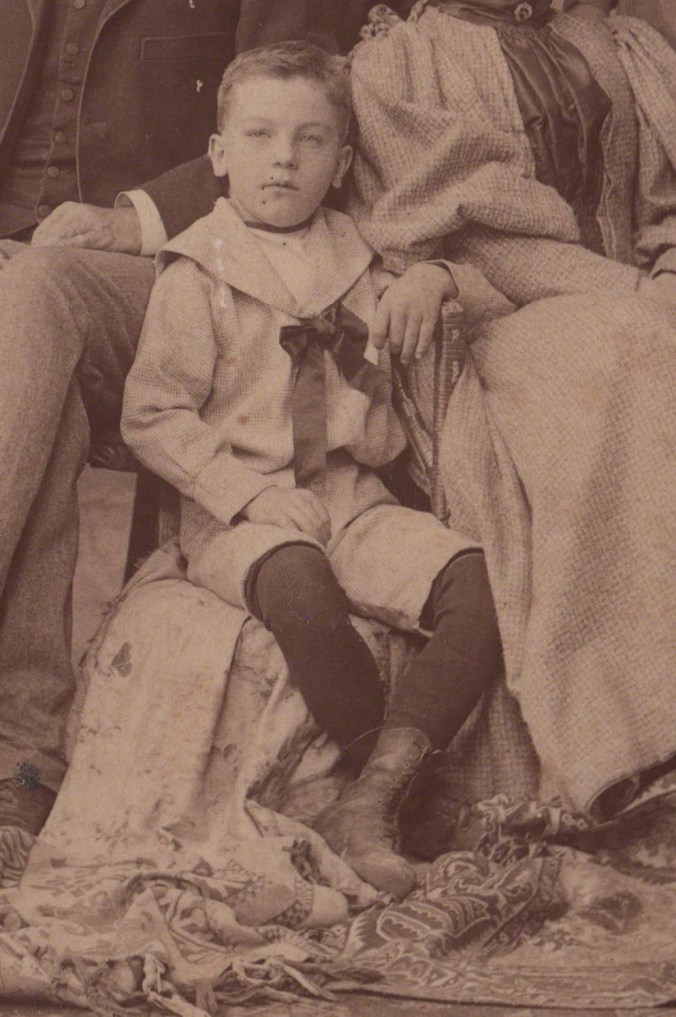
*[Photo 1: Ronald as a child in the Trudinger family photo in Adelaide © courtesy of L.M. Kling circa 1890]

His father, Karl August Trudinger, was born in Nördlingen, Bavaria, while his mother, Clara Theresa, was born in Kleinwalka, Saxony. His parents first emigrated to Bradford, Yorkshire, where they lived for about twenty years and became British citizens. They didn’t like Bismarck and his ideas of unifying Germany. The first twelve of Karl’s and Clara’s children were born in England.

*[Photo 2: The young Trudinger clan in England © courtesy L.M. Kling circa 1880]

Karl August was a textile merchant; hence, living in towns or cities worked best for him. Ronald’s mother, Clara Theresa, grew up in the Moravian Brethren community in Saxony. Faith in God and education were her values. She had yearned to be a missionary, but that door was closed to her at the time. As a result, she prayed for her children that they would become missionaries. Eight out of her thirteen offspring did.

One of them was my grandpa, Ronald, who became a missionary in Sudan.

So, although he wasn’t the venerated Aussie icon of tough “cocky” farmer, his calling was different but just as valuable. He became an intrepid missionary in Sudan, based in Melut on the White Nile. He spent decades translating the New Testament into Dinka and other African languages.

*[Photo 3: Ronald had a wonderful vegetable garden in Sudan as plants grew well in the fertile soil on the banks of the Nile © courtesy L.M. Kling circa 1930]

How thankful I am to My Heritage and the links to news articles matching Dr. Ronald Trudinger—100 at least. In the early 1900s until the late 1950s, he appeared as a local celebrity, especially in church circles. His deputation talks on the “Soudan” and the Muslims, and the risks and challenges the family faced in Africa, particularly during the War in the 1940s, were a source of fascination, if not entertainment, for the public of that time.

Much has been written about Dr. Ronald Trudinger’s adventures in Sudan. If you want to read more about his mission work, my dad wrote his father’s biography for the Australian Dictionary of Evangelical Biography – TRUDINGER, Ronald (1886-1968).

But what was the rest of his life like?

Ronald Trudinger grew up in Norwood, a suburb of Adelaide, South Australia. From what I can gather, again from various news articles about the family, he may have lived in Kapunda and Broken Hill. His father, new to Australia and a merchant, had to go to where the work was. When they first arrived in Australia, according to Ronald’s birth certificate, his father was a greengrocer. Humble beginnings after being a wool merchant in Yorkshire.

A few years later, news reports have Karl August working in a jewellery store in Kapunda. Then, as I mentioned, there was a time the family was in Broken Hill, where Ronald’s eleven-year-old older sister died of typhus.

Eventually, so the family narrative goes, they settled in Marryatville, a subdivision/estate in Norwood, and father, Karl August, teamed up with a Mr. Zimmermann to manage a textile store in Adelaide city. While his father supported the family as a merchant, and some of his older siblings set off for China as missionaries with China Inland Mission, Ronald became highly educated, attending Adelaide University and becoming a Doctor of Medicine.

As a child, Ronald was exceptionally gifted, and by the age of four he was reading the Bible, and at five, Homer’s Odyssey, so my father says. Apart from these fragments of information passed down the generations by word of mouth, Ronald’s childhood remains a mystery.

News reports at the time have helped fill in some of the gaps in Ronald’s interests as he grew up. One of these was tennis competition reports. Although Ronald was born with one arm shorter than the other, he still enjoyed a hit of tennis and played in competition. He was described as a fierce competitor.

Ronald grew up in a God-fearing family, and from all the Sunday School prizes he won (recorded in the local newspapers), I imagine he came to faith in his Lord Jesus as a young child. His family attended Maylands Presbyterian Church. Although they were from a Moravian Brethren background, there was no such church in Adelaide. There was one in Bethany in the Barossa—too far to travel from Norwood. Anyway, the family probably chose a church and congregation that would support missionaries. When Ronald began his missionary work, he and Lina joined the Burnside Christian Church, which faithfully supported their work in Sudan.

Meanwhile, back at the family home base in Norwood, youthful Ronald Trudinger enjoyed evenings with the family playing games—a tradition passed down to the current generation of the T-Team. This never included playing cards, as such cards were deemed “sinful” and associated with gambling. Games my father taught us were taught to him by his maiden aunts, who had learnt them from their parents. A parlour card game called “Chook Chook” was certainly one game the Trudinger family had and loved playing. “Chook Chook” is all about egg farming, teaching the player the different breeds of chickens, trading and negotiating, and accounting. Other games that Ronald would’ve been familiar with were word games and story games, which his mother created for the education of her children.

*[Photo 4: “Chook Chook” © L.M. Kling 2017]

My father remembers his dad’s fondness for chess. Even in my grandpa’s old age, my father never could beat his dad at chess. Another relative recalled Ronald taught her mother to play the piano. So, I gather another of Ronald’s interests was music, a love which he passed down to his children.

After completing his Bachelor of Science degree from 1908 to 1912, Ronald studied to become a Doctor of Medicine at the University of Adelaide. The University student magazine has him attending the Evangelical Union Christian group there, which would become EU, the Christian group I joined eighty years later.

While at university, Ronald won awards and scholarships for his outstanding results. He even won a scholarship to study tropical infectious diseases in Queensland.

During this time, around 1908, he met a young nurse called Lina Hoopmann. They fell in love and privately became engaged. However, they had to wait many years before they were able to marry. She was Lutheran, and he was not. Her father, a staunch Lutheran minister, refused to give his blessing for the union; he called Ronald a heretic as he wasn’t Lutheran and had come from a Moravian Brethren heritage.

*[Photo 5: Upon their engagement, Ronald and Lina © courtesy of L.M. Kling circa 1911]

So, they had to wait until Lina was 30. She would’ve been legally able to marry without her father’s consent at this time. I doubt, though, being God-fearing folk, they would’ve shown such dishonour and break the third commandment to honour thy parents. I imagine that her father finally gave his blessing, and the marriage went ahead on December 11, 1917. That being said, the family photo of the wedding doesn’t have Lina’s father present. I’d like to give him the benefit of the doubt that he took the photo.

*[Photo 6: Ronald and Lina’s Wedding © courtesy of L.M. Kling 1917]

Others of Lina’s family, such as her sister Dora, had no problem with the Trudinger family. In her diary, she enjoyed many visits to the Trudinger’s in Norwood. Plus, she was overjoyed when Ronald and Lina became engaged and then were able to marry.

From 1912, Ronald commenced his calling to be a missionary doctor in Sudan. He returned on furlough in 1917 to marry Lina. Ronald worked as a doctor at the Royal Adelaide Hospital during this time. By 1918, Ronald, together with his wife, had returned to Sudan. His first two children, Ronald Martin and Agnes Dora, were born in Africa.

In 1927, Ronald and Lina, with Ron junior (9) and Agnes (7), returned to Australia on furlough. They came back for their children to start their education in Australia.

This time, Ron accepted work as a physician and locum in Macclesfield, taking on the challenging task of coronial duties, including being a witness for a high-profile murder case.
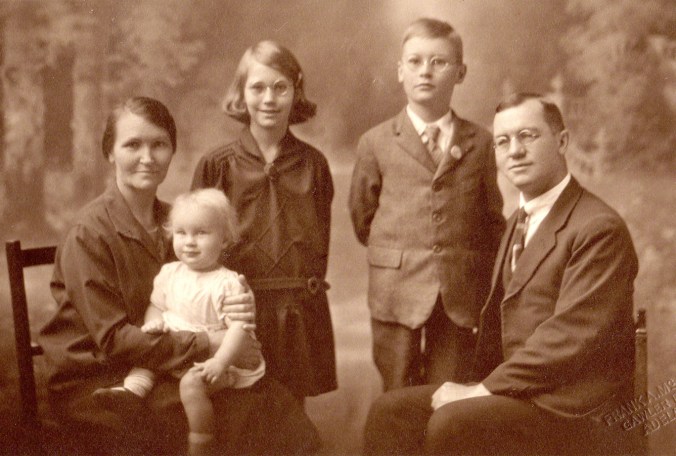
*[Photo 7: The young growing family © courtesy L.M. Kling 1929]

My dad, Clement David Trudinger, was born on January 13, 1928, in Norwood. By May 1929, Ronald and Lina, with their young baby son, were on the ship steaming back to Sudan. Dad’s younger brother Leonhard Paul was born in Melut, Sudan.

As with their first two children, the younger sons must return to live with their maiden aunts in Adelaide for their education. Ronald and Lina returned to Adelaide, South Australia, in 1935. The plan was to stay a year, and then off to Sudan once again. However, it didn’t go as planned. Agnes, their daughter, became gravely ill with meningitis early in 1936. She survived but had to learn to walk and talk again.
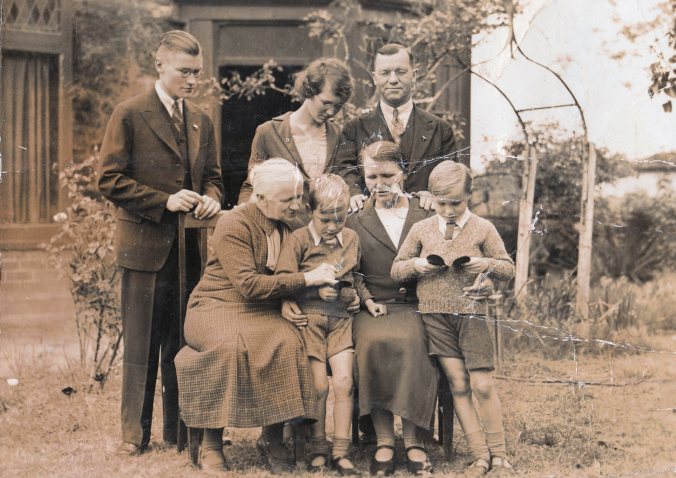
*[Photo 8: 1935 Furlough with family together and Aunt Clara © courtesy L.M. Kling 1935]

Consequently, later in 1936, Ronald set off for Sudan alone after Agnes had recovered.

In Agnes’s memoir, their mum took the boys to live with her family in Yorktown for a year in 1938 while their dad was away on mission in Sudan.

In 1939, Lina joined her husband in Sudan while my dad and Paul stayed with the maiden aunts. During the war years, from 1939 to 1944, Ronald and Lina were on mission in Sudan.

The values of this era were self-sacrifice and obeying God’s calling before family. Plus they considered their children’s educational needs would be better served in Adelaide, South Australia rather than Sudan. Hence, Ronald’s and Lina’s decision to once more venture back to Sudan without their children—a decision the future wives of David and Paul (the dear aunts preferred David to Clement, and Paul to Leonhard), had an issue with. David, Clement by nature, and just that little bit older, took the separation from his mother with a stiff upper lip and in his stride. Dad had fond memories of staying with his maiden aunts. But Paul, being younger, was more of a feisty character and suffered from a sense of abandonment as a child.

Ronald then took two more mission trips to Sudan; 1946 to 1950, then 1951 to 1954. During his time on furlough in 1950, he visited Ernabella where his eldest son Ron was teaching the Pitjantjatjara people, and also Hermannsburg where my Grandpa Sam Gross was pastor at the time. This was before my dad and mum had met each other. It shows the connections in Christian circles and across denominations.

Lina stayed in Adelaide for the 1946 —1950 stint to Sudan but joined Ronald for his final 1951—1954 visit.

In 1954, Ronald had “retired” from the mission field and had taken up a position as a doctor at Hillcrest Psychiatric Hospital. He made an indelible impression there, remembered fondly by former patients.

Even in his golden years of real retirement, furthering the cause of Christ remained the driving force of his life. He never stopped witnessing and sharing the gospel whenever the Lord provided opportunities. In the last years of his life, after his dear wife died, he moved up to Alice Springs to manage a Christian bookshop.

*[Photo 8: A Visit to New Zealand © Bob Alcorn 1968]

However, this venture didn’t last as he became ill with leukemia. He returned to Adelaide and moved into a flat in the Lutheran Homes Retirement village in Payneham.

Illness didn’t stop him from being a missionary on home soil. In the months before he died, he bought an Italian dictionary so that he could share God’s love and the good news of salvation with his Italian gardener.

I remember my grandpa as a kind man who had a smile with his one remaining tooth in his mouth. He would make a joke about the Trudinger trait (pronounced tray) of twiddling thumbs. He taught my brother Richard to make bird calls with a leaf.

By the time I was born, Ronald and Lina were living in Walsall Street, Kensington Park, in the Norwood area. At three, I remember getting bored with all the people around for a big T-Team family gathering. I went off exploring, and mum found me sleeping under the bed on a pair of shoes.
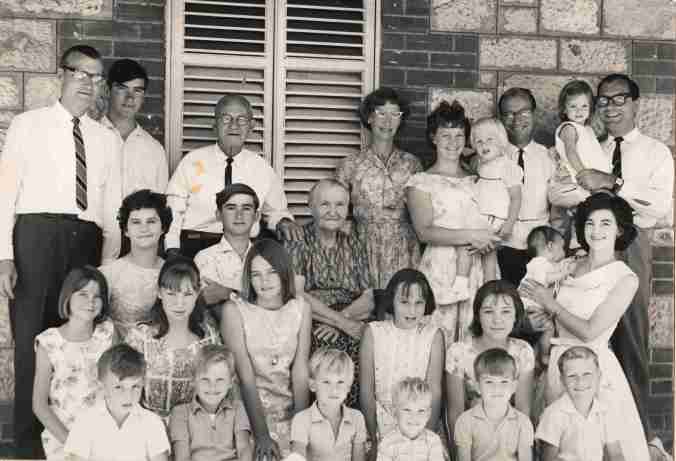
*[Photo 9: The T-Team Gathering: Ronald and Lina and descendants © J.W. Gross 1966]

I know where I was when Grandpa died. I was five. We were in the FJ Holden driving up to “see” Grandpa. Well, I thought we were. Then Dad announced that Grandpa had died. I was confused why we’d been going to see Grandpa if he had died. Hadn’t he gone to Heaven? After all, he was one of the most God-loving people I knew. Upon reflection, perhaps Dad needed to visit Grandpa’s flat to sort out some paperwork with the Lutheran Homes.

Ronald Trudinger died December 21, 1968. He had lived a full and productive life and with his missionary heart had spread the good news of Jesus Christ, his Lord and Saviour.

© Lee-Anne Marie Kling 2025

Feature Photo: Ronald Trudinger with his sons © courtesy L.M. Kling circa 1965

Resources:

Australian Dictionary of Evangelical Biography – TRUDINGER, Ronald (1886-1968)

Trove

My Heritage Old News Articles and links

Diary of Dora Hoopmann

Memoir of Agnes Dora Alcorn

Die Familie Schammer © Reinhold Becker 1922 (Translated into English by Rebecca Gnüchtel 2009)

***

Want to discover more about the T-Team?

Join the adventures of the Intrepid T-Team as they embark on their Central Australian Safaris in my travel memoirs:

The T-Team With Mr. B: Central Australian Safari 1977

Trekking with the T-Team: Central Australian Safari 1981

Down the Rabbit-Hole–Family History Revisited

Oh, dear! I must’ve been deep in the rabbit-hole of painting yesterday. See what I painted in one sunny mid-winter’s afternoon, yesterday. Anyway, being what was intended to be Family History Friday for Tru-Kling Creations, went down a rabbit-hole and ended up somewhere else.

Check out the re-blog of the story of my great-great grandfather from Silesia.

Family History Friday–Grandpa Gross

Tale of Two Grandpas

Grandpa 1—Sam Gross

Recently I shared how my dad relied on the Readers Digest “How to Fix” book to tackle DIY jobs. Having a double mortgage, and money being tight, Dad didn’t have much cash to splash on the “experts” in such fields as plumbing, electricity and general home maintenance.

The response met with a hint of dismissal from my older friends who prided themselves on their pedigree of farmer fathers. These, they boasted were real men, Aussie men, who fixed all things by pragmatic problem solving without the help of a book. The wisdom of their farming forebears imparted to them by osmosis, apparently.


*[Photo 1: One of those Some Mothers do ‘ave ‘em moments © L.M. Kling (nee Trudinger) circa 1978]


In contrast, my father was a lesser being, a city dweller who had to refer to a book, of all things. My dad was a much-loved teacher, gifted in music, art and sport. He coached a winning football team of Indigenous players from Hermannsburg, Northern Territory in his youth, led a choir of Indigenous singers, and later school student Anklung bands for the South Australian Festival of Music. No flies on my dad. But I must admit, when it came to DIY, his forays into such exploits would rival the character Frank Spencer in the British sit-com, “Some Mothers do ’ave ‘em”. Still, I’m proud of my dad and love him.
But then I realised that these superior beings who were my friend’s fathers, were from my grandparents’ era.

So, I cast my mind and research back to my two grandpas: Reverend Sam Gross (my mother’s father) and Dr. Ron Trudinger (my father’s father).

Now these friends held up their ties to the land as superior. Although both my grandfathers are highly educated with Reverend and doctor between them, I can claim a link to the land too, through my maternal grandfather, Sam. His family were farmers with I imagine generations of farmers before them from Horsham Victoria in the 1850’s and extending back to Prussia.


*[Photo 2: The Gross Family Farmhouse, near Horsham, Victoria © L.M. Kling 1996]


Sam was born in 1905 and grew up with all that practical knowhow bred into his being. I never met Sam, he died before I was born, but I remember my mum saying he was good at fixing things like cars. He could’ve been an engineer, but he became a Lutheran pastor. I reckon my brother inherited some of Sam’s traits—he’s a jack of all trades—the ideal DIY man.

As a child, Sam suffered rheumatic fever which affected his heart. Consequently, he got the education with the view of becoming a minister and wasn’t expected to continue with the farm like his brothers.
The doctors told Sam he wouldn’t live past the age of thirty. But being extremely fit and maintaining his health, Sam defied those expectations.

After ordination to become a minister, and then a few years posted to Berri, in the Riverland of South Australia, Sam with his wife, Elsa (my grandma) and three young daughters (one my mother), ventured to Hermannsburg, Northern Territory. There God had called them to be missionaries to the Arrernte people.


*[Photo 3: Leaving Berri © S.O. Gross 1939]


Now, Hermannsburg is remote, more so in 1939 when they moved there. The settlement became even more isolated once war broke out.

*[Photo 4: Pastor Sam Gross with fellow ministers in Hermannsburg © courtesy of M.E. Trudinger circa 1940]


Sam’s pragmatic skills, bred and imparted to him from generations who had lived and struggled on the land as poor subsistence farmers in Germany, then as pioneer farmers in the Victorian Western districts in Australia, came to the fore in the harsh isolated conditions in Central Australia.

Sam had to venture to even more remote places in the desert west of the MacDonnell Ranges—Haast Bluff for instance. One trip in 1942, the truck broke down. Despite putting his mechanic hat on and trying to fix the car, an essential part of the engine was kaput and the much-needed part not available. Sam’s problem-solving prowess kicked in, donkeys were found and the car towed by donkey-power back to “civilisation”—Hermannsburg.

*[Photo 5: Donkey-power © S.O. Gross 1942]


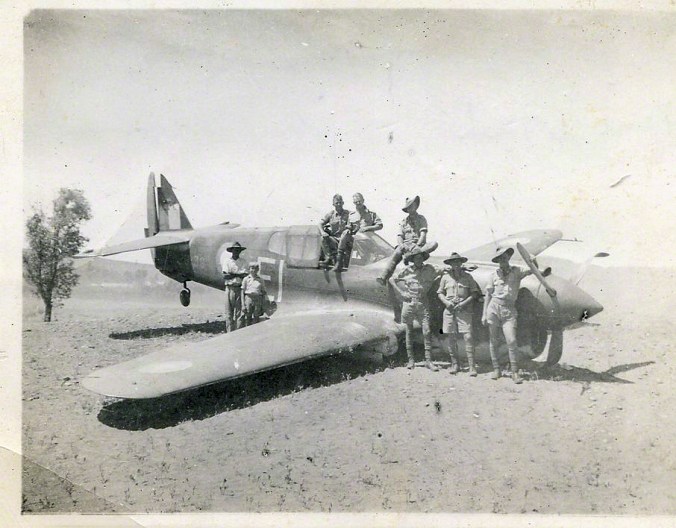
A year or so after their arrival in Hermannsburg, the supervising pastor, F.W. Albrecht was stuck in Adelaide as a result of the war. Hermannsburg came under suspicion, as it was a mission set up by German missionaries back in the 1880’s, and as such with ties to the Lutheran church, had a German name and tradition. The British Army being paranoid of anything that hinted of German, was suspicious of Hermannsburg. They feared German spies were hiding out there. So, they sent officers to check out Hermannsburg.

*[Photo 6: A visit by the Airforce © S.O. Gross circa 1942]


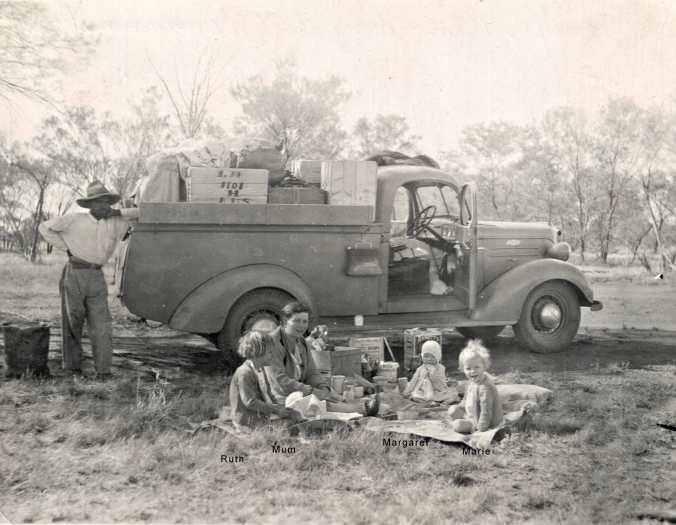
On one of these visits, without their chief, Pastor Albrecht, Sam and Elsa had to entertain these one-eyed wary characters. How did Sam survive their investigation? My mum says her father had the gift of the gab. My grandma had the gift of hospitality. In “A Straight-Out man” by F.W. Albrecht, I remember reading the Arrernte said that Sam would be alright, he’s so Aussie they won’t suspect him. Besides, the name Gross is found in England too. Also, Sam’s first language was English and when at school, he had trouble learning German. Although German was spoken at Hermannsburg and in the family, Mum can’t remember what they did when these British Intelligence Officers came, but thinks the children were kept out the way. Maybe someone took the kinder (children) on a picnic…


*[Photo 7: Mum and her sisters on a picnic © S.O. Gross circa 1942]


Sam and his family survived the officer’s interrogation. However, the pedal two-way radio was confiscated, and later Rex Batterbee was appointed to keep an eye on the mission. This Rex did and taught Albert Namatjira to paint.

There’s much more to Sam’s story. I think this post gives a glimpse into his generation and German farming ancestry, migrants making good, living in isolation, making do, thinking on one’s feet and problem-solving.

Did I mention Sam still found time to indulge (as the Mission Board put it—another saga) his passion for photography? He used these photos of Central Australia for deputations to garner support for the mission. Many of his photos are now stored in the Strehlow Centre in Alice Springs.

*[Photo 8: One of my favourites of Sam’s photos, Ghost Gum © S.O. Gross circa 1942]


And finally, Sam outlived his doctor’s expectations. He lived to the age of 57.

© Lee-Anne Marie Kling 2025
Feature Photo: Sam and Elsa Gross © courtesy M.E. Trudinger circa 1960


VIRTUAL TRAVEL OPPORTUNITY

FOR THE PRICE OF A CUP OF COFFEE (TAKEAWAY, THESE DAYS),

CLICK ON THE LINK AND DOWNLOAD YOUR KINDLE COPY OF ONE OF MY TRAVEL MEMOIRS,

EXPERIENCE HISTORIC AUSTRALIAN OUTBACK ADVENTURE WITH MR. B
IN

The T-Team with Mr. B: Central Australian Safari 1977

OR COME ON A TREK WITH THE T-TEAM IN

Trekking with the T-Team: Central Australian Safari 1981.

Friday Crime–The Culvert (28)

Dee Digs

May 3, 2022
3pm
Adelaide Police HQ

Dee

After the phone call to Fifi, Dee leaned back in her chair. ‘Gotcha, Mr. Renard. Gotcha!’
She couldn’t believe her good fortune in Fifi. Didn’t take that “Rannga” much to turn against her former friend.

However, youth group rumours were not enough to “hang” Lillie, she needed hard facts—evidence. She started with the local council office at Glen Huon. After all, most apple picking happened in the Huon Valley, Tasmania. So, a good place to commence digging dirt on her nemesis.

[Photo 1: Crab apples in autumn © L.M. Kling 2024]


Thankful that she woke up the sleepy young man in the office before the council chambers closed, she trawled through the files he sent her. She was glad that such information about payrolls and workers in the area in 1981, had been digitised. Lillie von Erikson was listed as working for apple orchard owners, Greg and Janine Thomas. However, no mention of a baby or her being pregnant. Dee puzzled over the fact that Lillie, according to Fifi, seemed to have been in Tasmania long after the apple-picking season was over.

What was she doing there after apple picking? Dee wondered.

She moved onto Trove, an online digital archive, that has recorded historic newspaper articles and publications. Searched Lillie’s name in the local and state newspapers from the day.

Nothing.

She calculated when the baby would arrive if conceived in November. Then scrutinized state and also national papers for a birth in the personal pages. August—September 1981, in particular. Nothing. Still, all is not lost. Perhaps she didn’t put the birth in the paper if she adopted the child out.

But a quick check of newspaper dates available revealed that Trove only published papers up to 1950. What a disappointment!

A visit to the South Australian State Library was the next step in the search. There she trawled through the microfiche files for the Tasmanian newspapers, concentrating on births around August and September.

After an unsatisfactory August, she scanned the first week in September.

‘Ah! That looks more like it,’ Dee murmured.

She zoomed in on the notice of a daughter, Zoe, born to Lillie’s apple picking bosses, Greg and Janine Thomas. Detective Dee Berry smiled while resting her clasped hands on her belly. September 1, right in the timeframe too.

‘Interesting,’ she murmured. ‘Did the moll stay to help Mrs Thomas? Or did she give the baby to Mrs. Thomas?’

A check of the births, deaths, and marriages register, and confirmed. Mrs. Janine Thomas was over 40 when she had her first child, Zoe.

‘Not impossible, but suspicious,’ Dee muttered. ‘I think a little trip to Tasmania is what I must do.’
After saving the information onto a file labelled “Moll”, she put in an application for a visit to Tasmania courtesy of the government. After all, it was an enquiry into a murder investigation.

Who knows, Dee smirked, my enemy may be a suspect that needs to be eliminated; one way or another I’ll get her.

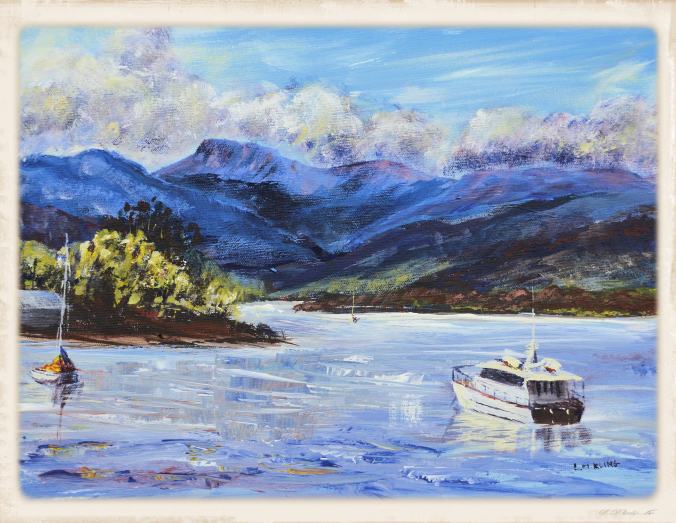
[Painting 1 and Feature: Sleeping Beauty over Huon River © L.M. Kling 2018]


Up the Apple Isle
Part 1

Thursday May 5, 2022
Huon Valley, Tasmania

Dee

Dee gripped the leather-bound steering wheel of Toyota Corolla hire car as it rumbled up the unsealed road. Won’t tell the hire company about that little detour, she thought. From the Council records, the Thomas farm was hidden way out west, close to the “Great Western wilderness”. The further west she drove, the thinner and rougher the road became.

She passed a tiny town with houses painted in gaudy orange and pastel greens. A purple house stood sentinel at a fork in the road. Dee took the left track hoping to reach her destination soon. She’d given up on the Sat Nav. The designated voice, named Jilly was vague and hadn’t a clue where to go.

Dee was proud that she could still read maps and follow the directions of an old local manning the service station at Glen Huon. He said he’d remembered someone like Lillie 40-odd years back. Strangers were a rarity in a small town of fifty-odd people from where he had come. He said Lillie had walked into the church, and all twenty heads turned to size up the blonde from the mainland.

‘It wasn’t long before rumours were flying,’ the station owner said, ‘pregnant, just like the lady who lived in that purple house you’ll see when you get to the town up there. Rumour has it, she’s got a child from ten different men. Anyways, that’s a lifetime ago now. Back then, if someone sneezed across the valley there, everyone in town would know about it and the person who sneezed would have died from pneumonia. Not much better now.’

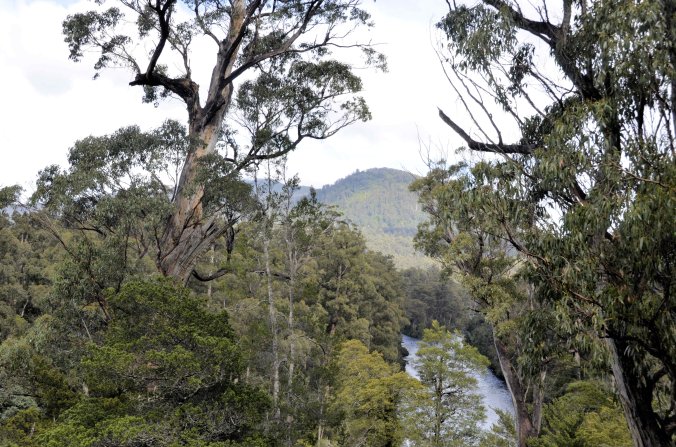
[Photo 2: Tahune Tree Walk © L.M. Kling 2016]

Dee must have given him a strange look, because the station owner added, ‘Oh, er, don’t believe the rumours. Them folk up there are all related, married cousins and what not, but they don’t have two heads.’

‘Didn’t think they had,’ Dee replied, ‘I just want to know how to get to the Thomas farm.’

‘Don’t know why you want to go there; the family left years ago.’

‘Do you know where they went?’

The man shrugged. ‘The missus died, so I heard. Daughter’s become some big shot lawyer in Melbourne. Something not right there, she never fitted, you know what I mean. She wasn’t one of us.’

‘Did she look like Lillie, the blonde?’ Dee showed the man a photo she had scanned to her phone of 17-year-old Lillie.

The man paused, squinted and then nodded. ‘Yeah, there were rumours. But we could never prove it. Janine, Mr. Thomas’s missus, always insisted the baby was hers.’

© Tessa Trudinger 2025


Sometimes characters spring from real life,
Sometimes real life is stranger than fiction.
Sometimes real life is just real life.
Check out my travel memoirs,
And escape in time and space
To Central Australia.

Click on the links:


The T-Team with Mr. B: Central Australian Safari 1977


Trekking with the T-Team: Central Australian Safari 1981
Or for a greater escape into another world…
Check out my Sci-fi/ dystopian novel,
And click on the link:


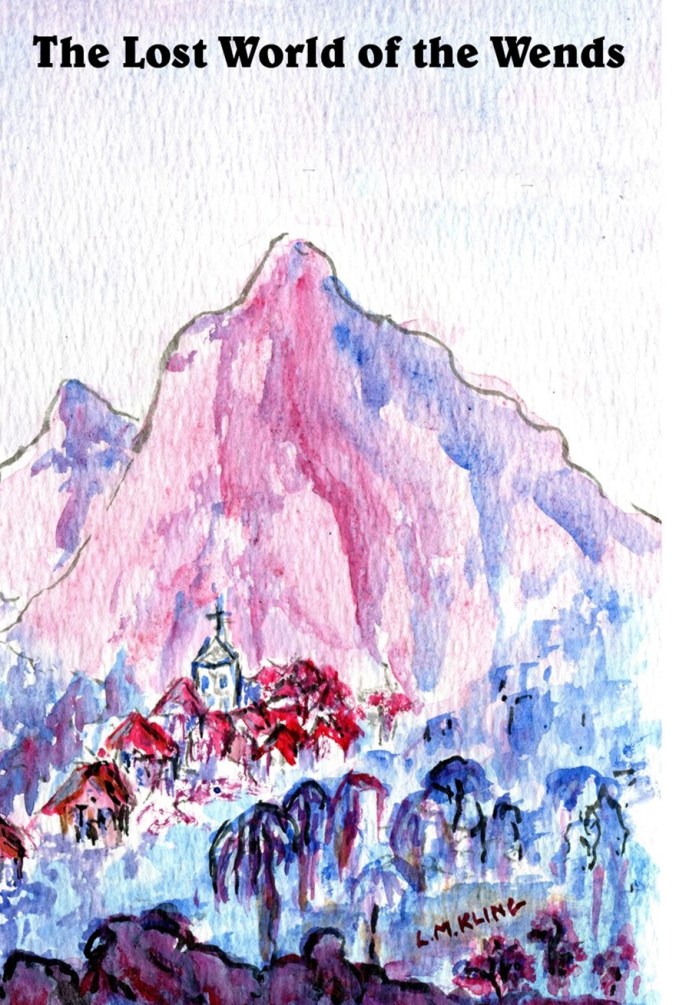
The Lost World of the Wends

My History on Friday–School Daze

Recent events on the world stage and closer to home have reminded me of this little gem I posted way back in 2016. Still relevant today—maybe even more so, as it was back then so many years ago when I was in high school. And it seems, while many of us have matured and have an open mind when it comes to opinions and how we view others, there are some who believe that if you tell a lie often enough, it must be true. The recipients who have no backbone who believe these lies are just as guilty. Need I go into detail with examples? Not here. But I may explore this issue in some of my future novels.

NOW YOU KNOW…


Year Ten at high school, and you could say I went to school each day with a big virtual sign on my back that read, “Kick Me”.

Don’t get me wrong, I had my close friends; friends who valued me for me and who saw through the prevailing attitudes of the crowd towards me. I assumed my lack of popularity was spawned from a rocky start in Year Seven—new kid when all friendship groups had been established in a ridiculously small school. And then there were those who had made it their mission in life to persecute me. I assumed they spread the rumours about me. Or maybe it was my buck teeth, and awkward way of relating to people…When you are told by your peers over and over again that you are ugly, unloved and no one wants you and you do regularly get picked last for the team, I guess you start to believe what people say.
What kept me together, were my real friends, the ones outside of school, and my friends at school. I also belonged to a fantastic youth group that met every Friday night. A close-knit, loving family helped as well.

Most of all my faith in Jesus got me through those difficult early teenage years.

Anyway, at fifteen, my teeth had been almost straightened by orthodontics, and I’d perfected the enemy-avoiding strategy of spending lunchtimes in the library. I loved learning and my best friend, and I spurred each other on in academic excellence. My goal, a scholarship. I had heard rumours that some kids thought I was not so intelligent, a fool, in other words.

[Photo 1: Free range chickens, Gorge Wildlife Park near Lobethal © L.M. Kling 2024]


At my grandmother’s place, after Sunday lunch, I helped Grandma with the dishes. As I scraped away the chicken bones, I discovered the wishbone.

‘Can I make a wish?’ I asked Grandma.

‘Well, why not?’ she replied. Although a godly woman, some superstitions from our Wendish (eastern European) past had filtered down through the generations. So, wishing on wishbones was no big spiritual deal.

Grandma and I hooked our little fingers around each prong of the wishbone. We pulled. The bone snapped in two and I won the larger portion. I closed my eyes and made my wish, a scholarship. Dad had promised that if I studied hard and won a scholarship, he’d buy me a ten-pin bowling ball. So, in truth, my aspirations for academic achievement were less than pure.

*[Photo 2: Dreams of a bowling ball © L.M. Kling 2016]

What was it about socks? I wondered as I dutifully began to pull up my socks. For our summer uniform which we had to wear in first term, we wore blue cotton frocks down to our knees and long white socks.

Woe betide any poor soul who did not pull their socks up to their knees. The length of our uniform dresses was another issue that kept certain teachers occupied. And don’t get me started on hair. I tell you, if all the students had worn their uniforms correctly, I think the teachers would’ve quit out of boredom.

So, with my socks pulled up, I waited in line to troop into the chapel for morning assembly. A tap on my back. One of my friends smiled at me. I remember her simple bob of straight blonde hair; no fancy flicks or curls like many fashion-conscious girls in the 1970’s. Farrah Fawcet flicks were all the rage and drove the teachers to distraction.

‘Good luck,’ my friend said.

‘Why?’ I asked.

Miss Uniform-Obsessed-Teacher glared at us. She had those bulging blue eyes, mean pointy mouth that forced us to slouch into submission, and for me to check my socks again.

One of my foes snaked past and muttered at me, ‘Dumb idiot.’

I shook my head and concentrated on not getting glared at by the teacher. Really, I thought, he’s at the bottom of the class and he’s calling me dumb? What is it with that guy? In his defense, he did come out with a gem once in English class when the students were rioting and so reducing the first-year-out teacher to tears. He said to me, ‘It’s not what you know, it’s who you know.’ So true for my home town.

*[Photo 3: Like sheep they were © C.D. Trudinger circa 1995]


Once inside the hallowed halls of the chapel, we went through the ritual of the school assembly. The principal delivered the talk. There’s a lecture I recall he made, don’t know if it was that particular one—how we were a bunch of jellyfish and we must get some backbone. When he said backbone I thought of the wishbone, and then that guy who said I was dumb and his cohorts. I thought of how people believe unquestioningly what others tell them, even if it’s not true. They go along with the prevailing attitude, even if it’s wrong and harmful to others. In some ways, like at school, I was a victim of these jellyfish, and in other ways, I was a jellyfish too. I had an attitude, an aversion against those who bullied me. Did I have backbone enough to get to know them as people rather than continuing to avoid them as enemies?
The principal began to hand out the awards. Ah, yes, that’s what my friend meant. Today was the day of the awards. I watched as various students marched up the front and collected their scholarships. That won’t be me, I thought.

‘And for Year Ten,’ the principal said, ‘the scholarship for high achievement…’

I looked up. What? Me?

I walked to the front, shook the principal’s hand, collected the award, then head down and with a tug of my pig tail, I walked back to my seat.

Afterwards, my friend patted me on the shoulder. ‘Congratulations! Well done! Just like you to win an award and then pull at your pig tails.’

I nodded. The whole deal of winning a scholarship seemed unreal. ‘I’ll be able to get my own bowling ball, now.’

That guy slid past me. ‘Ooh, what a surprise—we all thought you were dumb.’

‘Well, now you know I’m not,’ I replied.


*[Photo 4 and Feature: Jellyfish © iStockphoto]


Sometimes we carry our hurt from the persecution from others like a big heavy bag on our backs and the truth is it influences the way we see the world. I realised being a victim had become my narrative, and I didn’t want it to be so. As a jellyfish, I had no backbone to stand against this view of myself and how others viewed me. I feared speaking out and going against the crowd in the cause of truth, justice, mercy and compassion. I kept my opinions to myself. Then just recently, when again the baggage of victimhood crept up on me, I read the following passage from the book of Matthew in the Bible. The words encouraged and gave me the backbone to stand out and for the sake of Jesus Christ make a positive difference in the world.

“Blessed are you when people insult you, persecute you and falsely say all kinds of evil against you because of me (Jesus). Rejoice and be glad, because great is your reward in heaven, for the same way they persecuted the prophets who were before you.”—Matthew 5:11-12

© Lee-Anne Marie Kling 2016; 2023; 2025
Feature Picture: Huge School of Water Jelly © iStockphoto


Want to explore some more?
Another world? Another place and time?

Escape into some space adventure. Or just delve into some plain dystopian adventure?

Click on the links to my novels below and learn how this war on the alien cockroach Boris began and will continue…

The Hitch-hiker

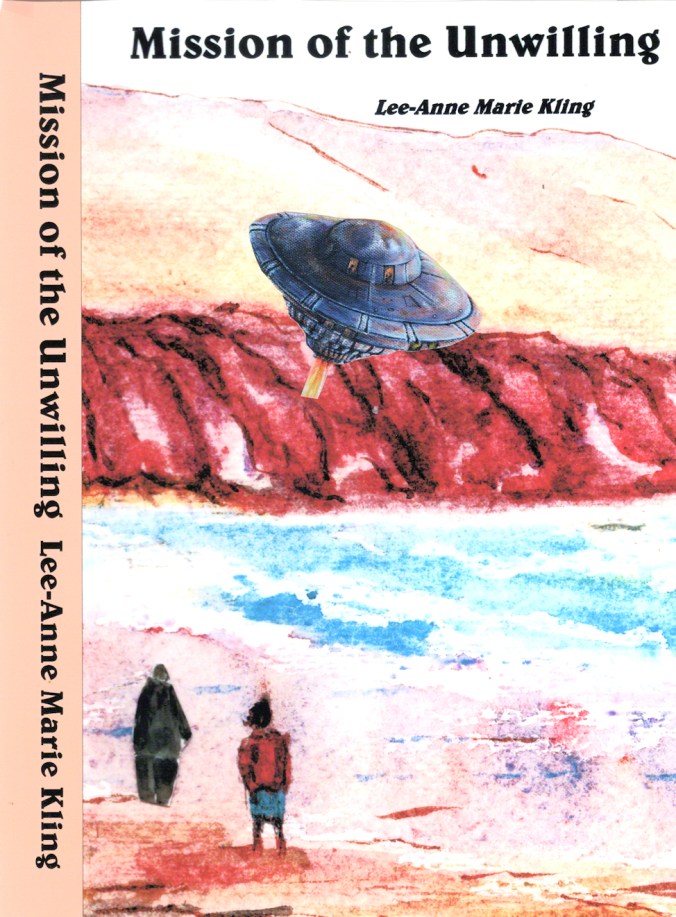
Mission of the Unwilling

The Lost World of the Wends

Nostalgia–Christmas

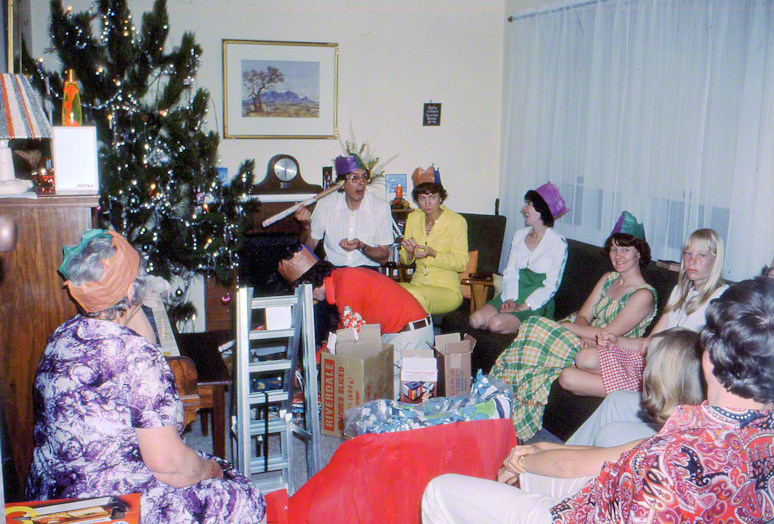
Christmas Day With the T-Team 1978

[Why 1978? Nostalgia for one. Some snapshot of the past for future generations. And, well…I do wish I could share the shenanigans of current family, but I think that would leave me Christmas card less and spending the next 40 years on my own at Christmas sipping some sort of spirits to drown my sorrows, forget my regrets and missing all the entertainment Christmas in Australia brings. So, what harm would be done to reminisce about one warm Christmas Day when life was simple, and the stars of this show are now twinkling in the sky of remembrance. Needless to say, like Mr B, I will not use their real names to protect the not-so innocent, and the little bit affected.]

Christmas to a T

The sun filtered through the dusty window golden and warm. I flung off my sheet and raced to the Christmas tree; a real one that filled the lounge room with the scent of pine.


Mum, still in her nightie, watched me as I opened my presents: two skirts and a pair of scuffs.


I hugged her. ‘Thank you, Mummy.’


‘You’re welcome.’


‘So, what church do you think we should go to, today?’


‘I was thinking Maughan Church in the city.’


‘Excellent, I like that church.’


‘Well, then,’ Mum glanced down the passage way, ‘you better get ready.’


I hurried to my room and changed into my new Christmas skirt, relishing the T-female tradition of new clothes for Christmas. Even better, home sewn by mum, so no one would have the same dress as me. I pulled on a white lace shirt to match the simple V-cut skirt of fine red and white plaid.

*[Photo 1: Another Christmas, matching outfits © C.D. Trudinger 1975]


Mum called out from the kitchen, ‘Hurry, we have to get there by half-past nine.’


‘Alright.’ Easy for her to say, but the challenge was my Dad and brother, Rick. How to wake the men who lay in their bed-tombs asleep?


Mum had an idea. ‘Why don’t you put the radio on? Make it loud. Really loud.’


I followed Mum’s suggestion and tuned the radio to 5KA and turned up the volume dial until it would turn no more.


Boney-Em blasted out a Christmas carol causing Mum to jump. ‘Not that loud,’ she cried through a mouth full of milk and Weeties cereal mixed with her ever-faithful All-Bran.


An unimpressed and bleary-eyed Rick and Dad joined us on our jaunt into the city to celebrate Christmas Uniting Church style, not much different from the Lutheran Church service. Rick nodded off during the sermon all the same.


Then, the highlight of our year, Christmas at Grandma’s. Always a spread, but as it was simmering around 35-degrees Celsius, cold chicken and ham, for meat, and potato salad, coleslaw, tomato and onion salad, cucumber and beans from Dad’s garden swimming in mayonnaise, and for our serve of greens a bowl of iceberg lettuce.


The food was only second to the company. Grandma, with her G (she wasn’t a T) gifting of hospitality, had invited some friends from church. My uncle and aunty from the inner suburbs of Adelaide also came to complete the gathering around the old oak extendable table. That year, the numbers being not large, I sat with the adults. Other years children were relegated out in the passageway or exiled to the back garden to sit at the “kindertisch”. Anyway, at 15, I was almost an adult.

*[Photo 2: All decked up for Christmas dinner © L.M. Kling 2006]


After lunch, we lingered at Grandma’s all afternoon, waiting for the second wave of visitors to arrive. I flicked through Grandma’s photo albums and then read some of her books from the bookshelf in the spare room. Actually, that’s what I did, after helping Grandma and mum wash and wipe the dishes while the others lazed around chatting and playing cards.


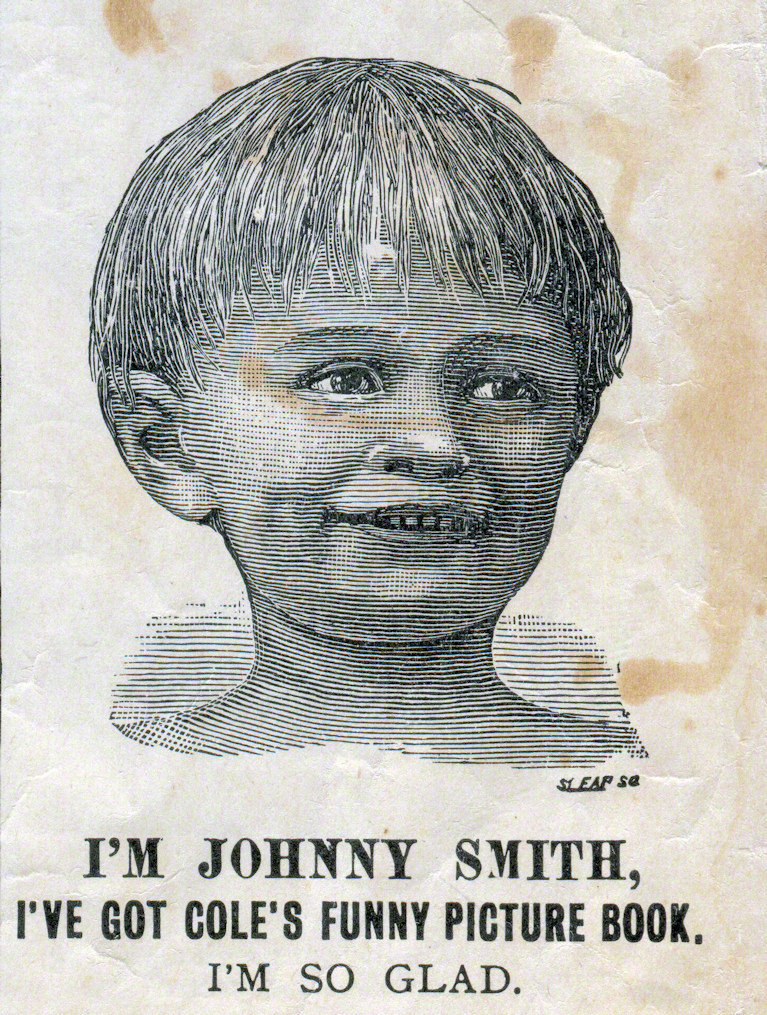
I’d started on The Coles Funny Picture Book when called to bid one of Grandma’s friends, my uncle and aunty goodbye. Within minutes, the next influx of relatives rolled up the gravel drive. Aunt Wilma and her husband Jack stepped from their yellow Volkswagen Passat. The couple impressed me; so striking with Aunt Wilma’s elegance, matching her husband’s movie star looks and Scottish wit.


Sidling up to Mum, I asked, ‘Why didn’t the others stay?’


Mum mumbled something I didn’t quite catch before rushing up to her sister and hugging her. I followed mum with the greeting rituals of hug and kiss my aunt and uncle. Then, while the adults engaged in honey biscuits, tea and banter, I resumed my perusal of The Coles Funny Picture Book.

[Photo 3: Ah, the joys of Coles Funny Picture book © L.M. Kling 2018]


Dinner was left-overs from lunch. Sorry Wilma and Jack, but that’s the tradition. Waste not, want not, my Grandma used to say. She was a parson’s daughter and married a parson, not just any old parson, but a missionary one, during the Depression. And she and her missionary husband moved up to Hermannsburg at the start of World War 2. I was convinced that she still had rusty tins of food mouldering at the back of her cupboard from the “Dark Ages”.


Uncle Jack was in fine form—they’d obviously had a merry time at the last Christmas appointment. True to form, he kept us entertained with his brogue accent and humour, repeating variations of the Wattle ditty. Here’s how it goes with his accent:


“This ‘ere is a wat’le,
The emblem of our land,
You can stick it in a bot’le,
Or ‘old it in your ‘and.’

Jack performed this with variations, and some subtle actions that at fifteen, I was a tad too innocent to “get”, but we all laughed anyway.

*[Photo 4: This here, is a wattle…Life of the party Uncle Jack © C.D. Trudinger 1978]


As the night progressed, the bolder Uncle Jack’s jokes grew and the more most of us laughed. Perhaps not Grandma’s friends who had dared to stay on; they kept glancing at Grandma, the expression on their faces reading, “Pull your son-in-law into line, dear.”


My dad sat on the piano stool, hands under his bottom, his lips doing the bird-in-mouth thing and a snort escaping with every new and daring quip from Jack. Dad hoped to play the piano as we sang some Christmas carols, but as each joke escalated in levels of risqué, clever though they were, the likelihood of carol singing became less likely.


One of Grandma’s friends suggested we should sing some carols. Ah, the innocence of good Christian folk in the 1970’s.


Rick and I commenced our own rendition of We Three Kings…


Grandma picked up a present and quietly said, ‘I don’t think we will sing this year. Let’s open our presents. Lee-Anne, you’re the youngest, you can start.’


So, here’s how I scored in 1978: Cosmetic mask from Aunt Wilma and Uncle Jack, hairdryer from Mum and Dad, photo album and book from Grandma and a cassette tape from my country cousins.
Grandma’s present, a book, interested me the most and I stayed up to 2am reading it.

© Lee-Anne Marie Kling 2018
*Feature Photo: Christmas Tree Admirers © C.D. Trudinger 1978

***

VIRTUAL TRAVEL OPPORTUNITY

FOR THE PRICE OF A CUP OF COFFEE (TAKEAWAY, THESE DAYS),

CLICK ON THE LINK AND DOWNLOAD YOUR KINDLE COPY OF MY TRAVEL MEMOIR,

The T-Team With Mr. B: Central Australian Safari 1977

Trekking With the T-Team: Central Australian Safari 1981

K-Team Travel with a tiny bit of Family History


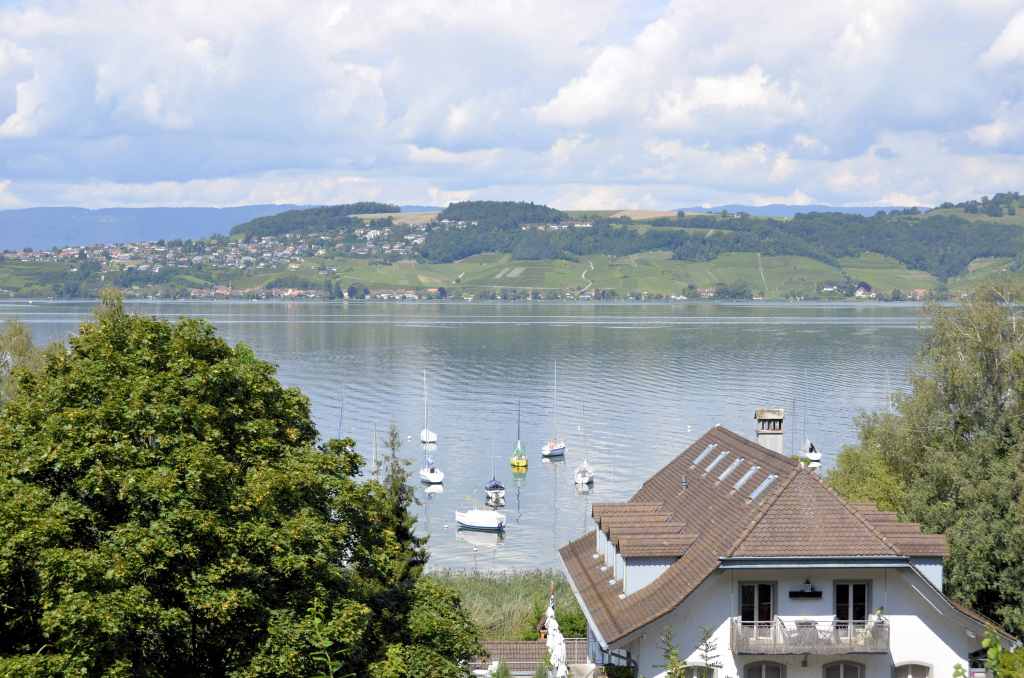
[Have you ever been to a place and had an immediate affinity with it? Well, that’s how it was for me when the T-K Team on their Swiss adventures visited Murten. Loved the place. I’m sure, now, that it wasn’t just the perfect weather, the picture postcard views of the lake and the charming medieval architecture so perfectly preserved. There was something more, which I was to discover recently.


For a start, my younger son would insist on put a dampener on my dreams—’How can you be related? You’ve got no Western German in your ethnicity,’ he harped on and on about that point. Anyway, later, 2024-2025, My Heritage updated their research and I no longer feel like an imposter.
I am indeed, 38% Germanic. Phew! Now, the Traits recently available on My Heritage, well, that’s a different story. Talk about “Imposter syndrome”, but that will be for another time, another blog.


All I can say, is that there must be something in the connection I felt with the place. While doing my family history, I came across some ancestors, the De Bons, who lived in Murten, my five times great-grandfather was a protestant pastor in Murten. There were Huguenot connections in the family. And note the museum, where I mention that the Celts lived in Murten. According to my first DNA results from My Heritage, my ethnicity is 25% Celt.

Plus recently, as I’ve been digging into my ancestral history, I discovered more ancestors who lived in the nearby town of Estavayer-le-Lac, just a 24-minute drive from Murton. ]

Murten/Morat


Thursday, August 21, 2014, even earlier up as we planned to drive across the country to Bern and beyond, near the French part of Switzerland. Granny excused herself as the last two days had exhausted her and besides, she really needed to catch up with her uncle and auntie.


I might add here that Granny and her family, being Swiss German, were not fans of the French part of Switzerland. The feeling, I’ve heard, is mutual. (Thanks to Napoleon, the French part of Switzerland only became thus in the early 1800s. So, when my ancestors were living there in the 1700s, they would’ve identified as French.)


In Murten, the people speak French. So, when P1 spoke Swiss German to the Museum attendant, she was not amused. We almost didn’t get a Museum pass.


Back to the timeline, and some photos.


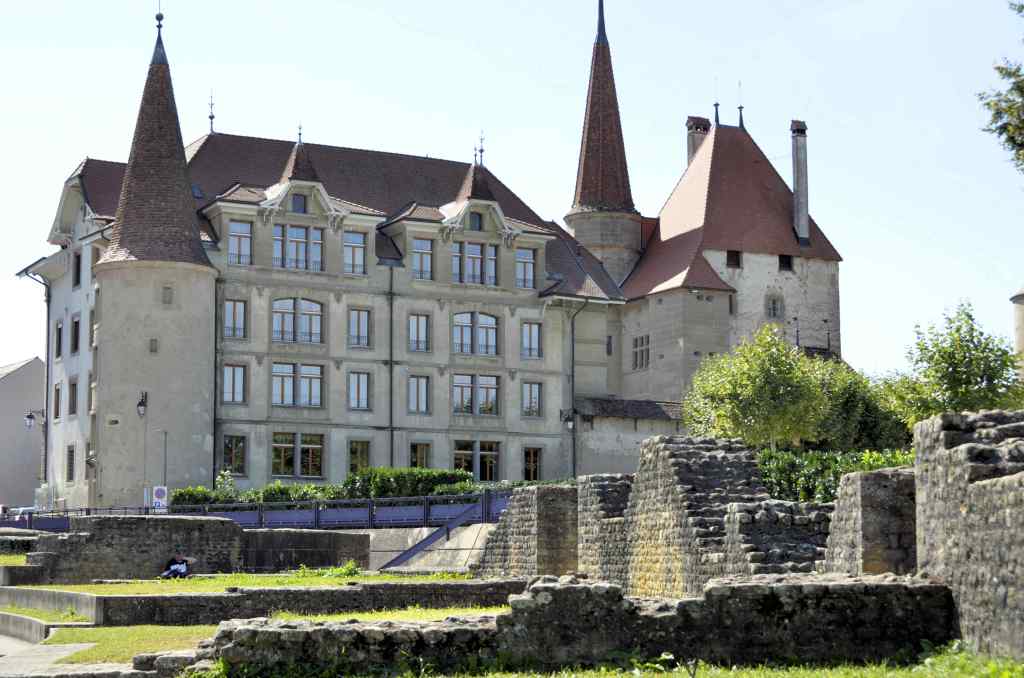
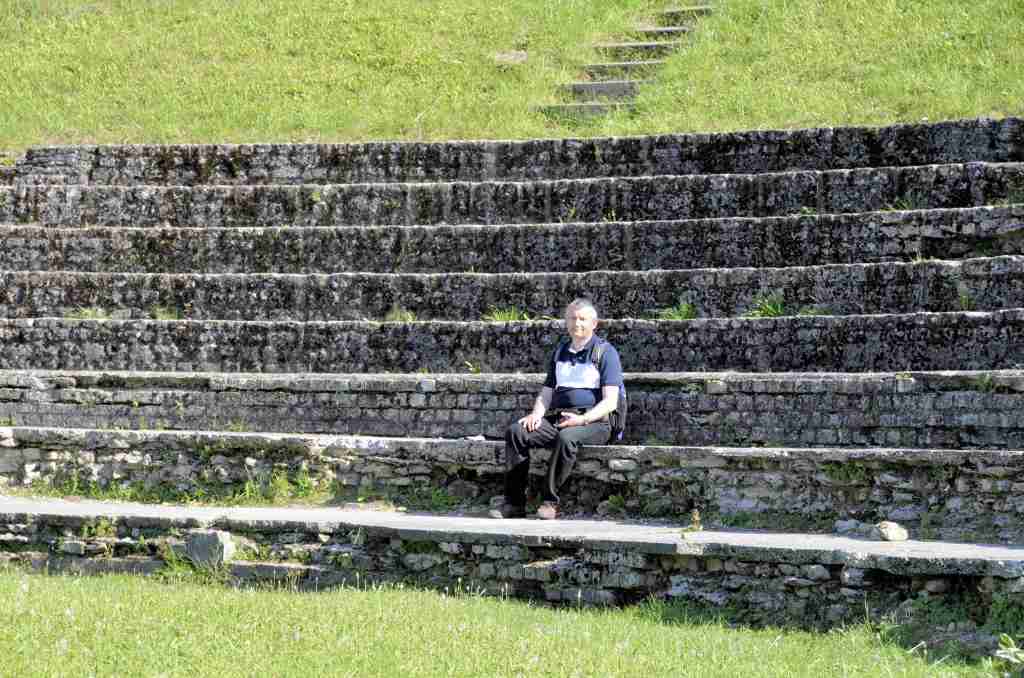
Despite Tomina’s (Tom Tom) and my under par navigational performance (early morning—yawn), we arrived at 11.30am in Morat/Murten and relished a day of summer, eating lunch by the lake, exploring the Old town and its buildings garnished with flowers, the museum of Stone Age, Celtic, Roman and Medieval relics spanning 10,000 years of human settlement around Murten. Followed by a visit to the Roman ruins in Avenches, the ancient capital of the Roman province of Helvitica.


On our return, we suffered the frustration stuck in peak hour traffic, and Granny suffered stress worrying about our late arrival “home”.

Photo 1: Perfect summer’s day on Murten Lake © L.M. Kling 2024
[Photo 2: Gnomes © L.M. Kling 2014
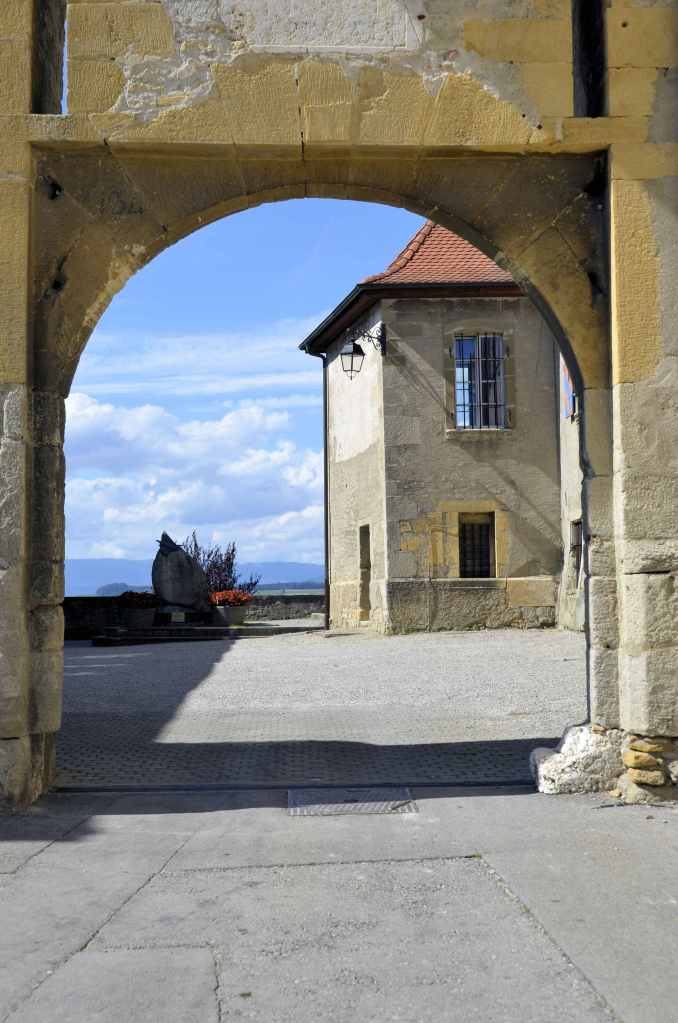
[Photo 3: Archway © L.M. Kling 2014]
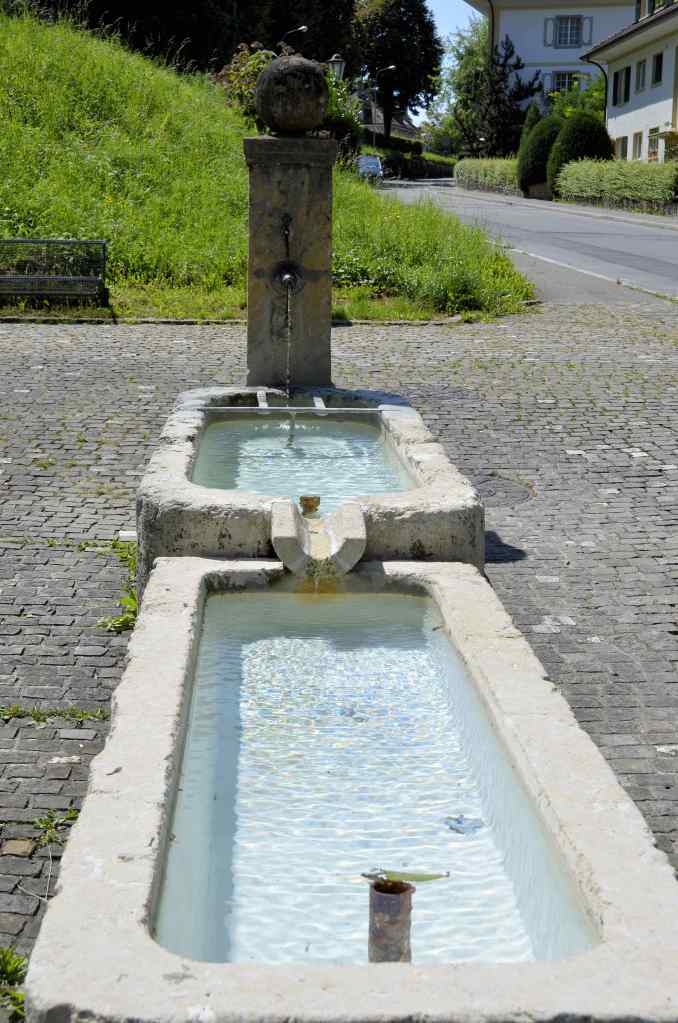
[Photo 4: Water for all © L.M. Kling 2014]
[Photo 5: Museum © L.M. Kling 2014]
[Photo 6: Charming Castle with Roman ruins (foreground) © L.M. Kling 2014]
[Photo 7: Where are all the people? © L.M. Kling 2014]
[Photo 8: Roman tunnel © L.M. Kling 2014]
[Photo 9: Lone spectator at old Roman amphitheater, Avenches © L.M. Kling 2014]

© Lee-Anne Marie Kling 2014; updated 2024
Feature photo: Murten/Morat © L.M. Kling 2014

***

VIRTUAL TRAVEL OPPORTUNITY

FOR THE PRICE OF A CUP OF COFFEE (TAKEAWAY, THESE DAYS),

CLICK ON THE LINK AND DOWNLOAD YOUR KINDLE COPY OF ONE OF MY TRAVEL MEMOIRS,

EXPERIENCE HISTORIC AUSTRALIAN OUTBACK ADVENTURE WITH MR. B
IN

The T-Team with Mr. B: Central Australian Safari 1977

OR COME ON A TREK WITH THE T-TEAM IN

Trekking with the T-Team: Central Australian Safari 1981.

Art Break–Story Behind the Muse

Oops! Almost one week into Marion Art Group’s (my art group) exhibition at the local shopping centre, and I have failed to mention it. Been too busy writing, appraising hopeful writer’s works, and transcribing a friend’s biography of her mother who lived through the horrors of World War II. Plus burrowing away in the family history rabbit hole.

I have been pondering where my art genes have come from. No mention of renown artists in my ancestry. My dad was an artist with some potential, emphasis on potential as he channeled his talents more into music than art. My maternal grandfather, Sam Gross was an amazing photographer. But as a missionary pastor in Central Australia, he was discouraged from furthering his photographic endeavours as the mission board frowned on it and said he was spending too much money on camera equipment and film.

So, in light of my predecessor’s unrealised potential and the fact that I am still using the watercolour paints and brushes my dad left behind, I will share an afternoon that we spent painting in Central Australia in 1981.

Mount Hermannsburg

My father and I sat in the dry river bed of the Finke River painting Mt Hermannsburg which towered above the river gums and spinifex. We painted our muse on site; Dad painted in watercolour and I painted in acrylic.

After a couple of hours, Dad packed up his brushes and palette and returned to the town of Hermannsburg. I stayed, in the creative zone, dibbing and dabbing, the setting sun casting shadows over the river bed and a cool breeze pricking me with goose bumps on my bare arms.

I made the final touches as the sun sank below the horizon and I was called in for tea. I signed with my maiden name, naturally, as I was only 18.

Dad’s painting and mine sat side by side on our host’s piano where all who saw, admired our work. I kept walking past and gazing at my painting. Did I really do this? Wow! Did I really?

© Lee-Anne Marie Kling 2016; updated 2024

Mt. Hermannsburg, MacDonnell Ranges Northern Territory, Australia. Painting by Lee-Anne Kling (nee Trudinger) in acrylic 1981. Not for Sale

***

If you are in Adelaide, check us out.

Second Friday Crime–The Culvert (18a)

Another Life

Morphettville

Dan

Less than half a kilometre down the road from Sven von Erikson, lived Dan. His home was also a former housing trust home. His air-conditioning still hadn’t been fixed. But it was well into autumn and with the constant clement weather, the need to be cool had been postponed until next summer. Dan hoped that the following summer might be mild, and then he could save for a well-earned break and trip to Europe to see his daughters. His son, Leo lived with him in this small three-bedroom abode. He had a yearning to travel to Europe to see his mother and sisters.

*[Photo 1: Zurich, Switzerland © L.M. Kling 2014]

Although Leo had acquired a job filling shelves at the Woolworths grocery store in Glenelg, finally, he balked at his father’s suggestion to pay board. Yet, when it came to enduring the discomfort of summer heat, Leo was the first to whine that Dan, on his modest income, must buy a new air conditioner.

Dan managed to skirt that expense with the promise of a much needed and long-awaited European holiday the following year.

While his son slept soundly after an all-night Dungeons and Dragons (D&D) role-playing session with his mates, Dan yawned and rearranged the pens and papers on his desk. He then spoke to his phone. ‘Call Eloise.’

While his mobile obediently dialed and connected to Eloise’s phone, Dan smoothed the wrinkled edges of his note paper. He had free hands as he was on speaker. He yawned again. He’d been up all-night leafing through the von Erikson and Edwards files. No use sleeping when his son had mates over playing D&D.

He sipped a strong coffee he had bought while taking an early morning walk to local café up the street.

*[Photo 2: Much needed Cappuccino © L.M. Kling 2023]

Eloise’s voice chimed through the mobile’s speaker. ‘Hello, Dan.’

Dan smiled. ‘Hey, Eloise, I have some interesting news for you.’

‘Yes? What have you got for me?’

‘Well, I was going over some old files from way back in 1977-78 and I think they might be connected.’

‘You mean the disappearance of Percy Edwards?’

‘Yes, and the disappearance of Jan von Erikson in 1977.’

‘They were neighbours, right?’

‘Yes, how did you know?’

‘I’ve been talking to Fifi,’ Eloise said. ‘She’s the one who has concerns about what happened to her father. She thinks he was murdered, and his body left up near Mt. Lofty.’

*[Photo 3: Over the creek on hike to Mt. Lofty © C.D. Trudinger circa 1970]

‘U-huh.’

‘How’s this related to von Erikson—Jan did you say?’

‘A year before Percy Edwards went missing, Jan von Erikson walked out on his family. Or so his wife said. No one has seen or heard from him since. It’s like he disappeared off the face of the earth,’ Dan said.

‘He didn’t just up stakes and move interstate?’

‘Perhaps, but the more I looked into the case, the history, the call outs to the house, on several occasions, the more I began to suspect they were not happy campers behind closed doors. Heck, I’ve got school reports here where both Sven and Lillie were repeatedly missing school and for not wearing the proper uniform. And another from the school nurse reporting that Lillie was suffering from malnutrition.’

‘I suspected as much,’ Eloise replied and called out, ‘See, Francis? I was right. She was so skinny it wasn’t normal. School reports.’

‘Okay, love,’ Francis Renard could be heard saying, ‘the detective Delaney is always right.’

‘Where are you?’ Dan asked.

‘Still in bed,’ Eloise said tartly, ‘I’m on holiday, don’t you remember?’

‘Yeah, well, apart from being in bed at 7:30 am, doesn’t sound like it,’ Dan said with a chuckle.

‘When did you get up, detective?’

‘I didn’t; been up all…’

‘Dan! You really need to look after yourself or you’ll get sick…really sick.’

‘I know, I know,’ Dan sighed. ‘But Leo had his friends over and they were playing D&D and I figure, what’s the use. So, I used my time constructively, researching.’

‘Don’t blame me if you end up in hospital.’

He imagined El shaking her head.

‘I won’t.’

‘Anything else relating to those characters?’ Dan asked. ‘Like Percy’s wife—is she still alive?’

‘Nah, I think she’s passed. Fifi mentioned she died about ten years ago from food poisoning,’ El replied.

‘I see, anything else you might find relevant?’

‘Apparently, von Erikson worked for Edwards. It would seem they had a falling out just before von Erikson went missing. Not sure what it was about, but von Erikson had a drinking problem, so Fifi reckoned. What was Edwards’ business exactly?’

‘Not sure, but it made him quite cashed up.’ Dan straightened his pens lining them up on his desk like soldiers. ‘He was into cars. Mostly Fords. Belonged to the Ford club, I believe. I remember that from my youth group days. Mr. Edwards was a member at our church. All us lads admired the newest and latest Ford he and his family turned up to church in.’

‘Okay, so?’

[Photo 4: Not the Newest Ford, but proud and camping © L.M. Kling 2018]

‘The thing is, after his father disappeared, Sven, von Erikson’s son has this Ford. Ford Falcon XB, fresh off the assembly line. I was so envious. But at the same time, I could never figure out how Sven, who came from a poor family, was able to afford such a car.’ Dan drummed his fingers. ‘I remember Sven saying he earnt a lot with the building work he was doing. But I don’t think so. Anyway, there’s some pieces of the puzzle for you to work with, El.’

‘Interesting,’ Eloise replied. ‘Sven has suggested I paint Lillie’s portrait. I’ll see if I can get her to talk.’

Leo called from his bedroom. ‘Dad, can you take me to Woollies on your way to work? I have to be there in fifteen.’

Dan huffed and snapped, ‘Can’t you take a tram?’

‘No, I’ll be late.’

‘Oh, well, fine then,’ Dan muttered, ‘I hope you’ve showered.’

On the other side of the thin wall, Dan heard mumblings and shuffling. Leo had never learnt to drive, and Dan had regretted not forcing the issue. Milo’s unfortunate accident had left its mark.

‘I must go and be “Uber Dad” again,’ he breathed to Eloise, and then ended the call.

© Tessa Trudinger 2024

*Feature Photo: Memories of a hike up Mt. Lofty © C.D. Trudinger circa 1970

***

Sometimes characters spring from real life,

Sometimes real life is stranger than fiction.

Sometimes real life is just real life.

Check out my travel memoirs,

And escape in time and space

To Central Australia.

Click on the links:

The T-Team with Mr. B: Central Australian Safari 1977

Trekking with the T-Team: Central Australian Safari 1981
Or for a greater escape into another world…

Check out my Sci-fi/ dystopian novel,

And click on the link:

The Lost World of the Wends