Trekking Tuesday–MacDonnell Gorges (1)

The T-Team Series — The Gorges of the MacDonnell Ranges

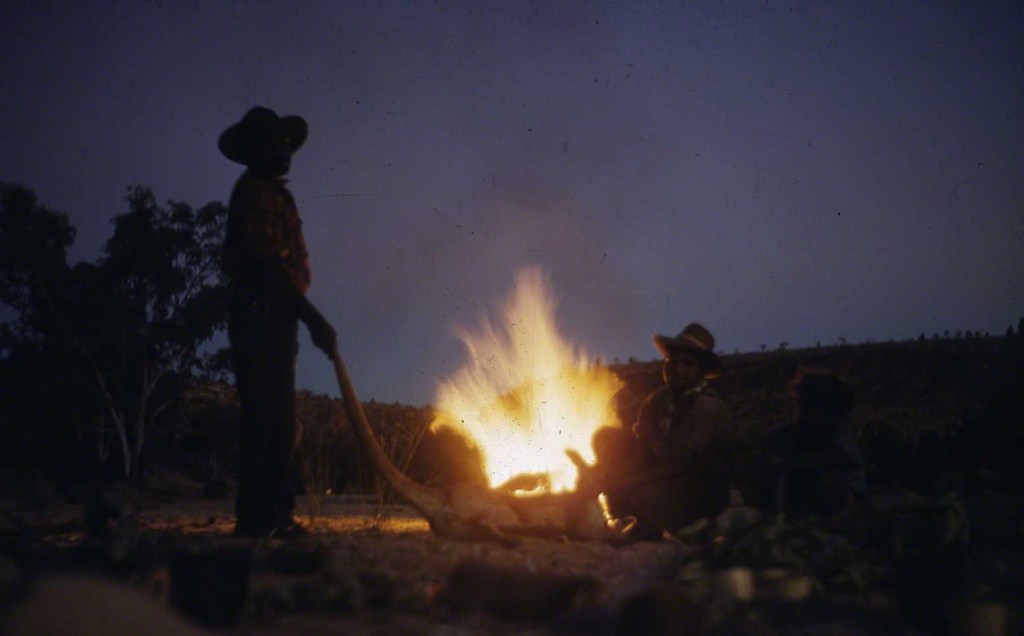
In this episode, the T-Team valiantly explore as many gorges in the MacDonnell Ranges as they can…in one afternoon. The challenge, avoid the crowds of tourists while keeping Mr. B entertained.

Ellery Creek and Serpentine Gorge

[Extract from The T-Team with Mr B: Central Australia 1977, a prequel to Trekking With the T-Team: Central Australian Safari 1981.

The T-Team with Mr B — In 1977 Dad’s friend Mr Banks and his son, Matt (not their real names), joined Dad, my brother (Rick) and me on this journey of adventure. I guess Dad had some reservations how I would cope… But it soon became clear that the question was, how would Mr B who was used to a life of luxury cope? And how many times would my brother lose his way in the bush?]

With our two Indigenous guides, Dad drove the Rover along the rough dirt track (probably a “short cut”) to the road that parallels the MacDonnell Ranges, Namatjira Drive. These days, the main roads are sealed, but not back then. Dust billowed into the cabin as we drove on a road that parallels the MacDonnell Ranges.

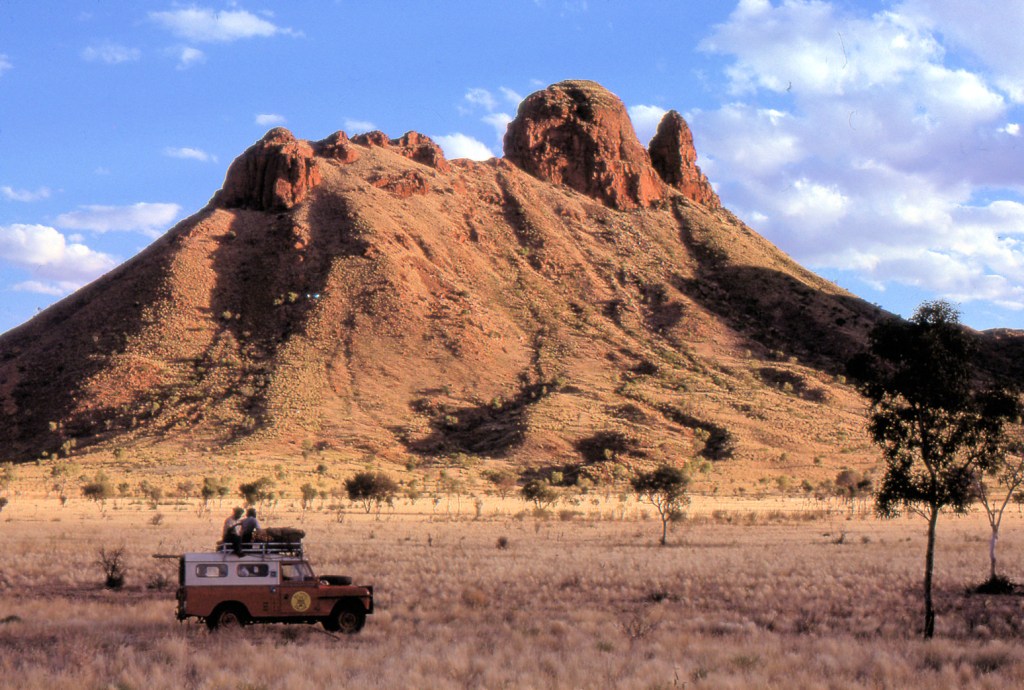
*[Photo 1: View of MacDonnell Ranges from Namatjira Drive © L.M. Kling 2013]

Nearing the intersection of Namatjira Drive from the unknown track, Dad turned to Mr. B. ‘Ellery Creek? Or Serpentine?’

Mr. B gazed at the mountain range and pointed. ‘Ellery Creek. You did say it’s like the local’s swimming pool.’

‘There’s many interesting gorges and creeks in these hills to explore,’ Dad said. ‘We won’t be staying at any for too long.’

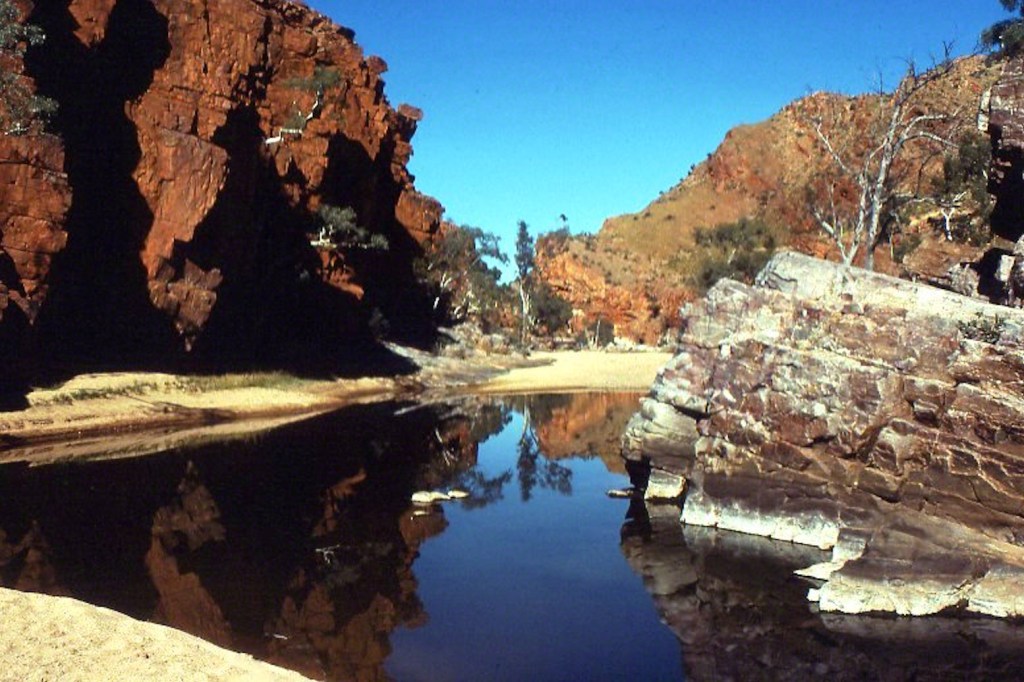
*[Photos 2 & 3: Gorges Dad dreams of visiting again and again: Ormiston (2), Glen Helen (3) © C.D. Trudinger 1977]
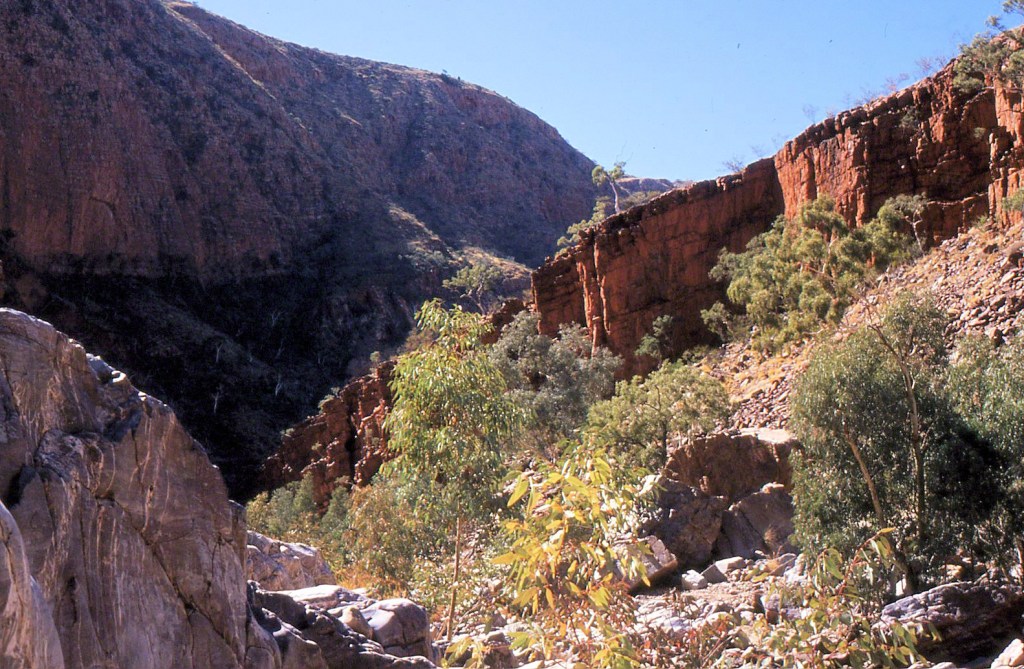
2. Ormiston Gorge
3. Glen Helen

Mr. B frowned. ‘Just long enough to take a few snaps like the tourists, I expect.’

‘You sure you don’t want to start at Serpentine to our right? We could hike up while the morning’s still cool.’

‘What morning? It’s already past noon.’ Mr. B flicked his map flat. ‘Ellery Creek, I say, for lunch.’

Dad sighed, ‘Very well, then, Ellery Creek.’

Ellery Creek

After lumbering along the wider but corrugated road, Dad turned into the barely discernable trail that led to Ellery Creek. After entering the clearing for parking, we hunted for a car park. Not an easy feat as the car park was full; even the spaces in between swarmed with tourists.

Dad squeezed the Rover into what seemed the last remaining gap, and the T-Team piled out.

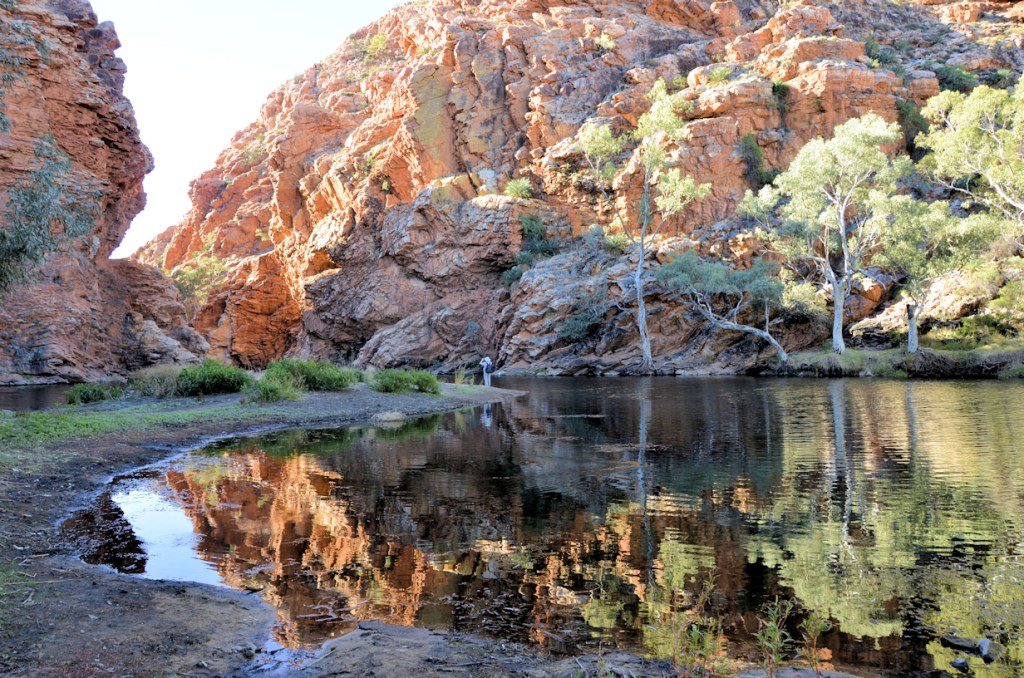
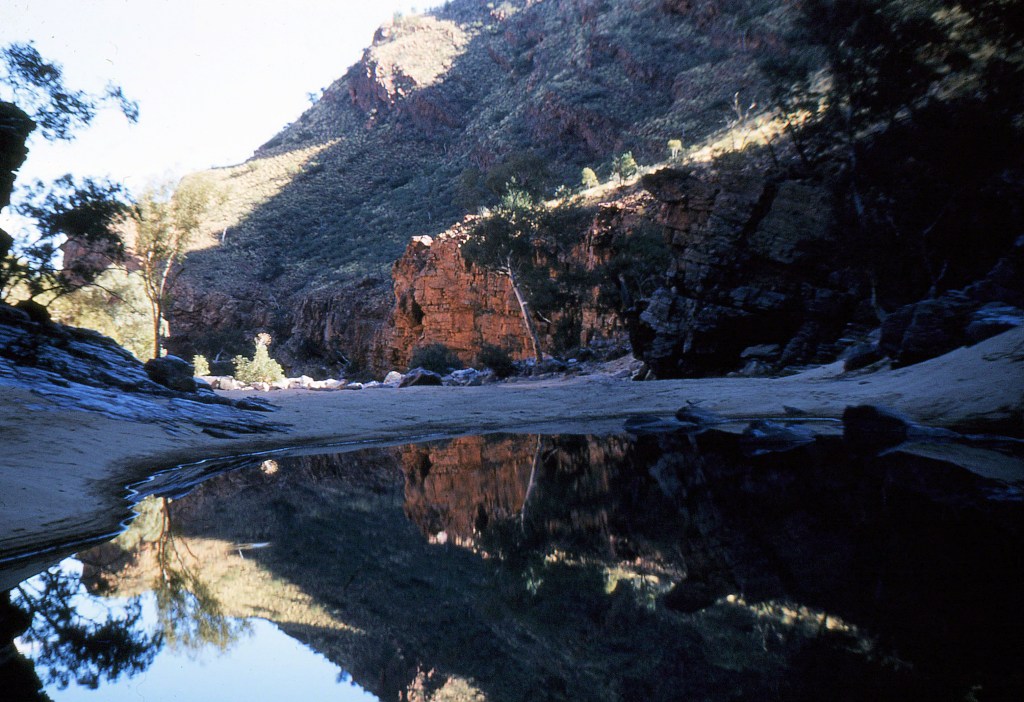
*[Photo 4, & 5 Aspects of Ellery Creek © L.M. Kling 2013]

4. Trees of Ellery Creek

5. Ellery Creek Big Hole

*[Photo 6: Recent visit to Ellery Creek © L.M. Kling 2021]

‘It’s like Glenelg beach,’ I said, ‘it’s stuffed full.’

Richard looked at the offering of water; a disappointing dam at the end of a sandy bank. ‘There’s more sand and water at Glenelg.’

‘As many people, though,’ I replied.

Matt sniggered.

Mr. B stomped past us and with elbows akimbo he stopped at the water’s edge. ‘Is this it?’

Dad joined his friend. ‘I warned you.’

So, with obligatory photos taken while dodging the crowds, we made our way to Serpentine Gorge.

*[Photo 7: Said obligatory photo of T-Team with guides at Ellery Creek © L.M. Kling (nee Trudinger) 1977]

As he turned the Rover left so heading east towards Alice Springs, Dad smiled. Mr. B pouted and folded the map. He insisted we have lunch before we start on the hike up the gorge. Dad went one better announcing that, since it was Sunday, we’d have lunch AND a Sunday Service.

Mr. B’s response was to shake his head and mumble something not-so-polite into his red dust-stained handkerchief.

Serpentine Gorge

Less populated, Serpentine Gorge begged to be explored. Our Indigenous guides were not interested in joining us, so we bravely set off on our own adventure. To get to the narrowest part of the gorge, we had to cross a deep pool of water on our air mattresses and then walk along a rocky creek barefoot. We had forgotten to bring our shoes. Not that it concerned the men, they raced ahead leaving me behind hobbling on tender feet over sharp stones.

*[Photo 8: Later lilo exploits © C.D. Trudinger 1986]

Then, disaster. Mud and slime replaced jagged rocks. In the shadows of gorge, I trotted on the path near creek. My heel struck a slippery puddle lurking by a pool of sludge. Next, I skated, feet flew from under me, and I landed bottom-first in the murky depths of the Serpentine Creek.

*[Photo 9: That special part of Serpentine Gorge at that special time of day © C.D. Trudinger 1981]

I pulled myself from the rock-hole, my clothes caked in mud and stinking of slime.

Dad jogged up to me, his barefoot steps slapping, the sound bouncing off the slate walls that lined the gorge.

‘What do you mean special part of the gorge?’ I snapped at Dad. ‘It’s not so special to me. It’s too dark, and I’m just too uncomfortable.’
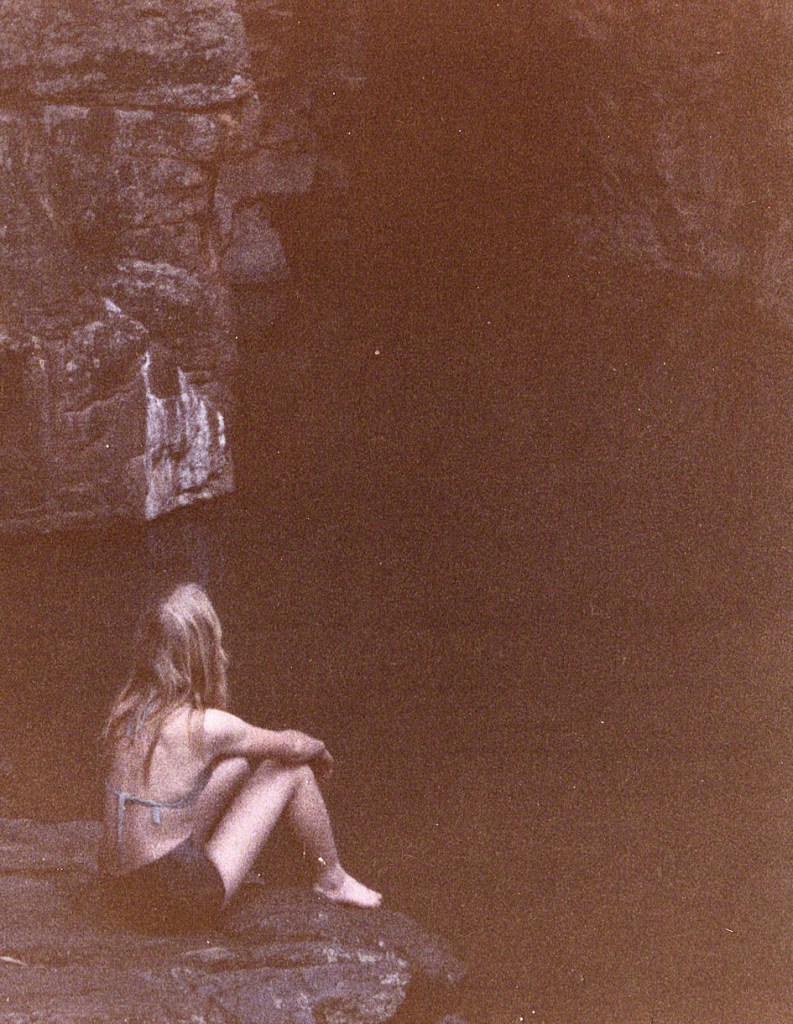
*[Photo 10: Not so special to me © L.M. Kling (nee Trudinger) 1977]

‘Ah, well,’ Dad sighed. ‘We better get back to the Rover. We need to find camp before it’s dark.’

As we hobbled back in the fading light, I mumbled, ‘Sure it’s not dark already?’

Other Gorges for Another Day

Dad endeavoured to distract me from my discomfort with descriptions of the many other gorges in the MacDonnell Ranges and tales of adventures exploring them. His stories whetted my appetite to view these wonders myself one day, on this trip, or perhaps in future journeys to Central Australia.

*[Photo 11 & 12: Other Gorges to look forward to. Redbank (11) Ormiston (12) © C.D. Trudinger circa 1950]

11. Redbank
12. Ormiston

© Lee-Anne Marie Kling 2019; updated 2022

*Feature Photo: Ellery Creek Big Hole © L.M. Kling 2021

***

Dreaming of adventure in Australia’s Centre? Take your mind and imagination on a historic journey with the T-Team…

Find my travel memoir on Amazon and in Kindle.

Click on the link below:

Trekking With the T-Team: Central Australian Safari 1981

T-Team Series–Palm Valley

It’s been a rough weekend. Storm, been called a mini cyclone, struck Adelaide Saturday afternoon, slaying trees all over the city and the hills, and tearing down powerlines. 100000 people were affected with no power to their homes, and even today, some are still without power.

We were without power for 24-hours, so work on the computer has been delayed. Managed to get some painting done, though.

Memories of the T-Team’s adventures without all the modern-day luxuries surface, and how we coped way back in 1977…

[Extract from The T-Team with Mr B: Central Australia 1977, a prequel to Trekking With the T-Team: Central Australian Safari 1981.]

The T-Team with Mr B (24)

Lost in Palm Valley

Our truck lumbered over the designated four-wheel drive track-come-dry Finke Riverbed to Palm Valley.

*[Photo 1: Dry river of the Finke © C.D. Trudinger circa 1955]

Dad turned to Mr. B and chuckled. ‘How would you like to sleep on this riverbed?’

Mr. B pouted, folded his arms and looked out the window.

We continued to bump over the rocks and sand where two-wheel drive vehicles fear to tread. Dad recalled his days travelling by donkey along this same track when he explored Palm Valley with his Arunda students.

*[Photo 2: Those were the days when only donkeys trekked the path to Palm Valley © C.D. Trudinger circa 1955]

‘O-oh!’ Dad uttered as the Rover’s underside scraped over some boulders. When our vehicle continued to move, though slowly, we all sighed with relief.

‘O-oh!’ Dad gritted his teeth and sucked air through the gaps in them. The Rover jolted to a stop. The engine screamed. The body rocked. The wheels spun. ‘O-oh! I think we’re bogged.’

Mr. B groaned, ‘I hope that doesn’t mean we’re sleeping on this god-forsaken creek tonight.’

‘Okay—oh, better put it into four-wheel drive. Now, for one more try.’

Dad readjusted the grip of his fingers on the steering-wheel and pressed his foot on the accelerator. The Rover leapt out of the bog-hole.

‘Good thing you remembered that the Land Rover has four-wheel drive,’ Mr. B muttered.

We crawled along the creek bed for a few more minutes, until confronted with formidable boulders where we were forced to stop. Dad reckoned we were a mile or two from the valley, so we had to hike the rest of the way.

Rick raced ahead. As was his habit, he lost us.

*[Photo 3: Palm Valley with me © C.D. Trudinger 1977]

We entered the land that time had misplaced, forgotten and then found preserved in this valley. Lofty palms swayed in the breeze. Fronds of green glittered in the sun while their shadows formed graceful shapes on the iron-red cliffs. Here a cycad, spouting from the rocks, there a ghost gum jutting from those same deep red walls. This sanctuary for ancient prehistoric palms, which had existed there since the dawn of time, distracted us from my errant brother. We trundled over the stone smoothed by the running of water several millennia ago, admired the mirror reflections in the remaining pools, and breathed in the tranquility.

*[Photo 4: Mirror reflection © C.D. Trudinger 1977]

Then, as if the ancient palm spell was broken, a frown descended on Dad’s face. He stood up, tapped his pockets checking to feel if his keys and small change still existed, and then marched down the valley. When he’d disappeared into a gathering of palms, I asked Mr. B, ‘What’s my dad doing?’

‘I think he’s looking for your brother,’ Mr. B replied. ‘He seems to have a habit of getting lost.’

Matt, Mr. B’s son sniggered.

*[Photo 5: Wiggly Palm © C.D. Trudinger circa 1955]

Still in the zone of swoon, I sat beside the billabong in the shade of the palm trees and changed my film. Then I stretched, and leaving Mr. B and Matt to their rest, I ambled along the stone-paved bed looking for Dad. Again, time lost relevance in the beauty and wonder of the palms: tall skinny ones, wiggly ones, short ones, clustered ones and alone ones.

*[Photo 6: Pa peaceful amongst the palms © L.M. Kling (nee Trudinger) 1977]

I found Dad, but there was no sign of my brother. The sun had edged over the western walls of the valley casting a golden-orange glow over the opposing cliffs.

Dad huffed and puffed. ‘It’s getting late. I s’pose Rick has gone back to the Rover.’

‘Better head back, then,’ I said.

On the way, we collected Mr. B and son. They had not seen my AWOL brother either.

*[Photo 7: Sunset on the cliffs of Palm Valley © C.D. Trudinger circa 1955]

We waited back at the car for Rick. Dad’s concern turned to annoyance, then frustration. Dad had plans for a picnic, but as the sun sank lower, his well laid plans were becoming remote. Dad paced the sand, hands on hips, and muttering discontentedly. Trust my brother to spoil a perfect place and time for a picnic tea. The idea of proceeding with the picnic without Rick did not occur to Dad. I guess the thought that some peril had befallen him had sabotaged any appetite. Dad nervously tapped his right pocket; at least his keys hadn’t gone AWOL.

Every few minutes Dad paused in his pacing. ‘Ah—well!’ he’d say. Then sucking the warm air between his gritted teeth, he’d resume pacing.

An hour passed as we watched Dad track back and forth across the clearing.

*[Photo 8: Memories of a ghost gum © C.D. Trudinger 1977]

‘I swear you’ve made a groove there in the sand,’ Mr. B said.

Dad halted and narrowed his eyes at Mr. B.

I peered at the sand, straining my vision to pick out the path Dad had created.

A branch cracked. Footsteps, thudded. Distant. Then closer…louder.

Dad turned. All of us in the clearing froze and we fixed our gaze on the path leading to Palm Valley. The prodigal son stumbled into the clearing.

[Photo 9: Waiting for the prodigal son—view amongst the palms © C.D. Trudinger 1977]

Contrary to the parable, Dad snapped, ‘We were going to have a picnic tea. But it is 5 o’clock, now. We have to get going!’

So, with less than an hour before darkness descended, we navigated the bumpy Finke River ride, and Dad’s grumpy mood, back to Hermannsburg.

After tea, Dad recovered from the grumps as we played card games; first “Pig”, followed by “Switch”.

© Lee-Anne Marie Kling 2019; updated 2022

Feature Photo: Palm Valley © C.D. Trudinger 1981

***

Dreaming of an Aussie Outback Adventure?

Click the link below:

Trekking With the T-Team: Central Australian Safari 1981,

And escape in time and space to Centre of Australia 1981…

Monday Musings–Good Intentions

GOOD INTENTIONS

We all have our ideas how the world should run. We think we know what’s best, what’s good, and what will work. If only everyone would follow our advice, the world would be a paradise.

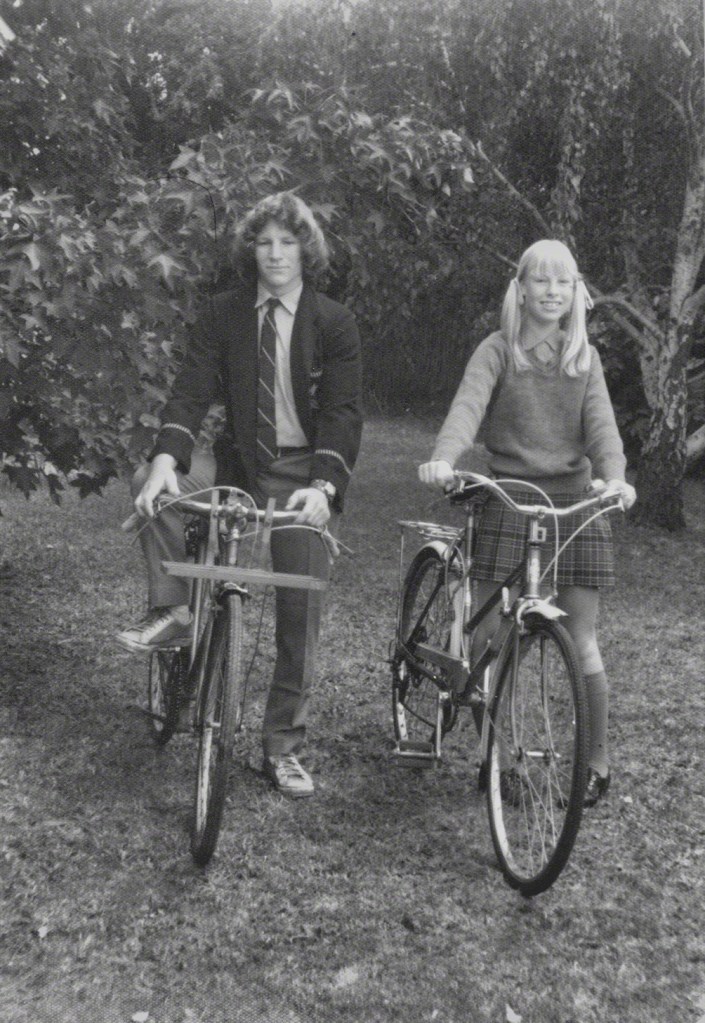
When I was twelve, my parents thought it best I go to a new school for my last year at primary school. That school was a feeder school to the secondary school they planned to send me.

*[Photo 1: Full of hope of a new adventure © M.E. Trudinger 1975]

‘You’ll make some friends who’ll be there for you when you go to high school,’ they said.

Good intentions; a sound plan for transition…

Their plans just didn’t work out as they intended.

Two weeks into first term at that new school, I realised I’d connected with nobody. The girls in my class had formed their tight-knit friendship groups way back in Year 1, so I had no friend-prospects.

At recess, I sat alone Indian-style on the grass under a tree. Never mind, I thought, my books are my friends. I’ll read out the year. I opened my latest novel. Besides, I have plenty of friends outside of this school.

For the next few days nobody and my books kept me company at recess and lunch. What better way of dealing with loneliness of an hour by entering another world and the characters there. No different from the previous year at my old school when I ignored my friends in preference to researching dinosaurs and aliens in outer space.

*[Photo 2: One of my books, the Lost World of the Wends © L.M. Kling 2021]

Then the good intentions of the teachers came into play. The new Year 7 girl reading her books every break? Oh, no! We can’t have that! She must socialise.

So, with good intentions, the teachers denied me the joy and escape of reading. They forced me to play with my peers.

However, my peers, comfortable with their set, didn’t appreciate the teacher’s good intentions. As I followed one group into the girls’ toilets, the leader spoke up. ‘Nothing personal, but stop shadowing us.’

Fine then. I wiped the tears stinging the corners of my eyes and bit my lip. Sorry for upsetting your perfect little life. I’ll go find someone else to be my friend.

Soon after, I teamed up with a Year 6 girl. She sat on her own at lunch. I’d been kicked off the bench by the other cohort of Year 7 girls because I liked cheese and gherkin sandwiches. Rather than making a big deal of the excommunication, I wandered over to the Year 6 girl and sat beside her. She didn’t mind my choice of lunch.

*[Photo 3: Happiness is a friend, Poatina Tasmania © L.M. Kling 2010]

For the next week, we enjoyed each other’s company. We played on the monkey bars and joined others in her class playing four-square (a type of hand-tennis). For five days, my cliquey peers were happy, the teachers were happy, and I was happy. I’d found a friend.

But good things were not meant to last at this new school. The beginning of March, and just a hint of an autumn-south-westerly breezed through the classroom porches. I kicked off my shoes, pulled on my scuffs (major rule: no shoes inside the classroom), and lined up ready to enter class. The Year 6 teacher sought me out and took me aside. ‘You aren’t allowed to play with Year 6 students,’ they said. ‘It’s against the school rules.’

*[Photo 4: Beginnings of autumn © L.M. Kling 2021]

The school with good intentions had a rule: Students must only mix with students the same age as them and from their class.

So again, good intentions forced me out on my own again. I rode home that day, tears streaming down my face. I failed to understand. The injustice of it. They want me to socialise and then thwart every effort for me to do so, with all their damn rules.

With good intentions, the next day, Mum marched into the office and spoke to my teacher. With good intentions, my teacher reprimanded the girls in my class.

Made no difference. My peers wanted no part of those good intentions. And they didn’t like being told off. Not one bit. I paid for those good intentions right through secondary school, actually.

I considered making friends with some boys in my class. But after one day sitting at a table in class with them, I figured that making friends with the boys in my class wasn’t an option. Probably a rule about that too. After all, our teacher gave us a lecture on the evils of wearing bikinis…so…

[Photo 5: Beware, the bikini…modesty at Moana © R. Trudinger 1982]

For the rest of that year, I became very good at keeping out of the supervising teacher’s gaze at lunchtime and pretending to play with my peers while making sure I didn’t appear to be “shadowing” them. The bullies helped this charade by “shadowing” me. Not that I appreciated their efforts at the time. As the year wore on, I managed some illicit liaisons with my books behind the bushes, when the teachers weren’t looking.

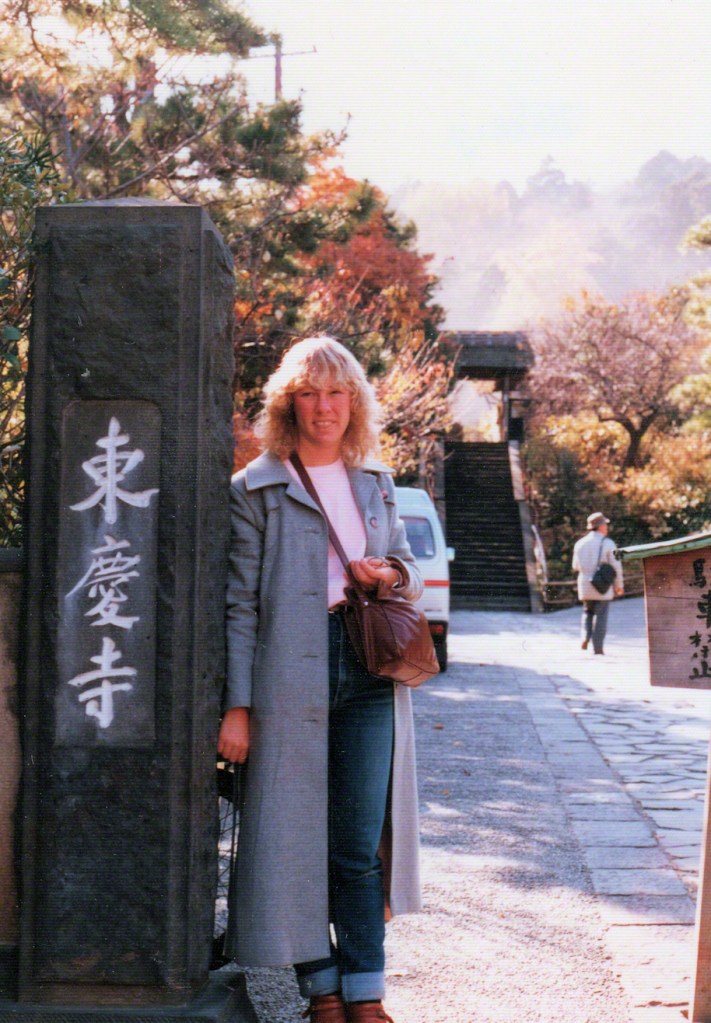
My mum carried the burden of guilt from her good intentions of the year I lived friendlessly. But she needn’t be. My parents’ intentions were good. Though I suffered, these challenges were good for me. I learnt to persevere. I learnt that being alone doesn’t mean that I must be lonely. God was and is with me. I learnt not to quit. In short, I developed character. Besides, this school inspired me to learn the Japanese language, setting me on my future career path teaching the Japanese language, as well as travelling in Japan. And most of all, I learnt to see the kids sitting on their own and be their friend.

[Photo 6: Tokeiji, Japan © L.M. Kling 1984]

Yes, good intentions may not work out as we intended, but God can turn around our struggles, and our failures, with His best intentions for us.

“And we know that in all things God works for the good of those who love him, who have been called according to his purpose.”—Romans 8:28

© Lee-Anne Marie Kling 2016; updated 2022

*Feature Photo: Alone, in Japan © Lee-Anne Marie Kling 1985

***

Read the stories inspired by the year of living friendlessly…

Click on the link,

To download my novel

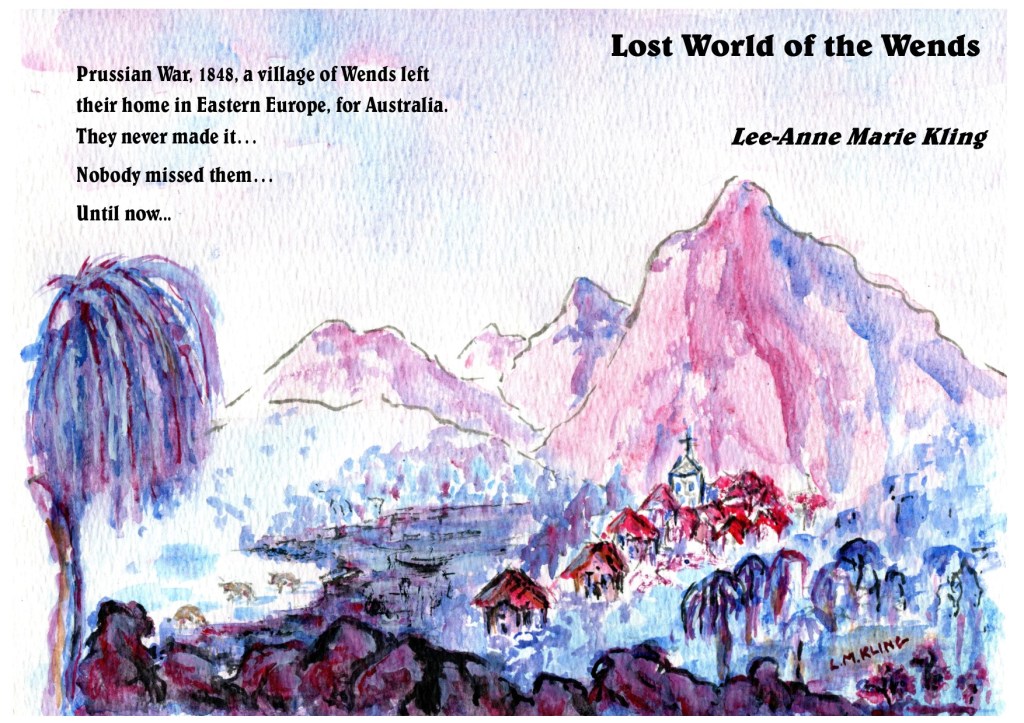
The Lost World of the Wends

Or…

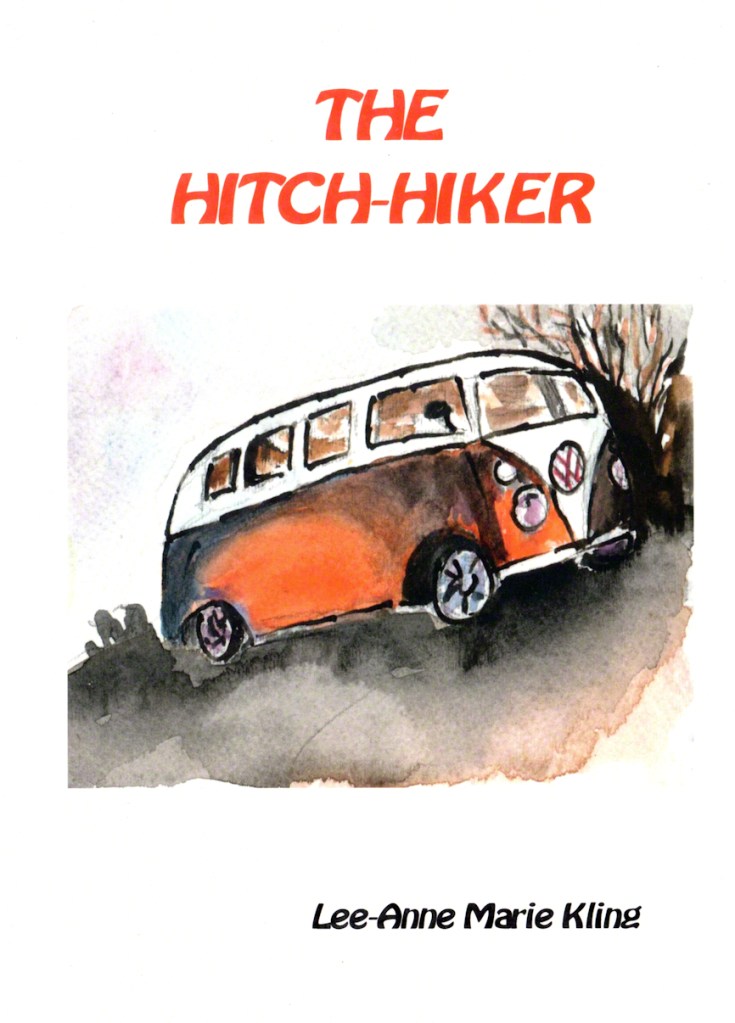
Or discover how it all began in The Hitch-Hiker

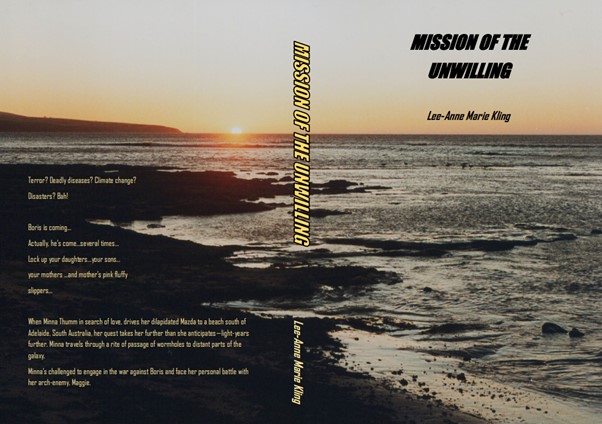
And how it continues with Mission of the Unwilling

Or

Check out Indie Scriptorium, a publishing collective formed with friends,

Click on the link to my most recent post,

My Cover Journey

Story Behind the Art–Cockling at Goolwa

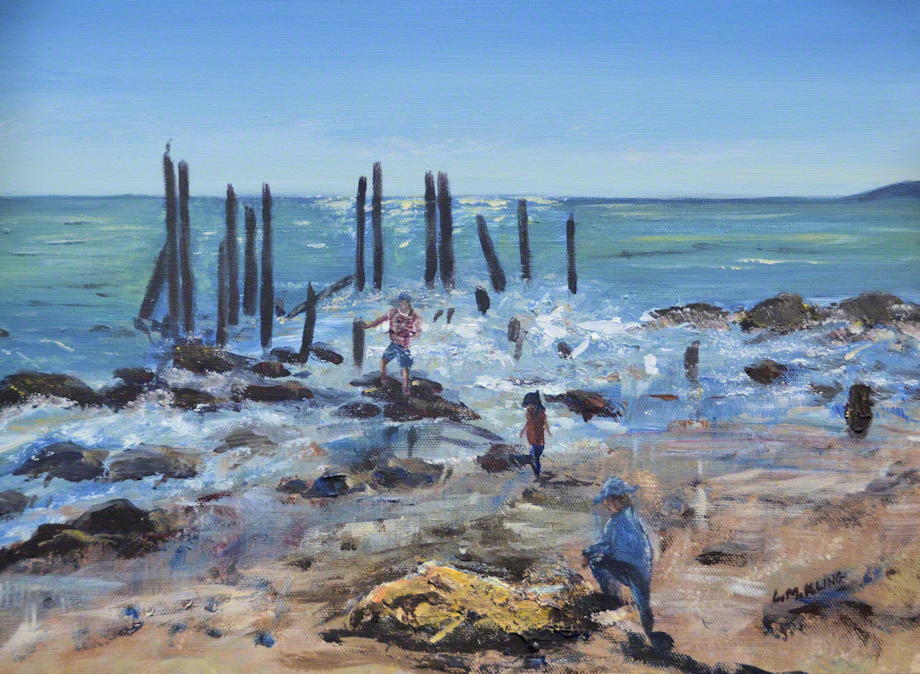
Cockling at Goolwa

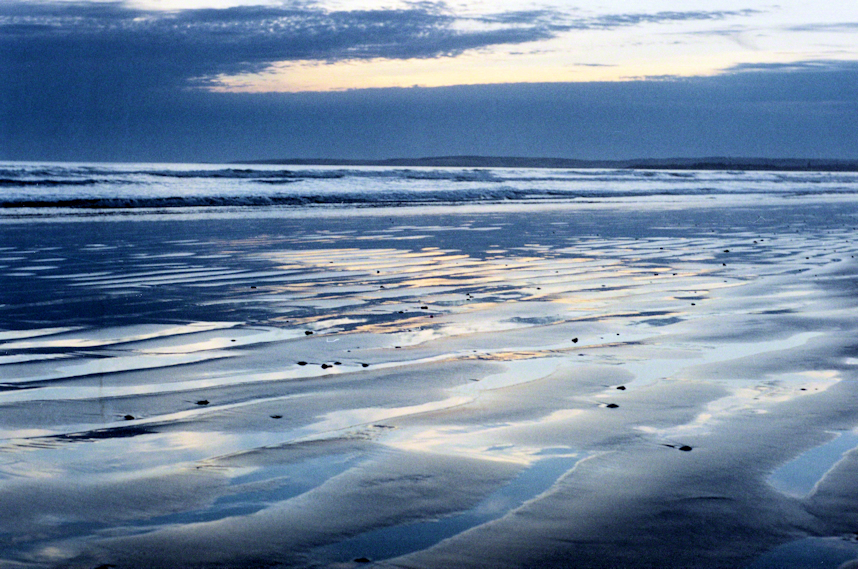
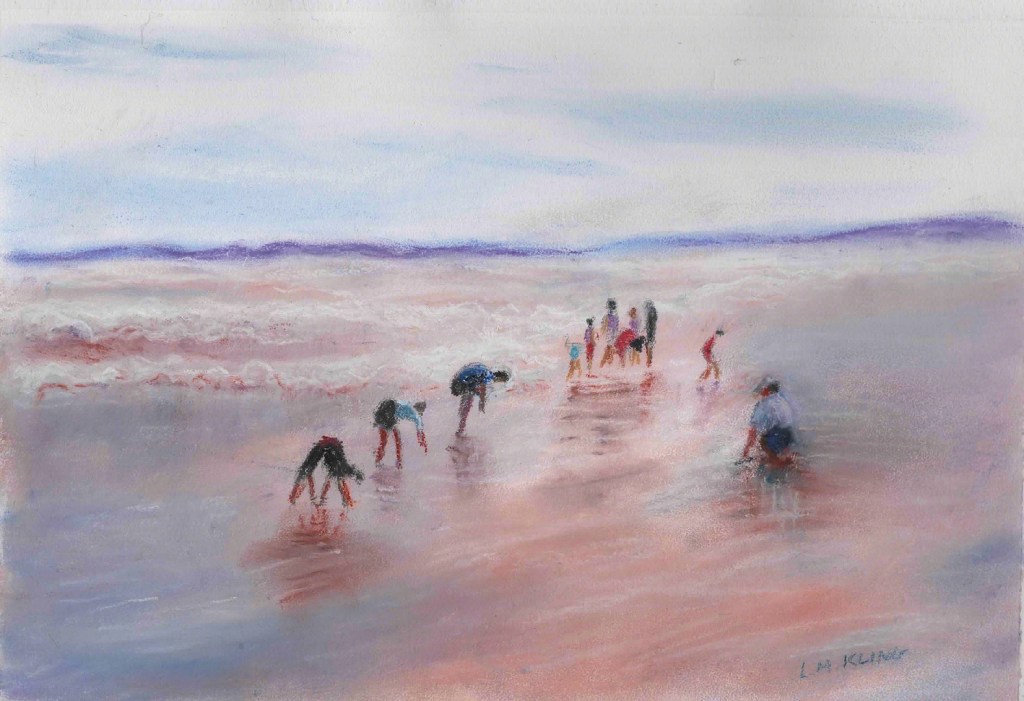
A picture, they say, tells a thousand words. So, what is Cockling at Goolwa’s story? How can the simple heel-toe dance of “cocklers” (people who dig for cockle shells), their feet sinking in soggy sand of the in-coming tide, in the flux of early summer warmth, on a remote beach south of Adelaide tell us? What story worth a thousand words? What was it about this scene that attracted me to capture it? First in photo and then several years later, on canvas in acrylic, and recently in pastel.

*[Photo 1: Cockling at Goolwa © L.M. Kling 2002]

I think the water reflecting the sky, all silver, the people on the wet sand, a mirror, swaying and twisting for cockles captured my attention. I’d been there, on the glassy surface, watching for bubbles, grinding my heel into the bog, feeling for the sharp edges of shell and plucking out the cockles that snapped shut when exposed to air.

*[Photo 2: Dad Digging for the cockle © L.M. Kling 2002]

I was there, but then I watched. Mothers, fathers, and children lost in the moment of twisting and hunting and collecting cockles.

*[Photo 3: Lost in the moment © L.M. Kling 2002]

‘What will you do with all those cockles?’ I asked.

‘They’re for fishing,’ one of our friends said. ‘Bait for fish.’

‘Hopefully, we’ll catch a few fish and have them for dinner tonight,’ another said.

I imagined fish, fresh from the sea, thrown on the barbeque and the cockle bait inside them buried once again in our stomachs. We continued digging for cockles…family and friends, one with the ancient, outside time—nothing else matters but the cockles.

*[Photo 4: Goolwa beach Lost in time © L.M. Kling 2002

]

Goolwa, if I remember, has mounds of spent shells in the sand hills, monuments to generations upon generations of Indigenous Australians, their open-air kitchens and meals. Did they perform the same ritual, on the same patch of wet sand, delving for cockles to fry on their fires? A quick perusal of Google reveals they used nets to collect cockles and catch fish. They then cooked the cockles on a campfire.

*[Photo 5: Goolwa beach sunset © L.M. Kling 2002]

We are here, they are gone, but their spirit of history lingers, reminding us, though we seem different, we are the same. We are digging, dancing and delving for our dinner. We are still, in the moment, alone in our thoughts in a forgotten corner of the world, unknown by the world, yet one with this country’s past. And God knows each one of us—each part of us, even the unknown parts of ourselves and our secrets.

*[Photo 6: Divine painting of sky and sea © L.M. Kling 2002]

What if I shared a little secret—an artist’s secret? Okay, I’ll tell you. I painted this picture in less than two hours. Now, that I’ve told you, would the painting be worth less to you? Must time be equated with worth? Sometimes I do take hours upon hours, layers upon layers, and more hours planning to get the work right. But not Cockling at Goolwa.

*[Photo 7: The natural child © L.M. Kling 2002]

I love the beginning of a painting; laying the foundation, engaging my inner-natural child, the paint flowing from a thick brush on a damp canvas, colours blending, mixing as I go. One side of the brush crimson, the other blue and a dab of white. Sienna somewhere there in the foreground shadowing the sand. Mid-yellow added incrementally to shroud the distance in light grey for perspective. Then just a hint of heads of land jutting out halfway across the horizon with a suggestion of ultramarine in the grey. So simple, and sometimes, like with Cockling at Goolwa, the scene emerged before my eyes. In the world of artists, I believe the term “magic brush” or “magic hand” has been used. Um, trade secret, so don’t go spreading it around.

So, there you have it, in less than an hour, surf, sand, sky and tones in all the right places.

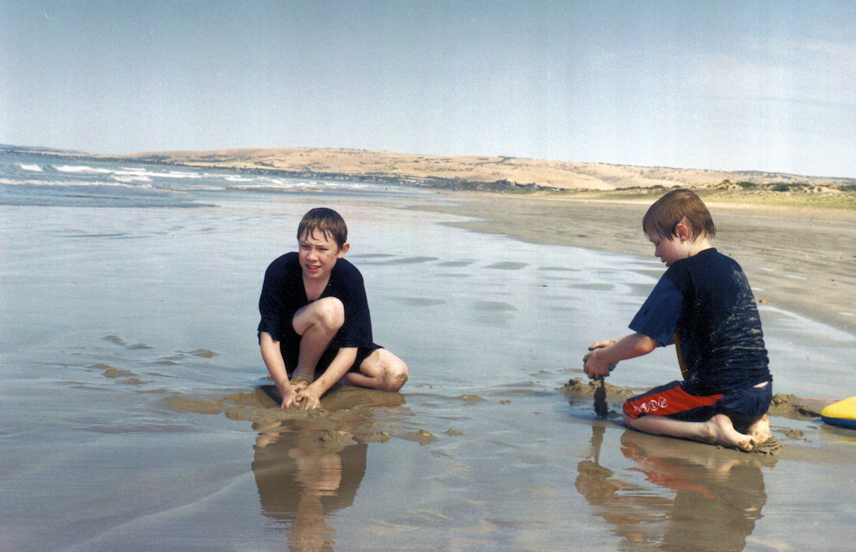
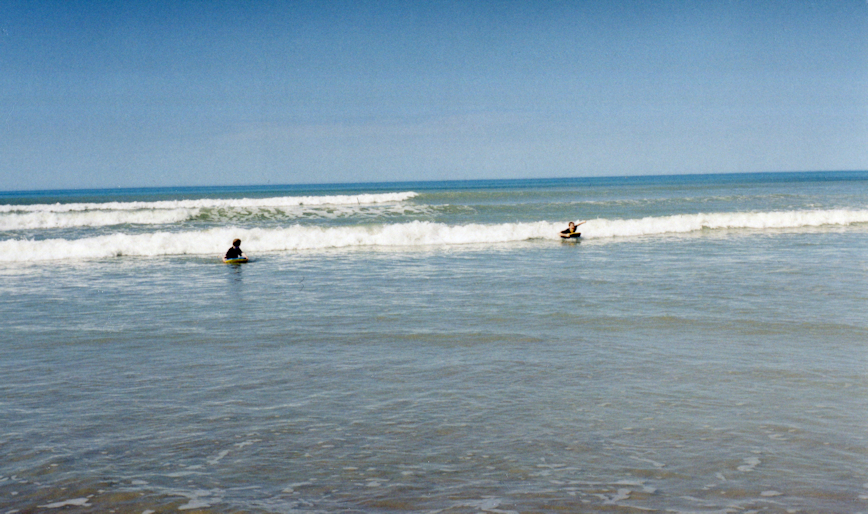
*[Photo 8: Boogie-board Surfing at Goolwa beach © L.M. Kling 2002]

Now for the people, the twisting, turning people, their feet in the boggy sand. How do I paint them? I had a break and drank a cup of tea. I remember not all the children hunted for cockles. Some kids body-surfed in the shallows, some played cricket and one little boy with a wish to be hunted, or to be warm, buried all his body except his head in the sand. I found him and he broke out of his sand-grave, the sand zombie.

*[Photo 9: Sand-zombie © L.M. Kling 2002]

‘Don’t go tracking your sandy footprints into the shack,’ I said.

He washed himself off in the surf, then sat wrapped in a towel and shivering in the sun while watching the cockle hunt.

All the while the “cocklers” cockled for cockle shells. Soon the boy joined the hunt for cockles.

Then when the paint was dry, I plotted the people in with pencil and then painted them in with a finer brush.

‘I like that painting,’ a fellow member of the art group said. ‘Don’t do another thing to it. Don’t even frame it. I’ll buy it as it is. How much do you want for it?’

Paint barely dry, I took the work home, signed it and then the next week at our Christmas lunch, I delivered Cockling at Goolwa to them. The buyer showed the work to others at their table and all admired it.

[Photo 10: Watching the cocklers © L.M. Kling 2002]
 

What made another person connect with Cockling at Goolwa? For this person, their son and family spent many summer holidays at Goolwa, doing just that, cockling. Time out, out of time, unwinding, relaxing, happy times, happy memories, captured on canvas…in less than two hours. And I must admit, the story is slightly less than one thousand words.

But, perhaps as you look at the copy of Cockling at Goolwa, you may have a story of your own about the painting. Maybe a painting’s story is not just one person’s story, but stories from many people, one thousand words, or more…

© Lee-Anne Marie Kling 2016; updated 2019; updated 2022

*Feature Painting: Cockling at Goolwa in Pastel © L.M. Kling 2022

***

Longing for more travel adventures?

Dreaming of exploring Australia?

Read the T-Team’s Aussie adventures, click on the link below:

Trekking the T-Team: Central Australian Safari 1981

Thursday Thoughts–Open Crowd

[With life returning to some semblance of normality, a post from the pre-pandemic past…]

The Kingdom of God is Like…

A dilemma many of us have faced, maybe it’s a wedding, or a party — we want to invite all our friends and family, but can we? Is it possible to have an open invitation without the situation getting out of hand?

I remember as a young teenager being upset because my older brother received invitations to parties and not me. I remember standing at the kitchen counter, invitation to my brother in hand and complaining, ‘It’s not fair. I’m friends with them too. Why wasn’t I invited?’

‘Stop complaining,’ my mum would say, ‘your time will come.’

Didn’t help that our youth group friends had a saying: ‘You can’t have a party without my brother.’

Hey, I’m the sociable extrovert here! My brother’s the shy awkward type who prefers staying in his room making telescopes and short-wave radios.

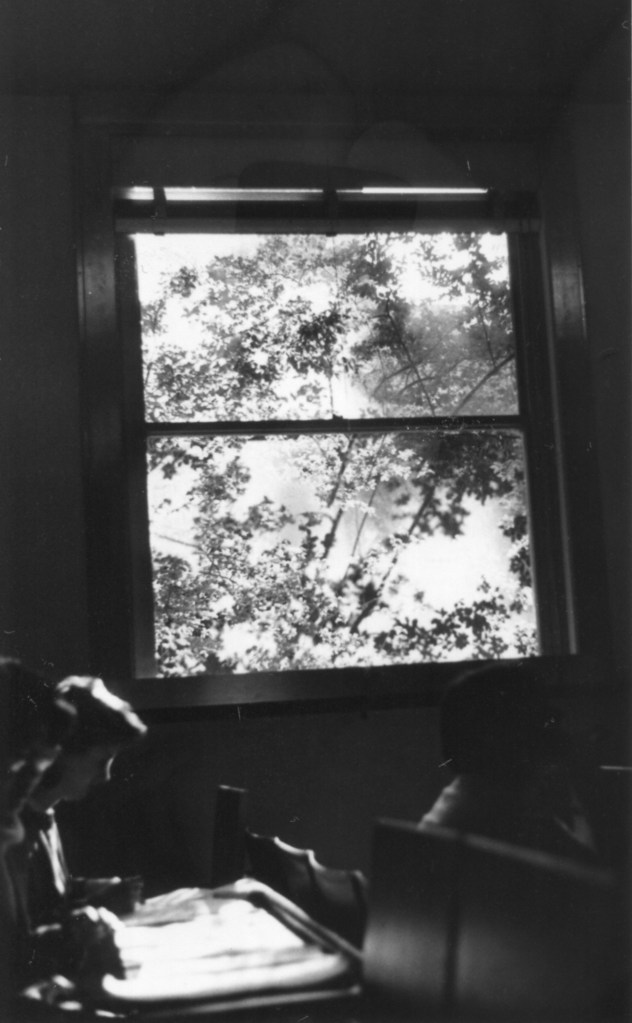
*[Photo 1: You Can’t have a party without Rick © L.M. Kling (nee Trudinger circa 1985]

So, I lived with these multiple rejections as I believed them to be…

…Until one day, I collected the mail from the letterbox. What’s this? A letter for me? I tore it open and read:

‘Dear Lee-Anne,

                                    You’re invited to ***’s birthday party…’

Huh? I re-read the invitation. Must be a mistake. Where’s my brother’s name? Invitations always had my brother’s name attached, and occasionally my name included, especially where the youth group friends were concerned. Her invite made my teenage decade, for once, she invited me and not my brother.

But…what if there were parties or celebrations without restrictions on who’s in and who’s out? What if all who want to be invited could be invited? Are we inviting trouble if we make an event open to all?

I want to celebrate my late-Grandmother who demonstrated this openness and was successful. She looked outward at those in need of friendship and love. Her table was never too small and somehow, no matter the number of guests she had for Sunday lunch, she always made the food stretch. Something of the loaves and fishes plus Jesus’ effect. (Read in the Bible how Jesus feeds the 5000. Matthew 14:13 – 21)

*[Photo 2: Grandma’s table © L.M. Kling 2019]

So that’s all very well and good opening our homes and sharing dinner with others. But back to the party or community event idea. Is it possible to have a party without restrictions on who and how many come without fear of it getting out of control?

I believe it is possible—when we look beyond our limitations and look to God and others to enable us to achieve success; a piece of God’s Kingdom where all people are welcome, all people are valued and seen. And where those running such an event demonstrate the values of justice, mercy and compassion. With the right training, this type of event can provide a safe and caring environment.

Over the years I have participated in open-crowd events, often taking place in parks. There’s usually a variety of fun activities such as puzzles, stilts, giant snakes and ladders game, and a group game for all ages. People may join in if they want to, or just watch if they prefer. No one’s forced to join in. Even so, people from the event team connect with the on-lookers, getting to know them and by the end of the afternoon, they will be smiling and chatting with team members.

*[Photo 3: Mr. K Clown at a community Festival © L.M. Kling 2010]

One time, two of my friends whom I’d brought along joined, for the first time, in the group game of water-balloon volleyball. They had so much fun, their faces were glowing.

‘I’m so glad I joined in,’ one said. ‘If I’d sat and watched, I would’ve regretted it. It was so much fun.’

My other friend said, ‘We enjoyed the event so much and before we knew it, the time had come to pack up and go.’

*[Photo 4: Water-balloon volleyball © L.M. Kling 2010]

This welcoming experience, I think gives a glimpse of God’s Kingdom—it’s free and available to all who want to join in and engage with others in the community. Did I say it’s free? There is a cost—a change in our world view—a change from an inward-looking one where we are the centre of our universe, to an outward-looking one where we see others and value others and see that with others (and God) our perceived weaknesses become our strength.

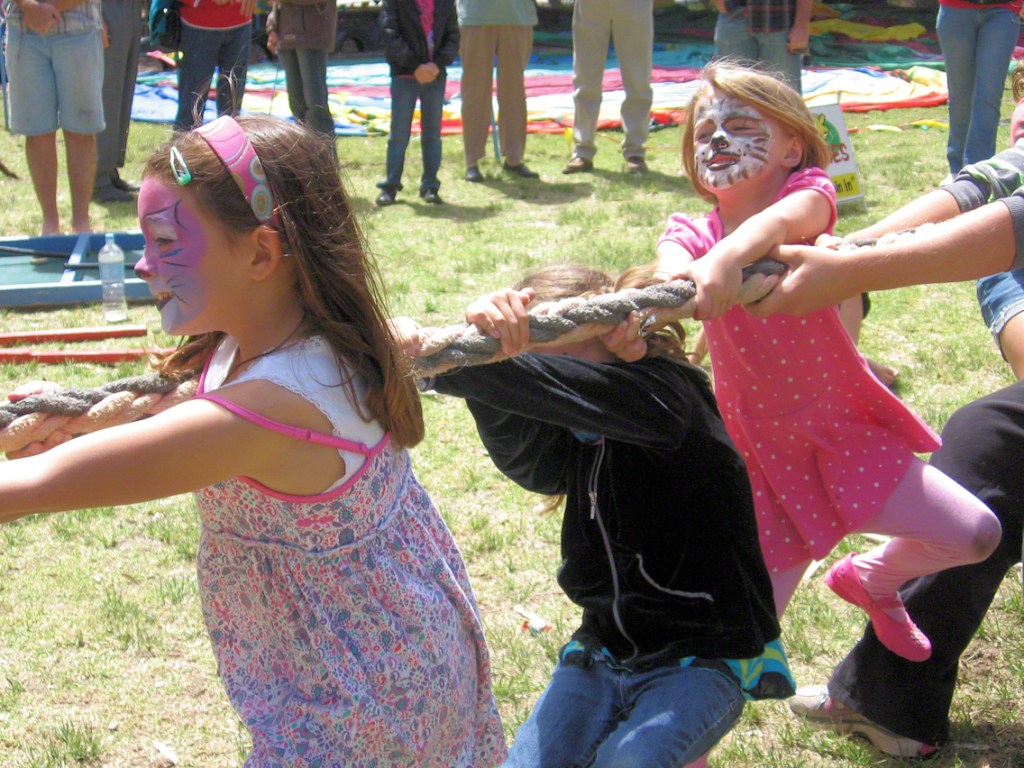
*[Photo 5: Tug-of-War © L.M. Kling 2012]

We have a choice. We could stay safe in our “castle” reinforcing the walls to guard against fear and failure, and so leave others to stay isolated in their “castles”. Or we can look outwards, break out of our “castles”, reach out and connect with others making our communities better places to live.

© Lee-Anne Marie Kling 2016; updated 2019; Updated 2022

Feature Photo: Keep the ball in the air — Willunga Almond Blossom Festival © Lee-Anne Marie Kling 2010

***

Want more? More than before? More adventure? More Australia?

Check out my memoir of Central Australian adventure

Available in Amazon and on Kindle.

Click on the link:

Trekking with the T-Team: Central Australian Safari 1981

Or…

Escape into some space or alternate universe adventure,

Catch up on the exploits of Boris the over-grown alien cockroach, and Minna and her team’s attempt to subdue him.

Click on the links below…

The Lost World of the Wends

The Hitch-hiker

Mission of the Unwilling

***

If you’d like to polish your writing skills or find out more about our new project, a self-publishing collective, click on the link to Indie Scriptorium

T-Team Series–Hermannsburg Back in Time

The T-Team With Mr B (28)

[Extract from The T-Team with Mr. B: Central Australia 1977, a prequel to Trekking With the T-Team: Central Australian Safari 1981.

The T-Team with Mr B — In 1977 Dad’s friend Mr Banks and his son, Matt (not their real names), joined Dad, my brother (Rick) and me on this journey of adventure. I guess Dad had some reservations how I would cope… But it soon became clear that the question was, how would Mr B who was used to a life of luxury cope?

And our accommodation in Hermannsburg had sent us on a tour back in time…]

 Living in History

I lay in bed and gazed up at the ceiling. Wish I hadn’t. A hessian sheet hung above me, pinned to the four corners of the room and sagging in the middle. It appeared the sand from the Central desert had worked its way into the sheet, threatening to burst all over me. How long before the sheet would no longer be able to contain its weight? I sat up and swung my feet to the floor. A cockroach scuttled under the wardrobe made of oak. I shuddered. Better sand fall on me than cockroaches.

I grabbed my towel and toiletry bag, then padded out my room and down the dark hallway to the bathroom. There I gazed around the small room, sealed with green and white tiles, some broken. In the 1950’s wash basin, waist-high and looking like an enamel pastel-green pulpit, a line of rust coursed from the faucet to the drain. The matching bath suffered a permanent rusty-brown ring, a reminder of how full to fill the tub. I scanned around the room and above the bath. No shower—not even a rusty one.

[Photo 1: T-Team Next Generation waiting for the outside dunny © L.M. Kling 2013]

I heard a knock at the door. ‘Lee-Anne, are you in there?’

‘Yes, Dad,’ I replied. ‘Where’s the shower?’

Dad opened the door and poked his head through. He screwed up his nose and swivelled his head left, right, up and down. ‘Oh, no shower. I guess you’ll have to have a bath.’

‘Oh, al-right.’

‘Hurry, though, we’re off to see Mr. C and his school.’

‘Oh.’ Last year Mr. C was my mathematics teacher. Then, in 1977, he’d taken up a position teaching the Arunta children in their camps near Hermannsburg.

I turned on the tap. Water dribbled into the bath, brown and making the pipes groan. I gazed at the tea-coloured brew pooling at the base of the tub. I like baths, normally. Not sure about this one.

‘Don’t fill it too full,’ Dad said.

‘No, Dad.’ No danger of that happening. The bath looked like it’d take an eternity to cover even to the depth of an inch.

‘Don’t take too long,’ Dad added.

‘No, Dad.’

I reached in and tested the water. Cold. I then placed my fingers under the dribble from the tap. Cold. Great! Not much water and it’s cold. Yep, I’ll have a quick wash.

I stopped the dismal flow and rushed through the motions of washing. After raking dry shampoo through my limp strands of hair, I bunched them into pig-tails and returned to my room to change.

Then I walked into the kitchen. Light through the louvers reflected dust motes drifting through the air.

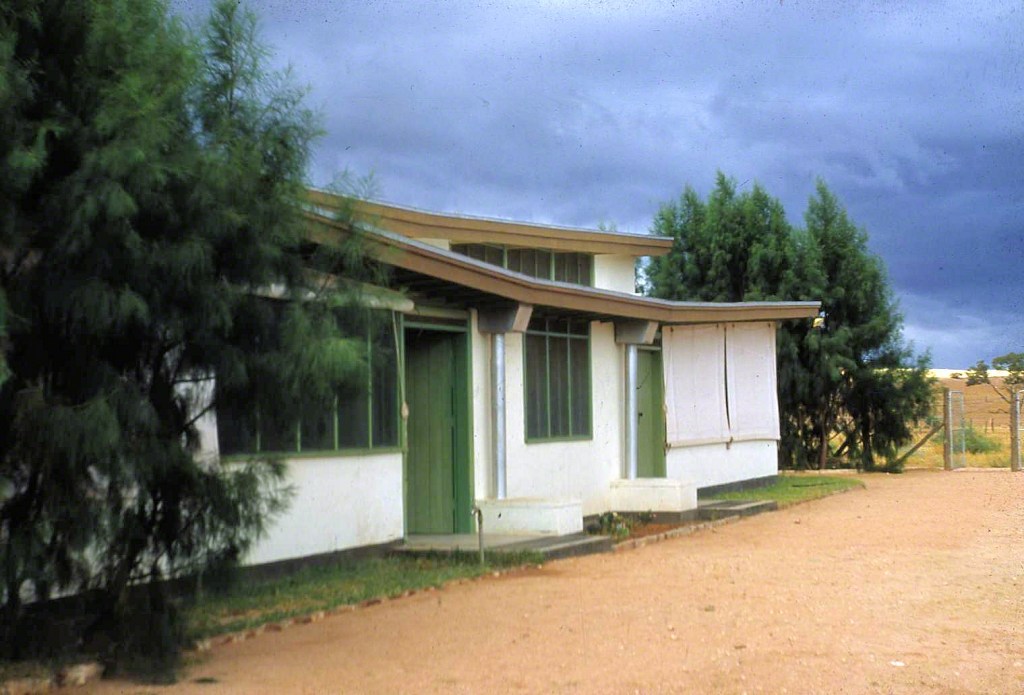
[Photo 2: School Room © C.D. Trudinger circa 1955]

Dad looked up from his bowl of porridge. ‘Oh, you’re finished already?’

‘Yep.’

I helped myself to the saucepan of porridge on the ancient stove. The cooker squatted there in the corner, brass fittings attached to afford gas to the rings on top. And lime green. I could see Hermannsburg had a theme going—shades of green. Except the table, washed with the thin coat of white paint. Perhaps it was green once, at the turn of the century.

[Photo 3: Green the Theme outside the school © C.D. Trudinger circa 1955]

As if taking advantage of my abbreviated bathroom visit, Dad took his sweet time. So, while we waited, Richard and I played cards, on the kitchen table.

‘Mr. B and Matt are taking their time,’ I said gathering up the cards.

‘They’re sleeping in,’ Richard laughed. ‘I think Mr. B’s exhausted.’

‘He didn’t know what he was getting himself into coming on this trip.’

Richard snorted. ‘Bet he’s never been camping in his life.’

‘No, all motels and luxury for him, I reckon.’

[Photo 4: Certainly not the Chiefly Motel Alice Springs © L.M. Kling 2013]

Dad stood behind us and coughed. ‘What are you talking about?’

We turned and widening our eyes to feign innocence, my brother and I chorused, ‘Nothing.’

‘I hope so.’ Dad cleared his throat again. ‘Now, come on, Mr. C’ll be here soon.’

‘Can I see Mummy’s house? Did we get permission?’

‘Er, um, later. Mr. C’s waiting. We’re late,’ Dad said and then strode out the door; the green door.

*[Photo 5: Tantalisingly close…but so far, Mum’s (Mrs T’s) old home © S.O. Gross circa 1950]

Richard and I followed.

‘We know whose fault it is we’re late,’ Richard muttered as we followed Dad out the historic hospital to meet Mr. C.

[to be continued…]

© Lee-Anne Marie Kling 2016; updated 2019; 2022

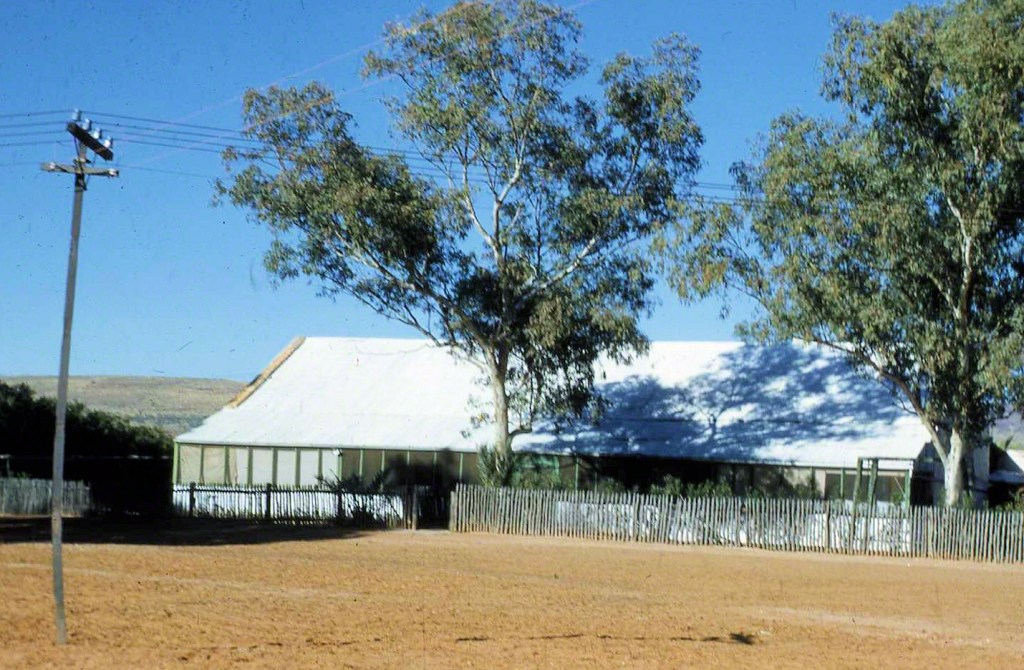
Photo: Spruced up Mission home, Hermannsburg Precinct © L.M. Kling 2021

***

Get ready for some holiday reading or begin planning your escape to adventure in the centre of Australia.

Click the link below:

Trekking With the T-Team: Central Australian Safari 1981,

And escape in time and space to Centre of Australia 1981…

Remembering Dad–Picnic at Brownhill Creek

[Remembering my Dad, 10 years since he passed from this world to be with his heavenly father. Wonderful loving father, beautiful memories, amazing adventures…]

Happy Hunting Ground

[Picnics on special days have been a “thing” for years. Not sure when this experience happened, but it was a picnic all the same.]

Dad leaned on his shovel and with a wrinkled handkerchief patted sweat from his head displacing the few strands of hair masquerading as a “comb-over”. Then with grunts sounding as if he were puffing billy, he attacked the garden bed. With each load of soil, he groaned, puffed and wheezed, demonstrating how hard he was working. A closed cardboard box sat near the cauliflower patch, a counterbalance to the growing pile of dirt the other side of the hole Dad created.

[Photo 1: Dad digging in the garden © L.M. Kling (nee Trudinger 1977]

‘Daddy, what are you doing?’ I asked strolling across the lawn to Dad.

Dad grunted some more and then flung a heap of soil into the mound behind him.

‘Daddy, why are you digging this deep hole?’

Dad stopped digging. ‘Huh?’

‘Daddy, what’s this hole for?’

‘Never you mind, Lee-Anne.’ Dad must think at six years old, I’m too young to know.

‘But Daddy, I just want to know.’

Dad tapped the box with his boot. ‘I’m sending puss to her happy hunting ground.’

‘Wilma?’ I asked. ‘But Daddy, why are you digging a hole, Daddy? Are you digging your way to Wilma’s happy hunting ground?’ I had visions of my cat chasing mice in China.

Dad glanced at the box and cleared his throat. ‘Oh, er, no, not really. Just a bit of gardening, dear. Now, run along and get ready for the picnic.’

[Photo 2: Dad resting after his hard day at work in the garden © L.M. Kling (nee Trudinger) 1977]

Ah! A spring picnic at Brown Hill Creek. I loved picnics with Mummy, Daddy and Richard, my eleven year old brother. Brown Hill Creek in the Adelaide foothills had paths lined with eucalyptus trees, and a creek filled with yabbies and tadpoles for Richard and me to hunt. I imagined Brown Hill Creek as the perfect “happy hunting ground” for cats.

‘Is Brown Hill Creek Wilma’s happy hunting ground?’ I asked.

Mum, her mousy curls covered with a scarf, poked her head out the door and called from the porch, ‘Hurry up, David!’

[Photo 3: Mum hanging up the washing before we go out © L.M. Kling (nee Trudinger) 1971]

‘Yes, dear,’ Dad said and with huffing and puffing, dug with increased speed.

I jumped up and down and flapped my arms. ‘Hooray! We’re going to Wilma’s happy hunting ground!’ Then I ran back to Mum standing in the back porch. ‘We’re going to Wilma’s happy hunting ground.’

‘Yes, well, I suppose,’ Mum said her blue eyes averting mine.

***

All the way to Brown Hill Creek, I filled the stale air in Bathsheba, our Holden car with my constant babble. As the only blonde in the family, it was my calling to be the family entertainment.

[Photo 4: Bathsheba, our trusty Holden car in the background © L.M. Kling (nee Trudinger) 1969]

‘I bet Wilma loves it at Brown Hill Creek. There’s so many birds…Mummy, do all the cats go to our picnic park when they go to their happy hunting ground?’

‘Mmmm,’ Mum replied.

I took that response as a “yes”. ‘Mummy, why did Wilma go to her happy hunting ground? Why didn’t she want to stay with us?’

Mum sighed. ‘Wilma wanted to go. It was her time.’

‘Oh,’ I said. ‘Are dogs there too?’

‘Wouldn’t be a happy hunting ground for cats, if dogs were there too,’ Dad said.

‘Maybe dogs go somewhere else.’ I tried to think where dogs would go. ‘Like where there’s more trees, I guess.’

Richard shook his square head topped with brown curls. ‘Why do you always talk so much, Lee-Anne?’

I shrugged. ‘I don’t know.’

‘Anyway,’ Richard said, ‘Wilma is—’

‘Shh!’ Mum glared at my brother and narrowed her eyes.

‘Gee, Brown Hill Creek must be full of cats,’ Richard muttered.

‘Oh, goody, when we get there, the first thing I’m going to do, I’m going to find them all,’ I said.

Richard rolled his eyes and shook his head.

***

Clouds shrouded the sky casting Brown Hill Creek reserve in a pall of grey. Dad manoeuvred Bathsheba into the gravel carpark. Richard and I then scrambled out. While Richard checked the water-levels of the creek, I gazed up at the lofty branches of the gum trees. Was Wilma up there? The leaves rustled in the breeze.

Mum found an even patch of ground near the creek and spread the rug. Dad lugged the wicker basket loaded with cheese and gherkin sandwiches and a thermos.

‘Richard, would you help carry this?’ Dad asked as he held a bag containing a spare set of my clothes. A picnic was never complete unless I fell into the creek at least once.

I raced along the path and began calling, ‘Wilma! Wilma!’

As the distance between my family and me widened, Dad yelled, ‘Don’t go wandering off—we don’t want you getting lost—again.’

‘I’ll go with her,’ Mum said.

‘Wilma! Wilma!’ I sang.

Birds twittered in those lofty branches. I looked up and called, ‘Wilma! Wilma! Here puss, puss, puss!’

A kookaburra cackled.

[Photo 5: Kookaburra © L.M. Kling 2016]

Mum pointed up at a bunch of blue-green leaves high in a tree. ‘Hey, look!’

‘Wilma?’

‘No, look!’ Mum said, ‘A koala.’

‘What’s a koala doing here? I thought this was the cat’s happy hunting ground.’

[Painting: Koala and baby© L.M. Kling 2013]

Mum took a breath and began. ‘Wilma’s in a better place than this, she’s—’

‘Hiding?’ I peered in the scrub. I parted the stubbles of grass by the side of the path. I looked behind tree trunks and logs. ‘Wilma! Come Wilma!’

My brother strode up the path and stood next to Mum. ‘You have to tell her, Mum.’

‘What?’ I asked.

‘You won’t find Wilma here,’ Richard said.

‘Wilma’s gone dear,’ Mum said.

‘Dead, Lee-Anne,’ announced Richard.

‘No! Richard, you’re wrong. Dad said Wilma went to her “happy hunting ground”, I said straining my voice.

‘Richard’s right,’ Mum said. ‘Wilma’s happy hunting ground is in heaven, not Brown Hill Creek.’

***

We ate our cheese and gherkin sandwiches in silence. If I wasn’t talking our little family usually ate in silence. Mum sat me on her lap and wrapped her arms around me as I forced small bites of sandwich past the lump in my throat. I looked at the creek frothing and bubbling from good spring rains. The yabbies and tadpoles were safe from my jar and net that day. I was in no mood to hunt them. My spare set of clothes would stay a spare set for another picnic. I decided to break the silence.

[Photo 6 and feature: Happier times at Brownhill Creek © C.D. Trudinger 1964]

‘Will I never see Wilma again?’ I asked.

‘I’m afraid not,’ Mum said. ‘But you have Barney, Wilma’s brother, to be your special cat to look after.’

‘Why does Lee-Anne get a special cat?’ Richard asked.

‘Well, you’ve got Timothy, Wilma’s other brother, he’s your special cat,’ Mum replied.

‘Oh, yeah.’

‘So Wilma’s in her happy hunting ground in heaven,’ I said.

‘Yes,’ Dad said. ‘Wilma’s in heaven.’

[Photo 7: Wilma and Me © C.D. Trudinger 1968]

And I imagined Wilma stalking through a hole from our world and into the next; her happy hunting ground in heaven.

***

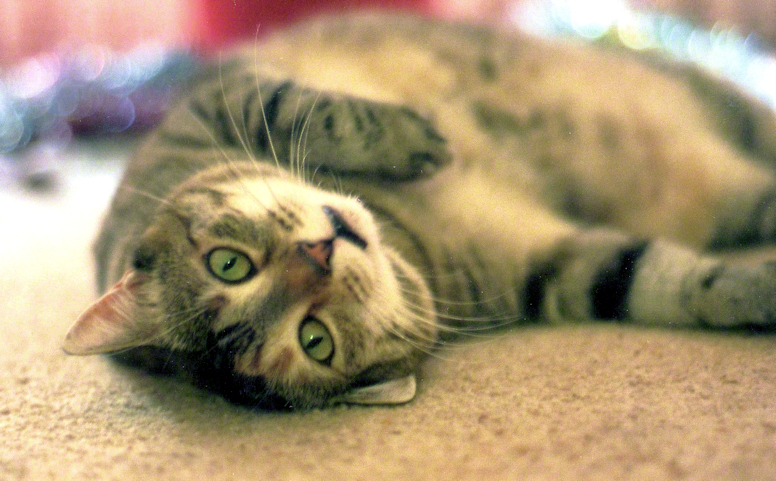
[Photo 8: Holly 2000-2016© L.M. Kling 2011]

© Lee-Anne Marie Kling 2016; updated 2020; 2022

Feature Photo: Picnic at Brownhill Creek. Photo taken by David Trudinger 1964

***

Want more, but too impossible to travel down under?

Why not take a virtual journey with the T-Team Adventures in Australia?

Click here on Trekking With the T-Team: Central Australian Safari 1981…

And escape in time and space to Central Australia 1981…

T-Team Series–Snake

T-Team with Mr. B (23)

  [Extract from The T-Team with Mr B: Central Australia 1977, a prequel to Trekking With the T-Team: Central Australian Safari 1981.]

The T-Team with Mr B — In 1977 Dad’s friend Mr Banks and his son, Matt (not their real names), joined Dad, my brother (Rick) and me on this journey of adventure. I guess Dad had some reservations how I would cope… But it soon became clear that the question was, how would Mr B who was used to a life of luxury cope?

This time the T-Team encounter a snake…

SNAKE OF PALMER RIVER

We sailed onwards from Curtin Springs. On this stretch of road, Matt and I were the Captain and Skipper of the good ship Land Rover. We rode up and over waves of copper-coloured sand dunes, juddered along stormy corrugations, and crept through stony creek beds.

*[Photo 1: Riding on the Rover © C.D. Trudinger 1977]

As the sun hovered above a line of gum trees in the distance, a sign to Palmer River rose out of the mirage. Crossing the dry creek bed lined with eucalypt trees, their trunks white and thick and branches covered with lush green leaves, Dad slowed the vehicle to a crawl. He then turned into the creek and drove the Rover along a track of soft sand. After travelling some distance down the dry riverbed, he stopped. The men stepped out from the Rover.

*[Photo 2: Finke River with Mt. Hermannsburg © S.O. Gross circa 1955]

‘I think we’ll camp here tonight,’ Dad said.

‘You’ve got no argument with me,’ Mr. B replied. He gazed around at the cream-coloured sand and shady gum trees. ‘Now why didn’t you find somewhere like this before?’

Dad shrugged.

Mr. B rubbed his hands together. ‘Right time to get the BBQ together and fire it up.’

*[Photo 3: Camping in the Finke © S.O. Gross circa 1955]

While the older men cooked the meat, the lads ventured out to shoot some meat of their own. I followed at a safe distance. Walking over to a track that crossed the riverbed, I spotted a dark long object.

‘Hey, look at this,’ I yelled to the boys.

They stopped and turned.

‘Careful,’ Richard said.

‘Is that a snake?’ Matt asked. He raised his rifle.

I tip-toed up to the long dark creature and peered at it. A brown snake, two metres in length, lay across the track.

‘It’s a snake,’ I said.

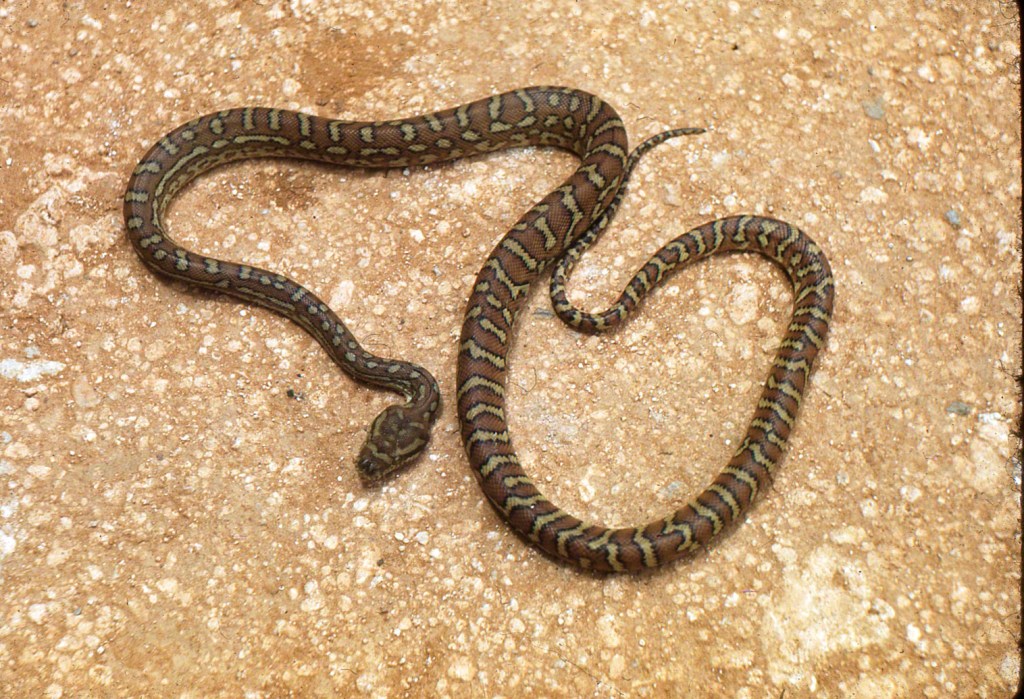
*[Photo 4: Snake (not a Brown) © S.O. Gross circa 1950]

‘Get out the way,’ Richard said. He raised his rifle and squinted lining up the target with his “iron sight” (the bit at the end of the rifle’s nozzle that helps with the shooter’s aim).

I trod a couple of steps closer. ‘It’s not moving.’

‘What are you doing? It might strike,’ Richard shouted.

‘They’re poisonous, you know,’ Matt added.

‘It’s alright.’ I walked up to it. In two places the snake appeared to be flattened. ‘There’s tyre marks across its body. It’s dead. Very dead.’

Richard crouched down beside the effigy and then picked it up. ‘Yep, it’s dead.’

‘And some car’s the culprit,’ Matt said.

As the sun sank into the horizon, casting its tangerine magic on the trunks of the river gums, the T-Team gathered around the BBQ.

‘Well, ma boys,’ Mr B flipped a steak in the pan, ‘you got anything to add?’

Richard and Matt glanced at each other and then gazed at the pink and grey waves of sand of Palmer River.

*[Photo 5: Memories of dinner on the campfire past © C.D. Trudinger circa 1955]

I giggled. ‘They wanted to, but their shooting venture was fruitless.’

‘That’s a shame,’ Dad said. ‘Ah, well.’

‘We could have the snake,’ I said.

‘I don’t think so,’ Dad cleared his throat, ‘we’re not that desperate.’

So, while parrots chattered in the gum trees celebrating another brilliant day in the Centre of Australia, having escaped the boys’ efforts to shoot them, we savoured our juicy steak from Curtin Springs Station.

© Lee-Anne Marie Kling 2016; updated 2018; 2022

Feature Photo: Snake © S.O. Gross circa 1950

[Palmer River is a tributary of the Finke River. Some of the photos above remind me of our Palmer River campsite.]

***

Read more of the adventures of the T-Team in my memoir, Trekking with the T-Team: Central Australian Safari 1981 available on Amazon and Kindle. Check it out, click on the link below:

Trekking With the T-Team: Central Australian Safari 1981

Or

Download The Lost World of the Wends

Free till 2 August 2022.

Monday Musing–Be Still

BE STILL

I go to the shops as I do every second day. At the checkout, the girl asks, ‘And how has your day been?’

‘Busy,’ I say.

‘That’s good,’ the girl says with a sage nod as if involved in some conspiracy to keep me on the hamster wheel of busyness.

In the Twenty-first century world “busyness” is good. Not being busy, then, is undesirable. Our Western Protestant work ethic touts, ‘Idleness is the devil’s workshop’. The state of “idleness” is to be avoided at all costs. These days, we equate idleness with boredom.

‘I’m bored,’ say your children (so did mine, when they were children many years ago, back in the good ol’ 1990’s), and terror strikes at the heart of each mother when they hear these words. Bored? We can’t have our children bored—idle—just imagine what devils will come to play if we allow boredom to fester. First, the grizzling, then, the niggling at each other, and before long, World War Three amongst the siblings and the house ends up looking like the Apocalypse.

*[Photo 1: The computer, the answer to all who cry, “I’m bored!” © L.M. Kling 2007]

No, we can’t have boredom.

So, in my quieter times now, I reminisce the days as a young mother, structuring each day, every hour—especially during the holidays, to avoid boredom—any strategy to avoid my tribe from becoming restless.

‘What’s wrong with a bit of boredom,’ my mother would say. ‘They need to learn to entertain themselves, you know, use their imagination. Nothing wrong with being still for a while, I say.’

Mum should know, she grew up in the Centre of Australia on a mission in the 1940’s and ‘50’s. Those were the really good ol’ days with no shopping centres, no electronic games, nor television. They did have radio, but her minister father only allowed the news to be heard from it. Heaven forbid they listen to modern music. During the War, even the radio was confiscated by the allies. So all my mum as a girl had to entertain herself were books. Even so, the Protestant work ethic was a major value in mum’s family as her mother, when she found her daughter reading would say, ‘Isn’t there some housework you should be doing?’

*[Photo 2: In the good ol’ days, being productive. Making kangaroo-skin rugs © S.O. Gross circa 1940]

As expected, then, I grow up in a world that values industry, productivity and filling each day to the full. The schools I attend are hot on producing good grades, projects and students who go on to university and become wealth-producing citizens.

Then, at sixteen, I have a revelation. We sing a chorus at church, “Be Still and know I am God”.

Being still…forget the homework…forget the housework…put aside my racing head of worries…centre my thoughts on God and his greatness. Pause for a moment and remember, God is God and He’s in control.

So at sixteen, I do just as the chorus bids. I hop on my deadly treadly (bike), and pedal down to the beach. I figure that’s the best place to be still; the waves lapping the sand, the sun on my back as I comb the shore for shells. Or on a sunny afternoon, I lie in the backyard and sunbake, think and ponder.

*[Photo 3: Entertainment of Seal, Glenelg South © L.M. Kling 2022]

The result? Wow! Those mountains? School and pedantic teachers going on about uniform—my socks, my hair? Boyfriends or lack of them? Life and my future? …All my concerns become molehills.

December 1979, I write a poem “Be Still”. Perhaps not the greatest work of literature, but the values stick with me…until I embark on university, work, and then a family. The poem hides in a book of my teenage missives. Ten years ago, I pull it out for a devotion. I preach being still, but I fail to apply the principles. I must keep busy. If I stop, even for a few minutes, what will others think? There’s just too much to do. Everyone’s depending on me as wife, mother, bible study leader, committee member …to produce the goods. I can’t let them down.

The culture to keep moving is ingrained. Go to meet people for the first time and they ask, ‘What do you do?’ The doing has to have a dollar sign attached to it. Not enough to do all the above as a mother. Must produce money to have status in the group. Without status, I am not heard. Ironic how the under-valued creative arts of writing and painting, though, afford status. I am creating. I am producing.

*[Painting 1: Life after Lock-down, Port Willunga © L.M. Kling 2020]

Even so, in this creative phase of my life, if I stand still, I feel guilty. Now, there are novels to write and art to produce. My “work”. I’m on the hamster wheel, but I can’t get off.

However, in all the busyness expected of me, the cogs of my life are unravelling. I drive to a cafe to meet a friend. She’s not there. I’d forgotten my mobile phone. I drive the thirty-minute return home and check my phone and then ring her. I’d gone to the wrong place. A misunderstanding. If I had taken the time to listen and ask the right questions…

The voice of my sixteen-year-old self still convicts me. ‘Be Still’.

For over forty years, I’d not been following my own advice. After the misunderstanding of the other day, I give myself permission to have time each day to rest…Time to be still…time to know God.

*[Painting 2: Sleeping Beauty on Huon, Tasmania © L.M. Kling]

So in the voice of my sixteen-year-old self, the poem:

Be Still

Exhausted, yet restless to advance

Ever onward in a trance,

A weary traveller

Refused to look around

So lost the intimate beauties which could be found.

Be still,

And know God the eternal creator.

Furtive, frustrated, fraught we flee,

When confusion bears down on thee,

A weary traveller.

Failure looms, chaos glooms,

In life, this lonely room.

Be still,

And wing your eyes

To soar above the clutter.

Marvel at the vastness of creation

Where God lies.

If what we infinitely fear

Will produce a lonely tear,

Of a weary traveller,

We blind ourselves with sorrows

Clinging to illusions of good morrows.

Be still,

Capture destiny in your heart,

For God said, “Let it be”.

See the beauty of it’s part.

Learn from what it has to offer

Ignore the scoffer.

A weary traveller did relent,

When Jesus was sent.

Be still,

While He,

Our hungry souls will fill.

© Lee-Anne Marie Kling (nee Trudinger) 1979

© Lee-Anne Marie Kling 2016; updated 2022

*Feature Photo: Cradle Mountain, Tasmania © L.M. Kling 2009

***

If you’d like to polish your writing skills or find out more about our new project, a self-publishing collective, click on the link to Indie Scriptorium

Or…

Catch up on the exploits of Boris the over-grown alien cockroach, and Minna and her team’s attempt to subdue him.

For good holiday reading click on the links below…

The Lost World of the Wends

The Hitch-hiker

Mission of the Unwilling

Or…

Join the Journey, click on the link below:

Trekking with the T-Team: Central Australian Safari

100-Word Challenge–Worked

…Into a Corner

All afternoon, our backyard echoed with the hum of the cement-mixer, and intermittent scraping. Dad, armed with a trowel, smoothed the cement over an area pegged to become the back patio.

Metre by metre, he pasted his way back.

Mum stood on the porch, and with hands on her hips, remarked, ‘And how are you going to get out of this one?’

In an ocean of soft cement, Dad looked around him, lost. ‘Er…um…I’ll work it out.’

Tracks back to the lawn-edge smoothed, Dad stood and admired his DIY job.

Next morning, paw-prints made their way to the rainwater tank.

© L.M. Kling 2019

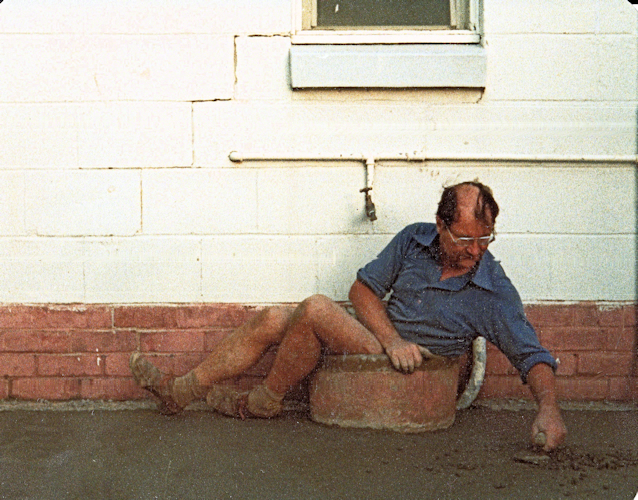
Feature Photo: Dad Concreting back Patio © M.E. Trudinger circa 1978

***

It’s Holiday time.

Time to read more on the adventures of the war against the fiend you love to hate, an overgrown alien cockroach, Boris.

Click on the links below:

The Lost World of the Wends

The Hitch-hiker

Mission of the Unwilling

 Or

Longing for more travel adventures? Dreaming of exploring Australia?

Read the T-Team’s Aussie adventures, click on the link below:

Trekking the T-Team: Central Australian Safari 1981