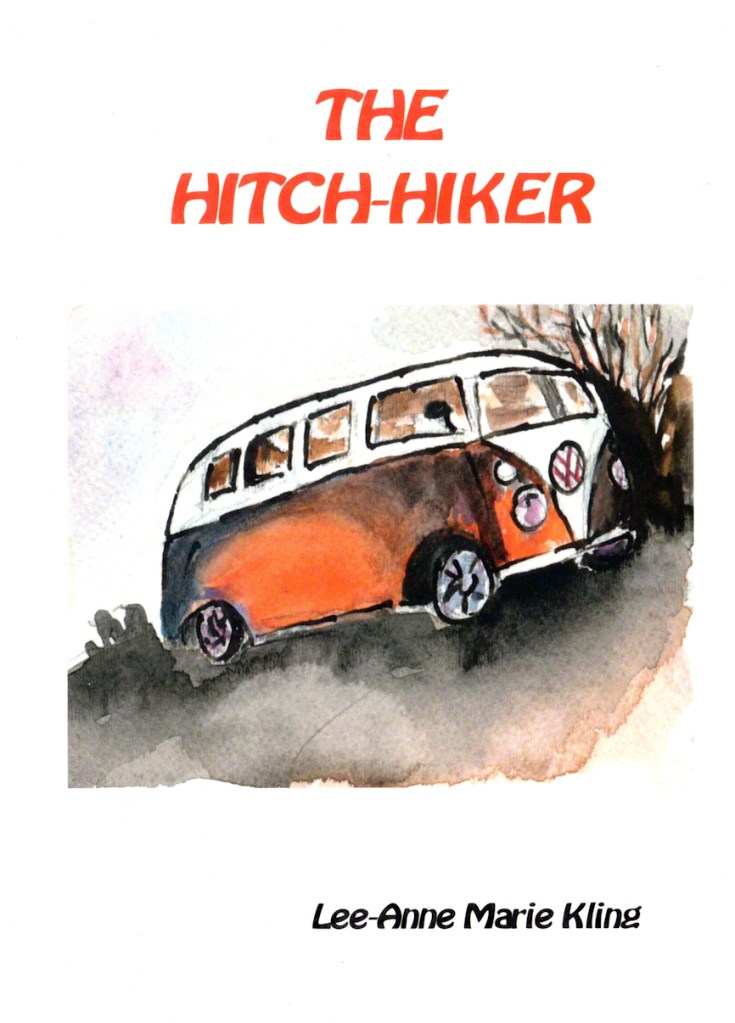
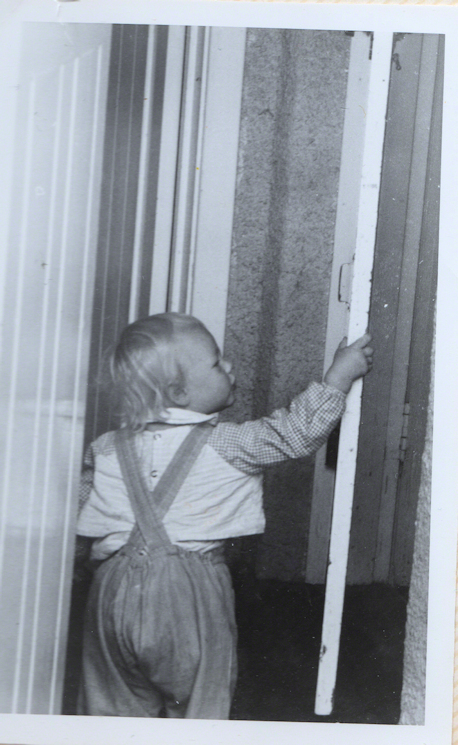
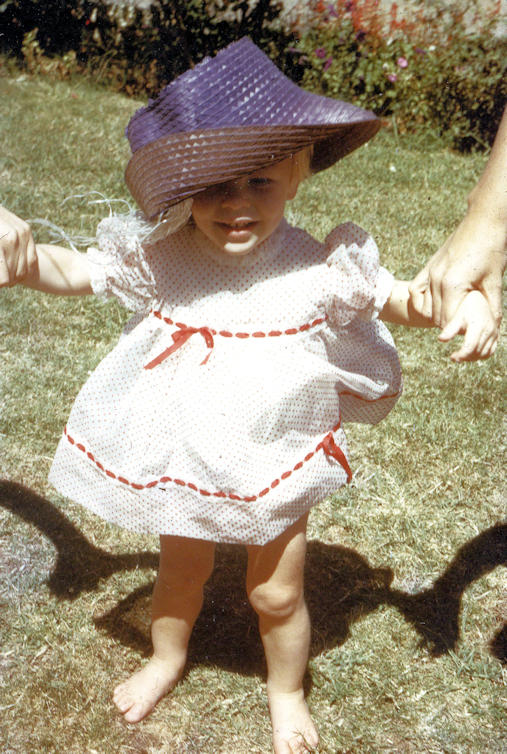
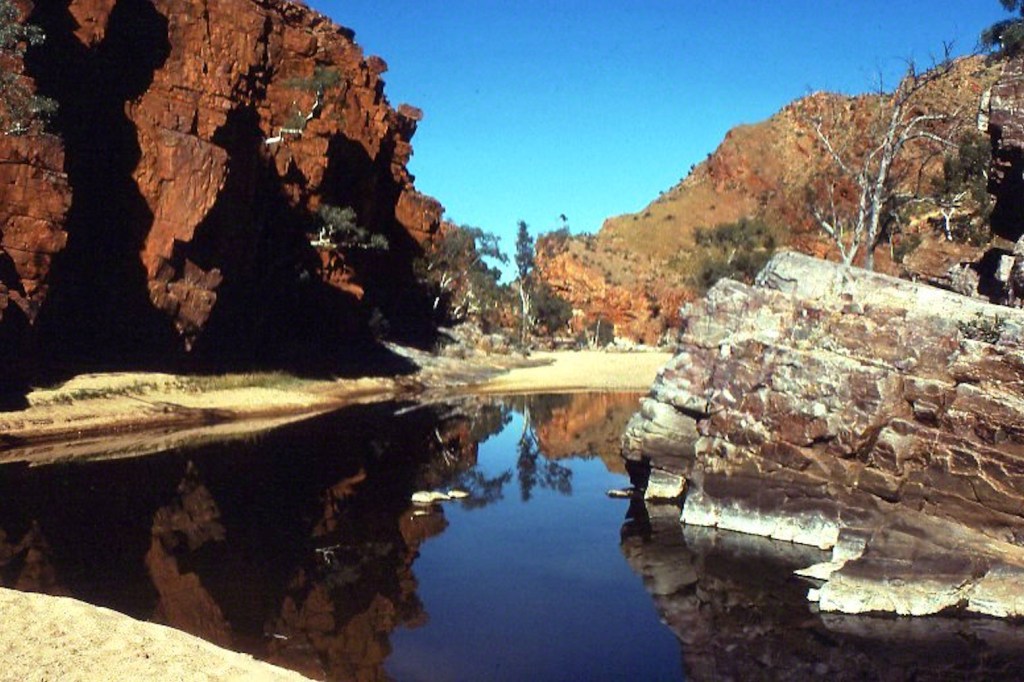
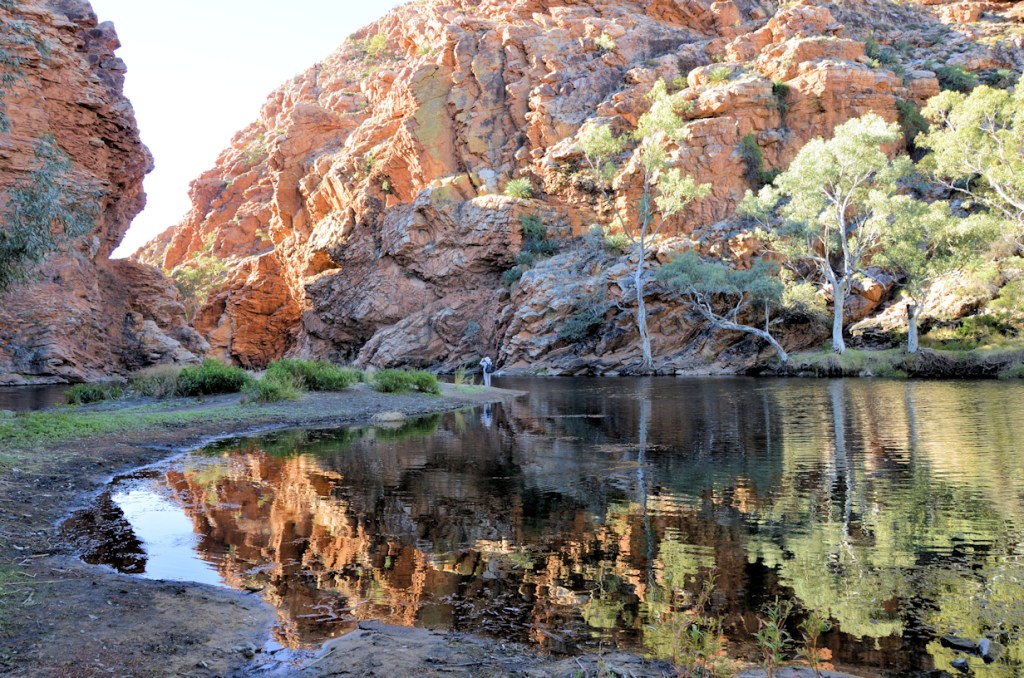
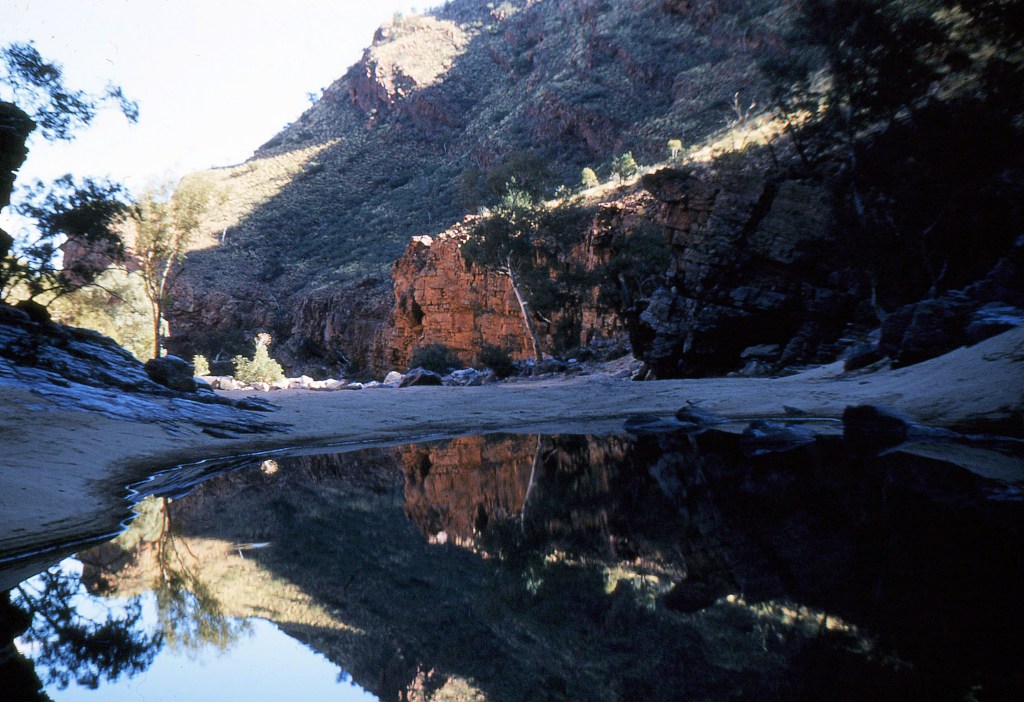
With an exhibition coming up in April, I thought this cheeky little piece, a 100-word challenge might fit the bill, so to speak. The actual incident of imagined “water/wine-theft” took place several years ago, but I believe the gallery involved still takes their rules very seriously.
Stolen…Almost
‘Where can we get some water?’ my friend asked.
I pointed at the casket of spring water languishing in the gallery. ‘There’s some just there.’ A glass wall confined the well-watered and wined gallery guests. We had been guests, but this gallery was devoid of seats. We wanted to sit. And eat.
‘Sign there bans wine not water.’
I stowed into gallery, collected cups of water and walked to the door.
‘Where do you think you’re going?’ self-appointed wine-police snapped.
I placed the stolen water back on the table and left.
Transubstantiation. My first virtual miracle; turning water into wine.
[Sharing experiences from our school days at writers’ group this morning reminded me of learning in the 1960’s.]
I Threw the Book Back at the Teacher
Mrs. Cranky (not her real name), our relief teacher looked like she’d stepped out of a Dickens’ tale—that’s what I remember of her from when I was in Grade 1. At the age of six, to me, she appeared so old, as though she were prehistoric; all skin and bone and a scowl fixed on her face.
Mrs. Cranky’s methods of discipline matched her looks; old fashioned and mean. I started school in the late 1960’s in Australia.
The regular infant schoolteachers were kind and gentle. I loved school. I loved learning. I came from a home that valued education. The regular teachers perhaps tired of my constant hand-in-the-air to answer every question and tried to dampen my enthusiasm saying, ‘Give someone else a go.’ But I experienced no trouble until Mrs. Cranky took over our Grade 1 class for a term.
Mrs. Cranky seemed to have been buried in the education system and then dug up. I reckon probably as a last resort and I’m sure the headmistress must’ve done an archaeological dig in search of a relief teacher and come up with this old fossil.
I mean to say, if the department had known what archaic methods this woman was using to control the class of us infants, surely, she would’ve been asked to retire.
As Grade 1 students, we submitted to her authority with fear and trembling, not to mention a few toileting accidents on the classroom’s linoleum floor. I guess Mrs. Cranky’s colleagues congratulated Mrs. Cranky on her class of obedient and quiet students.
How was I to know, as a six-year-old, that a teacher shaking, hitting and shouting at children was not appropriate? But I sensed something was off.
So, on one dull winter’s day, Mrs. Cranky presided over her class from her desk. She’d taught us our arithmetic lesson which seemed to make her particularly angry.
As we finished our work, simple sums where neatness was prized over correctness, we lined up at the desk, our work to be marked by Mrs. Cranky.
I finished my sums and joined the queue which by this stage stretched from the desk to the door. Now I was not the most observant pupil and as work was too easy, I tended to daydream. My mind wandered out the window and floated to the clouds as I waited.
A mathematics exercise book flew past me. My mind returned to my body in the classroom. I looked from the book, pages strewn on the floor, and then at the teacher’s desk.
‘This is rubbish!’ Mrs. Cranky screeched and tossed another book across the room.
As I watched that book land in the aisle, one more book whizzed past me.
‘Go pick it up!’ Mrs. Cranky said.
My classmate scuttled over to the book on the floor, picked it up and slunk back to her seat.
Mrs. Cranky was on a roll. ‘Rubbish!’ she cried, and I ducked yet another book-missile.
‘What’s going on?’ I asked the boy in front of me.
The boy shrugged.
Mrs. Cranky glared at me and said, ‘Go to the back of the line, Lee-Anne!’
I took my place at the end of the line. I checked my work. Yes, one plus one is two. Yes, all my sums neat and correct in my estimation.
A book landed at my feet. I went to pick it up.
‘Don’t you dare, Lee-Anne!’
I straightened up and watched another poor pupil pick up his book, bite his trembling lip and shuffle to his desk.
This is not right, I thought. As I waited my turn, I imagined my counterattack if the teacher cast my sterling efforts across the room. It seemed to me I’d wasted half a lesson standing in line and watching the Maths books fly.
My turn. Surely Mrs. Cranky would see my superior efforts and not throw my book.
She did throw my book. And with much demented screaming and ranting that my work was the worst she’d seen in all her years of teaching. Considering how old she looked, boy, that must be bad.
Her implications that I must be the worst student in the history of the world sank in. What? How dare she! No, that can’t be right. I won’t let her get away with that. She had crossed the line.
I paced over to my wreck of a Maths book, plucked it up and then flung it back at Mrs. Cranky.
O-oh, bad move. Very bad move.
I’d stuck my neck out, executed justice for me and my classmates, but had not considered the consequences.
Mrs. Cranky’s face flushed red. Her eyes bulged from her bony sockets. She bared her teeth.
My situation was not looking good.
I fled. First, I scampered down the nearest aisle to the back of the class. Mrs. Cranky armed with a twelve-inch ruler clattered behind me. She screamed and raged. ‘Why you little…!’
I ran along the back of the class. Mrs. Cranky followed. She swatted the ruler at me. Missed!
I weaved through the maze of desks and chairs. I searched for refuge from the teacher’s rage and ruler.
I dove under a desk. But the boy with red hair swung his feet.
Mrs. Cranky gained on me. She growled. She waved the ruler at me.
I fell to my hands and knees and scrambled under another desk. More legs, more kicking at me. I crawled along the floor. Mrs. Cranky chased me into a corner.
I had nowhere to go.
Mrs. Cranky cut the ruler into my tender thighs. ‘There, that’ll teach you for throwing the book at me,’ she said.
***
Education, I decided was not so much for gaining knowledge as to learn to submit to the control of authority. The system taught me that to be successful and get good grades I must behave, be quiet, don’t upset the norm or challenge the people who had power over me. So, I learnt to be a “good” student, and when I grew up, a “good” citizen, minding my own business out of fear of that wrath, that punishment, if I question or challenge the status quo.
However, recently, as I’ve matured and seen injustice and oppression, sometimes suffered by those close to me, I have been challenged and I wonder: Have I allowed evil to prosper because I’m too afraid to speak up?
This is why I write. My words can be used to promote God, His love and goodness. They can also be used to speak out against deception and injustice. Part of me is still afraid of retribution, that figurative “twelve-inch-ruler” ready to strike because symbolically I’m “throwing the book back at the teacher”.
In the good book, the Bible, 1 Peter 3:17 says: ‘It is better, if it is God’s will, to suffer doing good than doing evil.’
True, as a Grade 1 student, it was not the wisest choice to make and “throw the book back at the teacher”, but as an adult, it is my hope and intention to “throw the book”, that is, my words into the world and community for good; right the wrongs, stick up for the oppressed, defend the victims of bullying and make waves to change attitudes and thus generate God’s character and values of justice, truth, responsibility and love.
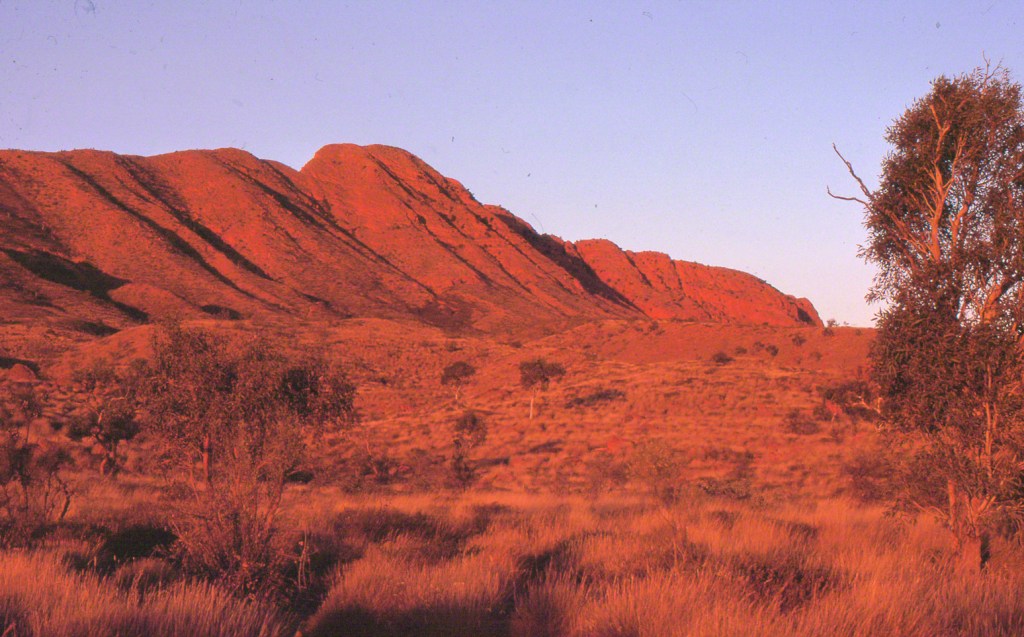
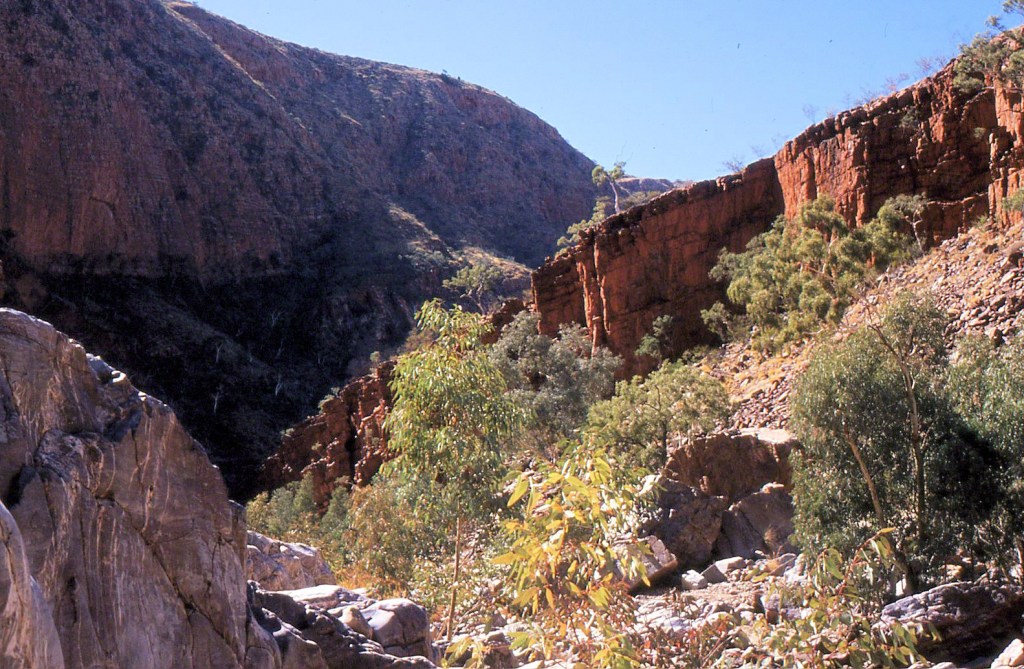
Feature Painting: Sunrise over Brachina Gorge (c) Lee-Anne Marie Kling 2014
(Brachina Gorge is in the Flinders Ranges, South Australia. Brachina Gorge is known for the abundance of fossils that can be found there. Probably won’t find the likes of Mrs. Cranky, there though.)
***
Want to explore some more?
Another world? Another place and time?
Escape into some space adventure? Or just delve into some plain dystopian adventure?
Click on the links to my novels below and learn how this war on the alien cockroach Boris began and will continue…
Grandma rarely locked the back door; not when home or if she ran short errands. The only times she did lock the back door was when she went away on holiday. Ah! Those were the days! The 1960’s—Adelaide, the front door greeted strangers and salespeople, the back door welcomed friends and family who didn’t knock, but walked straight in.
Grandma lived a ten-minute walk from my home in Somerton Park. Throughout my childhood and teenage years, I walked or rode the route down Baker Street, across “busy” Diagonal Road, and into Panton Crescent. Then I trod down her gravel drive of her Trust home to her back door; a door always unlocked and without any ceremony of knocking, I pulled open the fly-screen door, pushed open the wooden door, and walked into Grandma’s small kitchen. I still dream of Grandma’s place, “Grandma’s Lace” as I used to call it as a child, her huge backyard with fruit trees and hen house.
The same as her home, Grandma had an open heart with time available to be there for me. From the time I was born, she was there. She bought and moved into her Somerton Park home nearby, about the same time my mum and dad with my brother and me, bought and moved into our home.
Every Sunday all the family which included mum’s brothers and sisters and their spouses, gathered in her tiny kitchen dining area for Sunday roast. The home filled with laughter as we enjoyed Grandma’s roast beef and crunchy roast potatoes—the best ever! Dessert of jelly and ice-cream followed, topped with a devotion, then the Sunday Mail quiz. Holidays held extra treats of cousins from Cleve, all five of them and Auntie and Uncle. Grandma fitted us all in, albeit us younger ones sat at the “kinder tisch” in the passageway. Often friends from church or elsewhere joined us for Sunday lunch. The door was open for them too, and somehow Grandma made the food stretch and the table expand for unexpected guests.
One of the first times I took advantage of Grandma’s “open door policy” was at two years old. I’d dreamt my cousins were visiting and no one told me. My beloved cousins were at “Grandma’s Lace” and I was missing out.
So early that hot summer’s morning, I climbed out of my cot, dumped my nappy, and naked, I navigated my way to Grandma’s. I streaked over Diagonal Road, not so busy at dawn, and then toddled down Grandma’s driveway. I pushed open the back door and tiptoed through the kitchen and passageway. Then I peered into the bedrooms one by one. Each room was empty. Where were they? Where’s my cousins? I was sure they were here.
I entered Grandma’s room. The mound of bedding rose and fell with each puff of breath Grandma made.
I tapped Grandma and asked, ‘Where’s my cousins?’
Grandma startled and her eyes sprang open. ‘Oh! Oh! What are you doing here?’
‘I come to play with my cousins,’ I said. ‘Where are they?’
‘Oh, my goodness—no dear—they’re not here.’ Grandma climbed out of bed and waddled to the bathroom. ‘Now, let’s get you decent.’
After wrapping a towel around me, she picked up the telephone. I stuck by her solid legs while she spoke to my mum. ‘Marie, just wondering, are you missing a daughter?…You might like to bring some clothes…’
As I grew older, Grandma’s open-door policy included her home-made honey biscuits. My friends and I visited Grandma on a regular basis. We’d enter through the back door and make a beeline for the biscuit tin. Then we’d meander into the lounge room. With my mouth full of biscuit, I’d ask, ‘Grandma, may I have a biscuit?’
Grandma would always smile and reply, ‘Yes, dear.’
Grandma’s open-door policy helped as a refuge when love-sick boys stalked me. Mum and I arranged that when I rode home from school, if my blind was up, I was safe from unwanted attention. But if the blind was pulled down, I would turn around and ride to Grandma’s place.
Grandma was there also when I had trouble at school. I remember at fifteen, having boy-trouble of the unrequited love kind. Grandma listened. She was good at that. She sat in her chair as I talked and talked, pouring out my heart, while emptying her biscuit tin.
When I paused one time, after exhausting all my words, she said, ‘Lee-Anne, one thing that may help—you need to have Jesus as your Lord and Saviour.’
Grandma passed on from this life to meet her Lord and Saviour in early 1981, less than two weeks’ shy of her seventy-fifth birthday. Her old Trust home on the big block with the fruit trees and chook-yard were razed and redeveloped into four units—front doors locked and no easy way to their back doors.
The Sunday after the funeral, it seemed to me strange not to gather at Grandma’s. Then Christmas, the brothers and sisters celebrated separately with their own family or partners. I missed the whole Christmas connection with my cousins, aunts and uncles. Time had moved on and our family had evolved to the next stage of our lives.
These days, leaving one’s back door open, even during the day, seems an odd and risky thing to do. Times have changed—more dangerous, or perhaps we’re more fearful of imagined dangers outside our castles. And now in 2025…Well, Grandma’s life and her “open door” policy in a more trusting time, has made me ponder: How open and available am I to others? How willing am I to listen and value others and their world?
Bill reclined in the row of seats in front of them, making no comment. Rob in the front passenger seat, dozed as he rested his curly mop on the passenger window.
Petrol at Orange and the youth filled their tanks with lollies, chips and soft drink.
I found the “ladies”, a grotty dive around the corner. Tania ignored me as she primped her ebony bob and patted her round cheeks with blush in front of the scratched-metal excuse of a mirror.
I sauntered back over the cracked pavement of the service station to the van crouching by the pumps. Tom sat there, in my seat, hands hugging the steering wheel and a grin on his lips.
“Right, we’ve wasted enough time, I’m driving,” Tom said.
“Are you sure that’s a good idea?” I asked. Tom was 18, full of testosterone and a sense of immortality. “What about your P-plates?”
“Pff! Who needs them, we’re in the country,” Tom replied. “The cops won’t care.”
My manager’s warning echoed in my mind. Don’t let the youth drive. This was a company van. “l think it would be better if someone else drives.”
Bill stretched out, comatose on the middle bench seat, while Rob leant against the bonnet, eyes averted and licking an ice cream.
“Rob?” I pleaded.
“It’s alright.” He bit into the cone. In a languid tone, he said, “I’m sure Tom’s a good driver.”
Tania planted herself in the front passenger seat. She curled her lip and snarled, “Better driver than you. At least we’ll get somewhere.”
“Fine then, I hope you know what you’re doing.
“Relax! I know what I’m doing. We’ll be at the conference in no time,” Tom said and turned the key. The engine puttered contented with its new master. “Anyway, we’ve wasted enough time with you stuffing around.”
I gritted my teeth and crawled into the dark recesses of the Toyota. I chose not to fight this battle. I needed a rest, but had an uneasy feeling about the next few hours.
Our new driver, engaged the gears, and catapulted the car onto the highway. Tyres spun on the bitumen. I smelt burnt rubber.
Bill rolled off his seat and woke up with a start. “What’s happening?” He rubbed his eyes, and then batted at the wads of sleeping bags, sweet wrappers and lemonade bottles. He craned his neck peering at Rob and me each side of the back three-seater bench with Karen holding her duffle bag in the middle. Confused, he pulled himself upright using the driver’s seat and eye-balled Tom. Then he looked back at us, eyes wide. “What’s going on?”
“Don’t ask!” I said. Reflector posts and shadows of trees flitted past. In the dim light, the whites of Bill’s eyes glowed. “You’re letting him drive?”
“He insisted.”
He jerked his muscular arms. “Do you know how fast he is going?”
“What?” I peered at the speedometer. The needle hovered between 160 and 170 kilometres per hour. “Oh, crap.”
The vehicle mounted a low rise and flew for a few seconds. The floozies strapped into their respective seats screamed as if they were on a roller-coaster ride.
Bill gripped my arm. “You’re in charge, do something.
I tried. “Hey, Tom, I think you’re going a bit fast, could you slow it down a little.”
Tom ignored my pleas and we watched the needle creep up to 180 km/h. “Tom, slow down,” Bill urged. He patted the lad’s arm. “You’ll get a speeding fine.”
“No, I won’t,” Tom said.
“We have to make up for lost time. We’re already three hours late,” Tania whined.
“So what if we are late?” I begged. “Better that, than dead on arrival.”
Tom’s Teutonic features hardened like flint, eyes staring through the screen, mouth a thin line set in grim determination, and his jumbo ears deaf to our pleas. The more we urged and begged, the more resistant he became and the more he pumped the accelerator. The more we feared for our lives.
“Come on, Tom. We don’t want to have an accident.” Bill put a strong hand on Tom’s shoulder. “The angels jump off when you go over the speed limit.”
“No they don’t.” Keeping his sight fixed on the road, Tom flicked the hand from him. “We have three hours to catch up. I want to get to Brisbane by the four in the afternoon.” The needle pushed up to 190 km/h.
Bill, Rob and I withdrew, accepting our fate and praying that the angels will hang onto the van for our sake. I was not sure how much time had passed. For a moment, time seemed irrelevant. All was clear, all was calm. I forced myself to stay awake. We pelted along the highway in the dark countryside.
Somewhere along the stretch of Tom’s speedway, we rearranged ourselves. Bill moved to the front passenger seat, and Rob and I sat in the middle row. The girls curled up in the back of the van, putting their full trust and unbelted bodies at the mercy of Tom’s driving. Titan-size trucks, sympathetic to our driver’s need for speed, waved us on and we passed the road-trains of travelling tonnes of steel.
“The angels jump off at this speed, Tom,” Rob said and then yawned.
Tom laughed and made the whole van wobble and swerve into the gravel. He then swung the van to the wrong side of the road and stayed there.
“I’m not happy Tom! What do you think you’re doing?” I batted him. Blinding lights bore down on us. “Watch out, Tom!” I pressed my foot on an imaginary brake-pedal and screamed.
“Calm down, Grandma!” Tom laughed as he slipped back into the left lane with only millimetres to spare. The van shuddered with the slipstream.
“God! That was close!” Bill wiped beads of sweat from his forehead.
“That’s nothing!” Tom pressed the throttle to the floor and relished the roar of the speeding engine.
The needle on the fuel gauge sank into the red zone. Hope. We would have to stop for petrol. Using my finger as a signal, I alerted Bill to the need for petrol.
Recent events have reminded me of this little gem I posted way back in 2016. Still relevant today—maybe even more so, as it was back then…and way back 45 years ago when I was in high school. And it seems, while many of us have matured and have an open mind when it comes to opinions and how we view others, there are some who believe that if you tell a lie often enough, it must be true. The recipients who have no backbone who believe these lies are just as guilty. Need I go into detail with examples? Not here. But I may explore this issue in some of my future novels.
NOW YOU KNOW…
Year Ten at high school, and you could say I went to school each day with a big virtual sign on my back that read, “Kick Me”.
Don’t get me wrong, I had my close friends; friends who valued me for me and who saw through the prevailing attitudes of the crowd towards me. I assumed my lack of popularity was spawned from a rocky start in Year Seven—new kid when all friendship groups had been established in a very small school. And then there were those who had made it their mission in life to persecute me. I assumed they spread the rumours about me. Or maybe it was my buck teeth, and awkward way of relating to people…When you are told by your peers over and over again that you are ugly, unloved and no one wants you and you do regularly get picked last for the team, I guess you start to believe what people say.
What kept me together, were my real friends; the ones outside of school, and my friends at school. I also belonged to a fantastic youth group that met every Friday night. A close-knit, loving family helped as well. Most of all my faith in Jesus got me through those difficult early teenage years.
Anyway, at fifteen, my teeth had been almost straightened by orthodontics and I’d perfected the enemy-avoiding strategy of spending lunchtime in the library. I loved learning and my best friend and I spurred each other on in academic excellence. My goal, a scholarship. I had heard rumours that some kids thought I was not so intelligent, a fool, in other words.
At my grandmother’s place, after Sunday lunch, I helped Grandma with the dishes. As I scraped away the chicken bones, I discovered the wishbone.
‘Can I make a wish?’ I asked Grandma.
‘Well, why not?’ she replied. Although a godly woman, some superstitions from our Wendish (eastern European) past had filtered down through the generations. So wishing on wishbones was no big spiritual deal.
Grandma and I hooked our little fingers around each prong of the wishbone. We pulled. The bone snapped in two and I won the larger portion. I closed my eyes and made my wish, a scholarship. Dad had promised that if I studied hard and won a scholarship, he’d buy me a ten-pin bowling ball. So in truth, my aspirations for academic achievement were less than pure.
A month or so later, we lined up for assembly. I suffered the usual torment from a certain teacher who was obsessed with the uniform. ‘Pull your socks up!’ she snapped.
What was it about socks? I wondered as I dutifully began to pull up my socks. For our summer uniform which we had to wear in first term, we wore blue cotton frocks down to our knees and long white socks. Woe betide any poor soul who did not pull their socks up to their knees. The length of our uniform dresses, was another issue that kept certain teachers occupied. And don’t get me started on hair. I tell you, if all the students had worn their uniforms correctly, I think the teachers would’ve quit out of boredom.
So with my socks pulled up, I waited in line to troop into the assembly hall. A tap on my back. One of my friends smiled at me. I remember her simple bob of straight blonde hair; no fancy flicks or curls like many fashion-conscious girls in the 1970’s. Farrah Fawcet flicks were all the rage and drove the teachers to distraction.
‘Good luck,’ my friend said.
‘Why?’ I asked.
Miss Uniform-Obsessed-Teacher glared at us. She had those bulging blue eyes, mean pointy mouth that forced us to slouch into submission, and for me to check my socks again.
One of my foes snaked past and muttered at me, ‘Dumb idiot.’
I shook my head and concentrated on not getting glared at by the teacher. Really, I thought, he’s at the bottom of the class and he’s calling me dumb? What is it with that guy? In his defence, he did come out with a gem once in English class when the students were rioting and so reducing the first-year-out teacher to tears. He said to me, ‘It’s not what you know, it’s who you know.’ So true for my home town.
Once inside the hallowed halls of assembly, we went through the ritual of the school assembly. The principal delivered the talk. There’s a lecture I recall he made, don’t know if it was that particular one—how we were a bunch of jellyfish and we must get some backbone. When he said backbone I thought of the wishbone, and then that guy and his cohorts. I thought of how people believe unquestioningly what others tell them, even if it’s not true. They go along with the prevailing attitude, even if it’s wrong and harmful to others. In some ways, like at school, I was a victim of these jellyfish, and in other ways, I was a jellyfish too. I had an attitude, an aversion against those who bullied me. Did I have backbone enough to get to know them as people rather than continuing to avoid them as enemies?
The principal began to hand out the awards. Ah, yes, that’s what my friend meant. Today was the day of the awards. I watched as various students marched up the front and collected their scholarships. That won’t be me, I thought.
‘And for Year Ten,’ the principal said, ‘the scholarship for high achievement…’
I looked up. What? Me?
I walked to the front, shook the principal’s hand, collected the award, then head down and with a tug of my pig tail, I walked back to my seat.
Afterwards, my friend patted me on the shoulder. ‘Congratulations! Well done! Just like you to win an award and then pull at your pig tails.’
I nodded. The whole deal of winning a scholarship seemed unreal. ‘I’ll be able to get my own bowling ball, now.’
That guy slid past me. ‘Ooh, what a surprise—we all thought you were dumb.’
‘Well, now you know I’m not,’ I replied.
***
Sometimes we carry our hurt from the persecution from others like a big heavy bag on our backs and the truth is it influences the way we see the world. I realised being a victim had become my narrative and I didn’t want it to be so. As a jellyfish, I had no backbone to stand against this view of myself and how others viewed me. I feared speaking out and going against the crowd in the cause of truth, justice, mercy and compassion. I kept my opinions to myself. Then just recently, when again the baggage of victimhood crept up on me, I read the following passage from the book of Matthew in the Bible. The words encouraged and gave me the backbone to stand out and for the sake of Jesus Christ make a positive difference in the world.
“Blessed are you when people insult you, persecute you and falsely say all kinds of evil against you because of me (Jesus). Rejoice and be glad, because great is your reward in heaven, for the same way they persecuted the prophets who were before you.”—Matthew 5:11-12
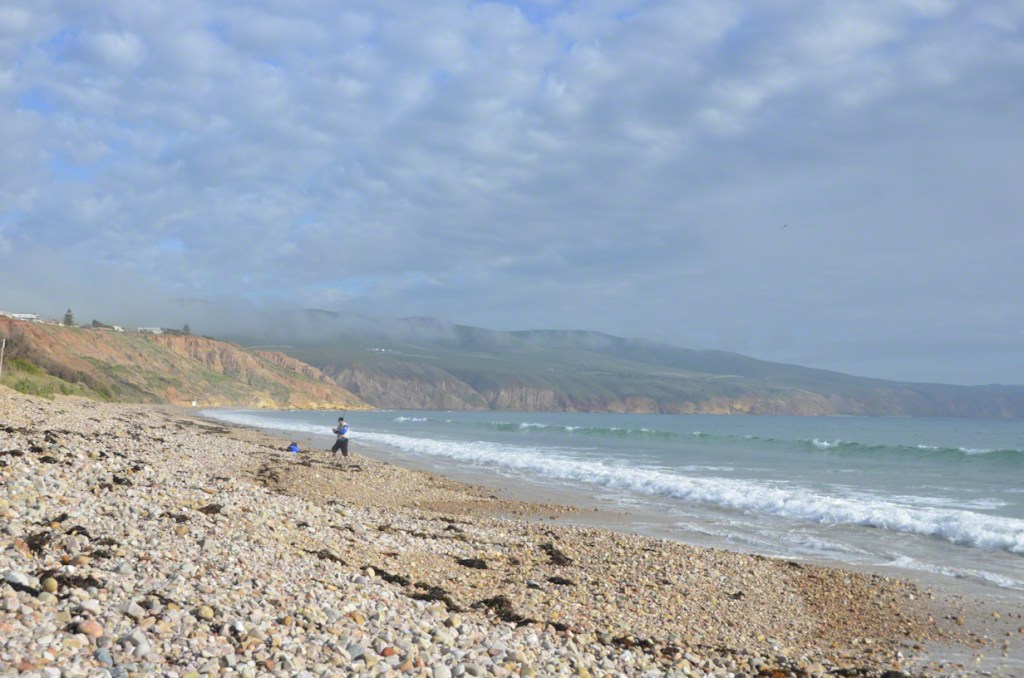
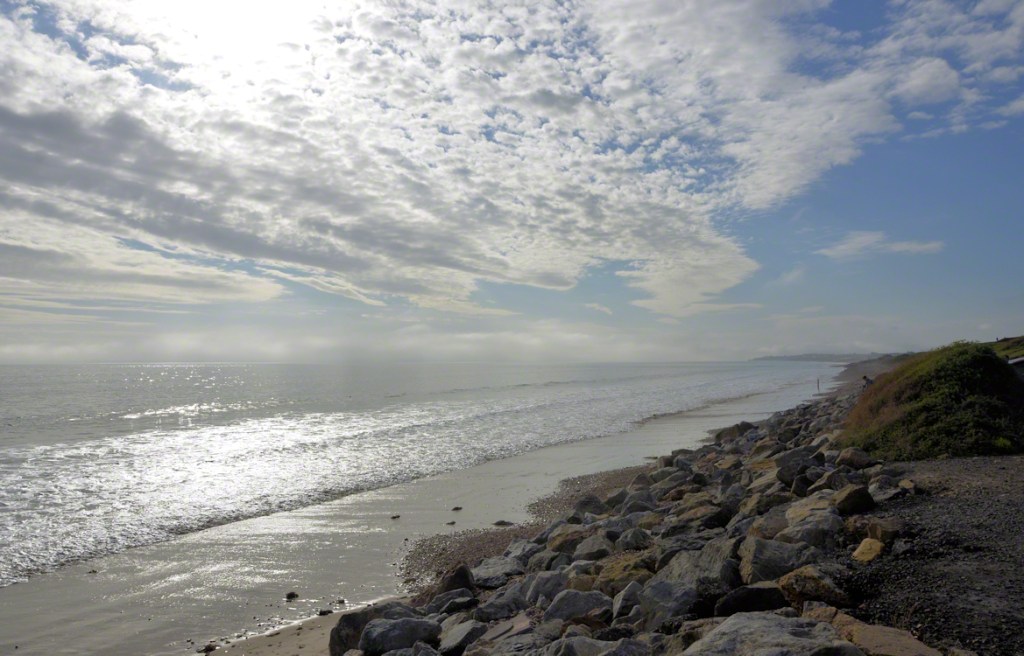
[In answer to today’s prompt, I have never been to Kangaroo Island.So close and yet, so expensive to get there.One day I hope to travel there. In the meantime, I’ll continue to enjoy the beautiful beaches of Adelaide and down the Fleurieu coast.]
Sensational Sellicks Beachat Sunset
[Part 2 of the K-Team’s adventure on the Fantastic Fleurieu.]
‘Let’s see Sellicks Beach at sunset,’ I said, ‘it’s a perfect day for a sunset on the cliffs.’
This time, like sheep, the K-Team heeded my voice and followed Hubby and me out from Hallett Cove, and then by car, we made a convoy up Lonsdale Road to the expressway heading for Sellicks Beach.
After the expressway, on South Road, we passed the turn-off to Victor Harbour. I looked back. ‘Um, I can see P1’s car, but where’s your other brother, M’s car?’
‘Behind P1, I think,’ Hubby said. ‘Can’t you see the car?’
I glimpsed something resembling M’s car. ‘I think so.’
He who argues with Sat Nav’s and ignores their instructions, didn’t turn where I told him to, but kept driving on the road above the cliffs. ‘Where do I turn?’ he bleated.
I indicated behind us, but not in a smooth-calm voice that the Sat Nav would have. ‘Back there!’
‘What? Why didn’t you say so?’
Huffing and puffing, Hubby manoeuvred the Ford around making a U-turn. Then he detected a car park on the same level as the road. ‘We should park there.’
‘I think he took the road to Victor Harbour,’ P1 said. ‘He seemed to disappear around the time of that turn-off.’
Hubby pursed his lips and shook his head. We waited and observed cars parked on the beach. Waves already lapped at the ramp leading to the beach. Seemed some drivers had left it a little too late to escape the beach and rising tide. Perhaps the owners planned to camp the night and fish. One four-wheel drive vehicle drove through the surf to climb the ramp back to the road.
‘Let’s have some afternoon tea while we wait,’ I said and then opened up the back of the station wagon. Before I’d finished serving coffee and hot cross buns, M’s car rolled down the ramp and parked beside P1’s car. We gathered around as M and his Swiss passengers stepped out.
[I have been preparing The T-Team withMr B: Central Australia 1977 to be ready for publication soon. So, below is an extract from the T-Team’s adventure.
While three of the T-Team faced the perils of climbing Mt. Liebig, a drama of a different, yet equally challenging kind unfolded for Mr. B and his son, Matt as they stayed back at camp.
Mr. B and his son, Matt napped under the shade of a bean tree. A southerly breeze ferried through the dry creek bed, spiriting away the father’s snorts. Matt tossed and turned on his inflatable mattress that was exhausted of air resulting from a small, elusive puncture. He imagined the three others of the T-Team, beating a path through the sweltering heat and stinging spinifex in their quest to the summit of Mt. Liebig. Matt chuckled to himself. “Suckers!”
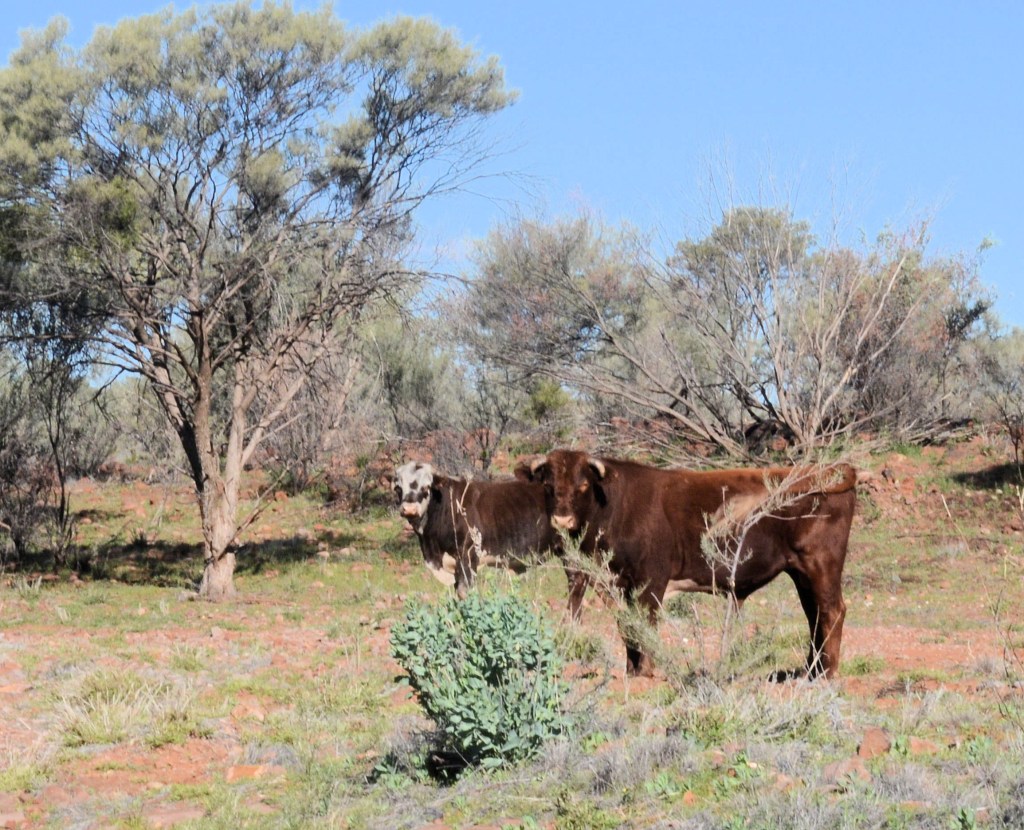
In a nearby tributary, a bull spied the T-Team’s father, son and daughter trekking in the distance, and stamped its massive hooves in the loose dry sand. Once the family had vanished, the bull trotted towards his stamping ground which possessed a gigantic bean tree as a feature in an otherwise dull bed of dust. His quest was to reclaim his territory that the humans had invaded.
“Matt, ma boy, do be careful. Don’t go too far from camp. A bull might get you.” Mr. B squinted in the direction of distant thumping, then rolled over and resumed snoring.
A monstrous brown hulk loomed through a cloud of dust.
Matt bolted upright “Dad! Dad! Th-there’s a big- ugly- brown – ugly- big – brown – ugly – b-b-bull!”
“Aw, Matt, stop kidding me.” Mr. B blinked and rubbed his eyes. “That’s enough of the jokes.” A short rumble from behind sent him scrambling to his feet. He flailed his arms while galloping. “Quick! Into the Rover. Now!”
“But Dad!” In the sweltering heat and moment, the boy froze, glued to his air mattress under the bean tree. Terrified, he witnessed his Dad bound over the dirt and fly into the empty Rover parking space and onto a thicket of spinifex. Matt winced. The massif of angry brown trod closer. It paused, pawing the ground, taunting its human prey.
After rubbing his punctured behind, Mr. B scrambled for the tarpaulin and rummaged through the baggage. “Er, d-don’t worry Matt. I-I’ll charge this bull before it s-sh-shoots — er — us.”
“But, Dad, the bull doesn’t have a gun.”
“Well, neither do we, we’ll just have to be satisfied with this boomerang and spear, till I find the damn gun.”
The bull stalked, narrowing the gap. The son clambered up the tree and gasped as his father fought with a rucksack that had entangled his legs, while he waved the pathetic weapons above his head.
“Why Matt, how can you say such a thing? Where do you think these genuine Australian artefacts are made?” With all his effort, Mr. B thrust the spear at the beast.
“Yes, Dad, sold in Australia, but made in China.” Matt watched as the menacing bulk of fury stomped the ground, dust billowing into a cloud around it. “Too bad the bull doesn’t know the difference.”
“Don’t be sarcastic at a time of crisis, son.” Mr. B flung the boomerang at the charging bull and ducked behind the tucker box. The projectile bounced off the bull’s hide, provoking it into a tumult of frenzy. Grunting like an eight-cylinder engine, he stormed towards its human attacker, screeching to a halt at the edge of the tarpaulin. As the bull glared down at him, Mr. B could smell its leathery breath.
With a nervous smile fixed on his face, the father edged his way to the bean tree and climbed aboard. The bull stomped and snorted around the sacred bean tree while its victims trembled in the lofty branches amongst the beans.
From this vantage point, Mr. B spotted the rifle leaning up against the tucker box. Unfortunately, the bull sat between him in the tree and the tucker box.
Hours passed.
Father and son sat in the tree.
“Dad my bottom hurts,” Matt whined.
Mr. B sighed, “The others’ll be back soon. They have a rifle.”
“But Dad! I have to go!”
“Hold on,” Mr. B snapped.
The sun edged to the horizon.
Mr. B bit his lip wondering if he’d be stuck up this tree forever.
“Dad! I really have to!”
Mr. B turned to his son who was now rocking.
The distant hum rang through the golden landscape. Mr. B adjusted his grip on the branch.
The hum became louder. An engine.
The bull rose and sauntered out of the campsite, then disappeared into the bush.
“Just wait, Matt,” Mr. B said. He scrambled down the tree and grabbed the rifle.
Matt’s voice floated down. “Dad, it’s too late.”
As the sun disappeared below the horizon, the rest of the T-Team returned to find Mr. B clutching a rifle and pacing the clearing. Matt remained lodged high up in the bean tree.
“As you can see, while you’ve been climbing your mountain, we’ve had a not-so-welcome visitor,” Mr. B remarked.
It could’ve been Good Friday; most probably was. One thing was for certain, it was the Easter long weekend, when throngs of city folk in South Australia head for the outback to camp. My brother and I joined our youth group friends on a camping trip to Brachina Gorge, Flinders Ranges. Ah, those were the days!
Another thing was for sure. We had reached Brachina Gorge after a long day of driving and everyone was, let’s just say, less than civil with each other. At least no kangaroos had been slaughtered by car, no copious amounts of beer had been drunk in the car, and thus no unfortunate accidents causing us to escape the car had happened either. Not like some Easter in the future when the T-Team explored Chambers Gorge.
So, late Good Friday afternoon, we stopped in Brachina Gorge just before the track became too suspension-crunching rough.
B Calm sautéed his dehydrated rice on his personal gas cooker. He wasn’t grumpy.
I peered at the sizzling stubs of rice and deliciously smelling onion. ‘What are you doing?’ I asked.
‘Cooking,’ B Calm replied.
‘Looks good.’ I mused how B Calm could settle down and cook his dinner. The rest of the crew bumbled about the narrow sandy rise above the riverbed, searching for a decent-sized patch to plant their tents.
Storm stomped down the road that led further into the gorge and disappeared around the bend. The sun, by this time had slunk below the horizon to light up other parts of the Earth. Twilight lingered, dusting wisps of cloud in shades of crimson.
B Calm glanced in the direction of Storm’s venture. ‘He’ll be back.’
Sure enough, as the twisted bushes on the neighbouring ridge turned to ink against the fading sunset, Storm returned. ‘Still reckon this place is a dump,’ he muttered.
For the rest of us, the ancient mystery of the Brachina cliffs had convinced us to stay put. Tents lined the banks of the creek. And our small group of friends gathered around the roaring fire, sausages sizzling in frypans and billies boiling for a cup of tea. Brachina, and the campsite Rick had chosen, was more than good enough for us.
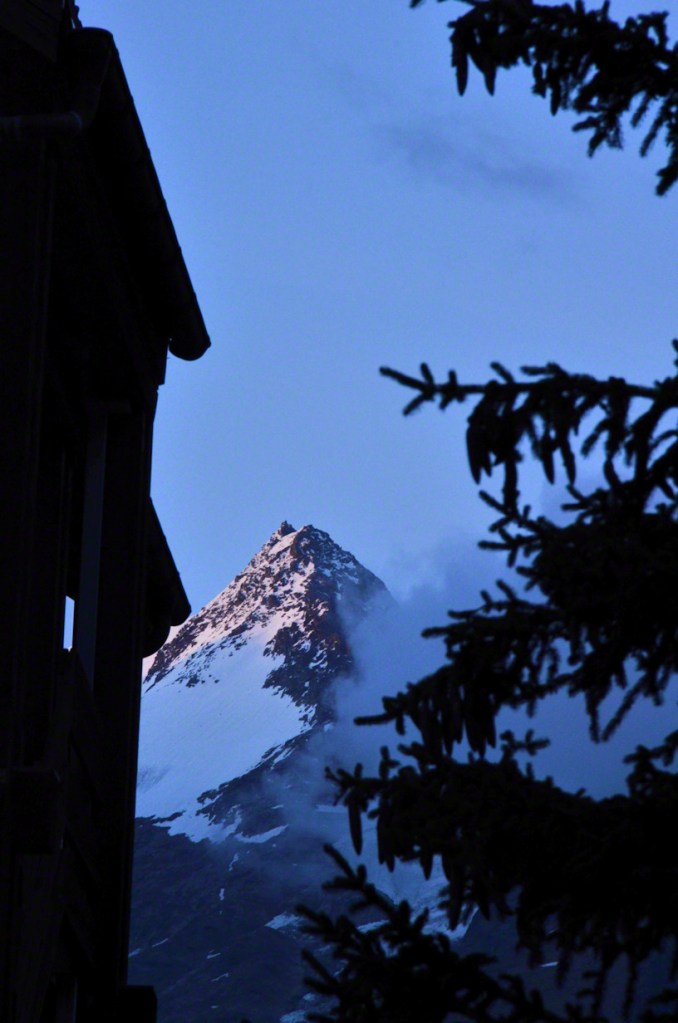
One morning in August 2014, I rose early to catch the sunrise on the mountains surrounding Saas Fee in Switzerland. My husband also woke early to organise the earlier-than-other-places’-check-out at 9.00am. A shadow of disappointment rested on us as we adjusted to the reality that we would miss viewing the Matterhorn—not as a result of the weather, the weather was perfect, but because certain members of our gang feared they could not afford the expense of travelling to the other side to see the Matterhorn. (In retrospect, in a large travel group there’s always going to be differing agendas and opinions where to go and what to do and plenty of drama to go with it.)
The fallout from the Matterhorn Rebellion had settled and we had made the best of our Saas Fee visit with the previous day spent up the Honig instead. An aside here, how family myths are created. One member of our crew, insisted for years to come that I had been stalked and attacked by goats up on the Honig. I was not stalked and attacked by goats. Although, the thoughtless person who left a plastic bag of waste tied to a bench seat, has a lot to answer for. Let’s just say, that anyone who sat on that seat was assured of company. Goats, that is.
Hence, the next morning, our last in Saas Fee, after catching the sun’s rays spreading over the mountains, we ate our muesli breakfast admiring the view…until the others in our party made an appearance.
However, for some members, the novelty of early starts had worn off. So, after some more drama, where the morning views of the mountains surrounding Saas Fee were not appreciated, my husband, his brother and I were left to sort out the garbage. Saas Fee being a green village, had a particular protocol regarding waste disposal.
I rang the hotel management. My Swiss-German being non-existent, and my German not much better, this was a challenge to understand what we were to do with the waste. We were meant to have an orange bag for the garbage. Where was that? My husband hiked down to the hotel reception, while his brother and I vacated the apartment. We waited in the courtyard for my husband to return. He did, just before the taxi arrived—and with an orange bag.
En route to the car (being a car-free village, all cars had to be parked in a carpark outside Saas Fee), with the loads of bags the others left for us to transport by taxi, the driver stopped at a humble wooden hut. He took our orange garbage bag and, after opening the door of the hut, tossed the bag inside. I marvelled that even the garbage-disposal sites were disguised as mini alpine huts.
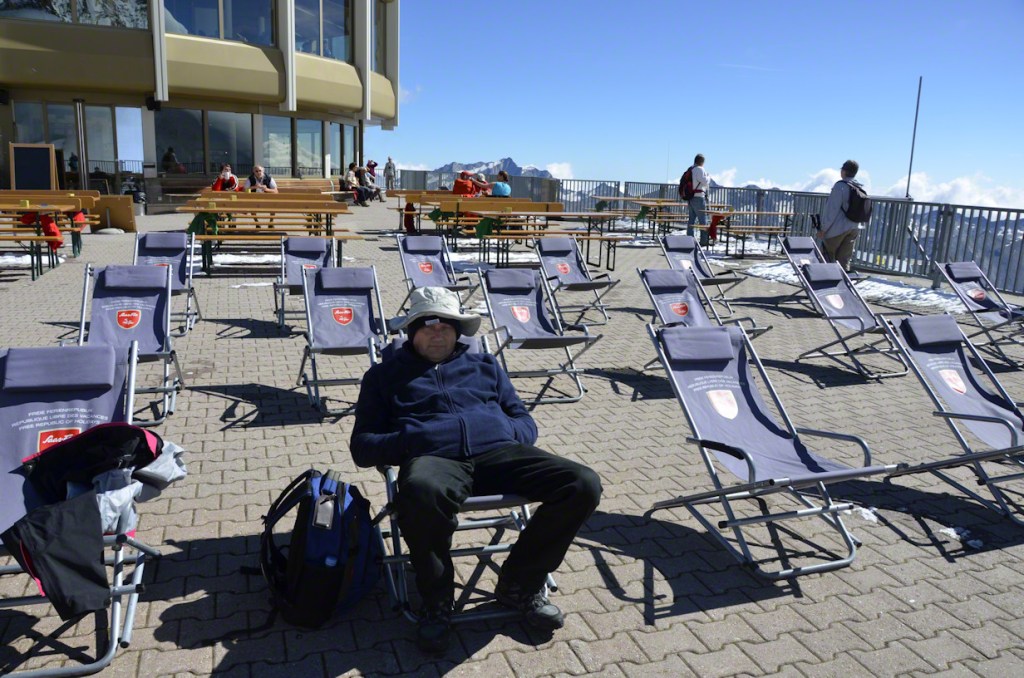
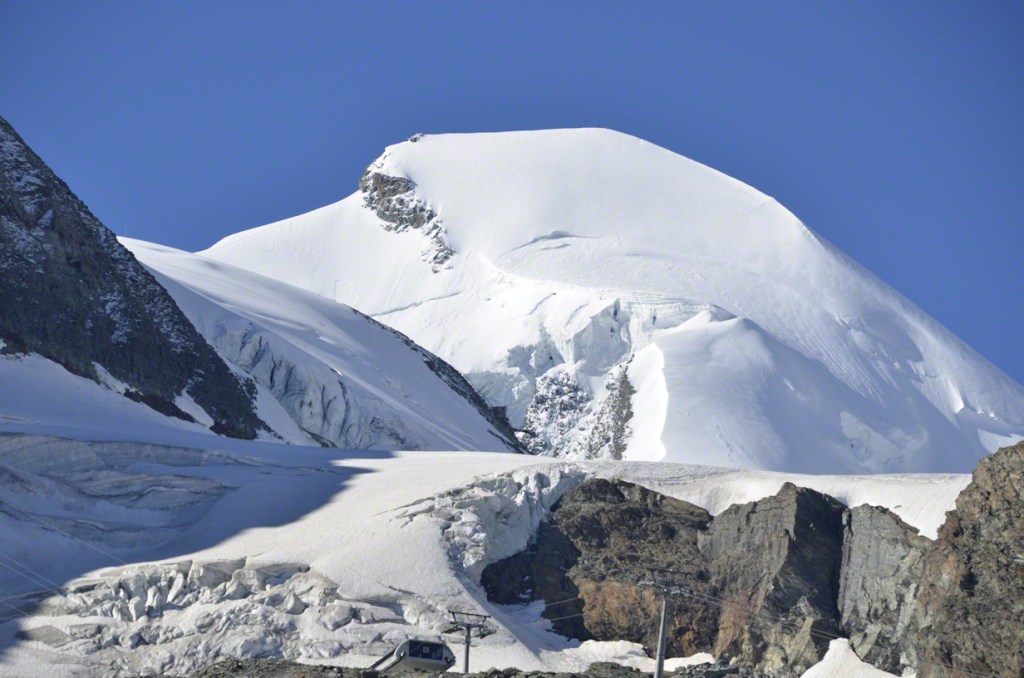
After finding our car, and loading the baggage into it, we walked to the cable-car station. We caught up with the rest of our party at the Revolving Restaurant at Mittelallalin. We rode the two cable-cars and then cog-wheel train which went through the mountain tunnel to Mittelallalin at 3500m. The brisk but thin alpine air, the blue skies and bright white peaks of fresh fallen snow melted the misunderstandings of morning away and peace was made.
At 1pm, the younger members of our party decided to head down the mountain and start the drive back to Wattwil and the farm. Us “oldies” stayed to investigate the ice-caves inside the Fee glacier. When we prepared to leave the mountain, we saw the line-up for the cog wheel train was wide, thick and long with skiers who had the same idea. Maybe after some lunch the crowd would thin. Not so. Lunch did nothing to thin the crowd. Took us nearly an hour, crushed in by school-age skiers and their big ski gear bags whopping in front of our faces, and slowly inching forward as we watched three cog wheel trains cram skiers and snow-boarders in and then leave without us. There was even a “ghost” train. It came. It went. Without any passengers. Go figure!
*[Photo 8: Line-up of a different kind in the Ice-caves of the Fee Glacier (c) L.M. Kling 2014]
‘Why the long face, son?’ his mother asked.
‘All this way, I’ve come,’ he muttered, ‘perfect weather, and we were so close…and I still couldn’t see the Matterhorn; thanks to the Matterhorn Rebellion.’
So, as the sun set on the Alps, disappointment settled in the hearts of certain K-Team members, who had missed out on their goal to see the Matterhorn.
The T-Team Series — The Gorges of the MacDonnell Ranges
In this episode, the T-Team valiantly explore as many gorges in the MacDonnell Ranges as they can…in one afternoon. The challenge, avoid the crowds of tourists while keeping Mr. B entertained.
Ellery Creek and Serpentine Gorge
[Extract from The T-Team with Mr B: Central Australia 1977, a prequel to Trekking With the T-Team: Central Australian Safari 1981.
The T-Team with Mr B — In 1977 Dad’s friend Mr Banks and his son, Matt (not their real names), joined Dad, my brother (Rick) and me on this journey of adventure. I guess Dad had some reservations how I would cope… But it soon became clear that the question was, how would Mr B who was used to a life of luxury cope? And how many times would my brother lose his way in the bush?]
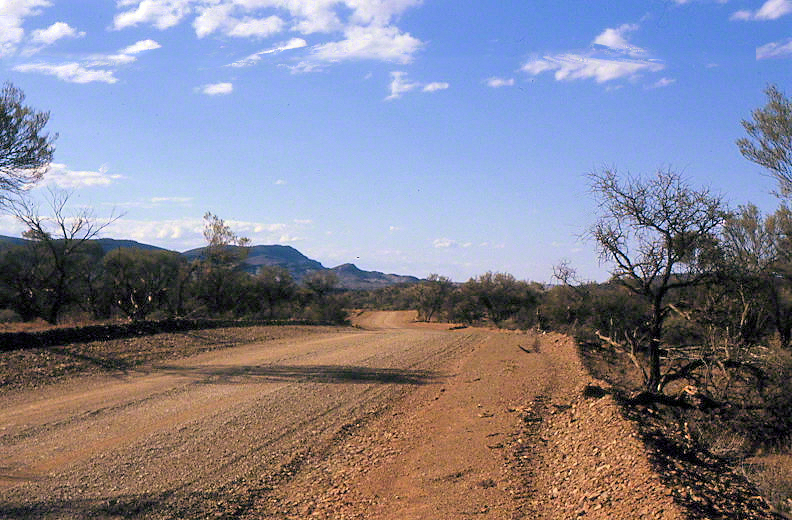
With our two Indigenous guides, Dad drove the Rover along the rough dirt track (probably a “short cut”) to the road that parallels the MacDonnell Ranges, Namatjira Drive. These days, the main roads are sealed, but not back then. Dust billowed into the cabin as we drove on a road that parallels the MacDonnell Ranges.
Mr. B frowned. ‘Just long enough to take a few snaps like the tourists, I expect.’
‘You sure you don’t want to start at Serpentine to our right? We could hike up while the morning’s still cool.’
‘What morning? It’s already past noon.’ Mr. B flicked his map flat. ‘Ellery Creek, I say, for lunch.’
Dad sighed, ‘Very well, then, Ellery Creek.’
Ellery Creek
After lumbering along the wider but corrugated road, Dad turned into the barely discernable trail that led to Ellery Creek. After entering the clearing for parking, we hunted for a car park. Not an easy feat as the car park was full; even the spaces in between swarmed with tourists.
Dad squeezed the Rover into what seemed the last remaining gap, and the T-Team piled out.
As he turned the Rover left so heading east towards Alice Springs, Dad smiled. Mr. B pouted and folded the map. He insisted we have lunch before we start on the hike up the gorge. Dad went one better announcing that, since it was Sunday, we’d have lunch AND a Sunday Service.
Mr. B’s response was to shake his head and mumble something not-so-polite into his red dust-stained handkerchief.
Serpentine Gorge
Less populated, Serpentine Gorge begged to be explored. Our Indigenous guides were not interested in joining us, so we bravely set off on our own adventure. To get to the narrowest part of the gorge, we had to cross a deep pool of water on our air mattresses and then walk along a rocky creek barefoot. We had forgotten to bring our shoes. Not that it concerned the men, they raced ahead leaving me behind hobbling on tender feet over sharp stones.
Then, disaster. Mud and slime replaced jagged rocks. In the shadows of gorge, I trotted on the path near creek. My heel struck a slippery puddle lurking by a pool of sludge. Next, I skated, feet flew from under me, and I landed bottom-first in the murky depths of the Serpentine Creek.
‘Ah, well,’ Dad sighed. ‘We better get back to the Rover. We need to find camp before it’s dark.’
As we hobbled back in the fading light, I mumbled, ‘Sure it’s not dark already?’
Other Gorges for Another Day
Dad endeavoured to distract me from my discomfort with descriptions of the many other gorges in the MacDonnell Ranges and tales of adventures exploring them. His stories whetted my appetite to view these wonders myself one day, on this trip, or perhaps in future journeys to Central Australia.