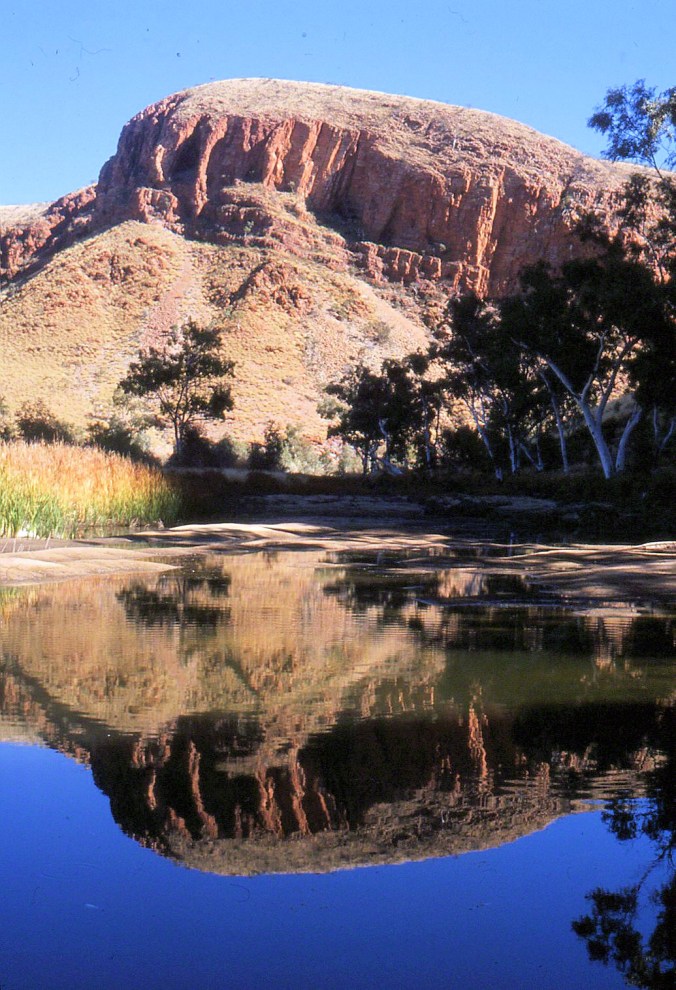
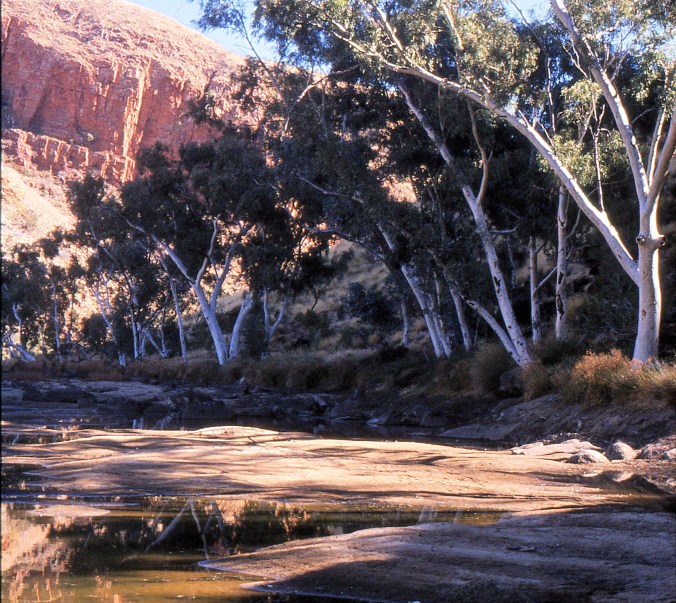
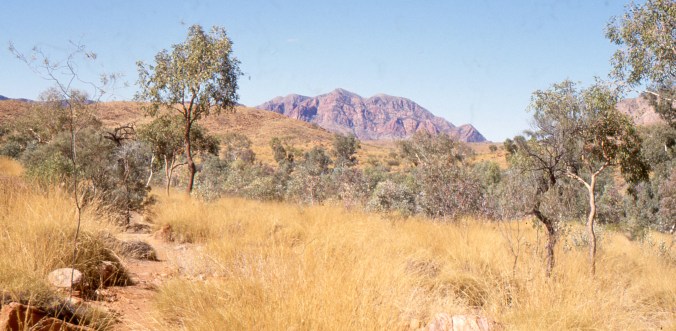
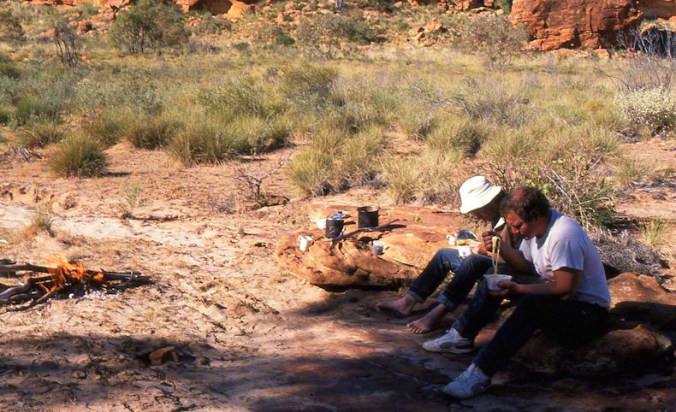
Family History Friday–Great-Grandpa T (2)

The Ancestral T-Team in Australia

1885: Emigration to Australia

According to family lore, the Trudinger family emigrated to Australia because Carl August’s business went bankrupt. But was this actually the case?

The wool industry in Yorkshire was booming well into the 1890s. Carl August and his family emigrated to Australia in 1885.

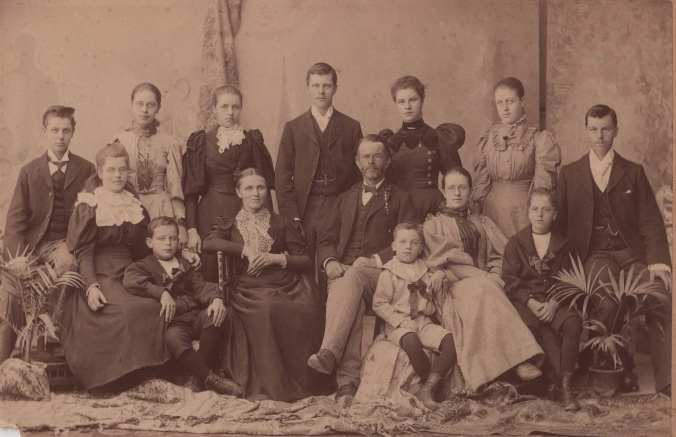
The facts are Clara Theresa and her 12 children boarded the sailboat, the Holmesdale, for Port Adelaide, South Australia, in 1885. Carl August stayed behind for a few weeks to tie up loose ends, house, business, etc., then he boarded a steamship and arrived one day before his family set foot in Port Adelaide. That kind of expenditure doesn’t, in my opinion, reflect a man whose business has gone bankrupt. But perhaps the total cost of emigrating to Australia took its toll on the finances.

They settled in the Norwood area, Carl taking up a job as a greengrocer.

The following year, on August 16, 1886, my grandfather, Ronald Trudinger, was born. He was number 13 and the last child in the Trudinger tribe.

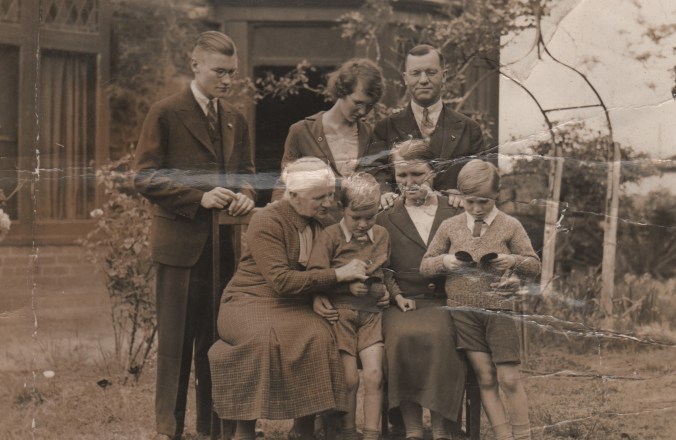
Carl August bought the Trudinger family home in Heathpool. 5 Northumberland Street, Heathpool, became a family and community hub, where friends and family gathered and lived long after Carl August and Clara Theresa had gone to their eternal home in Heaven. Their daughters, Clara, Gertrude, and Dora, lived there until they, too, passed on to Glory. Dora, the last of the maiden aunts, passed away in 1961. And it was where my dad and his brother Paul lived with their aunts while their parents, Ron Trudinger and Lina, were missionaries in the Sudan, Africa.

*[Photo 7:  Family gathering (Ron Trudinger (snr) and family with Aunt Clara) out in the backyard of the Trudinger home 5 Northumberland St, Heathpool, courtesy of L.M. Kling circa 1935]

The Schammer Family history states Carl August set up a textile business in Adelaide city centre, in Rundle Street, managing the chain store of Theodore Zimmermann, from Gnadenfrei. When Carl August retired, he passed this business on to his son, Oscar. By the 1920s, this store was a clothing shop on the ground level, where the Myer store now stands.

They had raised brilliant and, on the whole, God-fearing children, nine of whom ventured out into the mission field. A number of them attended university, including two of their daughters. According to the numerous news reports, they became a prominent family in Adelaide church society. Like cream, they rose to the top, a shining example for Christian families everywhere.

However, life didn’t always go smoothly for the Trudinger family in Australia.

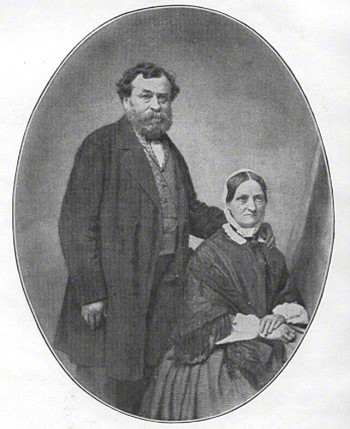
*[Photo 8: Family photo of the Trudinger family, circa 1893, courtesy of L.M. Kling]

In 1894, whilst working in Kapunda, Carl August’s son, who worked in Kapunda as a watchmaker, was almost swindled by a shady character who had a habit of passing on “rubber” cheques, you know, the ones which bounce. Fortunately, in Kapunda, the bank wasn’t too far, and my great-uncle was able to sort out the problem before the offender had escaped the town. Mr. Lehmann, the owner of dodgy cheques, was apprehended, charged, and jailed for his crimes. Another time, also while in Kapunda, which must’ve been quite a town back in the day, Carl’s son August found a vagrant sleeping on the porch doorstep of his business.

Tragedy struck the Trudingers while they were in Broken Hill in 1892. Their daughter, Elsbeth, died suddenly of typhoid at the age of eleven.

So, could there be other reasons Carl August and Clara Theresa moved to the other side of the world?

Clara Theresa had dreams of being a missionary. Dreams that remained unfulfilled. Most probably because she married a man who had been outside the Moravian Brethren fold. Although he did join the Moravian Brethren when he married Clara Theresa, it wasn’t enough for the Moravian leaders to allow Clara Theresa to become a missionary herself. Hence, she dedicated all the children she bore to God. If she couldn’t be a missionary, perhaps when they grew up, they could. And Carl August, being the easy-going, amiable person that he was, went along with his wife’s wishes.

In this light, did she see Adelaide, South Australia, established as a free city, a Utopia, as an opportunity to fulfil God’s missionary call without all those rules and regulations, encumbrances her brand of church, The Moravian Brethren, placed on individuals to be accepted into the community and to be accepted into missional service?

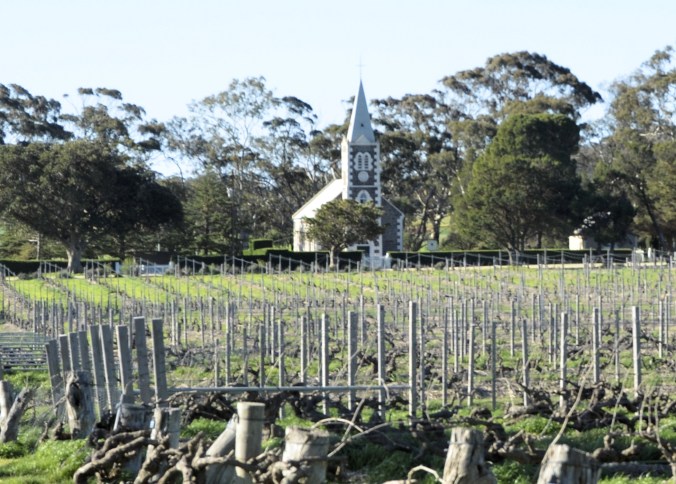
My hypothesis is this: Carl August and Clara Theresa made a deliberate choice to emigrate to South Australia. They may have seen it as God’s call and God’s guidance to go there. When they came to Adelaide, there was no Moravian Brethren community, so they joined the Presbyterian church. However, not so far away, in Bethany, in the Barossa Valley, there did exist a Lutheran Church influenced by the Moravian Brethren. There is no mention my great-grandparents ever attended this church. Interesting … Especially considering Carl August’s son worked in Kapunda in the 1890s.

[Photo 9: Hill of Grace Barossa Valley © L.M. Kling 2018]

I wonder if there wasn’t some hurt Clara Theresa was suffering because she so wanted to be a missionary and her church community, the Moravian Brethren, wouldn’t allow her to be. Then back to Carl August, grown-up Lutheran-Evangelisch, but despite all the Lutheran churches in Adelaide and the Barossa, he opts for the Presbyterian Church as the one he feels most comfortable in to worship.

One point I mentioned earlier, Carl August did not like Bismarck or the direction Germany was taking. In later years, according to news articles, they had disassociated themselves completely from Germany, as if they were ashamed of the country of their birth. Understandable after World War 1, I guess. Being sent to an internment camp wouldn’t have been high on their priority list.

Another fact, yet to be verified: in the early 1900s, it is said Carl August spent time away from the family in Southeast Asia, specifically the Philippines. He went there on business. In recent years, one relative reported he’d discovered Carl August had been selling arms to support the Filipinos in their war against the United States (1899-1902). There’s that passion for justice streak again.

Carl August and his wife spent decades worshipping at St. Giles Presbyterian Church. Carl August was an elder there. In 1927, the local paper, which reported their diamond wedding anniversary, also mentions Carl August was still fit enough to walk to church every Sunday morning. One article mentions the success of their long marriage was founded on never going to bed angry with each other. On the last night of Carl August’s life, he asked his wife to forgive him for saying sharp words, and of course, she forgave him.

The next morning, on July 10, 1929, at the age of 90, Carl August went to be with Jesus in Heaven. True to his humble, gentle nature, he was buried in a grave with no headstone, with his wife, who died three years later, in the West Terrace Cemetery, Adelaide, South Australia.

© Lee-Anne Marie Kling 2026

Feature Photo: Close-up of Carl August (circa 1893), courtesy of L.M. Kling

Note: If you have any information you’d like to share about Carl August or details that need correcting, please contact me in the comment section below.

***

Want more, but different?

Check out my Central Australian adventures.

Click on the links:

The T-Team with Mr. B: Central Australian Safari 1977

Trekking with the T-Team: Central Australian Safari 1981

Travel with the T-Team Next Gen–Crazy Can in Coober Pedy

T-Team Next Generation

Alice to Adelaide

Part 2

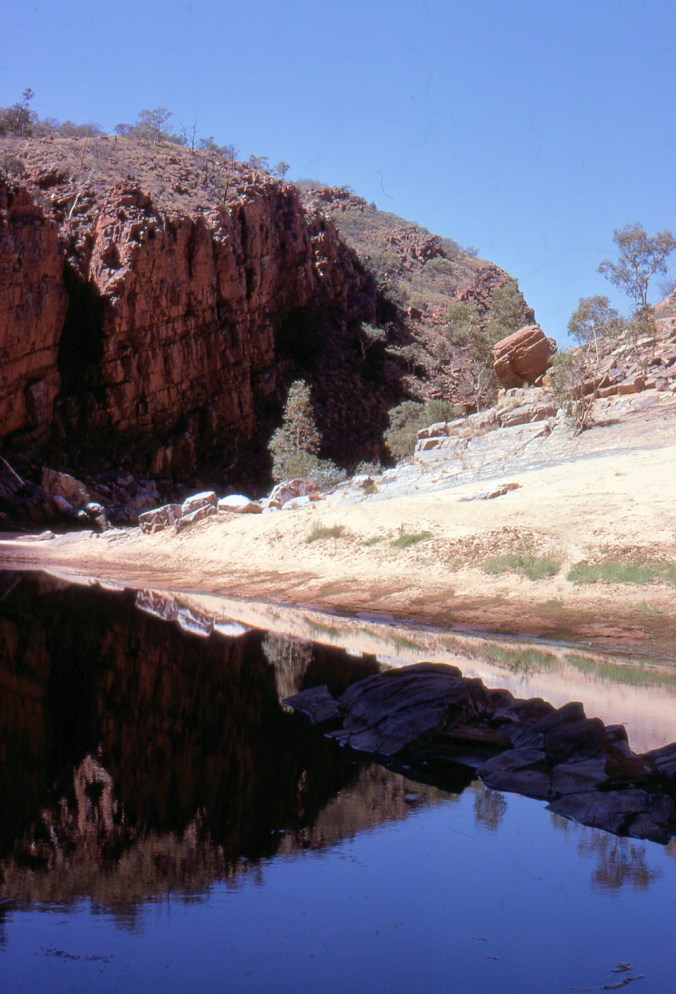
[In 2013, the T-Team, next generation embarked on their pilgrimage to Central Australia. Purpose: to scatter Dad’s ashes in his beloved Central Australia, in Ormiston Gorge.

Once every month, I will take you on a virtual trip to the Centre and memories of that unforgettable holiday in 2013, with my brother and his family; the T-Team Next Generation.

This time, a crazy robot toilet incarcerates me.]

The Trucks of Terror

Morning and the dawning realisation why this campsite may not have been popular. Anthony stomped around the tent, grumbling.

‘I got no sleep last night,’ he snapped. ‘Kept getting woken up by those trucks rumbling all night. And their lights. Just as I drifted off to sleep. Those lights shining into our tent.’

‘Will you be alright to drive?’ I asked.

‘Why wouldn’t I be?’ he sniffed. Anthony was a man, after all, and infallible.

We moved like snails, packing up. I loaded the Ford’s rear with stuff. Next minute, Anthony was there unloading and repacking. Must do it right, even on the last leg of our journey.

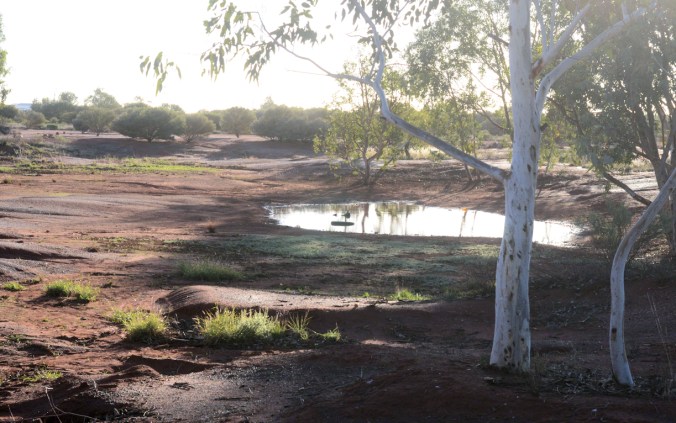
[Photo 1: While I waited, morning views from Marla campsite © L.M. Kling 2013]

While he played his version of luggage-tetris, I wandered off to the BBQ hut to check for any forgotten items that might lurk there. And behold, sitting rather smugly in a rather obvious position on the bench next to the BBQ facilities was Anthony’s water bottle. You just have to wonder whether the water bottle had legs and hid when we were searching for it the previous night. Then, when it realised that it might be left behind, it positioned itself in the fail-safe position to be found. The water bottle is not the first item to “hide” from me and then “reappear” in a place where I have looked a dozen times before …

There was much rejoicing over the lost water bottle that was found.

Owing to Anthony’s meticulous care in packing, we were the last to leave the campsite.

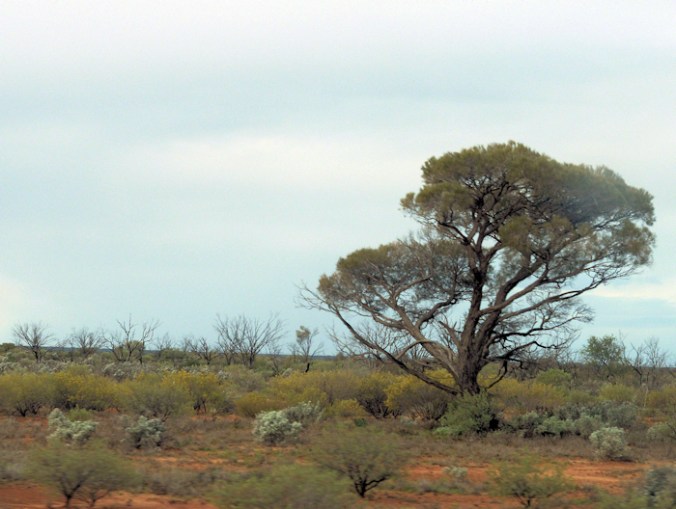
As we travelled the long monotonous stretch, I slept a bit, wrote in my diary a bit, and then stared out the window at the red earth, gibber plains, and twisted corkwood trees.

*[Photo 2: Inspiration for a painting— Trees twisted on the gibber plains © L.M. Kling 2013]

Anthony took my hand. ‘I’m sorry I was grumpy.’

‘That’s okay, blame it on the trucks that kept us awake all night.’

‘I swear that there was a truck that shone its lights straight into our tent.’

‘Yeah, it seemed that way,’ I replied. ‘Perhaps we can stay at Woomera in a cabin tonight and get a decent night’s sleep.’

‘Yeah, why not!’

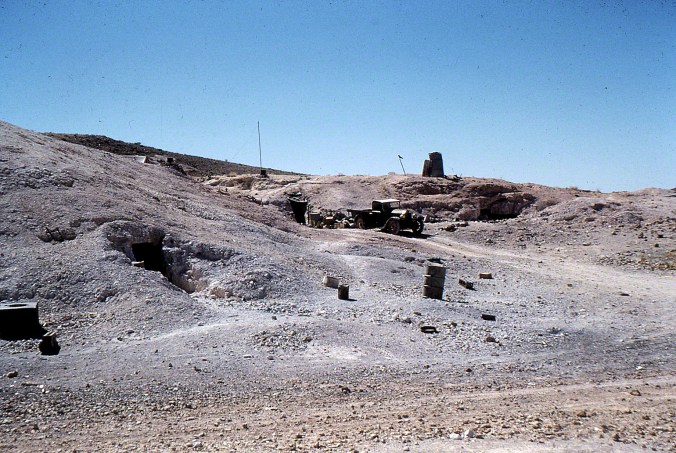
Around two o’clock, the landscape evolved from flat and stone scattered to low-lying hills pockmarked with what appeared to be giant rabbit holes. Signs warned visitors to beware of mineshafts.

*[Photo 3: Mineshaft mountains © M.E. Trudinger (nee Gross) 1956]

‘Lunch at Coober Pedy?’ Anthony said.

‘Yes, but … first a toilet stop.’

‘And where do you suggest?’ Anthony glanced at me and then gazed at the mineshaft-littered hill face.

‘A service-station? Or a pub?’

‘And where’s the service station?’

A tour of Coober Pedy yielded no service stations that we could find. And he who wanted to save money and eat a picnic lunch was not willing to enter a pub for the loo in case it entrapped us into eating in there.

‘What about the playground and BBQ area where we had tea with the T-Team on the way up to Central Australia?’ Anthony suggested.

Bad suggestion …

But, at the time, I agreed. Lunch and loo visit in one hit.

2. Chaos in the Can at Coober Pedy

We settled down at a picnic table near the automated toilets. Anthony prepared the sandwiches while I dashed into the “robot” dunny to do my deed.

While I sat on the tin throne, country and western-come-Hawaiian music clanged away. Did I detect a banjo while the toilet roll unfurled itself for me? No button to flush. Oh, well. Once I washed my hands, the toilet duly flushed. Then, I placed my hands under the air-dryer. As usual, I am invisible to this universe and the cohort of air-dryers that belong to it. The air-dryer refused to acknowledge me and blow air on my wet hands. Oh, well, I’ll dry my hands with my own towel from the car that exists quite happily in my universe.

I step to the sliding door and press the large blue button. The music volume increased. But the doors did not oblige. I pressed the blue button again. Nothing. Just the demented music. Becoming more demented.

I read the instructions. And pressed the blue button again.

Nothing.

I hit the button.

Kicked the door.

I sat down by the stubborn, un-sliding door.

And waited.

Instructions said I must vacate this automated, locked-down establishment in ten minutes. As if to press its point, the “robot’ toilet ramped up the annoyance level of the music.

What’s worse, I had entered this pongy prison without my mobile phone. Or jumper. It was cold in there.

Anthony called from the outside. ‘What’s going on?’

‘I’m trapped,’ I replied. ‘The toilet won’t open.’

‘Have you tried to push the button?’

‘Yes, a million times.’

‘Well, you must’ve done something wrong.’

I noted that the blue button had written on it “touch free” and then I figured, That’s why the toilet’s incarcerated me. Touching it must’ve broken its rules. ‘Has it been ten minutes yet?’

‘Not yet.’

Then, the blue button, which I’m meant to push for my release from this demented can, the button that has “touch free” displayed on it, lit up and vibrated. But the door refused to budge.

I pushed the door. No joy. It stayed locked, and the not-so-ambient music went on and on like some crazy organ-grinder.

I was starting to imagine a security guy in some dug-out office in the middle of Coober Pedy laughing at this old jailbird (me) … when …

A voice from above warned, ‘You have exceeded your stay; you must exit immediately.’

‘Not that I haven’t wanted to,’ I snapped back. Pushed the vibrating bright button, yet again. Pulled the door. Still as stubborn as.

‘You have exceeded your stay. You must exit immediately.’ Followed by the crazy music.

I rolled my eyes. ‘I wish.’

Watched the door. Hoping. Praying it would open.

‘You have exceeded your stay. You must exit immediately.’

I waited and watched. ‘You might need to call the police or emergency services to release me,’ I told Anthony.

As if it heard my warning to call the authorities, the door slid open. I leapt out. ‘Yay! I’m free! I’m free!’ I jumped and danced in front of a rather unimpressed husband. ‘I’m never going to be in one of those things again! I thought it was never going to open!’

‘Come on, let’s have lunch,’ Anthony snipped, ‘We’ve already wasted twenty-five minutes.’

‘Not before I get my jumper, I’m freezing. You don’t know how cold it was in there. I’m never going into a toilet without my mobile phone or a jumper. Ever.’

As we munched on our sandwiches, a brisk wind chilled us to the bone, even with an extra layer of clothing on. A little indigenous boy scampered into the evil “robot’ toilet. Less than a minute later, he exited. Anthony then went into the same crazy “can” and was out in two minutes.

‘How did you do that?’ I asked.

Anthony replied smugly, ‘I pressed the blue button.’

‘So did I, a dozen times.’

‘You must’ve done something wrong.’

‘Just my luck, I had to be incarcerated by the toilet.’

So, out on parole from the Cooper Pedy “jerry can”, we escaped this town and headed for Woomera.

[to be continued …]

© Lee-Anne Marie Kling 2021; updated 2026

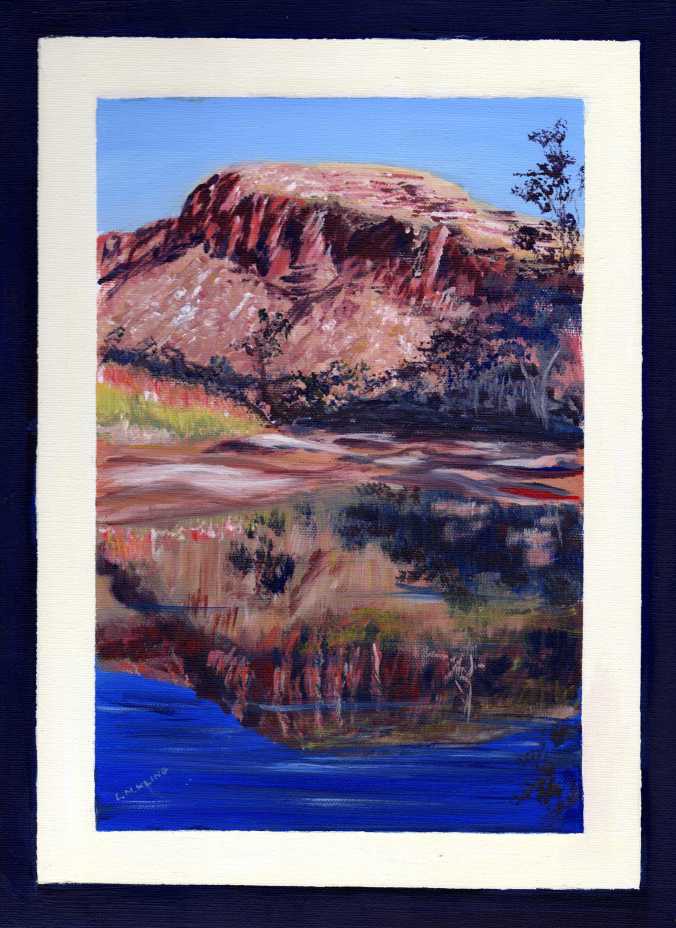
*Feature painting: Desert Storm Brewing, Lake Hart © L.M. Kling 2025

***

Virtual Travel Opportunity

For the price of a cup of coffee (takeaway, these days),

Click on the link and download your kindle copy of my travel memoirs,

The T-Team with Mr. B: Central Australian Safari 1977

Trekking with the T-Team: Central Australian Safari 1981

Arty Friday–Cockling at Goolwa

Story Behind the Art—Cockling at Goolwa

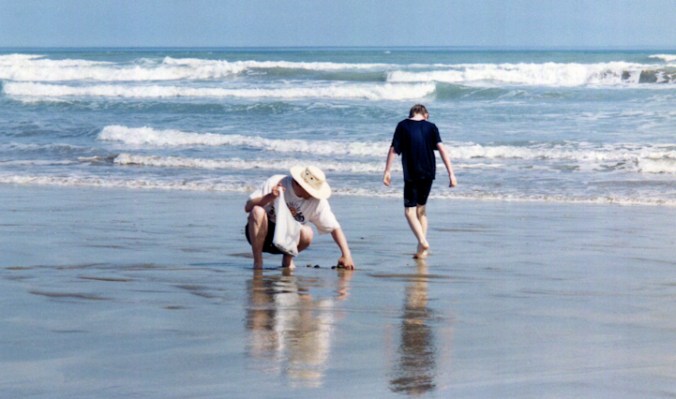
[Marion Art Group is holding an exhibition at Brighton Central Shopping Centre (Brighton Road, South Brighton), May 18-30, 2026. One of my artworks to be displayed, Cockling at Goolwa in Pastel, revisits the K-Team’s journey down “memory” highway, 100 kilometres south of Adelaide to Goolwa Beach on the far-flung edges of the Fleurieu Peninsula. Remembering our time with friends 24-years ago searching for cockle shells in the sand.]

Cockling at Goolwa

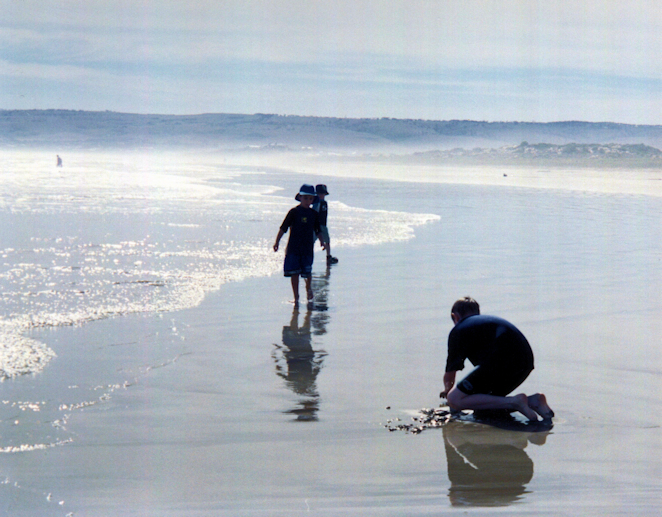
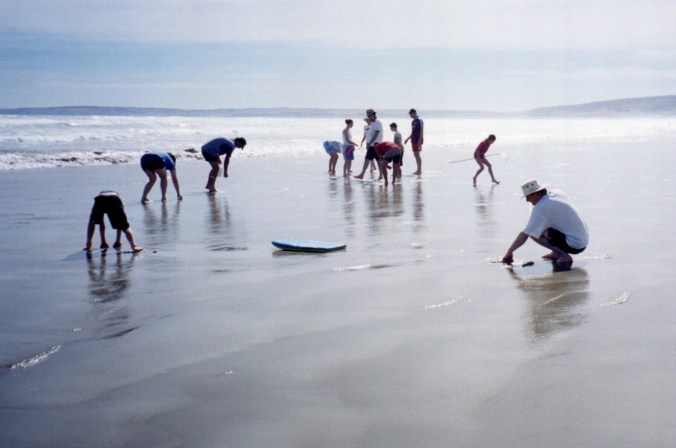
A picture, they say, tells a thousand words. So, what is Cockling at Goolwa’s story? How can the simple heel-toe dance of “cocklers” (people who dig for cockle shells), their feet sinking in the soggy sand of the incoming tide, in the flux of early summer warmth, on a remote beach south of Adelaide, tell us? What story is worth a thousand words? What was it about this scene that attracted me to capture it? First in photo and then several years later, on canvas in acrylic, and then recently in pastel.

*[Photo 1: Cockling at Goolwa © L.M. Kling 2002]

I think the water reflecting the sky, all silver, the people on the wet sand, a mirror, swaying and twisting for cockles captured my attention. I’d been there, on the glassy surface, watching for bubbles, grinding my heel into the bog, feeling for the sharp edges of shell and plucking out the cockles that snapped shut when exposed to air.

*[Photo 2: Dad Digging for the cockle © L.M. Kling 2002]

I was there, but then I watched. Mothers, fathers, and children lost in the moment of twisting and hunting and collecting cockles.

*[Photo 3: Lost in the moment © L.M. Kling 2002]

‘What will you do with all those cockles?’ I asked.

‘They’re for fishing,’ one of our friends said. ‘Bait for fish.’

‘Hopefully, we’ll catch a few fish and have them for dinner tonight,’ another said.

I imagined fish, fresh from the sea, thrown on the barbeque and the cockle bait inside them buried once again in our stomachs. We continued digging for cockles…family and friends, one with the ancient, outside time—nothing else matters but the cockles.

*[Photo 4: Goolwa beach — Lost in time © L.M. Kling 2002]

Goolwa, if I remember, has mounds of spent shells in the sand hills, monuments to generations upon generations of Indigenous Australians, their open-air kitchens and meals. Did they perform the same ritual, on the same patch of wet sand, delving for cockles to fry on their fires? A quick perusal of Google reveals they used nets to collect cockles and catch fish. They then cooked the cockles on a campfire.

*[Photo 5: Goolwa beach sunset © L.M. Kling 2002]

We are here, they are gone, but their spirit of history lingers, reminding us, though we seem different, we are the same. We are digging, dancing, and delving for our dinner. We are still, in the moment, alone in our thoughts in a forgotten corner of the world, unknown by the world, yet one with this country’s past. And God knows each one of us—each part of us, even the unknown parts of ourselves and our secrets.

*[Photo 6: Divine painting of sky and sea © L.M. Kling 2002]

What if I shared a little secret—an artist’s secret? Okay, I’ll tell you. I painted this picture in less than two hours. Now that I’ve told you, would the painting be worth less to you? Must time be equated with worth? Sometimes I do take hours upon hours, layers upon layers, and more hours planning to get the work right. But not Cockling at Goolwa.

*[Photo 7: The natural child © L.M. Kling 2002]

I love the beginning of a painting; laying the foundation, engaging my inner-natural child, the paint flowing from a thick brush on a damp canvas, colours blending, mixing as I go. One side of the brush is crimson, the other blue, and a dab of white. Sienna is somewhere there in the foreground, shadowing the sand. Mid-yellow was added incrementally to shroud the distance in light grey for perspective. Then just a hint of heads of land jutting out halfway across the horizon with a suggestion of ultramarine in the grey. So simple, and sometimes, like with Cockling at Goolwa, the scene emerged before my eyes. In the world of artists, I believe the term “magic brush” or “magic hand” has been used. Um, trade secret, so don’t go spreading it around.

So, there you have it, in less than an hour, surf, sand, sky, and tones in all the right places.

*[Photo 8: Boogie-board Surfing at Goolwa beach © L.M. Kling 2002]

Now for the people, the twisting, turning people, their feet in the boggy sand. How do I paint them? I had a break and drank a cup of tea. I remember not all the children hunted for cockles. Some kids body-surfed in the shallows, some played cricket, and one little boy with a wish to be hunted, or to be warm, buried all his body except his head in the sand. I found him, and he broke out of his sand-grave, the sand zombie.

*[Photo 9: Sand-zombie © L.M. Kling 2002]

‘Don’t go tracking your sandy footprints into the shack,’ I said.

He washed himself off in the surf, then sat wrapped in a towel and shivering in the sun while watching the cockle hunt.

All the while, the “cocklers” cockled for cockle shells. Soon, the boy joined the hunt for cockles.

Then, when the paint was dry, I plotted the people in with a pencil and then painted them in with a finer brush.

‘I like that painting,’ a fellow member of the art group said. ‘Don’t do another thing to it. Don’t even frame it. I’ll buy it as it is. How much do you want for it?’

Paint barely dry, I took the work home, signed it, and then the next week at our Christmas lunch, I delivered Cockling at Goolwa to them. The buyer showed the work to others at their table, and all admired it.

[Photo 10: Watching the cocklers © L.M. Kling 2002]

What made another person connect with Cockling at Goolwa? For this person, their son and family spent many summer holidays at Goolwa, doing just that, cockling. Time out, out of time, unwinding, relaxing, happy times, happy memories, captured on canvas…in less than two hours. And I must admit, the story is slightly less than one thousand words.

But perhaps as you look at the copy of Cockling at Goolwa, you may have a story of your own about the painting. Maybe a painting’s story is not just one person’s story, but stories from many people, one thousand words, or more…

© Lee-Anne Marie Kling 2016; updated 2019; updated 2022; 2026

*Feature Painting: Cockling at Goolwa in Pastel © L.M. Kling 2022

***

Longing for more travel adventures?

Dreaming of exploring Australia?

Read the T-Team’s Aussie adventures, click on the links for my travel memoirs below:

The T-Team with Mr. B: Central Australian Safari 1977

Trekking the T-Team: Central Australian Safari 1981

Travelling Friday–Road Trip to Sydney (6)

Road Trip to Sydney in the Charger (6)

[Based on real events, but some names have been changed. And some details of events may differ. After all, it was over 40-years ago.

Finally…the intrepid road trip travellers reach Sydney.]

The Conference and Rick Never had a Girlfriend

As far as conferences went, not a bad one. Lots of singing, worshipping God, that is, lectures, Bible Study, eating, and meeting new friends and old friends too. Our accommodation was down Anzac Parade, about five kilometres, halfway to the beach. I shared a small apartment with Rick and Dad. Dad drove me back and forth from the conference centre at Randwick. Not sure what Cordelia did, but I think she connected with other members of her family who attended the conference and stayed with them. Rick, I think, ferried Mitch and Jack to and from the conference centre.

This arrangement becomes relevant later in the week of the conference.

One session that stands out was the one on relationships.

Rick and I sat side by side in the front row.

This will be interesting, I thought. Maybe I’ll get some tips on how to get a boyfriend and be popular like Cordelia.

‘So,’ the speaker said, ‘How many of you have had a boyfriend or girlfriend?’

Everyone, including me, raised their hands. Everyone, that is, except my brother Rick.

‘What? You’ve never had a girlfriend, Laddie?’

‘Nope?’

The speaker pointed at me. ‘What about that lovely girl next to you?’

‘She’s my sister.’

Laughter.

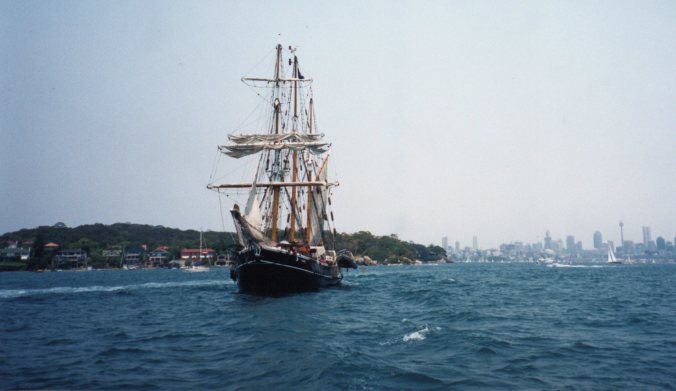
[Photo 1: A lone tall ship in Sydney Harbour © L.M. Kling 2002]

Abandoned at the hostel and trek up Anzac Parade

Towards the end of the conference, one more event stood out.

Dad told me to wait for him at the hostel apartment where we were staying. After lunch, we had an afternoon of free time before the final worship session.

I returned to the apartment for lunch with my brother and friends, eager to catch up on some rest and lose myself in a book. Maybe some journal writing, which had been neglected in all the activity and excitement of the conference.

However, upon my return to the dreary grey corridors of the hostel, my door was locked. Oh, well, Dad said he won’t be long.

I had nothing with me. All my supplies of entertainment and comfort were locked away in the apartment.

So, I sat.

For hours.

After two hours, I began to sniff.

Then snivel.

Then finally, cry.

A lady poked her head out of a nearby door. ‘Are you all right?’

I wiped my eyes. ‘Yeah, I’m fine.’

She retreated into her apartment.

I looked at my watch. Five o’clock! I’d been waiting for almost three hours for Dad.

Convinced that he’s forgotten me and I’d be waiting for another five hours with that lady sticking her nose in my business every so often, I stood up. Stiffening my lip in grim determination, I marched out of the hostel and strode up Anzac Parade.

I prayed that God would protect me.

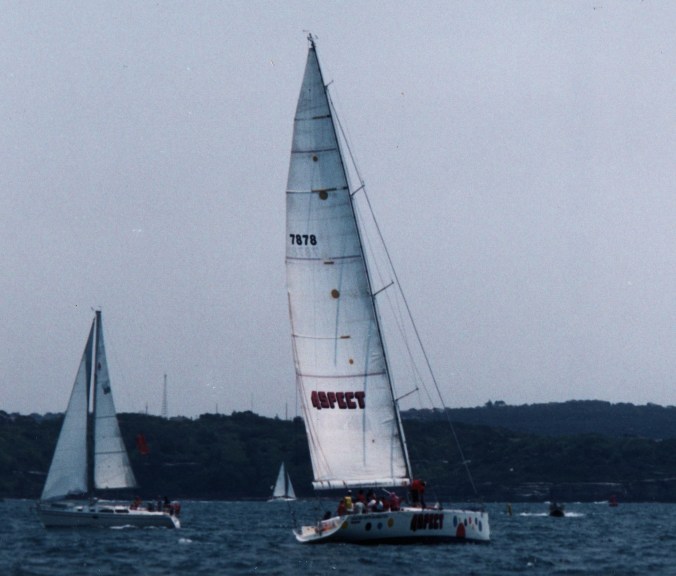
[Photo 2: Yachts in Sydney Harbour © L.M. Kling 2002]

Along the cracked pavement. Past long neglected houses. And cared-for ones. Over busy roads at the lights. Narrowly escaping any impact with red-light-running cars. In the humidity. Under light rain. Taking a wide berth around the many hotels. And leering drunks who spilled out onto the footpath. In the ever-fading light that faded into dusk.

Five kilometres and forty minutes later, I entered the conference centre. The session where all had gathered was concluding with prayers. All in a circle holding hands. I slipped in the circle.

The boy next to me squeezed my hand.

Oh, he’s just being kind to poor little old me, I thought. After all, if even my father forgets me

After over tea and biscuits, my miffed Dad asked, ‘Where were you?’

‘What do you mean? I waited three hours,’ I retorted.

‘Couldn’t you be patient?’

‘Not when I couldn’t get into the room,’ I said. There was a limit to my patience.

‘I went to pick you up, and you weren’t there,’ Dad said. ‘I told you to wait.’

‘And what time was that?’

‘Oh, er, um, about …’ Dad’s voice faded, ‘about five.’

‘Well, I was there at five, and I didn’t see you.’ I sniffed. ‘So, I walked.’

‘But don’t you know how dangerous it was to walk here?’ Dad is showing so much concern after forgetting me for the whole afternoon.

‘I’m here, aren’t I?’ I replied. ‘I prayed, and God protected me.’

‘He did. Praise the Lord,’ Dad said, and then wagged a finger at me. ‘But don’t you ever do that again.’

‘Yes, Dad.’ As long as you don’t forget me again.

Passing through the Blue Mountains

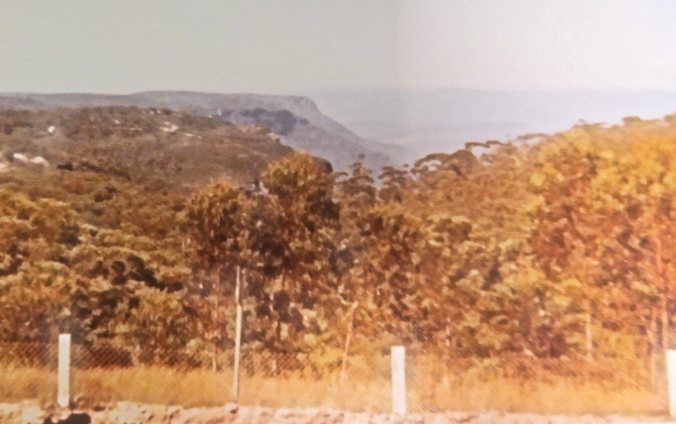
[Photo 3: A view of the Blue Mountains from the actual trip © L.M. Kling 1979]

Our return to the less crowded and more sedate city of Adelaide was serene and uneventful, as was the fair city itself. Especially at the time in 1979.

A few highlights. Mostly, in fact, all are associated with the Blue Mountains. We had missed the beauty and wonder of the mountains on our journey to Sydney, so Rick endeavoured to show us these mountains in daytime on our trek home.

At the lookout to the Three Sisters, we lunched and admired the majesty of God’s creation. Even Rick, using his Polaroid camera, took photos of us admiring the scene. He was taken with the layers of misty blues and subtle greens cascading down into the depths, while the cliff tomes forming the Three Sisters presided over the valley.

I burst out in song, and Cordelia joined in.

After a chorus, Cordelia said, ‘You should try out for the worship band.’

‘Me?’

‘You have such a sweet voice, although it does need to be stronger.’

On the drive home, I considered the prospect of trying out for the band. Perhaps singing in front of the church would make me more popular with the boys. Like Cordelia. But in the end, I decided against it. Too hard. Too much of a challenge for plain old me. After all, the worship band was a highly coveted affair, where lead singers jealously guarded their position. I’d never have a chance. Sweet voice, but not a strong voice, would never cut it.

Back at school, I continued my enjoyment of music, singing in the choir. But I’d always secretly envy the soloists with their stand-out song voices. The stars, with their melodic, strong notes, capture the audience’s focus on them alone.

Instead, in the new year of 1979, my passion turned to art … and writing. These were the gifts God had given me.

© Lee-Anne Marie Kling 2023

Feature Photo: Sydney Harbour from Ferry © L.M. Kling 2002

***

Want more, but too impossible to travel down under? Why not take a virtual journey with the T-Team Adventures in Australia?

Click below on my travel memoirs:

The T-Team with Mr. B: Central Australian Safari 1977

Trekking With the T-Team: Central Australian Safari 1981

And escape in time and space to Central Australia 1981…

Travel Friday–Return to Alice Eternal

T-Team Next Gen—Alice Springs and Things Eternal

[In 2013, the T-Team, Next Generation, embarked on their pilgrimage to Central Australia. Purpose: to scatter Dad’s ashes in his beloved Central Australia, in Ormiston Gorge.

Every month, I will take you on a virtual trip to the Centre, and memories of that unforgettable holiday in 2013, with my brother and his family, the T-Team Next Generation.

This time, the T-K Team once again returns to Alice Springs as they begin their journey back home.]

In Search of Gas

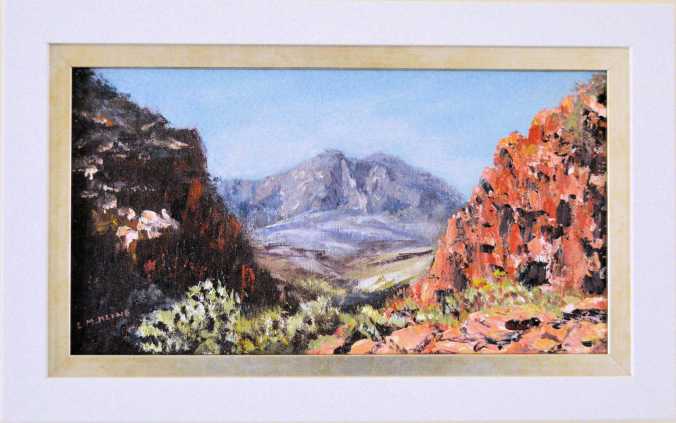
While Hubby packed the Ford, I prepared a “thank you” card for our friends. I found a photo of a rock formation near Mt. Liebig, then I painted a frame around the picture, and finally, sketched Mt. Sonder from memory in the middle of the card.

[Painting 1: Descent down Mt. Liebig © L.M. Kling 2014]

After placing the card with gift money enclosed on the kitchen bench, I joined Hubby to pack the last few items of mine in the Ford.

[Painting 2: Waves of Mt. Sonder © L.M. Kling 2016]

Hubby checked his expert handiwork at packing, and then said, ‘Ready to go?’

‘Yep, let’s go over to the FRM store and say goodbye to our friends.’

We bid our Hermannsburg friends farewell, promising to catch up with them when they returned to Adelaide. After more storytelling by P and some souvenir shopping by us, we were ready to farewell Hermannsburg.

[Photo 1: Just a reminder that Hermannsburg once had a cattle station to employ the locals © C.D. Trudinger circa 1955]

Following a few more stories from P, then a phone call to my brother, who said they were about to leave Alice Springs, we were set for this town.

Except…

‘I just want to check out the graveyard,’ I said.

‘Do we have to?’ Hubby sighed. ‘There’s nothing there.’

‘I just want to see who’s buried there.’

‘If we have to.’

My husband trekked after me as I trudged over to the graveyard that looked more like a neglected paddock of red sand than a cemetery. We gazed at the iron crosses of the early missionaries, such as Kempe, and a sad tombstone of a 10-week-old Latz baby.

‘Vogelsang, who’s he?’ I asked.

Hubby shrugged. ‘Probably a missionary here, since he’s buried here.’

[Photo 2: Standing where my mum stood.  Funeral of Hermann Vogelsang storeman/gardener at Hermannsburg mission from 1938-1940 © courtesy M.E. Trudinger 1940]

With plans to fill the Ford with fuel, both petrol and gas, and then lunch at Emily Gap, we commenced our drive back to Alice Springs.

‘What about we take a slight detour and have a look at Serpentine Gorge,’ I said, with hope in my voice.

Hubby seemed not to hear my suggestion, but pointed, ‘Look! Another cabin car. Must be lots of workmen going out to do roadworks.’

‘So, we’ll leave Serpentine Gorge for another time when there’s not the threat of roadworks.’

[Photo 3: Serpentine Gorge, for another time © C.D. Trudinger 1958]

1 pm, we rolled into Alice Springs, making a beeline for the petrol station.

‘We must fill up with gas before we start on the journey back to Adelaide,’ Hubby said.

‘Might be a bit difficult,’ I pointed at the LP Gas bowser, ‘it says “Out of Order”.’

Hubby topped up the Ford’s petrol tank, and we steeled ourselves for the hunt for LP Gas. We reckoned that in a country town such as Alice, most fuel stations lined the main roads leading into and out of the town. So, down the Stuart Highway we travelled, in search of a service station which offered gas. Prophetic of a future without LP Gas, our search proved elusive.

[Photo 4: Nexus of past, present, and future: Farewell to the Governor General from Hermannsburg © S.O. Gross 1954]

Hubby gripped the steering wheel. ‘How are we going to get back to Adelaide?’

‘I’m sure there’s a station that sells gas somewhere in Alice.’

‘How far do you want me to go? Adelaide?’

‘Don’t be silly,’ I said. ‘Turn around and let’s go back into the town.’

Hubby grunted in protest at where he could safely do a U-turn, then did a U-turn. Approaching the radio station, I spotted a white van with a trailer.

‘Guess who I’ve found,’ I pointed at the van with the T-Team spilling out of it.

‘Do you want me to turn around?’ Hubby asked.

‘Yep, my brother may know where a service station is that sells LP Gas.’

[Photo 5 and Feature: Proof. Duke of Edinburgh, Prince Philip, at the opening of the Flynn Memorial Church, Alice Springs © S.O. Gross 1954]

We spent some twenty minutes touching base with the T-Team. My brother gave directions for an LP Gas-friendly service station, and we were on our way to this fuel stop of promise, and then Emily Gap. Meanwhile, the T-Team visited their friend who worked at the radio station.

[to be continued…]

© Lee-Anne Marie Kling 2021; updated 2026

***

Virtual Travel Opportunity

For the price of a cup of coffee (takeaway, these days),

Click on the link and download your kindle copy of my travel memoirs,

The T-Team with Mr. B: Central Australian Safari 1977

Trekking with the T-Team: Central Australian Safari

Travelling Friday–Tnorala (Gosse Bluff) Revisited

[In 2013, the T-Team, Next Generation, embarked on their pilgrimage to Central Australia. Purpose: to scatter Dad’s ashes in his beloved Central Australia, in Ormiston Gorge.

Over the next few weeks, I will take you on a virtual trip to the Centre, reliving memories of that unforgettable holiday in 2013 with my brother and his family, the T-Team Next Generation.

This time, the T-K Team continues their venture out West of Hermannsburg to explore Tnorala (Gosse Bluff).]

T-Team Next Generation—

Tnorala (Gosse Bluff) Conservation Reserve

—Revisited

[In 2013, the T-Team, Next Generation, embarked on their pilgrimage to Central Australia. Purpose: to scatter Dad’s ashes in his beloved Central Australia, in Ormiston Gorge.

Over the next few weeks, I will take you on a virtual trip to the Centre, reliving memories of that unforgettable holiday in 2013 with my brother and his family, the T-Team Next Generation.

This time, the T-K Team continues their venture out West of Hermannsburg to explore Tnorala (Gosse Bluff).]

Big Day Out West (2)

Afternoon

After eating a snack, we walked the designated paths, taking care not to stray from the designated paths. Off track, the land was reserved for revegetation, and it certainly had revegetated since 1977. Then, the crater had been a barren wasteland. In 2013, green and full of native bushes and trees.

[Photo 1: Inside Tnorala © L.M. Kling 2013]

[Photo 2: Back in 1977, T-Team with Mr. B © L.M. Kling (nee Trudinger) 1977]

Upon completing the various walking tracks in the crater, we trekked back to the Ford and then trundled out and off the unsealed part of the Mereenie Loop Road, continuing north along it towards the road to Glen Helen.

[Photo 3: Aspects of the Walk in Tnorala © L.M. Kling 2013]
[Photo 4: Revegetation © L.M. Kling 2013]
[Photo 5: Views on way out © L.M. Kling 2013]

But not for long. Roadworks rendered the road unsealed, so more crawling. Until we reached the Gosse Range lookout. Hence, in the mellowing sunlight of mid-afternoon, we supped on our cheese and gherkin sandwiches, which we had bought from the store while feasting our eyes on the panoramic view of the Gosse Ranges and the MacDonnell Ranges.

[Photo 6: View of Tnorala from the scenic lookout © L.M. Kling 2013]

‘Well, time to get going,’ Hubby said. ‘We don’t want to be driving in the dark.’

‘No,’ I replied. ‘Although, just one more photo.’

‘Well, hurry up.’

[Photo 7: View of MacDonnell Ranges from lookout © L.M. Kling 2013]

I snapped a few more photos and climbed into the Ford. Hubby was drumming the steering wheel. After I’d fastened the seatbelt, Hubby turned the ignition.

Nothing.

‘O-oh!’ Hubby muttered and tried the ignition again.

The Ford started, then shook and shuddered.

‘Oh, shoot!’ Hubby snapped.

He turned off the protesting Ford. Extracted himself from the car. And looked under the bonnet. While I sat like the queen in the car, he spent some time “working” and exclaiming at intervals, “We’re stuffed!”

I jumped out and joined him in the under-the-bonnet examinations. By this time, Hubby was in the process of reattaching the air filter hose to the air filter. ‘We’ll see if that works,’ he said.

[Photo 8: On another memorable occasion of car-fail way out West © S.O. Gross 1941]

We resumed our positions in the Ford, sent up an arrow-prayer, and Hubby turned the ignition. The engine ticked over smoothly, and we breathed out our sighs of thanks to God. Hubby then climbed out of the car again to close the bonnet.

Just at this particular time, a pair of tourists in a utility truck drove into the viewing area. They noticed the bonnet up on our car and called out, ‘You need some help?’

Hubby, with a tone of pride in his voice, replied, ‘Nah, we are fine. All good.’

They waved, then drove past us to find a park and take in the view of the Gosses.

Late Afternoon

On our return, we passed a group of stranded owners of the land, kids waving. But Hubby kept driving. I guess he wasn’t going to push his luck with mechanical prowess too far. In that way, he was different from Dad, who would’ve stopped and bantered in Aranda with them. And back then, in 1981, we had Richard, our mechanic.

By the time we reached Glen Helen, the fuel needle sank to less than a quarter of a tank, the gas-guzzler that the Ford is. We filled the tank there and then, now that we were on bitumen road, glided along, enjoying the golden and purple hues of the MacDonnell Ranges in late afternoon. These I captured on my camera, with frequent stops, some with Hubby’s prompting.

[Photo 9: Namatjira Country © L.M. Kling 2013]

Sundown

Ellery Creek languished in the shade when we arrived there. In the cooling shadows, we walked down the path leading to the water’s edge. Just as I remembered, Ellery Creek offered a big pool of water in which to swim. In fact, it’s the go-to place for swimming for the locals. And, as we walked the track to the pool, we passed a German tourist clad in bathers and hair wet from a dip.

[Photo 10: Ellery Creek—Go-to place for swimming © L.M. Kling 2013]

[Photo 11: Tree Reflections at Ellery Creek © L.M. Kling 2013]

Later, as we drove westward to Hermannsburg, Hubby squinted at the setting sun glaring through the windscreen and whined, ‘I can’t see a thing!’

‘Do you want me to drive?’ I asked.

‘No, no, I’ll be right.’

Just then, a kangaroo darted across the road. Hubby slowed, and we watched the kangaroo and its joey tagging behind her, skitter over the verge, and disappear into the bush.

‘That was close,’ Hubby sighed.

[Photo 12: Approaching dusk, Ellery Creek © L.M. Kling 2013]

We arrived back in Hermannsburg at around 7 pm. I rang mum while waiting for tea. After a tasty meal of Chow Mein, we relaxed watching a video and enjoying fellowship with our friends.

© Lee-Anne Marie Kling 2021; updated 2026

Feature Photo: Gosse Bluff at sunset © S.O. Gross 1946

***

Virtual Travel Opportunity

For the price of a cup of coffee (takeaway, these days),

Click on the link and download your kindle copies of my travel memoirs:

The T-Team with Mr. B: Central Australian Safari 1977

Trekking with the T-Team: Central Australian Safari. (Australia)

T-Team @ Home–Barossa Valley

[Travellers to Australia often overlook Adelaide, South Australia, as the poor cousin to the eastern states. Situated in an unfashionable corner of the globe, the city and its surrounds have the reputation of being too hot, too dry, and too awkward to visit.

Welcome to my home city and state.]

T-K Team Take on the Barossa Valley

Shortly before the Swiss relatives arrived, panic among the brothers-K set in. Yes, we were going to the Barossa Valley. But where?

My husband and his brother, P1, cobbled together a plan of the day: wine-tasting, sightseeing, a bakery for lunch, and of course, toilet stops at regular intervals.

We converged as the formidable family of ten at Williamstown, eventually in the car park next to, yes, you guessed it, after a scenic drive through the city and hills, the toilets. Most of the group needed a coffee, and although we’d been warned that on Sundays, many bakeries are closed, we found a most accommodating bakery-come-art gallery, where cappuccinos and chai teas revived us.

[Photo 1: Dummies in carpark © L.M. Kling 2017]

Stuffed dummies, one of whom was named Cyril, waited by the stone wall of the car park. The sign touted that they were part of a scarecrow trail that weekend. I guess they were doing their bit for tourism.

Energised, and with the help of a most cooperative mobile phone navigation app, the K-Team whisked over to the Whispering Wall, a dam holding Adelaide’s water supply. I wandered over to the wall while the others raced to the other side. My husband’s voice sounded as clear as if he were standing next to me. Eerie.

[Photo 2: Whispering Wall © L.M. Kling 2017]

Next stop, and most important, Chateau Yaldara Winery, where we commenced our wine-sampling tour. Our Swiss visitors enjoyed their “schlucks” of Shiraz hosted by a salesgirl with a broad Barossa-Australian accent. I relished the photographic delights of the historic mansion and the feature fountain.

[Photo 3: Chateau Yaldara fountain © L.M. Kling 2017]

Once again, the scarecrows were lurking around the garden.

[Photo 4: Scarecrows in garden © L.M. Kling 2017]

Every road or laneway around here leads to a winery. The Barossa produces some of the best wine in the world. Nineteenth-century migrants from Prussia-Silesia (now eastern Germany and Poland) came to South Australia and settled in the Barossa around Tanunda. Some were my ancestors.

My husband told our visitors, ‘The Barossa has some of the oldest Shiraz vines in the world, having been planted as early as 1847 by Johann Friedrich August Fiedler.’

The K-Team arrived at a tourist-crowded Jacobs Creek winery. This popular winery permitted five free tastings before paying for more. Happy with five small samples, the K-Team admired the view of vineyards, leaves turning autumnal gold, and rows of vines stretching to the hills, plus a meander along the trails around the winery. Not to be outdone, scarecrows lounged in the lawns by the tennis court that sported oversized tennis balls and racquets.

[Photos 5 Jacobs Creek Winery © L.M. Kling 2017]
[Jacobs Creek surrounds with Scarecrows © L.M. Kling 2017]

After purchasing supplies for Tuesday night’s party, we tested our breath with the complimentary breathalyser. All the K-team drivers were deemed safe to drive.

So, a jolly, but not too jolly, K-Team progressed to Tanunda in search of a bakery. I spotted the Red Door Café and led the team there. A waitress guided the K-Team of 10 to the courtyard garden out the back, as inside was full. We sat at separate tables, my husband and I with our younger Swiss cousin and boyfriend next to the Kids’ corner. Most of the K-Team supped on the Café’s specialty burger. Excellent choice, as it was a late lunch that would tide us over for tea.

[Photo 7: Burger © L.M. Kling 2017]

Satisfied with this most welcome and tasty lunch, the K-Team set off for Seppeltsfield Winery. After driving through kilometres of road lined with giant date palms, the K-Team arrived at the grand estate. The hall, a massive shed, actually, teemed with tasters. After more sampling and marvelling at the beautiful grounds, complete with vintage cars, we picked up our ordered wines at the designated shop.

Photo 8
[Photos 8 & 9: Seppeltsfield and surrounds © L.M. Kling 2017]

As one of the oldest wineries, the Seppelts family was so rich, they built their own family mausoleum that presided over their estate. The K-Team made an impromptu stop to climb the steps to the family monument and then absorb the breathtaking view. The sun broke through the clouds, so completing the magical scene.

[Photo 10: View from Mausoleum © L.M. Kling 2017]

Peter Lehmann’s Winery was not far. Plenty of time, so we thought. But when we arrived, the car park appeared deserted. The owners emerged and informed the disappointed K-Team that they were closed for the day. The toilets, though, weren’t, and the K-Team made effective use of them while I took photographic advantage of the mellow tones of Peter Lehmann’s garden.

[Photo 11: PL garden © L.M. Kling 2017]

The K-Team reserved the late afternoon for Mengler’s Hill, which features an assortment of sculptures. We puzzled over the meaning of some of the international artistic offerings, but the collection seemed happy to be presiding over the Barossa. I observed that by this time, the scarecrows had slunk away and were nowhere to be seen.

[Photo 12: View of Tanunda from Menglers Hill © L.M. Kling 2017]

Then, finally, as the sun sank towards the horizon, the K-Team hiked the one-hour circuit of Kaiser Stuhl National Park.

‘Wildlife is best seen at dusk and dawn,’ P1 said.

During our walk, we detected an echidna, then later on, kangaroos. Any koalas, though, remained hidden from view.

Photo 13: Echidna © L.M. Kling 2017]

While our Swiss guests hunted for wildlife, I caught the sunlight on eucalyptus trees and the gnarled forms of branches and trunks with my camera; future subjects for paintings, I hope.

Photo: 14.
[Photos 14 & 15: Trees and light, gnarled trees © L.M. Kling 2017]

It had been a long and full day, and my husband’s mobile phone, drained of battery power and starved of tower transmissions, was by this time grumpy. As revenge for being deprived of its usual mobile-phone fixes, it became intent on leading us astray. In Angaston, when we finally arrived there after the phone’s GPS took us on a meandering scenic route, the phone demanded in a passive-aggressive voice, ‘Take the next right.’ Then, ‘Take the next right.’ Then again, ‘After thirty metres, take the next right.’

‘Hey, it’s taking us in circles,’ I said. ‘Ignore it and go straight ahead.’

The phone cut in. ‘Take the next right,’

I pointed at the sign to Adelaide. ‘No, follow the sign.’

As we drove down the highway to Gawler, the phone bleated, ‘At the first opportunity, make a U-turn.’

‘No!’ we shouted.

The phone insisted. ‘Turn left and make a U-turn.’

I filmed the phone map spinning in every direction. ‘It looks like it’s going nuts,’ I said. ‘I’m turning it off.’

I switched off the phone, and we completed the journey to Adelaide in peace.

[Photo 16: Sun setting on Menglers Hill © L.M. Kling 2019]

© Lee-Anne Marie Kling 2017; updated 2019; 2025

Feature Painting: One Day in the Barossa © L.M. Kling 2018

***

Dreaming of an Aussie Adventure?

Click on the links below:

The T-Team With Mr. B: Central Australian Safari 1977

Trekking With the T-Team: Central Australian Safari 1981

To download your Amazon Kindle copy of the story …

And escape in time and space to the Centre of Australia

Travelling Friday–Hermannsburg Revisited

[In 2013, the T-Team, Next Generation embarked on their pilgrimage to Central Australia. Purpose: to scatter Dad’s ashes in his beloved Central Australia, in Ormiston Gorge.

Over the next few months, I will take you on a virtual trip to the Centre and memories of that unforgettable holiday in 2013, with my brother and his family; the T-Team Next Generation.

This time, the T-K Team (my husband and I) return to Hermannsburg and catch up with friends there.]

Hermannsburg Here We Come

As we powered along the sealed Larapinta Highway, I mused, what a difference some 60-70 years makes. When Mum T lived in Hermannsburg, back in the 1940’s and 50’s, the trip to Alice Springs was a long arduous half-a-day journey on a dirt track in a truck where one spent several days in Alice Springs stocking up on supplies.

[Photo 1: Travelling in Central Australia in 1950’s required a stop for lunch…]
[Photo 1b: Or for the car to recover… In outback Australia, there were few sealed roads back then © M. E. Trudinger 1956]

As we passed the turn off to Jay creek, I said to Hubby, ‘Mum told us the story of her mum (Grandma Gross) who, when the Finke flooded, had to wade through the waters to reach the other side to continue the journey to Alice Springs. She was 8-months pregnant at the time.’

[Photo 2: Community enjoying the Finke in flood © C.D. Trudinger circa 1955]

‘Hard to imagine the creek flooding,’ Hubby glanced at the dip, a dry riverbed, that signalled the up-coming fork in the road leading the Hermannsburg. ‘But I know from camping in the Flinders Ranges, at the first drops of rain, you don’t hang around, you get out.’

‘Your mum and friend didn’t when they camped at Parachilna,’ I said. ‘They were stuck there on an island with the river all around them for days.’

‘I know, my mum’s friend liked to take risks.’

[Photo 3: K-Team in Parachilna Gorge when not in flood, but very windy © L.M. Kling 2000]

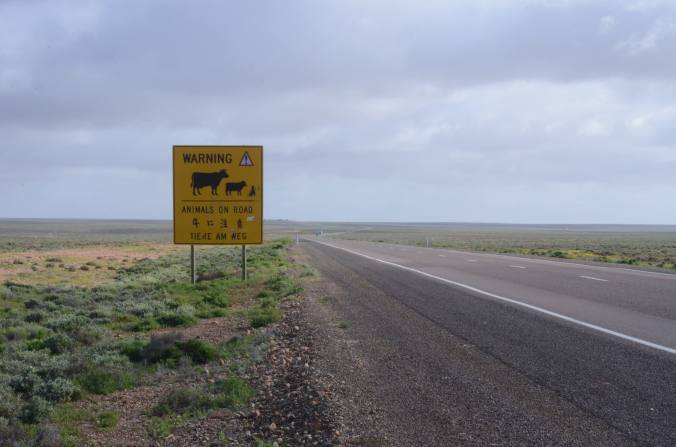
A sign with an image of a cow, and below written, “Beware of wandering stock”, flashed by. Brumbies galloped on the side, as if racing with us. Hawks soared in the cobalt blue sky above. A lone wedge-tail eagle, having gorged on a carcass of roadkill, waddled off the road just in time, avoiding the same fate as its feed.

[Photo 4: Brumbies rounded up in times past, Hermannsburg stock yards © C.D. Trudinger circa 1955]

This time, when we arrived in Hermannsburg, we made a beeline for the FRM store where we located our friend, P. He welcomed us and gave us a tour of the store. So much bigger than in 1981; more like the size of our local IGA store in size and shelves fully stocked. It even stocked fridges and washing machines. P proudly showed us the bakery where fresh bread is made each day and he introduced us to the Indigenous workers at the store.

[Photo 5: In front of the store © L.M. Kling 2013]

After settling into our P and K’s home, we spent the afternoon drinking coffee and storytelling with P and K. Storytelling continued over dinner. Much had changed since the T-team visited in 1981. The population of Hermannsburg has now grown to 600, the Finke River Mission still exists there, and the Christian community is growing. However, there remain challenges for the Indigenous community as there are in communities all over Australia, and the world. ‘It just is,’ as P stated, ‘we’re at the coal-face, being a small, isolated outback community; you see everything…’

[Photo 6: Memories of times past celebrating Kuprilya Day © C.D. Trudinger circa 1955]

‘Whereas,’ I concluded, ‘in the city it’s hidden by numbers, a larger population and behind the walls of our castles.’ Then I changed the subject. ‘Oh, by the way, this is the house I stayed in when the T-team visited Hermannsburg in 1981.’

© Lee-Anne Marie Kling 2021

Feature Photo: Hermannsburg way back when, enjoying a game of friendly footy © C.D. Trudinger circa 1955

***

Virtual Travel Opportunity

For the price of a cup of coffee (takeaway, these days),

Click on the link and download your kindle copy of my travel memoirs,

The T-Team with Mr. B: Central Australian Safari 1977

Trekking with the T-Team: Central Australian Safari.

Story Behind the Painting–Secret Men’s Business

**Feature Painting: Ghost Gum, Western MacDonnell’s © L.M. Kling 2017

Story Behind the Painting: Ghost Gum, Western MacDonnell Ranges

[Extract from The T-Team with Mr B: Central Australia 1977, a prequel to Trekking With the T-Team: Central Australian Safari 1981.

The T-Team with Mr B — In 1977 Dad’s friend Mr Banks and his son, Matt (not their real names), joined Dad, my brother (Rick) and me on this journey of adventure. I guess Dad had some reservations how I would cope… But it soon became clear that the question was, how would Mr. B who was used to a life of luxury cope? And how would the T-Team cope with him?]
Secret Men’s Business

Mangaruka

Dad scraped up the last few oats at the bottom of his metal bowl and then said, ‘I’ve asked our guides to take us to a place which is very special to them.’

‘What? The Gosse Range?’ I piped up. ‘Are we going to that meteorite site?’

**[Photo 1: Gosse Range © S.O. Gross circa 1946]

‘Better, than that.’ Dad’s mouth did his signature cat-with-bird-in-the-mouth expression. Then he explained that after discussion with our Indigenous guides, they had agreed to take the scenic route via Mangaruka Gorge; the entry to a sacred site. While Mr. B groaned at the prospect of hiking up yet another gorge, my father allayed his friend’s concerns by saying that we would only travel to the gorge’s entrance, and if we had time, just explore the beginnings of it.

Mr. B grumbled, ‘But we don’t want to be searching for a camp near Talipata in the dark.’

**[Photo 2: Talipata at sunset © C.D. Trudinger circa 1955]

‘Don’t worry,’ Dad patted Mr. B on his rounded shoulder, ‘Talipata is not far from there. Besides, the cliffs of Mangaruka at sunset are stunning, especially with the ghost gums set against them.’

**[Photo 3: Ghost Gums near sunset at Mangaruka © S.O. Gross circa 1946]

I remembered the exact image Dad was dreaming about. On lazy afternoons at my Grandma’s home, I used to rummage through photos and slides from her family’s time in Central Australia. My grandfather was, in my opinion, an amazing photographer. In one corner of Grandma’s bookshelf in the back room, rested a pile photo prints that were kept in pristine condition encased in special cardboard like a card; the best of Grandpa’s work. One scene that I have painted was a ghost gum, it’s white trunk against the deep purple cliffs of Mangaruka Gorge. Another slide that impressed me was the same scene with the ghost gum at sunset. No wonder Dad wanted to stop there on our way to Talipata.

**[Painting: Ghost gum, Western MacDonnell’s © L.M. Kling circa 2017]

After having breakfast, we packed up and drove out into the wild west. The dirt road exemplified that rugged feel.

At Haasts Bluff station we filled up with petrol, water, and supplies to last us in this virgin land. We were going where not many people, except the Indigenous, had gone before. Upon entering the land belonging to these people; there would be no shops, no houses, and no roads. To salute our departure from civilisation, we bought something to eat and drink. I ate a meat pie.

**[Photo 4: The road out West and Haast Bluff © C.D. Trudinger 1977]

Our guides directed us off the narrow, yet graded road onto an almost invisible track. One sat on the bonnet of the Rover and directed our venture into the desert. We bumped and crawled along faded wheel ruts until a small range emerged through the low dunes and the folds and creases in the flat-topped hill, formed a gorge. We had reached Mungaraka Gorge.

**[Photo 5: Mangaruka Gorge © S.O Gross circa 1946]

Dad slowed the Land Rover, parking it just before some soft sand that threatened to engulf its wheels. The T-Team stepped out of the vehicle to be greeted by a welcoming party of small pesky flies. They were most unwelcome.

Swishing the pests away from his nose, eyes and mouth, Dad said, ‘Mungaraka, I reckon the name of the place has something to do with flies.’

‘Certainly a feature of the place,’ Mr. B sniffed. ‘Oh, darn it! I just got one up my nose.’

Richard, my brother clapped.

Mr. B glared at him.

With eyes wide, Richard looked at Mr. B. He then examined his palms. ‘Twenty.’ He flicked the flattened black flecks from his hands and then clapped again.

Mr. B then turned to his son, Matt. ‘Don’t even think about killing tha flies, ma son. They have germs. You don’t want germs, ma boy.’

‘No, Dad.’ Matt pulled his cap over his eyes, turned away and strolled down the track towards Mangaruka.

**[Photo 6: Closer view of Mangaruka Gorge with ghost gums © C.D. Trudinger 1977]

Dad, who had been laying out a spread of food on the tarpaulin, stopped preparations and ran after the boy. ‘Hoy! Matt! Wait! Lunch first, then the gorge.’

Richard laughed. ‘And for extra protein—flies.’

Lunch became a battle of hasty bites of cheese and gherkin sandwiches while trying to avoid the added bits of protein of flies that were only too willing to add flavour to our meal. After, we sipped our billy tea probably flavoured with the odd thirsty fly.

**[Photo 7: Ghost gum of Mangaruka © C.D. Trudinger 1977]

Our guides sat apart from us, and, unperturbed by our uninvited swarm of guests, they ate their bread and murmured quietly to each other. Dad perched on the tucker box and watched them.

I gulped down my last drop of tea. ‘Well, aren’t we going to explore the gorge?’

Dad stood up. ‘Right, let’s go.’

‘What about our guides?’ I asked.

‘Oh, they won’t be going. Mangaruka’s sacred to the Arunda, so they won’t go near it.’

‘What? Are they afraid of the place, Dad?’

‘It’s more complicated than that. They keep sacred stones called “Tjuringa” there in a cave. And they are afraid of spirits there.’

‘Can we go there?’

‘Sorry, Lee-Anne, girls are not allowed. Nor us. Not them. Only the elders. So, we’ll only go to the entrance of the gorge.’

**[Photo 8: Entrance to the gorge © C.D. Trudinger 1977]

Mangaruka held no ghost for us, only flies. Dad, Mr. B and Matt, and I walked up to the entrance of the gorge. Richard stayed behind to keep our two guides company. On the rocky slopes in the gorge, a smooth brown and white stone caught my eye.

**[Photo 9: No ghosts as far as we could see © C.D. Trudinger 1977]

I picked it up and ran my finger over it. I showed Dad. ‘Hey, Dad, it feels like plastic.’

Dad screwed up his nose and shifted his feet. ‘I think we better go back now.’

‘Oh, but …’

‘I’m not sure we should go much further,’ Dad said with an edge to his tone.

**[Photo 10: No Women and Children beyond this point. Sunset on Mangaruka. © S.O. Gross 1946]

‘Girls not allowed,’ Mr. B added, and then called out to Matt who had scampered further up the gorge. ‘Come on son, time to go back.’

On our return, I tried to take a photo of us all in front of this gorge, but our aboriginal companions refused. In the end, Dad took a photo of me in front of Mungaraka. Dad would have like to stay longer to wait for the rocks to turn red, but we had to move on.

**[Photo 11: Mangaruka and me © C.D. Trudinger 1977]

© Lee-Anne Marie Kling 2019

***

Dreaming of an Aussie Outback Adventure?

Click the link below:

The T-Team with Mr. B: Central Australian Safari 1977

Trekking with the T-Team: Central Australian Safari 1981,

To download your Amazon Kindle copy of the story …

And escape in time and space to the Centre of Australia 1981 …

Travelling on a Friday–Back to Hermannsburg (1)

[In 2013, the T-Team, next generation embarked on their pilgrimage to Central Australia. Purpose: to scatter Dad’s ashes in his beloved Central Australia, in Ormiston Gorge.

Over the next few weeks, I will take you on a virtual trip to the Centre and memories of that unforgettable holiday in 2013, with my brother and his family; the T-Team Next Generation.

This time, the T-Team go their separate ways…]

Monday Morning

After a fitful sleep and then early rise, I looked forward to coffee with mum and the boys. With the sun peeping over the horizon, shining in the watery blue winter sky and reflecting golden on the gum trees surrounding the campground, the frigid desert air slowly began to thaw.

[Photo 1: Sunrise in the Centre © C.D. Trudinger circa 1977]

First, though, after a warming shower and filling breakfast, the tent had to be packed up. Hubby needed my help with that. Then, he spent an eternity repacking the station wagon. While waiting, I jogged on the spot and puffed out steam of my breath into the below ten-degrees air.

[Photo 2: Packing up Tent, Mambray Creek, Flinders Ranges © L.M. Kling 2018]

As if a surgeon performing a delicate operation, he punctuated his packing with commands. ‘Bags!’ So, I passed over the bags which he grabbed and pushed into the boot of the car. Then, ‘Tent!’ I hauled over the packed tent to him. Then, ‘Esky!’ I lugged the cool box (esky) to him. Then, waving his hand while head stuck in the boot of the car, ‘Box!’

‘What box?’ I asked.

‘Kitchen box!’

‘Huh?’ I glanced at the piles of stuff still waiting a home in the Ford. Finding the green crate with breakfast cereals, bread and cans of beans, I passed that one to him.

‘No! No! No!’ he snapped and pointed at the red crate, same size but with cooking utensils. ‘That box!’

Apparently, the green crate must go under the back seat with a blanket covering it.

[Photo 3: Challenges of packing are not new. Relocating in the Centre by camel  © S.O. Gross circa 1940]

Finally, with Hubby’s version of luggage-tetris complete, we drove the short distance in the caravan park to mum’s cabin.

Again, we found Mum T glued to the phone. On the small pine table, she had spread out a brochure opened to camel farms. In between phone calls she muttered, ‘Mrs. T has asked me to find a camel farm for them to visit.’ She was not having much luck finding a camel farm or someone from the camel farms advertised, to answer her calls.

[Photo 4: In search of an open Camel Farm © L.M. Kling 2013]

While Mum T remained occupied with the phone, Hubby and I popped next door to visit our boys. The first words out of their Dad’s mouth when he entered was, ‘Have you packed?’

Son 1 and 2 duly showed Dad their packed luggage waiting by the door.

Satisfied that the lads were ready to depart Alice Springs and not miss the flight, we sat down to enjoy a coffee with them.

[Photo 5: Memories of my first flight over Alice Springs 1977 © L.M. Kling (nee Trudinger) 1977]

Mum joined us. ‘Oh, by the way,’ she said over her much-needed coffee to wake up, ‘the park manager came over. They were most apologetic about the mix up yesterday. Apparently, whoever took my booking assumed the people were T’s, because when they asked them, the lady didn’t hear clearly and just nodded and said “Yes”.’

‘You mean the guy behind the counter assumed the lady was you?’ I asked to clarify.

‘Apparently, the guy asked the lady, ‘Are you Mrs. T?’ and she said, ‘Yes.’’

We shook our heads.

‘Maybe the lady who took our cabin had a hearing problem,’ I said.

‘Oh, well, it all worked out in the end,’ Mum T concluded.

[Photo 6: Desert Park Sands © L.M. Kling 2021]

After visiting the Strehlow Centre and its Art Gallery again, we travelled to the airport to see our sons safely, and in time, board the plane back to Adelaide. Then a brief stop at Woolworths for Hubby to buy some shorts, before commencing our return to Hermannsburg.

[to be continued…]

© Lee-Anne Marie Kling 2021; update 2025

Feature Photo: Mum’s Ghost Gum near Mt. Hermannsburg © courtesy M.E. Trudinger circa 1950

***

Virtual Travel Opportunity

For Less than the price of a cup of coffee,

Click on the link and download your kindle copy of my travel memoir,

Trekking with the T-Team: Central Australian Safari. (Australia)

Trekking With the T-Team: Central Australian Safari (United States)

The T-Team with Mr. B: Central Australian Safari 1977