[In 2013, the T-Team, next generation embarked on their pilgrimage to Central Australia. Purpose: to scatter Dad’s ashes in his beloved Central Australia, in Ormiston Gorge.
Over the next few months, once a month, I will take you on a virtual trip to the Centre and memories of that unforgettable holiday in 2013, with my brother and his family; the T-Team Next Generation.
This time, the T-Team leave camping in the desert behind and tackle the complexities of civilisation—Alice Springs … All on a Sunday.]
Must Register
By the time our family and Mum drove the streets of Alice Springs in search of a hotel to eat, night had fallen, and a blanket of darkness surrounded us. As a convoy of Mum’s rental and the Ford, we wended through the few short streets to the nearby hotel which had been recommended by the caravan park.
Our family of five filtered through the front entrance and into an expanse of dark green carpet and pastel green walls and fronted up to the black topped counter.
‘Do you have a table for five?’ Mum T asked.
‘You need to register,’ the man at the counter said.
Anthony and I glanced at each other. ‘Register?’
‘We need to see your identification; a drivers’ licence will be okay.’
‘That’s normal for me,’ Son 1 said, ‘They always ask for my ID. They don’t believe I’m over 18.’
Son 2 snorted, ‘And here I was getting into hotels when I was under 18, no problem.’
While the boys quibbled and joked, the T-K Team, good citizens that we were, unquestioningly showed our respective licences and registered to enter the hotel.
As we sat at our designated table, we observed the predominance of people of Anglo-Saxon extraction and the lack of First Nation people. There was one Indigenous family way down the other end of the dining hall, but… They seemed happy enough.
Over dinner, roast meat, and smorgasbord, (your average fare for an Aussie hotel at that time), I mused, ‘What’s the deal with registering?’
Anthony waved a hand around the room. ‘Isn’t it obvious? Didn’t you read the sign at the entrance?’
‘What sign?’
Anthony rolled his eyes and shook his head.
Then again, I understood, without further explanation, what my husband meant.
Back at the campsite, I used the communal kitchen to prepare a hot chocolate for Anthony and me. While the kettle took its time boiling, I watched a pair of German tourists and their Australian friends Skyping on a laptop to Germany.
Then, soporific from the effects of warm chocolaty milk, hubby and I snuggled into our sleeping bags and it was lights out for us…only, it wasn’t that much light out—we still had the toilet block light beaming into our tent…all night. And on our minds wondering who were the T-Team imposters?
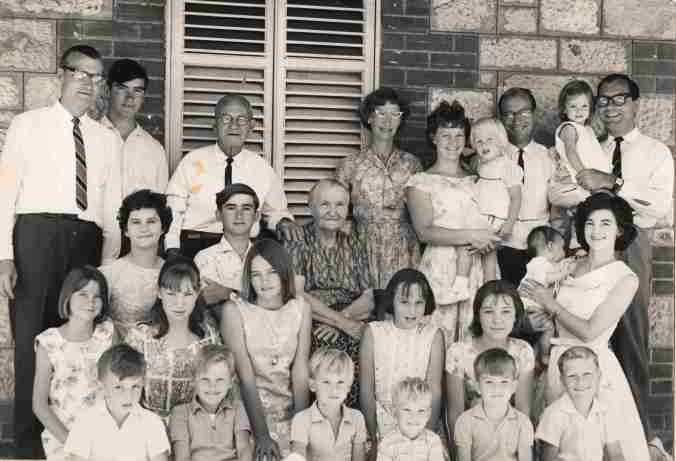
In the previous tale, I mentioned a certain friend attached pride to the superiority of the Aussie farmer—a pragmatic soul, jack-of-all-trades and survivor of harsh outback conditions. So, with pride, I wrote about my maternal grandfather, Sam Gross.
My paternal grandfather was none of that. He was a “city slicker” as the “cockies” called them, born and bred in the city and not the farm.
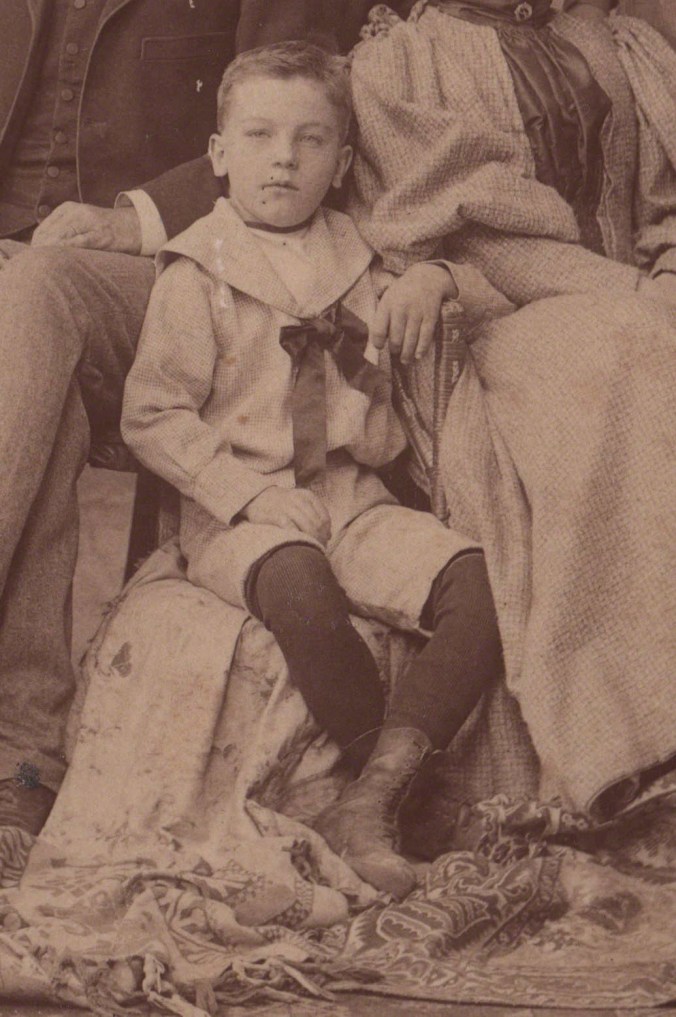
Ronald Trudinger was the first in his family to be born in Australia in August 1886.
His father, Karl August Trudinger, was born in Nördlingen, Bavaria, while his mother, Clara Theresa, was born in Kleinwalka, Saxony. His parents first emigrated to Bradford, Yorkshire, where they lived for about twenty years and became British citizens. They didn’t like Bismarck and his ideas of unifying Germany. The first twelve of Karl’s and Clara’s children were born in England.
Karl August was a textile merchant; hence, living in towns or cities worked best for him. Ronald’s mother, Clara Theresa, grew up in the Moravian Brethren community in Saxony. Faith in God and education were her values. She had yearned to be a missionary, but that door was closed to her at the time. As a result, she prayed for her children that they would become missionaries. Eight out of her thirteen offspring did.
One of them was my grandpa, Ronald, who became a missionary in Sudan.
So, although he wasn’t the venerated Aussie icon of tough “cocky” farmer, his calling was different but just as valuable. He became an intrepid missionary in Sudan, based in Melut on the White Nile. He spent decades translating the New Testament into Dinka and other African languages.
How thankful I am to My Heritage and the links to news articles matching Dr. Ronald Trudinger—100 at least. In the early 1900s until the late 1950s, he appeared as a local celebrity, especially in church circles. His deputation talks on the “Soudan” and the Muslims, and the risks and challenges the family faced in Africa, particularly during the War in the 1940s, were a source of fascination, if not entertainment, for the public of that time.
Ronald Trudinger grew up in Norwood, a suburb of Adelaide, South Australia. From what I can gather, again from various news articles about the family, he may have lived in Kapunda and Broken Hill. His father, new to Australia and a merchant, had to go to where the work was. When they first arrived in Australia, according to Ronald’s birth certificate, his father was a greengrocer. Humble beginnings after being a wool merchant in Yorkshire.
A few years later, news reports have Karl August working in a jewellery store in Kapunda. Then, as I mentioned, there was a time the family was in Broken Hill, where Ronald’s eleven-year-old older sister died of typhus.
Eventually, so the family narrative goes, they settled in Marryatville, a subdivision/estate in Norwood, and father, Karl August, teamed up with a Mr. Zimmermann to manage a textile store in Adelaide city. While his father supported the family as a merchant, and some of his older siblings set off for China as missionaries with China Inland Mission, Ronald became highly educated, attending Adelaide University and becoming a Doctor of Medicine.
As a child, Ronald was exceptionally gifted, and by the age of four he was reading the Bible, and at five, Homer’s Odyssey, so my father says. Apart from these fragments of information passed down the generations by word of mouth, Ronald’s childhood remains a mystery.
News reports at the time have helped fill in some of the gaps in Ronald’s interests as he grew up. One of these was tennis competition reports. Although Ronald was born with one arm shorter than the other, he still enjoyed a hit of tennis and played in competition. He was described as a fierce competitor.
Ronald grew up in a God-fearing family, and from all the Sunday School prizes he won (recorded in the local newspapers), I imagine he came to faith in his Lord Jesus as a young child. His family attended Maylands Presbyterian Church. Although they were from a Moravian Brethren background, there was no such church in Adelaide. There was one in Bethany in the Barossa—too far to travel from Norwood. Anyway, the family probably chose a church and congregation that would support missionaries. When Ronald began his missionary work, he and Lina joined the Burnside Christian Church, which faithfully supported their work in Sudan.
Meanwhile, back at the family home base in Norwood, youthful Ronald Trudinger enjoyed evenings with the family playing games—a tradition passed down to the current generation of the T-Team. This never included playing cards, as such cards were deemed “sinful” and associated with gambling. Games my father taught us were taught to him by his maiden aunts, who had learnt them from their parents. A parlour card game called “Chook Chook” was certainly one game the Trudinger family had and loved playing. “Chook Chook” is all about egg farming, teaching the player the different breeds of chickens, trading and negotiating, and accounting. Other games that Ronald would’ve been familiar with were word games and story games, which his mother created for the education of her children.
My father remembers his dad’s fondness for chess. Even in my grandpa’s old age, my father never could beat his dad at chess. Another relative recalled Ronald taught her mother to play the piano. So, I gather another of Ronald’s interests was music, a love which he passed down to his children.
After completing his Bachelor of Science degree from 1908 to 1912, Ronald studied to become a Doctor of Medicine at the University of Adelaide. The University student magazine has him attending the Evangelical Union Christian group there, which would become EU, the Christian group I joined eighty years later.
While at university, Ronald won awards and scholarships for his outstanding results. He even won a scholarship to study tropical infectious diseases in Queensland.
During this time, around 1908, he met a young nurse called Lina Hoopmann. They fell in love and privately became engaged. However, they had to wait many years before they were able to marry. She was Lutheran, and he was not. Her father, a staunch Lutheran minister, refused to give his blessing for the union; he called Ronald a heretic as he wasn’t Lutheran and had come from a Moravian Brethren heritage.
So, they had to wait until Lina was 30. She would’ve been legally able to marry without her father’s consent at this time. I doubt, though, being God-fearing folk, they would’ve shown such dishonour and break the third commandment to honour thy parents. I imagine that her father finally gave his blessing, and the marriage went ahead on December 11, 1917. That being said, the family photo of the wedding doesn’t have Lina’s father present. I’d like to give him the benefit of the doubt that he took the photo.
Others of Lina’s family, such as her sister Dora, had no problem with the Trudinger family. In her diary, she enjoyed many visits to the Trudinger’s in Norwood. Plus, she was overjoyed when Ronald and Lina became engaged and then were able to marry.
From 1912, Ronald commenced his calling to be a missionary doctor in Sudan. He returned on furlough in 1917 to marry Lina. Ronald worked as a doctor at the Royal Adelaide Hospital during this time. By 1918, Ronald, together with his wife, had returned to Sudan. His first two children, Ronald Martin and Agnes Dora, were born in Africa.
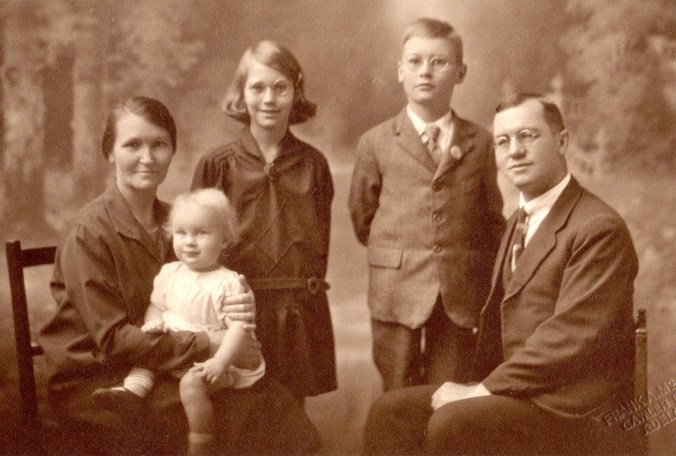
In 1927, Ronald and Lina, with Ron junior (9) and Agnes (7), returned to Australia on furlough. They came back for their children to start their education in Australia.
This time, Ron accepted work as a physician and locum in Macclesfield, taking on the challenging task of coronial duties, including being a witness for a high-profile murder case.
My dad, Clement David Trudinger, was born on January 13, 1928, in Norwood. By May 1929, Ronald and Lina, with their young baby son, were on the ship steaming back to Sudan. Dad’s younger brother Leonhard Paul was born in Melut, Sudan.
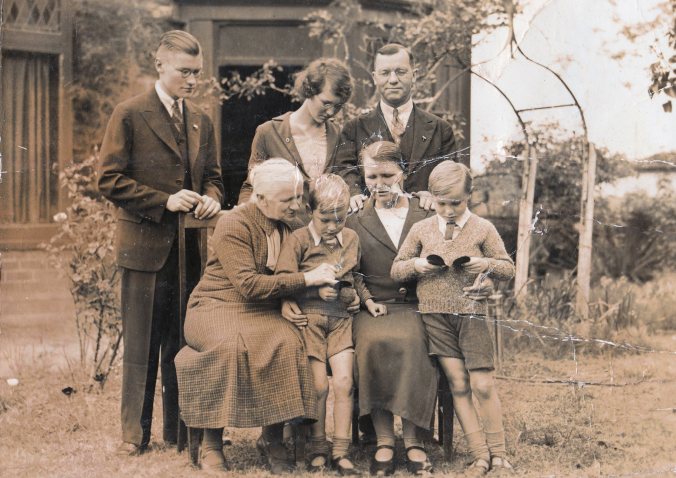
As with their first two children, the younger sons must return to live with their maiden aunts in Adelaide for their education. Ronald and Lina returned to Adelaide, South Australia, in 1935. The plan was to stay a year, and then off to Sudan once again. However, it didn’t go as planned. Agnes, their daughter, became gravely ill with meningitis early in 1936. She survived but had to learn to walk and talk again.
Consequently, later in 1936, Ronald set off for Sudan alone after Agnes had recovered.
In Agnes’s memoir, their mum took the boys to live with her family in Yorktown for a year in 1938 while their dad was away on mission in Sudan.
In 1939, Lina joined her husband in Sudan while my dad and Paul stayed with the maiden aunts. During the war years, from 1939 to 1944, Ronald and Lina were on mission in Sudan.
The values of this era were self-sacrifice and obeying God’s calling before family. Plus they considered their children’s educational needs would be better served in Adelaide, South Australia rather than Sudan. Hence, Ronald’s and Lina’s decision to once more venture back to Sudan without their children—a decision the future wives of David and Paul (the dear aunts preferred David to Clement, and Paul to Leonhard), had an issue with. David, Clement by nature, and just that little bit older, took the separation from his mother with a stiff upper lip and in his stride. Dad had fond memories of staying with his maiden aunts. But Paul, being younger, was more of a feisty character and suffered from a sense of abandonment as a child.
Ronald then took two more mission trips to Sudan; 1946 to 1950, then 1951 to 1954. During his time on furlough in 1950, he visited Ernabella where his eldest son Ron was teaching the Pitjantjatjara people, and also Hermannsburg where my Grandpa Sam Gross was pastor at the time. This was before my dad and mum had met each other. It shows the connections in Christian circles and across denominations.
Lina stayed in Adelaide for the 1946 —1950 stint to Sudan but joined Ronald for his final 1951—1954 visit.
In 1954, Ronald had “retired” from the mission field and had taken up a position as a doctor at Hillcrest Psychiatric Hospital. He made an indelible impression there, remembered fondly by former patients.
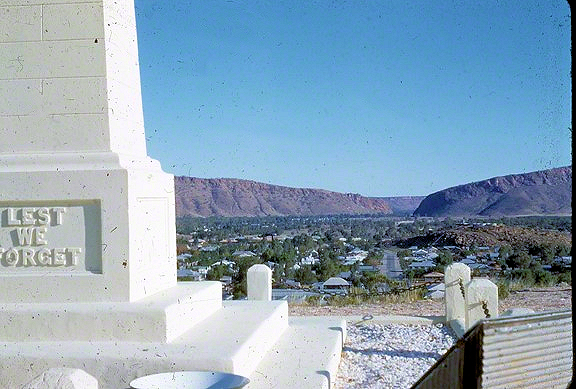
Even in his golden years of real retirement, furthering the cause of Christ remained the driving force of his life. He never stopped witnessing and sharing the gospel whenever the Lord provided opportunities. In the last years of his life, after his dear wife died, he moved up to Alice Springs to manage a Christian bookshop.
However, this venture didn’t last as he became ill with leukemia. He returned to Adelaide and moved into a flat in the Lutheran Homes Retirement village in Payneham.
Illness didn’t stop him from being a missionary on home soil. In the months before he died, he bought an Italian dictionary so that he could share God’s love and the good news of salvation with his Italian gardener.
I remember my grandpa as a kind man who had a smile with his one remaining tooth in his mouth. He would make a joke about the Trudinger trait (pronounced tray) of twiddling thumbs. He taught my brother Richard to make bird calls with a leaf.
By the time I was born, Ronald and Lina were living in Walsall Street, Kensington Park, in the Norwood area. At three, I remember getting bored with all the people around for a big T-Team family gathering. I went off exploring, and mum found me sleeping under the bed on a pair of shoes.
I know where I was when Grandpa died. I was five. We were in the FJ Holden driving up to “see” Grandpa. Well, I thought we were. Then Dad announced that Grandpa had died. I was confused why we’d been going to see Grandpa if he had died. Hadn’t he gone to Heaven? After all, he was one of the most God-loving people I knew. Upon reflection, perhaps Dad needed to visit Grandpa’s flat to sort out some paperwork with the Lutheran Homes.
Ronald Trudinger died December 21, 1968. He had lived a full and productive life and with his missionary heart had spread the good news of Jesus Christ, his Lord and Saviour.
He sniffed and observed the slim man with a pale face and a monk’s haircut. He held a thin board similar to a slate under his arm.
‘Doesn’t look like nothing,’ the man said.
‘Nothing you can help me with,’ Günter replied. ‘You are the magic man, are you not?’
The man threw back his small head. ‘Hardly magic, my son. Merely science. You have heard of Physics?’
‘Yeah…but…’
‘Tell you what, you look like you’ve had a rough trot.’ The man took what looked like this slate from under his arm. The slate had a shiny surface. ‘How about I make your day.’ He ran his finger down the front of it.
‘Who are you?’
‘Just call me, Herr Roach.’
‘Herr Roth? Mr Red?’
‘No, Roach, as in Cockroach?’
‘Huh?’
‘Never mind—call me Boris,’ the man answered as he cleared his throat.
A whirring sound came from behind him and for a moment Günter thought he saw dark wings of lace flutter and then snap into the man’s back. Were his eyes playing tricks on him?
Boris’s mouth spread into a wide grin with teeth in a neat row like keys on a piano. ‘Now where were we? As I was saying, anything you want, anything at all. Whatever you desire, your wish is my—oh, dear, that sounds a bit lame. Now, what is your greatest desire, and I will make it so.’
‘You will?’
‘Yes, I will.’
Boris balanced the slate board on the tip of his finger. ‘Money, gold, wisdom—women and so on—you know the drill. Whatever.’ He flicked the slate front with his finger and made it spin through the air around their heads.
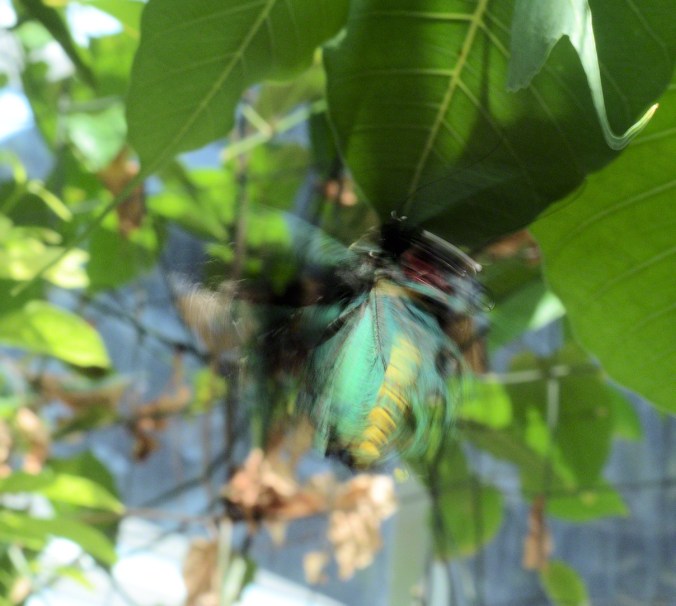
Günter, his eyes wide, gazed as the object slowed and fluttered into a butterfly and then settled on the log where he’d been sitting.
‘Wow! How did you do that?’
‘I’m still awaiting your answer. Anything you want.’
‘But it changed shape. You made it come alive.’
‘Never mind that—anything at all, it’s yours.’
‘Aber, what are you?’ Günter asked. He tried to catch the butterfly but it flew high above his head.
‘Oh, that’s hardly important,’ Boris said. ‘Come on, I’m waiting for your answer.’
‘I want to know,’ Günter reached for Boris, ‘where you are from.’
‘Not from this world,’ Boris stepped away from him and his arm became a tentacle and whipped Gunter’s hand. ‘Now hurry up! Tell me.’
Günter rubbed his fingers. ‘Are you a demon?’
‘Oh, Herr Fahrer, how could you think such a thing? I’m insulted.’
‘Ja, aber for a man, you have some strange appendages.’
‘That’s because, I’m evolved, my race is superior to yours.’ Boris narrowed his beady eyes and antennae sprang out from the top of his head. With his mouth closed he fed thoughts into Günter’s mind. ‘I don’t need a voice or a mouth. I can communicate my thoughts to you. So much simpler, don’t you think?’
Boris clicked his fingers and the butterfly floated into his open hands and turned once again into a slate board.
‘Now what will you have,’ Boris demanded with his thoughts, ‘Anything you want.’
The young man scanned the darkening sky and then spotted the first evening star glowing on the horizon.
‘Nay,’ Boris said, ‘further than Venus. Much further. The other side of the galaxy if you must know.’
‘Galaxy?’
‘Come on, I’m waiting, I haven’t got all century. Then in thoughts almost a whisper. ‘Got slaves to catch, planets to conquer.’
‘What? Did you say something?’
‘Are you a dumkopf? Tell me what you want!’
Dumkopf! Dumkopf! Günter hated being ridiculed. No, he wasn’t stupid. He sighed. ‘I hate my life. And you know, I hate this world I live in. I hate who I am. No one will miss me if I go.’ He trod towards Boris. ‘Can I go to your world?’
Boris edged away. ‘Well, now, there’s the thing. My world sort of exploded. You could say I’m homeless.’
‘Oh, sorry to hear that.’
‘Any other suggestions?’ Boris’s eyes glowed in the navy blue of early night. ‘I can change you like I did the slate, if you like.’
Günter picked at his nails. ‘I would not like to be a butterfly.’
‘You can be anything—anyone.’
‘Really?’
‘Yes, no trouble at all.’
‘I could be a different person. No big nose. No brown curly hair. No pimples.’
‘Certainly, if that’s what you want,’ Boris said and flashed his wings.
Günter pondered. Maybe demons do exist. Maybe his grandmother was right. ‘I don’t know.’ A shiver coursed down his spine. ‘I think I should be getting home. I am late for dinner.’ As he backed away, an owl hooted.
‘What about a free trial? Can do no harm, Herr Fahrer.’ The man-beast followed Günter down the path. ‘Just one day, no obligation.’
Günter stopped and turned. ‘Only one day?’
‘Yes, that’s what I said.’
‘Anything? Anything I want?’
‘Yes.’
Günter stroked his chin. ‘Well, then, can you make me into my brother, Johann?’
‘Yes, I can do that.’
Boris pulled a stick from his stockings and plugged it into the slate. He tapped the surface. Writing appeared which he read for a few moments.
Then from a pocket in his cape, he pulled out a bottle. He tapped the bottle, picked out a pill, snapped it in half and handed the half-pill to Günter.
‘Eat this and think of your brother, Johann,’ Boris said.
Günter gulped down the pill. The slimy coating left a fishy after-taste on his tongue. He licked his lips, he had an idea. ‘I know, even better. Johann can become me. Then he’ll know how it feels.’
Boris rolled his eyes. ‘You’re a bright one, you should’ve thought about that before I gave you the Blob Fish pill.’
‘What? You can’t?’
‘I can,’ Boris said with a sigh, ‘but it will be a challenge. I do have the other half of the pill, so we’ll see what we can do.’ He rubbed the pill fragment between his finger and thumb. ‘Now, then I better hurry to do what you have requested. So, my boy, run along home, by the time you get there, you’ll be Johann.’
Günter turned to go.
‘Just one more thing, where exactly is your brother?’ Boris asked.
‘In the barn, always in the barn.’
‘Very well, enjoy!’ Boris said as wings sprouted from his back, he rose into the air and buzzed all the way up the hill to the barn.
Günter pelted up the path to his home on the hill.
[…to be continued, next week for the stunning conclusion.]
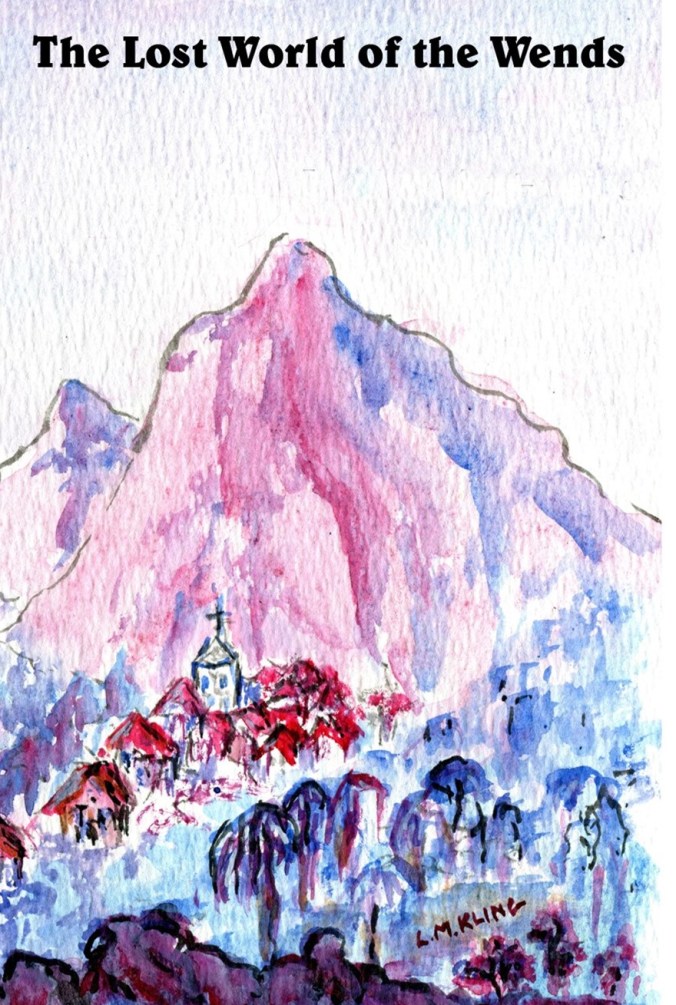
How could a most pleasant bunch of Wends turn so nasty? Witch hunting nasty.
Click on the link above and find out.
Or for more Weekend Reading…
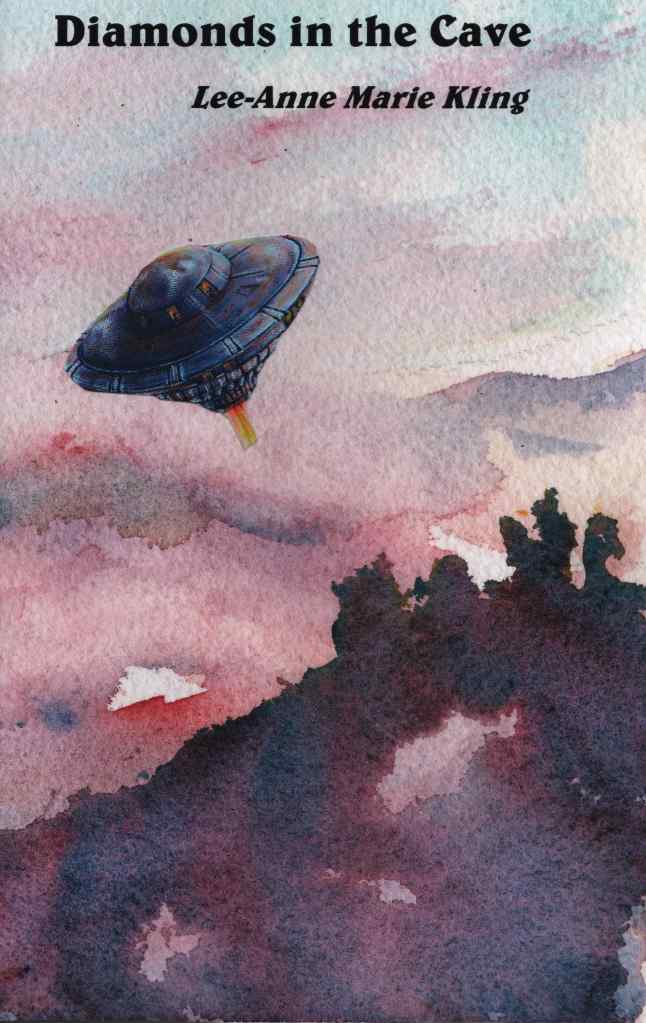
Go on a reading binge and discover the up close, personal and rather awkward relationship between Gunter and that nasty piece of cockroach-alien work Boris in…
[In 2013, the T-Team, next generation embarked on their pilgrimage to Central Australia. Purpose: to scatter Dad’s ashes in his beloved Central Australia, in Ormiston Gorge.
Over the next few months, I will take you on a virtual trip to the Centre and memories of that unforgettable holiday, with my brother and his family; the T-Team Next Generation.
This time, the T-Team explore historic Hermannsburg, but fail to find any ghosts.]
Mystery in Historic Hermannsburg
We checked out the old school room. Mum reminisced the terrors of teaching the fellow missionary kids who were barely younger than her. They just refused to listen or obey her. Some were constantly daydreaming and never did their lessons. Mum vowed never to teach again. She escaped this teaching fate by getting married…to Dad.
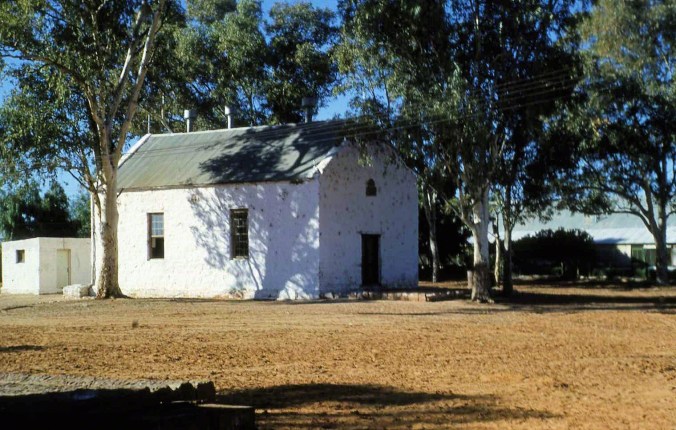
T-Tummies began to grumble and so, the T-Team Next Gen decided to head for the Precinct Café which had been the Manse of the Hermannsburg Missionary Supervisor.
As we investigated the old rooms that had been converted into a souvenir shop and tea rooms, Mum said, ‘This is the room Dad and I stayed after we got married.’ I took a photo of Mum in that room which was now filled with souvenir clothes and hats.
Finally, Mum and I approached the counter and asked the young Arunda lady serving, if we could have a table for our party of ten.
She guided us to some tables on the porch where we could sit. Along the way, Mum mentioned to her that she used to live in the house. From that moment on, this lady could not do enough for us, making sure we had the best slices of apple strudel and helping us with the self-serve tea and coffee.
When she had left us to serve someone else, Mum whispered to me, ‘I think she is GW’s (an elder) granddaughter.’
Later, as we were leaving to explore more of the village, the girl who had served us ran up to the T-Team to continue the conversation with us about the Hermannsburg of old and answer any of our questions about Hermannsburg today.
Then, she had a question for us. ‘Have you seen or sensed any ghosts?’
We shook our collective heads. ‘No, we haven’t.’
‘Apparently, some people have seen a girl in period clothing, circa 1900. And some have seen an old man in this café. The young girl plays with my children,’ the lady who served us said.
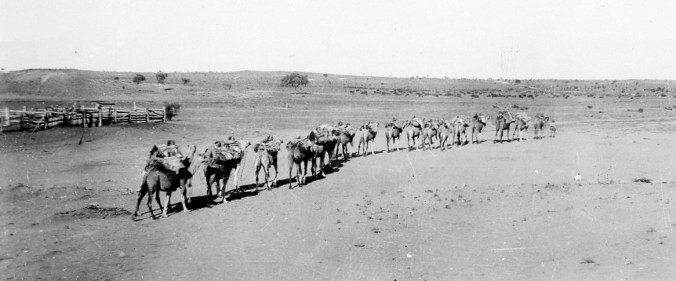
I tried to think back to my previous visits to Hermannsburg. Can’t recall any ghosts then…just dreams of the olden days, way back when…And the pioneer missionaries and Afghans trekking across the desert on horses and camels.
More exploration of the Historic Precinct where Mum walked us through her childhood. First, her old home and the porch converted into a bedroom in which she slept. Now, the home is “renovated” into an art gallery. Her room fetches up to something like one thousand dollars a night for an authentic experience of yesteryear’s accommodation. To think, I did that virtually for free in the 1970’s…not her room, but…
Then, the native girls’ quarters and the native boys’ quarters. Once upon a time, one hundred years ago, they were locked in at night, so they wouldn’t escape and get up to mischief.
Then the huge shed; a museum of machinery and long-forgotten technology, for butchering cattle, and tanning of kangaroo skins. Outside, my niece sat on an old tractor.
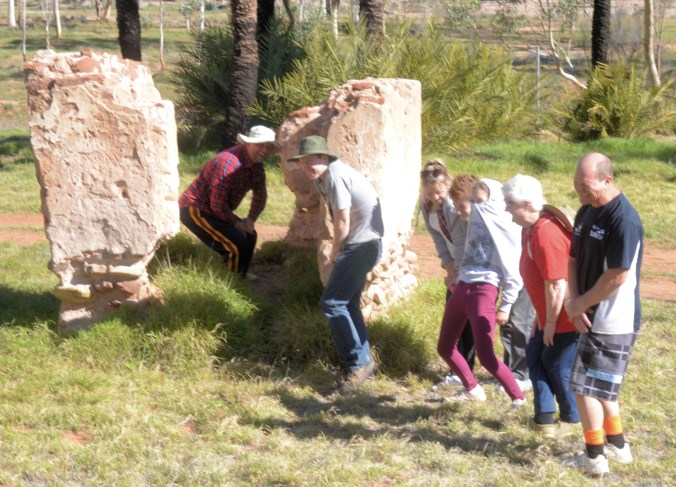
While the T-Team Next Gen rested at a picnic table by the morgue, and Anthony filled the water canteens, Mum shared how, as a child, she and her sisters played funerals. ‘We’d dance around the table pinching our noses.’ Apparently, back then, funerals were a regular occurrence. Mum added, ‘The most eerie experience was the wailing by the Arunda when someone died. Sent shivers down my spine.’
Meanwhile Anthony battled with the nearby water pump which was situated just behind the Historic church building.
Mum glanced over and remarked, ‘Last time we visited in 2010, we were told about this competition Hermannsburg and another mission were in for who had the holiest water. Someone had drunk the water from this other mission where the water had bubbled up to the surface through the sand and was healed. So, then, Hermannsburg had to out-do this other mission and also make water with healing qualities.’
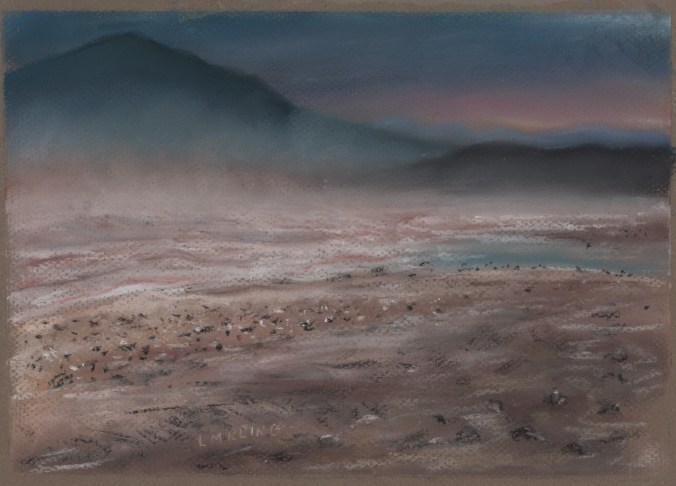
Virtual Trekking Behind the Art: Ocean Beach Tasmania
[In the last few weeks, after months of drought, rain. And, almost a month after storms and extra high tides, more extra high tides last Tuesday. So, in memory of the cold stormy weather, here’s an old piece of calm from our Tasmanian travels.]
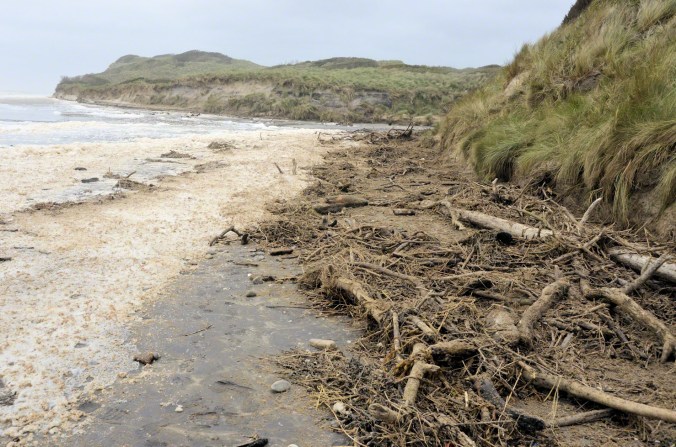
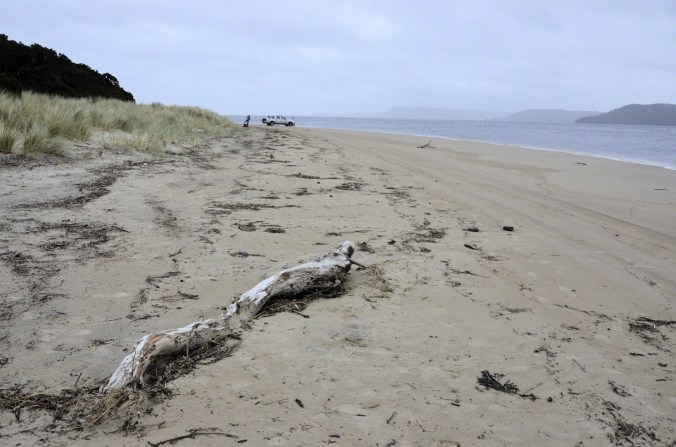
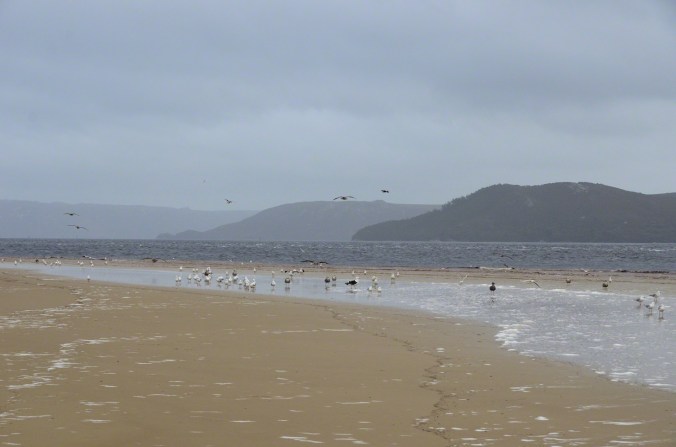
Ocean Beach lies on the West Coast of Tasmania near Strahan. The wild winds of the roaring forties (between the 40-and 50-degrees latitude) attack the coast with relentless ferocity.
In 2001 I visited Ocean Beach with my family to see the mutton birds coming home to roost for the night. I had barely stepped out of the car before the biting cold wind blasted me and I made a hasty retreat back into the car. No view of mutton birds that evening. Result, no photos.
Ten years later, my mum and I visited Ocean Beach. While the East Coast was inundated with floods, Ocean Beach that afternoon was calm. We explored the beach, taking many photos of this rare state of the beach.
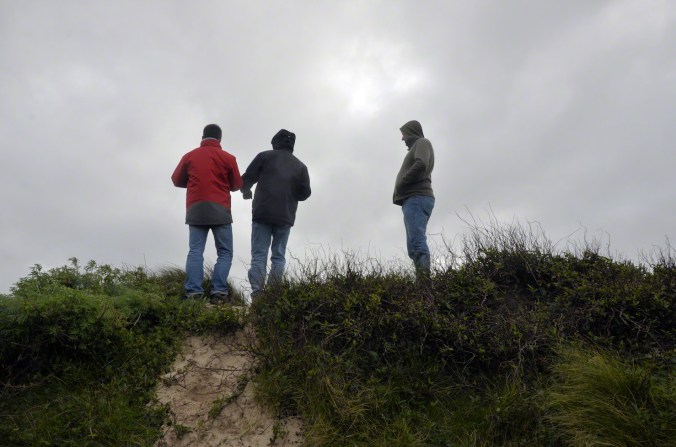
October 2016, the K-Team ventured onto the sands of Ocean Beach on perhaps a not-so-calm day; calm enough though, that we were able to walk along the beach. Not being satisfied with just an obligatory few metres up and down, my husband led us way up the estuary where we spotted a variety of birds, some fishermen, and the lighthouse sitting out there near the heads. Gotta get our money’s worth. After all, he’d seen the potential from the dizzy distance of the cruise boat as it sailed past the heads of Macquarie Harbour. I think if we’d allowed him, we’d still be walking along the coast somewhere around Tasmania.
While the “cat”, namely Dee was away, Dan took the opportunity to delve into the intricacies of Mr. Percy Edwards and his presumed body that had been discovered in the Mt. Lofty National Park. He mused how the unfortunate Mr. Edwards could languish just inside the culvert, under the bridge, for so long without being discovered. After all, how could the tourist traffic, plus joggers who daily climbed Adelaide’s iconic mountain, miss the remains for so long?
Dan plotted the details and questions into the von Erikson Crime solving programme and then checked over the growing chart on screen.
An email pinged its arrival. Pathologist Penny Chambers had completed the preliminaries on the corpse.
Dan opened the file and studied the results.
As he suspected, someone, had recently moved the remains. Damage to the skull had been the consequence of repeated blunt force trauma. Penny proposed that the shape and width of the damage suggested a golf club was used, most probably a wedge which weighs around 340 grams.
Dan nodded. ‘Interesting.’
The report also indicated that the damage to the skull tended to be at the front, hitting the frontal lobe, the nose and upper jaw. Four teeth from the upper jaw were missing.
‘This was personal,’ Dan whispered. ‘Someone close did this to poor Mr. Edwards.’
His mobile vibrated on his desk. Dan picked it up. ‘Yes? Dee?’
He looked at his watch. 5pm. ‘Oh, is that the time,’ he murmured.
Dee rabbited on, bemoaning the piles of disembarked passengers and dearth of taxi drivers.
‘I’ll be there in twenty minutes,’ he said while closing down the computer, then gathering up his keys.
Detective Dee Berry smiled as she descended the airport escalators. A smattering of family members had gathered to welcome their loved ones from their international travels. A man waggled his head and paced back and forth beneath the flight arrivals sign while arguing with his wife. Another couple, the bearded male wearing loose-fitting shirt and baggy trousers strode ten-paces ahead of his wife covered head to toe in a black burqa.
Reminded her of a certain Mr. Percy Edwards back in the day—1970’s. Not the ethnicity and the baggage that goes with that, but just the need for certain men, no matter what race or background, who needed to be dominant over their women. She’d see him at church racing to the entrance while his wife and children trailed behind him. What really got up her nose about the man was his attitude to women, like he was God’s gift, and all women must submit to him—worship the ground and the latest Ford he drove in.
That man Percy gave her the creeps, especially one night after youth group. She came out of the hall early and there he was, lounging near his latest Ford.
As she passed him, he lunged at her. ‘Jump in my car!’ he demanded, grabbing her arm.
Dee tore her arm away from his grasp. Swore at him—words usually reserved for her arch enemy Lillie. Then she ran. Round the block and back into the safety of the hall.
Never told a soul. But the memory stayed with her.
Dee shivered at the chilling flash back and recomposed herself.
She moved on and out from the concourse.
How Adelaide had changed, Dee thought. She remembered her youth and travelling by boat from Davenport to Melbourne in 1980. At the time she had seen an overseas tourist taking photos of the heads as they entered Port Phillip Bay. Back then, she had thought seeing such a foreigner a novelty.
At drive through/drop off and pick up road, she waited in line to hail a taxi. It seemed all of Adelaide was doing the same. At this rate she’d be waiting an eternity. She was tempted to call Dan to ask him to pick her up in his patrol car.
After an hour of languishing in the unmovable line, she did just that. She called Dan.
‘I was wondering when you’d call,’ Dan said with a sigh. ‘I’ll be there in twenty minutes.’
Dee watched the security harass lingering drivers and hurry them along. She watched the same cars pass by as they completed the circuit while waiting for their passengers to disembark and arrive at the designated pick-up point. She watched the rare taxi pull up and prospective passengers pile in.
Then she decided to make it easier for Dan and begin walking east up this drop-off road towards a less populated area. Some other wise people were doing the same. She followed them. Sure, there was a yellow line forbidding such action, but if drivers were quick in the pick-up routine, the guards of the drop off/pick up process wouldn’t notice. Besides, there were certain benefits being picked up in a police patrol car.
As anticipated, twenty minutes passed by in the process of being a pedestrian, and Dan’s patrol car pulled up just before the roundabout. Dee opened the back passenger door and tossed in her case, then she leapt in after it.
‘Thanks Dan,’ she said as she secured her seatbelt.
Dan breezed past the paused throngs of cars and people eager to make a quick get-away. Their hurried movements reminded Dee of bank robbers leaping into accomplices’ cars before the authorities caught up with them. One car, Dee noticed it was that couple, still arguing, and their grown up returned-from-overseas children struggling to fit all their baggage in the boot of the car. An irate security staff member gestured for them to move along. Dee looked back to see if the mother and father were arguing with security, but a hulking Toyota Hilux blocked the scene.
‘How was the Tassie trip?’ Dan asked.
‘Brilliant!’ Dee replied. ‘There’s some beautiful places there. I reckon I’ll pull up stumps and go and live there when I retire.’
‘Did you find what you were looking for?’ Dan asked. ‘I gather from the application and funding, that it wasn’t a holiday.’
‘Oh, yes,’ Dee rubbed her hands together and grinned, ‘the time was well spent and fruitful.’
‘Fruitful?’ Dan glanced back at her.
‘You remember Lillie? Lillie von Erikson? Now Edwards?’
‘Yes?’
Dee chuckled. ‘She had a baby down there in Tasmania, back in 1981.’
‘Did she now?’
‘You remember she was one of the witnesses back then. You know when Milo Katz was run over?’
‘Yes.’
‘Well. Fast-forward nine months, and bingo! A little girl was born.’ Dee licked her lips. ‘A girl called Zoe Thomas.’
‘And,’ Dan eyed Dee through the rear-vision mirror, ‘how’s this related to the case?’
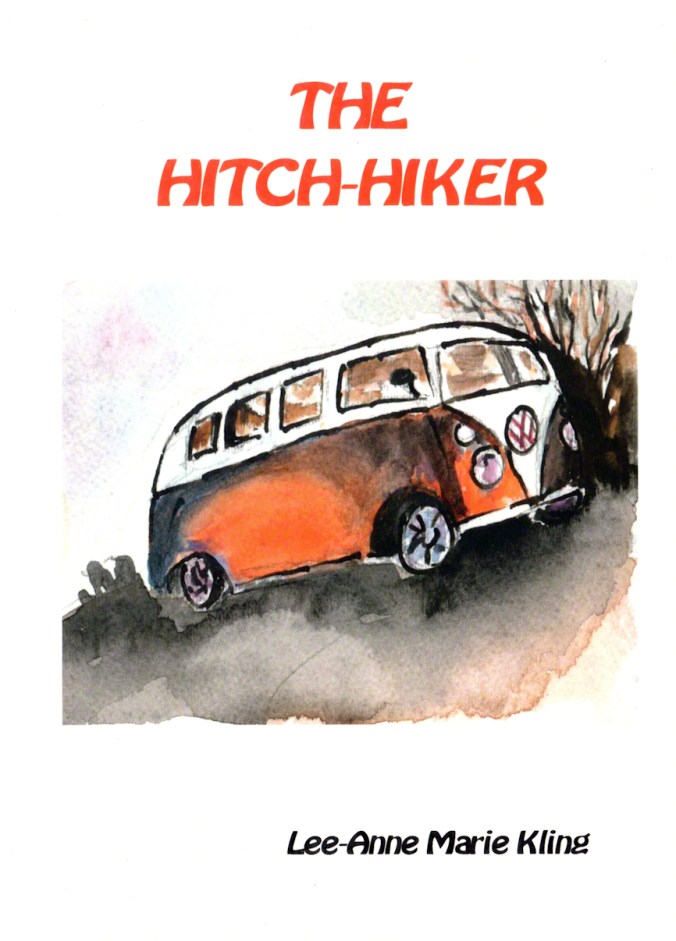
‘You see, it proves that she was there. With Francis Renard. In his kombi van.’
‘But you said she was a witness.’
‘She will be, and so will Mr. Renard.’
‘I don’t see how you have figured this out, Dee.’
‘Do I have to spell it out, Dan?’
‘Go on.’
‘If they were there, they must’ve seen something. They would’ve been aware of Sven’s movements.’
‘Not if they were busy in the kombi, they wouldn’t have,’ Dan snorted, then laughed. ‘Anyway, I interviewed Mr. Renard, remember?’
‘We’ll see,’ Dee sighed, ‘Besides, I think that the adoption was all underhand and off the radar. There’s no official documentation. And I suspect there was money involved in the deal.’
‘Really? How do you come to that conclusion?’
‘I managed to track down the adoptive father of Zoe, and he confirmed that Lillie gave the child to him and his wife. They were childless and his wife was desperate for a baby.’
‘And the money?’
‘I remember Lillie returning from her Tassie work holiday flush with the stuff,’ Dee flicked a lock of hair from her face, ‘I saw her around town with a new car, new trendy clothes, and I heard her and her brother shared a flat in a swanky part of town, Burnside, as I recall.’
‘So, I got hold of some bank records from the day.’
‘Really, do they still exist after forty years?’
‘If you know where to find them and have the right contacts.’
‘Which, apparently, you do.’
‘September fifteenth, 1981, ten-thousand dollars was paid by cheque into her Commonwealth Bank account.’ Dee announced in triumph. Somehow, an online crime-fighting sleuth, probably on the spectrum, had come through for her. ‘From an ANZ bank account in Hobart.’
‘I see,’ Dan sniffed, ‘so, are you going to go after Lillie Edwards on a charge of baby trafficking, now?’
Recently I shared how my dad relied on the Readers Digest “How to Fix” book to tackle DIY jobs. Having a double mortgage, and money being tight, Dad didn’t have much cash to splash on the “experts” in such fields as plumbing, electricity and general home maintenance.
The response met with a hint of dismissal from my older friends who prided themselves on their pedigree of farmer fathers. These, they boasted were real men, Aussie men, who fixed all things by pragmatic problem solving without the help of a book. The wisdom of their farming forebears imparted to them by osmosis, apparently.
In contrast, my father was a lesser being, a city dweller who had to refer to a book, of all things. My dad was a much-loved teacher, gifted in music, art and sport. He coached a winning football team of Indigenous players from Hermannsburg, Northern Territory in his youth, led a choir of Indigenous singers, and later school student Anklung bands for the South Australian Festival of Music. No flies on my dad. But I must admit, when it came to DIY, his forays into such exploits would rival the character Frank Spencer in the British sit-com, “Some Mothers do ’ave ‘em”. Still, I’m proud of my dad and love him. But then I realised that these superior beings who were my friend’s fathers, were from my grandparents’ era.
So, I cast my mind and research back to my two grandpas: Reverend Sam Gross (my mother’s father) and Dr. Ron Trudinger (my father’s father).
Now these friends held up their ties to the land as superior. Although both my grandfathers are highly educated with Reverend and doctor between them, I can claim a link to the land too, through my maternal grandfather, Sam. His family were farmers with I imagine generations of farmers before them from Horsham Victoria in the 1850’s and extending back to Prussia.
Sam was born in 1905 and grew up with all that practical knowhow bred into his being. I never met Sam, he died before I was born, but I remember my mum saying he was good at fixing things like cars. He could’ve been an engineer, but he became a Lutheran pastor. I reckon my brother inherited some of Sam’s traits—he’s a jack of all trades—the ideal DIY man.
As a child, Sam suffered rheumatic fever which affected his heart. Consequently, he got the education with the view of becoming a minister and wasn’t expected to continue with the farm like his brothers. The doctors told Sam he wouldn’t live past the age of thirty. But being extremely fit and maintaining his health, Sam defied those expectations.
After ordination to become a minister, and then a few years posted to Berri, in the Riverland of South Australia, Sam with his wife, Elsa (my grandma) and three young daughters (one my mother), ventured to Hermannsburg, Northern Territory. There God had called them to be missionaries to the Arrernte people.
Sam’s pragmatic skills, bred and imparted to him from generations who had lived and struggled on the land as poor subsistence farmers in Germany, then as pioneer farmers in the Victorian Western districts in Australia, came to the fore in the harsh isolated conditions in Central Australia.
Sam had to venture to even more remote places in the desert west of the MacDonnell Ranges—Haast Bluff for instance. One trip in 1942, the truck broke down. Despite putting his mechanic hat on and trying to fix the car, an essential part of the engine was kaput and the much-needed part not available. Sam’s problem-solving prowess kicked in, donkeys were found and the car towed by donkey-power back to “civilisation”—Hermannsburg.
A year or so after their arrival in Hermannsburg, the supervising pastor, F.W. Albrecht was stuck in Adelaide as a result of the war. Hermannsburg came under suspicion, as it was a mission set up by German missionaries back in the 1880’s, and as such with ties to the Lutheran church, had a German name and tradition. The British Army being paranoid of anything that hinted of German, was suspicious of Hermannsburg. They feared German spies were hiding out there. So, they sent officers to check out Hermannsburg.
On one of these visits, without their chief, Pastor Albrecht, Sam and Elsa had to entertain these one-eyed wary characters. How did Sam survive their investigation? My mum says her father had the gift of the gab. My grandma had the gift of hospitality. In “A Straight-Out man” by F.W. Albrecht, I remember reading the Arrernte said that Sam would be alright, he’s so Aussie they won’t suspect him. Besides, the name Gross is found in England too. Also, Sam’s first language was English and when at school, he had trouble learning German. Although German was spoken at Hermannsburg and in the family, Mum can’t remember what they did when these British Intelligence Officers came, but thinks the children were kept out the way. Maybe someone took the kinder (children) on a picnic…
Sam and his family survived the officer’s interrogation. However, the pedal two-way radio was confiscated, and later Rex Batterbee was appointed to keep an eye on the mission. This Rex did and taught Albert Namatjira to paint.
There’s much more to Sam’s story. I think this post gives a glimpse into his generation and German farming ancestry, migrants making good, living in isolation, making do, thinking on one’s feet and problem-solving.
Did I mention Sam still found time to indulge (as the Mission Board put it—another saga) his passion for photography? He used these photos of Central Australia for deputations to garner support for the mission. Many of his photos are now stored in the Strehlow Centre in Alice Springs.
When she left the old man at the service station, Dee made a mental note to turn left at the fork in the road where the purple house sat; just as the man said she needed to do to find the Thomas farm. She hoped the new owners would know where the Thomas family had moved.
After parking her car off the road, and in a ditch near the creek, Dee picked her way over the road and up the uneven path to the pastel pink painted house. Chooks ran amok in the front yard, scratching and pecking at the patchy lawn. A silver-haired blue heeler trotted around the yard after the chooks, sniffing and checking out where the hens had visited.
The door creaked open before Dee had time to knock, and a plump woman in her early 40’s looked at her and asked, ‘Are you lost?’
Dee replied, ‘No, actually, I’m an old friend of a lady who worked here with the Thomases back 40-years ago. Name of Lillie von Erikson? Did you know her? I’m trying to track down the daughter she had here back then…Adopted out…’
‘Ah, me mum…’ a knowing smile spread across the woman’s face, ‘always suspected that woz the case. So, now the truth comes out.’
She laughed, her tummy jiggling under her apron that covered with her latest cooking venture. Then she beckoned to Dee to come inside.
Offering a side of the table free of papers, the local lady said, ‘Cuppa? I have some delicious apple pie what’s just been cooked.’
Dee, who had a weakness for dessert and anything sweet, gladly accepted.
Over tea and heavenly pie with cream, straight from the cow cream, so the woman called Mavis boasted, Dee learnt the history of the little Huon hamlet, the days of the lives of each of the inhabitants, who was related to who, how many partners each had as well as offspring. Dee’s head spun with all these extraneous details but struggled to put in even one question related to her enquiry. Mavis rabbited on and on, barely pausing to take a breath.
The apple pie was good, though, and Dee accepted a second, then third piece in the quest to ask at least one question.
When Dee glanced out the window and saw the hill presiding over the river all black in the darkness of night, she decided to move the conversation along. She pointed at Mavis’s pie and melted cream. ‘Aren’t you going to have some?’
Mavis stopped mid-sentence about her son and ex going Mutton birding, and she stared at her plate. ‘Oh, yeah, forgot about that,’ she remarked and shovelled a spoonful into her mouth.
As she chewed, Dee said, ‘Can you tell me where the Thomases went?’
At the mention of the Thomas family and Mavis’s mouth was off again, full gallop. Dee could see that at this rate it’d be midnight before she had an opportunity to leave. She didn’t fancy navigating these tricky Huon valley roads in the darkness of night and hoped Mavis would offer her a spare room or couch to sleep…if she ever stopped talking.
Dee tolerated the whole Thomas history, from convict beginnings of their ancestors, a ship that never was that they built and sped them to the coast of Chile, another daring escape from most certain hanging, to finally straightening out their lives to buy this patch of land on God’s earth.
Dee was sure Mavis was making it up as she went along.
A few hours later after weaving through the Thomas family history over the last century, Mavis announced, ‘You see, that’s why Zoe never fitted in; she wozn’t one of us.’
Before Dee could utter, “How so?” Mavis raced on, ‘Me mum grew up with Janine, went to school wif her and they got married at the same time. But while me mum went on to have ten kids, Janine had none. That was until that girl, Lillie come to work wif them. Me cousin worked wif her on the apple farm. She reckoned something woz wrong wif that girl. You can tell if someone’s up the duff, ya know. It’s the way their tummy sits, no hiding it.’
Mavis took a quick sip of her now, stone-cold tea, gulped and continued, ‘Then the next thing, off Janine goes on a holiday and bingo, comes back wif a baby. By that time, the girl, Lillie, so me mum says is gone. She woz preggers with me at the time.’
‘Did you…?’ Dee began.
Mavis cut in. ‘I went to school with Zoe. All brains that girl, and you could tell she wozn’t one of us. She definitely had the makings of a mainlander. But Janine never budged. As far as she woz concerned, Zoe woz hers and nothing could persuade her to tell the ‘onest truth. But we all knew…I mean, the Thomases, bof of them dark haired, Irish, and here they have a blonde who looked like one of them German kids that Hitler used to go on about. What were they called, them kids?’
‘Aryan,’ Dee replied and then zipped in, ‘so where are the Thomases now?’
‘Ah, well, Janine, the mother, she’s passed, so I heard. Cancer got her, they said, but Mister Thomas, he lives in Strahan. They moved to the West Coast a few years back when Zoe woz still in high school. Told ya, she never fitted in. Heard she became some hotshot lawyer in Melbourne. If that doesn’t tell ya, once a mainlander, always one, I tell ya.’
After this comment, Mavis yawned.
‘Have you been…?’
‘No, never, why would I do that?’ Mavis said. She straightened up and puffed out her generous chest. ‘We have it all here on the apple isle, why would I go there, to the mainland?’
Dee prepared to stand. ‘I must…’
Mavis jumped up and pushed her down. ‘No, no, you can’t go out now. Here, you stay here tonight. I have a couple of spare rooms; me kids are all grown up, ya see. ‘sides, it’s dark out there and dangerous to drive at night. All the animals come out and I wouldn’t want ya having an accident. No, you must stay and have a good sleep, and, in the morning, I’ll draw a map for how you get to Strahan, okay.’
Dee thanked Mavis for her offer. She’d forgotten about the wildlife. She’d seen more animal carnage on the roadside from Hobart to Huonville than she’d seen in a lifetime of driving in the Adelaide hills and surrounds. She would prefer not the add to the native wildlife body-count.
Sometimes characters spring from real life, Sometimes real life is stranger than fiction. Sometimes real life is just real life. Check out my travel memoirs, And escape in time and space To Central Australia.
[In 2013, two members of the original T-Team, actually, my brother and I with our families embarked on a convoy to Central Australia in memory of our Dad…and so began the story in the making of the T-Team Next Generation that follows my memoir: Trekking with the T-Team: Central Australian Safari 1981 available on Amazon.]
A Place to Remember
‘What? A camel race? There’ll be a fight on their hands if they insist.’ Words actually spoken by Mum when confronted with even the suggestion of a change of plans. ‘We didn’t fly all the way up to Central Australia for the weekend to watch a camel race.’
Most of the T-Team, minus the one who’d made the suggestion (they were absent), nodded. ‘We are going to Ormiston Gorge, and that’s final.’
The camel race idea slid into obscurity. We spent Saturday morning lazing around at Glen Helen, fighting off flies. One T-Kid resorted to wearing a cloth shopping bag over their head while other T-members bought flynets from the store. The T-Team explored the waterhole at Glen Helen, before having lunch with the congregation of flies. Then we travelled to Ormiston Gorge.
The road to the gorge, though unsealed was in better condition than I remembered it in 1981. More tourists, I guess. No. 2 Son and I travelled with Mum (I drove), while Hubby drove the Ford with No. 1 Son, and my brother’s family piled into their van for the trip. So, we wound our way in convoy to Ormiston Gorge. 3pm and we were spoilt for choice of parks.
‘Most of the tourists have probably moved on or gone back to Alice for the camel race,’ I remarked to Mum.
I swung into a park and then we jumped out of the car.
Mum fumbled with some sealed containers. ‘Now, how shall we do this?’
‘Just divide the ashes evenly in the containers,’ I said.
She divided up the containers and began filling them with ashes.
‘They should be here soon,’ I gazed through the tee-tree bushes. ‘They were right behind us.’
‘Better not’ve gone to Alice for the camel races,’ Mum muttered.
‘I don’t think they would. The kids wanted to swim in the water-hole.’
No. 2 Son bolted. Now that we were at Ormiston, he wanted to see what it was about the place that Grandpa found so attractive.
Mum continued to doll out the ashes. Takes time to doll out ashes into containers.
No.2 Son returned. ‘They’re here, just around the corner.’
Mum and I followed him.
‘What happened to you?’ my brother’s wife, Mrs. T yelled. ‘We’ve been waiting here for ages. Could’ve gone to the store, bought souvenirs and come back.’
‘Can we swim now?’ one T-Kid asked.
‘Not yet,’ my brother replied.
Mum offered her boxes of precious cargo to them. Our T-Children weren’t sure about taking them, but Mum persuaded them. They’d be honouring Grandpa’s memory.
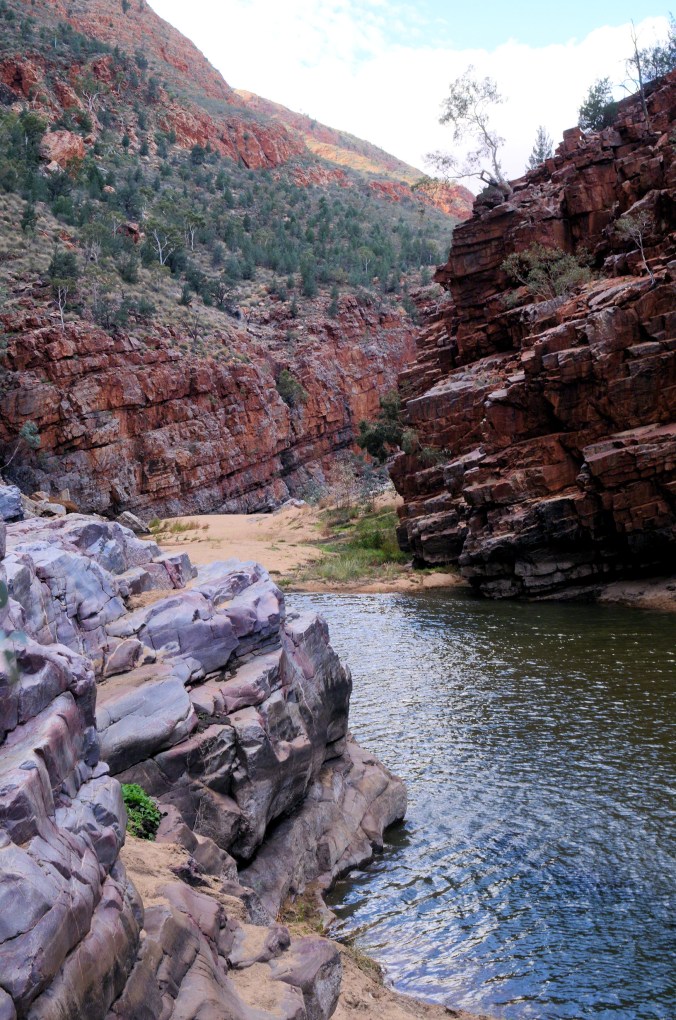
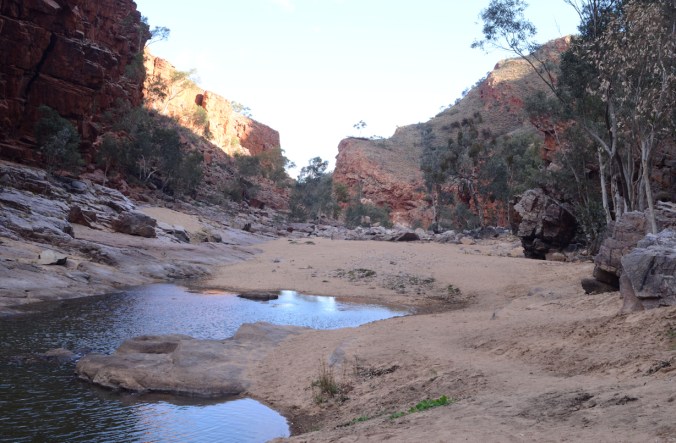
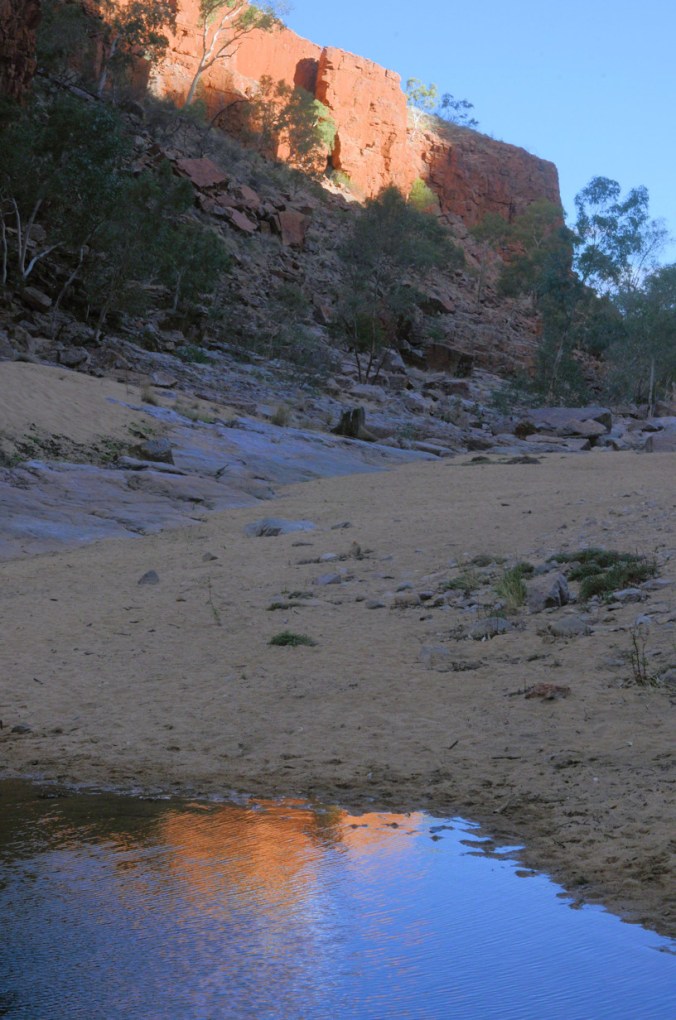
As the T-Team Revisited, we trooped into the gorge. In late afternoon, the cliffs rose somber and dusky-pink casting a shadow over the waterhole. The T-Kids gazed at the expanse of water and kept on walking. Just past the waterhole we climbed up a ridge. When we reached the top, Mum stumbled. Mrs T caught her and steadied her. Mum sat down with the announcement:
‘That’s it. I’m not going any further. But the rest of you can.’
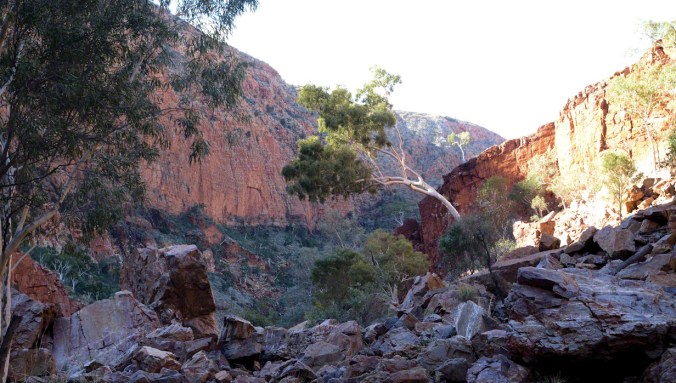
The sun caught the cliff-wall opposite, causing it to glimmer a golden orange. A ghost gum sprouting from a tumble of rocks attracted my attention. ‘I remember that tree,’ I said. ‘Dad’s favourite tree in Ormiston.’ After taking a photo, I scrambled down to the tree and scattered Dad’s ashes there.
Up and down the immediate locale of the gorge, the rest of the T-Team Revisited, wandered, silently reflecting on Dad and scattering him where he had many times trekked.
Some hikers tramped past and glanced sideways at us. The T-Team ignored them. Mum watched us from her vantage point. I climbed back up to her to check how she was.
One of the T-kids joined us. ‘The hikers asked us what we were doing, and I said we were scattering Grandpa’s ashes. They said, ‘Oh,’ and walked away all quiet. Which was awkward!’
I counted the members of the T-Team who crawled over the rocks and the other side of the rock-hole. ‘Where’s No.2 Son?’
‘I think I saw him go further down the gorge with his Dad,’ Mum said.
Down the ridge, and around the golden wall I hiked. I found No.2 Son marching towards me. ‘I want to see what’s around the bend.’
I glanced at my watch. 4pm. ‘Why not?’
We strode down the gorge and around a corner or two. Cliffs in hues of blue and purple with just the tips splashed with orange. Perfect reflections in pools.
‘What’s around the next corner?’ No.2 Son was had found his hiking mojo and was keen to explore more of Ormiston Gorge.
‘Let’s see.’
We stormed around the next corner. Ormiston with its majestic cliffs, even in shade of the late afternoon, spurred us onward to explore.
‘Let’s go on. I want to see more.’
‘Let’s.’ I’d never seen such enthusiasm from No.2 Son to explore nature.
On we tramped, the sand firm under our boots. The gorge cast in hues of mauve enticed us further. More reflections in still pools caught the sun-capped heights of the eastern cliffs.
As we dragged our feet back to Ormiston’s entrance, No. 2 Son grumbled. ‘Just as I’m getting into this exploring, Dad, you have to spoil it. You want me to get outdoors and then you call me back.’
‘It gives you a taste for another time when we’ll have more time to hike through the gorge to the Pound, okay?’ I said thinking, And perhaps climb Mt Giles one more time…
We passed the T-kids drying off from their swim in the waterhole.
MB waved from the damp depths. ‘Come on, have a dip!’
‘Too late,’ Hubby called back. ‘We have to get back to camp. I don’t want to be cooking in the dark.’
I was glad Hubby moved us on. Wasn’t in the mood for swimming. Like No. 2 Son, I yearned to explore the dreams and secrets, the twists and turns of Ormiston Gorge.
After the phone call to Fifi, Dee leaned back in her chair. ‘Gotcha, Mr. Renard. Gotcha!’ She couldn’t believe her good fortune in Fifi. Didn’t take that “Rannga” much to turn against her former friend.
However, youth group rumours were not enough to “hang” Lillie, she needed hard facts—evidence. She started with the local council office at Glen Huon. After all, most apple picking happened in the Huon Valley, Tasmania. So, a good place to commence digging dirt on her nemesis.
Thankful that she woke up the sleepy young man in the office before the council chambers closed, she trawled through the files he sent her. She was glad that such information about payrolls and workers in the area in 1981, had been digitised. Lillie von Erikson was listed as working for apple orchard owners, Greg and Janine Thomas. However, no mention of a baby or her being pregnant. Dee puzzled over the fact that Lillie, according to Fifi, seemed to have been in Tasmania long after the apple-picking season was over.
What was she doing there after apple picking? Dee wondered.
She moved onto Trove, an online digital archive, that has recorded historic newspaper articles and publications. Searched Lillie’s name in the local and state newspapers from the day.
Nothing.
She calculated when the baby would arrive if conceived in November. Then scrutinized state and also national papers for a birth in the personal pages. August—September 1981, in particular. Nothing. Still, all is not lost. Perhaps she didn’t put the birth in the paper if she adopted the child out.
But a quick check of newspaper dates available revealed that Trove only published papers up to 1950. What a disappointment!
A visit to the South Australian State Library was the next step in the search. There she trawled through the microfiche files for the Tasmanian newspapers, concentrating on births around August and September.
After an unsatisfactory August, she scanned the first week in September.
‘Ah! That looks more like it,’ Dee murmured.
She zoomed in on the notice of a daughter, Zoe, born to Lillie’s apple picking bosses, Greg and Janine Thomas. Detective Dee Berry smiled while resting her clasped hands on her belly. September 1, right in the timeframe too.
‘Interesting,’ she murmured. ‘Did the moll stay to help Mrs Thomas? Or did she give the baby to Mrs. Thomas?’
A check of the births, deaths, and marriages register, and confirmed. Mrs. Janine Thomas was over 40 when she had her first child, Zoe.
‘Not impossible, but suspicious,’ Dee muttered. ‘I think a little trip to Tasmania is what I must do.’ After saving the information onto a file labelled “Moll”, she put in an application for a visit to Tasmania courtesy of the government. After all, it was an enquiry into a murder investigation.
Who knows, Dee smirked, my enemy may be a suspect that needs to be eliminated; one way or another I’ll get her.
Dee gripped the leather-bound steering wheel of Toyota Corolla hire car as it rumbled up the unsealed road. Won’t tell the hire company about that little detour, she thought. From the Council records, the Thomas farm was hidden way out west, close to the “Great Western wilderness”. The further west she drove, the thinner and rougher the road became.
She passed a tiny town with houses painted in gaudy orange and pastel greens. A purple house stood sentinel at a fork in the road. Dee took the left track hoping to reach her destination soon. She’d given up on the Sat Nav. The designated voice, named Jilly was vague and hadn’t a clue where to go.
Dee was proud that she could still read maps and follow the directions of an old local manning the service station at Glen Huon. He said he’d remembered someone like Lillie 40-odd years back. Strangers were a rarity in a small town of fifty-odd people from where he had come. He said Lillie had walked into the church, and all twenty heads turned to size up the blonde from the mainland.
‘It wasn’t long before rumours were flying,’ the station owner said, ‘pregnant, just like the lady who lived in that purple house you’ll see when you get to the town up there. Rumour has it, she’s got a child from ten different men. Anyways, that’s a lifetime ago now. Back then, if someone sneezed across the valley there, everyone in town would know about it and the person who sneezed would have died from pneumonia. Not much better now.’
Dee must have given him a strange look, because the station owner added, ‘Oh, er, don’t believe the rumours. Them folk up there are all related, married cousins and what not, but they don’t have two heads.’
‘Didn’t think they had,’ Dee replied, ‘I just want to know how to get to the Thomas farm.’
‘Don’t know why you want to go there; the family left years ago.’
‘Do you know where they went?’
The man shrugged. ‘The missus died, so I heard. Daughter’s become some big shot lawyer in Melbourne. Something not right there, she never fitted, you know what I mean. She wasn’t one of us.’
‘Did she look like Lillie, the blonde?’ Dee showed the man a photo she had scanned to her phone of 17-year-old Lillie.
The man paused, squinted and then nodded. ‘Yeah, there were rumours. But we could never prove it. Janine, Mr. Thomas’s missus, always insisted the baby was hers.’
Sometimes characters spring from real life, Sometimes real life is stranger than fiction. Sometimes real life is just real life. Check out my travel memoirs, And escape in time and space To Central Australia.


























 Tru-Kling Creations