Trekking Thursday–Ernabella

[The T-Team with Mr. B Dad’s friend Mr. Banks and his son, Matt, joined Dad, my brother (Rick) and me on this journey of adventure. I guess Dad had some reservations how I would cope… But it soon became clear that the question was, how would Mr. B, a middle-aged man who was used to a life of luxury, cope?]

Deserted

[An extract from The T-Team with Mr. B: Central Australian Safari 1977, my newly released travel memoir, based on true events but names and events may have changed.]

We stopped in at Fregon, another Indigenous settlement much like Mimili; a row of tin sheds and deserted. Then at about 2.30pm we arrived at Ernabella.

A teacher friend of Dad’s invited us into his home for refreshments and each of us had a hot shower. I enjoyed the warm cascade of water on me. My treat for the week. Below rivers of red mud spun into the drain hole of the bath. I scrubbed my hair with shampoo. The soap refused to lather. I scrubbed and scrubbed.

‘Lee-Anne!’ Dad called. ‘Don’t take all day, the boys need a wash too.’

‘Oh, alright.’ I turned off the tap. I guess the boys did need to wash, probably more than me. They were getting quite ripe at close quarters in the Rover. After all, it had almost been a week since we had a proper wash.

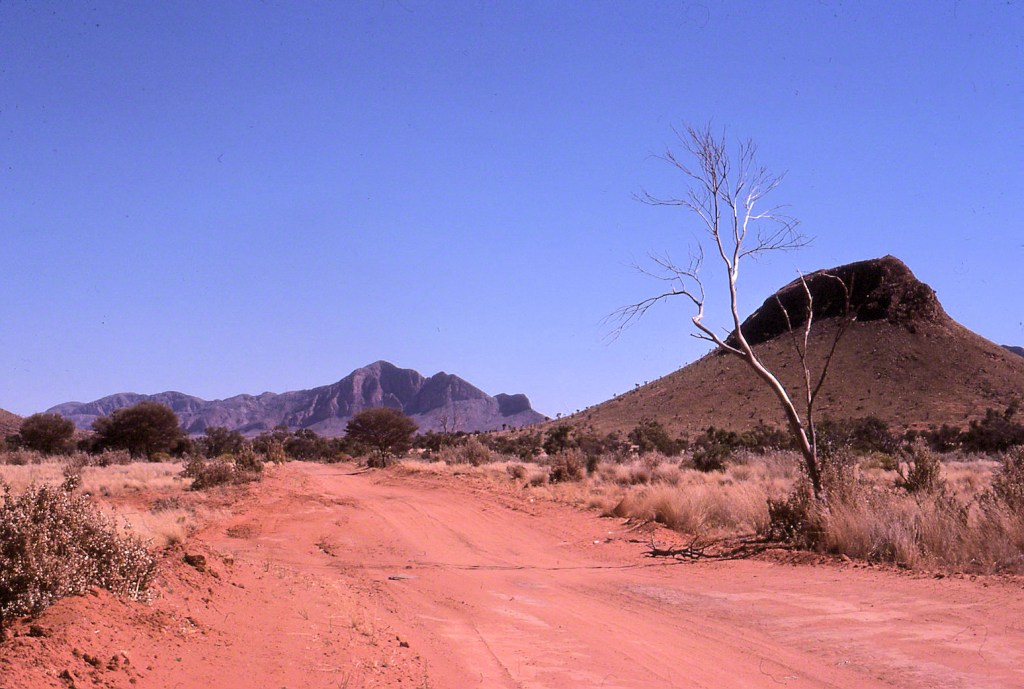
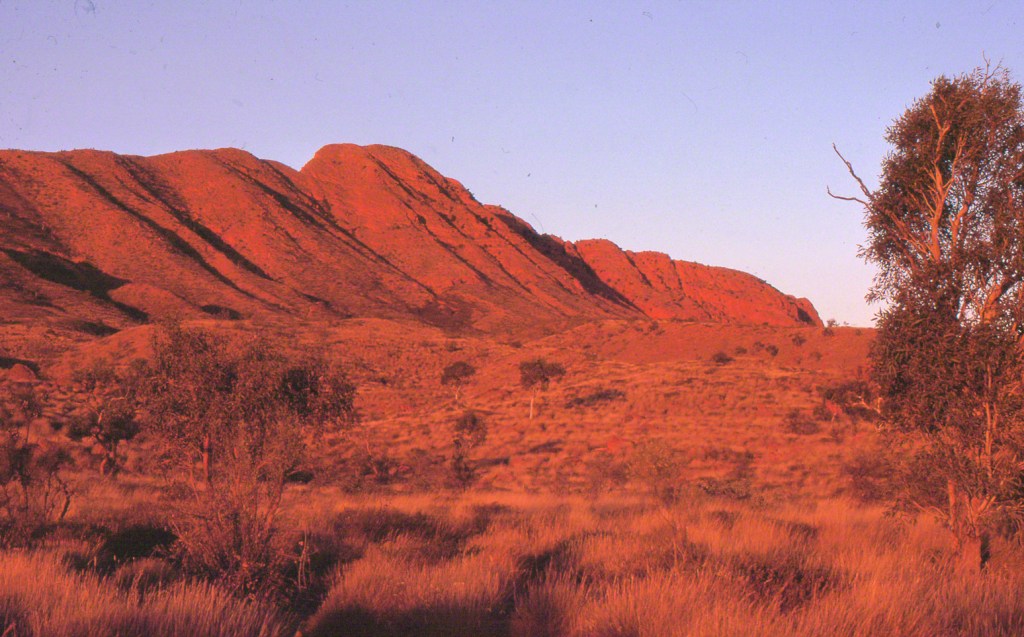
All showered and smelling sweet again with soap and deodorant, we trailed after Dad who gave us a tour of the settlement, including the school. Ernabella lies at the foot of the Musgrave Ranges, south of the South Australian and Northern Territory border. The land belongs to the Pitjantjara people. The mostly prefabricated buildings were neatly arranged around a random collection of unsealed roads.

[Photo 1: Approaching Ernabella © C.D. Trudinger circa1942]

Dad guided us around the school which appeared empty. We followed him circling the white building. ‘Must be closed,’ Dad said.

‘School holidays, I guess,’ I remarked.

Dad scanned the transportable blocks and then screwed up his nose. ‘We need to find someone to fix up the trailer.’

We walked through the settlement. The white buildings stood sentinel to the roads void of human activity and traffic. The crunching of stones under our feet was magnified by a town suffering from a bad case of abandonment.

‘Where are all the people?’ Mr. B asked.

‘Wow! The place is tidy and look how clean the streets, are,’ I said.

‘Except for the gravel,’ Richard mumbled.

Matt sniggered.

We wandered after Dad who was having a hard time finding someone to fix our trailer. Anyone…No one seemed to be around. I wondered if Ernabella was a ghost town.

Mr. B suggested we wait by the store that seemed closed and suffering a severe case of neglect. This we did.

‘The reason the settlement is so tidy,’ Dad explained, ‘is because everybody, I mean the aborigines, have a job to do here. They don’t get their welfare payment unless they do their job. They probably have someone cleaning the streets of rubbish and all sorts of other jobs.’

‘Not the store, apparently,’ Mr. B said.

‘Ah, well, they have to get the stock from down south, from Adelaide. Perhaps they’ve run out.’ Dad coughed.

[Photo 2: Building in Ernabella © C.D. Trudinger 1992]

An Indigenous man sauntered up to us.

Dad strode to meet the man and he guided him to the trailer still perched on top of the Rover.

While the trailer was being repaired, I climbed a hill. I figured the trailer would take ages to be fixed so I had time to sun bake. I wanted a tan. Treading up the hill, I noticed Matt running after me.

I stood and sighed. Great! Just when I wanted space to myself.

Matt held up a stick. ‘Look what I found!’

I examined the carved piece of wood. ‘Oh, yeah?’

‘What do you think it is?’

‘I dunno, a corroboree stick, I suppose.’

‘Oh, cool! Can you take a photo of me with it?’

‘Yeah, okay.’

[Photo 3: Corroboree Stick on Trudinger Hill © L.M. Kling (nee Trudinger)] 

I photographed Matt proudly holding a corroboree stick. The Musgrave Ranges behind were cast in hues of gold from the rays of the late afternoon sun. When we had descended the hill and found Dad, he told us that the “mountain” we had climbed was named “Mount Trudinger” after his brother who had been a teacher in Ernabella.

Near evening, we visited an Indigenous pastor. As the Musgrave Ranges is sacred to the Pitjantjatjara People, Dad and the pastor discussed the possibility of getting a couple of guides to be our companions as we climbed Mt. Woodroffe.
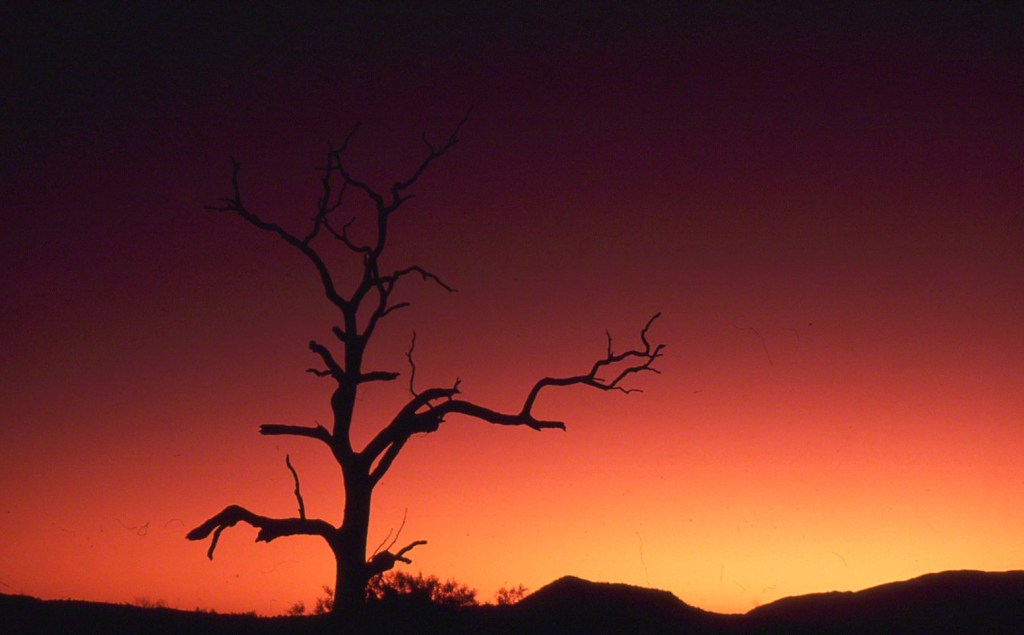
[Photo 4 and feature: Dead Tree Sunset © C.D. Trudinger circa 1992]

For the night we camped in Two Mile Creek which is not far from Ernabella. Dad conceded to camp not alongside, but right in the dry creek bed on the soft sand. This arrangement made Mr. B very happy. ‘For once I get to sleep on soft sand,’ he said.

‘Just remember, if we have even a hint of rain, we pack up and go to higher ground,’ Dad answered.

Mr B chuckled. ‘No chance of that, the weather’s been as dry as the bones of that deceased camel we saw on the side of the road.’

‘The water comes rushing down if there’s a storm,’ Dad said.

‘Oh, of course, Captain.’ Mr B then turned over and snored.

Rick muttered, ‘The only storm will be if Mr B doesn’t get a good night’s sleep.’

Matt sniggered.
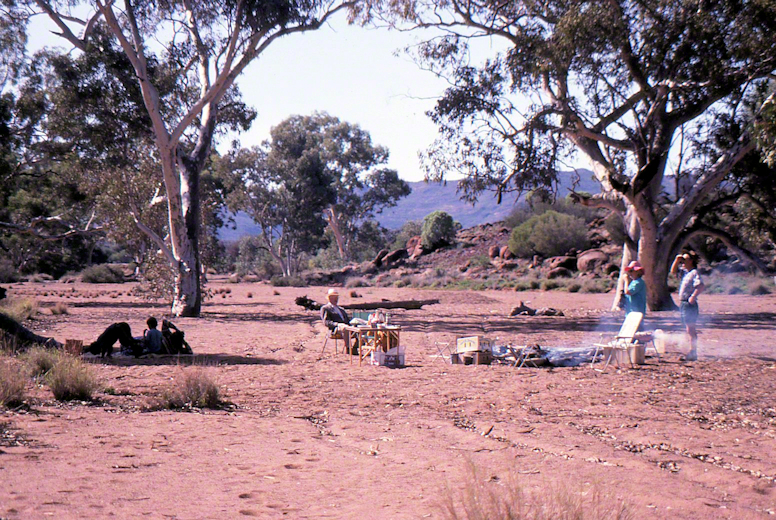
[Photo 5: Picinic on Soft Sand, at last! © C.D. Trudinger circa 1992]

© Lee-Anne Marie Kling 2018

Feature Photo: Dead Tree sunset in Musgraves © C.D. Trudinger circa 1992

***

Keen to read more of the adventures of the T-Team with Mr. B?

Click on the link and come along for the adventure.

 The T-Team with Mr. B: Central Australian Safari 1977

Want more but too expensive to travel down under?

Why not take a virtual travel with the T-Team Adventures in Australia?

Click here on:

Trekking With the T-Team: Central Australian Safari 1981

And escape in time and space to Central Australia 1981…

Travelling Thursday–Gosse Range

T-Team Series — Tnorala Mystery

 [The T-Team with Mr. BDad’s friend Mr. Banks and his son, Matt, joined Dad, my brother (Rick) and me on this journey of adventure. I guess Dad had some reservations how I would cope… But it soon became clear that the question was, how would Mr B who was used to a life of luxury cope?

*A story based on real life events but some names and how those events have been remembered have changed.]

Tnorala — Gosse Range

An episode in the prequel to my memoir, Trekking With the T-Team: Central Australian Safari 1981. Books both in Kindle and paperback available on Amazon.

Our Indigenous guide, Sammy jiggled his knee. He clutched the paper-bag containing his pie, his fingers curled tight scrunching the top of the bag.

‘Aren’t you going to eat it?’ I asked.

The T-Team had just left Papunya; our first contact of “civilisation” since the trek way out west to Mt Liebig and Talipata Spring. Sammy’s first meat pie for at least a week, I reckon, and all he did was hold it in the bag like a prized souvenir.

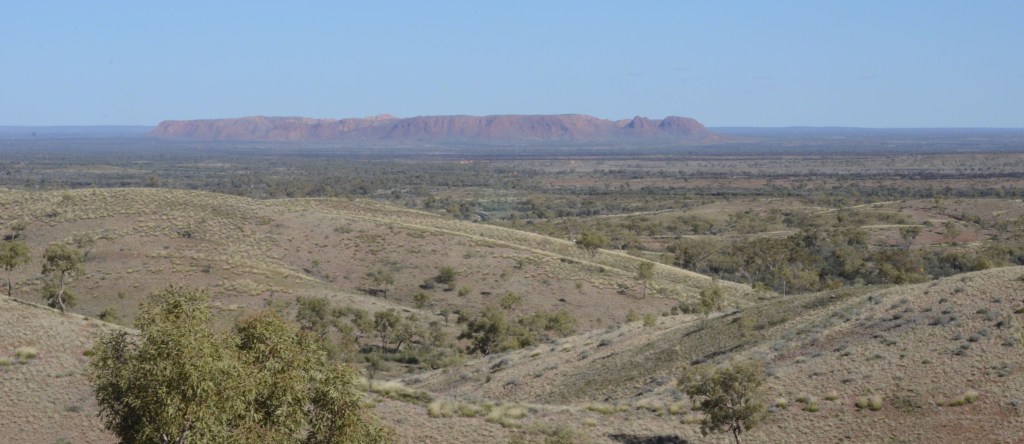
[Photo 1: Haasts Bluff near Papunya © C.D. Trudinger 1977]

Dad promised us barbeque beef steak and sausages at Gosse Range before travelling onto Areyonga. Mr. B, our family friend who with his son Matt, had accompanied us on this trip, seemed pleased with this proposal.

‘I dare say, David,’ Mr. B said, ‘I can’t help having a certain satisfaction eating steak after what one of their sort did to us, there, camping near Mt Liebig. I mean, that beast of a bull terrorized Matt and me while you and your son and daughter hiked up the mountain.’

Dad sighed. ‘It is cattle country and we did camp on their territory.’

‘Hmm, I thought you would’ve checked that out, mate. Most uncomfortable.’

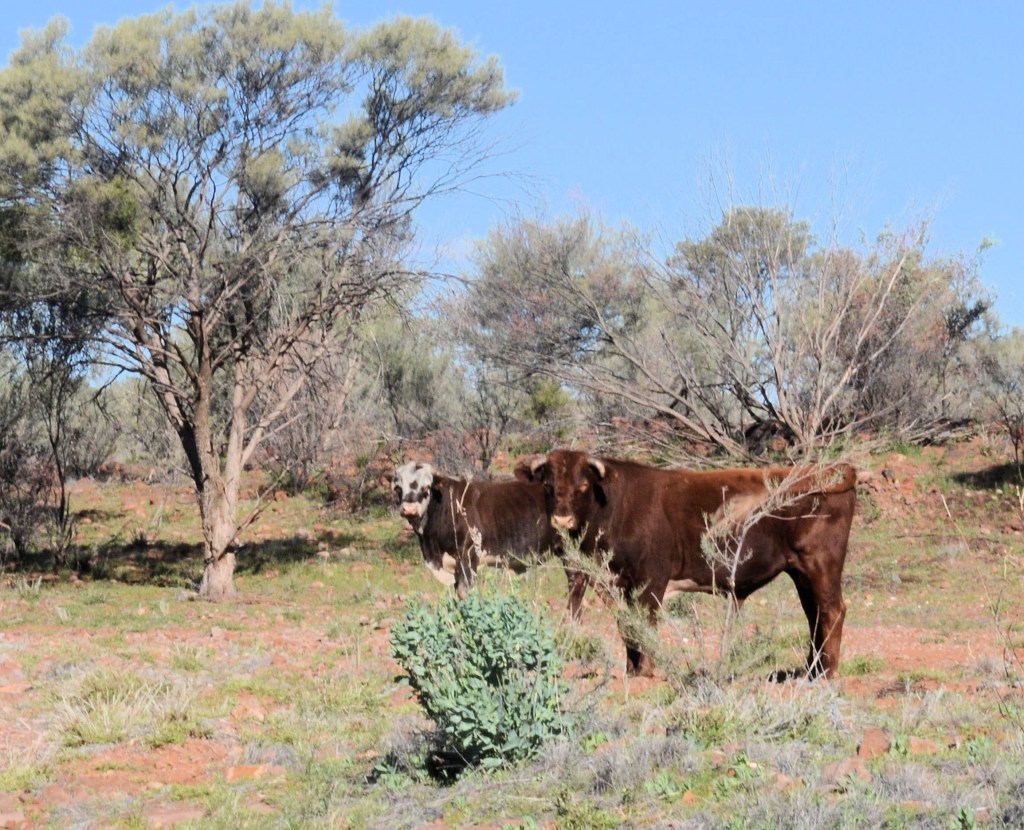
[Photo 2: Cattle near Gosse Range © L.M. Kling 2013]

With the mention of uncomfortable, I glanced at our Indigenous guides, Sammy who I’ve mentioned, and Harry. As the Rover lurched and rumbled along the corrugated road to the Gosse Range, Sammy fidgeted, twisting the top of the paper bag in his fist, while Harry sat relaxed, rolling with the bumps.

[Photo 3: Road to Gosse Range © L.M. Kling 2013]

I nudged my brother, Rick. ‘Why isn’t he eating his pie?’

Rick shrugged. ‘Perhaps he’s being polite, not eating in front of people.’

‘I don’t mind.’ I gestured to Sammy. ‘It’s okay, you can eat it.’

I watched Sammy pull the meat pie from the bag and bite into it. He chewed each piece as if a cow chewing cud. He grimaced. He looked like he was eating a pie full of worms. With each bite and grimace, I giggled.

Sammy persevered, his mouth downturned. Every so often, he muttered to Harry in their Aranda language. Harry nodded.

‘I reckon he doesn’t like the pie,’ I muttered to Rick.

‘Probably cold,’ Rick mumbled.

I snorted. ‘He took long enough to start eating it.’

[Photo 4: Outside Gosse Range © L.M. Kling (nee Trudinger) 1977]

A glimpse of the jagged peaks of the Gosse Range flitted past through the dusty Rover windows. I peered past Sammy who had finished his pie to catch more views of the range.

‘Hey, Rick, look!’ I pointed. ‘The Gosse Range, it’s just like the painting Grandma’s got in her lounge room.’

From the front of the Rover Mr. B asked, ‘Did you say, David that you met the famous Albert Namatjira when you lived up in Hermannsburg?’

‘Oh, of course. My father-in-law was a great supporter of Albert’s art.’

‘How did the Gosse Range come about?’ I asked my audience from the back of the Rover.

Rick sniffed. ‘A meteor, I think.’

‘Or comet?’ I added. ‘What do you think, Sammy?’

Sammy wiped his mouth and didn’t respond.

‘Harry?’

Harry smiled and also remained mute on the subject.

I sighed and said, ‘Another thing I have to look up in the encyclopaedia.’

Harry looked in my direction. ‘Sammy wants to leave before we go to Areyonga.’

‘Why?’

‘He doesn’t want to go there. No friends. Not his family.’

‘Oh, that’s a funny reason.’

The Rover began to jerk and rumble over rocks and ditches. The jagged walls of the Gosse Range towered above us as the T-Team navigated the track leading into the middle of the range.

[Photo 5: Track leading into the Gosse Range © L.M. Kling 2013]

Sammy glanced left and right and wrung his hands together. Beads of sweat collected on his forehead and temples.

Once inside, Dad built a fire for the barbeque. Rick and Matt dangled sausages on sticks over the yellow flames. I gazed around the plain, its dry flat surface dusted with red-tinted sand and golden grasses. The range in shades of salmon pink surrounded this paddock. There seemed to be one lonely tree in the vast field that spanned several kilometres, and this was the tree we found to picnic under. While Mr. B and Harry set up picnic essentials on the tarpaulin, I watched Sammy pace back and forth.

[Photo 6: Picnic in the Gosse Range © L.M. Kling (nee Trudinger) 1977]

‘Lee-Anne, can you select your beef steak, please, and put it on the grille?’ Dad called.

I turned and picked out a smaller portion to add to the sizzling pieces of meat on the grill on top of the coals. Then I looked up to track Sammy’s progress. Sammy had vanished.

‘What’s the matter with Sammy? Where’s he gone?’ I asked Harry.

Harry nodded. ‘The real reason Sammy no want to go to Areyonga—there’s a big initiation ceremony, a corroboree going on there.’

‘Ah, yes,’ Dad said. ‘He’s scared.’

‘Sammy’s not from that tribe,’ Harry explained.

‘Would he get killed if they saw him?’ Dad asked.

Harry nodded. ‘Even if he didn’t see the ceremony, they’d kill him just for being there.’

‘Really?’ I said. ‘No wonder Sammy wasn’t himself. He’s usually laughing and so funny. But not today.’

[Photo 7: Inside the Gosse Range © C.D. Trudinger 1977]

Munching on my steak, I absorbed the expanse of dried grass, and the ochre range that’s eroded, yet the mystery of the rites and customs of the Indigenous of this land on this day at least, fascinated me more than a crater created by a meteorite thousands of years ago. Still, I did wonder at the devastation and effect on the Earth such an impact would’ve had. The crater spans 4.5km in diameter, so must’ve been one big rock.

[Photo 8: Gosse Range from lookout © L.M. Kling 2013]

After lunch, we left Sammy in the Gosse Range, his country, and headed for the lookout. There the Gosses appeared mauve in the afternoon light.

Dad tapped his pocket. ‘I think we’ll go from here to Hermannsburg, it’s too late to drop into Areyonga.’

‘Pity,’ I remarked, ‘Sammy could’ve come with us, after all.’

© Lee-Anne Marie Kling 2018; Updated 2019

 Feature Photo: Sunset on Gosse Range © S.O. Gross circa 1946 (courtesy of M.E. Trudinger)

***

Keen to read more of the adventures of the T-Team with Mr. B?

Click on the link and come along for the adventure.

The T-Team with Mr. B: Central Australian Safari 1977

***

Want more but too expensive to travel down under? Why not take a virtual travel with the T-Team Adventures in Australia?

Click here on Trekking With the T-Team: Central Australian Safari 1981

And escape in time and space to Central Australia 1981…

Travelling Thursday–The T-Team with Mr. B: Uluru

ULURU SUNSET—Lost

 [Finally, The T-Team with Mr. B: Central Australian Safari 1977 is published on Amazon Kindle.

This time, the customary viewing of an icon of Australia, doesn’t quite go to plan.]

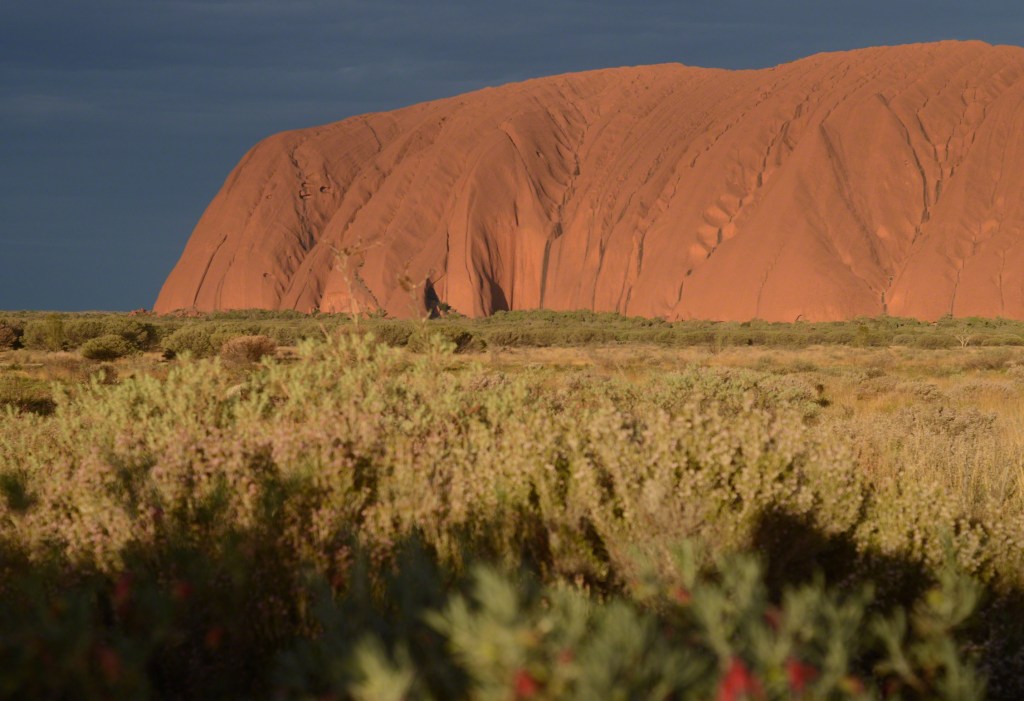
Dad meant what he said; he believed we, as the T-Team were travellers, not tourists. So, when the sun began its journey to the other side of the earth, and edged towards the western horizon, Dad drove further west and far away from the popular tourist haunts for the sunset on the Rock.

‘Don’t go too far,’ Mr. B said as he glanced back at the diminishing size of the Rock. ‘I want a red rock of considerable size.’

‘I know what I’m doing,’ Dad replied.

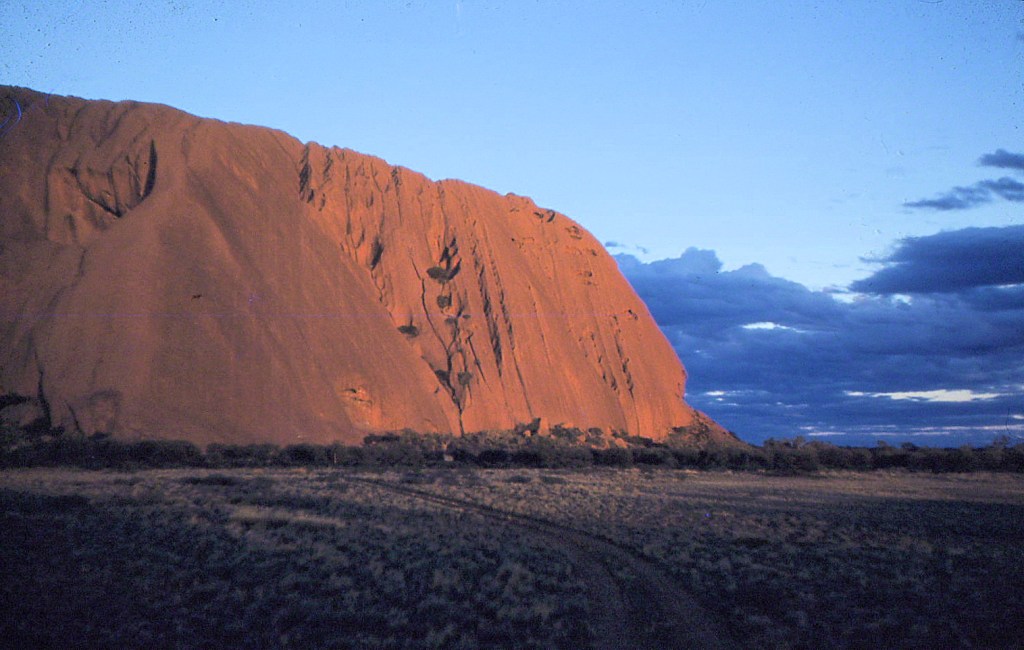
But every vantage point that we considered photo-worthy, so did clusters of tourists. The ants may have been heading for bed, but the road west of Uluru swarmed with sightseers scrambling over the landscape to capture that momentous event of the sunset on Uluru.

*[Photo 1: Two blokes waiting for Uluru to turn © L.M. Kling (nee Trudinger) 1977]

‘I hope we’re not going to miss Uluru turning red, ‘cos that’s what I came here to see,’ Mr. B said.

‘Plenty of time,’ Dad said. ‘Trust me.’

‘I’ll hold you to that promise, mate.’

Dad sighed and then turned into the next available place to park the Rover.

Mr. B glanced at his gold watch. ‘I mean to say, it’s nearly six o’clock. The sun sets at six, doesn’t it?’

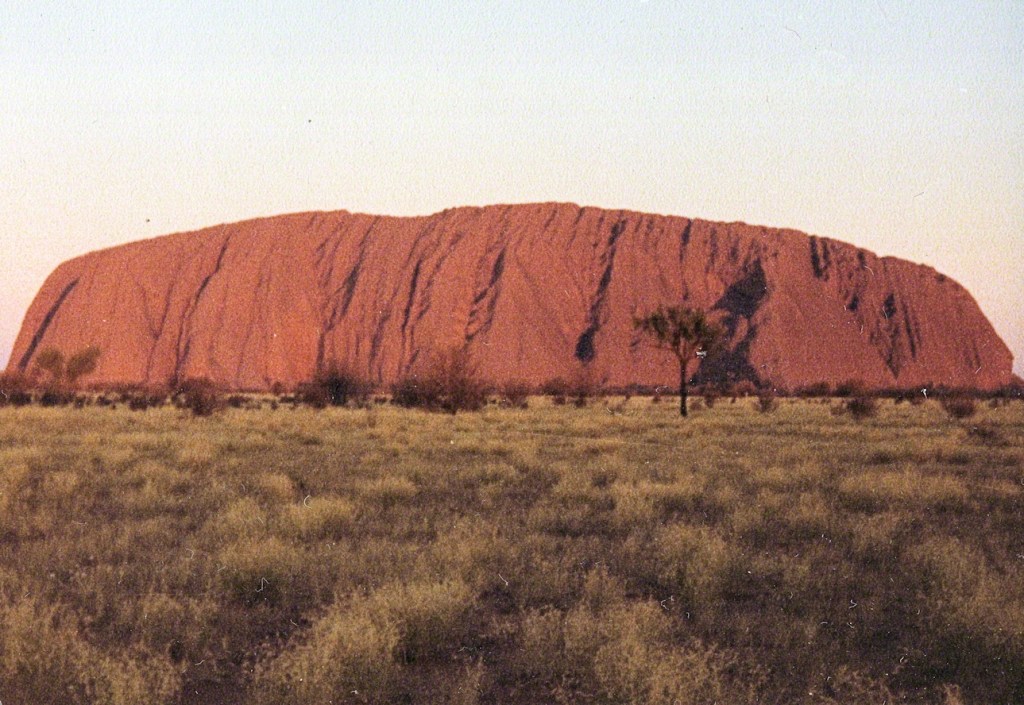
We joined the tourists in the small clearing to take the Uluru-at-sunset-photos. There’s one snap I took of two travellers admiring the Rock as it deepened in colour, more a rusty-red, than the scarlet I’d seen on calendars. So, it’s taken with an instamatic camera and the quality is pitiful compared to the chocolate-box number my grandpa took in the 1950’s, but I reckon it captures the atmosphere.

*[Photo 2: Nothing like the Uluru sunset my Grandpa took © S.O. Gross circa 1950]

‘Enough of these tourists,’ Richard grumbled. Clutching his polaroid camera, he stormed up the nearest hill.

‘Wait!’ I called and raced after him.

My brother ignored me and quickened his stride. I tried to catch up but soon tired of his fast pace. I watched him vanish behind some spinifex bushes and decided his quest for tourist-free photos was pointless. I gazed at the Rock squatting behind waves of sand-hills and bushes. The view’s going to be just as good, if not better by the road and the masses, I thought and rushed back to Dad before the sun went down too far and the Rock had lost its lustre.

*[Photo 3: I mean, where’s the colour?? © L.M. Kling (nee Trudinger) 1977]

Uluru faded from clay-red to a dull grey and the tourist congregation thinned, trickling away in their cars and buses towards the camping ground situated east of the Rock.

‘Is that it?’ I quizzed Dad. The Uluru at sunset in my mind had been spectacular in its failure to deliver. ‘Why didn’t it turn bright red?’

[Photo 4: You mean, like this? Picture perfect, chocolate box in 2013 © L.M. Kling 2013]

‘You need clouds for that. Clouds make all the difference,’ Dad said, his lips forming a beak. ‘Glad my camera’s out of action and I didn’t waste film on it.’

‘You mean, the Rock doesn’t always turn red?’

‘No, it’s the clouds that make the difference.’

‘What on the Rock?’

‘No, to the west, where the sun sets.’

*[Photo 5: Yeah, clouds like the ones we had in 2013 © L.M. Kling 2013]

‘But the photo of a red Ayres Rock taken by Grandpa had clouds around it.’

‘Yeah, well, there would’ve been clouds in the west too,’ Dad explained. ‘See, the sky is clear tonight, so that’s it for the Rock.’

‘Disappointing! A very poor show, ol’ friend.’ Mr. B sauntered past us with Matt tagging behind. ‘Come on, we better get to camp. Don’t want to be cooking in the dark. Don’t want the likes of egg soup again.’

Dad peered into the distant black lumps of hills. ‘Where’s Richard?’

I stared into the thickening darkness. No Richard. ‘Dunno, went into the sand-hills,’ I said with a shrug.

‘Oh, well, I guess he’s gone for a walk,’ Dad said.

*[Photo 6: So different in 2013—All golden © L.M. Kling 2013]

The Rock became a dull silhouette on the horizon. We packed away our cameras and waited. And waited for Richard. Darkness settled on the land. We waited some more. The icy cold of the night air seeped into our bones. We waited but he did not appear.

‘Where could he be?’ Dad said and then stormed into the bush.

Minutes later, Dad tramped back to us waiting at the Rover. His search in the nearby scrub was fruitless.

Each one of us stood silent; silent sentinels around the Rover.

‘I hope he’s alright,’ my comment plopped in the well of silence. A chill coursed down my spine. What if an accident had befallen my lost brother? The dark of night had swallowed my brother up.

Dad grabbed the torch from the glove box in the Rover, and then marched back up the sand-hill.

I paced up and down the road. Mr. B folded his arms across his chest and scrutinised the shadows of bush that had now consumed Dad. Matt gazed up at the emerging mass of the Milky Way.

‘I hope they’re okay. I hope Dad finds Richard.’ My chest hurt with the pain of losing my brother.

Mr. B sighed. ‘Probably just a—’

‘What?’ I asked.

‘There they are,’ Mr. B said. ‘All that worry for nothing. You’ll get grey hairs if you keep worrying like that.’

I pulled at my hair and then raced up to my brother. ‘Where were you?’

‘I went out along the dunes. I kept walking and walking trying to find a good spot,’ Richard said.

Dad chuckled. ‘And when he did, he waited for the Rock to turn red.’

*[Photo 7: More of the “Red” Rock close up © L.M. Kling 2013]

For the night we camped in an aboriginal reserve seven miles out of the Uluru—Kata Tjuta Reserve. In preparation for the trip, Dad had successfully applied for permission to camp there. This time Dad and I had two fires going each side of us as the previous night was so cold that I had little sleep. We hoped that two fires would be better than one to keep the chills away. Mr. B and his son Matt on the other hand, settled for one shared fire and superior fibres of their expensive sleeping bags to keep the cold out.

And Richard, after all his effort to scare us by almost getting lost, buried himself in his rather ordinary cotton sleeping bag, next to his single fire, and was the first one, after our rather simple rice dinner, to be snoring away, lost in the land of nod.

© Lee-Anne Marie Kling 2016; updated 2018; 2022; 2023

*Feature Photo: Sunset on the Rock © Lee-Anne Marie Kling (nee Trudinger) 1977

***

Find out how the adventure with Mr. B progresses.  

Click on the link, The T-Team with Mr. B

And join the journey back in time to the 70’s and into the Centre of Australia.

Travelling Thursday–Road Trip in the Charger

Road Trip to Sydney the summer of 1979 – Episode 1

[Based on real events but some names have been changed. And some details of events may differ. After all, it was over 40-years ago.]

Lost Control

A conference on the gifts of the Holy Spirit. I wonder what gifts God has for me? I pondered while dozing in the back seat of my brother Rick’s Chrysler Charger. And Dad…why was it that Dad had to go all on his own by car to the conference? Oh, well…much more fun travelling with my peers.

Crunch!

I sat up. Rubbed my eyes. ‘What happened?’

The car fishtailed. Rocking the carload of us back and forth.

‘Hey, mate!’ Rick, my brother yelled at the driver, ‘Jack! You trying to kill us?’

Without reply, Jack, bit his thin upper lip and swung the Charger to the right, and into oncoming traffic.

I gasped.

A truck bore down on us.

Jack, who reminded me of Abraham Lincoln, clenched his strong jaw and corrected back to the left. Keep left, that’s what you do when driving in Australia. Jack’s usually blonde curls appeared dark from perspiration.

The semitrailer gushed past us, sucking the air out of our open windows.

Rick held up his thumb and forefinger in pincer mode. ‘You missed them by that much.’

[Photo 1 and feature: Rick’s Charger in strife © L.M. Kling circa 1984]

Rick’s navy-blue tank top was soaked with sweat around the neckline under his mouse-brown curls, and under his strong arms. Mid-January and the full car with only open windows for air-con, steamed with heat. And body odour.

To my right in the back seat, Mitch, taller and thinner than my brother but sporting dark brown curly hair, wiped his damp mauve polo shirt and then sighed, ‘That was close.’

Cordelia, in the briefest of shorts and tight-fitting t-shirt, showing off her classic beauty and assets, sat the other side of Mitch.  She clutched her stomach. ‘I feel sick.’

Mitch leaned forward and tapped Rick on the arm. ‘How long till we reach the next town?’

‘I think I’m going to throw up,’ Cordelia said.

Rick nudged Jack. ‘I think you better stop.’

Jack rubbed one hand on his blue jeans, straightened his long white shirt, placed his hand again on the steering wheel and kept driving.

Cordelia cupped her hand under her chin and groaned.

I smoothed my white wrap-around skirt, and then brushed my light cream-coloured blouse patterned with blue roses. No way did I want Cordelia to mess up my most flattering-to-my-slim- figure clothes.

[Photo 2: In my slimming white wrap-around, Clealand National Park © M.E. Trudinger 1979]

‘Stop!’ Rick shouted.

‘I can’t!’ Jack said and continued to speed down the highway. The golden expanse of the Hay Plains dried out by the fierce summer heat spanned the horizon. White posts flitted past. The red-brown line of bitumen of the highway stretched to its vanishing point on that horizon. A faded white sign flashed past. Dubbo, 265 miles. How long had Australia been metric? A few years at least; not that one would know travelling in outback Australia in early 1979. Still…

Another groan from Cordelia.

Rick screamed at Jack. ‘Stop!’

Jack slowed the car and rumbled onto the gravel beside the road.

Cordelia leapt out and hunched over a shrivelled wheat stalk. I looked away and covered my ears from the inevitable sound of chunder.

‘That was close,’ Mitch said.

‘Remember that drunk guy, your brother brought back to Grandma’s?’ Rick said. ‘Took me a week to get the smell out of her Toyota.’

‘Hmm,’ Mitch replied. ‘That was unfortunate.’

‘You mean, the guy who kept singing “Black Betty”?’ I asked. I remembered that fellow. He had messy blonde hair and a moustache. He lounged on the back seat of Grandma’s car while I sat all prim and proper in the front waiting for Mitch’s brother to drive us to Lighthouse Coffee Lounge. ‘He kept saying I was so innocent.’

‘Well,’ Mitch said, ‘you are.’

I guess I was at 15; but hated to admit it.

Cordelia stumbled back into the car. ‘That’s better.’

[Photo 3: Proud owner of his Chrysler Charger © courtesy of R.M. Trudinger 1983]

Rick and Jack arranged to swap places. So, after a brief stretch of legs and a nearby scraggly-looking bush receiving five visitors, we set off on our quest for Sydney. After all, we still had ages to go before arriving there for the Revival Conference. We hoped to arrive with enough spare time to see the sights Sydney had to offer.

[to be continued…]

© Lee-Anne Marie Kling 2023

***

Easter, the season for holidays and intrepid road trips…

Or for a reading adventure…

Want more, but too impossible to travel down under? Why not take a virtual journey with the T-Team Adventures in Australia?

Click here on Trekking With the T-Team: Central Australian Safari 1981…

And escape in time and space to Central Australia 1981…

Or

Is Sci-fi adventure more your thing?

Come along for an Easter holiday where a road trip goes wrong and off the beaten track in…

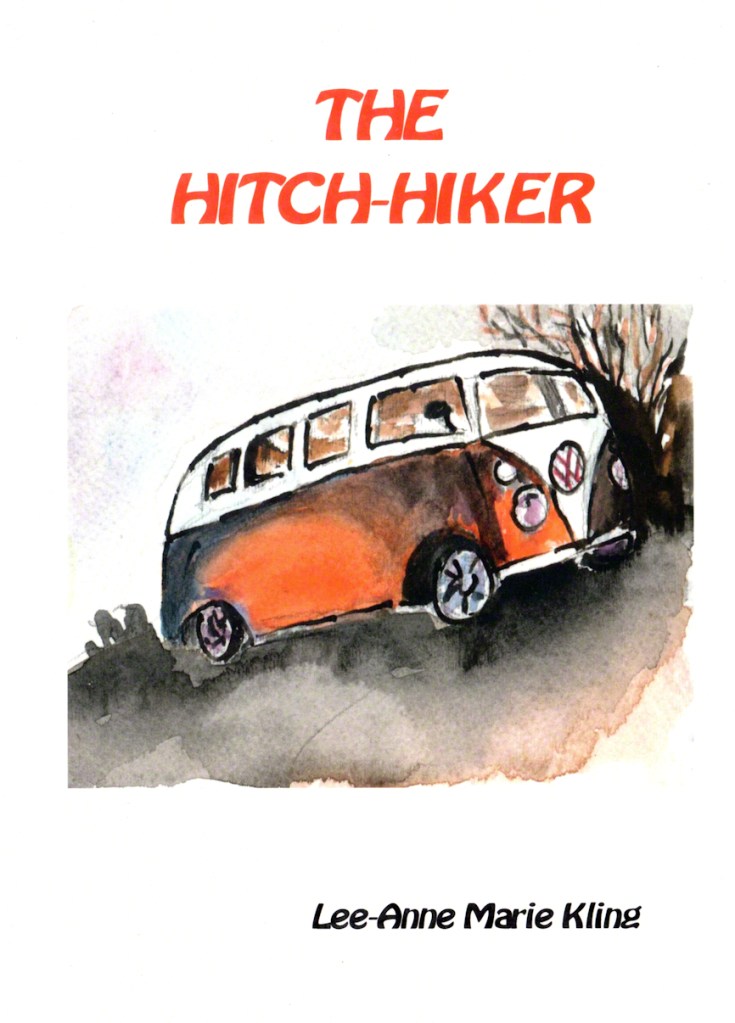
The Hitch-hiker

100-Word Challenge–Stolen…Almost

With an exhibition coming up in April, I thought this cheeky little piece, a 100-word challenge might fit the bill, so to speak. The actual incident of imagined “water/wine-theft” took place several years ago, but I believe the gallery involved still takes their rules very seriously.

Stolen…Almost

‘Where can we get some water?’ my friend asked.

I pointed at the casket of spring water languishing in the gallery. ‘There’s some just there.’ A glass wall confined the well-watered and wined gallery guests. We had been guests, but this gallery was devoid of seats. We wanted to sit. And eat.

‘Sign there bans wine not water.’

I stowed into gallery, collected cups of water and walked to the door.

‘Where do you think you’re going?’ self-appointed wine-police snapped.

I placed the stolen water back on the table and left.

Transubstantiation. My first virtual miracle; turning water into wine.

© Lee-Anne Marie Kling 2019; updated 2023

Feature Painting: Sleeping Beauty on Huon © L.M. Kling 2017 (currently displayed at Brews &Views Café, Marino)

***

Want more memoir? Some travel?

Take a journey into Central Australia with the T-Team…

Click on the link:

Trekking with the T-Team: Central Australian Safari 1981

Or

If Sci-fi is more your thing

Check out my War Against Boris series…

The Hitch-hiker

Mission of the Unwilling

The Lost World of the Wends

School Daze–Mrs. Cranky

[Sharing experiences from our school days at writers’ group this morning reminded me of learning in the 1960’s.]

I Threw the Book Back at the Teacher

Mrs. Cranky (not her real name), our relief teacher looked like she’d stepped out of a Dickens’ tale—that’s what I remember of her from when I was in Grade 1. At the age of six, to me, she appeared so old, as though she were prehistoric; all skin and bone and a scowl fixed on her face.

Mrs. Cranky’s methods of discipline matched her looks; old fashioned and mean. I started school in the late 1960’s in Australia.

The regular infant schoolteachers were kind and gentle. I loved school. I loved learning. I came from a home that valued education. The regular teachers perhaps tired of my constant hand-in-the-air to answer every question and tried to dampen my enthusiasm saying, ‘Give someone else a go.’ But I experienced no trouble until Mrs. Cranky took over our Grade 1 class for a term.

Mrs. Cranky seemed to have been buried in the education system and then dug up. I reckon probably as a last resort and I’m sure the headmistress must’ve done an archaeological dig in search of a relief teacher and come up with this old fossil.

I mean to say, if the department had known what archaic methods this woman was using to control the class of us infants, surely, she would’ve been asked to retire.

As Grade 1 students, we submitted to her authority with fear and trembling, not to mention a few toileting accidents on the classroom’s linoleum floor. I guess Mrs. Cranky’s colleagues congratulated Mrs. Cranky on her class of obedient and quiet students.

How was I to know, as a six-year-old, that a teacher shaking, hitting and shouting at children was not appropriate? But I sensed something was off.

So, on one dull winter’s day, Mrs. Cranky presided over her class from her desk. She’d taught us our arithmetic lesson which seemed to make her particularly angry.

As we finished our work, simple sums where neatness was prized over correctness, we lined up at the desk, our work to be marked by Mrs. Cranky.

I finished my sums and joined the queue which by this stage stretched from the desk to the door. Now I was not the most observant pupil and as work was too easy, I tended to daydream. My mind wandered out the window and floated to the clouds as I waited.

A mathematics exercise book flew past me. My mind returned to my body in the classroom. I looked from the book, pages strewn on the floor, and then at the teacher’s desk.

‘This is rubbish!’ Mrs. Cranky screeched and tossed another book across the room.

As I watched that book land in the aisle, one more book whizzed past me.

‘Go pick it up!’ Mrs. Cranky said.

My classmate scuttled over to the book on the floor, picked it up and slunk back to her seat.

Mrs. Cranky was on a roll. ‘Rubbish!’ she cried, and I ducked yet another book-missile.

‘What’s going on?’ I asked the boy in front of me.

The boy shrugged.

Mrs. Cranky glared at me and said, ‘Go to the back of the line, Lee-Anne!’

I took my place at the end of the line. I checked my work. Yes, one plus one is two. Yes, all my sums neat and correct in my estimation.

A book landed at my feet. I went to pick it up.

‘Don’t you dare, Lee-Anne!’

I straightened up and watched another poor pupil pick up his book, bite his trembling lip and shuffle to his desk.

This is not right, I thought. As I waited my turn, I imagined my counterattack if the teacher cast my sterling efforts across the room. It seemed to me I’d wasted half a lesson standing in line and watching the Maths books fly.

My turn. Surely Mrs. Cranky would see my superior efforts and not throw my book.

She did throw my book. And with much demented screaming and ranting that my work was the worst she’d seen in all her years of teaching. Considering how old she looked, boy, that must be bad.

Her implications that I must be the worst student in the history of the world sank in. What? How dare she! No, that can’t be right. I won’t let her get away with that. She had crossed the line.

I paced over to my wreck of a Maths book, plucked it up and then flung it back at Mrs. Cranky.

O-oh, bad move. Very bad move.

I’d stuck my neck out, executed justice for me and my classmates, but had not considered the consequences.

Mrs. Cranky’s face flushed red. Her eyes bulged from her bony sockets. She bared her teeth.

My situation was not looking good.

I fled. First, I scampered down the nearest aisle to the back of the class. Mrs. Cranky armed with a twelve-inch ruler clattered behind me. She screamed and raged. ‘Why you little…!’

I ran along the back of the class. Mrs. Cranky followed. She swatted the ruler at me. Missed!

I weaved through the maze of desks and chairs. I searched for refuge from the teacher’s rage and ruler.

I dove under a desk. But the boy with red hair swung his feet.

Mrs. Cranky gained on me. She growled. She waved the ruler at me.

I fell to my hands and knees and scrambled under another desk. More legs, more kicking at me. I crawled along the floor. Mrs. Cranky chased me into a corner.

I had nowhere to go.

Mrs. Cranky cut the ruler into my tender thighs. ‘There, that’ll teach you for throwing the book at me,’ she said.

***

Education, I decided was not so much for gaining knowledge as to learn to submit to the control of authority. The system taught me that to be successful and get good grades I must behave, be quiet, don’t upset the norm or challenge the people who had power over me. So, I learnt to be a “good” student, and when I grew up, a “good” citizen, minding my own business out of fear of that wrath, that punishment, if I question or challenge the status quo.

However, recently, as I’ve matured and seen injustice and oppression, sometimes suffered by those close to me, I have been challenged and I wonder: Have I allowed evil to prosper because I’m too afraid to speak up?

This is why I write. My words can be used to promote God, His love and goodness. They can also be used to speak out against deception and injustice. Part of me is still afraid of retribution, that figurative “twelve-inch-ruler” ready to strike because symbolically I’m “throwing the book back at the teacher”.

In the good book, the Bible, 1 Peter 3:17 says: ‘It is better, if it is God’s will, to suffer doing good than doing evil.’

True, as a Grade 1 student, it was not the wisest choice to make and “throw the book back at the teacher”, but as an adult, it is my hope and intention to “throw the book”, that is, my words into the world and community for good; right the wrongs, stick up for the oppressed, defend the victims of bullying and make waves to change attitudes and thus generate God’s character and values of justice, truth, responsibility and love.

© Lee-Anne Marie Kling 2016; updated 2023

Feature Painting: Sunrise over Brachina Gorge (c) Lee-Anne Marie Kling 2014

(Brachina Gorge is in the Flinders Ranges, South Australia. Brachina Gorge is known for the abundance of fossils that can be found there. Probably won’t find the likes of Mrs. Cranky,  there though.)

***

Want to explore some more?

Another world? Another place and time?

Escape into some space adventure? Or just delve into some plain dystopian adventure?

Click on the links to my novels below and learn how this war on the alien cockroach Boris began and will continue…

The Hitch-hiker

Mission of the Unwilling

The Lost World of the Wends

***

Or if memoir is more your thing,

Check out the T-Team Adventures

Trekking With the T-Team: Central Australian Safari 1981

Remembering my Grandma

Elsa

Born March 16, 1906 – March 4, 1981

THE DOOR IS ALWAYS OPEN

Grandma rarely locked the back door; not when home or if she ran short errands. The only times she did lock the back door was when she went away on holiday. Ah! Those were the days! The 1960’s—Adelaide, the front door greeted strangers and salespeople, the back door welcomed friends and family who didn’t knock, but walked straight in.

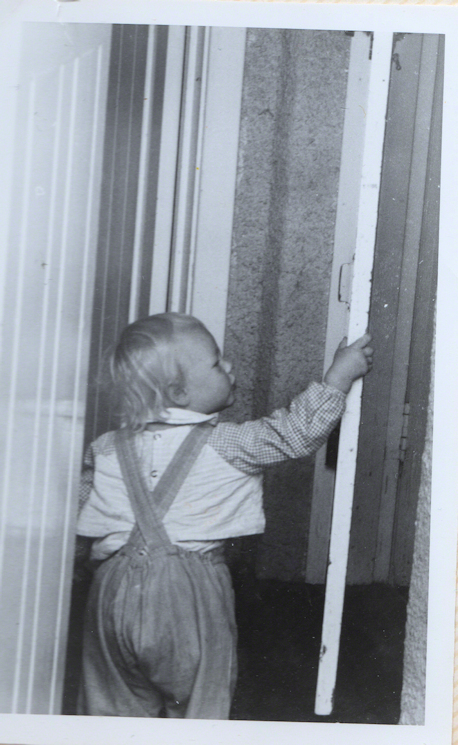
[Photo 1: Opening the door to Grandma’s “Lace” © C.D. Trudinger 1964]

Grandma lived a ten-minute walk from my home in Somerton Park. Throughout my childhood and teenage years, I walked or rode the route down Baker Street, across “busy” Diagonal Road, and into Panton Crescent. Then I trod down her gravel drive of her Trust home to her back door; a door always unlocked and without any ceremony of knocking, I pulled open the fly-screen door, pushed open the wooden door, and walked into Grandma’s small kitchen. I still dream of Grandma’s place, “Grandma’s Lace” as I used to call it as a child, her huge backyard with fruit trees and hen house.

[Photo 2: Escape from Grandma’s “Lace” © C.D. Trudinger 1966

The same as her home, Grandma had an open heart with time available to be there for me. From the time I was born, she was there. She bought and moved into her Somerton Park home nearby, about the same time my mum and dad with my brother and me, bought and moved into our home.

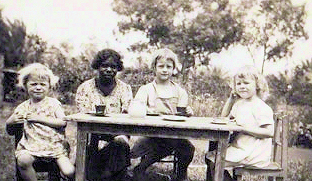
Every Sunday all the family which included mum’s brothers and sisters and their spouses, gathered in her tiny kitchen dining area for Sunday roast. The home filled with laughter as we enjoyed Grandma’s roast beef and crunchy roast potatoes—the best ever! Dessert of jelly and ice-cream followed, topped with a devotion, then the Sunday Mail quiz. Holidays held extra treats of cousins from Cleve, all five of them and Auntie and Uncle. Grandma fitted us all in, albeit us younger ones sat at the “kinder tisch” in the passageway. Often friends from church or elsewhere joined us for Sunday lunch. The door was open for them too, and somehow Grandma made the food stretch and the table expand for unexpected guests.

Photo 3: An example followed by her children from early on © S.O. Gross circa 1941]

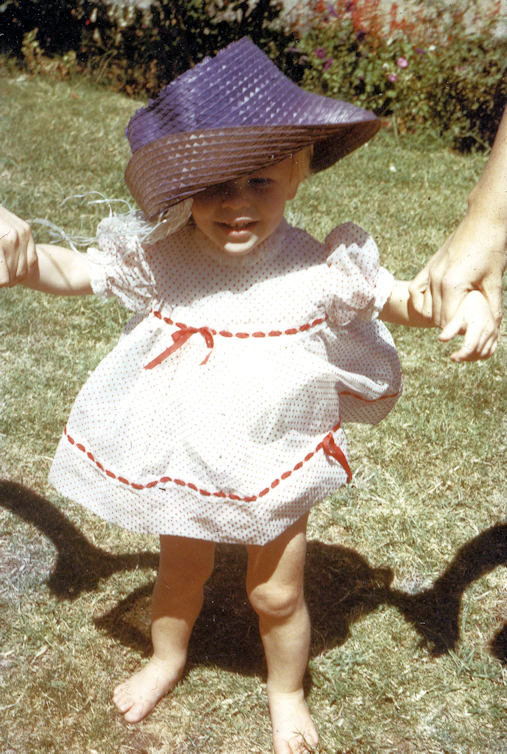
One of the first times I took advantage of Grandma’s “open door policy” was at two years old. I’d dreamt my cousins were visiting and no one told me. My beloved cousins were at “Grandma’s Lace” and I was missing out.

So early that hot summer’s morning, I climbed out of my cot, dumped my nappy, and naked, I navigated my way to Grandma’s. I streaked over Diagonal Road, not so busy at dawn, and then toddled down Grandma’s driveway. I pushed open the back door and tiptoed through the kitchen and passageway. Then I peered into the bedrooms one by one. Each room was empty. Where were they? Where’s my cousins? I was sure they were here.

[Photo 4: Lined up with Country Cousins © C.D. Trudinger circa 1965]

I entered Grandma’s room. The mound of bedding rose and fell with each puff of breath Grandma made.

I tapped Grandma and asked, ‘Where’s my cousins?’

Grandma startled and her eyes sprang open. ‘Oh! Oh! What are you doing here?’

‘I come to play with my cousins,’ I said. ‘Where are they?’

‘Oh, my goodness—no dear—they’re not here.’ Grandma climbed out of bed and waddled to the bathroom. ‘Now, let’s get you decent.’

After wrapping a towel around me, she picked up the telephone. I stuck by her solid legs while she spoke to my mum. ‘Marie, just wondering, are you missing a daughter?…You might like to bring some clothes…’

As I grew older, Grandma’s open-door policy included her home-made honey biscuits. My friends and I visited Grandma on a regular basis. We’d enter through the back door and make a beeline for the biscuit tin. Then we’d meander into the lounge room. With my mouth full of biscuit, I’d ask, ‘Grandma, may I have a biscuit?’

Grandma would always smile and reply, ‘Yes, dear.’

Grandma’s open-door policy helped as a refuge when love-sick boys stalked me. Mum and I arranged that when I rode home from school, if my blind was up, I was safe from unwanted attention. But if the blind was pulled down, I would turn around and ride to Grandma’s place.

Photo 5: Grandma with her white cat © C.D. Trudinger 1965

Grandma was there also when I had trouble at school. I remember at fifteen, having boy-trouble of the unrequited love kind. Grandma listened. She was good at that. She sat in her chair as I talked and talked, pouring out my heart, while emptying her biscuit tin.

When I paused one time, after exhausting all my words, she said, ‘Lee-Anne, one thing that may help—you need to have Jesus as your Lord and Saviour.’

Grandma passed on from this life to meet her Lord and Saviour in early 1981, less than two weeks’ shy of her seventy-fifth birthday. Her old Trust home on the big block with the fruit trees and chook-yard were razed and redeveloped into four units—front doors locked and no easy way to their back doors.

[Photo 6: Looking beyond into the Hermannsburg compound © Courtesy M.E. Trudinger circa 1950]

The Sunday after the funeral, it seemed to me strange not to gather at Grandma’s. Then Christmas, the brothers and sisters celebrated separately with their own family or partners. I missed the whole Christmas connection with my cousins, aunts and uncles. Time had moved on and our family had evolved to the next stage of our lives.

[Photo 7: Christmas Memories (Grandma in her iconic purple dress far left) © C.D. Trudinger 1977]

These days, leaving one’s back door open, even during the day, seems an odd and risky thing to do. Times have changed—more dangerous, or perhaps we’re more fearful of imagined dangers outside our castles. And now in 2025…Well, Grandma’s life and her “open door” policy in a more trusting time, has made me ponder: How open and available am I to others? How willing am I to listen and value others and their world?

© Lee-Anne Marie Kling 2016; updated 2019; updated 2021; 2023; 2025

Feature Photo: My Grandma and Grandpa courtesy of Marie Trudinger circa 1950

***

The adventure began in 1981…

Check out my memoir, click on the link below:

The T-Team with Mr. B: Central Australian Safari 1977

Trekking With the T-Team: Central Australian Safari 1981

Or

If a Science Fiction mystery is more your thing, have a look at my new book.

Click here on The Lost World of the Wends.

Wandering Wednesday–Camping Hazards near Mt. Liebig

[I have been preparing The T-Team with Mr B: Central Australia 1977 to be ready for publication soon. So, below is an extract from the T-Team’s adventure.

While three of the T-Team faced the perils of climbing Mt. Liebig, a drama of a different, yet equally challenging kind unfolded for Mr. B and his son, Matt as they stayed back at camp.

Extract from The T-Team with Mr B: Central Australia 1977, a prequel to Trekking With the T-Team: Central Australian Safari 1981.]

Bull Meets Mr. B

Mr. B and his son, Matt napped under the shade of a bean tree. A southerly breeze ferried through the dry creek bed, spiriting away the father’s snorts. Matt tossed and turned on his inflatable mattress that was exhausted of air resulting from a small, elusive puncture. He imagined the three others of the T-Team, beating a path through the sweltering heat and stinging spinifex in their quest to the summit of Mt. Liebig. Matt chuckled to himself. “Suckers!”

[Photo 1: Mt Liebig at sunrise with bean tree © C.D. Trudinger 1977]

In a nearby tributary, a bull spied the T-Team’s father, son and daughter trekking in the distance, and stamped its massive hooves in the loose dry sand. Once the family had vanished, the bull trotted towards his stamping ground which possessed a gigantic bean tree as a feature in an otherwise dull bed of dust. His quest was to reclaim his territory that the humans had invaded.

“Matt, ma boy, do be careful. Don’t go too far from camp. A bull might get you.” Mr. B squinted in the direction of distant thumping, then rolled over and resumed snoring.

A monstrous brown hulk loomed through a cloud of dust.

[Photo 2: Resident cattle © L.M. Kling 2013]

Matt bolted upright “Dad! Dad! Th-there’s a big- ugly- brown – ugly- big – brown – ugly – b-b-bull!”

“Aw, Matt, stop kidding me.” Mr. B blinked and rubbed his eyes. “That’s enough of the jokes.” A short rumble from behind sent him scrambling to his feet. He flailed his arms while galloping. “Quick! Into the Rover. Now!”

“But Dad!” In the sweltering heat and moment, the boy froze, glued to his air mattress under the bean tree. Terrified, he witnessed his Dad bound over the dirt and fly into the empty Rover parking space and onto a thicket of spinifex. Matt winced. The massif of angry brown trod closer. It paused, pawing the ground, taunting its human prey.

[Photo 3: Cattle Yard © S.O. Gross circa 1950]

After rubbing his punctured behind, Mr. B scrambled for the tarpaulin and rummaged through the baggage. “Er, d-don’t worry Matt. I-I’ll charge this bull before it s-sh-shoots — er — us.”

“But, Dad, the bull doesn’t have a gun.”

“Well, neither do we, we’ll just have to be satisfied with this boomerang and spear, till I find the damn gun.”

The bull stalked, narrowing the gap. The son clambered up the tree and gasped as his father fought with a rucksack that had entangled his legs, while he waved the pathetic weapons above his head.

[Photo 4: Mr. B wishing his nemesis “subdu-a-bull” © S.O. Gross circa 1945]

“But Dad, they’re only souvenirs.”

“Why Matt, how can you say such a thing? Where do you think these genuine Australian artefacts are made?” With all his effort, Mr. B thrust the spear at the beast.

“Yes, Dad, sold in Australia, but made in China.” Matt watched as the menacing bulk of fury stomped the ground, dust billowing into a cloud around it. “Too bad the bull doesn’t know the difference.”

“Don’t be sarcastic at a time of crisis, son.” Mr. B flung the boomerang at the charging bull and ducked behind the tucker box. The projectile bounced off the bull’s hide, provoking it into a tumult of frenzy. Grunting like an eight-cylinder engine, he stormed towards its human attacker, screeching to a halt at the edge of the tarpaulin. As the bull glared down at him, Mr. B could smell its leathery breath.

[Photo 5: Meanwhile, Mt. Liebig in afternoon and more generous ghost gum © S.O. Gross circa 1946]

With a nervous smile fixed on his face, the father edged his way to the bean tree and climbed aboard. The bull stomped and snorted around the sacred bean tree while its victims trembled in the lofty branches amongst the beans.

From this vantage point, Mr. B spotted the rifle leaning up against the tucker box. Unfortunately, the bull sat between him in the tree and the tucker box.

Hours passed.

Father and son sat in the tree.

“Dad my bottom hurts,” Matt whined.

Mr. B sighed, “The others’ll be back soon. They have a rifle.”

“But Dad! I have to go!”

“Hold on,” Mr. B snapped.

The sun edged to the horizon.

Mr. B bit his lip wondering if he’d be stuck up this tree forever.

“Dad! I really have to!”

Mr. B turned to his son who was now rocking.

The distant hum rang through the golden landscape. Mr. B adjusted his grip on the branch.

The hum became louder. An engine.

The bull rose and sauntered out of the campsite, then disappeared into the bush.

“Just wait, Matt,” Mr. B said. He scrambled down the tree and grabbed the rifle.

Matt’s voice floated down. “Dad, it’s too late.”

As the sun disappeared below the horizon, the rest of the T-Team returned to find Mr. B clutching a rifle and pacing the clearing. Matt remained lodged high up in the bean tree.

“As you can see, while you’ve been climbing your mountain, we’ve had a not-so-welcome visitor,” Mr. B remarked.

[Photo 6: Mt. Liebig at sunset © C.D. Trudinger 1981]

“Somehow, I think the B-family will be taking a guided bus tour next time they go for a holiday,” I muttered to Rick.

© Lee-Anne Marie Kling 2019; updated 2023

Feature Painting: Mt. Liebig in watercolour © L.M. Kling 2017

***

Dreaming of an Aussie Outback Adventure?

Click the link below:

Trekking With the T-Team: Central Australian Safari 1981,

To download your Amazon Kindle copy of the story…

And escape in time and space to the Centre of Australia 1981…
Catch a Ride for Free–The Hitch-hiker

The Hitch-hiker, Free…

[An excerpt…]

More silence as the Kombi trundled along Main North Road. Was this the trend for the road trip? Long awkward silences. Two brothers sitting side by side, itching to punch each other. Liesel itched to lay hands on Fox who squashed himself against the car door. And Minna opposite Günter, tried not to make too many calf-eyes at him, as well as trying her best to not nibble her nails. Was this what grown-up young people do for fun? Where was the excitement? The pillow fights? The Coca-Cola? Things go better with Coke, so the commercials say. And things in this mobile can did require better going.

A man dressed in brown walked on the roadside. He hunched over and stuck out his thumb.

Fox slowed down the van. ‘Oh, a hitch-hiker. Why don’t we pick him up?’

‘Are you crazy? No way!’ Liesel batted his arm.

Fox eased the Kombi to a stop. ‘He looks like he needs a lift. What the heck.’

‘What’re you doing?’ Liesel raised her tone.

But Fox continued to pull over to the side of the road.

***

Read the whole story.

For a free Kindle download,

Click on the link:

The Hitch-hiker.

Free until Sunday, January 15 2023

© Lee-Anne Marie Kling 2015; post updated 2023