A Story where the past and present, and vast distances in space intersect…and Boris does what he always does…
Eastern Europe, 1848
Prussian War raged, and the Wends as a village, left their homeland, with plans to set sail for Australia. From the Eastern edge of Prussia, they journeyed on a barge destined for Hamburg’s port, where they hoped to catch a cheap fare in the cargo-hold of a ship destined for the Promised Great South Land.
These villagers, never made their Australian destination. No one ever noticed, nor missed them. The neighbouring villagers assumed they had arrived in the Great Southern Land, and considered them so far away, and too distant to maintain contact. In Adelaide, also, the city for which they headed, the inhabitants were blissfully unaware of their existence. Migrating Prussians had taken their place in the over-flowing cargo-hold and were sailing across the Atlantic to Australia.
On this barge, headed by a man, Boris Roach, the Wends sang hymns of praise to God for their liberation from religious persecution, and the war. They looked to the promise of prosperity and freedom to worship God according to the Word. Their hope that their children and their descendants may thrive in their faith in the Promised Land of South Australia.
I go to the shops as I do every second day. At the checkout, the girl asks, ‘And how has your day been?’
‘Busy,’ I say.
‘That’s good,’ the girl says with a sage nod as if involved in some conspiracy to keep me on the hamster wheel of busyness.
In the Twenty-first century world “busyness” is good. Not being busy, then, is undesirable. Our Western Protestant work ethic touts, ‘Idleness is the devil’s workshop’. The state of “idleness” is to be avoided at all costs. These days, we equate idleness with boredom.
‘I’m bored,’ say your children (so did mine, when they were children many years ago, back in the good ol’ 1990’s), and terror strikes at the heart of each mother when they hear these words. Bored? We can’t have our children bored—idle—just imagine what devils will come to play if we allow boredom to fester. First, the grizzling, then, the niggling at each other, and before long, World War Three amongst the siblings and the house ends up looking like the Apocalypse.
So, in my quieter times now, I reminisce the days as a young mother, structuring each day, every hour—especially during the holidays, to avoid boredom—any strategy to avoid my tribe from becoming restless.
‘What’s wrong with a bit of boredom,’ my mother would say. ‘They need to learn to entertain themselves, you know, use their imagination. Nothing wrong with being still for a while, I say.’
Mum should know, she grew up in the Centre of Australia on a mission in the 1940’s and ‘50’s. Those were the really good ol’ days with no shopping centres, no electronic games, nor television. They did have radio, but her minister father only allowed the news to be heard from it. Heaven forbid they listen to modern music. During the War, even the radio was confiscated by the allies. So all my mum as a girl had to entertain herself were books. Even so, the Protestant work ethic was a major value in mum’s family as her mother, when she found her daughter reading would say, ‘Isn’t there some housework you should be doing?’
As expected, then, I grow up in a world that values industry, productivity and filling each day to the full. The schools I attend are hot on producing good grades, projects and students who go on to university and become wealth-producing citizens.
Then, at sixteen, I have a revelation. We sing a chorus at church, “Be Still and know I am God”.
Being still…forget the homework…forget the housework…put aside my racing head of worries…centre my thoughts on God and his greatness. Pause for a moment and remember, God is God and He’s in control.
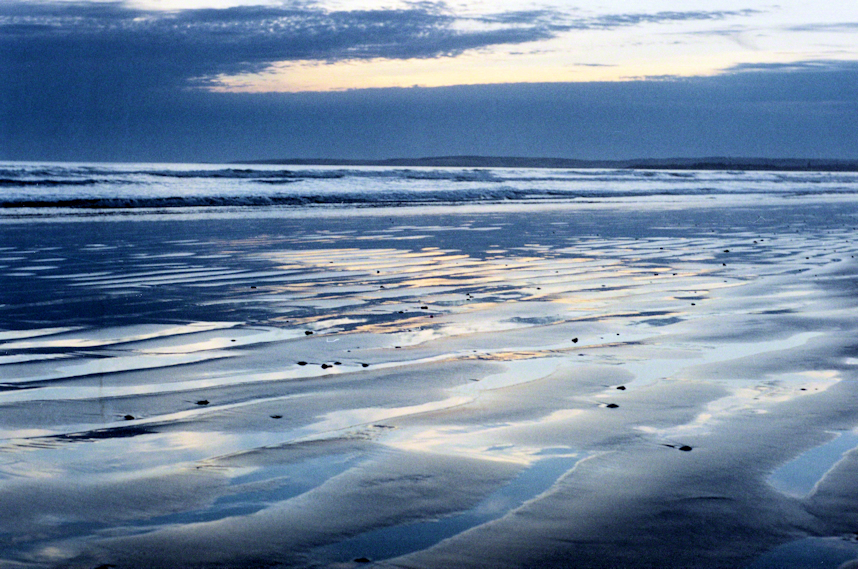
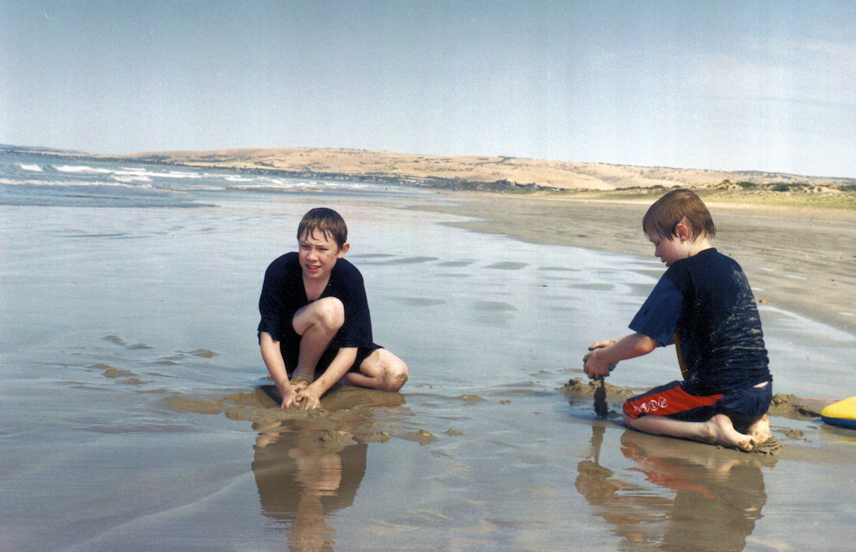
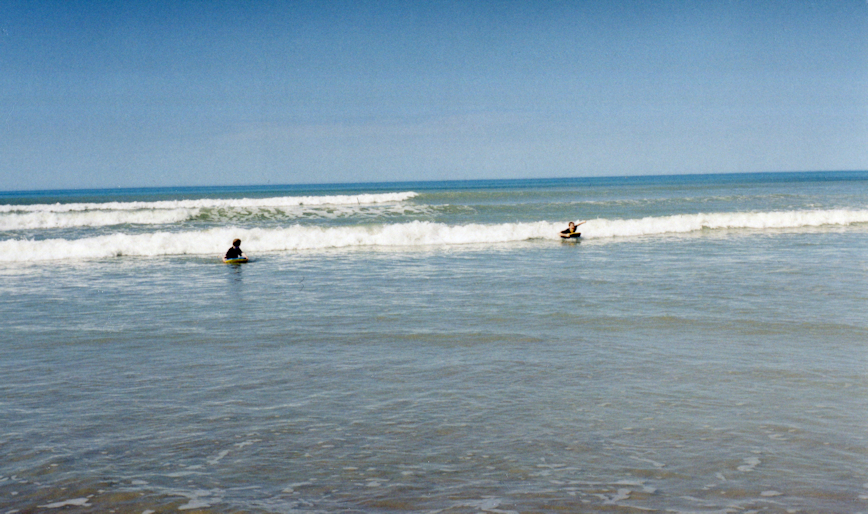
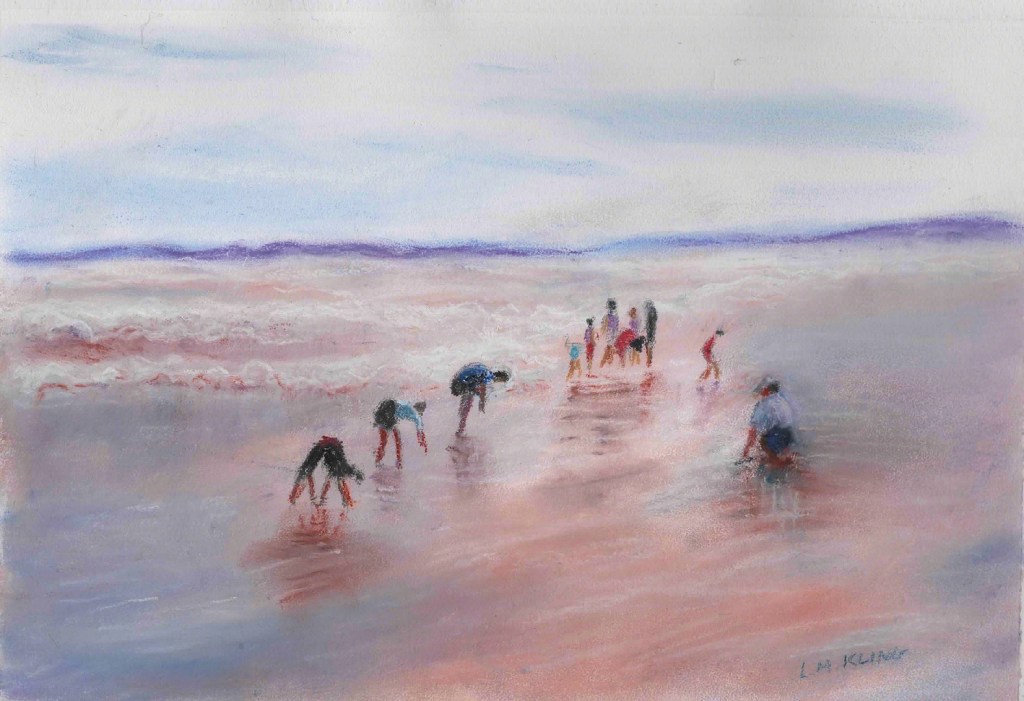
So at sixteen, I do just as the chorus bids. I hop on my deadly treadly (bike), and pedal down to the beach. I figure that’s the best place to be still; the waves lapping the sand, the sun on my back as I comb the shore for shells. Or on a sunny afternoon, I lie in the backyard and sunbake, think and ponder.
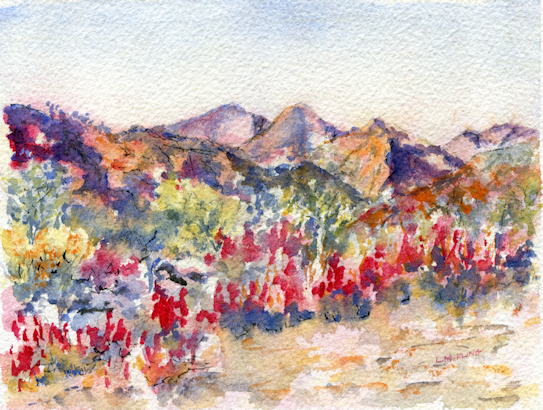
The result? Wow! Those mountains? School and pedantic teachers going on about uniform—my socks, my hair? Boyfriends or lack of them? Life and my future? …All my concerns become molehills.
December 1979, I write a poem “Be Still”. Perhaps not the greatest work of literature, but the values stick with me…until I embark on university, work, and then a family. The poem hides in a book of my teenage missives. Ten years ago, I pull it out for a devotion. I preach being still, but I fail to apply the principles. I must keep busy. If I stop, even for a few minutes, what will others think? There’s just too much to do. Everyone’s depending on me as wife, mother, bible study leader, committee member …to produce the goods. I can’t let them down.
The culture to keep moving is ingrained. Go to meet people for the first time and they ask, ‘What do you do?’ The doing has to have a dollar sign attached to it. Not enough to do all the above as a mother. Must produce money to have status in the group. Without status, I am not heard. Ironic how the under-valued creative arts of writing and painting, though, afford status. I am creating. I am producing.
Even so, in this creative phase of my life, if I stand still, I feel guilty. Now, there are novels to write and art to produce. My “work”. I’m on the hamster wheel, but I can’t get off.
However, in all the busyness expected of me, the cogs of my life are unravelling. I drive to a cafe to meet a friend. She’s not there. I’d forgotten my mobile phone. I drive the thirty-minute return home and check my phone and then ring her. I’d gone to the wrong place. A misunderstanding. If I had taken the time to listen and ask the right questions…
The voice of my sixteen-year-old self still convicts me. ‘Be Still’.
For over forty years, I’d not been following my own advice. After the misunderstanding of the other day, I give myself permission to have time each day to rest…Time to be still…time to know God.
If you’d like to polish your writing skills or find out more about our new project, a self-publishing collective, click on the link to Indie Scriptorium…
Or…
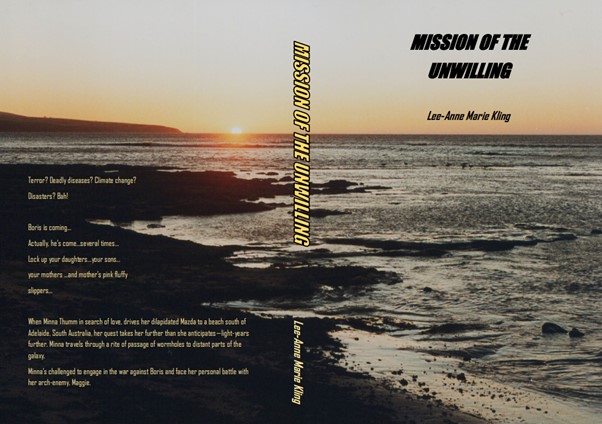
Catch up on the exploits of Boris the over-grown alien cockroach, and Minna and her team’s attempt to subdue him.
For good holiday reading click on the links below…
[The last few months I have revisited The T-Team with Mr. B: Central Australian Safari 1977 which is a prequel to Trekking With the T-Team: Central Australian Safari 1981. In preparation for its release later this year, I will be sharing posts of this adventure.
This time, the customary viewing of an icon of Australia, doesn’t quite go to plan.]
Dad meant what he said; he believed we, as the T-Team were travellers, not tourists. So, when the sun began its journey to the other side of the earth, and edged towards the western horizon, Dad drove further west and far away from the popular tourist haunts for the sunset on the Rock.
‘Don’t go too far,’ Mr. B said as he glanced back at the diminishing size of the Rock. ‘I want a red rock of considerable size.’
‘I know what I’m doing,’ Dad replied.
But every vantage point that we considered photo-worthy, so did clusters of tourists. The ants may have been heading for bed, but the road west of Uluru swarmed with sightseers scrambling over the landscape to capture that momentous event of the sunset on Uluru.
‘I hope we’re not going to miss Uluru turning red, ‘cos that’s what I came here to see,’ Mr. B said.
‘Plenty of time,’ Dad said. ‘Trust me.’
‘I’ll hold you to that promise, mate.’
Dad sighed and then turned into the next available place to park the Rover.
Mr. B glanced at his gold watch. ‘I mean to say, it’s nearly six o’clock. The sun sets at six, doesn’t it?’
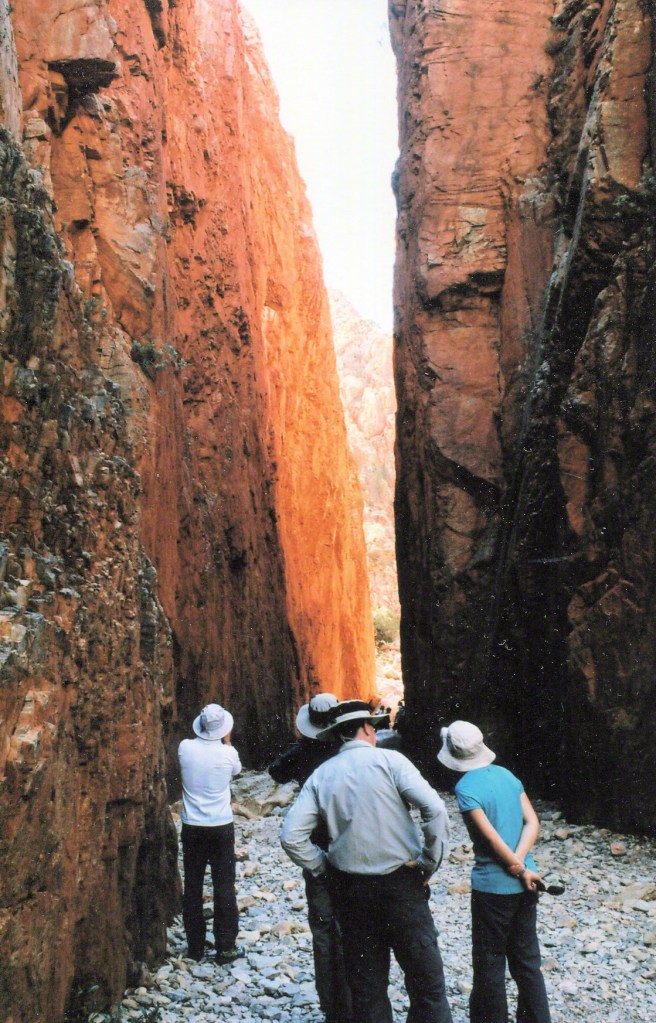
We joined the tourists in the small clearing to take the Uluru-at-sunset-photos. There’s one snap I took of two travellers admiring the Rock as it deepened in colour, more a rusty-red, than the scarlet I’d seen on calendars. So, it’s taken with an instamatic camera and the quality is pitiful compared to the chocolate-box number my grandpa took in the 1950’s, but I reckon it captures the atmosphere.
‘Enough of these tourists,’ Richard grumbled. Clutching his polaroid camera, he stormed up the nearest hill.
‘Wait!’ I called and raced after him.
My brother ignored me and quickened his stride. I tried to catch up but soon tired of his fast pace. I watched him vanish behind some spinifex bushes and decided his quest for tourist-free photos was pointless. I gazed at the Rock squatting behind waves of sand-hills and bushes. The view’s going to be just as good, if not better by the road and the masses, I thought and rushed back to Dad before the sun went down too far and the Rock had lost its lustre.
Uluru faded from clay-red to a dull grey and the tourist congregation thinned, trickling away in their cars and buses towards the camping ground situated east of the Rock.
‘Is that it?’ I quizzed Dad. The Uluru at sunset in my mind had been spectacular in its failure to deliver. ‘Why didn’t it turn bright red?’
‘You need clouds for that. Clouds make all the difference,’ Dad said, his lips forming a beak. ‘Glad my camera’s out of action and I didn’t waste film on it.’
‘But the photo of a red Ayres Rock taken by Grandpa had clouds around it.’
‘Yeah, well, there would’ve been clouds in the west too,’ Dad explained. ‘See, the sky is clear tonight, so that’s it for the Rock.’
‘Disappointing! A very poor show, ol’ friend.’ Mr. B sauntered past us with Matt tagging behind. ‘Come on, we better get to camp. Don’t want to be cooking in the dark. Don’t want the likes of egg soup again.’
Dad peered into the distant black lumps of hills. ‘Where’s Richard?’
I stared into the thickening darkness. No Richard. ‘Dunno, went into the sand-hills,’ I said with a shrug.
‘Oh, well, I guess he’s gone for a walk,’ Dad said.
The Rock became a dull silhouette on the horizon. We packed away our cameras and waited. And waited for Richard. Darkness settled on the land. We waited some more. The icy cold of the night air seeped into our bones. We waited but he did not appear.
‘Where could he be?’ Dad said and then stormed into the bush.
Minutes later, Dad tramped back to us waiting at the Rover. His search in the nearby scrub was fruitless.
Each one of us stood silent; silent sentinels around the Rover.
‘I hope he’s alright,’ my comment plopped in the well of silence. A chill coursed down my spine. What if an accident had befallen my lost brother? The dark of night had swallowed my brother up.
Dad grabbed the torch from the glove box in the Rover, and then marched back up the sand-hill.
I paced up and down the road. Mr. B folded his arms across his chest and scrutinised the shadows of bush that had now consumed Dad. Matt gazed up at the emerging mass of the Milky Way.
‘I hope they’re okay. I hope Dad finds Richard.’ My chest hurt with the pain of losing my brother.
Mr. B sighed. ‘Probably just a—’
‘What?’ I asked.
‘There they are,’ Mr. B said. ‘All that worry for nothing. You’ll get grey hairs if you keep worrying like that.’
I pulled at my hair and then raced up to my brother. ‘Where were you?’
‘I went out along the dunes. I kept walking and walking trying to find a good spot,’ Richard said.
Dad chuckled. ‘And when he did, he waited for the Rock to turn red.’
For the night we camped in an aboriginal reserve seven miles out of the Uluru—Kata Tjuta Reserve. In preparation for the trip, Dad had successfully applied for permission to camp there. This time Dad and I had two fires going each side of us as the previous night was so cold that I had little sleep. We hoped that two fires would be better than one to keep the chills away. Mr. B and his son Matt on the other hand, settled for one shared fire and superior fibres of their expensive sleeping bags to keep the cold out.
And Richard, after all his effort to scare us by almost getting lost, buried himself in his rather ordinary cotton sleeping bag, next to his single fire, and was the first one, after our rather simple rice dinner, to be snoring away, lost in the land of nod.
All afternoon, our backyard echoed with the hum of the cement-mixer, and intermittent scraping. Dad, armed with a trowel, smoothed the cement over an area pegged to become the back patio.
Metre by metre, he pasted his way back.
Mum stood on the porch, and with hands on her hips, remarked, ‘And how are you going to get out of this one?’
In an ocean of soft cement, Dad looked around him, lost. ‘Er…um…I’ll work it out.’
Tracks back to the lawn-edge smoothed, Dad stood and admired his DIY job.
Next morning, paw-prints made their way to the rainwater tank.
[Have been engrossed in a murder-mystery, come thriller manuscript that I wrote in 2009, and then filed away. Wrote it so long ago I have to read it to find out what happened. So, completely forgot to post my 100-word challenge last week.
Anyway, Dad’s mid-life crisis vehicles keep rolling in. Was this new development a reflection of the direction Dad’s mid-life crisis was taking? Or was he just having a go?]
100-Word Challenge — Have a Go
After lunch at Grandma’s one Sunday, my cousin showed off his prized Ducati. Inspired, Dad resolved to have a go, and buy his own motorbike.
The first hint that Dad was dissatisfied with current transport-arrangements, was expressed in a progressive story game, where he described money-saving qualities of a motorbike. I pointed out the dangers, my cousin’s friend had died in a motorbike accident.
Soon after, Dad came puttering down the driveway on Putt-Putt, a bright orange motorbike. From then on, for a time, Dad puttered his way from Somerton to work in Port Adelaide. Everyone was happy, until…the accident.
If you’d like to polish your writing skills or find out more about our new project, a self-publishing collective, click on the link to Indie Scriptorium…
Or…
Catch up on the exploits of Boris the over-grown alien cockroach, and Minna and her team’s attempt to subdue him.
For good holiday reading click on the links below…
My dad’s midlife crisis took a turn … for the worse. The Mazda. Not sure what type this less-than trusty steed was, suffice to say, he purchased it for a bargain as it had a damaged rear-end. So, the Mazda became the butt of many car-jokes with my friends.
A reblog, in memory of our much maligned Mazda.
An Ode to the Mazda
Now every time the battle-axe we release, We pray: Keep our Mazda running from police Particularly today.
Grant us all green lights, for our brakes may fail, And may thy Mazda’s effervescent light shine forth At both head and tail.
Forgives us our blinkers, our wipers, the lot, As we forgive those who are enemies and gripers Of the Mazda we’ve got.
For my Northern hemisphere readers, it’s Summer Holiday time. Time to read more on the war against the fiend you love to hate; an overgrown alien cockroach, Boris.
[Another fond memory from my childhood…and Dad’s catchcry, “for the time being” took a breather when, after being promoted to Deputy Principal (Primary School), he bought the Holden Premier.]
Serena, our dream family car ferried the T-Team to Canberra. In 1975, hardly a maiden for this voyage, she drove us to our destination; a comfortable, safe ride over the Hay Plains. No breakdowns. No stranded waiting for road service on the hot dusty side of the road. A smooth ride that rocked me to sleep; the vinyl with scent fresh from the caryard to us.
She mounted the snow shovelled roads to Thredbo. From her window, my first sight of snow on a brilliant sunny day, snow shining on twisted eucalypt branches.
Note: in the back of the photo, you’ll see the lurking the unfortunate successor to the Holden Premier and focus of the next week’s blog featuring my childhood family’s cars.
***
Catch up on the exploits of Boris the over-grown alien cockroach, and the mischief and mayhem he generates.
[The last few months I have revisited The T-Team with Mr. B: Central Australian Safari 1977 which is a prequel to Trekking With the T-Team: Central Australian Safari 1981. In preparation for its release later this year, I will be sharing posts of this adventure.
In this episode we climb Uluru/Ayers Rock and Mr. B startles us with his dream for the Rock…]
Mr. B’s Dream for the Rock
Tourist buses lined the carpark. They looked like caterpillars all in a row ready for a race. People swarmed like ants around the base of the Rock and a steady stream of them marched up and down the slope.
Dad slowed the Rover to a crawl and slotted into a space at the end of the carpark. ‘Well, there’s the tourists,’ he said.
‘And what are we?’ Mr B asked.
‘I like to think we are travellers.’
‘What’s the difference?’
‘Tourists come to a place like the Rock, they climb it, snap a few photos and then they move on,’ Dad said. ‘Travellers take their time. They explore. They get to know the people who live here. They appreciate the culture and history of the place.’
‘So we’re tourists then,’ Mr B remarked, his expression dead-pan.
Dad scratched his brow. ‘Oh, no, I wouldn’t say that.’
‘I’m climbing the Rock,’ Matt said and then bolted out the back door.
Richard and I chased after Matt. We scrambled up the slope following the painted white line. Further up several tourists inched their way grasping chain rails that were secured into the rock.
‘You forgot your water-bottles and lunch for the top,’ Mr B said.
‘Come on Matt,’ Richard called out to Matt who’d sprinted ahead, ‘better get our packs and stuff.’
Matt, Richard and I plodded back to Dad and Mr B where we collected our backpacks of supplies from them. Then as a group we recommenced our haul up the monolith.
The first part was treacherously steep. Before I even reached the rails, my shins ached from the gradient. We followed the broken white line. Deviation from the nominated path could be fatal. A plaque at the base of the Rock was a solemn reminder that several people had fallen to their deaths.
And yet, while climbing, I recall my mum telling me that when she climbed Ayers Rock back in the 1950’s, there was no white line, and not rail to clutch onto. Then she told me a funny story about an earlier time when a filmmaker took footage of the climb up the Rock with a local Indigenous guide. I have seen this film where at the top of the rock, there were pools from recent heavy rain, and the guide can be seen splashing in the water. Perhaps life and the way the Rock was viewed was different back then in the 1940’s and 50’s.
Richard and Matt scampered ahead of me. I puffed my way up the slope behind them and soon lost sight of them. Dad and Mr B laboured behind me. Mr B rested every few steps. He swore he’d die of a heart attack before he fell to his death. Dad stayed with him and encouraged him to keep on going.
Tourists passed me as they descended the Rock. They nodded and said, ‘G’day’ and remarked that the climb was well worth the effort.
Spurred by these recent Uluru conquerors, I took a deep breath and continued the climb.
The steep slope eased into endless ridges. Up and down. Up and down. At least my shins experienced some relief. But I seemed to be hiking over these rocky hills and dales forever, as if Uluru was the Tardis of distance. I glanced at my watch. I’d been hiking over an hour. Was the Rock that big?
I stopped, took a swig of water from my canteen and surveyed the plain beneath. The Olgas shimmered like mauve marbles above the land striped in sienna and gold in the afternoon sun.
‘You’re almost there,’ Richard called. He raced up to me and then pointed. ‘The cairn is just over there.’
‘Where?’
‘Are you blind?’
‘I can’t see it.’
‘Come on.’
Richard led me to the pile of stones set in concrete. Half a dozen tourists plus Richard and Matt milled around the cairne, posing for photos and pointing at the various landmarks below. Richard, Matt and I conformed to the way of the tourists taking turns photographing each of us standing next to the cairn with Kata Tjuta behind us.
As we waited for our fathers, we admired the awesome scenery; the land below bathed in waves of pink, purple, blue and yellow. The boulders of Kata Tjuta changed from deep purple to blue with the movement of the sun as it travelled west. ‘Wow!’ I exclaimed. ‘This climb was well worth it.’
Other tourists summited, stayed a few minutes to snap a few shots and then trooped away down the Rock.
After Richard, Matt and I had eaten our sandwiches, signed the log book on the cairn, explored some bushes that grew out of the Rock and then watched the third lot of people arrive and disappear, Dad and Mr B staggered to the summit. Their faces glowed with perspiration.
Mr B clutched his chest and slumped down by the cairn. ‘I thought those corrugations would never end!’
Dad patted Mr. B on the back. ‘Ah, well, we made it.’
Mr B slurped water from his canteen, then standing up, he paced around the cairn while scrutinising the landscape with his binoculars. Dad pointed out the landmarks, Mt. Conner to the east, Kata Tjuta to the west and the Musgrave Ranges to the south, and so directing Mr B’s binocular-gaze.
After several minutes admiring the view, Mr B remarked, ‘Amazing! Certainly well worth the climb, ol’ boy.’ He then sidled up to Dad and put his arm around his shoulders. ‘I dare say, ol’ chap, the experience could be improved.’
‘What? A cable-car up to the top?’
‘Oh, hadn’t thought of that. No, I suggest there should be a fast food restaurant up the top here. The place needs refreshments. I mean to say, all these people have spent two hours climbing up here. They need some refreshments, don’t you think?’
Dad cleared his throat. ‘Er, um…’
Is this man for real? I thought. On the climb and also when we visited the cave, I sensed the Rock was holy, sacred. How could Mr B even contemplate building anything on its surface? ‘I reckon there should be less people climbing the Rock, not more,’ I said.
‘And another thing,’ Mr B was not finished, ‘the Rock needs a swimming pool halfway up. I’ve already picked out the perfect location. You see, while I was resting and contemplating during that terrible steep climb, I saw it, the perfect place for a pool. What do you say, ol’ chap?’
‘The Indigenous owners will never agree,’ Dad replied.
‘Well, I have some advice for the natives,’ Mr B said. ‘They need to get with the times. I mean, look at all the tourists. Look at all the opportunities.’
‘I doubt it,’ Dad shook his head, ‘come on, we better get down.’
After Dad and Mr B signed their names in the log book, we made our way down the Rock tracking along the white line. We nodded at the people climbing up and said, ‘G’day’ to them and advised them that the climb was well worth the effort.
[My dad’s catchcry, “for the time being” dogged the choice of cars he brought home. The Austin was no exception… ]
The Austin appeared one winter’s afternoon in our backyard; Dad’s solution to the worthless Wolseley, and of course, just for the time being.
Only cost $100. What a bargain!
Next morning, his breath steaming with excitement, Dad marched up to the green lump of a car. I sat sulking in this woe-begone wreck, the vinyl seat threatening frostbite on my delicate buns.
Dad hopped in and turned the ignition key. Nothing. Not even a squeak on this icy morning.
‘Ah, well, we have to crank it,’ Dad said.
Crank it? Yep, we had to crank this ancient Austin to life.
[The last few months I have revisited The T-Team with Mr. B: Central Australian Safari 1977 which is a prequel to Trekking With the T-Team: Central Australian Safari 1981. In preparation for its release later this year, I will be sharing posts of this adventure.
In this episode we venture up close and personal to Uluru/Ayers Rock…]
When we arrived at the fence that bordered the Ayers Rock-Olgas Reserve (as it was known back in 1977) *, we took more photos of the Rock, rusty-red with black streaks, and towering above us. We drove to the Park Ranger’s office to pay an admission fee to enter the reserve and see the Rock. Once Dad had returned from fee-paying, we commenced our drive around the Rock.
As there were more tourists in their Land Rovers and cars also circling the Rock, Richard and I descended from our high status on the top of the Rover and crammed into the back cabin. The roads, though not sealed, were better graded with gravel tempering the bull dust, so though the dust was still a nuisance, it didn’t make me cough.
‘When are we going to climb the Rock?’ Matt asked his dad.
‘Soon, ma boy, soon.’
‘Have you climbed the Rock?’ I asked Dad.
‘Erm…’ Dad coughed.
‘Of course, you did. Back in the 1950’s. Not so many tourists then, I reckon. Were you the only ones camping near the Rock back then?’
‘Um…er…umm…’
‘You went with mum and her family back then, didn’t you Dad?’
Dad put his dusty handkerchief over his mouth and coughed.
‘I remember the beautiful photos taken by Grandpa. He was a missionary pastor at Hermannsburg, you know, Mr B. And Dad was a teacher at Hermannsburg. That’s where he met mum, did you know, Mr B?’
‘The roads are better,’ Dad said. ‘They were just tracks back in the fifties.’
‘I dare say, ol’ chap,’ Mr. B butted into our conversation, ‘the Rock must still be the same.’
Dad chewed his lip. ‘Well, er, yes, I s’pose.’
‘If you ask me, all looks primitive to me,’ Mr. B said. ‘I mean to say, the land looks like we’re back in the 1950’s. I really think they should invest in some decent hotels or motels. Perhaps a tourist village. For the tourists. I mean, just look at the Rock—they’re missing money-making opportunities.’
Dad shifted his weight in the driver’s seat. ‘Er, I don’t know if having lots of tourists is a good idea for the Rock. The Indigenous consider the Rock sacred. I think they’d want less tourists, not more.’
‘Tourism, that’s where it’s at. And from what I’ve seen of the natives in this part of the land, they could do with some money to boost their living conditions.’
Richard and I glanced at each other. I pondered, Was this man for real?
Dad pursed his lips and turned into road leading to a cave in the Rock. ‘Before we climb the Rock, there’s this cave. It has ancient aboriginal artwork on the walls’, Dad said.
We walked along a narrow path under the shade of ironwood and acacia trees. The Rock awed me by its size. If I had a camera with unlimited capacity to take thousands of photos, I would have spent the whole trek to the cave snapping away behind the lens. Nearer, the Rock surprised me with shades of tangerine, crimson, umber and red of the iron stone. As we got up close and personal with the Rock, I thought it looked like a giant elephant’s flank all scaly and knobbly. It had looked so smooth from far away.
We entered a cave which appeared as though it was a huge umbrella from the inside. In a zone of wonder we walked along the narrow passage under the roof. I imagined that waves had crashed against it and carved out its form. In one part, I studied the carvings of the ancient owners of this land.
We trod through the cave in silence. This was sacred ground.
[*Note: Named by William Gosse in 1873 in honour of the chief secretary of south Australia, Henry Ayers. In 1993 the rock received the dual name, Uluru/Ayers Rock, Uluru being the Pitjantjatjara name for this sacred site.]
***
Want more?
1977 gave the fledgling T-Team a taste for adventure…
Find out how they fared on a full-two-month safari to the Centre in 1981…
Why not binge on the T-Team Adventures in outback Australia?