My dad’s midlife crisis took a turn … for the worse. The Mazda. Not sure what type this less-than-trustworthy steed was; suffice it to say, he purchased it for a bargain, as it had a damaged rear end. So, the Mazda became the butt of many car jokes from my friends.
Not to be confused with our current Mazda, whom we call Antoinette; a most wonderful car to drive. She even reminds me when I’m speeding, with a stern, “You are going over the speed limit.” She chimes with teeny-weeny orange cars on the rearview mirrors when I attempt to change lanes, and, lo and behold, there’s a car I haven’t seen. She chirps when I’m about to back out, and a car is passing. And the dear Nanny car virtually screams if I get anywhere near another car. Oh, and every morning she reminds me with beeping and a red dot on the image of my car in the rear cam that I’m too close to the garage door. She’s doing a good job of keeping my hubby out of his task of backseat-driving and making sure she doesn’t end up like my dad’s old Mazda.
The plight of our old Mazda must have become legend in the world of Mazdas, passed down from generation to generation along the Mazda factory assembly line. And so we come to 2018, when Antoinette was born, with her abundant safety features, hopefully never to experience the shame of Dad’s old metal “bargain” with the battered rear bumper from 50-years ago.
Hence, here’s the poem …
A reblog, in memory of my dad’s much-maligned Mazda.
An Ode to the Mazda
Now every time the battle-axe we release, We pray: Keep our Mazda running from police Particularly today.
Grant us all green lights, for our brakes may fail, And may thy Mazda’s effervescent light shine forth At both head and tail.
Forgive us our blinkers, our wipers, the lot, As we forgive those who are enemies and gripers Of the Mazda we’ve got.
For my Northern Hemisphere readers, it’s still the Summer Holiday time. Time to read more on the war against the fiend you love to hate: an overgrown alien cockroach, Boris.
We all have our ideas how the world should run. We think we know what’s best, what’s good, and what will work. If only everyone would follow our advice, the world would be a paradise.
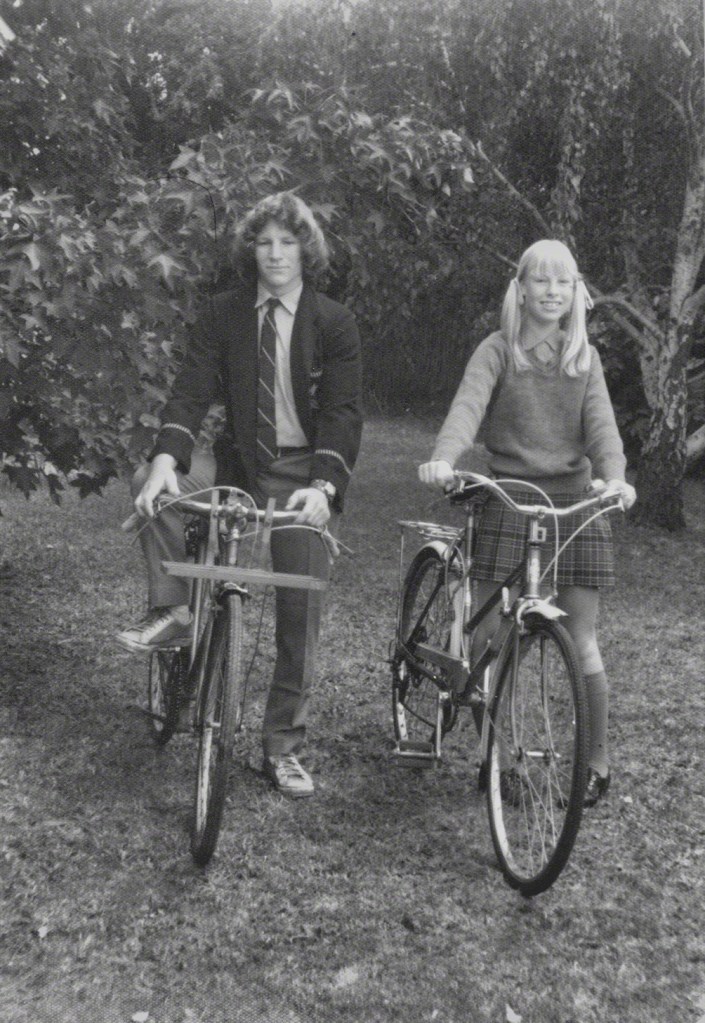
When I was twelve, my parents thought it best I go to a new school for my last year at primary school. That school was a feeder school to the secondary school they planned to send me.
‘You’ll make some friends who’ll be there for you when you go to high school,’ they said.
Good intentions; a sound plan for transition…
Their plans just didn’t work out as they intended.
Two weeks into first term at that new school, I realised I’d connected with nobody. The girls in my class had formed their tight-knit friendship groups way back in Year 1, so I had no friend-prospects.
At recess, I sat alone Indian-style on the grass under a tree. Never mind, I thought, my books are my friends. I’ll read out the year. I opened my latest novel. Besides, I have plenty of friends outside of this school.
For the next few days nobody and my books kept me company at recess and lunch. What better way of dealing with loneliness of an hour by entering another world and the characters there. No different from the previous year at my old school when I ignored my friends in preference to researching dinosaurs and aliens in outer space.
Then the good intentions of the teachers came into play. The new Year 7 girl reading her books every break? Oh, no! We can’t have that! She must socialise.
So, with good intentions, the teachers denied me the joy and escape of reading. They forced me to play with my peers.
However, my peers, comfortable with their set, didn’t appreciate the teacher’s good intentions. As I followed one group into the girls’ toilets, the leader spoke up. ‘Nothing personal, but stop shadowing us.’
Fine then. I wiped the tears stinging the corners of my eyes and bit my lip. Sorry for upsetting your perfect little life. I’ll go find someone else to be my friend.
Soon after, I teamed up with a Year 6 girl. She sat on her own at lunch. I’d been kicked off the bench by the other cohort of Year 7 girls because I liked cheese and gherkin sandwiches. Rather than making a big deal of the excommunication, I wandered over to the Year 6 girl and sat beside her. She didn’t mind my choice of lunch.
For the next week, we enjoyed each other’s company. We played on the monkey bars and joined others in her class playing four-square (a type of hand-tennis). For five days, my cliquey peers were happy, the teachers were happy, and I was happy. I’d found a friend.
But good things were not meant to last at this new school. The beginning of March, and just a hint of an autumn-south-westerly breezed through the classroom porches. I kicked off my shoes, pulled on my scuffs (major rule: no shoes inside the classroom), and lined up ready to enter class. The Year 6 teacher sought me out and took me aside. ‘You aren’t allowed to play with Year 6 students,’ they said. ‘It’s against the school rules.’
The school with good intentions had a rule: Students must only mix with students the same age as them and from their class.
So again, good intentions forced me out on my own again. I rode home that day, tears streaming down my face. I failed to understand. The injustice of it. They want me to socialise and then thwart every effort for me to do so, with all their damn rules.
With good intentions, the next day, Mum marched into the office and spoke to my teacher. With good intentions, my teacher reprimanded the girls in my class.
Made no difference. My peers wanted no part of those good intentions. And they didn’t like being told off. Not one bit. I paid for those good intentions right through secondary school, actually.
I considered making friends with some boys in my class. But after one day sitting at a table in class with them, I figured that making friends with the boys in my class wasn’t an option. Probably a rule about that too. After all, our teacher gave us a lecture on the evils of wearing bikinis…so…
For the rest of that year, I became very good at keeping out of the supervising teacher’s gaze at lunchtime and pretending to play with my peers while making sure I didn’t appear to be “shadowing” them. The bullies helped this charade by “shadowing” me. Not that I appreciated their efforts at the time. As the year wore on, I managed some illicit liaisons with my books behind the bushes, when the teachers weren’t looking.
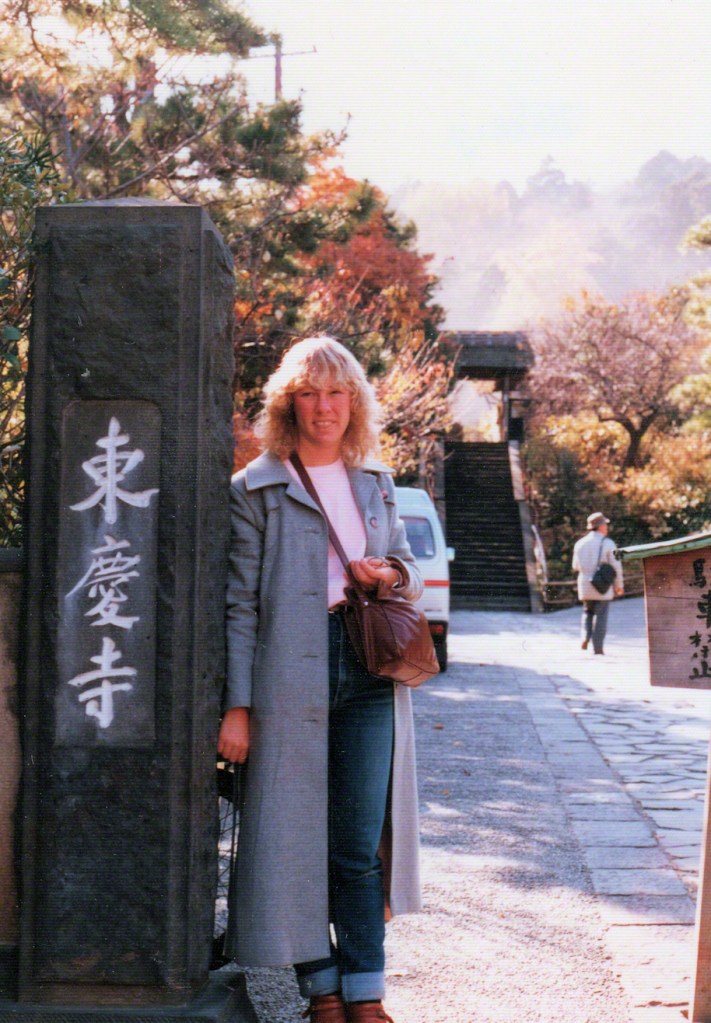
My mum carried the burden of guilt from her good intentions of the year I lived friendlessly. But she needn’t be. My parents’ intentions were good. Though I suffered, these challenges were good for me. I learnt to persevere. I learnt that being alone doesn’t mean that I must be lonely. God was and is with me. I learnt not to quit. In short, I developed character. Besides, this school inspired me to learn the Japanese language, setting me on my future career path teaching the Japanese language, as well as travelling in Japan. And most of all, I learnt to see the kids sitting on their own and be their friend.
[Another relic from my childhood…and Dad’s catchcry, “for the time being” dogged the choice of cars he brought home.]
The Wolsley 6/99 Saloon
Dad’s midlife crisis began in earnest in the early 1970’s. His penchant for early model, British-made cars was disguised as “this’ll do for the time being”.
The blue and cream saloon took up residence in the backyard behind the Hills Hoist washing line while presiding over Dad’s vegetable garden. On weekdays, it attempted to ferry us to school, but more often than not, failed in its endeavours.
So began my education into mechanics (and my older brother’s), alternators, batteries, starter motors and lemons.
One positive, the Wolsley made a great hideaway because it never went anywhere — for the time being.








 Tru-Kling Creations