Arty Travel Friday–Mt. Giles

Story Behind the Art

Quest to Conquer Mt. Giles

[The last few days of SALA, so here’s more from my Central Australian painting collection, photos and memories of our safari adventures with my dad.

Extract from Trekking with the T-Team: Central Australian Safari ]

Dad sucked on his lemon (a proven refreshment and guard against dehydration). ‘About a-quarter-to-twelve.’ He continued to sit and suck on his lemon as if in no hurry.

‘A-quarter-to-twelve?’ I stood. ‘We’ll never get there. We can’t even see the trig.’

‘Well, um-er, we better get a move on.’ Dad rose and slung his pack over his shoulder. The T-men shuffled up a worn kangaroo track. I took a quick swig of water and bounded after them.
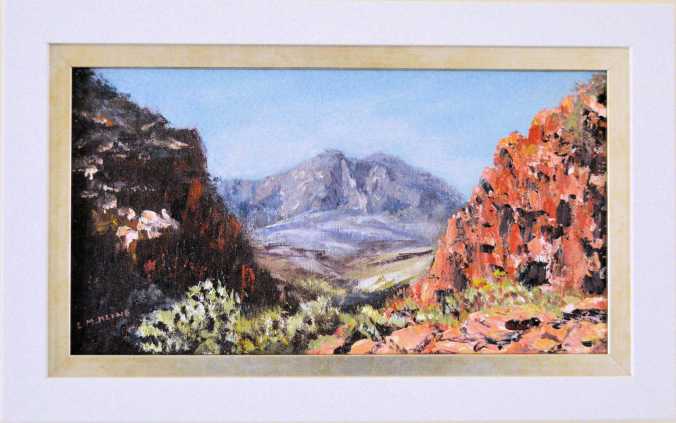
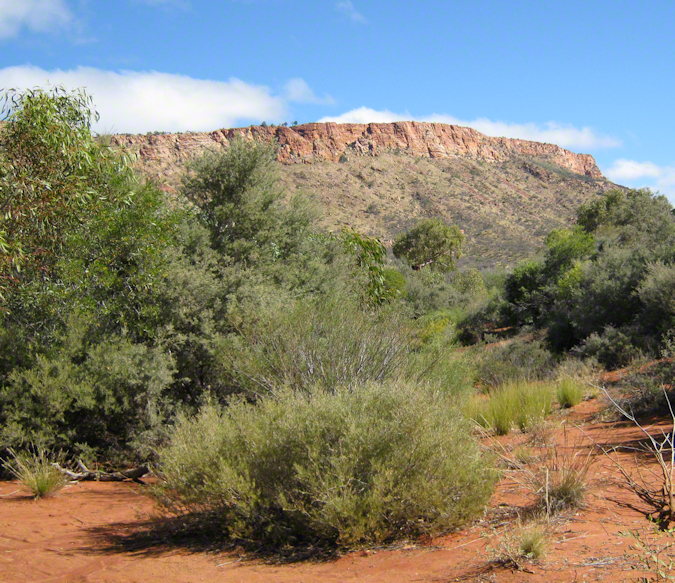
[Painting 1: Mt. Giles—our goal © L.M. Kling 2010]

We stopped at a three-pronged fork in the trail. Three mountain points stood before us. ‘Now, which way shall we go?’ You’d think Dad would’ve worked the route out before we embarked on this project, using his compass and detailed maps. But apparently, he hadn’t.

Phillip (older cousin) raised an eyebrow.  Richard (my brother) scratched his chin. Ashleigh (younger cousin) shook his head, and I shrugged.

Dad hummed and hawed.

‘We could hike up and down the gully to see,’ Richard said.

Ashleigh sighed. ‘That would take too much time.’

‘What about the saddle?’ I asked.

The men looked at me, their eyes narrowed. ‘To which point?’ Dad spoke for them all. For the next few precious minutes, the men bantered about what option to take, cutting me out of the decision-making.

‘Ah, well, time’s running out. I guess we can’t expect to reach the top,’ Dad announced with the damning tone of resignation.

I stomped off towards the saddle.
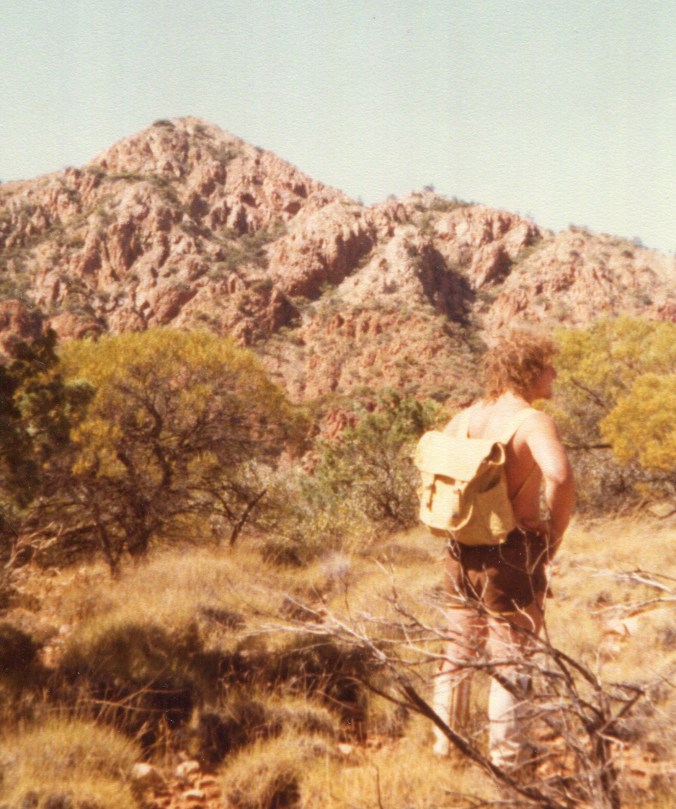
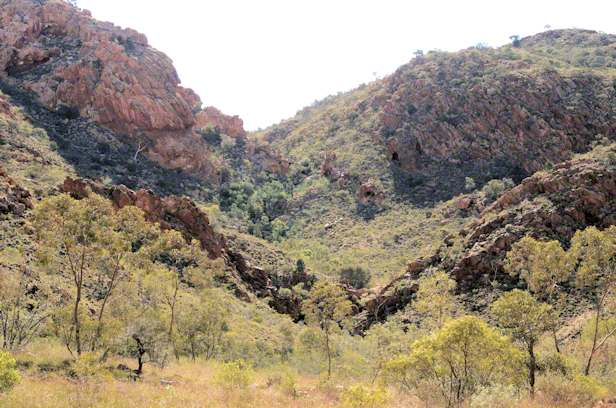
[Photo 1: Mt Giles from the Pound © C.D. Trudinger 1981]

I bolted on southwards and upwards to the spur. Even menacing prickle bushes didn’t stand a chance as I charged through them. Behind me I could hear the Thwack! Thwack! Thwack! as Dad hacked his way in pursuit of me. ‘Come back! You can’t go off on your own!’

Scratched and sore from the fight with the bushes, I stopped. A tightrope path lay ahead. Not even enough width for my feet on this razorback. I turned and watched the shrubs shake.

Dad emerged, brushing seeds and thorns from his arms. He shaded his eyes as he looked up. ‘You’ve taken the correct action.’

‘What?’ I scratched my eyebrows. Dad’s big words confused my exhausted mind.

Wheezing, Dad caught up to me. ‘See?’

He pointed at the nearest mound. ‘See, the trig?’

I squinted towards where the hill met the cobalt blue of the sky. At the highest point, a thin wire shimmered in the heat. ‘Oh, yeah!’

While Dad and I gulped down some water, Richard, Phillip and Ashleigh galloped past us. ‘Watch your step on the spur!’ Dad warned.

We picked our way along the razor back ridge. I held my breath and resisted the urge to look down past the tight-rope path where I placed each step. Holding my arms out straight either side, I teetered and tottered to the end of my ordeal. When I reached the slope at the other end, an incline with generous girth and no cliff in sight, I collapsed to my knees, then bent over and kissed the sandstone.
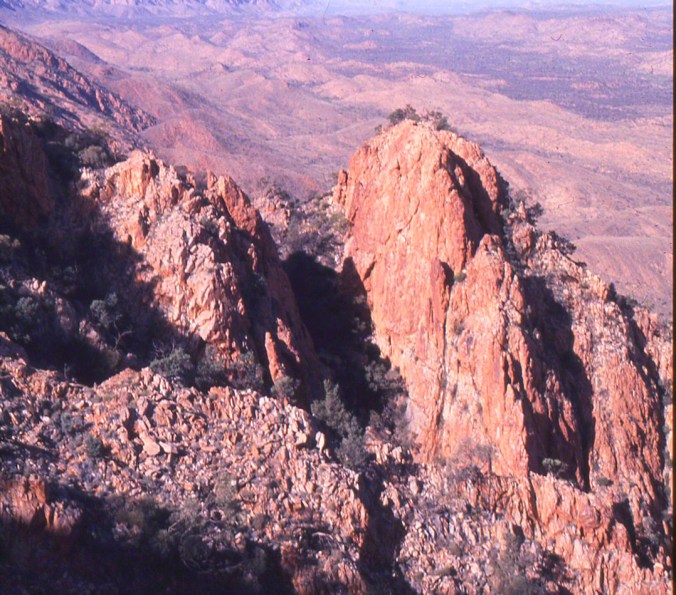
[Photo 2: Razor-back Ridges of Giles © C.D. Trudinger 1992]

However, my rejoicing was short-lived, and I rose to my sore feet to push on. After plodding up and down more ridges, more rocky slopes, and more frequent rests to nurse my aching calves, our allotted time to reach the summit by 12:30pm lapsed.

We gathered around Dad.

‘What’s the verdict?’ I asked. A breeze cooled the back of my neck.

Flies gathered on Phillip’s back. Richard slapped between Ashleigh’s shoulder blades and clapped the flattened insects from his palms. ‘Twenty.’ He flicked the last of the sticky flies from his palm.

‘Well,’ Dad took a deep breath, ‘We’ve come this far, we might as well go all the way.’

‘We have a full moon, that’ll help,’ Ashleigh said.

Phillip waved a pesky fly from his face. ‘Okay!’

‘Let’s go!’ Richard slapped his hands together near Phil’s nose and killed that fly too.

‘Alright!’ I said.

Determined to reach the peak, we plunged forward, despite being famished, wrung of perspiration, weary and late. We were so close. Every so often, the trig teased us, appearing as we reached a high point, and then vanishing as we dipped into a valley. Richard and Phil raced each other.

I climbed over a wall of rock and saw the trig wobbling above the slope in the oily heat. I scrambled upwards. A saddle stretched and rose before me. Damn! Another false top! I struggled over the saddle to face another false top. After staggering over the fifth false top, I saw the trig and blinked. Was it real? Or was it a mirage? I limped up the jagged path, pain shooting down my calf muscles with each step. The trig disappeared behind an outcrop of rocks. We’ll never get there!
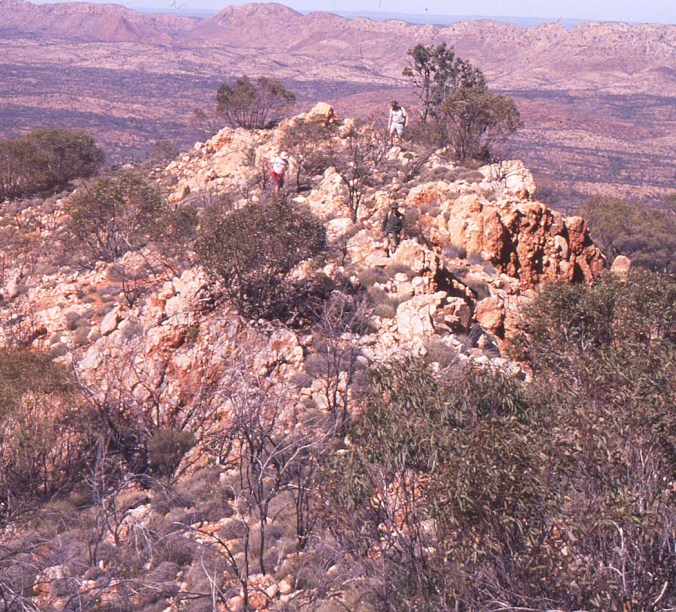
[Photo 3: One Ridge After Another © C.D. Trudinger 1992]

I skirted the rocks and saw the trig fifty meters away, bold, rusty, and high. Under the shade of an orange sheet that fluttered like a flag in the wind, Richard, Phil and Ash lounged by the stone cairn, packs off their backs, stirring Salvital into their cups of water and then sipping with delight the reward of their labour. The time was one o’clock.

Ten minutes later, Dad dragged himself over the last ridge and limped to the summit. There, he sat on a rock and rubbed his knee. ‘O-o-oh!’ He inspected the damage, red and swollen. ‘I tripped and fell on my knee. I hope I can get down alright.’

‘You better,’ Phillip laughed. ‘You can’t exactly camp up here.’

‘You’ll have to get down,’ Richard said.

‘Yeah!’ I gazed at the view, entranced by the once-ancient ocean bed surrounded by islands of mountain ranges that snaked like the backbone of a prehistoric creature into the haze on the horizon.
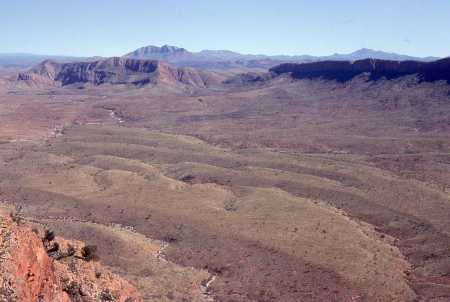
[Photo 4: View from the summit—Foreground, the Pound, Ormiston Gorge behind, and in far distance, Mt. Sonder (left) and Mt. Ziel (right) © L.M. Kling (nee Trudinger) 1981]

‘Hey, look at these!’ Phillip excavated some calling cards from a tin can wedged in the monument to the summit. Our predecessors had conquered the mountain one year earlier to the day. The scribe wrote: “The climb was well worth the effort”. They described ascending to the peak by the southern ridge starting from Giles Spring. This tip gave us the idea to descend by the south ridge and traverse west through the pound to the camp.

We celebrated with lunch of “scroggin” (a muxture of nuts, dried fruit and chocolate) and copious amounts of Milo and strawberry-flavoured Quick mixed with powdered milk and water. We took photos of the stunning scenery and each other as evidence of our triumph over adversity.

© Lee-Anne Marie Kling 2017; updated 2021; 2026

Feature Painting: Trekking towards Mt Giles challenge (Pastel) © Lee-Anne Marie King 2021

***

Virtual Travel Opportunity

For the price of a cup of coffee (takeaway, these days),

Click on the links and download your kindle copy of my travel memoir,

Trekking with the T-Team: Central Australian Safari

The T-Team With Mr. B: Central Australian Safari 1977

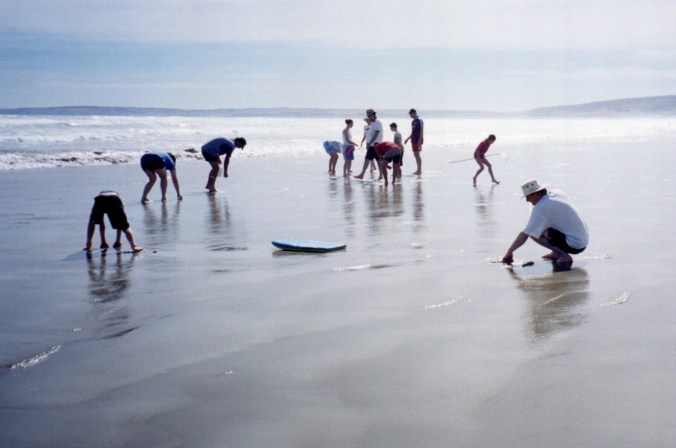
Arty Friday–Cockling at Goolwa

Story Behind the Art—Cockling at Goolwa

[Marion Art Group is holding an exhibition at Brighton Central Shopping Centre (Brighton Road, South Brighton), May 18-30, 2026. One of my artworks to be displayed, Cockling at Goolwa in Pastel, revisits the K-Team’s journey down “memory” highway, 100 kilometres south of Adelaide to Goolwa Beach on the far-flung edges of the Fleurieu Peninsula. Remembering our time with friends 24-years ago searching for cockle shells in the sand.]

Cockling at Goolwa

A picture, they say, tells a thousand words. So, what is Cockling at Goolwa’s story? How can the simple heel-toe dance of “cocklers” (people who dig for cockle shells), their feet sinking in the soggy sand of the incoming tide, in the flux of early summer warmth, on a remote beach south of Adelaide, tell us? What story is worth a thousand words? What was it about this scene that attracted me to capture it? First in photo and then several years later, on canvas in acrylic, and then recently in pastel.

*[Photo 1: Cockling at Goolwa © L.M. Kling 2002]

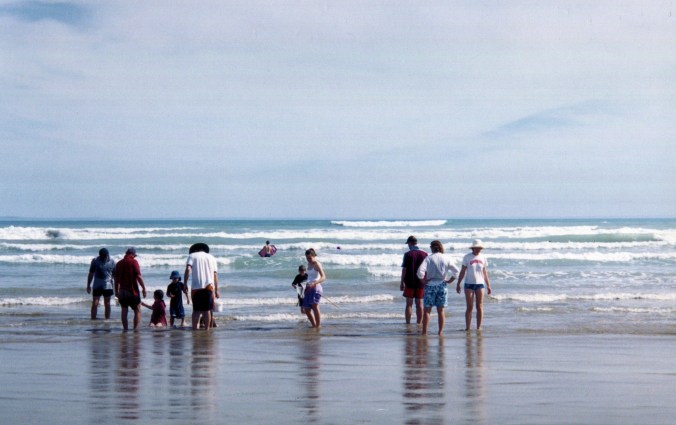
I think the water reflecting the sky, all silver, the people on the wet sand, a mirror, swaying and twisting for cockles captured my attention. I’d been there, on the glassy surface, watching for bubbles, grinding my heel into the bog, feeling for the sharp edges of shell and plucking out the cockles that snapped shut when exposed to air.

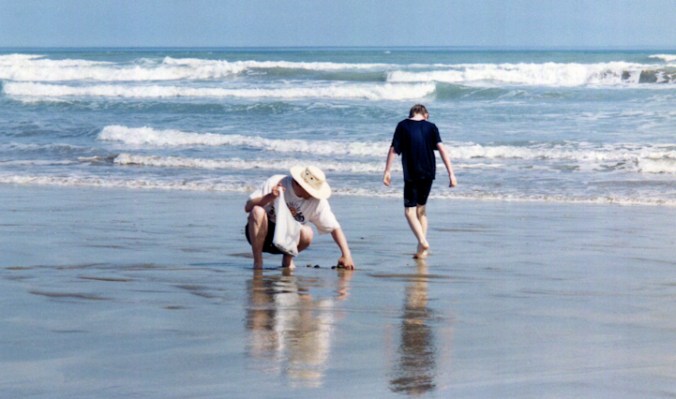
*[Photo 2: Dad Digging for the cockle © L.M. Kling 2002]

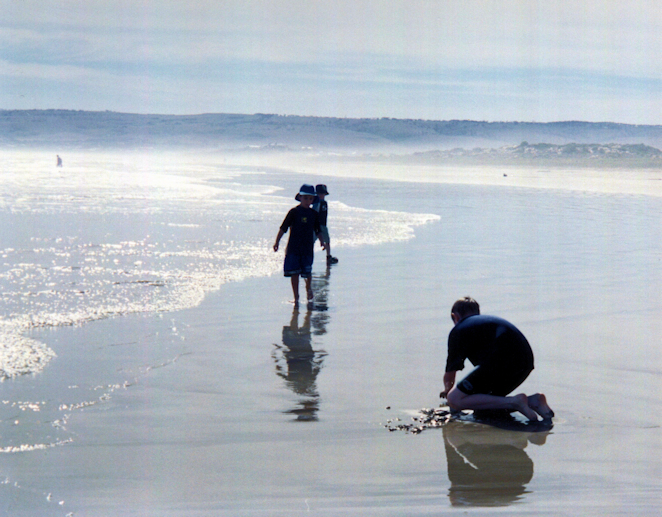
I was there, but then I watched. Mothers, fathers, and children lost in the moment of twisting and hunting and collecting cockles.

*[Photo 3: Lost in the moment © L.M. Kling 2002]

‘What will you do with all those cockles?’ I asked.

‘They’re for fishing,’ one of our friends said. ‘Bait for fish.’

‘Hopefully, we’ll catch a few fish and have them for dinner tonight,’ another said.

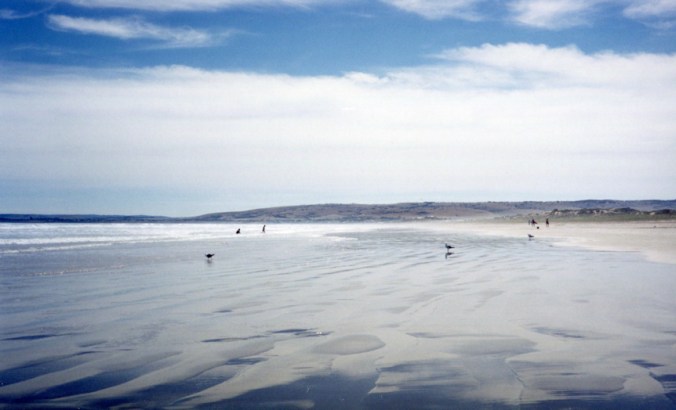
I imagined fish, fresh from the sea, thrown on the barbeque and the cockle bait inside them buried once again in our stomachs. We continued digging for cockles…family and friends, one with the ancient, outside time—nothing else matters but the cockles.

*[Photo 4: Goolwa beach — Lost in time © L.M. Kling 2002]

Goolwa, if I remember, has mounds of spent shells in the sand hills, monuments to generations upon generations of Indigenous Australians, their open-air kitchens and meals. Did they perform the same ritual, on the same patch of wet sand, delving for cockles to fry on their fires? A quick perusal of Google reveals they used nets to collect cockles and catch fish. They then cooked the cockles on a campfire.

*[Photo 5: Goolwa beach sunset © L.M. Kling 2002]

We are here, they are gone, but their spirit of history lingers, reminding us, though we seem different, we are the same. We are digging, dancing, and delving for our dinner. We are still, in the moment, alone in our thoughts in a forgotten corner of the world, unknown by the world, yet one with this country’s past. And God knows each one of us—each part of us, even the unknown parts of ourselves and our secrets.

*[Photo 6: Divine painting of sky and sea © L.M. Kling 2002]

What if I shared a little secret—an artist’s secret? Okay, I’ll tell you. I painted this picture in less than two hours. Now that I’ve told you, would the painting be worth less to you? Must time be equated with worth? Sometimes I do take hours upon hours, layers upon layers, and more hours planning to get the work right. But not Cockling at Goolwa.

*[Photo 7: The natural child © L.M. Kling 2002]

I love the beginning of a painting; laying the foundation, engaging my inner-natural child, the paint flowing from a thick brush on a damp canvas, colours blending, mixing as I go. One side of the brush is crimson, the other blue, and a dab of white. Sienna is somewhere there in the foreground, shadowing the sand. Mid-yellow was added incrementally to shroud the distance in light grey for perspective. Then just a hint of heads of land jutting out halfway across the horizon with a suggestion of ultramarine in the grey. So simple, and sometimes, like with Cockling at Goolwa, the scene emerged before my eyes. In the world of artists, I believe the term “magic brush” or “magic hand” has been used. Um, trade secret, so don’t go spreading it around.

So, there you have it, in less than an hour, surf, sand, sky, and tones in all the right places.

*[Photo 8: Boogie-board Surfing at Goolwa beach © L.M. Kling 2002]

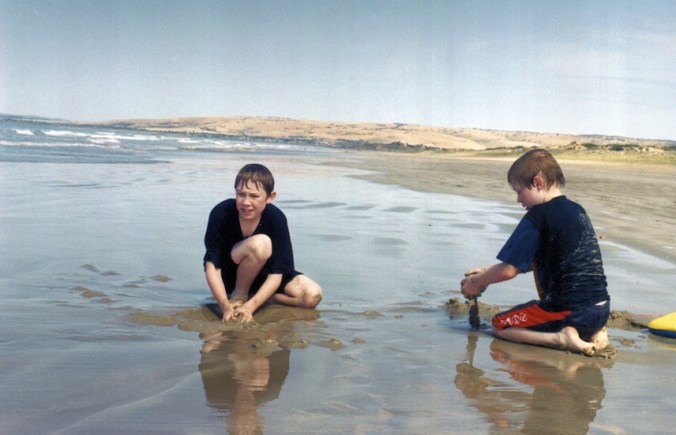
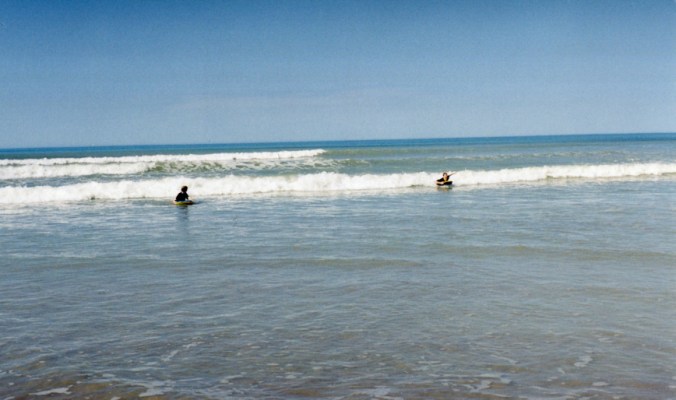
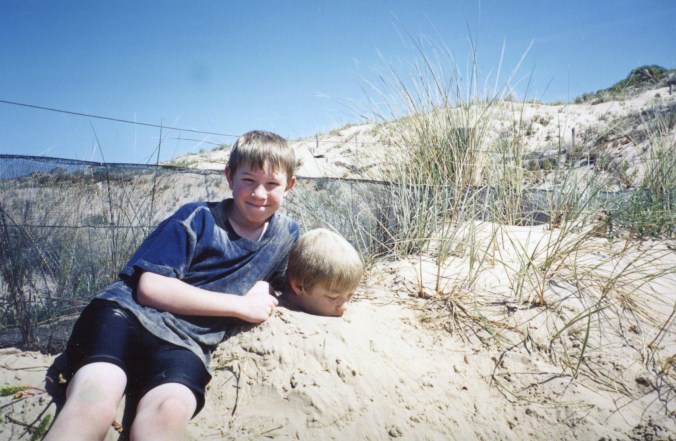
Now for the people, the twisting, turning people, their feet in the boggy sand. How do I paint them? I had a break and drank a cup of tea. I remember not all the children hunted for cockles. Some kids body-surfed in the shallows, some played cricket, and one little boy with a wish to be hunted, or to be warm, buried all his body except his head in the sand. I found him, and he broke out of his sand-grave, the sand zombie.

*[Photo 9: Sand-zombie © L.M. Kling 2002]

‘Don’t go tracking your sandy footprints into the shack,’ I said.

He washed himself off in the surf, then sat wrapped in a towel and shivering in the sun while watching the cockle hunt.

All the while, the “cocklers” cockled for cockle shells. Soon, the boy joined the hunt for cockles.

Then, when the paint was dry, I plotted the people in with a pencil and then painted them in with a finer brush.

‘I like that painting,’ a fellow member of the art group said. ‘Don’t do another thing to it. Don’t even frame it. I’ll buy it as it is. How much do you want for it?’

Paint barely dry, I took the work home, signed it, and then the next week at our Christmas lunch, I delivered Cockling at Goolwa to them. The buyer showed the work to others at their table, and all admired it.

[Photo 10: Watching the cocklers © L.M. Kling 2002]

What made another person connect with Cockling at Goolwa? For this person, their son and family spent many summer holidays at Goolwa, doing just that, cockling. Time out, out of time, unwinding, relaxing, happy times, happy memories, captured on canvas…in less than two hours. And I must admit, the story is slightly less than one thousand words.

But perhaps as you look at the copy of Cockling at Goolwa, you may have a story of your own about the painting. Maybe a painting’s story is not just one person’s story, but stories from many people, one thousand words, or more…

© Lee-Anne Marie Kling 2016; updated 2019; updated 2022; 2026

*Feature Painting: Cockling at Goolwa in Pastel © L.M. Kling 2022

***

Longing for more travel adventures?

Dreaming of exploring Australia?

Read the T-Team’s Aussie adventures, click on the links for my travel memoirs below:

The T-Team with Mr. B: Central Australian Safari 1977
Trekking the T-Team: Central Australian Safari 1981

Arty Friday–Bunyip Chasm

Story Behind the Painting: Bunyip Chasm

Have a Happy and Blessed Easter.

As it is the Easter weekend and in keeping with Arty Friday, a story of my Easter break camping in the Gammon Ranges with my father and then future husband.

THE BIRTH OF “BUNYIP CHASM”—THE PAINTING

You need to loosen up with your painting,’ my art teacher said.

So, with a palette-knife, I did with…

Over the Easter break in 1986, Dad took my boyfriend (future husband) and me to the Gammon Ranges. Dad had gone there the previously with his photographer friend and he was keen to show us some of the scenic secrets these ranges held.

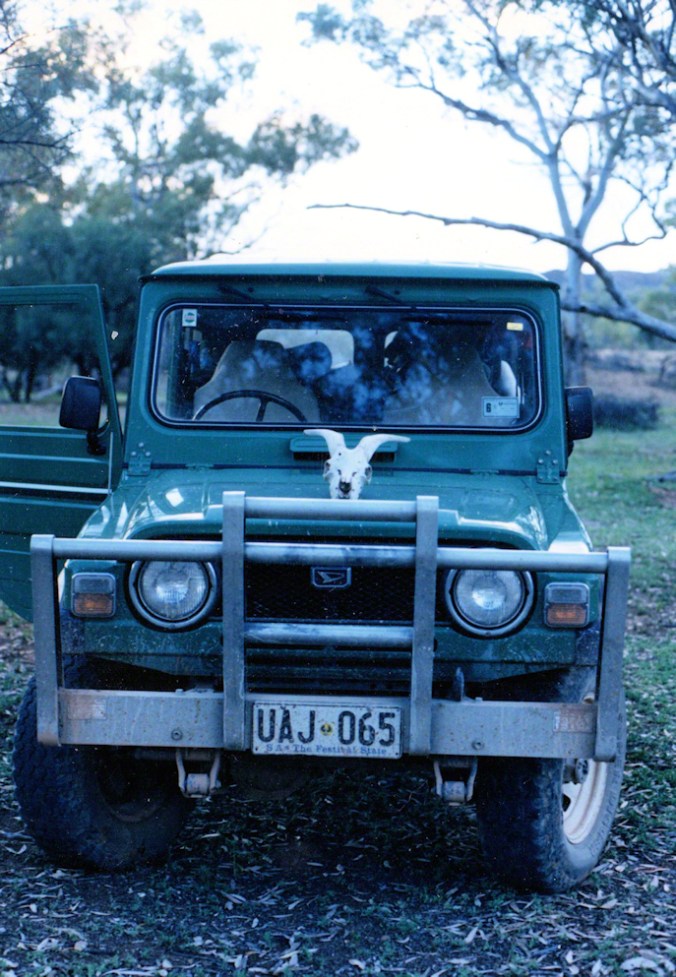
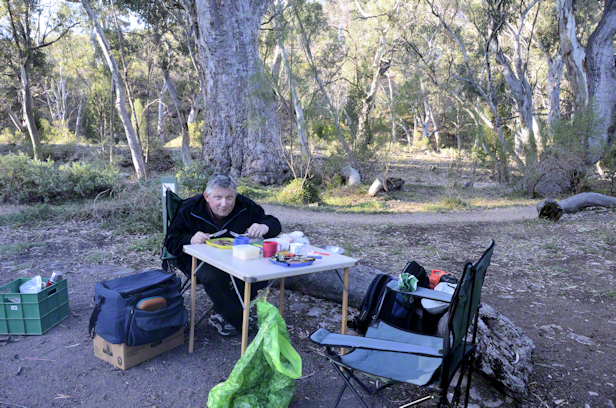
We bumped and rolled in Dad’s four-wheel drive Daihatsu down the track into the Gammon Ranges. We camped near Grindell’s Hut, backpackers’ accommodation. A murder-mystery from the early Twentieth Century involving the hut’s owner, spiced our discussion around the campfire that night. Then we set up a tent, for boyfriend, on the ground above the bank of the creek. I placed my bedding also above the creek under the stars. Dad opted for his “trillion-star” site underneath a river gum. No tent for him, either.

[Photo 1: The Daihatsu © L.M. Kling 1986]

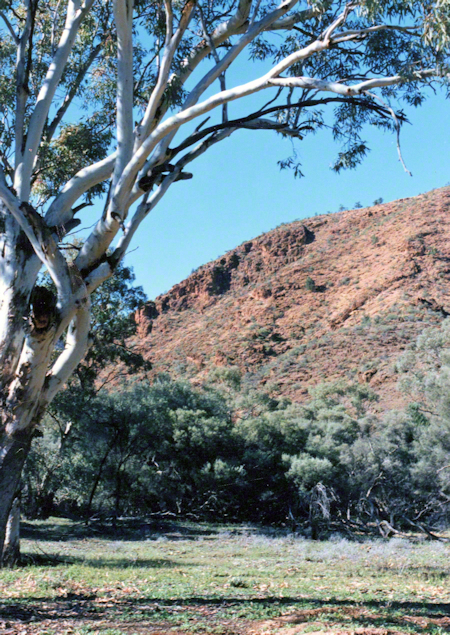
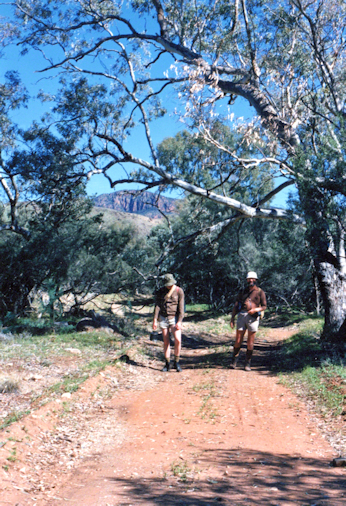
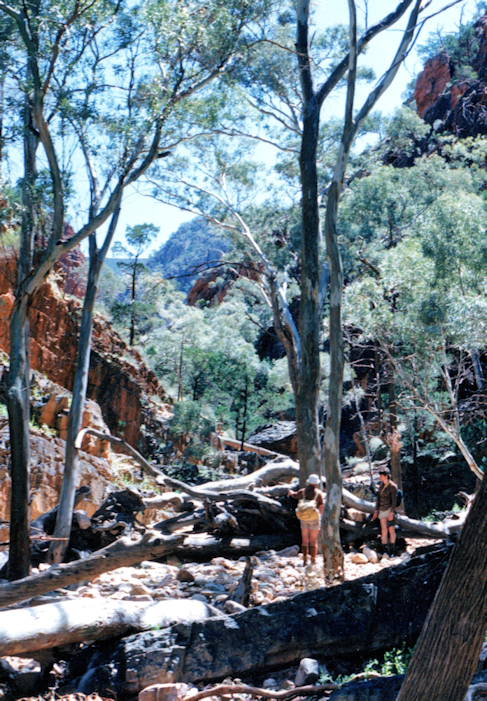
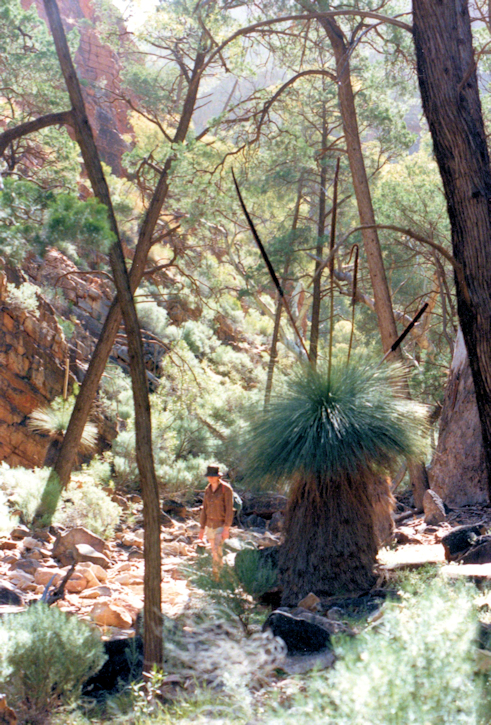
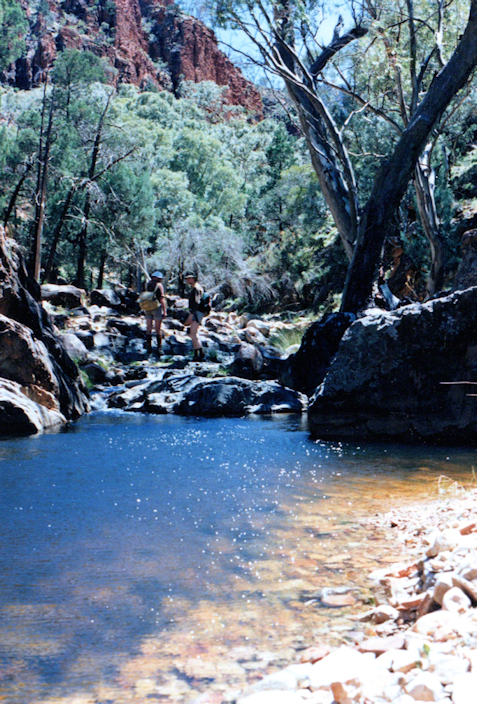
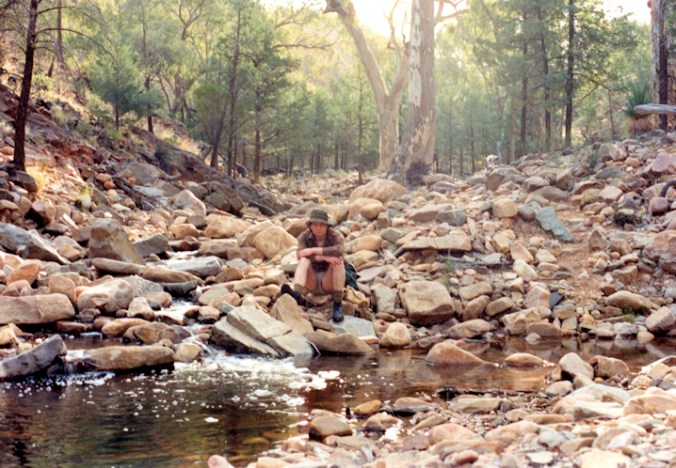
The next day Dad guided us along the Balcanoona creek bed shaded by native pines to Bunyip Chasm. After an hour or two of hobbling over rounded river stones, we arrived at a dead-end of high cliffs.

[Photo 2: Balcanoona Creek, beginning our hike © L.M. Kling 1986]

[Photo 3: Trekking of the T-K Team in search of Bunyip chasm © L.M. Kling 1986]

[Photo 4: Waiting for me to catch up © L.M. Kling 1986]

‘Is this it?’ my boyfriend asked. ‘Is this Bunyip Chasm?’

‘I think so,’ Dad said as he squinted at the waterfall splashing over the cliffs. ‘It looks familiar.’

‘I don’t see any chasm,’ I said.

‘Just wait a minute,’ Dad said and then disappeared through some scraggly-looking bushes.

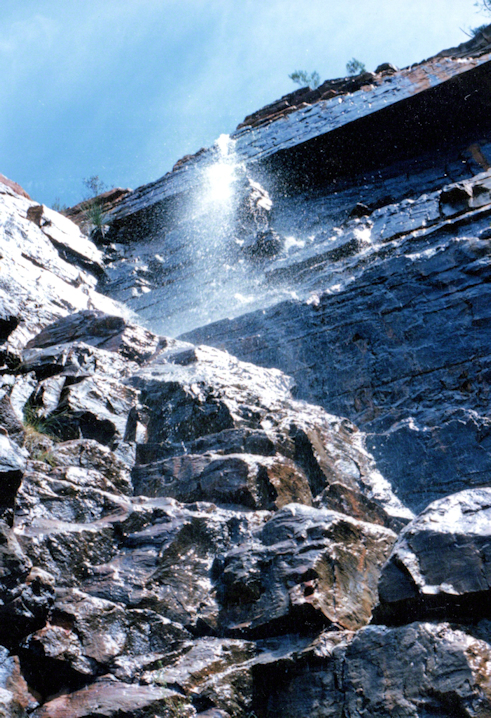
I waited and took photos of the water spattering over dark cliffs set against a cobalt blue sky.

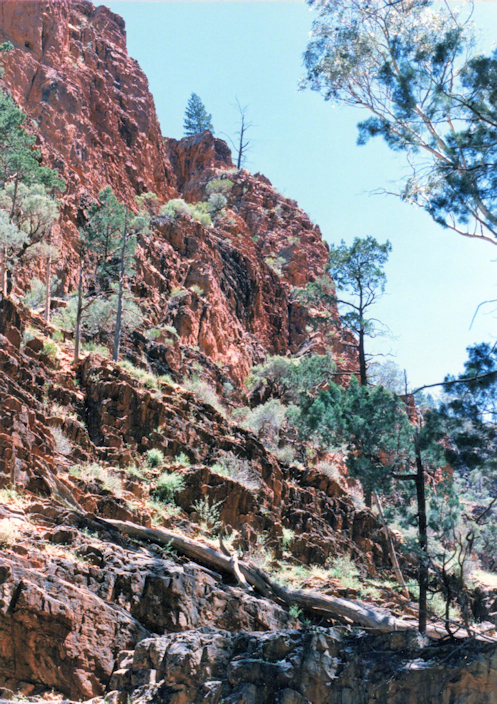
[Photo 5: Is this it? The end of the gully with cliffs dotted with native pines © L.M. Kling 1986]
[Photo 6: Water cascading over cliffs © L.M. Kling 1986]

Dad tramped back to us. ‘It’s over here. The water’s deeper than last year, so I don’t think we can go through.’

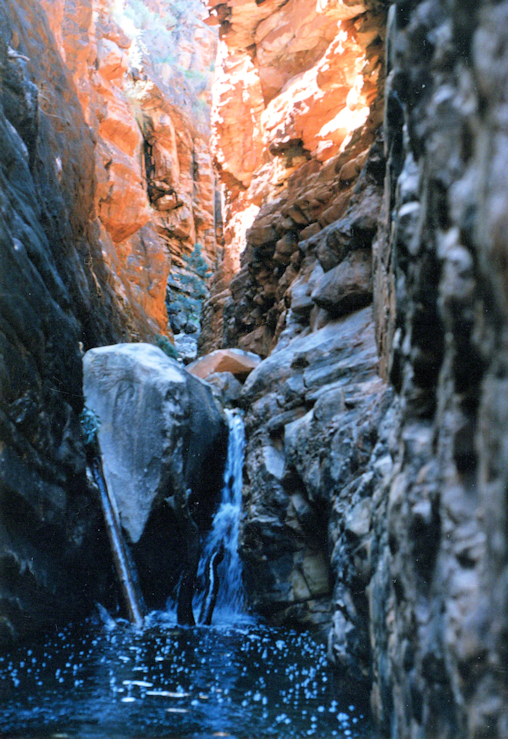
We trekked after Dad, pushing the bushes and then reeds aside. There, the split in the hillside, and a deep pool of water lurking in the shadows.

[Photo 7: Beginnings of Bunyip Chasm © L.M. Kling 1986]

‘Do you think we can swim through?’ I asked. I had worn my bathers in the hope of swimming in a waterhole.

‘Nah, it’s too deep and cold,’ Dad said. ‘I wouldn’t risk it.’ Dad then scanned the surrounding cliffs and shook his head.

I took more photos of the cliffs, hillside and of course the chasm.

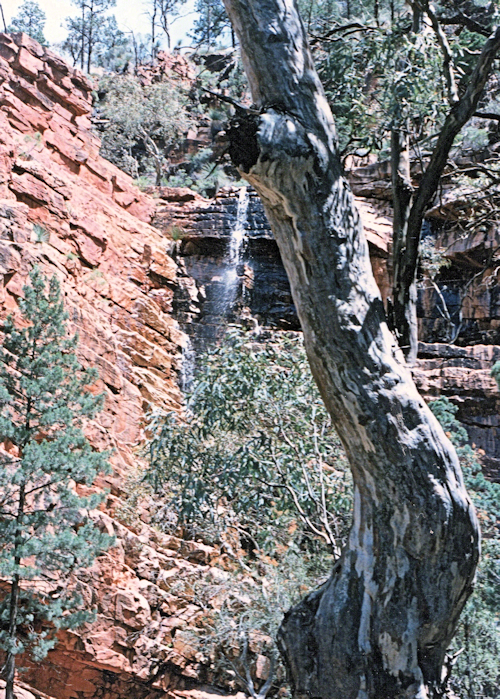
[Photo 8: Waterfall near Bunyip Chasm © L.M. Kling 1986]

‘Come on, we better get back,’ Dad said and then started to hike back the way we came.

We trailed after Dad. Although native pine trees shaded our path, the hiking made me thirst for a waterhole in which to swim. I gazed up at the lacework of deep blue green against the sky and then, my boot caught on a rock. I stumbled. My ankle rolled and twisted. I cried out. ‘Wait!’

[Photo 9: Afternoon return to camp © L.M. Kling 1986]

‘What?’ the men said at the same time.

‘I hurt my ankle; I need to soak it in cold water.’

Dad stamped his foot. ‘Well, hurry up. We have to get back to camp before dark.’

I pulled off my jeans and T-shirt.

‘What are you doing?’ my boyfriend asked.

‘I’m soaking my ankle; I twisted it, and I learnt in first aid that you need to apply a cold compress to it.’

Boyfriend put his hands-on hips and sighed.

I gave him my camera. ‘Here, take a photo of me in the pool.’

Boyfriend swayed his head. But as I soaked my foot and the rest of me—any excuse for a swim—boyfriend took my photo.

[Photo 10: My Foot-soaking pool © A.N. Kling 1986]

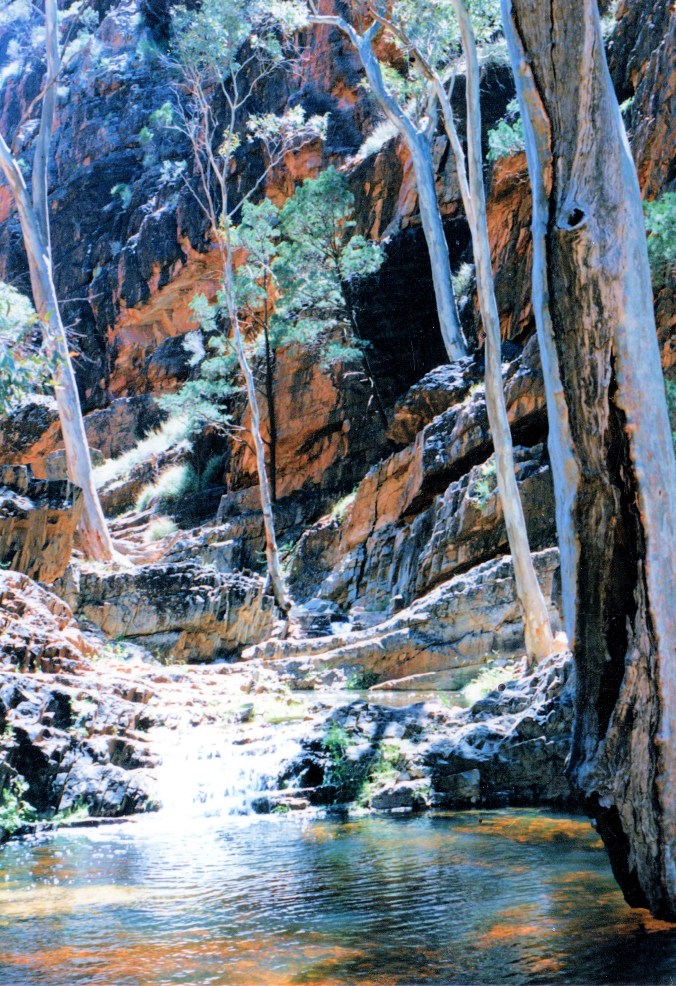
After about ten minutes, with my ankle still swollen and sore, I hobbled after the men. We climbed down a short waterfall and at the base, I looked back. The weathered trunk of an old gum tree leaned over the stream, three saplings basked in the late-afternoon sunlight against the sienna-coloured rocks, and clear water rushed and frothed over the cascading boulders and into pond mirroring the trees and rocks above.

‘Stop! Wait!’ I called to the men.

[Photo 11: Waiting for me to foot-soak © L.M. Kling 1986]

‘We have to keep on going,’ Dad said and disappeared into the distance.

Boyfriend waited while I aimed my camera at the perfect scene and snapped several shots.

[Photo 12: The scene that inspired the painting © L.M. Kling 1986]

Then holding hands, we hiked along the creek leading to our campsite and Dad.

‘I’m going to paint that little waterfall,’ I said.

We walked in silence, enjoying the scenery painted just for us—the waves of pale river stones, the dappled sunlight through the pines, and a soft breeze kissing our skin.

[In memory of my father Clement David Trudinger (13-1-1928—25-8-2012)]

© Lee-Anne Marie Kling 2016; updated 2020; 2024; 2026

Feature painting: In Search of Bunyip Chasm © L.M. Kling 1989

***

Want more but yet to travel down under?

Why not take a virtual journey with the T-Team Adventures in Australia?

Click here on the links:

The T-Team with Mr. B: Central Australian Safari 1977
Trekking With the T-Team: Central Australian Safari 1981…

And escape in time and space to Central Australia 1981…

Travelling Friday–Tnorala (Gosses Bluff) Conservation Reserve

[In 2013, the T-Team Next Generation, embarked on their pilgrimage to Central Australia. Purpose: to scatter Dad’s ashes in his beloved Central Australia, in Ormiston Gorge.

Once every month on a Friday, I will take you on a virtual trip to the Centre and memories of that unforgettable holiday in 2013, with my brother and his family, the T-Team Next Generation.

This time, the T-K Team ventured out West of Hermannsburg to explore Tnorala (Gosse Bluff).]

Big Day Out West

Night

An alarm wailed.

I sat up and nudged Anthony. ‘What’s that about?’

Anthony snorted, smacked his lips and mumbled. ‘I don’t know. An alarm, I think.’

‘Shouldn’t we tell P? It might be their shop.’

Anthony snorted, turned over and recommenced snoring.

For some time, I lay in bed. Sleepless. The alarm was bleating with lights flashing through our window. I assumed that, like car alarms in the city, a cat or dog had set the thing off and the owners would sort out the problem … eventually.

Eventually, the alarm stopped and somehow, I fell into a good, deep sleep.

[Photo 1: Sunrise in the Centre © C.D. Trudinger circa 1955]

Morning

I stretched and then yawned. ‘Good morning, Anthony, did you have a good sleep?’

‘No,’ he grumbled. ‘You snored!’

Breakfast

After a shower, getting dressed while Anthony caught up on the sleep he apparently missed out on while I snored (nothing about the alarm, I might add), I chatted with K over breakfast.

‘The store was broken into last night,’ she said.

‘So, that’s what the alarm last night was all about,’ I remarked.

‘Yep, happens on a regular basis. One of the windows needs replacing, again.’

P joined us. Leaning on the kitchen table, he added, ‘If you want anything at the shop, you’ll have to wait until it opens. The store was broken into.’ He chuckled. ‘One lady has tried to impress the cops with her tracking skills.’

‘Who tried to break in? Do the police have any idea?’

P shrugged. ‘Kids probably.’

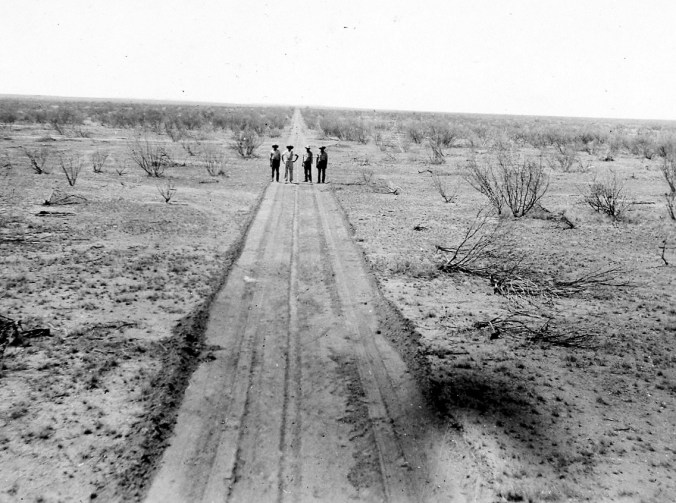
[Photo 2: Back in the 1940s, some roads in the centre of Australia were virtually non-existent and had to be built © S.O. Gross circa 1941]

Late Morning

After a slow morning, mooching, chatting with P (K had gone to work), Bible study and then preparing some lunch, Anthony and I commenced our day trip to the Gosse Range. After some twenty kilometres of bitumen, we took the turn onto the Mereenie Loop and the road deteriorated.  The Ford suffered the juddering of corrugations and slipping and sliding on silty red sand. Anthony slowed the car and crawled at a tense 20 km per hour.

I clutched the handhold of the door. ‘Is the car going to survive? I feel like the car’s going to fall apart.’

‘Why do you think I’m driving so slow?’ Anthony snapped.

[Photo 3: My Grandpa’s truck did break down and they had to use donkeys to pull the truck back to “civilisation” © S.O. Gross 1941]

In the distance, a truck approached us, powering up the road at speed, bull dust billowing behind it.

‘Close your windows,’ Anthony said.

‘They are,’ I replied. ‘I know what bulldust is and does.’ Didn’t fancy my nose, mouth and eyes filled with the stuff as they were in 1981.

[Photo 4: Rough road—Mereenie Loop. Gosse Ranges in background © L.M. Kling 2013]

Midday

The truck powered past us, leaving us behind in a cloud of bulldust. Thankfully, the Ford, with its windows wound up, shielded us from the red menace, and we continued to judder along the corrugations for what seemed an eternity.

[Photo 5: Vehicle comes closer © L.M. Kling 2013]

Then we rounded a bend in the road and, there, the Gosse Range spread out before us.

We stopped and captured the range, dressed in a soft mauve in the midday sun. As we prepared to jump in the car, another vehicle came roaring up the road towards us. This time, I caught the car with my camera as it sped up the road as if it were a racing track.

[Photo 6: Gosse Range Approach © L.M. Kling 2013]

With the car disappearing in a cloud of dust behind our Ford with us safely in it, we prepared to complete our journey to the Gosse Range.

Anthony glanced in the rear-view mirror. ‘Oh, cattle.’

‘Must get photos,’ I retrieved my camera from its bag, ‘evidence for your mum; she does not believe that cattle exist in Central Australia.’

Anthony switched off the engine, and we piled out to take these important photos.

[Photo 7: Proof of cattle © L.M. Kling 2013]

After the cattle were caught on camera, we crawled our way to the Gosse Range turn-off. By this time, the jiggling and juggling along the route must have rattled Anthony’s senses and he had become quite cavalier. ‘What the heck, the road doesn’t look too bad.’

I stared at the two-tyre rutted track. I knew, having been there some 36 years before, that the track would not be much of a track further on. ‘Better to park the car just off the side of the road and hike to the Gosse Range, actually.’

‘Looks alright to me.’

‘Okay, if you must. We’ll drive as far as we can and then walk the rest of the way.’

This we did. Our trusty old Ford lumped and “harrumphed” over the rocks and ruts until we decided to spare the Ford any further risk and indignity to its undercarriage and suspension. Then we hiked the final kilometre through the gap and into the pound.

[Photo 8: Trek into Gosse Range © L.M. Kling 2013]

‘I’m so glad we were able to walk through the gap,’ I said while marvelling at the cliffs and boulders on each side. ‘If we’d been able to drive through, as we did in the Rover in 1977, I would’ve missed the beauty of these formations.’

[to be continued…]

© Lee-Anne Marie Kling 2021; updated 2025

Feature Photo: Racing along the Mereenie Loop © L.M. Kling 2013

***

Virtual Travel Opportunity

For the price of a cup of coffee (takeaway, these days),

Click on the link and download your Kindle copy of my travel memoir,

The T-Team with Mr. B: Central Australian Safari 1977
Trekking with the T-Team: Central Australian Safari. (Australia)

100-words or more on Friday

Water—Theft

Water and Theft are the prevailing themes this week. On Tuesday I was rudely awoken from my slumber by Hubby rampaging through the bedroom in search of his transport pass. With a sigh, I got up and helped in the search. After scouring the house, Hubby looked online and discovered someone had used his card the previous Sunday. Not him. The card had indeed been stolen. Hence the process of cancelling the card and transferring the funds to a new one. I’d like to see the disappointed expression on the face of whoever nicked the card when they try to use it next.

Meanwhile, Adelaide’s seawaters have been plagued by a nasty algal-bloom; the worst in the world—ever in all history, apparently. Dead sea creatures have been washing up on shore in apocalyptic proportions. Mum’s neighbour is putting in a swimming pool. No swimming in the beach waters this summer, or many to come. Mum and I lunched by the beach at Glenelg curious to see how discoloured the water would be and how many dead fish and other creatures we’d spot on the shore. We’re still alive. Didn’t notice any discolouration of the sea. Saw some birds skimming the water and diving for fish. Good luck to them, I say.

August is almost over, and Adelaide has been enjoying the SALA festival, I thought this cheeky little piece, a 100-word challenge might fit the bill, so to speak. The actual incident of imagined “water-theft” took place several years ago, but I believe the gallery involved still takes their rules very seriously.

100-word Challenge

Stolen…Almost

 ‘Where can we get some water?’ my friend asked.

I pointed at the casket of spring water languishing in the gallery. ‘There’s some just there.’ A glass wall confined the well-watered and wined gallery guests. We had been guests, but this gallery was devoid of seats. We wanted to sit. And eat.

‘Sign there bans wine not water.’

I stowed into gallery, collected cups of water and walked to the door.

‘Where do you think you’re going?’ self-appointed wine-police snapped.

I placed the stolen water back on the table and left.

Transubstantiation. My first virtual miracle; turning water into wine.

© Lee-Anne Marie Kling 2019; updated 2023; 2025

Feature Photo: Taking their Chances Fishing; Sea birds at Glenelg Beach © L.M. Kling 2025

***

Want more memoir? Some travel?

Take a journey into Central Australia with the T-Team…

Click on the links:

The T-Team with Mr. B: Central Australian Safari 1977
Trekking with the T-Team: Central Australian Safari 1981

Or

If Sci-fi is more your thing

Check out my War Against Boris series…

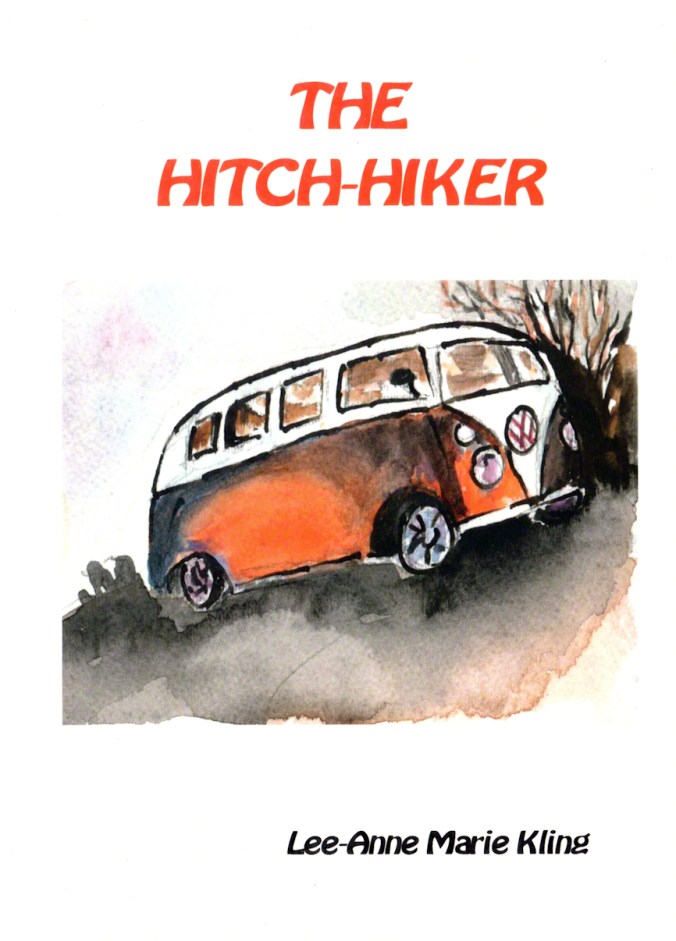
The Hitch-hiker

Mission of the Unwilling

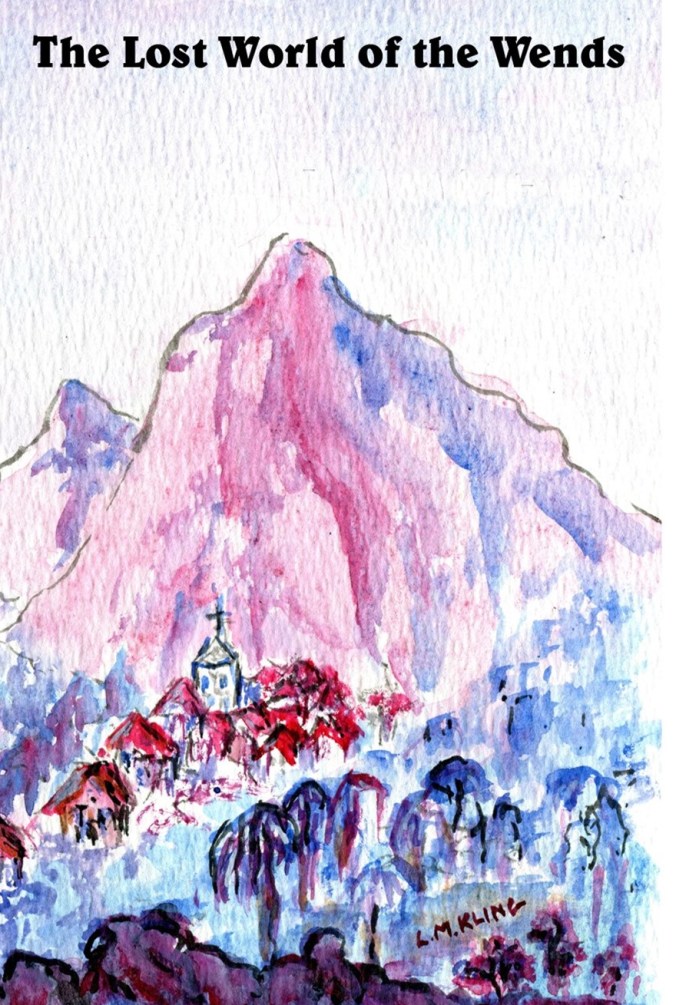
The Lost World of the Wends

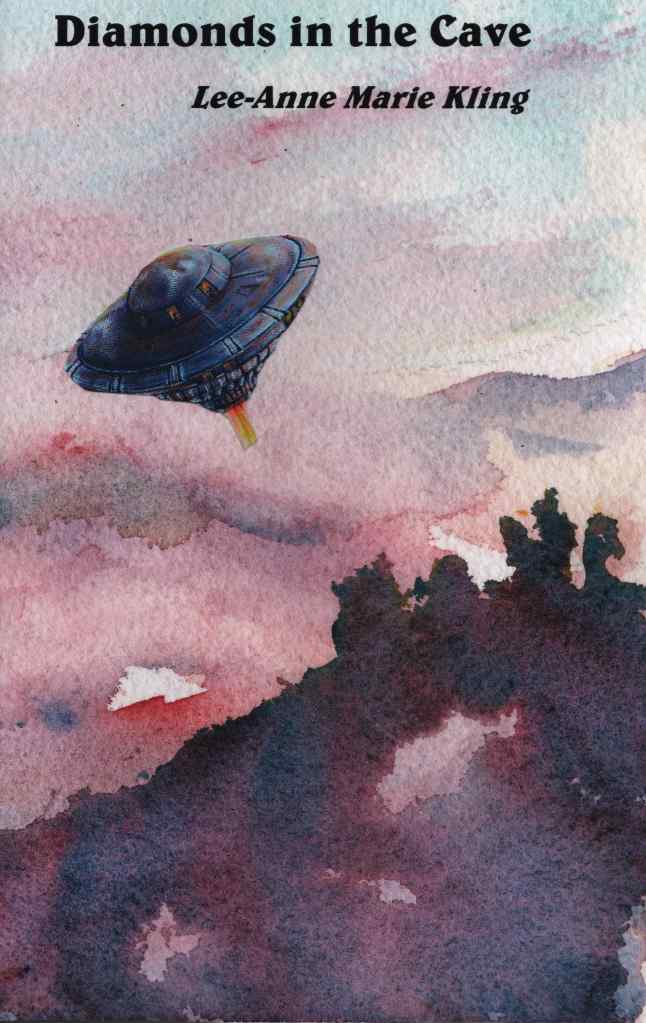
Diamonds in the Cave (New Release)

Travelling on Friday–Glen Helen

T-Team Next Generation—Glen Helen

Wood for the Fire

[In 2013, the T-Team, next generation embarked on their pilgrimage to Central Australia. Purpose: to scatter Dad’s ashes in his beloved Central Australia, in Ormiston Gorge.
Over the next few months, I will take you on a virtual trip to the Centre and memories of that unforgettable holiday, with my brother and his family; the T-Team Next Generation.
This time, the T-Team gather and multiply as we greet our adult sons and our mother (Mum T also known as Mrs T senior) for the day, and the expanded T-Team of us set off to camp at Glen Helen.]

The T-children wanted a campfire. My brother had promised them a campfire. But bushfires in the past year had made campfires, even in the middle of winter in the middle of Australia, almost extinct. On our trip up north this time, each camping ground up until Glen Helen, had restricted fires, and denied the children the pleasure of a campfire. That’s not to say the T-Team Next Generation missed out entirely of some sort of fire to cook our food. We did spend one night in one of those free parking “camps” 30 kilometres south of Marla where we attempted to make a campfire. However, the area was so well picked over for firewood, the few sticks we did scrounge together barely made enough flames to boil a billy. So, no satisfaction regarding campfires. That is, until Glen Helen.

[Photo 1: Red Cliffs of Glen Helen © L.M. Kling 2013]

Even far out in the bush, the Glen Helen camping grounds had strict conditions and regulations controlling the operation of campfires. In the Glen Helen camping grounds, there was a designated place for the fire, and we had to provide our own wood. Again, dead wood around the immediate camping site was scarce.

[Photo 2: Glen Helen station 60 years ago—more picked over, then © S.O. Gross 1946]

So as the sun sank towards the Western horizon, golden rays blessing the cliffs in hues of pink and scarlet, and the humps of spinifex glowing like lumps of gold, my son and I set out in Mum’s Ford station wagon, down the road in search of a creek offering dead branches for firewood.

[Photo 3 and feature: Glen Helen, Finke River promising wood for the fire © L.M. Kling 2013]

As the setting sun deepened the walls of the gorge into hues of crimson, I hobbled down the dry creek filled with smooth rounded river stones. Hard to imagine the creek gushing with water in flood, rushing over those stones, smoothing them to the size and consistency of bocci balls threatening to twist my ankles.

[Photo 4: Finke in Flood © C.D. Trudinger 1956]

With my camera, a constant companion and permanent fixture hanging from my neck, my focus was not only on dry sticks and logs, but on the scenery. While my son snapped off armfuls of tinder from uprooted river gums that had become casualties of former flooding, I collected snapshots in time of the setting sun, blood-red cliffs, ancient eucalypts towering above the banks and the dry river-bed of stones.
Night stole the thin grey-blue light of dusk. With the station wagon stacked full of wood for the fire, and my camera’s memory card full of brilliant photos for my art, we returned to camp.

[Photo 5: Red Cliffs of Glen Helen © C.D. Trudinger 1977]

What joy the T-Team Next Generation family had. Well, apart from their schnitzels that had gone off. Thankfully, we were able to share the extra and expensive lamb chops we had bought the day before at the supermarket. We gathered around the fire. The fire that cooked our dinner, then warmed us and the conversation late into the cloud-free night frozen with a sky packed full of stars.

[Photo 6: Fire gathering © L.M. Kling 2013]

In the past, a fire would burn slowly all night, keeping animals away from camp. The rules of the camping ground forbade that strategy. Conscious that the local fauna may come foraging, my husband packed away all the foodstuffs and loose items back in Mum T’s station wagon.

Some of the T-Lings were not so concerned about the threat of such animals. During the night, though, a half-full cereal packet would prove fair game for a roving dingo.

[Photo 7: Spot the Dingo © S.O. Gross circa 1945]

So, stories told, marshmallows burnt and eaten, most of the T-Team Next Gen retreated to their tents and snuggled into their sleeping bags. Mum T had gone to her cabin way before the rest of us. She hoped to rise early, with my help, to catch the sunrise on Mt. Sonder.

[Photo 8: Anticipated sunrise on Mt. Sonder © L.M. Kling 2013]


My brother and his son stayed chatting around the campfire. A dingo howled. Freaky. An eerie haunting cry. My nephew was sure he’d come face-to-face with the dingo when he’d taken a trip to the toilets.
I left my brother and his son to their conversation around the fire and with the responsibility of waking mum before dawn, I headed to the tent to join my husband and sleep.

© Lee-Anne Marie Kling 2016; updated 2020; 2025


VIRTUAL TRAVEL OPPORTUNITY

FOR THE PRICE OF A CUP OF COFFEE (TAKEAWAY, THESE DAYS),

CLICK ON THE LINKS AND DOWNLOAD YOUR KINDLE COPY OF MY TRAVEL MEMOIRS

The T-Team with Mr. B: Central Australian Safari 1977
Trekking with the T-Team: Central Australian Safari 1981

Travelling on Friday–Standley Chasm

[Twelve years ago, the T-Team, next generation embarked on their pilgrimage to Central Australia. Purpose: to scatter Dad’s ashes in his beloved Central Australia, in Ormiston Gorge.
One Friday every month, I will take you on a virtual trip to the Centre and memories of that unforgettable holiday in 2013, with my brother and his family; the T-Team Next Generation.
This time, the T-Team part ways for the day, and two of us set off to explore Standley Chasm.]

Bonus! An all-you-can-eat breakfast greeted us at the Chifley the morning after. The same can’t be said about the T-Team. Richard had slept in and not much was happening in my brother’s “camp”. Meanwhile, we had made the most of the morning, walking to the town centre.

[Photo 1: Chifley Resort © L.M. Kling 2013]

‘Gotta get tyres for the trailer, ‘n nothing’s open yet,’ Richard mumbled on the other end of my mobile phone.

‘Having a quiet day, then,’ I replied gazing around the near-empty local Big-W department store. Anthony held up a pair of cargo pants and indicated that he’d try those on. Then he began rifling through the bargain rack for more pairs to try.

‘Not exactly,’ Richard sniffed, ‘gotta get tyres.’

‘Oh, well, we’re thinking of going to Standley Chasm. Maybe we can all go together in the afternoon if your tyres get sorted.’

‘Hmm, will let you know.’

‘Okay, will hear from you then.’ I clicked off the phone and said to Anthony, ‘He doesn’t sound optimistic on the tyre-issue. Might be busy all morning.’

[Photo 2: Remember the tyre carnage? © L.M. Kling 2013]

By noon, the T-Team still weren’t ready; Richard still had to take the car to get the new tyres.
‘At least I’ve found a place that can do our tyres,’ my brother mumbled to me on the phone before he left on his tyre-mission.

[Photo 3: Ranges surrounding Alice Springs, Olive Pink Botanic Garden © M.E. Trudinger 2010]

So, Anthony and I travelled alone on our quest to explore Standley Chasm. Actually, we’d barely left the outskirts of Alice Springs travelling west on Larapinta Drive to the MacDonnell Ranges before Anthony piped up, ‘How far is it to Standley Chasm?’

‘Not far,’ I replied, then retrieving the map from the glove box, I hunted for the chasm’s location and then calculated the distance from Alice Springs. ‘It’s 50km, so about half an hour’s drive.’

‘Oh, you sure?’

‘Yes.’

‘Cos, if it’s further, we’ll miss the red cliffs, or getting in, or we’ll be home after dark.’

[Photo 4: Spectacular view of Stanley Chasm we wish to see © S.O Gross circa 1950]

‘Already have,’ I sighed. ‘But I’m sure the chasm will still be spectacular. And the hike there will be good exercise.’

‘Oh, I don’t know.’

‘Anyway, it’s not far. Besides, there’s plenty of other gorges to explore.’

Before Anthony could voice any further misgivings or regrets that we should’ve left earlier and not waited for the T-Team, the sign for Standley Chasm appeared to our right. We parked in the carpark shaded by a gathering of majestic eucalypt trees and then followed the path to the kiosk.

While waiting in line to pay the entry fee, we read the sign which assured us that we had plenty of time before the park closed at 5pm.

I nodded at the notice board and remarked, ‘All that worry for nothing.’

‘Depends how long the walk takes,’ Anthony said while nibbling a nail.

‘Doesn’t take long,’ I said. ‘I’ve been here before. Takes less than an hour.’

‘I hope so.’

I shook my head. ‘Look, we’ll walk for an hour and then turn back, okay?’

Just to be sure, when we paid for our entry tickets, I asked pleasant Irish man who ran the kiosk, how long the walk should take. He explained that it was mostly easy and would take the average hiker about half an hour.

[Photo 5: Along the way © L.M. Kling 2013]

So, rather than waste precious Anthony-time having lunch first, we set out on the adventure to the chasm. Anthony raced ahead. I wandered along the meandering path taking note of various scenes I would snap on our return. Who knows, we may make it in time for the spectacular red cliffs on both sides. Although the lack of tourists hiking either way, made me suspect that, that time had passed.

[Photo 6: Billabong © L.M. Kling 2013]
[Photo 7: Just beyond, tempting us © L.M. Kling 2013]

Twenty minutes later, Anthony and I beheld the awesome cliffs of the chasm; one side glowed golden orange, while the other side was a dark sienna. We sensed the peace and serenity of the place.

[Photo 8: The Chasm at last © L.M. Kling 2013]
[Photo 9: Perfection of Light © L.M. Kling 2013]


I scrambled over the tumble of boulders in the chasm and made my way to the pool. Beyond the rockpool, a sign prohibited us from venturing further. The deep water caught a perfect reflection of the boulders and cliffs.

[Photo 10: Pool’s reflection © L.M. Kling 2013]

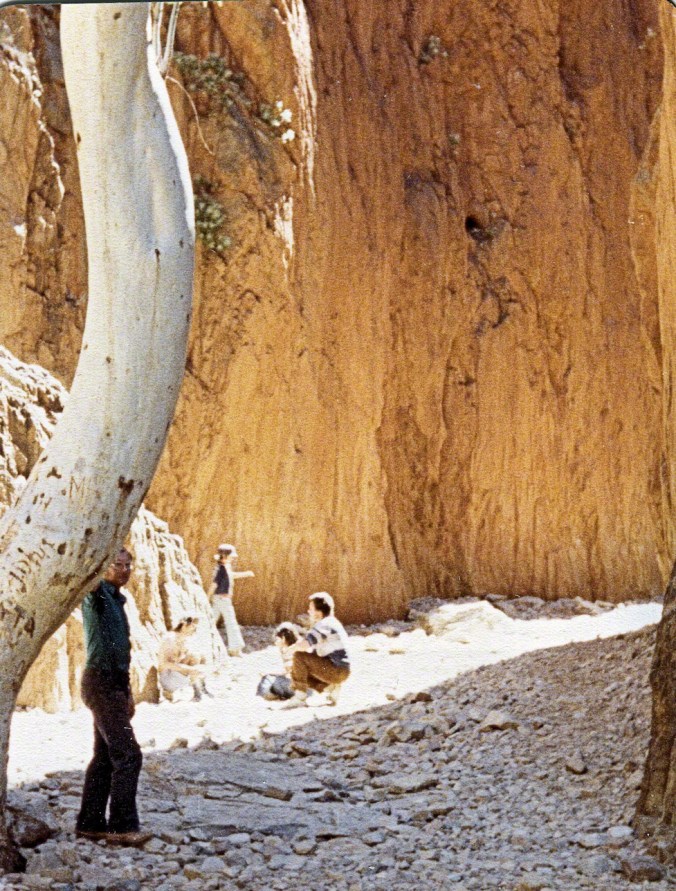
In memory of my Dad, I photographed Anthony by the same tree where I had captured Dad in all his grumpiness some 36-years prior.

[Photo 11: Anthony by tree near Chasm © L.M. Kling 2013]
[Photo 12: Grumpy Dad by tree © L.M. Kling (nee Trudinger) 1977]

Upon our return to the entrance, we munched on our sandwiches and observed a group of aspiring hikers pitch their tents and then pull them down again. What’s that about? we wondered.

Then, a group of tour guides sat to eat their lunch on a picnic bench below us on the other side of the creek. Anthony had to comment, ‘There’s seven of them and only one of them is Indigenous.’

[Photo 13: Standley Chasm admired by tourist group © L.M. Kling 2013]

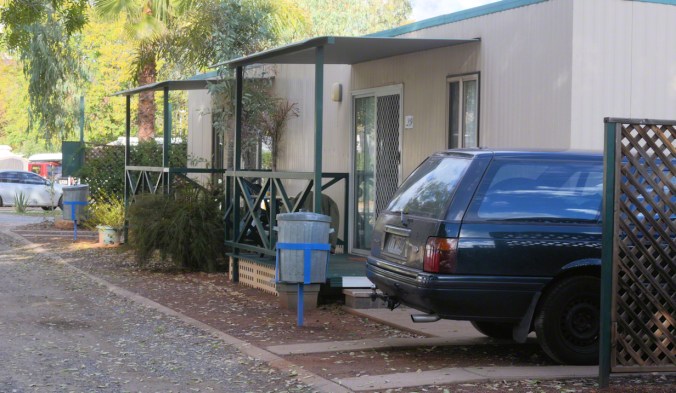
On our return to Alice Springs, we stopped by the caravan park where I booked our sons in. We had already booked ourselves into a cabin at the caravan park and had originally thought they could stay with us. And Mum, all concerned about missing out, had her cabin organised months ago. Even so, we had no problem arranging a separate cabin for our grown-up sons who we felt would be happy with more space.

[Photo 14: Vision of near Future at the Alice Springs Tourist Park © L.M. Kling 2013]

With late afternoon casting the long shadows of the approaching night, we made our way to where the T-Team were staying. We had been in touch with Mrs. T and had arranged to meet there. When we arrived at the appointed time, no T-Team. Calling Mrs. T on her mobile phone yielded no joy, nor answer.

‘’Not again!’ Anthony groaned.

‘Let’s go to the shops and buy some meat for a BBQ. Then we can find a picnic area and cook up our meat.’

My suggestion sounded reasonable to Anthony, so, off we drove to the local IGA supermarket. Just around the corner. Won’t be long. Maybe the T-Team will be back by the time we return.

‘That’s funny,’ I pointed at some bushes on the traffic island, ‘there’s a cop car hiding.’

‘I didn’t see anything,’ said he who was concentrating on driving.

I ducked into the shops to by some lamb chops and bread. Not much choice; I wanted to snag some sausages but couldn’t see any around. So, armed with the purchased, at some expense, meat and bread, I hopped back in the car.

[Photo 15: Ye good ol’ Aussie Barbeque © L.M. Kling 2020]

Anthony laughed.

‘What’s so funny?’ I asked.

‘While you were in the shops, a bikie guy was arrested right next door in front of the bottle shop.’ Anthony fired up the engine with the characteristic roar of the Ford. ‘I wonder what he was up to?’

Just then, Mrs. T rang back. ‘Sorry we weren’t there when you came. We was down the street and bought tea for all of us.’

So, with the chops saved in the ice box for camping at Glen Helen, we joined the T-Team for dinner, followed by a raucous game of “Chook Chook”, an educational card game trading poultry.

[Photo 16: Chook Chook © L.M. Kling 2017]

Afterwards, Mrs. T joined her friends on the back deck for a drink or two, the T-Lings continued with another round of card-playing with their father, while Anthony and I returned to another night of luxury at the Chifley Hotel.

© Lee-Anne Marie Kling 2020

*Feature Painting: Standley Chasm Men © L.M. Kling 2018


VIRTUAL TRAVEL OPPORTUNITY

FOR THE PRICE OF A CUP OF COFFEE (TAKEAWAY, THESE DAYS),

CLICK ON THE LINK AND DOWNLOAD YOUR KINDLE COPY OF MY TRAVEL MEMOIR:

THE T-TEAM WITH MR. B: CENTRAL AUSTRALIAN SAFARI 1977

Trekking with the T-Team: Central Australian Safari 1981