As I developed my characters from the War against Boris series, stories began to emerge. Here’s one of them.
THE CHOICE: MINNA
One of those summer days doused in grey…I ride my bike to the beach to collect shells. As I comb the surf-soaked sands, a man’s voice snaps me out of the zone.
‘Found anyone interesting?’
‘Nup, no bodies,’ I murmur.
‘That’s a shame, a nice looking lady like you.’’
I fix my sight on shards of shell and ignore him. Hate those pickup lines.
‘Oh, what’s your problem? I’m not going to bite.’
I glance at him—had to see what creep I’m dealing with. Pale, pock-marked face, thirties and just a little taller than me at 165cm. In a grubby white t-shirt and brown trousers. “Never trust a man who wears brown trousers,” my school friend Liesel always said.
‘Come on, dear, just a little conversation. Tell me, what do you want more than anything in the world.’
I shrug. ‘To leave me alone.’
‘Tell you what, you tell me and I’ll leave you alone. Deal?’
I push my bike faster trying to escape this man, but he follows me.
‘I promise, I’ll leave you alone—just tell me.’
Hopping on my bike I announce, ‘I don’t talk to strangers.’
‘I’m not going to hurt you. I bet, I bet you’re one of those girls who wants to get married, have a family. That’s what you want more than anything.’
‘If you say so, now leave me alone,’ I say and then speed from the creepy little man with his creepy questions.
‘Your desire will be arranged,’ he says as I splash my wheels through the water. He then shouts, ‘But, I might add, there will be a price.’
‘Sure, sour grapes,’ I mumble. Then pumping the pedals, I sail along the damp-packed sand where the waves meet the shore.
Then, near the ramp and having to cross sand too soft for bike wheels, I glance behind before alighting.
‘Why not?’ Adam pushed the gate. ‘I’m game if you are.’ He ran towards the historic church.
Amie hissed. ‘Get back here!’
Adam shouted. ‘But I want to see the ghost.’ His small frame blurred in the darkness.
‘You’re trespassing.’
Amie bolted past the open gate. She was trespassing too, now. She chased Adam’s retreating figure. ‘There’s no such thing as ghosts.’
She heard footsteps near the whitewashed walls of the church. She followed the footsteps and the yellow hair that shimmered in the moonless night. ‘Adam, this is not funny. Come back now!’
No answer.
Footsteps crunched on the gravel. ‘This is not a joke, Adam. Where are you?’
A cold rush of air barged past her. Hairs pricked up on the back of Amie’s neck.
‘Adam?’ Amie called. She traced her fingertips along the rough wall of the church as she worked her way to the rear. ‘Adam? Where are you?’
She thought she saw him by the little building behind the church. Was that construction a toilet block? Or did she hear someone, Walter perhaps. Was that building the morgue?
The pale stick figure drifted towards that little building and vanished into it.
A Story where the past and present, and vast distances in space intersect…and Boris does what he always does…
Eastern Europe, 1848
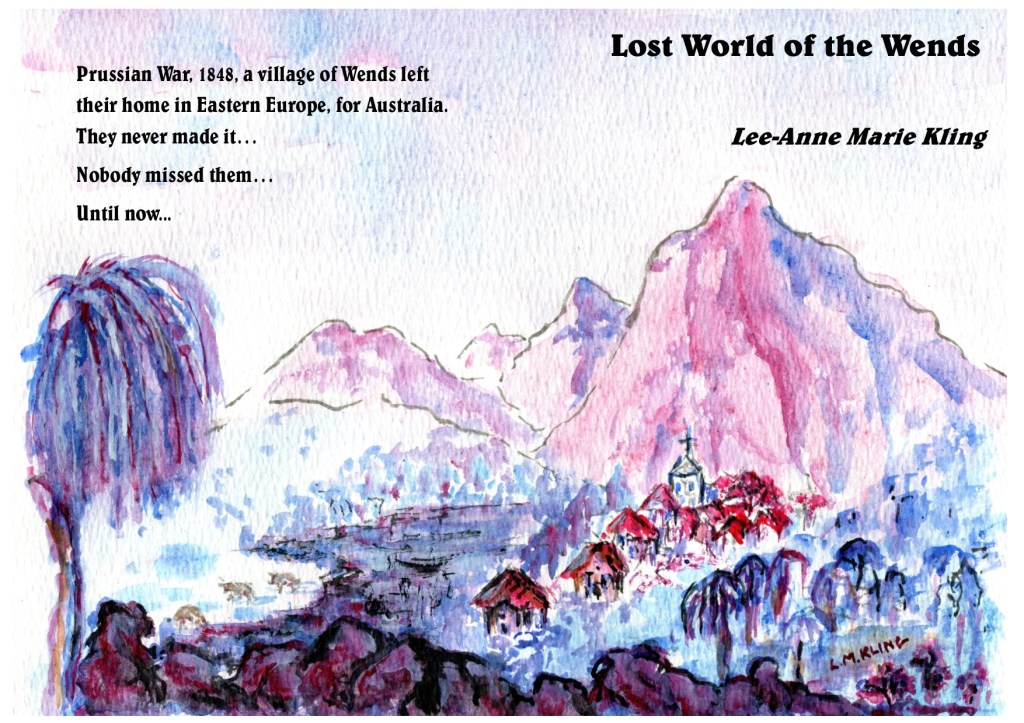
Prussian War raged, and the Wends as a village, left their homeland, with plans to set sail for Australia. From the Eastern edge of Prussia, they journeyed on a barge destined for Hamburg’s port, where they hoped to catch a cheap fare in the cargo-hold of a ship destined for the Promised Great South Land.
These villagers, never made their Australian destination. No one ever noticed, nor missed them. The neighbouring villagers assumed they had arrived in the Great Southern Land, and considered them so far away, and too distant to maintain contact. In Adelaide, also, the city for which they headed, the inhabitants were blissfully unaware of their existence. Migrating Prussians had taken their place in the over-flowing cargo-hold and were sailing across the Atlantic to Australia.
On this barge, headed by a man, Boris Roach, the Wends sang hymns of praise to God for their liberation from religious persecution, and the war. They looked to the promise of prosperity and freedom to worship God according to the Word. Their hope that their children and their descendants may thrive in their faith in the Promised Land of South Australia.
I go to the shops as I do every second day. At the checkout, the girl asks, ‘And how has your day been?’
‘Busy,’ I say.
‘That’s good,’ the girl says with a sage nod as if involved in some conspiracy to keep me on the hamster wheel of busyness.
In the Twenty-first century world “busyness” is good. Not being busy, then, is undesirable. Our Western Protestant work ethic touts, ‘Idleness is the devil’s workshop’. The state of “idleness” is to be avoided at all costs. These days, we equate idleness with boredom.
‘I’m bored,’ say your children (so did mine, when they were children many years ago, back in the good ol’ 1990’s), and terror strikes at the heart of each mother when they hear these words. Bored? We can’t have our children bored—idle—just imagine what devils will come to play if we allow boredom to fester. First, the grizzling, then, the niggling at each other, and before long, World War Three amongst the siblings and the house ends up looking like the Apocalypse.
So, in my quieter times now, I reminisce the days as a young mother, structuring each day, every hour—especially during the holidays, to avoid boredom—any strategy to avoid my tribe from becoming restless.
‘What’s wrong with a bit of boredom,’ my mother would say. ‘They need to learn to entertain themselves, you know, use their imagination. Nothing wrong with being still for a while, I say.’
Mum should know, she grew up in the Centre of Australia on a mission in the 1940’s and ‘50’s. Those were the really good ol’ days with no shopping centres, no electronic games, nor television. They did have radio, but her minister father only allowed the news to be heard from it. Heaven forbid they listen to modern music. During the War, even the radio was confiscated by the allies. So all my mum as a girl had to entertain herself were books. Even so, the Protestant work ethic was a major value in mum’s family as her mother, when she found her daughter reading would say, ‘Isn’t there some housework you should be doing?’
As expected, then, I grow up in a world that values industry, productivity and filling each day to the full. The schools I attend are hot on producing good grades, projects and students who go on to university and become wealth-producing citizens.
Then, at sixteen, I have a revelation. We sing a chorus at church, “Be Still and know I am God”.
Being still…forget the homework…forget the housework…put aside my racing head of worries…centre my thoughts on God and his greatness. Pause for a moment and remember, God is God and He’s in control.
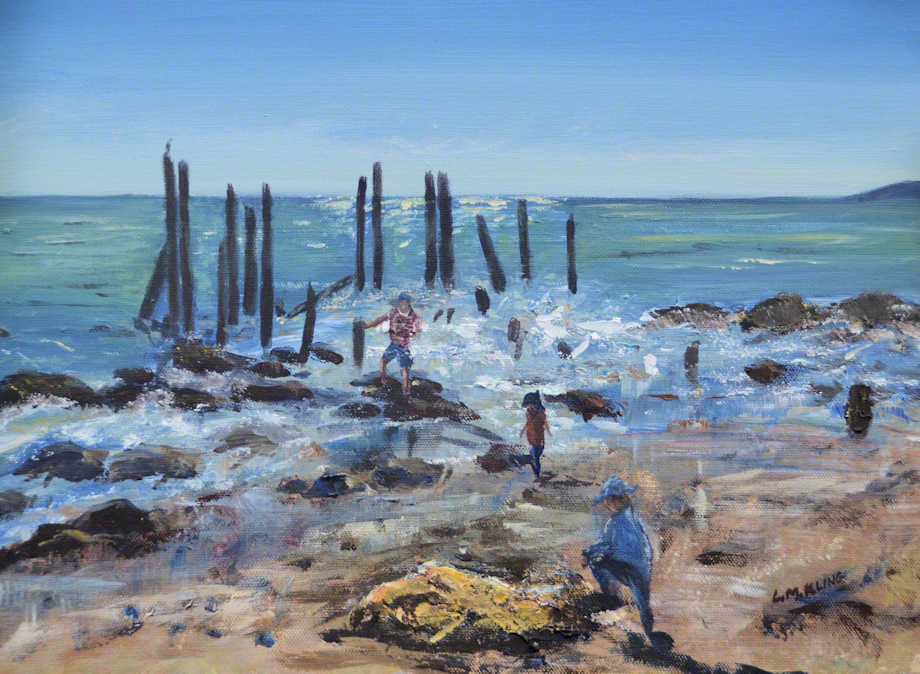
So at sixteen, I do just as the chorus bids. I hop on my deadly treadly (bike), and pedal down to the beach. I figure that’s the best place to be still; the waves lapping the sand, the sun on my back as I comb the shore for shells. Or on a sunny afternoon, I lie in the backyard and sunbake, think and ponder.
The result? Wow! Those mountains? School and pedantic teachers going on about uniform—my socks, my hair? Boyfriends or lack of them? Life and my future? …All my concerns become molehills.
December 1979, I write a poem “Be Still”. Perhaps not the greatest work of literature, but the values stick with me…until I embark on university, work, and then a family. The poem hides in a book of my teenage missives. Ten years ago, I pull it out for a devotion. I preach being still, but I fail to apply the principles. I must keep busy. If I stop, even for a few minutes, what will others think? There’s just too much to do. Everyone’s depending on me as wife, mother, bible study leader, committee member …to produce the goods. I can’t let them down.
The culture to keep moving is ingrained. Go to meet people for the first time and they ask, ‘What do you do?’ The doing has to have a dollar sign attached to it. Not enough to do all the above as a mother. Must produce money to have status in the group. Without status, I am not heard. Ironic how the under-valued creative arts of writing and painting, though, afford status. I am creating. I am producing.
Even so, in this creative phase of my life, if I stand still, I feel guilty. Now, there are novels to write and art to produce. My “work”. I’m on the hamster wheel, but I can’t get off.
However, in all the busyness expected of me, the cogs of my life are unravelling. I drive to a cafe to meet a friend. She’s not there. I’d forgotten my mobile phone. I drive the thirty-minute return home and check my phone and then ring her. I’d gone to the wrong place. A misunderstanding. If I had taken the time to listen and ask the right questions…
The voice of my sixteen-year-old self still convicts me. ‘Be Still’.
For over forty years, I’d not been following my own advice. After the misunderstanding of the other day, I give myself permission to have time each day to rest…Time to be still…time to know God.
If you’d like to polish your writing skills or find out more about our new project, a self-publishing collective, click on the link to Indie Scriptorium…
Or…
Catch up on the exploits of Boris the over-grown alien cockroach, and Minna and her team’s attempt to subdue him.
For good holiday reading click on the links below…
Friedrich was sure it was his fault. He was always getting smacks or the belt from his father—usually for not polishing his boots perfectly. Or for spilling milk on the floor. But when he saw the blue line in the air, the urge to escape, was too great. This was not the first time he’d ventured beyond the thin blue line under the outhouse. He just had to go through the light—for Wilma…
Then bang. Everything went black…
Friedrich put out his hands and shuffled forward. He groped for a wall, a surface, anything to orient himself.
He tripped over some bulk. He fell onto it. It groaned.
Friedrich scrambled to his feet. His mouth went dry. It was like his heart, lungs and guts were in his mouth. Oh, no! I’m on an alien world without light and with groaning monsters.
The thing at his feet moaned. It sounded like a man.
Friedrich gulped. He knelt down. He held out his shaking hand. He touched something soft and greasy. Was that hair under his fingertips?
‘Who are you?’ he asked in his Silesian language. ‘What’s your name?’
The man-thing with hair moaned again and then mumbled what sounded like forbidden words in another language. He’d heard Joseph use such words when angry.
‘My name’s Friedrich,’ the boy said. ‘And you?’
‘Oh, the pain! The pain!’ the man-thing said in that strange language. It did sound like the tongue Joseph and Amie used. They spoke using similar sounds when they were together.
Friedrich presumed the man spoke English. But he knew few English words, so he still hoped the man understood his native language. ‘How are you?’
‘Oh, the pain! My stomach! My head!’
Friedrich traced the head, the shoulders, arms and distended stomach. ‘You’re a man, aren’t you?’ He patted the spongy surface in the middle.
The man groaned and squirmed.
‘You’re a sick man,’ Friedrich said using the word in his language “krank”.
‘Too right, I’m cranky!’ the man straightened up. He grabbed Friedrich’s wrist. ‘And who the heck are you?’
‘Huh?’
‘What?’
‘Huh? What?’
‘What? Huh?’
Friedrich shook his hand free from the man. How was he to make sense of this man in the dark? How was he to make this man understand him? Joseph and Amie could speak his native tongue, Silesian, but this man couldn’t, apparently. Friedrich rubbed his hand.
‘Who are you?’ the man asked. ‘Where the frick are we?’
‘We had that one!’ That’s what my brother would say when mum read him the same story when he was young.
“We had that one!” maybe was the cry from readers all over the world, as this is what I have done with the Out of Time project. For four weeks. How did I not notice?
Anyway, I think I know how it happened. I changed the sequence of chapters as one does in the editing process. Then up came that particular chapter and it was repeated. All part of the editing process.
So, in the spirit of the day, here’s a post from the past on feedback, which also is about a vital part of refining our work and making our stories the best they can be.
Feedback
I like to celebrate. As a child, when I received full-marks for a spelling test, Dad rewarded me with a Kitchener Bun from the Fish ‘n Chip shop/Bakery which in the good ol’ days of my childhood was situated opposite Glenelg Primary School. A few years ago, when I used to drive my son his course in Magill, my mum and I treated ourselves to lunch at the local hotel.
Every so often, I check my Amazon account. I wipe off the virtual cobwebs of neglect, and dig deep in the files of my mind, retrieving the password to enter. I expect nothing much to have changed.
I’ve been busy with my blog and the rewards, small, though they are, compared to the rest of blogging world, but the steady trickle of views, likes and comments, satisfies me. Over the years, the number of followers has steadily grown.
Once long ago, now, I made a daring move, and posted my short story, Boris’ Choice—not for the faint-hearted or while one eats breakfast…After the post, I checked for results on Amazon with my War on Boris Series books?
Then, I checked the reviews. Now, I don’t know how other writers have fared with reviews, but for many months since my books were published, I had received no reviews. Yes, I asked my readers to do the deed and tick the star-boxes and comment, with no results. Yes, they’d say and the weeks went by and nothing. Were they just being polite? I have no illusions and the reality is that art and literature are subjective—what one person likes another won’t.
Anyway, back to checking the reviews…I looked again at one of the countries one of my books sold. The page appeared different. A yellow bar, and a comment. Genuine feedback. Not a great appraisal, but an appraisal all the same. I knew the person responsible for this first-ever comment for my book, but was not surprised at their response. I did wonder at the time how my novella would work for them—not well—just as I imagined when they informed me they’d bought the book on kindle. As I said before, Boris and his antics are well…not for everyone.
That being said, and for fear my works may be misunderstood, I would describe the over-riding theme of my stories are the classic fight of good against evil. How evil, like Boris, can creep into our lives. And when for whatever reason, usually when we maintain and enhance our self, and to avoid discomfort, we allow evil to stay. This evil, however subtle, will drive us to isolated places in our lives, much like Boris does in The Hitch-hiker; places we never wanted to go. I want young adults and people young at heart, to make choices and use their energy for goodness and to fight evil, so they can live a full life and also be an agent for good in their community and the world.
[The continuation of the Survivor Short Story “project” in the War On Boris the Bytrode series. This time, back in time, 1967, following the adventures of middle-aged mum, Letitia…Now, being a project of sorts, over the summer holidays, I have pieced together the story from beginning to end, and then revised it. A main thread has evolved. Something to do with murder and Letitia’s unfortunate involvement in it.
This episode, (14.4) around the time-honoured tradition of the Aussie barbeque Gunter learns of a change of plan and having to travel with people he doesn’t particularly like…]
BBQ time with Mrs. C
Out in the backyard Mrs. C tended the sizzling Bratwurst sausages. She wore a smug expression, as well as her pink floral apron. To Gunter’s mind, except for extra lines on her face, and her leaner build, she reminded him of one of the women folk in the Schwabian village he had come from. He mused whether she was some sort of Melbourne descendant of such a woman.
‘Ah, there you are! I was wondering where you got to.’ Mrs. C wiped her hands on her apron. ‘I hope you haven’t been gallivanting around town with some girl. You know I don’t like it when you do that.’
‘No, Mrs. C.’
Gunter loped up to Mrs. C and gave her a hug and then kissed her on the cheek. ‘You are the only one for me, Mrs. C.’
‘Flattery will get you nowhere.’
‘Mmm, the wursts look delicious; just like the ones we have in Bavaria.’ Gunter reached for one dark golden sausage. ‘I just can’t resist.’
Mrs. C slapped his hand. ‘Not until you wash your hands and set the table.’
Wilhelm strode out from the back verandah with the tossed green salad. As Mrs. C stared at him, her eyes narrowed, Gunter gestured and said, ‘Oh, Mrs. C this is my um, friend, from Tasmania, Wilhelm Thumm.’
Mrs. C placed her hands on her hips. ‘Oh, so this is who you’ve been gallivanting around town with. Hmmm?’
‘Yes, Mrs. C.’ Gunter grinned. ‘I’ve been showing him this fair city before he heads off to Canberra, was it?’
‘Adelaide, actually,’ Wilhelm cleared his throat. ‘Change of plans, mate. I thought we might take the Great Ocean Road, I mean coast and all that. Sailing in my sailboat, the fair ship, Minna, I mean. We could stay in Port Fairy along the way.’
‘We?’
Wilhelm nodded. ‘Oh, didn’t I make that clear? You’re coming with us. Boss’s orders. Anyway, you’ll enjoy the company; your dear mutti, my son Johnny and my wife…’
‘What? But I…’
‘Not negotiable, Gunter.’
‘Not going to happen, M-mate. Your wife, Frieda and I do not get along.’ Gunter shoved his hands in his trouser pockets and marched into the kitchen. There between the bright yellow painted cupboards, he paced. ‘No, I have to stay here. Letitia, she’s…’
‘Aber, mein Gans, Boris is there.’ His mother stood by the lace-topped table. ‘We need you in Adelaide where Boris is.’
‘No!’ Gunter raced out of the kitchen, pushing his mutti aside in his escape to the outdoors. Reaching the barbeque, he picked off a sausage and bit into it.
His mother followed, rubbing her shoulder. ‘Sorry about Gunter, Ethel. He just has these urges to eat Bratwurst sausages. It’s like he hasn’t had a decent fatty meal in centuries.’
‘No worries, Ella, dear. So glad you brought the sausages. Such a lovely idea.’
Gunter glanced from Mrs. C to his mutti.
Mrs. C dipped her head and then raised it. ‘Oh, Gunter, didn’t you know; your mother and I have been friends for, what, centuries. Haven’t we dear?’
Wilhelm glanced at his watch and then looked with raised eyebrows at Mrs. C.
‘What’s happening? Are we waiting?’ Mrs. C asked.
Wilhelm checked his Rolex watch. ‘Just a few more minutes. Maybe she’ll come to her senses and join us.’
Gunter snorted. ‘I do not think so. She will not come while I am here.’
‘Oh, Gans, do not be so hard on yourself. Why would Frieda miss meeting her mother after so many years?’ his mama said.
‘Frieda…that woman, hates me. Is not that obvious?’
‘But why?’ Mrs. C asked. ‘She hardly knows you.’
‘She knows that I worked for Boris; she blames me for all that has happened to her.’
‘How can she, son?’ his mutti said. ‘You weren’t there when she was kidnapped.’
Gunter wiped his face, with eyes glazed and red he looked at his mother. ‘But I was. Boris…he made me…and she remembers. I am sure.’ He breathed out, and trembling, looked away. ‘It is not just what happened to Letitia.’
‘Oh, Gans, do not let that cockroach spoil our sausages.’ His mother stood up. ‘Come, let us eat, drink and enjoy what Mrs. C has prepared. We will put a plate aside for Frieda when she returns to join us.’
Once Mutti had served the rest of the family in a more civilized fashion, and their host had given thanks to God for the meal, the four sat at the timber outdoor setting and ate their Bratwurst, bread and salad with a glass of Claret from the Barossa Valley.
‘We will be going to Adelaide,’ his mother said. ‘And we will be getting those precious boys back to their mother and at the right time. No matter what it takes, we will do this.’
‘I thought the IGSF were going to do that,’ Gunter said.
‘Pff! The IGSF, they are hopeless,’ his mother said.
‘Wouldn’t know how to organize a chicken meat raffle,’ Mrs. C added.
Mutti placed her hand on Gunter’s. ‘We will give the whole plan an element of surprise.’
‘Like you will put a bomb under the kidnappers, Mutti?’
‘Better than that.’ Mrs. C leaned back in her deck chair. ‘We have some resources. Let’s just say, from a recent war or two.’
Gunter sucked air between his teeth. ‘I’m not sure about this.’
‘It’ll be fine, you’ll see,’ Wilhelm said. ‘I dare say, we’ll fill in a few gaps. We’ll make sure the job gets done. Right, ladies?’
Both women exchanged glances, smiled, and nodded.
‘After all,’ Wilhelm chuckled, ‘that’s why we needed your brother Johann’s hard-earned cash.’
[The continuation of the Survivor Short Story “project” in the War On Boris the Bytrode series. This time, back in time, 1967, following the adventures of middle-aged mum, Letitia…Now, being a project of sorts, over the summer holidays, I have pieced together the story from beginning to end, and then revised it. A main thread has evolved. Something to do with murder and Letitia’s unfortunate involvement in it.
This week, it became obvious to me that something had to be done with my time-travel mechanism in this story. Let’s face it, a black box is just a bit lame and over-used. Then the idea came to me, what about a box of chocolates? What assortment of adventures one could have with chocolates laced with the time travel microbiol mud from a cave on the *Pilgrim Planet? In this episode (14.3), I begin to explore how these chocolates might work. Unlike Forrest Gump’s famous phrase, ‘Life is like a box of chocolates…”, in Out of Time it is: “Time Travel is like a box of chocolates, you may not know when you’ll end up.”]
Meeting with Mutti
‘I thought you would never make it.’ A woman’s voice floated over his head.
He recognised that voice. ‘Mutti?’
‘Ah, Gans, immer spaet! (Ah, Goose, always late).’
‘What are you doing here?’
A slight woman, aged somewhere in her thirties, flaxen hair tied in a bun, locked eyes with him. ‘To rescue my future grandsons, naturally. Why else would I ask you to come here?’
‘Yes, I know.’ Gunter stood, dusted himself and sneezed. ‘But, I was expecting someone else…’
‘Have you got the chocolate box? You know, the time travel bon-bon thing. I left it here last time.’
‘Oh, Mutti! Always leaving your stuff wherever you go! We could trace you through time and space the trail of chocolate boxes and their wrappers you leave.’
‘Just as well I did, or I’d be lost forever.’
‘Ja, natuerlich.’ Gunter paced down the hall. ‘Let’s do it!’
‘Hey, not so fast.’ His mother caught his sleeve. ‘What do you think you’re doing?’
‘Saving the boys.’
‘Ja, aber, I have the matches and the bomb is all set up.’
‘Bomb? What bomb?’
‘The one to blow Boris into a million itty bits. You know, kaboom.’
‘But, but you can’t just go around killing people. Besides, a million itty bits would make a million itty Borises that would grow up into a million big Borises.’ Gunter shrugged. ‘Besides, look what happened to Letitia because of you.’
‘Hmph! What is she? Your papa’s second child? With that woman? Hmmm? How could he do that to me? Tossing me aside because I’m…I’m…’
‘I’m sorry, Mama, but we thought you were…’
‘Tot? (Dead?)’
‘So, then how is the bomb going to work?’
‘Oh, the bomb will work very well, indeed.’ She grabbed her son’s hand and dragged him out to a courtyard and onto a patch of lawn.
‘But, but, how are we going to save the boys, then? I cannot believe I will be the father of boys.’
‘Simple.’ She struck a match and tossed it onto the porch. The flame flared and then fizzled.
‘Yeah, right! And your point is?’
‘The point is, Gans, that the flame is a signal.’
Gunter stood scratching his head. ‘I don’t understand. I thought you were after your chocolates.’
‘Come on.’ His mother sighed and tugged at her son’s shirt. ‘You must get back to the house before they notice you are missing. I think Mrs. C is cooking you Bratwurst, your favourite sausages, you know, and fried onions on her outdoor barbeque.’
Gunter gazed back at the house. The weatherboard with its untamed cottage garden. The driveway concreted but cracked. He realized that since the flame throwing, the night had morphed into midday. A fine summer’s day. An afternoon southerly breeze cooled the air slightly. The smell of BBQ sausages wafted, making Gunter’s stomach growl.
‘How did that happen?’ Gunter asked.
‘Come,’ Wilhelm Thumm nudged him. ‘You can introduce me to the famous Mrs. C.’
As they approached the house, a slender blonde leapt from the Aston Martin parked in front of the boarding house. She slammed the door and marched down the street, away from the house.
‘Who is that?’ Gunter asked.
‘My wife,’ Wilhelm replied. ‘Frieda, remember her?’
‘She has not changed.’ Gunter stared at the gravel on the footpath. ‘She saw me, and she does not like me.’
‘Don’t be so hard on yourself.’
‘She blames me for what happened to Letitia.’
‘She’ll get over it.’ Wilhelm patted his back. ‘You’ll be friends, one day.’
‘Yeah, sure. Pigs fly, as they say here in Australia.’ Gunter locked eyes with Wilhelm. ‘And another thing, if I may ask, how did you…? Where’s my…?’
‘Don’t ask.’ Wilhelm burped and tossed a chocolate wrapper in the gutter. He flashed a shiny black box at Gunter. ‘I’d offer you one, but, um, we need you here and now, not some random time in the future or past. By the way, do you have the money?’
Gunter nodded and handed Wilhelm the wad of notes. ‘I don’t see why you need so much.’ He watched Wilhelm toss the box into the front seat of his Aston Martin. ‘You look like you are…’
‘All for a good cause. Besides, that greedy brother of yours can do with a bit less. So, I hear.’
As they walked up the rose-lined path to the front door of the house, Gunter said, ‘Won’t they melt? The chocolates?’
[The continuation of the Survivor Short Story “project” in the War On Boris the Bytrode series. This time, back in time, 1967, following the adventures of middle-aged mum, Letitia…Now, being a project of sorts, over the summer holidays, I have pieced together the story from beginning to end, and then revised it. A main thread has evolved. Something to do with murder and Letitia’s unfortunate involvement in it. I have worked on developing some of the other characters. In this episode (14.2), we obtain some character insights with the interaction between Gunter and his mother.]
Change of Plan
Gunter
Gunter sat bolt upright in his bed. He was determined and focused on what he must do. He tiptoed into his absent brother’s room to “borrow” some of his money, hidden in a jar behind his H.G. Wells collection in the bookshelf. Mrs. C down the hallway, was asleep; he could hear her snoring like a band saw as he passed by her room. He gritted his teeth and hoped that the door would not creak. It did.
With a fist full of dollars, Gunter slipped out of the boarding house and then pelted across the road, the solitary streetlight witness to his race. He paused as he reached the solid wooden doors of the local church. The suburb had paused to sleep at three in the morning, but Gunter’s heart was thumping. He decided that this front entrance was too risky, so edged around the side of the church until he found a side door. Actually, a metal gate.
He fumbled with lock. It was not budging. He groped around in his trouser pocket for old faithful, his mama’s hair pin. Mama’s pin had not let him down yet. With the pin, he poked around the keyhole until the click and the gate sprang open. In the moonlight, another door, challenged him.
Nervously he maneuvered the pin around the wooden door lock and hoped that it wasn’t a deadbolt. As if a mantra for luck, he chanted under his breath, ‘Dumkopf! Open!’ The words made him feel less anxious if nothing else.
The door fell away from him, and he lurched, then tripped, sprawling on the rug covering the jarrah floor. ‘Sheisse!’ he cried. He was sure that he had been found out and that his life was over.
‘I thought you would never make it.’ A woman’s voice floated over his head.
He recognised that voice. ‘Mutti?’
‘Ah, Gans, immer spaet! (Ah, Goose, always late).’
‘What are you doing here?’
A slight woman, aged somewhere in her thirties, flaxen hair tied in a bun, locked eyes with him. ‘To rescue my future grandsons, naturally. Why else would I ask you to come here?’
‘Yes, I know.’ Gunter pulled himself from the floor, dusted himself and sneezed. ‘But, I was expecting someone else…’
‘Have you got the chocolate box? You know, the time travel bon bons? I left it here last time.’
‘Oh, Mutti! Always leaving your stuff wherever you go! We could trace you through time and space the trail of chocolate you leave.’
‘Just as well I did, or I’d be lost forever.’
‘Ja, natuerlich.’ Gunter paced down the hall. ‘Let’s do it!’
‘Hoi, not so fast.’ His mother caught his sleeve. ‘What do you think you’re doing?’
‘Saving the boys.’
‘Aber, I have the matches and the bomb is all set up.’
‘Bomb? What bomb?’
‘The one to blow Boris to little pieces. You know, kaboom.’
‘But, but you can’t just go around killing people. I mean, look what happened to Letitia because of you.’
‘Hmph! What’s she? Your papa’s second child? With that woman? Hmmm? How could he do that to me? Tossing me aside because I’m…I’m…’
‘I’m sorry, Mama, but we thought you were…’
‘Tot? (Dead?)’
Gunter shrugged. ‘So, then how’s the bomb going to work?’
‘Oh, the bomb will work very well, indeed.’ She grabbed her son’s hand and dragged him out to a courtyard and onto a patch of lawn.
‘But, but, how are we going to save the boys, then? I cannot believe I will be the father of boys.’
‘Simple.’ She struck a match and tossed it onto the porch. The flame flared and then fizzled.
‘Ja! And your point is?’
‘The point is, Gans, that the flame is a signal.’
Gunter stood scratching his head. ‘For what?’
‘Come on.’ His mother sighed and tugged at her son’s shirt. ‘You must get back to the house before they notice you are missing. I think Mrs. C is cooking you Bratwurst and fried onions on her outdoor barbeque.’
Gunter gazed back at the house. The weatherboard with its untamed cottage garden. The driveway, concreted but cracked. He realized that since the flame throwing, the night had morphed into midday. A fine summer’s day. An afternoon southerly breeze cooled the air slightly. The smell of BBQ sausages wafted, making Gunter’s stomach growl.
‘How did that happen?’ Gunter asked.
‘Come,’ Wilhelm Thumm nudged him. ‘You can introduce me to the famous Mrs. C.’
‘How did? Where’s my…?’
‘Don’t ask. By the way, do you have the money?’
Gunter nodded and handed Wilhelm the wad of notes. ‘I don’t see why you need so much.’ He clocked the Aston Martin parked in front of the boarding house. ‘You look like you are…’
‘All for a good cause. Besides, that greedy brother of yours can do with a bit less. So, I hear.’
As they approached the house, a slender blonde leapt from the car, slammed the door and marched down the street, away from the house.
‘Who is that?’ Gunter asked.
‘My wife,’ Wilhelm replied. ‘Remember Frieda?’
‘She has not changed.’ Gunter stared at the gravel on the footpath. ‘She saw me, and she does not like me.’
‘Don’t be so hard on yourself.’
‘She blames me for what happened to Letitia.’
‘She’ll get over it.’ Wilhelm patted his back. ‘You’ll be friends, one day.’
Gunter locked eyes with Wilhelm. ‘Yeah, sure. Pigs fly, as they say here in Australia.’
[The continuation of the Survivor Short Story “project” in the War On Boris the Bytrode series. This time, back in time, 1967, following the adventures of middle-aged mum, Letitia…Now, being a project of sorts, over the summer holidays, I have pieced together the story from beginning to end, and then revised it. A main thread has evolved. Something to do with murder and Letitia’s unfortunate involvement in it. I have worked on developing some of the other characters. In this episode (14.1), we get to see inside the younger stolen boy’s (Liam’s) head.]
Fast Forward
10 Days before Murder
Saturday 28th of January 1967
Barbeque Battles
Liam
Liam remembered sourly the call that changed everything. One minute the fourteen-year-old was blissfully ignorant; aware only that his father was almost no-so-unhappily widowed, that his mum had returned but with that smelly character Boris, and two ratty kids, that there is no God and when he died, that was it, no accountability. The next minute, the phone rang and his whole world view was cracked. That minute there was a Jemima on the other end of the line demanding to speak to his father. It was then as this intruder insisted, demanded and hollered on the line, that Liam began to change his mind about God. Liam remembered considering, “How dare this lady invade my space! There has to be a God and my parents have to be accountable to him! This is too much! I can’t handle any more! What right had she to interrupt my life?!”
Liam clutched the telephone receiver in one hand and fended off Jemima’s advances with firm “Nos” and lies that Dad was not home at present. He could hear the rising beat of his heart, punctuating Jemima’s whiney protests. Clueless he was, how to combat this woman.
‘What do you mean he is not home?’ Jemima persisted.
‘He’s just not,’ Liam fibbed. He watched his Dad slink behind him, his old clothes high on manure.
‘But he said he would be home,’ she said.
‘Well, he’s not.’ He fanned the pungent passageway air. ‘Poor, Dad, you stink!’
‘Ha! Did I just hear you mention your dad in conversation?’
‘No.’
‘I did,’ Jemima, now a smug Jemima, ‘you said to him that he stinks.’
‘I never.’
‘You did.’
‘No!’
‘Look, Liam, dear, it is very important that I speak to him. He said, he promised that he would be home. Your father, he keeps his promises. He’s a man of his word,’ she spoke in a softly and evenly.
‘Yeah, right!’ Liam remarked cynically. ‘Like he promised us a holiday in Tasmania but all we got was mum going off to Antarctica and getting herself…’ He paused unsure whether he should be passing on classified information. After all, his mum had returned, wearing kaftan and beads in her hair, in possession of a new Kombi Van, and unscathed. Liam had been delighted to acquire a new cool van, but not so pleased to have his mother back. Of course, the novelty of kaftaned mother and new Kombi wore off when the van broke down and had to be towed away for repairs. S
Still, Liam couldn’t complain. Just before the recent, yet brief escape up north to Alice Springs, his dad had bought a new Holden Premier. Liam was pleased with his art of persuasion as he had convinced his father to purchase this icon of motoring history. Well, so a recent Wheels magazine had recommended.
‘I know! I know!’ Jemima cut in. ‘He told me all about it. Isn’t it obvious why she did that?’
‘Nup?’ Liam bit his nail. Jemima’s argument was advancing into areas that were uncertain. ‘She won a prize, a competition.’
‘Who are you talking to?’ Dad’s voice boomed in the background.
Liam had to think quickly, but Max who was passing by was nimbler. ‘A girlfriend. Ha! Ha! Liam has a girlfriend. What a loser!’
Liam covered the mouthpiece. ‘Yeah! So?’.
Meanwhile the Jemima intruder had come to her own conclusions. ‘He is there! You liar! Put him on! Now!’
Liam had had enough. ‘No!’ he retorted. ‘Go away, you freak!’ with that he slammed the receiver down. He then picked up the phone and hurled it towards the bookcase at the end of the room. A few unfortunate ornaments, namely Max’s prized “Lord of the Rings” dragon figurines crashed to the floor.
‘Oi! What do you fink you’re doing? You could’a smashed the tele,’ Tails yelled.
Max emerged from preening himself in the bathroom. His face turned red, and he pulled at his hair. ‘My dragon! You killed my dragon! How could you do that?’ He cradled the broken bits of ceramic dragon in his hands. ‘They are so hard to get in 1967.’ Then, with teeth bared, he cried, ‘Why, I’ll get you!’ With one swift move, he lunged onto his younger brother and began to throttle him.
‘Oi! Oi! Stop that you boys!’ Dad tore the fighting youths apart. ‘Right, that’s it! no tele or suppa tonight for you lads! Go to your rooms! Bof ov you! Right! I’m pulling out the plug to the tele, now!’ Tails marched both protesting Liam and Max to their rooms with as much strength as his fatherly muscles could muster.
Meanwhile the phone chirped, unheeded and ignored.