Virtual Trekking Behind the Art: Ocean Beach Tasmania
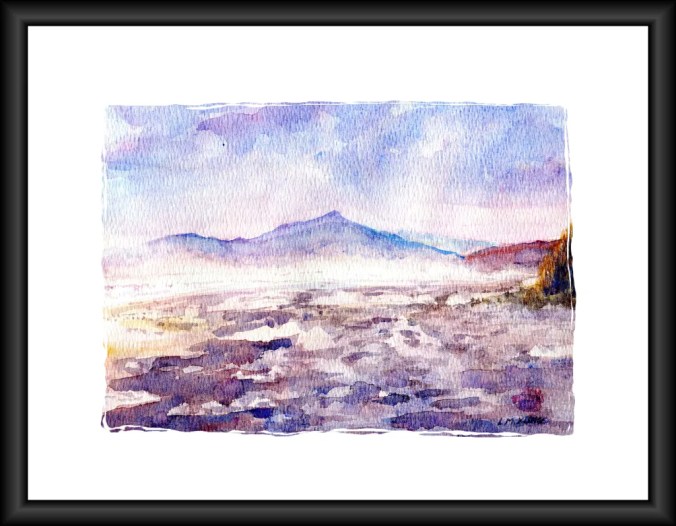
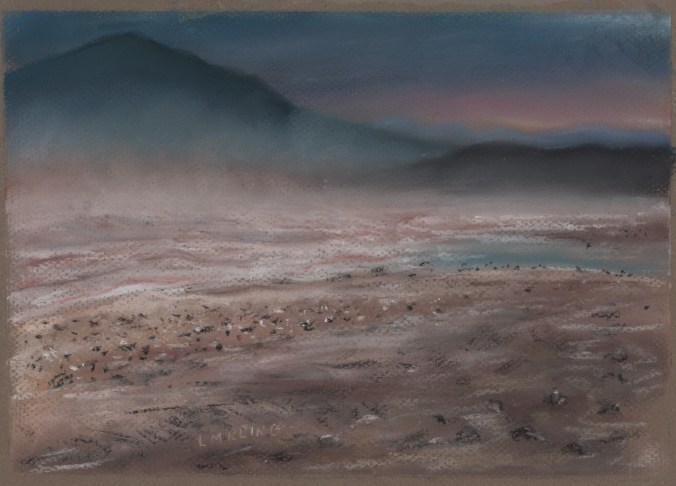
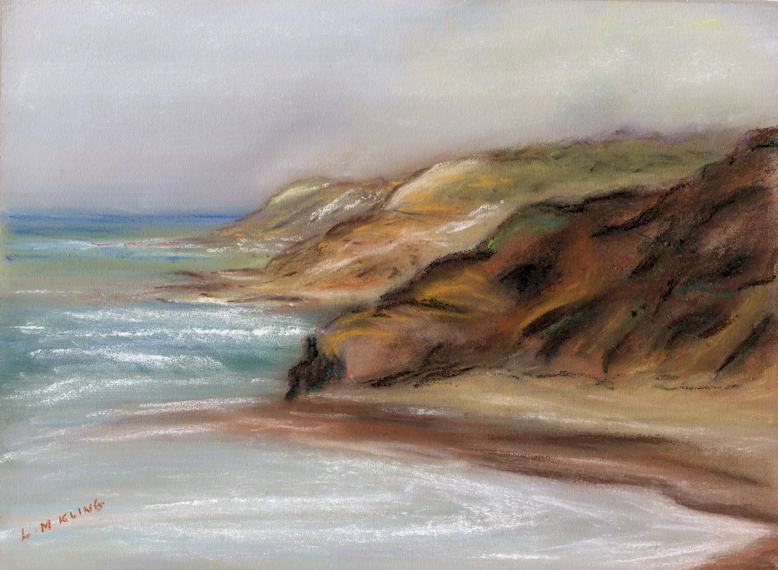
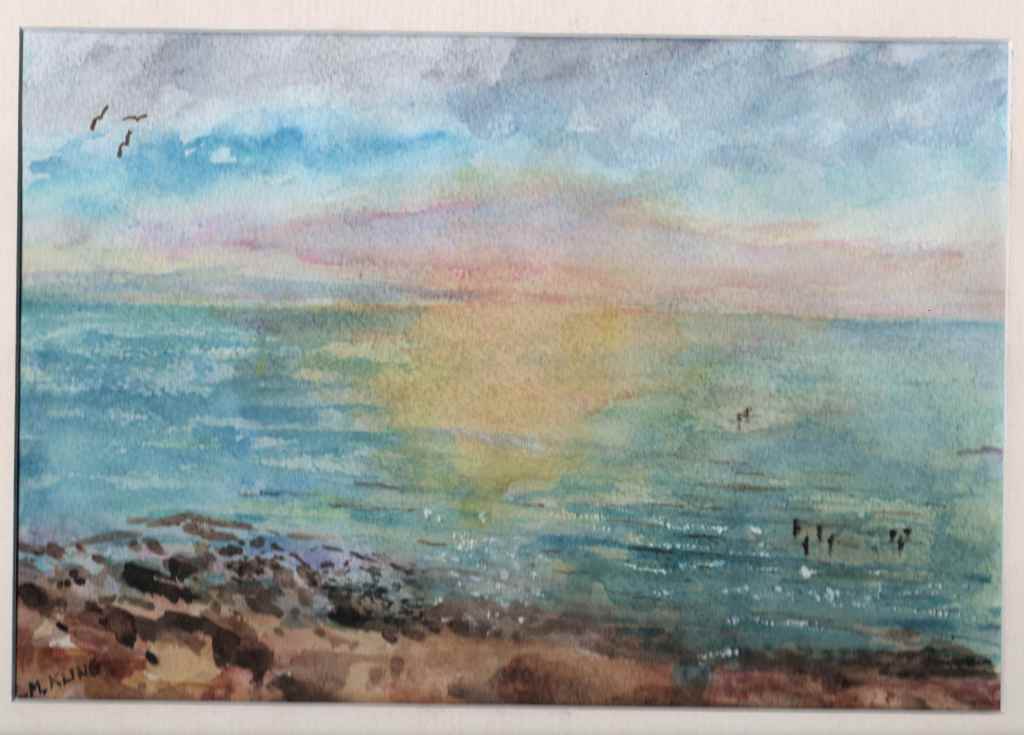
[In the last few weeks, after months of drought, rain. And, almost a month after storms and extra high tides, more extra high tides last Tuesday. So, in memory of the cold stormy weather, here’s an old piece of calm from our Tasmanian travels.]
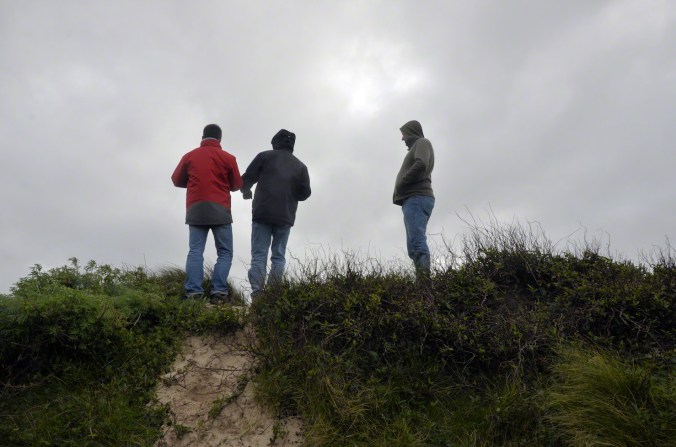
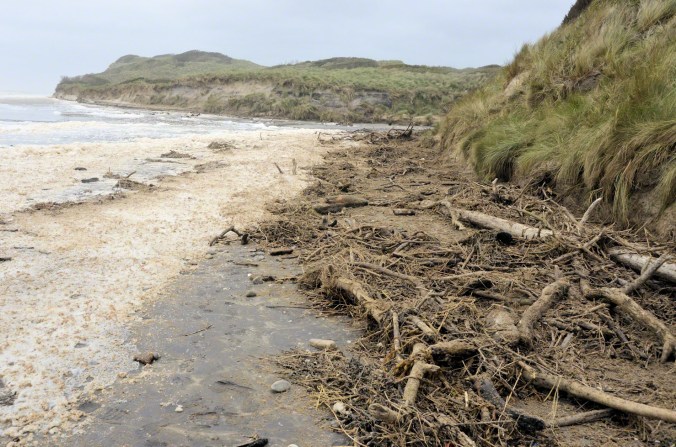
Ocean Beach lies on the West Coast of Tasmania near Strahan. The wild winds of the roaring forties (between the 40-and 50-degrees latitude) attack the coast with relentless ferocity.
In 2001 I visited Ocean Beach with my family to see the mutton birds coming home to roost for the night. I had barely stepped out of the car before the biting cold wind blasted me and I made a hasty retreat back into the car. No view of mutton birds that evening. Result, no photos.
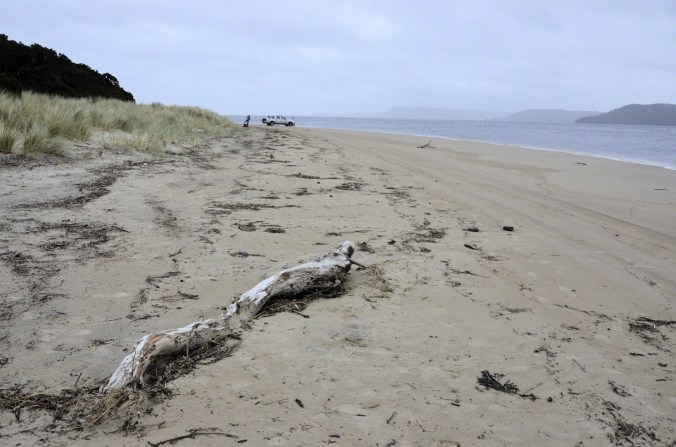
Ten years later, my mum and I visited Ocean Beach. While the East Coast was inundated with floods, Ocean Beach that afternoon was calm. We explored the beach, taking many photos of this rare state of the beach.
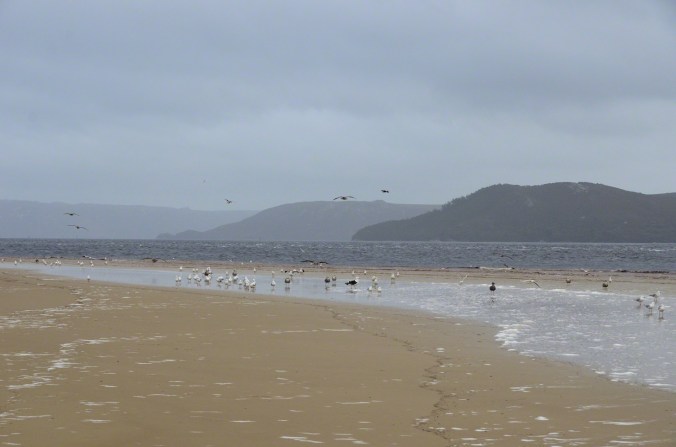
October 2016, the K-Team ventured onto the sands of Ocean Beach on perhaps a not-so-calm day; calm enough though, that we were able to walk along the beach. Not being satisfied with just an obligatory few metres up and down, my husband led us way up the estuary where we spotted a variety of birds, some fishermen, and the lighthouse sitting out there near the heads. Gotta get our money’s worth. After all, he’d seen the potential from the dizzy distance of the cruise boat as it sailed past the heads of Macquarie Harbour. I think if we’d allowed him, we’d still be walking along the coast somewhere around Tasmania.
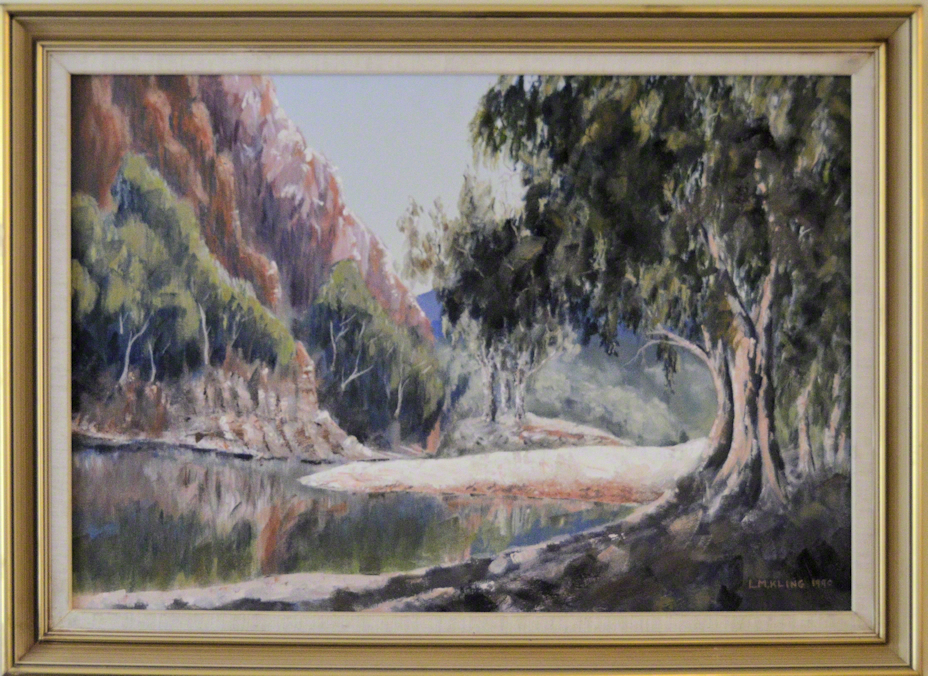
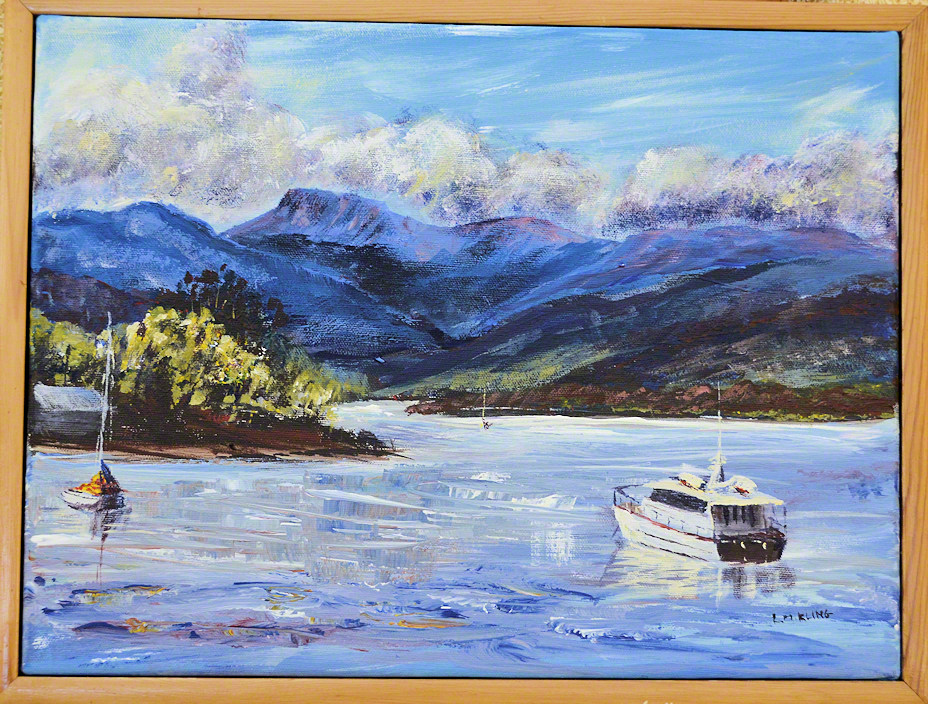
Oh, dear! I must’ve been deep in the rabbit-hole of painting yesterday. See what I painted in one sunny mid-winter’s afternoon, yesterday. Anyway, being what was intended to be Family History Friday for Tru-Kling Creations, went down a rabbit-hole and ended up somewhere else.
Check out the re-blog of the story of my great-great grandfather from Silesia.
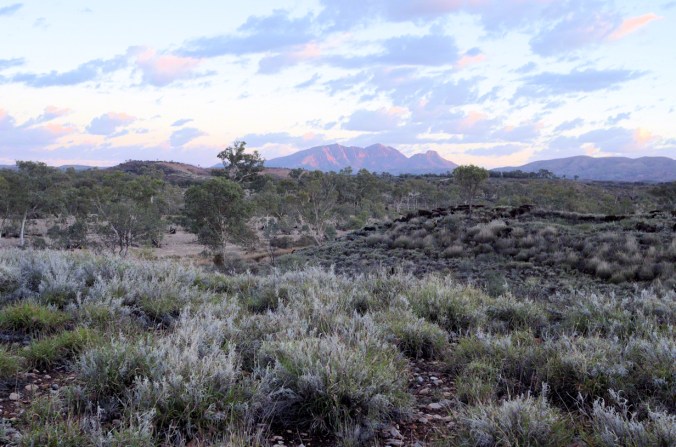
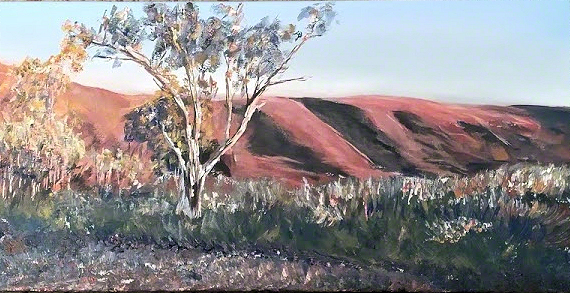
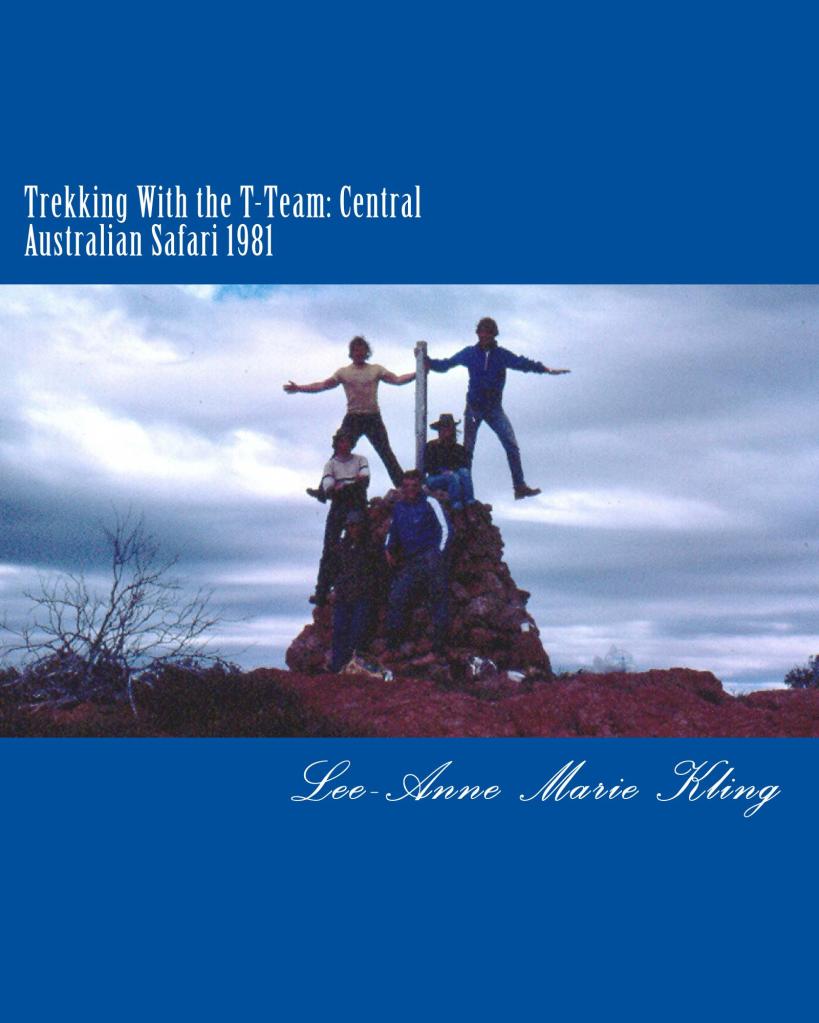
For the last few years promoting my artwork has taken a back seat to my novels. About time I moved the art to the front seat again. So, for a start, here’s a story combining both memoir and art in the story behind the painting of Mt. Giles in the MacDonnell Ranges, Northern Territoryand the T-Team’s intrepid adventures climbing it.
[Twelve years ago, the T-Team, next generation embarked on their pilgrimage to Central Australia. Purpose: to scatter Dad’s ashes in his beloved Central Australia, in Ormiston Gorge. Over the next few months, I will take you on a virtual trip to the Centre and memories of that unforgettable holiday in 2013, with my brother and his family; the T-Team Next Generation. This time, the T-Team farewell Glen Helen, then struggle with the concept of driving in convoy.]
The sound of boots scuffling in the boys’ section of the tent woke me. I wormed my way out of the sleeping bag, careful not to wake Hubby. He still puffed out the sweet dreams while softly snoring while I crept next door to investigate.
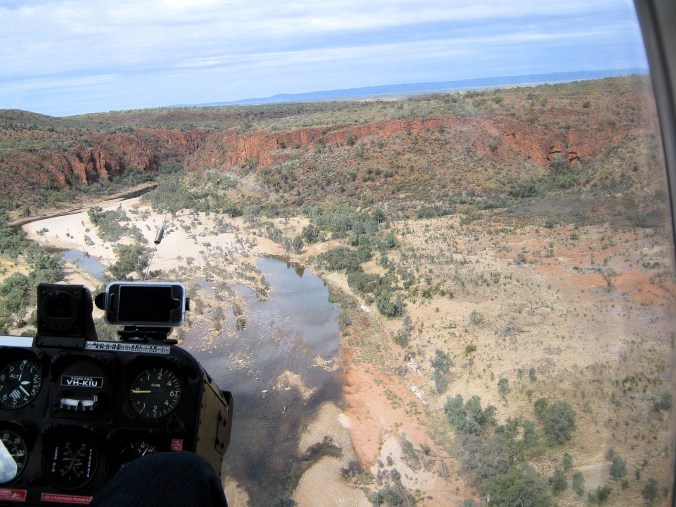
Captured more of Mt. Sonder at sunrise; this time in blue and mauve hues rising above helicopter landing pad. In 2010, Mum and her sister had splashed out and taken this helicopter ride over the MacDonnell Ranges. In some ways an easier way to have a birds-eye view of the ranges without all the huffing and puffing and effort climbing a mountain.
Mum had been there and done that in her youth when she climbed Mt. Sonder with my dad and other Hermannsburg friends. Mum shared just recently, that one of the friends was a rather luscious looking fellow. She puzzled why there seemed to be no photos of this chap in Dad’s slide collection of the occasion.
On my return from this venture down memory lane, I collected some firewood from an old campfire. Hubby narrowed his eyes and growled, ‘We’re not making a fire.’
‘Okay.’
I approached my nephew who squatted by a campfire which he had lit. ‘We’re not making a fire,’ I said and then dumped my wood collection into the fire. ‘We’re not having a fire?’
My nephew laughed. ‘I was just playing with my stick and it broke and went in the fire.’
‘And my pieces of wood just fell into the fire,’ I added.
We watched the flames grow, both chuckling at our insurrection to his Lord-ship’s ban on fire.
After a toilet break, I filled a billy can with water and it made its way onto the coals. The family gathered, enjoying its warmth and relative scarcity of flies and other insects. But for some, like my younger niece, the fire failed to ward off all the flies; especially those tiny little sticky flies that crawl in one’s eyes, nose and mouth. For her, the only solution was to put a re-usable cloth shopping bag over her head.
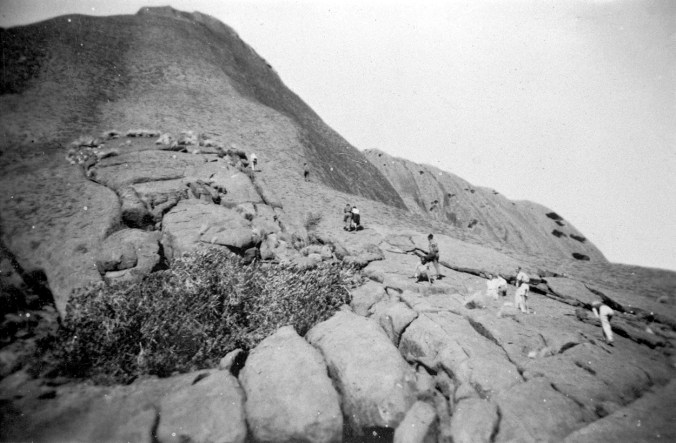
Following breakfast by the fire that my husband said we weren’t going to have, I washed and packed up my bedding and stuff in the tent. Having done as much as I could to pack the Ford, I walked up to the restaurant with Son 2. He wanted an iced coffee. There, while Son 2 drank his iced coffee, I bought a book about Uluru, and then had a coffee with Mum. We talked with the owner and Mum shared that she had visited Ayers Rock (Uluru) in 1953.
‘We were the only ones there,’ Mum said.
‘Was Dad there that time?’ I asked.
‘Yes, but I was much younger, and we weren’t going out then.’ Mum laughed. ‘One of the ladies lost the sole of her shoe when we were climbing, and Dad gallantly lent his shoes to her and walked down the rock barefoot.’
‘Just like my brother did in 1981 with his cousin. Only they did it as a dare.’
‘Must be in the genes,’ Son 2, who had been quietly listening to the conversation, snorted.
By 10.30am, the T-Team convoy had left Glen Helen, its red cliffs, its flies and the doused and covered fire in a distant mirage and we headed for Ormiston Gorge, again. My sister-in-law wanted to buy a souvenir magnet at the Ormiston Gorge information centre.
We parked at the turn-off, where Mum, Son 2 and I waited in Mum’s hire car for the Ford containing Hubby and Son 1 to arrive, and the T-Team in their white van to appear.
‘What’s taking them so long?’ Son 2 asked.
‘Maybe the Ford won’t start.’ A definite possibility, I thought.
‘Don’t say that,’ Mum said.
‘What about the T’s? They’re late too.’ Son 2 grumbled. ‘We’ve been waiting twenty minutes!’
I sighed. ‘Perhaps the Ford has broken down and brother is under the bonnet trying to fix it up.’
‘Should we go back then?’ Mum asked.
‘Yes, I think we should,’ I sighed again while starting up the engine. I rolled the car forward, performed a U-turn and then headed back to Glen Helen.
Just as we reached the road to Glen Helen, the Ford appeared and sailed past us on its way to Ormiston Gorge.
Down the valley we travelled until we could safely do a U-Turn, at what we had coined the “U-Turn Crossing”. This was the place where a couple of nights ago, Son 1 had collected firewood while I collected photos of Glen Helen’s iron-red cliffs bathed in the golden rays of the setting sun.
Then, stepping on the accelerator, we chased the Ford. Upon catching up to the Ford, we beeped the horn and flashed the lights of our rental car.
‘What the…?’ Son 2 pointed at a white van on the opposite side of the road, heading back towards Glen Helen.
‘No,’ Mum said, ‘we’ve all missed the turn off to Ormiston.’
More sighs. A brief park by the side of the road, our car with the Ford, and then exchange of information with Hubby and Son 1. Then with my brother who had also missed the turn off to Ormiston and had to retrace his tracks back. We turned around (in our cars) and in convoy, bumped our way down the rough track to the Ormiston where we waited for Mrs. T to buy her fridge magnets.
Transactions done, we began our journey to Hermannsburg. This time, the T-Team in their white van, waited for us to catch up. Again, this time in convoy, to Mum T’s childhood home.
[Twelve years ago, the T-Team, next generation embarked on their pilgrimage to Central Australia. Purpose: to scatter Dad’s ashes in his beloved Central Australia, in Ormiston Gorge. One Friday every month, I will take you on a virtual trip to the Centre and memories of that unforgettable holiday in 2013, with my brother and his family; the T-Team Next Generation. This time, the T-Team part ways for the day, and two of us set off to explore Standley Chasm.]
Bonus! An all-you-can-eat breakfast greeted us at the Chifley the morning after. The same can’t be said about the T-Team. Richard had slept in and not much was happening in my brother’s “camp”. Meanwhile, we had made the most of the morning, walking to the town centre.
‘Gotta get tyres for the trailer, ‘n nothing’s open yet,’ Richard mumbled on the other end of my mobile phone.
‘Having a quiet day, then,’ I replied gazing around the near-empty local Big-W department store. Anthony held up a pair of cargo pants and indicated that he’d try those on. Then he began rifling through the bargain rack for more pairs to try.
‘Not exactly,’ Richard sniffed, ‘gotta get tyres.’
‘Oh, well, we’re thinking of going to Standley Chasm. Maybe we can all go together in the afternoon if your tyres get sorted.’
‘Hmm, will let you know.’
‘Okay, will hear from you then.’ I clicked off the phone and said to Anthony, ‘He doesn’t sound optimistic on the tyre-issue. Might be busy all morning.’
By noon, the T-Team still weren’t ready; Richard still had to take the car to get the new tyres. ‘At least I’ve found a place that can do our tyres,’ my brother mumbled to me on the phone before he left on his tyre-mission.
So, Anthony and I travelled alone on our quest to explore Standley Chasm. Actually, we’d barely left the outskirts of Alice Springs travelling west on Larapinta Drive to the MacDonnell Ranges before Anthony piped up, ‘How far is it to Standley Chasm?’
‘Not far,’ I replied, then retrieving the map from the glove box, I hunted for the chasm’s location and then calculated the distance from Alice Springs. ‘It’s 50km, so about half an hour’s drive.’
‘Oh, you sure?’
‘Yes.’
‘Cos, if it’s further, we’ll miss the red cliffs, or getting in, or we’ll be home after dark.’
‘Already have,’ I sighed. ‘But I’m sure the chasm will still be spectacular. And the hike there will be good exercise.’
‘Oh, I don’t know.’
‘Anyway, it’s not far. Besides, there’s plenty of other gorges to explore.’
Before Anthony could voice any further misgivings or regrets that we should’ve left earlier and not waited for the T-Team, the sign for Standley Chasm appeared to our right. We parked in the carpark shaded by a gathering of majestic eucalypt trees and then followed the path to the kiosk.
While waiting in line to pay the entry fee, we read the sign which assured us that we had plenty of time before the park closed at 5pm.
I nodded at the notice board and remarked, ‘All that worry for nothing.’
‘Depends how long the walk takes,’ Anthony said while nibbling a nail.
‘Doesn’t take long,’ I said. ‘I’ve been here before. Takes less than an hour.’
‘I hope so.’
I shook my head. ‘Look, we’ll walk for an hour and then turn back, okay?’
Just to be sure, when we paid for our entry tickets, I asked pleasant Irish man who ran the kiosk, how long the walk should take. He explained that it was mostly easy and would take the average hiker about half an hour.
So, rather than waste precious Anthony-time having lunch first, we set out on the adventure to the chasm. Anthony raced ahead. I wandered along the meandering path taking note of various scenes I would snap on our return. Who knows, we may make it in time for the spectacular red cliffs on both sides. Although the lack of tourists hiking either way, made me suspect that, that time had passed.
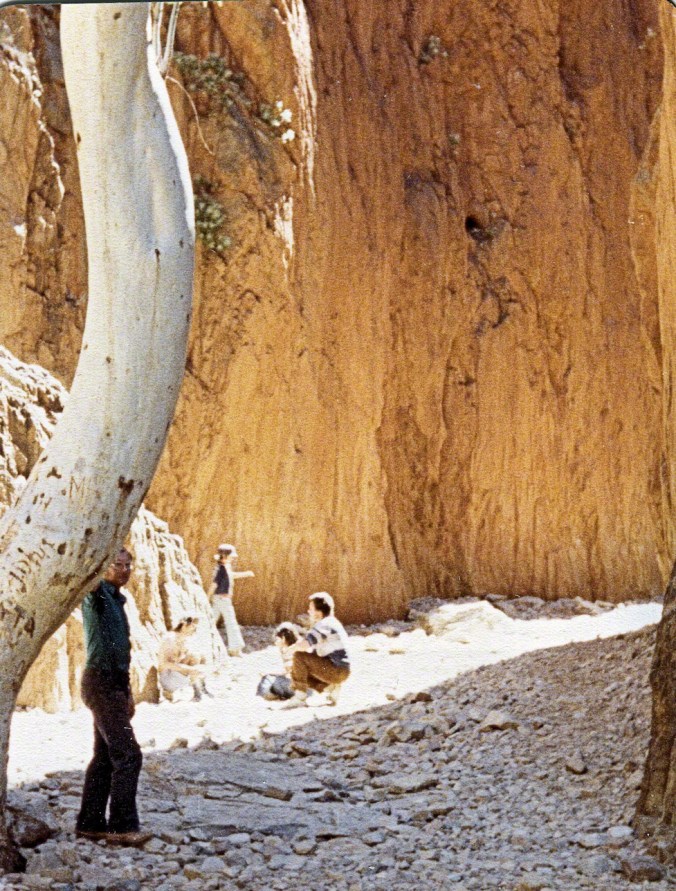
Twenty minutes later, Anthony and I beheld the awesome cliffs of the chasm; one side glowed golden orange, while the other side was a dark sienna. We sensed the peace and serenity of the place.
I scrambled over the tumble of boulders in the chasm and made my way to the pool. Beyond the rockpool, a sign prohibited us from venturing further. The deep water caught a perfect reflection of the boulders and cliffs.
Upon our return to the entrance, we munched on our sandwiches and observed a group of aspiring hikers pitch their tents and then pull them down again. What’s that about? we wondered.
Then, a group of tour guides sat to eat their lunch on a picnic bench below us on the other side of the creek. Anthony had to comment, ‘There’s seven of them and only one of them is Indigenous.’
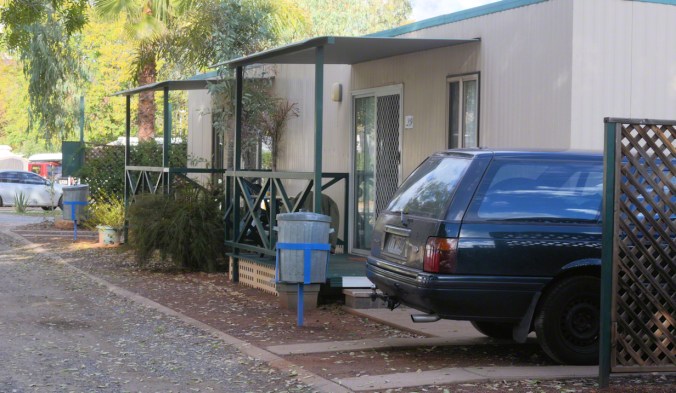
On our return to Alice Springs, we stopped by the caravan park where I booked our sons in. We had already booked ourselves into a cabin at the caravan park and had originally thought they could stay with us. And Mum, all concerned about missing out, had her cabin organised months ago. Even so, we had no problem arranging a separate cabin for our grown-up sons who we felt would be happy with more space.
With late afternoon casting the long shadows of the approaching night, we made our way to where the T-Team were staying. We had been in touch with Mrs. T and had arranged to meet there. When we arrived at the appointed time, no T-Team. Calling Mrs. T on her mobile phone yielded no joy, nor answer.
‘’Not again!’ Anthony groaned.
‘Let’s go to the shops and buy some meat for a BBQ. Then we can find a picnic area and cook up our meat.’
My suggestion sounded reasonable to Anthony, so, off we drove to the local IGA supermarket. Just around the corner. Won’t be long. Maybe the T-Team will be back by the time we return.
‘That’s funny,’ I pointed at some bushes on the traffic island, ‘there’s a cop car hiding.’
‘I didn’t see anything,’ said he who was concentrating on driving.
I ducked into the shops to by some lamb chops and bread. Not much choice; I wanted to snag some sausages but couldn’t see any around. So, armed with the purchased, at some expense, meat and bread, I hopped back in the car.
‘While you were in the shops, a bikie guy was arrested right next door in front of the bottle shop.’ Anthony fired up the engine with the characteristic roar of the Ford. ‘I wonder what he was up to?’
Just then, Mrs. T rang back. ‘Sorry we weren’t there when you came. We was down the street and bought tea for all of us.’
So, with the chops saved in the ice box for camping at Glen Helen, we joined the T-Team for dinner, followed by a raucous game of “Chook Chook”, an educational card game trading poultry.
Afterwards, Mrs. T joined her friends on the back deck for a drink or two, the T-Lings continued with another round of card-playing with their father, while Anthony and I returned to another night of luxury at the Chifley Hotel.
As a child, I enjoyed creating what I see or images in my mind with colour on paper or canvas. I would go into “the creative zone” and spend hours drawing or painting. Once I missed a visit by favourite relatives because I was “in the zone” painting a Central Australian mountain range.
I remember at eight years old, painting with acrylics at my grandmother’s house. I loved the process of paint gliding and flowing from the brush and how my mountain became a volcano smoke billowing from its mouth and snow gracing its slopes. I was hooked.
But, in the 1970’s, with the rise of the status of women in society, the prevailing attitude was that every woman has a right to education, university and a career. The culture of the day was instilled in me that art was merely a hobby. So I never considered doing art as a career. My year eleven teacher cried as I chose Chemistry over Art for my final year. I reasoned I could always pick up art (as a hobby) once I left school.
This I did in 1981, my gap year. I joined a local Art Class in Glenelg and Arthur Phillips taught me to paint with precision, like a photograph, layer upon layer, with acrylics. I admired Arthur’s skill and enjoyed the classes that were always filled with laughter.
However, as a poor university student, I had to give up Art Classes. I thought the Art Club at University would suffice. But it didn’t. The University Art Club at that time, seemed to be more focussed on social activities than getting together to paint.
After graduating in 1985 with a Bachelor of Arts (majoring in Japanese and English), and then in 1986 a Graduate Diploma of Education, I entered the teaching profession and in 1987 relocated to Melbourne for my first job. After eighteen months of teaching teenagers, many of whom did not want to learn, coupled with a feeling my life had been hijacked by school, I quit teaching. I then took up a Research Officer position with Fusion Australia, a youth and community organisation that had an office in Murrumbeena, not far from where my husband and I lived.
Soon after I began working there, the community centre associated with where I worked, put on a community event—painting a mural with the help of a well-known local artist, Arthur Boyd. He shared his struggles as a professional artist over his career, making ends meet. This conversation opened my mind to the idea that for some (who were good enough) art can be more than a hobby. I now wonder what happened to the mural he helped us paint. The church in which the community centre was housed at Murrumbeena was knocked down and the land developed into a nursing home in the early 1990’s.
In 1989, my friend from church, organised art classes with artist Geoff Rogers as our teacher. Geoff taught me to loosen up with my paintings—more flow and movement in the scenes of the Flinders Ranges I painted.
At the same time, the local community centre offered art classes which I joined. There I continued my loose-with-palette-knife rendition of the Gammon Ranges’ Bunyip Chasm. The art teacher discouraged me. ‘You can’t do that, it looks awful,’ she said.
Later a friend came up to me as I was painting and remarked, ‘I love it! Can I buy it when you’re finished?’
I decided Geoff Rogers’ style suited me and kept with the loose style. I framed Bunyip Chasm which at the time cost $80 and then offered the painting to my friend for $100.
‘Oh, I can’t afford $100, dear,’ she said, ‘can you make it less?’
I loved my Bunyip Chasm and said, ‘I’m sorry, I can’t lower the price as the frame cost $80.’ To be honest, I was too attached to my painting to part from it.
For the next twenty-two years, Bunyip Chasm decorated the walls of the homes we lived in. I gave it as a fiftieth birthday present to my sister-in-law as it was a favourite of hers. I then painted another Bunyip Chasm in the same style, but different, and that sold too.
When my children entered our world, I couldn’t paint—no room in a two-bedroom unit, and even when we progressed to a larger home, life was busy raising a family. So nineteen years passed without touching a brush or canvas. When we returned to Adelaide, with the boys at school, I enquired about art classes, but was told the same story again and again—the classes are fully booked, you’d have to go on a waiting list. There must be a lot of people doing art in Adelaide, I thought.
Then in 2009, I joined a writers’ group. At the same time, the art-bug had bitten, and I began painting with an artist friend from church. I shared how I found it hard to separate from my paintings, they were like my babies. My friend’s husband said, ‘But you need to share your work and bring happiness to others.’
Half-way through the year, a fellow writer invited me to join Marion Art Group (MAG). ‘Just bring along some of your work,’ she said.
Gulp! What if they don’t like my work? But I steeled myself and armed with three recent pieces of art, I went down to the hall where the group was held.
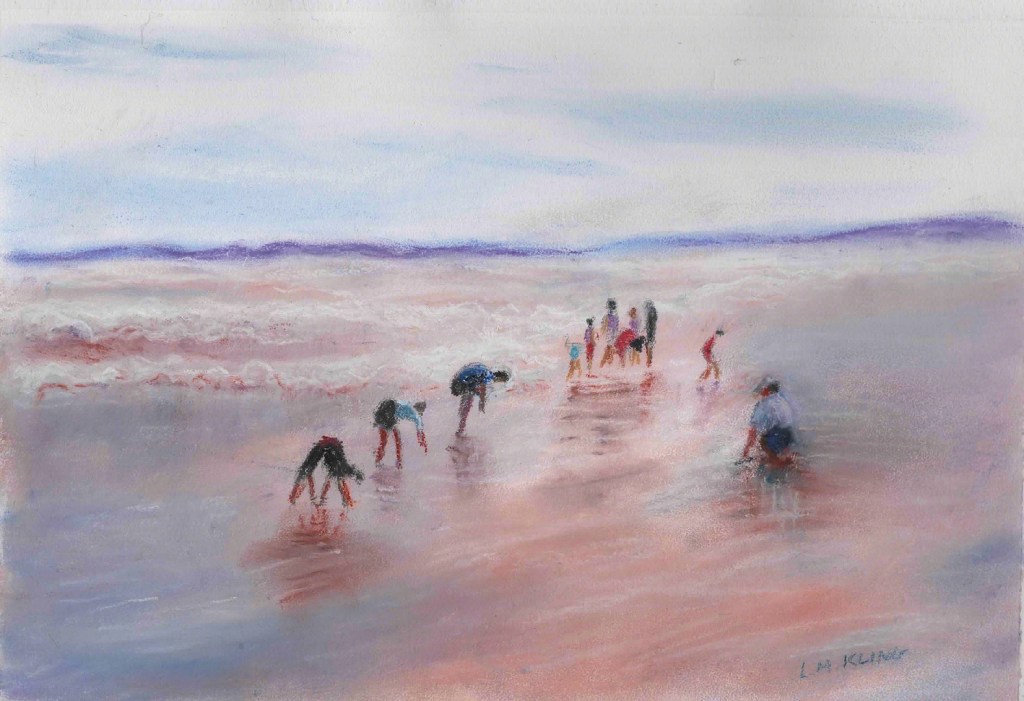
No worries, I was accepted. And by the end of the year, I’d sold my first painting, Cockling at Goolwa, to another MAG member.
In my first MAG exhibition at a local shopping centre, I sold my second painting, Brachina Sunrise. Then…nothing sold for two years. Effects of the GST, perhaps. Customers not spending on luxuries like art.
I persevered with painting, attending MAG studio sessions every Monday morning, and exhibiting my work with MAG and with the local Rotary Art Show. Through workshops, videos and practice, I taught myself watercolour painting. The sale-drought made me work through why I paint. I came to the conclusion I paint because I enjoy it and can express the joy and glory of God’s creation. Perhaps that’s why I mostly paint landscapes.
Then, in 2012, I put my work in another exhibition. This time, I invested in a full screen—I had so many paintings piling up and reasoned if they don’t sell, at least my friends and family can enjoy going down to the shopping centre and looking at them. I came home one afternoon, and the phone message light was flashing. I listened to the recorded message. ‘Congratulations you have sold…’
Hooray! Since then, I have sold paintings—some years more, some years less. I guess at this stage the money made is “hobby money”. And I remind myself, it’s not what I sell, that’s important, but that I enjoy the process of painting…getting in the creative zone. And maybe for others who connect with my paintings, bringing joy into their lives too.
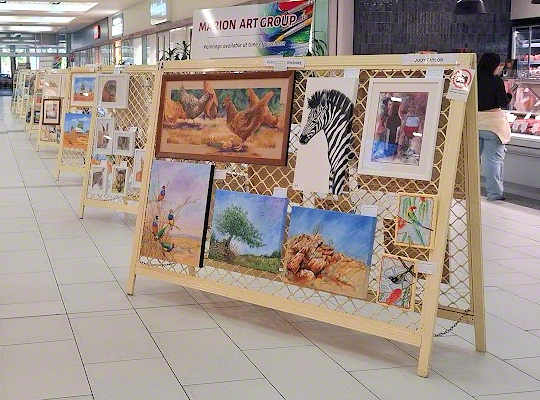
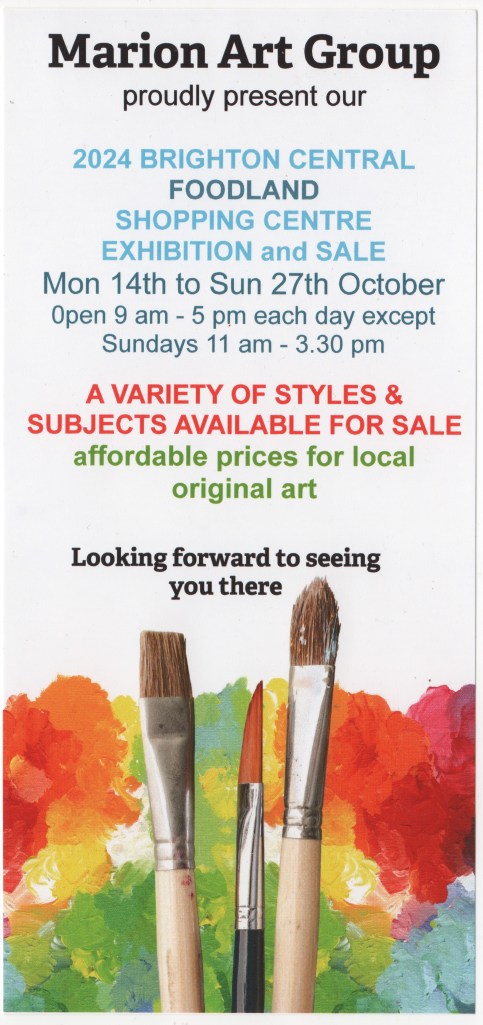
Oops! Almost one week into Marion Art Group’s (my art group) exhibition at the local shopping centre, and I have failed to mention it. Been too busy writing, appraising hopeful writer’s works, and transcribing a friend’s biography of her mother who lived through the horrors of World War II. Plus burrowing away in the family history rabbit hole.
I have been pondering where my art genes have come from. No mention of renown artists in my ancestry. My dad was an artist with some potential, emphasis on potential as he channeled his talents more into music than art. My maternal grandfather, Sam Gross was an amazing photographer. But as a missionary pastor in Central Australia, he was discouraged from furthering his photographic endeavours as the mission board frowned on it and said he was spending too much money on camera equipment and film.
So, in light of my predecessor’s unrealised potential and the fact that I am still using the watercolour paints and brushes my dad left behind, I will share an afternoon that we spent painting in Central Australia in 1981.
Mount Hermannsburg
My father and I sat in the dry river bed of the Finke River painting Mt Hermannsburg which towered above the river gums and spinifex. We painted our muse on site; Dad painted in watercolour and I painted in acrylic.
After a couple of hours, Dad packed up his brushes and palette and returned to the town of Hermannsburg. I stayed, in the creative zone, dibbing and dabbing, the setting sun casting shadows over the river bed and a cool breeze pricking me with goose bumps on my bare arms.
I made the final touches as the sun sank below the horizon and I was called in for tea. I signed with my maiden name, naturally, as I was only 18.
Dad’s painting and mine sat side by side on our host’s piano where all who saw, admired our work. I kept walking past and gazing at my painting. Did I really do this? Wow! Did I really?
Over the Easter break in 1986, Dad took my boyfriend (future husband) and me to the Gammon Ranges. Dad had gone there the previously with his photographer friend and he was keen to show us some of the scenic secrets these ranges held.
We bumped and rolled in Dad’s four-wheel drive Daihatsu down the track into the Gammon Ranges. We camped near Grindell’s Hut, backpackers’ accommodation. A murder-mystery from the early Twentieth Century involving the hut’s owner, spiced our discussion around the campfire that night. Then we set up a tent, for boyfriend, on the ground above the bank of the creek. I placed my bedding also above the creek under the stars. Dad opted for his “trillion-star” site underneath a river gum. No tent for him, either.
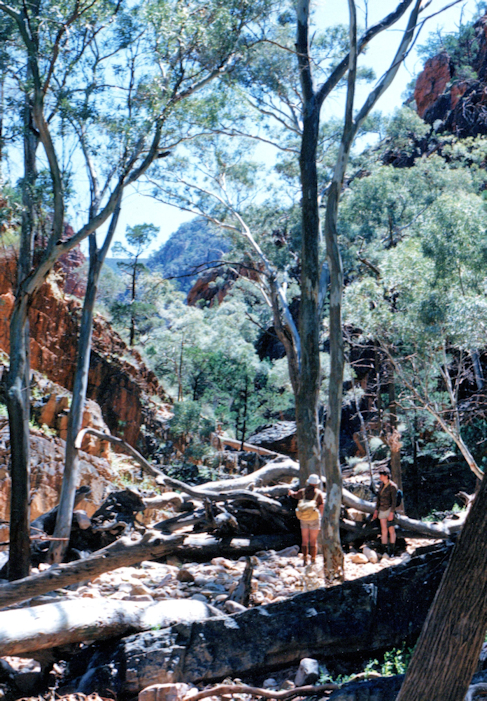
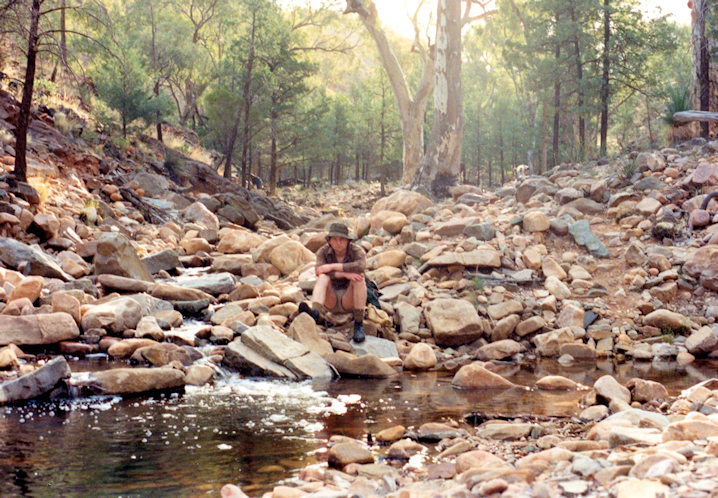
The next day Dad guided us along the Balcanoona creek bed shaded by native pines to Bunyip Chasm. After an hour or two of hobbling over rounded river stones, we arrived at a dead-end of high cliffs.
‘Come on, we better get back,’ Dad said and then started to hike back the way we came.
We trailed after Dad. Although native pine trees shaded our path, the hiking made me thirst for a waterhole in which to swim. I gazed up at the lacework of deep blue green against the sky and then, my boot caught on a rock. I stumbled. My ankle rolled and twisted. I cried out. ‘Wait!’
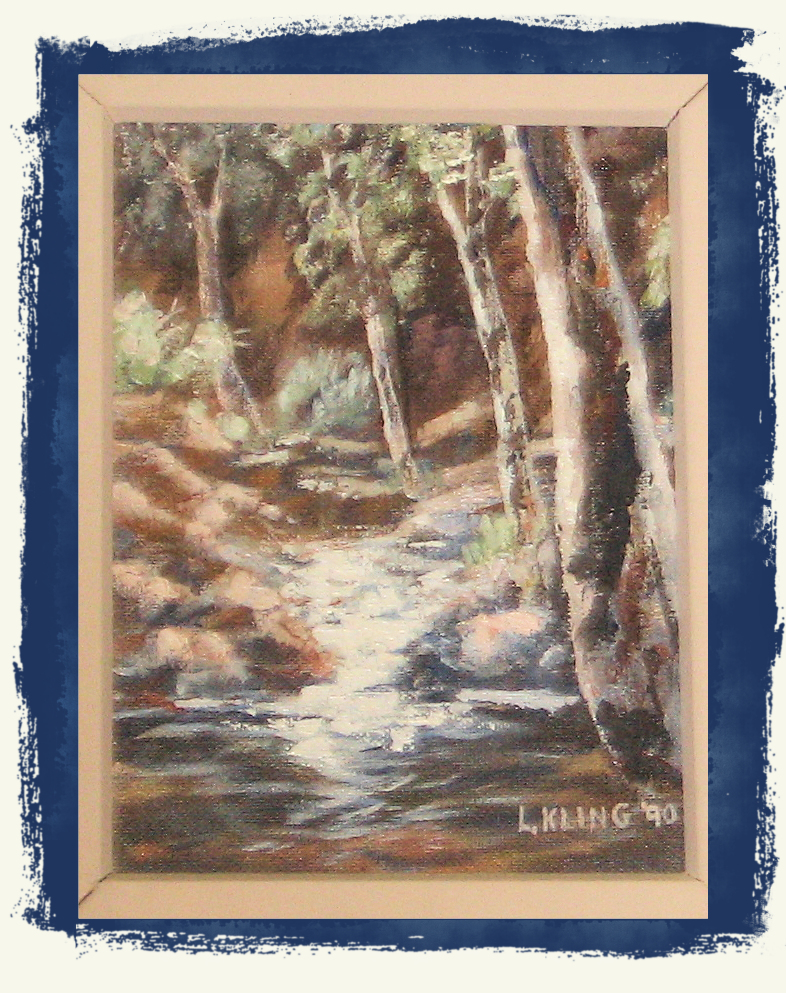
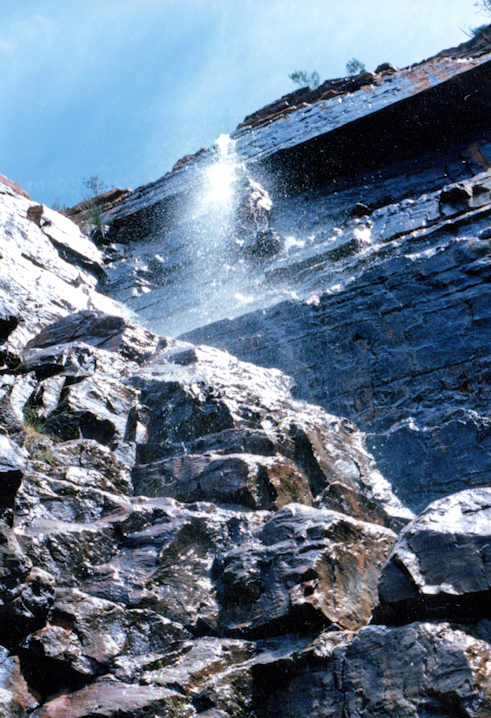
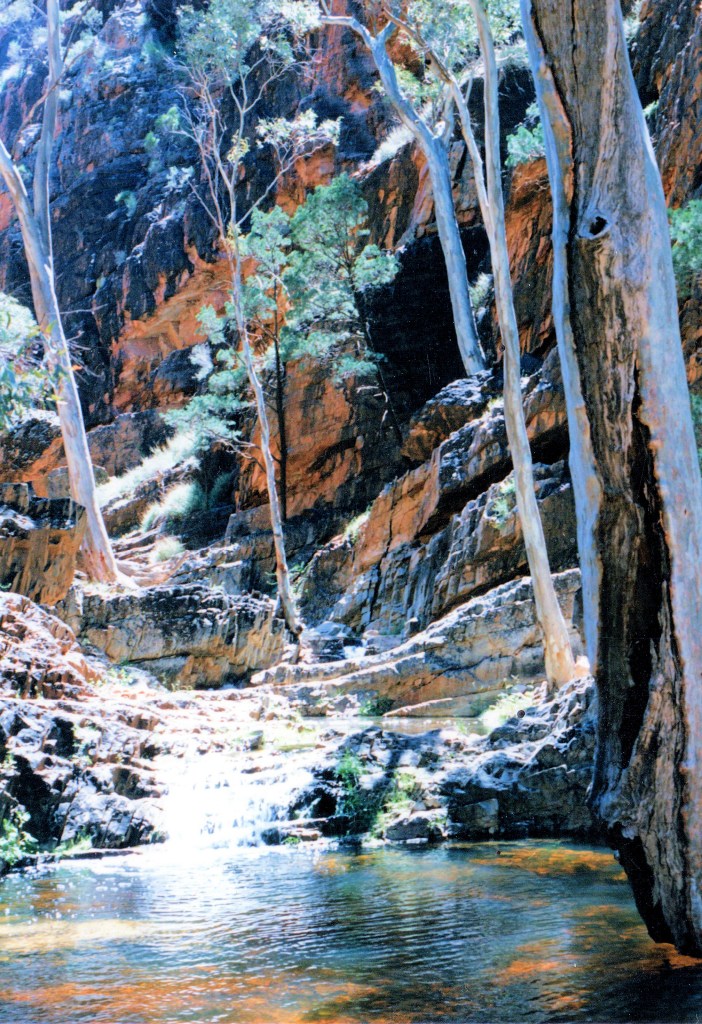
After about ten minutes, with my ankle still swollen and sore, I hobbled after the men. We climbed down a short waterfall and at the base, I looked back. The weathered trunk of an old gum tree leaned over the stream, three saplings basked in the late-afternoon sunlight against the sienna-coloured rocks, and clear water rushed and frothed over the cascading boulders and into pond mirroring the trees and rocks above.
‘Stop! Wait!’ I called to the men.
‘We have to keep on going,’ Dad said and disappeared into the distance.
Boyfriend waited while I aimed my camera at the perfect scene and snapped several shots.
Then holding hands, we hiked along the creek leading to our campsite and Dad.
‘I’m going to paint that little waterfall,’ I said.
We walked in silence, enjoying the scenery painted just for us—the waves of pale river stones, the dappled sunlight through the pines, and a soft breeze kissing our skin.
The sun’s rays filtered through the dust motes of the church hall near the seaside. The air conditioner thrummed pumping out the sticky 40-degree Celsius heat that Monday afternoon in January.
Eloise Delaney unloaded her motley collection of watercolour palettes, colour-splattered former honey jars and 300-gsm paper framed with masking tape. She then arranged her brushes. Thick sable, round and soft, like the tip of her tabby cat, Spike’s tail. Great for that initial wash of sky, sea and sand.
She had lined up the thinner brushes in order of detail as the painting progressed. She stroked the finest brush, the one used for her flourish of a signature; the one more than 70-years old from her maternal grandfather’s collection salvaged after the bombing of his home in Nördlingen, Bavaria 1945. It was premium quality being made in Germany.
She sighed, ‘Must do this so nothing is lost.’
‘Talking to yourself already?’ a voice sang. ‘Sign of madness, ya know.’
‘Consequences of early retirement, I guess.’ Eloise laughed. ‘Least I had a social life when I was working.’
‘What do you call this?’ Eloise’s pear-shaped friend flicked a wiry lock of henna tinted hair from her freckled face. ‘Is this seat taken?’
‘Nah, go ahead. I could do with the company, Fi.’
Fifi settled herself on the plastic chair diagonally opposite Eloise, and after fumbling in her tote-bag, produced a mini flask. The thin mauve cannister wobbled on the newspaper that covered the trestle table. ‘I’m economising today; made my own brew.’
‘I’m celebrating,’ Eloise said and held up her takeaway cappuccino from the café down the road. ‘The “Rabbit hole” beareth fruit.’
Fifi pulled out her sketch pad, set of Derwent pencils and three scrunched up tissues. Then she leaned forward ‘What? Oh, your family history. Any noble? Kings and queens? Or, let me guess, some royal fruit from the other side of the royal bed?’
‘Well, actually, sort of…’ Eloise dipped her brush in the former honey pot full of water. ‘France, actually. And a bed of his ancestor’s made long, long ago.’
‘Well, I could have told you that, him being French, I mean.’ Fifi wiggled her generous behind on the chair, and then smoothed a fresh page of her sketchbook. ‘Do tell.’
El opened her mouth to spill forth all the juicy gossip about tracing her husband’s tree, a royal line stretching way back beyond Charlemagne and to Julius Caesar—all done without the help of DNA, but hours of research—when the leader stood and welcomed the small art group back from the holiday break.
Plus, there was that strange woman sitting behind them who was listening to every word El spoke. That woman, Sharon Katz, nicknamed Shatz, with the mouse-brown hair and the poisonous mushrooms (picked from the forest and dried) she foisted on El just before Christmas—insisted she take them. Lucky for El, her husband, Francis Renard, as a keen gardener and scientist, warned her of the dangers and she threw the suspect fungi into the bin. The next week, Shatz made a point of asking how El how she was feeling. All holidays El puzzled over Shatz. Had she had a run-in with this Shatz in times past while doing her duty as a police officer? Or was Shatz one of Francis’s former lovers?
‘Tell you another time,’ El whispered. ‘Probably should get Francis’ permission first.’
‘Oh, okay, then.’ Fifi sighed. ‘So, how was your Christmas?’
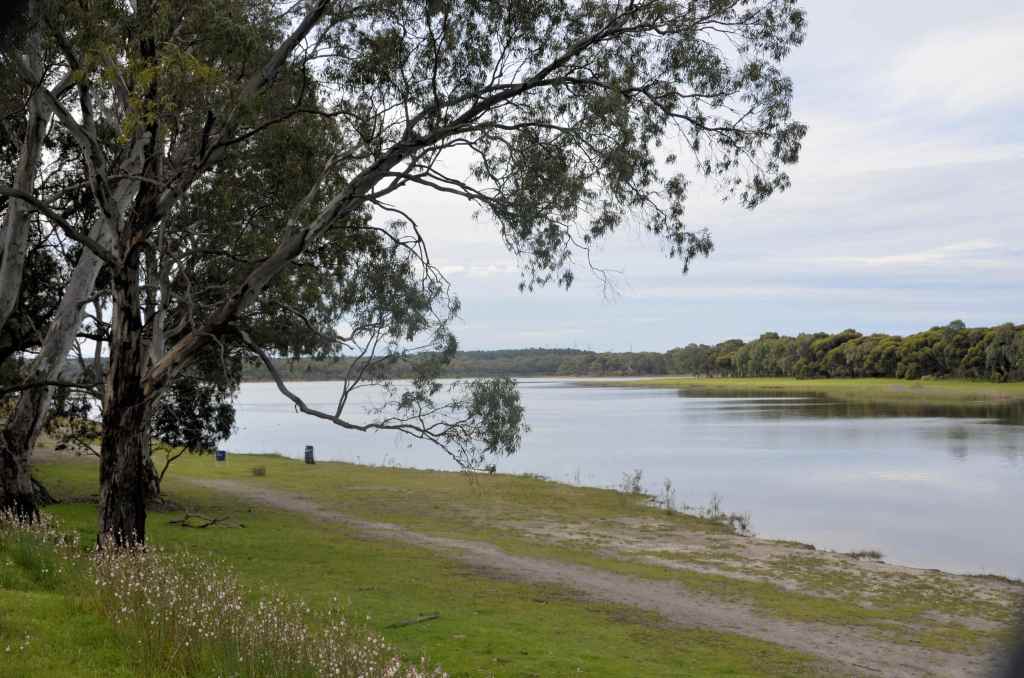
‘Meh! Glad it’s over for another year, Fi.’ Eloise smiled. ‘Francis and I had a quiet one on the actual day, then we all went to my cousin’s in Flagstaff Hill on Boxing Day. It was a disaster. You know, in the middle of Christmas lunch, which I might add, was leftovers from their Christmas day, someone, not mentioning any names, just had to bring up the latest controversy circulating on Fox News. Next thing, arguments all round. Renard and I left early and walked around the newly opened Happy Valley Reservoir. At least that part of Boxing Day was enjoyable.’
‘Well, my Christmas Day, thanks for asking, Eloise,’ Fifi’s lips tightened for a moment, ‘I don’t know why we bother and make such a fuss about the whole thing.’
‘Yeah, I know, the novelty wore off years ago. I just wish we could get back to the basics, the real meaning of Christmas and celebrate that.’
Fifi nodded. ‘Yeah, who needs another voucher? All we do is exchange money and vouchers these days. Where did the love go? Although, in my family, even with all those kids my parents had, there wasn’t much love.’
‘Really? I always envied your big family.’
Fifi sniffed. ‘If you really knew my family and what went on behind closed doors, you wouldn’t be envious.’
‘Why?’ Eloise may have been taking time out from her job as a detective, but she had not lost her inquisitive nature. ‘What went on behind closed doors?’
‘My dad, when he was around, was a pompous twat.’
‘How so?’ Eloise asked. She noticed Shatz, lifting her head, looking at them and listening again. Her curiosity annoyed El and she turned around and glared at the woman. Shatz dropped her eyes down to her sheet of paper and pretended to work on her pastel rendition of a bullfrog.
Shatz’s eavesdropping didn’t bother Fifi who continued, ‘He was hard on us kids. If we did the slightest thing wrong, he’d thrash us. Typical of his generation and background, European, you see. He thought you hit kids into submission. And, as for girls, they were to be seen, but not heard. He treated us girls like slaves.’ Fifi thumped the table. ‘I hated him.’
Fifi’s cannister of coffee toppled from the table and rolled on the floor.
Shatz picked up the cannister and handed it back to Fifi. ‘My dad was the same,’ she said before El’s frown drove her back to her seat to resume painting.
El then said, ‘He didn’t mellow in his old age?’
‘He left and…’ Fifi paused, ‘…and I was glad. Life improved after he was gone.’
Eloise studied Fifi and the freckles that danced on her face as her eyes blinked and her mouth twitched. ‘I sense that your father did more than just leave, Fi.’
Fifi’s eyes widened. ‘How did you know that?’
‘Part of the job, Fi. So, what did he really do?’
‘It was the strangest thing, Eloise.’ Fifi took a deep breath. ‘One day, my friend Lillie, and Jimmy my brother and I went for a hike up to Mount Lofty. On the way down, we did a bit of exploring. I can’t remember whose idea it was. Anyway, I go looking at this culvert. I had in mind that this hole in the side of the hill could be some disused mine and that I could find gold there. But, when I go down there, I see this body. Just bones and leathery skin over the bones like…but I recognised the boots. Those boots. I had lost count of the times those boots had kicked me…I knew it was my dad. But at the same time, I didn’t want it to be true. I just hoped they, whoever they were, were somebody else with the same type of boots.’
‘Oh, right, when was that?’ Eloise had turned over her paper and had begun to take notes with a piece of charcoal. ‘How long ago, did you say?’
‘Over forty years.’ Fifi replied softly. ‘He’s been gone since January 1978.’
‘Forty-four—exactly.’
‘How did he end up in a ditch? Near an old mine?’
Fifi shrugged. ‘Not sure, but he had enemies.’
‘I see.’
‘You see, we did report it to the police. But nothing happened. Forty years, and nothing. I mean, I know he was a creep and often rubbed people up the wrong way, but he was still my dad. And I just wanted to…you know, find out why he ended up there. Why anyone would. Dead. And no one seems to care.’
Silence for a few minutes. Fifi sipped her coffee while Eloise studied her notes. The happy chatter from fellow artists provided background noise. The air conditioner continued to thrum.
‘Mm,’ Shatz began in a soft voice, ‘my brother was killed in a motorbike…’
El turned and narrowed her eyes at Shatz. Was this woman trying to get attention? she thought.
‘Sorry,’ Shatz said. ‘But I knew Mr. Edwards, he was a real…’
‘Well, of course you did,’ Fifi huffed, ‘we went to the same church, remember?’
‘Never mind, sorry,’ Shatz mumbled.
Another pause.
After the pause, Eloise looked up. ‘Would you like me to follow this up?’
‘I don’t know.’ Fifi wiped her eye. ‘I guess. But isn’t it a bit awkward for you now that you’re…?’
‘No trouble. I can call Dan, my partner, or should I say, my ex, or whatever he is now that I’m on leave. I can still use the phone.’
‘Thanks.’
‘I’ll see what I can do. No promises. But it’s worth a try, don’t you think?’
The rest of the afternoon, Eloise and Fifi occupied their thoughts with painting and sketching. The cheerful chatter of the other artists continued, none the wiser of Fifi’s loss and childhood trauma. Except for Shatz. El wished that woman who attempted to poison her wouldn’t be so nosey and would mind her own business.
The air conditioner kept on thrumming until the rush for pack up and departure. Then as the last person locked up the building, they turned off the infernal humming machine and the heat of late afternoon in Adelaide seeped into the empty hall.
Christmas Holidays are approaching. For me it’s been party time this week. One party after another, especially yesterday with three parties, all in one day. I’m hoping that once the rush and busyness is over, I can rest, relax and start planning our next holiday. Perhaps it’s the same for you.
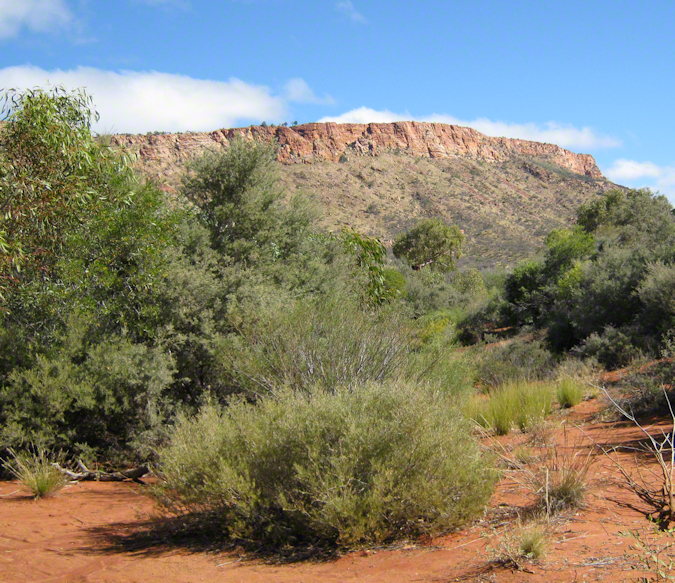
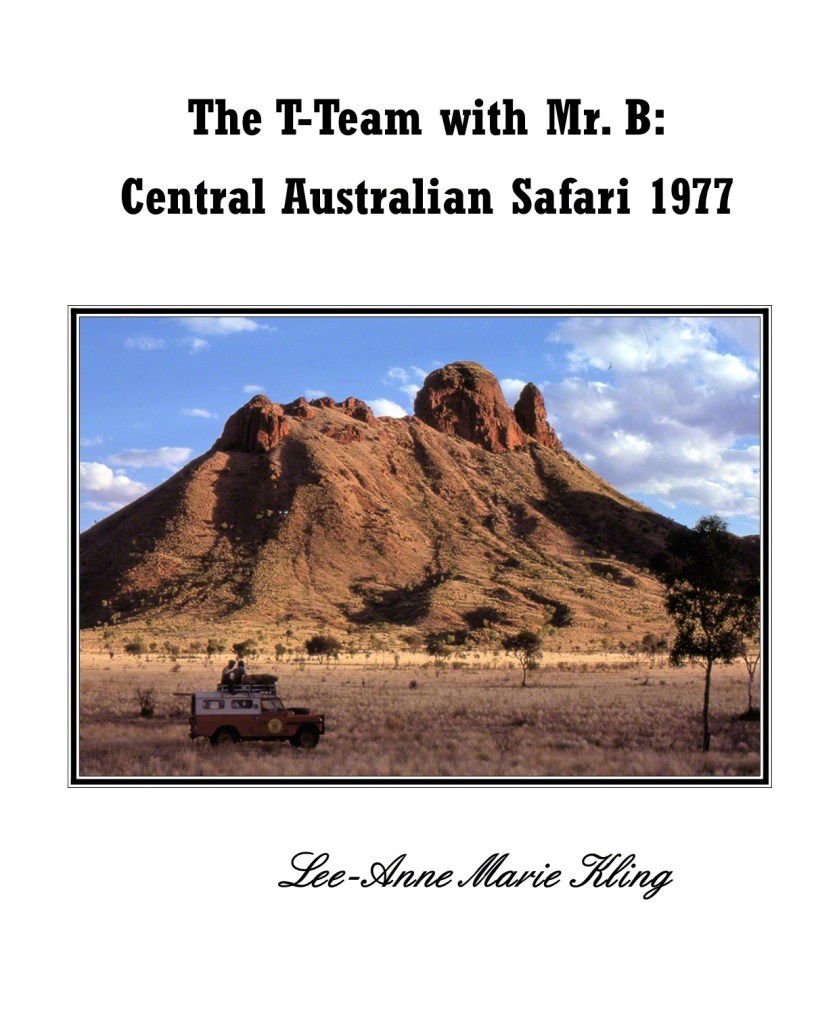
In the meantime, here’s a revisit to Central Australia and the T-Team. This time when my brother and I became lost on our descent from Mt. Giles.






























 Tru-Kling Creations