My “Convict” History
I admire a former convict, an ancestor of mine. Okay, you may think, yeah, of course, she’s an Australian—these days they wear their convict heritage like a badge of honour.
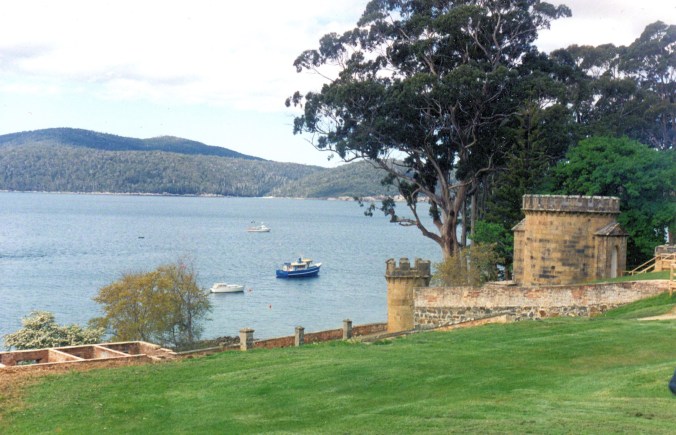
No, actually, my great-great-grandfather lived in Saxony, which is now part of East Germany or Poland today. Rubber borders, you see. His crime was trivial by our 21st Century standards in the West. But then, so were the crimes of shiploads of convicts who were transported from Britain and Ireland to Australia in the early 19th century. (For this reason, I have included photos from my visits to convict settlements, Port Arthur and Sarah Island, Tasmania, as my two-times Great-Grandfather, Friedrich August Schammer, was living his life in Silesia around the same time, in the early nineteenth century.)

Friedrich August spent less than three months in prison for a crime he did not commit, but I admire the way he managed his dire situation.
How did he get into this trouble?
According to the family history book, of this particular branch of the family, in the town in which Friedrich August Schammer studied as a medical student in the 1820s, the military came to power and enforced strict and arbitrary rules. I might add here that my ancestor had already endured hardship, having been orphaned as a child, suffered poverty, and then, his older brother, who was his guardian, died from typhus. I imagine these events spurred him on to be a doctor.
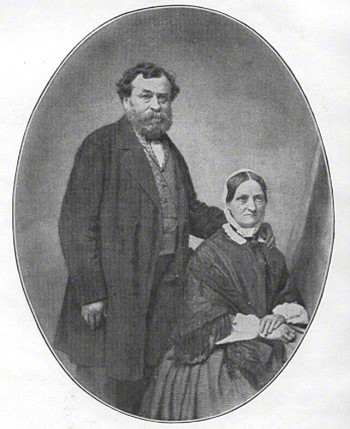
[Copy of Portrait painting: Two-times Great Grandfather, Friedrich August Schammer courtesy of Schammer Family History © 1922. Painting circa 1850. Painted by artist, Adolf Gottlob Zimmermann.]
Anyway, in this university town of Jena, the students protested against their restrictions on their liberty by reacting against the ridiculous laws the military had brought to the town. Some of these laws were that there be no singing in the streets, no wearing of caps, and no waving of flags. The students protested by marching in the streets to the town square, singing and waving flags. All went smoothly and peacefully with no trouble from the authorities.
Then some of the young men, probably after drinking a few beers, became bolder as young men tend to become. They threw rocks at windows, an action that got the authorities’ attention.
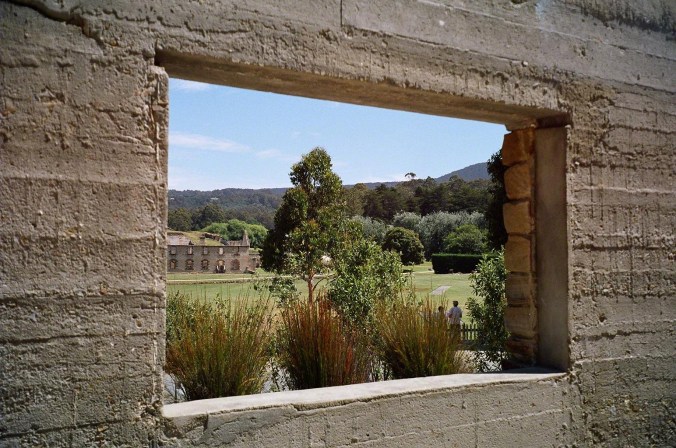
The military swooped in and arrested many of the protestors. My great-great-grandfather was walking past the action and was in the proverbial wrong place at the wrong time.
Arrested and tried, though otherwise of exemplary character as a good Christian belonging to the Moravian Brethren, Friedrich was convicted and sentenced to prison for six months.
It seems by his account and letters, a certain beadle in town had it in for Friedrich August.
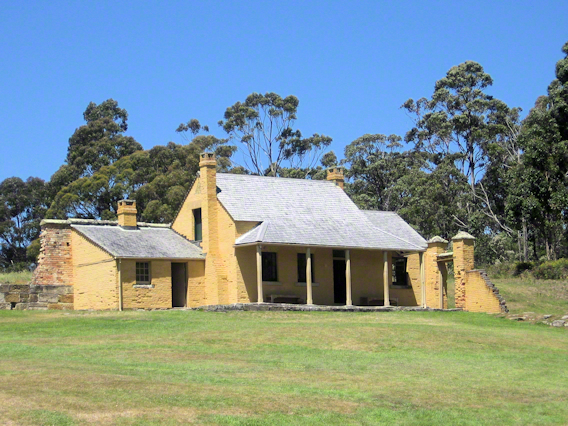
Yet Friedrich accepted his time in prison and made the best of the situation both for himself and others. He studied, enjoyed the view of the valley from his prison room (I think he was in a low-security prison), and used his medical knowledge and skills to help those around him.
The authorities noticed great-great-grandfather Friedrich’s quiet conduct and enrichment of the prison community, and they released him less than three months into his term.
Released, Friedrich’s ordeal was not over. The university where he’d been studying banned him from returning to study there. His reputation tarnished, the villagers shunned Friedrich.
However, Friedrich did not give up. He moved to Berlin and, keeping a low profile, completed his studies at the Charité Hospital and graduated as a Doctor of Medicine. He had a heart for the poor, having been poor himself, and would treat those in need without demanding payment.
Friedrich August Schammer demonstrated those godly qualities I admire—justice, mercy, and compassion. And perseverance, even in the face of adversity.
Philippians 2:14-15—Do everything without complaining or arguing, so that you may become blameless and pure, children of God without fault in a crooked and depraved generation, in which you shine like stars in the universe…
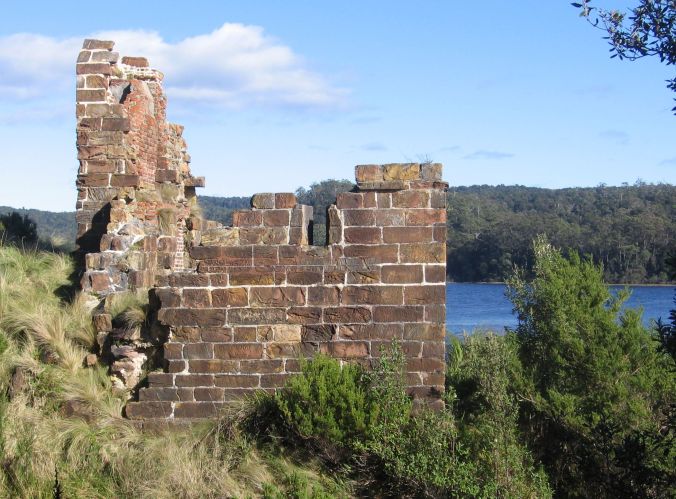
Feature Photo: The Cry of the Convicts, Sarah Island Ruins © Lee-Anne Marie Kling 2011
***
Note: Port Arthur housed what British authorities considered the worst of the convicts transported to Australia in the early to mid-nineteenth century. I visited this convict settlement in 1981, 1995 and 2009. A place well-worth visiting to learn from the mistakes made from the past (how not to treat fellow human beings). Although the place appears serene, the presence of the tortured ghosts of the convict past can still be felt.
Sarah Island situated in the Macquarie Harbour on the west coast of Tasmania, imprisoned the worst of the worst convicts transported to Australia in the early nineteenth century.
I have visited Sarah Island as part of the Gordon-Franklin River Cruise, both in 2001, 2011 and again in 2016. I highly recommend this cruise—a bucket list for travellers—history, wilderness, rare beauty of unspoilt rivers and rainforest and…excellent food.
© Lee-Anne Marie Kling 2016; updated 2020; 2023; 2026
***
Virtual Travel Opportunity
For the price of a cup of coffee (takeaway, these days),
Click on the link and download your kindle copy of one of my travel memoirs,
Experience Historic Australian outback adventure with Mr. B
in
The T-Team with Mr. B: Central Australian Safari 1977

Or come on a trek with the T-Team in
Trekking with the T-Team: Central Australian Safari 1981.

 Tru-Kling Creations